Puppies learn faster when they do not realize they are learning. A five-minute game that ends with a treat and a belly rub teaches more than a twenty-minute drill that ends with both of you frustrated.
These fourteen games turn basic commands into activities your puppy wants to repeat. Each one targets recall, impulse control, leash manners, or body awareness through play.
If your puppy knows sit and can hold eye contact for two seconds, you have enough foundation to start any game here. Pick two or three per week and stop while your puppy still wants more.
What You’ll Learn
14 Puppy Training Games
Every game targets a real skill — recall, impulse control, leash manners, or body awareness — through play your puppy actually wants to repeat.
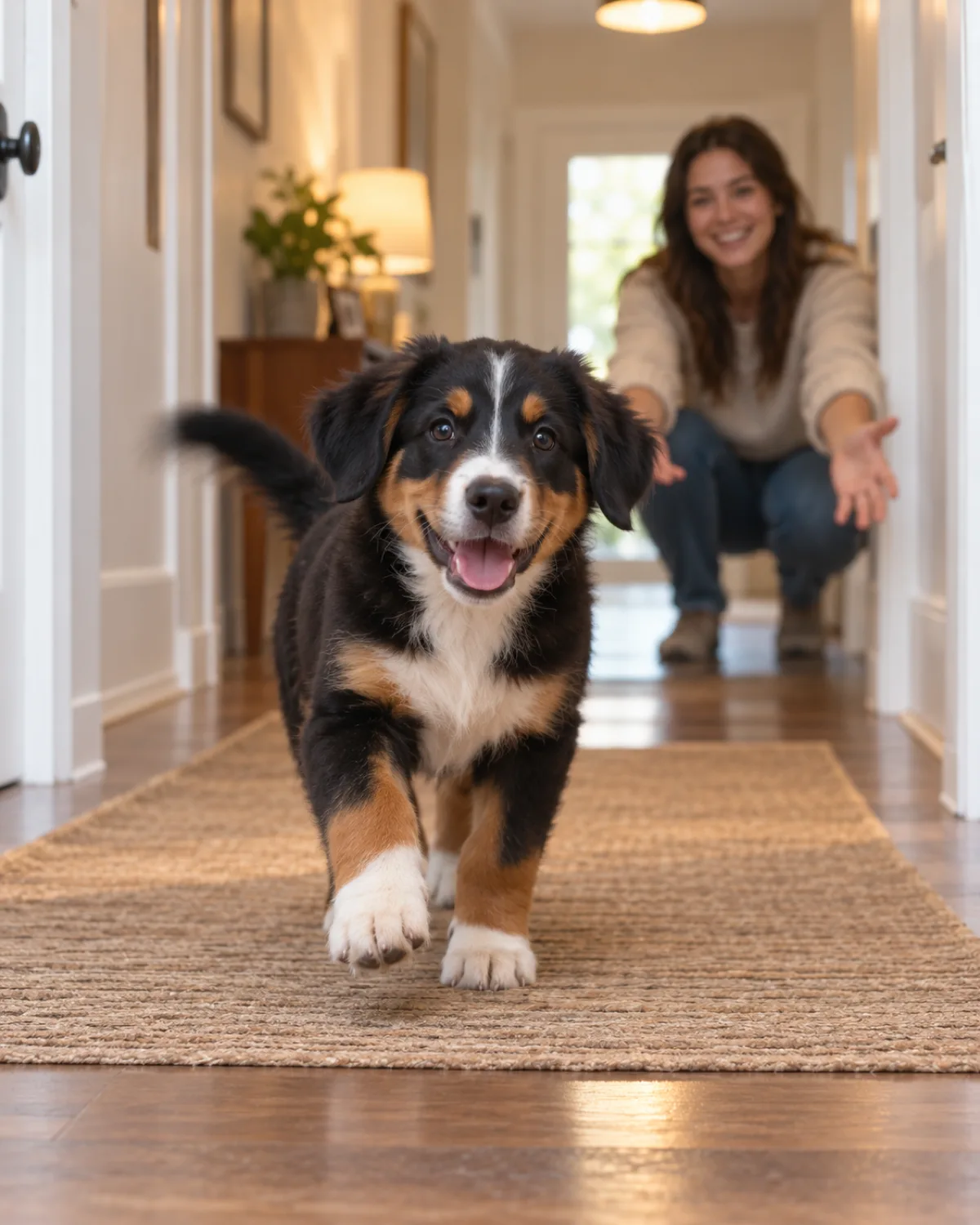
Hide and seek is the single fastest way to build a bombproof recall in a puppy under six months old. The excitement of finding you creates a dopamine hit that no amount of leash-and-treat repetition can match.
Have someone hold your puppy in one room while you duck behind a door or crouch behind the couch in another. Call their name once in an excited voice, then go quiet. The second they find you, explode with praise, treats, and a quick round of their favorite game.
Start with easy hiding spots where your puppy can see part of you peeking out
Move to genuinely hidden spots as they get confident — behind shower curtains, inside closets, around corners
Play in the backyard once indoor recall is reliable, then graduate to a fenced park
The reason this works better than standard recall training drills is the search itself. Your puppy practices running toward you at full speed, navigating obstacles, and using their nose — all while thinking they are just playing.
2. The Name Game
A puppy who snaps to attention when they hear their name has a head start on every other command. The name game teaches that their name means "look at me right now" — not "something is happening somewhere."
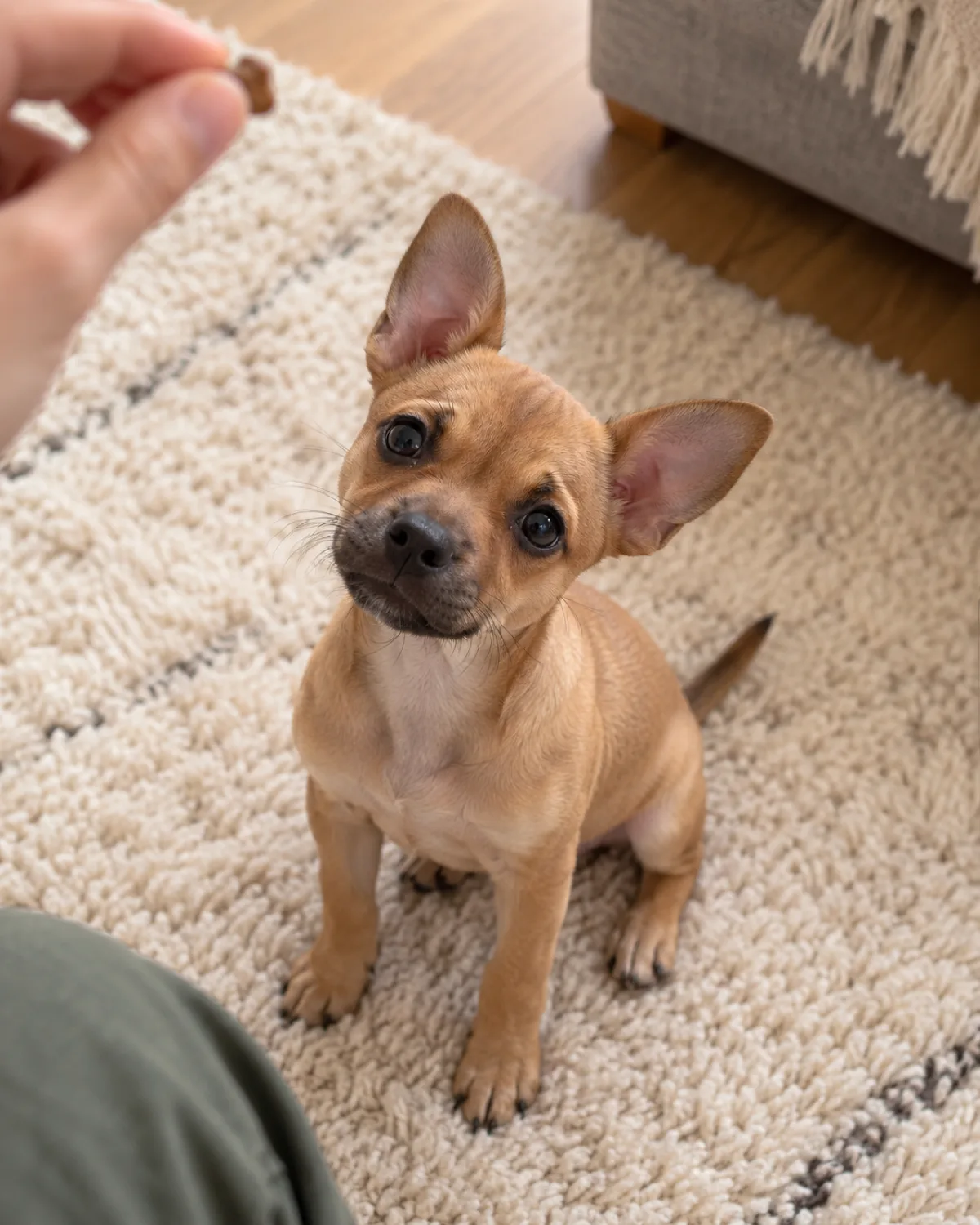
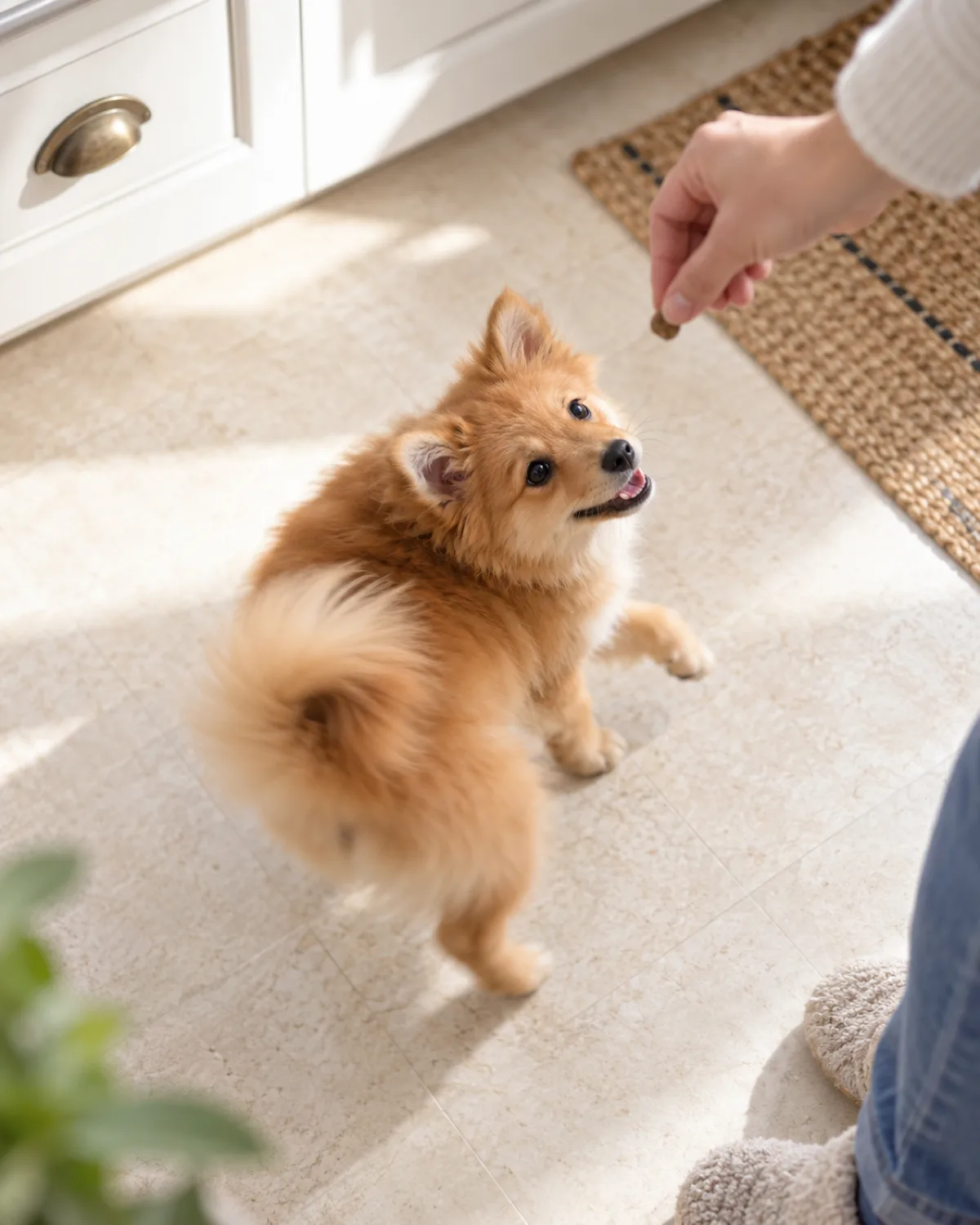
Say your puppy's name in a clear, upbeat tone. The instant they turn their head or make eye contact, mark it with a clicker or a "yes" and hand them a treat. Repeat five times, take a thirty-second break, then do five more.
Level
Setting
Distractions
Goal
1
Quiet room
None
Head turn within 1 second
2
Different room
TV on, family moving
Eye contact within 2 seconds
3
Backyard
Squirrels, birds
Full head snap under 1 second
4
Sidewalk
Dogs passing, people
Reliable eye contact every time
Two rules keep this game effective. First, never say the name more than once per rep — repeating it teaches the puppy that the first call is optional. Second, never use their name before something they dislike, such as a bath or nail trim, or you will poison the cue.
3. Touch Target
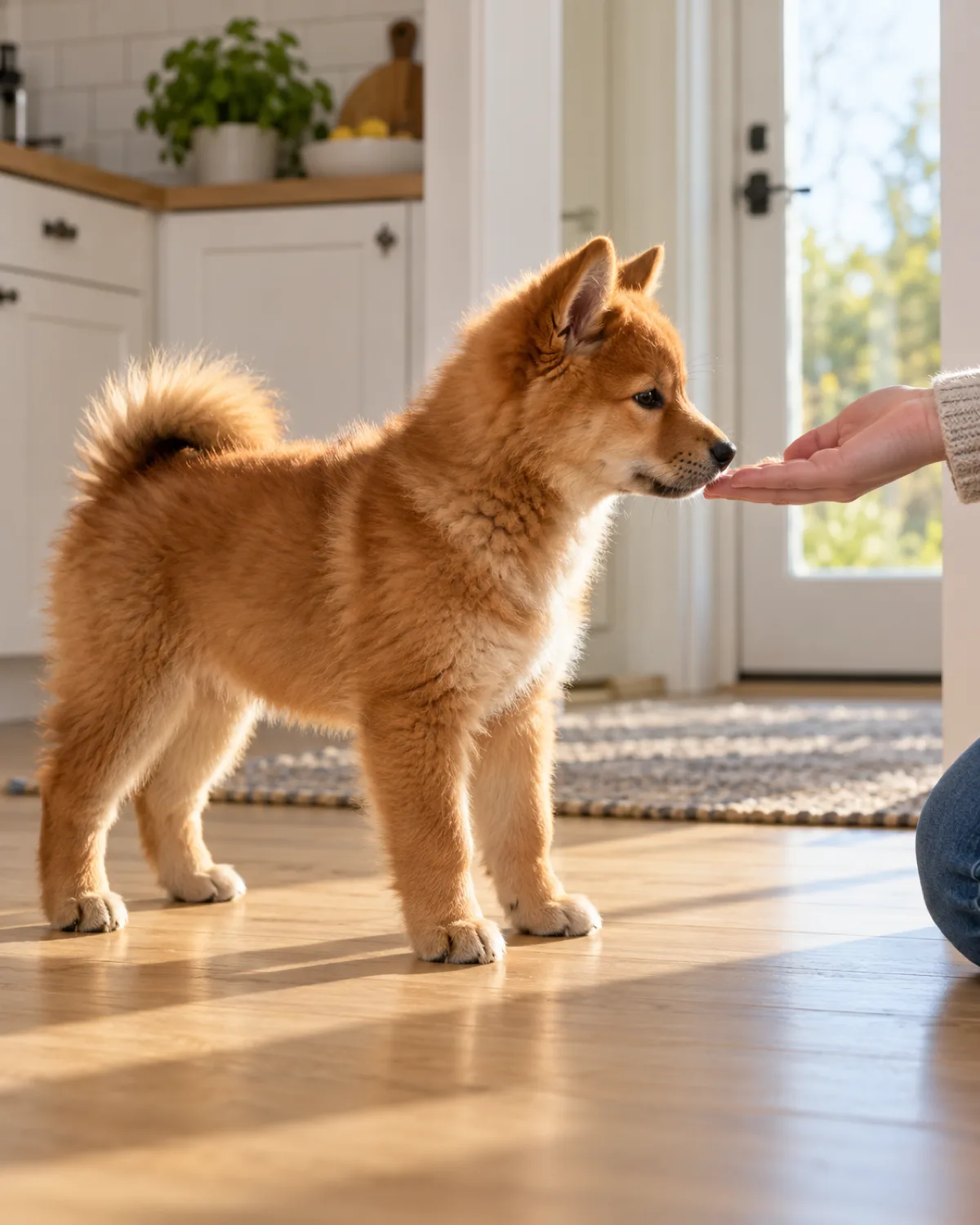
Touch targeting gives you a remote control for your puppy. Once they will follow your palm anywhere, you can guide them onto a scale at the vet, through a doorway without bolting, or away from something dangerous — all without touching them or using a leash.
Hold your open palm about two inches from your puppy's nose. Most puppies will investigate and bump it naturally. Mark the nose contact and treat. After five successful touches in a row, start moving your hand — up, down, to the side, behind your back.
Keep your hand still until the puppy is consistently bumping it at close range
Add a verbal cue like "touch" only after the behavior is reliable without it
Practice with both hands so the puppy does not only respond to one side
Use the target hand to lure them onto a mat, into a crate, or through a door frame
The real power shows up in real situations. A puppy who knows "touch" can be redirected away from a dropped chicken bone on the sidewalk by chasing your palm — faster and more reliable than shouting "leave it" at a puppy who has never practiced under pressure.
4. Find the Treat
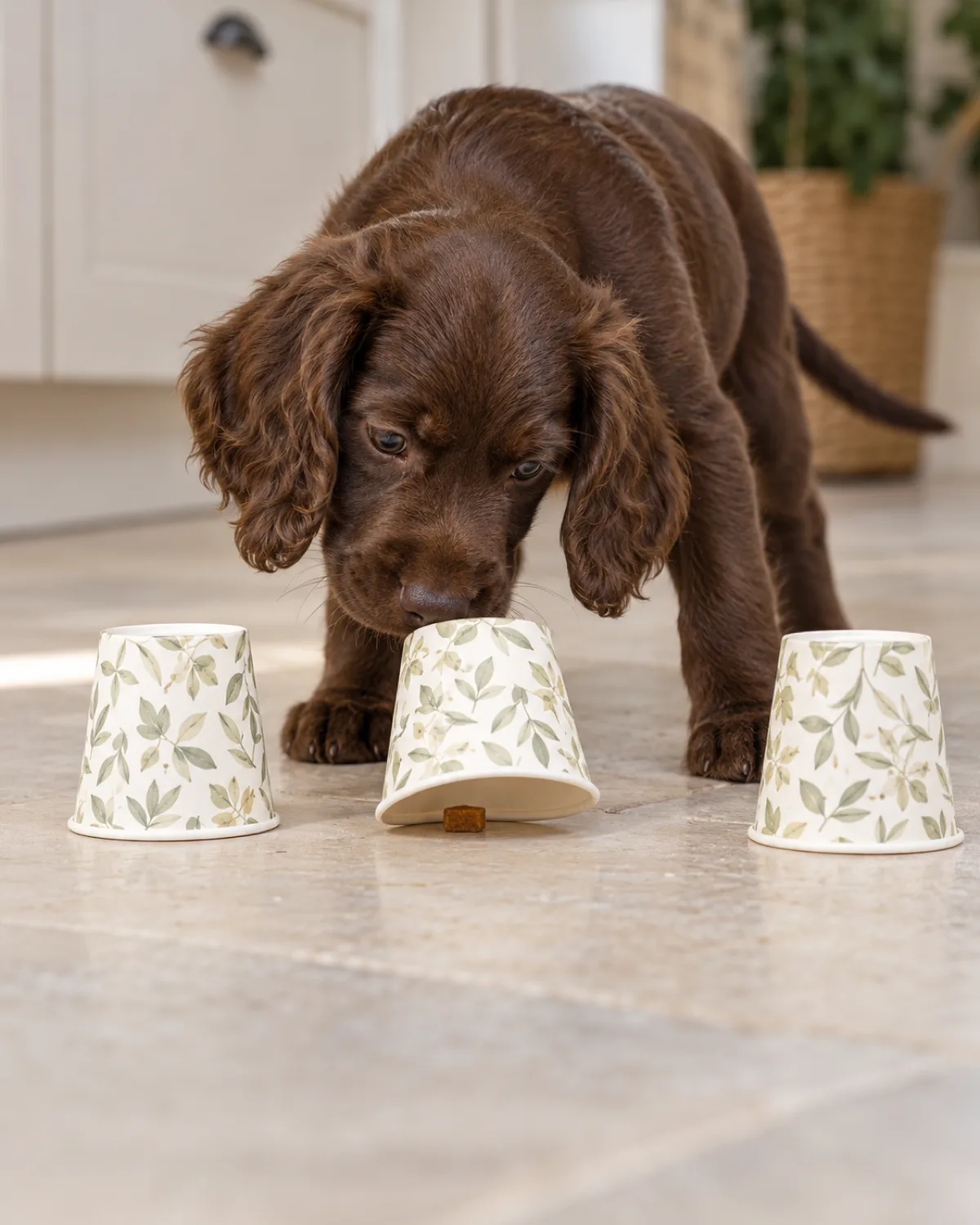
Cup games teach impulse control and problem-solving at the same time. Your puppy has to watch, remember, choose, and then wait for permission — four skills packed into thirty seconds of play.
Place three paper cups upside down on the floor. Let your puppy watch you slide a treat under one cup. Say "find it" and let them investigate. When they nose or paw the correct cup, lift it and let them eat the treat.
Once your puppy consistently picks the right cup, start adding difficulty:
Shuffle the cups slowly after placing the treat
Use identical opaque cups so they must rely on scent, not sight
Place treats under two cups and see if they find both before giving up
Add a short wait between hiding and releasing — this builds the stay muscle
Do not help them if they pick the wrong cup. Simply lift it to show nothing is there, reset, and try again. The mistake is the lesson — it teaches them to think before acting rather than just diving at the nearest object.
Ground Rules
Game Session Essentials
Four rules that keep every training game productive and fun for both of you.
5-Minute CapPuppies under six months lose focus fast. End the session before they check out — a three-minute session where they nailed every rep beats a ten-minute one that fell apart at minute six.
End on a WinAlways finish with a rep you know your puppy can do easily. Ending on success keeps them excited to play again next time instead of associating the game with failure.
Pea-Sized TreatsUse soft treats smaller than a pea so your puppy can eat them in one second and get back to playing. Large crunchy treats break the flow and add too many calories across a full session.
Never Force ItIf your puppy backs away from an obstacle, sniffs the ground, or yawns repeatedly, they are telling you they need a break. Forcing a scared puppy through a game builds fear, not skill.
5. Puppy Pushups
Puppy pushups turn three boring commands into one fast-paced game. Alternate between sit, down, and stand in rapid succession, marking and treating each transition. The speed is what makes it work — your puppy has to listen, process, and move their body quickly instead of zoning out between reps.
Start with just sit and down if your puppy does not know stand yet. Once they can switch between two positions without hesitation, add the third. The goal is smooth, fluid transitions — not speed for its own sake.
Use a different hand signal for each position so the visual cues are distinct
Randomize the order after the first week — sit-down-stand gets predictable fast
Add a brief pause between reps as an impulse control layer — they have to hold each position until the next cue
Take this game outside once indoor pushups are smooth, because the real test is whether they can focus with grass and smells competing for attention
Three sets of five pushups is a full workout for a young puppy. Their core muscles are still developing, and the repeated sit-to-down-to-stand cycle is genuinely physical. Watch for signs of fatigue — slower transitions, skipping a position, or lying down and staying there.
6. Which Hand
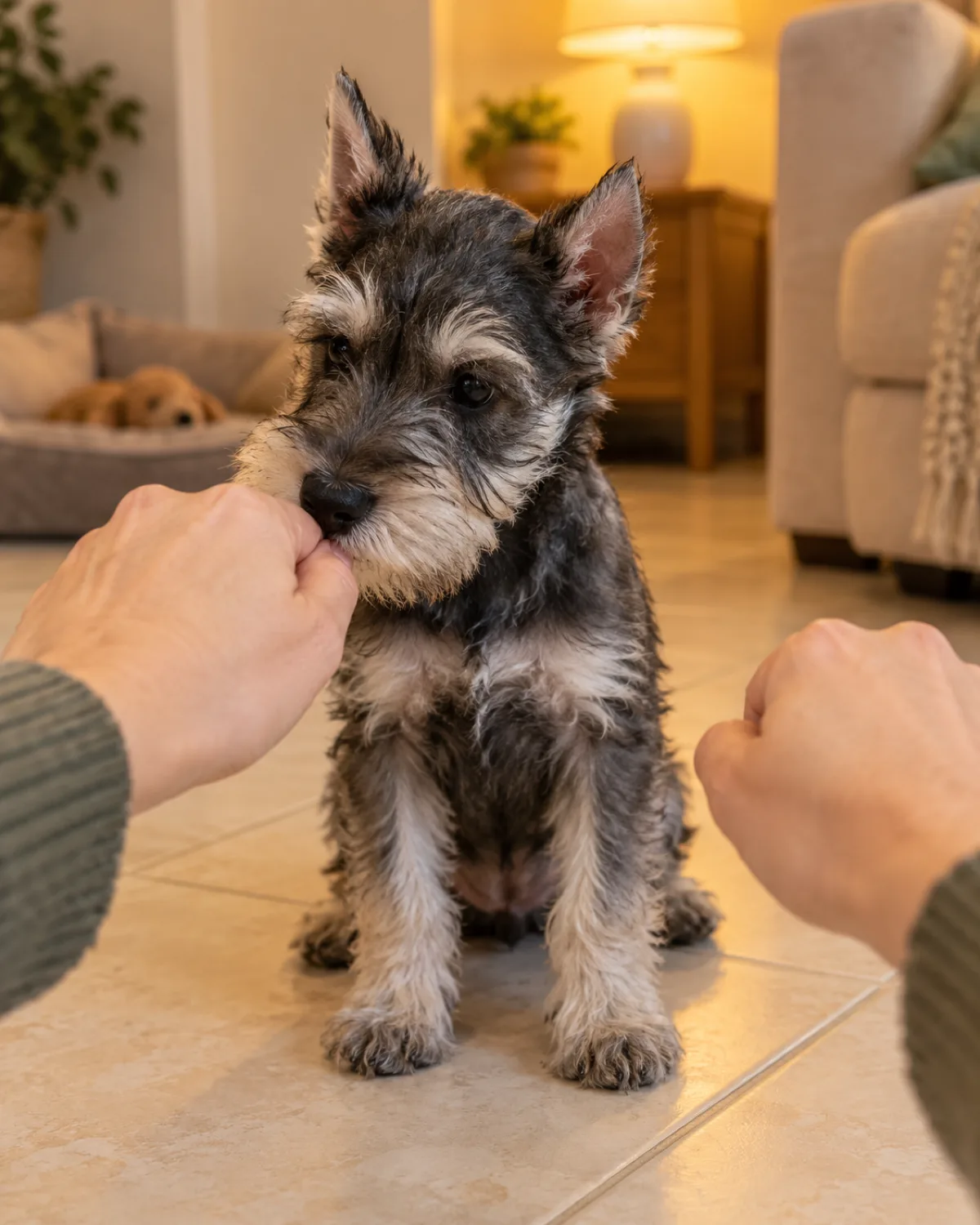
Which hand is the simplest game on this list and one of the most effective for teaching puppies to use their nose deliberately. Close a treat in one fist, hold both fists out at your puppy's nose height, and wait.
Your puppy will sniff, lick, or paw at one hand. If they choose the hand with the treat, open it and let them eat. If they choose wrong, show the empty hand, close both fists, and reset.
Most puppies figure out the nose strategy within five rounds. Once they are reliably sniffing for the treat rather than guessing, the game shifts from a coin flip to a scent exercise:
Switch hands between every rep so they cannot rely on pattern
Close both fists tighter so less scent escapes — this sharpens their discrimination
Hold your fists farther apart so they have to commit to a choice before walking over
Try it with a non-food scent on a cotton ball for advanced nose work
This game also teaches an underrated skill: waiting for a decision point. Your puppy learns that pausing to assess is faster than lunging at the first thing they smell. That patience transfers directly to leave it training.
7. Red Light Green Light
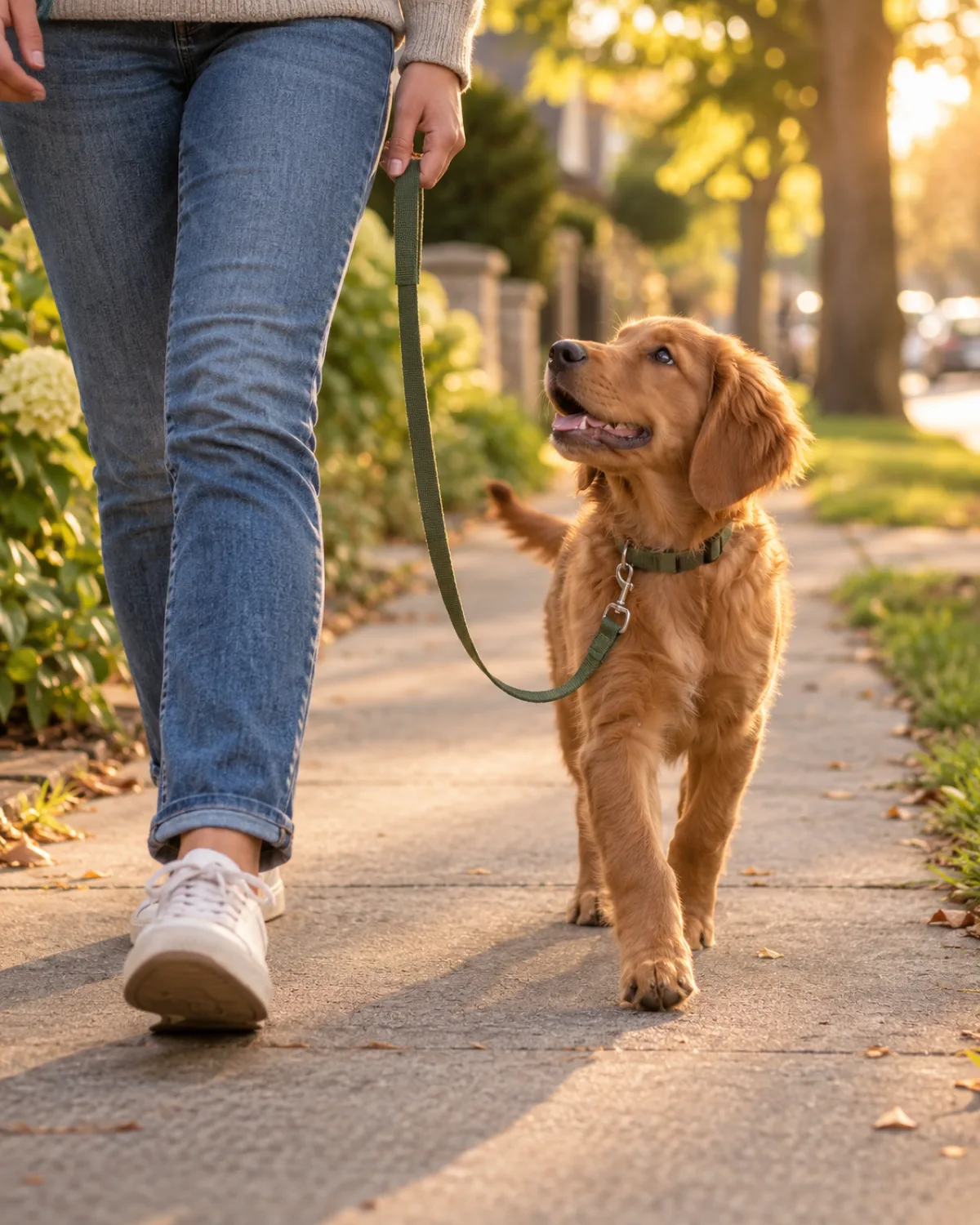
Red light green light is leash training disguised as a game. Walk forward at a normal pace. The instant the leash goes tight, freeze completely — feet planted, hands still, zero forward motion. Wait for your puppy to look back at you or let slack return to the leash, then immediately resume walking.
The rule is simple and absolute: tight leash means the walk stops, loose leash means the walk continues. No yanking, no corrections, no turning around. Just stopping.
Play this on a quiet street or sidewalk with minimal distractions for the first week
Wear shoes you can stand in comfortably because the first few sessions involve a lot of standing still
Carry treats in your pocket and occasionally reward your puppy for walking beside you with a loose leash — catching them doing it right is more powerful than only marking the mistakes
Graduate to busier environments once they can walk a full block without triggering a red light
This works because puppies pull for one reason: it works. Every step you take while the leash is tight teaches them that pulling gets them where they want to go. Red light green light reverses that equation entirely.
8. Muffin Tin Puzzle
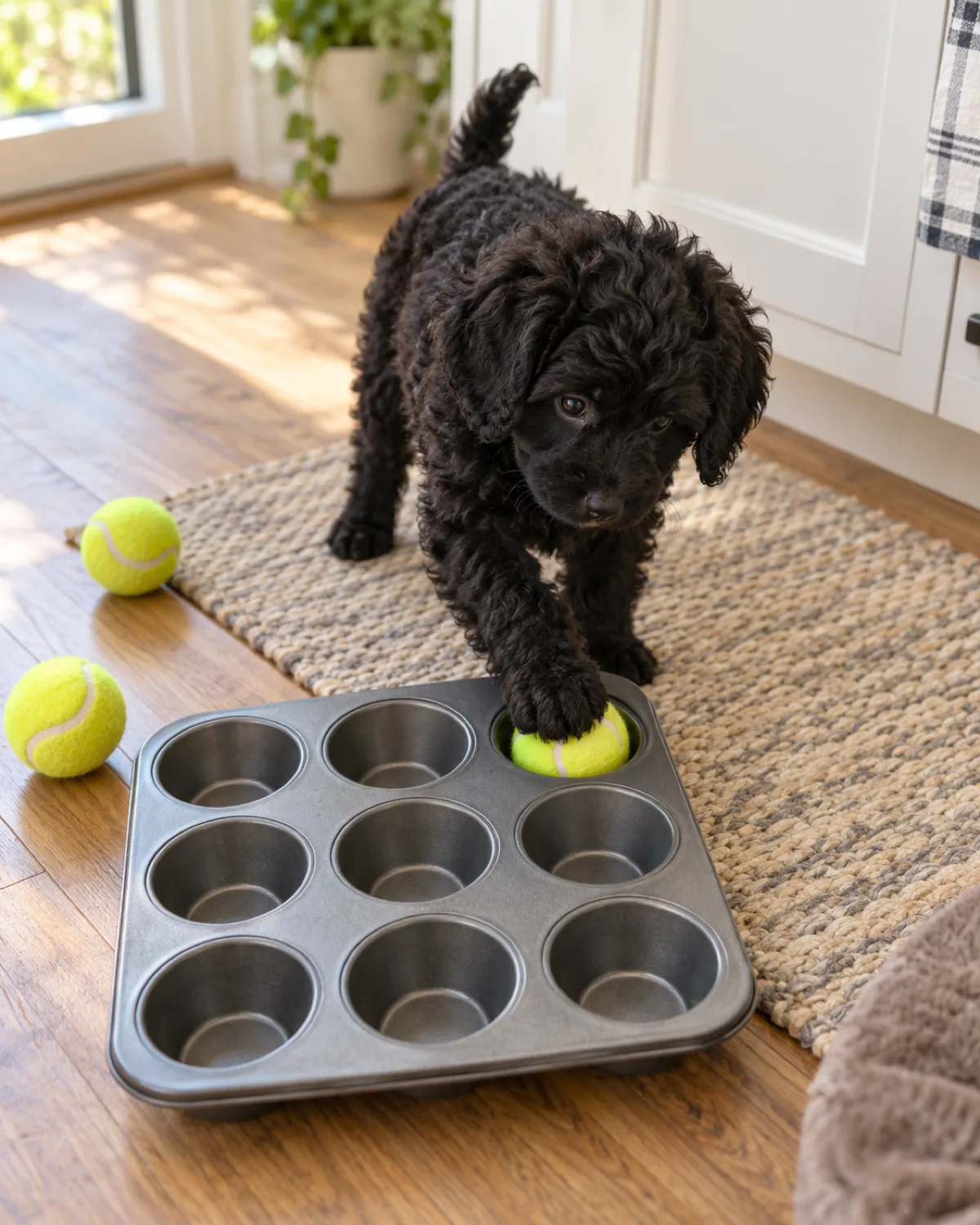
A muffin tin, six tennis balls, and a handful of treats make one of the best brain games for puppies. Place a small treat in three or four of the twelve cups, then cover every cup with a tennis ball. Set the tin on the floor and let your puppy figure it out.
They will nose, paw, and roll the balls off the cups to find the treats underneath. The cups without treats still get investigated, which teaches persistence — the next ball might be a win, so keep going.
Difficulty
Setup
What It Teaches
Easy
Treats in every cup, balls sitting loosely
Basic interaction with the puzzle
Medium
Treats in half the cups, balls pressed in snugly
Persistence and scent discrimination
Hard
Treats in 2-3 cups, some balls wedged tightly
Strategic problem-solving and patience
Two tips make this game last longer. First, use small smelly treats like freeze-dried liver — they give your puppy a strong scent trail. Second, place the tin on a non-slip surface so it does not slide around the kitchen while they paw at it.
Choose Your Path
Match Games to Your Puppy’s Energy
Not every game suits every puppy. High-drive puppies and calm thinkers respond to different types of play.
High-Drive PuppiesStart with hide and seek, two-toy fetch, tug with rules, and red light green light. These burn physical energy while sneaking in impulse control. Add puzzle games once they can settle after play.
Calm ThinkersStart with find the treat, which hand, muffin tin puzzle, and touch target. These engage their brain without overstimulating their body. Gradually layer in movement games once their confidence builds.
9. Tug with Rules
Tug is not a dominance battle. It is one of the most effective tools for teaching bite inhibition and impulse control — if you play it with structure.
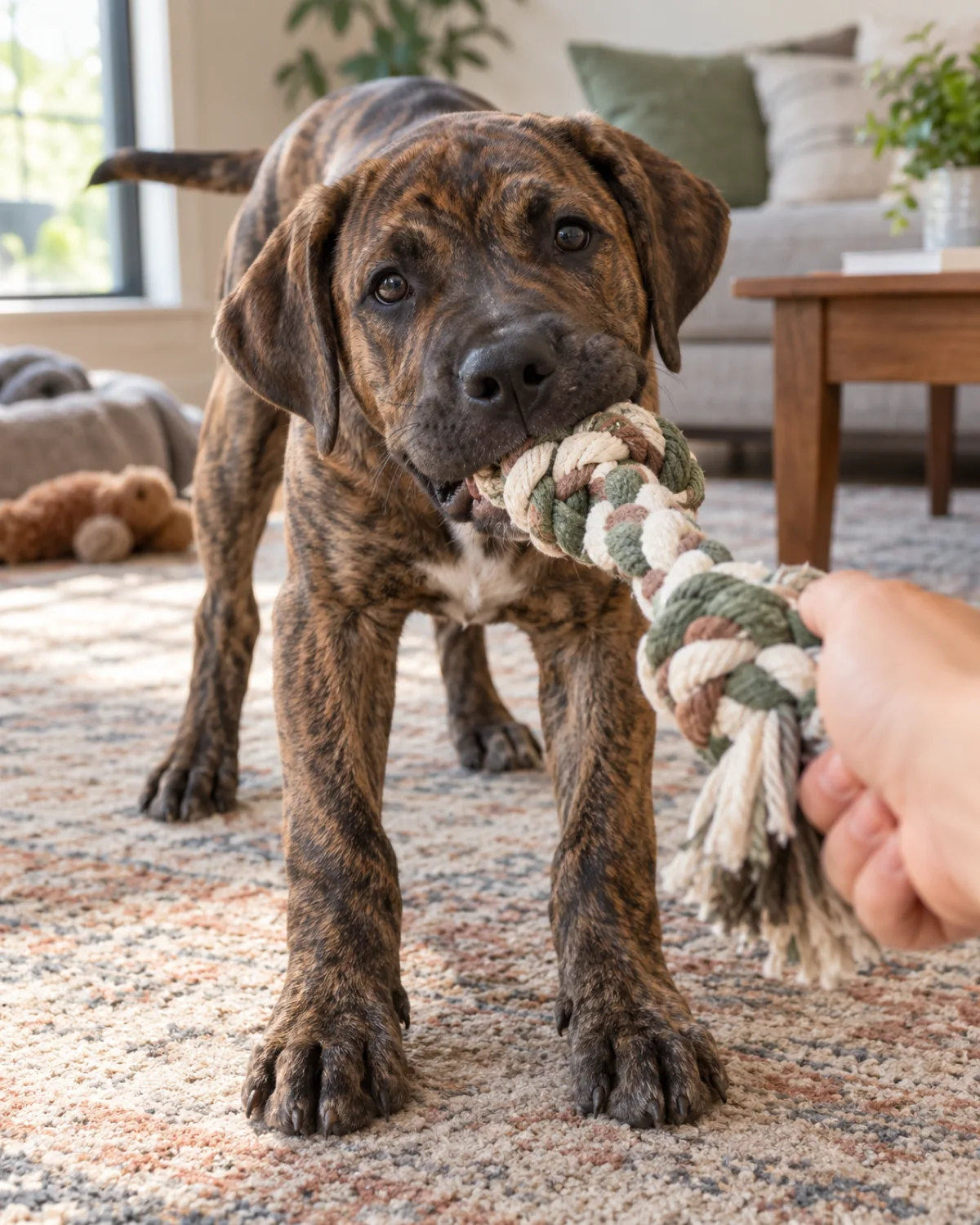
Designate one specific toy as the tug toy. Start the game with a clear cue like "get it" and play for fifteen to twenty seconds of moderate pulling. Then hold the toy still against your body and say "drop it" in a calm voice. The instant the puppy releases, say "yes" and restart the game immediately.
The reward for dropping the toy is not a treat — it is getting to play tug again, which is far more motivating
Keep the toy low and pull sideways, never straight up, to protect your puppy's neck
If teeth touch skin, the game ends immediately — drop the toy, stand up, and walk away for thirty seconds
Store the tug toy out of reach between sessions so it stays special
The drop-and-restart cycle is where the real training happens. Your puppy learns that self-control (releasing on cue) gives them access to the thing they want most (more tug). That principle powers every advanced behavior they will learn later.
10. Go Find It
Go find it combines stay practice with scent work in a single game. Ask your puppy to sit, toss a treat three feet away in plain sight, and release them with "find it." Once they eat the treat, call them back and repeat.
After five easy reps, start making it harder:
Toss the treat behind a chair leg or under the edge of a rug
Walk the treat to a hiding spot while your puppy watches, then release
Have someone hold your puppy while you hide treats in another room, then release them to search
Scatter a handful of treats across the lawn and let them hunt for five minutes
The progression from "treat on the floor in front of you" to "treats hidden around the house" should take about two weeks. Do not rush it — each step needs to be easy enough that your puppy succeeds at least eight times out of ten before you move on.
This game tires puppies faster than a thirty-minute walk because scent work uses an enormous amount of mental energy. A single five-minute find-it session in the backyard can take the edge off a hyperactive evening the way physical exercise alone cannot.
11. Two-Toy Fetch
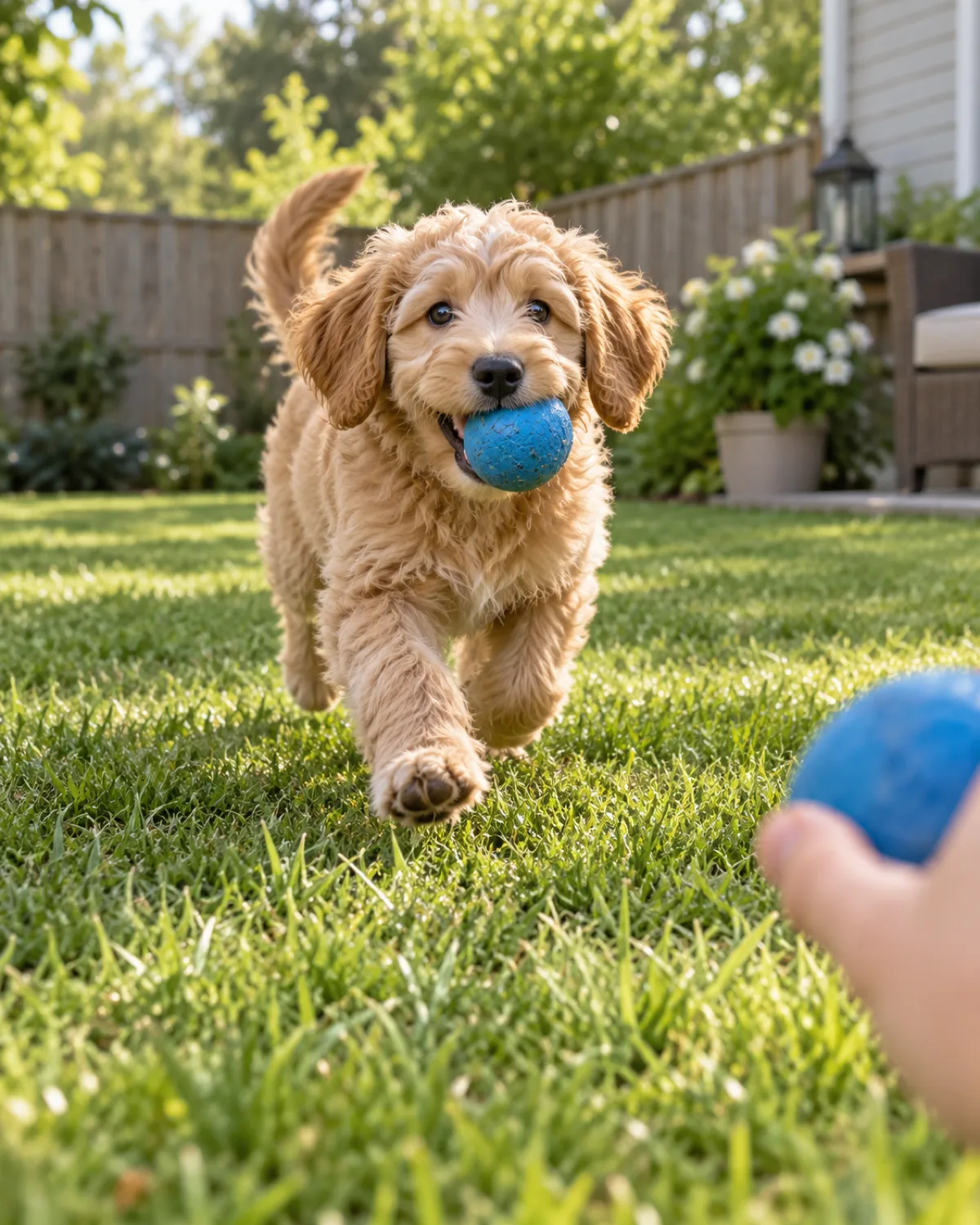
Standard fetch breaks down with puppies for one predictable reason: they grab the ball and run away. Two-toy fetch fixes this by making the return the exciting part.
Throw toy one. When your puppy picks it up and starts running around with it, pull out toy two — identical to the first — and make it interesting. Squeak it, bounce it, wave it. The moment your puppy drops toy one and runs toward you, throw toy two in the opposite direction. Walk over, pick up toy one, and repeat.
Both toys must look and feel identical so neither one is more valuable than the other
Never chase your puppy to get the first toy back — chasing rewards the keep-away behavior
Keep sessions to five throws maximum, then end with tug or a treat scatter to keep fetch exciting
Once return is reliable, swap one toy for a treat to transition toward traditional one-ball fetch
The beauty of this game is that you never have to teach "drop it" separately. Your puppy drops the first toy voluntarily because the second toy is more interesting right now. Over time, the return becomes automatic — they bring the ball back because that is what unlocks the next throw.
About the Author
Jess Calloway
Dog mom to three very different dogs who each taught me that training works best when neither of us realizes we are doing it. Every game on this list came from a real session on my living room floor — the ones that survived are the ones my dogs asked to play again.
12. Obstacle Course
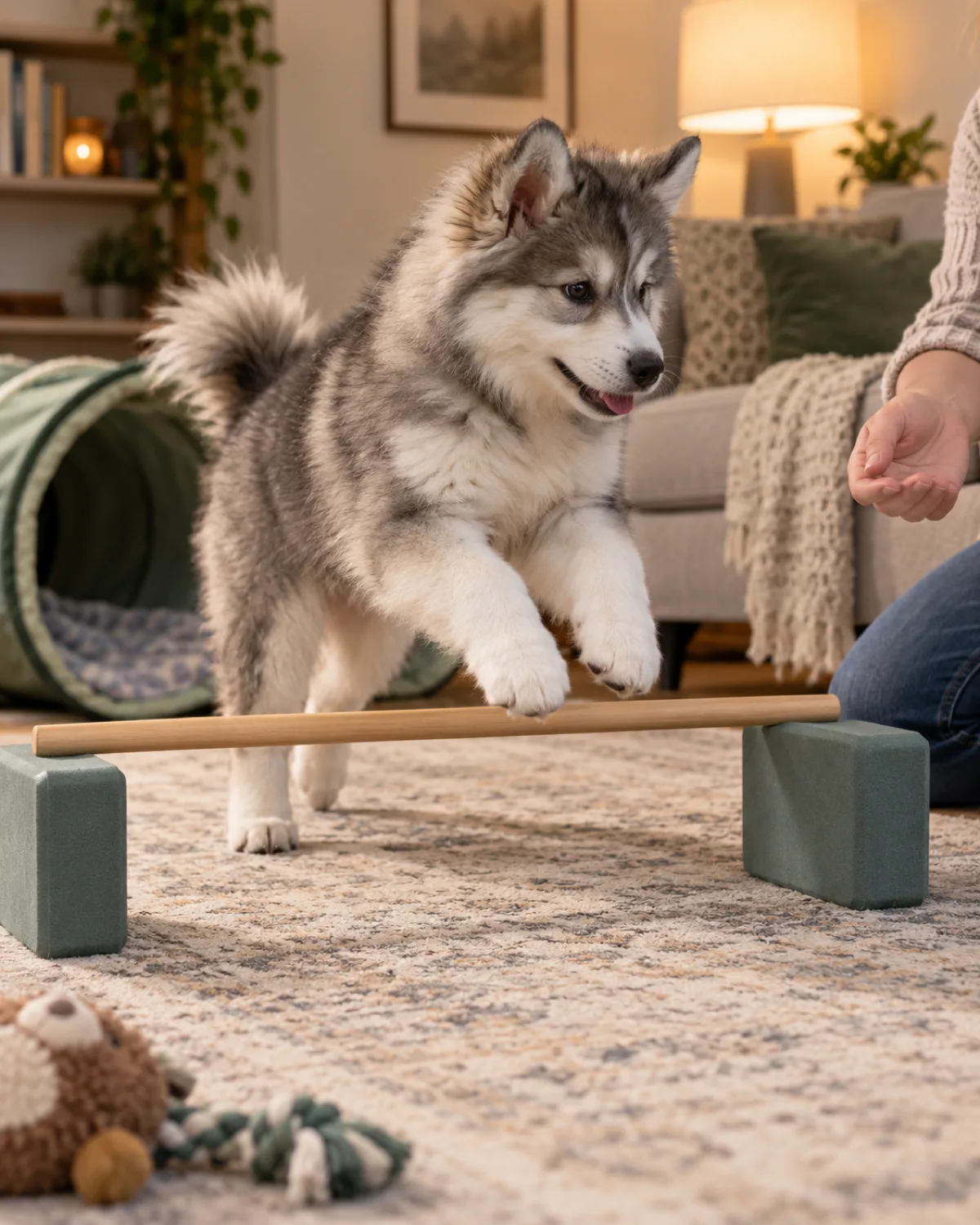
A living room agility course built from household items teaches body awareness, confidence, and lure-following in a single circuit. You do not need real agility equipment — you need three objects and five minutes.
Set up a basic three-station course:
Jump: a broomstick resting on two low blocks or thick books (never higher than your puppy's elbow)
Tunnel: a blanket draped over two chairs with enough space for your puppy to walk through
Wobble board: a cutting board or cookie sheet placed on top of a rolled towel so it tilts slightly when stepped on
Lure your puppy through each station with a treat, marking and rewarding at each one. Keep the order the same for the first week so they learn the route, then shuffle it to keep them thinking.
Three things keep this game safe for growing joints. First, never raise the jump above your puppy's natural stride height — high jumps on developing bones cause real damage. Second, make the wobble board only slightly unstable so the movement is surprising but not frightening. Third, run the course on carpet or a yoga mat, never on a slick floor where paws slide.
13. Spin and Twirl
Spin looks like a party trick, but it is actually a lure-following precision drill. A puppy who can track a treat through a tight 360-degree circle has the coordination and focus to follow any lure-based training you throw at them later.
Hold a treat at your puppy's nose and slowly draw a circle. Most puppies will follow their nose around in a complete rotation. Mark and treat the second the circle closes. After ten successful spins, add the cue word "spin."
Once "spin" in one direction is solid, teach "twirl" going the opposite way:
Use a different hand for each direction so the visual cue is distinct
Start with large circles and tighten them gradually as your puppy gets smoother
Speed up the lure once accuracy is reliable — fast spins build core strength and coordination
Chain spin and twirl together for a double rotation once both directions are solid
The hidden value of this game is body awareness. Puppies who practice spinning learn where their hind end is in space, which directly improves their ability to navigate tight spaces, make turns on leash, and hold positions like down-stay without fidgeting.
14. Settle on a Mat
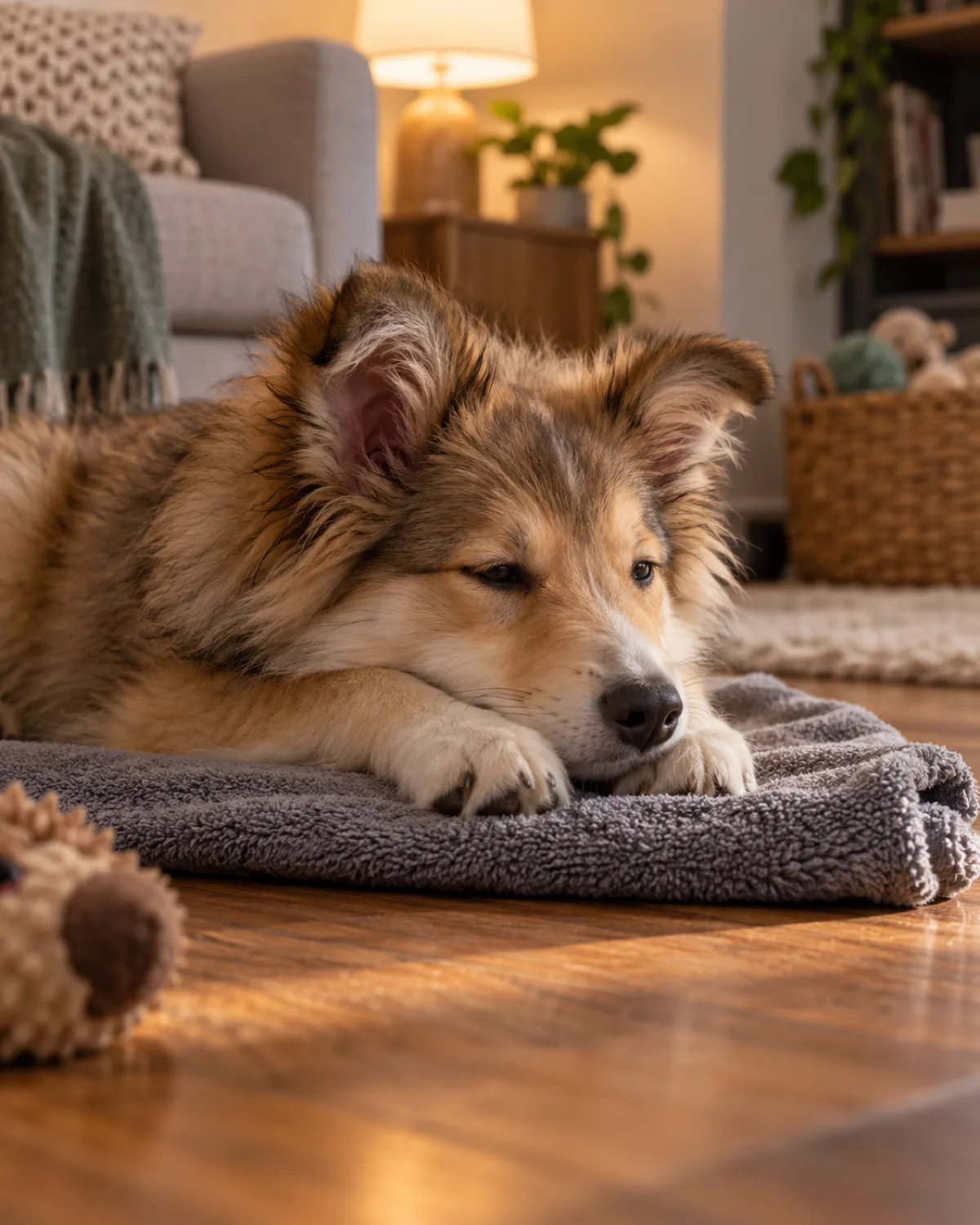
Every puppy needs an off switch. Settle on a mat teaches your puppy that calmness is a skill worth practicing — and that lying quietly on a designated spot earns rewards just as reliably as jumping through hoops.
Place a towel or small mat on the floor. Toss a treat onto it so your puppy walks over to investigate. The moment they stand on the mat, mark and treat. When they sit on it, mark and treat again. When they lie down on it — jackpot: three treats in a row.
Build duration slowly:
Start by rewarding every five seconds of calm lying down
Stretch the intervals to ten seconds, then twenty, then a full minute
Add mild distractions — walk to the fridge, open a cabinet, sit down in a chair
Practice during real life: drop the mat while you eat dinner, during a video call, or while guests are at the door
The mat becomes a portable calm zone. Once your puppy understands that lying on the mat is a rewarding activity, you can bring it to outdoor cafes, vet waiting rooms, and friends' houses. It is the single most useful behavior for a dog who needs to exist peacefully in human spaces.
Save This
14 Puppy Training Games
1Hide and Seek RecallOne person hides, the puppy searches — builds bombproof recall through pure excitement.
2The Name GameSay their name, mark eye contact, treat — teaches that their name means look at you immediately.
3Touch TargetNose bumps your palm on cue — gives you a remote control for guiding your puppy anywhere.
4Find the TreatHide a treat under one of three cups — builds problem-solving and impulse control simultaneously.
5Puppy PushupsRapid sit-down-stand switching — turns three basic commands into one fast-paced brain workout.
6Which HandTreat hidden in one fist — teaches deliberate nose use and patience before choosing.
7Red Light Green LightFreeze when the leash goes tight — teaches that pulling stops the walk, loose leash keeps it going.
8Muffin Tin PuzzleTennis balls over treats in a muffin tin — builds persistence and scent discrimination.
9Tug with RulesStart cue, stop cue, restart — teaches that impulse control unlocks more play.
10Go Find ItToss and hide treats with a release cue — combines stay practice with scent work.
11Two-Toy FetchSecond toy lures them back — solves the grab-and-run problem without teaching drop it separately.
12Obstacle CourseBroomstick jumps, blanket tunnels, wobble boards — builds body awareness and confidence.
13Spin and TwirlLure through a tight circle — secretly trains coordination and hind-end awareness.
14Settle on a MatReward calm lying on a towel — teaches an off switch and creates a portable calm zone.
PAWLIQA.COM
Frequently Asked Questions
At what age can you start training games with a puppy?
Most puppies are ready for simple training games like the name game and which hand at eight weeks old. Their attention span is short at that age — sessions should last one to two minutes maximum. More complex games like obstacle courses and two-toy fetch work better after twelve weeks, when coordination and confidence have developed enough to handle multi-step activities.
How long should a puppy training session last?
Keep sessions under five minutes for puppies under six months and under ten minutes for older puppies. A single focused five-minute session produces better results than a scattered fifteen-minute one. Watch for signs your puppy is losing focus — sniffing the ground, looking away, scratching, or yawning — and end the session the moment you see them.
What treats work best for puppy training games?
Soft, smelly treats smaller than a pea work best because they can be eaten in one second without breaking the flow. Freeze-dried liver, small pieces of cooked chicken, or commercial training treats cut into quarters are reliable options.
Avoid crunchy biscuits — the chewing time kills momentum. For more treat options, keep variety high so your puppy stays interested.
Can training games replace regular obedience classes?
Training games build the same core skills — recall, impulse control, focus, and basic positions — but they cannot replace the socialization component. A group class exposes your puppy to other dogs, new people, and unfamiliar environments in a controlled setting.
The ideal approach is both: games at home for daily skill-building and a weekly class for socialization and structured learning around distractions.
How do I know if my puppy is overstimulated during a game?
An overstimulated puppy bites harder than usual, barks nonstop, cannot settle between reps, zooms around the room, or ignores treats they normally love. If you see any of these signs, stop the game immediately.
Put the toys away, scatter a few treats on the floor to encourage sniffing (which activates the calming parasympathetic nervous system), and let your puppy decompress for at least fifteen minutes before any more interaction.
Teaching a dog to spin starts with a food lure at nose level, progresses to an open-palm hand gesture, and ends with a verbal cue alone. This guide walks through every stage, flags the mistakes that stall progress, and shows how to keep training sessions short and productive.
An overstimulated dog is not being bad. This guide walks through the place cue, structured down-stays, environment management, and daily decompression routine that teach a dog to settle on its own.
When a house-trained dog starts having accidents again, it is rarely about stubbornness. This guide walks through the vet check, deep cleaning, schedule rebuild, and positive reinforcement protocol that actually stops indoor peeing for good.