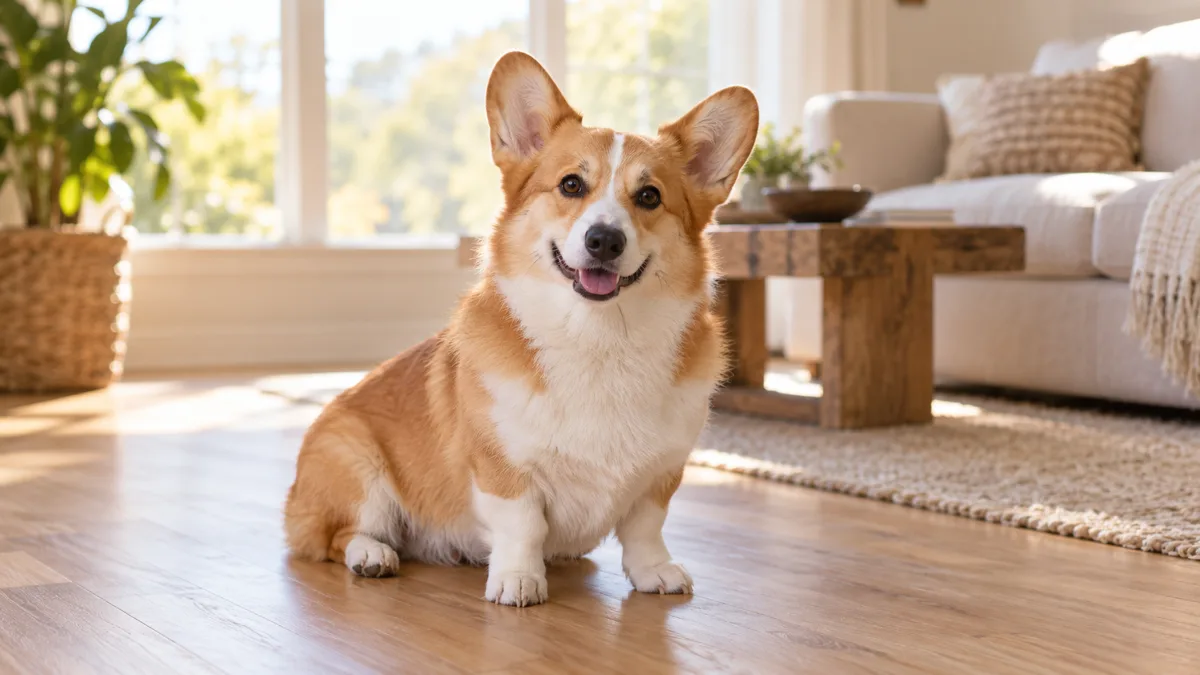
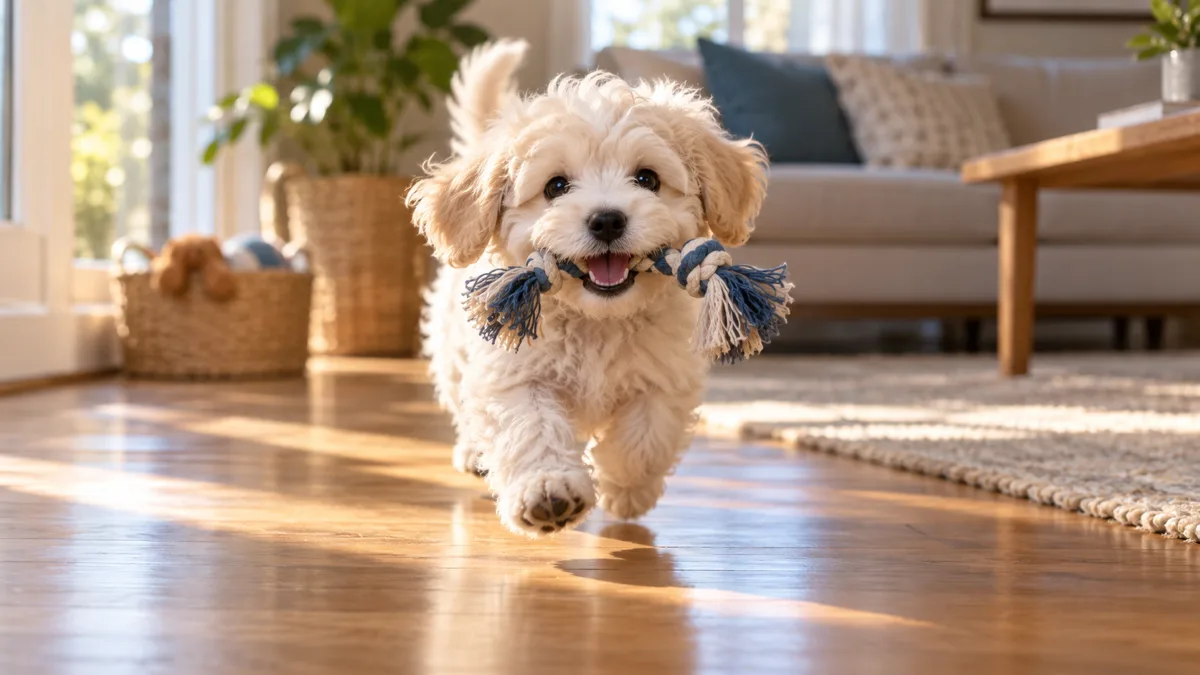
Our middle dog learned sit in about four minutes. Our youngest took three days. Same method, same treats, same room — completely different timelines.
The method is not complicated. Hold a treat, move your hand, wait for the rear to hit the floor. But the details between those steps are where most guides skip ahead.
This is the full sequence, from the first lure to a sit that holds at the front door.
Jump to a section
How to teach a dog to sit
From the first lure to a sit that works at the front door, the park, and everywhere in between.
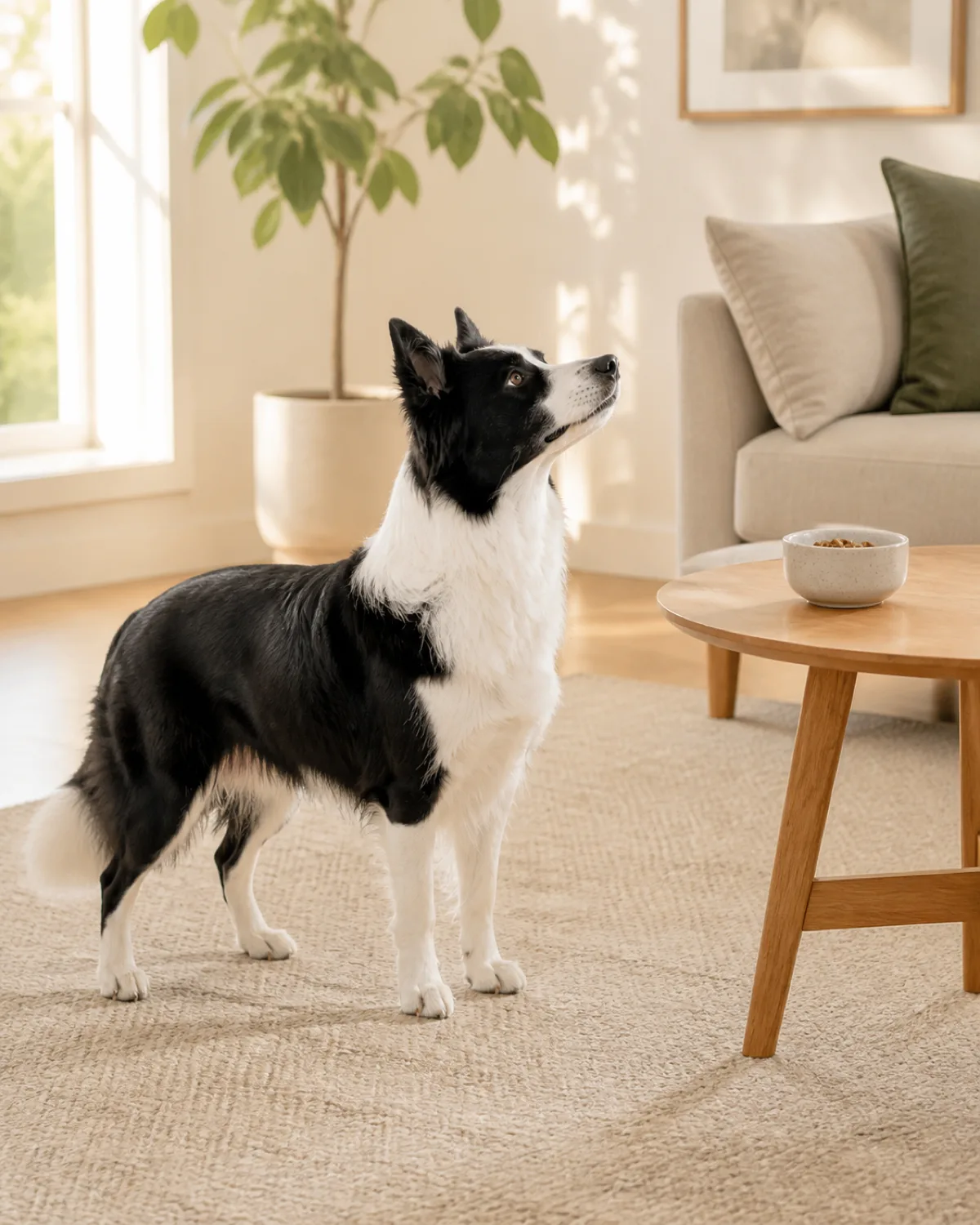
Pick a room with no other people, no toys on the floor, and the TV off. Distractions make every new skill harder, and sit is the first skill most dogs learn, so the environment matters more than you might expect.
Cut training treats into pea-sized pieces. You will go through a lot of them in the first few sessions, and large treats slow the dog down between reps. Soft treats work better than crunchy ones because the dog can swallow and refocus faster.
Keep your treat pouch or a small bowl at waist height. Reaching into a bag on the counter every time breaks the rhythm and gives the dog time to wander off.
What you need before the first rep
A flat collar or no collar at all. A handful of soft treats. Two to three minutes of uninterrupted quiet. That is the entire setup.
Use the lure method to guide the sit
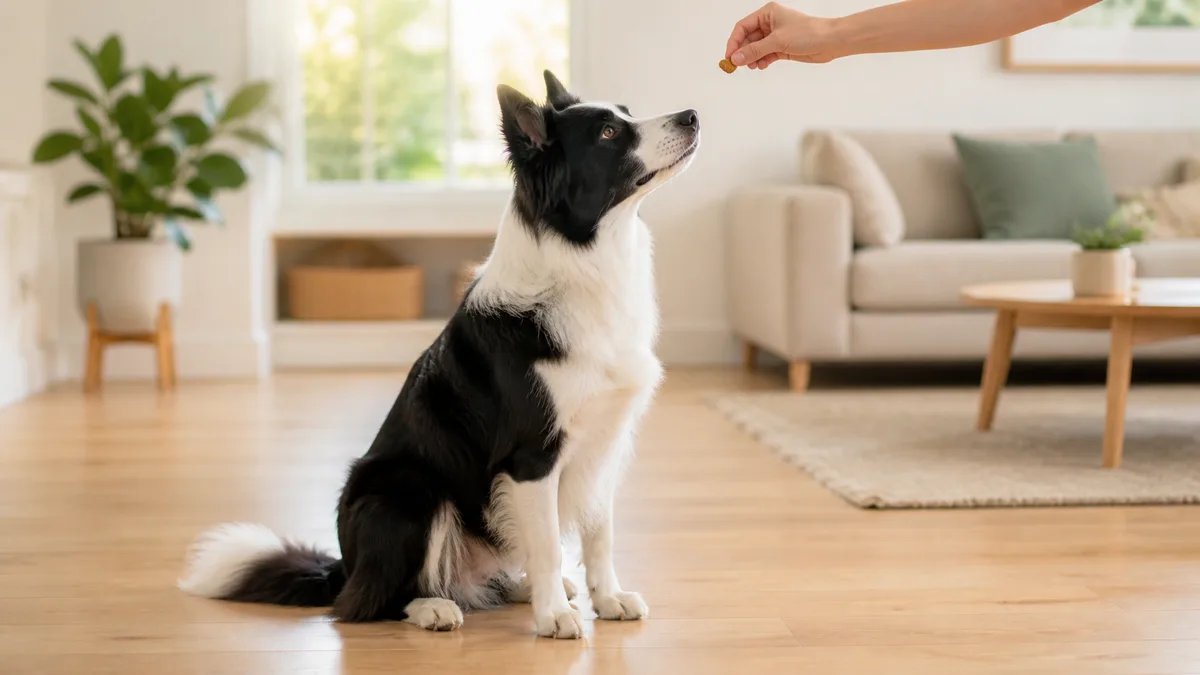
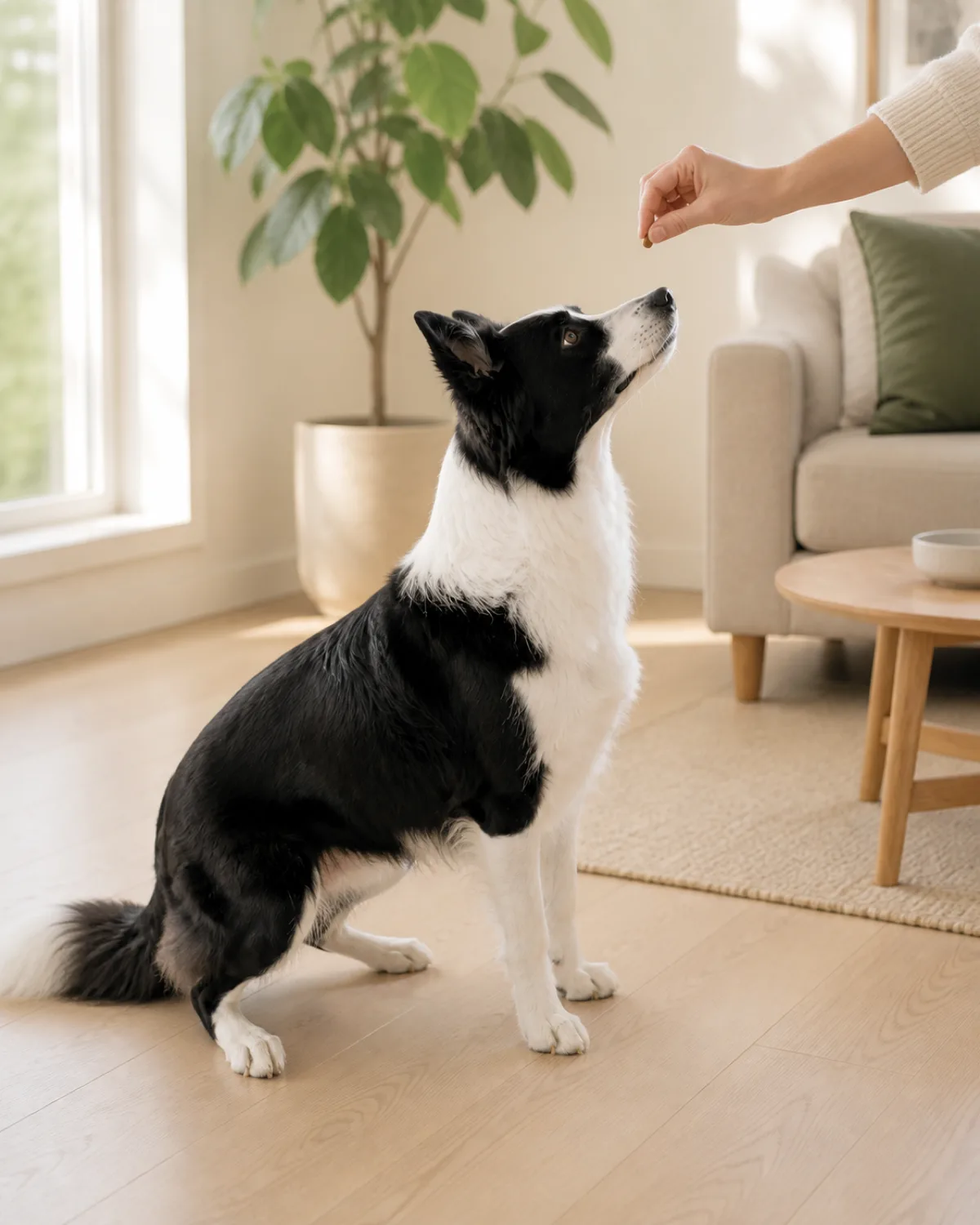
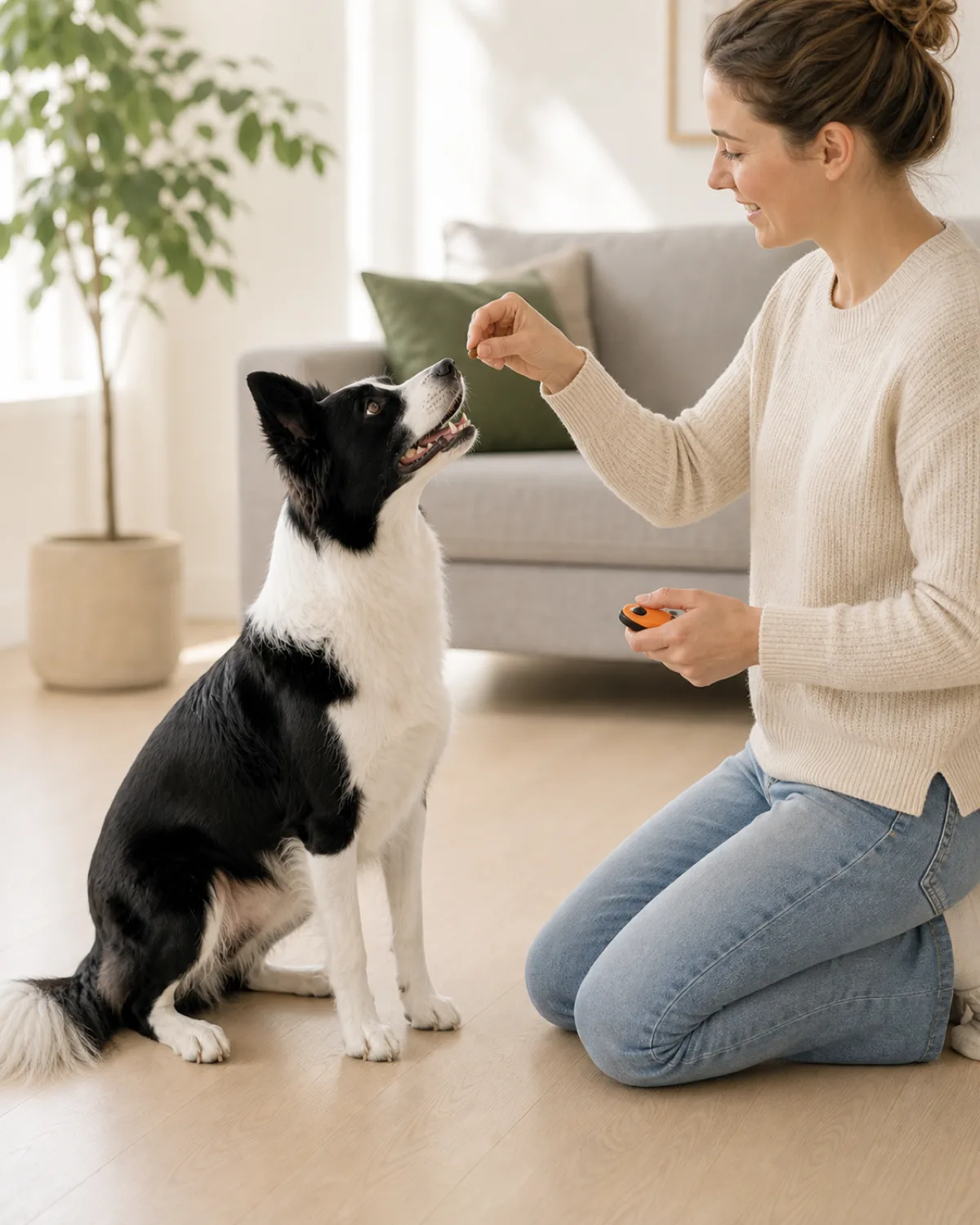
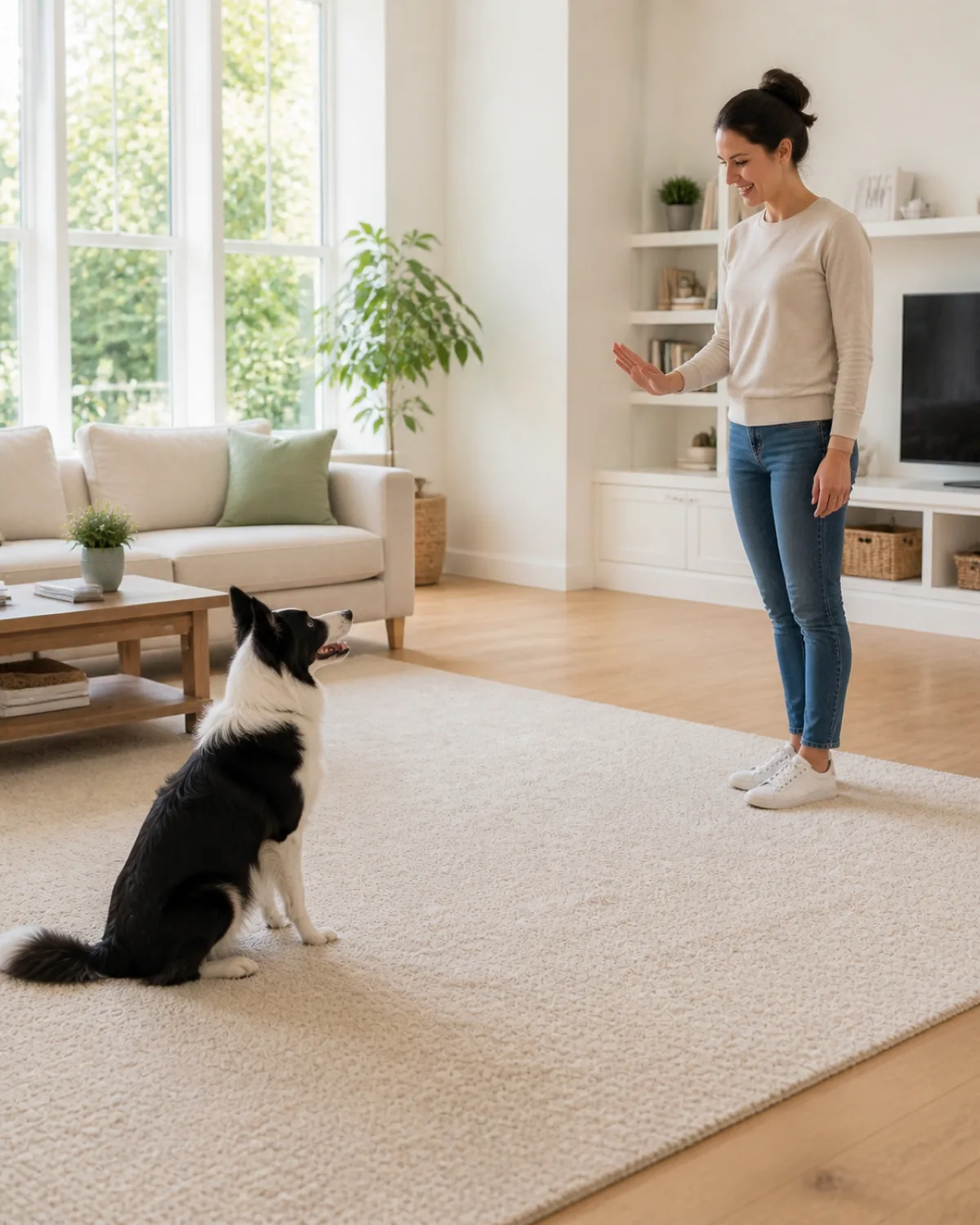
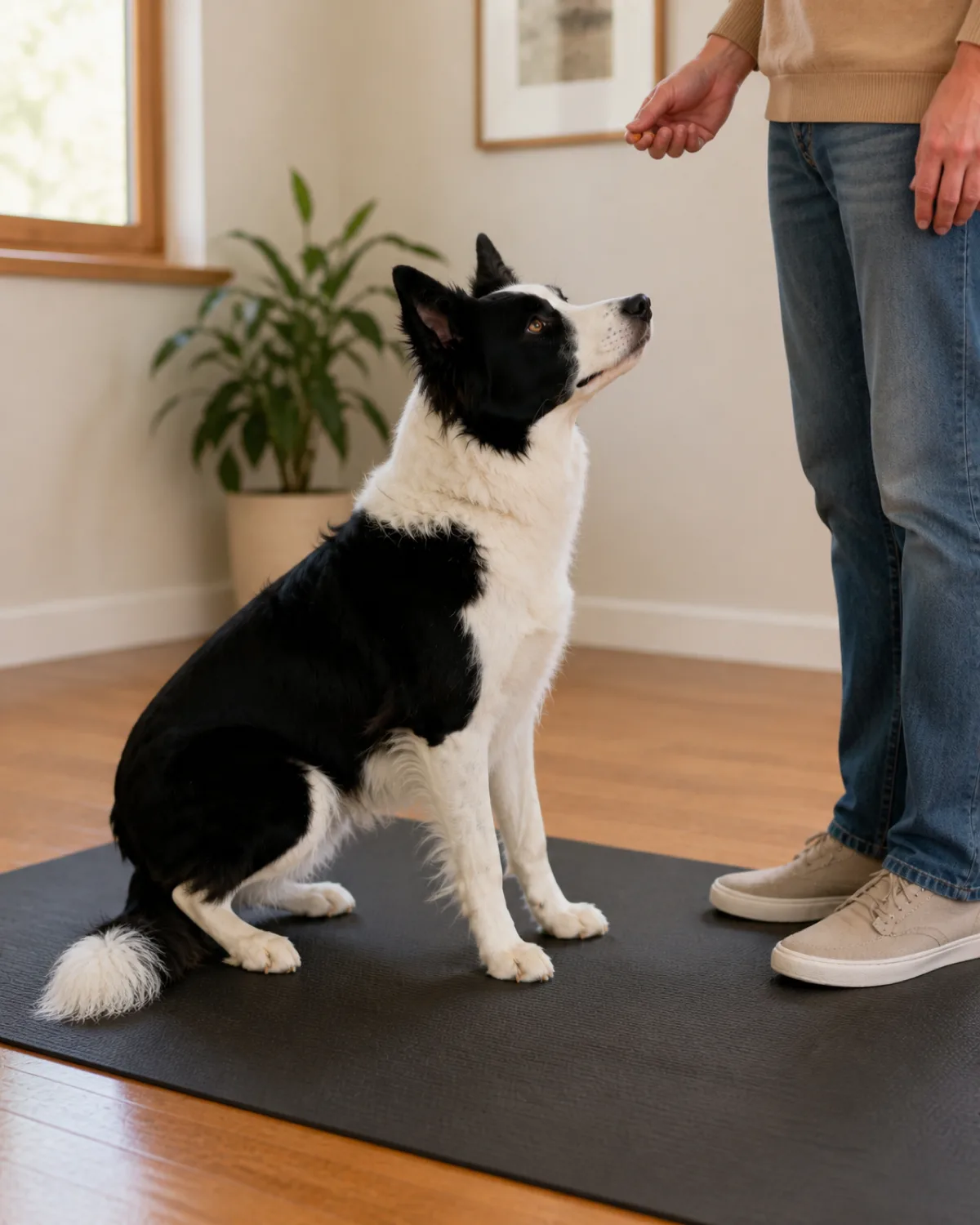
Hold a treat between your thumb and first two fingers, close to the dog's nose. Let the dog sniff it but do not let go.
Slowly arc your hand upward and slightly back, over the dog's head. The dog's nose follows the treat. As the nose goes up, the rear end goes down. Physics does the work.
The moment the rear touches the floor, open your fingers and let the dog take the treat. Do not say anything yet. No cue word, no praise, no name. Just the treat.
Repeat this five times. Most dogs start sitting faster by the third rep because they connect the pattern: nose up, rear down, treat appears.
If the lure is not working
Quick fixes for the two most common stalls
Dog jumps instead of sittingYour hand is too high. Lower the treat so it stays just an inch above the nose. The arc should be shallow, not vertical.
Dog backs up instead of sittingPractice with a wall behind the dog. With nowhere to reverse into, the only option is rear-end-down.
Mark the exact moment your dog sits
Timing decides whether the dog learns "sit" or "look at the human's hand." The marker — a clicker or a short word like "yes" — has to land the instant the rear hits the floor, not a second after.
Click or say "yes" the moment you see the sit, then deliver the treat within one second. The marker bridges the gap between the behavior and the reward so the dog knows exactly which action earned the food.
If you are new to clicker training, practice without the dog first. Drop a tennis ball, click the instant it hits the ground, then pick it up. Ten reps of that will sharpen your timing enough.
Consistency matters more than speed. A marker that comes at the same moment every time teaches faster than one that is sometimes early, sometimes late.
Add the verbal cue after your dog gets it
Wait until the dog is sitting reliably — at least eight out of ten lured reps successful — before you add the word.
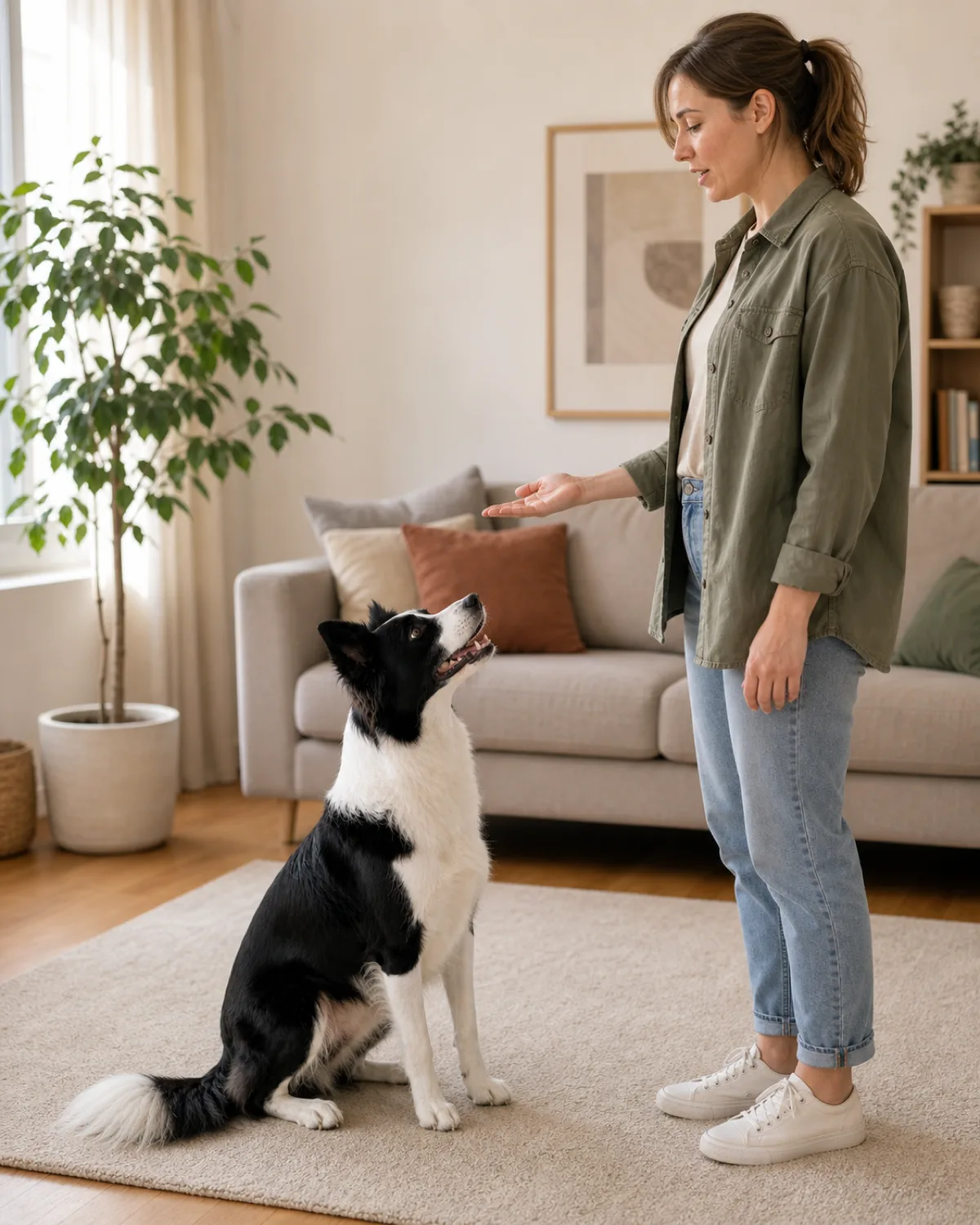
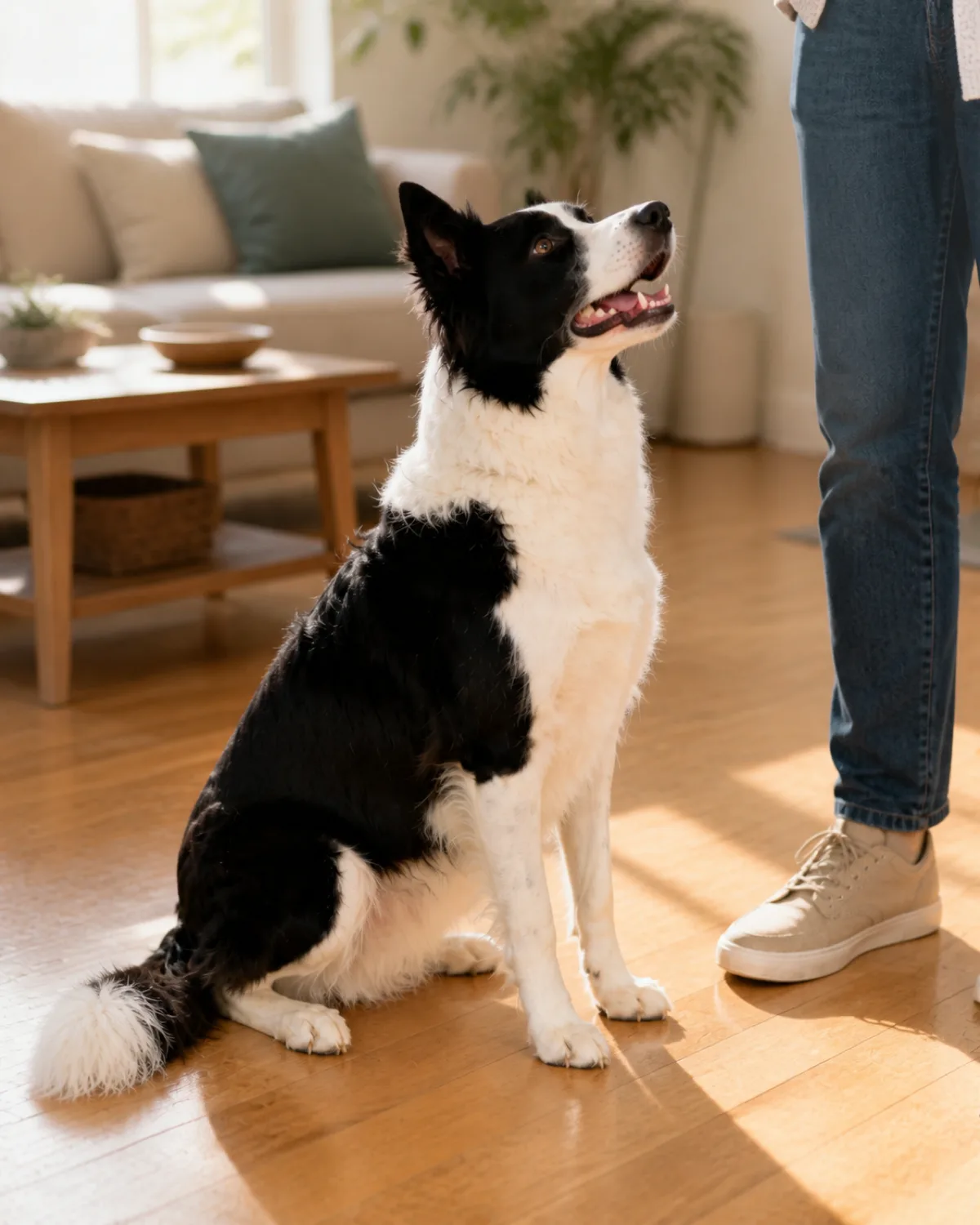
Say "sit" once, calmly, right before you begin the hand lure. Not during. Not after. The word comes first, then the motion the dog already knows.
After a few sessions, the dog starts anticipating: it hears "sit" and begins lowering its rear before your hand moves. That is the signal to delay the lure a beat and see if the word alone gets the job done.
One word, one time. Repeating "sit, sit, sit" teaches the dog that the cue is a string of sounds, not a single word. Say it once and wait three seconds. If nothing happens, lure the rep and try the verbal cue again next time.
Fade the treat from your hand
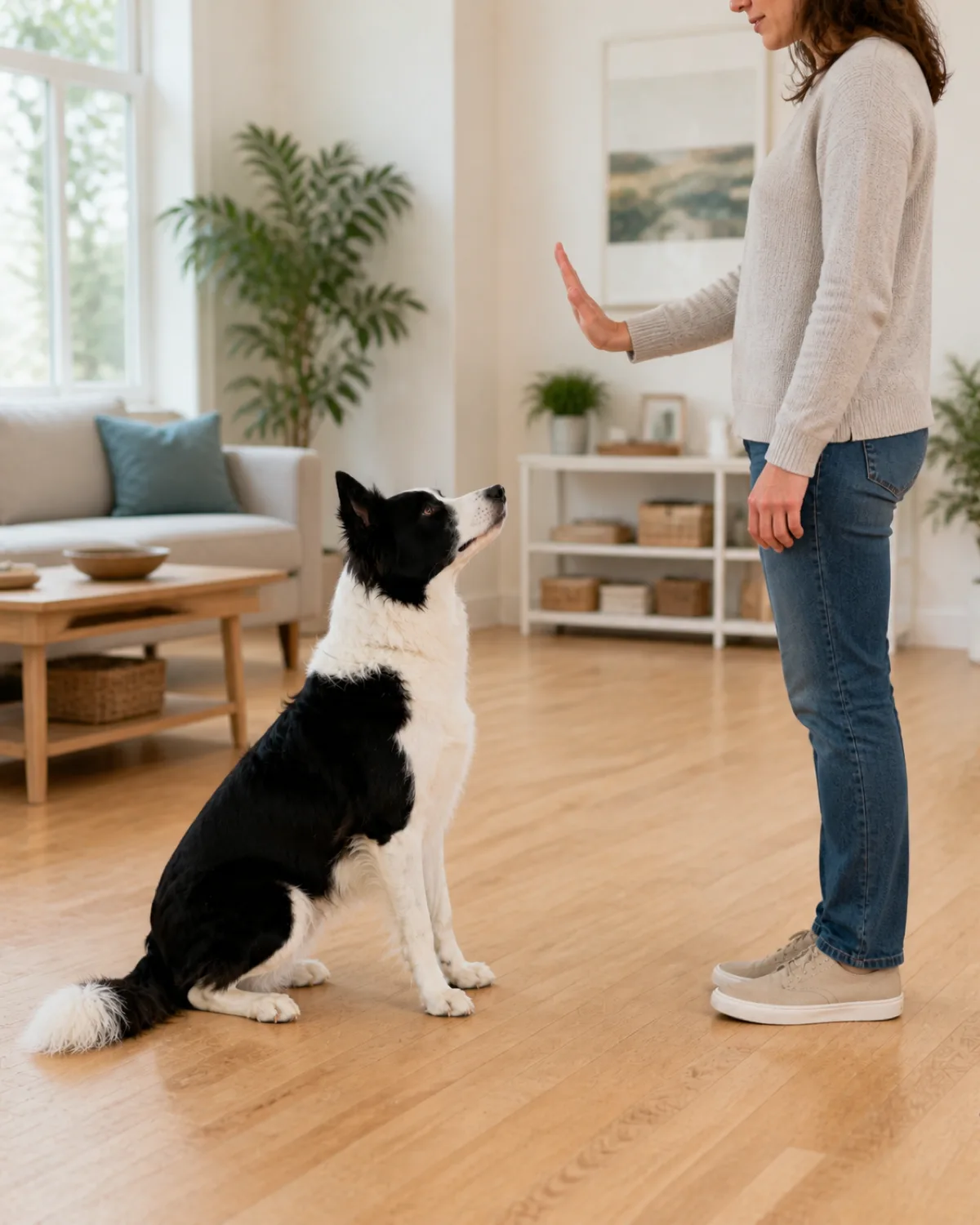
Once the dog responds to the verbal cue about seven out of ten times, start luring with an empty hand. Same motion, same arc over the head, but no treat between your fingers.
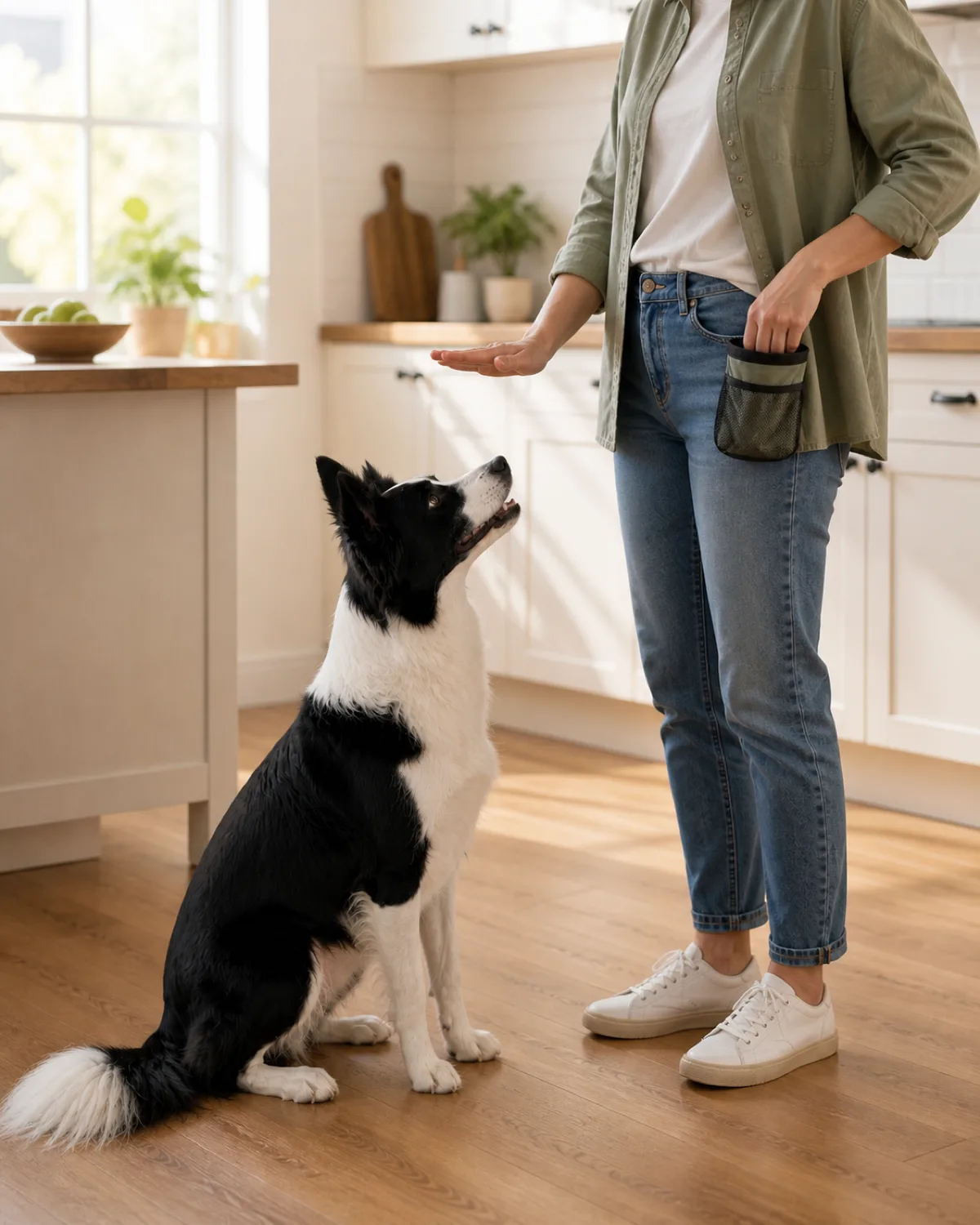
When the dog sits, mark it and pull the reward from your pocket or a pouch behind your back. The dog learns that the treat comes from somewhere, not necessarily from the guiding hand.
Then shrink the hand motion. A full arc becomes a half arc. A half arc becomes a small upward flick. A flick becomes a flat palm briefly raised. Each step takes a few sessions, not a few reps.
If the dog stops responding at any stage, go back one step. Fading too fast is the most common reason dogs seem to forget a cue they already knew.
The lure-to-cue timeline
Four stages of teaching sit
LureTreat in hand guides the dog into position. No verbal cue yet. Just repetition until the sit is automatic.
NameAdd the word "sit" right before the lure. The dog starts connecting the sound with the action.
FadeEmpty hand, same motion. Treat comes from a pouch or pocket after the marker. Shrink the gesture over sessions.
ProofNew rooms, outdoors, with distractions. Each new context starts easy and builds. This is where the sit becomes real.
Practice in short sessions
Two minutes of focused training beats twenty minutes of sloppy repetition. Dogs learn in bursts, not marathons.
End every session on a success. If the dog nails a sit, mark it, reward it, and stop. Walking away while the dog is winning leaves it eager for the next round.
Three to five sessions a day, spread across the morning, afternoon, and evening, will build a reliable sit in about a week for most adult dogs. Puppies may need two weeks because their attention span is shorter and their rear ends are bouncier.
Watch for signs that the dog is done: yawning, looking away, sniffing the ground, lying down. Those are not defiance. They are fatigue. Stop and try again later.
Add distance and distractions gradually
Once the dog sits reliably within arm's reach, take one step back before giving the cue. Then two steps. Then three.
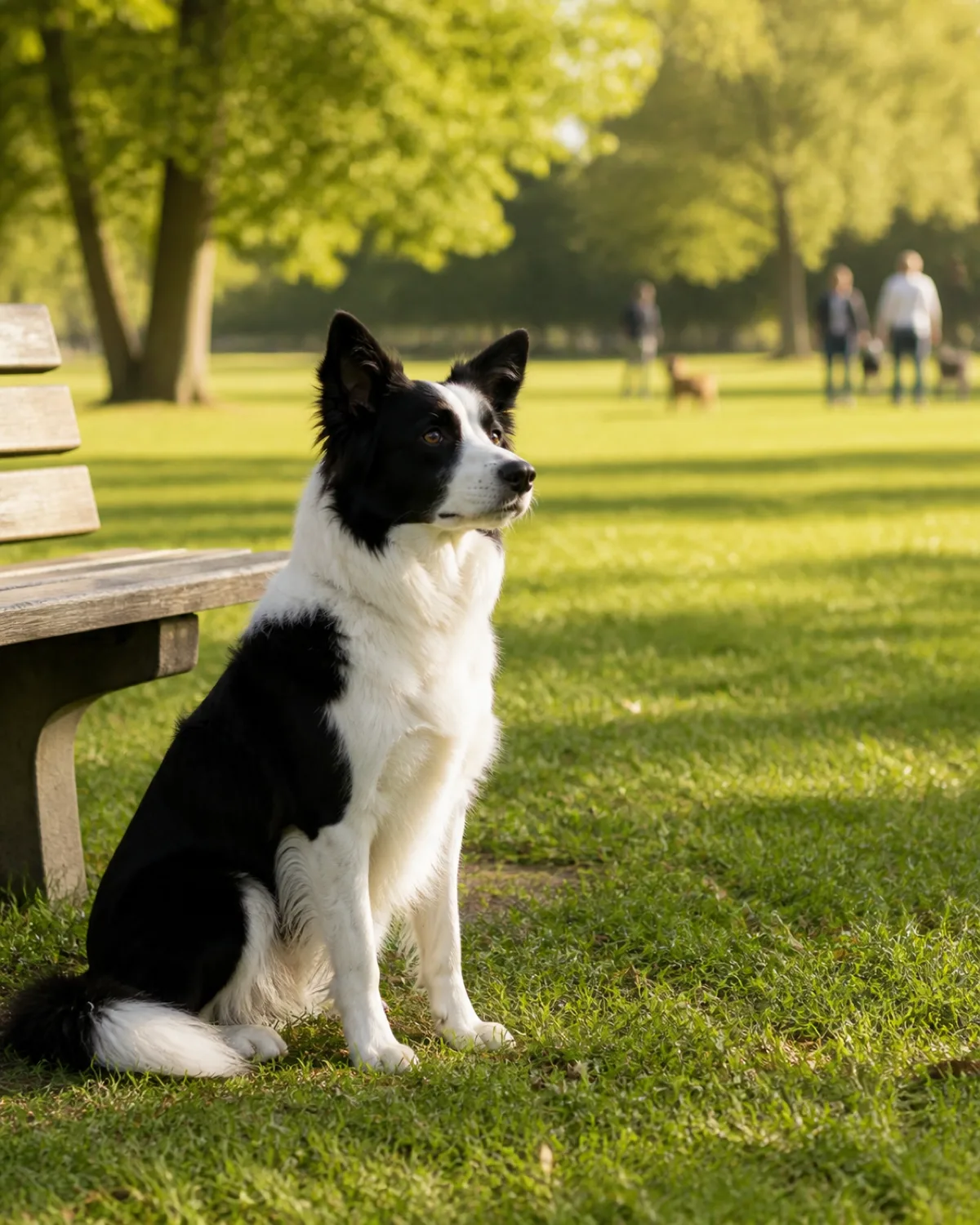
Add distance before you add distractions. A dog that can sit from ten feet away in a quiet room is ready for the backyard. A dog that cannot sit from three feet away is not ready for the park.
Distractions follow a hierarchy: a toy on the floor is easier than another dog across the street, which is easier than a squirrel at close range. Start low and move up only when the current level is solid eight out of ten times.
If the dog fails at a new level, do not correct it. Go back to the last level where it succeeded, run a few easy reps, and try the harder version again tomorrow.
Use sit in everyday moments
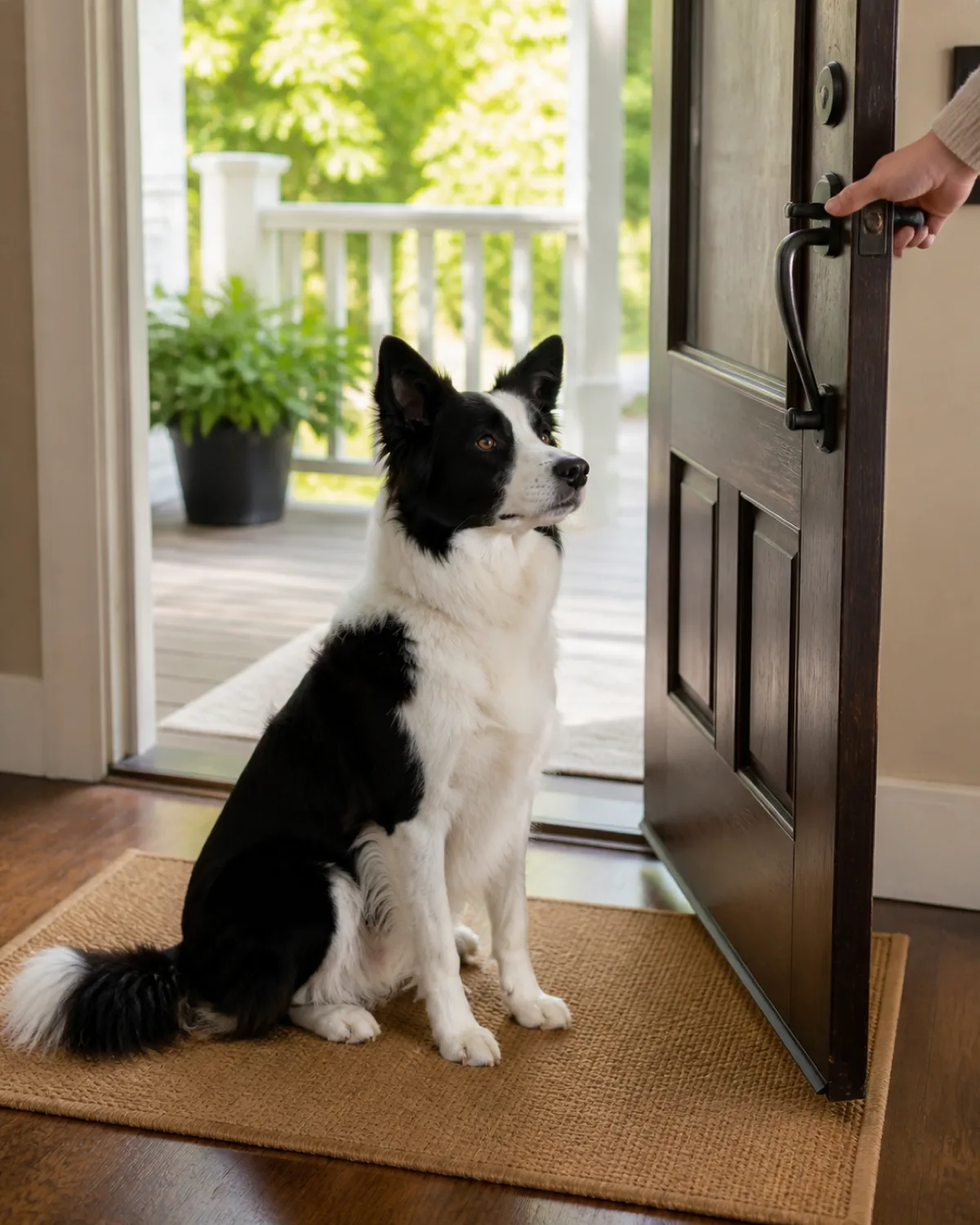
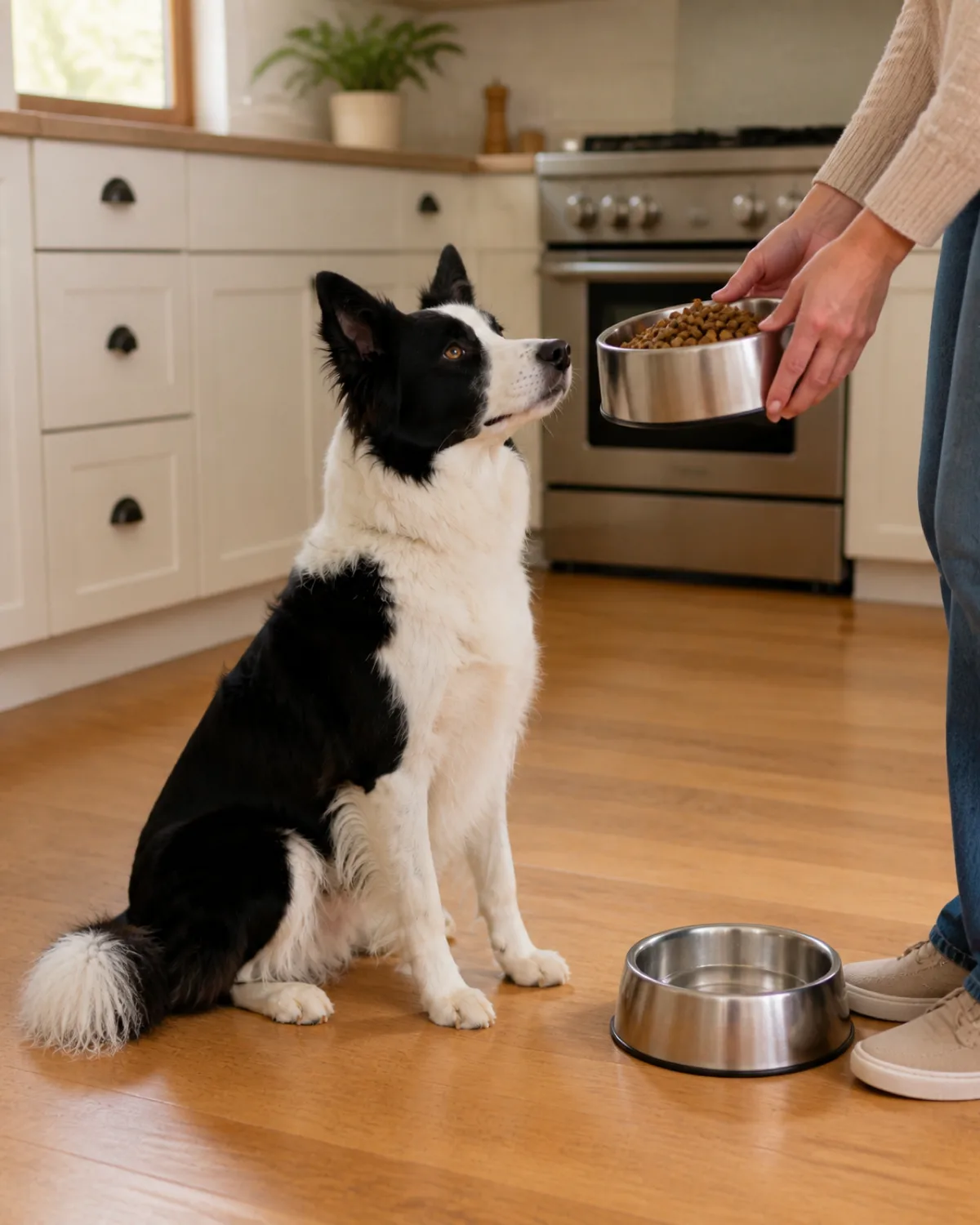
Sit before the leash goes on. Sit before the food bowl touches the floor. Sit before the door opens for a walk. Sit before a greeting from a visitor.
These are not tricks. They are the moments where sit becomes the dog's default way of asking for something instead of jumping, barking, or bolting.
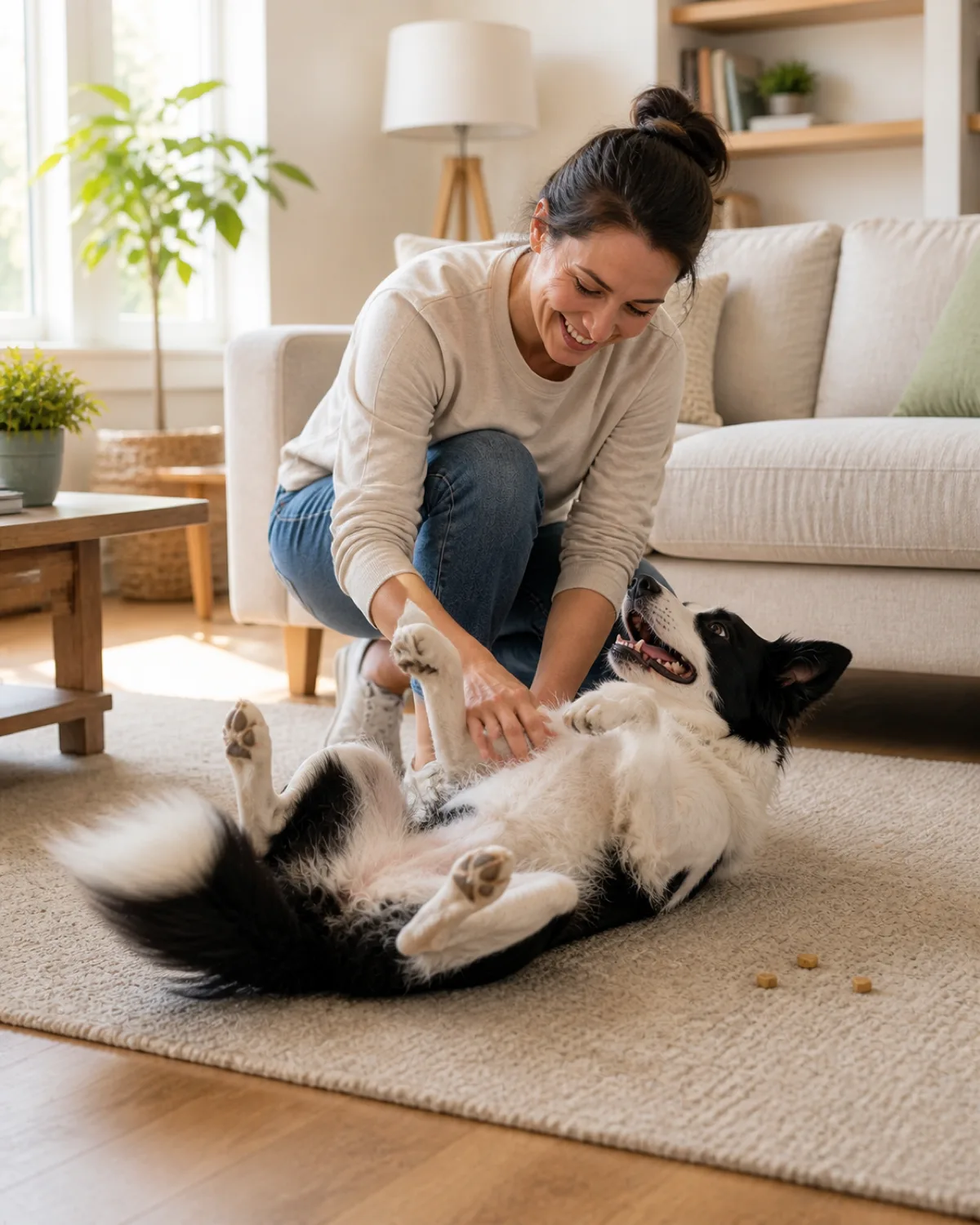
The shift from "sit when asked" to "sit because it works" is the difference between a trained dog and a well-mannered one. It happens naturally when the dog figures out that sitting unlocks every good thing: meals, walks, attention, play.
No need to make the dog hold the sit for a long time in these scenarios. A one-second sit that earns the door opening is enough at first. Duration comes later, through stay training.
Save this for later
10 Steps to Teach a Dog to Sit
1
Quiet room, small treatsNo distractions, pea-sized soft treats, two minutes of focus
2
Lure the sitTreat above nose, arc back — rear goes down, treat goes to the dog
3
Mark the momentClick or say yes the instant the rear hits the floor
4
Add the wordSay sit once before the lure — only after eight out of ten reps succeed
5
Fade the lureEmpty hand, same motion — treat from pocket after the marker
6
Keep sessions shortTwo minutes max, end on a win, three to five times a day
7
Add distance firstStep back before adding distractions — quiet room to backyard to park
8
Use sit dailyBefore meals, walks, doors, and greetings — sit becomes the default
9
Fix common stallsHalf-squat means slippery floor, pop-up means late marker, no sit outside means too much too fast
10
Build to the next cueStay, down, and shake all start from a solid sit
pawliqa.com
Troubleshoot common sit problems
The dog does not sit all the way down. The rear hovers an inch above the floor. Usually a surface issue — slippery tile or hardwood makes dogs brace instead of commit. Move to a carpeted area or put a mat down.
The dog pops back up immediately. The reward is arriving too late. Click and treat faster. The goal is to catch the sit, not the stand that follows it.
The dog sits only when it sees a treat. The lure was not faded properly. Go back to the empty-hand step and rebuild from there. Hand motion without food is the bridge between bribery and a real cue.
Outside and multi-dog stalls
The dog sits at home but not outside. Distraction level jumped too fast. Practice in the backyard before the park, and at the park on a long line before off-leash.
The puppy sits but wiggles and shifts. Normal. Puppy bodies are not designed to be still for long. Accept the sit even if it is crooked or short. Precision comes with physical maturity.
Build from sit to the next command
Sit is not the end goal. It is the launchpad.
Stay starts from a sit and adds duration. Down starts from a sit and lures the dog's nose to the floor. Shake starts from a sit and lifts the paw — useful as part of a calm mealtime routine.
Each new command uses the same lure-mark-reward sequence the dog already knows from sit. That is why sit is worth getting right — every future behavior borrows from this template.
If the dog's sit is sloppy or unreliable, every command built on top of it will be sloppy too. Spend the extra three days now. The payoff shows up in everything the dog learns next.
About the author
Jess Calloway
Jess Calloway edits Pawliqa, where she shares dog care, grooming, training, and new-owner tips — plus DIY and pet-friendly home ideas — for anyone who wants a happy, well-cared-for dog. As a dog mom to three very different dogs, she writes the honest, tested version of what actually works. Every guide is image-led and reviewed for clarity, usefulness, image accuracy, and Pinterest-to-page alignment before it goes live. Visit the About page.
Teaching a dog to spin starts with a food lure at nose level, progresses to an open-palm hand gesture, and ends with a verbal cue alone. This guide walks through every stage, flags the mistakes that stall progress, and shows how to keep training sessions short and productive.
An overstimulated dog is not being bad. This guide walks through the place cue, structured down-stays, environment management, and daily decompression routine that teach a dog to settle on its own.
Fourteen puppy training games covering hide and seek recall, the name game, touch targeting, cup puzzles, puppy pushups, which hand, red light green light, muffin tin puzzles, tug with rules, scent work, two-toy fetch, obstacle courses, spin tricks, and settle mat training for puppies who learn best through play.