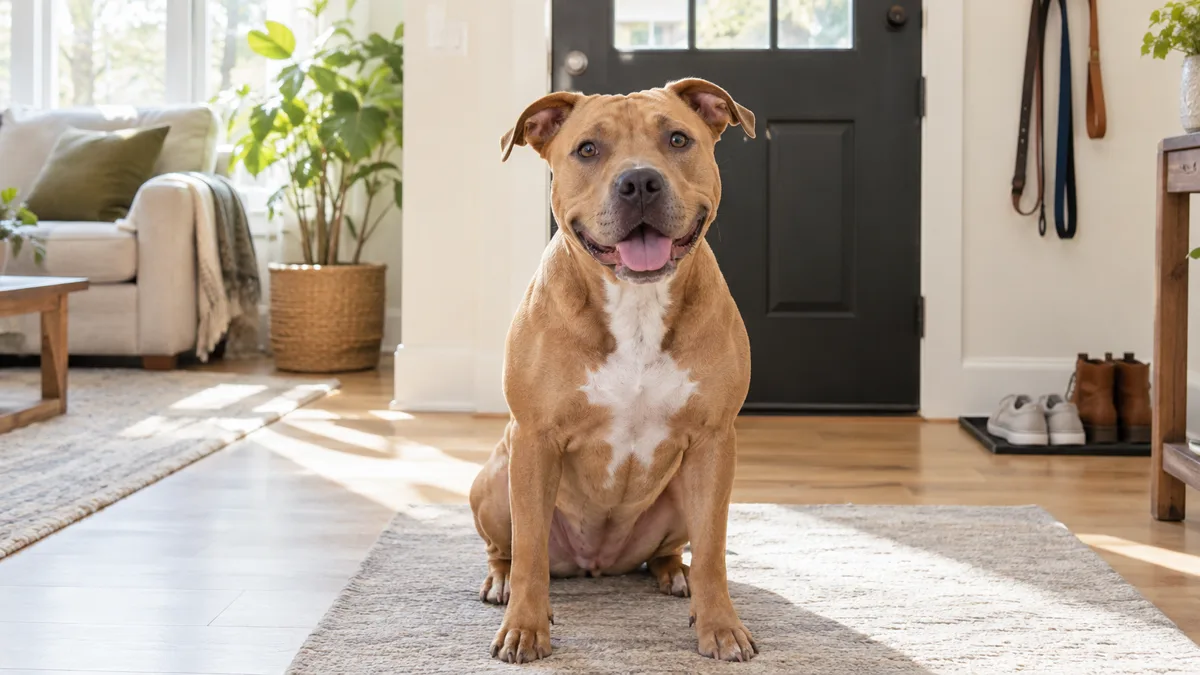
Spin is one of the fastest tricks to teach and one of the most satisfying to watch. It builds body awareness, strengthens your bond, and gives you a reliable way to redirect energy — and the trick works for dogs of any size, age, or experience level.
This guide breaks the process into four progressive stages — food lure, empty hand, shrunk signal, verbal cue — so you know exactly when to move forward and what to do when your dog stalls.
Jump to a section
Teach Your Dog to Spin
This guide walks from the first food lure through hand signals and verbal cues to keeping practice sessions productive.
You do not have to read top to bottom. Pick the situation that matches where you are right now.
You have never tried spin beforeGather your supplies, then start with the first food lure. The whole sequence takes about five minutes to try.
Your dog follows the treat but stalls halfwayThat usually means the lure speed or hand height is off. Jump to common mistakes to fix it, then return to luring.
Your dog spins with a hand signal but ignores the wordThe verbal cue stage has a specific pairing protocol. Go to adding the verbal cue.
Why Spin Is Worth Teaching
Spin is a low-stakes trick with high returns. It does not require any equipment, it works indoors on a small patch of floor, and most dogs pick up the basic movement within a single session.
The training value goes beyond the trick itself:
Body awareness — turning a full circle engages core muscles and builds proprioception, especially in young dogs that are still learning what their back legs do
Focus and engagement — following a treat through a continuous arc requires sustained attention, which carries over to other training
Confidence — success comes fast, so dogs that are hesitant about training often loosen up after a few spins
Energy redirect — a quick spin sequence before a walk or a meal gives an excited dog something constructive to do with that energy
Spin also pairs well with tricks your dog already knows. If your dog can sit and stay, adding spin creates a simple combination sequence that keeps training interesting for both of you.
What You Need Before You Start
The supply list is short:
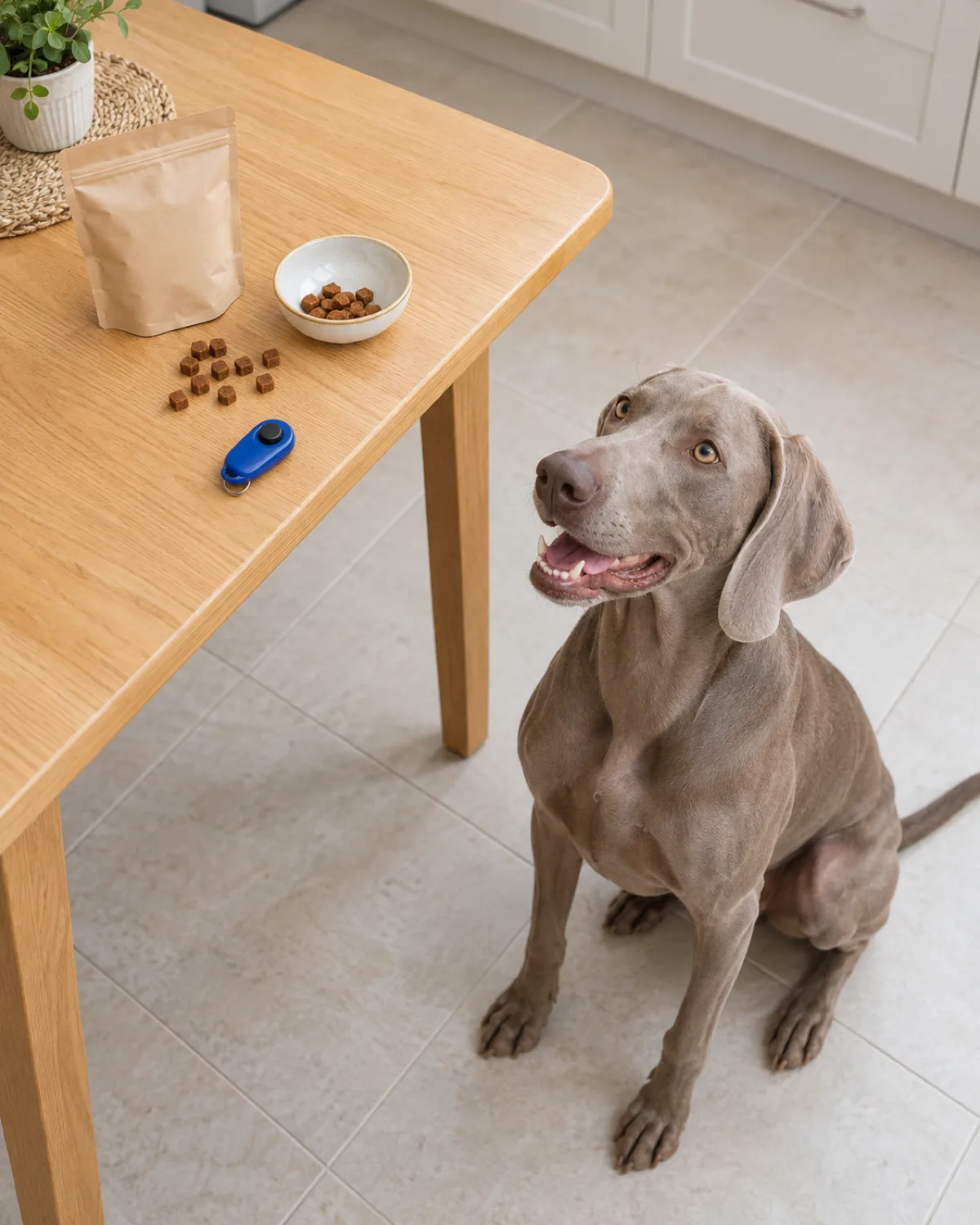
High-value training treats — small, soft, and something your dog genuinely loves. Dry kibble often does not hold attention through the full circle. Dime-sized pieces of cooked chicken, commercial soft treats, or small cheese cubes all work. If you need recommendations, the training treats guide covers what to look for.
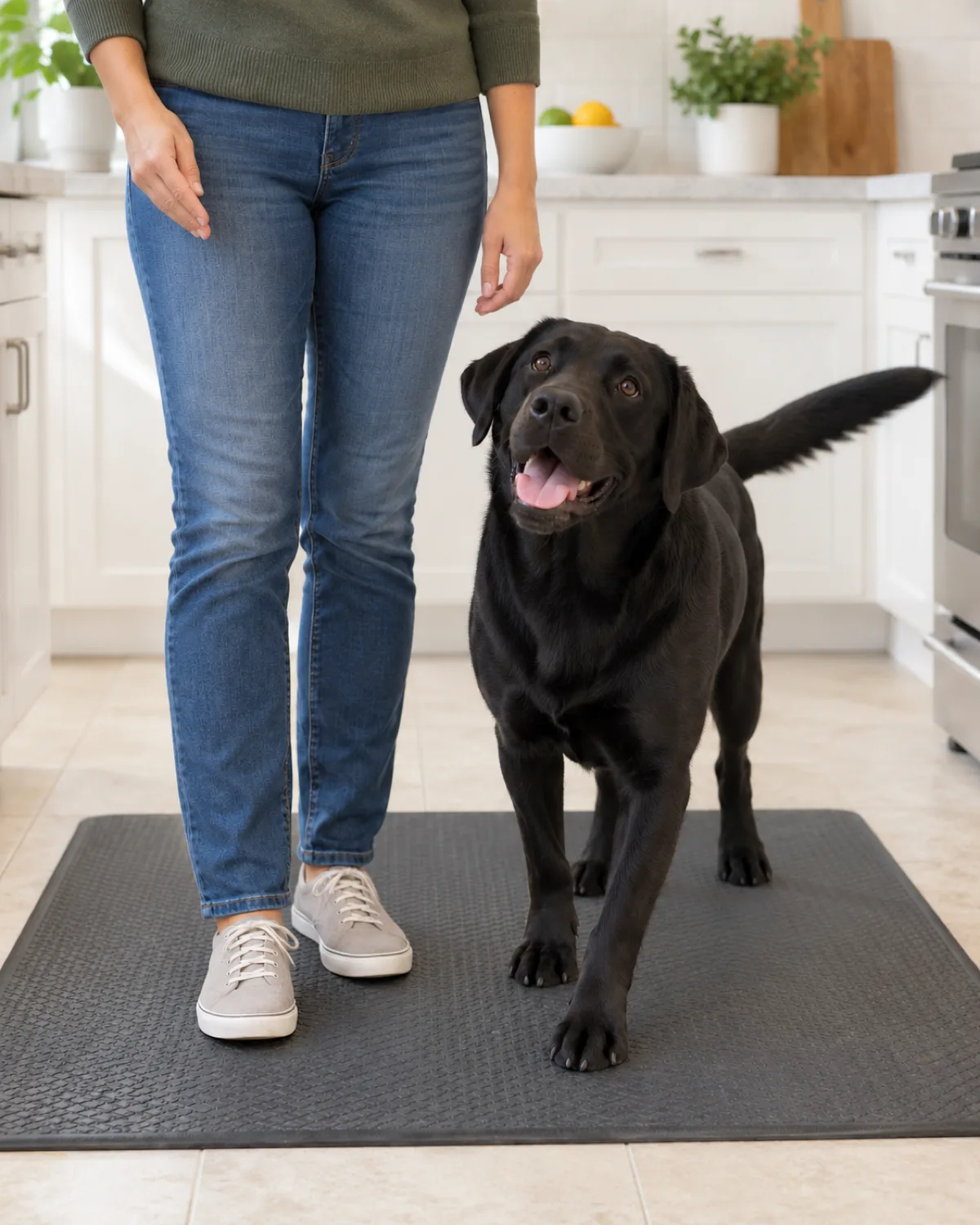
A quiet room with a non-slip surface — carpet, a rug on hardwood, or a rubber mat on tile. A dog that slips mid-spin will hesitate to try again. Remove distractions: other pets, children running through, a TV at volume.
A clicker (optional) — a clicker marks the exact moment your dog completes the circle. If you have never used one, the clicker training guide explains the basics. A verbal marker like "yes" works just as well.
That is it. No special harnesses, no training platforms, no props.
One thing to decide before you start: direction. Pick clockwise or counterclockwise and stick with it until the dog is fluent. Switching directions mid-session confuses the movement pattern. You can teach the other direction later as a separate trick.
Lure the First Full Circle
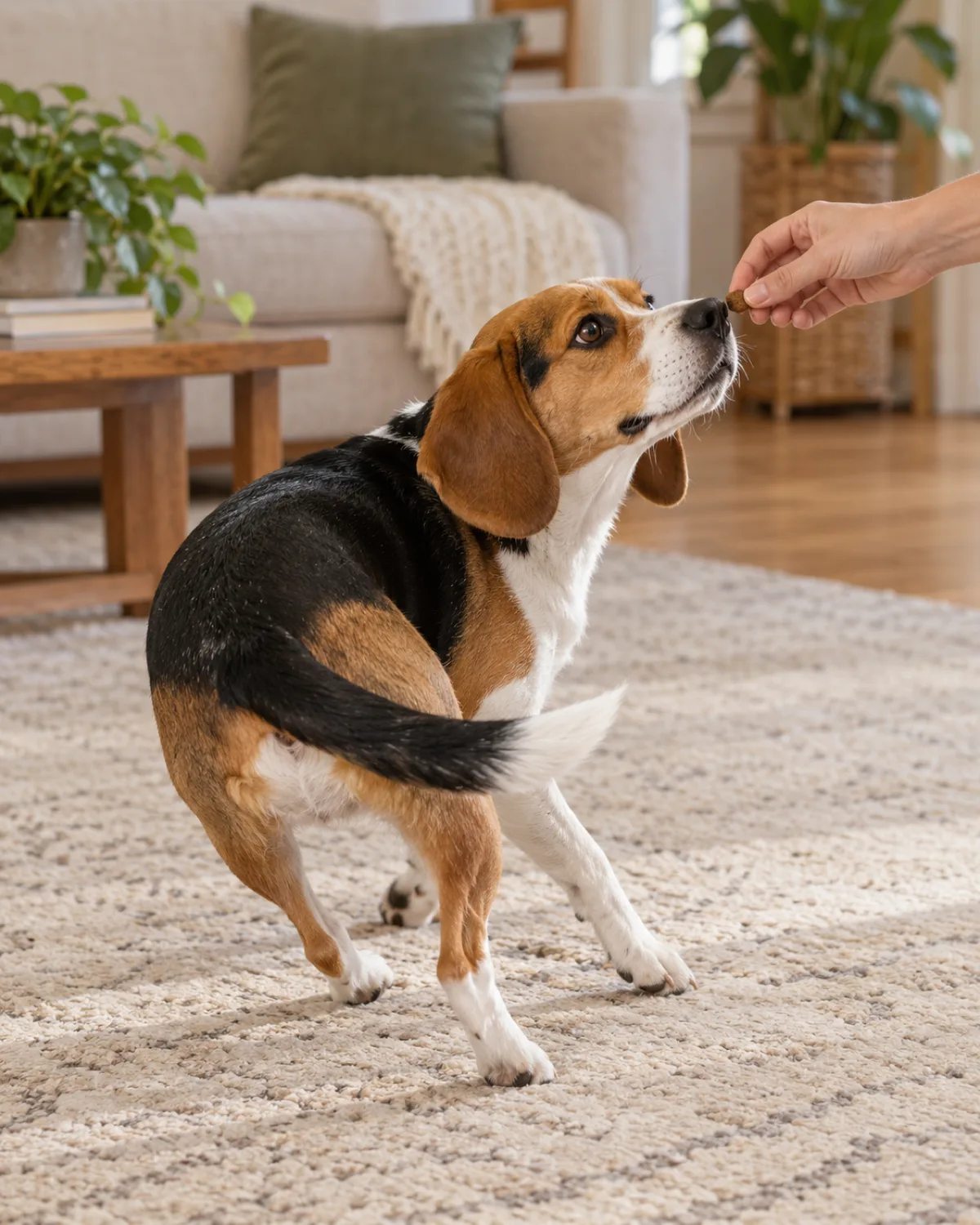
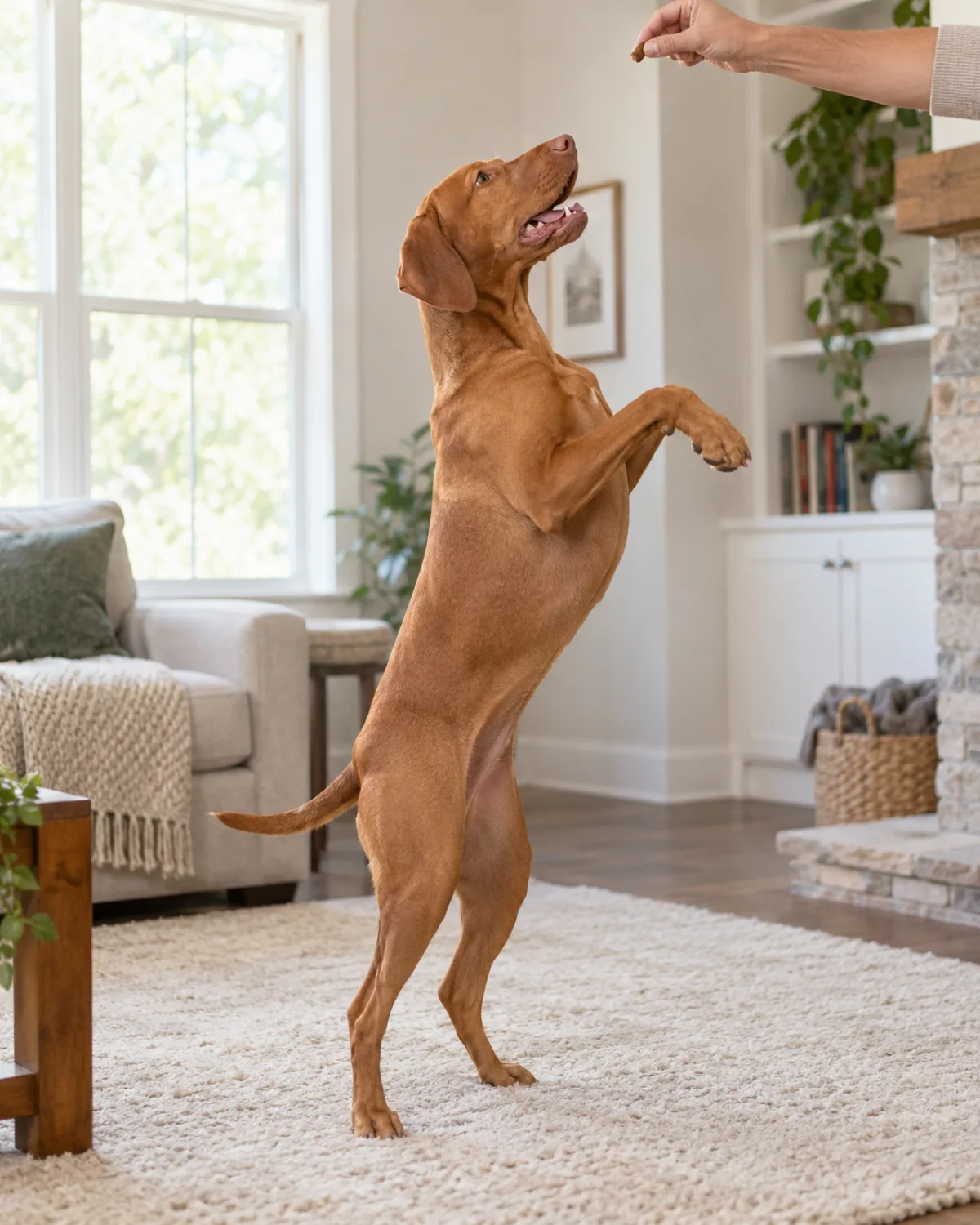
Hold a treat between your thumb and index finger, close enough that your dog can smell it but not grab it. Bring it to your dog's nose, then move your hand slowly in a circle.
The key word is slowly. Most people rush this and the dog loses the scent trail halfway through the arc.
Here is the step-by-step:
Start with your dog standing and facing you
Hold the treat at nose height — not higher, not lower
Move the treat in a smooth arc to the left or right, keeping it close to the nose
Guide the dog's nose through a full circle until it faces you again
The instant the circle is complete, click or say "yes" and give the treat
If your dog only makes it halfway and then sits or backs up, you are probably moving too fast or holding the treat too far from the nose. Shorten the arc: reward a quarter turn, then a half turn, then three-quarters, then the full circle. Build up over several repetitions rather than pushing for a complete spin on the first try.
Practice the full lured circle until your dog completes it smoothly at least eight out of ten attempts before moving to the next stage.
The difference between a fast learner and a frustrated one
Three Rules for Teaching Spin
Break any of these and the trick stalls. Follow them and most dogs are spinning on a verbal cue within a week.
Keep sessions under five minutesDogs learn tricks in short bursts, not marathons. Three two-minute sessions spread through the day beat one fifteen-minute grind. If your dog starts sniffing the floor or looking away, the session has already gone too long.
Do not skip stagesEach stage builds muscle memory for the next. Jumping from a food lure straight to a verbal cue skips the hand signal transfer, and the dog will not understand what the word means. Go in order, and wait for eight out of ten successes before advancing.
Reward the finished circle, not the attemptGiving the treat at the halfway point teaches a half-turn, not a spin. Hold the reward until the dog faces you again after a full rotation. If the dog cannot complete the circle yet, shorten the arc and reward the partial goal instead.
Phase Out the Food Lure
Once your dog reliably follows the treat through a full circle, the next step is removing the food from your guiding hand. This is the stage where the trick starts to transfer from "follow the snack" to "follow the gesture."
The transition works like this:
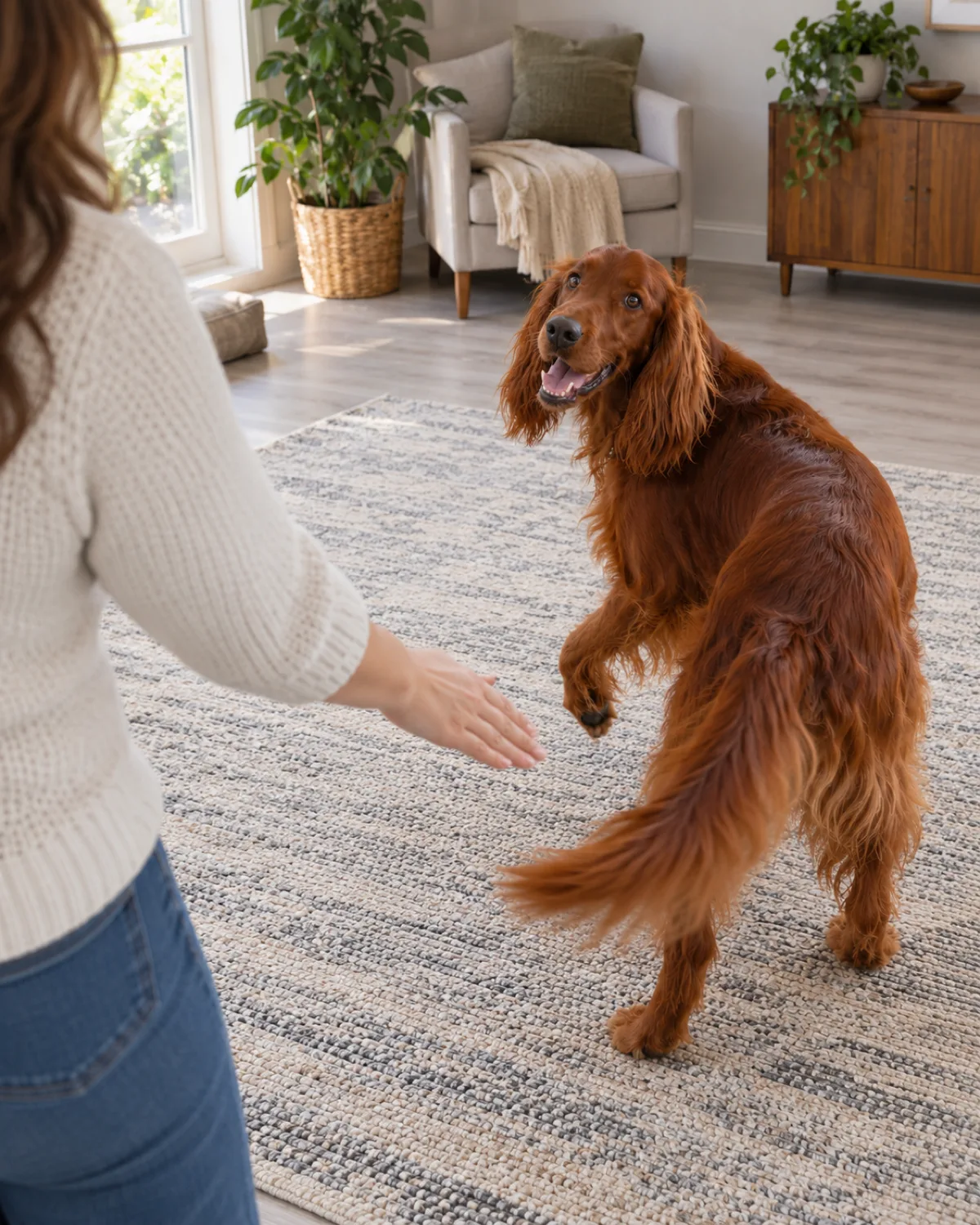
Do the same circular hand motion, but with an empty hand — same speed, same height, same distance from the nose
When the dog completes the circle, click or mark "yes" and deliver a treat from your other hand or from a pouch behind your back
Repeat until the dog follows the empty hand as smoothly as it followed the treat
Most dogs will hesitate the first time the hand smells different. That is normal. If your dog stops mid-turn, go back to one or two lured repetitions to rebuild confidence, then try the empty hand again.
A common mistake at this stage is making the empty-hand gesture look different from the lured one. Your dog learned to follow a specific movement shape at a specific height. If your empty hand suddenly sweeps wider or higher, the dog has no reason to follow it because it does not match the pattern that earned rewards before.
Keep the empty-hand circle the same diameter as the lured one
Keep it at the same height — nose level, not waist level
Keep the speed the same
When your dog completes the empty-hand circle eight out of ten times without hesitation, move on.
Shrink the Hand Signal
At this point your dog follows a big, obvious circular hand motion. The goal now is to make that gesture smaller and more subtle, session by session, until a quick wrist rotation is enough to trigger the spin.
The reduction should be gradual:
Session one: make the circle slightly smaller — maybe from shoulder-width to elbow-width
Session two: reduce it further, keeping the motion at the same height
Session three and beyond: keep reducing until you are doing a small wrist flick or finger twirl
If your dog stops responding at any point, go back one size larger and practice there for another session before trying to shrink again. Pushing past confusion does not build understanding; it erodes it.
A useful benchmark: when you can trigger a full spin with just a small wrist rotation while standing upright, the hand signal is where it needs to be.
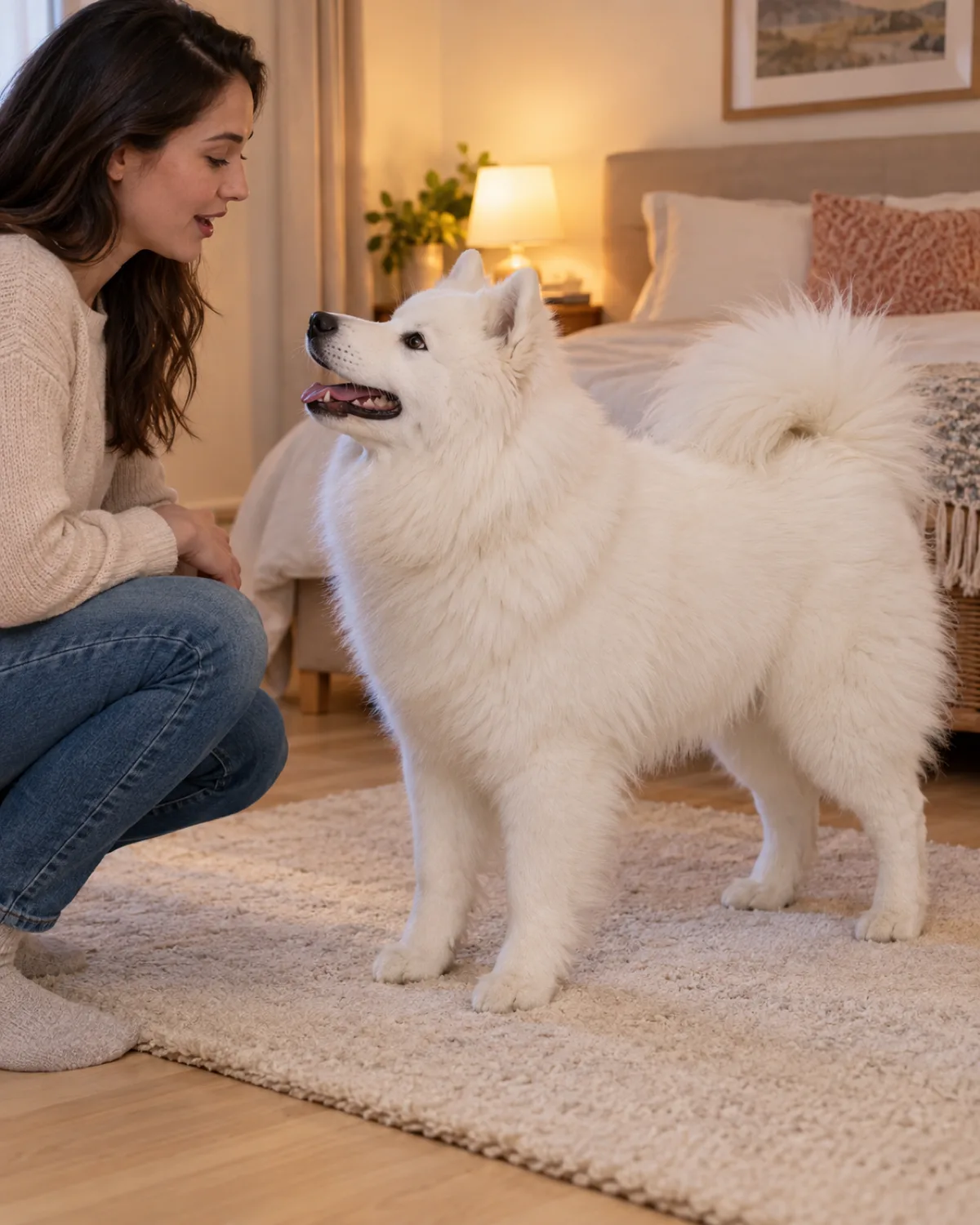
The word "spin" means nothing to your dog until you pair it with the behavior. The pairing protocol is specific: say the word before you give the hand signal, not during or after.
The sequence:
Say "spin" in a clear, upbeat tone
Pause for one second
Give the hand signal
When the dog completes the circle, mark and reward
The one-second pause is important. It gives the dog a moment to process the sound before the familiar visual cue arrives. Over many repetitions, the dog starts to anticipate the spin when it hears the word, and eventually it will begin turning before you even raise your hand.
Here is how you know the verbal cue is working:
Early: the dog waits for the hand signal after hearing "spin" — that is expected
Middle: the dog starts to lean or shift weight after hearing "spin" but still waits for the signal
Late: the dog spins immediately when it hears "spin" without needing the hand signal
Once the dog responds to the word alone at least eight out of ten times, you can drop the hand signal entirely. Some owners keep a subtle version as backup, which is perfectly fine.
If you want to teach the opposite direction later, use a different word — "twirl" or "circle" — so the dog can distinguish between the two.
Mistakes That Slow You Down
A few common errors show up repeatedly when people teach spin. Most of them are easy to fix once you know what to look for.
Treat too high — the dog jumps up instead of turning. Keep the lure at nose level or slightly below.
Lure too fast — the dog loses the scent trail halfway. Move slowly, like drawing a circle with a stick.
Switching directions — muscle memory gets confused. Pick one direction until it is fluent on a verbal cue.
Sessions too long — the dog wanders after rep twelve. End while succeeding, not after failing.
Rewarding half-turns — the dog learns a U-turn, not a spin. Wait for the full circle before treating.
The most frequent of these is the hand height issue. When the lure drifts above eye level, the dog's front legs come off the ground instead of pivoting. If you notice jumping, lower your hand immediately and slow down the arc.
Mental fatigue is the second most underestimated factor. A dog that was nailing spins at repetition four and starts sniffing the floor at repetition eight is not being stubborn — it is telling you the session is over. Two or three minutes is enough.
Keep Sessions Short and Fun
Short training sessions are not a compromise — they are the format that produces the fastest results. Dogs consolidate learning during rest, not during repetition number twenty.
A practical training rhythm:
Morning: two minutes of spin practice before breakfast
Afternoon: two minutes of spin practice before a walk
Evening: two minutes of mixed practice — spin plus one other known trick like shake or roll over
End each session with something the dog knows well and can succeed at. If the last thing your dog does is fail at a new stage, it carries that frustration into the next session. If the last thing it does is nail a spin it has already mastered, it finishes feeling confident.
Once the spin is solid indoors, take it to new locations:
Your backyard or patio
A quiet corner of a park
A friend's house
A pet store aisle (if your dog is comfortable there)
Each new environment is a mini test. If the dog hesitates, go back to the hand signal for a few reps before trying the verbal cue alone. That is not regression — it is the normal process of generalization.
Spin also works well as a building block for combinations. A sit, spin, shake sequence gives your dog a short routine that impresses visitors and, more importantly, gives the dog a structured way to earn attention and treats. If you want more ideas for keeping your dog mentally sharp, the brain games guide has options that pair well with trick training.
Save this for later
Teaching Your Dog to Spin in 8 Takeaways
1Low-Stakes, High-RewardSpin builds coordination, confidence, and focus without any special equipment.
2Simple SuppliesAll you need is soft treats, a quiet room with a non-slip surface, and optionally a clicker.
3Lure SlowlyHold the treat at nose level and guide a slow, smooth circle — rushing it makes the dog lose the track.
4Empty Hand NextOnce the lured spin is reliable, repeat the same hand motion without food in the guiding hand.
5Shrink the GestureGradually reduce the hand circle until a small wrist rotation triggers the full spin.
6Say It FirstSay the cue word before the hand signal so the dog learns to associate the sound with the behavior.
7Watch the Hand HeightThe most common mistake is holding the treat too high, which makes the dog jump instead of turn.
8Two Minutes, Three TimesShort sessions with breaks produce faster results than one long grind.
pawliqa.com
P
About the author
Jess Calloway
Jess Calloway edits Pawliqa, where she shares dog care, grooming, training, and new-owner tips — plus DIY and pet-friendly home ideas — for anyone who wants a happy, well-cared-for dog. As a dog mom to three very different dogs, she writes the honest, tested version of what actually works. Every guide is image-led and reviewed for clarity, usefulness, image accuracy, and Pinterest-to-page alignment before it goes live. Visit the About page.
Teaching Your Dog to Spin FAQ
How long does it take to teach a dog to spin?
Most dogs learn the lured spin in one or two sessions. Progressing through all four stages — food lure, empty hand, shrunk signal, verbal cue — typically takes five to ten days of short daily practice. Some dogs, especially those with prior trick training experience, get there faster.
Can older dogs learn the spin trick?
Yes. Spin does not require jumping or high-impact movement. As long as a dog can comfortably stand and turn in a circle, it can learn spin at any age. If your dog has joint stiffness, keep the circle wide and slow, and ask your vet if you have concerns about range of motion.
Should I teach my dog to spin in both directions?
Start with one direction and make it fluent before introducing the other. Use a different cue word for each direction — for example, "spin" for clockwise and "twirl" for counterclockwise — so the dog can distinguish between them.
What if my dog only does a half circle and stops?
The lure speed is probably too fast or the treat is drifting away from the nose. Slow down and keep the treat closer. If the dog still stalls, reward the half turn for a few reps, then extend to three-quarters, then the full circle. Breaking the movement into smaller pieces works better than repeating the full attempt.
Is spinning safe for dogs with hip or joint issues?
For most dogs with mild stiffness, a slow, wide circle is fine. For dogs with diagnosed hip dysplasia, luxating patella, or other joint conditions, ask your vet before starting. The rotational movement puts some torque on the hips, and a wider, slower circle is always gentler than a tight, fast one.
An overstimulated dog is not being bad. This guide walks through the place cue, structured down-stays, environment management, and daily decompression routine that teach a dog to settle on its own.
Fourteen puppy training games covering hide and seek recall, the name game, touch targeting, cup puzzles, puppy pushups, which hand, red light green light, muffin tin puzzles, tug with rules, scent work, two-toy fetch, obstacle courses, spin tricks, and settle mat training for puppies who learn best through play.
When a house-trained dog starts having accidents again, it is rarely about stubbornness. This guide walks through the vet check, deep cleaning, schedule rebuild, and positive reinforcement protocol that actually stops indoor peeing for good.