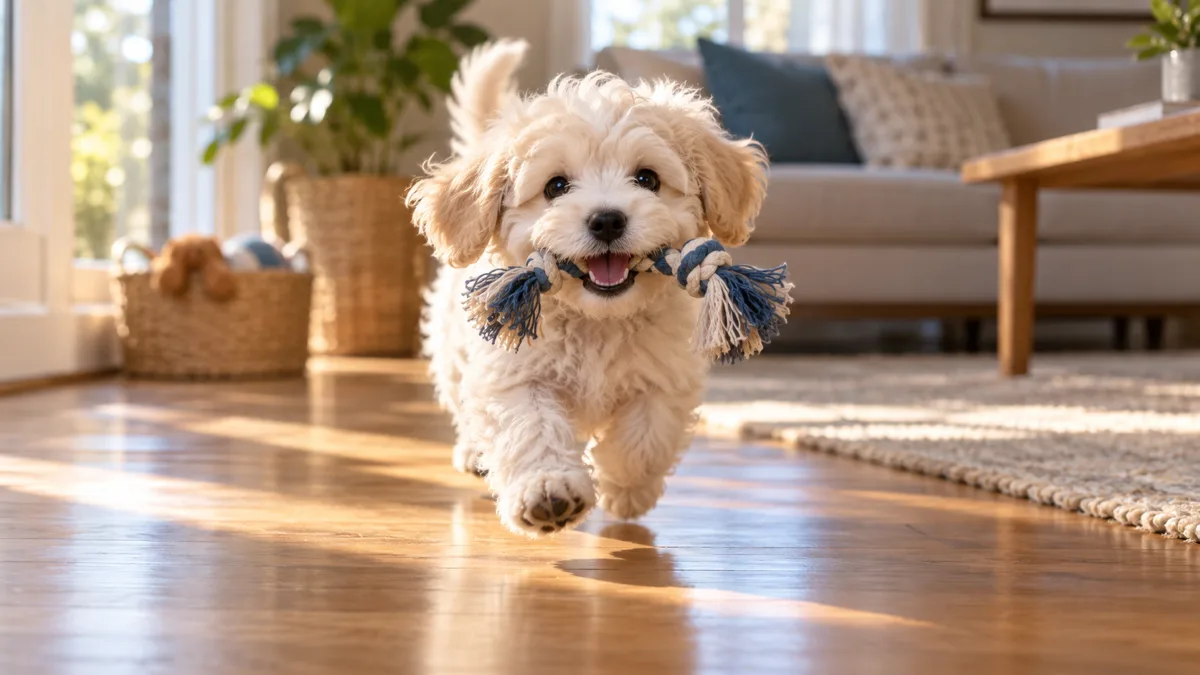
Our youngest dog learned sit in two days. She learned stay in about a month. She learned to come when called sometime around her second birthday, and even now she takes a moment to think about it before she commits.
Every command has a different timeline, and the order you teach them matters less than the consistency you bring to each one.
These are the ten commands that cover daily life, in a practical teaching order, with the positive reinforcement steps that make each one stick.
Jump to a command
10 basic dog commands every dog should know
From the first sit to a real-world down-stay at a cafe, these ten commands build a shared language between you and your dog.
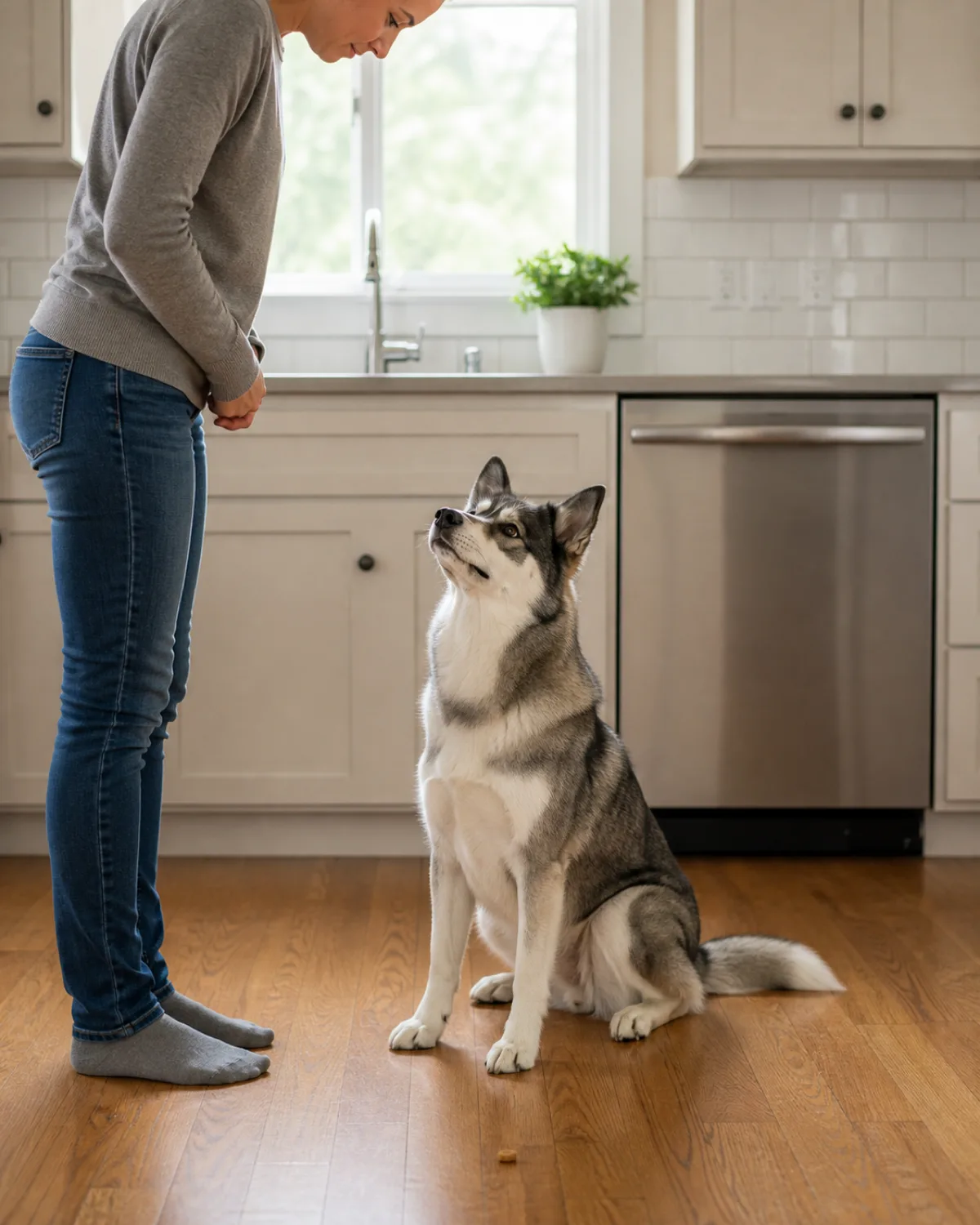
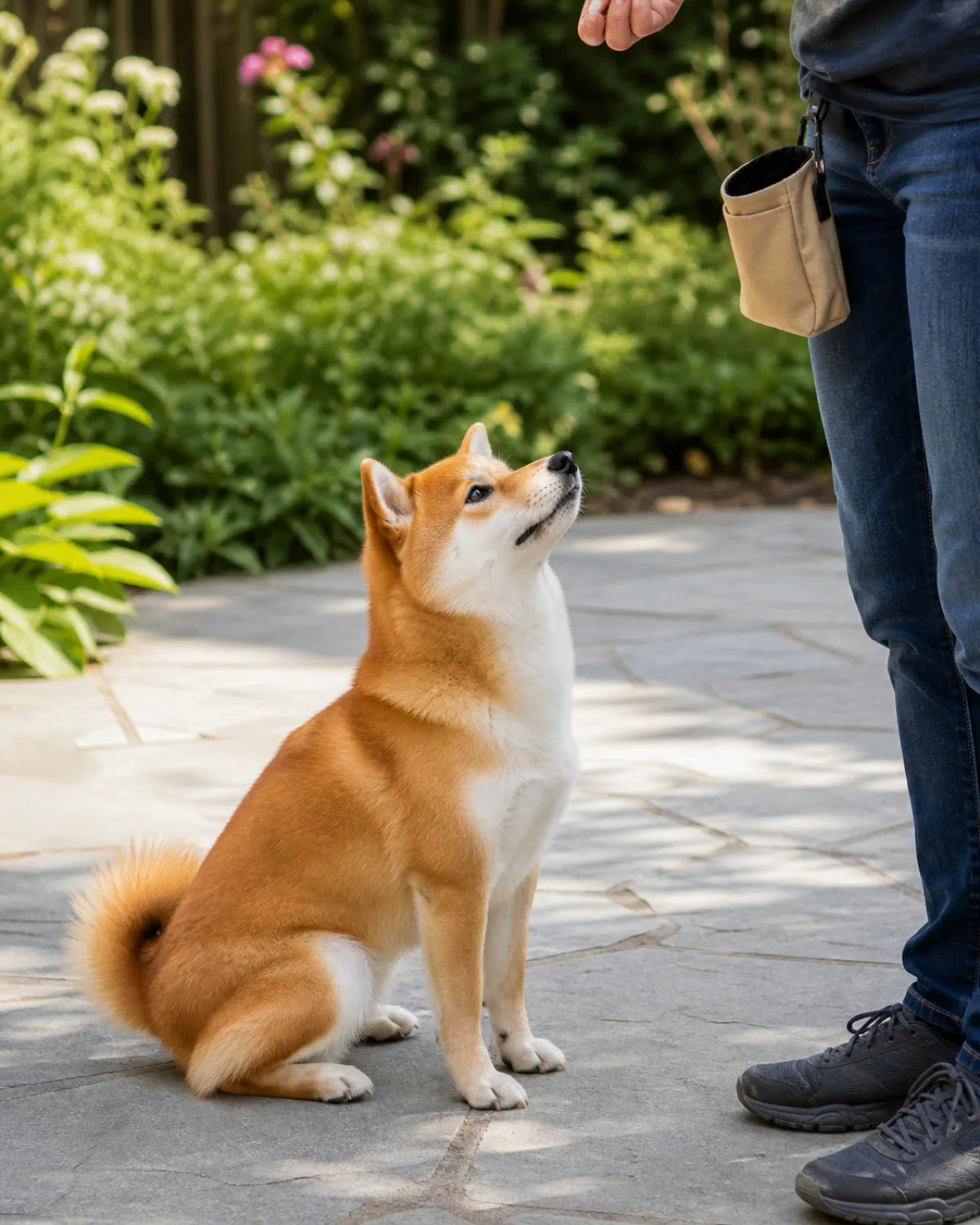
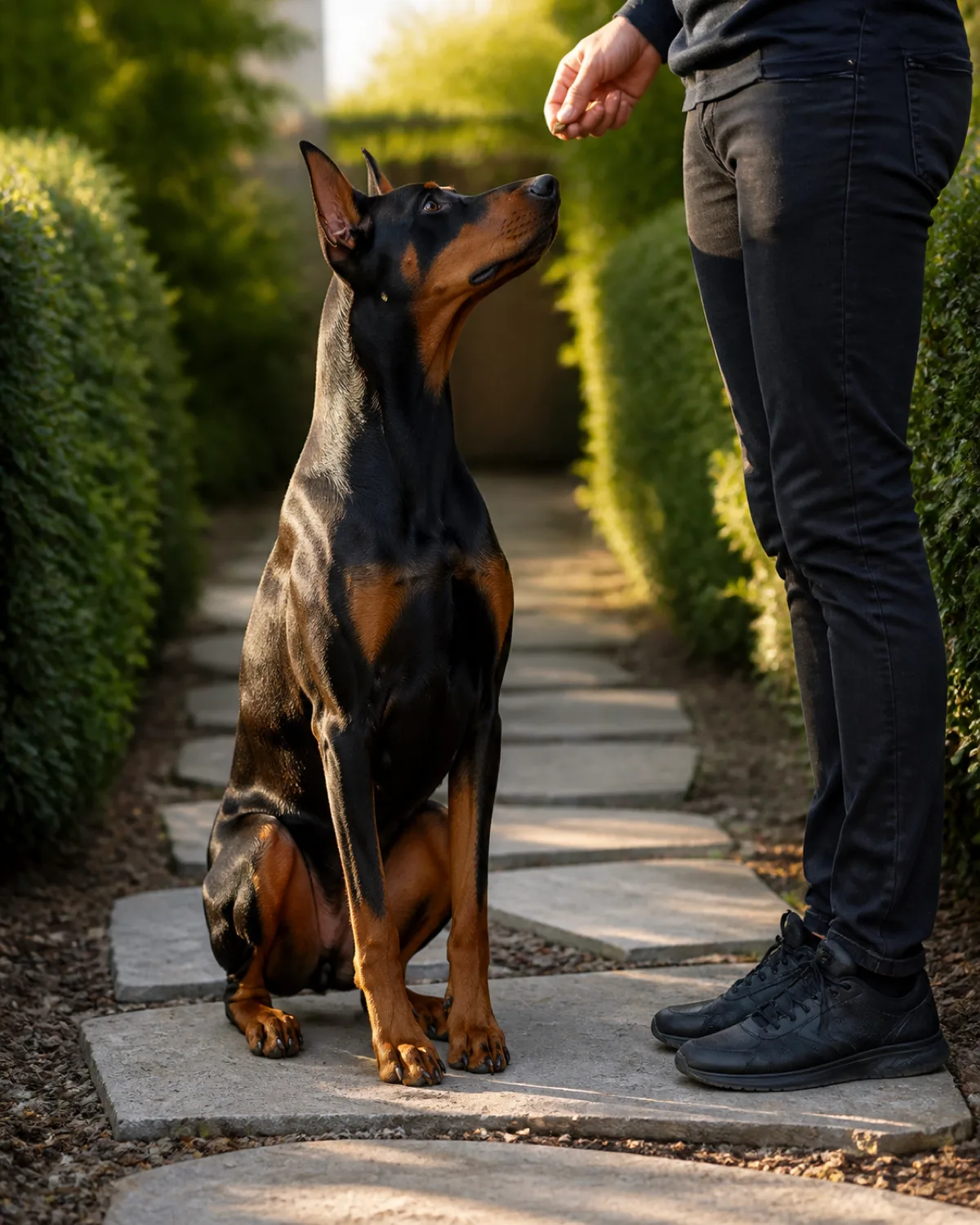
Sit is the first command most dogs learn because it is the easiest to teach and the most useful in daily life. A dog that sits on cue has a default behavior to fall back on — before meals, at crosswalks, when guests arrive, when you clip the leash on for a walk.
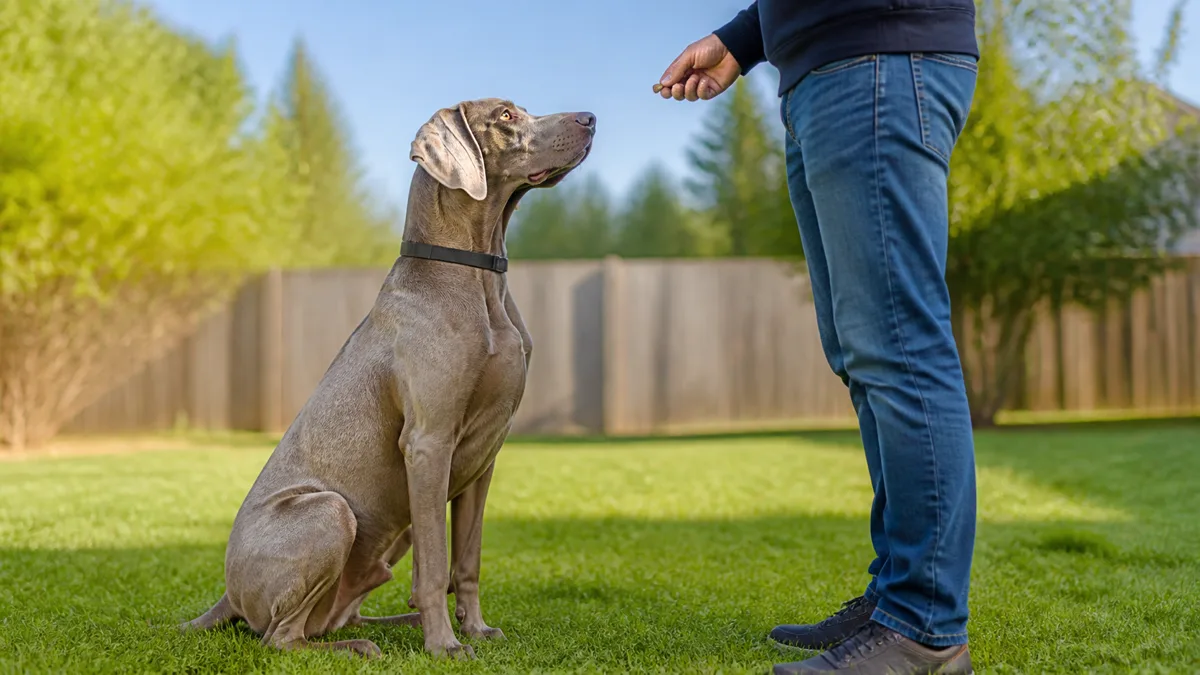
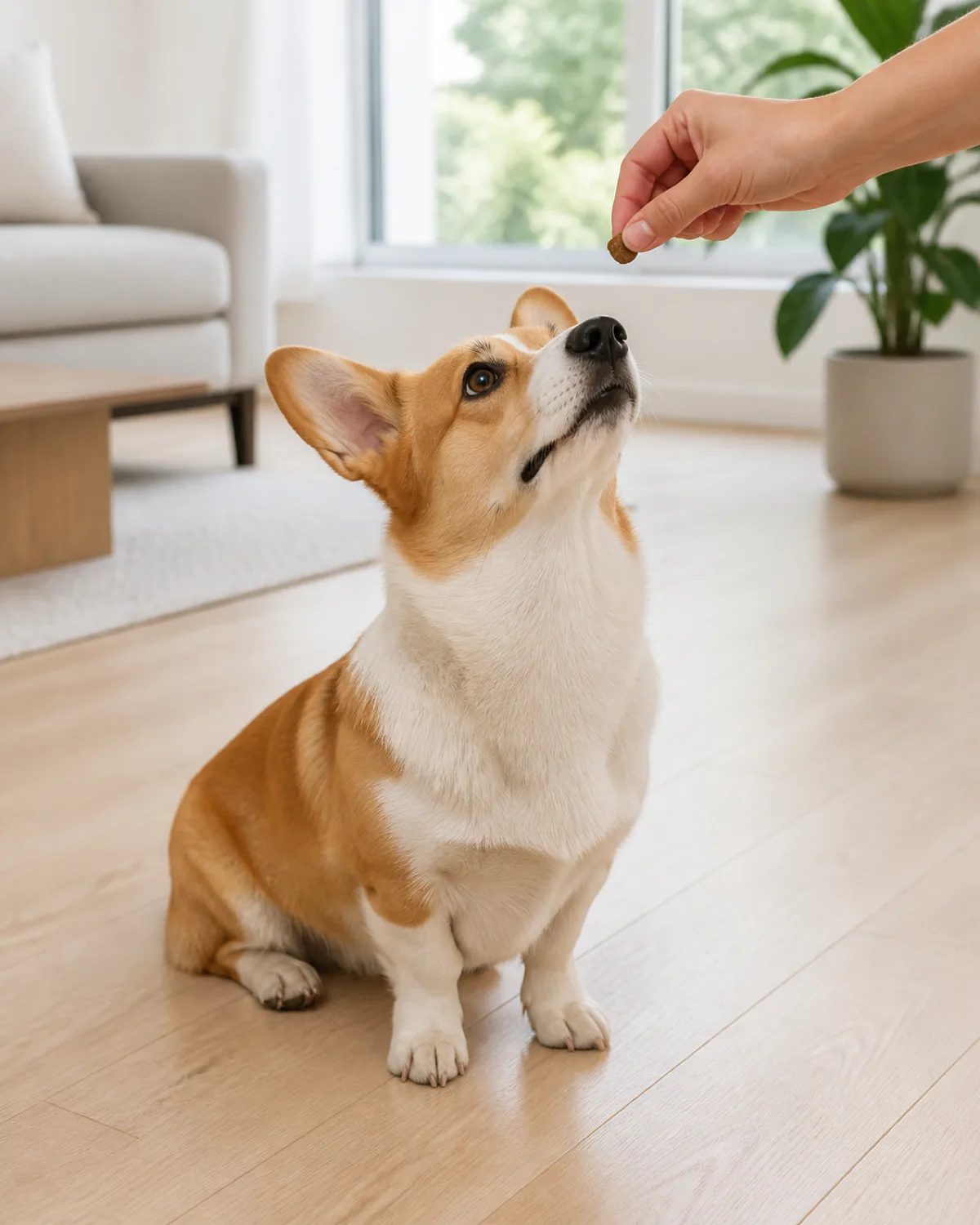
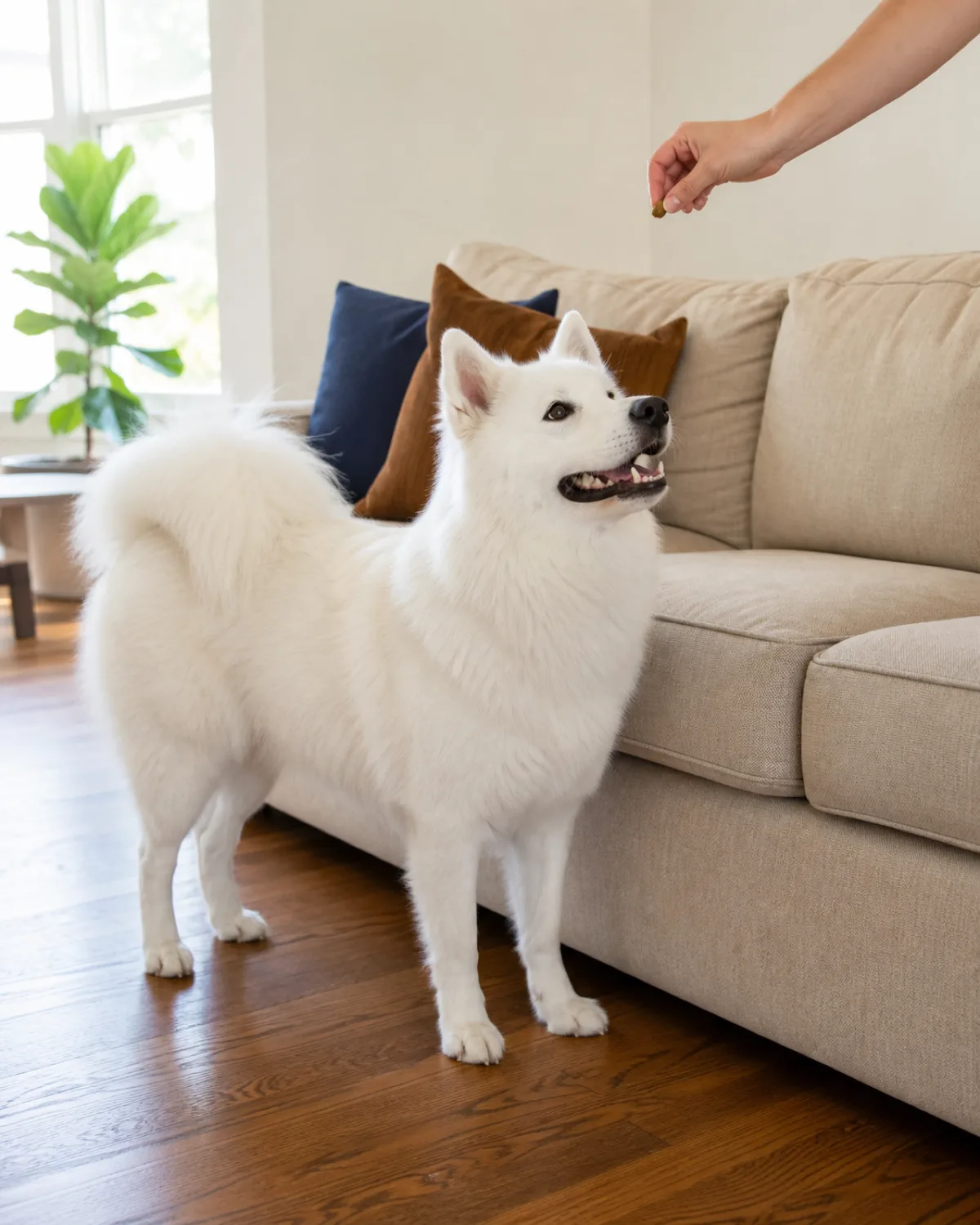
The method is straightforward. Hold a treat just above your dog's nose and move it slowly backward over the head. The nose follows the treat up, and the rear end goes down. The moment the rear touches the floor, mark the behavior with a clear word like yes and give the treat.
No pushing the dog's hips down. No repeating the word five times. One clear cue, one clear reward.
Practice sit in every room and outside before you consider it solid. A dog that sits in the kitchen but ignores you at the park has not learned the command — it has learned where the command works. For a deeper walkthrough of the timing, hand position, and common mistakes, read our full guide on how to teach a dog to sit.
Stay Teaches Your Dog Impulse Control
Stay is not about making your dog freeze in place. It is about teaching your dog to hold a position until you release it, which is the beginning of real impulse control. A dog with a reliable stay can wait at the door, hold still while you tie your shoes, and resist bolting after a squirrel.
Start small. Ask for a sit, say stay, and take one step back. If the dog holds for even two seconds, mark and reward. Add distance and duration separately — never both at once.
The release word matters as much as the stay cue. Use something consistent like okay or free, and always release before the dog breaks on its own. If the dog breaks early, you went too far too fast. We wrote a full breakdown of the distance and duration progression in our guide on how to teach a dog to stay.
Come Is the One Command That Can Save a Life
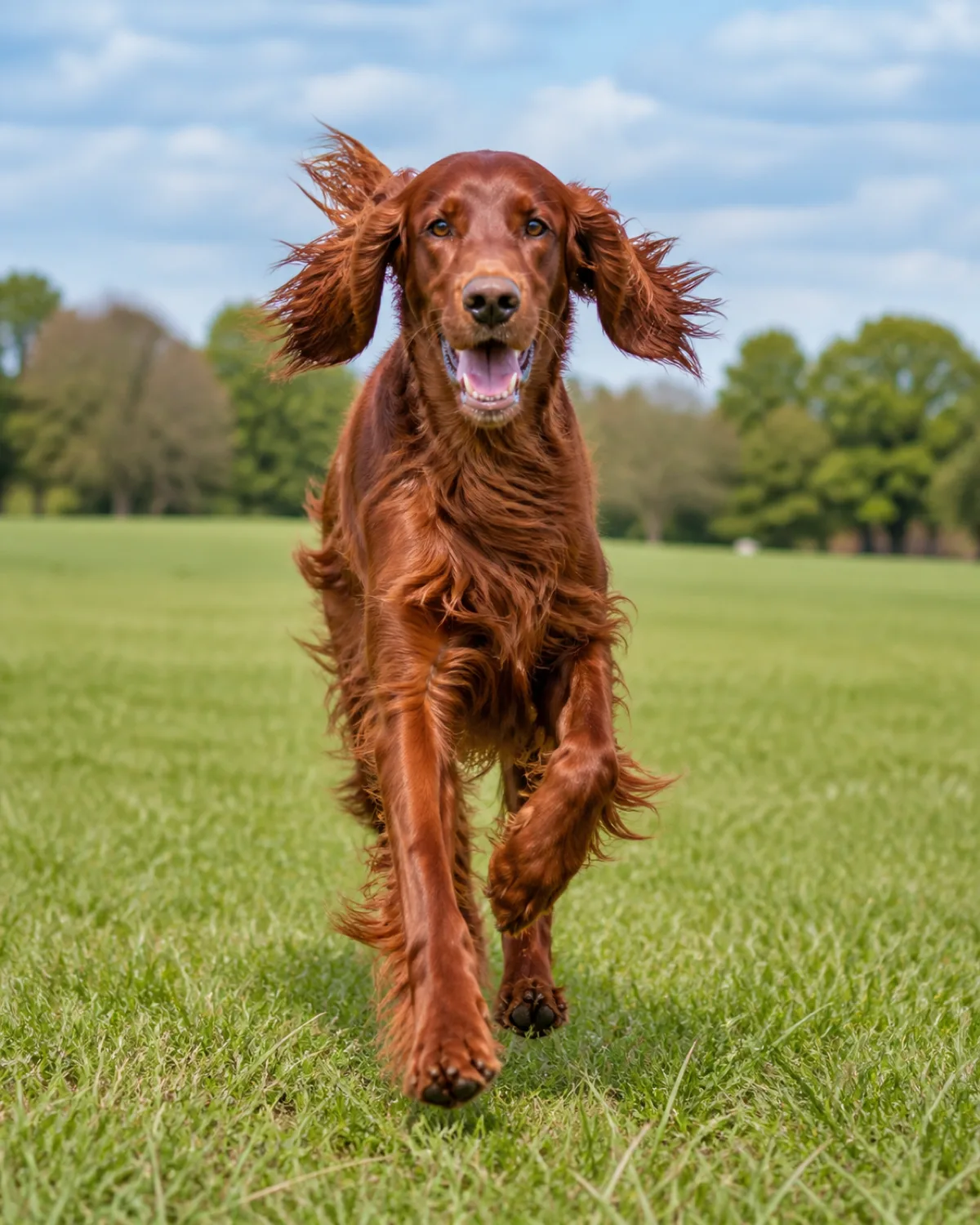
Recall is not optional. A dog that comes when called can be stopped from running into traffic, chasing wildlife, or approaching an aggressive dog. Every other command is about convenience. This one is about safety.
Start indoors with zero distractions. Say your dog's name followed by come in an upbeat tone. When the dog moves toward you, mark and reward generously — not one treat, but a handful. The payoff for coming to you should always be better than whatever the dog was doing before.
Never call your dog to you and then do something the dog dislikes, like clipping nails or ending a play session. Every recall should end in something good, or the dog learns that coming when called leads to unpleasant things.
You do not need all ten at once. Pick the starting point that matches your daily challenge right now.
You just brought a puppy homeStart with sit and come. These two cover mealtimes, leash clipping, and the single most important safety command.
Your dog gets into everythingStart with leave it and drop it. Together they prevent trouble and recover from it.
Guests set off chaos at the doorStart with off and place. Off stops the jumping, and place gives the dog a job when the doorbell rings.
Walks are a tug of warStart with heel. Short, focused heel bursts calm the walk faster than any equipment swap.
Down Helps Your Dog Settle Anywhere
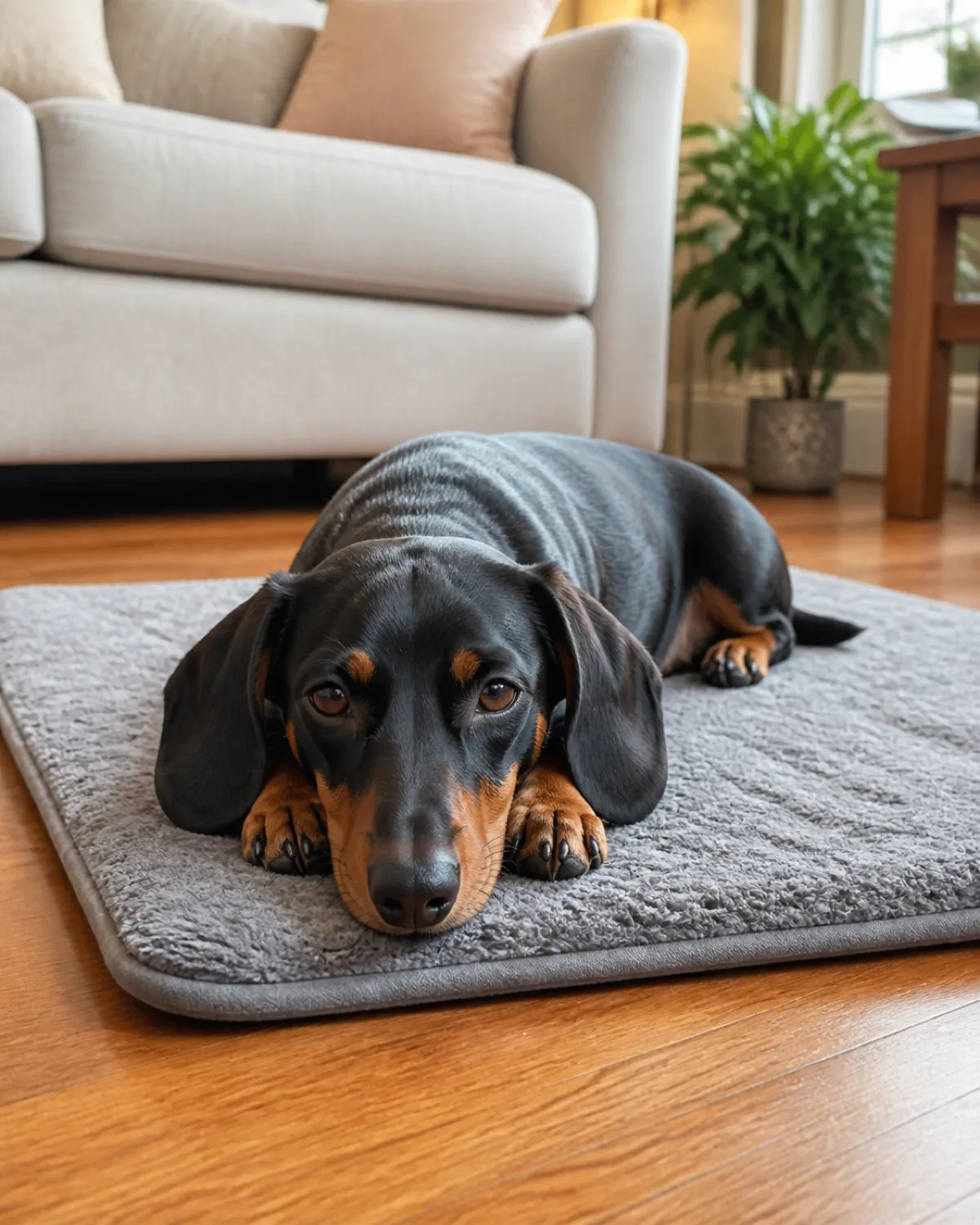
Down is the calm command. A sitting dog is ready to spring up. A dog lying flat is settling in. Teaching down gives you a way to ask your dog to relax at your feet during dinner, in the vet's waiting room, or on a blanket while you work from home.
Start from a sit. Hold a treat at your dog's nose and lower it straight down to the floor between the front paws. The nose follows the treat, the elbows fold, and the belly hits the ground. Mark and reward the instant the dog is flat.
Some dogs resist lowering all the way. If your dog pops back up or tries to crawl forward, try luring toward the dog's chest rather than straight down. Be patient — down takes longer to teach than sit because the position feels more vulnerable.
Once down is solid on a mat at home, start practicing it in new places. The end goal is a dog that can lie down quietly wherever you need it to.
Leave It Stops Trouble Before It Starts
Leave it means do not touch that thing. It works on food dropped on the kitchen floor, garbage on the sidewalk, a shoe left by the door, and the neighbor's cat walking past the yard. It is a preemptive command — you use it before the dog gets to the thing, not after.
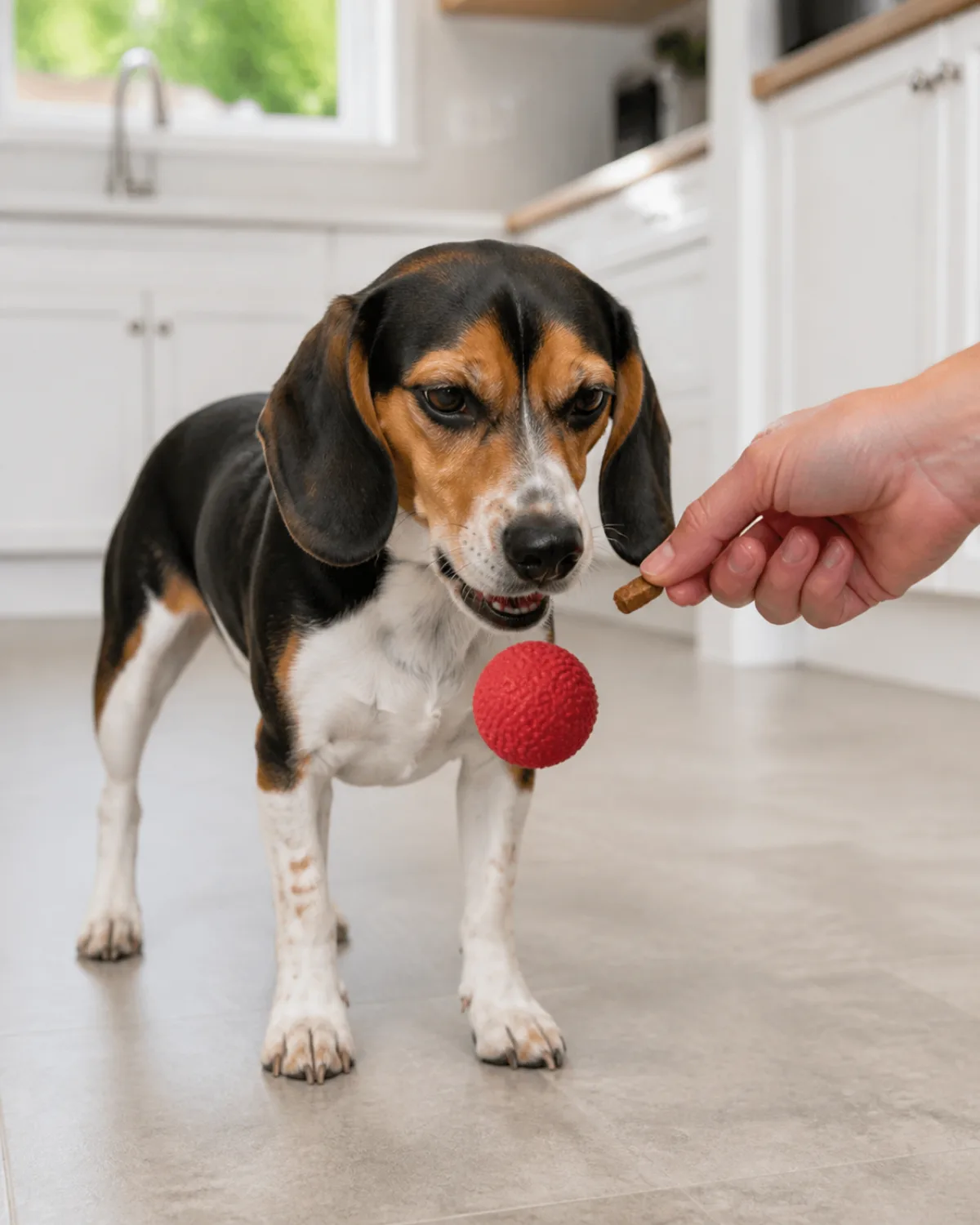
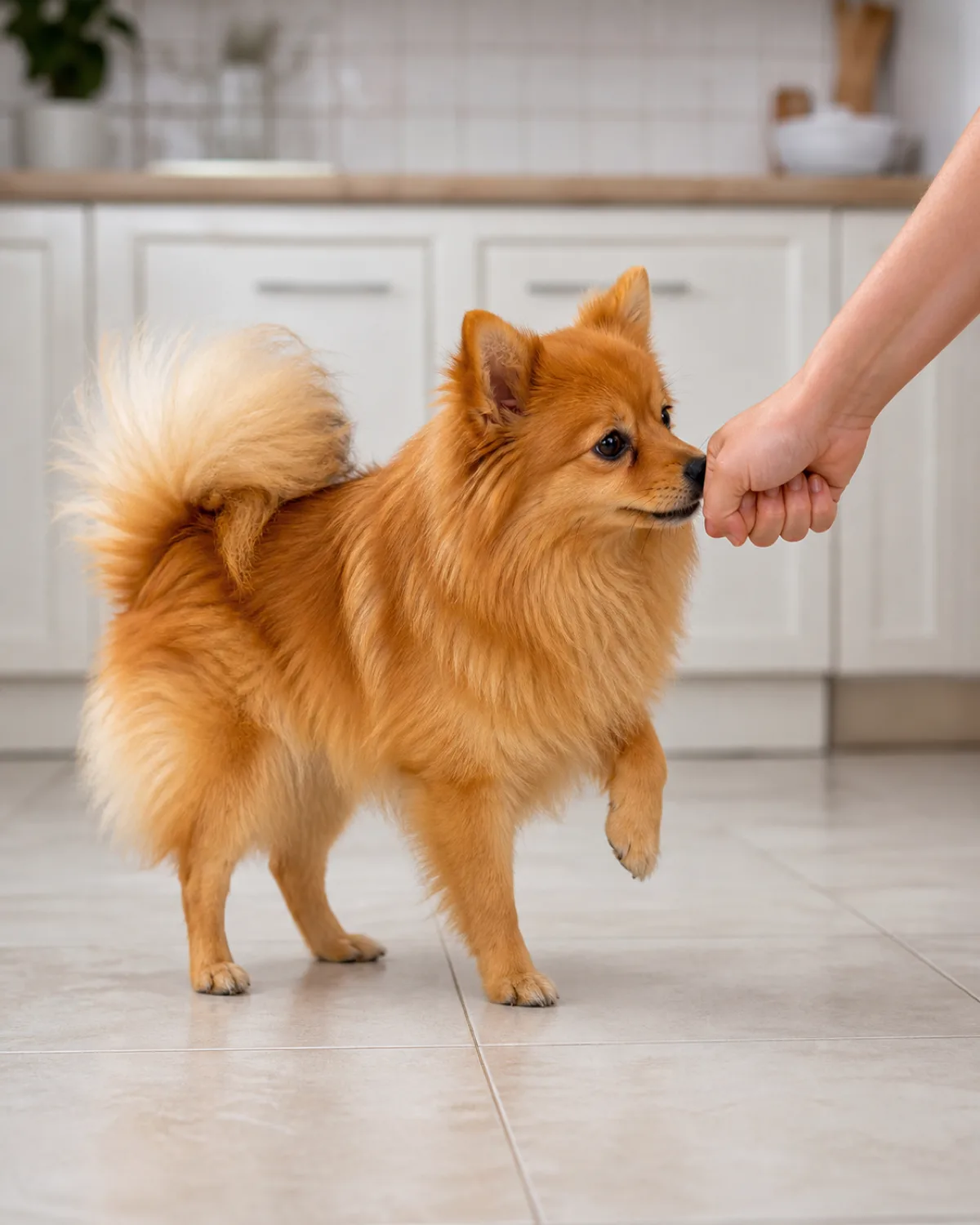
The teaching method is a trade. Put a treat in your closed fist. When the dog noses, licks, and paws at your hand, wait. The moment the dog pulls away or looks at your face instead, mark and reward with a different, better treat from your other hand.
This pairs naturally with puppy-proofing your home — commands and management work together, and neither replaces the other. For the full training steps including outdoor proofing, read our guide on how to teach a dog to leave it.
Drop It Gets Dangerous Objects Out of Your Dog's Mouth
Drop it is the emergency counterpart to leave it. Leave it prevents the dog from picking something up. Drop it gets it out after the fact. A reliable drop it prevents choking hazards, poison ingestion, and the tug-of-war that turns a sock steal into a full-speed chase through the house.
Teach it with a trade-up game. Give your dog a toy it likes but does not guard. Show a high-value treat, say drop it, and the moment the dog releases the toy, mark and hand over the treat. Then give the toy back.
The dog learns that dropping something does not mean losing it — it means getting something better and keeping the original too. Never chase a dog to grab something out of its mouth unless it is a genuine emergency. Chasing teaches the dog that holding onto things starts a fun game, which is the opposite of what you want.
Why drop it and leave it are not the same
Leave it means do not pick it up. Drop it means let go of what is already in your mouth. Teaching both covers the before and after — prevention and recovery.
The principles behind every command on this list
4 rules that make training stick
These four principles apply to every command. Break any one of them consistently and the command falls apart regardless of technique.
Mark the exact momentThe dog needs to know which specific behavior earned the treat. Say your marker word at the precise instant the dog does the right thing — not three seconds later when you reach into the treat bag.
Reward quality, then raise the barAccept sloppy early attempts and reward them. A crooked sit still counts at first. Once the dog offers the behavior reliably, start rewarding only the clean versions and ignoring the half-efforts.
Change one variable at a timeDuration, distance, and distraction are three separate knobs. Turn only one up per session. Asking for a longer stay in a new place with new distractions is three changes at once, and it almost always fails.
End before frustrationFive good repetitions and a treat scatter is a better session than fifteen reps that end with the dog wandering away. Short sessions keep the dog engaged and make the next session easier to start.
Heel Makes Walks Manageable for Both of You
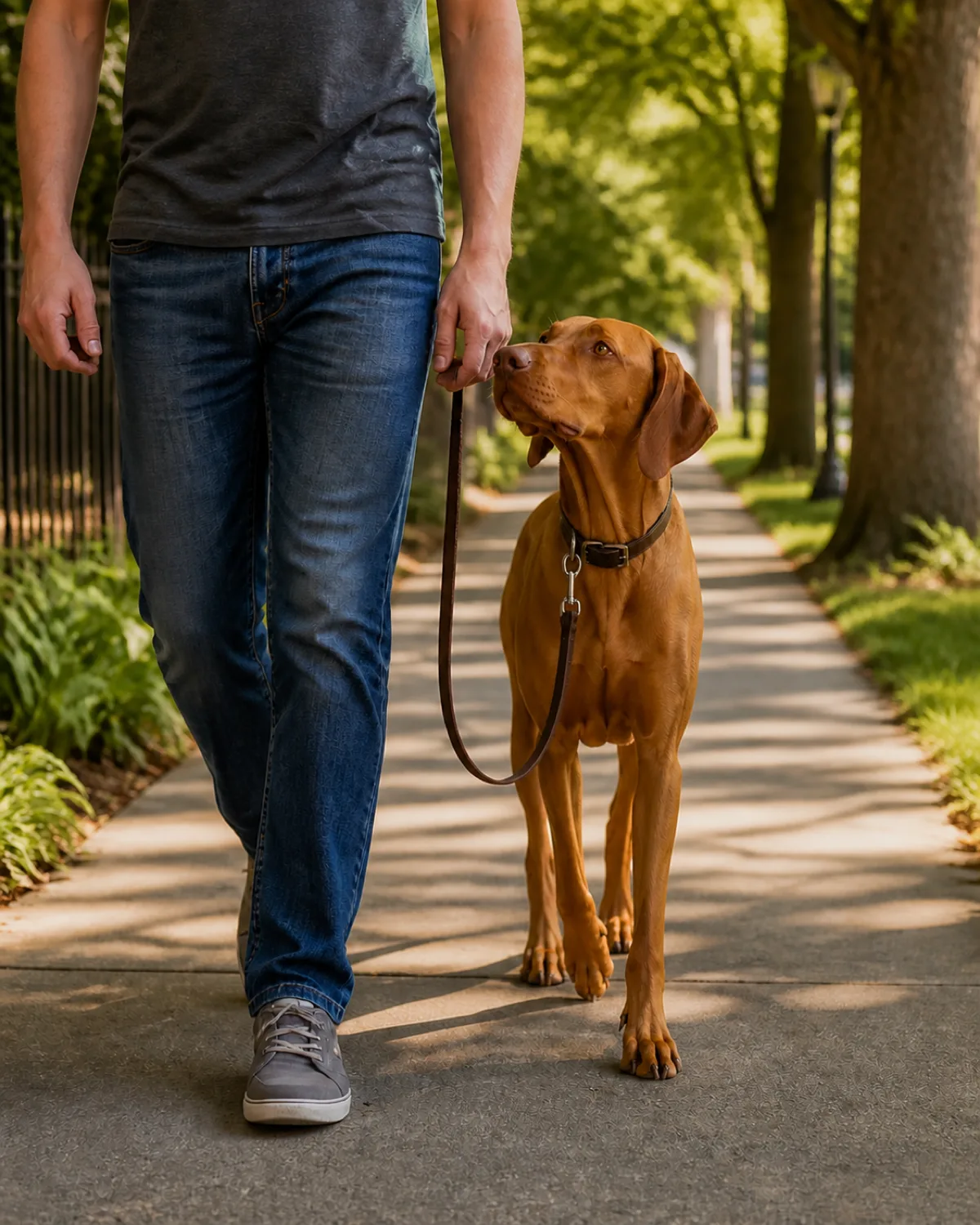
Heel is a precise position — the dog walks at your left side with its shoulder aligned with your leg, matching your pace and direction changes without pulling or lagging. It is not the same as loose-leash walking, which means the leash is not tight. Heel is active, focused attention.
Start in a low-distraction space like your hallway. Hold a treat in your left hand at your hip. Take three steps. If the dog stays at your side, mark and reward. If the dog surges ahead, stop walking and lure it back to position before moving again.
Keep heel sessions short — thirty seconds to a minute — and release the dog to walk freely in between. Heel is a high-effort behavior. Asking for it the entire walk is like asking someone to walk a tightrope for an hour. Short bursts build the habit without burning the dog out.
Off Teaches Your Dog to Keep Four Paws on the Floor
Off is not down. Down means lie flat. Off means get off — off the couch, off the counter, off the person who just walked through the door. Mixing these two up confuses the dog, so pick one word for each and use it consistently.
Teach off by rewarding the behavior you want rather than punishing the behavior you do not want. When the dog jumps on the couch uninvited, hold a treat to the floor and say off. The moment all four paws hit the floor, mark and give the treat.
If the jumping is on people, the training requires help from everyone who walks through the door. The dog gets zero attention — no eye contact, no pushing away, no talking — until all four paws are down. Then it gets everything.
Place Sends Your Dog to a Specific Spot on Cue
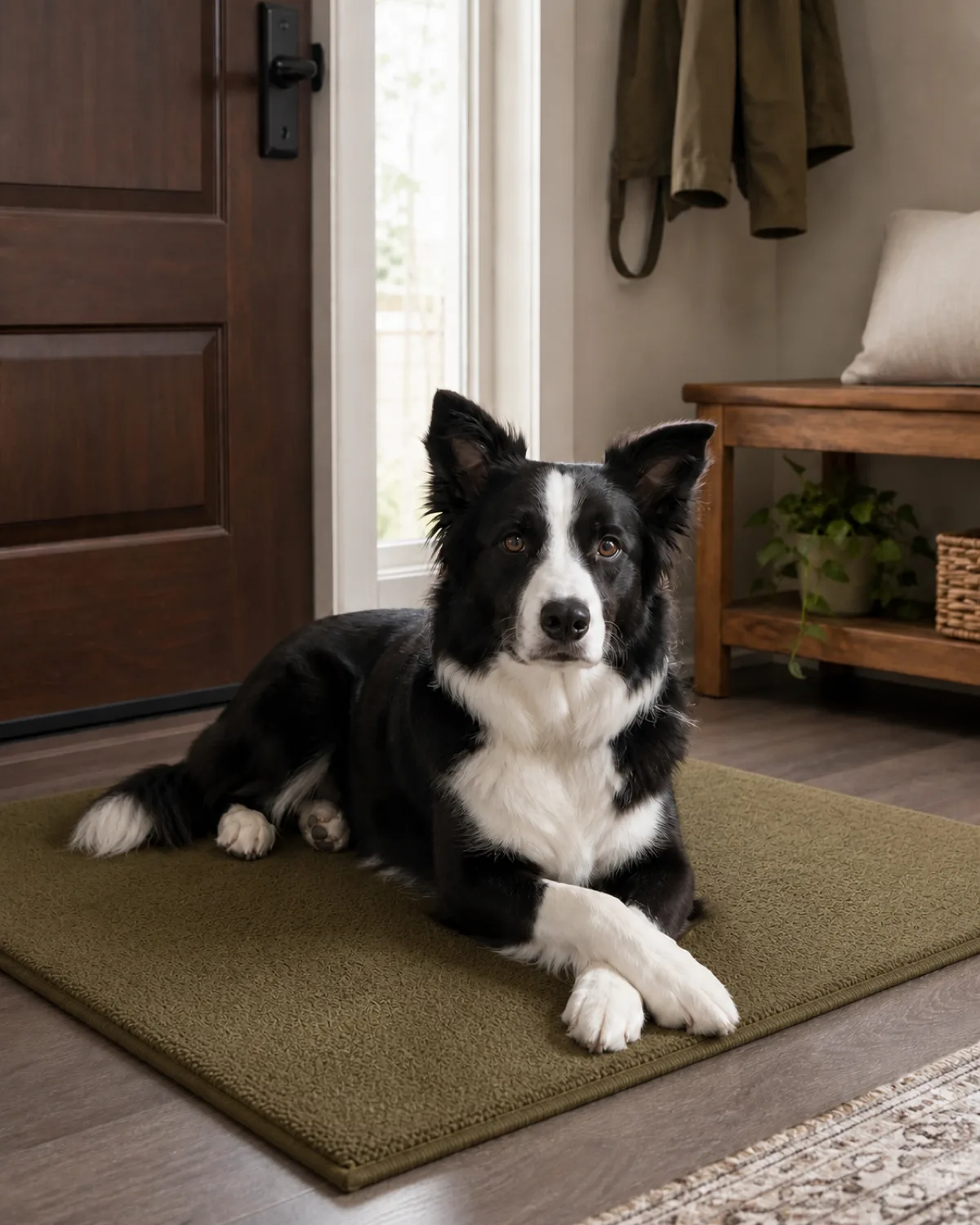
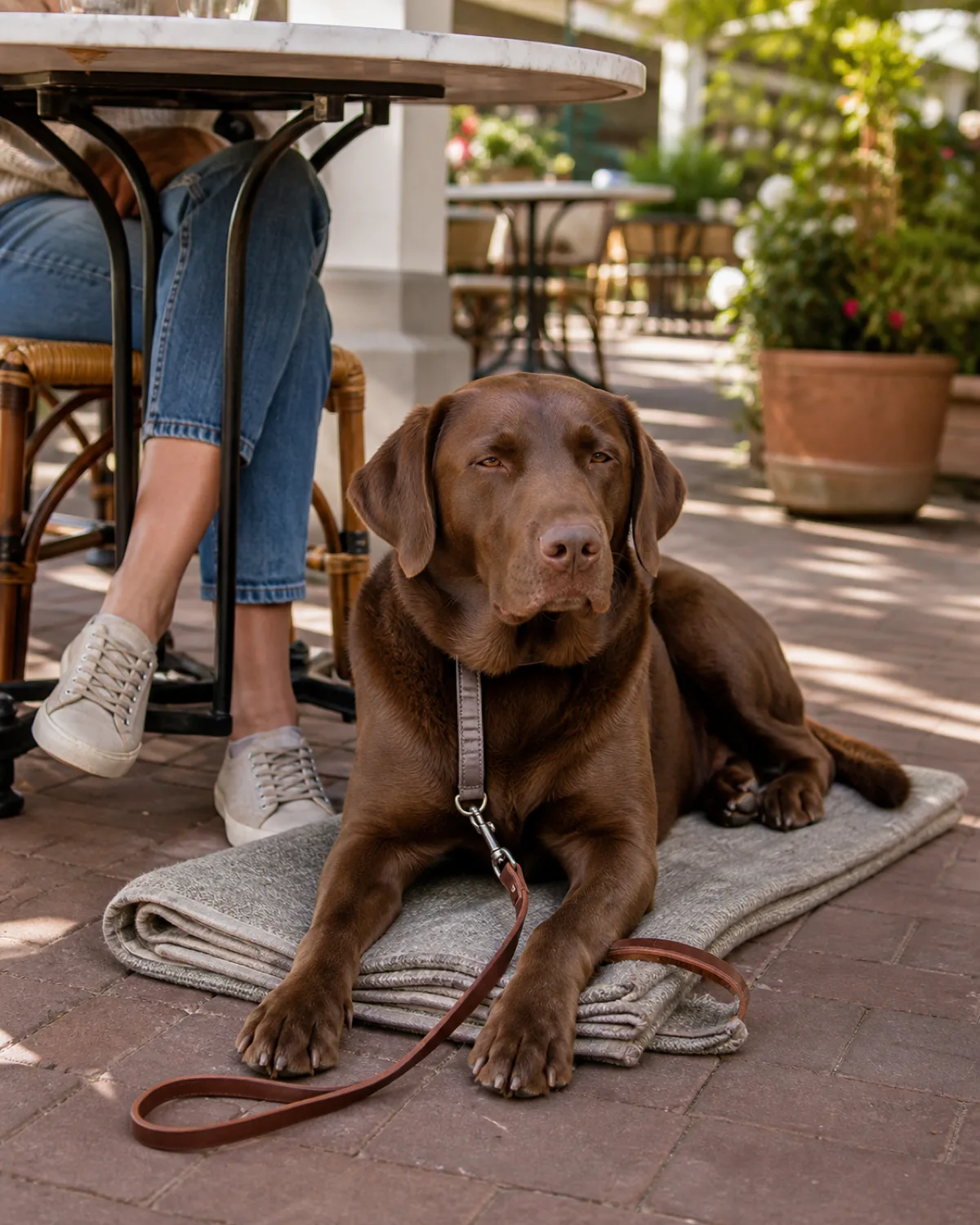
Place is the most underrated command on this list. It sends your dog to a designated mat, bed, or towel and tells it to stay there until released. Use it when the doorbell rings, during meals, when you are on a phone call, or anytime you need the dog settled without using a crate.
Start by tossing a treat onto a flat mat. When the dog walks onto the mat, mark and reward. Repeat until the dog starts going to the mat on its own. Then add the cue — say place as the dog is already walking to the mat. Gradually increase the time the dog stays on the mat before you release it.
The mat itself is portable, which makes place a traveling command. Bring the mat to a restaurant patio, a friend's house, or the vet lobby, and the dog already knows what to do on it.
Save this for later
10 Basic Dog Commands Every Dog Should Know
1
SitLure a treat over the nose, mark the instant the rear hits the floor, reward
2
StayHold a position until released — add distance and duration separately
3
ComeThe safety command — reward generously every single time the dog arrives
4
DownLure from nose to floor between the front paws until the belly drops
5
Leave itIgnore the thing on the floor and look at you instead — earns a better reward
6
Drop itTrade what is in the mouth for a high-value treat, then return the original
7
HeelShort focused bursts at your left side — not the entire walk, just key moments
8
OffAll four paws on the floor earns attention — jumping earns nothing
9
PlaceGo to your mat and stay there — portable calm for any location
10
One at a timeMaster one command before adding the next — short sessions, high frequency
pawliqa.com
Start With One Command at a Time and Build From There
The temptation is to teach everything at once — sit, stay, come, down, leave it — all in the same week. That approach overwhelms most dogs and leads to sloppy execution of every command rather than reliable execution of any single one.
Pick one command. Practice it in short sessions — five minutes, three times a day is better than one thirty-minute block. When the dog responds reliably in three different locations with mild distractions, add a second command and keep practicing the first as a warm-up.
The order matters less than the consistency, but sit, come, and down are practical starting points because they apply immediately to daily life. Stay, leave it, and heel come next. Place, drop it, and off fill in from there.
Most dogs learn a basic command in one to three weeks of consistent daily practice. Proofing that command — making it reliable in any environment with any distraction — takes another two to four weeks. There is no shortcut. Short sessions, clear rewards, and patience always beat longer sessions with frustration.
The goal is not a dog that performs tricks on command. It is a dog that understands what you are asking, trusts that good things follow when it responds, and can settle into any situation because you both share a language that works.
About the author
Jess Calloway
Jess Calloway edits Pawliqa, where she shares dog care, grooming, training, and new-owner tips — plus DIY and pet-friendly home ideas — for anyone who wants a happy, well-cared-for dog. As a dog mom to three very different dogs, she writes the honest, tested version of what actually works. Every guide is image-led and reviewed for clarity, usefulness, image accuracy, and Pinterest-to-page alignment before it goes live. Visit the About page.
Frequently Asked Questions
How many commands can a dog learn?
Most dogs can learn dozens of commands over their lifetime. Working breeds and dogs with daily training routines can learn well over a hundred. The limit is rarely the dog's capacity — it is the consistency of the teaching. The ten commands in this guide cover the vast majority of situations you will encounter in daily life.
What age should I start training?
Start as soon as you bring the puppy home, typically around eight weeks old. Puppies have short attention spans, so keep sessions under five minutes. Even very young puppies can learn sit, come, and basic name recognition. Older dogs learn new commands too — the process takes a bit longer, but the principles are identical.
What if my dog knows a command at home but ignores it outside?
The command is not fully proofed. A dog that only responds in one environment has learned a location-specific behavior, not a command. Practice in progressively more distracting environments — backyard, front yard, quiet street, busier street — and reward heavily in each new location until the command works everywhere.
Should I use hand signals or verbal cues?
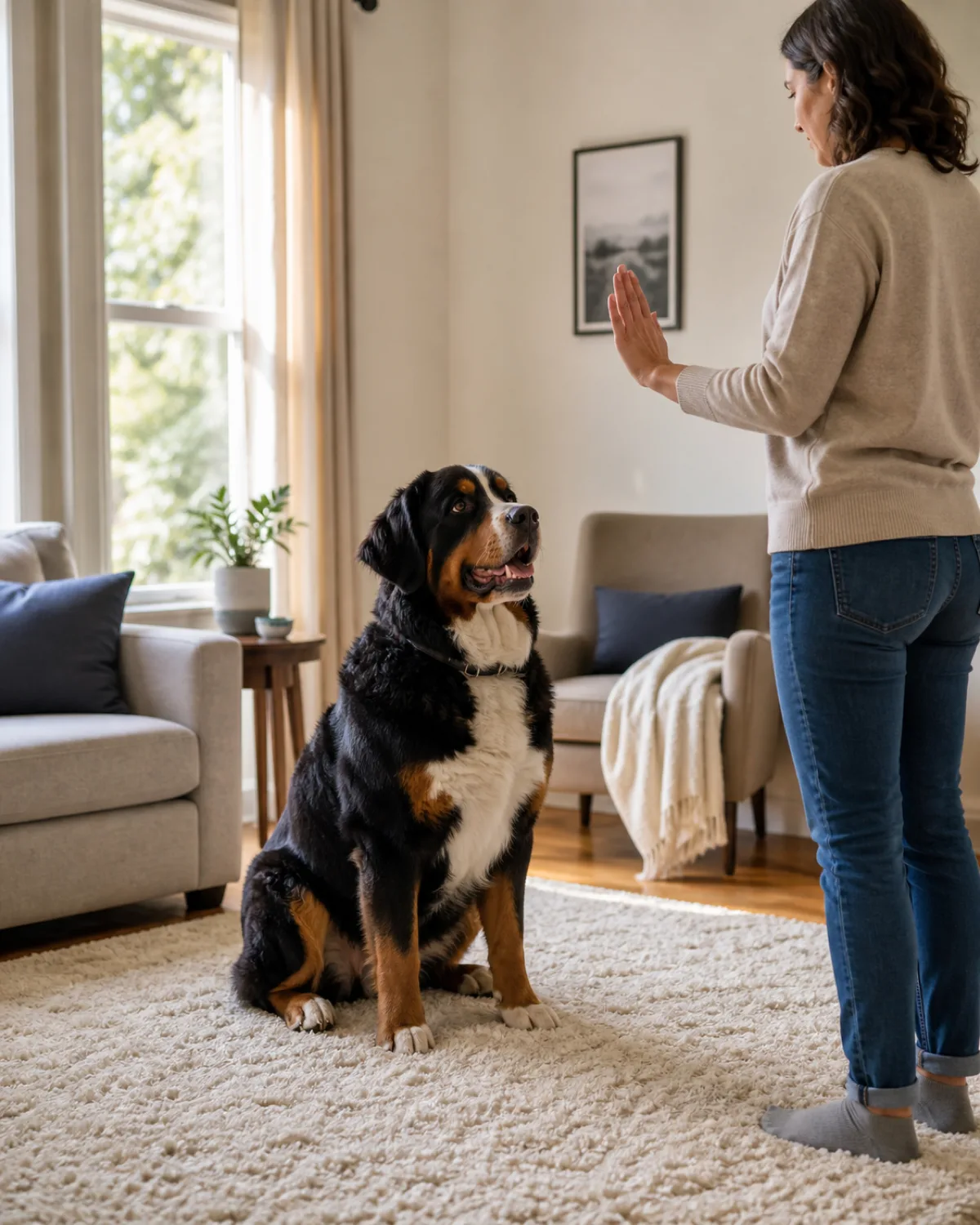
Both. Dogs naturally read body language better than spoken words, so hand signals often click faster. Pair a hand signal with the verbal cue from the start, and the dog will respond to either. This is especially useful as dogs age and their hearing declines.
How long should training sessions be?
Five to ten minutes, two to three times per day. Shorter sessions with higher energy and clear rewards produce better results than long sessions that end in fatigue or frustration. End every session on a success, even if it means asking for an easy command the dog already knows.
Teaching a dog to spin starts with a food lure at nose level, progresses to an open-palm hand gesture, and ends with a verbal cue alone. This guide walks through every stage, flags the mistakes that stall progress, and shows how to keep training sessions short and productive.
An overstimulated dog is not being bad. This guide walks through the place cue, structured down-stays, environment management, and daily decompression routine that teach a dog to settle on its own.
Fourteen puppy training games covering hide and seek recall, the name game, touch targeting, cup puzzles, puppy pushups, which hand, red light green light, muffin tin puzzles, tug with rules, scent work, two-toy fetch, obstacle courses, spin tricks, and settle mat training for puppies who learn best through play.