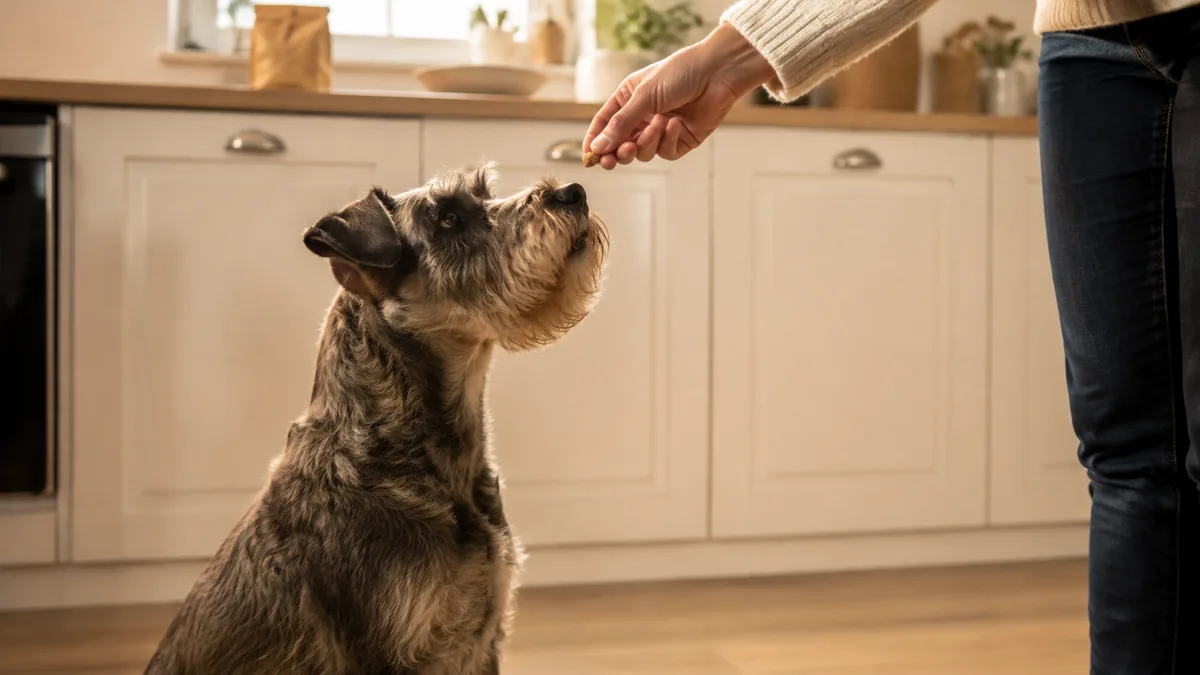
My youngest dog will do anything for freeze-dried liver. Spin, hold a down-stay, walk past a squirrel. Hand her a dry biscuit mid-session and she checks out completely.
The right treat needs to be small enough to eat in half a second, exciting enough to beat the distraction, and safe enough to feed dozens per session without wrecking dinner.
Here are thirteen dog training treats that hold attention, from store-bought staples to things already in your kitchen.
Jump to a training treat
13 dog training treats that keep your dog locked in
From soft chews and freeze-dried liver to frozen pumpkin cubes and a treat pouch that keeps your timing tight. Jump to whichever one fits your next session.
1. Tiny Soft Chews That Disappear in One Bite
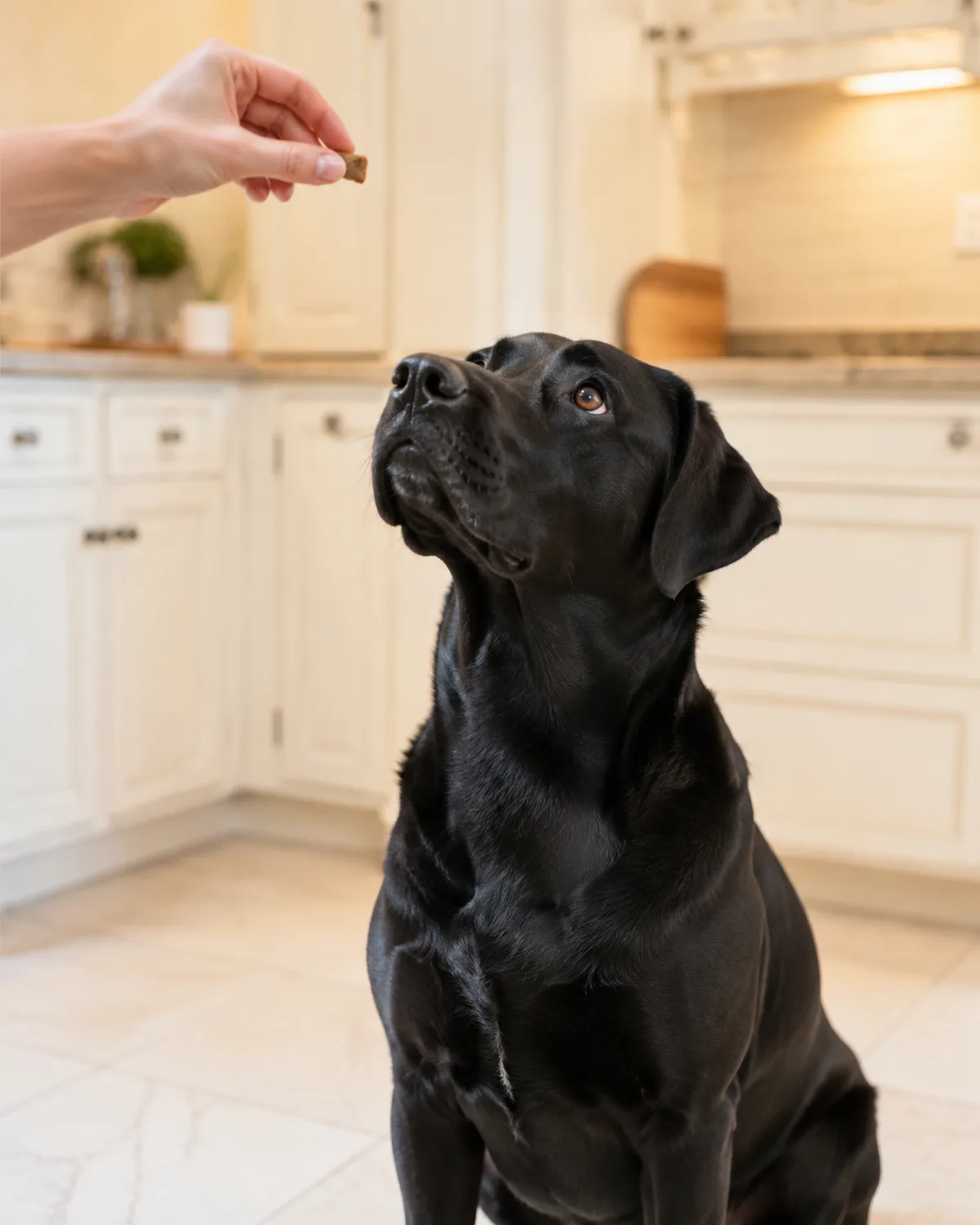
Soft treats are the backbone of most training sessions because they disappear fast. A dog that has to stop and crunch through a hard biscuit loses focus on you while chewing. Soft chews let you mark and reward in a continuous rhythm.
Look for treats about the size of a pencil eraser. If they come bigger, tear or cut them before you start. You want your dog swallowing in under two seconds so you can move to the next repetition.
- Watch for treats that crumble apart in your pouch and leave greasy residue everywhere
- Semi-moist chews with a slightly tacky surface tend to hold their shape better than overly wet ones
- Keep them in a sealed bag between sessions so they stay pliable
The goal is speed. The faster the treat goes down, the faster your dog is ready for the next cue.
2. Freeze-Dried Liver Bits for High-Value Moments
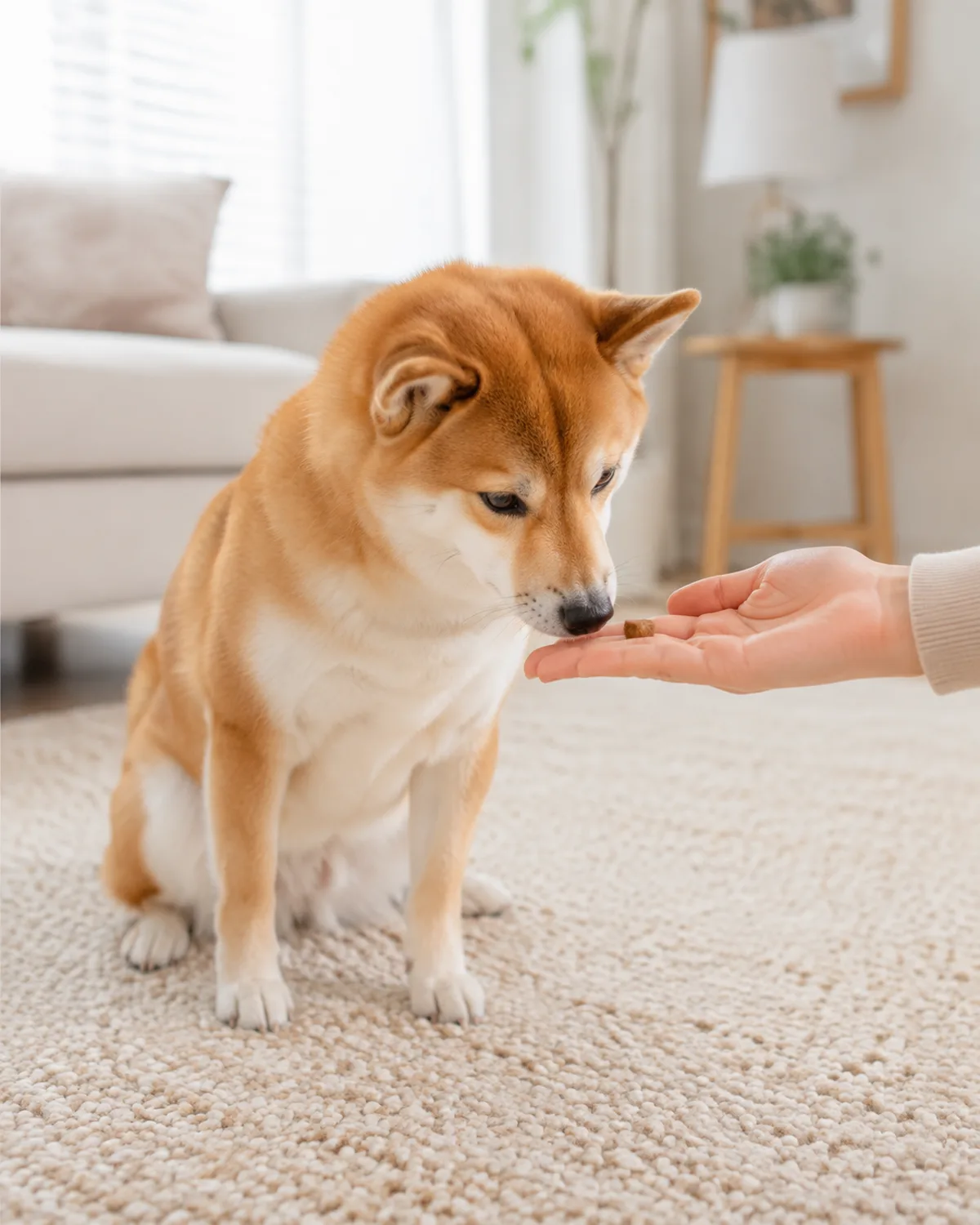
Freeze-dried liver sits at the top of most dogs' motivation hierarchy. It smells intense, tastes rich, and crumbles into tiny pieces you can break off with your fingers.
Use liver for the moments that matter most. That first recall at the dog park, the first time your dog holds a stay while another dog walks past, or the first session working on leash reactivity around triggers.
- Beef liver and chicken liver both work, but beef tends to hold its shape better when broken into pieces
- Break pieces over a bowl so the crumbs collect instead of falling onto the floor
- Because liver is nutrient-dense, keep individual pieces very small and limit total volume to avoid stomach upset
Reserve freeze-dried liver for breakthroughs. If you use it for everything, it stops being special and you lose your highest-value currency.
3. Shredded Cooked Chicken for Distraction-Heavy Drills
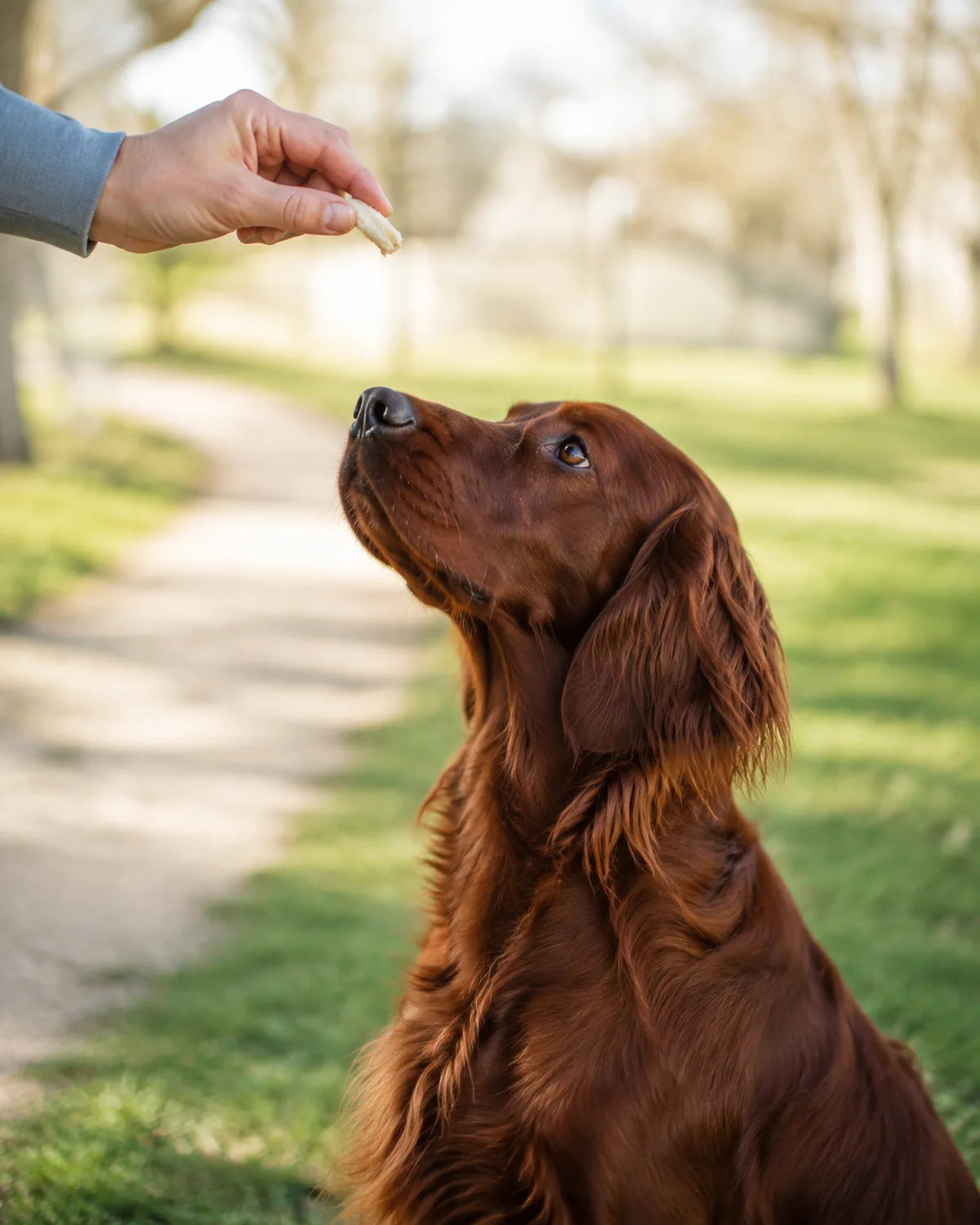
When you need your dog to ignore a passing jogger or hold a sit at the vet lobby door, plain boiled chicken outranks almost every packaged treat. It is real meat, single protein, zero additives, and the smell alone snaps most dogs back to you.
Boil a batch on Sunday, shred with two forks into rice-grain-sized strips, and portion into daily bags. Fridge for four days, freezer beyond that. Shredded strips are faster for your dog to swallow than cubes, which keeps your rep tempo tight.
- No salt, garlic, onion, or seasoning of any kind during cooking
- Blot dry on paper towels before bagging so the pouch stays clean
- Shred rather than dice because thin irregular strips release more scent per piece and stick less to your fingers
Chicken fills the role of a high-value backup you pull out when the environment gets hard. Keep it separate from everyday kibble reps so your dog reads the switch as a signal that this rep matters more.
4. Single-Ingredient Jerky Strips Broken Into Bits
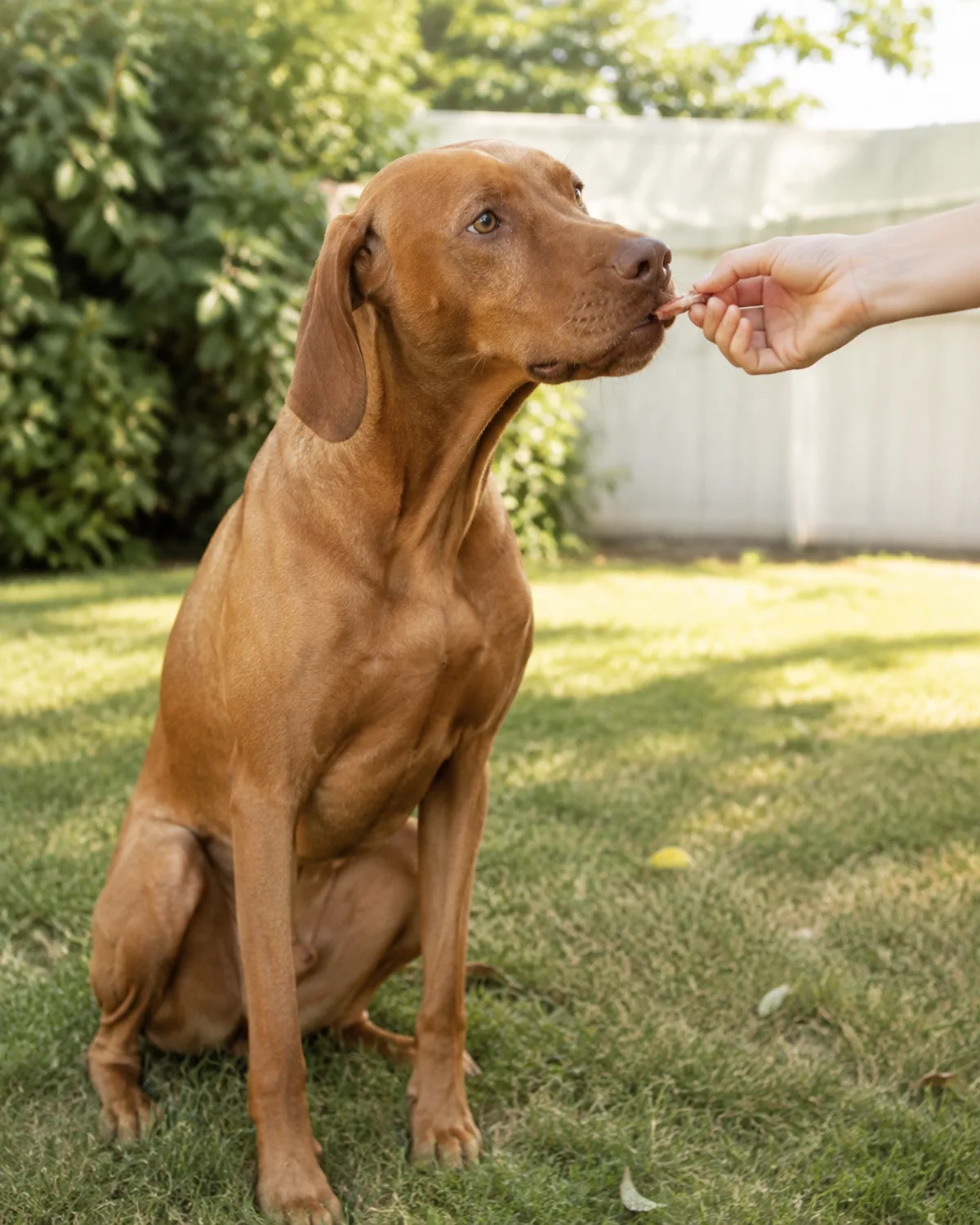
Jerky strips made from one ingredient (chicken, beef, salmon, or sweet potato) give you a shelf-stable treat you can toss in your bag and forget about for weeks. No refrigeration needed.
The trick is breaking them small. Most jerky strips are sold in pieces too large for training reps. Snap them into bits about the size of your pinky nail before the session starts so you are not fumbling mid-cue.
- Read the ingredient list and skip anything with added sugar, glycerin, or artificial preservatives
- Salmon jerky is an excellent option for dogs with poultry allergies
- Store opened bags with a clip or in a sealed container to keep them from drying out and becoming too hard to break
Jerky is denser than soft chews, so each piece takes a beat longer to eat. Use it for slower-paced drills like place training or extended down-stays where the extra chew time is actually a reward.
Match the treat to the session so your dog stays engaged the whole time
Which treat should you grab first?
Different sessions need different treat tiers. Pick the scenario below and start there.
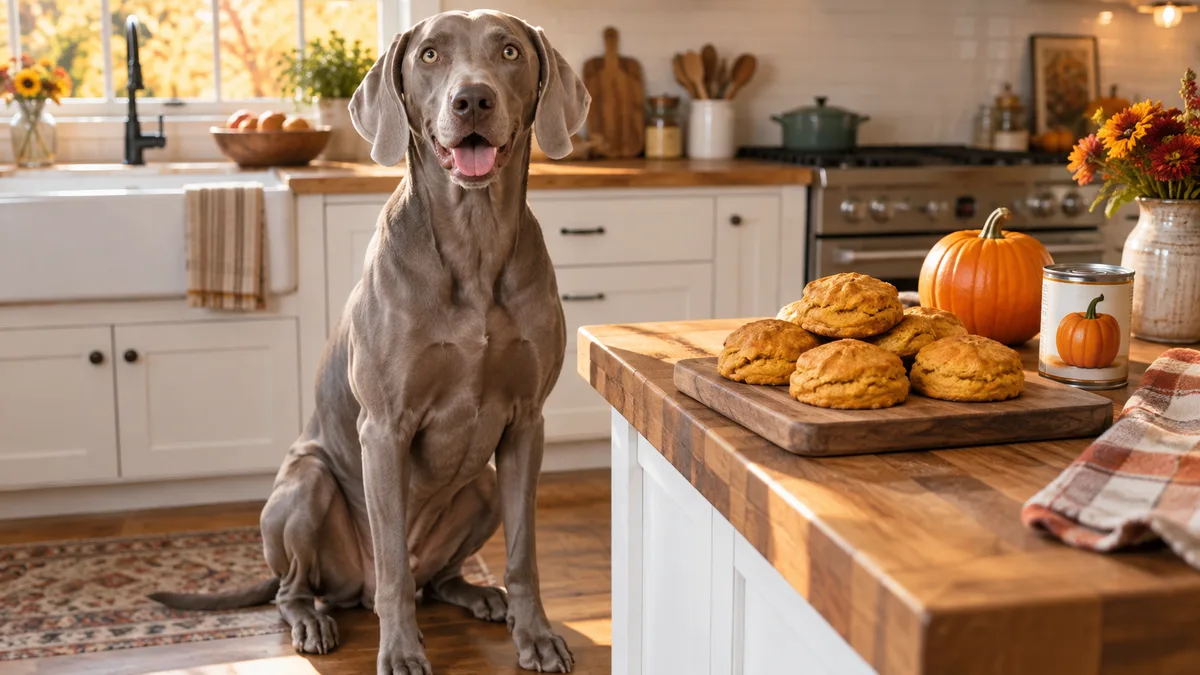
5. Frozen Pumpkin Cubes for Summer Sessions
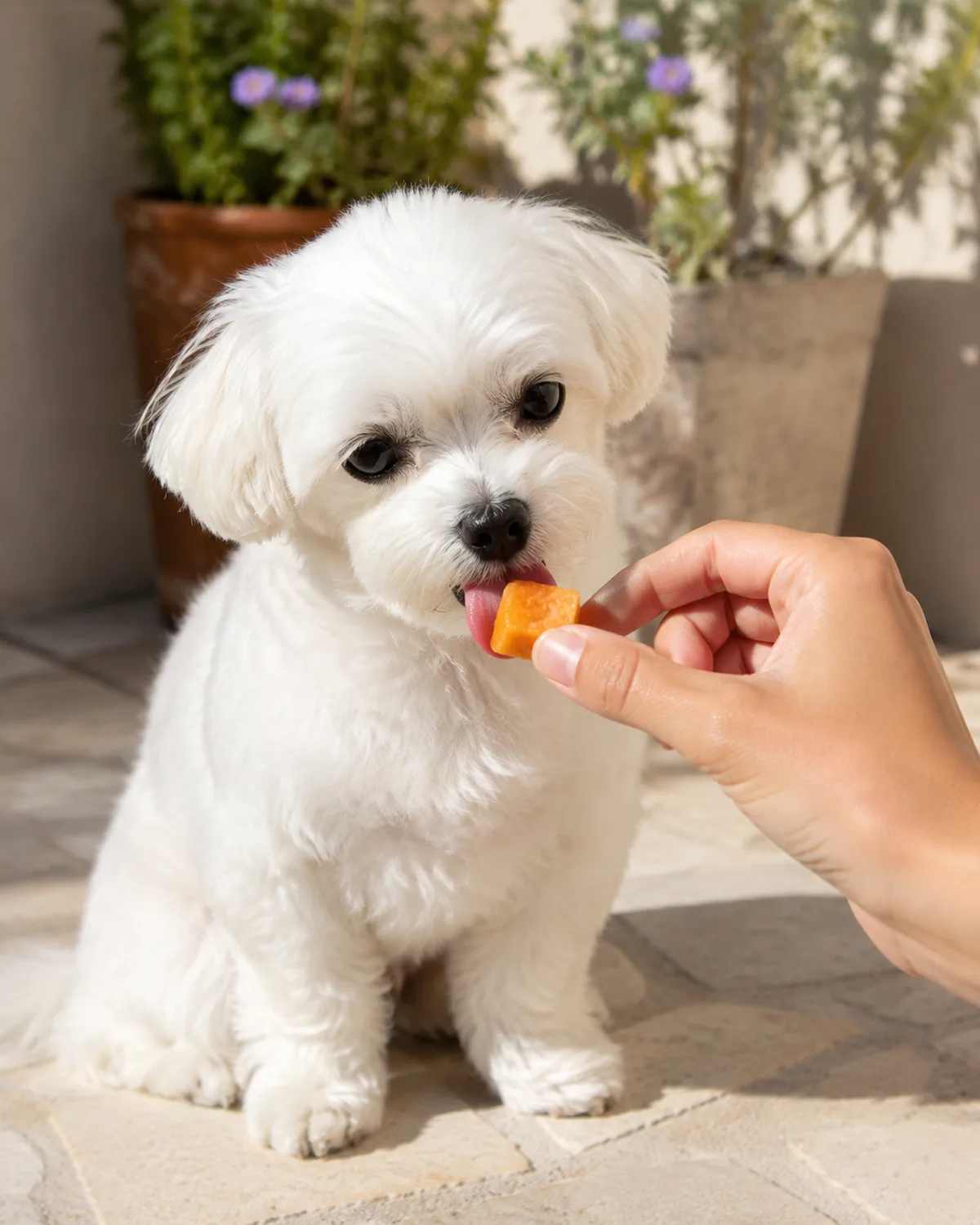
Training outdoors in warm weather means your regular soft treats can turn into a melted mess in your pouch within twenty minutes. Frozen pumpkin cubes solve that problem and give your dog a cool reward at the same time.
Spoon plain canned pumpkin (not pie filling, which has sugar and spices) into silicone mini ice cube trays. Freeze overnight. Pop them out and store in a freezer bag.
- Each cube should be about the size of a nickel so your dog can eat it in one lick or crunch
- Pumpkin is low calorie and high fiber, which means you can use a lot without worrying about weight gain
- Bring them in an insulated pouch so they stay frozen for at least thirty minutes outdoors
These work best for low-rep, high-focus drills because you cannot fire off rapid repetitions while your dog is licking a cold cube. Pair them with a faster treat for quick-fire reps.
6. Commercial Training Treats Sized for Repetition
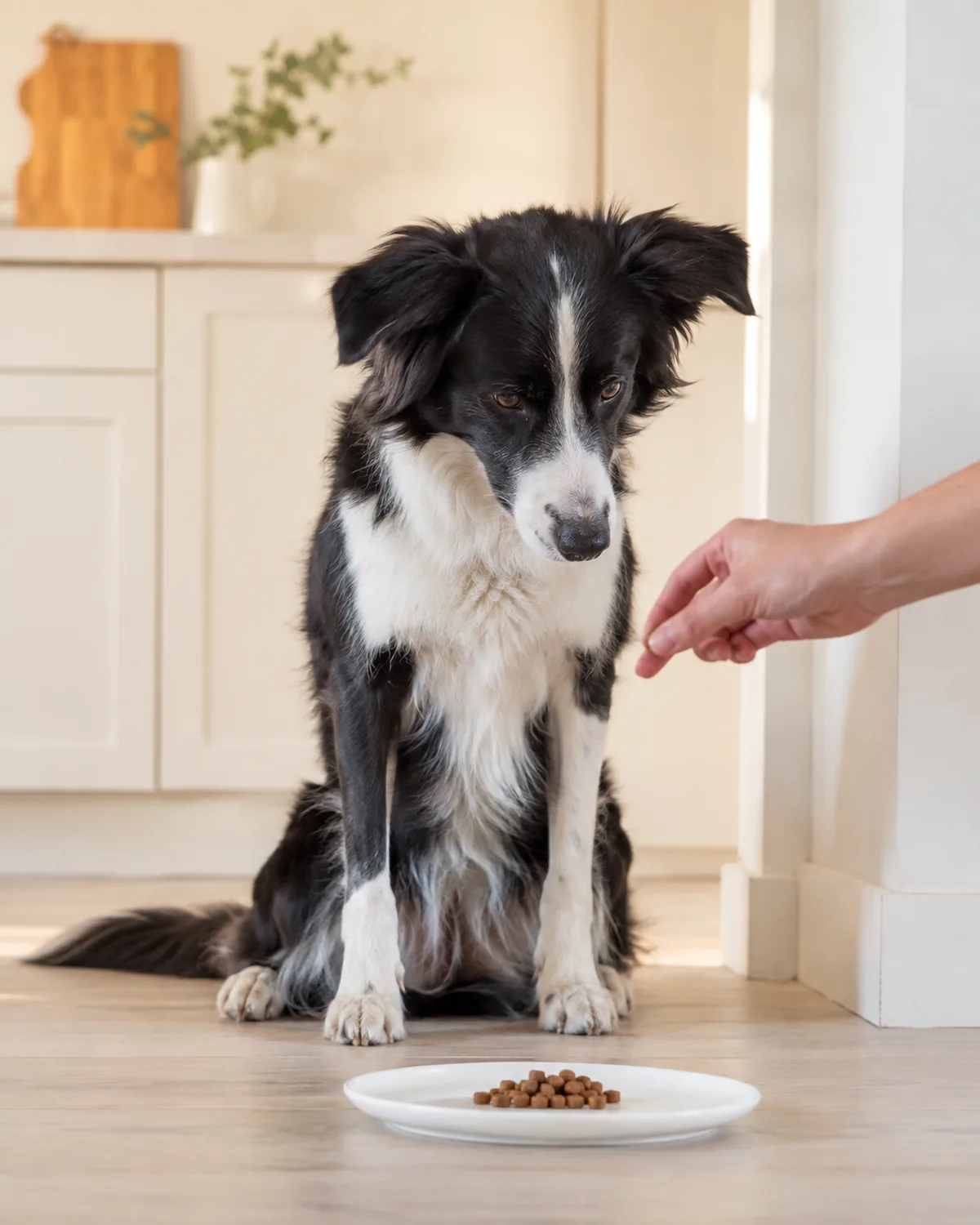
The training treat aisle is full of options designed for repetition work. These are factory-sized at about five calories per piece and formatted so you can grab and deliver without looking down.
Good commercial training treats share a few traits. They are uniform in size so your dog gets a consistent reward. They are semi-moist so they go down fast. And they come in resealable bags that survive being tossed into a car or backpack.
- Look for treats under five calories each so you can use fifty in a session without exceeding ten percent of your dog's daily intake
- Avoid anything with wheat, corn, or soy as the first three ingredients if your dog has a sensitive stomach
- Buy two or three different brands and rotate to keep novelty high
The convenience of commercial treats is their biggest advantage. No prep, no refrigeration, consistent size every time.
7. Cheese Cubes Cut Smaller Than Your Thumbnail
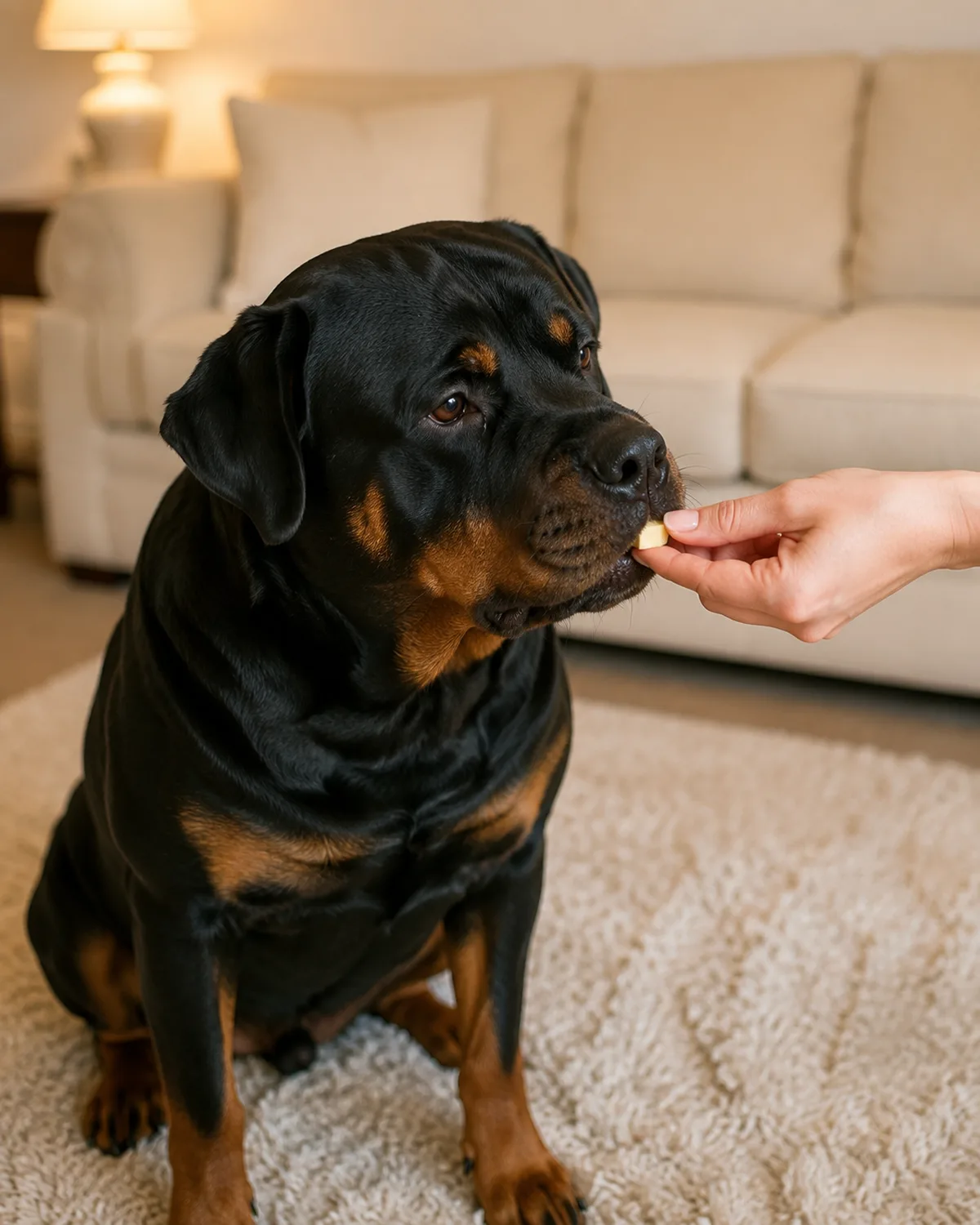
Cheese is one of the most universally motivating treats across breeds and temperaments. A tiny cube of cheddar or mozzarella gets most dogs locked in within seconds.
Cut cheese into pieces smaller than your thumbnail. If you can see the cube from across the room, it is too big. The smell alone does most of the work. Your dog does not need a large piece to stay engaged.
- Low-fat mozzarella string cheese is easy to tear into perfect training-sized pieces on the spot
- Harder cheeses like cheddar hold up better in a treat pouch than soft cheeses that smear
- Cheese is calorie-dense, so use it sparingly during long sessions or offset by reducing kibble at the next meal
Cheese works as a mid-tier value treat. Higher than kibble, lower than liver. It fills the gap between everyday drills and breakthrough moments.
Four principles that make any training treat work harder
The treat timing system
The treat itself matters less than how you deliver it. These four rules separate clean training from scattered feeding.
Mark first, then deliverSay your marker word or click the moment the behavior happens, then reach for the treat. The marker bridges the gap so your dog connects the behavior with the reward even if the treat arrives two seconds later.
Keep treats invisible until earnedIf your dog can see the treat before they perform, you are bribing, not reinforcing. Keep the pouch closed and your hand empty until after the marker. The behavior should come first, then the reveal.
Vary the value to keep attention unpredictableThree kibble reps, then one liver rep, then two cheese reps. When your dog cannot predict whether the next reward is ordinary or special, motivation stays high through the entire session.
Stop before the treats lose their pullEnd the session while your dog still wants more. If they start sniffing the ground or turning away from the treat, you have gone too long. Five minutes of engaged reps beats twenty minutes of declining effort.
8. Dehydrated Sweet Potato Chips
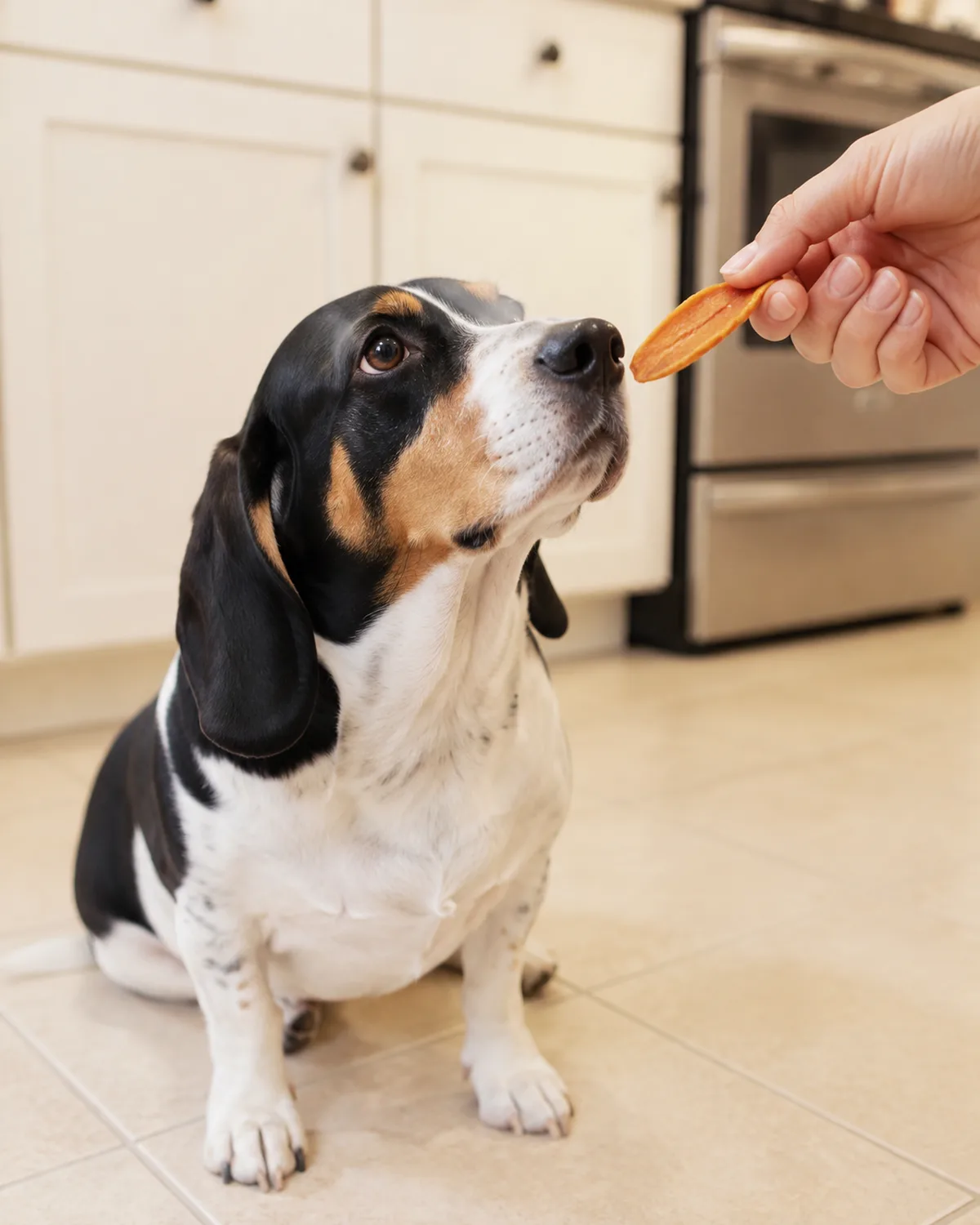
Dehydrated sweet potato chips are a plant-based training treat that gives you a different texture and flavor profile from meat options. Some dogs actually prefer the crunch.
You can buy them or make them at home by slicing sweet potatoes thin and dehydrating at low heat for eight to ten hours. Break the finished chips into pea-sized pieces before training.
- Sweet potato is naturally sweet without added sugars, which makes it appealing to most dogs
- The chips are lightweight and shelf-stable, making them ideal for outdoor sessions or travel
- Dogs that gulp treats tend to slow down for the crunch, which can help with impulse control during training
Mix sweet potato chips with soft treats in the same pouch for a texture rotation that keeps your dog guessing about what comes next.
9. Peanut Butter Smeared Inside a Lick Mat
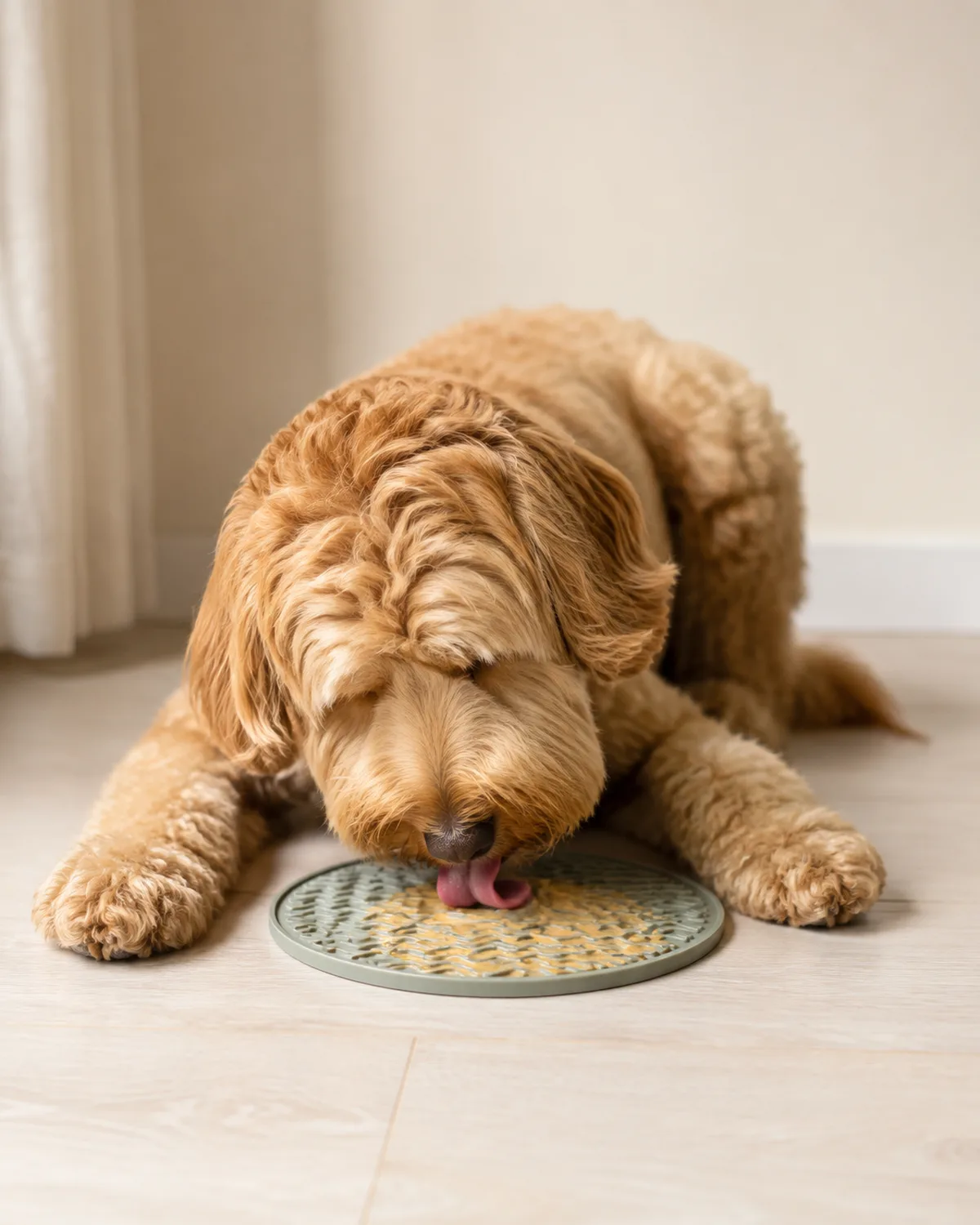
A lick mat smeared with a thin layer of peanut butter turns a training break into a calming activity. This is not a repetition treat. It is a session reset.
After a block of ten or fifteen high-intensity reps, set the lick mat down and let your dog decompress for a minute. The repetitive licking motion lowers arousal and prepares your dog for the next round.
- Use peanut butter that contains only peanuts and maybe salt, and check the label for xylitol (sometimes listed as birch sugar), which is toxic to dogs even in small amounts
- Spread a very thin layer so your dog finishes in sixty to ninety seconds, not five minutes
- Freeze the smeared mat for thirty minutes before the session so it lasts longer and creates more of a challenge
Lick mats are especially useful during desensitization work where you need your dog calm but engaged. Pair the mat with a trigger at a comfortable distance and let the licking do the heavy lifting. For more on building focus through leave-it drills, a lick mat between rounds keeps the session from tipping into frustration.
10. Baby Carrots for Low-Calorie Reps
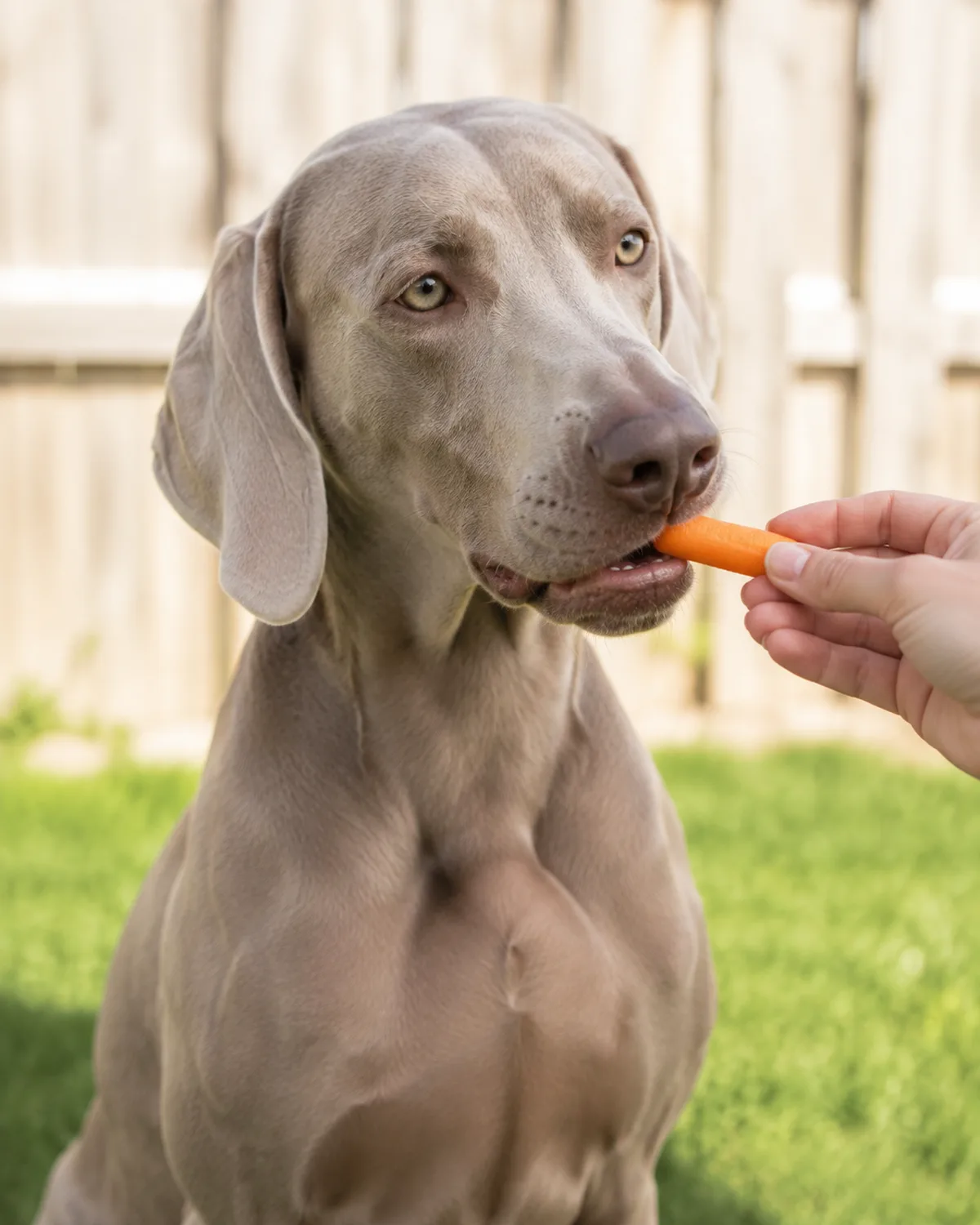
Baby carrots are the training treat you use when your dog needs volume without calories. Each carrot is roughly four calories. You could hand over twenty in a session and barely dent your dog's daily budget.
Snap each carrot into two or three pieces so they match the size of a regular training treat. Whole baby carrots take too long to chew for most repetition work.
- Not every dog finds carrots exciting enough for distraction-heavy environments, so test motivation at home first
- The crunch factor means they work well for dogs that enjoy texture variety
- Carrots release moisture when broken, which keeps them from drying out your dog's mouth during long sessions
Use carrots as filler reps between higher-value treats. Three carrot reps followed by one cheese or liver rep creates a variable reinforcement pattern that keeps motivation unpredictable.
11. Homemade Oat and Banana Bites
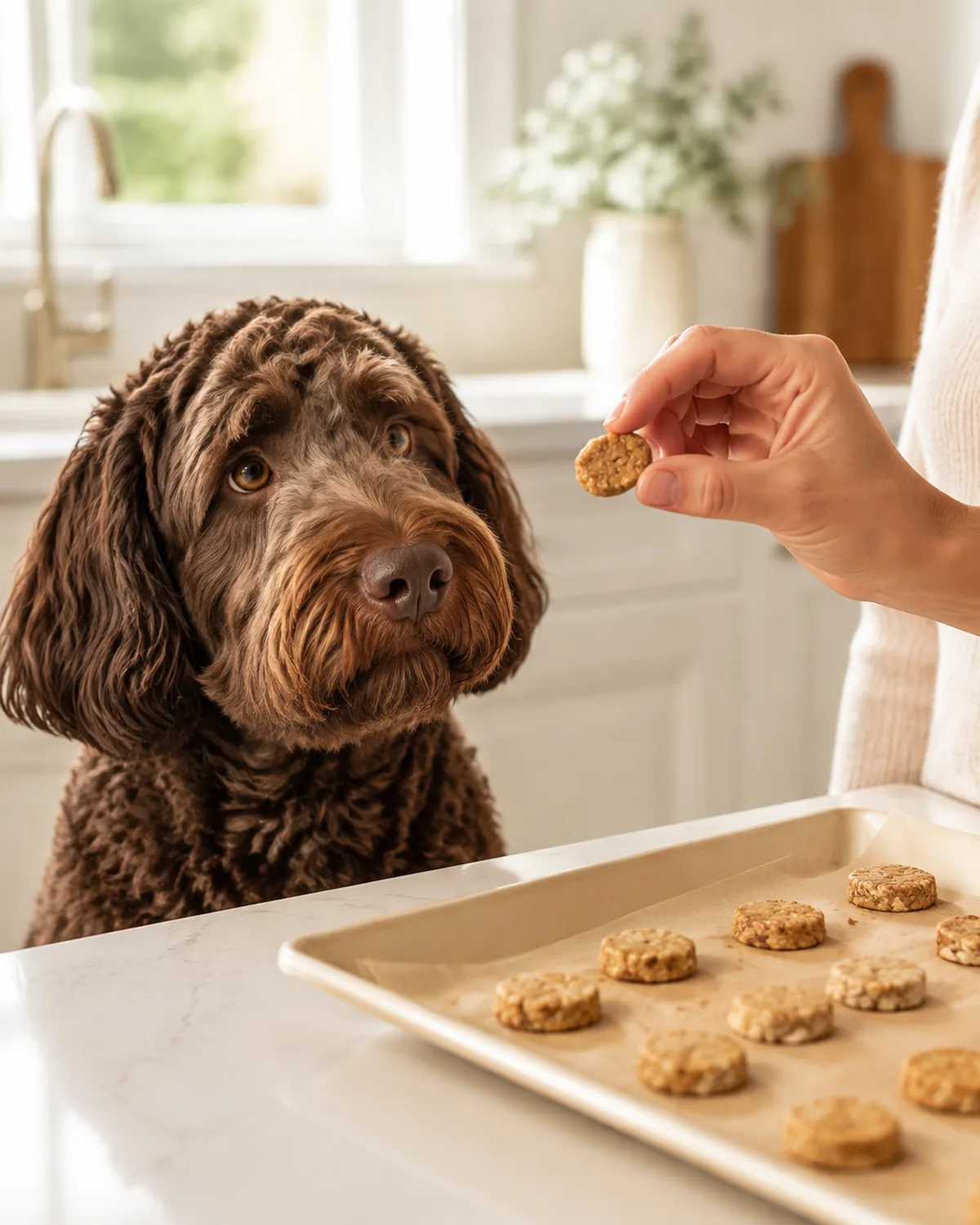
Mash one ripe banana with a cup of rolled oats. Roll the mixture into pea-sized balls and bake at 350 degrees for twelve to fifteen minutes. You get about eighty tiny training treats from a single batch.
These are soft, cheap, and easy to make in under thirty minutes. They store in the fridge for a week or the freezer for a month. For more homemade dog treat ideas, the recipe logic is the same: simple ingredients, tiny portions, no added sugar.
- Add a tablespoon of peanut butter (xylitol-free) if your dog needs extra motivation
- Skip the flour, sugar, and eggs that most dog treat recipes call for, because the oats and banana bind on their own
- Let them cool completely before bagging or they will stick together and turn into mush
Homemade treats give you total control over ingredients, which matters if your dog has food sensitivities. Plus, the process of making them takes ten minutes of actual hands-on time.
12. Kibble Saved From the Daily Meal
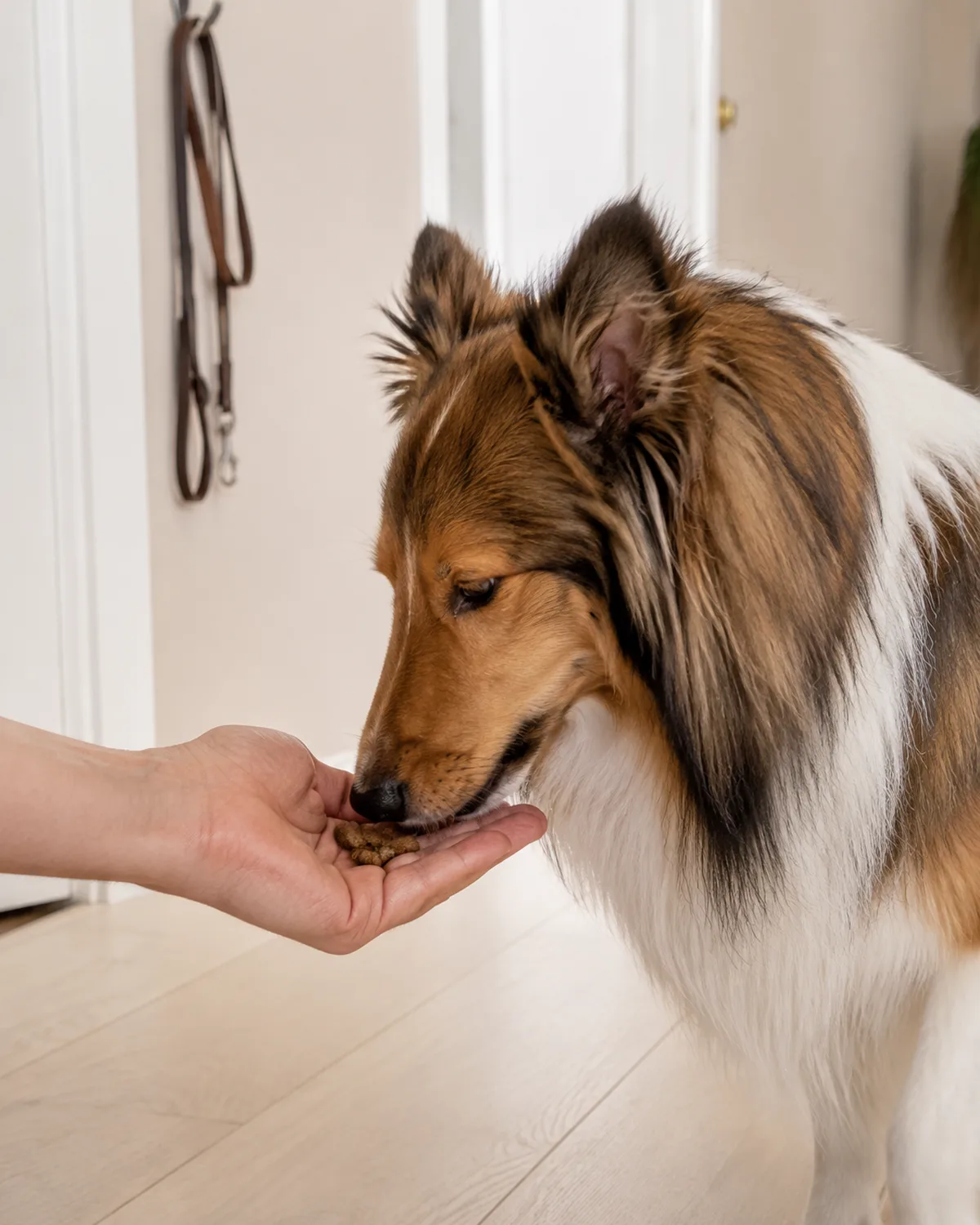
Your dog's regular kibble is already portioned into their daily intake. Pulling a handful from the breakfast bowl and using it as training treats during the day means zero extra calories.
This works best with dogs that are food-motivated enough to work for their regular food. Some dogs will, especially if you train before meals when hunger drive is higher.
- Measure out the daily total in the morning and set aside a quarter for training throughout the day
- Toss kibble into a treat pouch so it feels different from the bowl, which adds novelty
- Mix a few pieces of a higher-value treat in with the kibble so your dog never knows whether the next reward is ordinary or special
Kibble-for-training works well for maintenance behaviors your dog already knows. Save the high-value stuff for new skills or difficult environments.
Save this for later
13 Dog Training Treats That Keep Sessions Focused
- 1Tiny soft chewsDisappear in one bite so your dog stays in the rep cycle without chewing downtime.
- 2Freeze-dried liver bitsHigh-value currency for breakthroughs, recalls, and new distractions.
- 3Shredded cooked chickenReal meat shredded thin for fast delivery during outdoor distraction drills.
- 4Single-ingredient jerkyShelf-stable strips broken into pinky-nail bits for slower-paced sessions.
- 5Frozen pumpkin cubesCool summer reward in a silicone mold, low calorie and high fiber.
- 6Commercial training treatsFactory-sized at five calories each, grab and go with no prep.
- 7Cheese cubesCut smaller than your thumbnail, mid-tier value that motivates almost every dog.
- 8Dehydrated sweet potatoPlant-based crunch that doubles as texture rotation in the pouch.
- 9Peanut butter lick matSession reset between drill blocks, lowers arousal through repetitive licking.
- 10Baby carrotsFour calories each, use twenty in a session and barely touch the daily budget.
- 11Homemade oat and banana bitesEighty tiny treats from one banana and a cup of oats, done in thirty minutes.
- 12Saved kibblePull from the breakfast bowl, zero extra calories, best for practiced cues.
- 13Treat pouch setupSpring-loaded hinge for sub-second delivery, dual compartment for value tiers.
13. A Treat Pouch Setup That Keeps Sessions Smooth
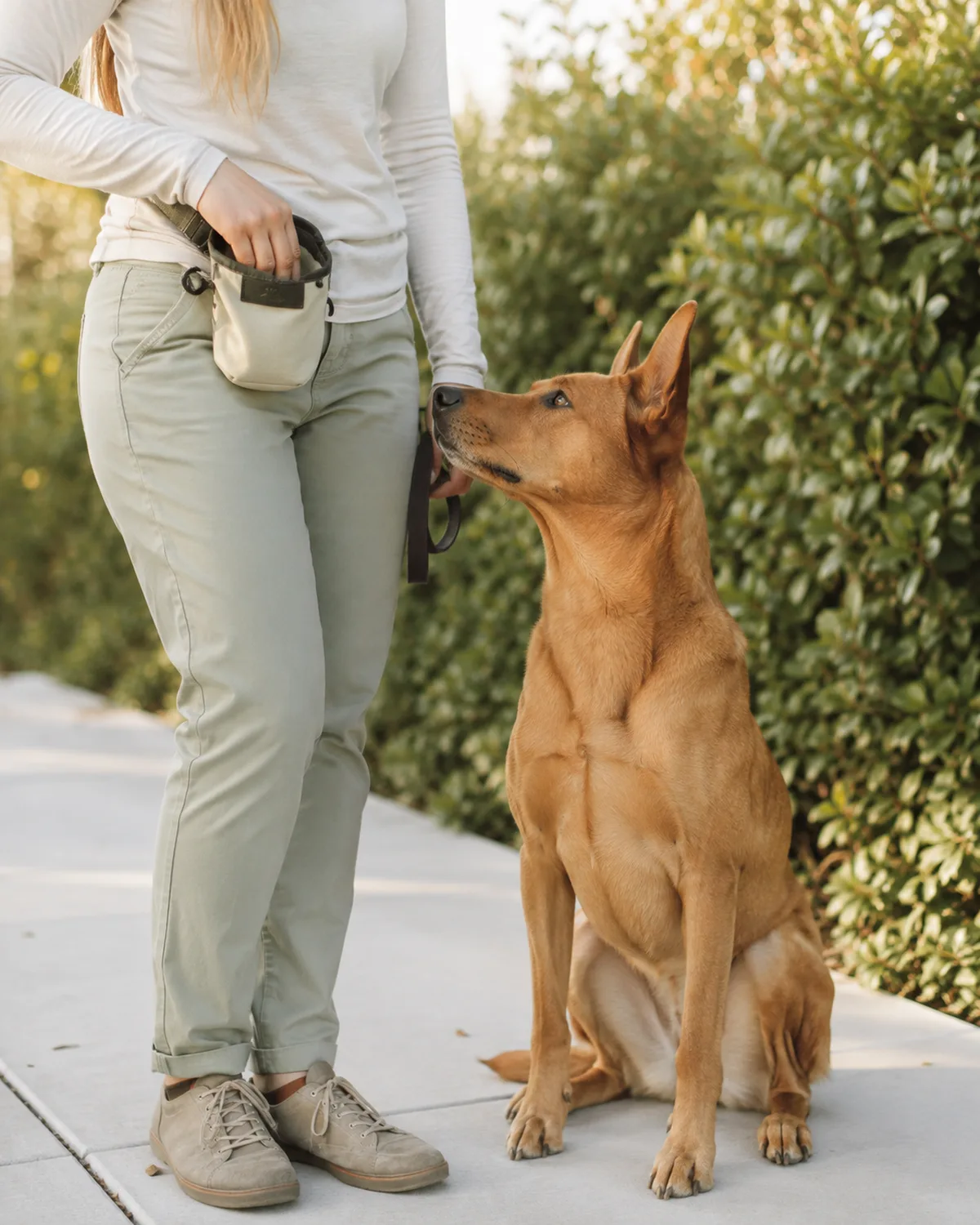
The best treat in the world slows you down if you have to dig into a plastic bag, fumble for a piece, and reseal the bag between reps. A proper treat pouch makes the mechanical side of training disappear.
Look for a pouch with a spring-loaded hinge that snaps open when you squeeze and closes when you let go. Your hand should go in and come out with a treat in under one second.
- Clip the pouch to your waistband on your dominant side so you reach without crossing your body
- Use a pouch with a separate compartment for high-value and low-value treats so you can switch tiers without switching bags
- Wash your pouch after every three or four sessions to prevent bacteria buildup from moist treats
A dedicated treat pouch is not optional if you train regularly. The speed difference between a pouch and a pocket full of loose treats is the difference between clean timing and a missed reinforcement window.
P
About the author
Jess Calloway
Jess Calloway edits Pawliqa, where she shares dog care, grooming, training, and new-owner tips — plus DIY and pet-friendly home ideas — for anyone who wants a happy, well-cared-for dog. As a dog mom to three very different dogs, she writes the honest, tested version of what actually works. Every guide is image-led and reviewed for clarity, usefulness, image accuracy, and Pinterest-to-page alignment before it goes live. Visit the About page.