Our oldest dog can run for an hour at the park and still pace around the house afterward. The first time I handed her a frozen Kong stuffed with peanut butter, she worked on it for twenty minutes and then slept for two hours straight.
Physical exercise tires the body. Brain games tire the mind. And for most dogs, mental exhaustion is the faster route to a calm, settled evening.
Here are ten brain games you can set up with things you already have at home.
Jump to an idea
10 brain games for dogs
Each game uses things you already own, takes under five minutes to set up, and leaves your dog calmer than a thirty-minute walk. Pick one and try it tonight.
The Muffin Tin Game Takes Thirty Seconds to Set Up
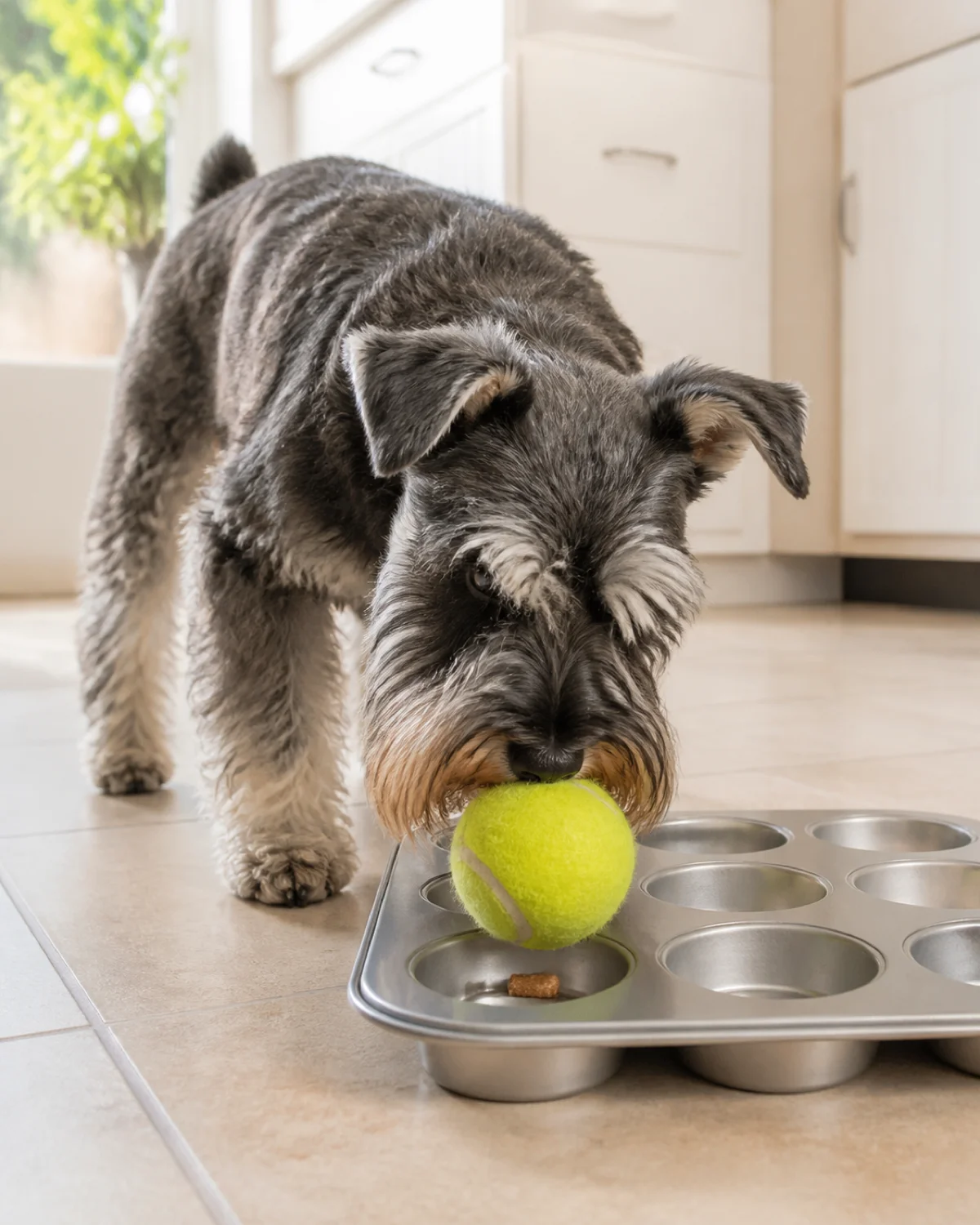
Grab a standard six- or twelve-cup muffin tin. Drop a small treat into a few of the cups. Cover every cup with a tennis ball, whether there is a treat underneath or not.
Set the tin on the floor and let your dog figure it out. Most dogs start by sniffing the entire tin, then nudge one ball off with their nose, eat the treat, and move to the next. Some dogs get strategic fast and learn to check only the cups that smell strongest.
This is the perfect starter brain game because it takes no training, no prep, and no special supplies. A muffin tin and a handful of tennis balls from the garage are all you need.
Once your dog masters the basic version, make it harder by pressing the balls down tighter so they require more force to dislodge. You can also try placing treats under only two or three balls and leaving the rest empty so the dog has to make real decisions about which cups to investigate first.
Snuffle Mats Turn Mealtime Into a Treasure Hunt
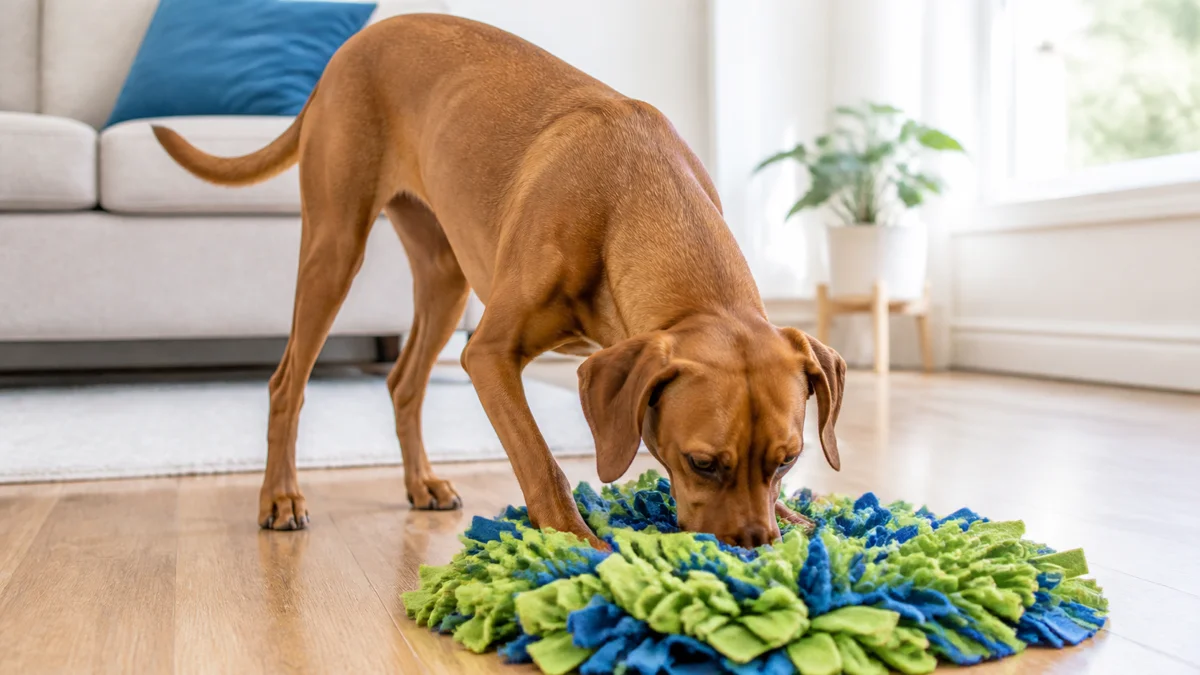
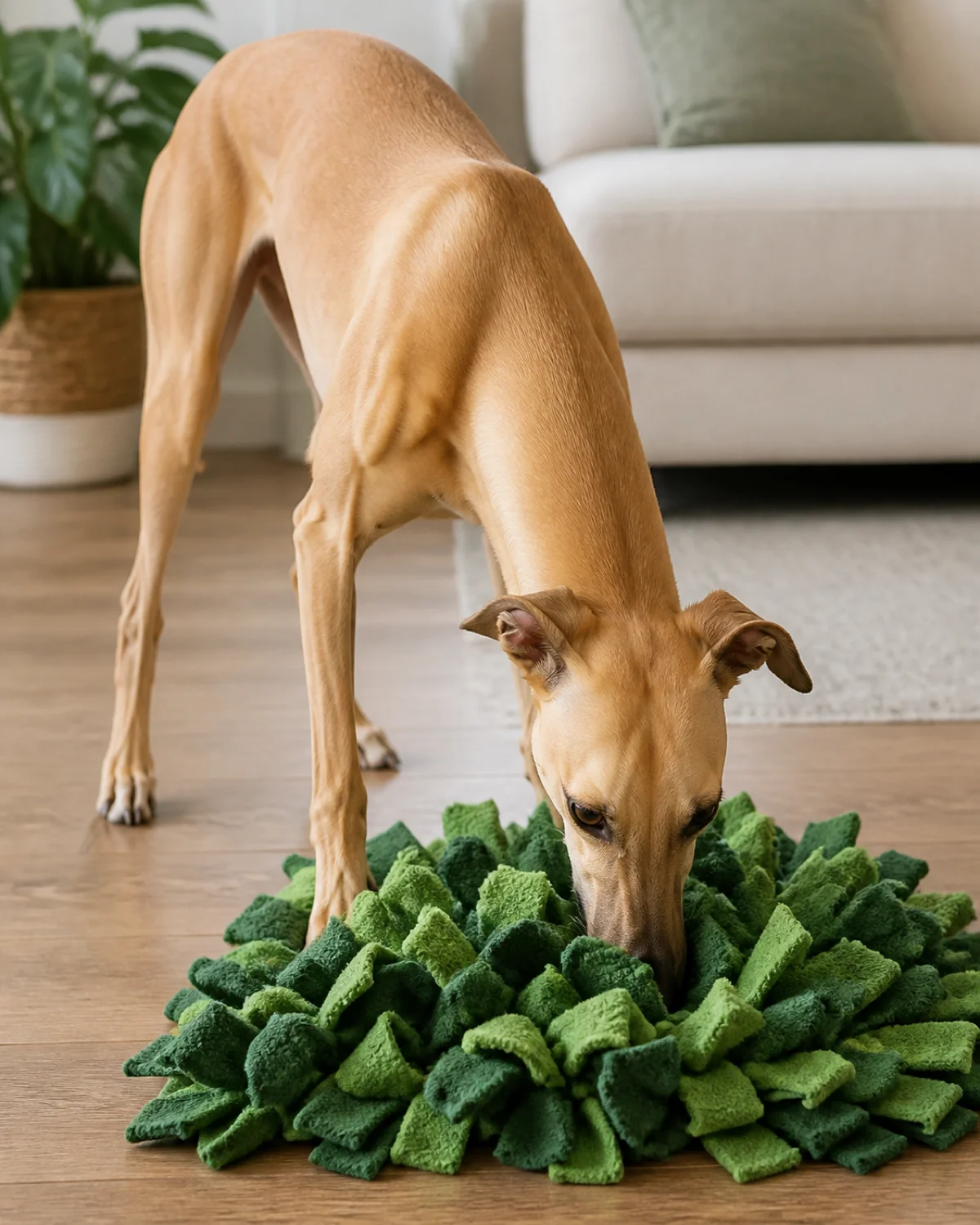
A snuffle mat is a piece of rubber matting with hundreds of fleece strips tied through it. You scatter kibble or small treats into the strips, and the dog has to use its nose to find every piece.
What would take thirty seconds to eat from a bowl takes ten to fifteen minutes from a snuffle mat. That is ten to fifteen minutes of focused, nose-down problem solving that tires a dog out far more effectively than the same amount of time running laps in the yard.
Snuffle mats also tap into a dog's strongest natural instinct. Dogs have around three hundred million olfactory receptors compared to our six million. Scent work is what their brains are built for, and a snuffle mat is the easiest way to let them do it indoors.
You can buy one or make your own by knotting fleece strips through a rubber sink mat. Either way, always supervise — some dogs try to chew the mat itself once the treats are gone.
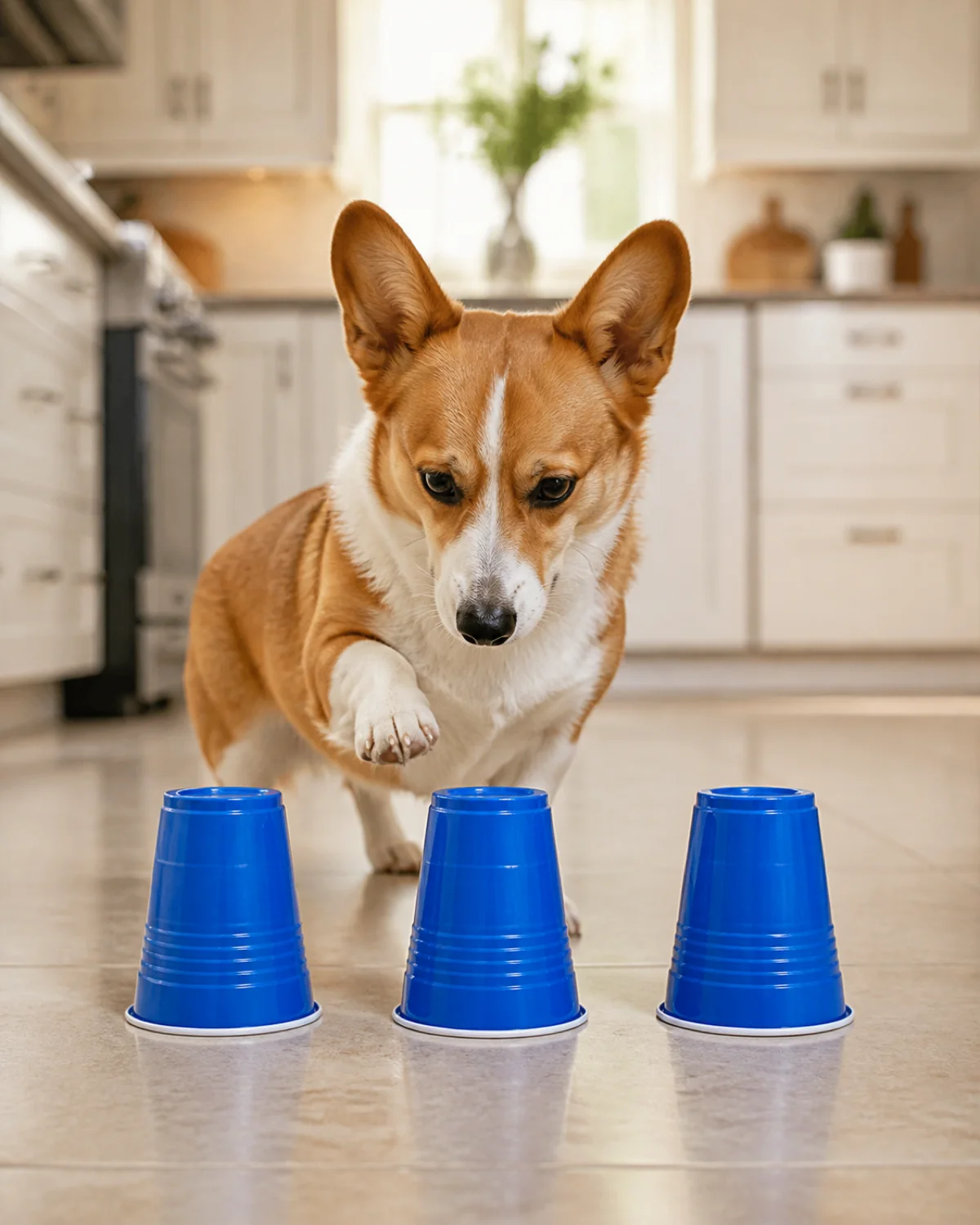
The Cup Shuffle Teaches Your Dog to Think Before Acting
Place three opaque cups upside down on the floor. Let your dog watch you put a treat under one cup. Then let the dog choose.
Start without any shuffling at all. The dog just saw where the treat went, so this first round is about learning the game: nose the cup, get the treat. Once the dog understands that knocking over a cup reveals something good, start moving the cups slowly while the dog watches.
This game builds impulse control in a way that feels like play instead of training. The dog has to watch, wait, and choose rather than just diving in. That is the same self-regulation muscle used in leave-it exercises and waiting at doors.
Increase difficulty by adding more cups, shuffling faster, or using cups that are harder to tip over. Some dogs figure out the scent shortcut quickly and stop watching the shuffle entirely — they just sniff and pick. That is perfectly fine. Scent discrimination is its own form of brain work.
Match the game to your dog
Which brain game to try first
Not every game suits every dog right away. Pick the scenario that sounds most like yours and start there.
Your dog has never tried a puzzleStart with the muffin tin game or the towel roll. Both are zero-frustration introductions that reward any effort.
Your dog destroys things out of boredomTry the frozen Kong and cardboard box puzzle. They channel destructive energy into something productive and last longer than quick puzzles.
Your dog learns fast and gets boredGo straight to teaching toy names or the cup shuffle. These scale in difficulty and stay challenging for weeks.
You want a game that runs itselfSet up the snuffle mat at mealtime or a frozen Kong before you leave. Both keep the dog busy without you needing to participate.
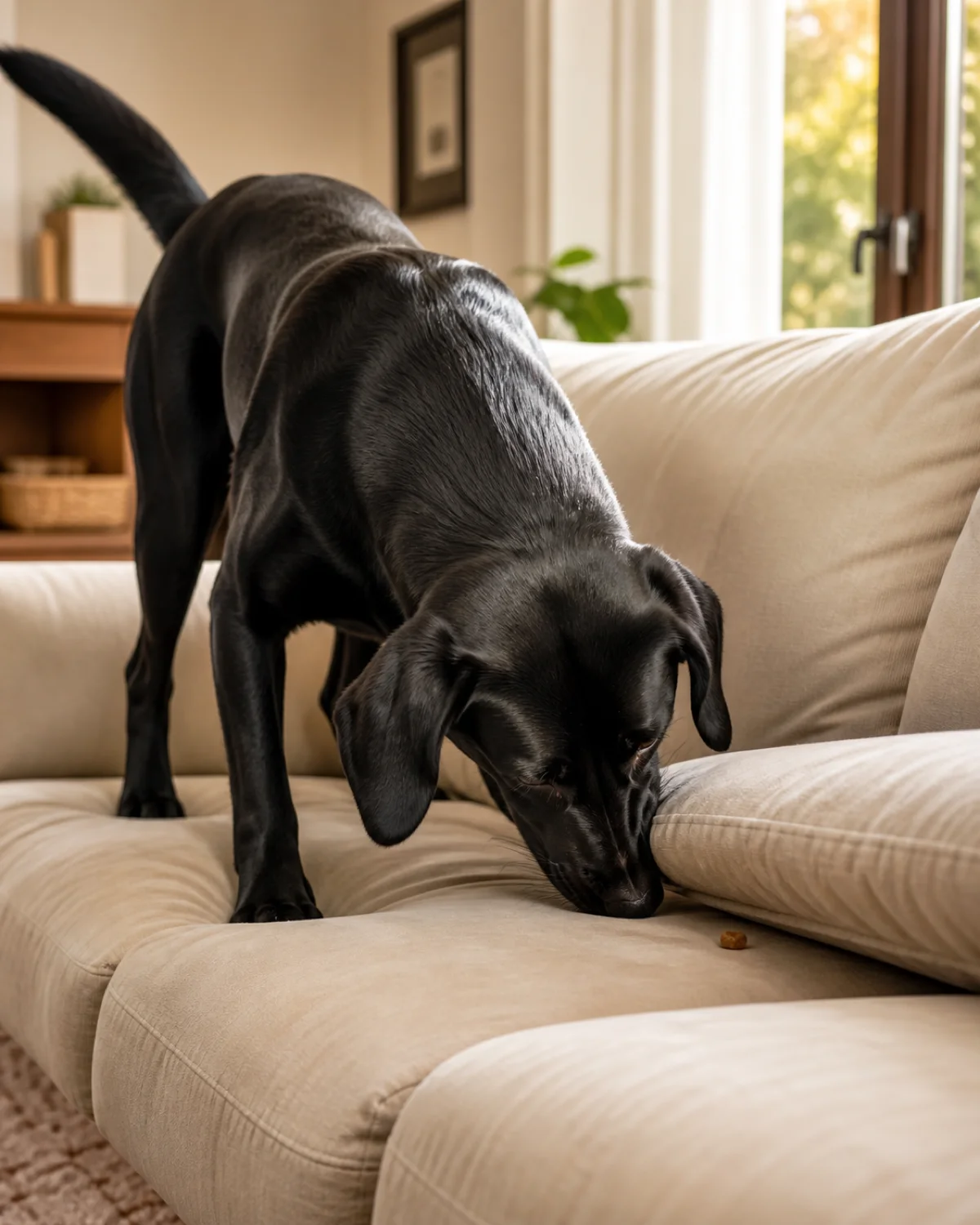
Hide-and-Seek With Treats Throughout the House
Put your dog in a sit-stay or have someone hold the leash. Walk to the next room and place a treat in plain sight on the floor. Come back, release the dog, and say "find it." The treat is right there, so success is guaranteed.
Once the dog understands the game, start hiding treats in progressively harder spots. Behind a table leg. Under the edge of a rug. On a low shelf. Behind a door.
A fifteen-minute session of hide-and-seek burns as much mental energy as a forty-five-minute walk. The dog is tracking scent trails, making spatial decisions about where to check next, and processing the reward of finding each treat — all at the same time.
For rainy days or scorching afternoons when a long walk is not practical, this is the game that covers the gap. You can play it in an apartment hallway or spread across an entire house.
Scale it up by hiding treats in three or four rooms at once and letting the dog work through all of them in one session. Scale it down for puppies by keeping everything in one room with treats barely hidden.
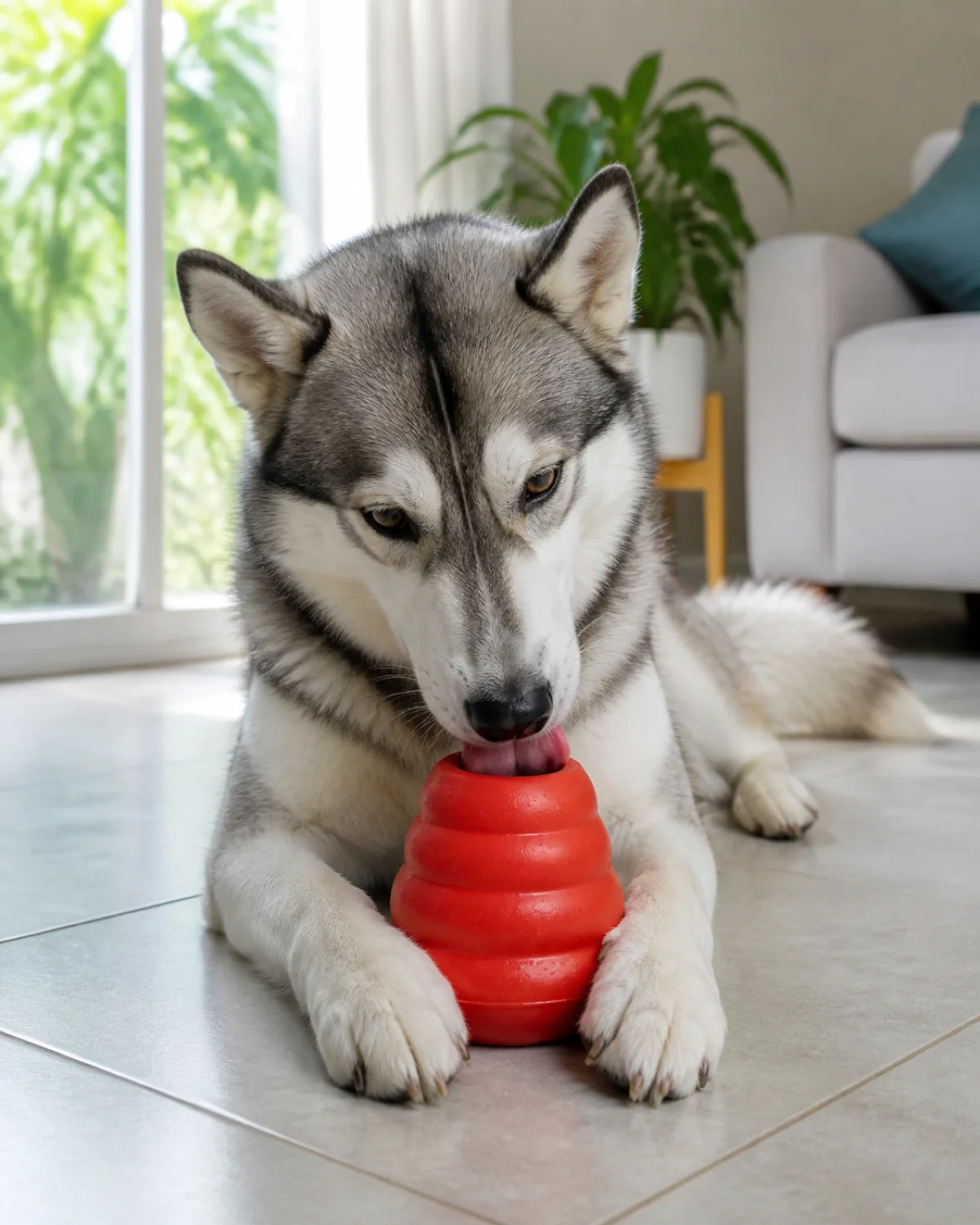
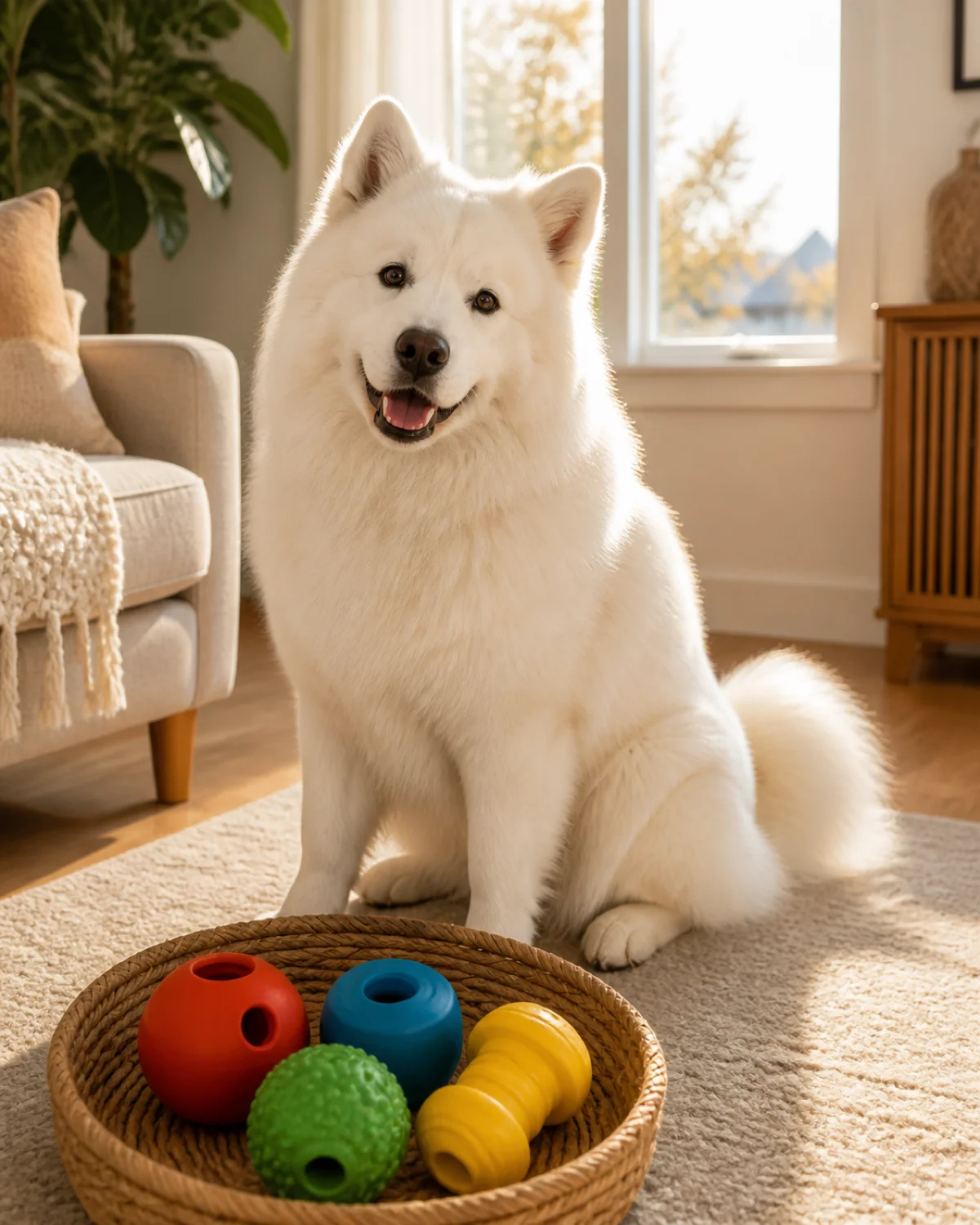
Frozen Kongs Are the Easiest Brain Game You Already Own
A Kong stuffed with peanut butter and frozen overnight is not just a treat — it is a twenty-to-thirty-minute problem-solving session. The dog has to figure out how to angle its tongue, use its paws to hold the toy steady, and work through layers of frozen filling.
The layered version is even better. Spread a thin layer of plain yogurt inside, add a few small treats, fill with softened kibble mixed with peanut butter, and freeze the whole thing upright in a cup. The dog hits different textures and flavors at each layer, which keeps it engaged far longer than a single-filling Kong.
Frozen Kongs are a bridge between brain games and homemade dog treats. You are building the puzzle and the reward at the same time. Make three or four on a Sunday evening, freeze them, and pull one out each day.
If your dog has never had a frozen Kong, start with an unfrozen one first. Spread peanut butter just inside the opening so the dog gets an immediate win. Once it understands how to work the toy, freeze the next one.
Keep every game session productive
4 rules for brain games that work
These four principles apply to every game in this guide. Follow them and each session will tire your dog out without frustrating it.
End before frustration startsA brain game should be challenging, not impossible. If your dog walks away, whines, or starts stress-panting, the puzzle is too hard. Dial it back and let the dog succeed.
Use high-value treats for new gamesKibble works for familiar puzzles, but a new game needs a bigger payoff. Small pieces of chicken, cheese, or freeze-dried liver keep motivation high while the dog is still learning the rules.
Supervise every sessionPuzzle toys, snuffle mats, and cardboard are not chew toys. If the dog starts tearing apart the game instead of solving it, remove it and try a sturdier option.
Short sessions beat long onesTen minutes of focused puzzle work is more tiring than thirty minutes of half-hearted engagement. End while the dog is still interested and it will be eager to play again tomorrow.
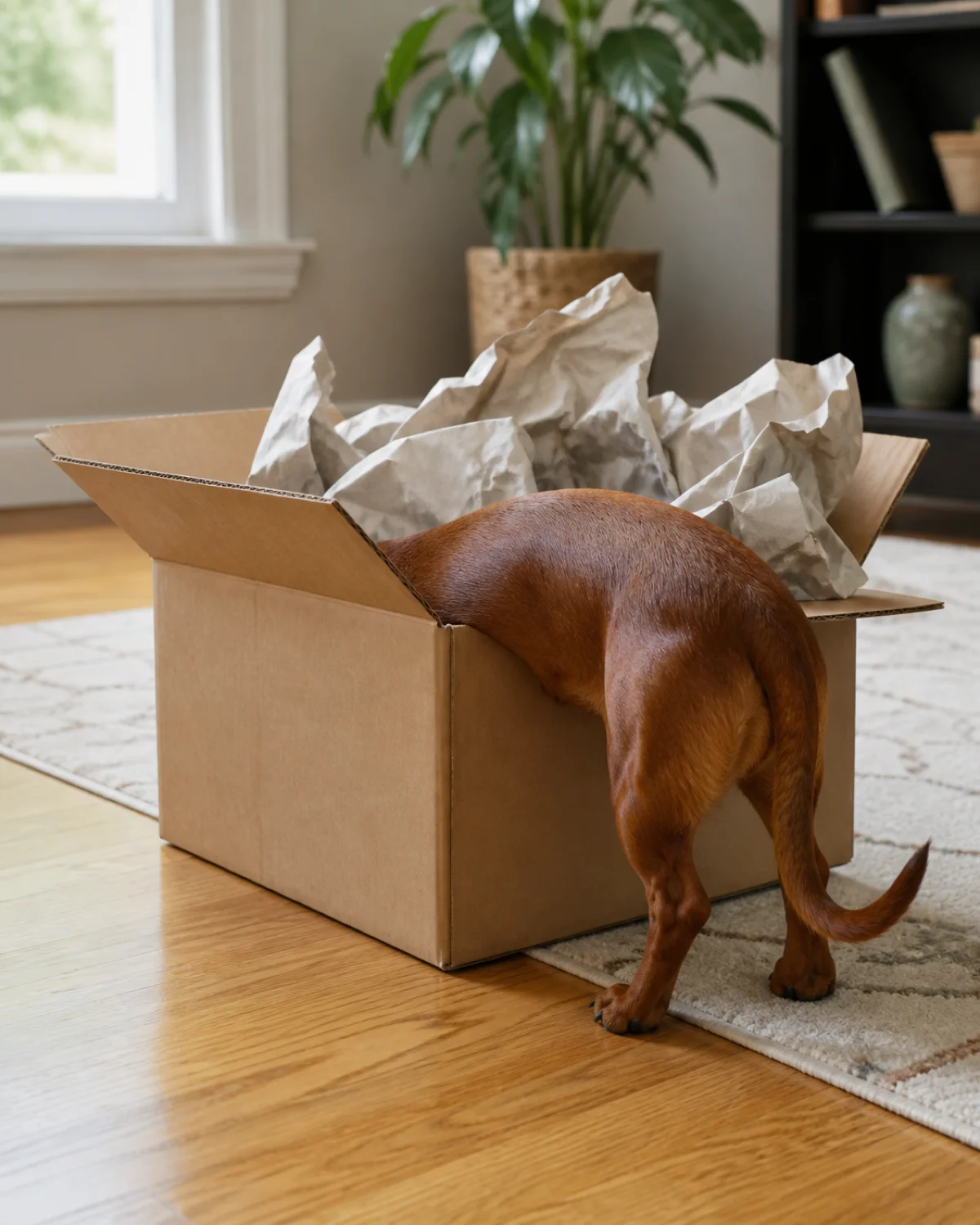
A Cardboard Box Becomes a Free Puzzle Toy
Take a small cardboard box. Drop a few treats inside. Close the flaps. Hand it to your dog.
Most dogs start by nosing the box, then pawing at it, then eventually figure out how to flip or crush it open. The beauty of this game is that it is supposed to be destroyed. There is no wrong answer and no special toy to protect.
Once the basic version is too easy, level it up. Stuff treats inside crumpled newspaper inside the box. Nest a smaller box inside a bigger one. Tape the flaps lightly so the dog has to work harder to open them.
Cardboard puzzles are free, infinitely customizable, and self-replacing because you get new boxes every time a delivery arrives. They are also a productive outlet for dogs who like to shred — better a box you handed them than your couch cushion.
Remove any tape, staples, or plastic packaging before you hand the box over. And clean up the shredded cardboard afterward so the dog does not eat large pieces.
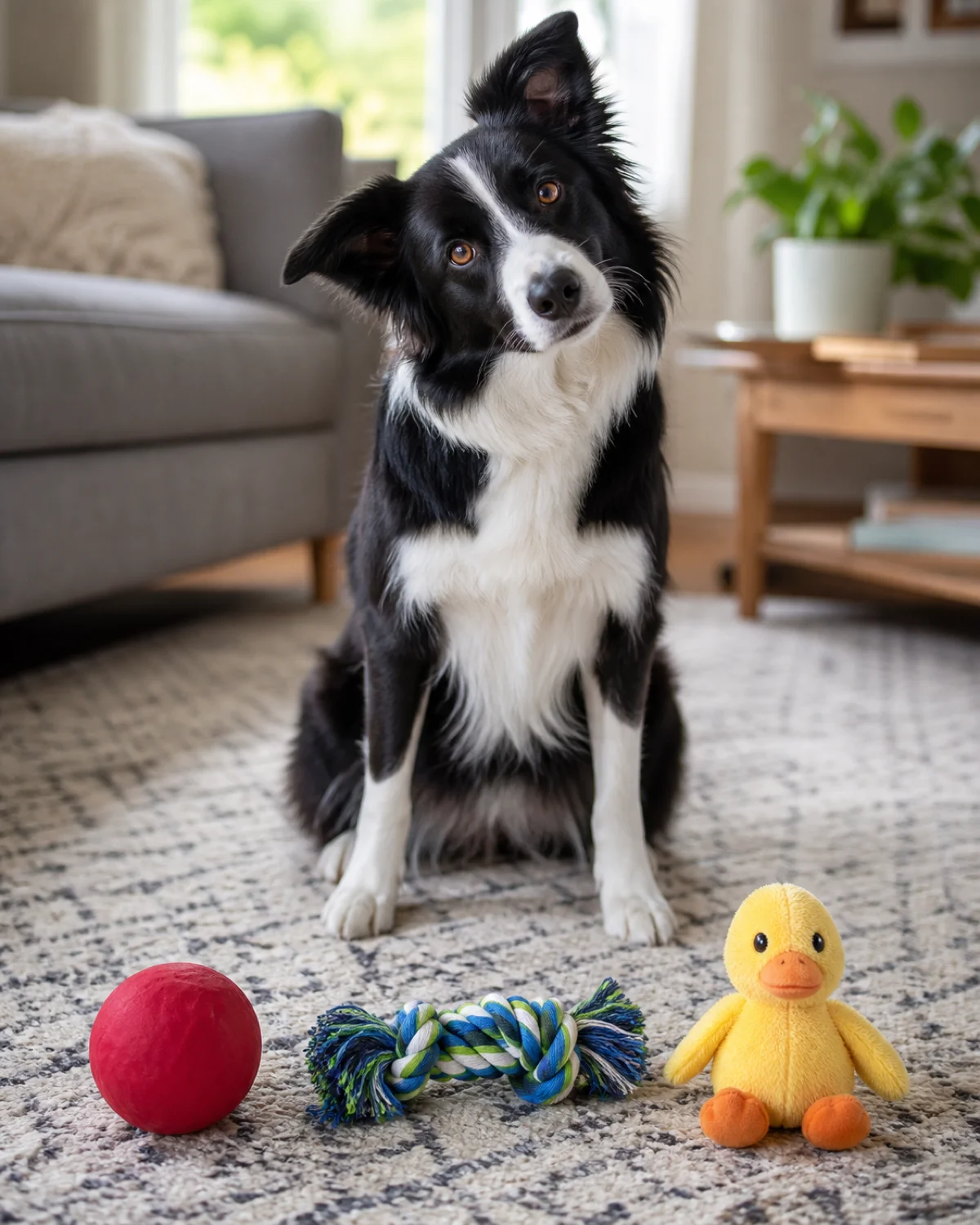
Teach Your Dog to Find a Specific Toy by Name
Start with one toy. Hold it up, say its name clearly — "ball" — and let the dog take it. Repeat ten times across two days until the dog looks at the ball every time you say the word.
Add a second toy. Place both on the floor. Say "get the ball." When the dog picks up the ball, reward heavily. If it picks up the other toy, no reward — just reset and try again. Most dogs figure out the distinction within a few sessions.
This is the brain game with the longest learning curve, and that is the point. Each new toy name takes a few days of practice, and the dog has to hold all the old names in memory while learning the new one. Researchers have documented dogs learning over two hundred object names using this same gradual introduction method.
You are not training a circus trick. You are giving the dog a long-term mental project that gets harder each week without any additional equipment. Three names is impressive. Five is a real achievement. Ten makes for a great party trick that also keeps the dog's brain sharp.
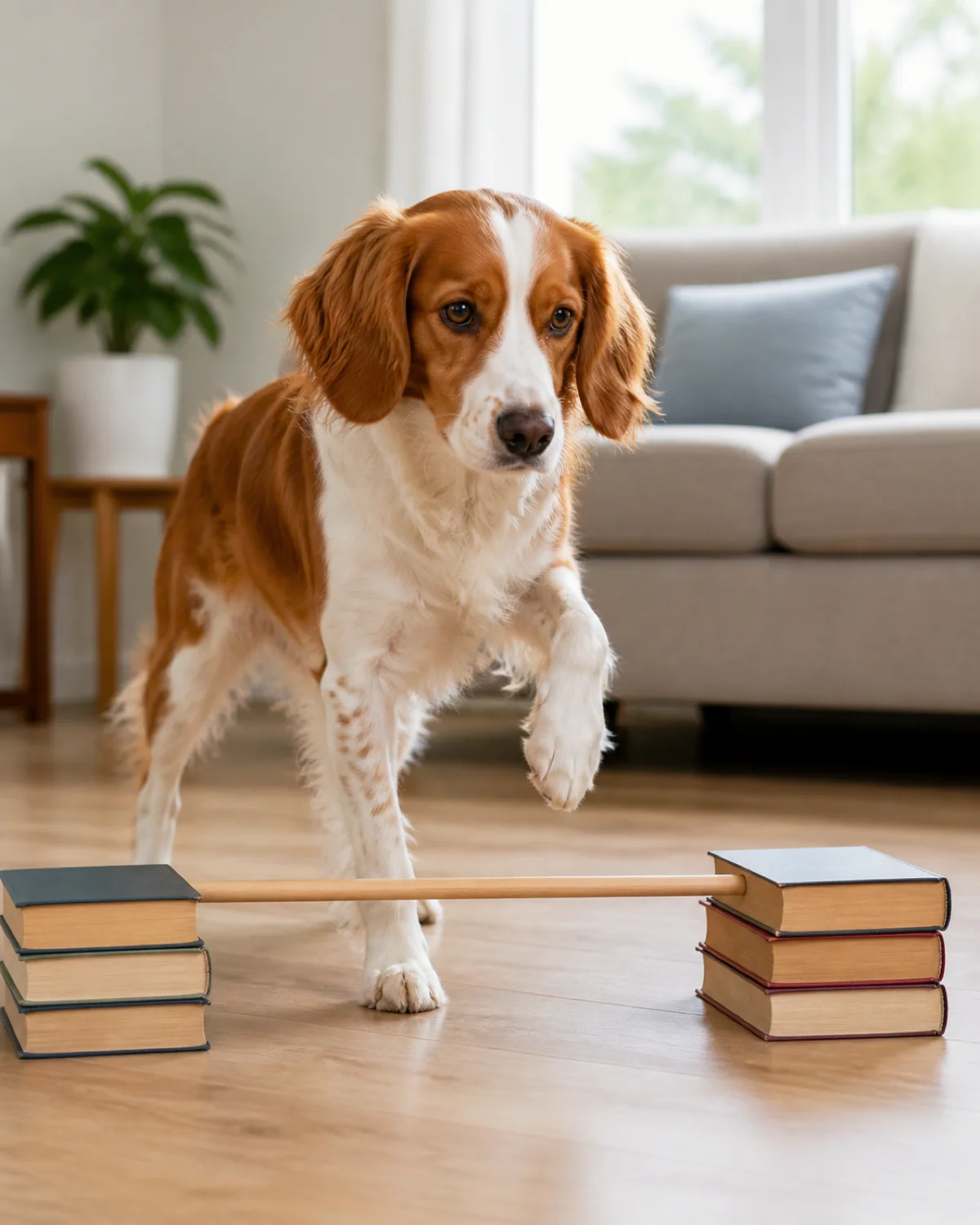
A DIY Obstacle Course in Your Living Room
Set a broomstick across two stacks of books for a jump. Drape a blanket over two chairs for a tunnel. Line up cushions for a weave. Place a treat at the end of each obstacle.
The goal is not agility-competition speed. It is problem solving. The dog has to figure out how to step over, crawl under, and navigate around objects that were not there five minutes ago. Each new arrangement is a fresh puzzle.
Change the course every time you set it up. Move the jump to a different spot, raise it an inch, add a pause mat where the dog has to sit before continuing. The novelty is the whole point — a familiar course becomes routine, and routine does not tire the brain.
Keep obstacles low and safe. Nothing that can fall on the dog, nothing sharp, nothing heavy enough to hurt if it tips over. A living room obstacle course should feel like a playground, not a test.
An important note about puppies and brain games
Puppies under six months have shorter attention spans and frustrate more quickly than adult dogs. Keep sessions under five minutes, use the easiest version of each game, and end before the puppy checks out.
A three-minute muffin tin game that ends with a wagging tail teaches more than a ten-minute session that ends with a puppy walking away. Brain games scale with the dog — start small and build up as the dog matures.
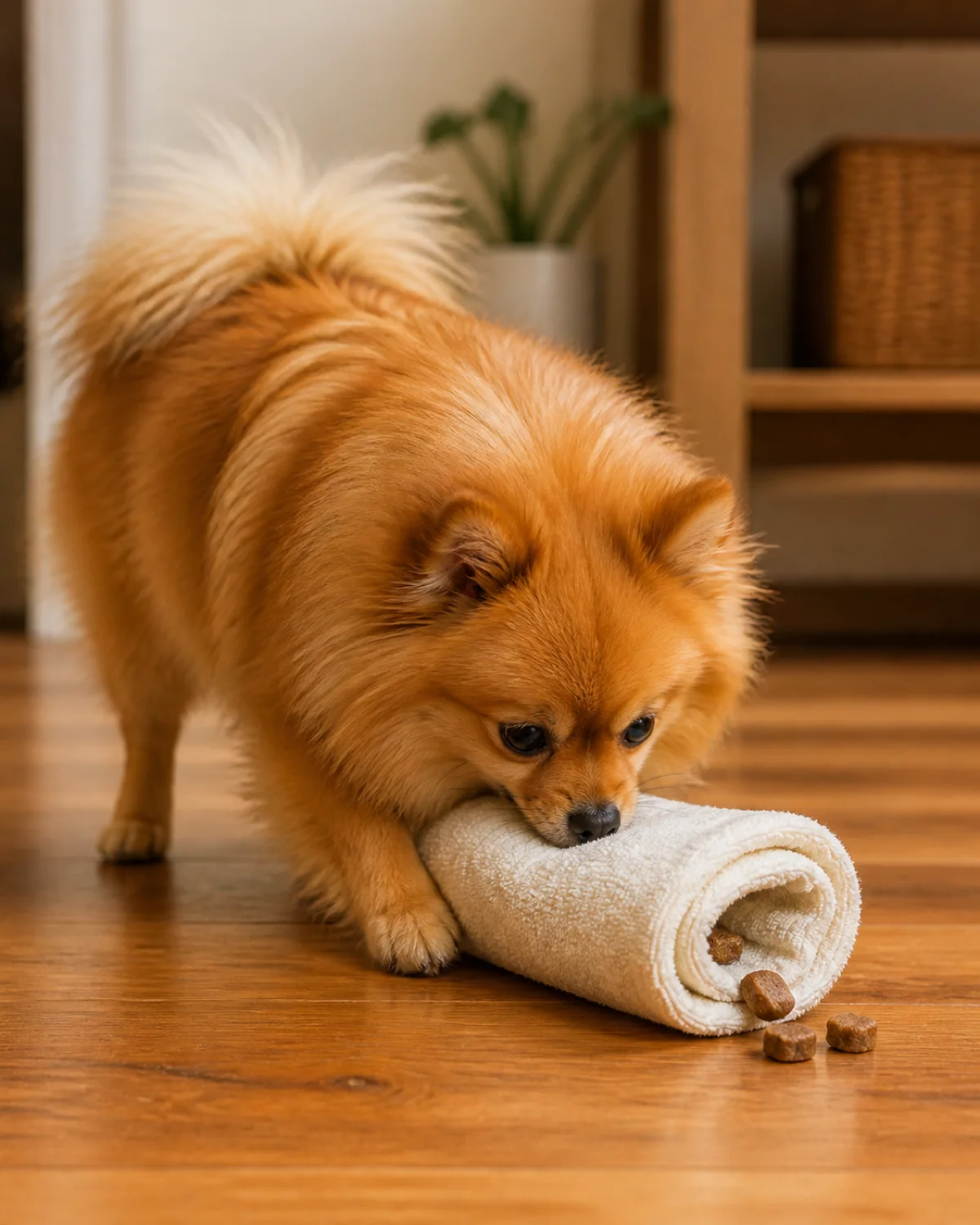
The Towel Roll Is the Perfect Beginner Puzzle
Lay a hand towel flat. Scatter a few treats down the center. Roll the towel up loosely. Hand it to your dog.
The dog smells the treats and has to figure out how to unroll the towel to get them. Most dogs start by pawing and nosing at it until it starts to unfurl, then learn to use their mouth to pull the edge.
This game has a built-in difficulty progression. A loosely rolled towel is level one. A tightly rolled towel is level two. A towel with a knot tied in the middle is level three. A towel rolled inside another towel is level four.
It costs nothing, takes fifteen seconds to set up, and the towel goes right back in the laundry when you are done. For dogs that have never tried any kind of puzzle, this is the gentlest possible introduction — there is no way to fail, and every bit of effort produces a reward.
Save this for later
10 Brain Games for Dogs
1Muffin tin gameTennis balls over treats in a muffin tin. Thirty seconds to set up.
2Snuffle mat treasure huntScatter kibble in fleece strips. Fifteen minutes of nose work.
3Cup shuffleThree cups, one treat. The dog watches, waits, and picks.
4Hide-and-seek with treatsHide treats around the house. Burns mental energy like a long walk.
5Frozen KongLayered peanut butter and kibble, frozen overnight. Twenty-minute puzzle.
7Teach toy namesStart with one toy, add more. A long-term brain project.
8DIY obstacle courseBroomstick jumps, blanket tunnels, cushion weaves. Change it every time.
9Towel roll puzzleTreats rolled in a towel. The gentlest possible introduction to puzzles.
10Rotate games weeklyThree to four games on rotation keeps things fresh without overwhelming.
pawliqa.com
Rotate Games Weekly to Keep Your Dog Guessing
Introducing a new game every day sounds exciting but actually burns both of you out. A better approach is to pick three or four games and rotate them on a weekly cycle.
Monday might be snuffle mat day. Wednesday might be towel roll day. Friday might be frozen Kong day. Sunday might be hide-and-seek day. The dog gets enough repetition to improve at each game but enough variation that none of them become stale.
Every few weeks, swap one game out for something new. Drop the muffin tin and add the cup shuffle. Retire the towel roll and bring in the cardboard box. This keeps the rotation fresh without the pressure of inventing something new every day.
The real sign that brain games are working is not a tired dog right after the session — it is a calmer dog for the rest of the evening. Mental work creates a deeper kind of exhaustion than physical exercise.
A dog that has spent fifteen minutes solving a puzzle and then gets a normal walk will settle down faster, chew less, and sleep more soundly than a dog that ran for an hour but never engaged its brain.
If your dog is bouncing off the walls after a full day of activity, the missing piece is probably mental stimulation. One brain game a day, five to fifteen minutes, is often enough to fill that gap. Indoor entertainment strategies can help you build a broader routine around these games.
How long should a brain game session last?
Five to fifteen minutes is the sweet spot for most dogs. Puppies may max out at three to five minutes. Senior dogs often enjoy longer, slower sessions of up to twenty minutes. Watch your dog — if it walks away, stress-pants, or starts chewing the puzzle instead of solving it, the session is too long or too hard. End on a win and try again tomorrow.
Can brain games replace walks?
No, but they can supplement walks on days when a full outing is not possible. A frozen Kong and a fifteen-minute hide-and-seek session will not replace the smells, socialization, and movement of a real walk, but they will prevent the boredom-driven destruction that happens when a dog gets no stimulation at all. On normal days, pair a walk with one brain game for the best results.
Are puzzle toys safe to leave with a dog unsupervised?
Rubber toys like Kongs are generally safe for unsupervised use once you know your dog does not try to chew them apart. Snuffle mats, cardboard boxes, and towel rolls should only be used while you are watching. If the dog starts ingesting the material instead of solving the puzzle, remove it and switch to a sturdier option.
What treats work best for brain games?
Small, soft, and smelly is the formula. Tiny pieces of cooked chicken, freeze-dried liver, or commercial training treats work well because the dog can eat them quickly and get back to the puzzle.
Avoid anything large or crunchy that takes a long time to chew — the chewing interrupts the problem-solving flow. For snuffle mats and hide-and-seek, regular kibble is fine because the challenge is the search, not the reward.
My dog gives up after thirty seconds. What am I doing wrong?
The game is too hard for the dog's current skill level. Drop back to the easiest possible version — a towel with treats barely rolled, a muffin tin with no balls covering the treats, a cup shuffle with no shuffling. Let the dog win easily five or six times in a row, then add one small step of difficulty. Building confidence is more important than building challenge.
About the author
Jess Calloway
Jess Calloway edits Pawliqa, where she shares dog care, grooming, training, and new-owner tips — plus DIY and pet-friendly home ideas — for anyone who wants a happy, well-cared-for dog. As a dog mom to three very different dogs, she writes the honest, tested version of what actually works. Every guide is image-led and reviewed for clarity, usefulness, image accuracy, and Pinterest-to-page alignment before it goes live. Visit the About page.
Dog beds collect more than fur. This guide covers machine-washable beds, hand washing, memory foam inserts, proper drying, and the quick spot-clean tricks that keep a bed fresh between full washes.