A house-trained dog that starts peeing indoors again is not doing it out of spite. Something changed, and the dog is telling you the only way it knows how.
The fix is a calm, systematic process: rule out a medical cause, clean every spot with the right product, rebuild the schedule, and reward the correct behavior until it sticks.
This guide is for adult dogs that were previously reliable indoors. If you are starting from scratch with a puppy, the potty training guide covers that process.
Jump to a section
Stop Your Dog from Peeing Inside
This guide walks from the vet check through cleanup, schedule rebuilds, and positive reinforcement to when you need outside help.
You do not have to read top to bottom. Pick the situation that sounds like your dog right now.
The accidents started suddenly with no routine changeStart with the vet check to rule out a urinary infection or pain issue, then jump to section one.
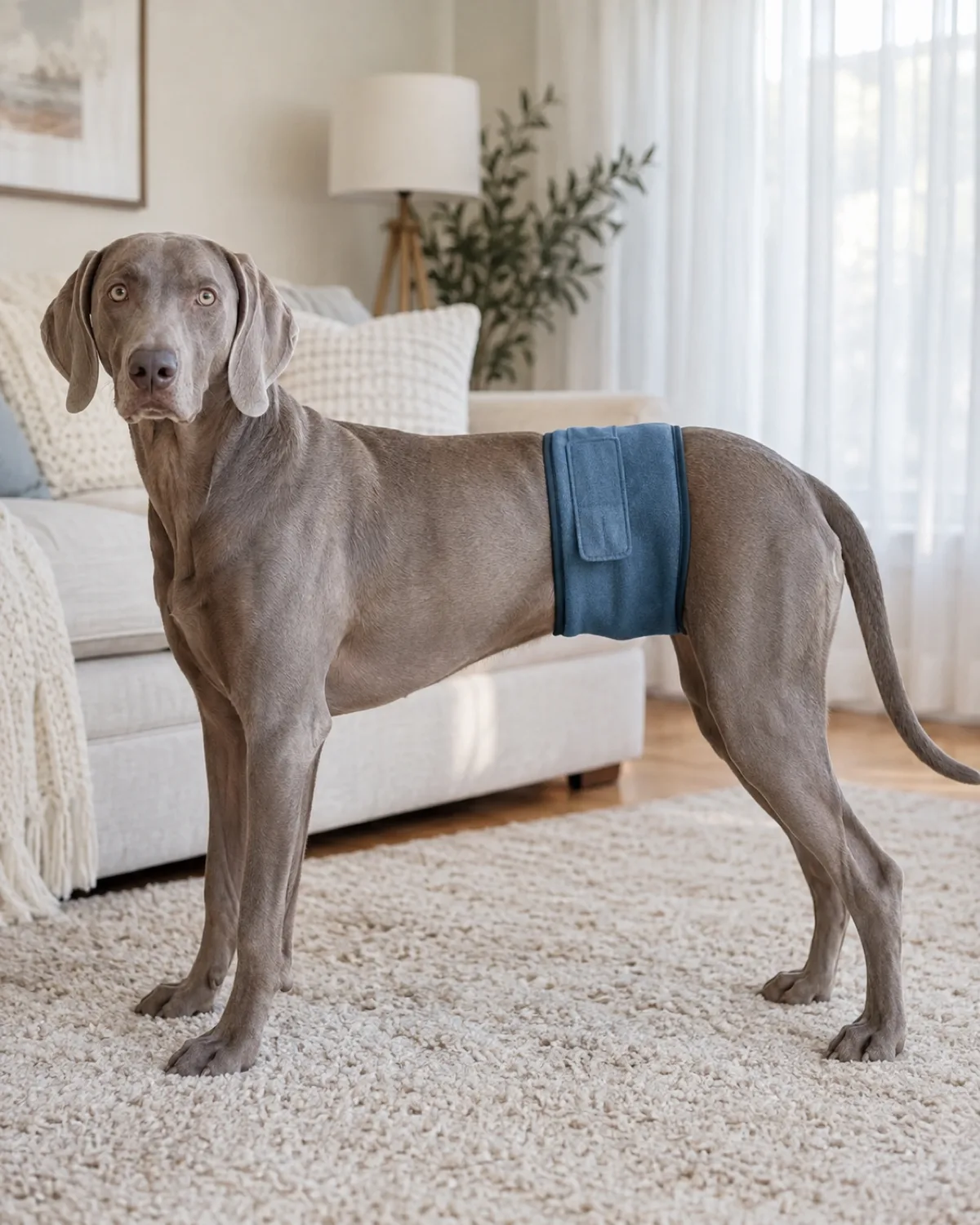
Your male dog lifts his leg on furniture or door framesThat is marking, not a housetraining failure. Skip ahead to the marking section for the belly-band protocol and the desensitization steps.
The vet cleared your dog and you just need a planJump straight to deep cleaning, then follow the schedule and reward sections in order.
Rule Out a Medical Issue First
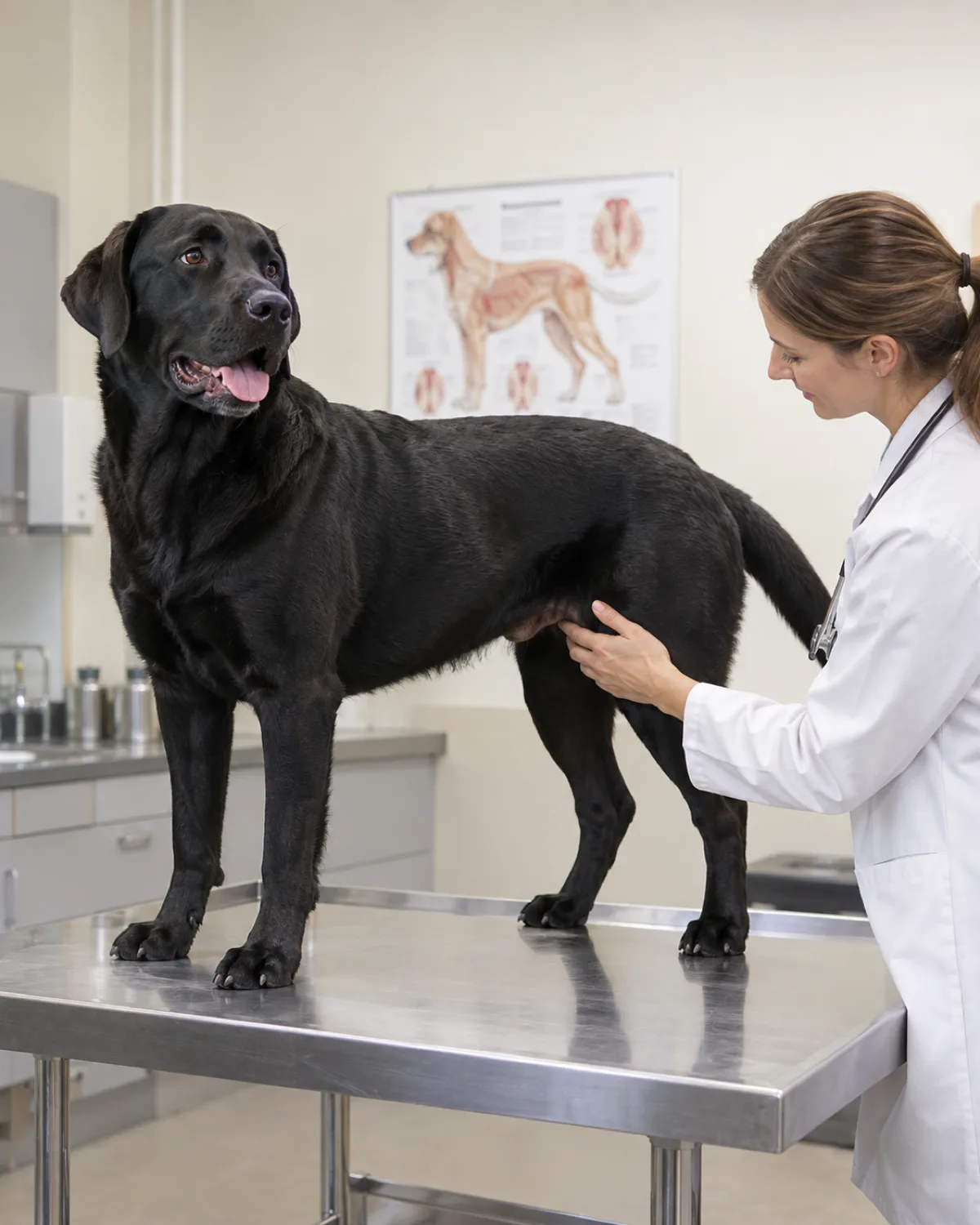
The first stop is the vet, not the training plan. A urinary tract infection, bladder stones, kidney disease, or joint pain that makes it hard to get outside in time can all cause a previously reliable dog to start having accidents indoors.
Older dogs may develop cognitive dysfunction that affects their awareness of where they are. A dog that wanders to a corner and squats without any apparent urgency is showing a different pattern than one that whines at the door and does not make it in time.
Ask your vet to run a urinalysis at minimum. If the accidents started alongside increased water intake, lethargy, or changes in appetite, mention those details because they help narrow the diagnostic path.
Urinary tract infections often cause frequent, small-volume accidents and straining
Joint pain or arthritis leads to hesitation at stairs or slow rises from lying down
Cognitive decline typically appears in dogs over eight and includes nighttime restlessness alongside the accidents
Medications like steroids or diuretics increase urine output and can overwhelm a dog that was otherwise reliable
Do not skip this step even if the timing seems to line up with a life change. A dog can have both a stressor and an infection at the same time.
Identify the Trigger
Once the vet rules out a physical cause, look at what changed in the weeks before the accidents started. Dogs are creatures of routine, and even changes that seem minor to you can be significant to them.
Common triggers include:
A move to a new home or a major furniture rearrangement
A new pet, baby, or housemate
A change in your work schedule that shifts walk times
Construction noise, fireworks season, or a nearby dog that barks constantly
Loss of a companion animal or family member
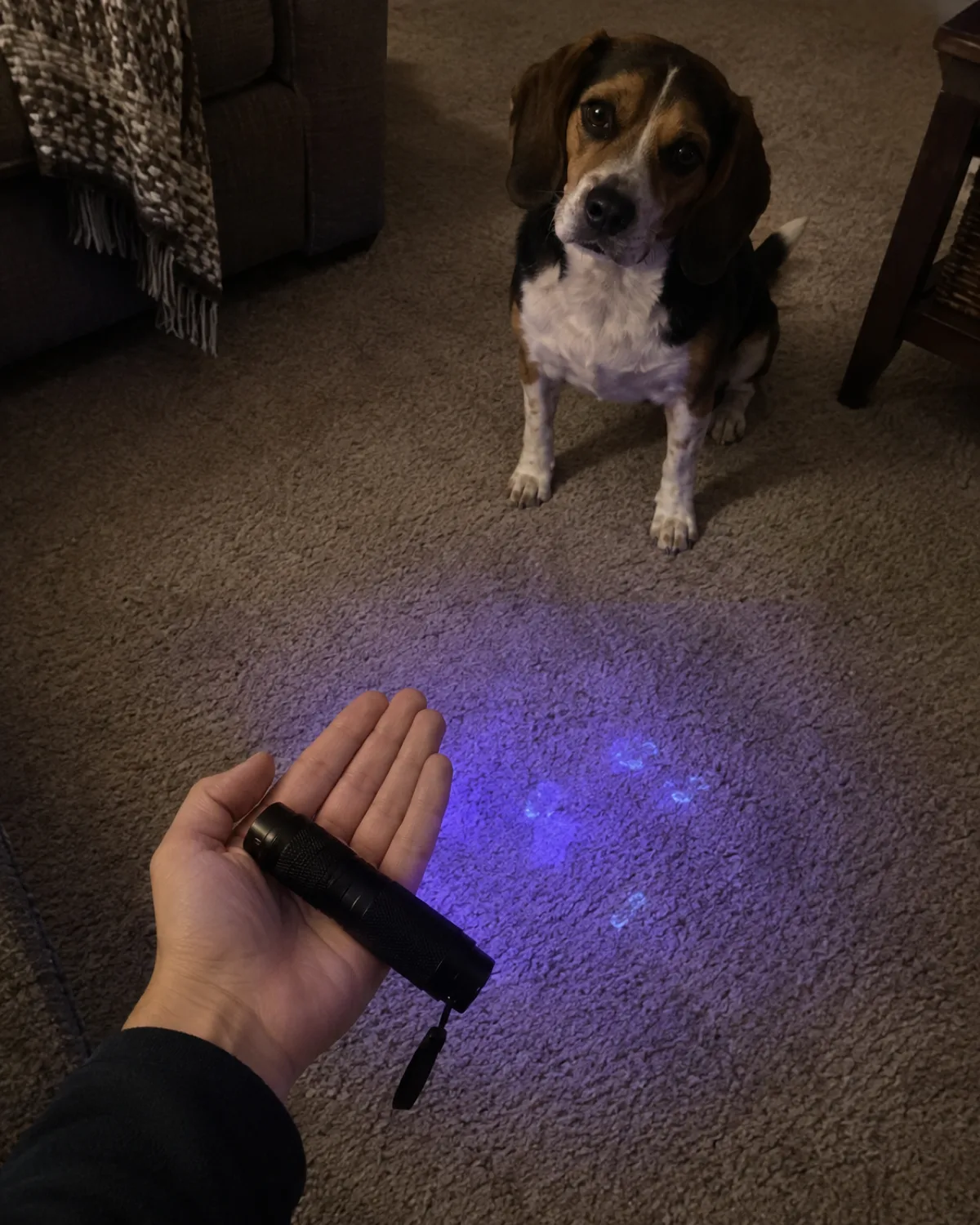
A UV blacklight flashlight is useful here. Turn off the room lights and scan the floors, baseboards, and furniture legs. Old enzyme-cleaned spots will not glow, but active urine residue lights up clearly. The pattern tells you something: accidents clustered near the front door suggest the dog is trying but not making it in time, while small marks on vertical surfaces point to territorial marking.
Write down the location, approximate time of day, and circumstances of each accident for a week. That log becomes the foundation for every fix that follows.
Deep-Clean Every Accident Spot
Regular household cleaners mask the smell for your nose but leave behind uric acid crystals that a dog can still detect. As long as the dog smells urine in a spot, that spot says "bathroom" in a language you cannot argue with.
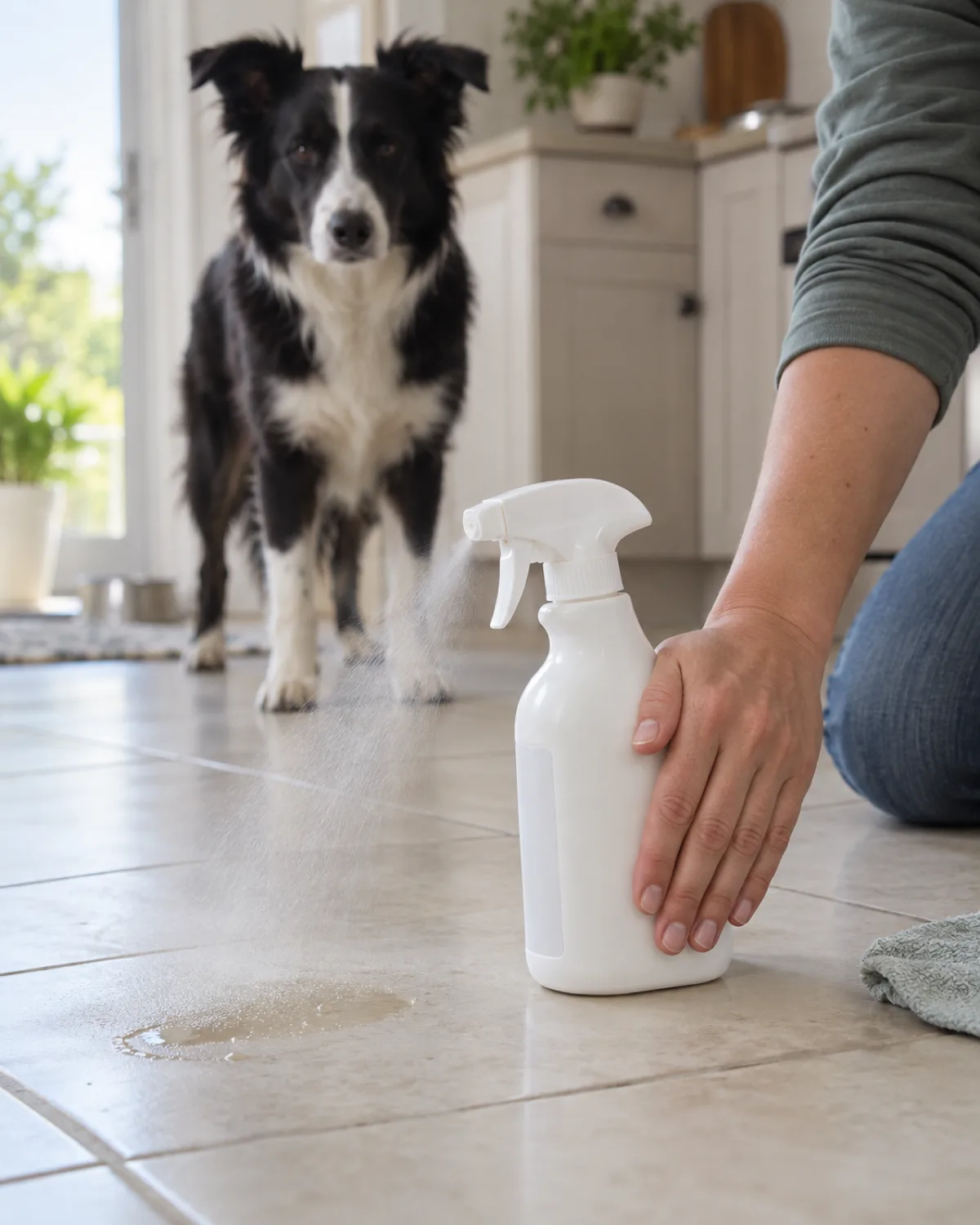
Enzymatic cleaners work by breaking down uric acid at the molecular level. The process takes time — you need to saturate the area, not just mist it.
Here is the protocol that actually works on carpet and hard floors:
Blot up as much fresh urine as possible with paper towels
Saturate the spot with enzymatic cleaner until the pad is wet
Cover with a damp towel and leave for at least eight hours
Remove the towel, blot excess moisture, and air-dry completely
Scan with the UV light to confirm the spot no longer glows
For concrete, grout, or unfinished wood, you may need a second application because these porous materials absorb deeper than carpet does.
The difference between stopping accidents and repeating them
Three Rules That Make Everything Else Work
Skip any of these and the rest of the guide will not stick.
Never punish after the factRubbing a dog's nose in a puddle or yelling when you find an accident teaches the dog to hide the behavior, not stop it. If you did not catch them in the act, the moment for feedback has passed. Clean it up and move on.
Enzyme cleaner on every spot, every timeBleach, vinegar, and soap leave behind uric acid crystals a dog can still smell. If you cleaned a spot and the dog returned to it within a week, the cleaner was not enzymatic or it was not left on long enough.
Commit to at least two full weeksBehavior change is not instant. A dog that has been peeing inside for a month has a month of muscle memory to overwrite. Two weeks of consistent schedule, reward, and management is the minimum before you can judge whether the plan is working.
Manage the Environment
While you rebuild the habit, limit the dog's unsupervised access to the areas where accidents have been happening. This is not a punishment — it is removing the opportunity for the wrong choice while you set up conditions for the right one.
Practical tools that work:
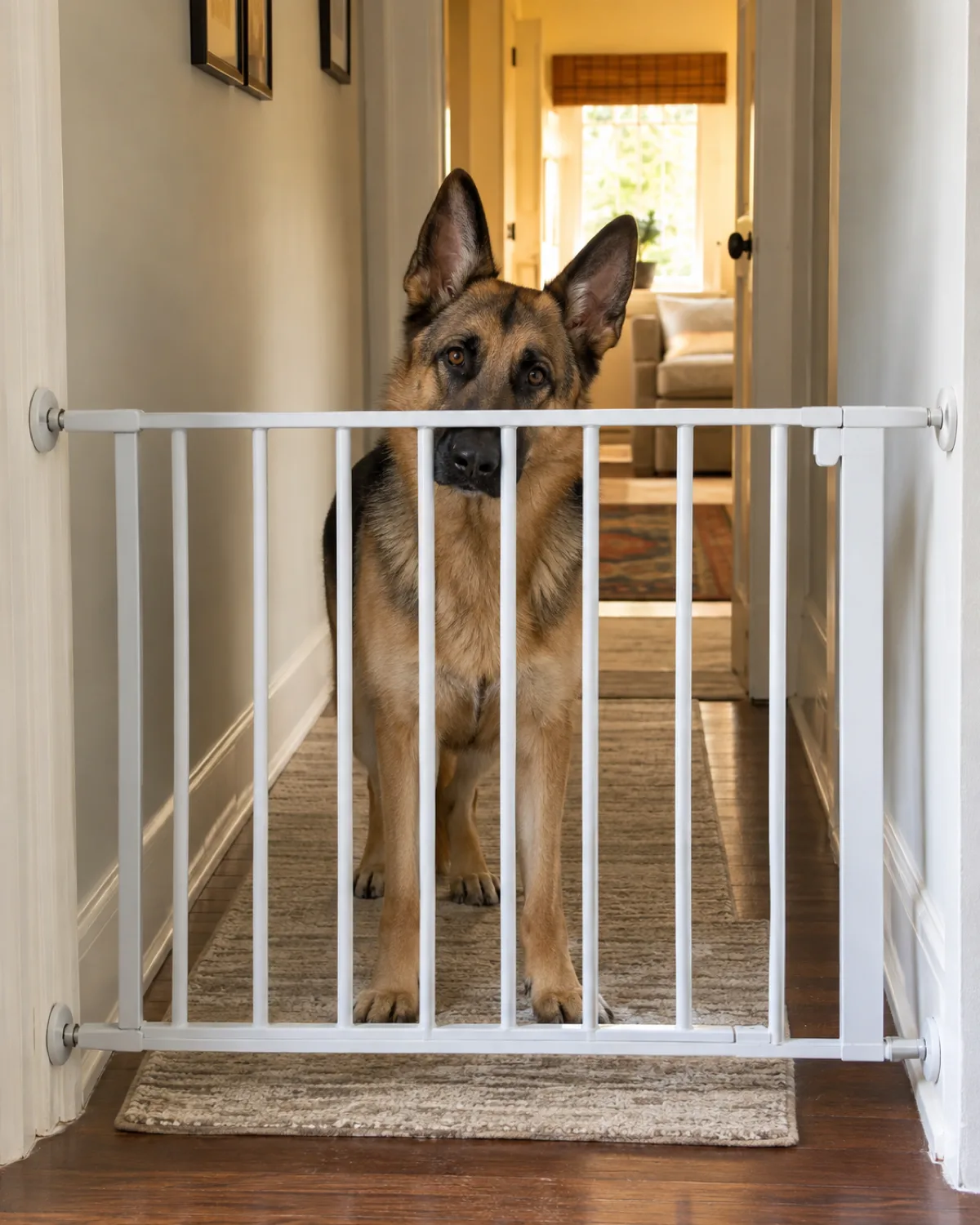
Baby gates to block off rooms with carpet or previous accident spots
Closed doors during the hours you cannot watch directly
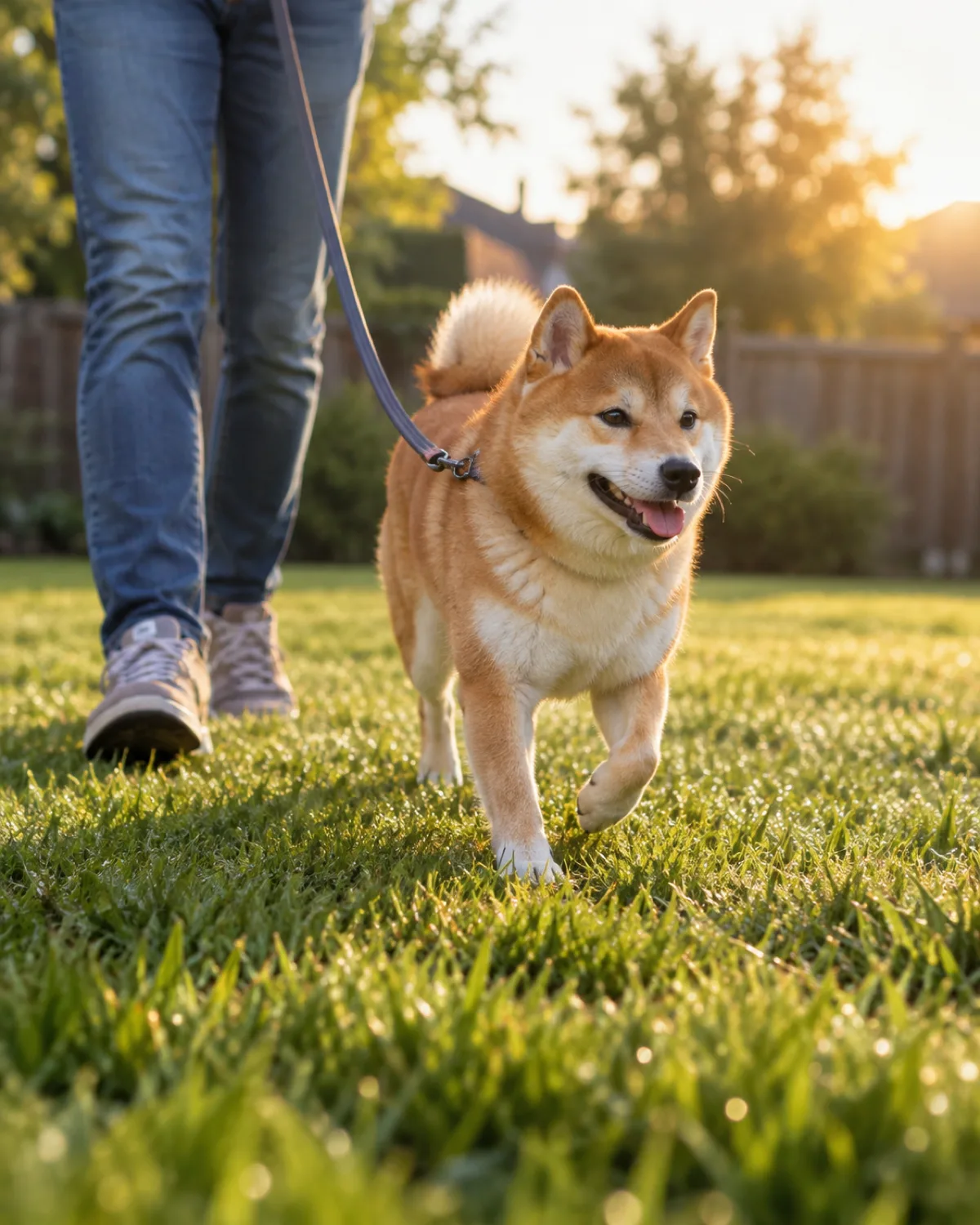
Tethering the dog to you with a six-foot leash inside the house, so you can read the pre-squat signals in real time
The goal is to make it physically easier for the dog to succeed. As the accidents stop and the new schedule takes hold, you expand the dog's free-roaming area one room at a time.
If you have a multi-story home, start by gating off the floor where accidents happen most and giving the dog supervised access for short periods. Gradually increase the time as the dog demonstrates reliability.
Rebuild the Potty Schedule
A dog that has been having accidents needs a schedule that removes the guesswork. Go back to the same frequency you would use for a puppy, then gradually space it out as the dog proves reliable.
The non-negotiable times to take an adult dog outside:
Within five minutes of waking up in the morning
Within ten minutes of finishing a meal
Immediately after play sessions or excited greetings
Right before you leave the house
Right before bedtime
For the first two weeks, add trips every two to three hours during waking hours, even if the dog does not seem to need them. You are rebuilding the association between outside and bathroom, not waiting for urgency.
Timing
Why it matters
Morning wake-up
Bladder is fullest after overnight sleep
Post-meal (10 min)
Eating stimulates the gastrocolic reflex
After play or excitement
Arousal increases urgency
Before alone time
Prevents anxiety-driven accidents
Bedtime
Empties the bladder for a full night
Go to the same spot every time. The accumulated scent reinforces the location as the correct bathroom. Stand quietly and give the dog three to five minutes. If nothing happens, go back inside and try again in fifteen minutes.
If you are adjusting from a puppy schedule, the adult version follows the same logic with slightly longer intervals.
Reward the Right Behavior
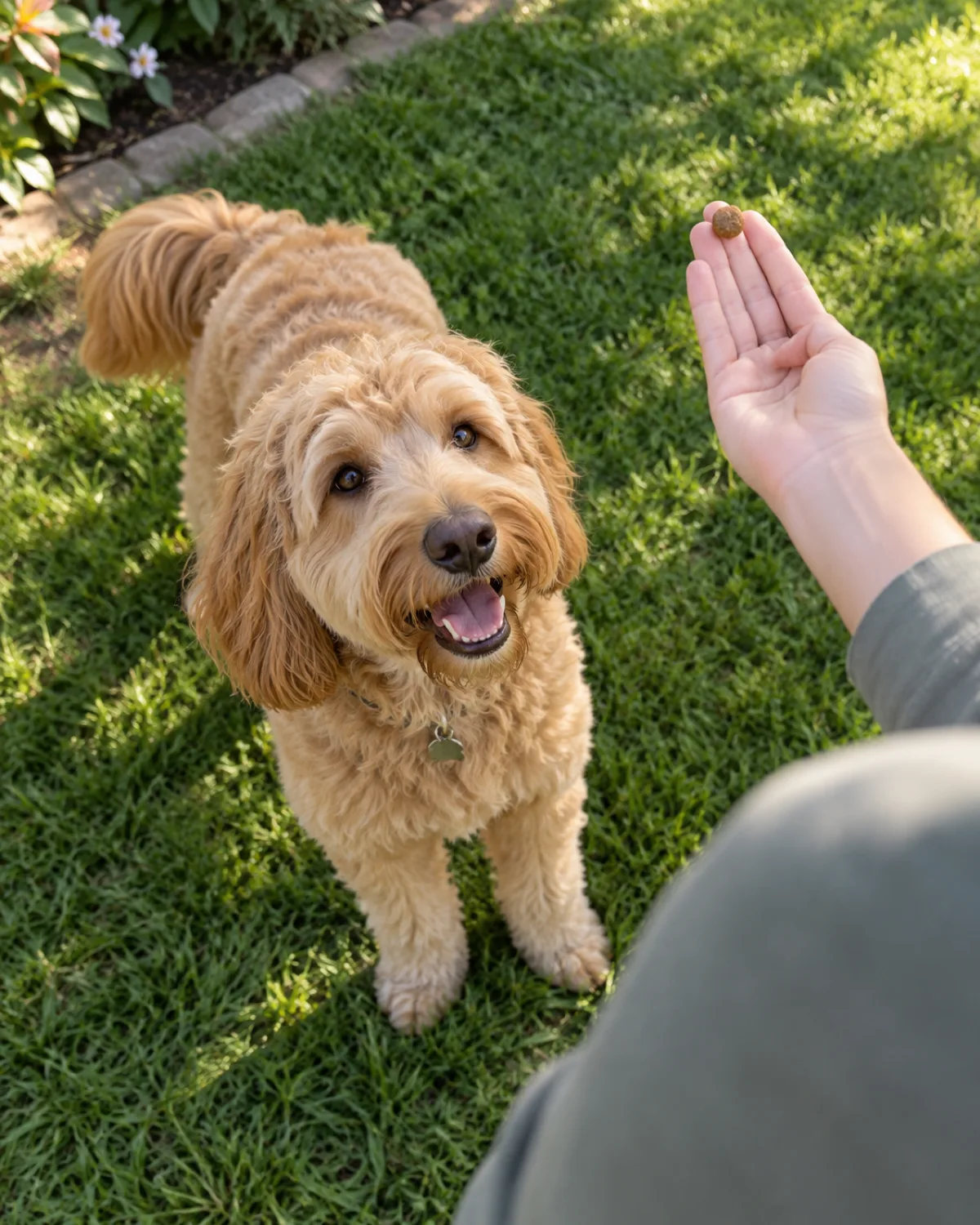
The reward has to happen within two seconds of the dog finishing, not after you walk back inside. Timing is everything.
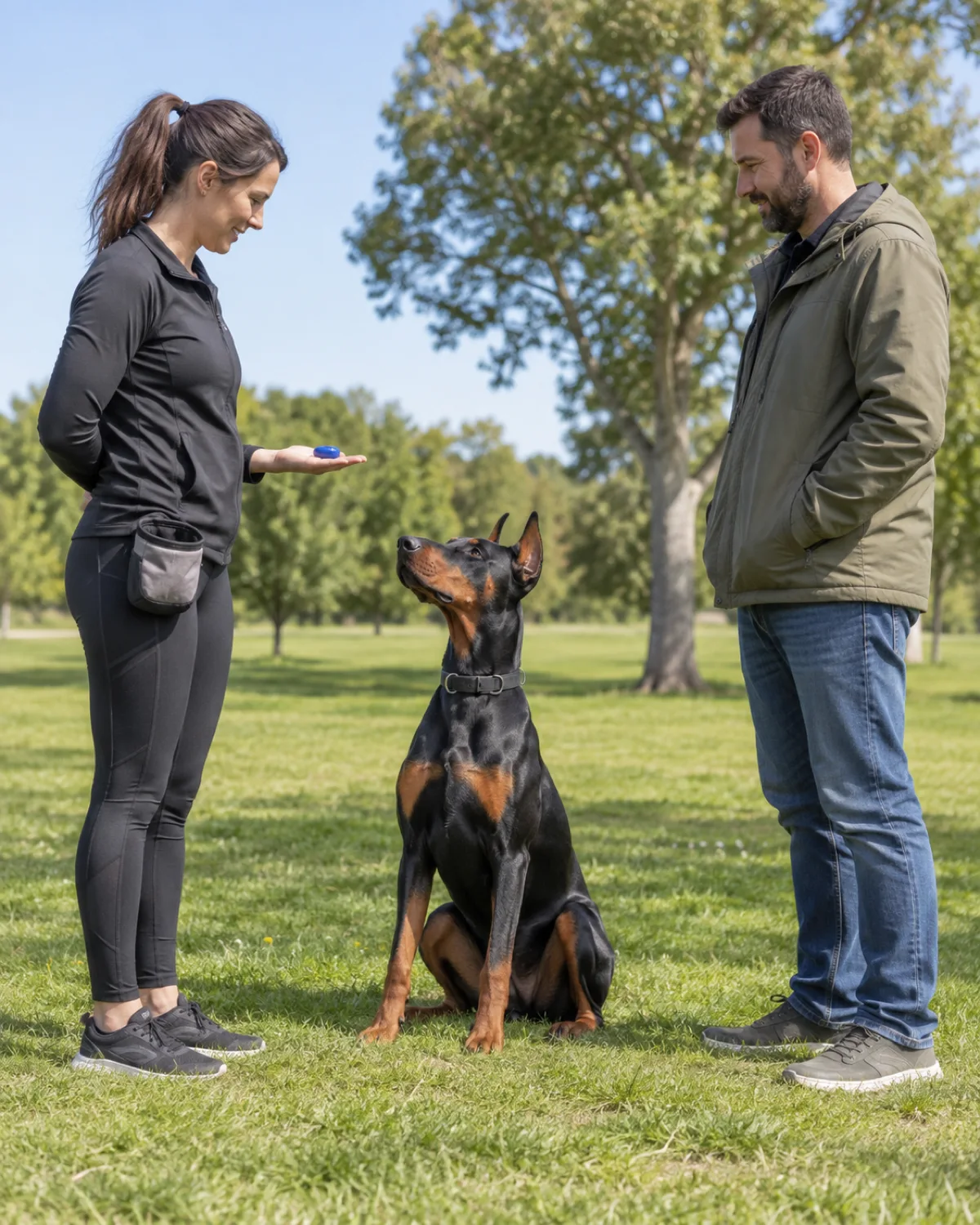
Carry high-value training treats in your pocket or a belt pouch every time you go outside for a potty trip. The instant the dog finishes squatting or lifting a leg in the correct spot, mark the behavior with a calm "yes" and hand over the treat.
What to reward and how:
Outdoor elimination in the designated spot — treat immediately, then praise calmly
Going to the door and signaling — treat and open the door right away, even if you are not sure the dog actually needs to go
Choosing the grass over the rug when both are accessible — jackpot treat (two or three pieces instead of one)
What not to do:
Do not wait until you are back inside to reward — the dog will associate the treat with coming inside, not with peeing outside
Do not phase out the treats for at least four weeks of zero accidents — this is not the time to test whether the habit sticks without reinforcement
Do not use the same reward for potty and for tricks like sit or stay — keep a separate, higher-value treat reserved for bathroom success during this retraining period
If the dog starts going to the door more frequently, that is progress. Reward every signal, even the ones that turn into a quick sniff and nothing else. The door-signal habit is worth more than any single bathroom trip.
Address Marking Behavior
Marking looks different from a housetraining accident. A dog that marks lifts a leg and deposits a small amount of urine on a vertical surface — table legs, door frames, new furniture, bags a visitor set down. The volume is tiny compared to a full-bladder squat.
Both intact and neutered dogs mark, though intact males do it more frequently. Neutering reduces marking in roughly half of dogs, but it is not a guaranteed fix.
Environmental management for marking:
Belly bands (for males) or dog diapers (for females) catch the urine and prevent the scent from reaching the surface, which breaks the reinforcement loop
Enzyme-clean every marked spot thoroughly — the scent trail is what keeps the circuit alive
Block access to the most targeted surfaces with gates or furniture rearrangement
Remove or store new items that trigger marking (visitor bags, new shoes, recently purchased furniture) until the behavior settles
Behavioral protocol:
Interrupt marking the instant you see the leg lift with a calm "outside" and walk the dog to the yard immediately
Reward outdoor elimination heavily, especially leg-lift urination in the correct spot
If the dog marks in front of you and you catch it in the act, a sharp "ah-ah" and immediate redirect outside is appropriate — but only in the moment, never after the fact
Understanding your dog's body language helps you spot the pre-marking signals: sniffing a spot intently, circling, or stiffening the hind legs.
Know When to Call a Trainer
Not every indoor peeing problem resolves with schedule changes and enzyme cleaner. Some situations need a professional.
Call a certified trainer or veterinary behaviorist if:
The accidents continue after two full weeks of consistent management, schedule, and reward
The peeing happens only when you leave the house (separation anxiety often drives this, and the fix involves a different protocol than general housetraining)
The dog shows fear or reactivity alongside the accidents — cowering, lip-licking, whale-eye, or aggression when approached during or after an accident
A senior dog that the vet has cleared medically continues to decline — cognitive dysfunction sometimes responds to medication that a vet behaviorist can prescribe
The marking is escalating in frequency or spreading to new rooms despite belly bands and environmental management
A board-certified veterinary behaviorist (DACVB) can prescribe medication for anxiety-driven cases that a regular trainer cannot. Your vet can provide a referral.
The indoor peeing is the symptom. When the basic protocol does not resolve it, the underlying cause is deeper than routine — and that is the point where professional guidance saves months of frustration for both you and your dog.
Save this for later
Stopping Indoor Accidents in 8 Takeaways
1Vet check firstRule out infections, pain, and cognitive decline before changing anything else.
2Find the triggerMap accident locations and times for a week — the pattern reveals the cause.
3Enzyme-clean everythingSaturate every spot and let it sit for eight hours to break down uric acid.
4Limit free roamingUse gates and closed doors to remove the opportunity for wrong choices.
5Rebuild the scheduleTake the dog out every two to three hours plus after meals, play, and sleep.
6Reward within two secondsTreat the instant the dog finishes outside, not after you walk back in.
7Separate marking from accidentsBelly bands plus enzyme cleaning plus redirect — marking needs its own protocol.
8Know your limitTwo weeks of no improvement means it is time for a certified trainer or vet behaviorist.
pawliqa.com
Indoor Peeing FAQ
Why is my house-trained dog suddenly peeing inside?
The most common causes are urinary tract infections, schedule disruptions, new stressors in the home, and incomplete cleanup of previous accident spots. A vet check should always come first because medical causes are more common than behavioral ones in previously reliable dogs.
Does vinegar stop dogs from peeing in the house?
Vinegar masks the smell for humans but does not break down uric acid crystals, which are what the dog detects. An enzymatic cleaner is the only product that eliminates the scent at the molecular level. Vinegar can actually damage some flooring materials and is not recommended as a primary cleaning tool.
How long does it take to stop a dog from peeing inside?
Most dogs show significant improvement within two to four weeks of a consistent schedule, enzymatic cleaning, and positive reinforcement. Dogs with anxiety-driven accidents or cognitive decline may take longer and often benefit from professional help.
Should I punish my dog for peeing in the house?
No. Punishment after the fact teaches the dog to hide the behavior, not stop it. A dog that slinks away when you find a puddle is reacting to your body language, not connecting the punishment to the earlier act. Catching the dog in the act and calmly redirecting outside is the only form of correction that helps.
Do belly bands actually work for male dogs?
Belly bands catch urine and prevent the scent from reaching the surface, which interrupts the marking reinforcement loop. They work as a management tool during the retraining period but are not a standalone fix. Pair them with enzyme cleaning, schedule rebuilding, and positive reinforcement for outdoor elimination.
P
About the author
Jess Calloway
Jess Calloway edits Pawliqa, where she shares dog care, grooming, training, and new-owner tips — plus DIY and pet-friendly home ideas — for anyone who wants a happy, well-cared-for dog. As a dog mom to three very different dogs, she writes the honest, tested version of what actually works. Every guide is image-led and reviewed for clarity, usefulness, image accuracy, and Pinterest-to-page alignment before it goes live. Visit the About page.
Teaching a dog to spin starts with a food lure at nose level, progresses to an open-palm hand gesture, and ends with a verbal cue alone. This guide walks through every stage, flags the mistakes that stall progress, and shows how to keep training sessions short and productive.
An overstimulated dog is not being bad. This guide walks through the place cue, structured down-stays, environment management, and daily decompression routine that teach a dog to settle on its own.
Fourteen puppy training games covering hide and seek recall, the name game, touch targeting, cup puzzles, puppy pushups, which hand, red light green light, muffin tin puzzles, tug with rules, scent work, two-toy fetch, obstacle courses, spin tricks, and settle mat training for puppies who learn best through play.