Most new owners worry about teaching sit and stay long before they should be worrying about socialization, which is the quieter thing that decides whether you end up with a calm dog or a reactive one. The window is short and it opens whether you’re ready or not.
This is the gentle plan I use: the critical 3-to-16-week window, what to expose your puppy to at home before any outings, the carry-don’t-place trick for the pre-vaccine weeks, and how to read the small signals that tell you it’s time to stop.
I’m a dog mom to three very different dogs, and one of the biggest things I’d tell my earlier self is that quality of exposure beats quantity, every single time.
This is the calm, dose-controlled way to socialize a puppy at home and in the world, from the imprint window through the first adolescence wobble, built one careful exposure at a time. Jump to whatever part you need right now.
- 1The 3-to-16-week critical socialization window
- 2Start at home first: sounds, surfaces, touch
- 3The vet-safe way to socialize before all vaccines
- 4One new exposure a day, not ten
- 5The 3-second look-and-leave rule
- 6Meet people of all kinds
- 7Meet other dogs the careful way
- 8Expose to urban sounds from a safe distance
- 9Practice car rides as positive trips
- 10At-home vet, groomer and handling practice
- 11Read the body language signals
- 12The fear periods at 8-11 weeks and 6 months
- 13What “done” looks like after 16 weeks
The 3-to-16-Week Critical Socialization Window
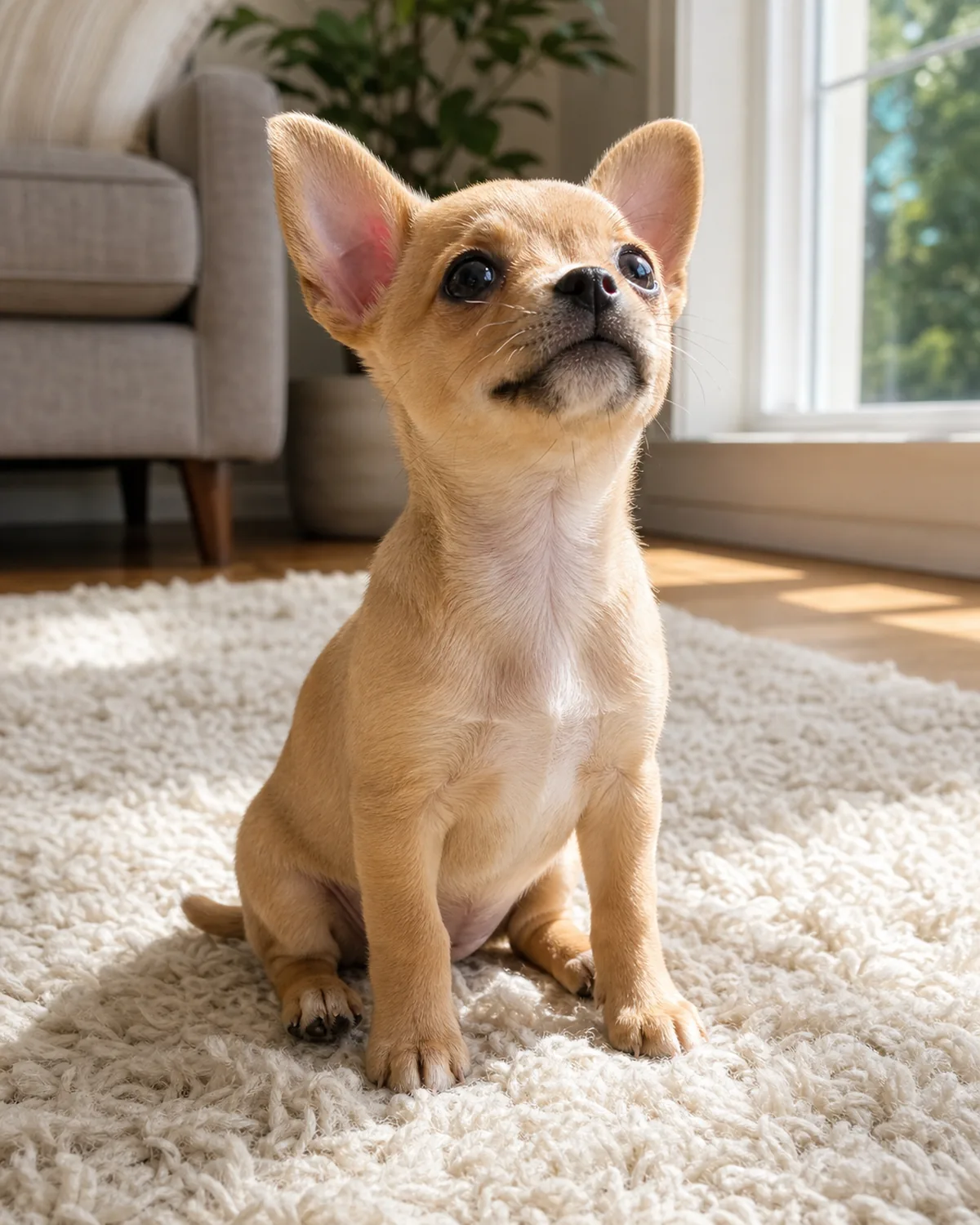
Roughly the first sixteen weeks of life is when a puppy’s brain is wired to accept the world as the default. Things they meet calmly during this stretch tend to stay normal for life. New things after the window closes default to suspicious until proven safe, which is a much harder lesson to teach later.
The peak imprint stretch is around eight to twelve weeks, so the work you do in the first month after homecoming carries more weight than anything you’ll do at six months.
- Treat 3-to-16 weeks as the open window; the lessons here imprint deepest.
- Plan exposures during the eight-to-twelve-week peak, not “when life calms down.”
- After 16 weeks the door doesn’t slam shut, but progress is slower and shyer.
Start at Home First (Sounds, Surfaces, Touch)
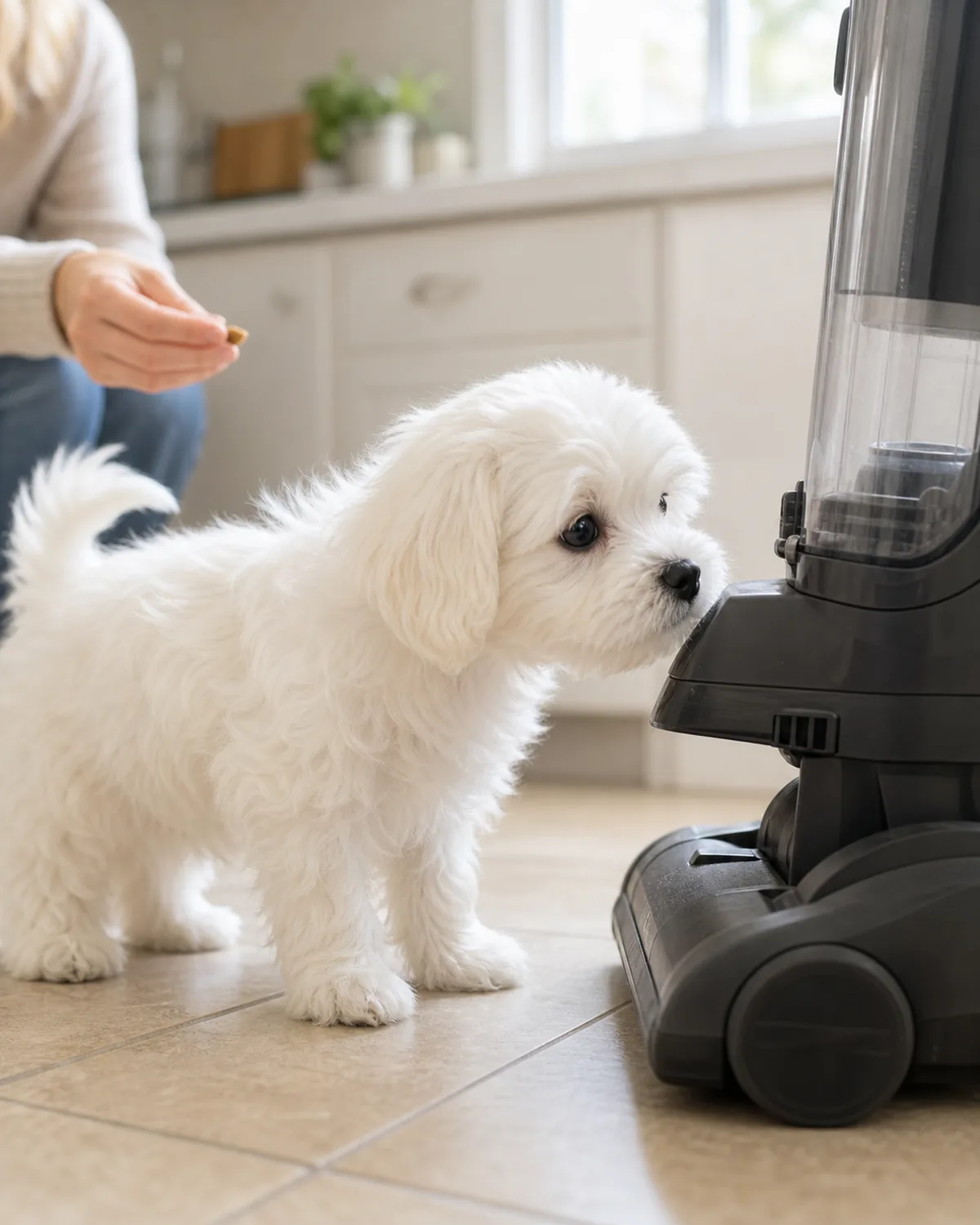
Socialization starts inside your front door long before any outing. Run the dryer at low volume, leave the vacuum standing still and powered off in the room for a day, then plug it in across the room while your puppy eats. Pair every new sound or texture with a treat from your hand.
Floor variety matters more than people think. Tile, hardwood, a rubber mat, a folded towel, a low rug — let your puppy choose which to step on next, never lift them onto anything they’re hesitant about.
- Layer in household sounds at low volume first, paired with treats.
- Offer different floor textures and let the puppy pick where to step.
- Handle ears, paws, mouth gently for one second at a time, then treat.
The Vet-Safe Way to Socialize Before All Vaccines Are Done
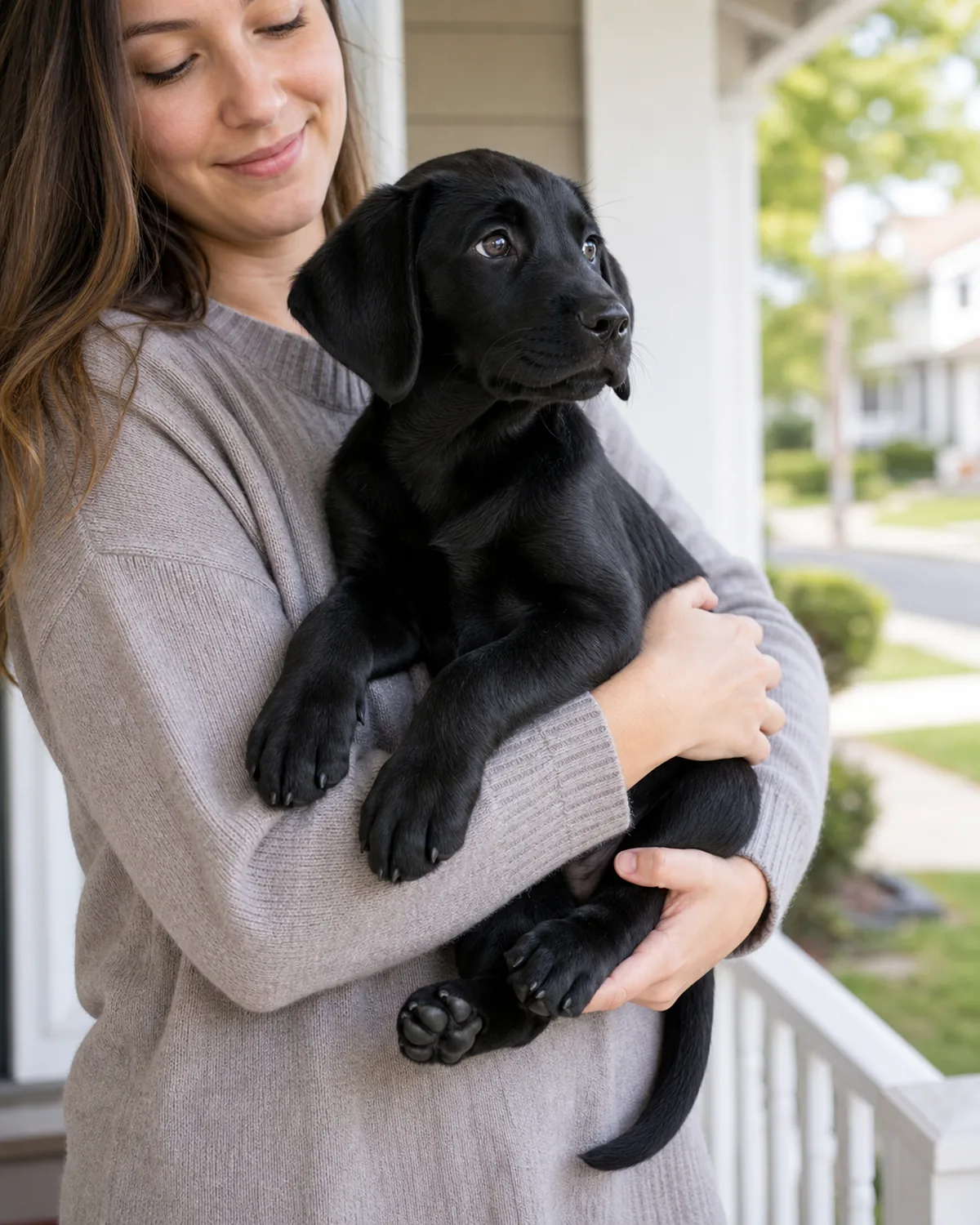
Waiting until your puppy is fully vaccinated to start socializing is the most common, costly mistake. By then, the window has been shrinking for weeks. The current vet consensus is that the risk of under-socialization is usually greater than the risk of a calm carry-out at this age.
Carry, don’t place. Hold your puppy in your arms on the porch, in a friend’s clean entryway, near a quiet sidewalk corner. Skip dog parks, busy pet stores, and any ground a sick dog might have used. Ask your own vet about your specific schedule.
- Carry your puppy outdoors instead of putting them on shared ground.
- Visit one calm, fully vaccinated adult dog in a clean home, one-on-one.
- Get vaccine timing from your vet, not from a blog.
You don’t need every step on day one. Pick the situation that sounds most like you and your puppy, and begin there.
One New Exposure a Day (Not Ten)
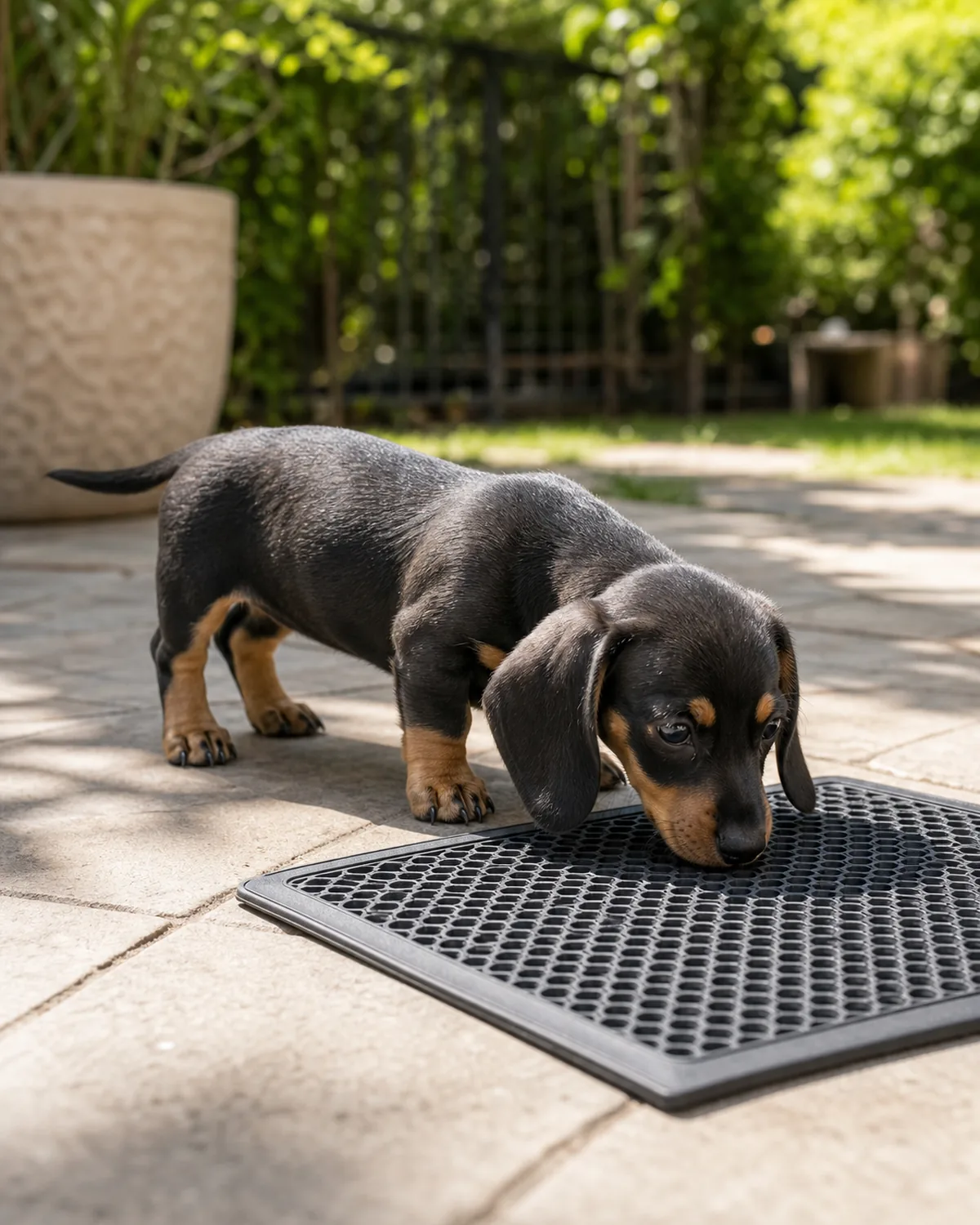
The packed-checklist day, where a puppy meets ten people, two dogs, a vacuum, a hairdryer, and a thunderstorm soundtrack, looks productive and usually backfires. A puppy pushed past their threshold learns the opposite lesson: that the world is too much.
One or two new things per day, five to ten minutes each, ending while the puppy is still calm and interested, is the dose that actually builds confidence. The aim is repeated good moments, not a numbers race.
- Pick one or two new exposures per day, not a long list.
- Cap each session at about ten minutes and stop on a good note.
- Build a weekly variety chart, not a single overwhelming day.
The 3-Second Look-and-Leave Rule
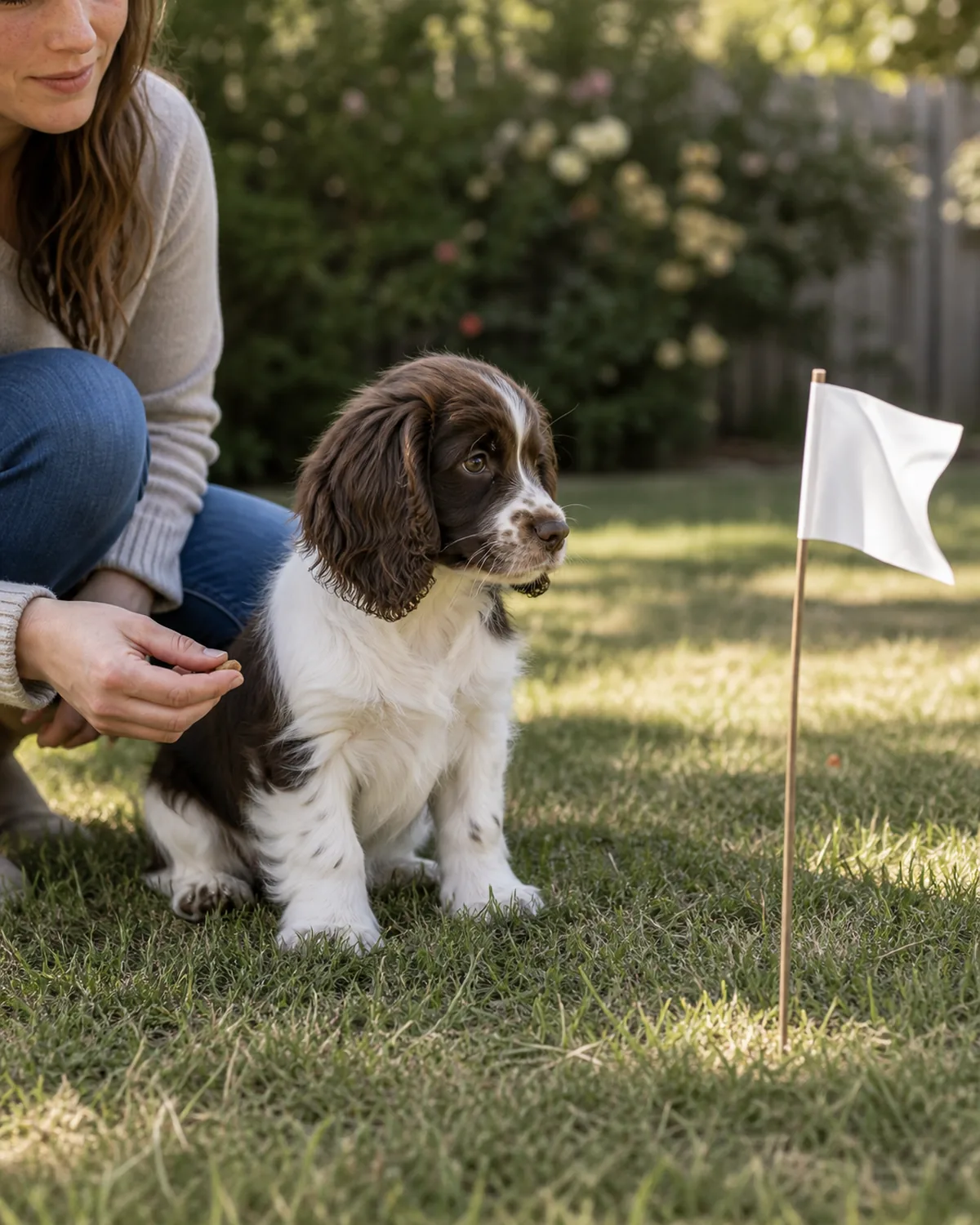
When your puppy notices something new and unsure, let them look for about two or three seconds, deliver a small treat at their level, and walk away with them. That short look-treat-leave loop teaches their brain that novel things are a good thing.
Never drag your puppy toward what they’re worried about. Never pick them up and carry them onto it either, even gently. They choose to approach, in their own time, or they don’t approach today. Either is a successful session.
- Allow a 2-to-3-second look, deliver a treat, then turn and walk away.
- Never pull, lure, or carry a puppy onto something they’re worried about.
- A “we just looked and left” session is still a win.
Meet People of All Kinds (Hats, Beards, Wheels)
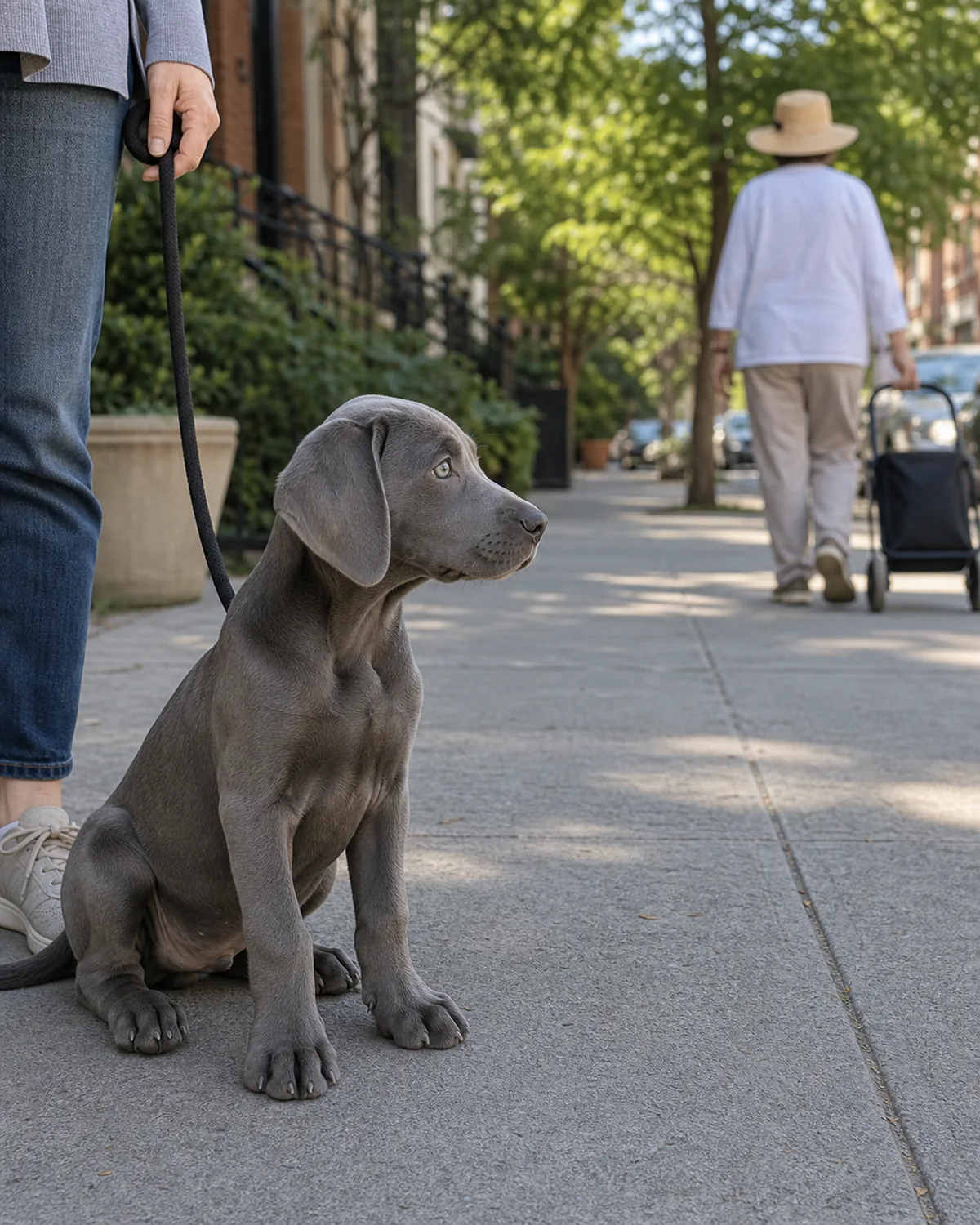
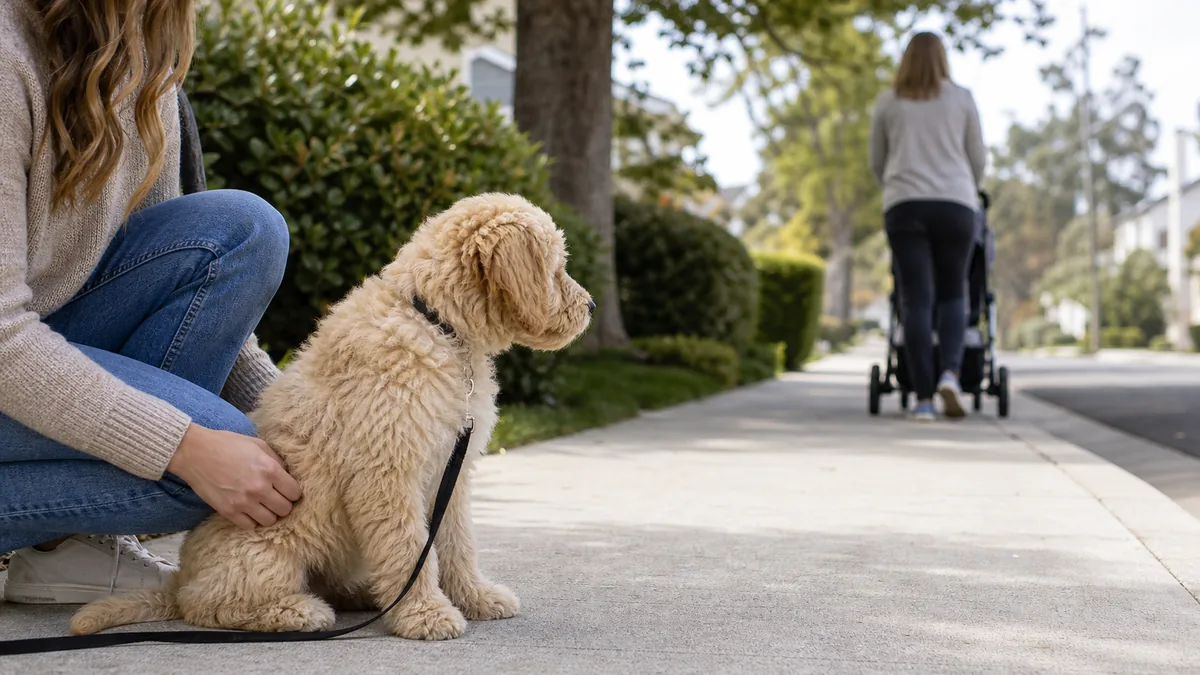
Aim for one new kind of person each week through the critical window: different ages, beards, hats, sunglasses, uniforms, walking canes, strollers, wheelchairs, kids. The variety matters more than the count.
The rule for strangers is simple: they do not bend over your puppy and do not reach out a hand. They stand or sit at a normal distance and let the puppy decide. Treats come from your hand, not theirs. Friendly hovering strangers are the number-one accidental cause of shy puppies.
- Aim for one new type of person each week, not a daily parade.
- Ask strangers to stay upright and let the puppy approach first, or skip.
- Hand the treats yourself; the stranger is just present, not interactive.
The step-by-step plan works because of four ideas underneath it. Get these right and your puppy builds confidence; ignore them and these are exactly the mistakes that turn socialization into a fear factory.
Meet Other Dogs the Careful Way (Not the Dog Park)
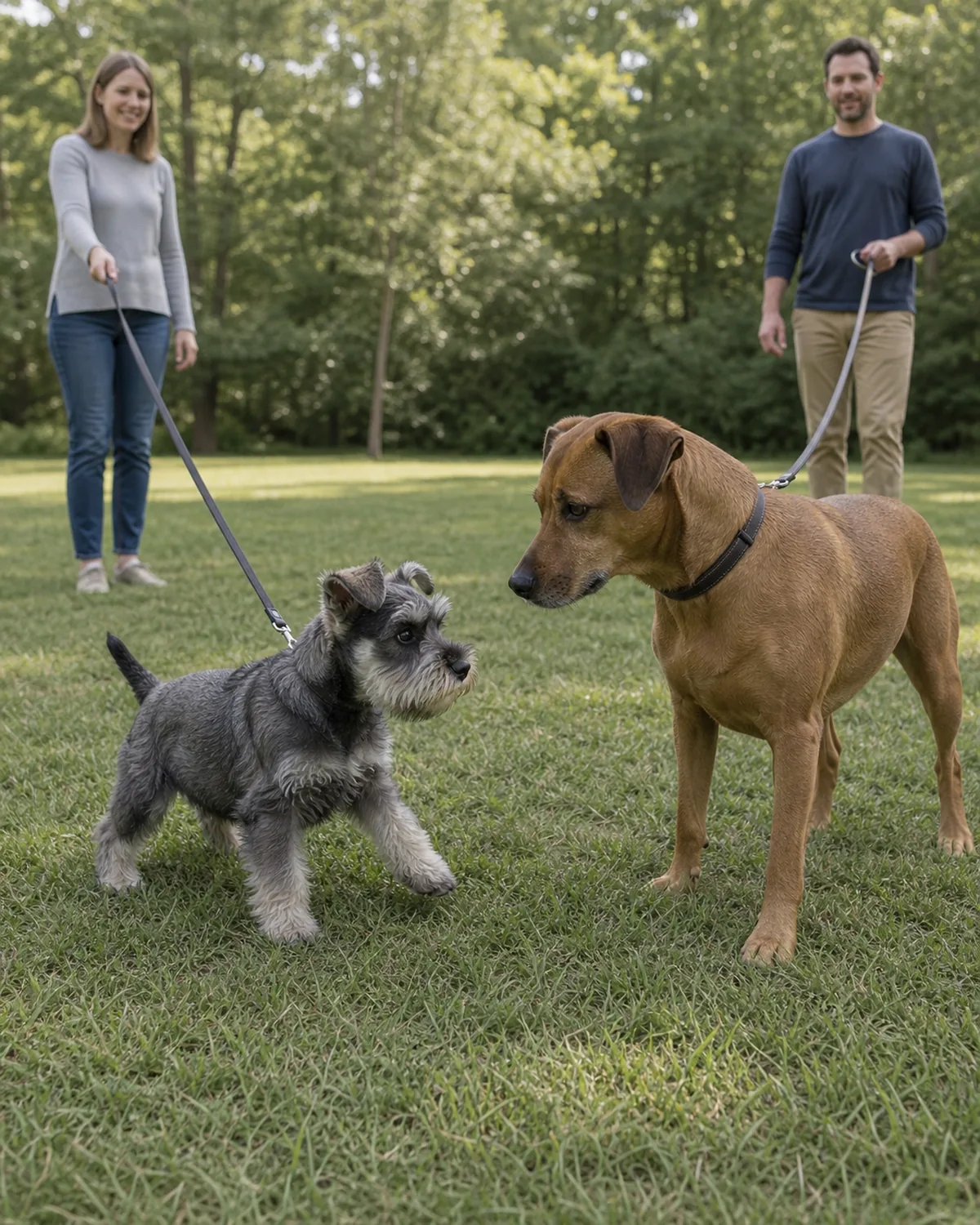
The off-leash dog park is the wrong venue for a young puppy. One bad interaction during a fear-period week can imprint reactivity for years, and you have no control over which dogs walk in next.
Set up one-on-one meets with a calm, fully vaccinated adult dog you know on neutral ground. Approach in a soft curve, never head-on. Two or three minutes of loose-bodied sniffing is plenty, then break for a rest. Quit while everyone still likes each other.
- Use one-on-one playdates with calm vaccinated adults, not dog parks.
- Approach in a curve on neutral ground; both dogs on loose leashes.
- Cap the meet at two to three minutes and end on a calm note.
Expose to Urban Sounds From a Safe Distance
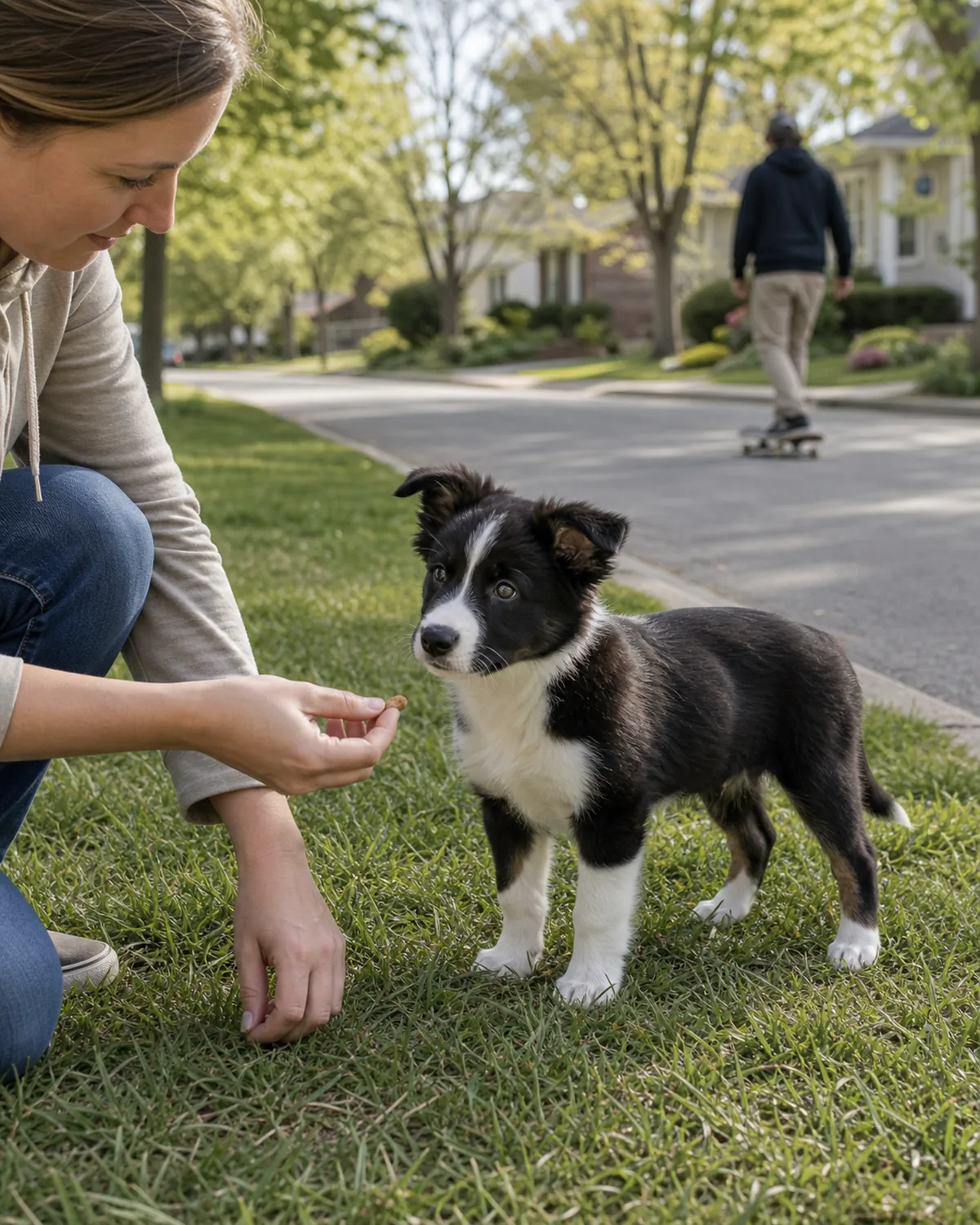
Traffic, sirens, kids on bikes, skateboards, leaf blowers, construction — the city soundtrack is most of what a sound-shy adult dog will react to later. Start far enough away that your puppy notices but still takes a treat from your hand. That distance is your starting line.
Each week, halve the distance if your puppy is still relaxed. Free recordings of urban sounds played at low volume during meals at home is a fair indoor warm-up too.
- Pair urban sounds with treats at a distance your puppy stays soft-bodied.
- Halve the distance only after a relaxed session at the current one.
- Use low-volume sound recordings at meal times for at-home prep.
Practice Car Rides as Positive Trips
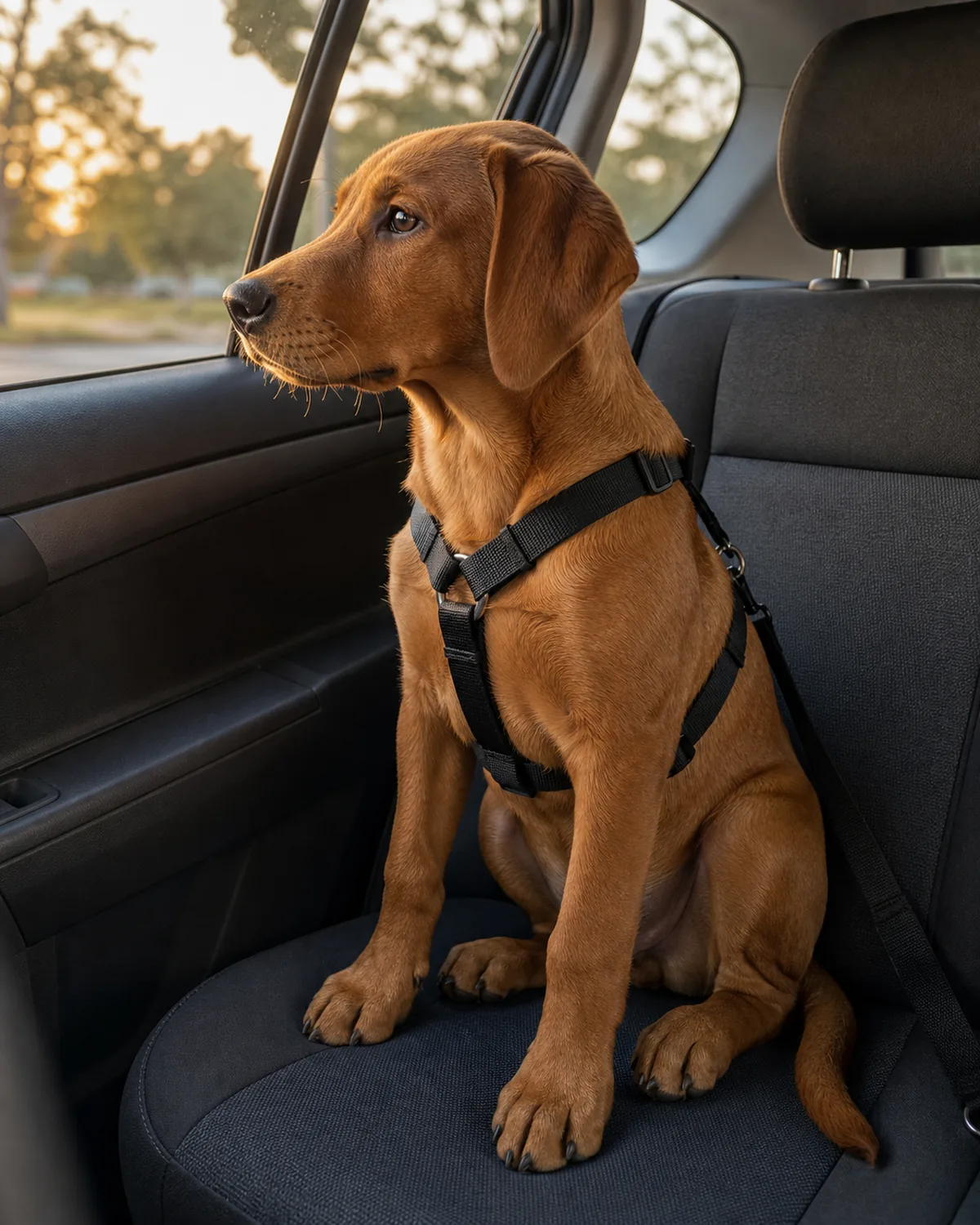
If every car ride ends at the vet, your puppy will learn that the car means the vet. Short five-to-ten-minute rides that end at a park edge, a friend’s lawn, or a quiet sidewalk walk teach the opposite — that the car means something good is about to happen.
A simple unbranded crash-tested car harness or a secured carrier keeps the ride boring and safe. After a short positive trip, a gentle on-leash walk works the energy out gently — see our exercise-by-energy guide for what’s age-appropriate.
- Mix in short rides that end at fun places, not only at the vet.
- Use a tested car harness or secured carrier on every trip.
- Pair the ride with a gentle activity at the destination, not a chaotic one.
How to Socialize a Puppy: The Gentle 3-16 Week Plan
- 1The open windowRoughly 3 to 16 weeks is when the brain accepts the world as normal — use it.
- 2Start at homeVacuum, dryer, foil, tile, hardwood, rubber mat — paired with treats.
- 3Carry before vaccinesOutdoors in your arms, friend’s clean home, one calm vaccinated adult dog.
- 4One a day, not ten1-2 new things, 5-10 minutes, end on a calm note.
- 5Look-and-leaveLet them look 2-3 seconds, treat, walk away — they choose to approach.
- 6All kinds of peopleHats, beards, kids, wheels, uniforms — strangers do not reach out.
- 7Curved one-on-one dog meetsVaccinated calm adult dog, neutral ground, curve not head-on, 2-3 minutes.
- 8Sounds at distanceTraffic, sirens, kids, skateboards — far first with treats, closer later.
- 9Car rides to fun placesShort trips that end at a park or friend, never just the vet.
- 10At-home handling drills30 seconds a day: ears, lip, paws, body — one second, one treat each.
- 11Pause signalsYawn, lip-lick, whale-eye, tucked tail, freeze, turn-away = back off now.
- 12Fear periodsAround 8-11 weeks and around 6 months — rest weeks, no new big stimuli.
- 13Maintain after 16 weeks1-2 mild new exposures weekly; expect an adolescence regression and stay calm.
pawliqa.com
At-Home Vet, Groomer & Handling Practice
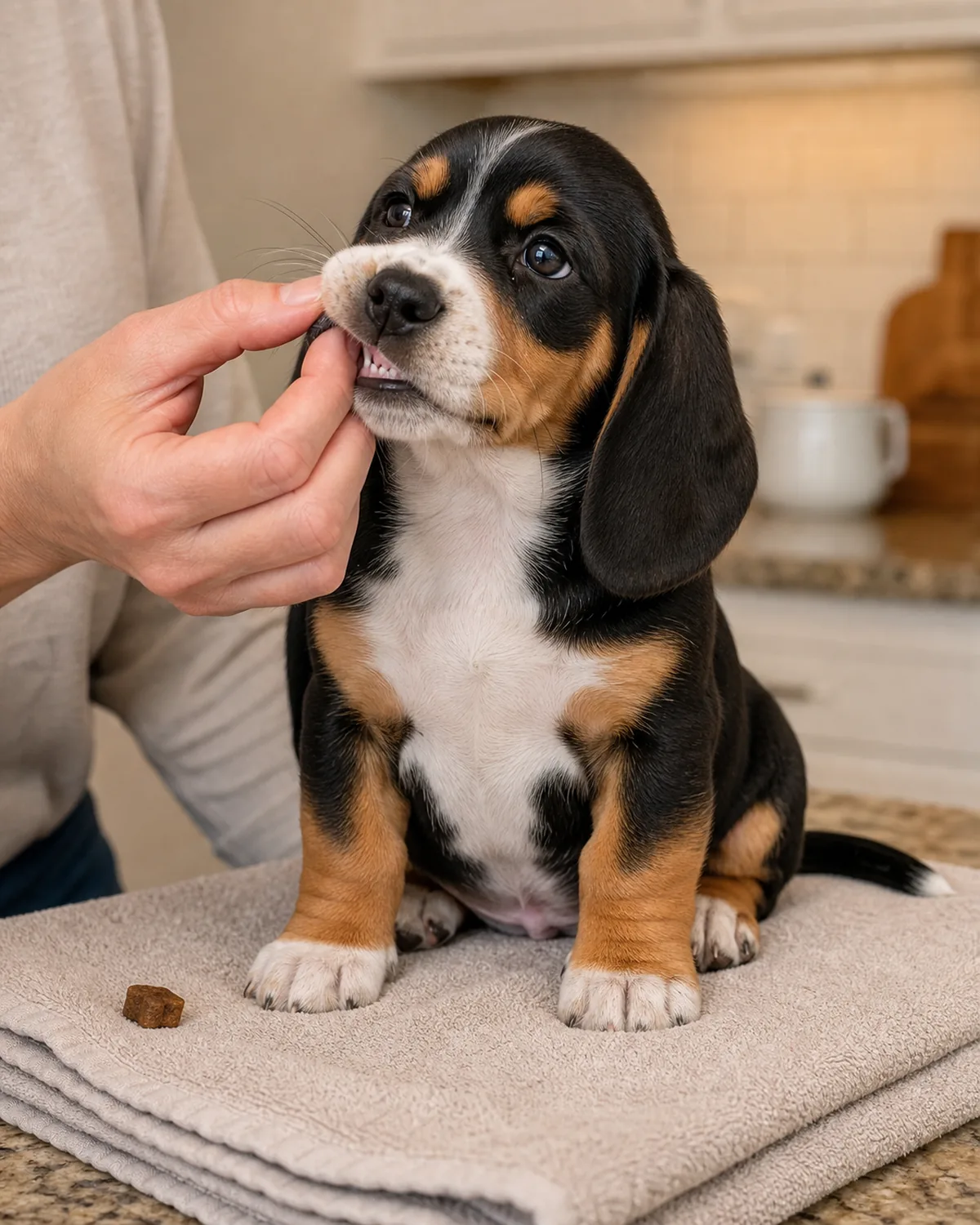
Thirty seconds a day at home turns the vet exam and the grooming clip from an ambush into a familiar sensation. Touch each ear, lift each lip to peek at the teeth, hold each paw for a second, gently press along the back and sides. One second of handling, one small treat. That’s the whole drill.
A folded towel on a kitchen counter doubles as a fake exam table, since dogs handled at counter height as puppies are far less anxious at the actual vet’s table later.
- Do a 30-second handling drill every day on a towel at counter height.
- One second of touch per body part, one small treat each — then stop.
- Add the brush, nail clipper, and ear-wipe textures the same way, gradually.
Read the Body Language (Yawn, Lip-Lick, Whale-Eye = Pause)

A puppy at the edge of overwhelm gives small, easy-to-miss signals long before they shut down or snap. A clear non-tired yawn, repeated lip-licking, the whites of the eyes showing in a “whale-eye,” a tucked tail, a sudden body freeze, or turning the head away from the thing — any one of these means pause and add distance.
Green-light signals look loose: a play bow, soft mouth, willing tail wag, taking a treat smoothly. If treats become uninteresting, you’re already over threshold.
- Yawn, lip-lick, whale-eye, tucked tail, freeze, turn-away — back off now.
- Loose body, play bow, soft mouth, taking treats — keep going gently.
- A puppy who suddenly refuses food is already past their limit.
The Fear Period Around 8-11 Weeks (and Another Around 6 Months)

Most puppies hit one or two short fear-period weeks where they suddenly act scared of things that were fine the week before. The classic windows are roughly eight-to-eleven weeks and again around six months. A single bad scare during one of these weeks can imprint a reaction for years.
Treat them as rest weeks. No new big stimuli, no crowded outings, no flashy strangers. Familiar places, familiar people, slow pace. A short calm crate session between exposures is a fair decompression tool too.
- Expect a fear week around 8-11 weeks and another near six months.
- Pull back to familiar places and people; skip new big stimuli that week.
- Use short crate rests as a decompression base, not punishment.
What “Done” Looks Like and How to Maintain It After 16 Weeks
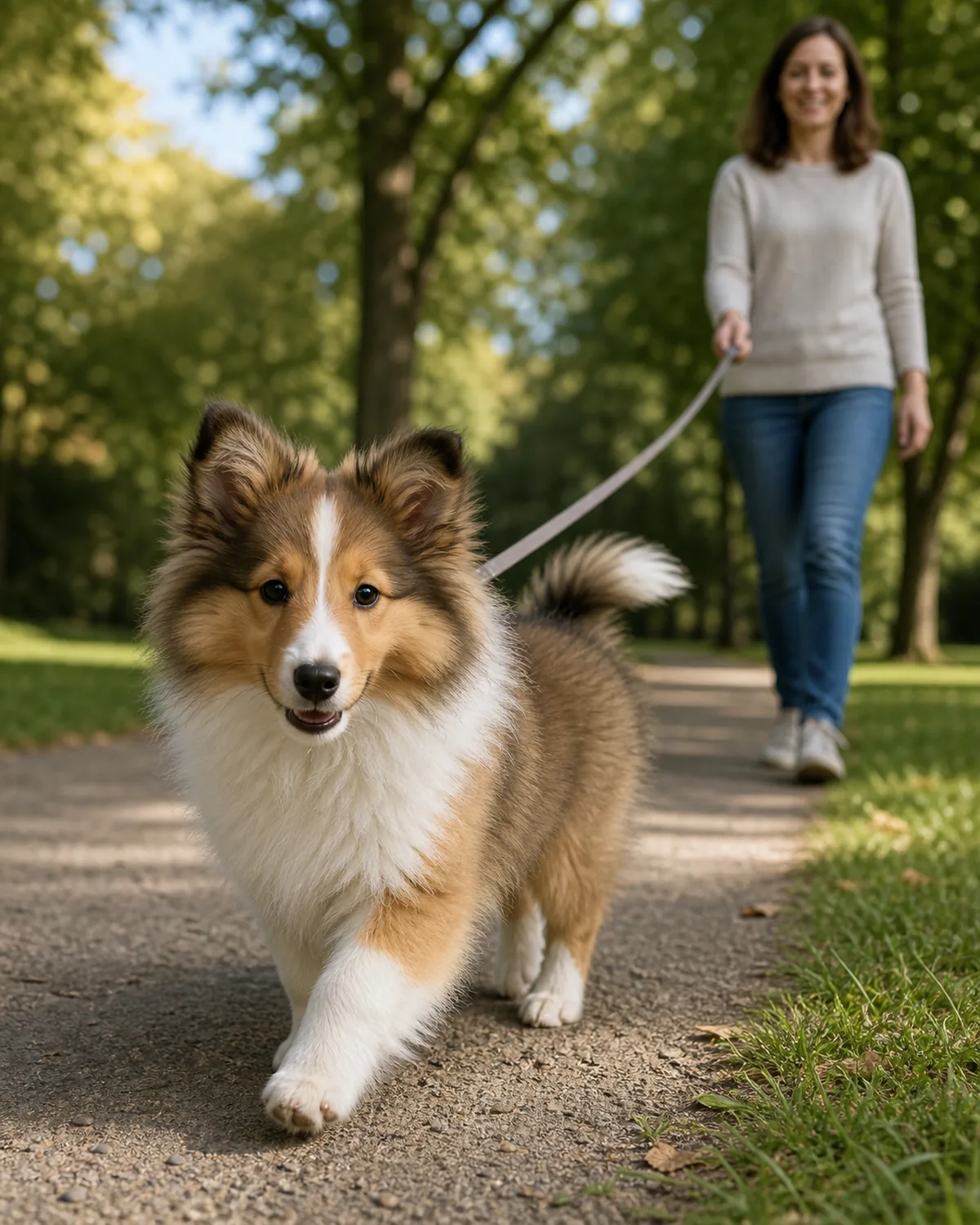
Done is not a puppy who loves everyone. Done is a puppy who can look at a new thing, check in with you, and choose calm. That look-and-check pattern is the actual goal of the whole sixteen weeks, and it’s a skill you’ll keep reinforcing for a year.
After the window closes, plan one or two mild new exposures each week. Expect a wobble during adolescence, roughly six to twelve months, where they may briefly act like they’ve forgotten everything. Stay calm and keep the gentle plan running.
- Look for the look-then-check pattern, not “loves everyone.”
- Schedule one or two mild new exposures per week after 16 weeks.
- Treat the adolescence regression as normal and keep going calmly.

Jess Calloway edits Pawliqa, where she shares dog care, grooming, training, and new-owner tips — plus DIY and pet-friendly home ideas — for anyone who wants a happy, well-cared-for dog. As a dog mom to three very different dogs, she writes the honest, tested version of what actually works. Every guide is image-led and reviewed for clarity, usefulness, image accuracy, and Pinterest-to-page alignment before it goes live. Visit the About page.