I taught my oldest dog every trick in the book within the first month. Shake, roll over, spin. But stay took us three weeks of daily practice before I trusted it outside the living room.
That is not because stay is complicated. It is because stay asks a dog to do the one thing that goes against every instinct: nothing. No chasing, no following, no investigating. Just hold still and wait.
This guide breaks the stay command into the exact progression that works, from a one-second hold in your kitchen to a reliable stay at the park with distractions everywhere.
Jump to a section
How to teach a dog to stay
From defining the command and building duration to adding distance, handling distractions, and using stay in daily life.
What Stay Actually Means to Your Dog
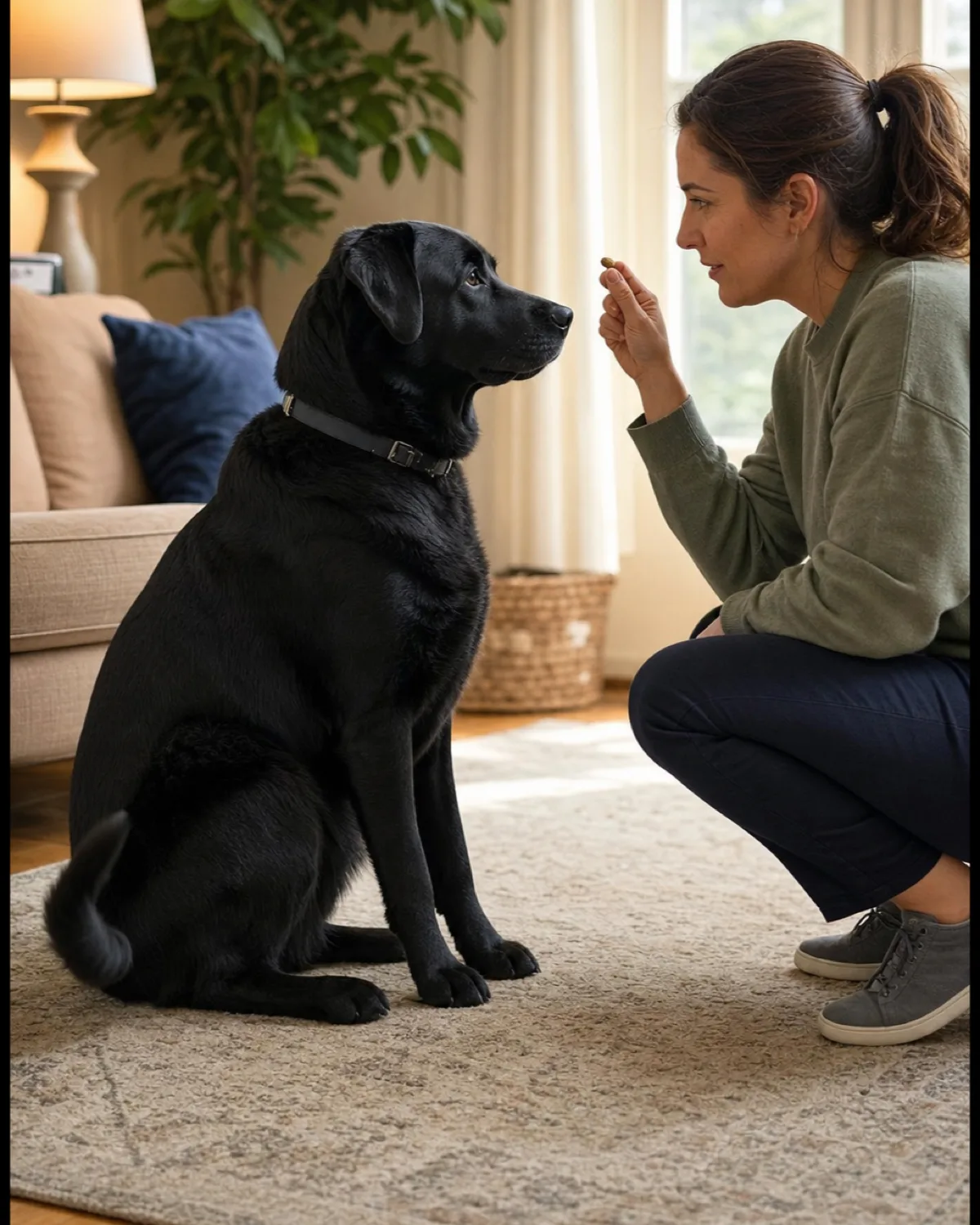
Most people use stay without ever defining what it actually means, which leaves the dog guessing when it ends. Stay is a three-part contract between you and your dog. It means hold the position you were given, whether that is a sit or a down. It means hold the location you were placed in. And it means hold both of those until you hear a specific release word.
Without a clear release word, your dog has no way to know when staying is finished. Pick one word and commit to it. Common choices are okay, free, or break. The specific word does not matter as long as you use it every single time and everyone in the household uses the same one.
This distinction matters because most failed stays are actually failed releases. The dog did not break stay because it was disobedient. It broke stay because it never knew when staying was supposed to end, so it made its own decision. Define the contract clearly from the beginning and you eliminate the most common source of confusion.
The Three Variables You Build Separately
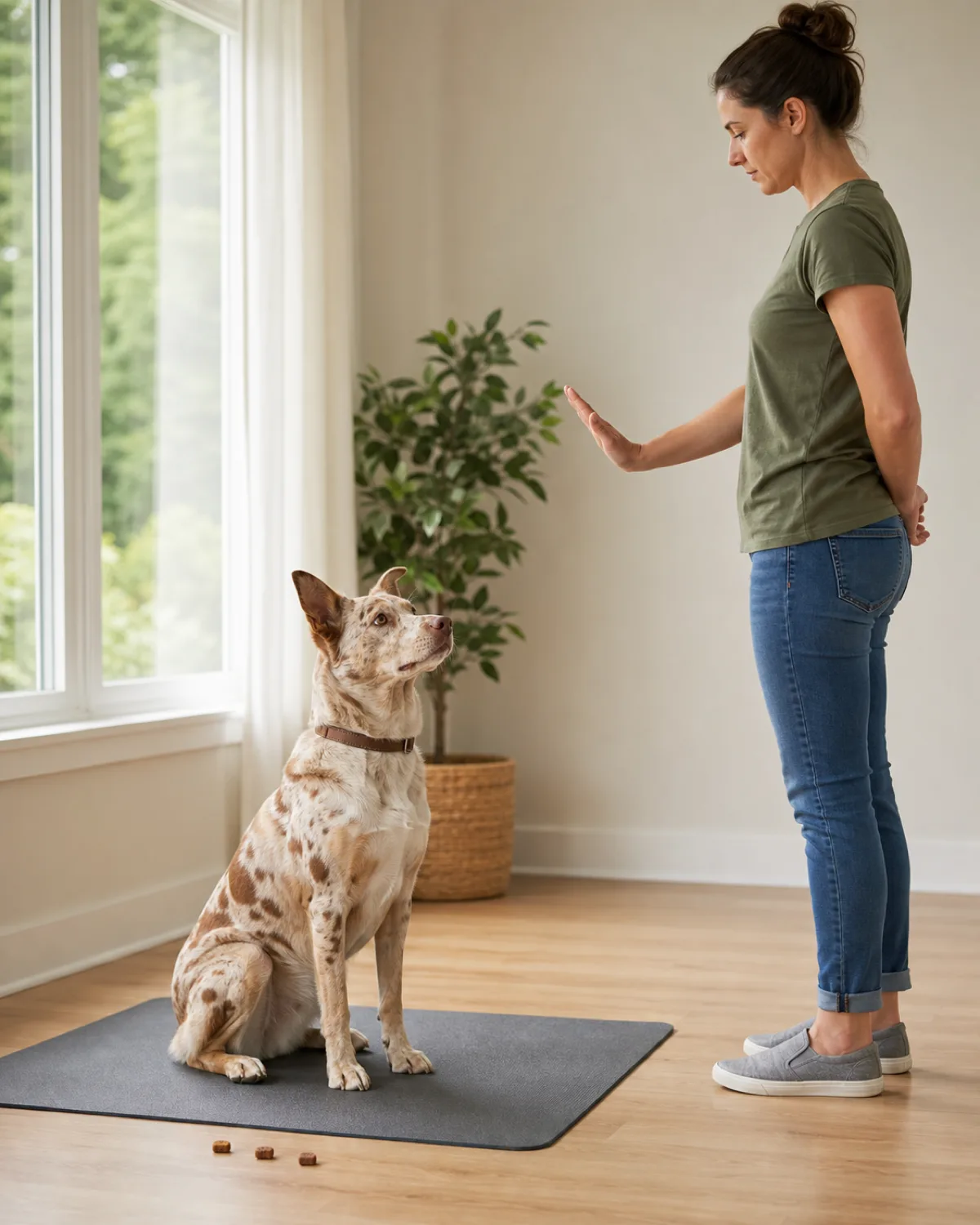
Stay difficulty is controlled by three independent variables: duration, distance, and distraction. Duration is how long the dog holds the position. Distance is how far you move away from the dog. Distraction is what is happening in the environment around the dog.
The critical discipline is to increase only one variable at a time. When you add distance, keep duration short and distractions minimal. When you add distractions, reset both duration and distance back to easy. If you stack two new challenges at once, you double the failure rate and teach the dog that stay is unreasonably hard.
Think of it as three separate dials. You can turn one up, but the other two must stay low while you do. Once the dog is stable at the new level of that one dial, you can start turning a different one. This feels painfully slow in the early sessions, but it prevents the backsliding that comes from pushing too much too fast.
Start with a One-Second Stay
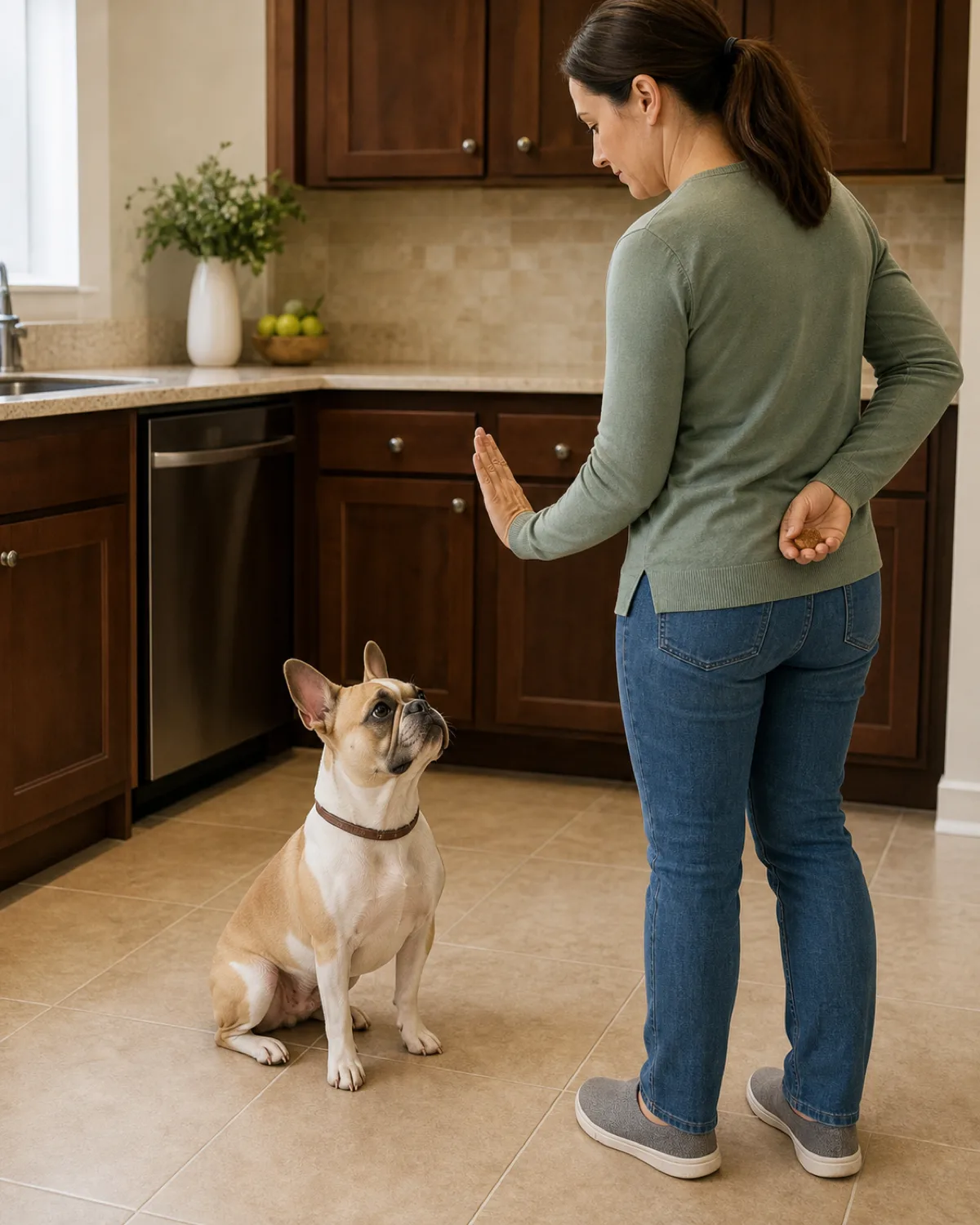
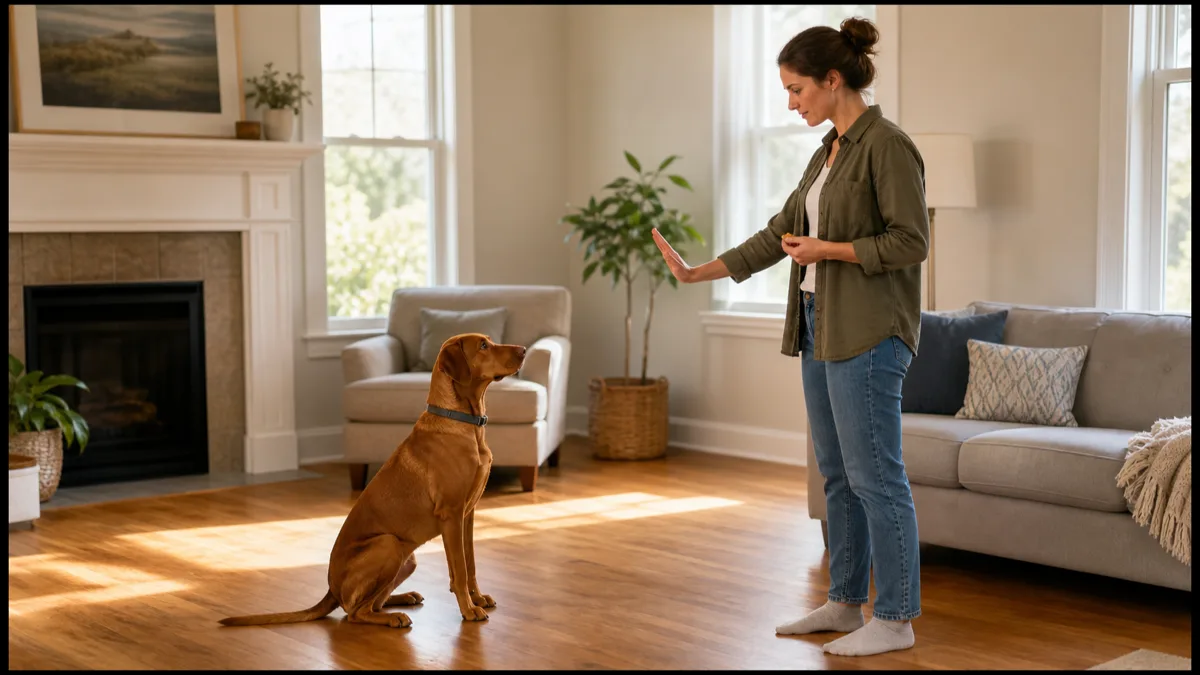
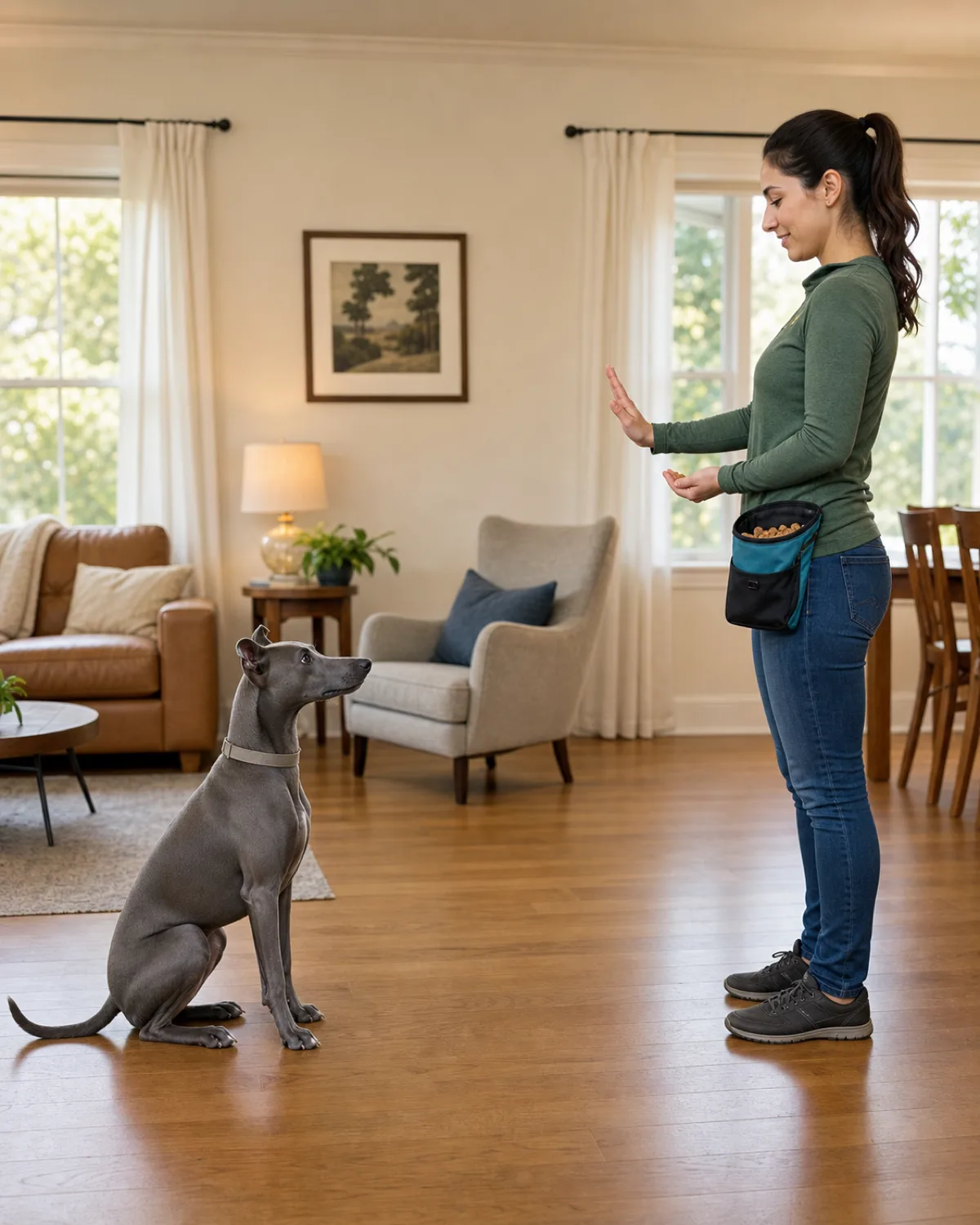
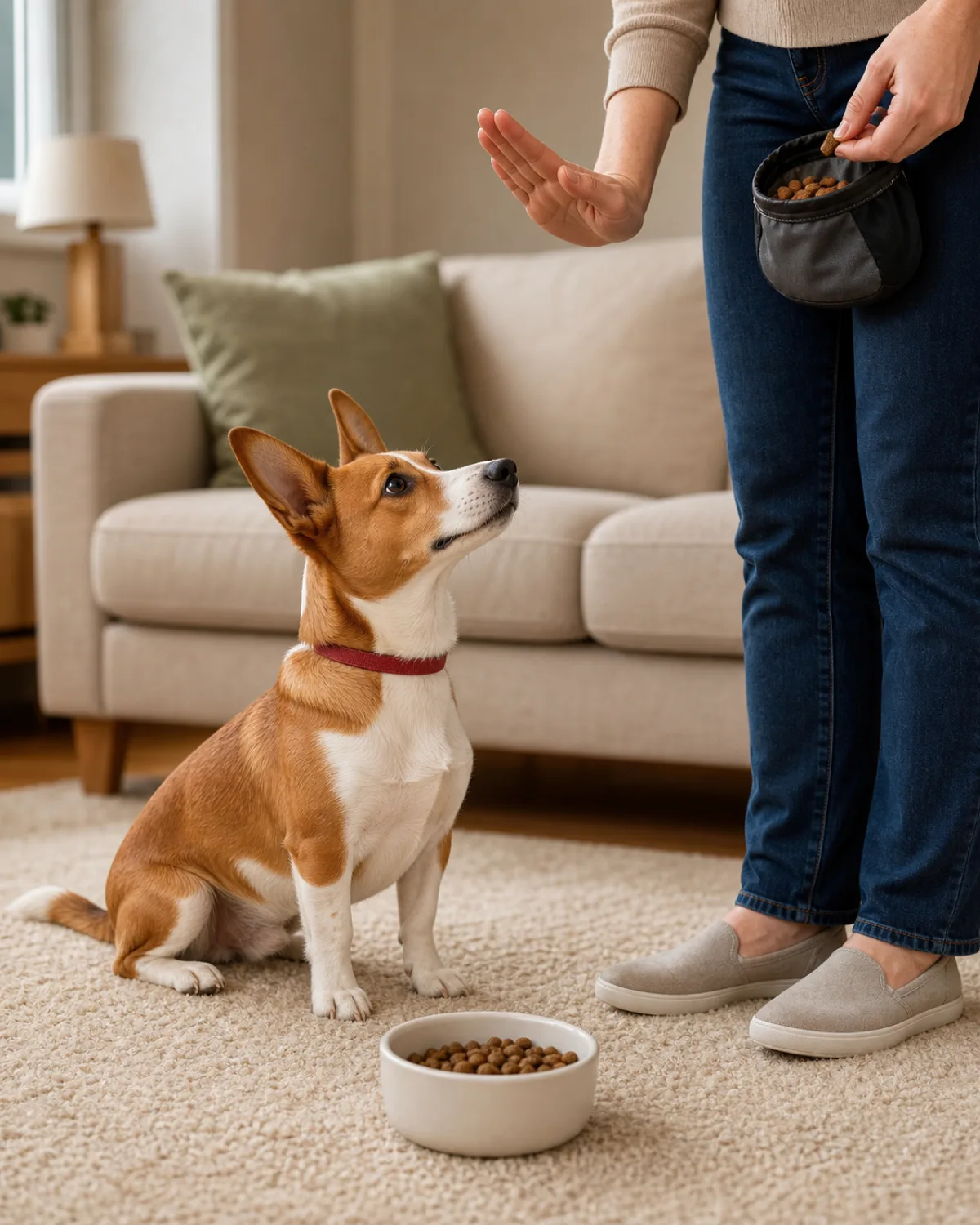
The first session is almost comically simple. Ask your dog to sit. Say stay while showing a palm-forward hand signal. Wait one second. Say your release word. Give a treat.
If the dog moves during that single second, do not correct it, do not say no, and do not push it back into position. Just reset calmly. Ask for sit again. Try once more. You are not testing your dog. You are teaching it that holding still for one second produces a reward.
When you get five successful one-second stays in a row, add another second. That is the entire first session. It may feel like nothing is happening, but you are building the foundational understanding that staying in place makes good things happen. Every complex stay you eventually ask for will rest on this one-second agreement.
Building Duration Without Rushing
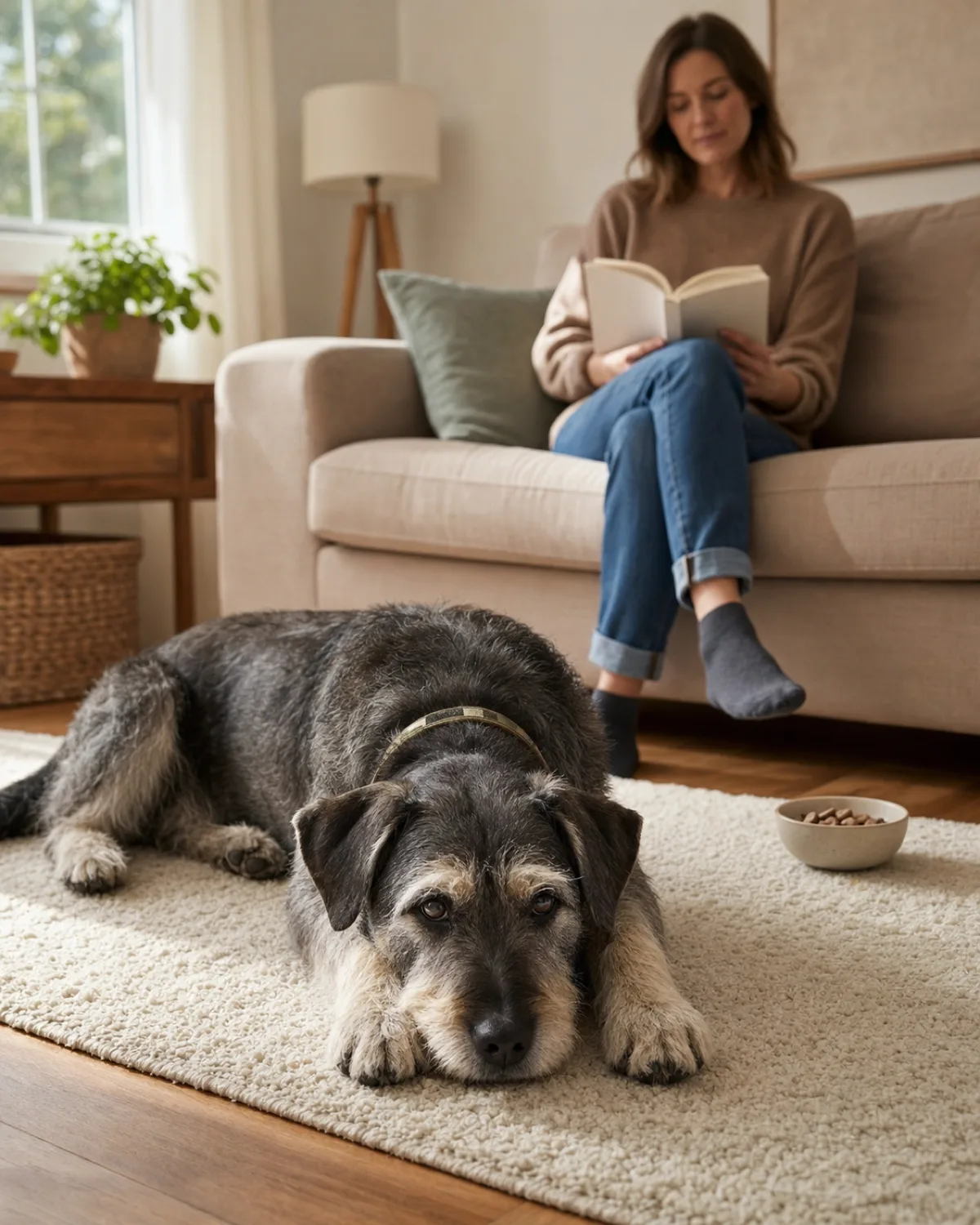
Progress from two seconds to five, then ten, then thirty. Do not increase in a straight line, because the dog will start predicting when the treat arrives and break stay right before the expected moment. Randomize the intervals. Five seconds, then three, then eight, then two, then twelve.
If the dog breaks stay twice in a row, you jumped ahead too fast. Go back to the last duration that was reliable and work there for a few more repetitions before trying to push forward again.
A consistent thirty-second stay in a quiet indoor environment with zero distractions means you are ready to start adding distance. Reaching that point might take several days or up to two weeks, and that pace is completely normal. Rushing through duration to get to the more exciting distance work is the single most common reason stay training stalls out. The foundation matters more than the speed.
Adding Distance One Step at a Time
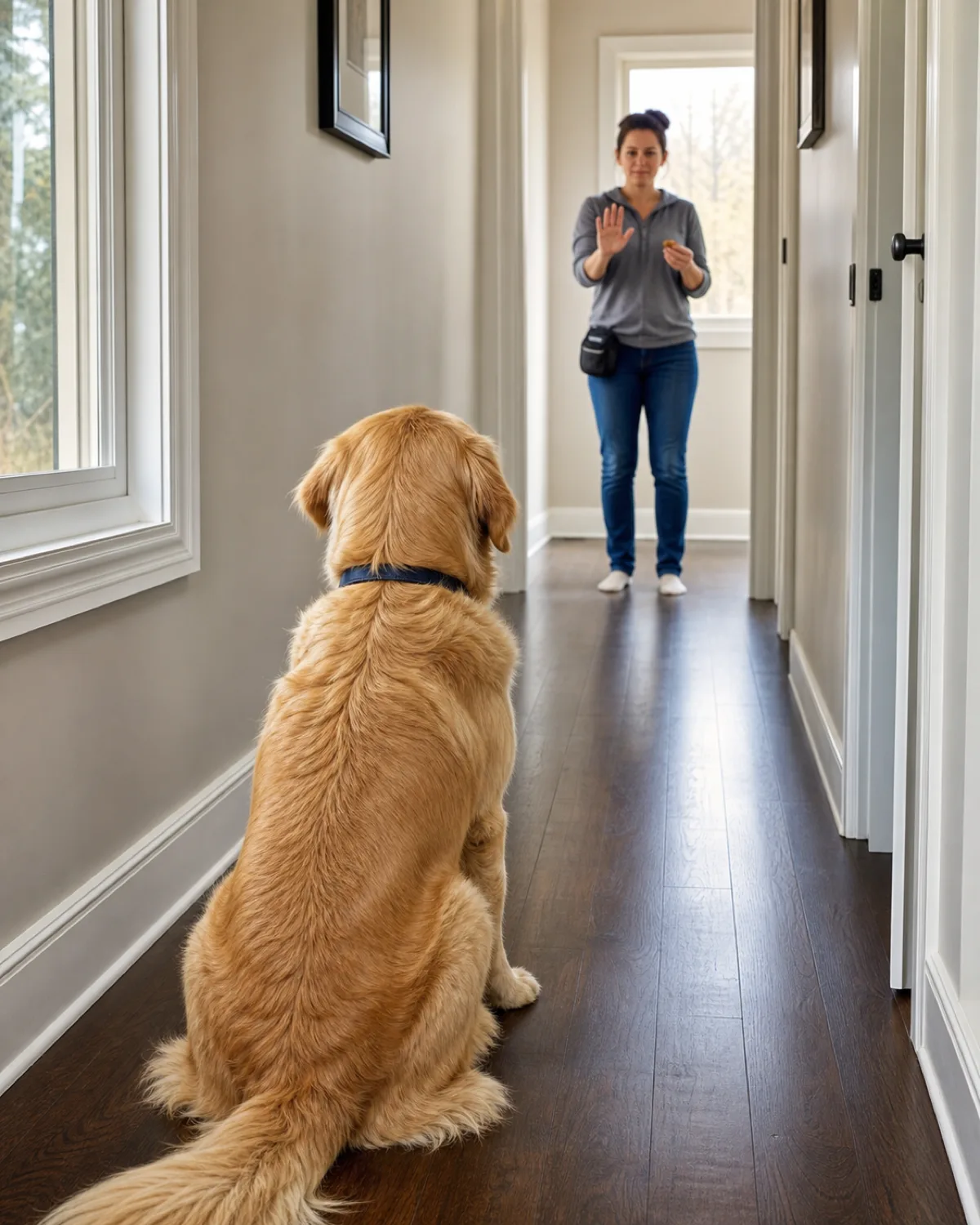
Reset duration back to five seconds. Take one step backward while your dog holds stay, wait five seconds, then walk back to your dog and give the treat.
This part is critical: always return to your dog to reward. Never call it to you during this phase, because calling it forward rewards the dog for moving and undermines the meaning of stay. The treat happens at the spot where the dog held position.
Once one step is solid, add two, then three. Walk to the doorway of the room. Walk briefly out of sight and come back immediately. You always go back to your dog to release and reward until stay is extremely reliable at distance. The dog needs to learn that you leaving does not mean stay is over. It means you are coming back.
Which describes your situation?
Your dog is struggling with stay
Where your dog breaks determines what to adjust.
DURATION ISSUE
Your dog cannot hold still for even three seconds. It stands up, shifts position, or walks toward you almost immediately.
Go back to one second. Increase treat value (real chicken or cheese instead of kibble). Make sure the dog is not overtired, overstimulated, or needing a bathroom break. Practice in the most boring room in your house.
DISTANCE OR DISTRACTION ISSUE
Your dog holds stay when you are close and the room is quiet, but breaks the moment you step away or something happens nearby.
You are adding variables too fast. Return to the last distance or distraction level that was reliable. Increase treat value. Only raise one variable at a time while keeping the others at their easiest setting.
Introducing Distractions Gradually
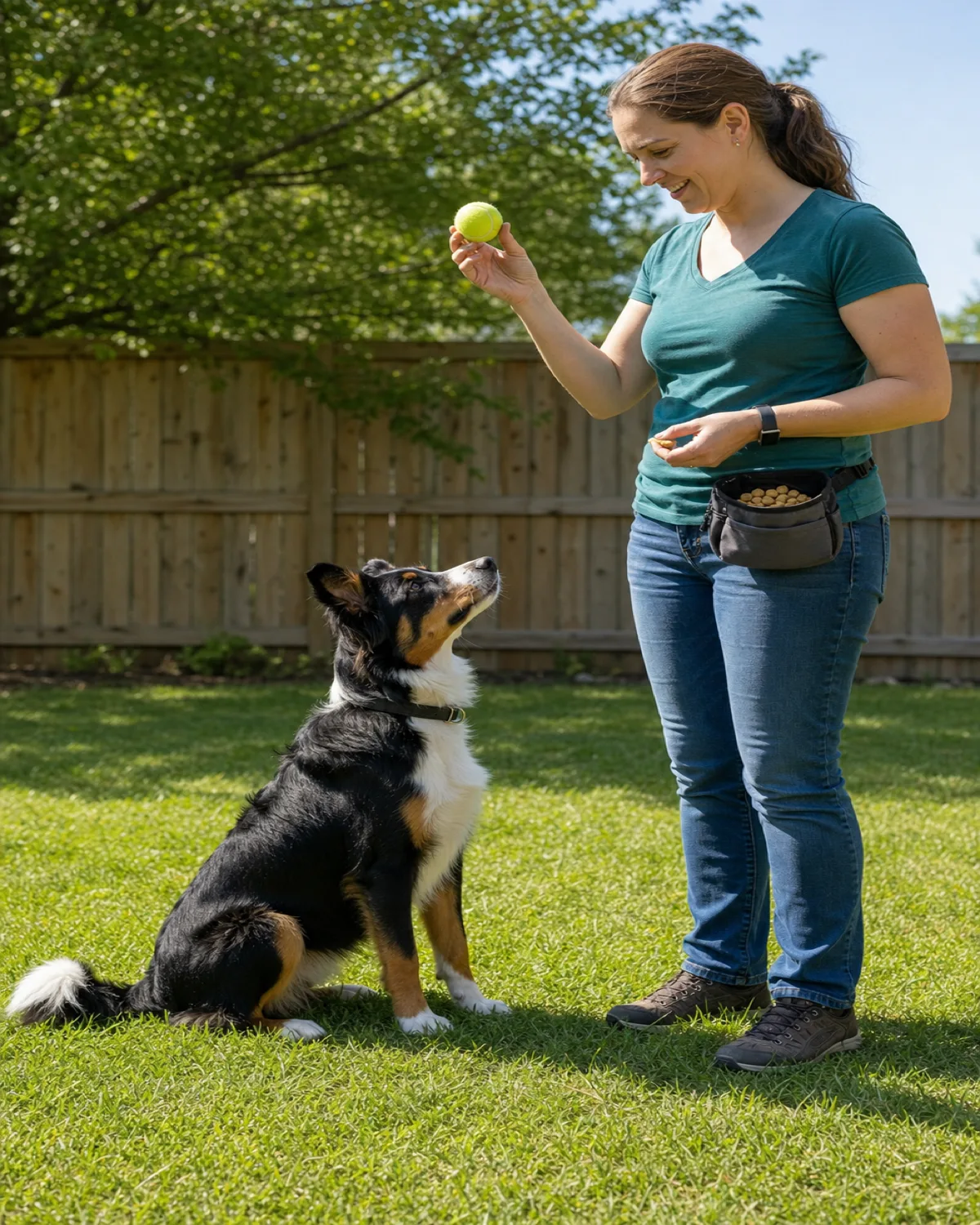
This is the last variable and the hardest one to build. Reset duration and distance back to easy. Begin with tiny distractions while standing close to your dog: bounce lightly in place, clap your hands once, shuffle your feet.
Then raise the stakes. Drop a treat on the floor six feet away and do not let the dog go get it. This exercise is genuinely difficult for most dogs and may take several sessions on its own. If the dog breaks, pick up the treat, reset, and try again with the treat farther away or with a shorter duration.
Once indoor micro-distractions are stable, progress to someone walking through the room while your dog holds stay. Then the doorbell ringing. Then a toy being tossed nearby. Move to the backyard where there are smells and ambient noise. Each new distraction resets duration and distance back to short and close, because the new challenge needs room to be the only hard thing.
Common Mistakes That Undo Your Progress
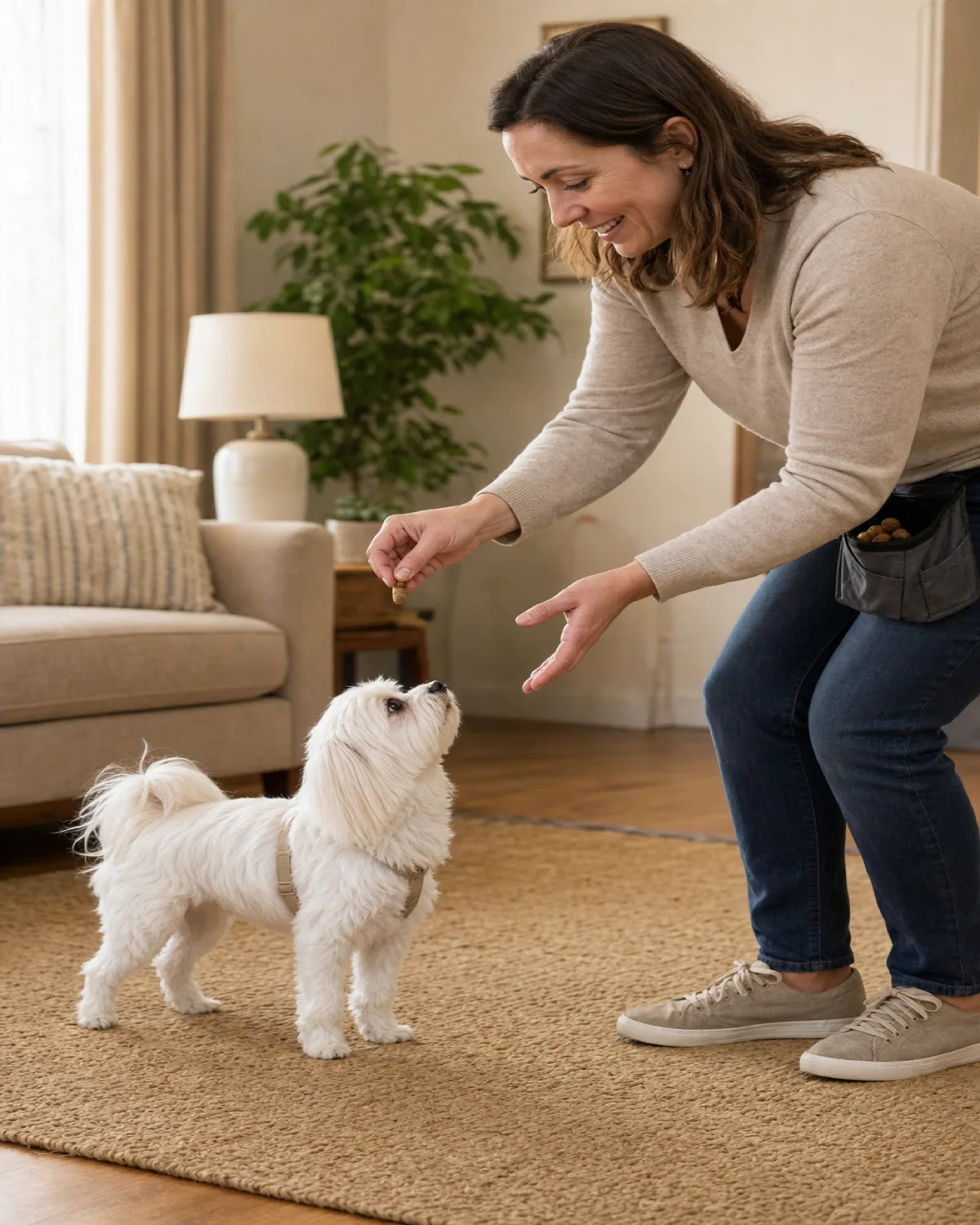
Five patterns stall or reverse stay training more than anything else.
Using stay as punishment. Telling your dog to stay there because it misbehaved teaches it that stay is something bad. The dog should associate stay with earning rewards, not with being in trouble.
Running sessions too long. Ten minutes of stay repetitions exhausts both of you. Keep sessions to three to five minutes and end on a success, even if that means ending earlier than you planned.
Always practicing from the same spot and distance. If you always stand in the same place when you say stay, the dog learns a location cue instead of the word itself. Vary your position, the room, and the starting distance.
Mixing come into stay before stay is solid. Stay and come are opposing commands. If stay is not reliable on its own, adding come teaches the dog that stay means wait until you call me, which ruins both.
Forgetting to release. Letting stay stretch indefinitely until the dog decides on its own when to move teaches it that breaking stay is acceptable. Every stay needs a clear endpoint.
Using Stay in Real Life
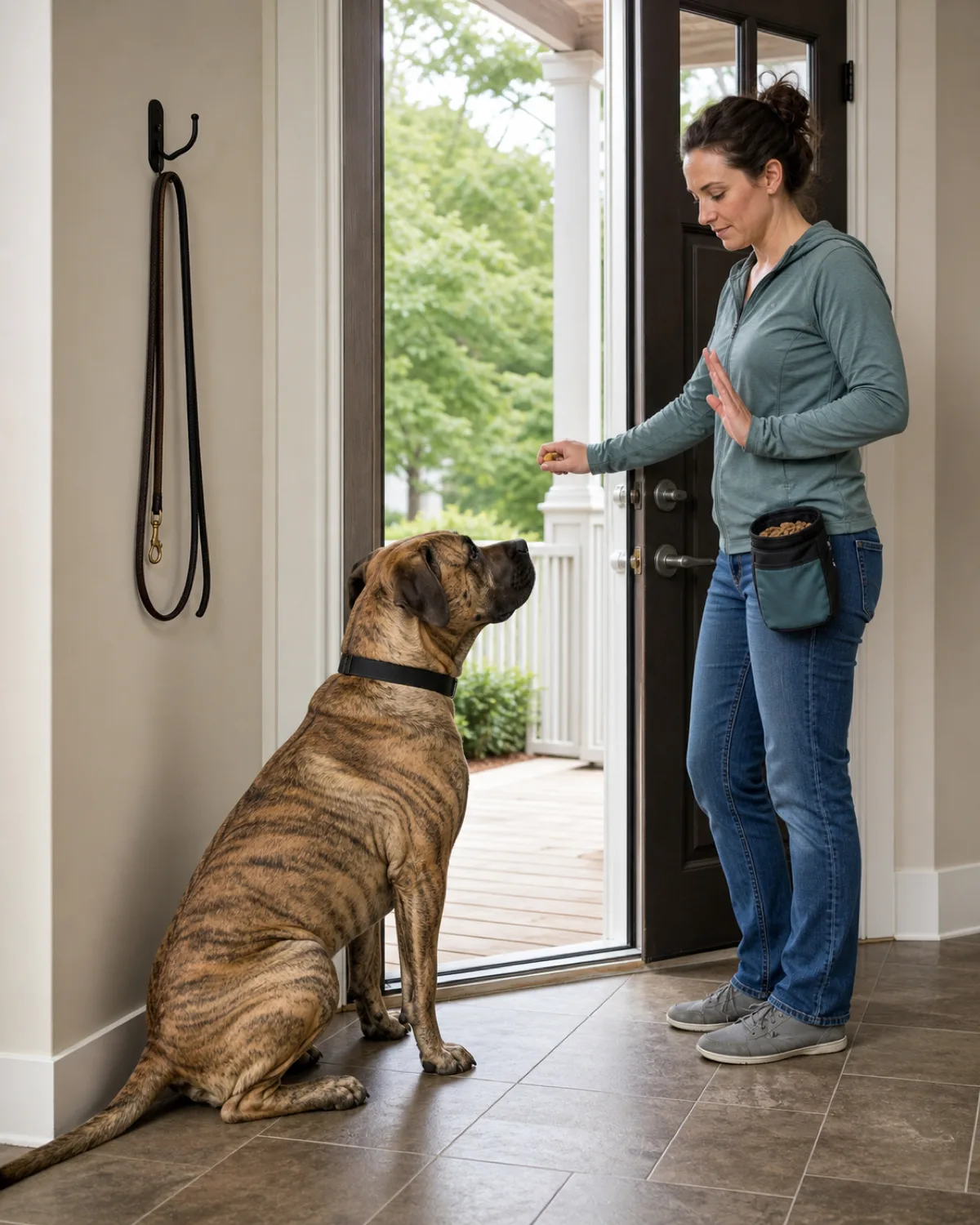
Stay is not a performance trick. It has daily utility that makes life with a dog fundamentally easier.
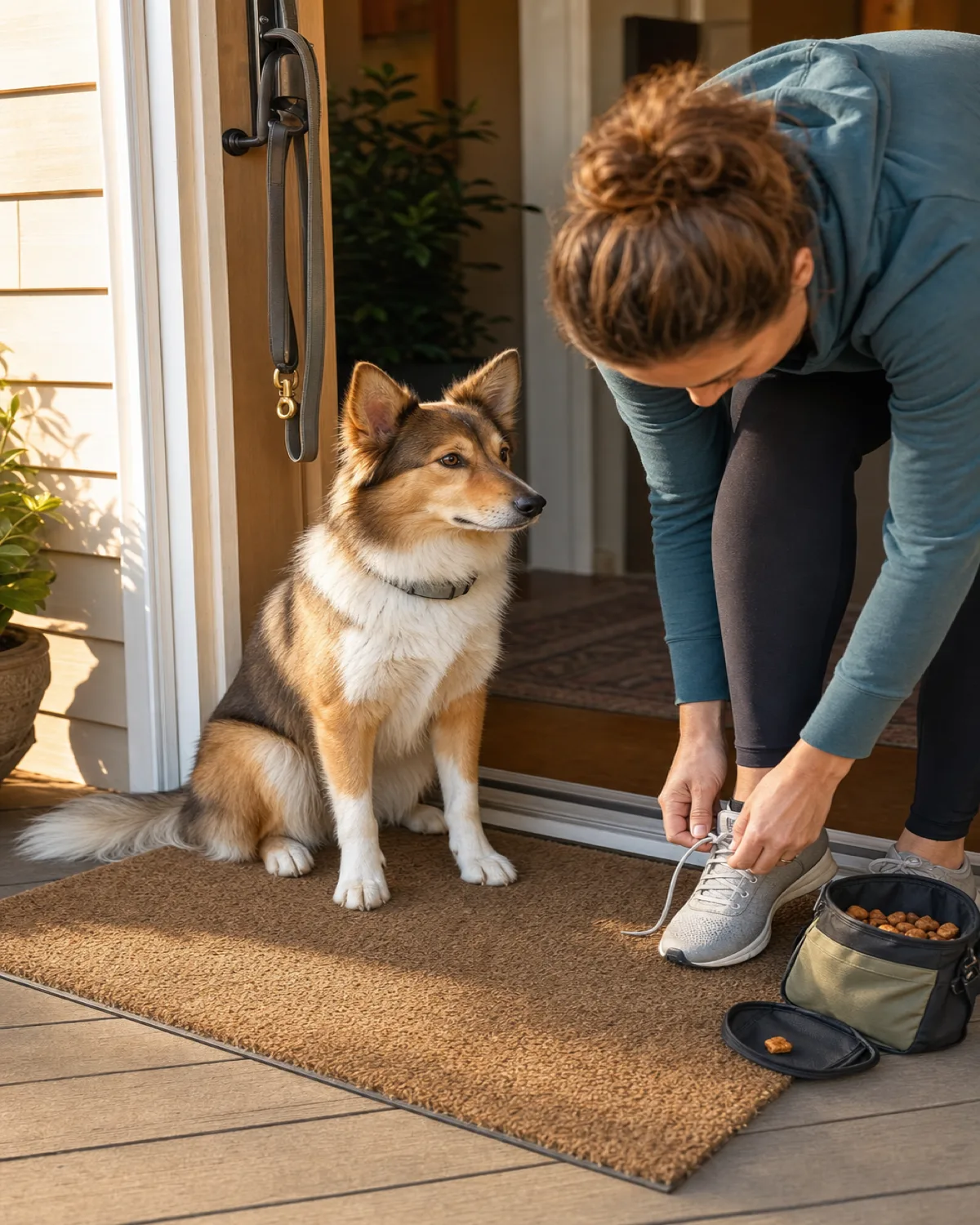
Stay at the front door before it opens prevents bolting. Stay before meals builds impulse control. Stay while you tie your shoes eliminates jumping.
Stay on the vet exam table makes the visit possible for both the dog and the veterinarian. Stay during socialization encounters lets your dog observe a new person or dog from a calm, fixed distance instead of lunging forward.
Each of these real-world applications is itself a distraction exercise. The first time you ask for stay at the front door with a delivery person standing outside, treat it like a new distraction training session: short duration, high-value reward, low expectations. Stay is only truly learned when it works outside your training sessions and inside your actual life.
Ground rules
Stay training non-negotiables
Principles that keep progress moving forward without setbacks.
ALWAYS
- End every stay with a clear release word
- Increase only one variable at a time
- Go back a step after two consecutive failures
- Return to your dog to give the treat
- Keep training sessions to three to five minutes
- Randomize duration so the dog cannot predict the reward
- Practice in multiple locations to generalize the command
NEVER
- Correct the dog mid-stay (just reset quietly if it moves)
- Use stay as a punishment
- Add two variables at the same time
- Mix come into stay before stay is solid
- Let stay run indefinitely without releasing
- Use physical force or aversive tools to hold the dog in place
How Stay and Recall Work Together
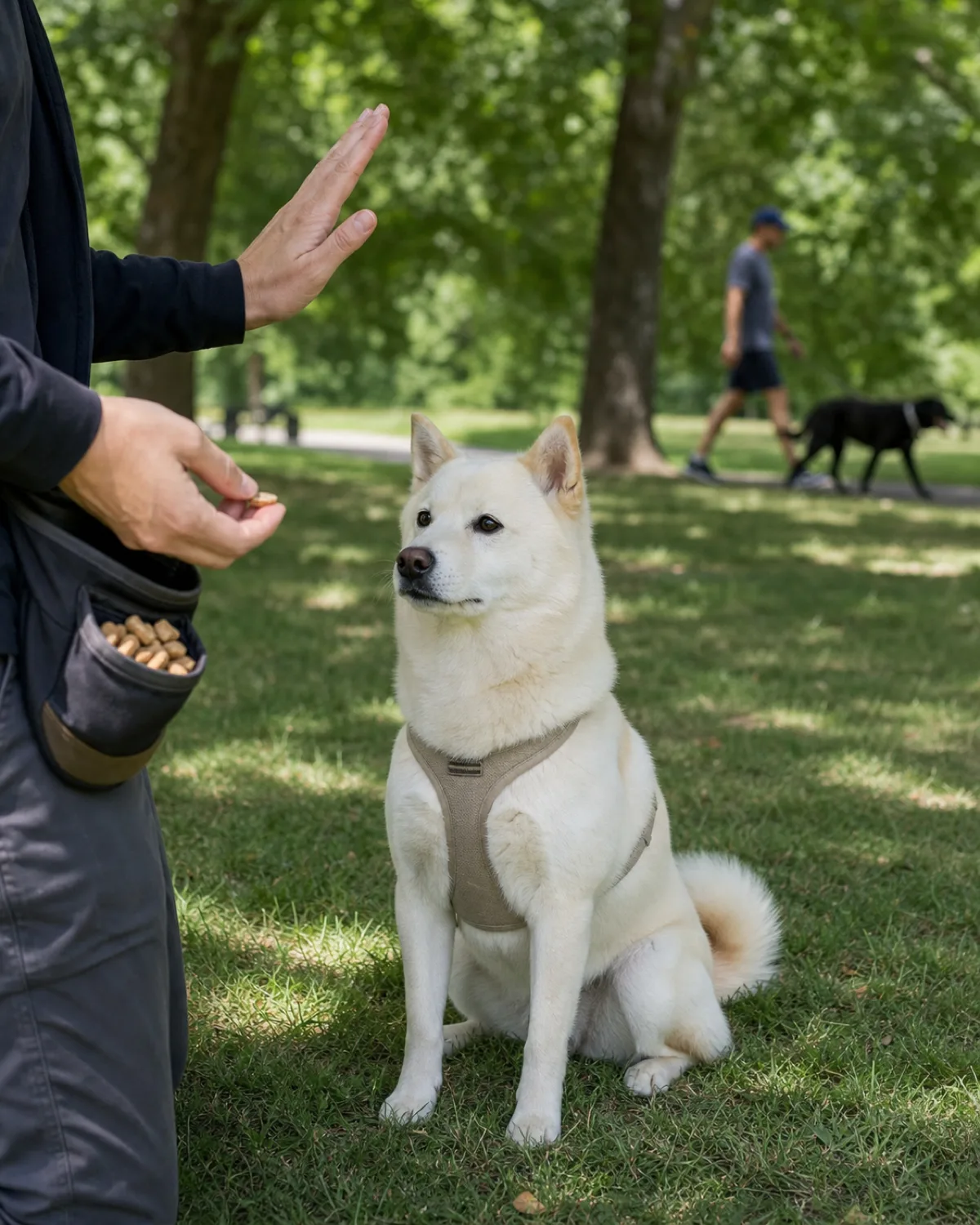
Stay and recall are a matched pair. Stay holds the dog in position. Come brings it back to you. But the training sequence matters, and getting the order wrong can undermine both commands.
Stay needs to be solid at a minimum of thirty seconds and ten paces of distance before you start using come as a remote release. If you add come too early, the dog learns that stay means wait until you call me. It will then start breaking stay preemptively every time it sees you reach a certain distance, because it has learned that the recall is coming.
The progression is non-negotiable. Build stay to reliability first. Then, only when stay is rock solid, start saying come from a distance instead of walking back. The dog should understand both commands independently before you chain them together. Stay means hold until released. Come means move toward me now. Neither should depend on the other during the learning phase.
Save for training sessions
Your Stay Training Progression Checklist
- Choose a release word (okay, free, or break) and make sure the whole household uses it
- One-second stay: five consecutive successes before adding time
- Duration to 30 seconds in a quiet room with zero distractions
- Distance: one step back with short duration, stable before adding steps
- Distance to 10 paces with 30-second hold
- Micro-distractions: hand clap, foot shuffle, dropped treat (short duration, close distance)
- Medium distractions: someone walking by, doorbell ringing
- Real-world: stay at the front door before it opens
- Real-world: stay before meals
- Real-world: stay in an outdoor environment
- Stay plus recall: add come from distance only after stay is fully reliable
- Generalize: practice in at least three different locations
The Patience Payoff
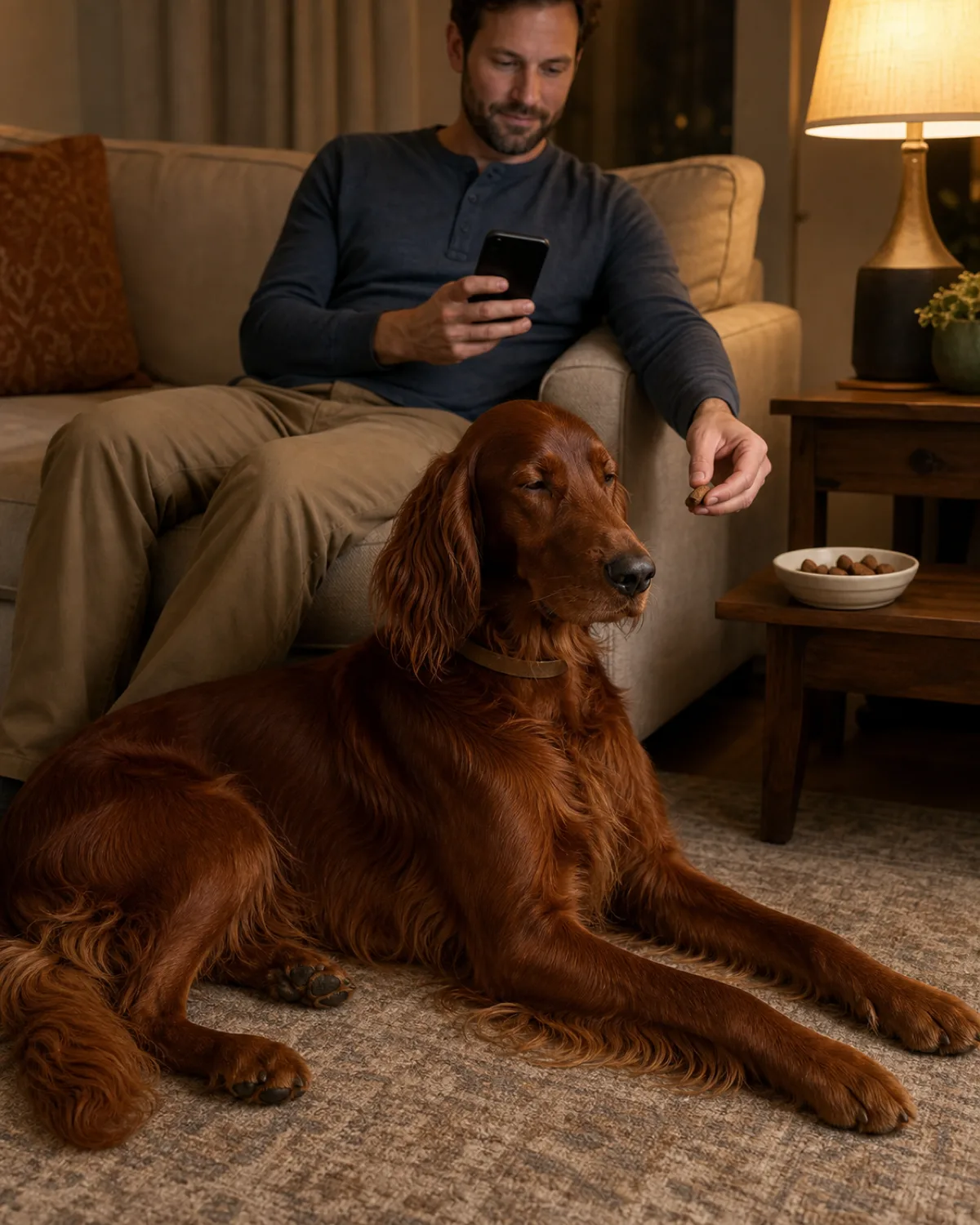
Stay is one of the slowest foundational commands to teach well. Sit can be learned in five minutes with a treat lure. Come can be bootstrapped with enthusiasm and high-value food. But stay asks your dog to do the single most unnatural thing: nothing. No chasing, no following, no investigating. Just hold still.
There is no shortcut through that learning curve. You cannot rush duration, skip distance, or ignore distractions and expect the command to hold when it matters.
The good news is that once stay is genuinely reliable, it changes every interaction you have with your dog. You stop blocking doorways with your body. You stop chasing your dog around the kitchen. You stop bracing for the lunge when another dog walks by.
You say one word, your dog holds position, and you handle whatever needs handling. That is worth every boring one-second repetition it took to get there.

Jess Calloway
Dog mom to three very different dogs and the editor behind Pawliqa. I write practical, experience-tested guides for dog owners who want clear answers without the fluff. Not a veterinarian — always check with yours for medical decisions.