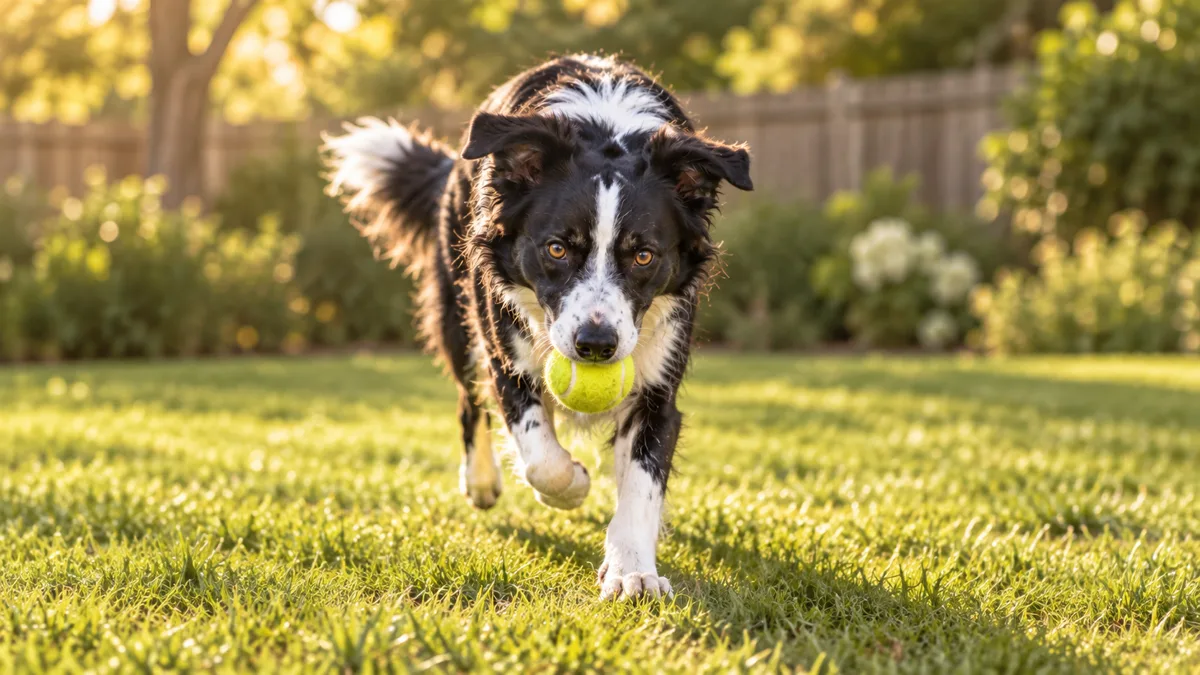
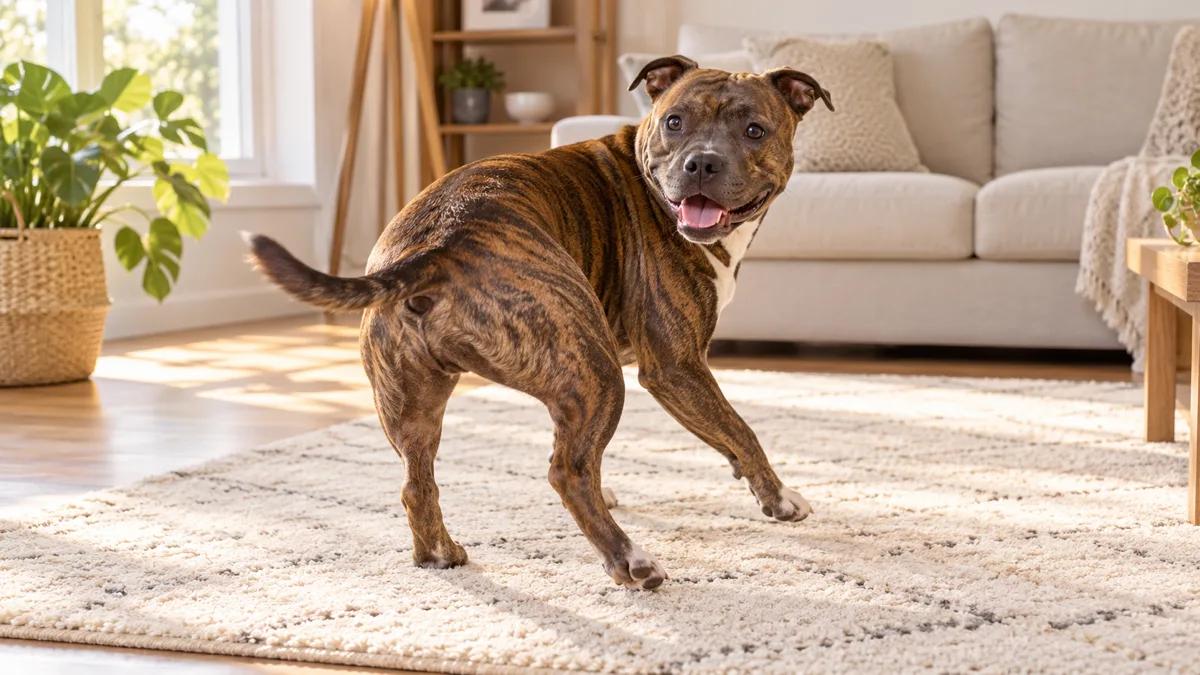
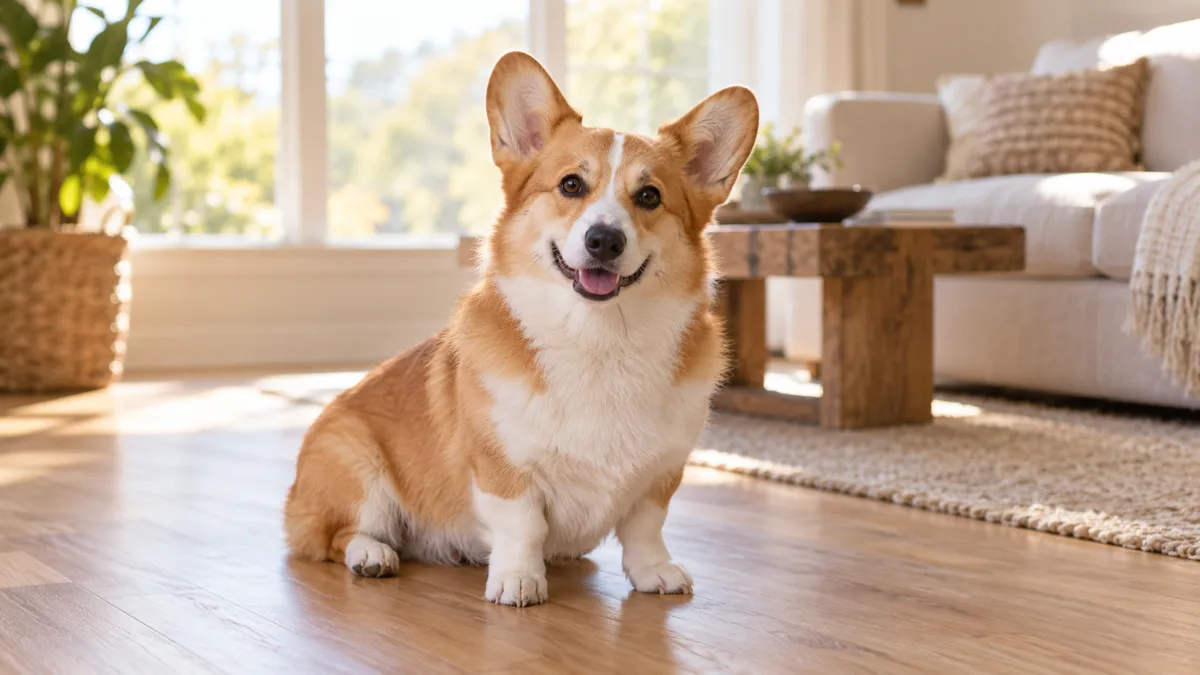
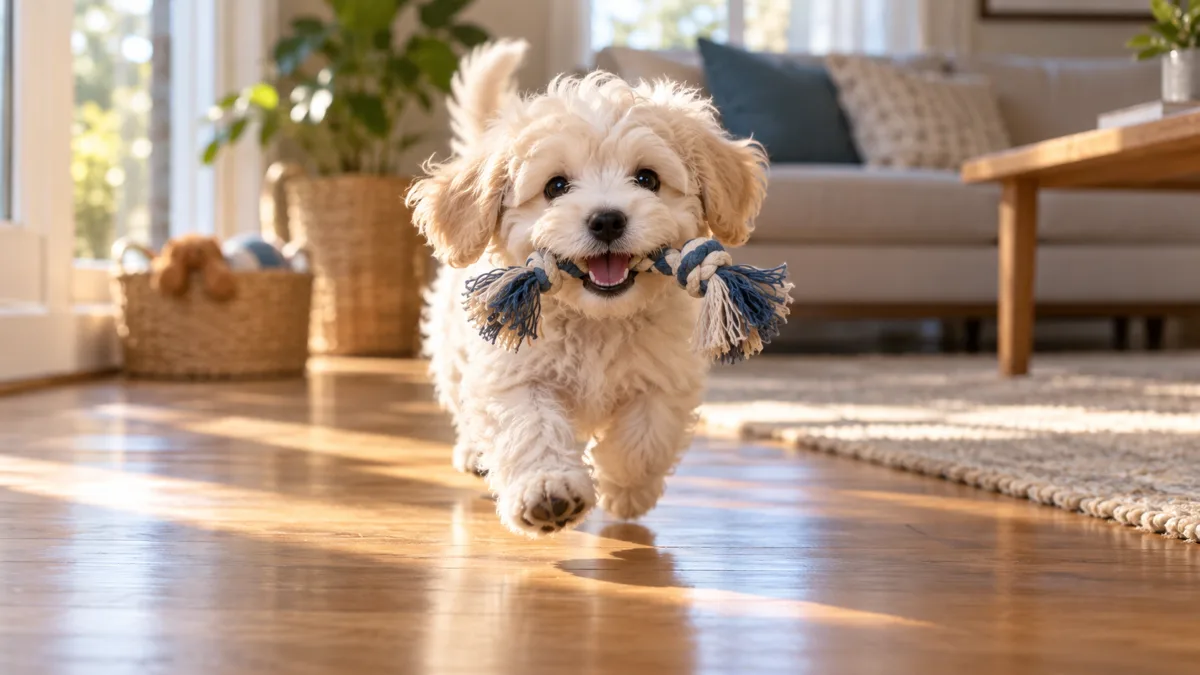
Fetch looks effortless at the park — throw, sprint, return, repeat. Then you try it with your own dog and the ball just sits in the grass while your dog stares at you.
Most people miss that fetch is actually four behaviors chained together: chase, pick up, return, and drop. Skip any one and you get a dog who sprints out but never comes back.
These fourteen steps build each link in order, from floor rolls to full-distance outdoor retrieves. No special equipment, just treats and a quiet room to start.
In This Guide
14 Steps to Teach Your Dog to Fetch
Fetch is a chain of four skills — chase, pick up, return, and drop. These fourteen steps build each link in order so the whole sequence clicks. Start indoors with short rolls and work up to full outdoor throws.
The toy matters more than you think. If your dog has zero interest in what you throw, no amount of technique will get a retrieve started.
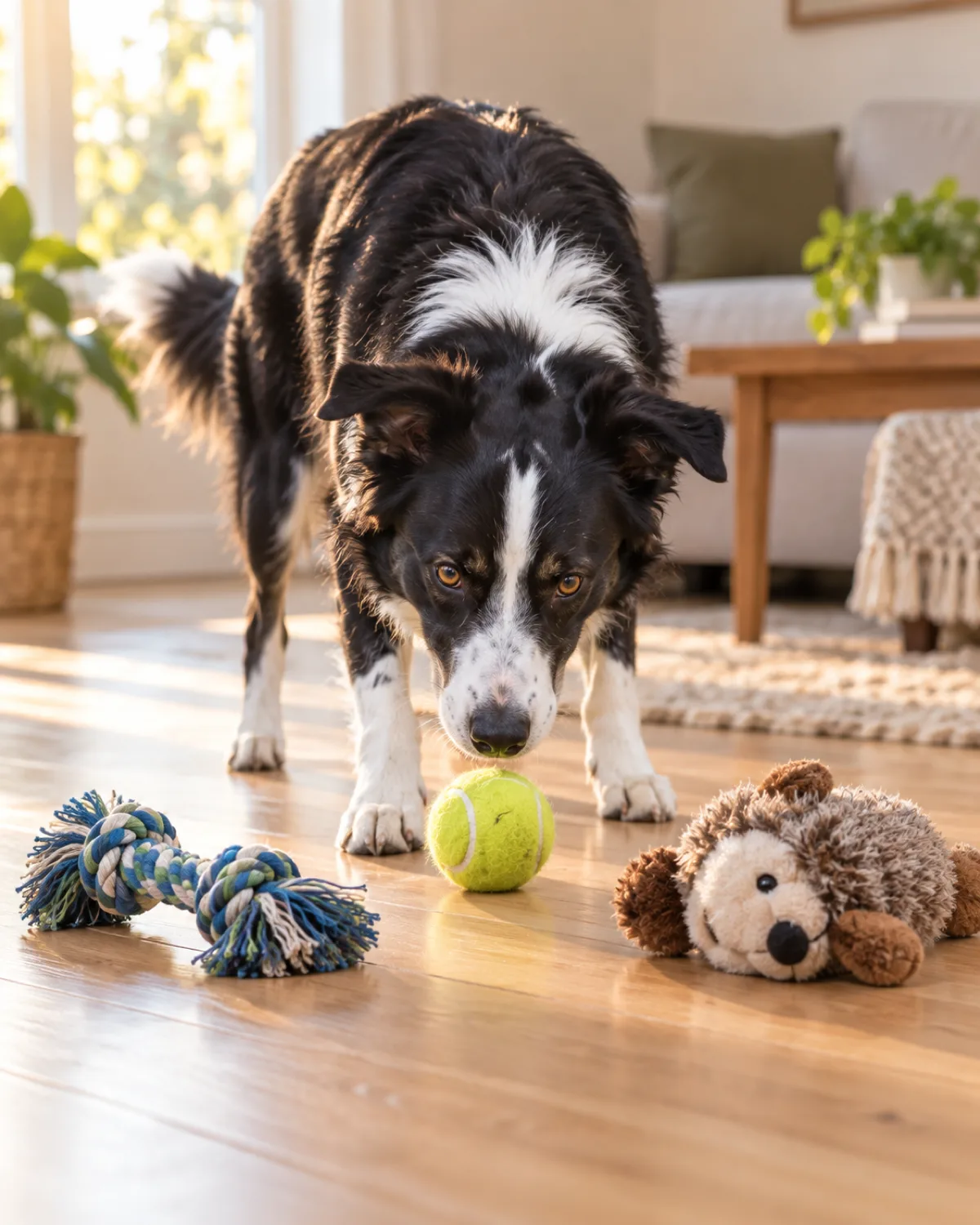
Grab three or four toys your dog already plays with on their own — a tennis ball, a rope tug, a squeaky plush, whatever they carry around the house. Set them on the floor and see which one gets the most nose time. That is your fetch toy.
Tennis balls work for most dogs because they bounce unpredictably, which triggers the chase instinct
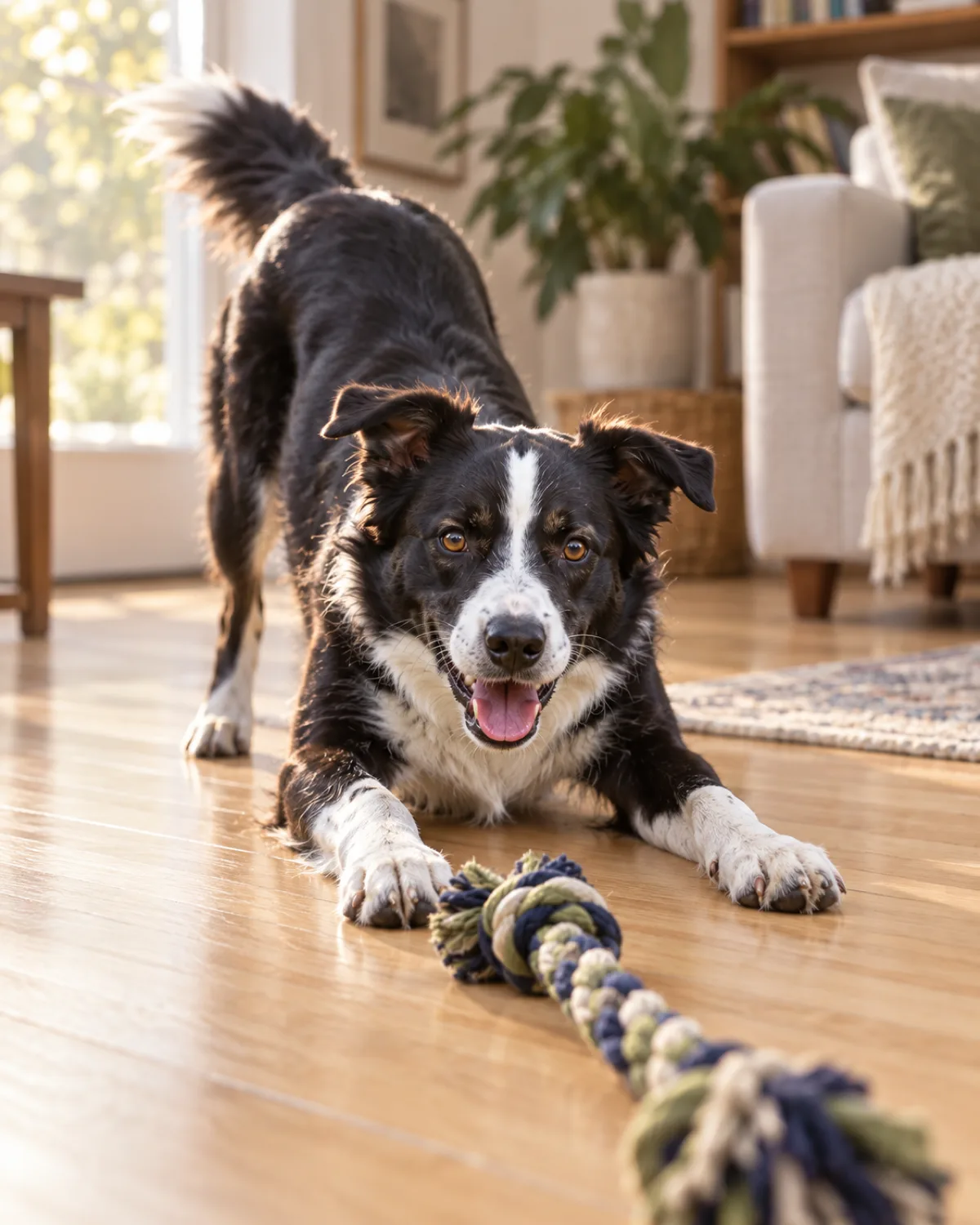
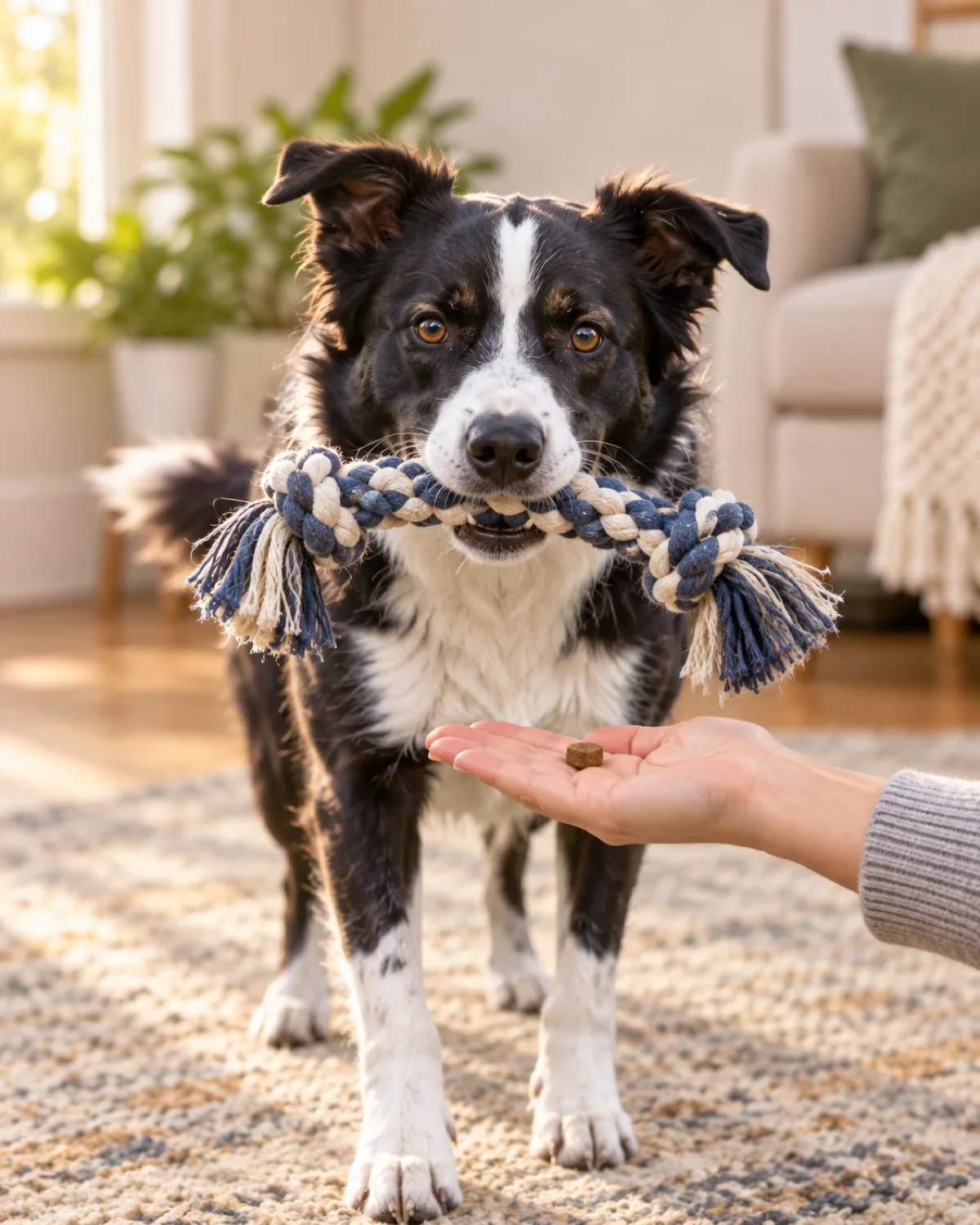
Rope toys are good for dogs who prefer to grab and tug rather than chase
Squeaky toys can spark interest in dogs who otherwise ignore thrown objects
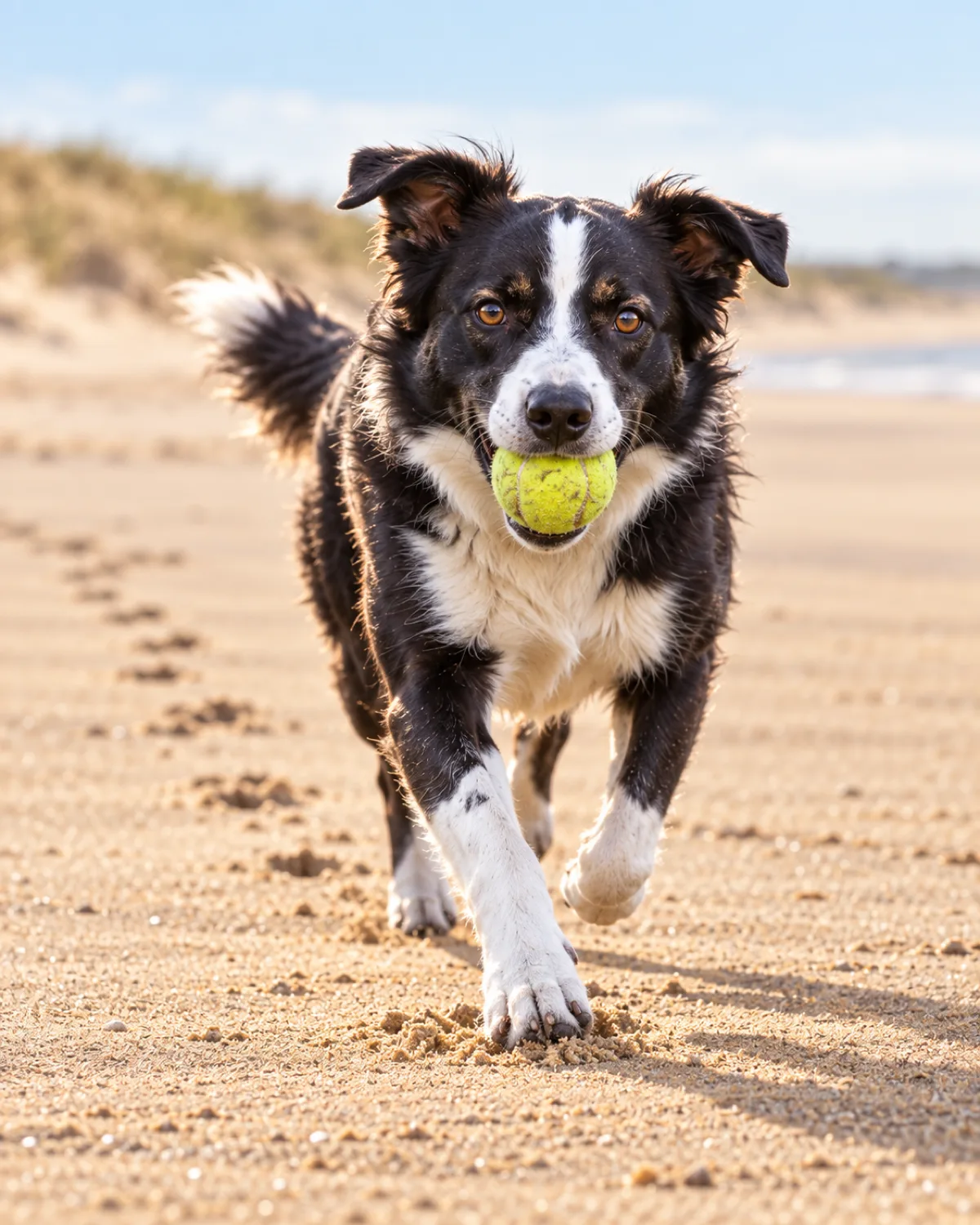
Soft plush toys suit gentle-mouthed dogs who carry things around but drop hard balls
Skip the fancy fetch-specific toys for now. The goal at this stage is pure interest, and interest comes from familiarity. Once your dog reliably fetches with their favorite, you can introduce new toys later.
2. Build Excitement by Playing Keep-Away on the Floor
Before you throw anything, you need your dog actively wanting to chase. Some dogs come pre-loaded with chase drive. Others need a little help waking it up.
Sit on the floor with the toy and drag it away from your dog in short, jerky movements. Make it act like prey — quick dashes, sudden stops, direction changes. When your dog lunges for it, let them grab it and have a short tug session as the reward.
The key here is that the toy moves away from the dog, not toward them. Moving toward a dog triggers avoidance. Moving away triggers pursuit. This is why rolling a ball at your dog's face gets a confused stare, but rolling it past them gets a chase.
Do this for two or three minutes until your dog is actively pouncing. If your dog ignores the toy on the floor, try squeaking it or tapping it on the ground to add sound. Some dogs need the audio cue to notice something worth chasing.
3. Teach the Chase by Rolling the Toy a Few Feet
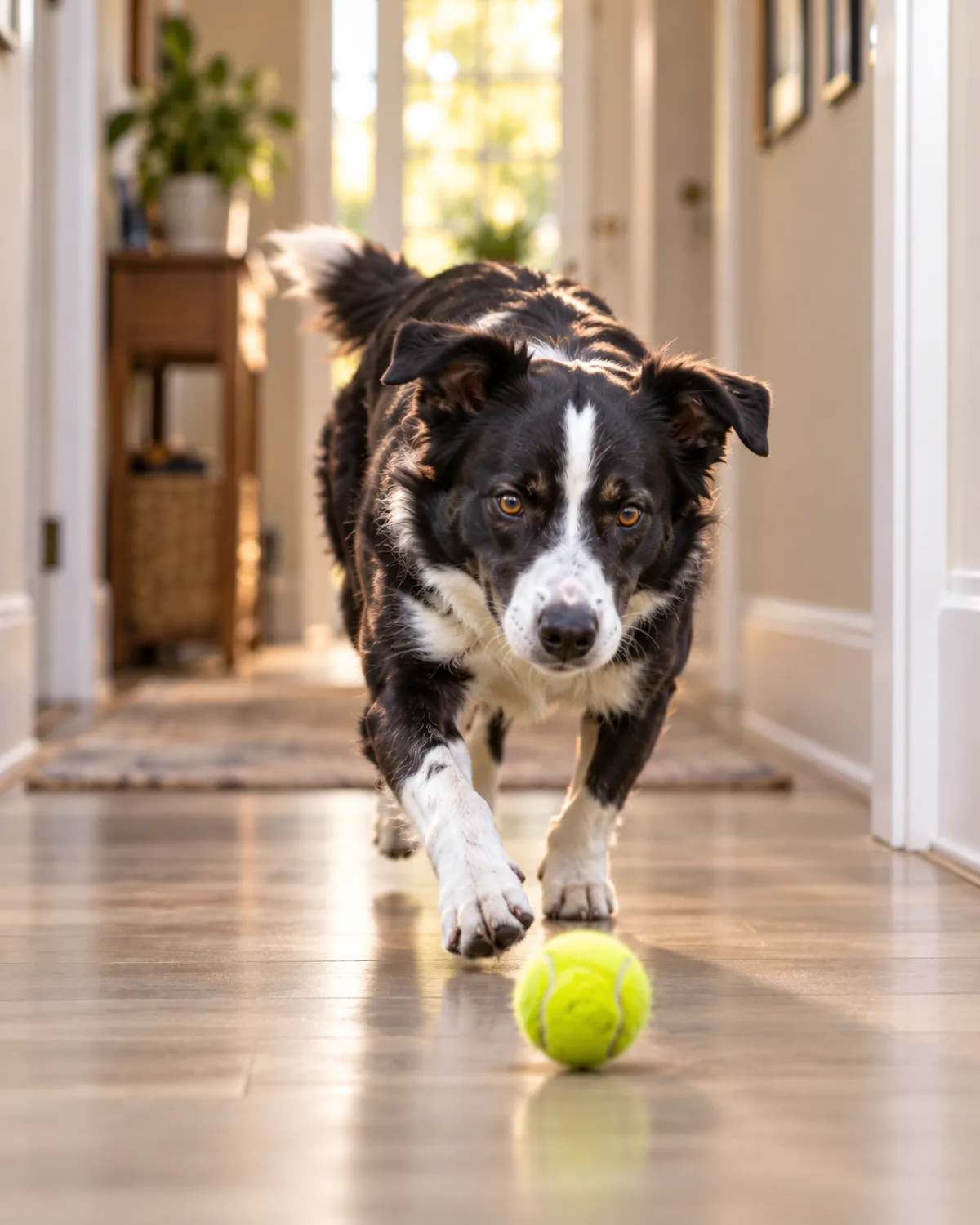
Now you add distance, but just a little. Roll the ball two or three feet across the floor so your dog can see it move and reach it in one or two strides.
The roll is important. Throwing high forces your dog to track an arc, judge the landing, and then find the ball on the ground — three skills stacked at once. Rolling keeps it simple: the ball moves along the floor and the dog follows.
Roll in a hallway if possible — the walls create natural boundaries that keep your dog moving in a straight line
Release the ball low from your hand, palm down, so it stays on the ground
Cheer the moment your dog moves toward it, even if they do not reach it yet
If your dog watches the ball roll and does not move, you went too far too fast. Go back to Step 2 and build more excitement with the keep-away game on the floor. The chase instinct needs to be hot before you add any distance.
4. Reward the Pickup With Immediate Praise
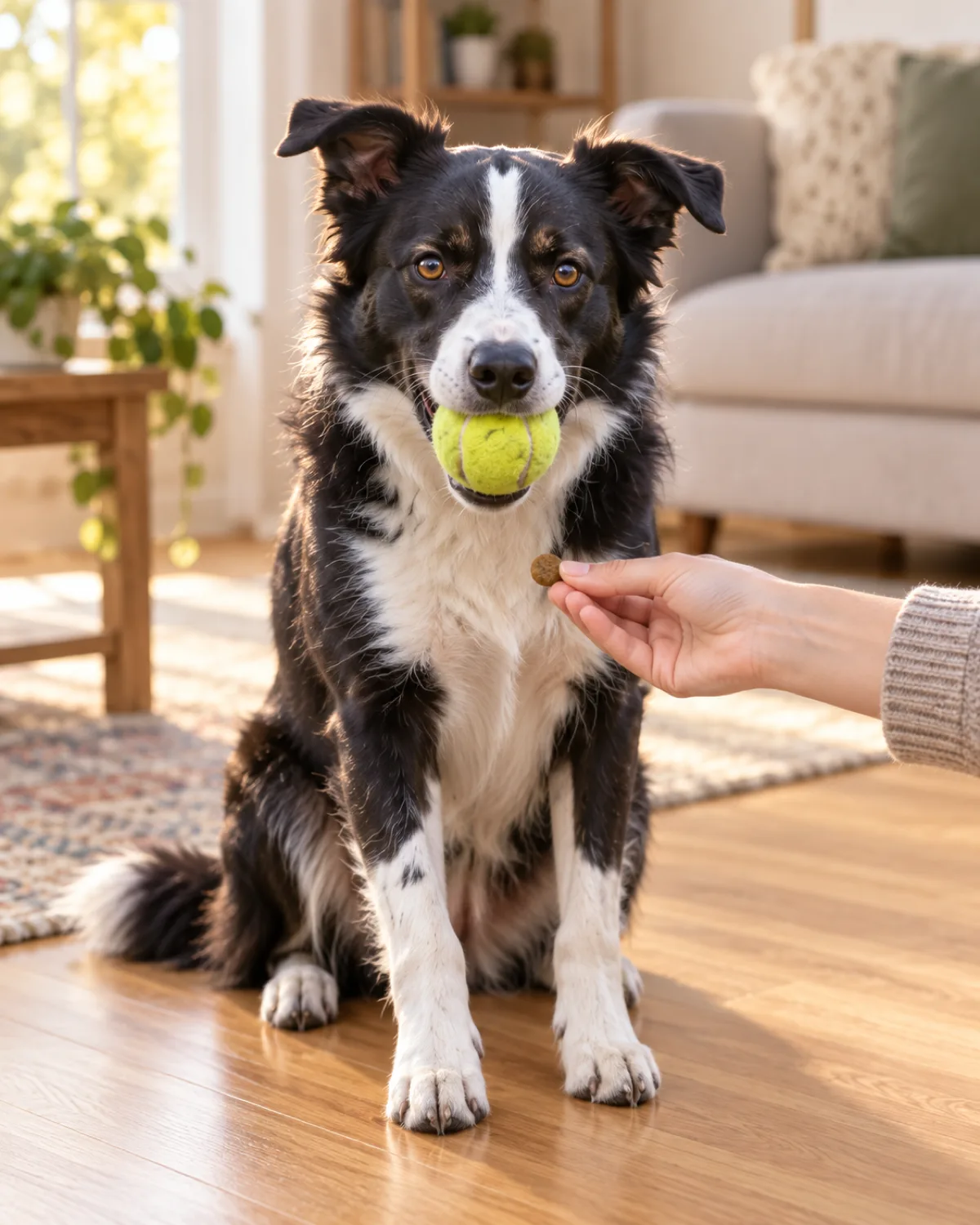
The second your dog touches the toy with their mouth — even if they do not fully pick it up — mark it. A clicker, a sharp "yes," whatever your marker word is. Then hand over a treat.
You are reinforcing the grab, not the return. That comes later. Right now you want your dog to think: "When I put my mouth on that thing, good stuff happens."
Common mistakes at this stage:
Waiting for a full pickup before marking — you miss the early attempts and your dog gives up
Chasing your dog to deliver the treat — this teaches them that grabbing the toy starts a game of keep-away with you
Rewarding the chase alone — your dog learns to run out but never touch the ball
Stay in place, mark the mouth contact, and let your dog come to you for the treat. The treat delivery position matters: always reward near your body so your dog starts associating "bring it close to the human" with good things.
5. Introduce the Drop Cue Before You Need It
This is the step most people skip, and it is why most fetch attempts stall. If your dog does not know how to let go of the toy on cue, you end up in a tug-of-war every single time they bring it back.
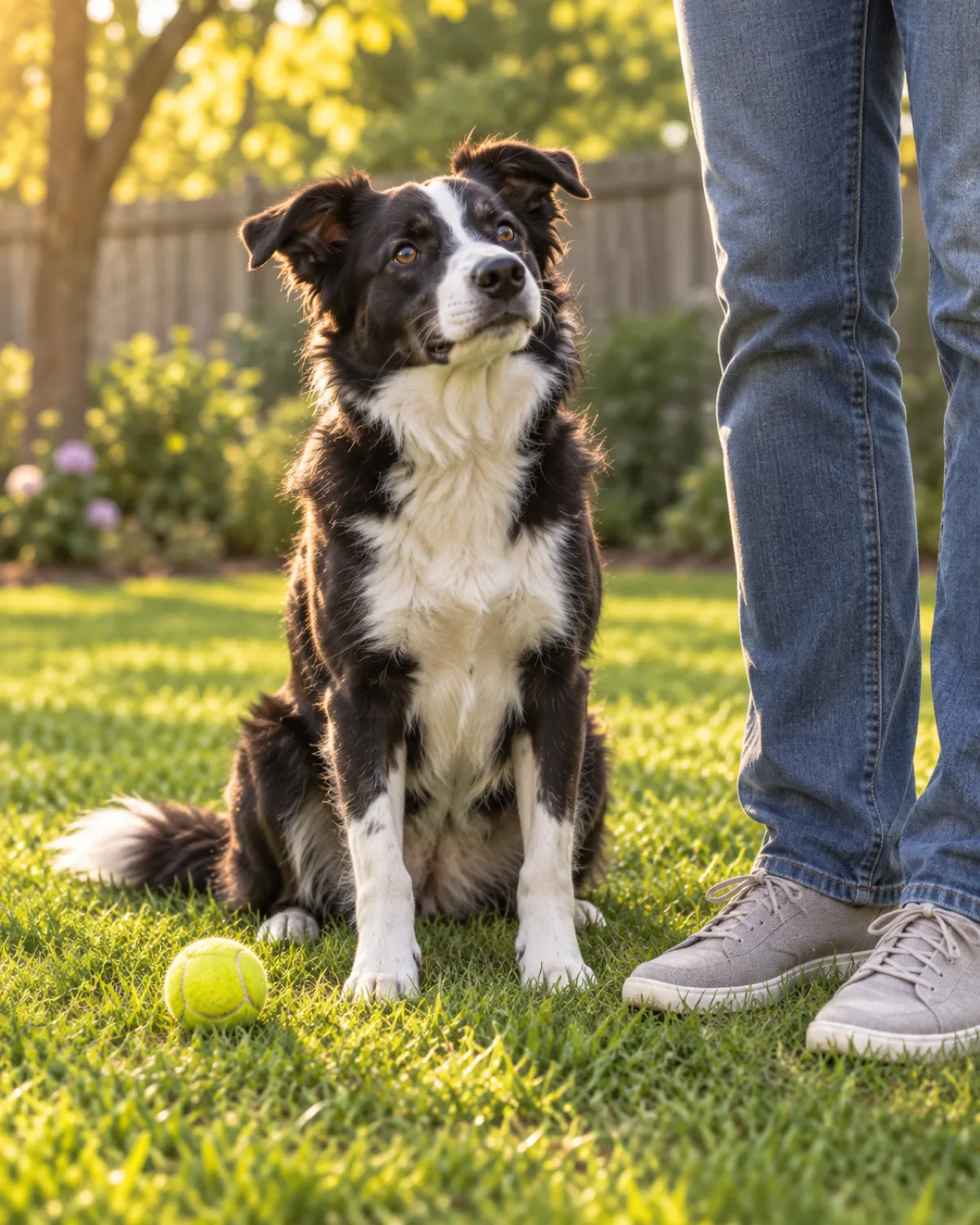
Teach "drop it" as a standalone skill, completely separate from fetch. The method is simple: hold a high-value treat right at your dog's nose while they have a toy in their mouth. The second they open their mouth and the toy falls, say "drop it" and give the treat.
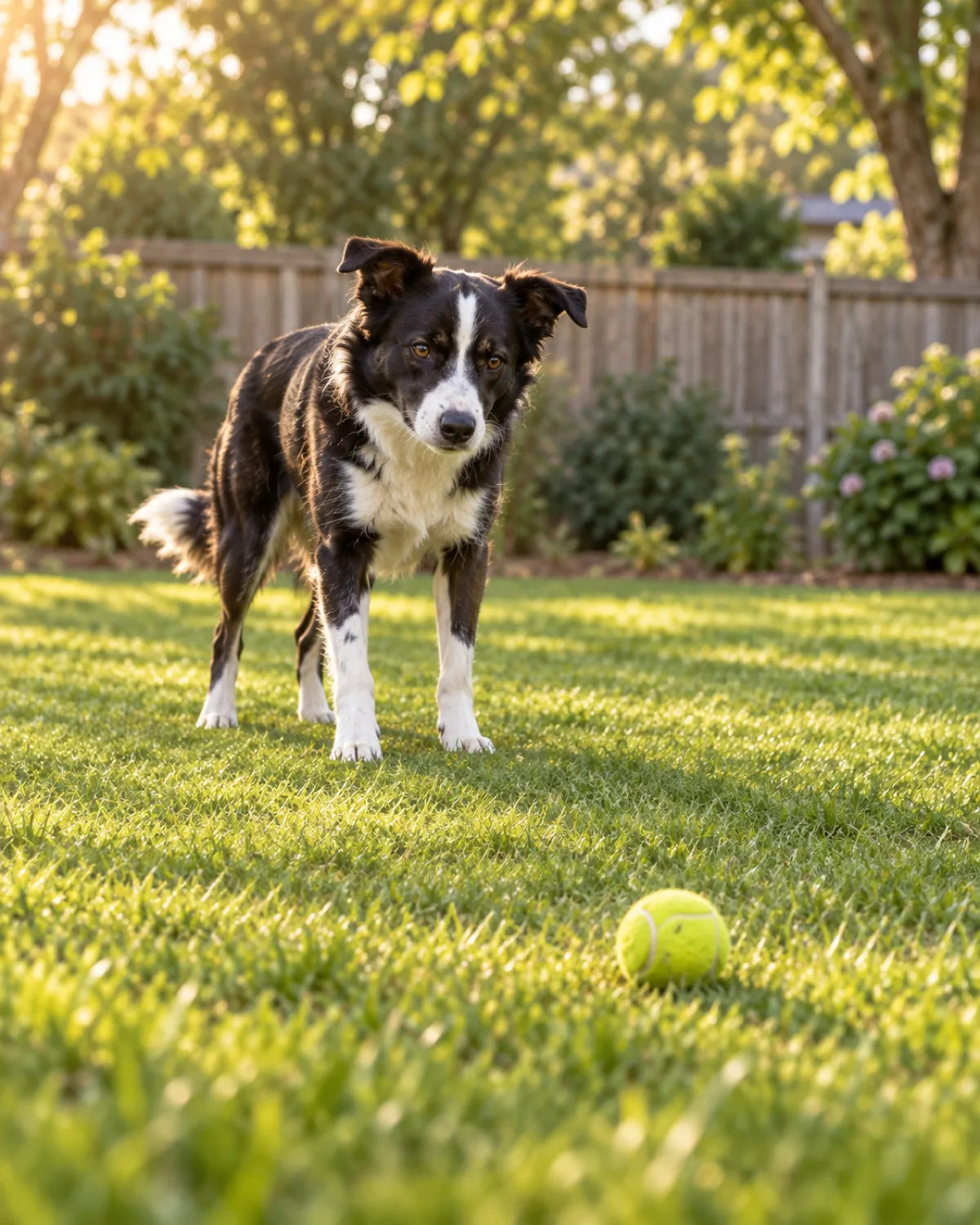
Your dog has the toy in their mouth — what happens next determines the whole game
Where should you focus first?
Most fetch problems trace back to one weak link. Find your dog below and start there.
Your dog chases but won't pick upGo back to Step 4 and reward any mouth contact. Use a toy they already carry around the house on their own.
Your dog grabs but won't come backStay here on Step 5 for the drop cue, then jump to Step 7 for the two-toy trick that makes returning worth it.
Your dog returns but won't dropFocus entirely on this step. Practice the trade method 10 times in a row until "drop it" is automatic, then return to fetch.
Your dog already does all fourSkip to Step 9 for outdoor distance work and Step 10 for fading treats so the next throw becomes the reward.
Practice the trade at least ten times in a row across two or three sessions before you add it back into fetch. You want the drop to be automatic, not a negotiation.
Use a treat that outranks the toy — small bits of chicken, cheese, or whatever makes your dog drool
Hold the treat close to their nose, not high in the air — you want them to drop the toy, not jump for the treat
Once the toy falls consistently, start saying "drop it" just before offering the treat so the word predicts the trade
The goal is a dog who hears "drop it" and immediately opens their mouth. That one cue solves half of all fetch frustrations. If your dog already knows basic commands, the recall cue pairs well here since it covers the "come back" half of the chain.
6. Add a Short Toss Indoors With Low Distractions
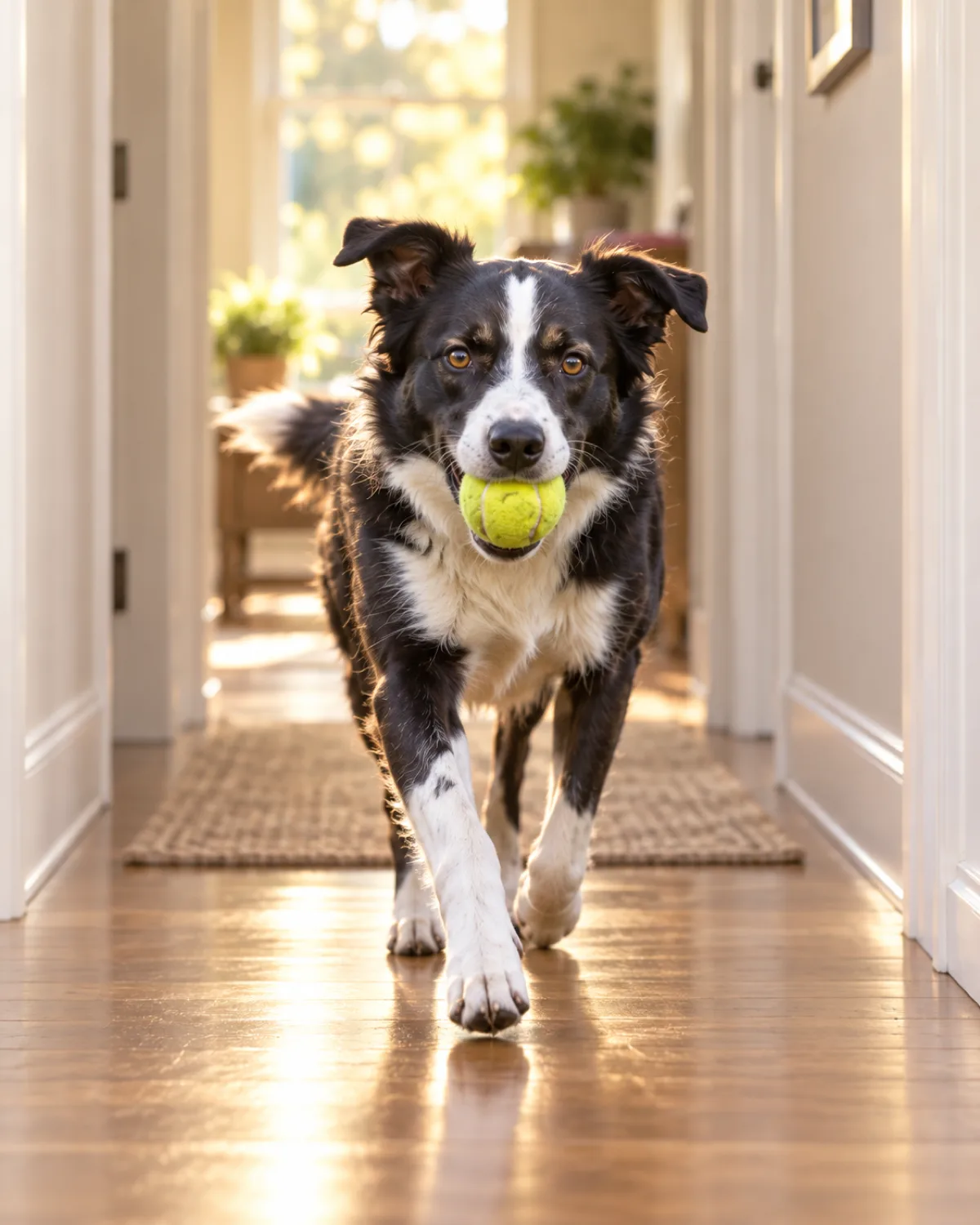
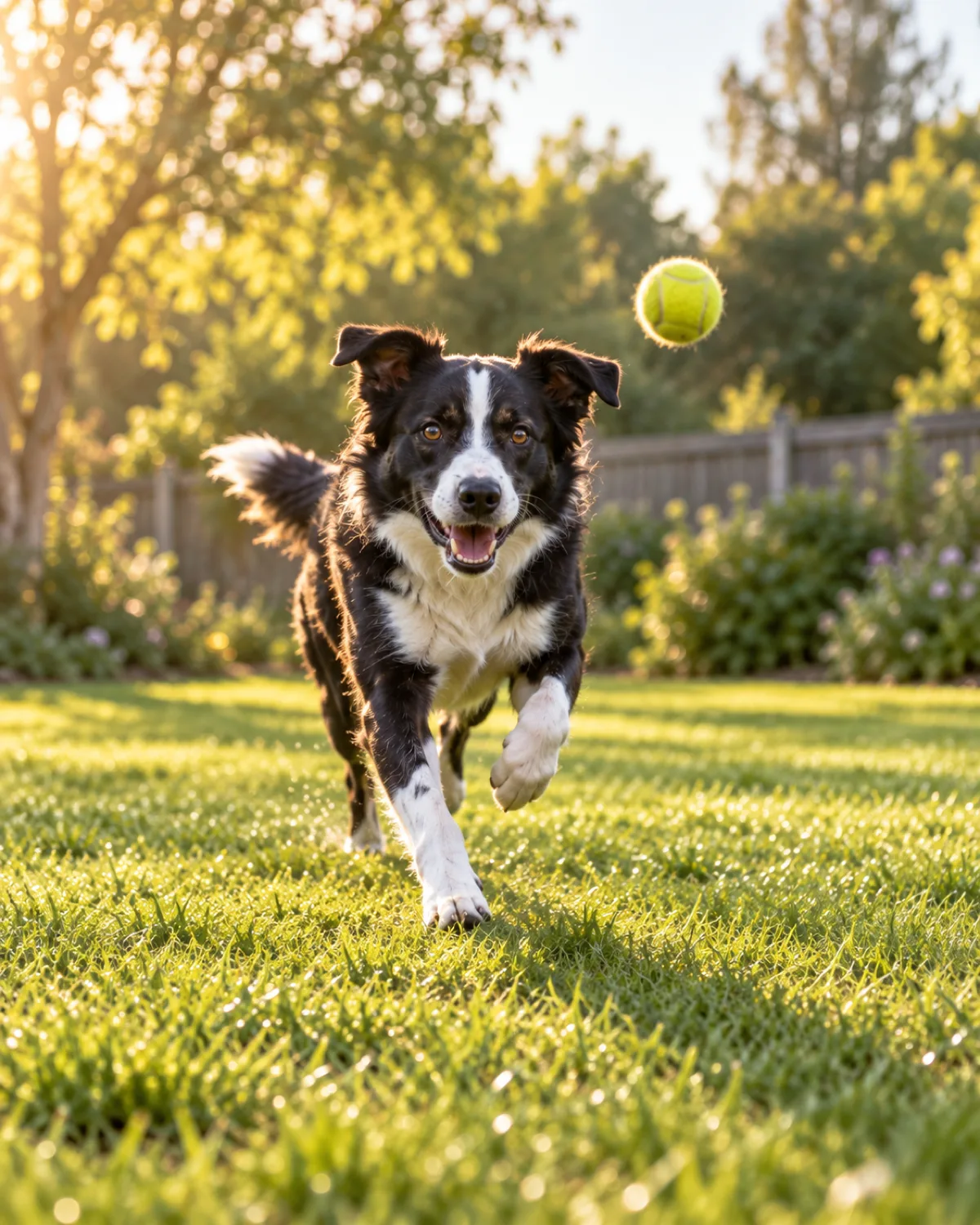
Now you combine all the pieces: toss the ball five or six feet, wait for the chase, wait for the pickup, and then use your drop cue when the dog gets close.
Stay indoors where distractions are low. A hallway is the best classroom because the walls funnel your dog back toward you. There is nowhere else to go.
Toss gently underhand — no fastballs, no high arcs
Stand at one end of the hallway and toss toward the other end
When your dog picks up the ball and turns, crouch down and use an excited voice to call them back
The second they get within arm's reach, say "drop it" and trade for a treat
If your dog runs to the ball but then wanders off with it, the hallway fixes this naturally. In an open room, you would have to chase them — and chasing teaches exactly the wrong lesson. In a hallway, the only way out is past you.
Do five or six repetitions per session. Stop before your dog gets bored. You want them walking away from each session thinking fetch was the best thing that happened all day.
7. Use Two Identical Toys to Encourage the Return
This is the trick that changed everything for my middle dog, who loved chasing but considered "bringing it back" optional.
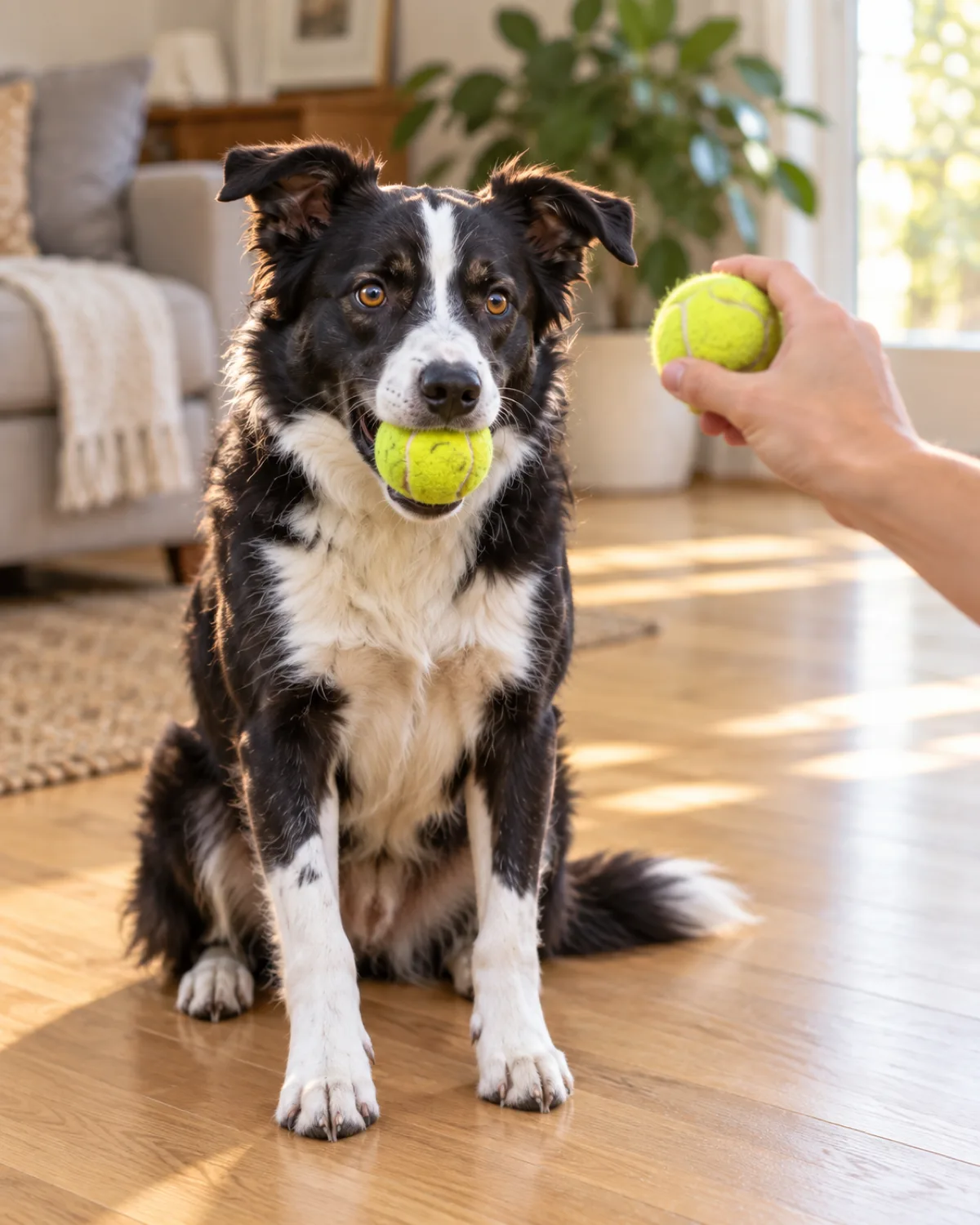
Buy two identical balls. Throw ball one. When your dog picks it up and looks at you, hold up ball two and make it interesting — wave it, bounce it, squeak it. Your dog will drop ball one to come get ball two. The second they drop it, throw ball two in the other direction.
Now you have a loop:
Throw ball one → dog chases → dog picks up → sees ball two → drops ball one → comes back
Throw ball two → dog chases → dog picks up → sees ball one (which you picked up while they were running) → drops ball two → comes back
The return stops being a chore because your dog is not giving something up. They are trading for something equally exciting. Over time, the drop becomes automatic and you can fade back to a single ball.
8. Mark the Moment Your Dog Turns Back Toward You
There is a split second between "dog picks up ball" and "dog decides what to do next" that determines whether you get a retrieve or a victory lap. You need to capture that moment.
The instant your dog turns their body back in your direction — not when they arrive, not when they drop the toy, but the exact second they pivot — hit your marker. Click, "yes," whatever you use.
This teaches your dog that turning toward you is the behavior that earns the reward. Everything after that — the trot back, the arrival, the drop — follows naturally because the first step in the right direction already got reinforced.
If you are working on the stay command at the same time, you will notice the same principle: the earliest correct movement is the one worth marking. Waiting for the full behavior before reinforcing it slows learning.
9. Move to a Fenced Yard and Increase the Distance
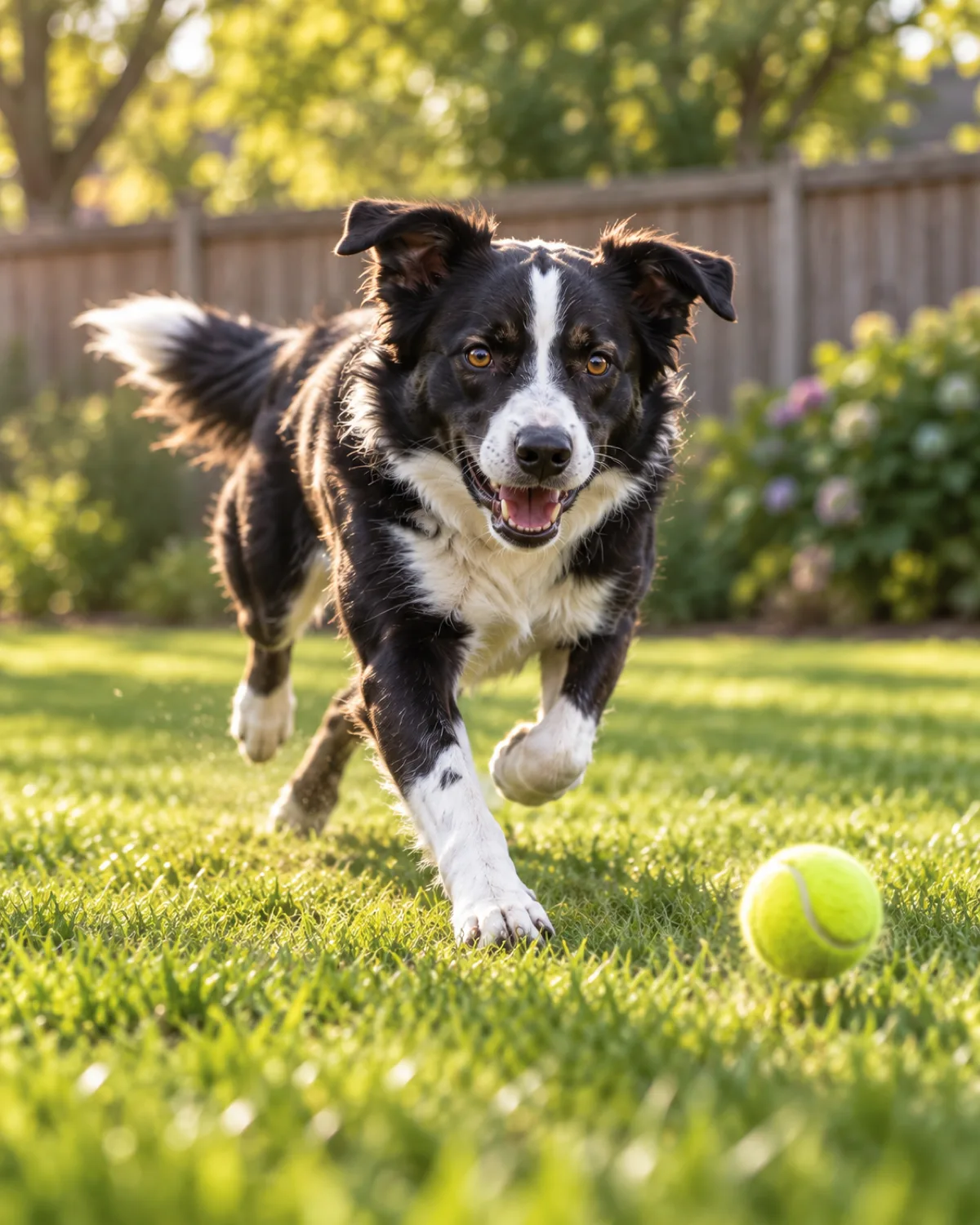
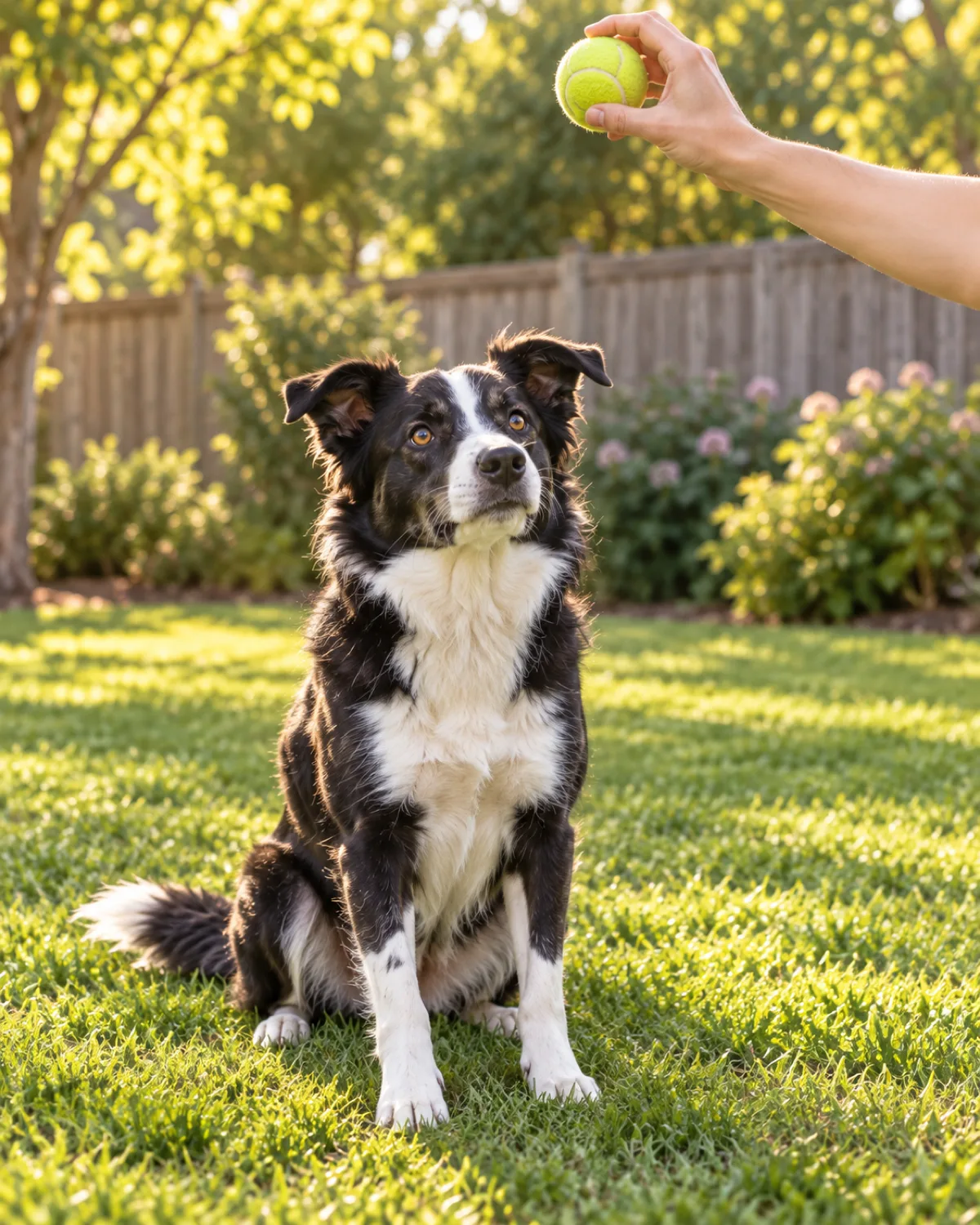
Once your dog is reliably fetching indoors with short tosses, it is time to move outside. But not to the park — to a fenced yard or an enclosed area where running away is not an option.
The outdoor transition introduces three new challenges at once:
Distance — you can throw farther, which means a longer return trip
Distractions — smells, sounds, birds, squirrels
Space — no hallway walls to channel your dog back
Start with the same short tosses you did indoors, maybe ten feet. Let your dog succeed at that distance several times before adding more. Increase in five-foot increments and watch for the distance where your dog starts hesitating on the return. That is your current ceiling — stay just below it and build gradually.
Keep these four rules through every outdoor session and fetch stays fun for both of you
4 Rules for Outdoor Fetch Sessions
Moving outside changes the game. These rules keep training productive and safe once you leave the hallway.
Always use a fenced area firstAn unfenced field gives your dog the option to run off with the ball. Remove that option entirely until the return is automatic, then test in open spaces with a long line as backup.
Warm up with a short tossStart every outdoor session with a five-foot roll to remind your dog what the game is. Jumping straight to a thirty-foot throw after a day off invites confusion and victory laps.
Throw away from distractionsIf the neighbor's dog is at the fence line or a squirrel is in the corner, throw in the opposite direction. Competing interests kill the return faster than anything else.
Quit while your dog still wants moreFive great retrieves are worth more than fifteen where the last five were sloppy. End the session on a successful return and your dog will be eager to play again tomorrow.
A long line (fifteen to thirty feet) clipped to a flat collar gives you a safety net without restricting movement. Do not use it to reel your dog in — just let it drag so you can step on it if they decide to bolt.
10. Fade the Treats and Let the Next Throw Be the Reward
At some point, the treat after each drop starts slowing things down. Your dog brings the ball back, drops it, eats a treat, and then has to re-engage with the game. The flow breaks.
The fix is to replace the treat with the thing your dog actually wants: another throw. This is called a functional reward — the behavior (bringing the ball back and dropping it) earns the outcome the dog was already hoping for (another chase).
Here is the fade progression:
Session
Reward Pattern
Week 1
Treat after every drop
Week 2
Treat every other drop, immediate re-throw on the rest
Week 3
Treat every third or fourth drop
Week 4+
Occasional surprise treat, immediate re-throw as default
You will know the transition is working when your dog drops the ball and immediately backs up or looks at your throwing hand instead of looking at your treat pouch. That is the moment fetch becomes self-sustaining — the game itself is the reward.
If you are choosing training treats for the fade period, go small. Pea-sized pieces that take one second to eat keep the flow intact. Anything your dog needs to chew breaks the rhythm.
11. Practice With Different Surfaces and Locations
A dog who fetches perfectly in your backyard might stare at you blankly at the park. This is not stubbornness. It is a lack of generalization — your dog learned "fetch" as a behavior that happens in one specific place, not a skill that transfers everywhere.
Fix this by practicing in at least four or five different locations over two weeks:
Different ground surfaces — grass, dirt, sand, gravel, indoor carpet
Different environments — backyard, a friend's yard, a quiet corner of a park, a long hallway at a pet-friendly store
Different times of day — morning calm, afternoon energy, evening wind-down
Each new location will feel like a small reset. Your dog might hesitate or get distracted for the first few throws. That is normal. Drop back to shorter distances and higher-value rewards until they click back into the pattern, then build up again.
The variety also keeps fetch interesting. A dog who only plays in one spot eventually gets bored of the same throw in the same direction. New terrain, new smells, and new bounce patterns keep the game fresh.
12. Troubleshoot a Dog Who Won't Bring the Ball Back
The most common fetch frustration is a dog who happily chases but treats the return as optional. Here are the three patterns and how to fix each one.
The victory lapper — Your dog grabs the ball and runs circles around you, staying just out of reach.
Stop chasing. Sit down, turn away, and wait. Chasing is exactly what your dog wants, and every step you take reinforces the keep-away game.
When they slow down or come close, mark and reward. Then go back to the two-toy method from Step 7 to rebuild the return incentive.
The halfway dropper — Your dog picks up the ball, starts heading back, and then drops it ten feet away.
The ball is losing value mid-trip. Shorten the throw distance until they can make the full round trip without dropping it. Then add distance one foot at a time.
Try a toy with more texture (a rope or rubber ball) that is easier and more satisfying to carry.
The one-and-done dog — Your dog fetches once perfectly, then walks away.
You are probably running sessions too long. One great fetch is worth celebrating. End the session there and try again in an hour. Over time, one turns into two, then three, then ten.
Check whether the treat you are using actually motivates your dog. If they leave the treat on the ground, it is not high-value enough.
Save this for later
14 Steps to Teach Your Dog to Fetch
1Start with a toy your dog lovesPick the one they already carry around the house — familiarity beats novelty at this stage.
2Build excitement on the floorDrag the toy away in short jerky movements to wake up chase drive before you throw anything.
3Roll the toy a few feetKeep it on the ground and close so your dog can reach it in one or two strides.
4Reward the pickupMark the instant their mouth touches the toy, not when they bring it back.
5Teach the drop cue firstTrade the toy for a high-value treat until drop it is automatic.
6Add a short toss indoorsUse a hallway so the walls channel your dog back toward you.
7Use two identical toysShow ball two when they have ball one and the return becomes a trade, not a loss.
8Mark the turn backClick the pivot, not the arrival — the first step toward you is the behavior to reinforce.
9Move to a fenced yardStart at ten feet outdoors and add distance in five-foot increments.
10Fade the treatsReplace food rewards with the next throw so the game itself becomes the payoff.
11Practice on new surfacesGrass, sand, gravel, indoors — each new location generalizes the skill.
12Troubleshoot the returnVictory laps, halfway drops, and one-and-dones each have a different fix.
13End on a high noteQuit after five to ten minutes while your dog still wants more.
14Make fetch a daily habitTwo short sessions a day burns energy and keeps the skill sharp.
pawliqa.com
13. Know When to End a Session to Keep Fetch Fun
The fastest way to ruin fetch is to play it until your dog quits. If they walk away from the game, you went too long — and the last memory they have of fetch is "I wanted to stop."
For beginners, keep sessions to five or six throws. For dogs who already fetch reliably, ten to fifteen minutes is a good ceiling. Watch for these signs that your dog is ready to wrap up:
Slower returns — the trot back takes twice as long as the sprint out
Lying down with the ball instead of bringing it back
Chewing the ball in place rather than dropping it
Panting heavily with wide eyes and a long tongue
End one throw before you see these signs. The last rep should be a clean, enthusiastic retrieve. Pick up the ball, say "all done," and walk inside. Your dog learns that fetch always ends while it is still fun, which makes them eager to play again next time.
This is the same principle behind good brain games for dogs — short, intense sessions beat long, dragging ones every time.
14. Turn Fetch Into a Daily Exercise Routine
Once fetch clicks, it becomes the most efficient exercise tool you own. Ten minutes of fetch burns more energy than thirty minutes of leash walking because the sprints, stops, and direction changes work muscles that a steady walk never touches.
A simple daily routine:
Morning — Five to seven minutes of fetch in the yard before breakfast. This takes the edge off morning energy so your dog settles faster indoors.
Evening — Another five to seven minutes after dinner. This is the wind-down session that helps your dog sleep through the night.
Vary the throws to keep it interesting. Mix in low ground rolls, higher bounces, and throws to different corners of the yard. Occasionally fake a throw (but do not overdo this — too many fakes erode trust and make your dog wait instead of chase).
Fetch also doubles as a maintenance drill for the skills you built in earlier steps. Every session reinforces the chase, the pickup, the return, and the drop. Skip too many days and those links start to loosen, especially in younger dogs who are still building habits.
About the author
Jess Calloway
Jess Calloway edits Pawliqa, where she shares dog care, grooming, training, and new-owner tips — plus DIY and pet-friendly home ideas — for anyone who wants a happy, well-cared-for dog. As a dog mom to three very different dogs, she writes the honest, tested version of what actually works. Every guide is image-led and reviewed for clarity, usefulness, image accuracy, and Pinterest-to-page alignment before it goes live. Visit the About page.
Frequently Asked Questions
At what age can I start teaching a puppy to fetch?
Most puppies can start with gentle floor rolls at eight to ten weeks old. Keep sessions under two minutes and use a soft toy they can carry without straining their jaw. Full outdoor fetch with real throws should wait until they are at least four months old and have some impulse control.
Why does my dog chase the ball but won't bring it back?
Your dog has the chase link but not the return link. Go back to the two-toy method in Step 7 and practice in a hallway where the walls funnel them back to you. The return needs its own reinforcement history before it becomes automatic.
How long does it take to teach a dog to fetch?
Most dogs learn the basic indoor version in one to two weeks of daily five-minute sessions. Reliable outdoor fetch with full-distance throws usually takes four to six weeks. Dogs with low chase drive may need a few extra weeks on the early steps.
Can older dogs learn to fetch?
Yes. Older dogs learn the same way puppies do, just at their own pace. Keep sessions short, use high-value rewards, and skip the high-energy sprints if your dog has joint issues. A gentle roll-and-retrieve on carpet is perfectly valid fetch for a senior dog.
Is fetch enough exercise for a dog?
Fetch covers the sprint and burst-energy side of exercise well, but most dogs also need sustained movement like walks for cardiovascular health and mental stimulation from sniffing. Two daily fetch sessions plus a thirty-minute walk is a balanced routine for most healthy adult dogs.
Teaching a dog to spin starts with a food lure at nose level, progresses to an open-palm hand gesture, and ends with a verbal cue alone. This guide walks through every stage, flags the mistakes that stall progress, and shows how to keep training sessions short and productive.
An overstimulated dog is not being bad. This guide walks through the place cue, structured down-stays, environment management, and daily decompression routine that teach a dog to settle on its own.
Fourteen puppy training games covering hide and seek recall, the name game, touch targeting, cup puzzles, puppy pushups, which hand, red light green light, muffin tin puzzles, tug with rules, scent work, two-toy fetch, obstacle courses, spin tricks, and settle mat training for puppies who learn best through play.