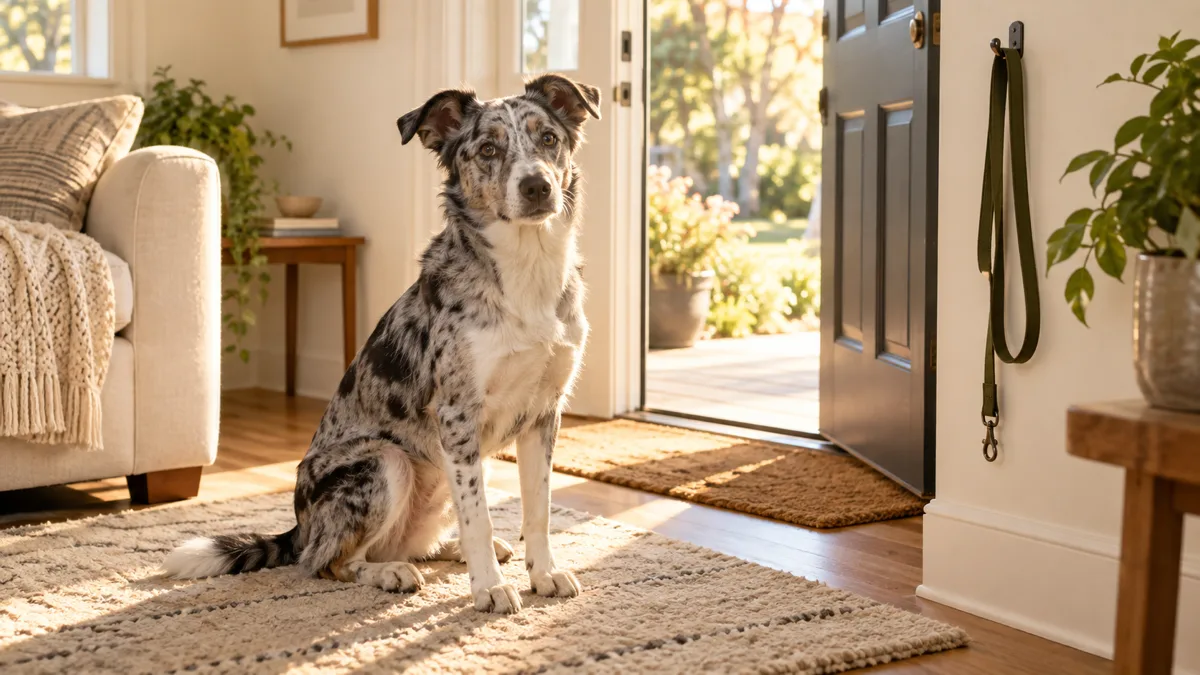
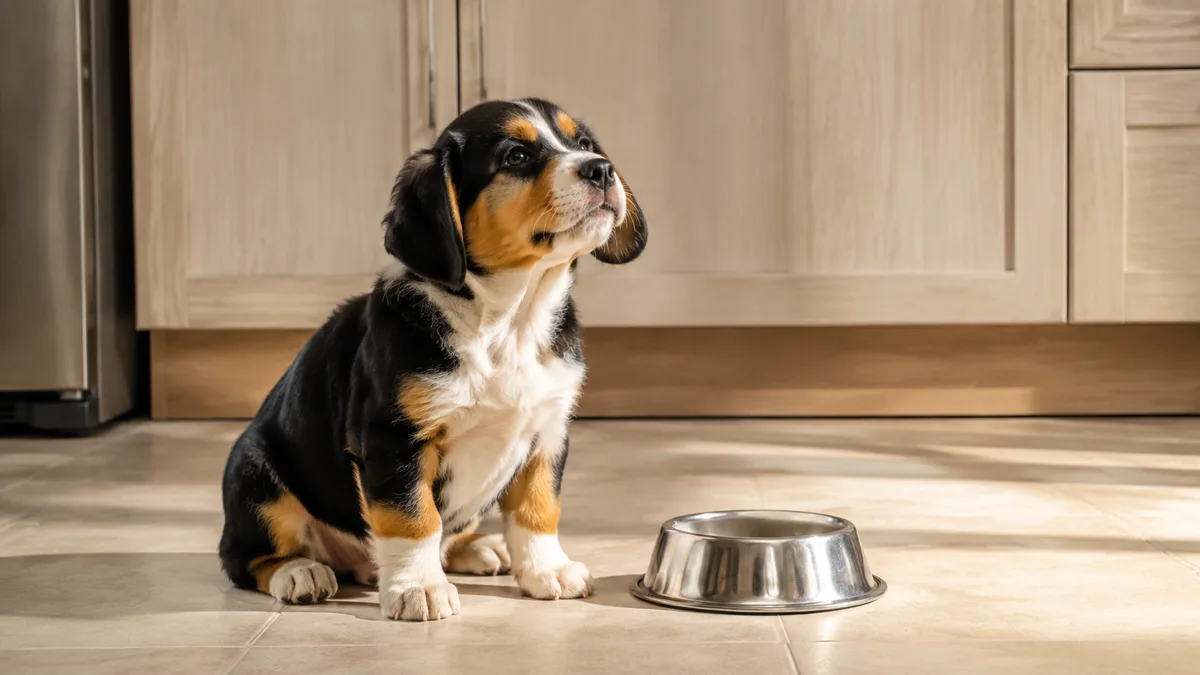
Our youngest came home at eight weeks and turned the house upside down in two days. Not because she was bad. Because we had no plan, and a puppy without a plan invents its own curriculum — shoes, table legs, the bathroom rug.
The week we sat down and mapped out a real training schedule, everything shifted. She still chewed things, but she chewed the right things, because we finally had a framework that told us what to practice, when to practice it, and when to stop.
Here are ten building blocks for a puppy training schedule that keeps you consistent without burning out you or your dog.
Jump to a training milestone
10 building blocks for your puppy training schedule
From the very first potty break to practicing in new locations, these ten steps build on each other in a logical order. Jump to whichever milestone your puppy is working on right now.
1. Start potty training on day one with a consistent outdoor routine
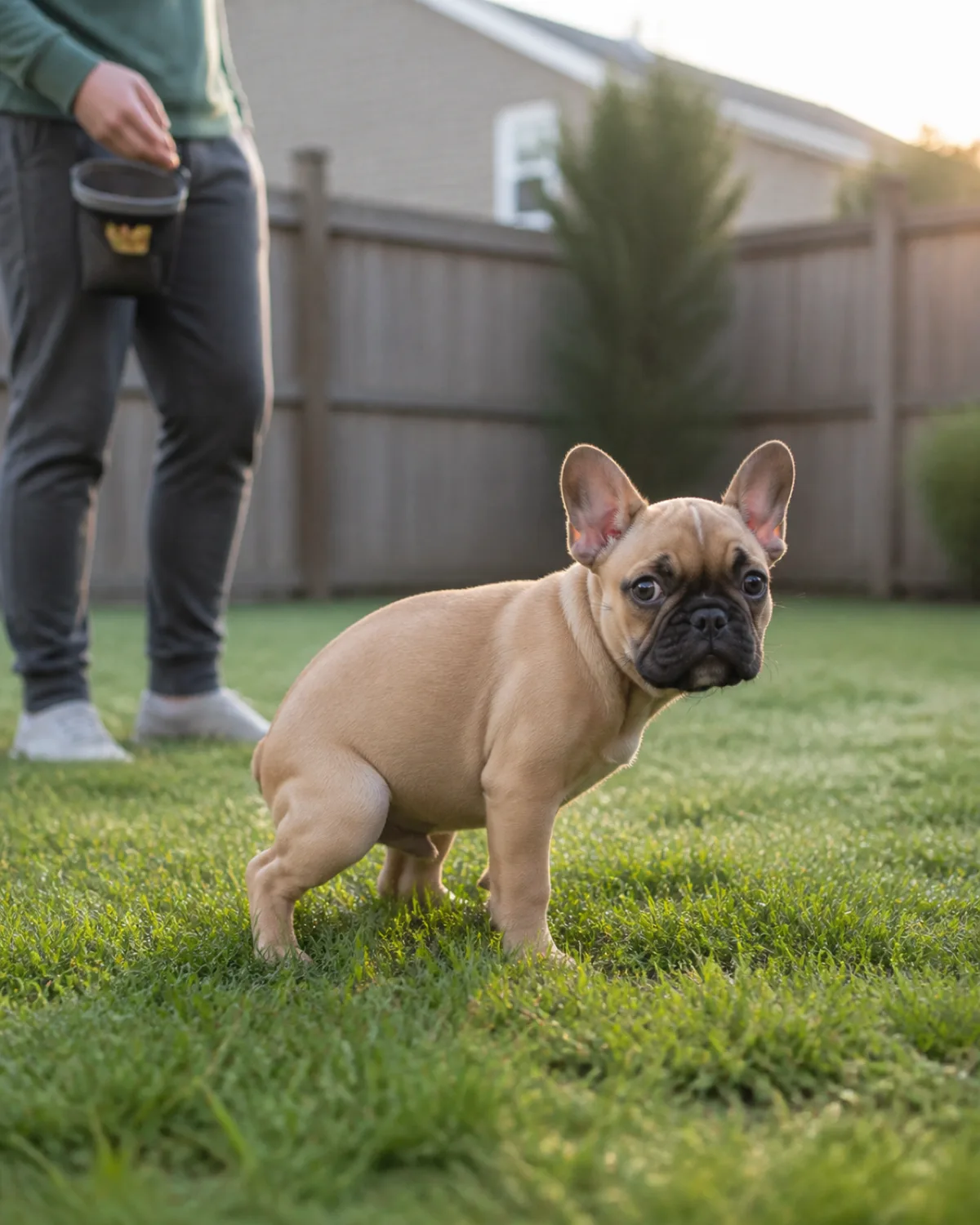
The very first skill on the schedule is the bathroom. Carry your puppy outside every two hours, plus immediately after meals, naps, and play sessions. Walk to the same patch of grass through the same door every time.
Stand quietly and wait. The moment they squat, mark it with a calm "yes" and hand over a treat before you walk back inside.
Every two hours during the day — set a phone alarm if you need to.
Immediately after waking up, eating, drinking, or a burst of play.
Same door, same grass patch, same calm praise sequence.
Puppies under twelve weeks physically cannot hold it for more than a couple of hours, so accidents are not disobedience. They are a sign that the interval needs to be shorter. For the complete playbook on timing, cues, and nighttime management, see our full potty training guide.
2. Teach sit as your puppy's very first command
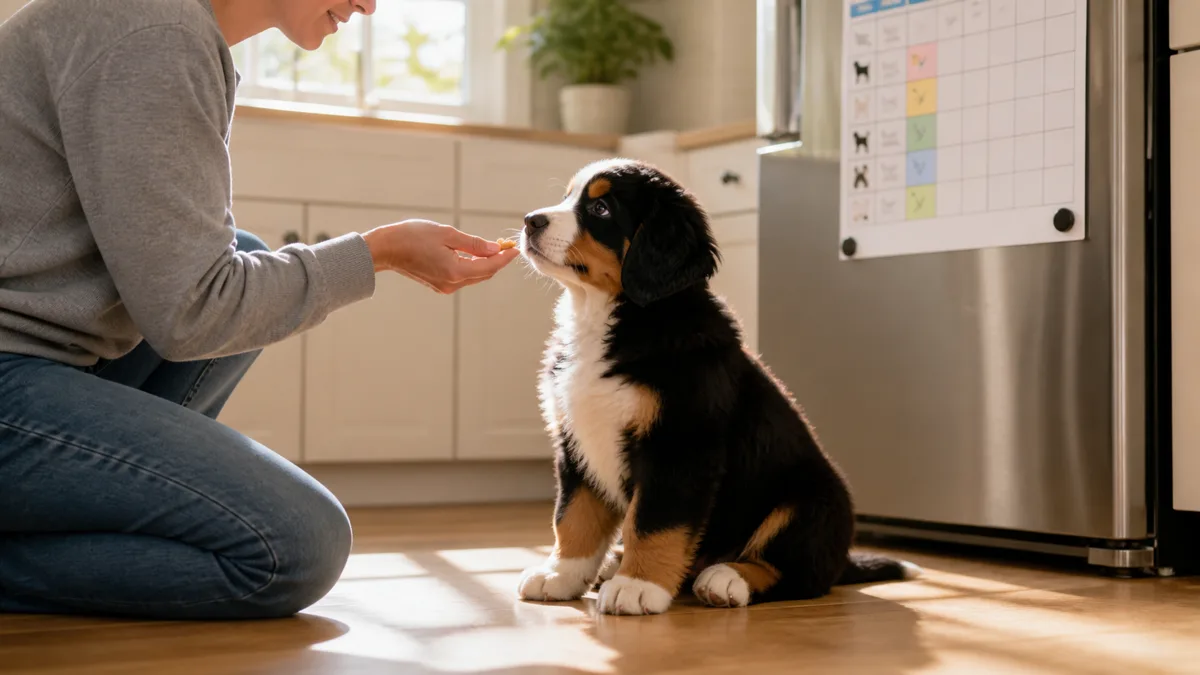
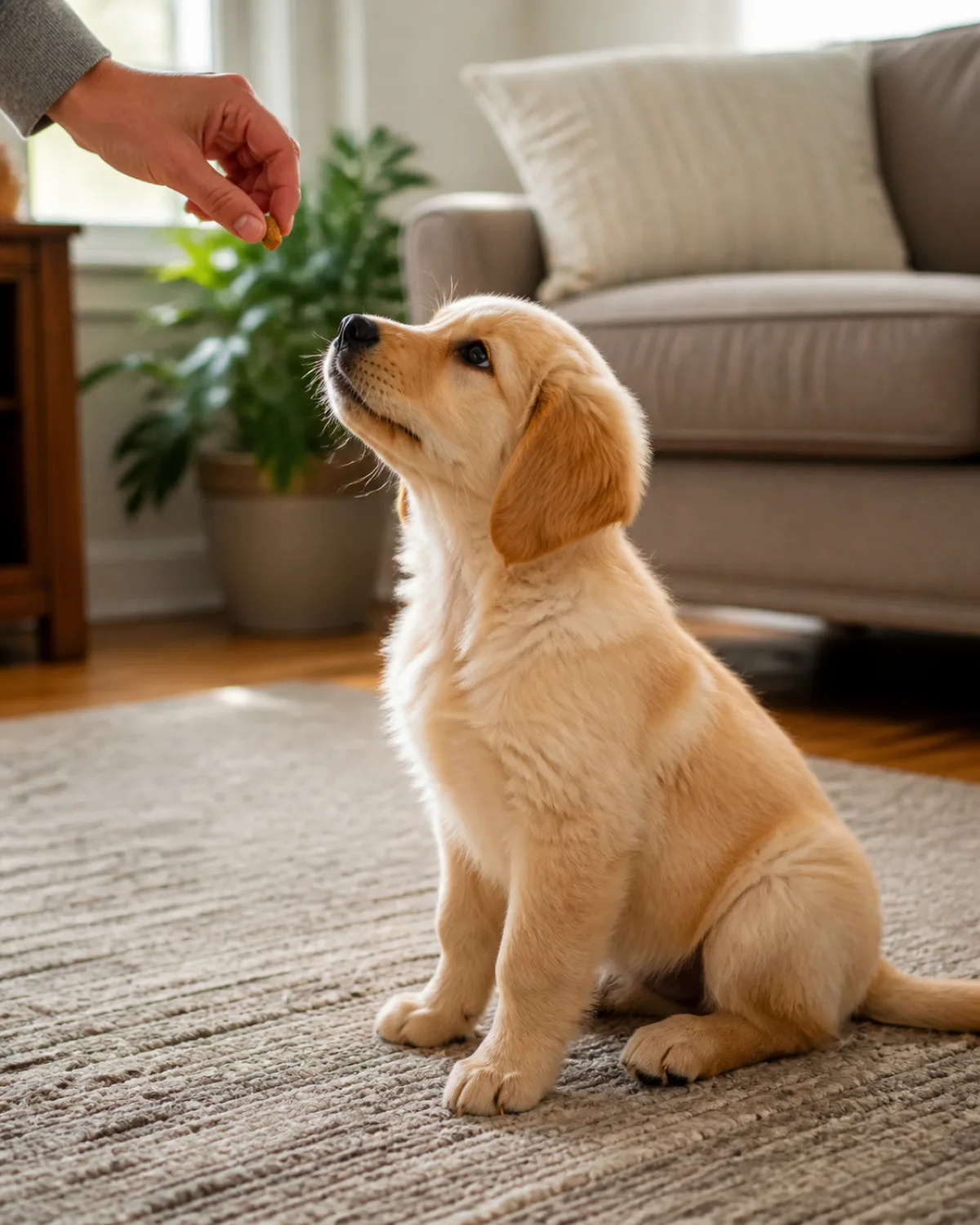
Sit is the easiest command to start with because puppies already sit on their own dozens of times a day. All you are doing is putting a name on the motion and adding a reward.
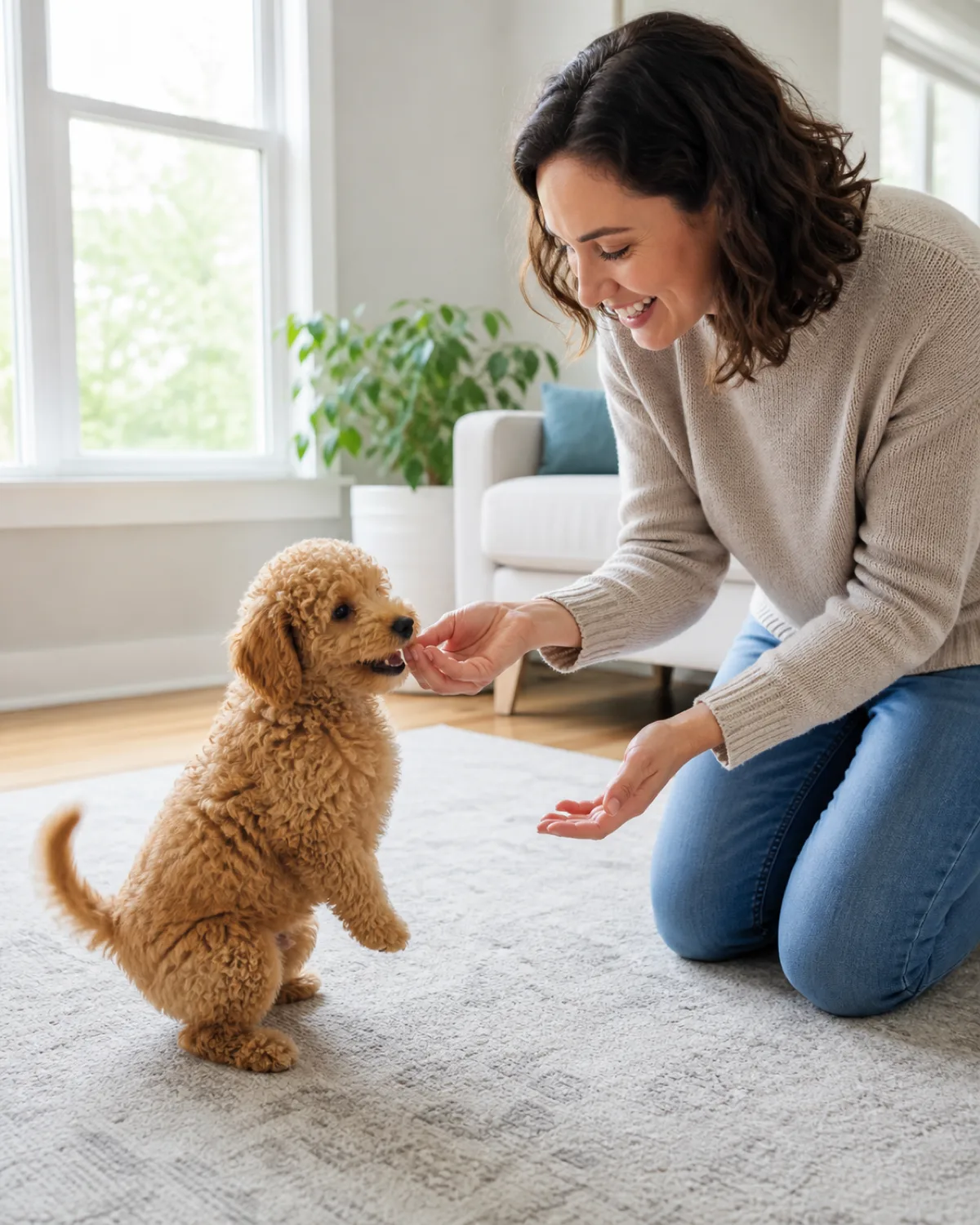
Hold a treat just above your puppy's nose and slowly arc it backward over their head. Their nose follows the treat up, their rear goes down, and the instant their bottom touches the floor you say "yes" and deliver the treat.
Three sets of five repetitions a day is plenty for the first week.
Practice before meals when your puppy is hungry and motivated.
Do not push their rear down — let gravity and the treat lure do the work.
Most puppies have a reliable sit within three to five days. Once they do, start using sit as a gateway behavior: sit before the food bowl goes down, sit before the leash clips on, sit before the door opens.
That single habit builds impulse control across the entire day. Our step-by-step sit guide covers hand signals, troubleshooting, and what to do when your puppy pops back up.
Quick decision
Where is your puppy in the training timeline?
Match your puppy’s age to the right training focus so you are neither pushing too hard nor falling behind.
8–10 weeksPotty training, sit, crate introduction, gentle handling. Keep sessions under two minutes. Everything is new.
12–16 weeksLayer on stay and come, move leash walks outdoors, begin proofing basics in new locations. Five-minute sessions.
16–20 weeksGeneralize every skill to new environments. Practice with mild distractions. Multiple short sessions daily.
3. Begin crate training with short positive sessions from week one
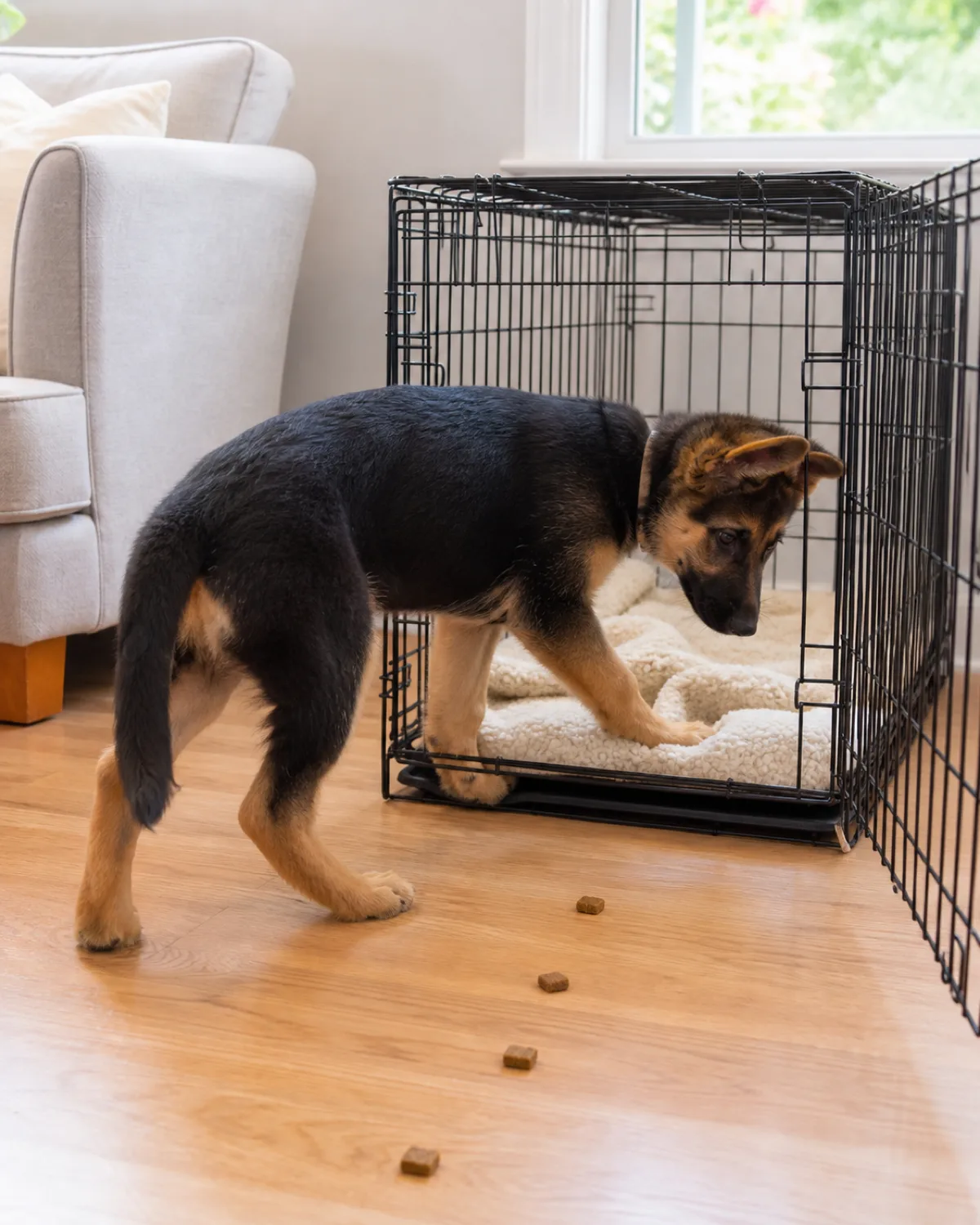
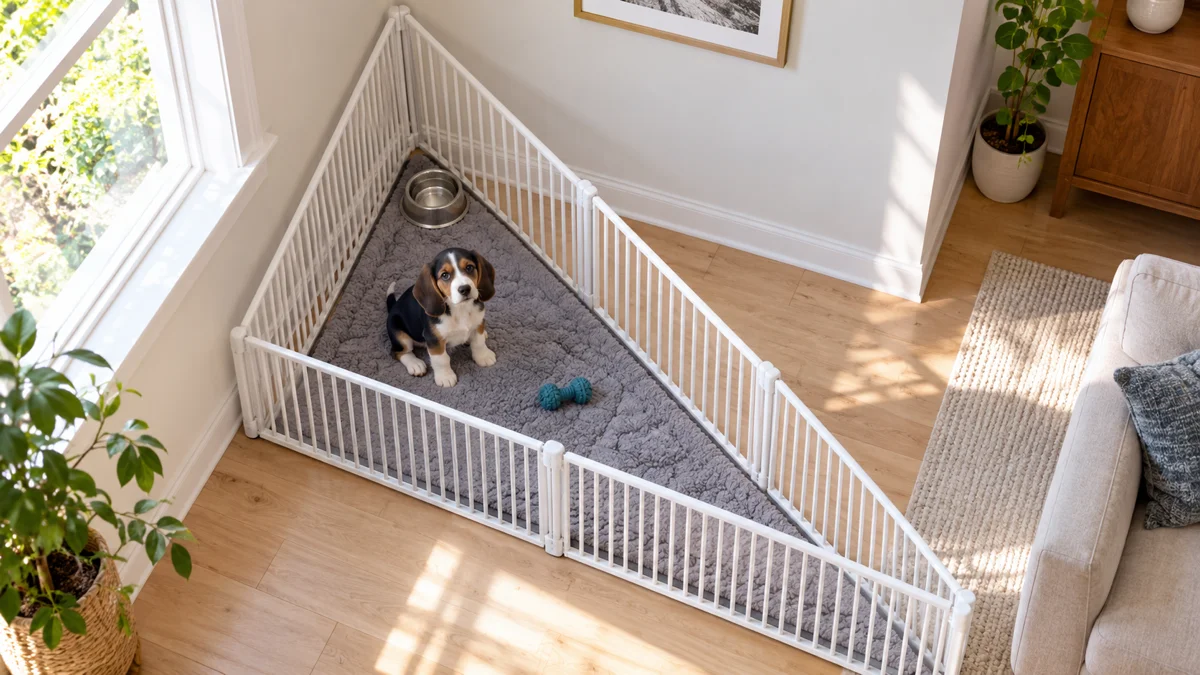
The crate should feel like a den, not a jail. Start with the door wide open and toss a few treats inside. Let your puppy walk in, eat, and walk out on their own terms.
Over the first few days, gradually increase the time:
Day one: door open, treats inside, puppy enters and exits freely.
Day two: close the door for ten seconds while they eat a treat, then open it before they fuss.
Day three: close the door for thirty seconds, sit beside the crate quietly.
By the end of week one: one to two minutes with the door closed while you move around the room.
Build crate time into the daily schedule for naps and quiet periods. A puppy who naps in the crate twice a day during the first month almost never develops crate anxiety later. The full technique — including what to do when your puppy cries — is in our crate training guide.
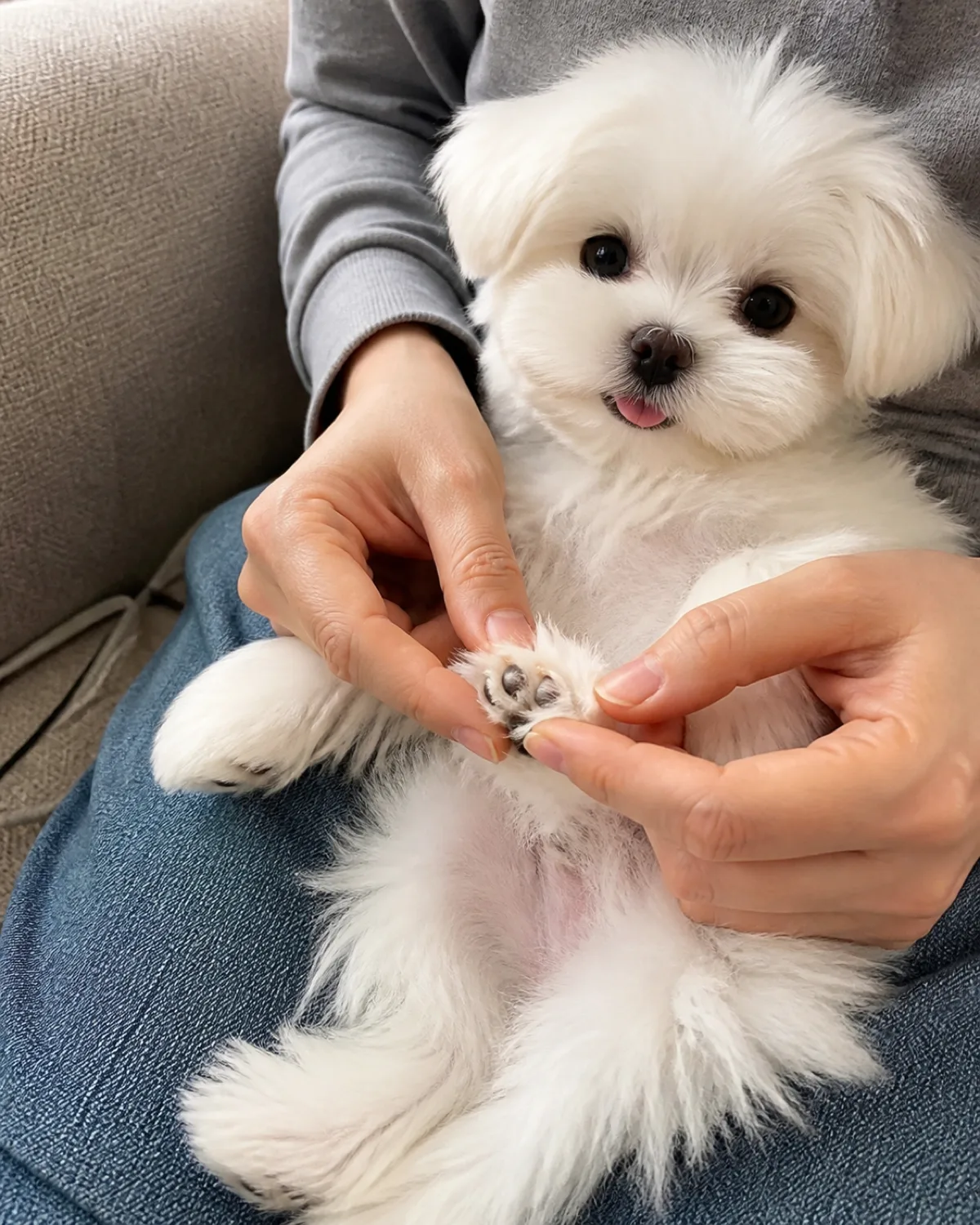
4. Introduce gentle handling exercises before the first vet visit
Before your puppy ever sits on a vet's examination table, they should be comfortable having every part of their body touched by you.
Spend one to two minutes a day on handling practice:
Ears — lift the flap, peek inside, release. Goal: calm during ear checks.
Paws — hold each paw, gently press each toe. Goal: no flinching at nail trims.
Mouth — lift the lip on each side, touch the gums. Goal: relaxed for tooth brushing.
Belly — roll onto side, light belly rub. Goal: comfortable during vet palpation.
Tail — lift gently, hold for two seconds. Goal: calm during temperature checks.
Pair every touch with a treat. If your puppy pulls away, you went too fast — shorten the duration and increase the treat value. The socialization window between eight and sixteen weeks is when this practice sticks deepest.
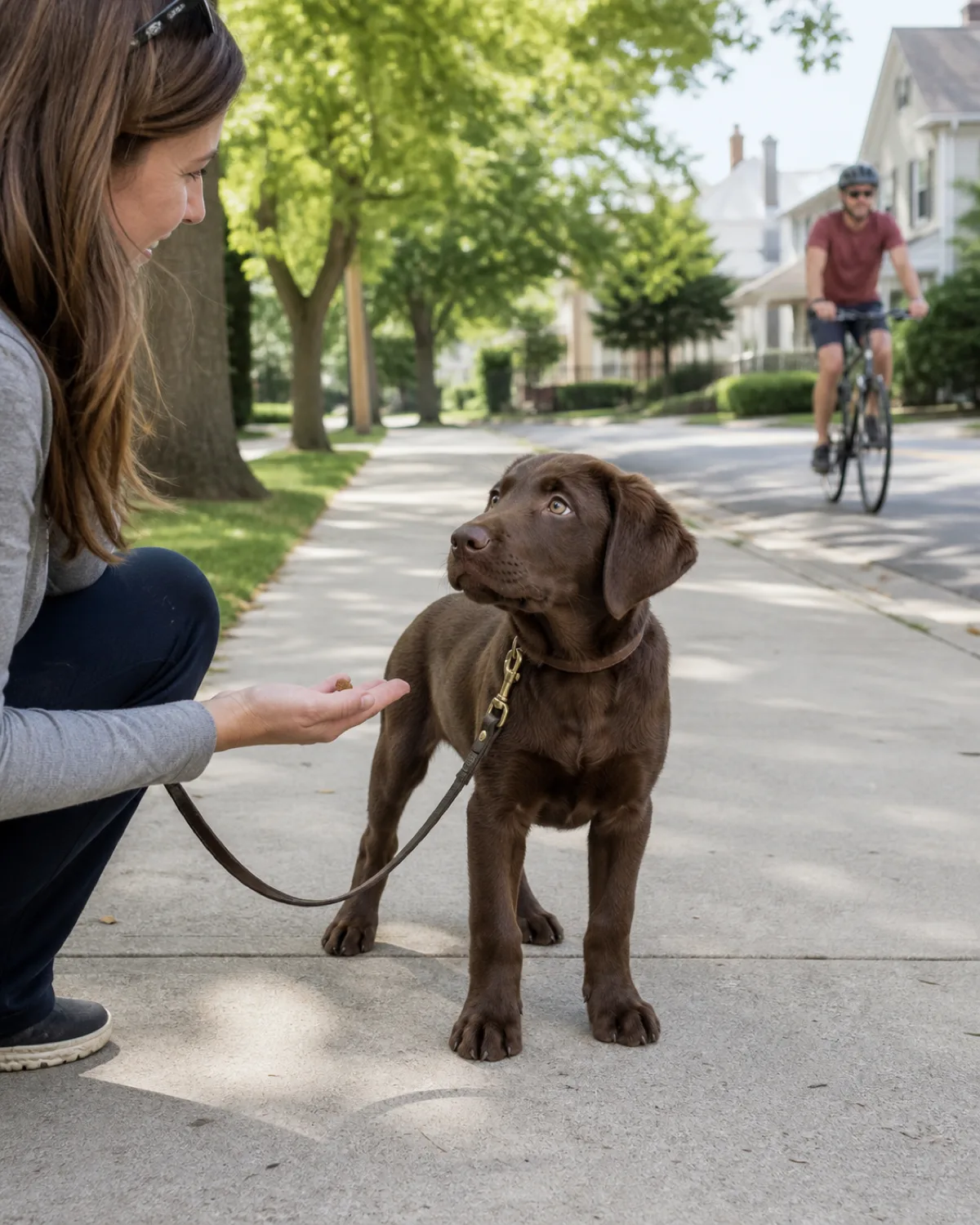
5. Add socialization outings to the weekly plan between 8 and 16 weeks
The socialization window closes fast. Between eight and sixteen weeks, your puppy's brain is wired to accept new experiences as normal. After that window, new things default to suspicious until proven safe.
Build two to three short outings per week into the schedule:
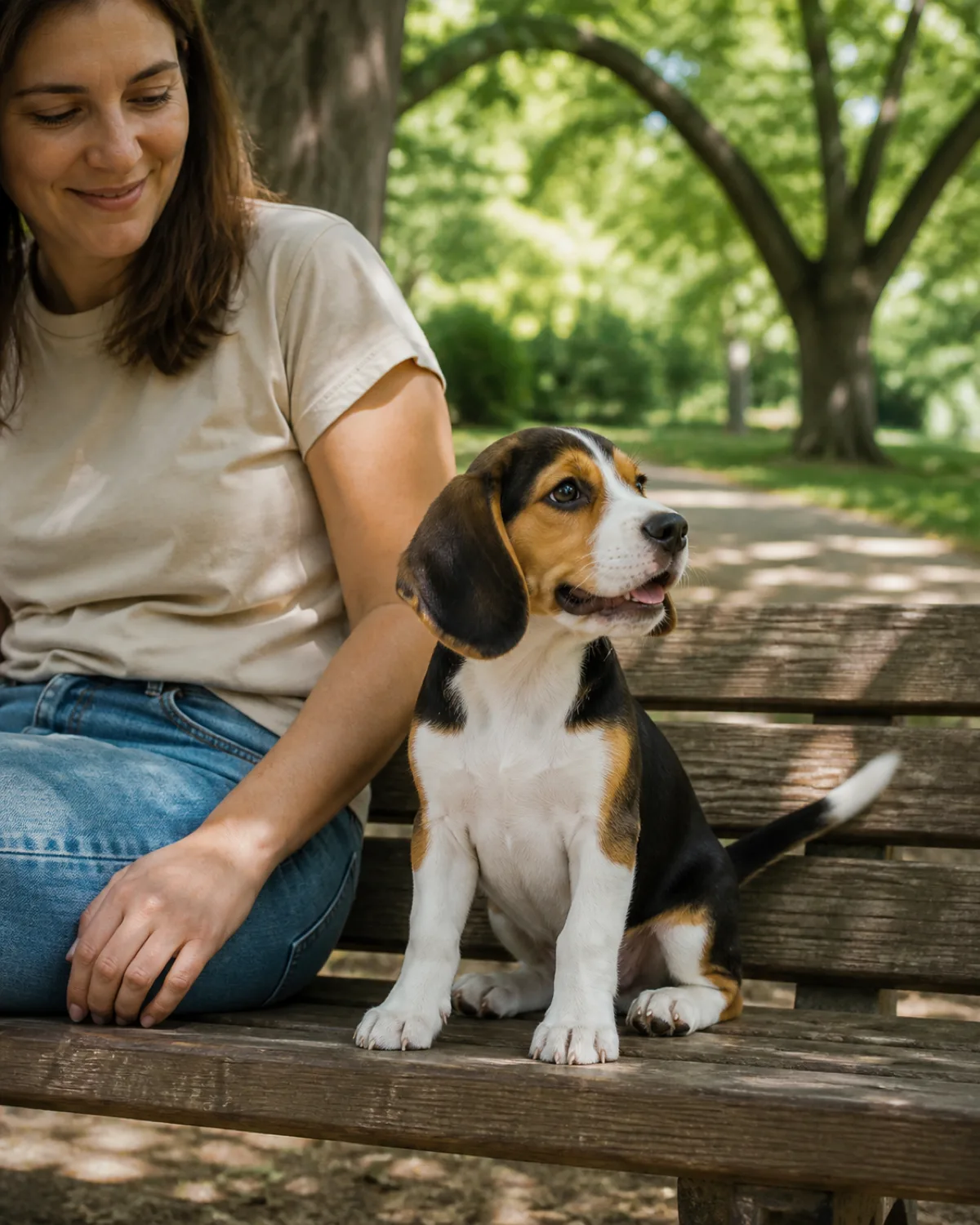
Sit on a bench near a playground and let your puppy watch children from a distance.
Walk past a construction site or busy street at a comfortable distance — close enough to hear, far enough to stay relaxed.
Visit a friend's house with a different floor texture, different smells, and a calm adult human.
Feed treats continuously while your puppy observes calmly. If they freeze, back up. If they lean forward with curiosity, let them investigate at their own pace.
Do not bring your puppy to dog parks or let them sniff unknown dogs on the ground until their vaccination series is complete. Socialization does not require nose-to-nose contact with strange dogs — it requires calm exposure to the world. Our socialization guide breaks down the full checklist of sights, sounds, and surfaces to cover.
Ground rules
4 rules that make every training session count
Puppies learn fastest when the structure is consistent and the stakes are low. These four principles apply to every exercise on this schedule.
One skill per sessionPractice a single behavior in each two-to-five-minute block. Mixing sit, stay, and leash walking in one session overwhelms a young brain.
End before frustrationStop the moment your puppy gets it right. A short session that ends on a win builds more confidence than a long one that ends in confusion.
Reward speed mattersDeliver the treat within one second of the correct behavior. Even a two-second delay weakens the link between the action and the payoff.
Every person, same rulesIf one family member rewards jumping while another ignores it, the puppy learns nothing. Agree on the rules before the puppy arrives.
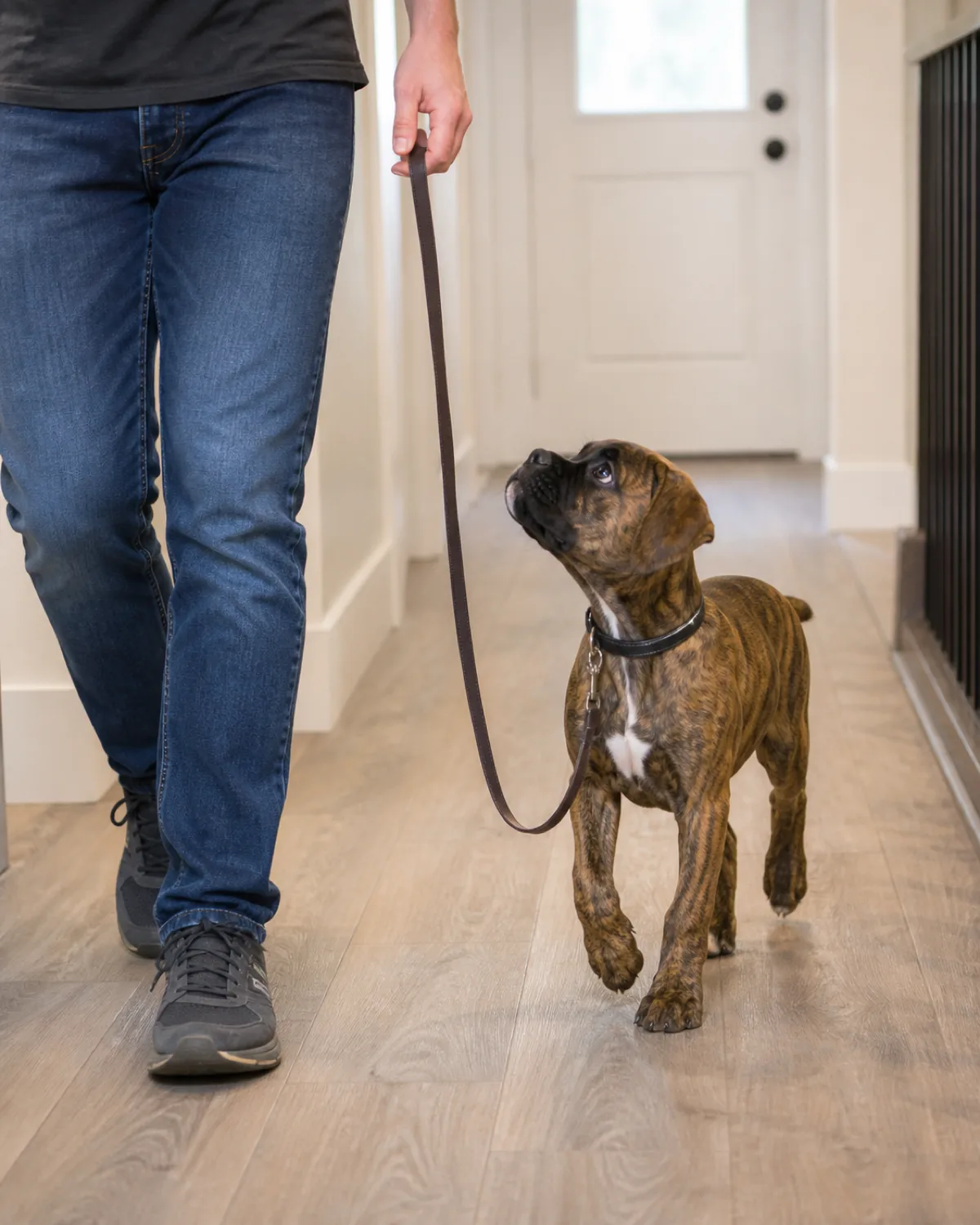
6. Introduce loose-leash walking in short indoor sessions first
Do not start leash training outside. Start in your hallway with zero distractions.
Clip the leash on, hold a treat at your side, and take three steps forward. If your puppy walks beside you without pulling, mark and reward. If they pull, stop moving completely and wait for them to look back at you before starting again.
First week: hallway only, three to five steps at a time.
Second week: backyard or driveway, short sessions of two to three minutes.
Third week: a quiet street with minimal distractions, five minutes maximum.
Puppies under sixteen weeks should not be doing long walks anyway — their joints are still developing. Keep leash sessions short and focused on the concept of "stay near me" rather than covering distance. For the full progression including harness selection and what to do about squirrels, see our leash training guide.
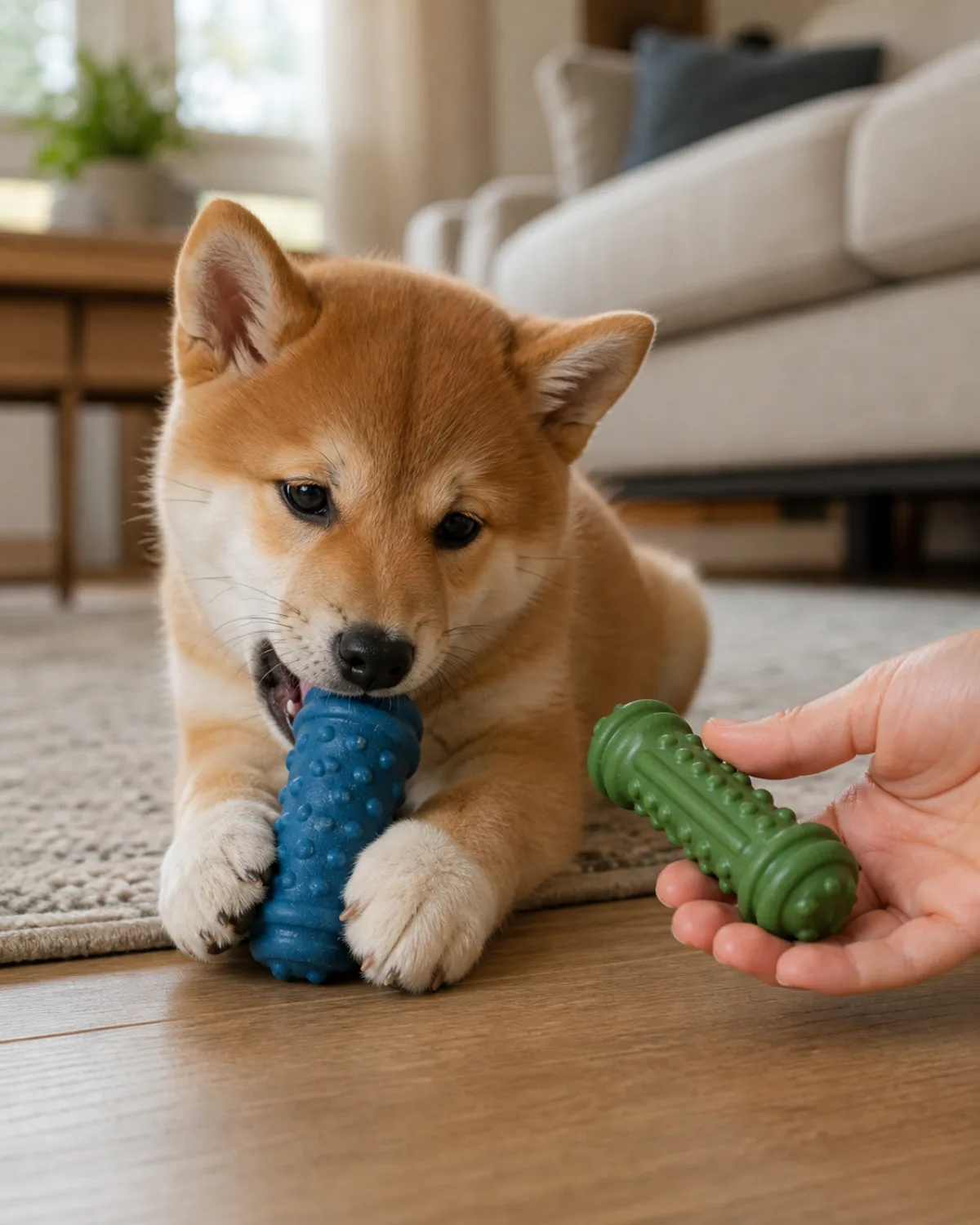
7. Work on bite inhibition every time your puppy mouths you
Puppies explore the world with their mouths. Mouthing is not aggression — it is normal developmental behavior. But they need to learn that human skin is off-limits before their adult teeth come in.
When your puppy bites your hand during play:
Say "ouch" in a calm but definitive tone (not a shriek — that can excite some puppies).
Remove your hand and turn your body away for three seconds.
Turn back and resume play.
If they bite again, repeat. If they bite a third time in a row, calmly stand up and leave the room for thirty seconds.
At the same time, make sure your puppy has legal alternatives to chew: a frozen washcloth, a rubber teething toy, or a bully stick under supervision. Redirect every bite to one of these objects.
Consistency matters more than speed. Every person in the household must respond the same way — one family member who rough-houses with bare hands undoes a week of training. Our bite inhibition guide covers the full timeline and what to do if your puppy escalates.
8. Teach stay and come as your puppy hits the 12-week mark
Once sit is solid, layer on stay and come — the two commands that will keep your dog safe for the rest of their life.
Start stay in tiny increments:
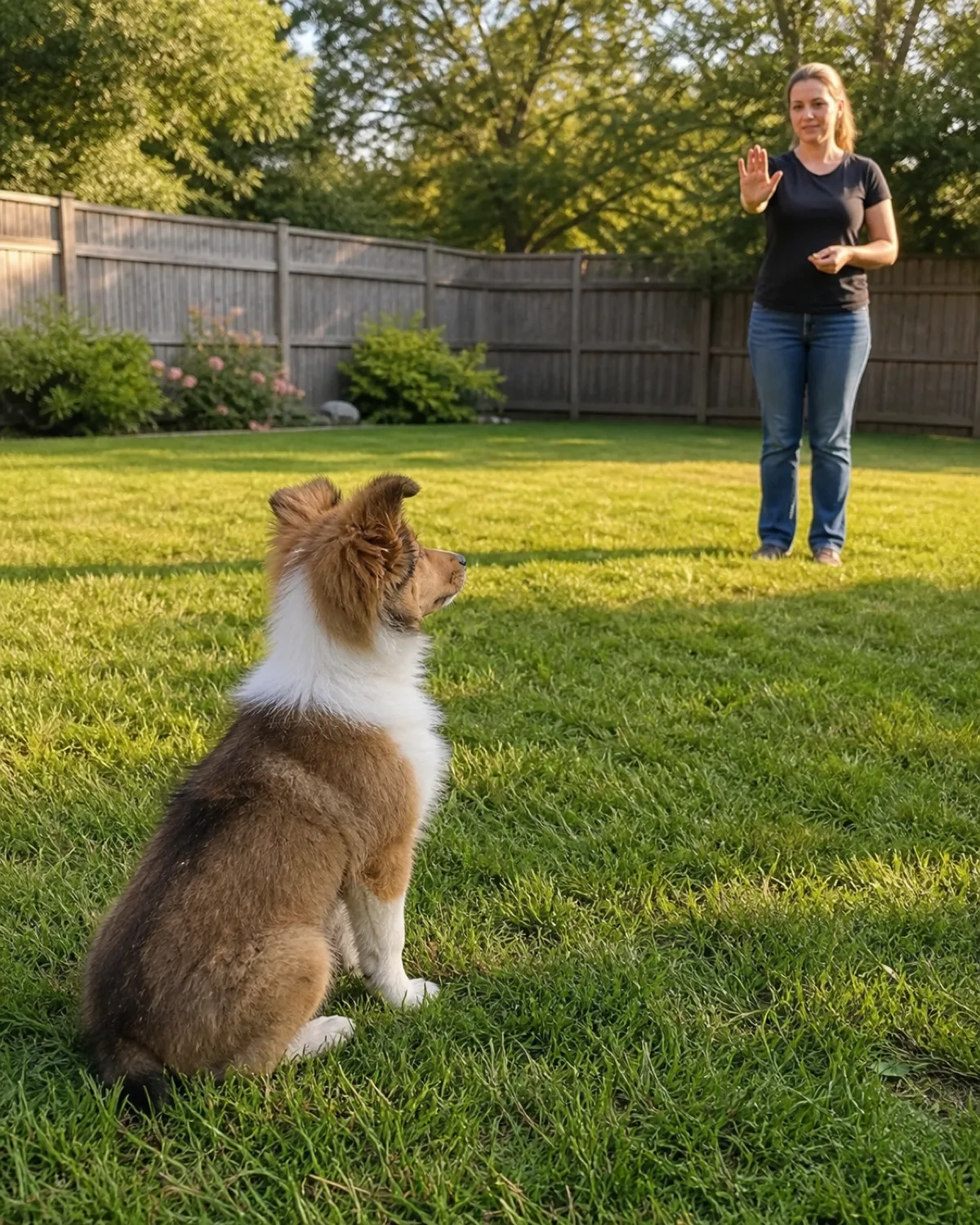
Ask for a sit. Say "stay" and hold your palm up. Wait one second. Mark and reward.
Add one second at a time until you reach five. Do not move your feet yet.
Once your puppy can hold five seconds with you standing still, take one step backward, then step forward and reward.
For come, start indoors at very short range:
Kneel down three feet away with a high-value treat visible in your hand.
Say your puppy's name followed by "come" in a cheerful tone.
The moment they move toward you, reward generously — several treats in a row, not just one.
Never call your puppy to come and then do something they dislike (bath, crate, nail trim). Come should always predict the best thing that has happened all day. Our full guides on teaching stay and teaching recall cover distance progressions and distraction-proofing.
9. Practice training in new locations once basics are solid at home
A puppy who sits perfectly in the kitchen does not automatically know what sit means in the park. Dogs do not generalize well — they learn behaviors in context, and a new context resets the difficulty.
Once your puppy responds reliably at home, move the same exercises to a new location and expect to start over:
Backyard: familiar smells, slightly more distractions. Use higher-value treats.
Quiet park: new smells, new surfaces, distant people. Shorten the session.
Pet store or cafe patio: high distraction. Ask for one sit, reward heavily, and leave on a high note.
Every new environment is a fresh classroom. Drop your criteria by fifty percent — if your puppy holds a five-second stay at home, accept a two-second stay at the park and build from there.
The generalization phase typically falls between sixteen and twenty weeks and is the part most puppy owners skip. They assume the behavior is "learned" because it works at home, then get frustrated when their puppy ignores them outside.
📌 Save this list
10 Puppy Training Schedule Steps
1Potty training from day oneEvery two hours plus after meals, naps, and play. Same door, same spot, same reward.
2Sit as the first commandTreat above nose, rear goes down, mark and reward. Three sets of five a day.
3Crate training week oneOpen door, treats inside, gradually close for seconds at a time. Build to nap length.
4Handling exercisesTouch ears, paws, mouth, belly, tail daily with treats. Prep for vet and grooming.
5Socialization outingsTwo to three new experiences per week. Treats for calm observation, never forced contact.
6Leash walking indoorsStart in the hallway. Reward loose leash. Add outdoor distractions week by week.
7Bite inhibitionOuch, withdraw, resume. Redirect to a chew toy every single time.
8Stay and come at 12 weeksOne-second stay building to five. Come from three feet with a jackpot reward.
9Train in new locationsMove the same exercises outdoors. Drop criteria by fifty percent in each new place.
10Sessions under five minutesThree to five micro-sessions a day. Always end on a win with a jackpot treat.
PAWLIQA.COM
10. Keep every session under five minutes and always end on a win
Puppy attention spans run between two and five minutes. After that, learning efficiency drops, frustration rises, and you both end up irritated.
Structure the day as three to five micro-sessions rather than one long block:
Morning before breakfast: two minutes of sit and stay practice.
After the midday potty break: three minutes of leash walking in the hallway.
Evening wind-down: two minutes of handling exercises on the couch.
The single most important rule: end every session the moment your puppy does something right. Ask for one more sit, mark it, deliver a jackpot of three or four treats, and walk away. "End on a win" teaches your puppy that training predicts good things — which makes tomorrow's session start faster.
If your puppy is struggling with a new skill, drop back to an easier version they already know, reward it, and stop there. A short session that ends well is worth ten times more than a long session that ends in confusion.
About the author
Jess Calloway
Jess Calloway edits Pawliqa, where she shares dog care, grooming, training, and new-owner tips — plus DIY and pet-friendly home ideas — for anyone who wants a happy, well-cared-for dog. As a dog mom to three very different dogs (a senior mutt who sleeps eighteen hours a day, a reactive herder who needs a job, and a puppy who treats every rule as a suggestion), she writes from the couch they have all claimed as theirs. More about Jess
Twelve tips for bringing home a rescue dog covering setting up a safe room before pickup day, stocking essentials before arrival, keeping the first day quiet and boring, letting the dog explore one room at a time, using a crate as a decompression den, establishing a feeding routine from day one, starting house training from scratch regardless of age, expecting and allowing the shutdown period, following the three-three-three decompression timeline, introducing existing pets on neutral ground, building trust through boring predictability, and knowing rescue-specific behaviors that need professional help.
Fourteen rules for building a puppy feeding schedule from eight weeks to twelve months, covering meal frequency, portion sizing, food transitions, treat budgets, and warning signs that something needs adjusting.