The first week with my youngest dog, I made every decision on the fly. When should she eat? I guessed. When should she nap? She did not. When should she go outside? After the third accident on the kitchen floor.
By week two, I had a rhythm. Not a rigid timetable. A pattern she could predict. And the difference was immediate — fewer accidents, less biting, more actual sleeping.
This guide walks through the practical structure of a puppy daily schedule from eight weeks to six months, covering the blocks that matter most: potty breaks, meals, naps, training, and play.
Jump to a section
How to create a daily schedule for your puppy
From core building blocks and age-specific templates to fitting training in, handling disruptions, and adjusting as your puppy grows.
1. Why Puppies Need a Schedule
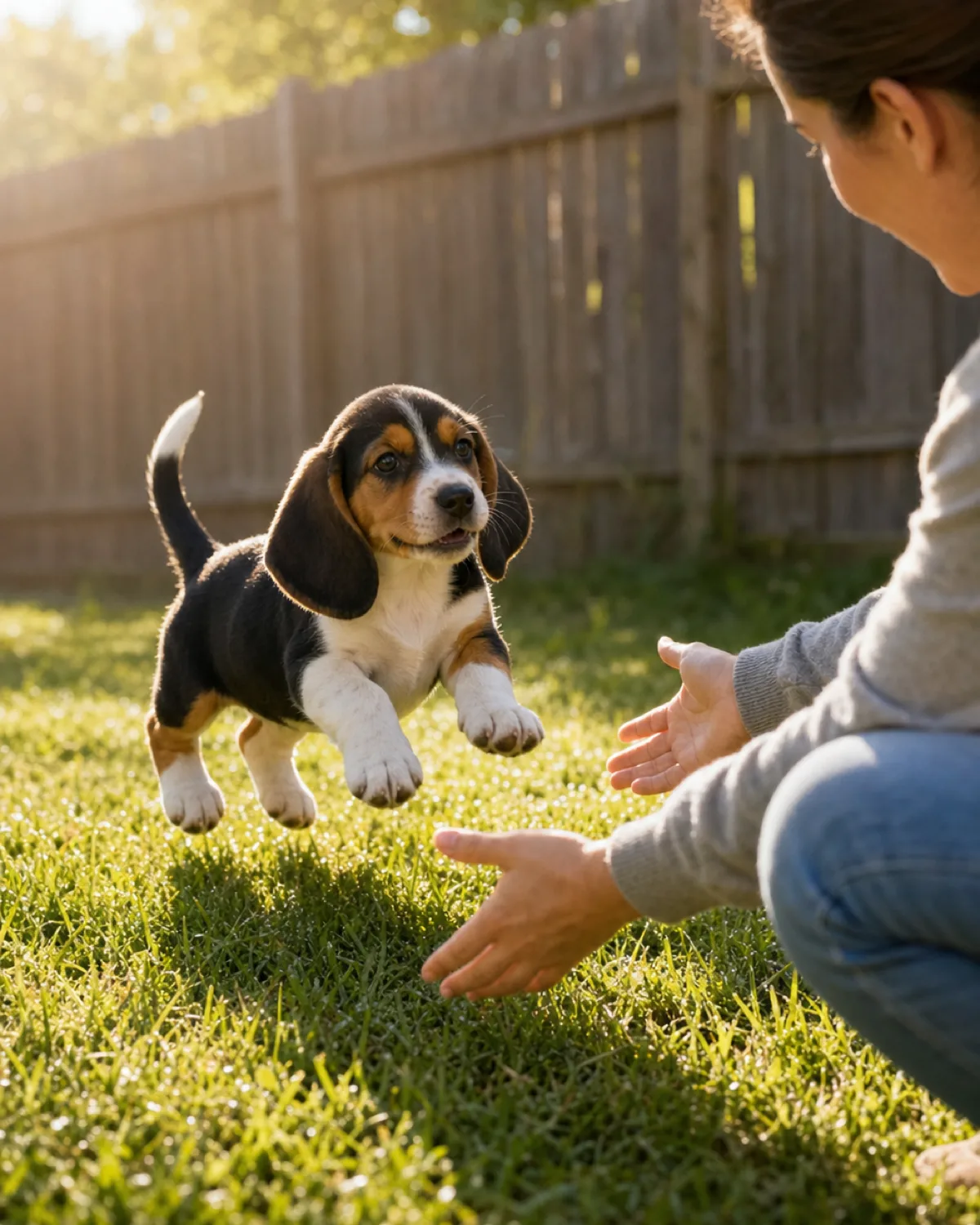
Puppies do not understand clocks, but they understand patterns. A predictable routine does four things at once.
First, it makes potty training possible. A puppy who eats at the same times every day will need to go at the same times every day. That predictability is the entire foundation of housetraining.
Second, it prevents overtiredness. Puppies who stay awake too long do not calm down on their own. They escalate — more biting, more zoomies, more chaos. A schedule builds in naps before the meltdown starts.
Structure Is Not Rigidity
A schedule is a rhythm, not a script. The goal is not 7:02 AM potty break and 7:17 AM breakfast. The goal is that your puppy knows what comes next: wake up means going outside, eating means going outside again, playing means nap time is coming. That predictability reduces anxiety for the puppy and decision fatigue for you.
2. The Core Building Blocks of a Puppy Day
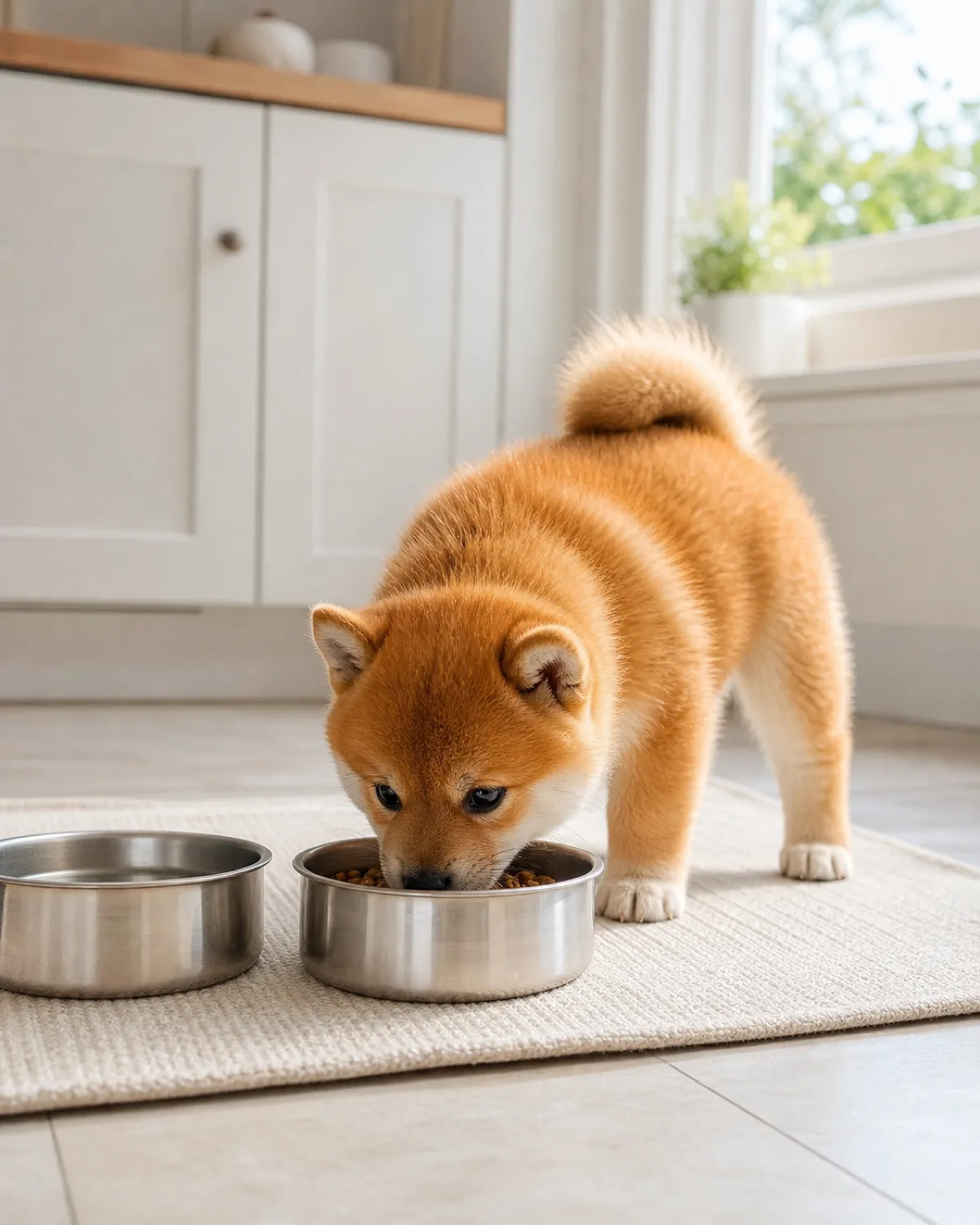
Every puppy schedule, regardless of age or breed, is built from the same five-block cycle that repeats throughout the day.
The cycle goes: potty break, meal or water, active time including play and training, another potty break, then nap. This loop runs roughly every two to three hours for young puppies and stretches longer as they mature.
The Potty Anchors
Potty breaks are the non-negotiable anchors. The rest is flexible. Your puppy needs to go outside immediately after waking up, within fifteen minutes of eating, after every play session, and right before going into the crate for a nap. Miss one of these windows and the accident is not the puppy's fault. It is a scheduling gap.
Start with your puppy's age
How old is your puppy?
The schedule structure is the same at every age. What changes is how often the cycle repeats and how long each block lasts.
8-12 weeksBladder holds 1-2 hours max. Potty break every hour when awake. Naps take up 60-70% of the day. Training sessions last 2-3 minutes. One nighttime bathroom trip is normal. Three meals per day.
3-6 monthsBladder holds 3-4 hours. Potty intervals stretch. Naps decrease but are still needed. Training sessions extend to 5-10 minutes. Most puppies sleep through the night. Transitioning from three meals to two.
Both ages follow the same cycle: potty break, meal or water, active time with play and training, potty break, nap. The younger the puppy, the faster this cycle repeats.
3. A Sample Schedule for 8 to 12 Week Old Puppies
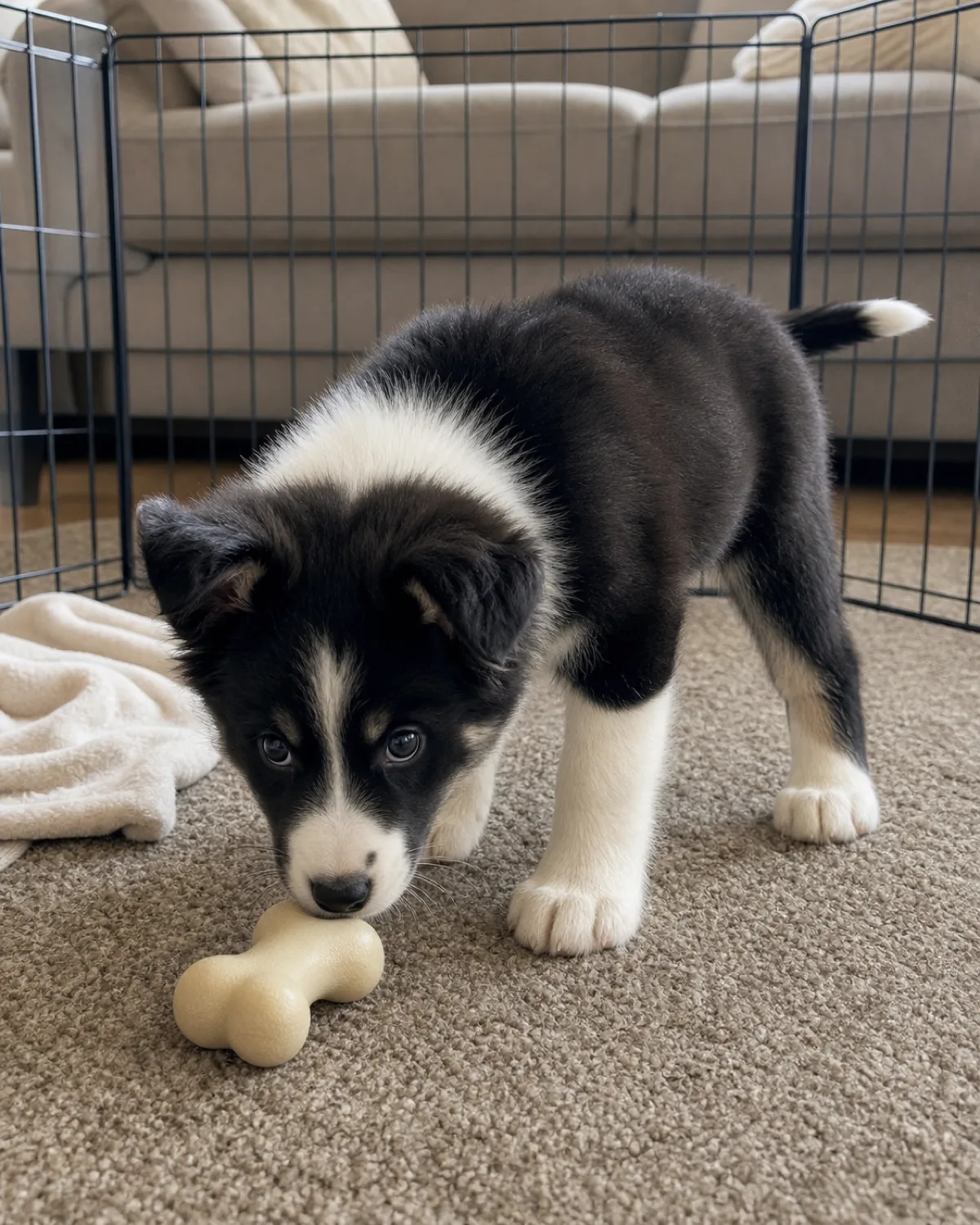
At eight to twelve weeks, the bladder is tiny. Your puppy can hold it for roughly one to two hours during the day, which means the cycle repeats frequently and the naps are essential.
A typical day looks something like this. Six thirty in the morning, the puppy wakes up and goes outside immediately. Then breakfast, followed by another trip outside fifteen minutes later. Thirty to forty-five minutes of supervised play and a short two to three minute training session.
Then into the crate for a nap lasting one and a half to two hours. When the puppy wakes up, outside again. The cycle repeats through lunch and dinner, with the last potty break around ten at night.
The Middle of the Night
At this age, most puppies cannot make it through the night without one bathroom break. Set an alarm for roughly halfway through the night — around two or three in the morning. Take the puppy out, keep everything boring and dark, no play, no fuss, and put them right back to sleep. This phase usually lasts two to four weeks before the bladder catches up.
4. A Sample Schedule for 3 to 6 Month Old Puppies
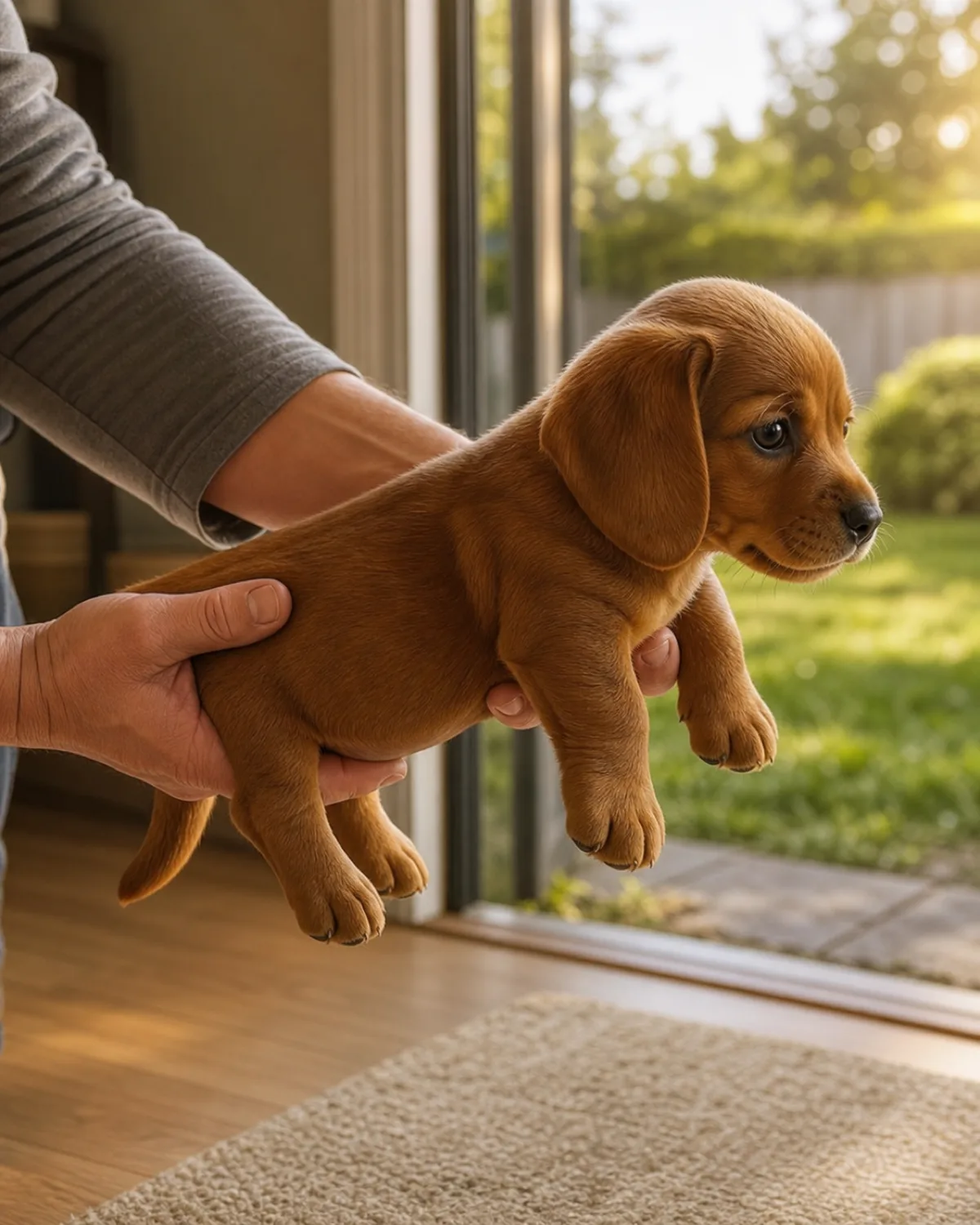
By three months, the bladder has grown enough to hold for three to four hours during the day. The core cycle is the same, but the intervals stretch and the naps become slightly shorter and less frequent.
The morning routine stays similar — outside first, breakfast, outside again — but the active windows can extend to forty-five minutes or even an hour. Training sessions stretch to five to ten minutes. Most puppies at this age are transitioning from three meals to two, which removes one feeding cycle from the day.
Walks Enter the Picture
Once vaccinations are complete, usually around sixteen weeks, short neighborhood walks replace some of the backyard potty-and-play sessions. The general guideline is five minutes of walking per month of age, twice a day. A four-month-old puppy gets two twenty-minute walks. These walks count as both exercise and mental enrichment because the outside world is a sensory overload for a young nose.
5. How Much Sleep Does a Puppy Actually Need
The answer surprises most new owners. Puppies need eighteen to twenty hours of sleep per day, including nighttime. That leaves only four to six hours of actual awake time, split across multiple short windows.
A puppy who has been awake for more than an hour straight at eight weeks, or more than two hours at four months, is almost certainly overtired. The symptoms look like the opposite of tired: frantic zoomies, non-stop biting, barking at nothing, ignoring commands they knew yesterday. These are not signs of a bad puppy. They are signs of a puppy who missed a nap.
Enforced Naps Work
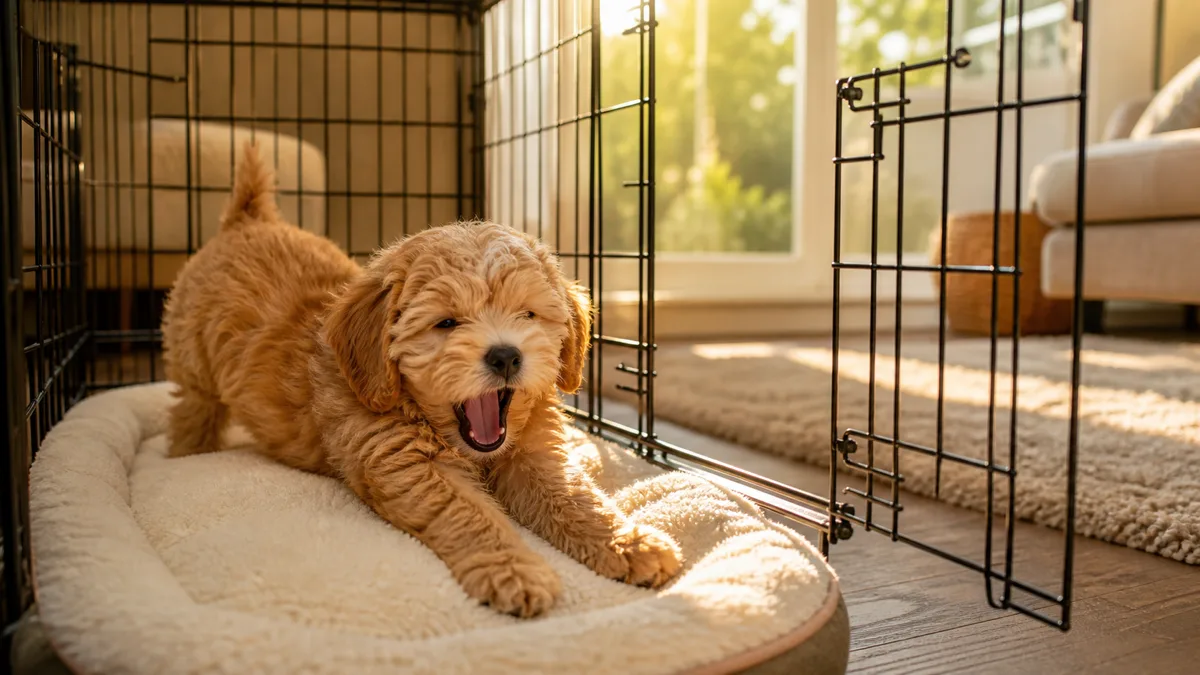
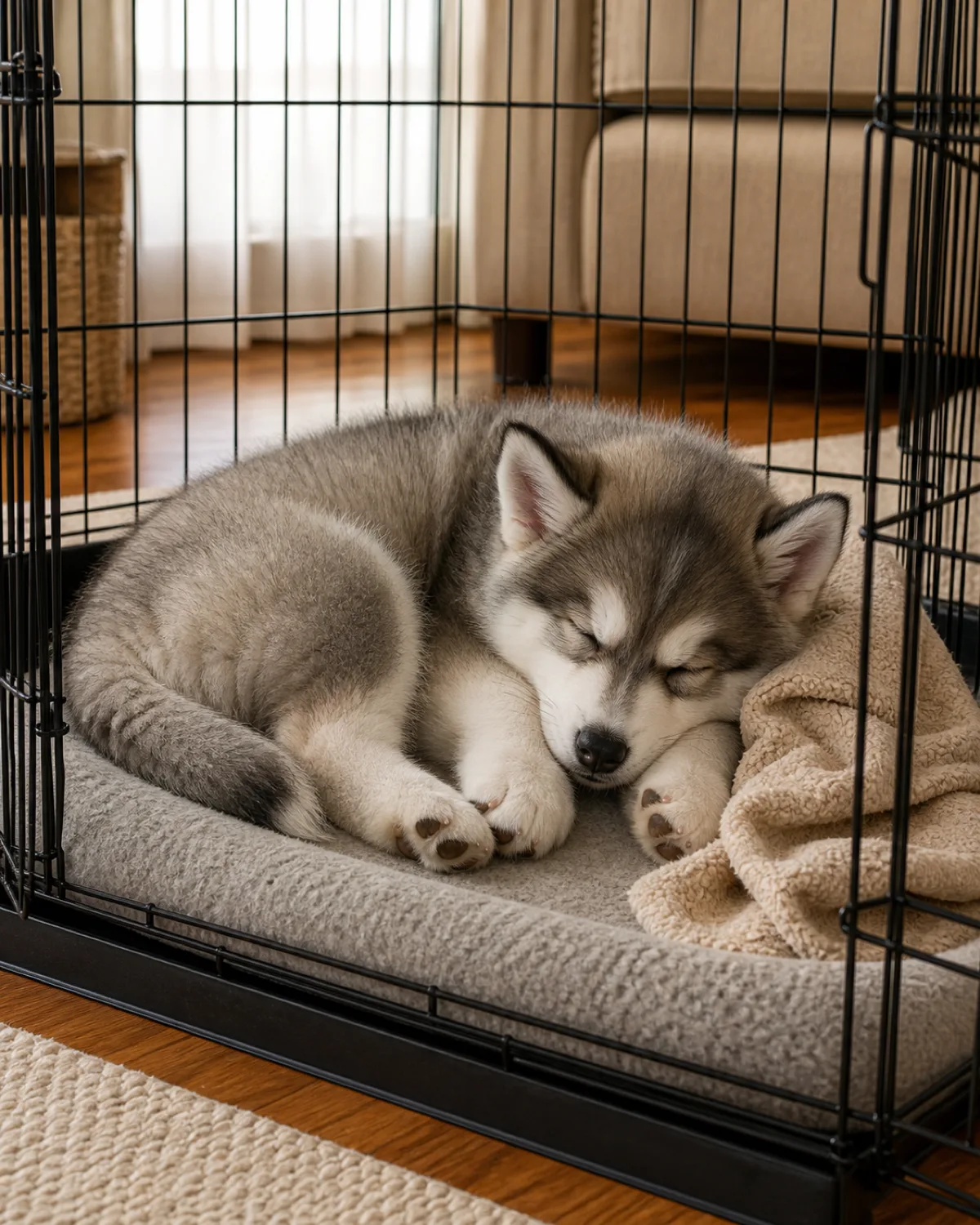
Most puppies will not put themselves to sleep. They need you to create the conditions. The crate training guide covers how to build a positive association with the crate.
Once that foundation is in place, the crate becomes your schedule's enforcement tool. Active time ends, the puppy goes in the crate with a small chew, and within minutes they are asleep. No rocking, no soothing, no negotiation.
6. Fitting Training into the Schedule
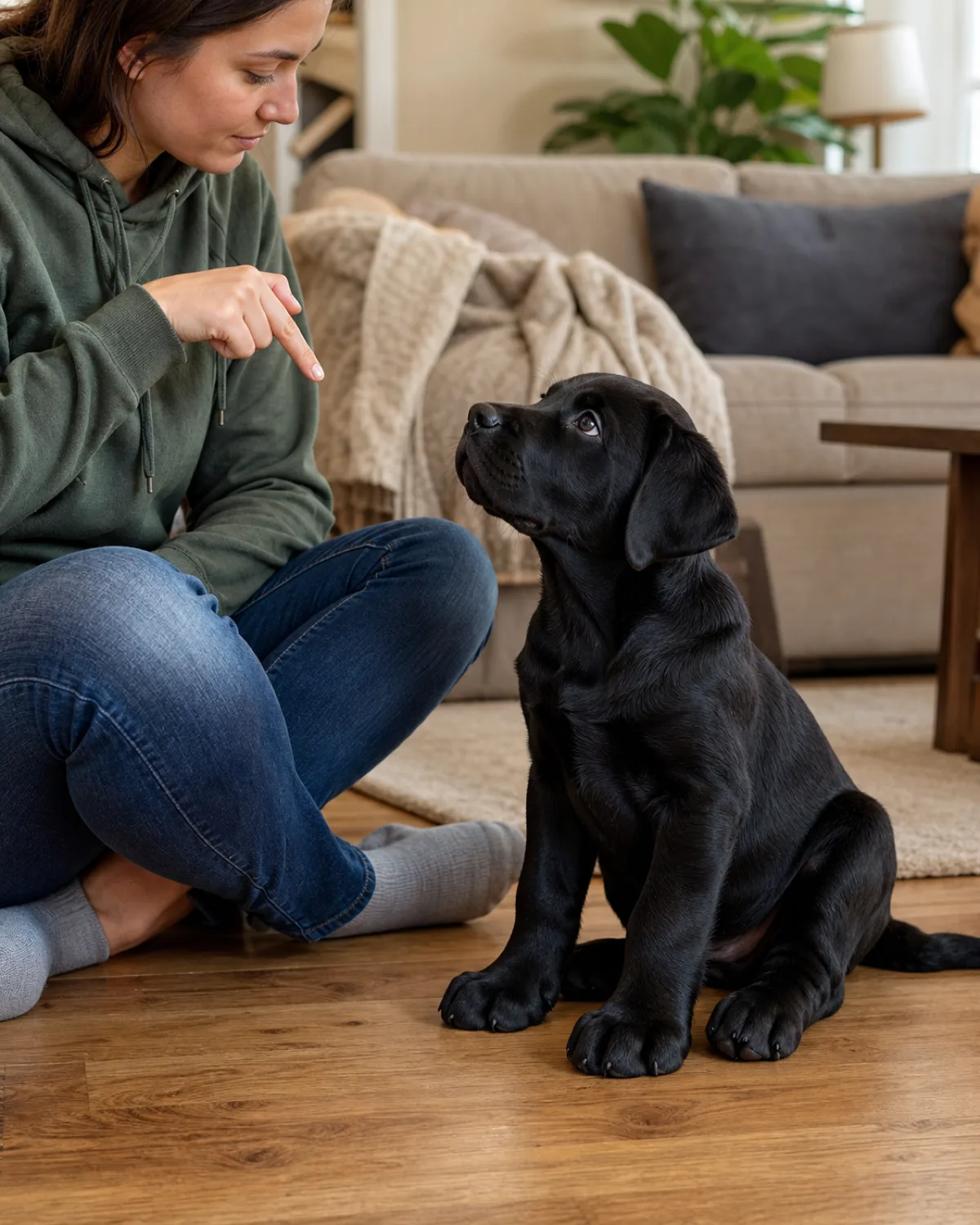
The biggest mistake new owners make with training is setting aside a dedicated thirty-minute block and expecting a puppy to focus through it. A puppy's attention span at eight weeks is roughly ninety seconds. At four months, it might be five minutes.
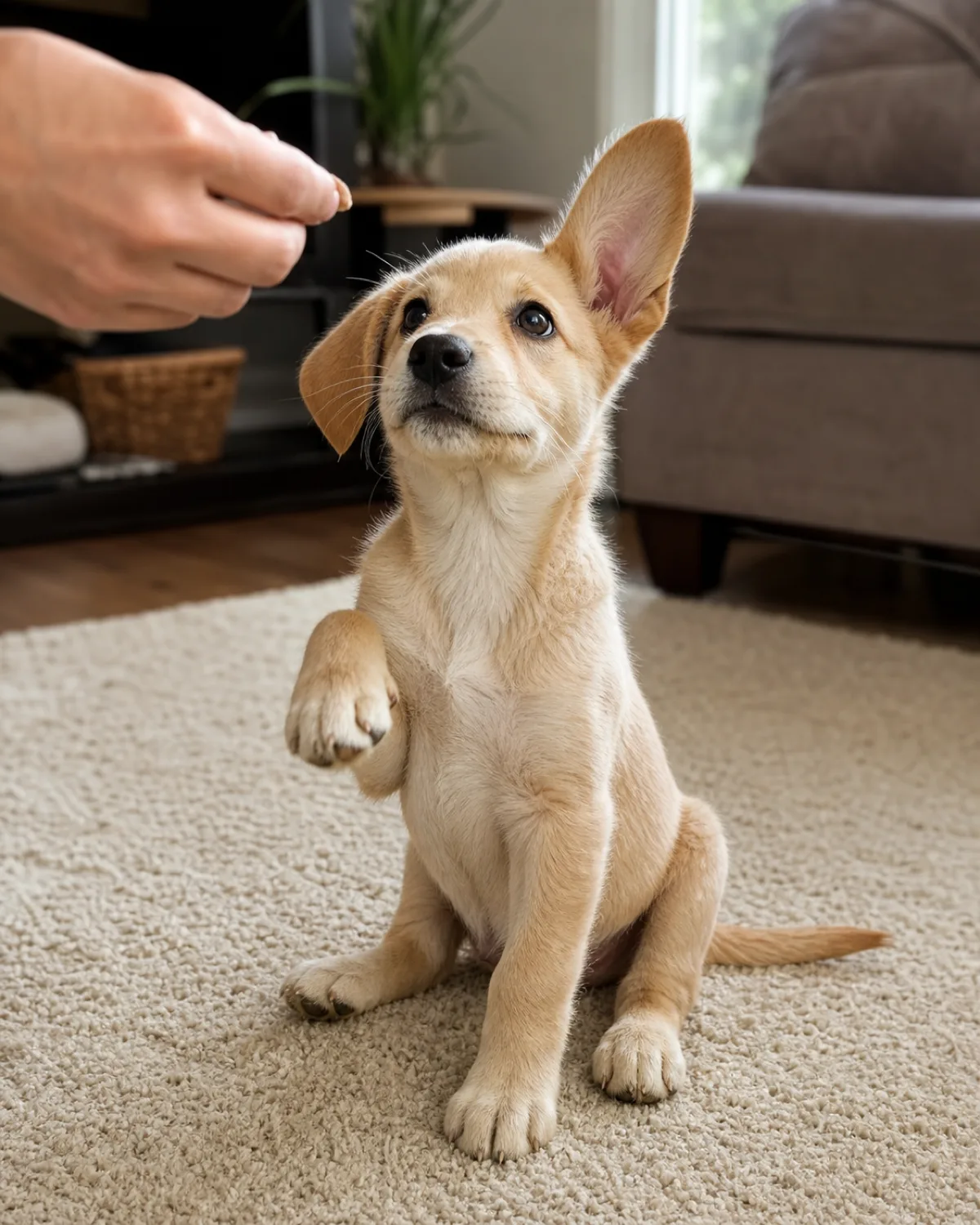
The solution is to scatter micro-sessions throughout the day. Each time your puppy wakes up from a nap, spend the first two to three minutes of the active window on one skill — sit, down, name recognition, come. The puppy is rested, alert, and motivated by the meal or treat that follows.
Five Sessions Beat One
Five three-minute sessions spread across the day produce better results than one fifteen-minute block. The puppy practices recall between naps, sits before meals, and stays before going through doors.
Training stops being a separate event and becomes part of the rhythm. By the time the puppy is six months old, fifteen individual skills are each getting daily repetitions without you ever scheduling a formal training time.
The non-negotiables for puppy scheduling
Always and never
These rules protect the two things a puppy schedule exists to manage: bladder timing and energy regulation.
Always
- Take the puppy out within sixty seconds of waking up
- Take the puppy out within fifteen minutes of eating
- End every active window with a potty break before the nap
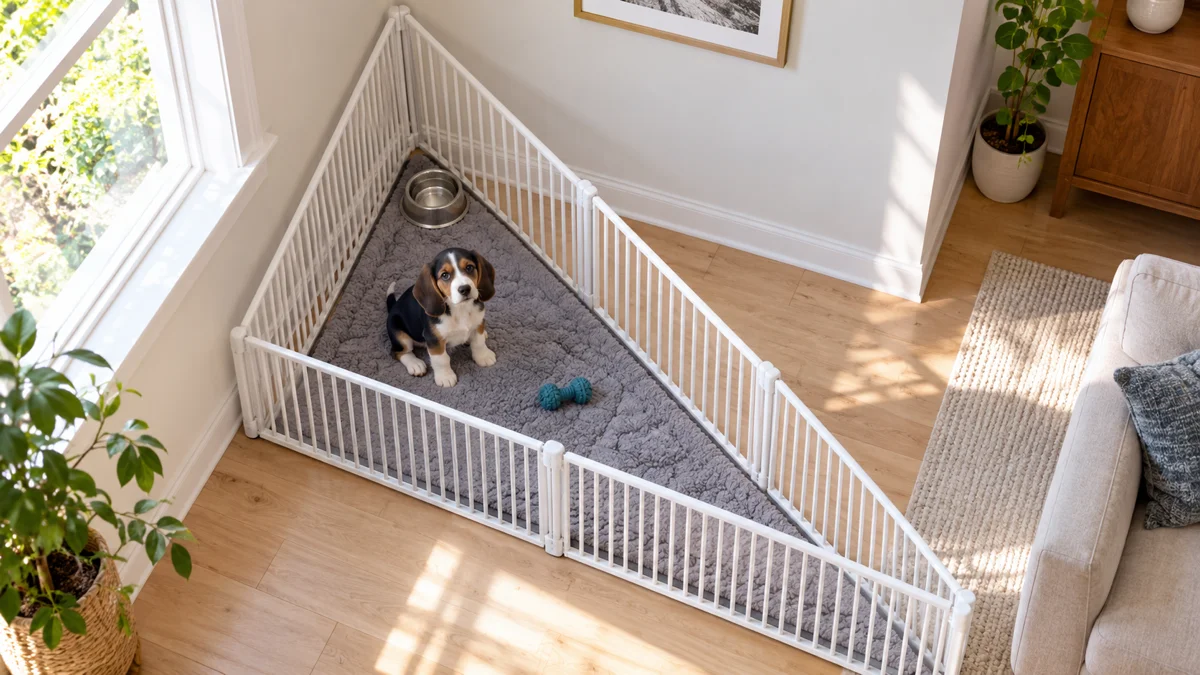
- Use the crate or a pen for every nap
- Put training at the start of an active window when the puppy is sharpest
- Keep the daily rhythm roughly consistent — same wake, meal, and sleep times
- Reassess and adjust the schedule every two to four weeks
Never
- Let a puppy stay awake longer than one to two hours without a nap
- Skip a potty break to save time — accidents set training back
- Run a training session longer than five minutes
- Cancel a nap because the puppy resists the crate
- Start training when the puppy is already wound up
- Punish a potty accident — the puppy does not understand the connection
7. What to Do When the Schedule Falls Apart
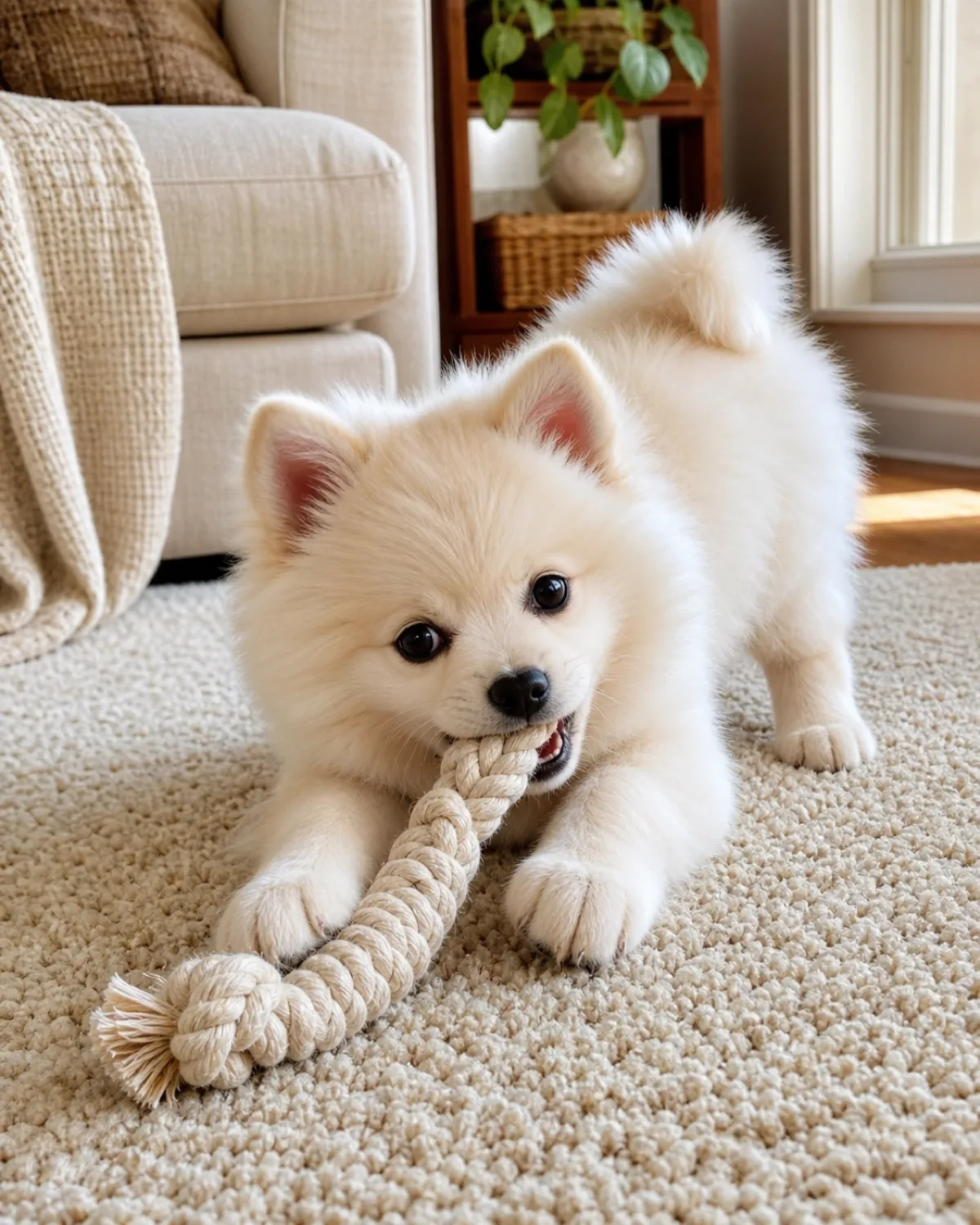
The schedule will break. You will have a meeting that runs long. A visitor will show up. The puppy will sleep an extra hour and throw off the whole afternoon. This is normal and expected.
The one thing you cannot flex on is potty timing. If the puppy is awake, the bladder clock is running. Everything else — the exact meal time, the length of the play session, whether today had two training reps or four — can shift without consequence.
Follow the Cycle, Not the Clock
When the schedule derails, stop trying to get back on the original timeline. Instead, restart the cycle from wherever you are. Puppy just woke up? Outside. Just ate? Outside in fifteen minutes. Just played hard? Time for a nap. The cycle is self-correcting as long as you follow the sequence, regardless of the time on the wall.
8. Adjusting the Schedule as Your Puppy Grows
A puppy's needs change fast enough that the schedule you build at eight weeks will not work at four months. Plan to reassess and adjust every two to four weeks.
Bladder capacity grows roughly one hour per month of age. An eight-week-old holds it for two hours. A four-month-old can manage four hours during the day. By six months, some puppies handle five to six hours, though pushing the limit invites accidents.
Meals, Naps, and Training Scale Together
Three meals a day becomes two, usually between four and six months. Four to five naps per day becomes two to three. Training windows stretch from two minutes to ten. Walk duration increases from zero to the five-minutes-per-month-of-age guideline. None of these transitions happen on a fixed date. Watch the puppy, not the calendar, and adjust when you notice they are outgrowing the current rhythm.
Save this template
Your Puppy Daily Schedule Template
- Wake up — potty break immediately (within 60 seconds)
- Breakfast (measure by body weight)
- Potty break 15 minutes after eating
- Active time: 30-45 min play plus 3-minute mini training session
- Potty break, then nap in crate (1.5-2 hours)
- Repeat the active-nap cycle through the day
- Lunch (8-12 weeks: 3 meals; 3-6 months: transition to 2)
- Longest training or socialization window before dinner
- Final potty break 10 minutes before bed
- Night: 8-12 weeks — set alarm for one 2-3 AM break; 3+ months — likely sleeps through
9. The Real Goal Is Predictability

A schedule is not about controlling your puppy's day. It is about giving them something to count on.
A puppy who knows that eating always leads to going outside does not panic when dinner ends. A puppy who knows that playtime always ends with crate time does not fight the crate. A puppy who knows that waking up always means seeing you does not bark through every nap waiting for proof.
Routine Replaces Anxiety
The first week with a new puppy feels chaotic because neither of you knows what comes next. A schedule fixes that for both of you. You stop wondering if it is time for a potty break because the rhythm tells you.
The puppy stops biting everything in sight because the rhythm tells them a nap is coming and the energy will have somewhere to go when they wake up. Predictability is not boring. For a puppy, it is the foundation of feeling safe.
The first week guide covers the initial transition when everything is brand new. Once that first week is behind you, the schedule in this guide picks up where the survival phase left off and turns it into a sustainable daily rhythm.

Jess Calloway
Dog mom to three very different dogs, writing practical guides from years of real experience — not theory. Every routine in this guide was tested in my own living room first. Not a veterinarian — always confirm health questions with your vet.