A puppy playpen is the single best investment you can make in the first six months. It gives your puppy a safe space to rest and play while you cook, work, or sleep — without worrying about chewed cables or puddles behind the couch.
The trick is setting it up in the right spot with the right layout. A pen in the wrong corner becomes a puppy jail that breeds whining. A pen in the right corner becomes your puppy's favorite place in the house.
These eleven setups cover every living situation, from studio apartments to houses with yards. Need the basics first? Start with how to puppy-proof your home and potty training.
Jump to an idea
11 Puppy Playpen Ideas
Every setup below solves a specific problem — potty training, nighttime anxiety, apartment living, travel, or multi-dog management. Jump to the one that fits your situation.
1. Open-Corner Living Room Setup
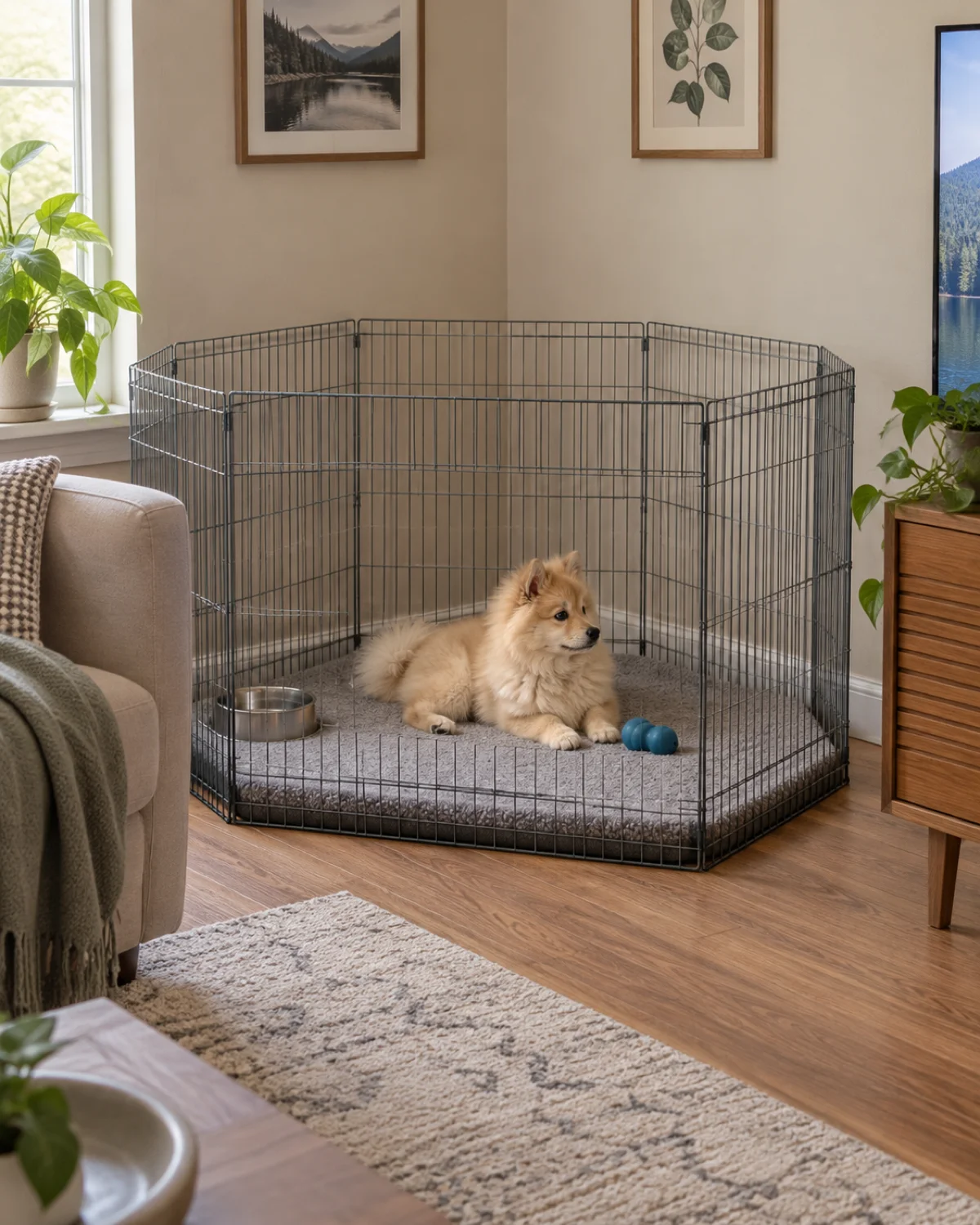
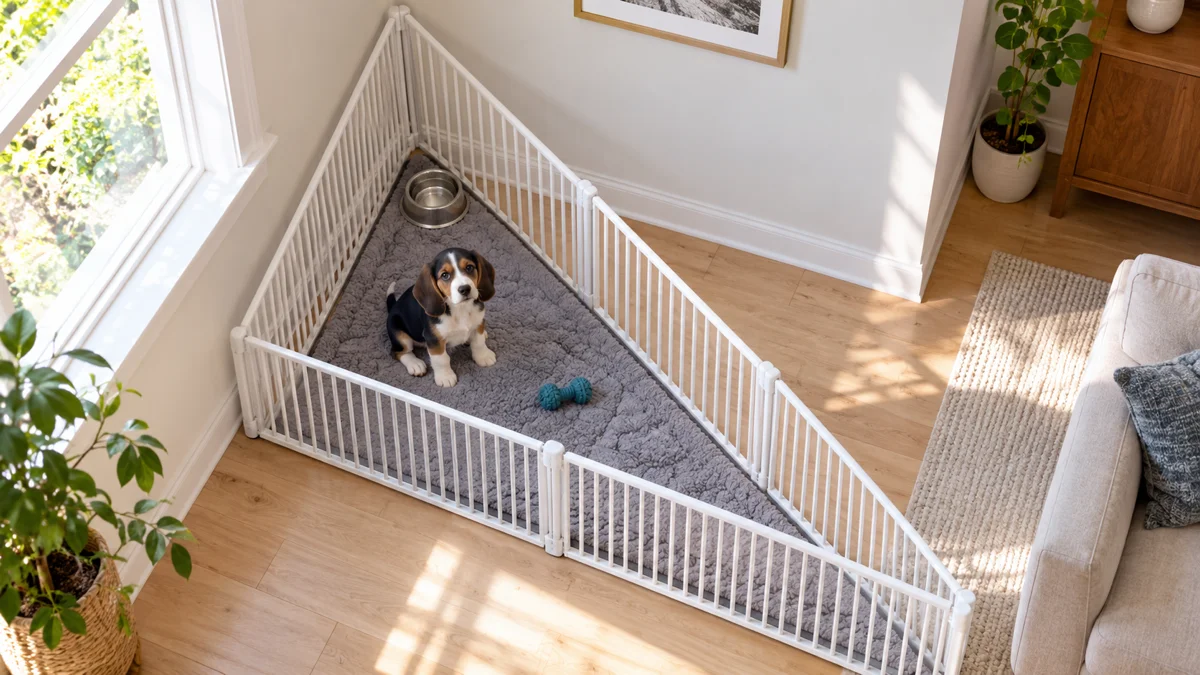
Push a foldable wire pen into the corner where two walls meet. The walls become two sides of the enclosure, so you need fewer panels and the pen feels roomier.
Line the floor with a washable pad or a cheap fleece blanket. Add a water bowl and one or two chew toys — nothing more. Too many toys overwhelm a young puppy and make cleanup harder.
Why this works: Your puppy can see and hear you while you watch TV or work on the couch, which reduces whining. The corner position also keeps the pen out of foot traffic.
- Best for puppies under 16 weeks who still need constant supervision
- Use a pen at least 24 inches tall for small breeds, 36 inches for medium breeds
- Avoid corners near radiators, direct vents, or floor-length curtains the puppy can pull through the bars
If your living room is the main hangout space, pair this with a nighttime bedroom pen so the puppy has a sleeping spot too.
2. Kitchen Tile Zone With Potty Pad Corner
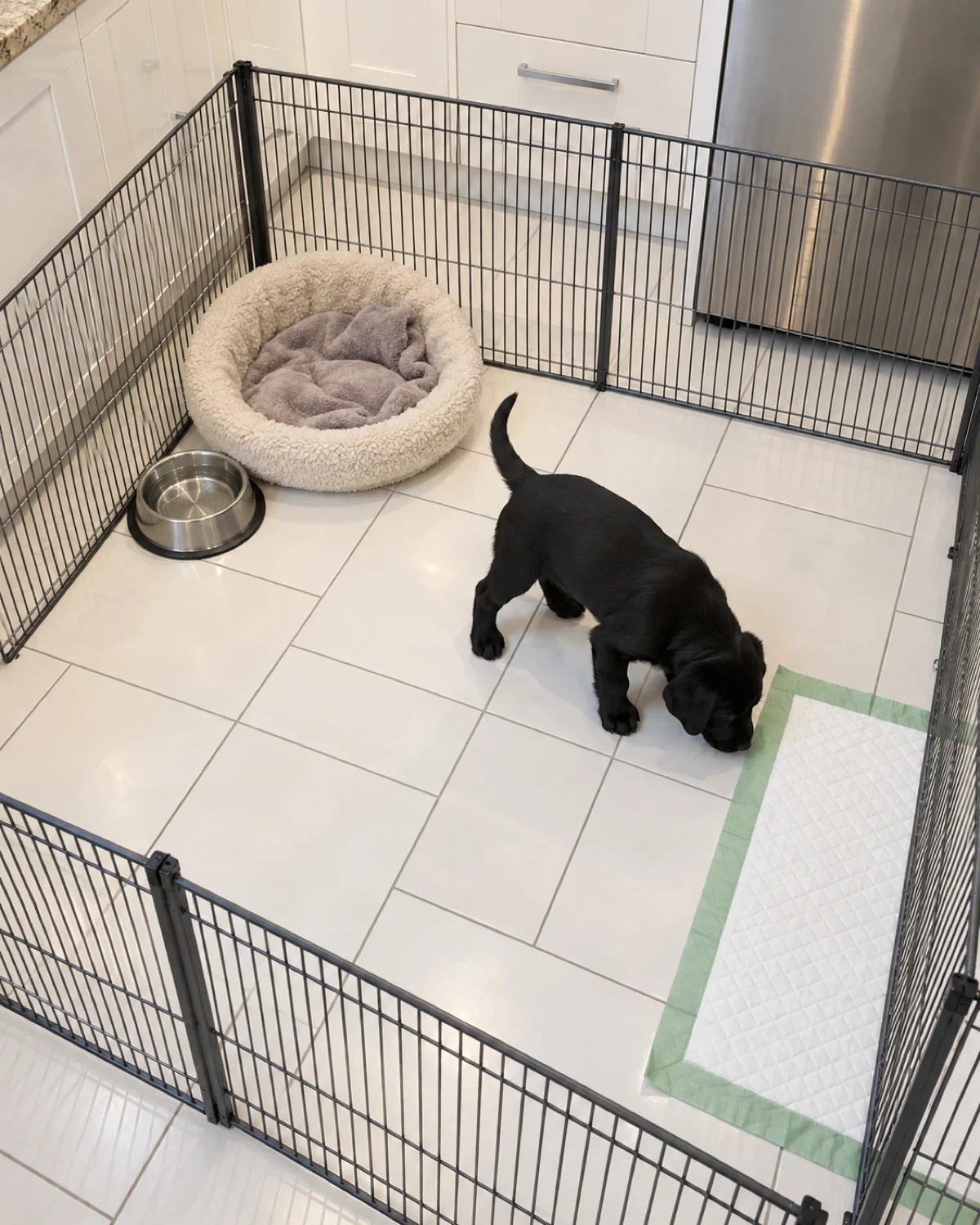
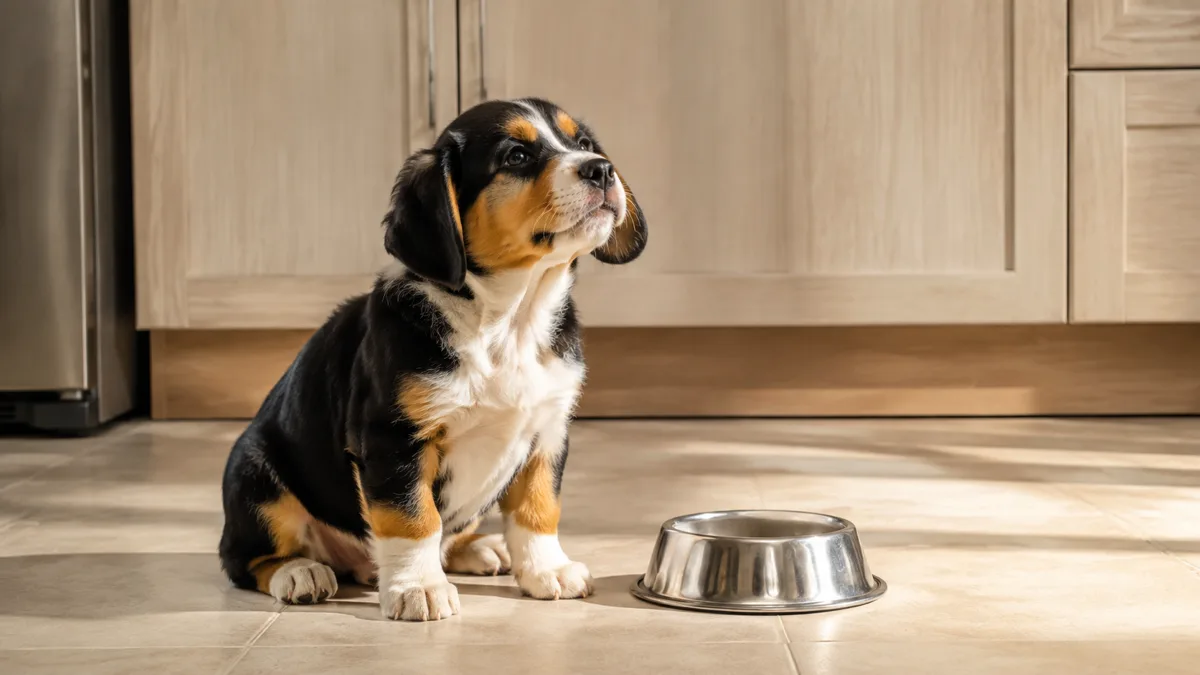
Tile and vinyl floors are the most forgiving surfaces for potty training accidents. Set the pen on the kitchen tile with a potty pad in one corner and a bed in the opposite corner.
Puppies naturally avoid soiling near where they sleep, so the diagonal layout teaches them to walk to the pad. Replace the pad after every use — a soiled pad becomes a reason to avoid the designated spot entirely.
Layout tips:
- Place the potty pad corner closest to the door you use for outdoor trips so the transition feels natural
- Keep the bed corner away from the dishwasher and oven — the sudden noises can startle a young puppy
- Swap the pad for a grass patch tray if you plan to train for outdoor-only elimination later
This setup doubles as a safe zone during meal prep. Your puppy stays close without getting underfoot near hot pans or dropped food.
3. Bedroom Nighttime Pen Next to Your Bed
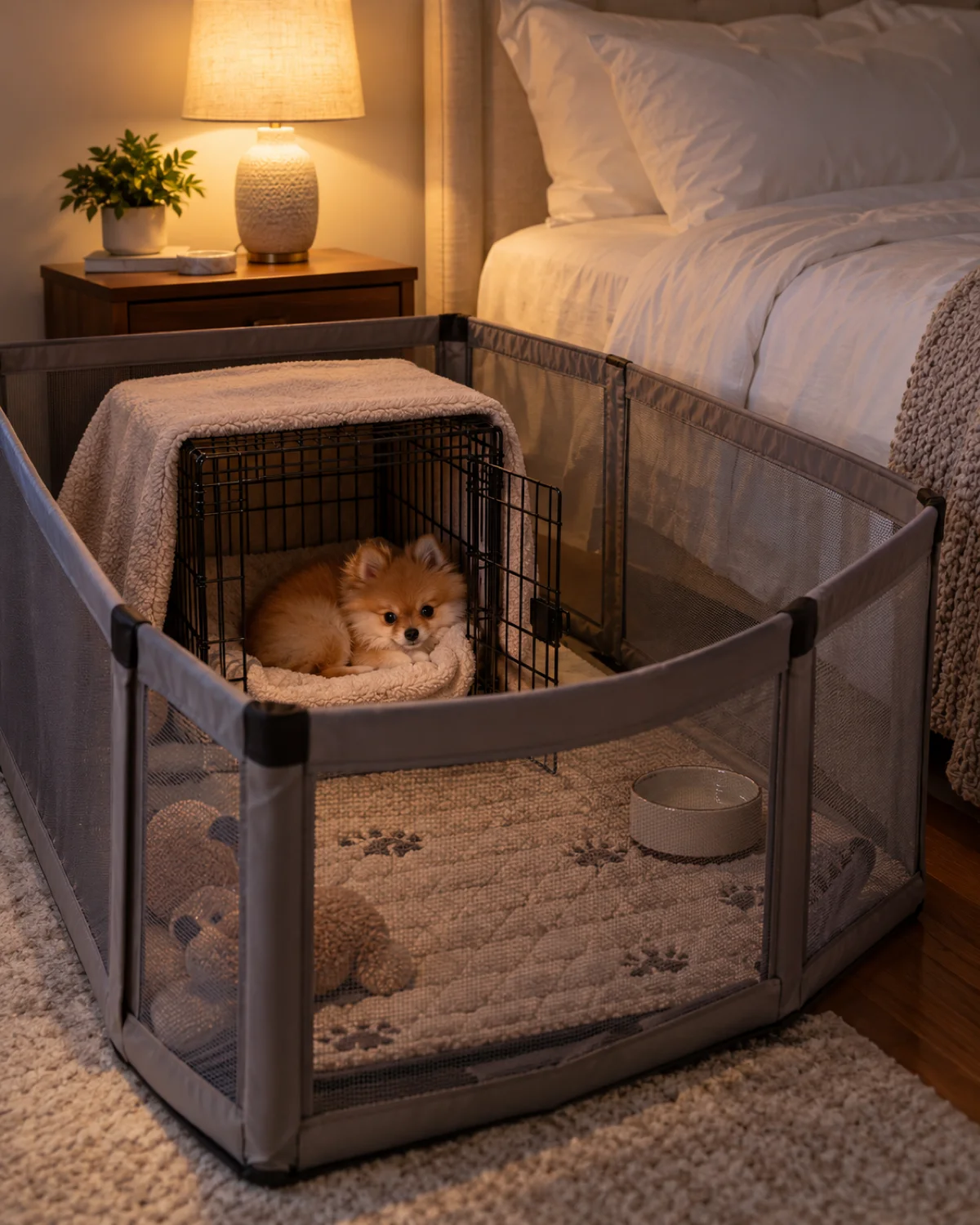
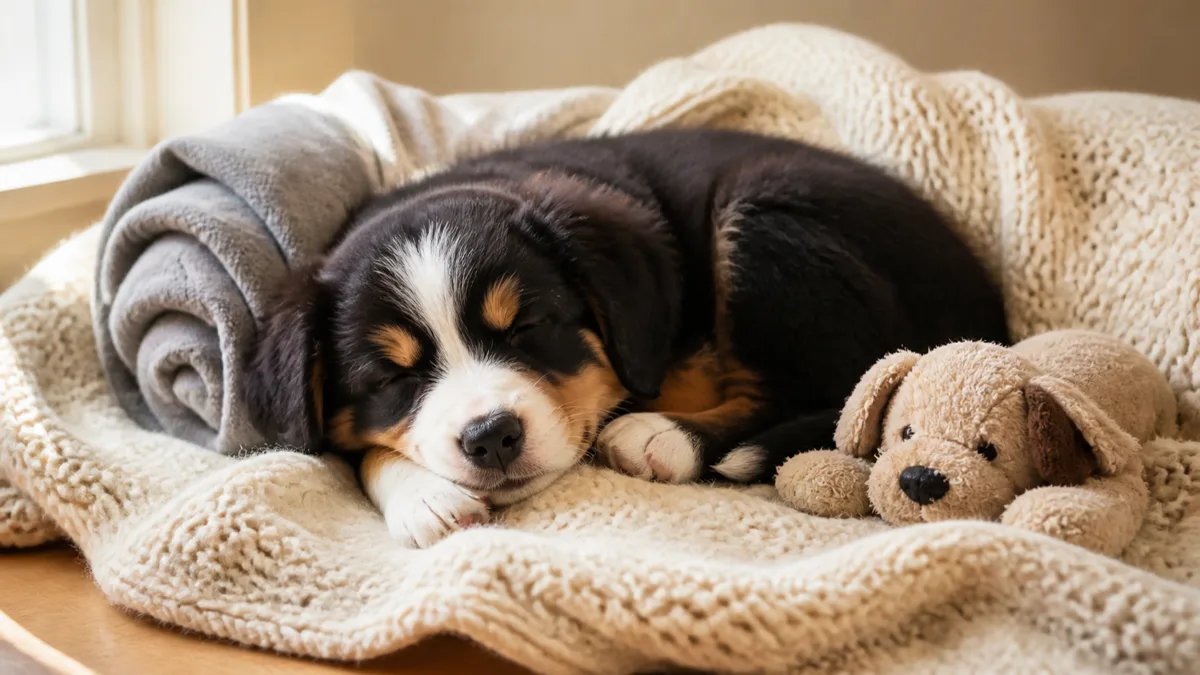
The first few nights home are the hardest for a new puppy. A pen beside your bed bridges the gap between sleeping alone and sleeping in your bed.
Place a small crate inside the pen with the door propped open. Add a fleece blanket and a water bowl outside the crate but inside the pen. The puppy can retreat into the crate for den-like security or come out to stretch and drink without waking you for a potty trip.
Why bedside, not the living room:
- Your breathing and scent calm the puppy — studies show proximity to the owner reduces nighttime vocalization
- You can hear whimpering that signals a genuine need to go outside versus boredom whining
- The puppy learns that nighttime means quiet time, not playtime
After two to three weeks, start sliding the pen a few inches toward the door each night. Within a month most puppies transition to sleeping in a crate in another room without drama. For more on the transition, see our puppy crying at night guide.
Match the pen to your situation
Which Setup Should You Start With?
You do not need all eleven. Pick the situation below that matches your home and start with one or two pens.
4. Outdoor Shaded Grass Pen
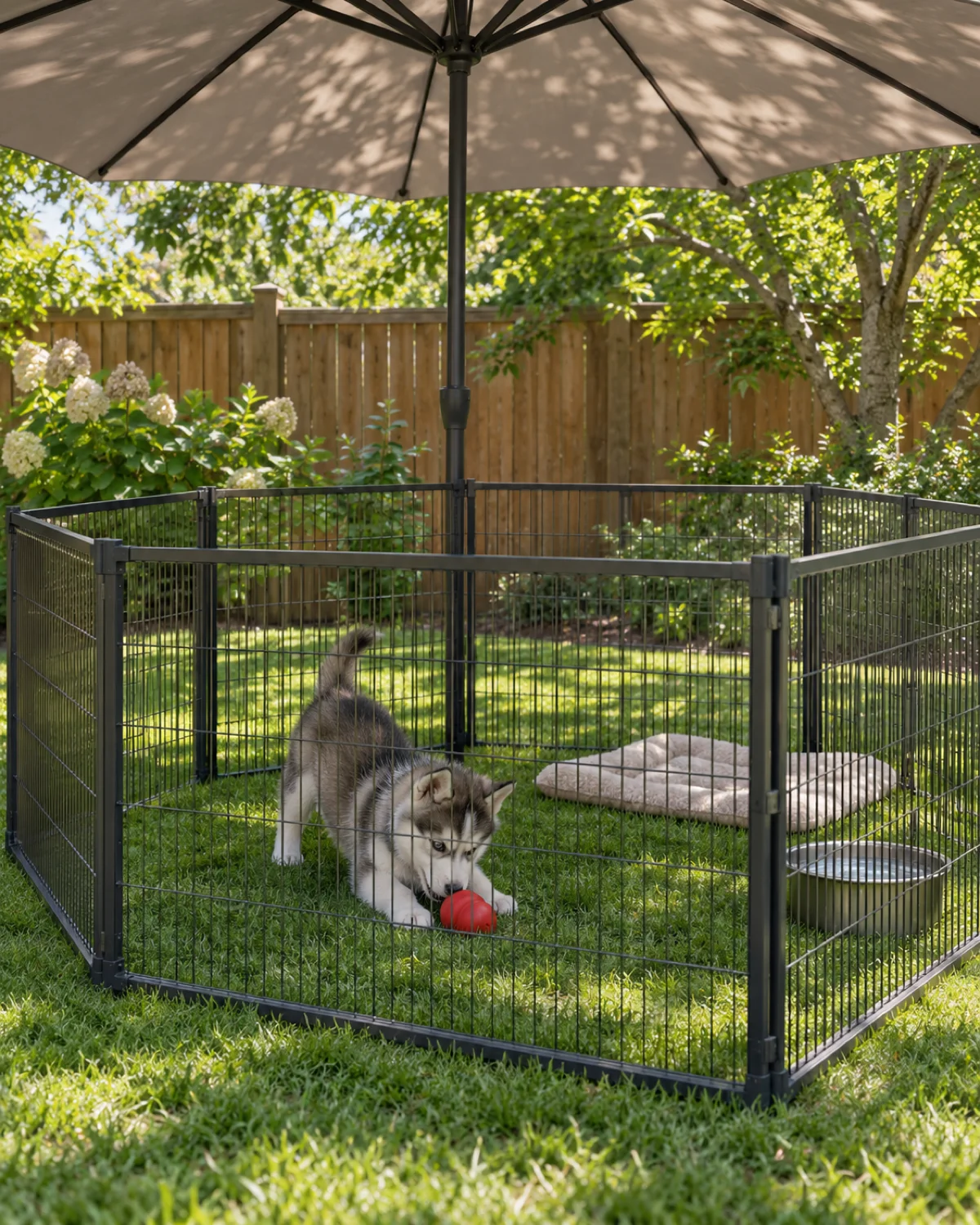
Fresh air and grass underfoot are good for a puppy, but a yard without boundaries is a recipe for eaten mulch and escapist adventures. A heavy-duty outdoor pen solves both problems.
What to put inside:
- A water bowl (refill every hour in warm weather)
- A frozen stuffed toy for mental stimulation
- A flat outdoor bed or towel for resting
- No food bowls — ants and flies find them within minutes
Anchor the pen with ground stakes or weigh down the base panels with sandbags. A determined puppy can push a lightweight pen across the yard in minutes.
Shade is non-negotiable. A patio umbrella, a pop-up canopy, or a tree canopy all work. Direct sun heats metal panels to burn-level temperatures and can cause heatstroke in puppies faster than in adult dogs. If the shaded area shifts with the sun, move the pen or add a second shade source.
Limit outdoor pen sessions to 30 minutes for puppies under 12 weeks, and always supervise. Hawks, stray animals, and neighborhood dogs are real threats to a small puppy in an open yard.
5. Mudroom Transition Pen
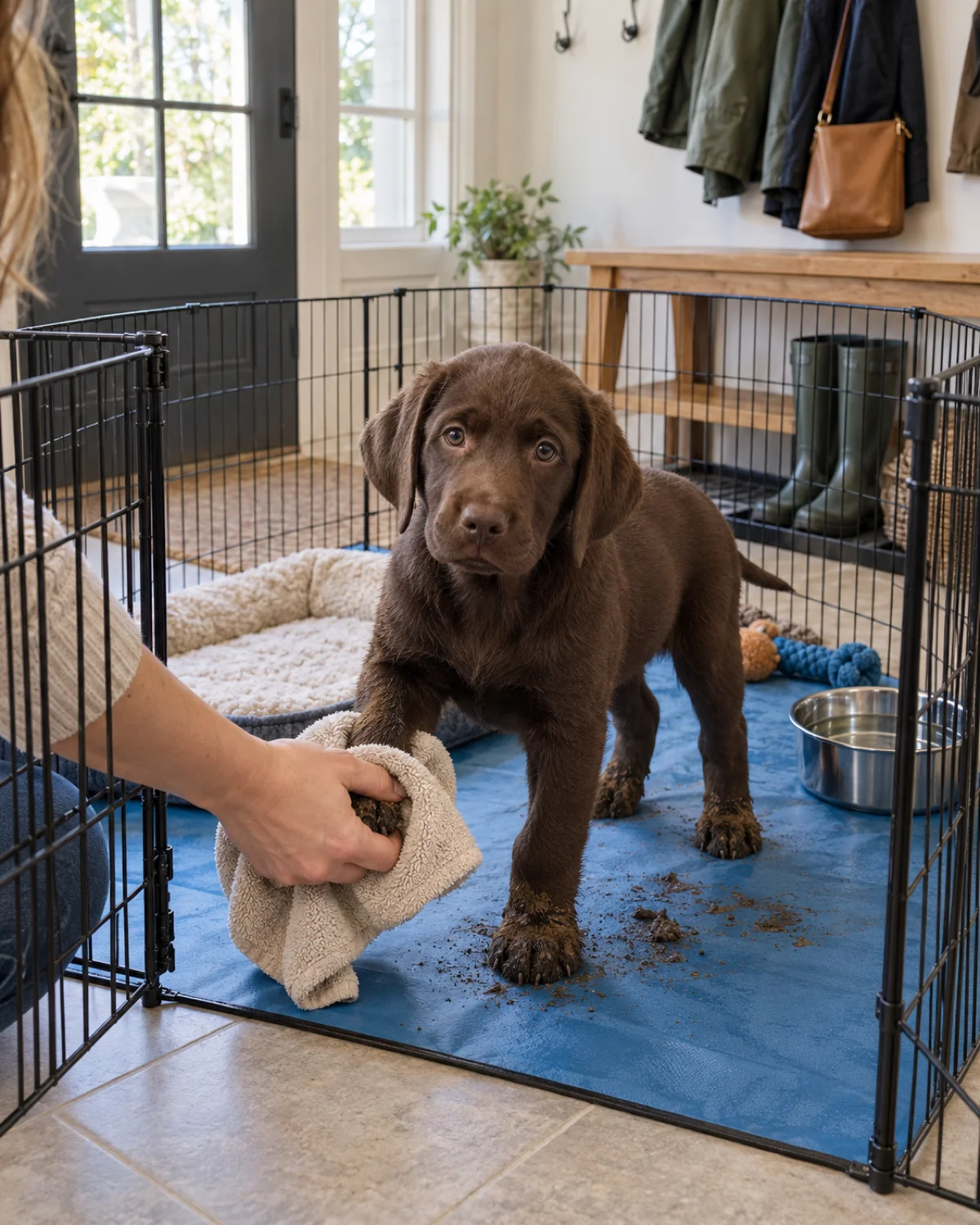
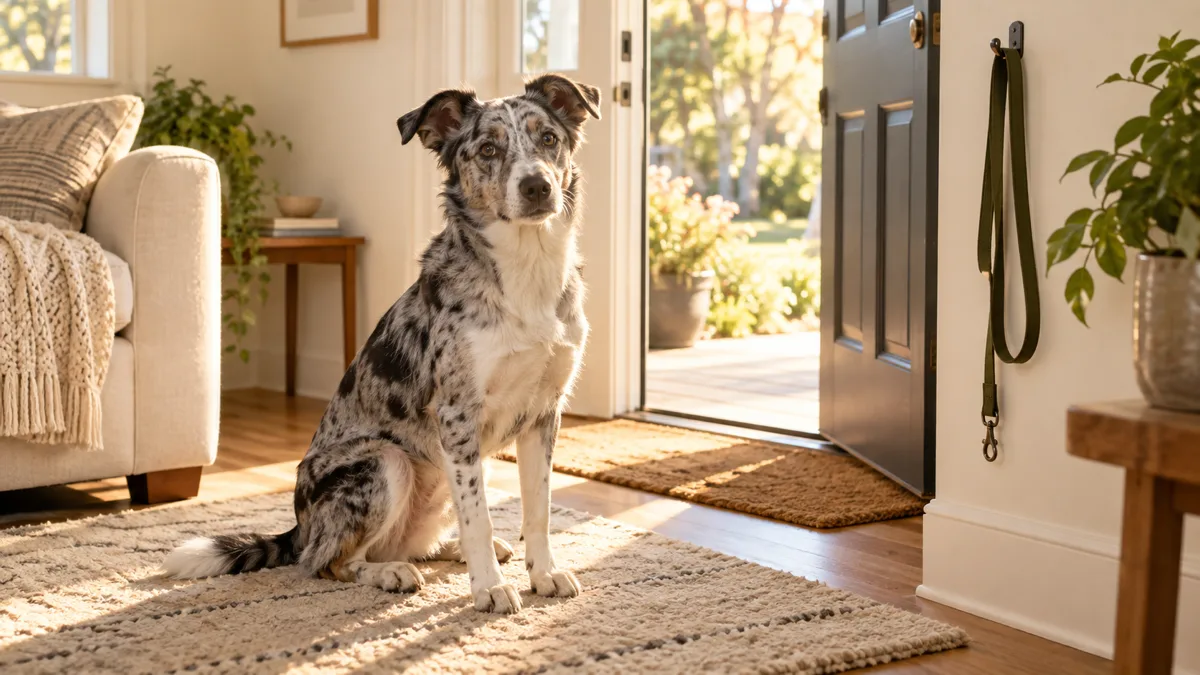
Every walk ends with dirty paws, and a puppy who bolts straight from the door to the couch takes the mud with them. A small pen in the mudroom or entryway creates a decontamination zone.
The setup is simple: a four-panel pen on a waterproof mat. After each walk, the puppy goes into the pen, you wipe the paws, dry the belly if it rained, and then release them into the house.
This trains two things at once:
- The puppy learns to wait calmly in a contained space before being released — the same impulse control that makes crate training work
- You build a consistent post-walk routine that prevents the mud-on-the-sofa drama
Keep a towel, a paw washer cup, and a small bag of treats in the mudroom. The treat comes after the paw wipe, and within a week most puppies stand still and offer their paws voluntarily.
6. Multi-Puppy Divided Playpen
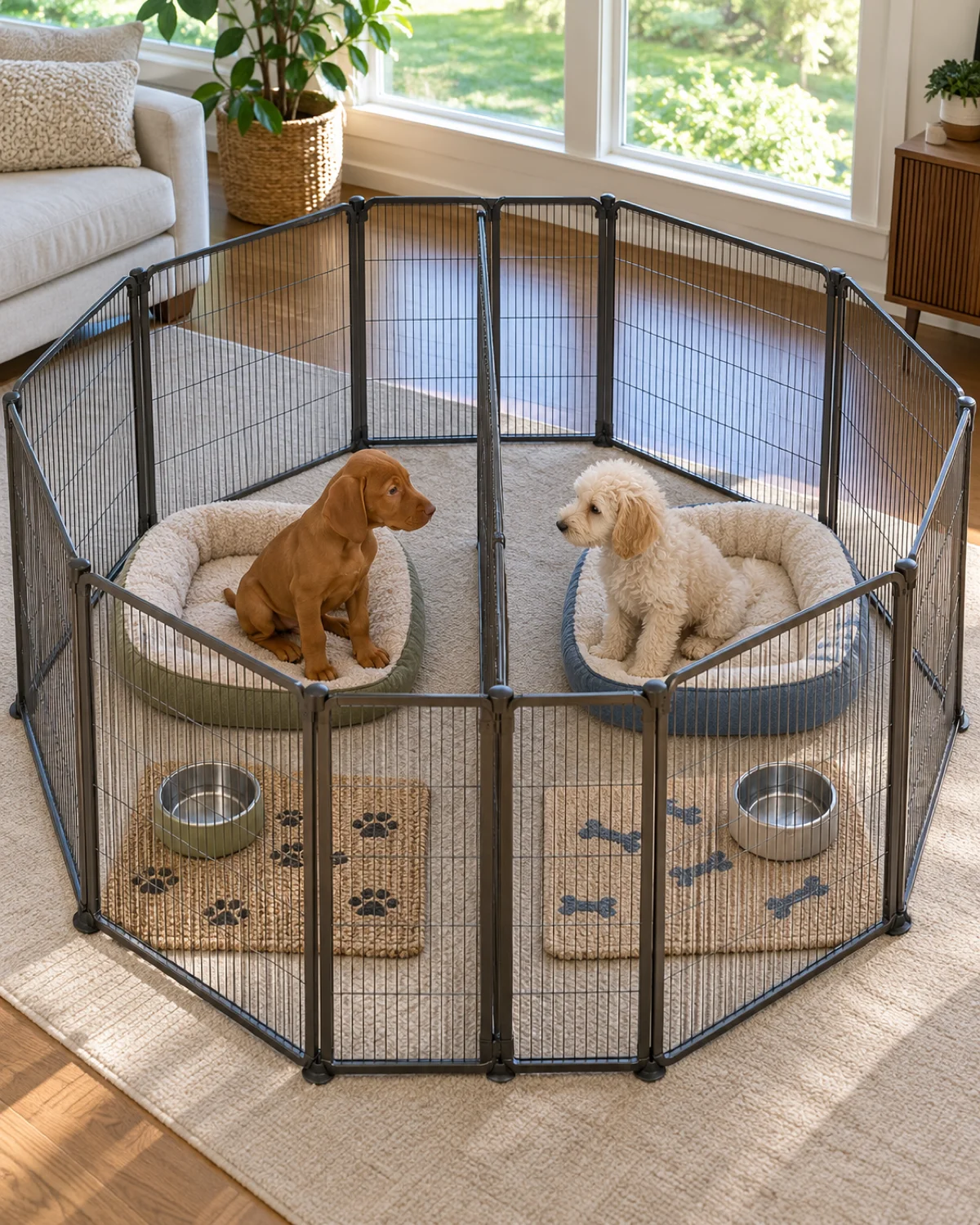
Two puppies from the same litter should not share a single undivided pen during the first few months. They need individual downtime to develop independence. Without it, you risk littermate syndrome — two dogs who cannot function apart.
A divider panel down the middle of a large octagonal pen gives each puppy their own bed, water bowl, and toy stash while still letting them see and smell each other. They learn to self-soothe without relying on the sibling for comfort.
Division guidelines:
| Scenario |
Divider type |
Remove divider when |
| Same-litter siblings |
Solid mesh panel (limits play arousal) |
Each puppy can settle alone for 30 minutes |
| New puppy + resident dog |
Wire panel (visual access) |
Both ignore each other calmly for 10 minutes |
| Two puppies, different ages |
Wire panel |
Smaller puppy is big enough to hold their own |
Rotate which side each puppy sleeps on every few days. This prevents territorial attachment to a specific section.
Four rules that separate a good pen from a puppy jail
The Playpen Ground Rules
A pen is only positive if you set it up correctly. Break these rules and your puppy will scream every time they see the pen coming out.
Never use the pen as punishmentIf you yell "get in your pen" after the puppy chews a shoe, the pen becomes a punishment chamber. Always place the puppy inside calmly with a treat or toy.
Match pen time to bladder capacityA puppy can hold it for roughly their age in months plus one hour. A three-month-old gets four hours max — then they go outside or to a potty pad.
Keep the pen boring on purposeTwo or three toys, rotated weekly. Overloading the pen with every toy in the house makes it overstimulating and prevents settling.
Size the pen to the puppyToo big and they soil one end and play in the other without caring. Too small and they cannot stretch out to sleep. Aim for enough room to lie flat, stand, turn around, and reach a water bowl.
7. Travel-Ready Portable Pen
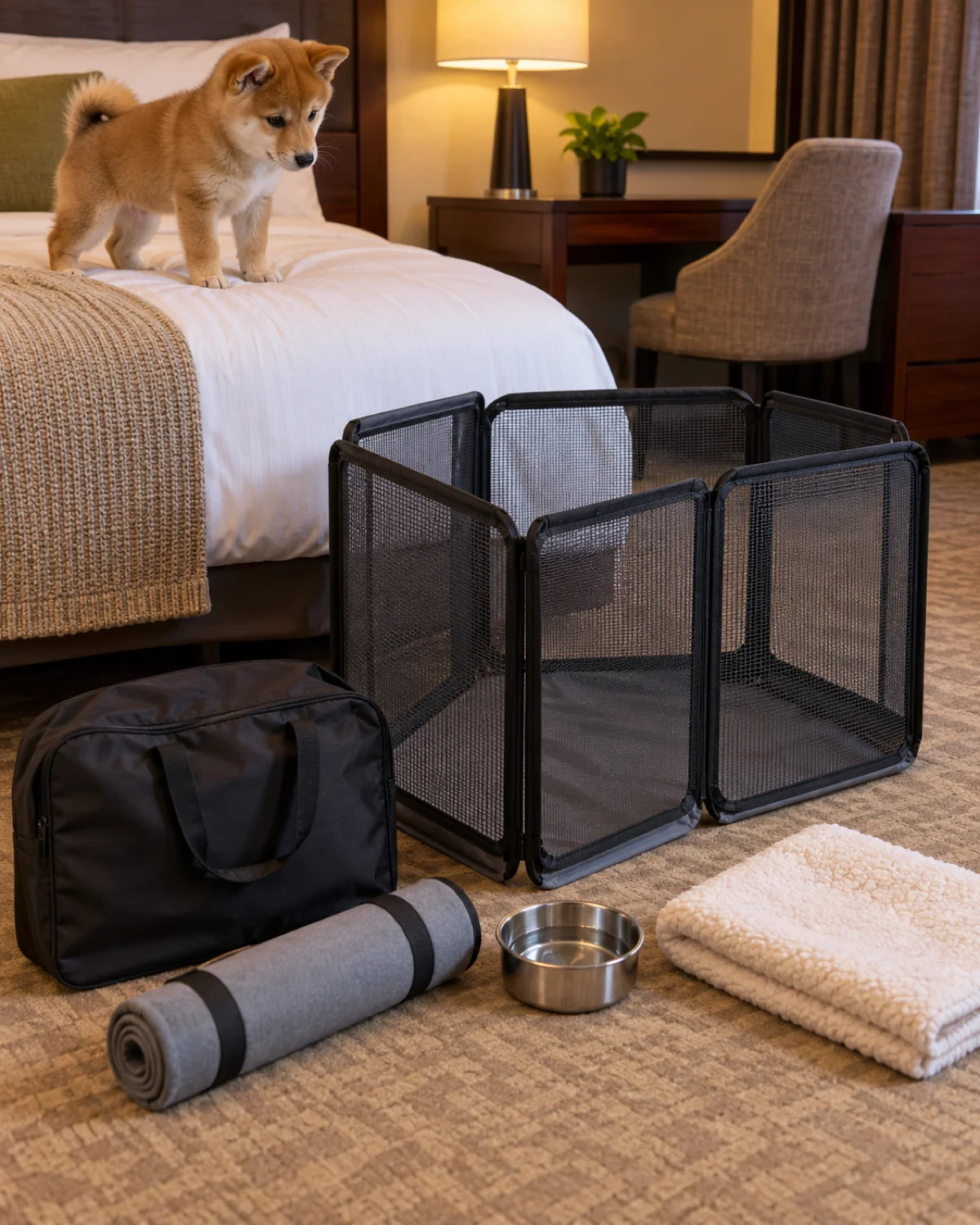
A familiar pen that travels with you eliminates the biggest stress of hotel stays and family visits: where does the puppy go when you cannot watch them?
Foldable fabric or pop-up mesh pens weigh under five pounds and collapse into a carrying bag the size of a yoga mat. Pair it with a rolled waterproof mat that lays under the pen to protect hotel carpets or your in-laws' hardwood.
Packing checklist for overnight trips:
- The fold-up pen and its carrying bag
- A waterproof mat that extends two inches past the pen on every side
- The puppy's regular bed or blanket (the familiar scent matters more than the bed quality)
- Two collapsible water and food bowls
- A chew toy the puppy has already been tested with (no new toys on trip night)
Set the pen up the moment you arrive, before the puppy explores the new space. Toss a few treats inside and let them wander in. The pen becomes the anchor point for the room — the one thing that smells like home.
8. Apartment Balcony Pen With Artificial Turf
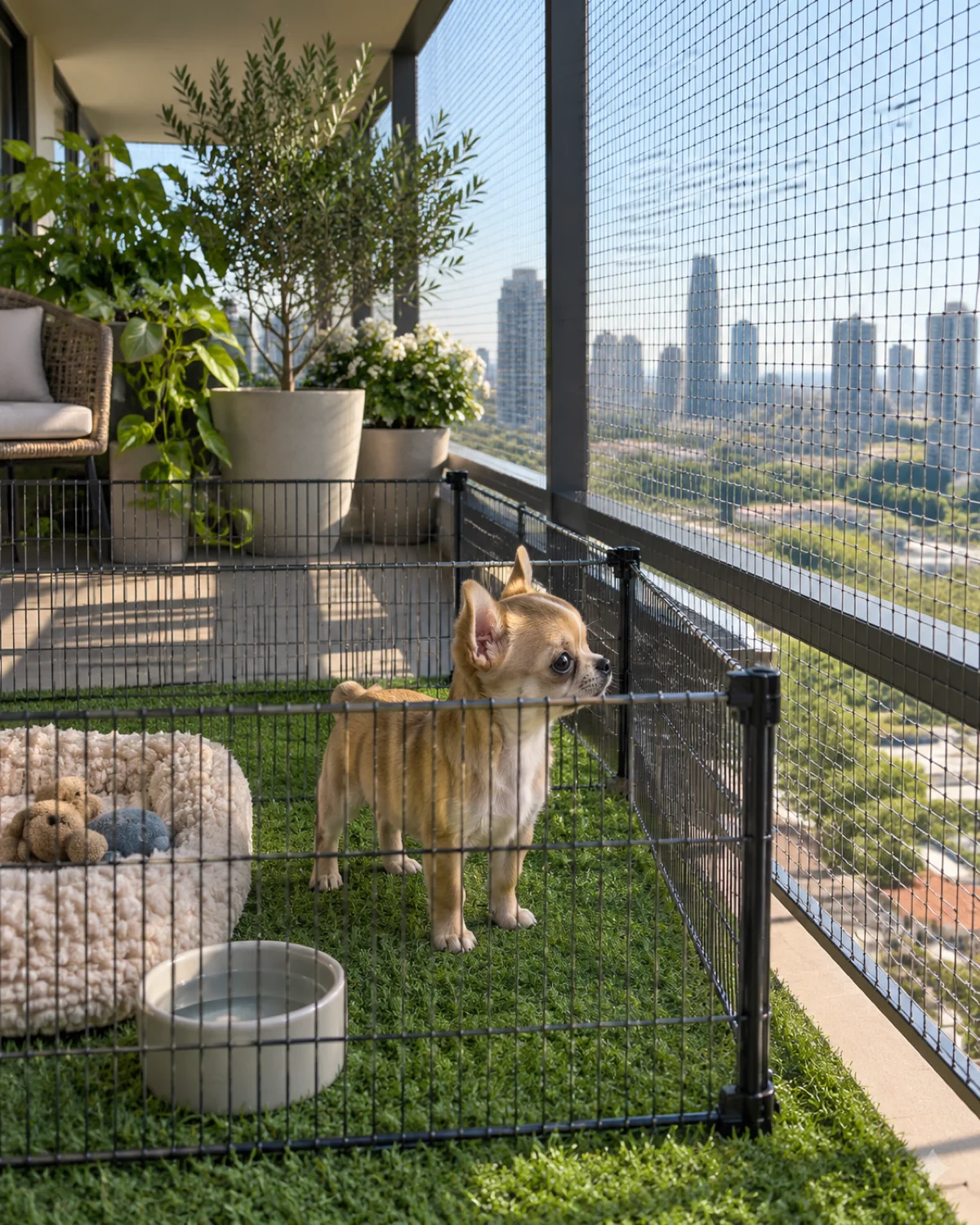
No yard does not mean no outdoor time. A balcony pen with artificial turf gives apartment puppies a taste of outside without the elevator trip at 3 a.m.
Safety is the entire point:
- The railing gaps must be narrower than the puppy's head — if in doubt, zip-tie mesh netting to the entire railing
- The pen panels must be heavy enough or clamped down so wind gusts cannot tip them
- Never leave the puppy unsupervised on a balcony, even with a pen
Lay a patch of artificial turf (the kind sold for dog potty training, with drainage holes) inside the pen. The grass texture encourages elimination in puppies who are being trained to go outside. Rinse the turf daily with water and enzymatic cleaner to prevent odor buildup.
This works best as a supplement to indoor potty pads, not a replacement. Rain, wind, and extreme temperatures will make the balcony unusable on some days.
9. Playroom Enrichment Pen
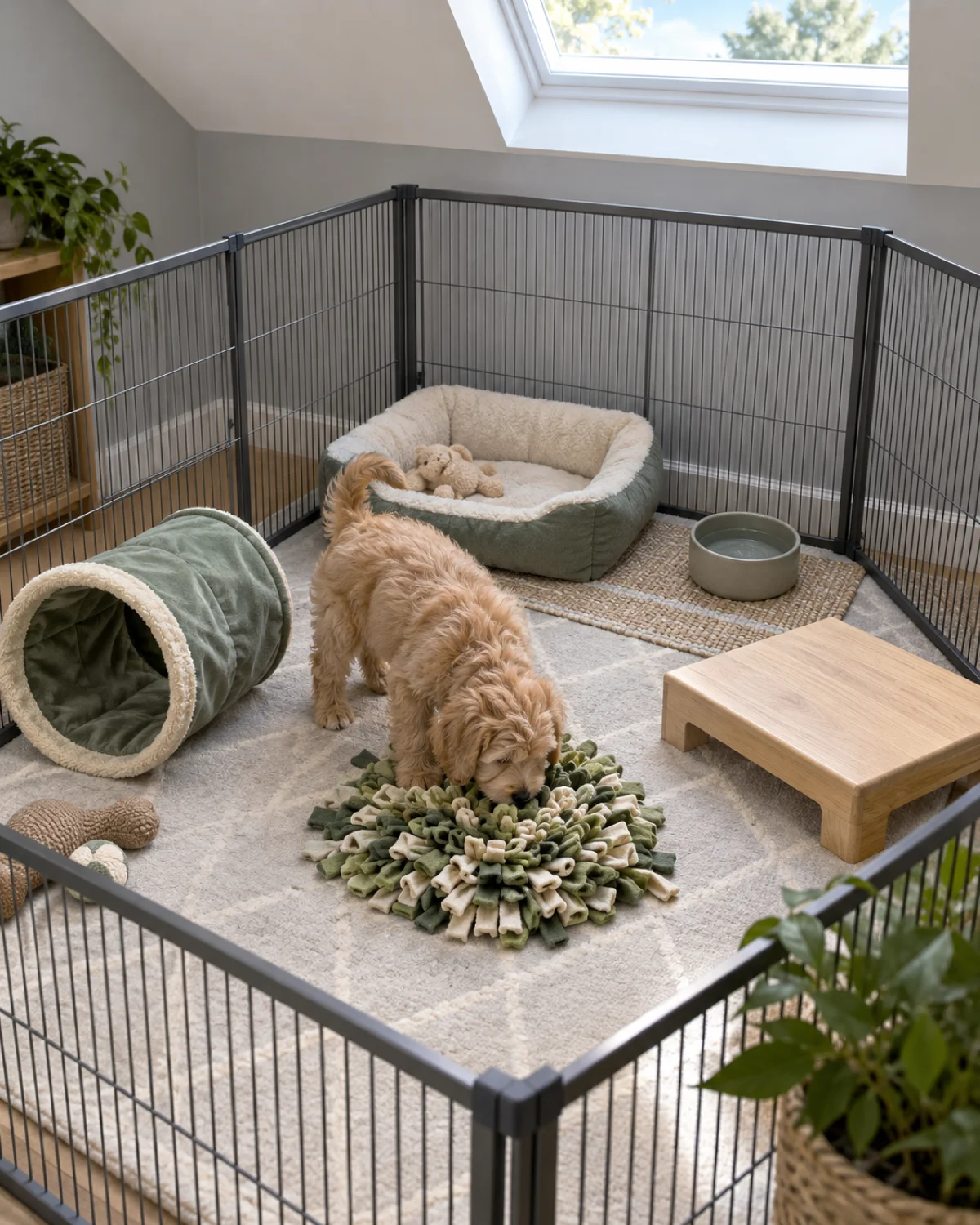
A pen does not have to mean containment. When you fill it with enrichment items, it becomes a puppy playground that burns mental energy without requiring a walk.
Enrichment items to rotate weekly:
- A snuffle mat with kibble hidden in the folds
- A fabric tunnel the puppy can run through
- A low stepping platform (six inches high) for balance practice
- A puzzle feeder or slow-feed bowl
- A crinkle toy or a squeaker toy (one at a time, not both)
The pen keeps the mess contained. Shredded snuffle mats, scattered kibble, and tunnel-flipping stays inside the pen instead of spreading across the living room.
Schedule enrichment pen time for when you need 30 to 45 minutes of hands-free time — before a video call, during meal prep, or while getting ready in the morning. It replaces the need for screen-time-as-babysitter (yes, some people put on YouTube for their puppies). For more game ideas, try these puppy training games.
10. Garage Workshop Safe Zone
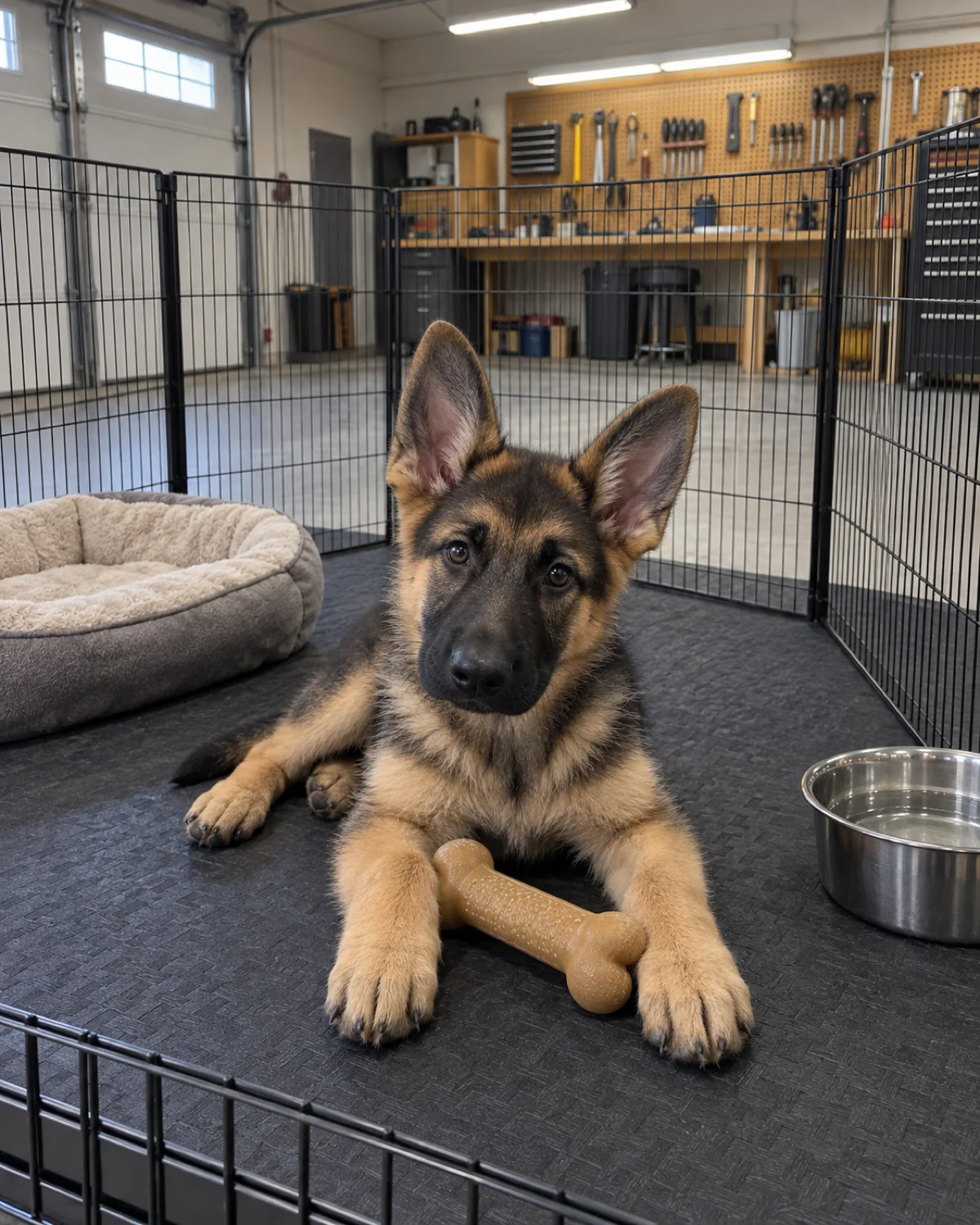
Working in the garage while the puppy naps inside the house sounds fine until you realize the puppy woke up, found the bathroom trash, and ate something they should not have. Bringing the puppy to the garage in a pen keeps you both in the same space.
Non-negotiable safety rules:
- The pen must be in a corner at least ten feet from any power tools, paint cans, antifreeze, or chemical storage
- Rubber interlocking floor mats under the pen protect the puppy from cold concrete
- Garage doors must stay closed when the puppy is inside — the gap at the bottom is an escape route
- No sawdust, metal shavings, or small hardware (screws, nails) within reach of the pen
Add a bed, a water bowl, and a long-lasting chew. The hum of a workshop actually calms many puppies — it is consistent white noise without the unpredictable sounds of a kitchen.
This works for any room where you spend extended time but the environment is not puppy-safe: home offices with exposed cables, craft rooms with small supplies, or laundry rooms with detergent pods on low shelves.
11. Gradual Freedom Expanding Pen
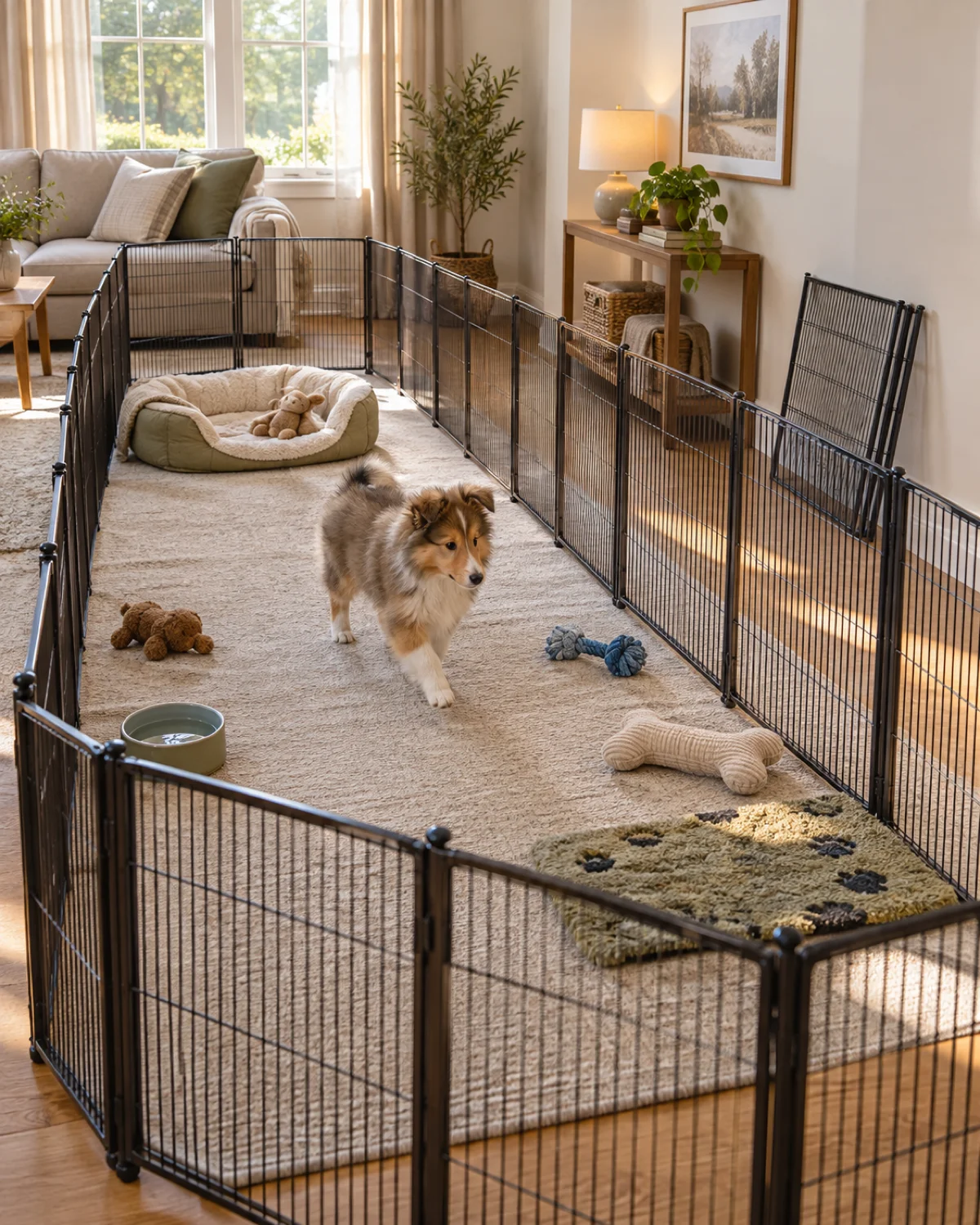
Every playpen setup on this list is temporary. The end goal is a puppy who earns full house freedom through demonstrated trustworthiness — and this expanding pen method is how you get there.
Start with a small pen (four to six panels). Every week your puppy goes without an accident, chewing something off-limits, or excessive barking inside the pen, add one more panel to expand the area.
The expansion timeline:
- Weeks 1–2: Small pen, just enough room for a bed, water, and a toy
- Weeks 3–4: Add two panels — room to play and pace without leaving the zone
- Weeks 5–6: Add two more panels — the pen now covers a large section of the room
- Weeks 7–8: Remove one wall of the pen so the puppy can access a second room but still retreat to the pen
- Weeks 9–12: Remove the pen entirely, leaving the bed and water bowl in the same spot
If the puppy has an accident or destroys something at any stage, go back one step for another week. No punishment — just a smaller boundary until they are ready again.
The brilliance of this method is that the puppy does not experience a sudden change from "always penned" to "total freedom." The transition is so gradual they barely notice the pen disappearing. See our how to leave a puppy home alone guide for the full timeline.
Save this for later
11 Puppy Playpen Ideas
- 1Open-Corner Living RoomPush a foldable pen into a wall corner for a spacious supervised zone.
- 2Kitchen Potty ZoneTile floor with a potty pad in one corner and a bed in the opposite corner.
- 3Bedroom Nighttime PenPen beside your bed with an open crate inside for the first weeks home.
- 4Outdoor Shaded GrassHeavy-duty pen on grass under a shade canopy with ground stakes.
- 5Mudroom TransitionSmall pen on a waterproof mat for post-walk paw cleaning.
- 6Multi-Puppy DividedOne large pen split by a divider panel so each puppy builds independence.
- 7Travel Portable PenFoldable pen plus waterproof mat for hotel rooms and family visits.
- 8Balcony Turf PenArtificial grass patch on a secured balcony for apartment puppies.
- 9Enrichment PlayroomA pen filled with tunnels, snuffle mats, and puzzles for mental exercise.
- 10Garage Safe ZoneRubber-matted pen in a garage corner, far from tools and chemicals.
- 11Gradual Freedom PenStart small and add a panel each week until the pen disappears entirely.

About the author
Jess Calloway
Dog mom to three very different dogs and the editor behind Pawliqa. Jess writes about the daily realities of raising dogs — the wins, the messes, and the things nobody warns you about in the breed brochure.
Frequently Asked Questions
What size playpen does a puppy need?
A pen should be large enough for the puppy to lie flat, stand, turn around, and reach a water bowl without touching the sides. For small breeds, a four-panel pen (roughly four by four feet) works. Medium and large breed puppies need a six- to eight-panel pen. If the puppy will grow significantly, buy the adult size now and use a divider panel to reduce the space until they grow into it.
How long can a puppy stay in a playpen?
Follow the bladder rule: the puppy's age in months plus one hour. A two-month-old puppy can handle about three hours, a four-month-old about five hours. These are maximums, not targets. Shorter sessions with breaks for play, potty, and interaction are better for the puppy's development and your relationship.
Should I put a crate inside the playpen?
Yes, especially for the first few months. The crate gives the puppy a den-like retreat inside the larger pen. Leave the crate door open so the puppy can choose to go in and out. This approach teaches crate comfort without forcing the puppy to stay locked inside, making the eventual transition to crate-only sleeping much smoother.
How do I stop my puppy from crying in the playpen?
Most crying happens because the pen is introduced too abruptly. Start by feeding meals inside the pen with the door open. Then close the door for one minute while you sit next to it, building up gradually.
Never return to the pen when the puppy is actively crying — wait for a three-second pause of quiet, then reward immediately. If crying persists beyond the first week, the pen might be too isolated. Move it closer to where you spend the most time.
Can I use a playpen instead of a crate?
A playpen and a crate serve different purposes. A pen is for supervised confinement during the day — it gives the puppy room to move and play. A crate is for unsupervised rest and overnight sleep — the smaller enclosed space triggers the denning instinct that helps bladder control. Most trainers recommend using both: a pen during the day and a crate at night.