Bringing a puppy home is joyful and exhausting in roughly equal amounts, and most of the exhausting half lives on the kitchen floor. The good news is that potty training is mostly about timing, and timing is something you can plan instead of guess.
This is the calm, day-by-day plan I use: when it’s reasonable to start, the moments your puppy will always need to go, how to build a tight schedule by age, the cue word and the reward window, and what to do when the inevitable accident lands on the rug.
I’m a dog mom to three very different dogs, two of them raised from eight weeks, and the version below is the one that actually held up at four in the morning.
This is the low-stress way to potty train a puppy at home, from the first week through the four-month plateau, built one simple step at a time. Jump to whatever part you need right now.
- 1When can a puppy actually start potty training?
- 2The 6 times your puppy will always need to go
- 3Pick one outdoor potty spot
- 4Build a tight daily schedule by month of age
- 5Add a cue word the second they squat
- 6Use the crate as a potty-training tool
- 7Learn the pre-potty signals
- 8A short walk after meals helps the timing
- 9Cleaning accidents the right way
- 10Night-time: one wake-up, then sleep through
- 11Why punishment backfires
- 12The plateau and the 4-month regression
- 13When you can stop watching every minute
When Can a Puppy Actually Start Potty Training?
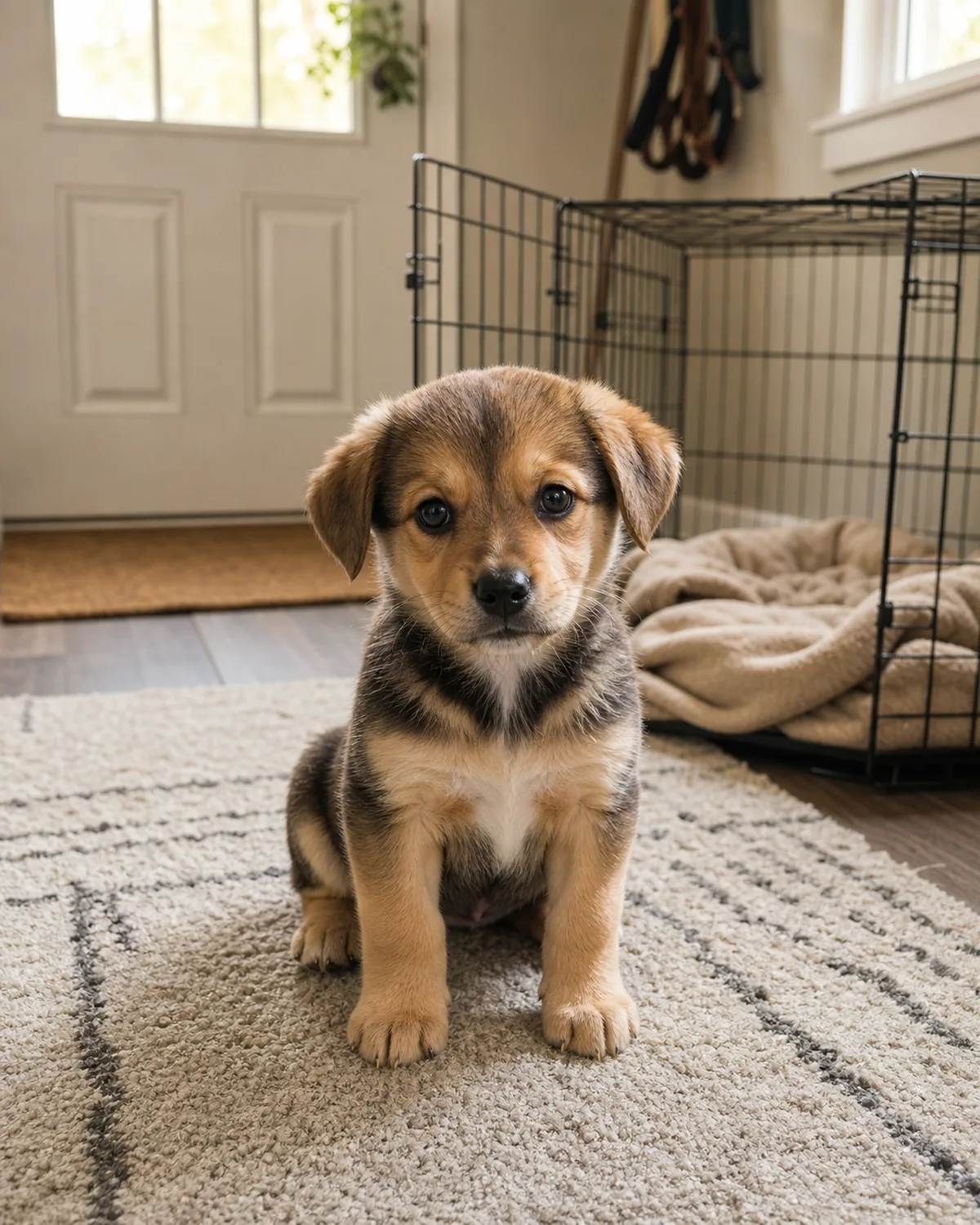
You can start the day your puppy comes home, which for most is around eight weeks. The catch is that real bladder control doesn’t show up until twelve to fourteen weeks, so the early weeks are about racking up correct repetitions, not stretching the gaps.
A rough ceiling is months of age plus one — that’s how many hours your puppy can physically hold it during the day. Eight weeks old means a two-hour window at the absolute most.
- Begin the routine the same day you bring your puppy home, even at eight weeks.
- Plan around months-of-age + 1 as the upper limit on holding hours.
- Expect more accidents under twelve weeks; it’s biology, not bad behavior.
The 6 Times Your Puppy Will Always Need to Go
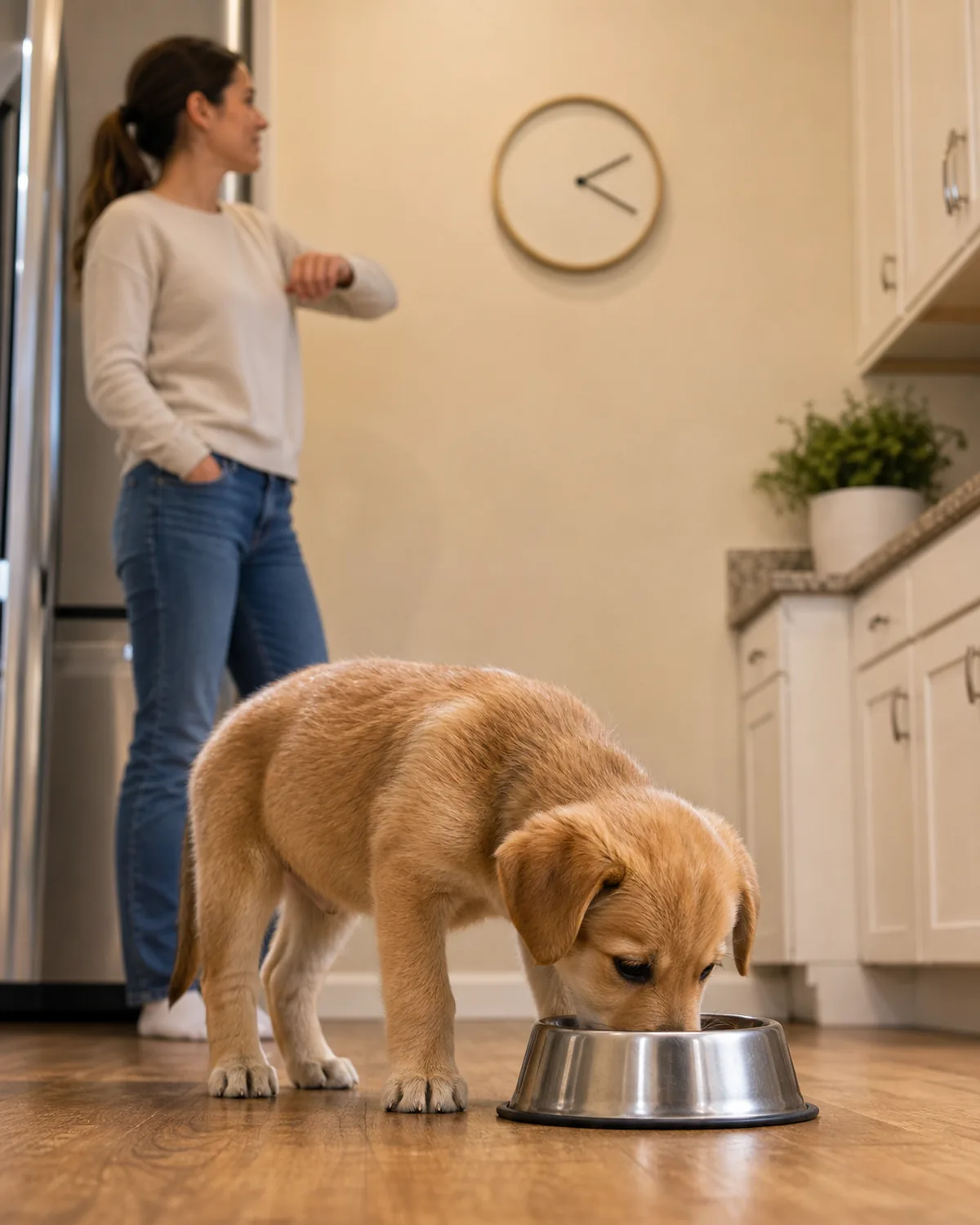
You can skip the timer for a second, because six moments are nearly guaranteed: right after waking up, within ten to twenty minutes of eating or drinking, after any play, after training, before bed, and at least once overnight for the first few weeks. Build the schedule around these and you’ll catch most of what a strict clock would miss anyway.
- Take your puppy out after sleep, food, water, play, training, and before bed.
- Set one overnight wake-up until about twelve to fourteen weeks of age.
- Treat each of these six moments as automatic, not optional.
Pick One Outdoor Potty Spot (and Use It Every Time)
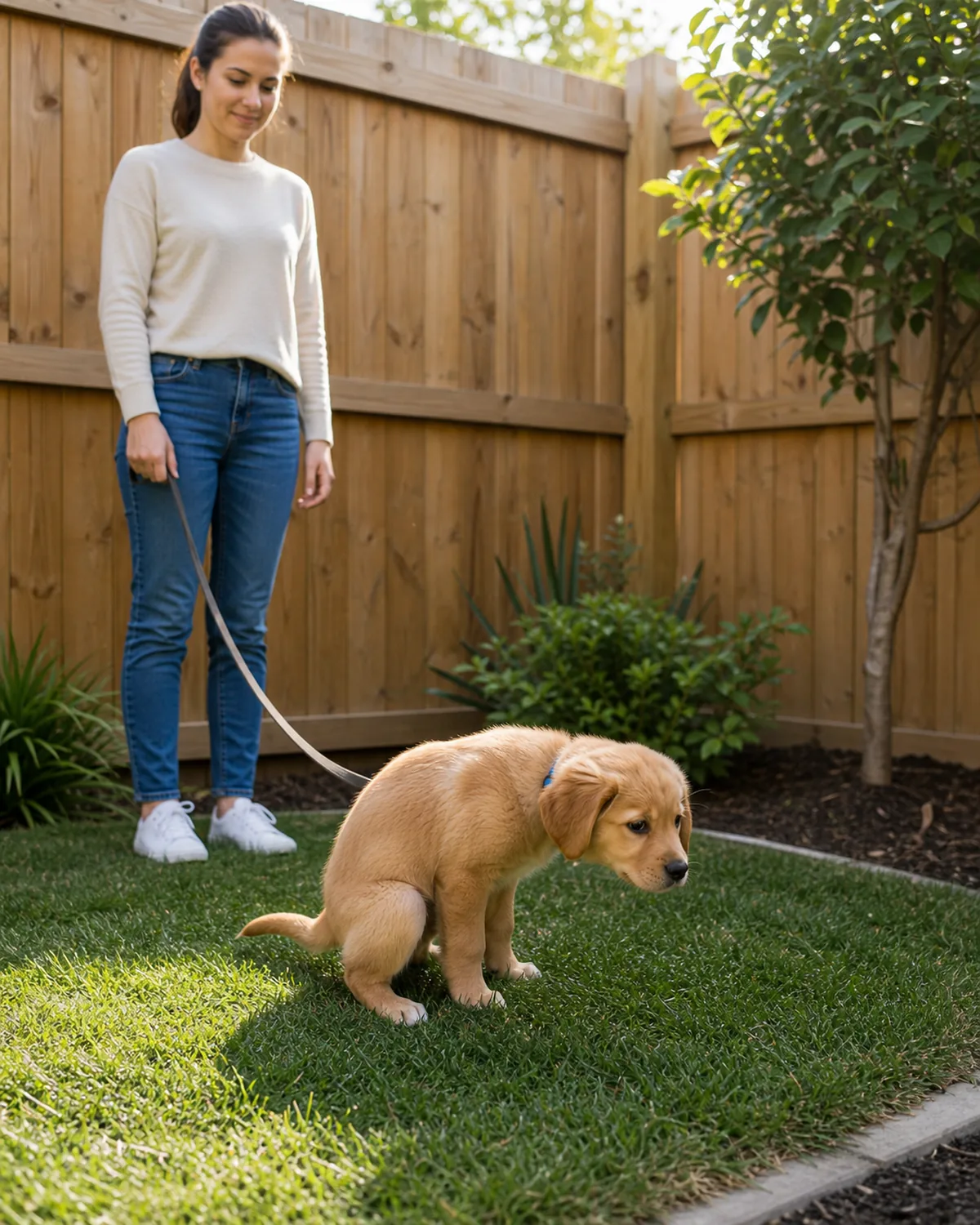
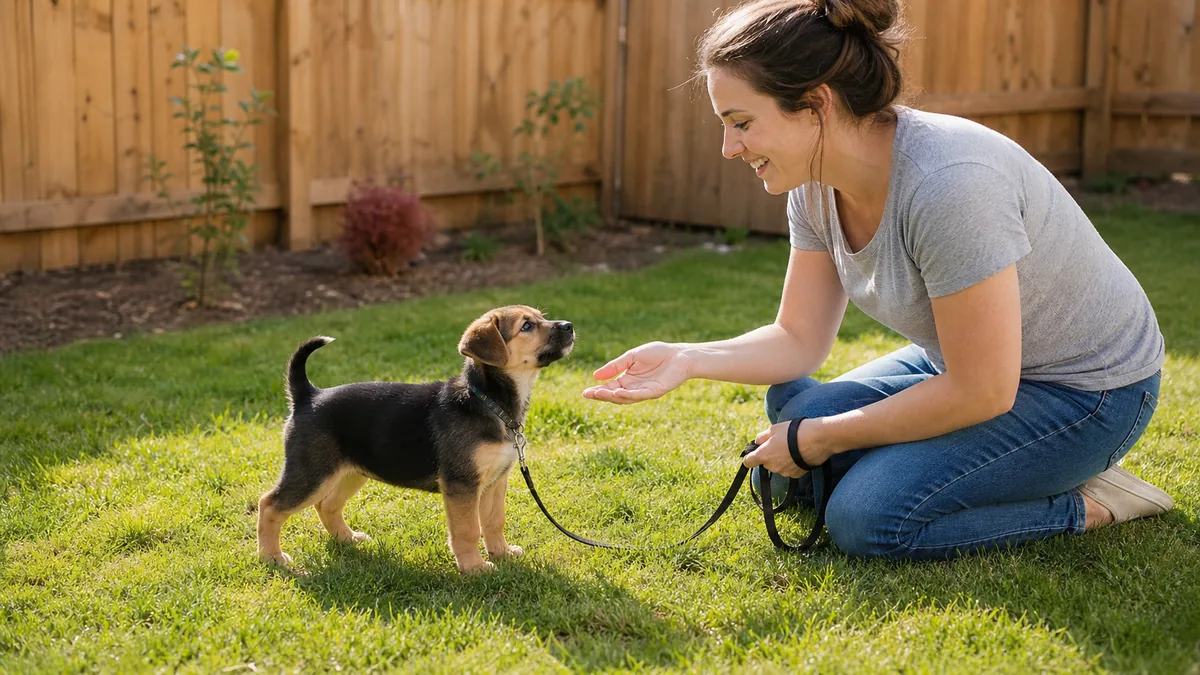
Pick one corner of grass and use it for every potty trip in the early weeks. The leftover scent there is the strongest single cue a puppy has, stronger than any phrase you’ll say. Walk them on-leash even in your own yard, so the trip itself becomes part of the routine. The variety can come later, once the basic association is rock solid.
- Choose a single grass spot and use it for every potty trip at first.
- Walk on-leash to that spot, even in your fenced yard.
- Wait quietly without play or chatter until the job is done.
You don’t need every step on day one. Pick the situation that sounds most like you and your puppy, and begin there.
Build a Tight Daily Schedule by Month of Age
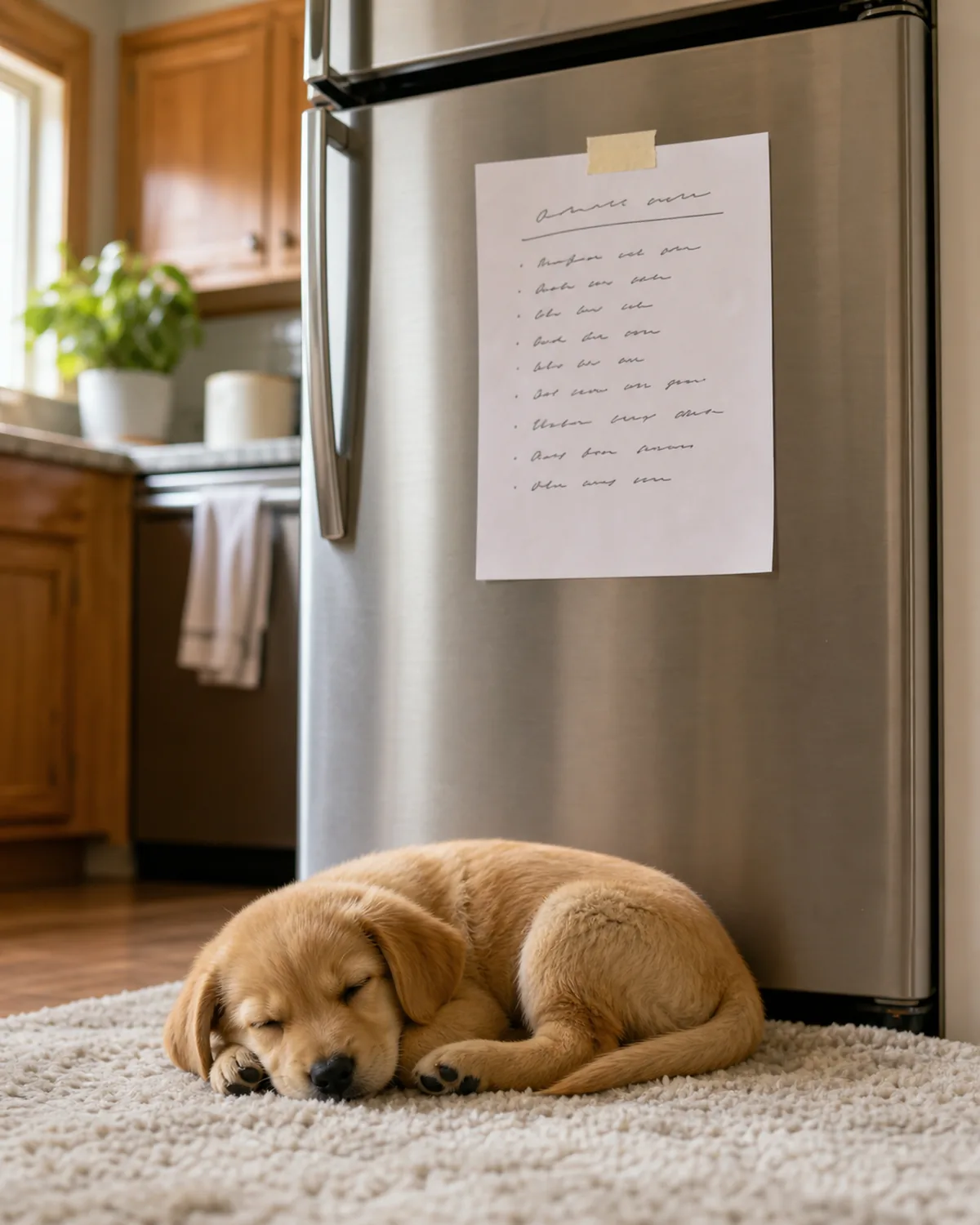
At eight weeks plan a trip outside every hour during the day. At ten weeks stretch it to every ninety minutes, and at twelve weeks every two hours. Stack the always-go six on top of that base rhythm. The hardest mindset shift is this: you take your puppy out before they ask, not after. A printed schedule on the fridge keeps every adult in the house pulling the same direction.
- Aim for hourly trips at eight weeks, every 90 minutes at ten, every two hours at twelve.
- Add the “always-go six” on top of the timed schedule.
- Post the plan somewhere everyone in the household will actually see it.
Add a Cue Word the Second They Squat
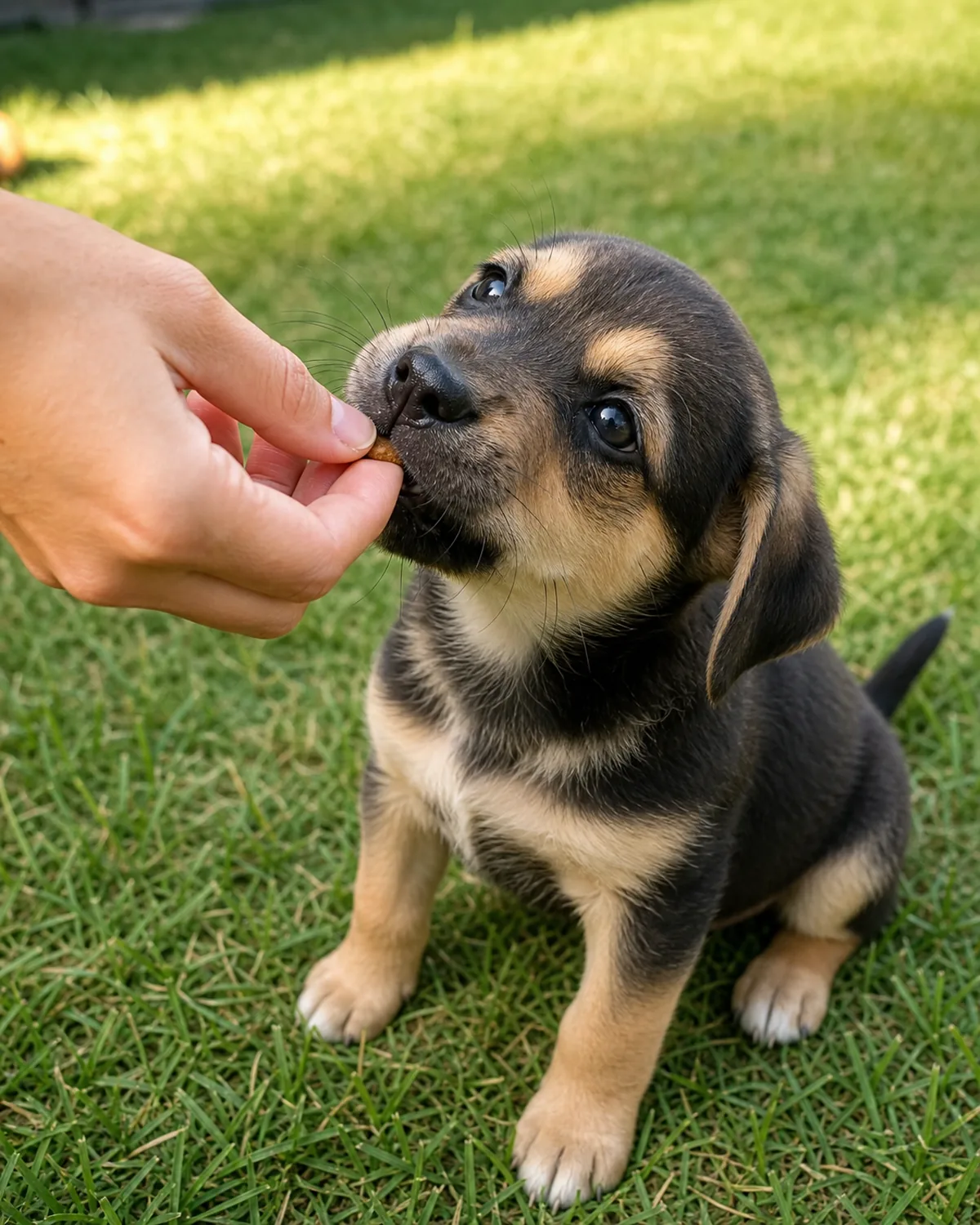
Pick a short phrase — “go potty” or “do your business” works — and say it once, softly, the instant your puppy starts to go. Don’t repeat it during the sniff-and-circle phase or they’ll learn to tune it out.
The second they finish, give calm praise and a tiny treat within three seconds, because that’s the window where a puppy connects the reward to the action. The cue itself feels useless on day one and becomes genuinely useful around week three.
- Say the cue once, quietly, as they begin — not during sniffing.
- Reward within three seconds of finishing, every time.
- Keep the praise calm; a big bouncy show can interrupt the moment.
Use the Crate as a Potty-Training Tool
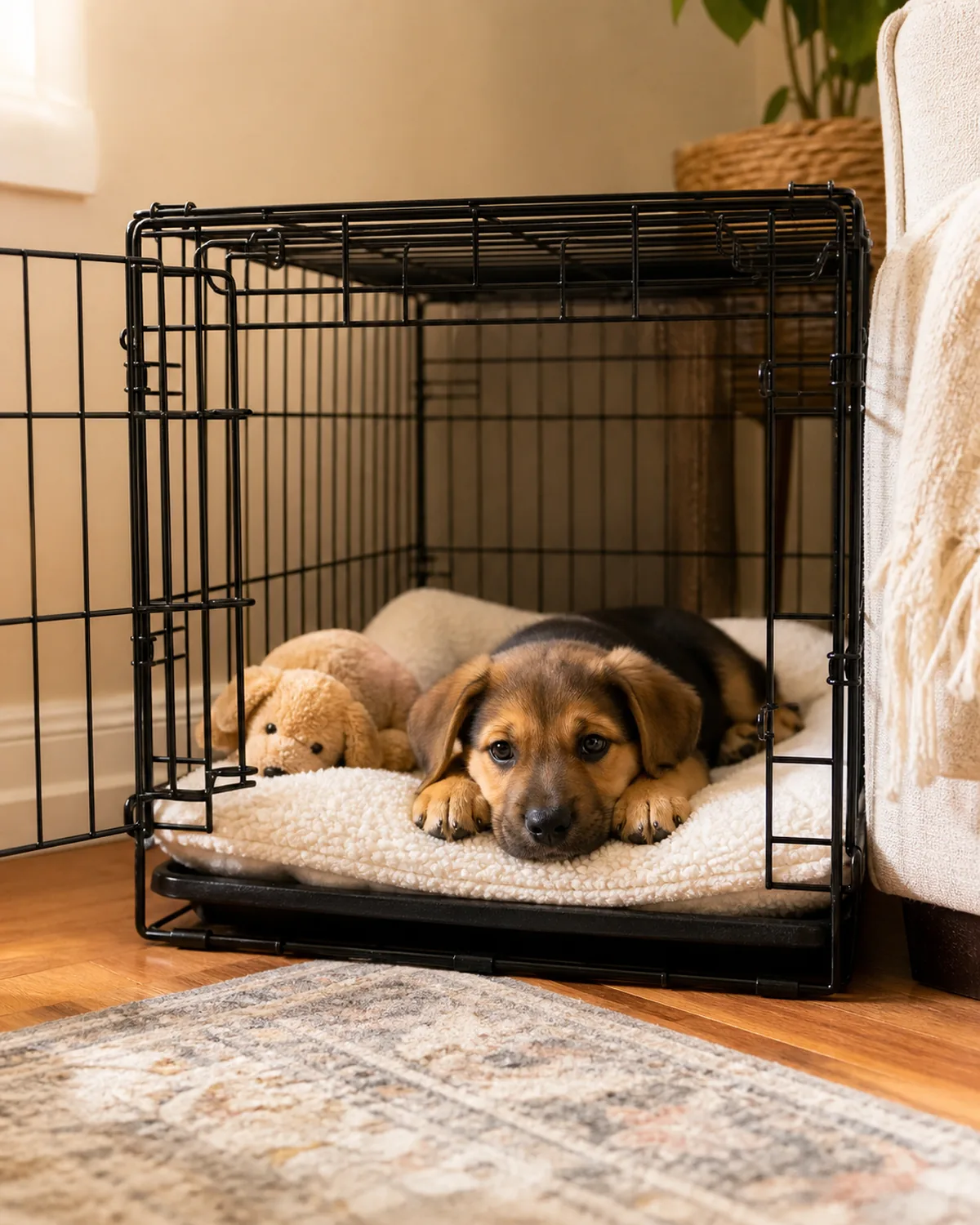
A correctly sized crate is one of the most useful potty-training tools you have, because most puppies won’t soil where they sleep. Right-sized means stand up, turn around, lie down — and not much more.
Make it too big and they’ll sleep at one end and use the other end as a bathroom, which trains the opposite of what you want. Short crate stints between potty trips aren’t punishment; they’re the structure that makes “outside” the default destination.
- Pick a crate sized for stand-up, turn-around, lie-down only.
- Use short crate stretches between scheduled potty trips.
- For the full setup, see our calm crate-training plan.
The step-by-step plan works because of four ideas underneath it. Get these right and the timeline stays short; ignore them and these are exactly the mistakes that drag potty training out for months.
Learn the Pre-Potty Signals
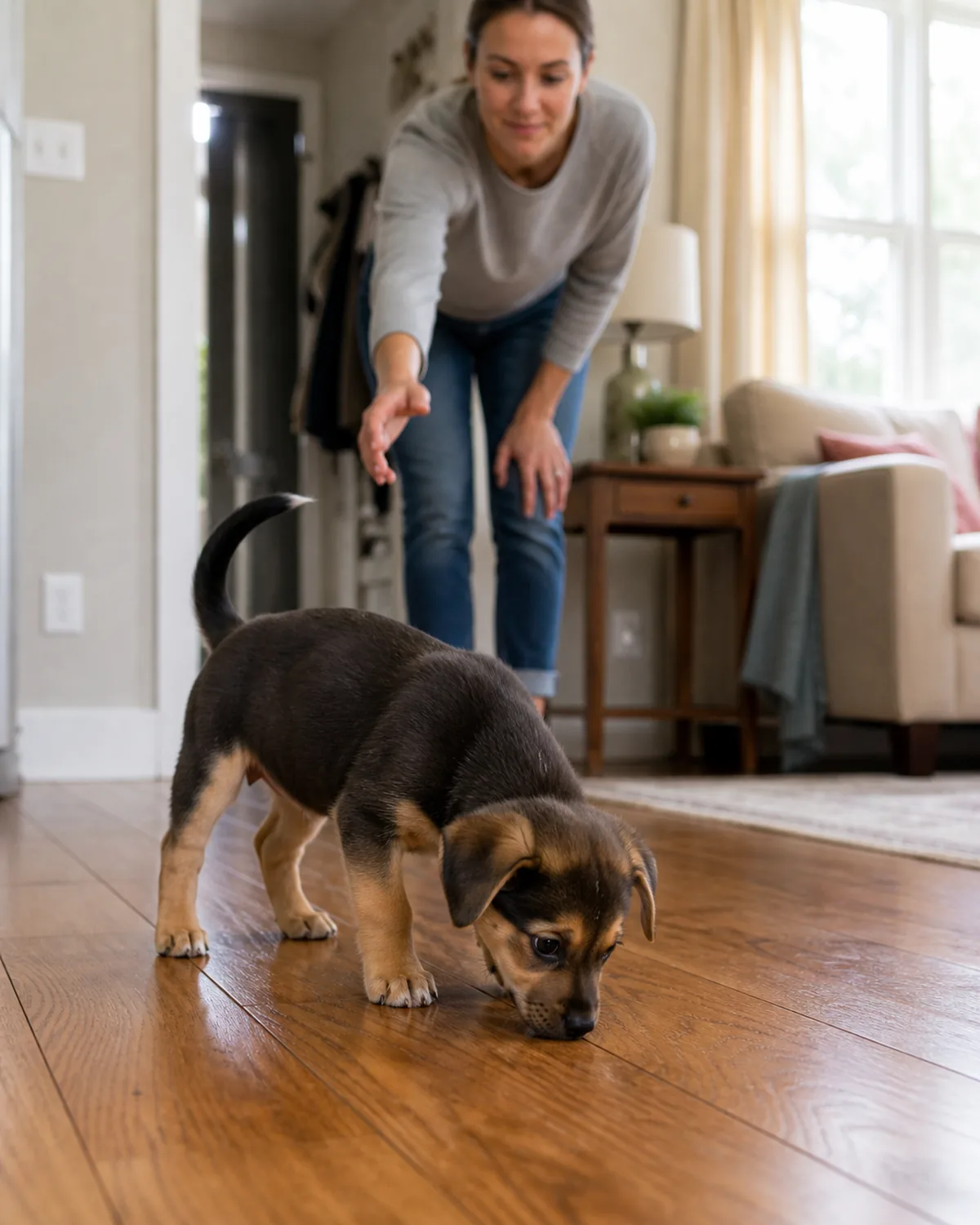
Six tells turn up over and over: tight little sniffing circles on the floor, a sudden walk-away from a toy, stopping mid-play, restless pacing, scratching at the door, or whining at you out of nowhere. Catch any one of those and you have about two seconds before something hits the rug. Don’t finish the email, don’t grab the phone — scoop and move.
- Watch for sniff-circles, sudden walk-aways, mid-play stops, pacing, door-scratching, and out-of-nowhere whines.
- Move within two seconds of spotting any one of these.
- Carry small puppies the whole way out; bigger ones can walk on a quick leash clip.
A Short Walk After Meals Helps the Timing Click
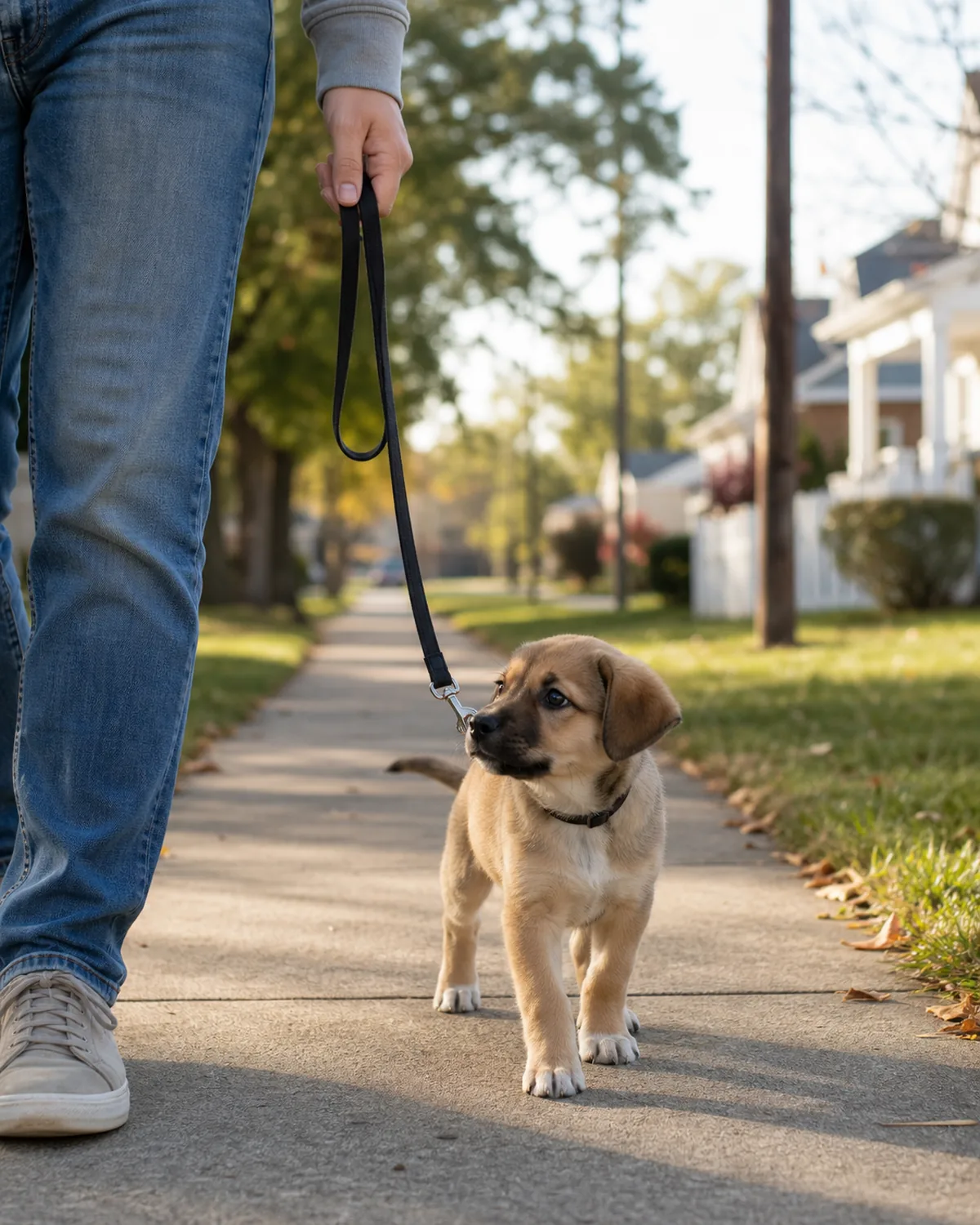
A short, easy walk after meals does two useful things at once. It nudges digestion forward so the eat-then-go loop fires on a predictable timeline, and it gives the trip outside enough structure that your puppy starts to expect a potty as part of it.
Keep it gentle; young joints aren’t ready for real exercise yet. Our guide on how much exercise your dog actually needs covers what’s safe at every age.
- Aim for a five-to-ten-minute easy leash walk after meals.
- Keep the pace gentle — no running, jumping, or stairs for young puppies.
- Use the walk as part of the routine, not in place of the chosen potty spot.
Cleaning Accidents the Right Way (Enzymatic, Not Ammonia)
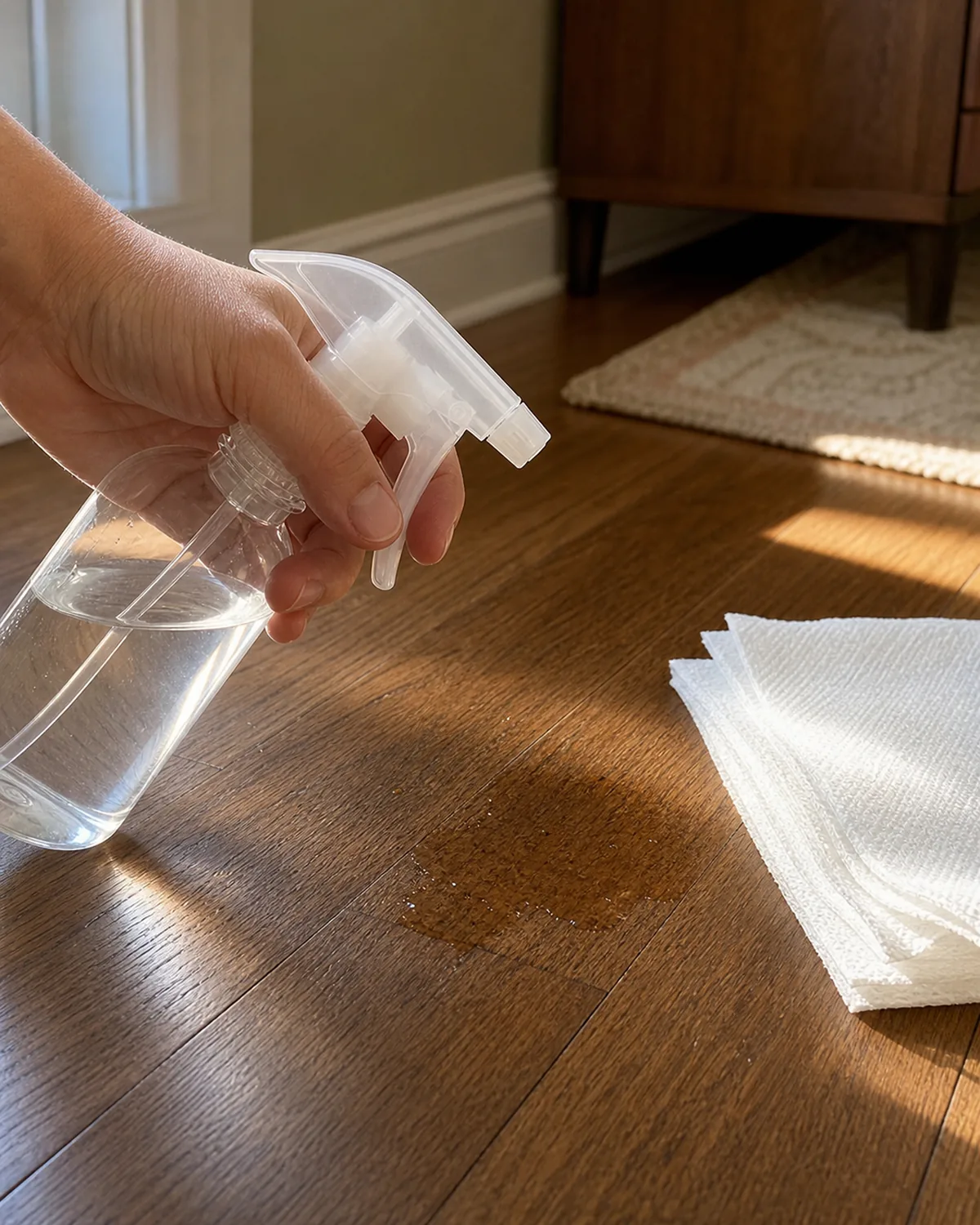
The cleaner matters more than the scrubbing. Reach for an enzymatic cleaner: it actually breaks down urea, which is what carries the smell and the come-back-and-mark instinct.
Skip anything ammonia-based, because to a puppy nose it reads like more urine and basically invites a repeat. Blot the spot first, soak it through with cleaner, then walk away and let it dry — rubbing just spreads the area you’ll have to keep watching.
- Use an enzymatic cleaner; avoid ammonia-based products entirely.
- Blot, soak, leave to dry; don’t scrub.
- Treat the spot a second time if your puppy keeps circling back to it.
How to Potty Train a Puppy: A Calm Day-by-Day Plan
- 1When to startFrom the day they come home, usually around 8 weeks; hold-time = months of age + 1.
- 2The always-go sixAfter waking, eating, drinking, play, training, and before bed — automatic trips out.
- 3Pick one spotOne outdoor grass corner, on-leash, every single time at first.
- 4Schedule by ageHourly at 8 wk, every 90 min at 10 wk, every 2 hr at 12 wk.
- 5Cue word + rewardSay it once as they start; treat within 3 seconds of finishing.
- 6Crate as a toolRight-sized: stand, turn, lie down. Short stints between potty trips.
- 7Pre-potty signalsSniff-circles, walk-away, mid-play stop, pacing, door scratch, sudden whine.
- 8After-meal walkShort gentle leash walk to lock the “eat → go” timing into place.
- 9Clean accidents rightEnzymatic cleaner only — no ammonia. Blot, soak, leave to dry.
- 10Night planPull water 1–2 hr before bed, last trip out, one quiet overnight alarm.
- 11No punishmentInterrupt mid-stream, scoop outside, praise out there — never after the fact.
- 124-month regressionNormal and temporary; tighten back to last month’s schedule for 1–2 weeks.
- 13Loosen supervisionTwo clean weeks + going to the door on their own = ready to expand freedom.
pawliqa.com
Night-Time: One Wake-Up, Then Sleep Through
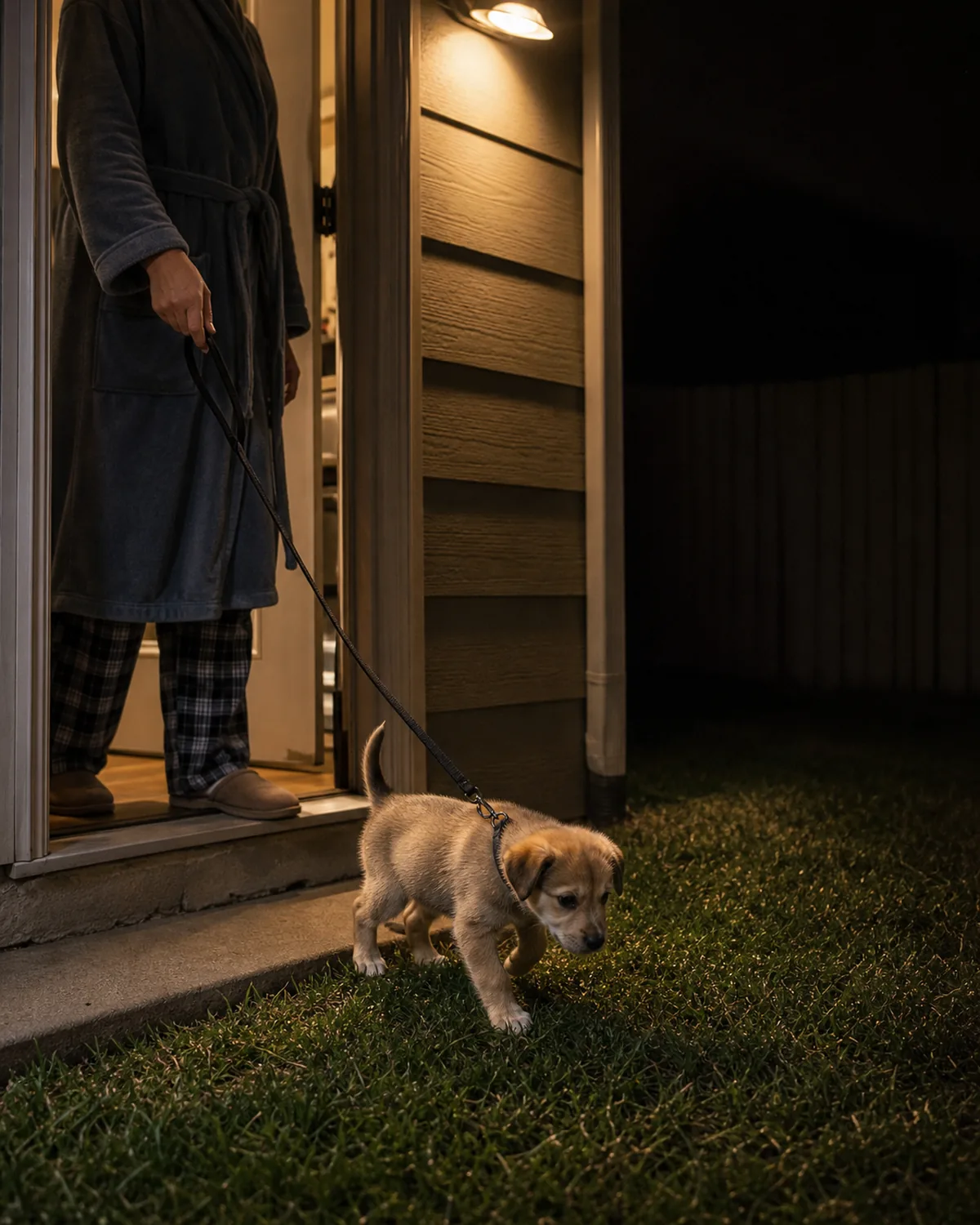
Pull the water bowl an hour or two before bedtime, and make a quick potty trip the very last thing before lights out. For the first few weeks set one alarm — usually three to four hours after bedtime — for a short, boring trip outside.
No bright lights, no play, no chatter; the goal is to keep your puppy half-asleep so they go back down easily. By twelve to fourteen weeks most puppies sleep through, and the alarm comes off.
- Stop water one to two hours before bed.
- Set one overnight alarm for the first few weeks, then drop it.
- Keep the overnight trip dim, brief, and quiet — never a play session.
Why Punishment Backfires (and What to Do Instead)
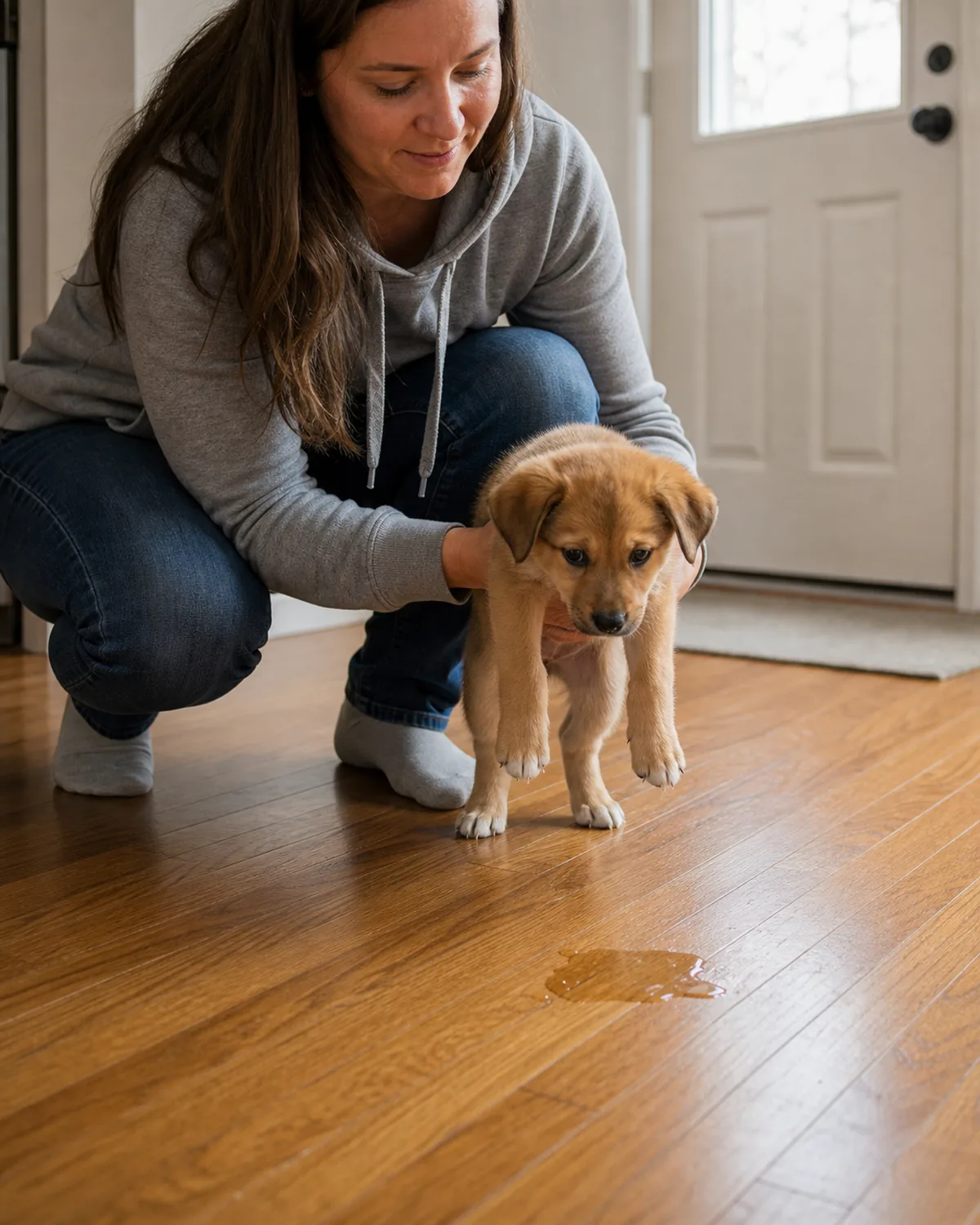
Rubbing a puppy’s nose in it, yelling minutes after the fact, swatting with a newspaper — none of that teaches “don’t pee inside.” It teaches “don’t pee where the human can see me,” which is exactly how you end up with quiet accidents behind the couch at six months old.
The real correction is one short interruption while it’s happening, a calm scoop outside, and praise the moment they finish out there.
- Don’t punish after the fact; the puppy doesn’t connect it to the accident.
- Catch it mid-stream: one short “Ah!”, scoop, finish outside, then praise.
- If frustration is winning, hand the puppy off for ten minutes and reset.
The Plateau and the 4-Month Regression
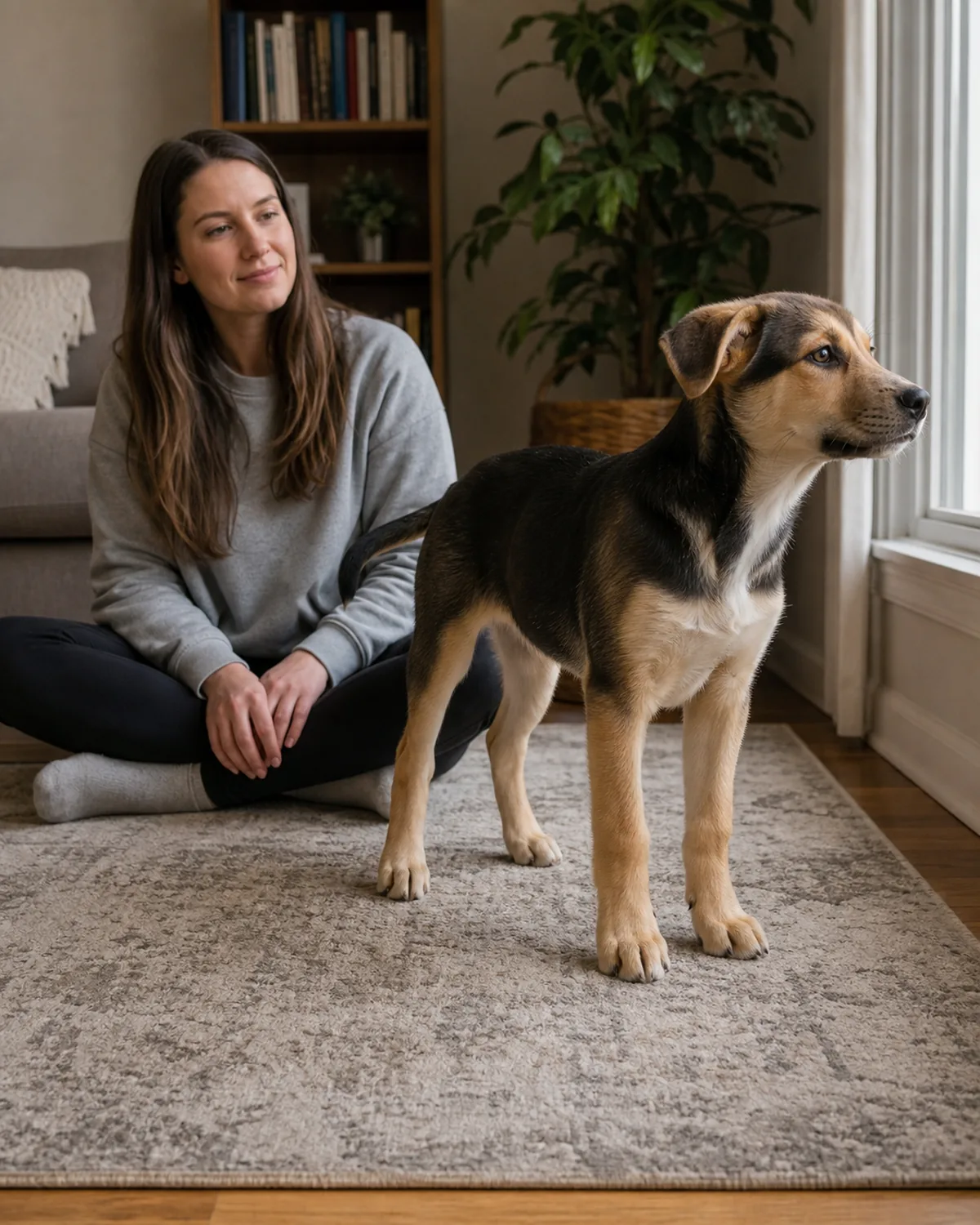
Somewhere around four months, a lot of puppies seem to forget the plan overnight. It’s almost always temporary — new growth, more distractions in the world, sometimes a fear period — and it doesn’t undo the work you’ve already done. Drop back to the schedule you used a month ago, keep it tight for one to two weeks, and the reliability usually comes back on its own.
- Treat regression as normal around four months; it isn’t failure.
- Step back to a tighter, younger-puppy schedule for one to two weeks.
- Check in with your vet if accidents are sudden, frequent, or paired with other changes.
When You Can Finally Stop Watching Every Minute
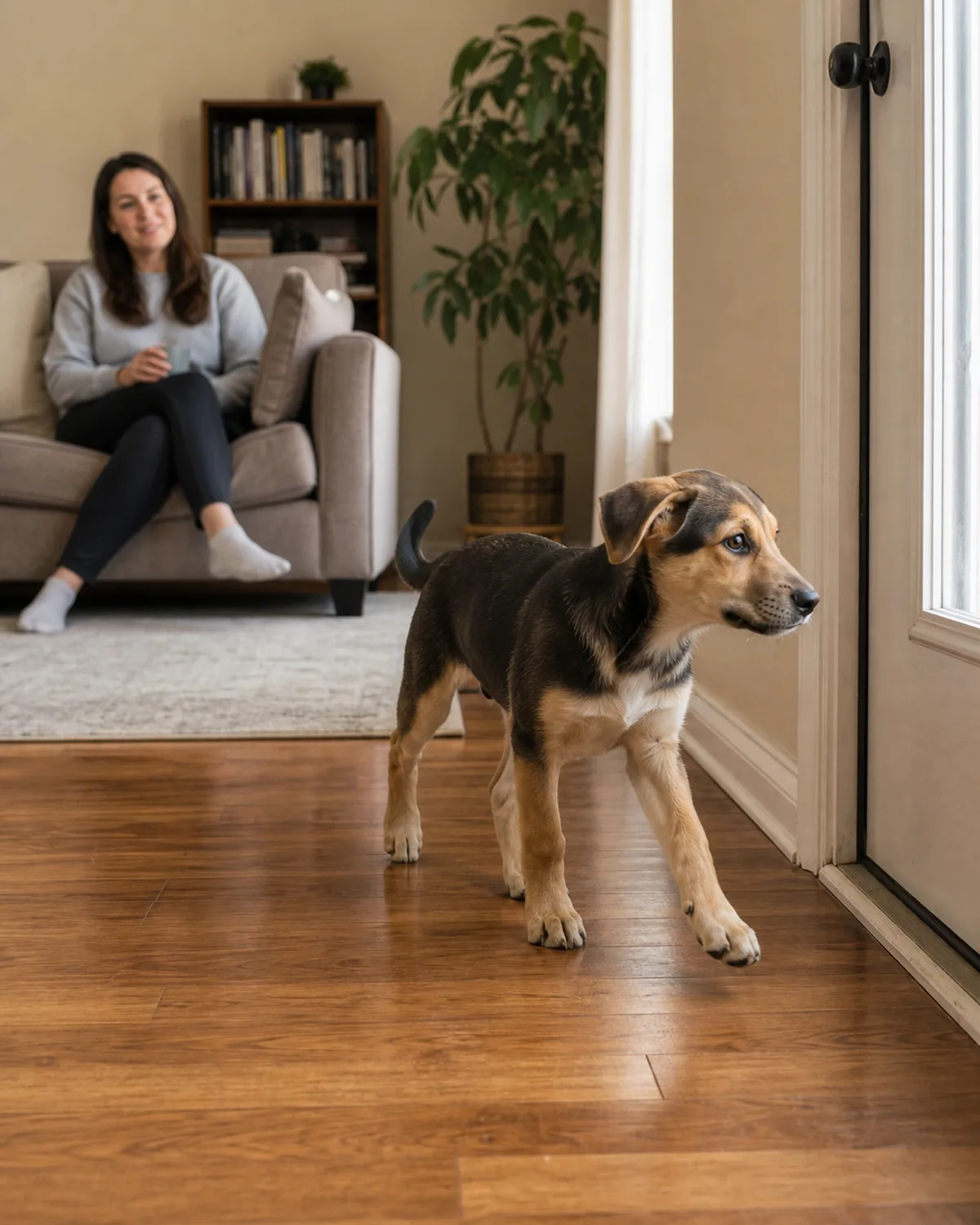
The signal you can loosen up isn’t a calendar date; it’s about two weeks straight of zero accidents plus your puppy actively heading toward the door when they need to go. From there, expand freedom in stages — same room but not staring, then next room for short stretches, then longer windows alone.
One backslide doesn’t mean you’ve undone anything; it just means tighten the leash for a few days and try again.
The whole arc, calmly run, usually takes four to six weeks for the basics. After that you’ll be living with a young dog who knows where to go and asks at the door — which is, honestly, the entire dream.
- Look for two clean weeks plus the door-cue before easing supervision.
- Expand freedom in small steps, not all at once.
- A backslide is a calibration, not a restart.

Jess Calloway edits Pawliqa, where she shares dog care, grooming, training, and new-owner tips — plus DIY and pet-friendly home ideas — for anyone who wants a happy, well-cared-for dog. As a dog mom to three very different dogs, she writes the honest, tested version of what actually works. Every guide is image-led and reviewed for clarity, usefulness, image accuracy, and Pinterest-to-page alignment before it goes live. Visit the About page.