If you picture a crate as a tiny jail, this plan will change your mind, and your puppy’s. Done right, the crate becomes the one spot your puppy goes to feel safe, not the place you shut them away.
The plan below moves day by day: good feelings first, then short closed-door minutes, then real duration, always at your puppy’s pace. A well-exercised puppy settles in the crate faster than one you just lock in.
I have raised three very different dogs, including one anxious rescue, so this is the gentle version that actually holds up on the hard nights.
This is a gentle, positive plan that turns the crate into a safe den your puppy chooses, built up step by step across the first week and beyond. Jump to wherever you are right now.
- 1Why a crate helps (it’s a den, not a cage)
- 2Choosing the right crate size
- 3Set up the crate to feel safe
- 4Make the crate the best place in the house
- 5Day 1 to 2: meals and treats by the crate
- 6Day 3 to 4: short closed-door minutes
- 7Day 5 to 7: build duration and step away
- 8Crate training at night
- 9Crate and potty training work together
- 10A sample first-week crate schedule
- 11How long is too long in the crate
- 12Common crate training mistakes
- 13If your puppy cries or panics
- 14From crate to calm: phasing it out
Why a Crate Helps (It’s a Den, Not a Cage)
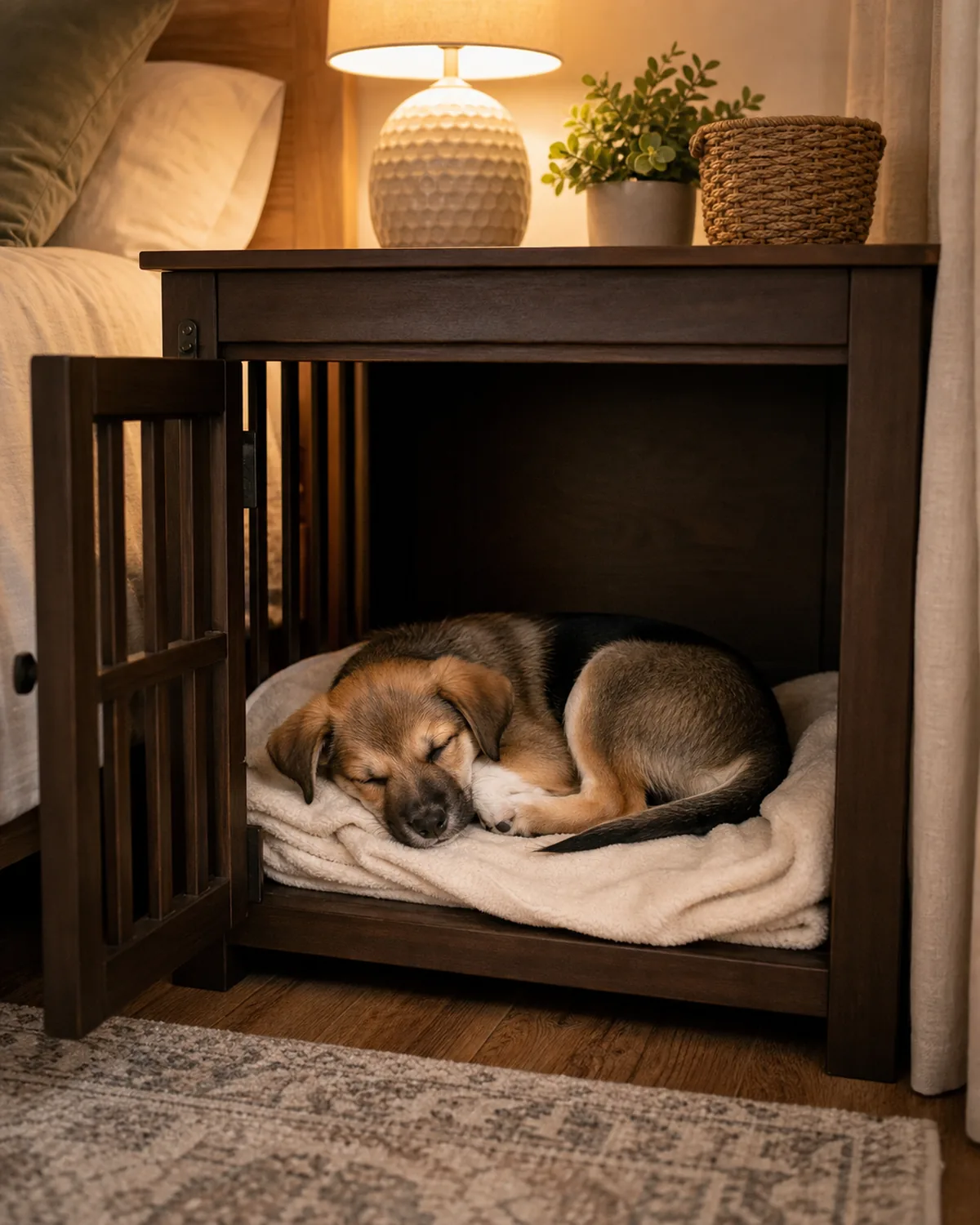
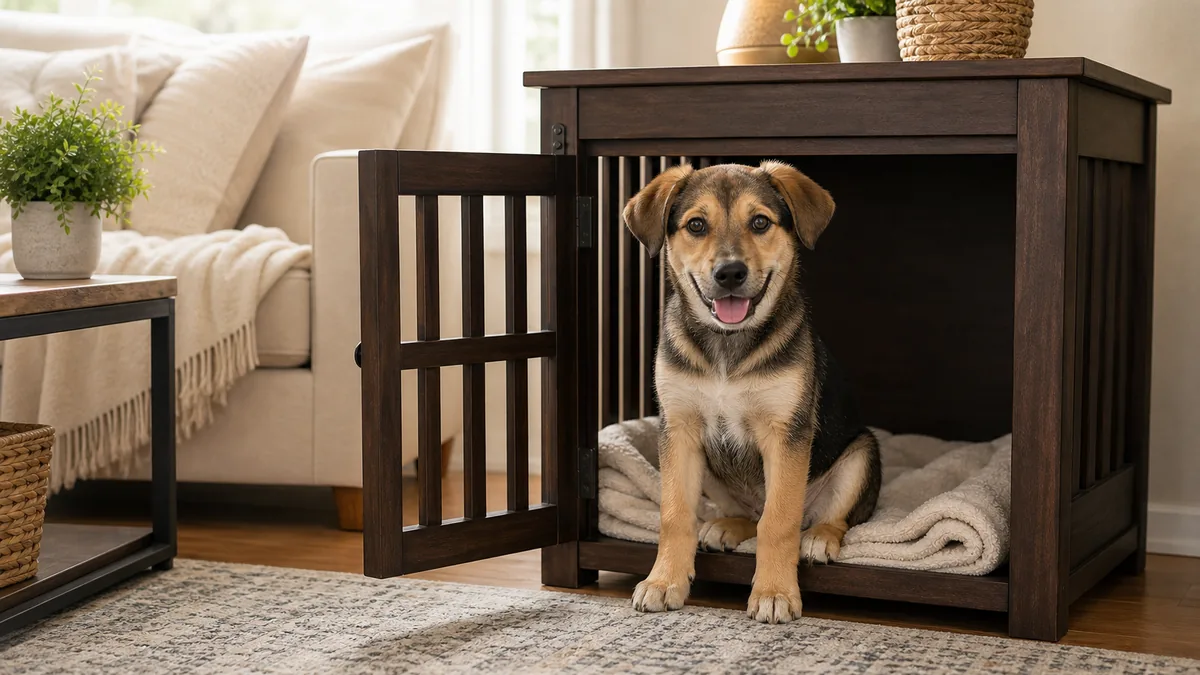
Dogs are den animals, so a small, covered space feels reassuring rather than scary once they learn it is theirs. A crate gives your puppy a calm place to rest, helps with potty training, and keeps them safe when you cannot watch. The crate is never punishment.
- Treat the crate as a bedroom your puppy chooses, not a timeout you impose.
- Use it for naps, chews, and bedtime so it always predicts calm, not isolation.
- Never crate your puppy in anger or send them there as a consequence.
Choosing the Right Crate Size
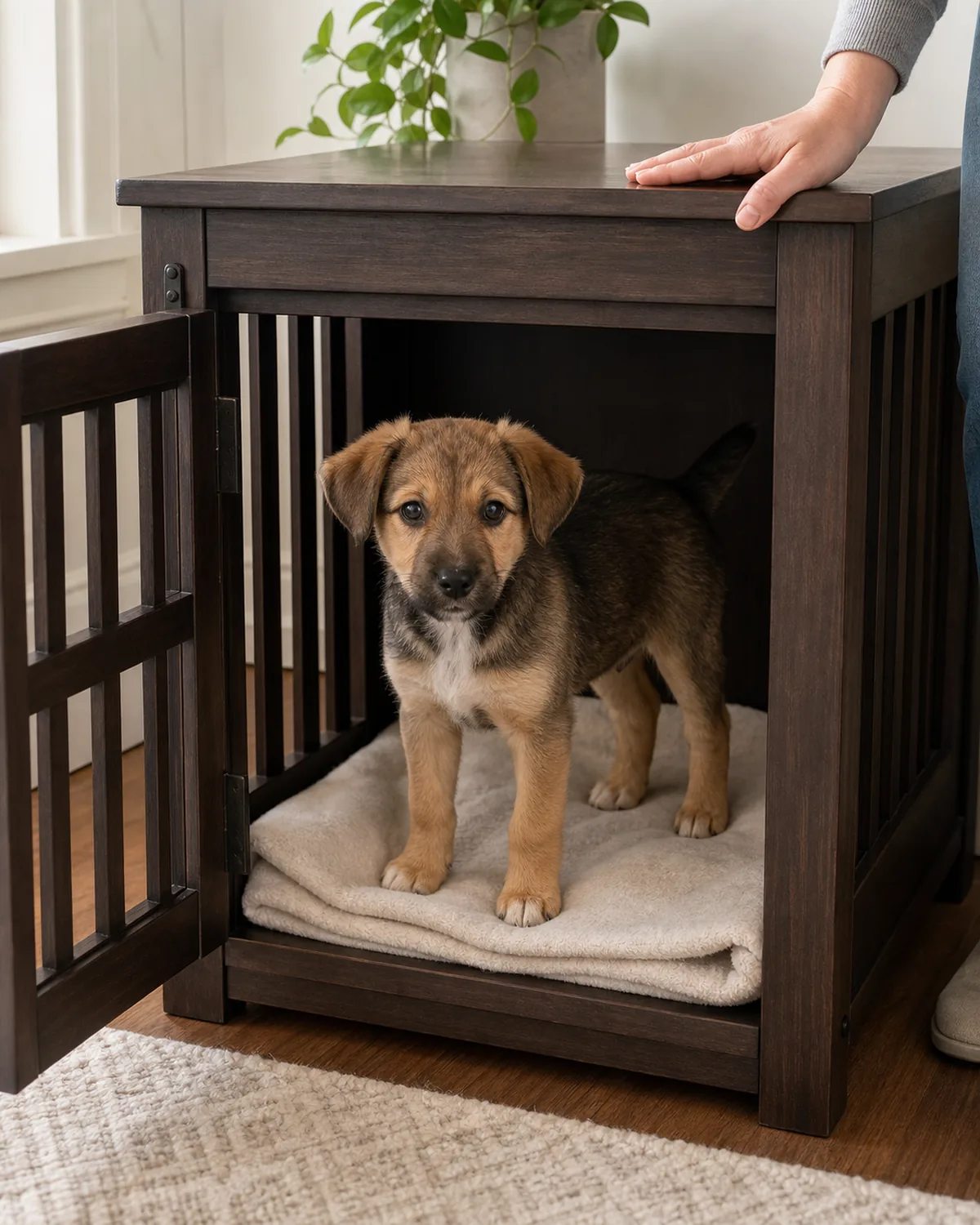
Size matters more than people expect. A crate should let your puppy stand up, turn around, and lie down comfortably, and that is all. A crate that is too big invites your puppy to potty in one corner and sleep in the other, which works against house training.
- Pick a crate sized for now, or use a divider to shrink a larger crate as your puppy grows.
- Check that your puppy can stand without crouching and turn a full circle.
- Avoid a cavernous crate; extra room removes the cozy den feeling you want.
Set Up the Crate to Feel Safe
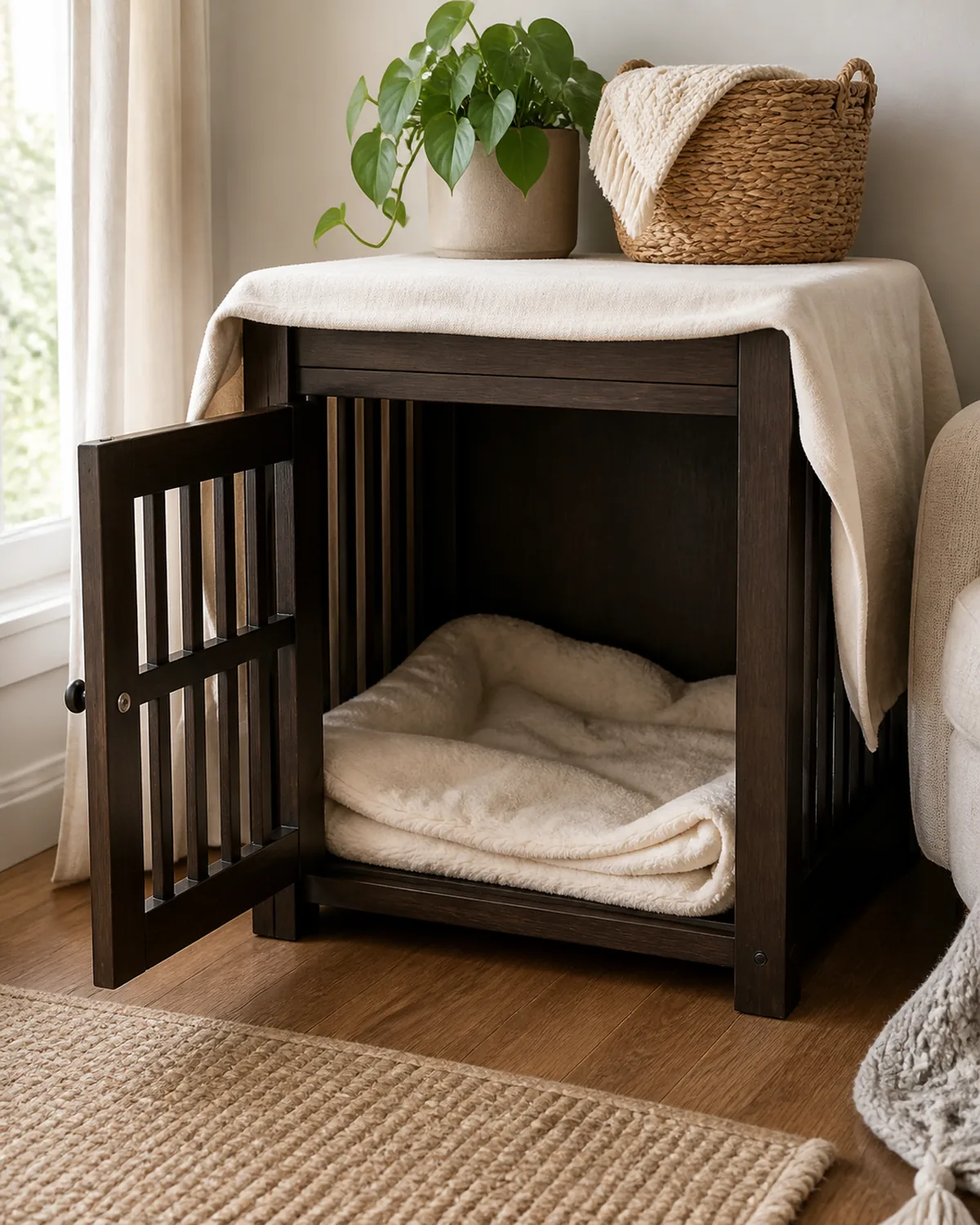
How you furnish the crate decides whether it reads as cozy or clinical. A soft blanket, a partial cover over the top, and a quiet location turn bare bars into a real den. Where you place it counts too, since a busy hallway keeps a puppy on alert.
- Add a washable blanket or flat bed so the floor is soft, not hard plastic.
- Drape a light cloth over part of the top to make it feel enclosed and den-like.
- Set the crate in a calm corner of a room the family actually uses, away from drafts.
You will not need every step today. Pick the situation that sounds most like your puppy, and begin there.
Make the Crate the Best Place in the House
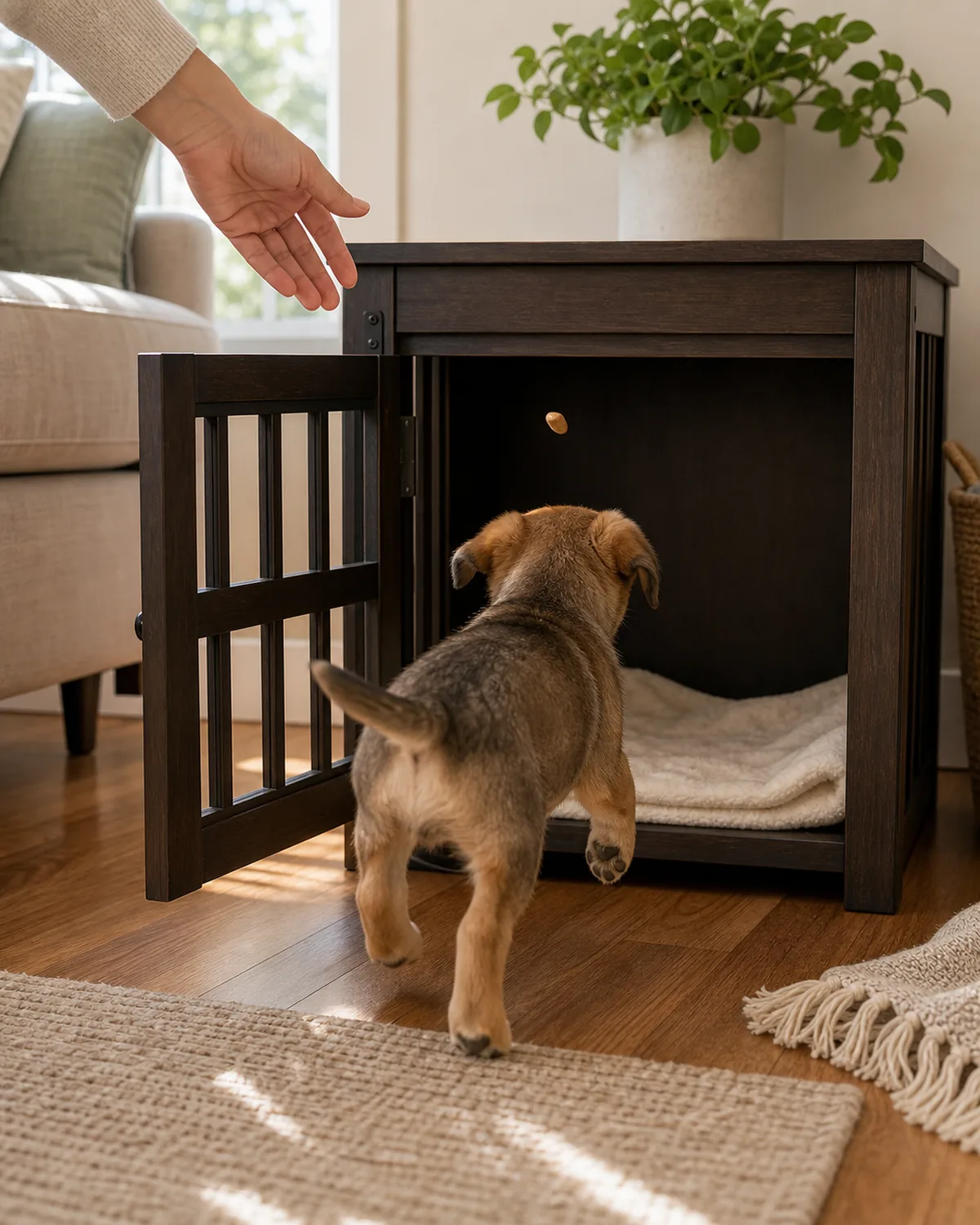
Before you ever close a door, your puppy needs to love walking in. You build that by making good things happen inside the crate, so going in feels like winning rather than losing. Let your puppy come and go freely at this stage with no pressure at all.
- Toss treats and a favorite chew inside and let your puppy follow them in on their own.
- Praise softly any time your puppy chooses to step in, even for a second.
- Keep the door open all day so the crate stays an inviting, no-stakes spot.
Day 1 to 2: Meals and Treats by the Crate
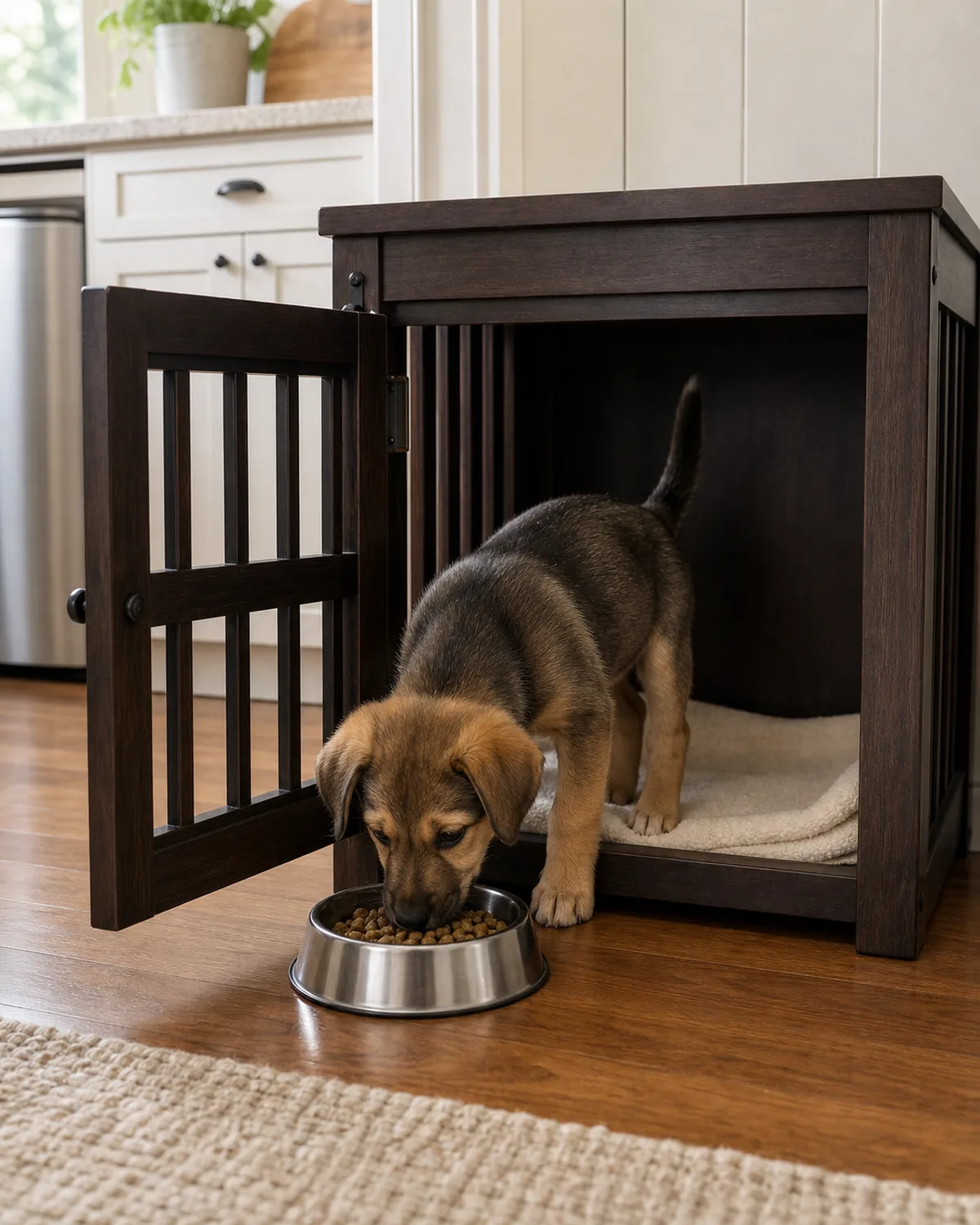
Feeding turns the crate into a daily good thing without any confinement. For the first two days, serve meals at the crate doorway, then a little further in, so your puppy associates that space with their favorite part of the day. The door stays open the whole time.
- Place the food bowl just inside the open door for the first meals.
- Move the bowl a few inches deeper each meal as your puppy grows comfortable.
- Let your puppy walk out freely after eating; do not shut them in yet.
Day 3 to 4: Short Closed-Door Minutes
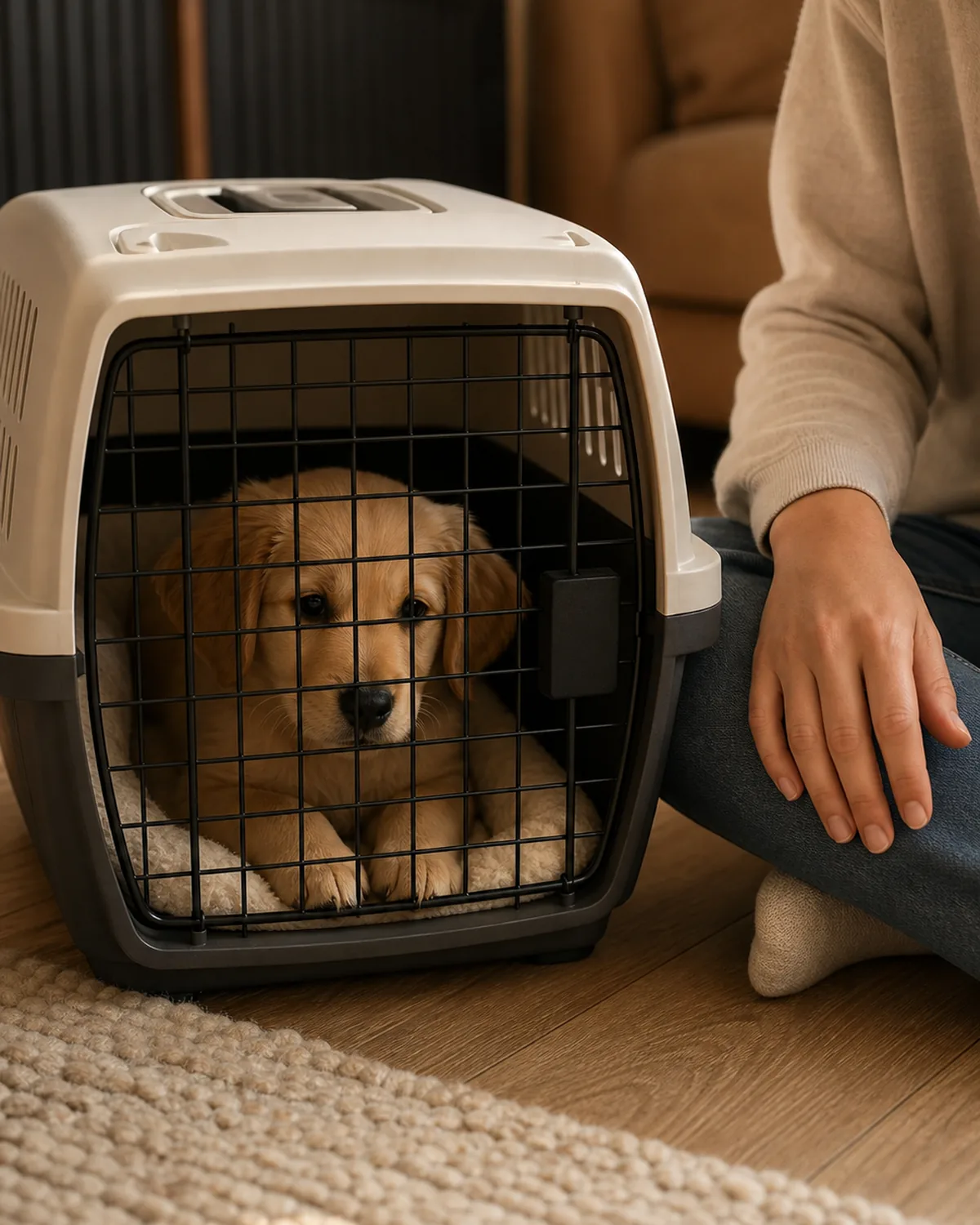
Now you close the door for the first time, but only for seconds, and you stay right there. The goal is to prove that a closed door is no big deal and always opens again. Sit beside the crate so your puppy learns you have not vanished.
- Close the door for a few seconds while your puppy chews, then open it calmly.
- Stretch from seconds to a couple of minutes only while your puppy stays relaxed.
- Open the door before your puppy gets anxious, not after they start to fuss.
Day 5 to 7: Build Duration and Step Away
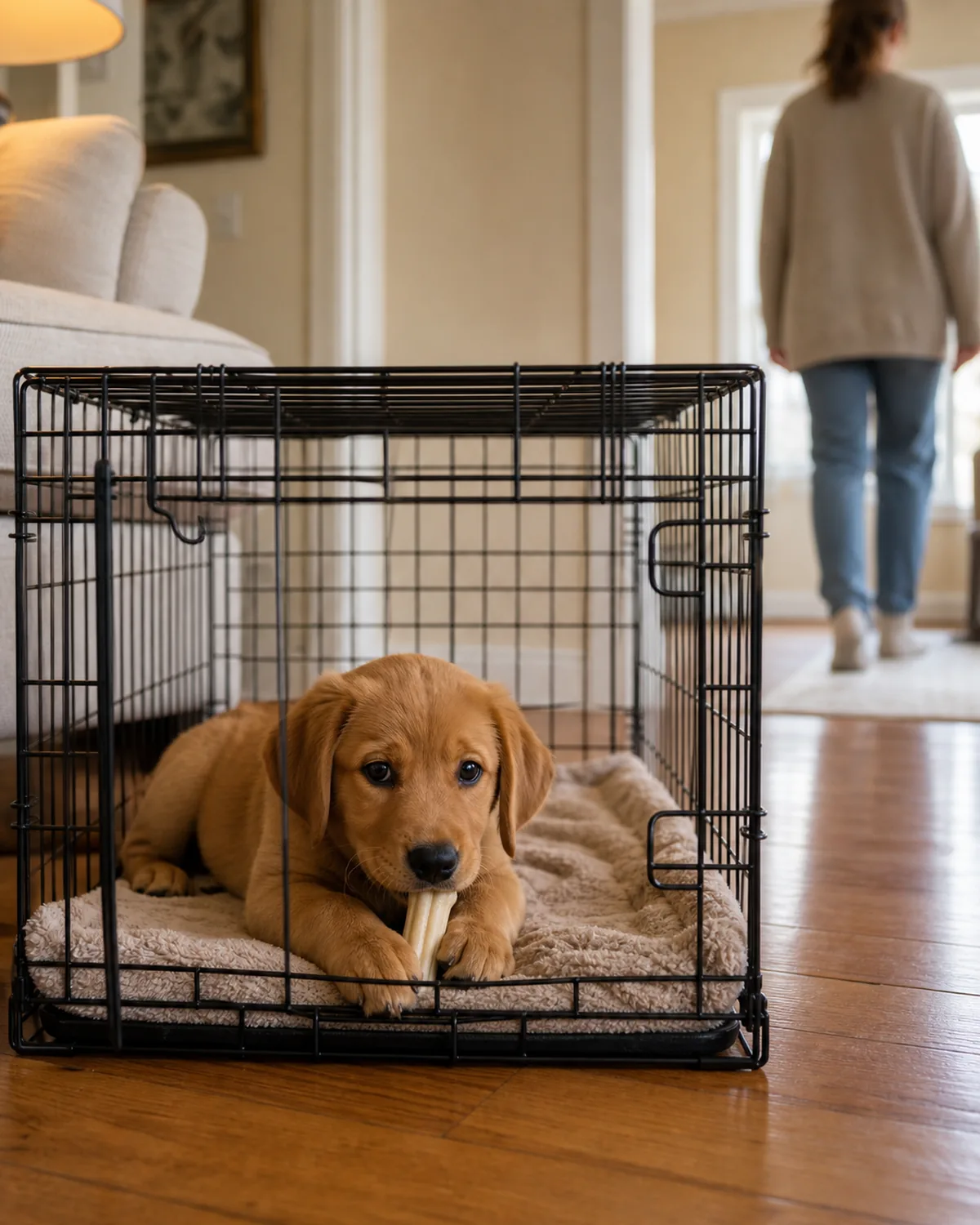
With a calm closed door in place, you start adding time and a little distance. Give your puppy a long-lasting chew, then move around the room and eventually step out of sight for short stretches. Keep returns boring so leaving and coming back both feel ordinary.
- Hand over a safe chew to make alone time pleasant, then potter nearby.
- Leave the room for one or two minutes and return before any whining starts.
- Build gradually toward longer absences, never jumping straight to a long stretch.
The day-by-day plan works because of four ideas underneath it. Get these right and the steps fall into place; ignore them and even a cozy crate turns into a battle.
Crate Training at Night
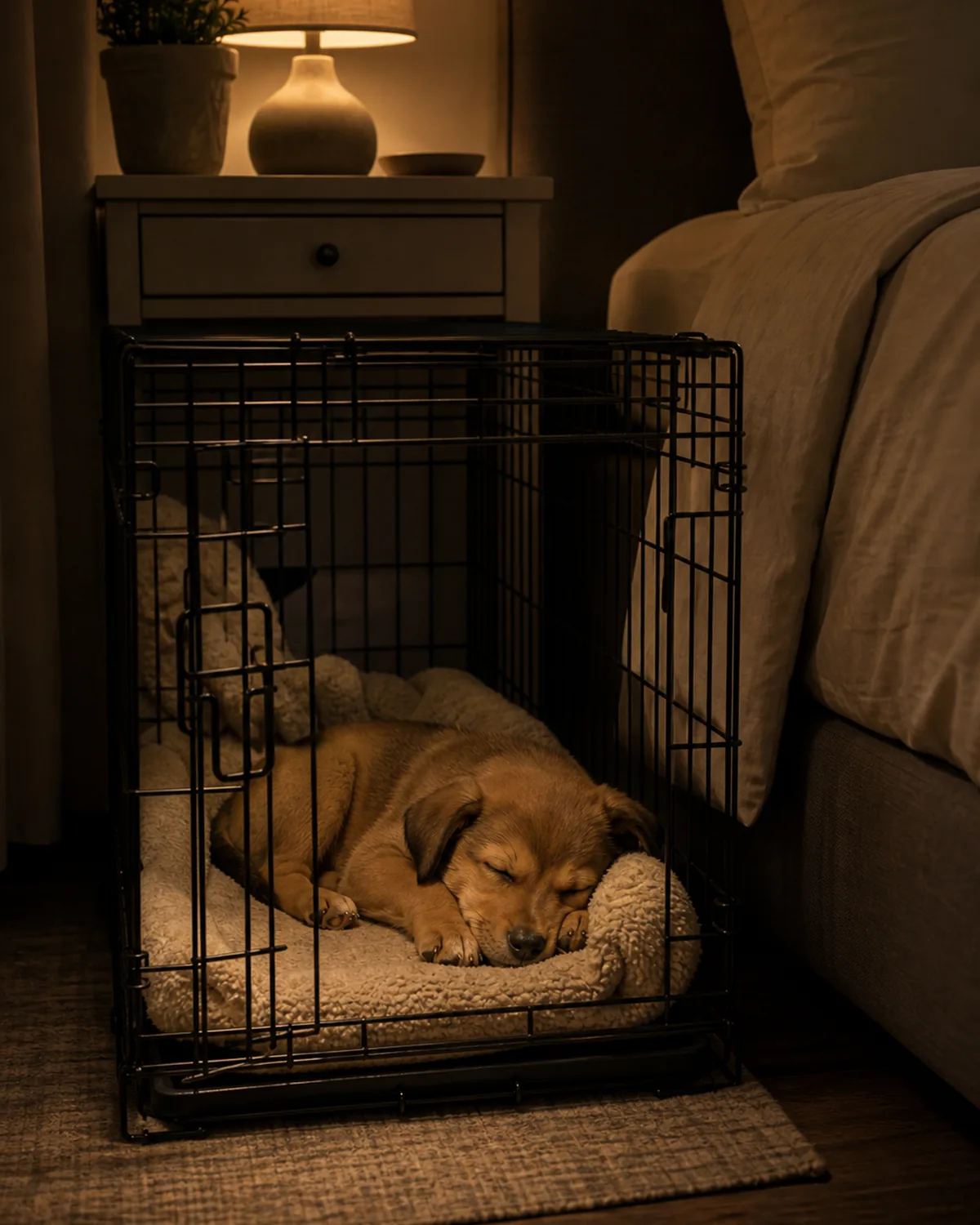
Nights are easier when your puppy is not alone in a far room. Put the crate beside your bed at first so your puppy can hear and smell you, which heads off most lonely crying. A young puppy will likely need one potty break in the night, so plan for it.
- Place the crate next to your bed for the early weeks, then move it gradually if you like.
- Take your puppy out for a quiet potty break once overnight, with no play or fuss.
- Do not reward protest crying with attention, but always answer a genuine potty need.
Crate and Potty Training Work Together
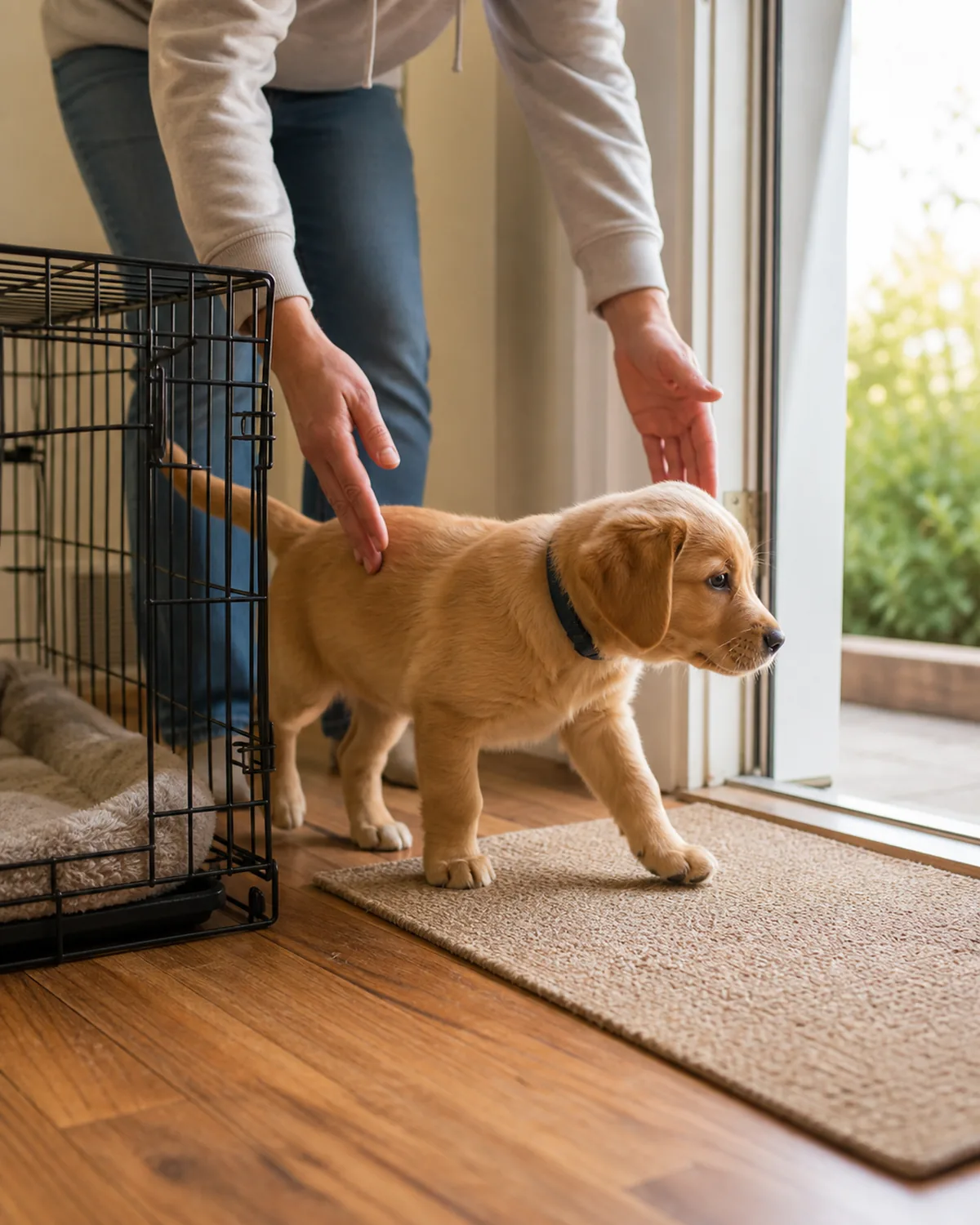
The crate is a potty-training ally because puppies avoid soiling where they sleep. Carry or walk your puppy straight from the crate to the potty spot, every single time they come out. Catch the need before the accident and your house training speeds up.
- Take your puppy out the moment they leave the crate, first thing and after every nap.
- Go to the same spot and praise the instant they go, so the routine clicks.
- Watch the clock; young puppies need frequent breaks and cannot hold it long.
A Sample First-Week Crate Schedule
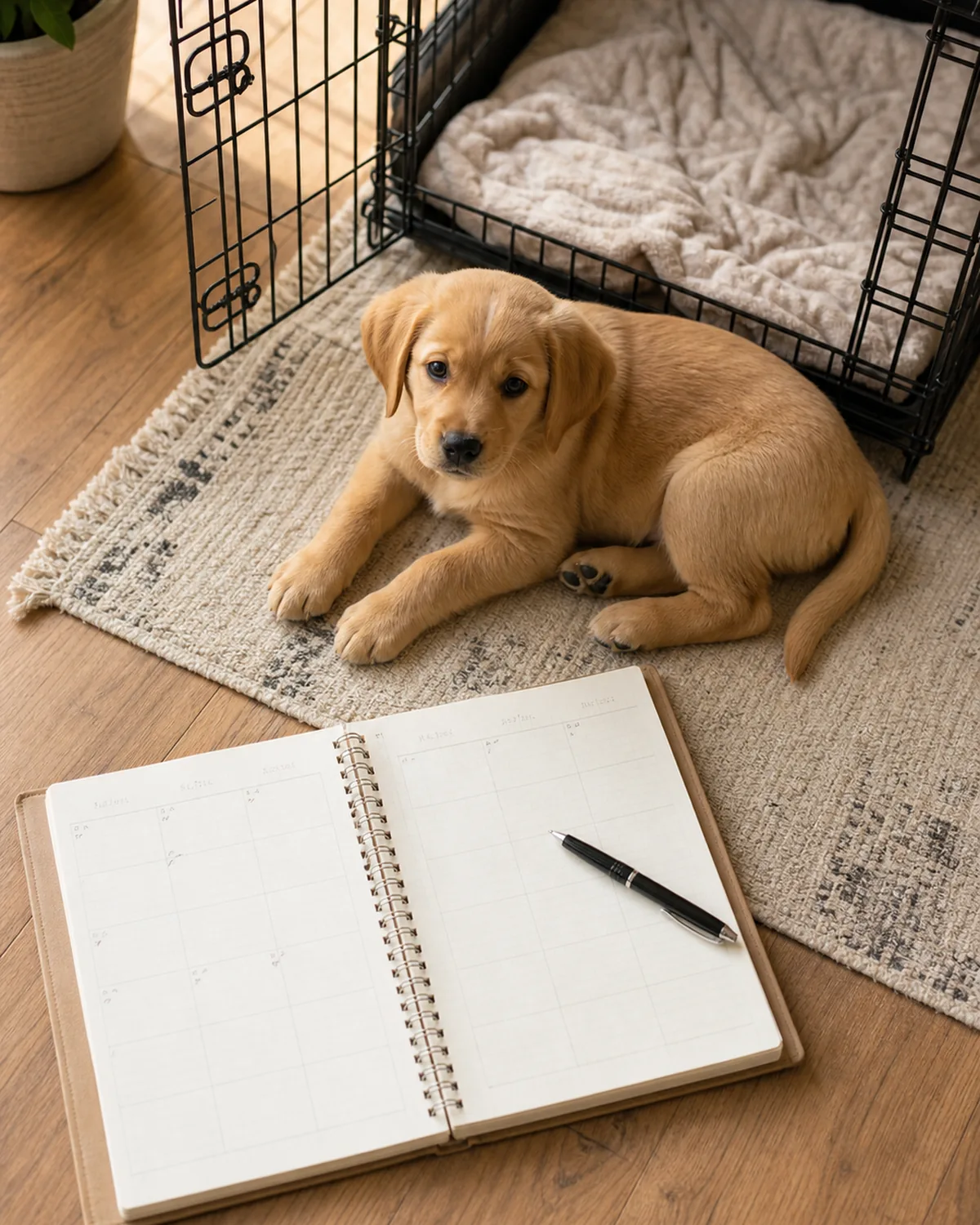
A loose daily rhythm takes the guesswork out of the first week. Puppies thrive on predictable cycles of potty, play, eat, and rest, with the crate as the rest anchor. Treat the times below as a flexible frame, not a rigid clock, and adjust to your own puppy.
- Morning: potty first, then breakfast by the crate, a play session, then a crated nap.
- Midday: potty, lunch, gentle activity, and another rest in the crate while you work.
- Evening: potty, dinner, calm time, a last potty trip, then the crate beside your bed.
How to Crate Train a Puppy: A Calm, Day-by-Day Plan
- 1Why a crate helps (it’s a den, not a cage)Dogs are den animals; a cozy crate is a safe resting spot, never a punishment.
- 2Choosing the right crate sizeJust enough room to stand, turn, and lie down; too big invites corner accidents.
- 3Set up the crate to feel safeA soft blanket, a partial cover, and a calm corner turn bars into a den.
- 4Make the crate the best place in the houseToss treats and chews inside, door open, so going in feels like winning.
- 5Day 1 to 2: meals and treats by the crateFeed at the open doorway, then deeper in, with no confinement yet.
- 6Day 3 to 4: short closed-door minutesClose the door for seconds while you stay close, then build to minutes.
- 7Day 5 to 7: build duration and step awayAdd a chew, add time, and step out of sight for short, boring absences.
- 8Crate training at nightCrate beside your bed, one quiet potty break, no reward for protest crying.
- 9Crate and potty training work togetherOut of the crate, straight to the potty spot, every time, then praise.
- 10A sample first-week crate scheduleA flexible potty, play, eat, rest rhythm with the crate as the rest anchor.
- 11How long is too long in the crateMonth of age plus one as the hour ceiling; keep daytime stretches well under it.
- 12Common crate training mistakesUsing it as punishment, a crate too big, crating too long, or rewarding the fuss.
- 13If your puppy cries or panicsTell a potty cry from a protest, shorten steps, and call a pro for true panic.
- 14From crate to calm: phasing it outKeep the open crate as a trusted den, or loosen the routine slowly over time.
pawliqa.com
How Long Is Too Long in the Crate
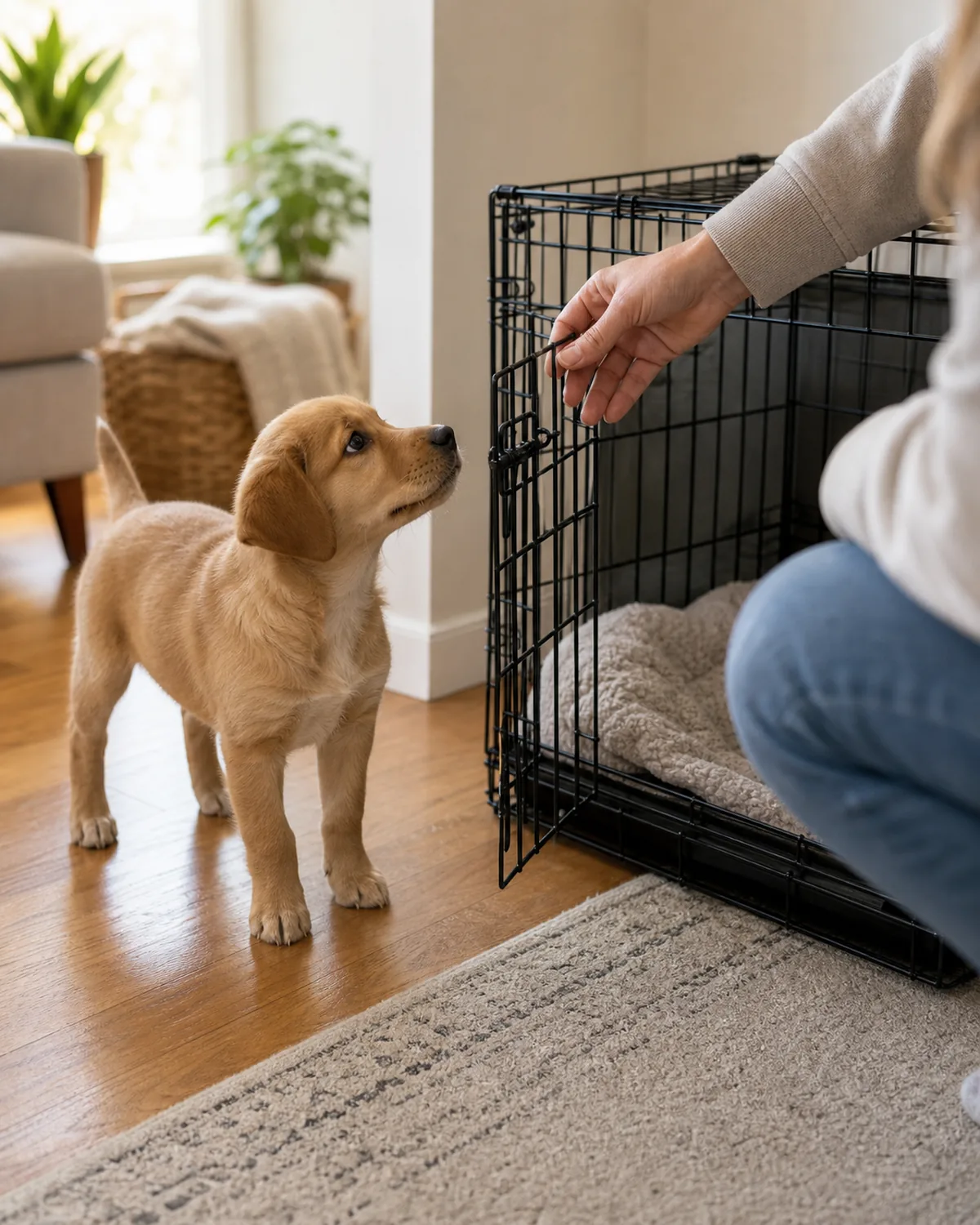
Crating has firm limits, and respecting them is what keeps the crate humane. A rough guide is your puppy’s age in months plus one, in hours, as the most they can hold it, and even that is a ceiling, not a target. A crate should never become where your puppy lives all day.
- Use the month-of-age plus one rule as the maximum, so a three-month puppy tops out near four hours.
- Keep daytime stretches well under that limit and break up long workdays with a midday let-out.
- If your schedule means long absences, arrange a sitter or a safe playpen instead of overlong crating.
Common Crate Training Mistakes
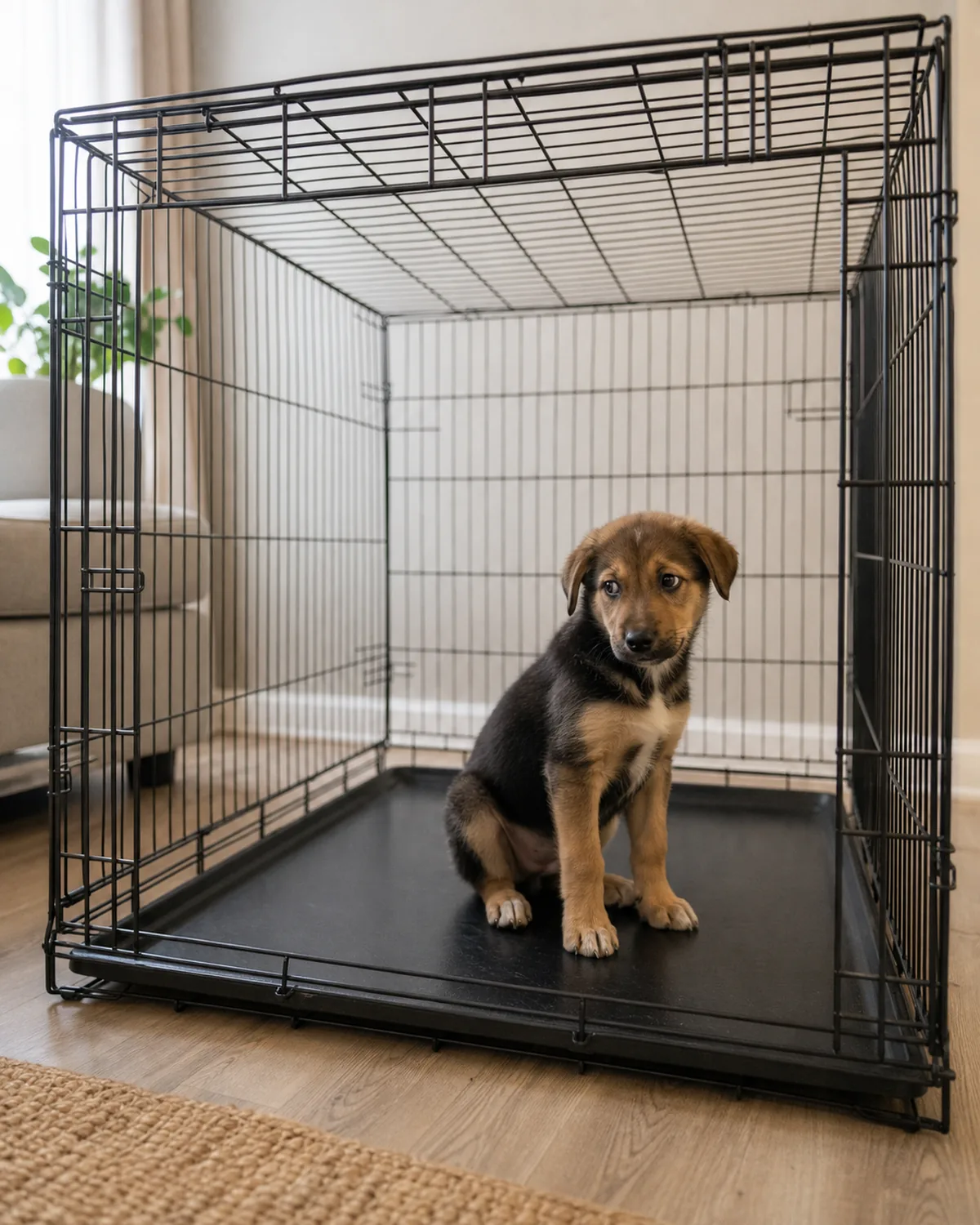
Most crate problems trace back to a handful of avoidable missteps. Knowing them in advance saves you from teaching your puppy the wrong lesson. The biggest one is rushing, but setup and tone matter just as much as pace.
- Do not use the crate as punishment, or your puppy will learn to dread it.
- Do not pick a crate that is too big or leave it bare; both undercut the cozy den feel.
- Do not crate too long or open the door the second your puppy protests, which rewards the noise.
If Your Puppy Cries or Panics
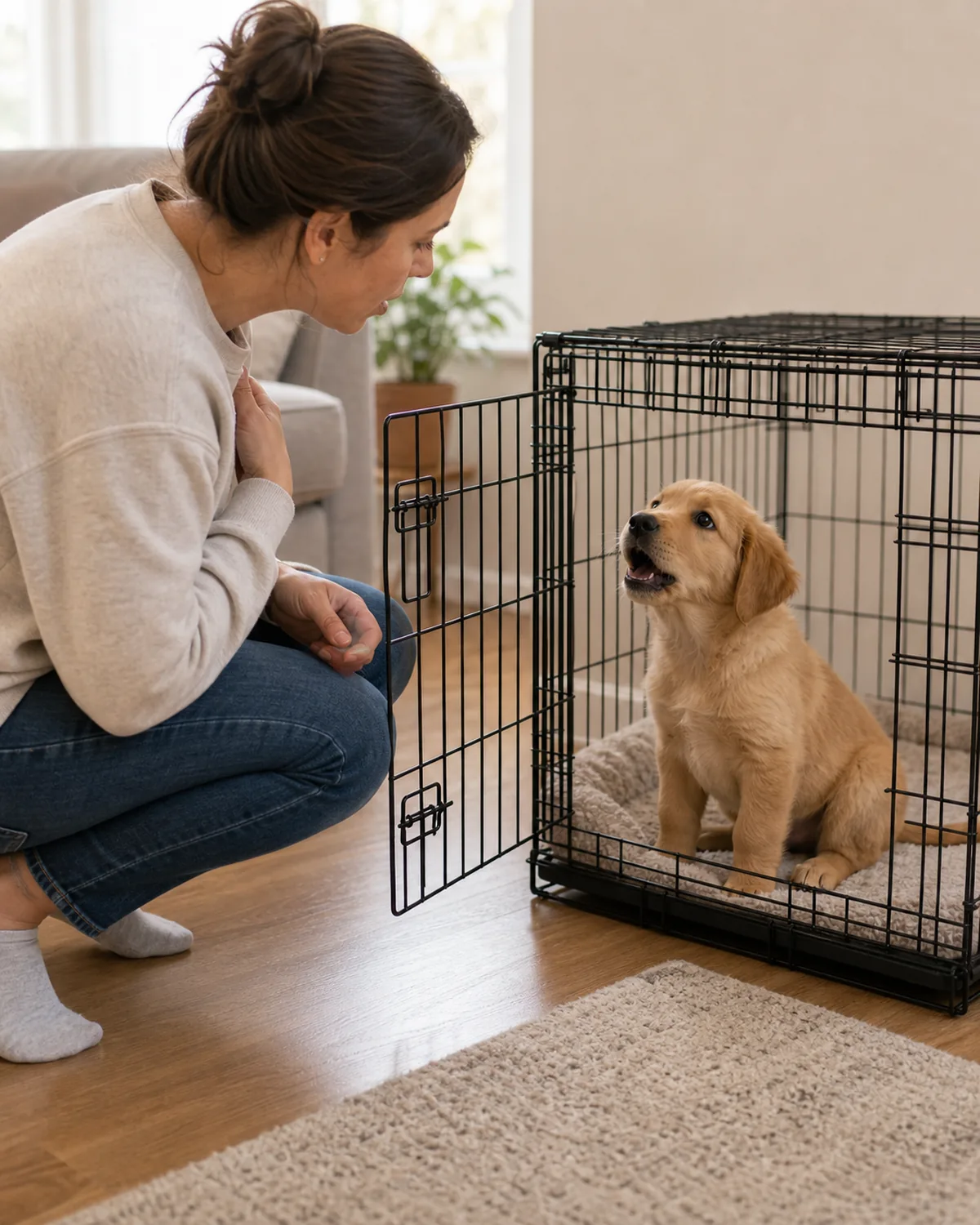
Some fussing is normal early on, but you need to read what the crying means. A short grumble that settles is your puppy protesting bedtime; a frantic, escalating cry can signal a real potty need or genuine distress. Stay calm and respond to the need, not the noise.
- Wait out a mild settling whine, but take your puppy out quietly if the cry says potty.
- Shorten your next steps if panic shows up, dropping back to where your puppy was relaxed.
- If your puppy panics hard, drools, or hurts themselves trying to escape, talk to a trainer or your vet, since that can point to separation anxiety, not a training gap.
From Crate to Calm: Phasing It Out (or Keeping It)
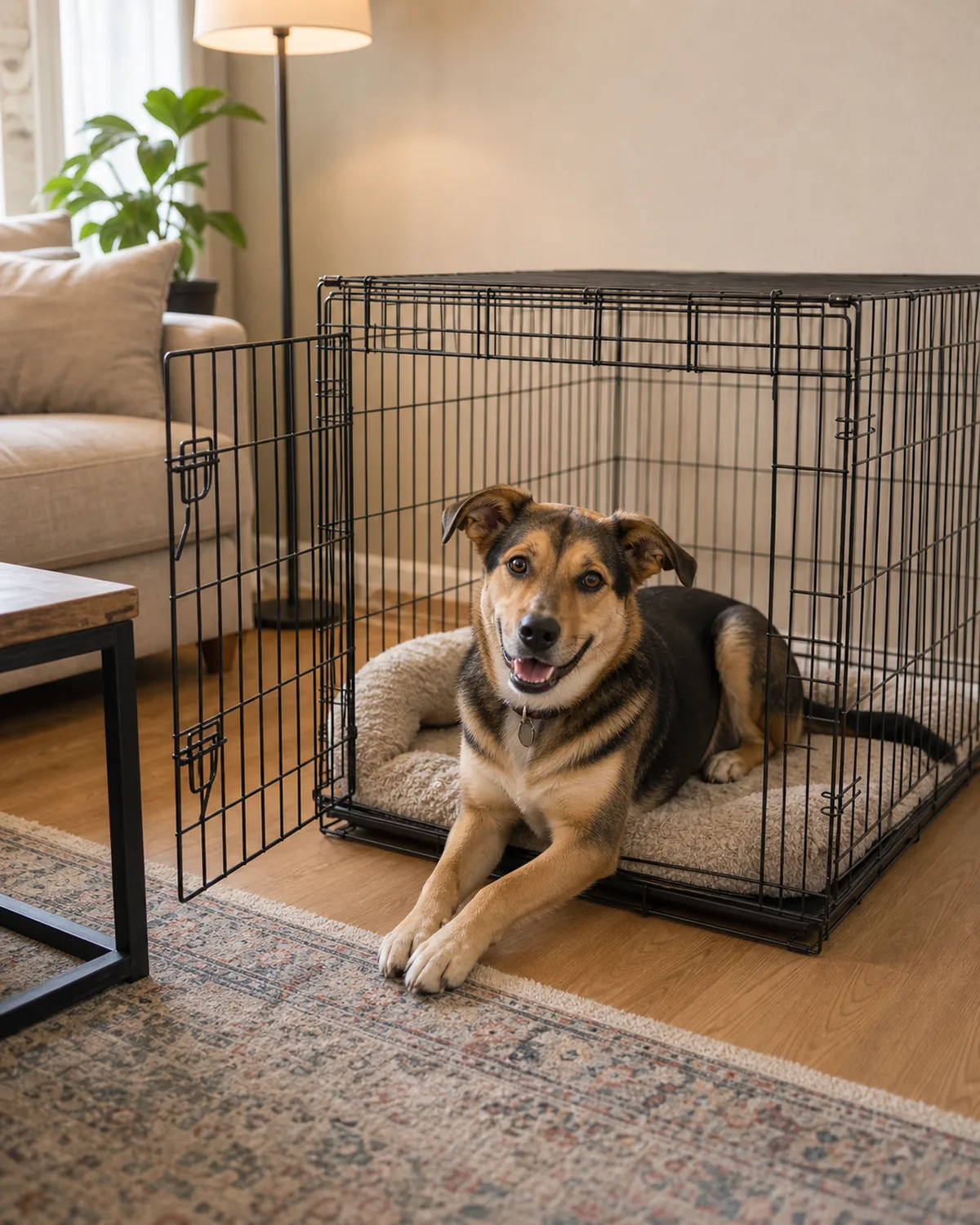
The long-term goal is a dog who treats the crate as a trusted retreat, whether or not you keep using it. Many owners leave the open crate out for life as a safe spot, while others loosen the routine once the puppy is reliably house trained and calm home alone. Either choice is fine.
Whatever you decide, keep the crate a positive place. A crate-relaxed dog is calmer at the vet, in the car, and through handling, so even brushing a dog that hates it goes easier once they trust being settled. The patience you spend now pays off for years, in a dog who feels safe almost anywhere.
- Keep the open crate available as a chosen den even after formal training ends.
- Phase out slowly if you prefer, giving freedom in small steps as your dog earns it.
- Revisit the crate any time life changes, like travel or a move, so it stays a comfort.

Jess Calloway edits Pawliqa, where she shares dog care, grooming, training, and new-owner tips — plus DIY and pet-friendly home ideas — for anyone who wants a happy, well-cared-for dog. As a dog mom to three very different dogs, she writes the honest, tested version of what actually works. Every guide is image-led and reviewed for clarity, usefulness, image accuracy, and Pinterest-to-page alignment before it goes live. Visit the About page.