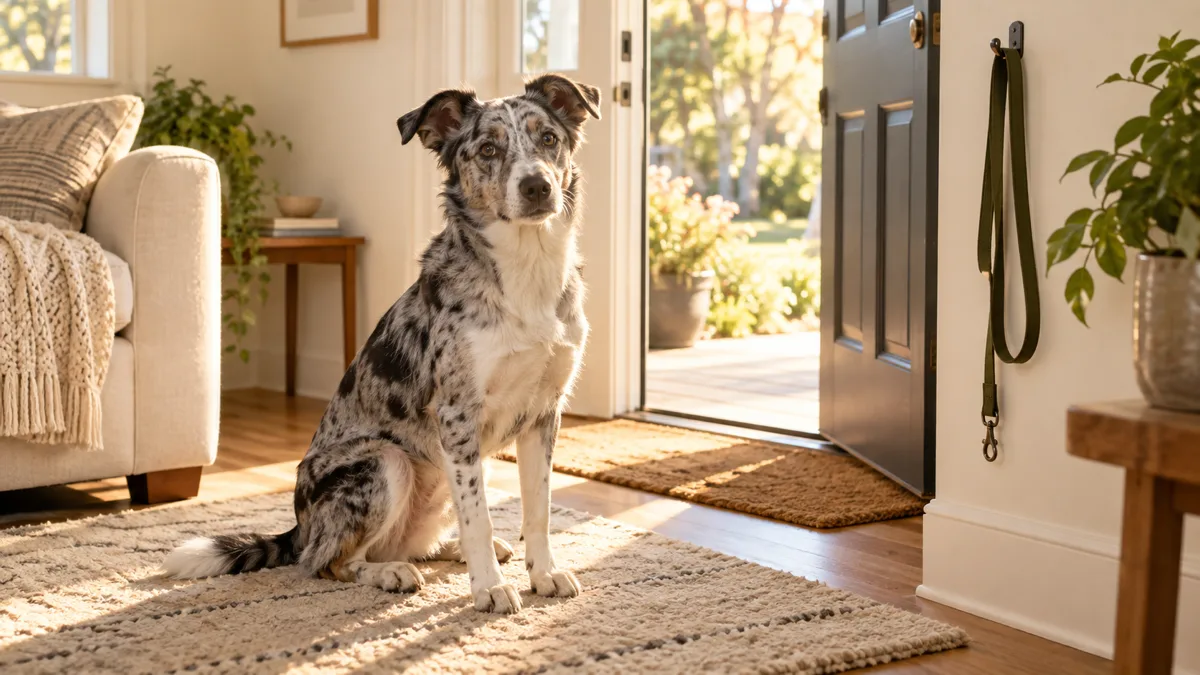
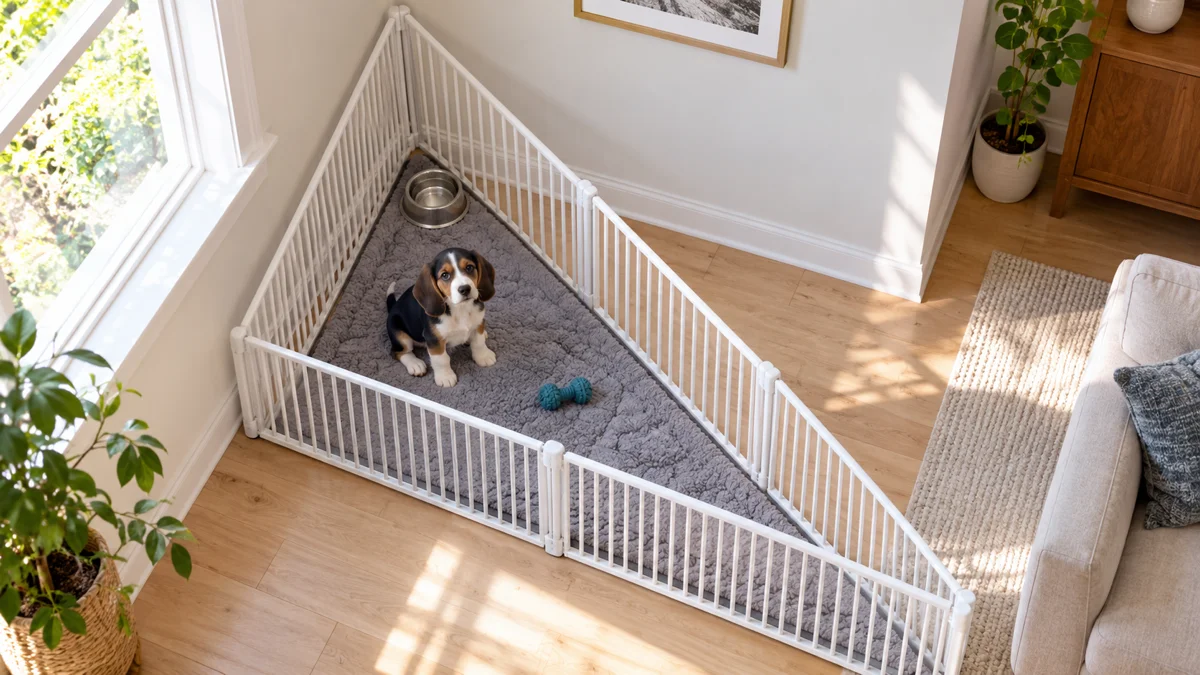
Bringing home a rescue dog is exciting, but most new adopters overwhelm a dog who is not ready for affection yet. That flood of love slows the settling process.
The fix is structure. A rescue dog needs a small, predictable space where they can decide this home is safe and the food will keep coming.
These tips cover setup, decompression, and when to call a trainer. If you just adopted, start with the first-week checklist alongside these.
Your rescue dog settling roadmap
12 Tips for Bringing Home a Rescue Dog
From setting up the safe room to knowing when a behavior needs professional help, these twelve tips follow the real decompression timeline. Jump to wherever your dog is right now.
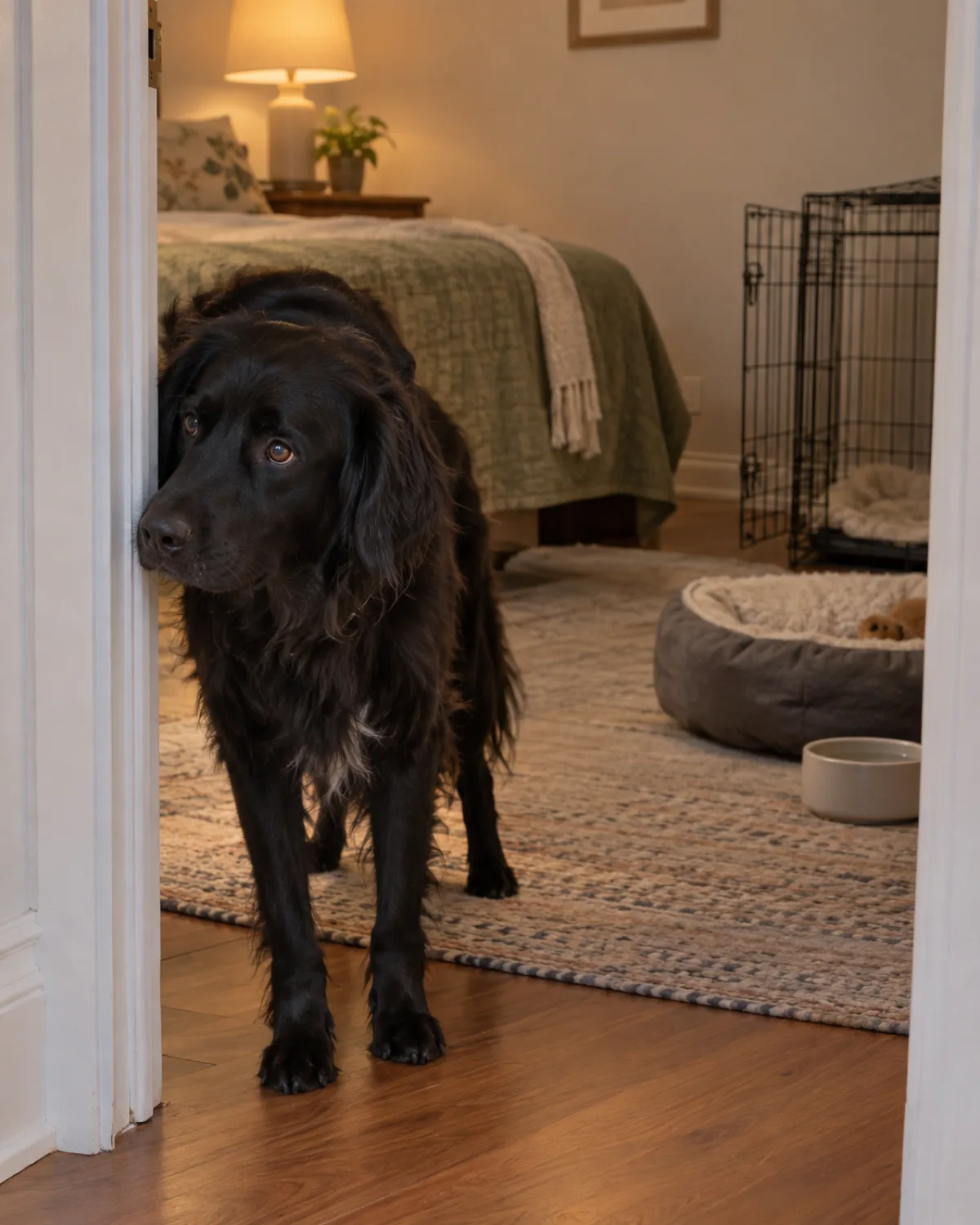
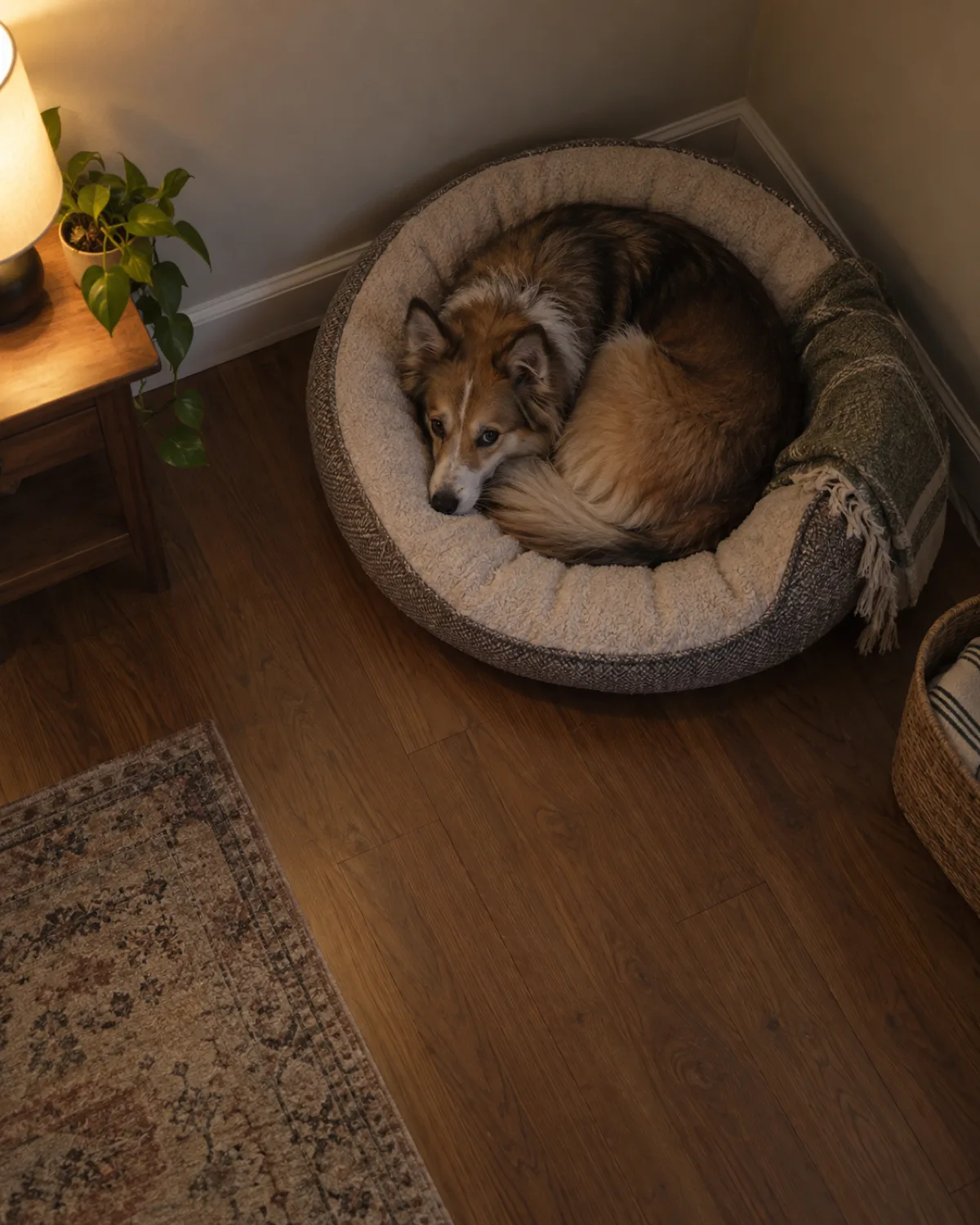
Pick one room — a spare bedroom or a quiet corner of the living room — and make it the dog's entire world for the first few days. Put a crate with the door wired open, a water bowl, and a bed inside. Close off any exits to the rest of the house with baby gates or doors.
A rescue dog who spent weeks or months in a kennel run has been living in a space roughly four feet by six feet. Opening the front door to a full house with hallways, stairs, and three bedrooms is the sensory equivalent of dropping someone in the middle of Times Square after solitary confinement. The safe room gives them a territory small enough to map quickly and start feeling ownership over.
Remove anything chewable that you care about: shoes, power cords, throw pillows, books on low shelves
Cover or block off hiding spots you cannot reach — under the bed, behind the couch — unless you are fine with the dog camping there for days
Set up a white noise machine or fan to dampen unfamiliar house sounds, especially if the dog came from a noisy shelter environment
Put a worn t-shirt of yours near the bed so the dog starts associating your scent with the safe space before you are even interacting directly
The goal is not to confine. It is to give the dog a space small enough that they can relax in it instead of pacing a house they do not understand yet.
2. Stock the Essentials Before the Dog Arrives
Running to the pet store on adoption day means leaving a stressed dog alone in a strange house while you are gone. Buy everything before pickup day so you can focus entirely on the dog when they arrive.
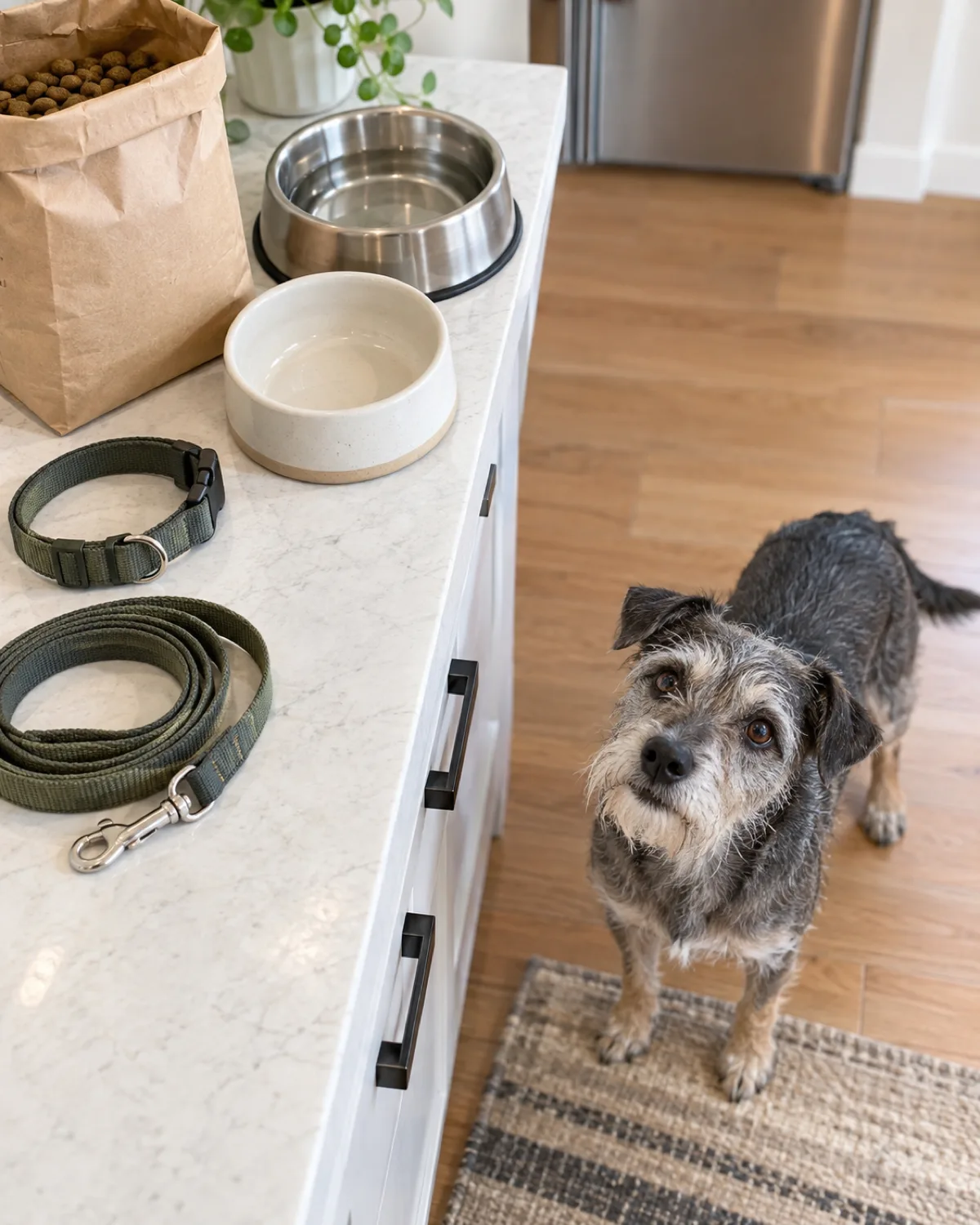
The essentials list is shorter than most new adopter guides suggest. A rescue dog who is still decompressing does not need a toy basket, a wardrobe of bandanas, or five different chew options. They need:
A flat collar with an ID tag that has your phone number on it — this goes on before you leave the shelter parking lot
A standard six-foot leash (not retractable — you need full control in an unfamiliar environment)
A crate sized so the dog can stand, turn around, and lie flat with legs extended
Two stainless steel bowls (one for water, one for food)
Enzymatic cleaner because house training accidents will happen regardless of the dog's age or history
The same food the shelter was using — ask the foster or shelter staff what brand and formula, and buy a bag before you switch to anything else
Skip the toy pile for the first week. Many rescue dogs do not know what toys are, and a floor full of squeakers is just more noise in an already overwhelming environment. Introduce one soft toy on day three or four and see if the dog shows any interest.
3. Keep the First Day Quiet and Boring
The single biggest mistake new adopters make is throwing a welcome party. Your family is excited, your neighbors want to meet the dog, your kids have been counting down for weeks. All of that energy needs to wait.
A rescue dog on their first day in a new home is running on pure cortisol. Every new face, every new sound, every new room is another data point their brain has to process while simultaneously trying to answer the survival question: is this place safe or not?
The fewer inputs you give them on day one, the faster they reach the answer.
Limit the house to adults only for the first twenty-four hours if possible — children can meet the dog on day two once the dog has had a full sleep cycle in the new environment
No visitors at all during the first week, including well-meaning friends and family who want to see the new addition
Keep the TV and music low or off entirely — shelter dogs are used to constant noise but not your specific household sounds
Let the dog come to you rather than approaching, crouching, and reaching — sit on the floor at their level and let them sniff on their own terms
Boring is the goal. Boring means the dog's nervous system gets to downregulate. You will have years to throw the dog a party. Give them a quiet first day.
4. Let the Dog Explore One Room at a Time
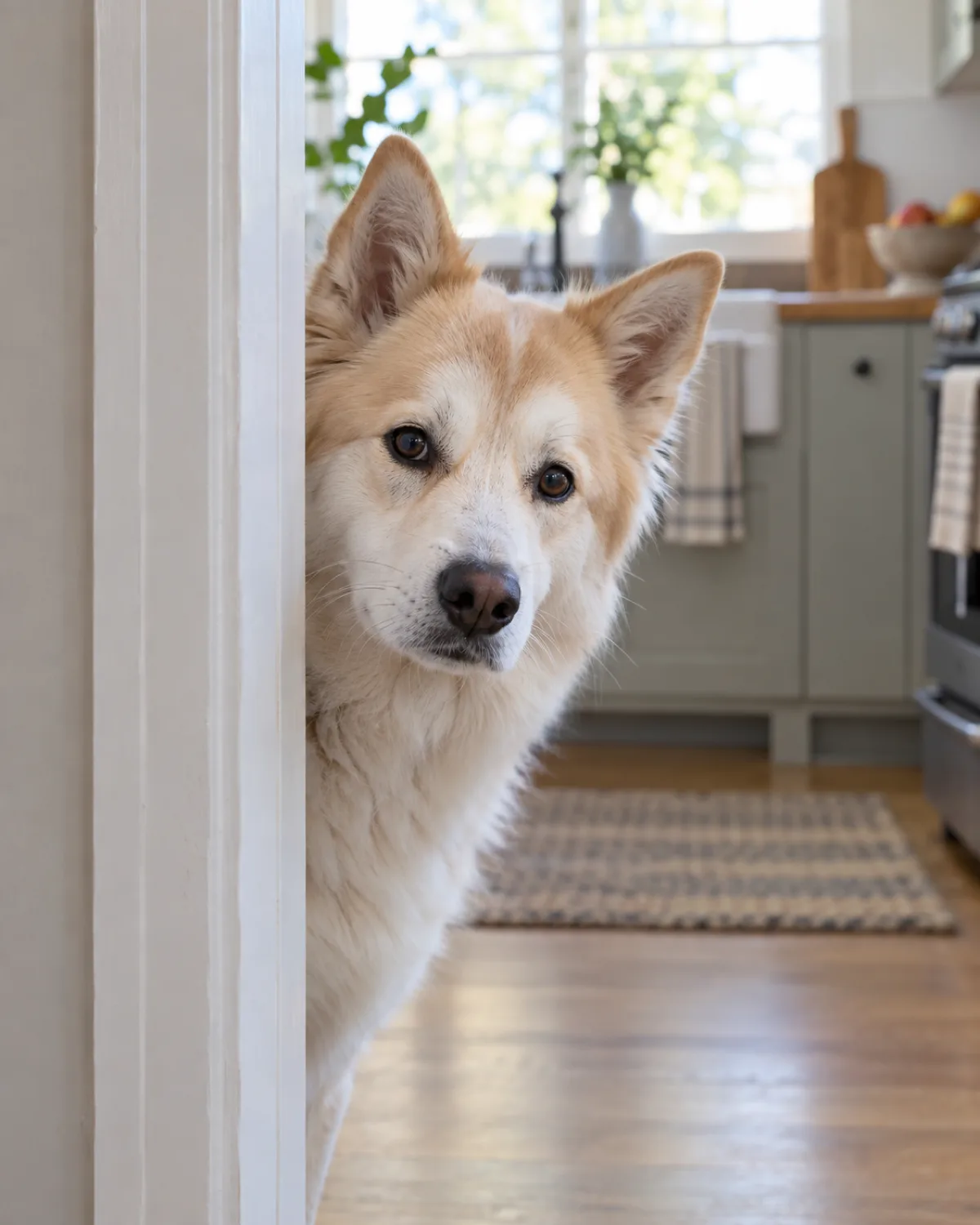
After the first day or two in the safe room, start opening doors one at a time. Let the dog investigate the kitchen for a few hours, then close the gate and let them process. The next day, open the hallway. The day after that, the living room.
This graduated exposure works because a dog who has been living in a small kennel physically cannot process a whole house at once. Their world was four walls and a gate. Giving them the full floor plan on day two is like teaching someone to drive by putting them on the freeway — the skills are not there yet, and the speed creates panic.
Day
Access
Watch for
1-2
Safe room only
Eating, drinking, resting
3-4
Safe room + one room
Sniffing, exploring, retreating
5-7
Safe room + two rooms
Time spent outside safe room
Week 2+
Supervised full access
Relaxed posture in new rooms
If the dog freezes, retreats, or starts pacing when a new room opens, close it back up and wait another day. The timeline is the dog's, not yours.
Keep these in mind every time you open a new room to the dog
4 Room-Exploration Safety Rules
Gradual access only works if each new room is actually safe. Run through these four checks before you open the next door.
Check every exit firstWindows, sliding doors, doggy doors, garage entries. A panicked dog can bolt through a gap you did not think was wide enough. Latch, lock, or block every way out before opening the room.
Remove toxic plants and foodLilies, poinsettias, chocolate left on the counter, grapes in a low bowl. A dog exploring a new room mouths everything. Sweep for hazards at dog-nose height before you open the gate.
Keep the safe room open as a retreatNever close the door to the safe room while expanding access. The dog needs to know they can always go back to the one spot they already trust. Removing the retreat undoes days of progress.
Stay nearby but stay boringBe in the room reading a book or working on your laptop. Your calm presence says the room is safe. Following the dog around or narrating their exploration says the room is worth being nervous about.
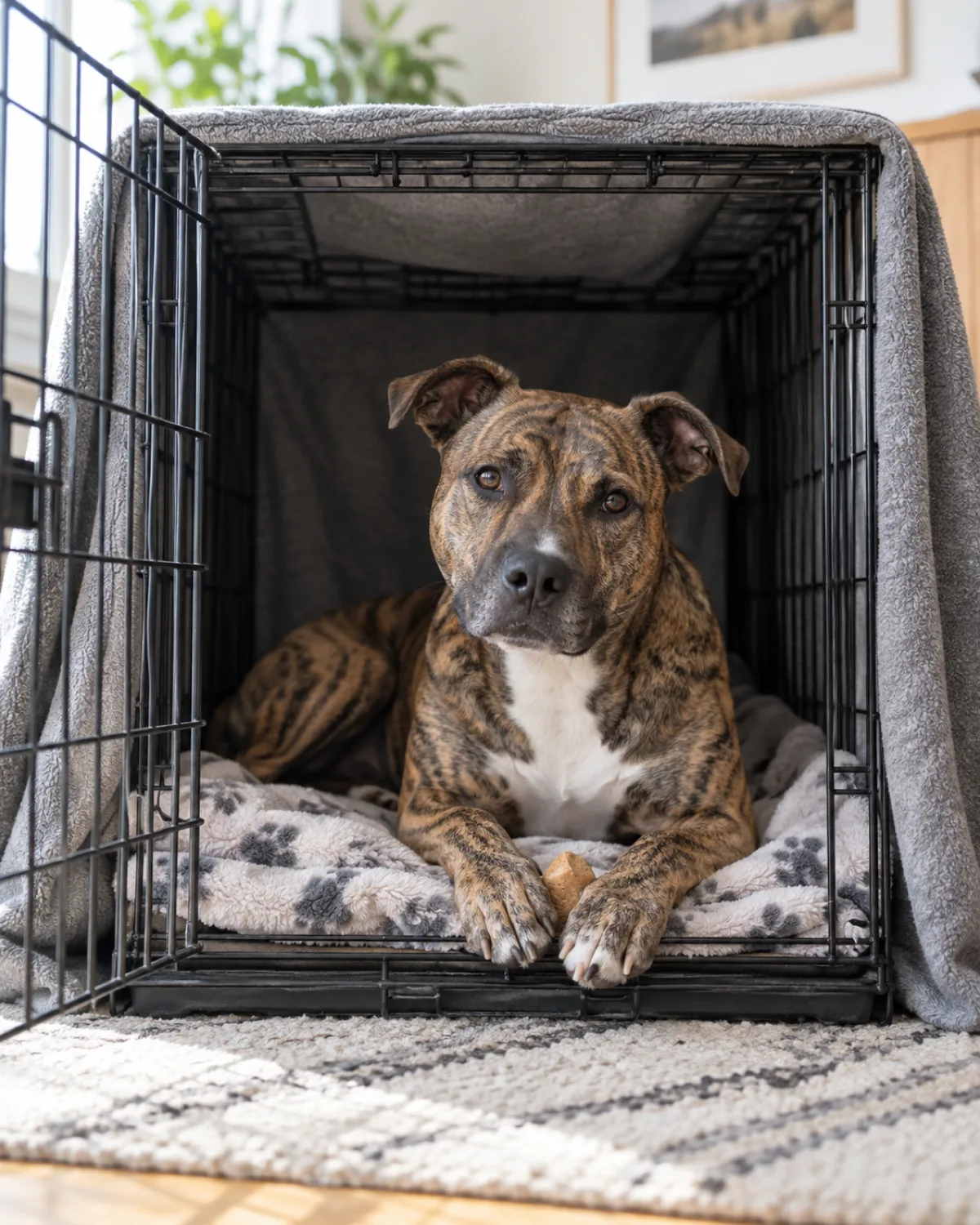
5. Set Up the Crate as a Decompression Den
A crate is not a punishment box. For most shelter dogs, it is actually the most familiar piece of furniture in your entire house — they have been sleeping in one for weeks or months. Setting it up correctly turns it into the dog's voluntary retreat, the one spot in your home that is entirely theirs.
The setup makes or breaks whether the dog uses it willingly:
Leave the door open permanently for the first two weeks — the dog should never feel trapped
Drape a blanket over three sides to create a den-like enclosure while leaving the opening clear so the dog can see out
Put a treat trail from outside the crate leading in, with the best treat at the back — let the dog discover it on their own
Place the crate in the safe room, not in a high-traffic area like the kitchen or living room
Feed meals inside the crate with the door still open — this builds a positive association with the space before you ever close it
Most rescue dogs will start voluntarily napping in the crate within three to five days if you do not push. If you need to work up to actual crate training with the door closed, that can start in week two or three once the dog is visibly comfortable going in and out on their own.
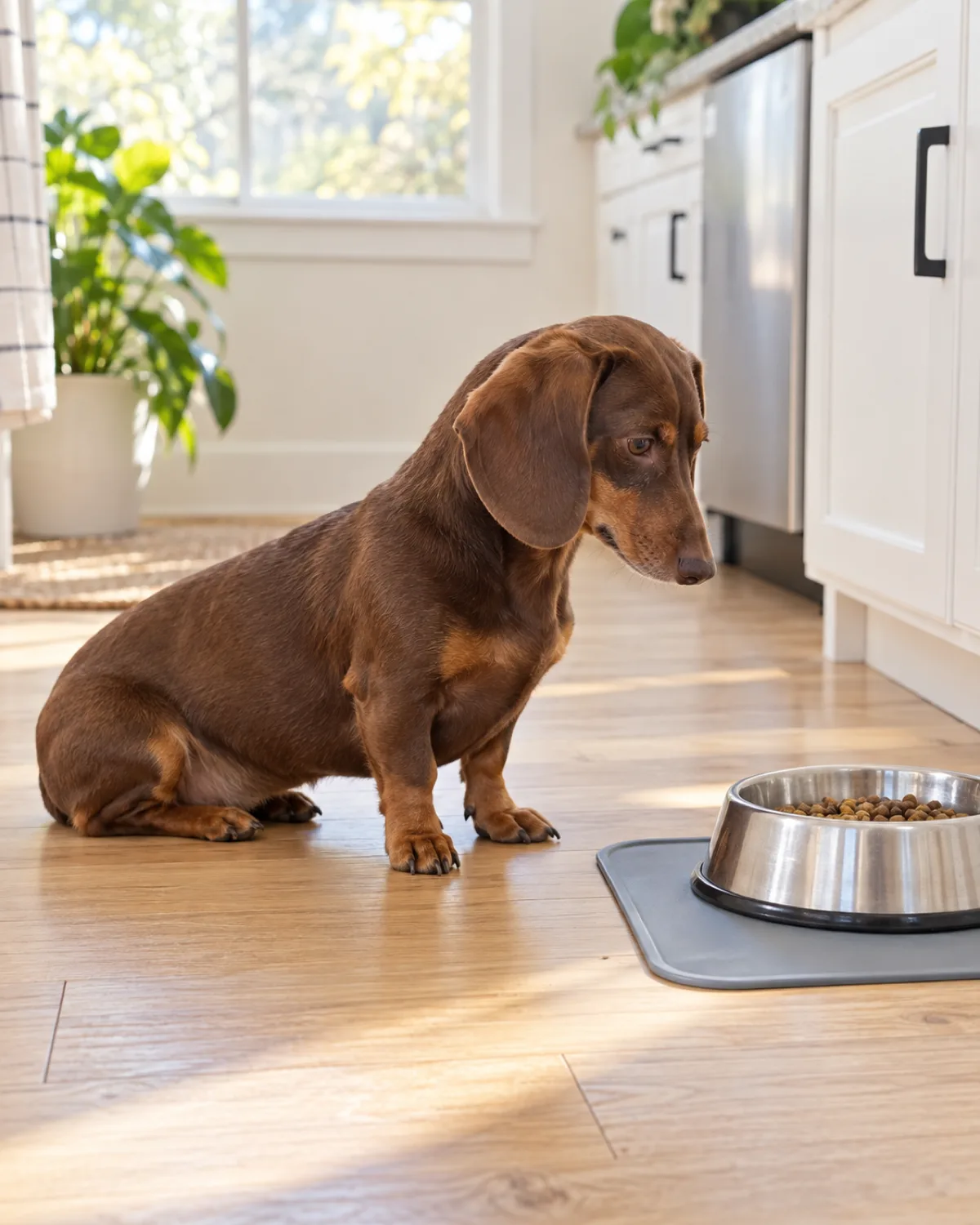
6. Establish a Feeding Routine From Day One
Food is the fastest trust-builder you have. A rescue dog whose life just changed completely — new smells, new people, new sleeping surface, new sounds — can still count on one thing being predictable: the meal shows up in the same bowl, in the same spot, at the same time, every single day.
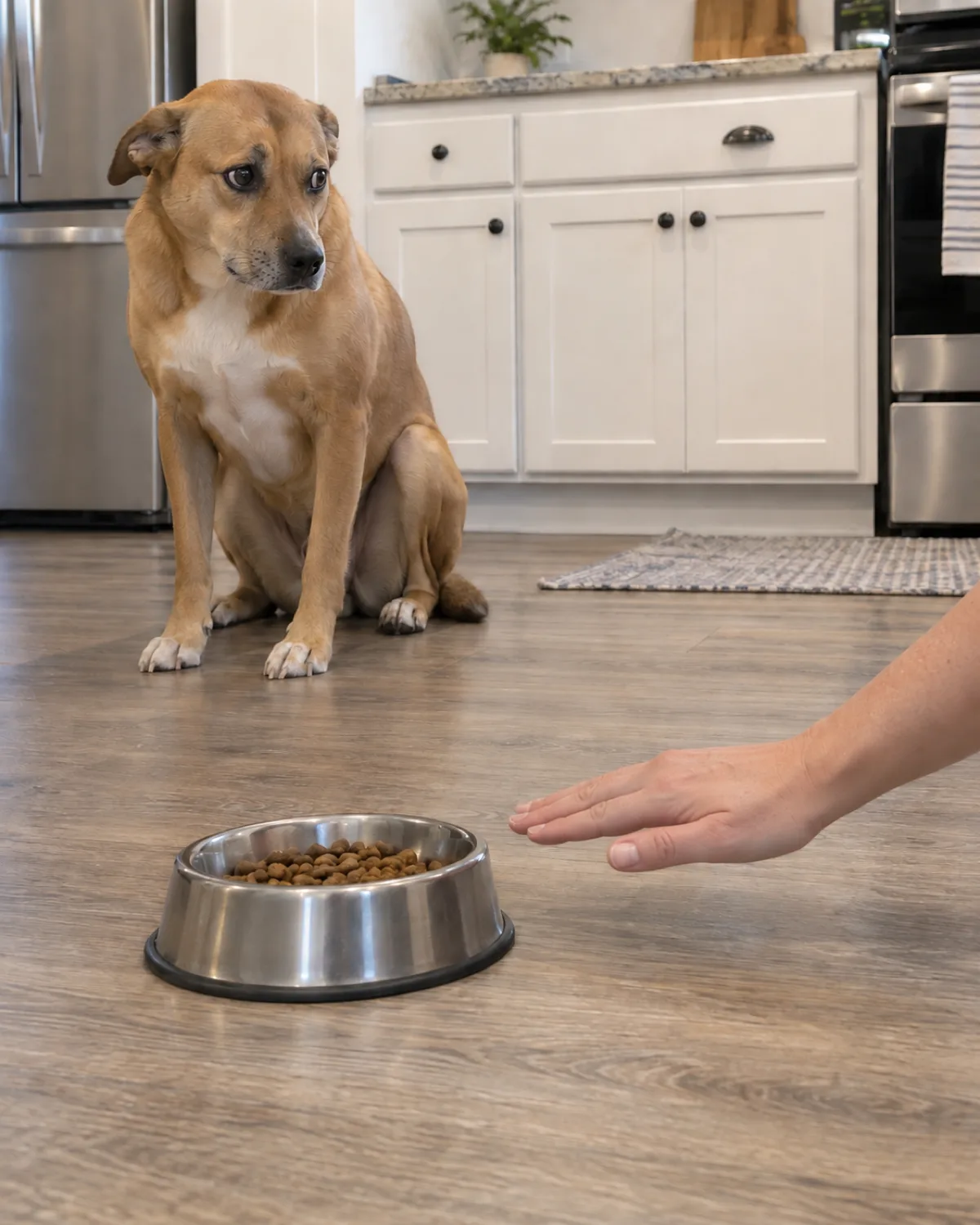
Set up the feeding station on day one and do not move it. Use the same bowl. Feed at the same two times (morning and evening work for most adult dogs). Stand quietly nearby while the dog eats but do not hover, reach toward the bowl, or try to hand-feed.
Match your feeding approach to where the dog is emotionally
Which Feeding Strategy Fits Right Now?
Not every rescue dog eats normally on arrival. Pick the scenario that matches your dog and start there.
Dog eats eagerly from the bowlGreat sign. Feed twice daily on schedule, leave the bowl down for fifteen minutes, then pick it up whether finished or not. This builds the rhythm.
Dog sniffs but will not eatNormal for the first 24-48 hours. Leave a small amount of food and walk away completely. Stress hormones suppress appetite. If not eating by day three, call your vet.
Dog guards the bowl or growlsDo not reach for the bowl. Feed in the crate with the door open, toss high-value treats near (not into) the bowl from a distance, and consult a trainer experienced with resource guarding before week two.
Dog eats only from your handThis is a trust signal, not a long-term plan. Hand-feed for the first three days, then place the food on a plate on the floor while your hand rests nearby. Gradually increase distance over a week.
If the shelter was feeding a different brand, stick with that exact food for the first two weeks. A diet change on top of an environment change is a guaranteed recipe for digestive upset, and cleaning up diarrhea in a new home is stressful for both of you.
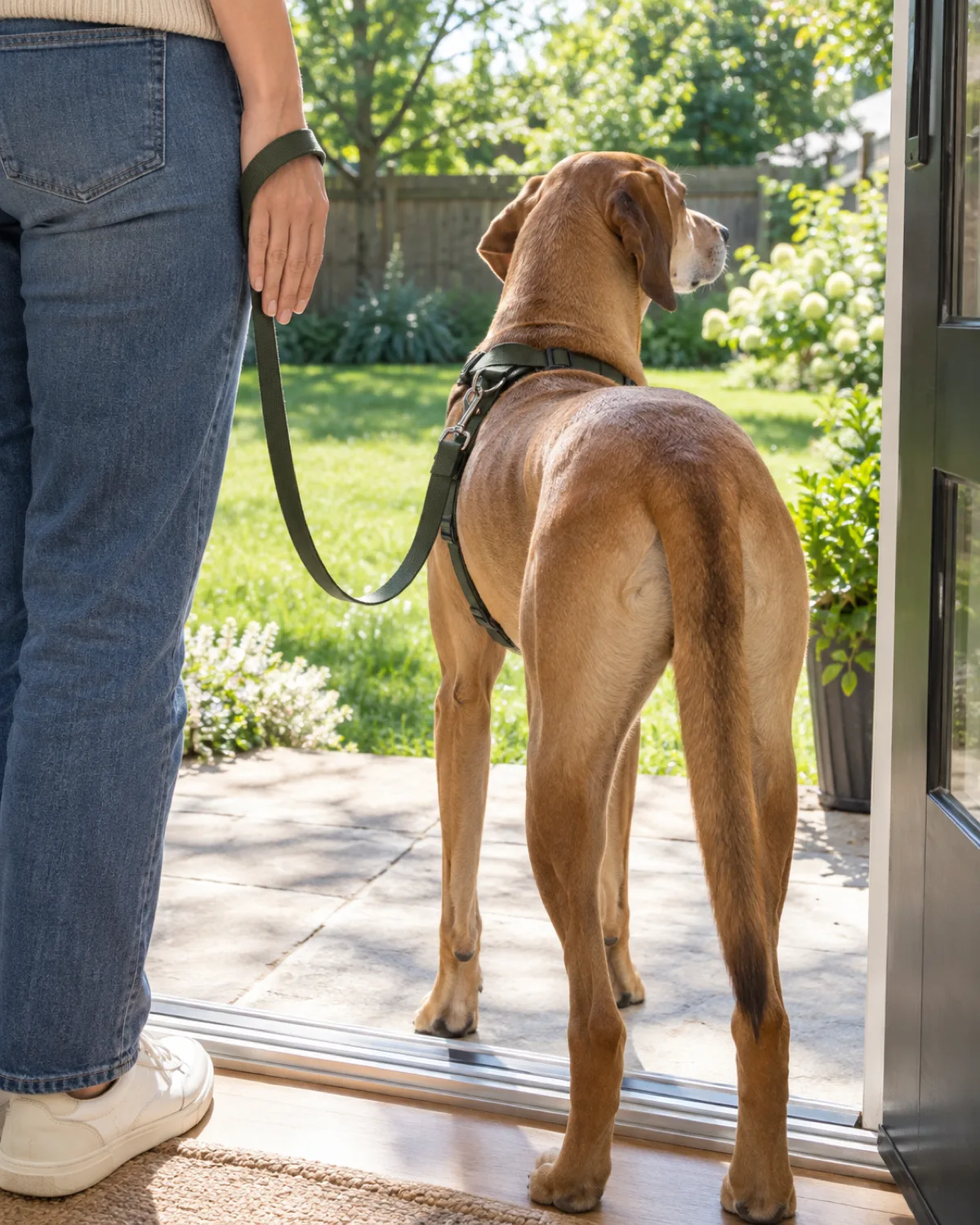
7. Start House Training From Scratch Regardless of Age
It does not matter what the shelter told you about the dog being house trained. In a new home, with new doors and new surfaces and new smells, assume zero training and start fresh. A dog who was perfectly reliable in a foster home may have zero idea where your back door is, and marking a new territory is a separate behavior from house training anyway.
Take the dog outside every two hours during the first three days, plus immediately after meals, after naps, and after play
Go to the same spot in the yard every time — the scent builds a location association
Wait quietly for up to five minutes; if nothing happens, go back inside and try again in thirty minutes
Celebrate outside successes with a calm, warm tone and a small treat — not a party, just clear positive feedback
Ignore indoor accidents completely — no scolding, no nose-rubbing, no raised voice; clean silently with enzymatic cleaner and increase the frequency of outdoor trips
Most rescue dogs who were previously house trained will reconnect with the habit within five to seven days. Dogs who were never house trained — common with dogs pulled from hoarding situations, puppy mills, or long shelter stays — may take three to four weeks. Both timelines are normal.
8. Expect the Shutdown Period and Let It Happen
Somewhere between day one and day five, most rescue dogs go quiet. Not playful-quiet. Not tired-quiet. Eerily, unsettlingly quiet. They stop exploring. They stop seeking attention. They may eat their meals but then retreat to the crate or a corner and just lie there with their eyes open, watching.
This is the shutdown period, and it is completely normal. The dog's nervous system is processing the biggest environmental change of their life, and the processing looks a lot like depression to a human who does not know what they are watching.
What shutdown is not:
It is not the dog rejecting you
It is not a sign of illness (though if it lasts longer than five days or is accompanied by vomiting, diarrhea, or refusal to drink water, call your vet)
It is not a behavior you need to fix
What you should do during shutdown:
Maintain the routine — same feeding times, same brief outdoor trips, same calm environment
Do not force interaction — no picking up, no extended petting, no trying to get the dog to play
Sit nearby and exist — read a book on the floor near the dog, work on your laptop in the same room; your non-demanding presence is the thing that builds safety
Keep a simple journal — note eating, drinking, sleeping, and any voluntary movement toward you, because these small shifts are the real progress markers
The shutdown lifts gradually. One morning the dog will come to the door when they hear you in the kitchen. A few days later, they will sniff your hand. Then one evening they will lie at your feet instead of in the crate. Each of those moments is a trust milestone. Let them come at the dog's pace.
9. Give the Full Three-Three-Three Decompression Timeline
The three-three-three rule is the single most useful framework for setting expectations when bringing home a rescue dog:
Three days to decompress — the dog is overwhelmed, may not eat, may not show their real personality
Three weeks to learn your routine — the dog starts to settle, learns where the door is, begins to understand the household rhythm
Three months to feel at home — the dog's true personality emerges, trust is established, and the adjustment behaviors fade
The danger is rushing milestones. A dog who seems fine at week two is not the same dog you will have at month three. Many adopters make big decisions during the honeymoon window — enrolling in group classes, hosting a barbecue, taking a road trip — and then wonder why the dog suddenly develops anxiety or reactivity in week four.
About the author
Jess Calloway
Jess Calloway edits Pawliqa, where she shares dog care, grooming, training, and new-owner tips — plus DIY and pet-friendly home ideas — for anyone who wants a happy, well-cared-for dog. As a dog mom to three very different dogs, she writes the honest, tested version of what actually works. Every guide is image-led and reviewed for clarity, usefulness, image accuracy, and Pinterest-to-page alignment before it goes live. Visit the About page.
The practical application of three-three-three:
No off-leash parks until month two at the earliest — you do not know this dog's recall, prey drive, or dog-reactivity yet
No overnight guests or major household changes for the first month
No training classes with other dogs until you have had at least three weeks of one-on-one practice at home
No assumptions about the dog being fine with children, cats, or loud noises based on the first two weeks — those behaviors are still loading
If you learn nothing else from this article, learn this: the dog you have on day three is not the dog you adopted. The real dog shows up around month three. Everything before that is a dog in survival mode showing you their coping strategies, not their personality.
10. Introduce Existing Pets on Neutral Ground First
If you already have a dog or a cat, the introduction is the highest-stakes moment of the entire adoption. Getting it wrong on day one can create a conflict dynamic that takes months to undo. Getting it right takes about thirty minutes of patience and a neutral location.
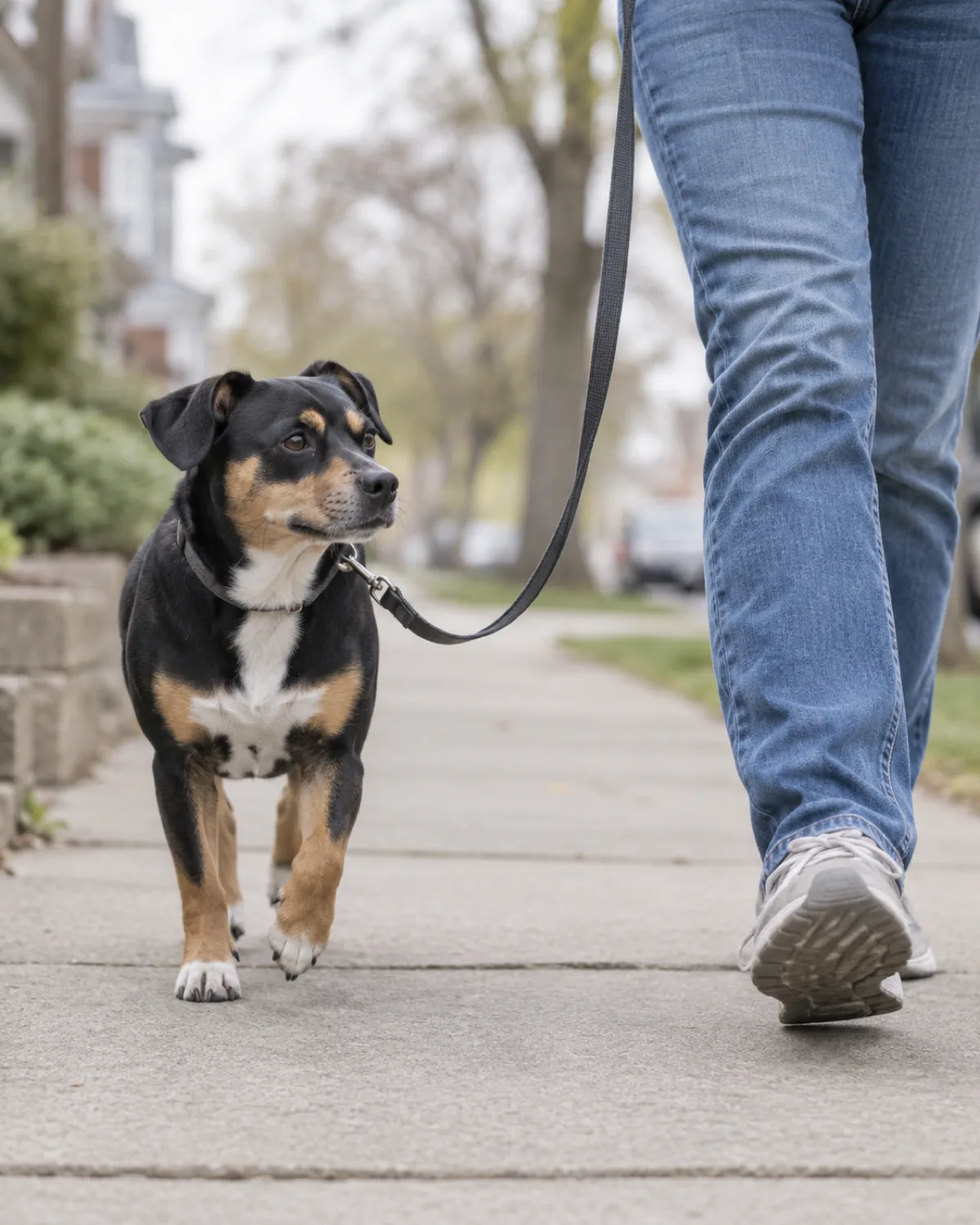
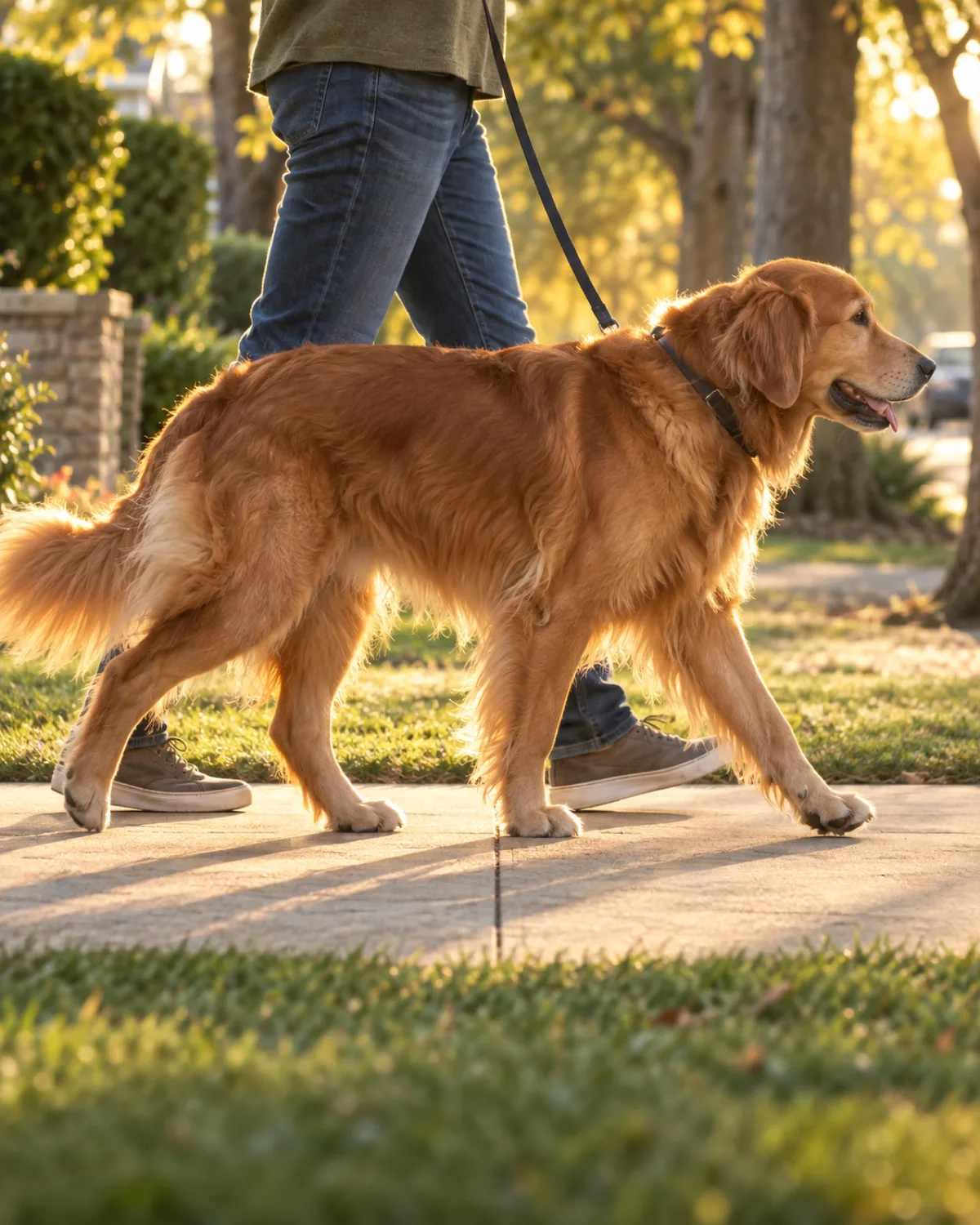
Meet on a walk, not in the house — a park, a quiet street, or even the shelter parking lot before you drive home
Both dogs on leash, held loosely by separate handlers — tight leashes telegraph tension
Walk parallel at a distance where both dogs can see each other but are not reacting, then gradually close the gap over ten to fifteen minutes
Let them sniff when both bodies are loose and tails are neutral (not tucked, not stiffly wagging) — keep it to three seconds, then redirect with a cheerful walk cue
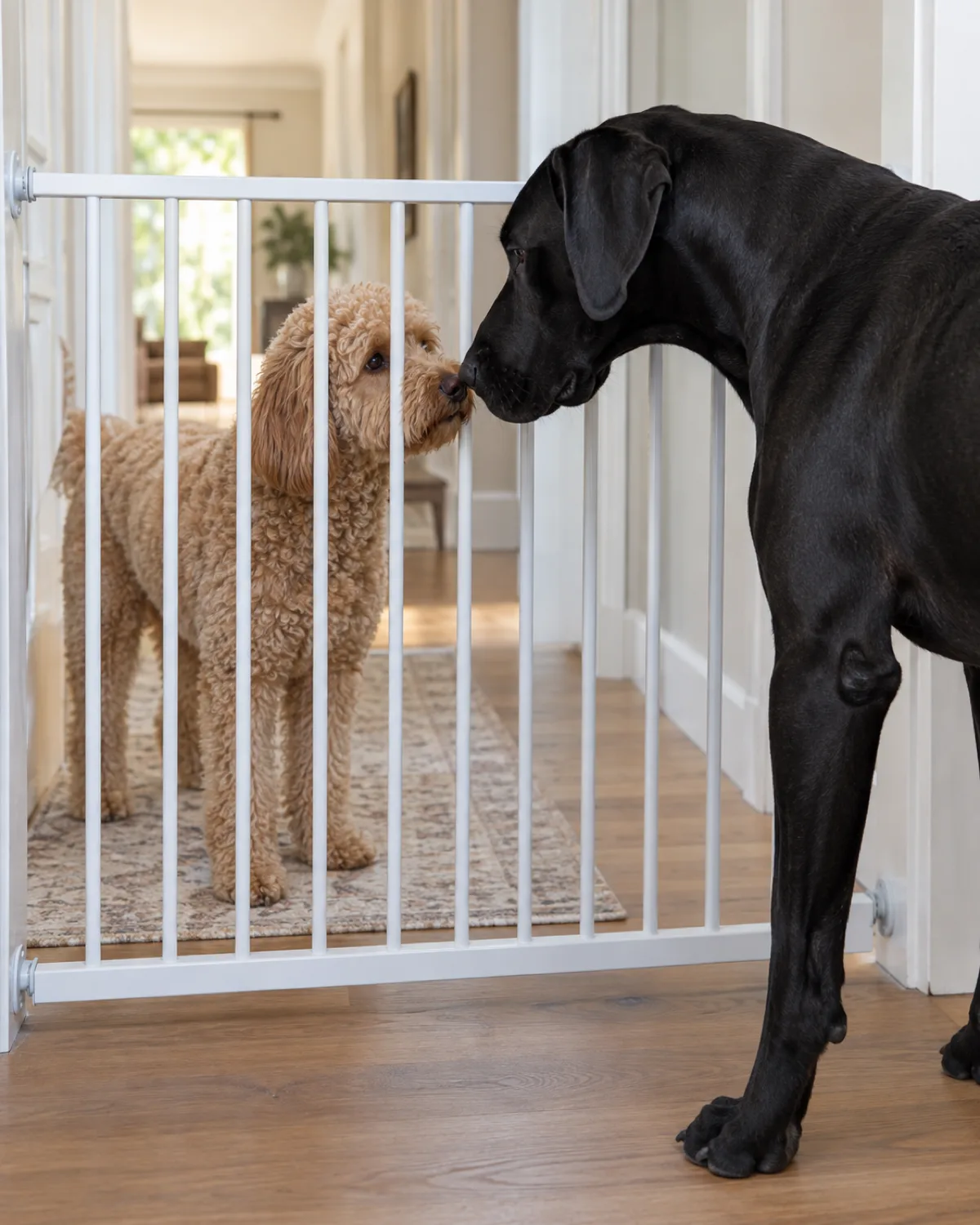
At home, use baby gates to separate the dogs into adjacent rooms for the first three days; supervised face-to-face time starts at ten minutes and builds gradually
For introducing to a cat:
Keep them in completely separate rooms for the first week — swap bedding so they learn each other's scent before any visual contact
First visual introduction through a closed baby gate with the dog on leash and the cat free to leave
Never leave them unsupervised until you have had at least three weeks of calm, non-reactive supervised sessions
The fastest way to wreck a multi-pet household is to skip the parallel walk and bring the new dog straight through the front door into the resident dog's territory. That is not an introduction — it is an invasion.
11. Build Trust Through Boring Predictability
Novelty is the enemy of a rescue dog who is still decompressing. Every surprise — a new route, a rearranged room, a different feeding time, an unexpected visitor — forces the dog's brain to re-evaluate whether this home is stable. Consistency is what convinces them.
Build a daily rhythm and stick to it relentlessly for the first month:
Same morning routine: wake up, go outside to the same spot, come in, eat breakfast at the same time
Same walking route: take the same path at the same time every day — the dog will start recognizing landmarks and relaxing into the pattern
Same evening routine: dinner at the same hour, last potty trip at the same time, settle into the crate or bed at the same spot
Same people: limit the household to the core family members for the first three weeks; new faces are novelty
This feels boring to you. It feels like safety to the dog.
The payoff is visible. Around week three, most rescue dogs start anticipating the routine — they walk to the door at feeding time, they settle on the bed when they hear you brushing your teeth, they relax when they hear the leash jingle because they know what comes next. That anticipation is trust. They are telling you they believe the pattern will hold.
Once the dog is predicting the routine confidently, you can start adding small amounts of novelty — a new walking route once a week, a friend visiting for dinner, a trip to a pet store. But the base routine stays.
12. Know the Common Rescue-Specific Behaviors and When to Call a Trainer
Some behaviors are normal decompression. Some are early warning signs that need professional intervention before they escalate. Knowing the difference saves you months of frustration and saves the dog from a preventable return to the shelter.
Normal decompression behaviors (give them time, do not punish, maintain the routine):
Hiding under furniture or in the crate for extended periods
Startling at household noises (dishwasher, vacuum, doors closing)
Shadowing one family member and avoiding others
Refusing treats or toys for the first week
Pacing or circling in new rooms before settling
Whimpering or light barking at night for the first few nights
Resource guarding that escalates — freezing over food is normal; growling, snapping, or lunging when anyone walks near the bowl or a toy is not decompression
Separation panic beyond the first few days — destructive behavior (chewing door frames, scratching through crates), nonstop vocalization, or eliminating only when left alone for normal durations
Barrier reactivity — lunging, snarling, or spinning at the end of the leash when seeing other dogs or people, especially if intensity is increasing rather than decreasing
Touch sensitivity that does not improve — flinching or snapping when touched in specific areas after two weeks of calm, non-invasive handling
Aggression toward household members — lip curling, hard staring, growling with a rigid body directed at people in the home
The line is not severity alone but trajectory. A behavior that is present on day three and gone by day ten is decompression. A behavior that is present on day three and worse by day ten is a pattern that will not resolve on its own. The earlier you bring in professional help, the faster and easier the fix.
Frequently Asked Questions About Bringing Home a Rescue Dog
How long does it take a rescue dog to adjust to a new home?
Most rescue dogs follow the three-three-three timeline: three days to decompress, three weeks to learn your routine, and three months to fully settle and show their real personality. Some dogs with more complex histories may take six months or longer, and dogs from hoarding or puppy mill situations often need the most time because they have never lived in a home before.
Should I let my rescue dog sleep in my bed the first night?
Not on the first night. Set up the crate in the safe room with the door open and let the dog choose to sleep there. A rescue dog in your bed on night one has no established boundaries, no trust relationship, and no way to tell you they need to go outside. Once the dog is fully settled — usually around the three-month mark — you can transition to bed sleeping if you want to.
Why does my rescue dog not eat for the first few days?
Stress hormones directly suppress appetite. A dog whose entire world just changed is running on cortisol, and eating is not a priority when the brain is in survival assessment mode. Most dogs start eating within forty-eight hours. If the dog has not eaten anything by day three or is refusing water, contact your veterinarian to rule out a medical issue.
Is it normal for a rescue dog to hide under furniture?
Completely normal during the first one to two weeks. Hiding is a coping strategy, not a rejection. The dog is choosing the smallest, darkest space available because it feels safest. Do not pull them out, lure them with treats, or block off hiding spots unless the spot is genuinely unsafe. Let them come out on their own terms.
When should I start training a rescue dog after adoption?
Start simple, positive-reinforcement training at the end of week two — sit and name recognition are good first cues because they build communication without pressure. Hold off on formal obedience classes or group settings until week four or five, and do not attempt any leash-reactivity or fear-based work without a professional trainer. The first two weeks are for decompression, not performance.
Save this for later
12 Rescue Dog Settling Tips
1Set up a safe room firstOne quiet room with a crate, bed, and water — the dog's entire world for the first few days.
2Stock essentials before pickupCollar, leash, crate, bowls, enzymatic cleaner, and the same food the shelter used.
3Keep day one boringNo visitors, no party, no excitement — boring lets the nervous system downregulate.
4One room at a timeOpen doors gradually so the dog can map each space before facing the next one.
5Crate as decompression denDoor open, blanket draped, treat trail — a voluntary retreat, never a punishment.
6Feeding routine from day oneSame bowl, same spot, same time — the fastest trust signal you have.
7House train from scratchAssume zero training regardless of age — outside every two hours, celebrate successes.
8Expect the shutdown periodEerily quiet for three to five days is processing, not sickness — let it happen.
9Follow the three-three-three ruleThree days to decompress, three weeks to learn your routine, three months to feel at home.
10Introduce pets on neutral groundParallel walk first, baby gates at home, supervised sessions only for weeks.
11Build trust with predictabilitySame route, same schedule, same people — novelty is stress during decompression.
12Know when to call a trainerBehaviors that worsen by day ten need professional help, not more time.
Fourteen rules for building a puppy feeding schedule from eight weeks to twelve months, covering meal frequency, portion sizing, food transitions, treat budgets, and warning signs that something needs adjusting.
Sixteen essential facts about a puppy sleep schedule, from how many hours puppies sleep at each age to nap timing, crate setup, nighttime routines, and when sleep patterns finally settle.