That triangular pocket under your staircase collects dust, shoes, and maybe a vacuum cleaner. Your dog deserves it more than the vacuum does.
These thirteen nook ideas range from a simple wallpaper-and-cushion setup to a full feeding-and-sleeping station. Need sizing help? Check these dog crate ideas or dog room ideas.
For more builds, try DIY dog bed ideas or a DIY dog house.
Jump to an idea
13 Dog Nook Under Stairs Ideas
Arched dens, hidden drawers, barn doors, bunk nooks — pick the build that fits your staircase and jump straight to the plan.
1. Arched Entryway Built-In Bed
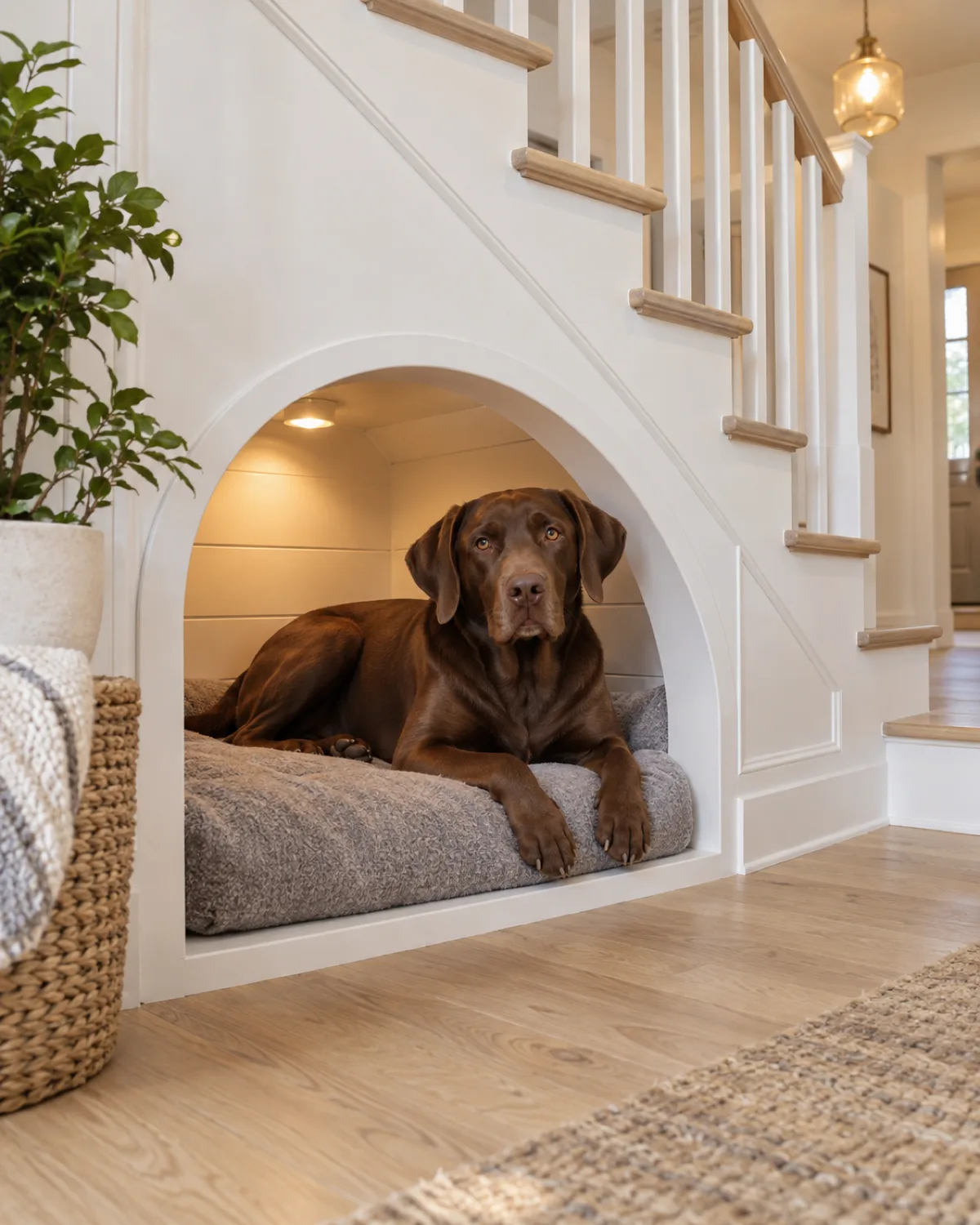
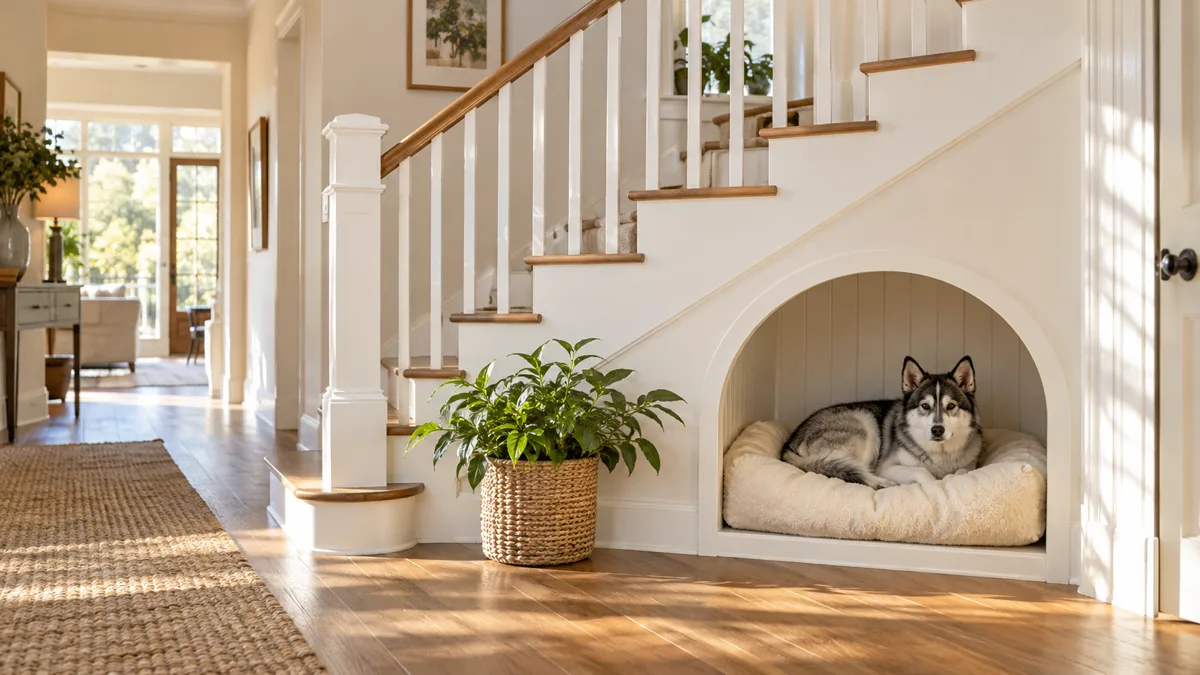
An arched opening turns raw under-stairs space into something that looks built by an architect. The curved top gives the nook a den-like feel that dogs naturally gravitate toward — enclosed enough to feel safe, open enough to see what is happening in the house.
Frame the arch with two-by-fours, then cover it with a flexible sheet of thin plywood or drywall bent into the curve. Sand, fill, prime, and paint it to match the surrounding wall. Drop a washable cushion inside that fills the full footprint of the space.
- Arch height: measure your dog standing and add four inches so they walk in without ducking
- Cushion fit: order a custom-cut foam pad from an upholstery shop or trim a crib mattress to size — loose pillows slide around and bunch up
- Finishing touch: add a small battery-powered puck light on the ceiling of the arch for a warm glow
This build is permanent, so measure twice and confirm the staircase structure can handle the cutout before you start sawing. If you rent, skip to the wallpapered accent den or the pull-out drawer bed instead.
2. Open Shelf Lounge With Storage Baskets
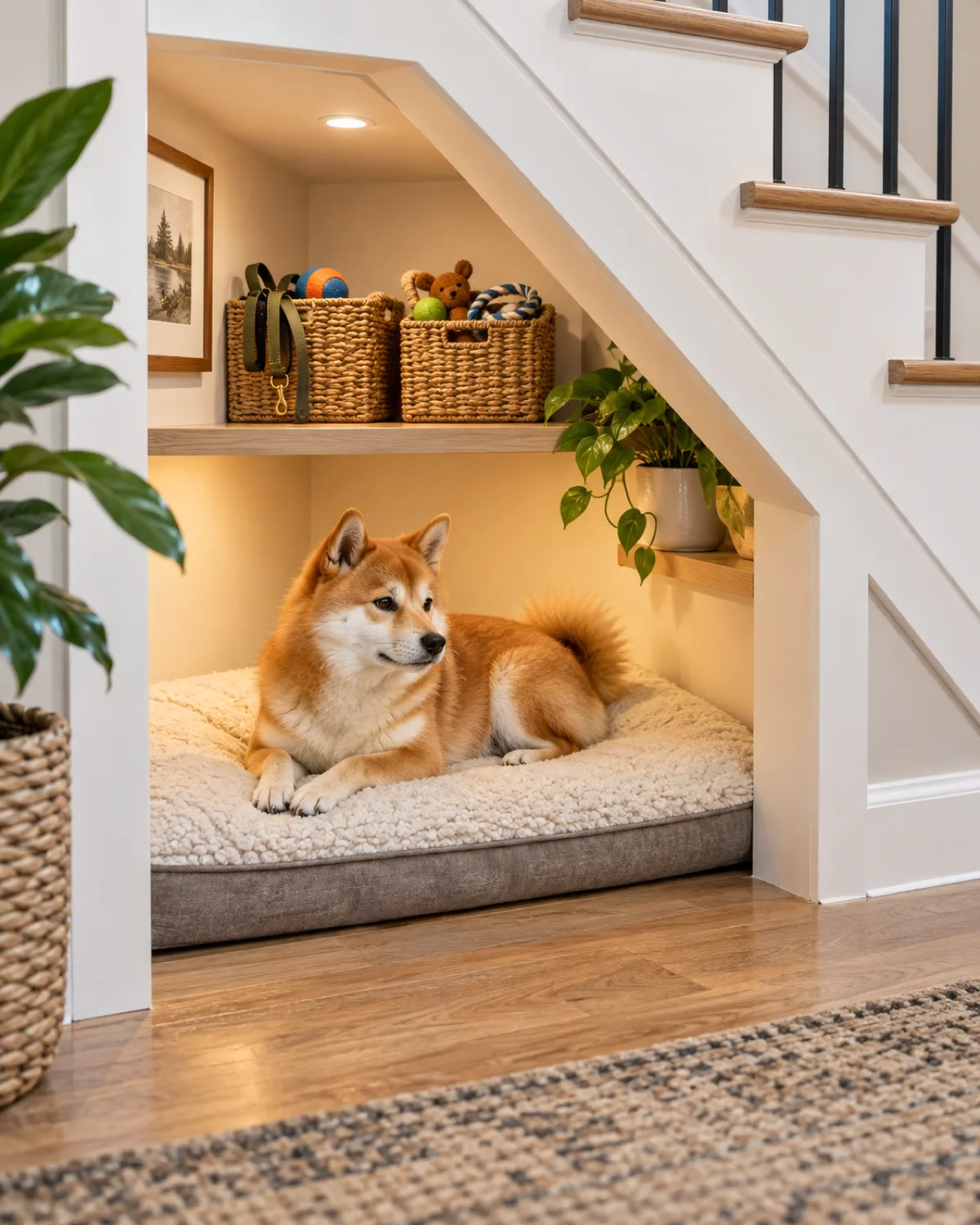
Not every nook needs walls and doors. An open shelf system under the stairs gives your dog the ground level while the upper shelves hold leashes, treat bags, poop bag rolls, grooming kits, and toys in labeled baskets.
Install two or three horizontal shelves across the under-stairs triangle using adjustable shelf brackets or a freestanding bookcase cut to fit the slope. Leave the bottom eighteen to twenty-four inches completely clear for a thick dog mat.
- Basket labels: use clip-on tags or chalkboard labels so every family member puts things back in the right basket
- Mat material: choose a flat, non-slip mat rather than a fluffy bed — easier to shake out and wash, and it will not slide on hard floors
- Best for: families who need storage and a dog spot in the same footprint
The dog gets a resting spot with a clear sightline to the hallway, and you get an organized gear station that replaces the hook-and-pile system on the back of the door.
Match the nook to your situation
Which build fits your home?
You do not need all thirteen. Pick the situation closest to yours and start with one idea.
3. Dutch Door Half-Gate Nook
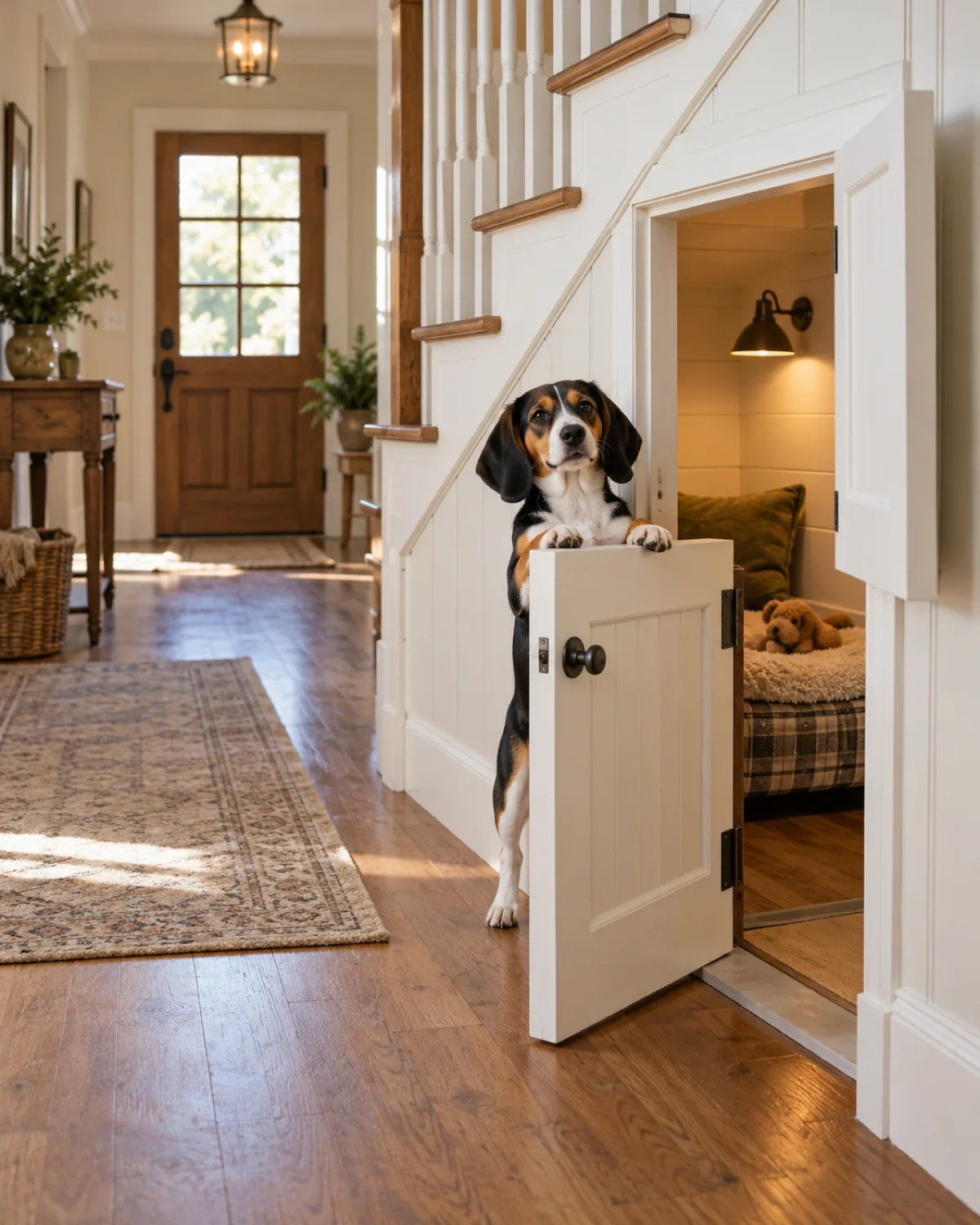
A half-height Dutch door across the nook opening lets your dog see out and interact with the household without having full run of the house. This is especially useful during crate training transitions, when your dog is ready for more space but you still need a boundary.
Build or buy a door that reaches your dog's chest height when they stand on all fours. Hinge it to one side of the opening and add a simple latch at the top. The bottom stays solid so your dog cannot push through, and the top stays open so air circulates and your dog never feels shut away.
- Latch placement: mount the latch on the hallway side where only humans can reach it
- Door material: a single piece of solid wood with rounded edges looks cleaner and is safer than a paneled door with gaps your dog could get a paw stuck in
- Best for: puppies in training, dogs who need visual access to the family but a physical boundary
Pair this with a comfortable bed inside and your dog has a proper den with a view. When they are ready for open access, just leave the door swung wide.
4. Pull-Out Drawer Bed on Casters
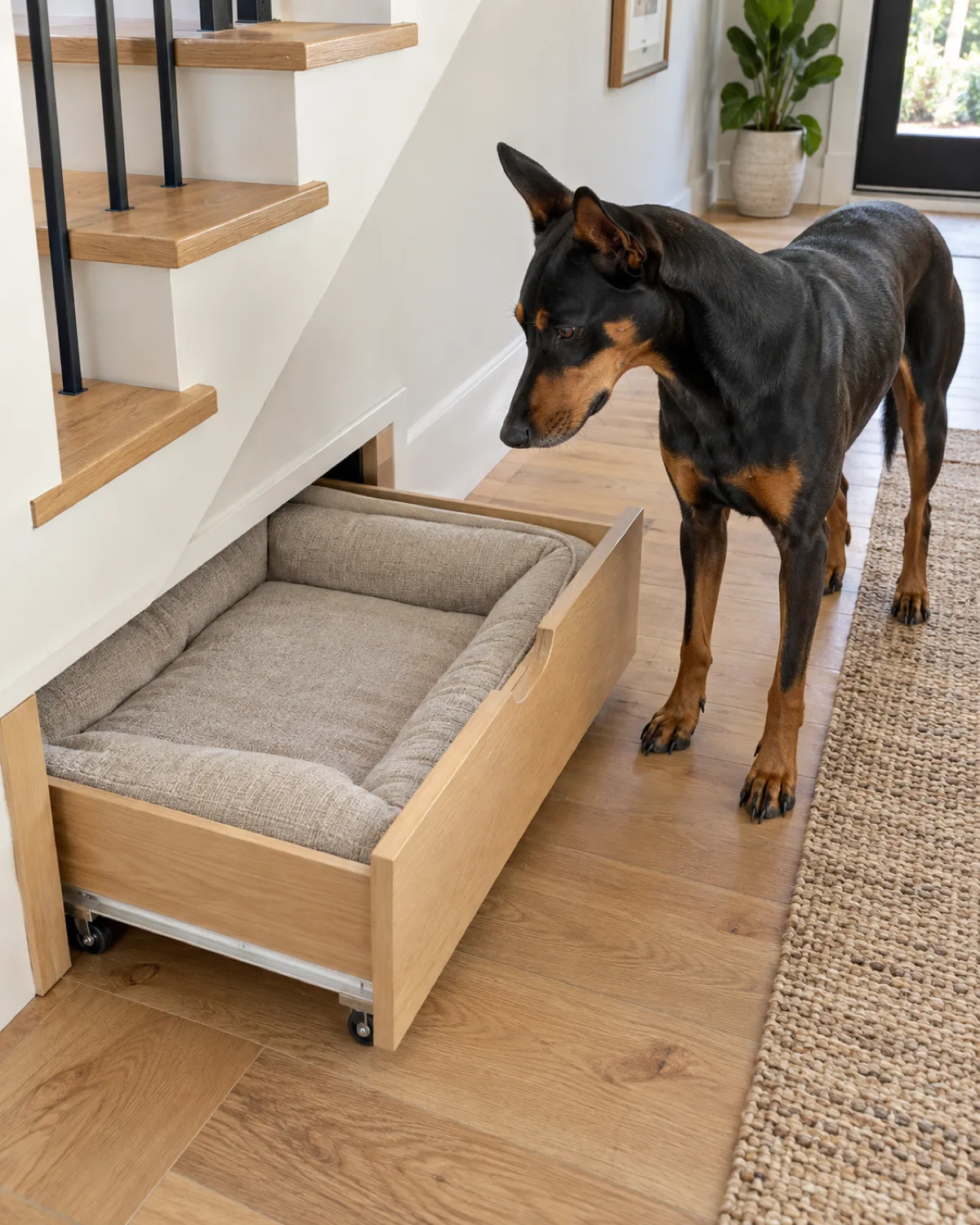
This one borrows the same logic as the pull-out feeding station but scales it up for a full sleeping bed. When the drawer is pushed in, the space under the stairs looks like a normal wall. Pull it out and a padded bed rolls into the hallway on casters.
Build a shallow plywood box on four heavy-duty swivel casters. Line the inside with a fitted cushion cover that zips off for washing. Add a simple handle or cutout grip to the front panel so you can pull it out with one hand.
- Caster rating: use casters rated for at least seventy-five pounds to handle the combined weight of the drawer and the dog
- Drawer depth: keep it shallow enough that your dog can step in without climbing — four to six inches of sidewall is enough to hold the cushion in place
- Best for: people who want the nook to disappear when guests arrive, small homes where floor space matters during the day
The pull-out design also makes cleaning easy. Roll the drawer into the laundry room, unzip the cover, toss it in the wash, and vacuum the plywood box.
5. Wallpapered Accent Den
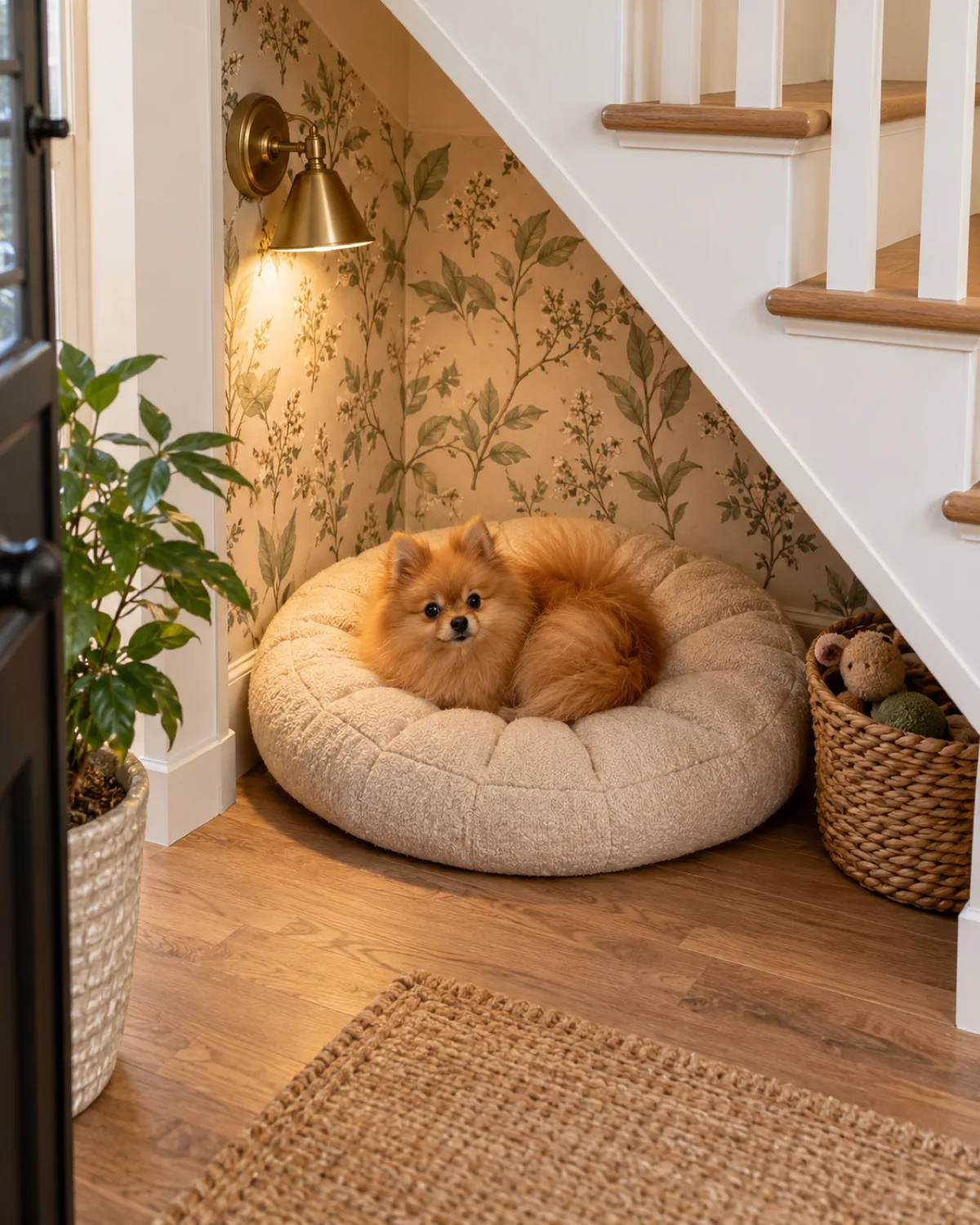
Peel-and-stick wallpaper transforms the under-stairs triangle into a statement nook without any construction. Choose a botanical, geometric, or mural pattern that complements your hallway, apply it to the back wall, and add a round cushion on the floor.
This is the fastest build on the list — thirty minutes and no tools. It is also completely reversible, which makes it perfect for renters.
- Wallpaper choice: peel-and-stick removes cleanly and repositions if you misalign a panel — avoid paste wallpaper if you rent
- Cushion shape: a round or oval cushion looks intentional in a triangular space because the curves contrast the angles
- Finishing touch: mount a small battery-operated wall sconce at dog-head height to add warm light and make the nook feel like a designed space rather than a leftover corner
Add a small DIY toy basket beside the cushion and the nook looks styled enough for a home tour.
6. Built-In Feeding and Sleeping Combo
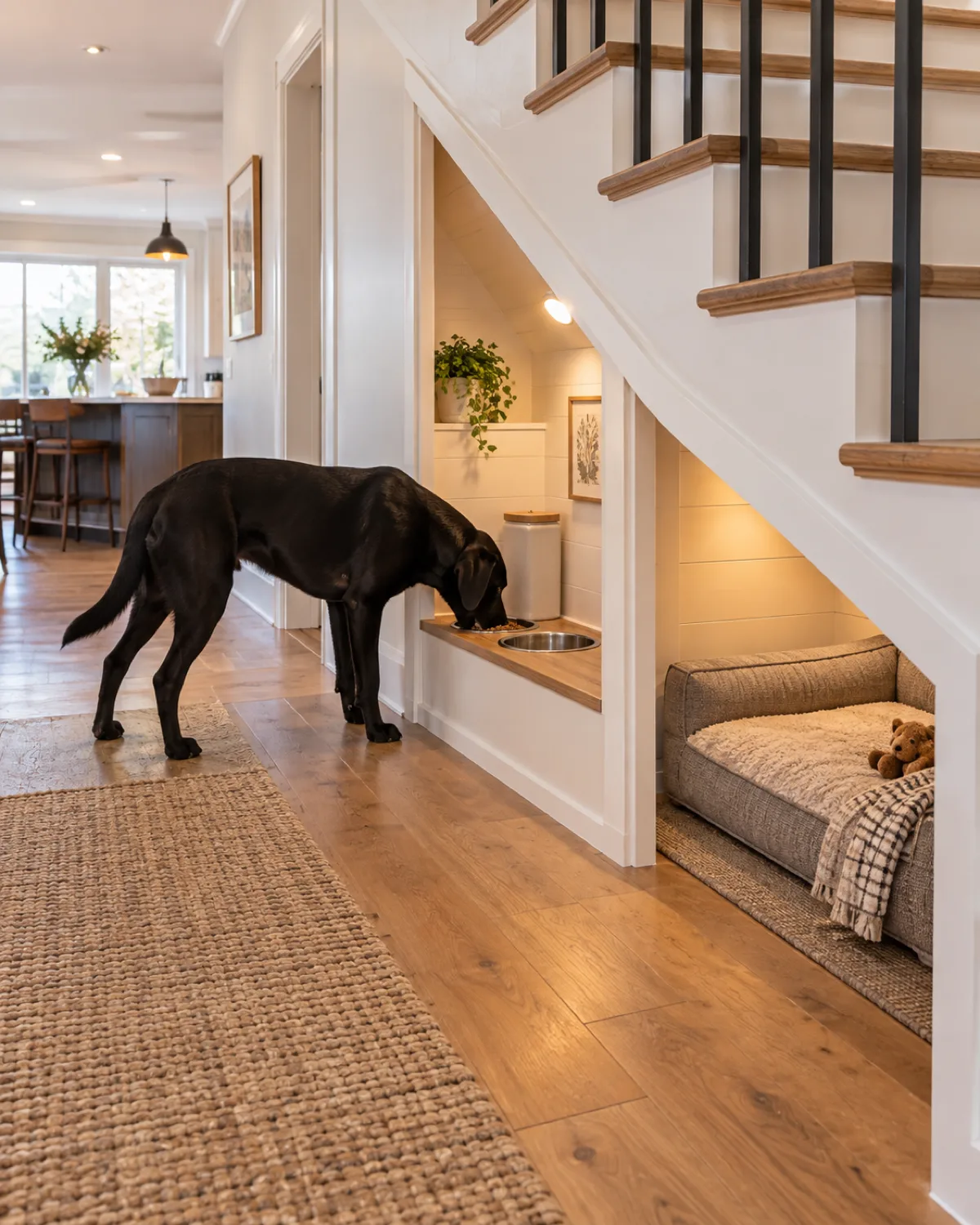
If your staircase opening is wide enough, split the space in half. One side gets embedded food and water bowls with a sealed food storage container underneath. The other side gets a thick orthopedic mattress. Your dog eats and sleeps in the same nook without bowls sitting in the kitchen.
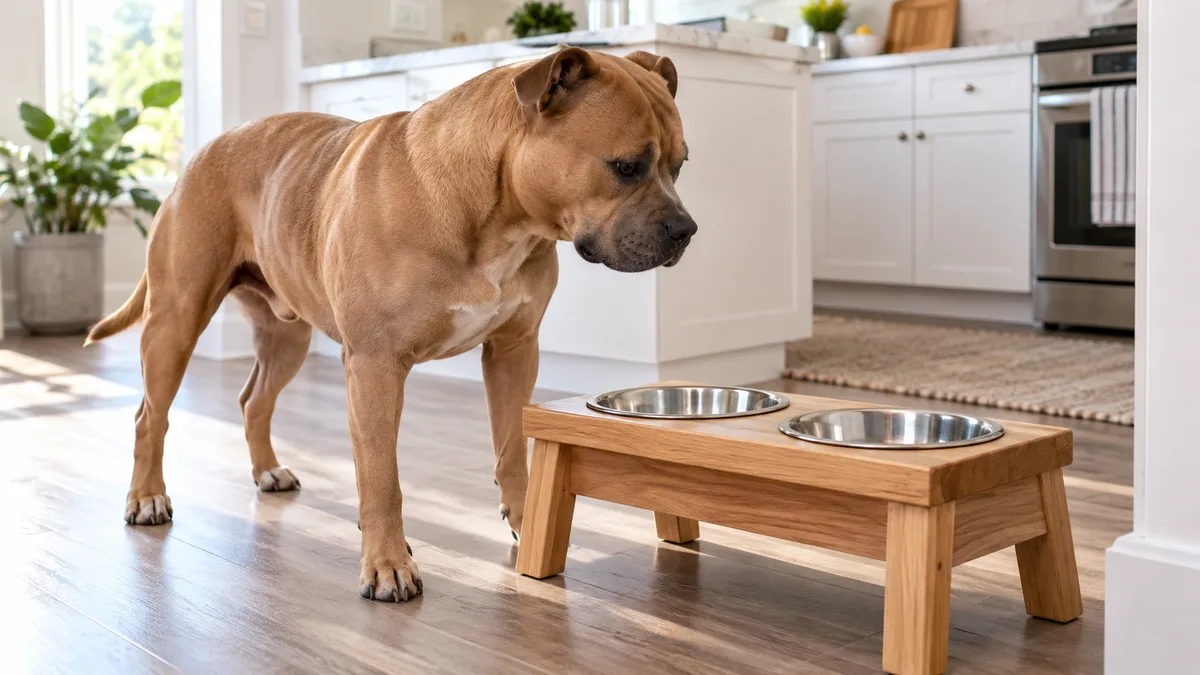
Build a divider wall or half-height partition down the center. On the feeding side, install a raised platform with bowl cutouts (same technique as a raised feeding station). On the sleeping side, lay a fitted mattress pad directly on the floor.
- Divider height: keep it at knee height so you can step over it to refill bowls or swap the cushion cover
- Water splashes: tile or seal the feeding side floor with waterproof vinyl to protect the subfloor
- Best for: open-plan homes where the kitchen does not have a good spot for dog bowls, dogs who like eating near their bed
Before you build
Four Rules for Every Under-Stairs Nook
Measure the dogYour dog should be able to stand, turn around, and lie flat with legs stretched inside the nook. Measure their full length nose-to-tail and add six inches in every direction.
Check the structureSome staircases use the underside as structural support. Knock on the panels — hollow means cosmetic, solid means load-bearing. Never cut into load-bearing components without consulting a contractor.
Ventilate the spaceA sealed nook traps heat, moisture, and odor. Leave the front open or add a ventilation gap at the back. No dog should sleep in an airtight box.
Keep an exit clearYour dog must be able to leave on their own terms. A nook with a latched door that only opens from outside is a crate, not a nook. Add a push-open flap or leave the entry open.
7. Window-Seat Style Perch
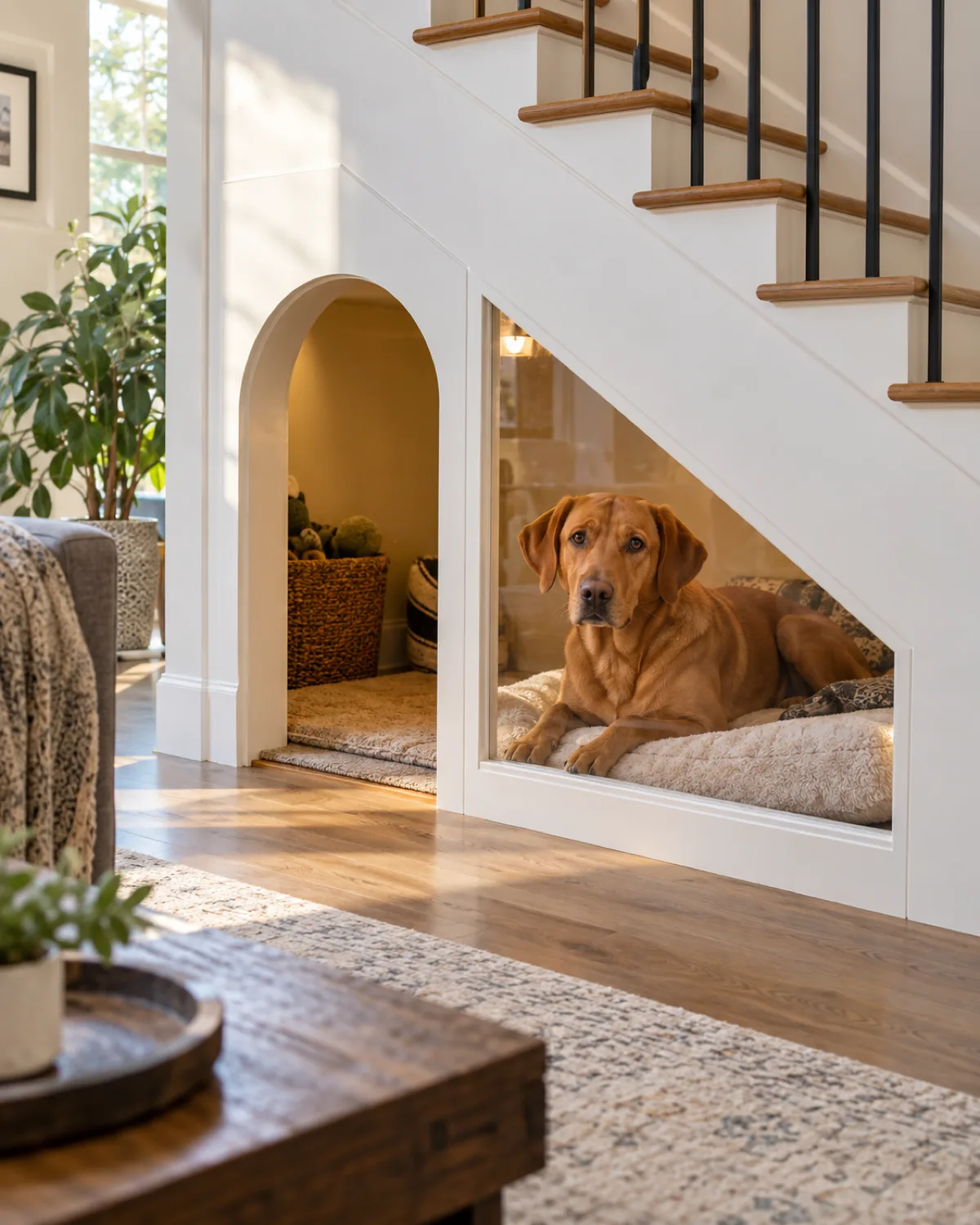
Dogs spend a surprising amount of their day watching the world. A small window or clear acrylic panel set into the side of the staircase lets your dog see the living room, front yard, or hallway from inside the nook.
Cut a rectangular opening in the stair panel at your dog's eye level when lying down. Mount a sheet of clear cast acrylic (quarter-inch thick is sturdy enough) over the hole using wood trim to hold it in place. Sand all edges smooth so nothing catches fur or skin.
- Acrylic over glass: acrylic is lighter, does not shatter, and is easy to cut at home with a fine-tooth saw
- Placement: position the window so your dog can look out while lying down, not just standing — they will use it more
- Best for: dogs with separation anxiety who feel calmer when they can see people moving around the house
Clean the acrylic with a microfiber cloth and mild soap. Avoid glass cleaners with ammonia — they cloud acrylic over time.
8. Chalkboard Wall Play Zone
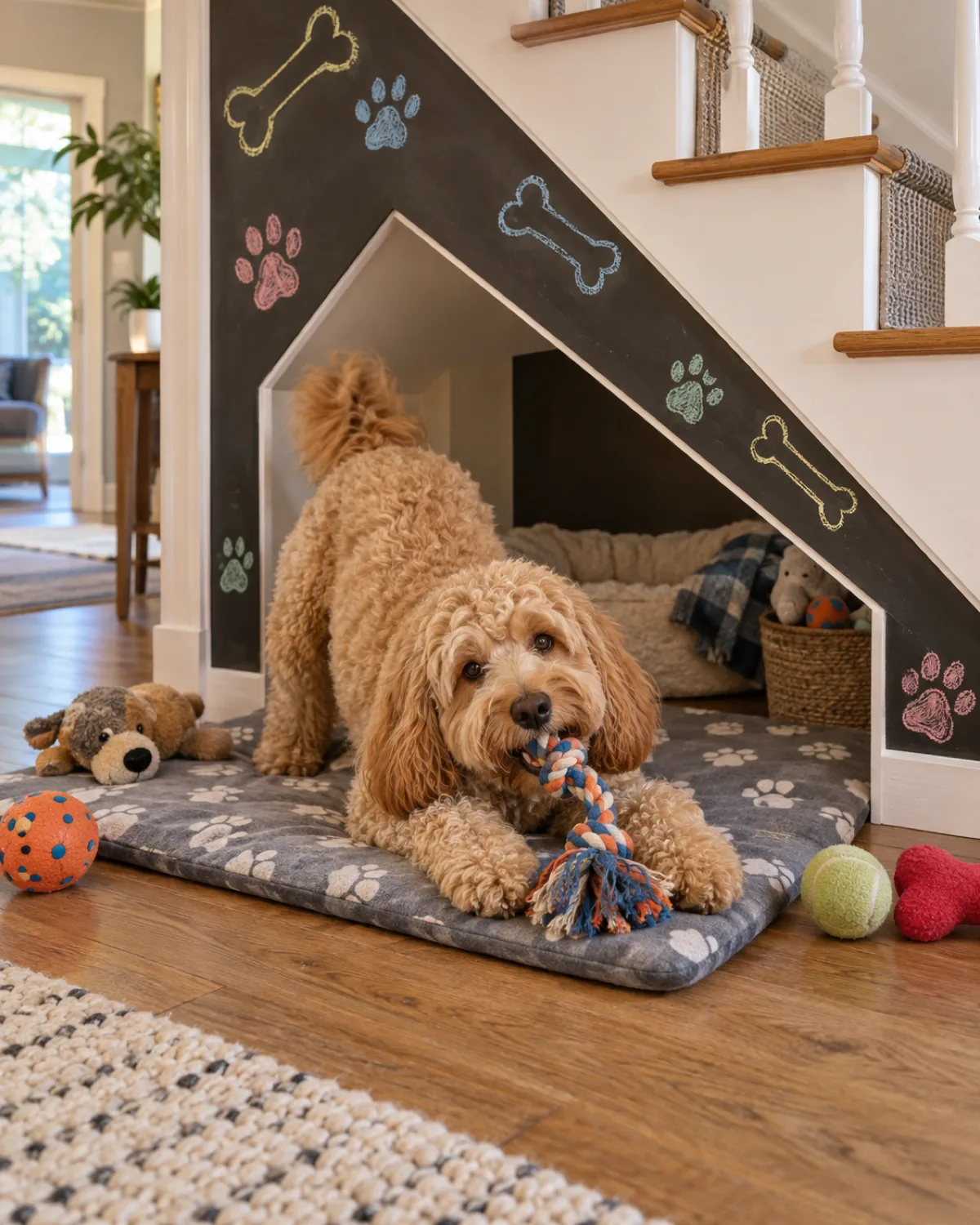
Paint the under-stairs wall with chalkboard paint and let your kids (or yourself) draw on it. The dog does not care about the art, but the space becomes a playful focal point in the house that makes people smile every time they walk past.
Roll two coats of chalkboard paint onto the triangular wall and let it cure for three days before drawing on it. Cover the floor with a waterproof mat and scatter a few toys. Add a small basket of chalk and an eraser so the wall stays in rotation.
- Waterproof mat is critical: chalk dust falls and dog drool collects — a wipeable rubber or vinyl mat protects the floor and makes cleanup a one-step job
- Keep toys accessible: a low wicker basket or fabric bin right inside the nook lets your dog grab toys without dragging them across the house
- Best for: families with kids, homes that want the nook to feel playful rather than polished
This is one of the easiest renter-friendly options if you use peel-and-stick chalkboard film instead of paint.
9. Minimalist Platform With Bolster Cushion
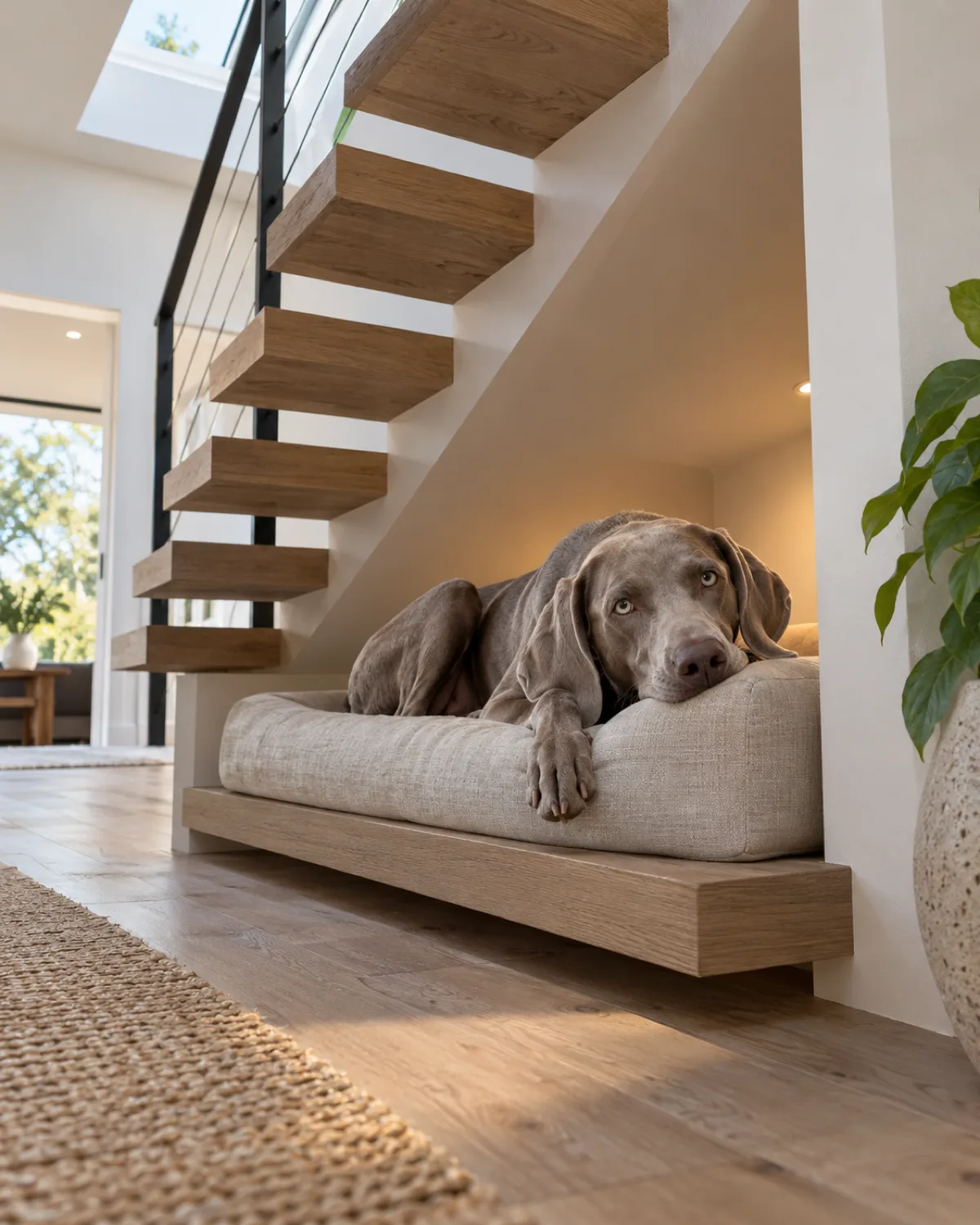
One floating shelf. One bolster cushion. That is it. This build strips the nook down to two elements and lets the clean lines do the work.
Mount a single thick wooden plank (butcher block or finished plywood, at least one and a half inches thick) to the wall studs at three to four inches off the floor. Place a three-sided bolster cushion on top. The bolster walls give your dog something to rest their head on while keeping the center of the cushion open for stretching out.
- Floating mount: use heavy-duty hidden shelf brackets rated for the combined weight of the platform and the dog — wobble is the fastest way to make a dog avoid a bed
- Cushion cover: a removable zippered cover in a neutral linen or canvas keeps the look minimal and survives monthly washing
- Best for: modern or Scandinavian-style homes where the nook should blend into the architecture rather than stand out
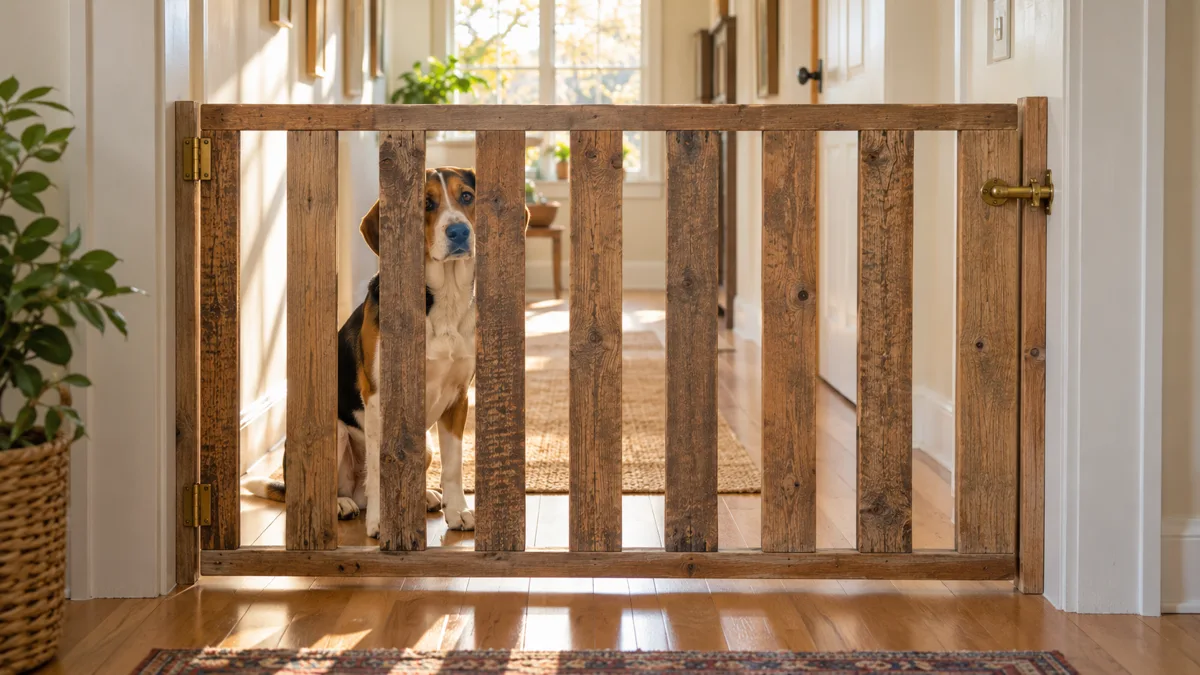
Pair this with the DIY dog gate across the hallway if you want to keep the minimalist look while still setting boundaries.
10. Cozy Reading Corner for Kids and Dogs
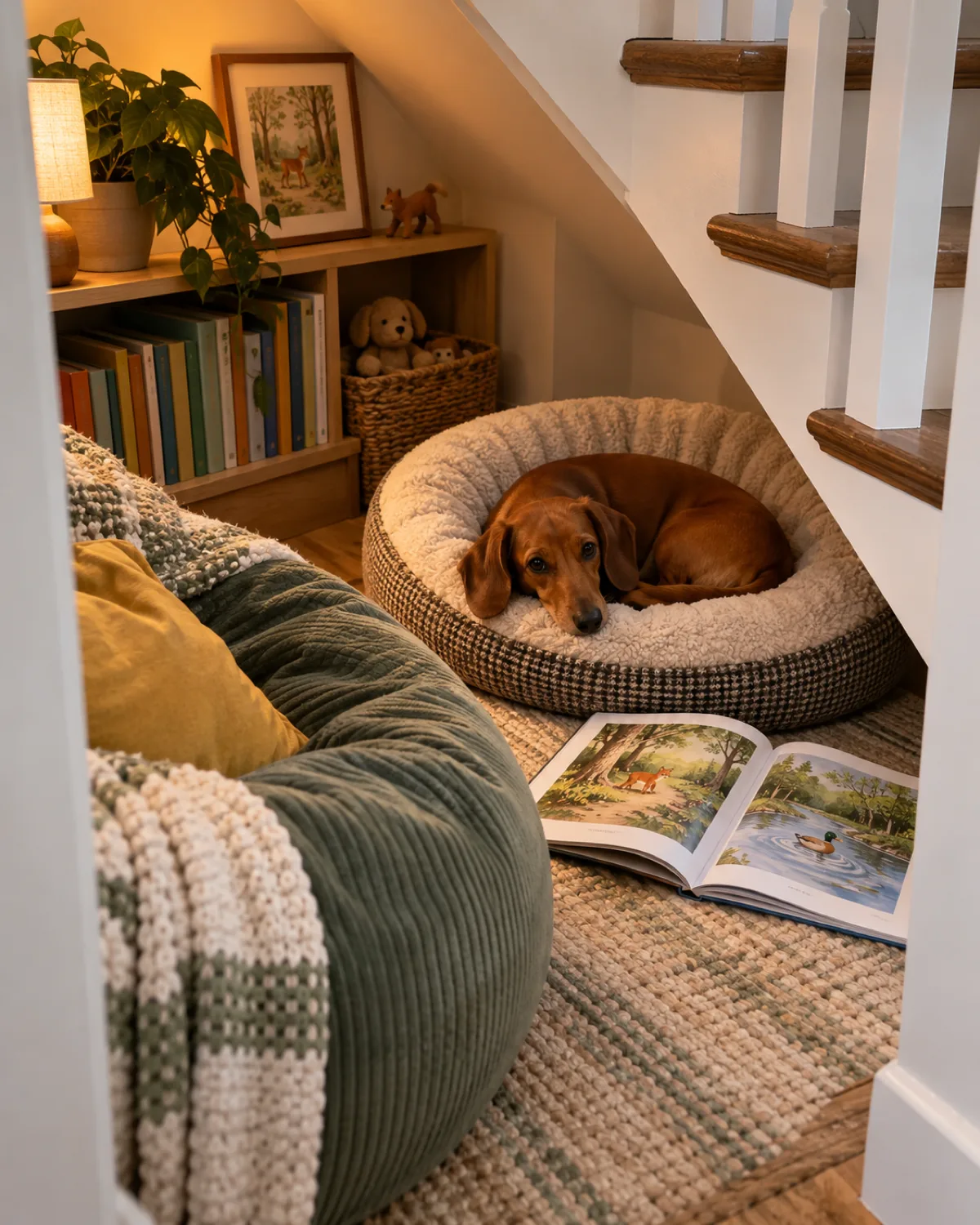
Put a bean bag chair and a dog bed side by side under the stairs and the nook becomes a shared retreat. Kids curl up with a book, the dog curls up on the bed beside them, and both get a quiet escape from the living room noise.
The key is keeping the dog bed and the kid seat at roughly the same height so neither one is looking down at the other. A floor-level bean bag and a low-profile round bed work well together. Add a small bookshelf against the back wall and a reading lamp clamped to a shelf edge.
- Separation option: if your dog tends to climb onto furniture, place a low wooden tray or rim around the dog bed to create a visual boundary
- Bookshelf height: keep it low enough that a child can reach the top shelf without standing — this also prevents heavy books from falling onto the dog
- Best for: families who want a multi-use nook, dogs who are calm around children
This works especially well under wide staircases where the triangle is deep enough for two seating zones side by side. For tighter spaces, stack the seating — a raised bench for the kid with the dog bed underneath.
Pin this list
13 Dog Nook Under Stairs Ideas
- 1Arched Entryway BedCave-like arch with washable cushion
- 2Open Shelf LoungeDog mat below, gear baskets above
- 3Dutch Door Half-GateHalf door for boundary with a view
- 4Pull-Out Drawer BedRolling drawer that hides the bed
- 5Wallpapered Accent DenPeel-and-stick wallpaper, no tools
- 6Feeding-Sleeping ComboBowls on one side, bed on the other
- 7Window-Seat PerchAcrylic panel for watching the room
- 8Chalkboard Play ZoneChalkboard wall with a toy basket
- 9Minimalist PlatformFloating shelf and bolster cushion
- 10Reading CornerShared kid-and-dog quiet spot
- 11Barn Door HideawaySliding barn door covers the nook
- 12Multi-Dog Bunk NookTwo-tier shelves for two dogs
- 13Seasonal Swap-OutSwitch bedding by season
11. Rustic Barn Door Hideaway
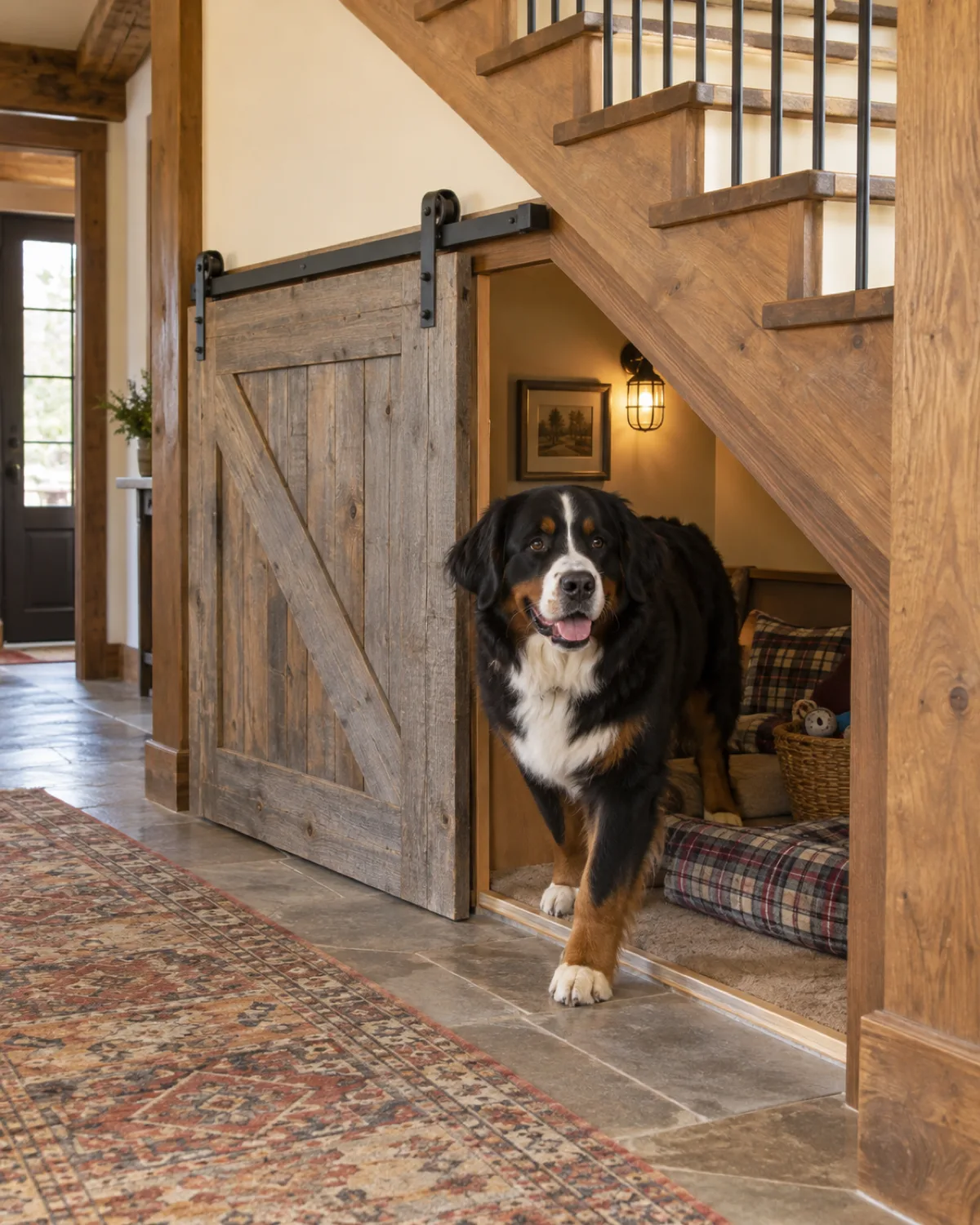
A sliding barn door on a track covers the entire under-stairs opening. Slide it open and there is a cozy bed with a blanket inside. Slide it closed and the nook disappears behind a rustic wood panel that adds texture to the hallway.
Mount a barn door track above the opening and hang a door made from reclaimed wood planks. The door should slide completely clear of the opening so your dog has an unobstructed entry. Inside, keep it simple — a thick dog bed and a blanket.
- Track length: the track needs to be at least twice the width of the opening so the door slides fully out of the way
- Door weight: reclaimed wood is heavy — use a track system rated for the door weight and make sure the wall above can support it
- Leave it open during the day: the barn door is for aesthetics, not containment — your dog should always be able to access the nook
This build pairs well with farmhouse, rustic, or industrial decor. For a modern home, use a flat-panel sliding door in the same paint color as the wall.
12. Multi-Dog Bunk Nook
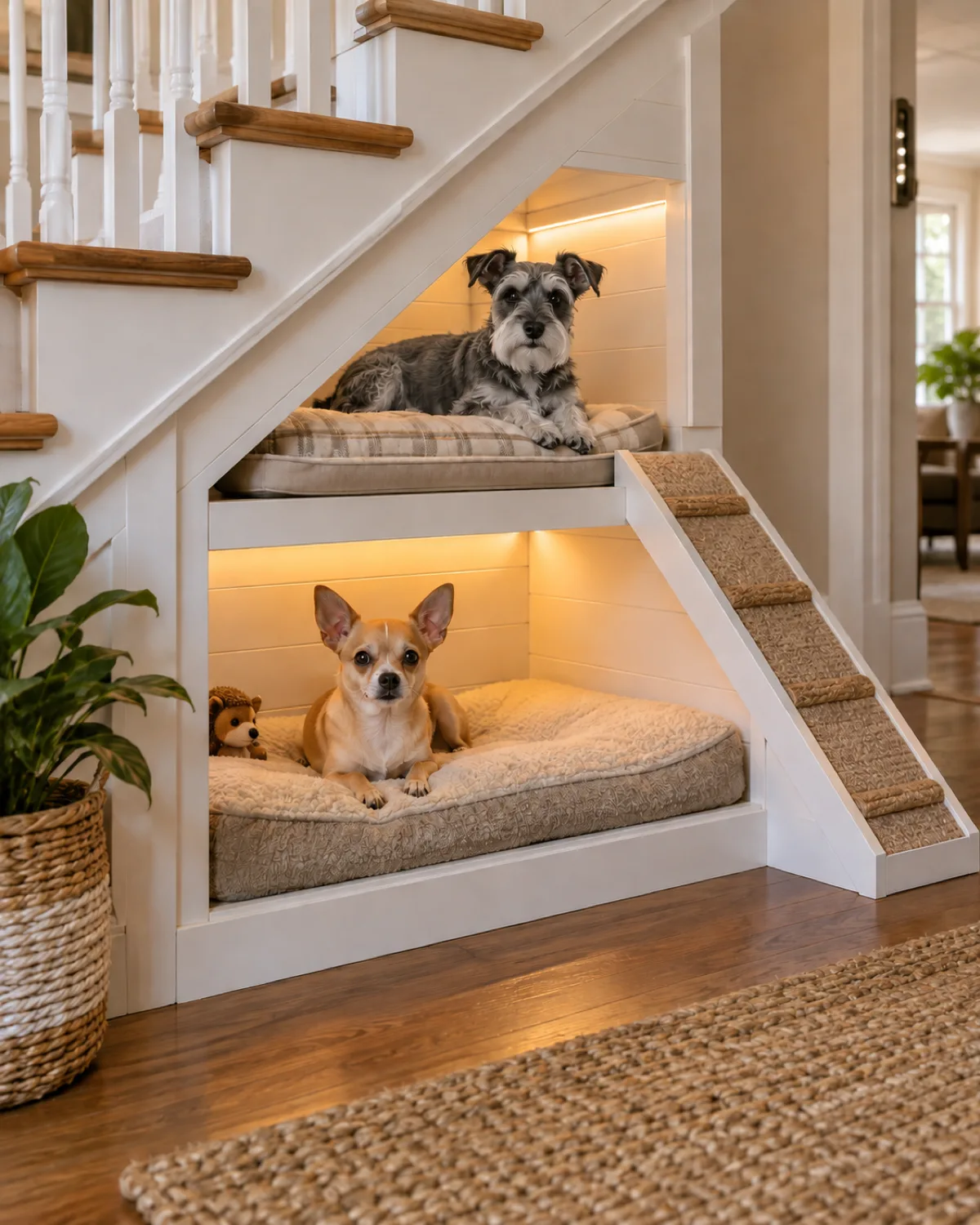
Two dogs, one staircase. A bunk-style shelf system gives each dog their own level with their own cushion. The larger or older dog usually gets the lower bunk (easier to step into), and the smaller or more agile dog takes the upper shelf.
Build two horizontal platforms stacked vertically inside the under-stairs triangle. Space them far enough apart that each dog can sit up without hitting the shelf above. Round all edges and add a low lip on the front of the upper shelf so the cushion does not slide off.
- Shelf spacing: measure each dog sitting upright and add three inches — that is the minimum clearance between shelves
- Upper shelf access: add a small step or ramp if the upper shelf is more than eighteen inches off the ground — even agile dogs appreciate an easy path
- Best for: multi-dog households that want both dogs to have their own designated resting spot without taking up extra floor space
If your dogs prefer sleeping near each other rather than in separate zones, skip the bunk and use a single wide cushion. But if one dog tends to crowd the other, the bunk system gives each one a boundary they both respect. For tips on introducing dogs to shared spaces, that guide covers the process step by step.
13. Seasonal Swap-Out Retreat
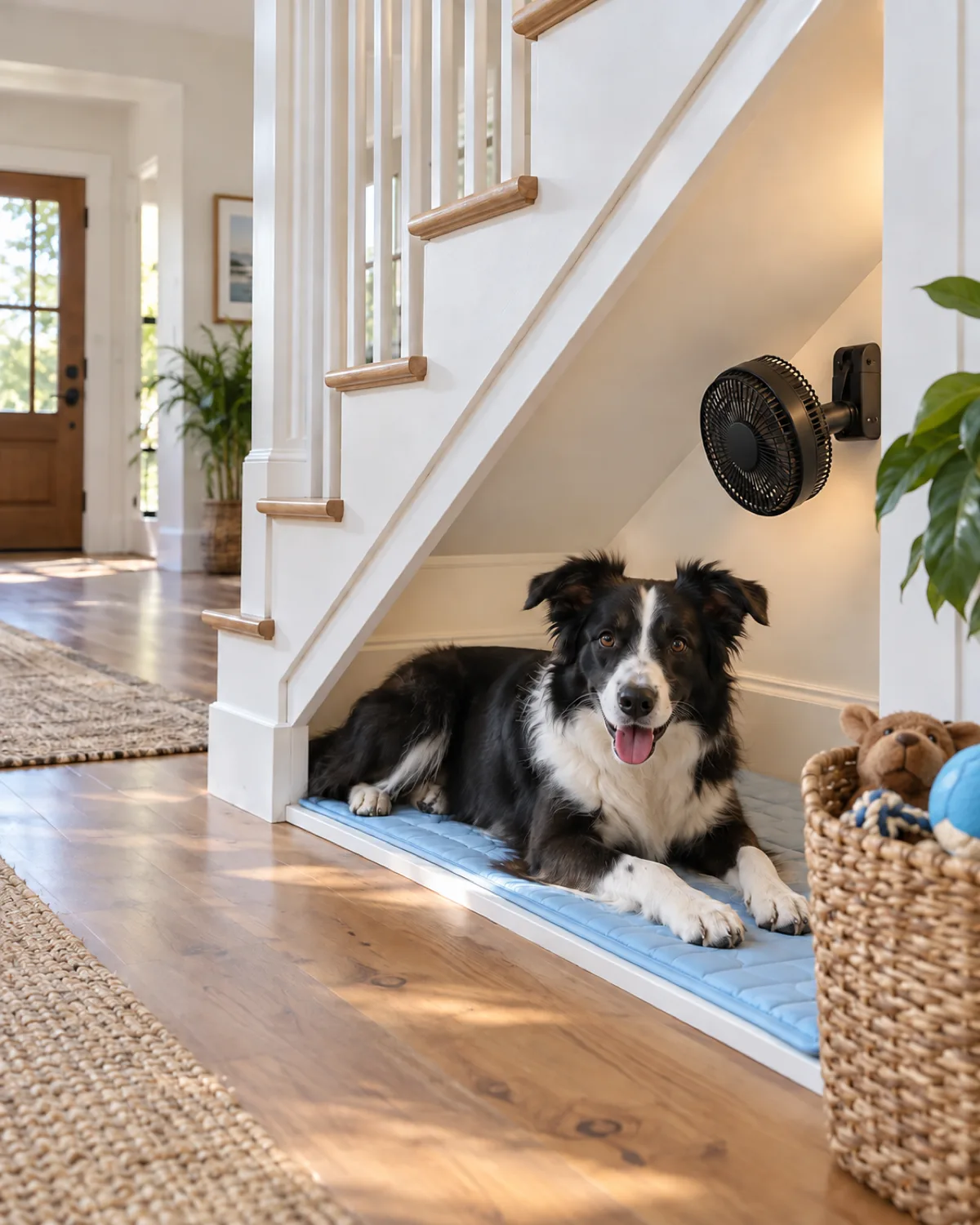
Instead of building one permanent setup, design the nook for easy seasonal swaps. In summer, lay a gel cooling mat on the floor and clip a small battery fan to the wall. In winter, switch to a plush sherpa blanket over a heated pet pad. Spring and fall get a standard washable cushion.
The trick is keeping the nook itself simple — no built-in furniture, no permanent fixtures — so you can change the bedding and accessories in five minutes.
- Summer kit: cooling gel mat, clip-on fan, lightweight cotton sheet over the cushion, water bowl nearby
- Winter kit: heated pet pad (auto shut-off models only), sherpa or fleece blanket, draft blocker along the bottom of the opening if the nook is near an exterior wall
- Storage: keep the off-season kit in a labeled bin on the shelf above the nook (if you built the open shelf lounge) or in a closet
This approach keeps the nook feeling fresh year-round and lets you deep-clean the space during each seasonal transition. Wash the cushion cover, wipe down the walls, vacuum the corners, and reset.
P
About the author
Jess Calloway
Jess Calloway edits Pawliqa, where she shares dog care, grooming, training, and new-owner tips — plus DIY and pet-friendly home ideas — for anyone who wants a happy, well-cared-for dog. As a dog mom to three very different dogs, she writes the honest, tested version of what actually works. Every guide is image-led and reviewed for clarity, usefulness, image accuracy, and Pinterest-to-page alignment before it goes live. Visit the About page.
Frequently Asked Questions
How do I measure the space under my stairs for a dog nook?
Measure the width of the opening at floor level, the height at the tallest point (where the first stair tread starts), and the depth from the opening to the back wall. Then measure your dog lying flat with legs stretched and standing upright. The nook should be at least six inches wider and longer than your dog lying flat, and tall enough for them to stand without crouching.
Is it safe to let my dog sleep under the stairs?
It is safe as long as the nook has good ventilation, no exposed nails or sharp edges, and your dog can leave whenever they want. Avoid sealing the space with a door that only opens from the outside. Check for electrical wires running through the wall cavity before cutting any openings — staircases sometimes hide wiring for upstairs outlets.
What bedding works best for a dog nook under stairs?
A washable orthopedic foam pad with a removable zippered cover is the most practical choice. It supports joints, holds its shape, and survives monthly washing. Avoid loose blankets as the sole bedding — they bunch up and slide on hard floors. Layer a blanket on top of the foam pad for extra warmth in winter.
Can I build a dog nook under stairs if I rent?
Yes. Use peel-and-stick wallpaper on the walls, a freestanding shelf unit instead of mounted shelves, and a removable cushion on the floor. The wallpapered accent den and the seasonal swap-out retreat both require zero drilling or permanent modifications. Everything comes out clean when you move.
How do I keep a dog nook under stairs from smelling?
Wash the cushion cover weekly and the foam pad monthly. Wipe down the walls and floor with a pet-safe enzyme cleaner every two weeks. Make sure the nook has airflow — a fully enclosed space traps odor and moisture. If the smell persists, check whether moisture is seeping through the wall from outside. A small dehumidifier bag inside the nook absorbs excess moisture between cleanings.