
DIY Dog Toys
Eleven easy DIY dog toys made from materials you already own, from braided fleece tug ropes and frozen towel chews to muffin tin puzzles and denim pocket pouches, with a matching guide for every chewing style.
Read the guide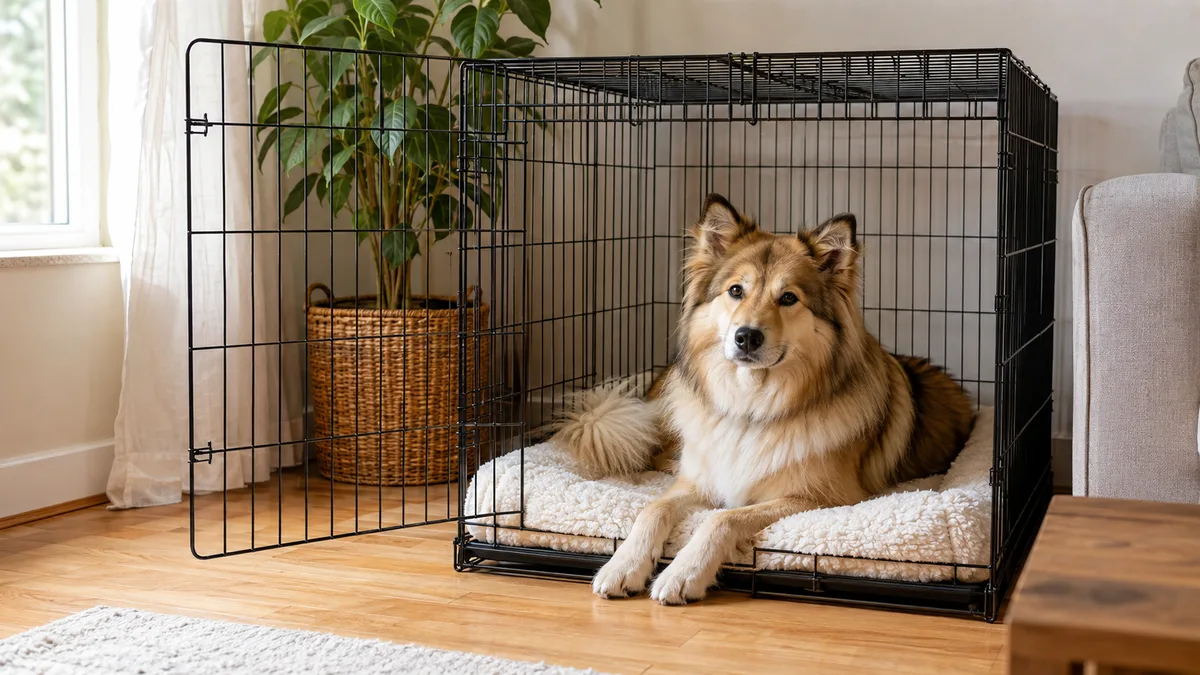
My three dogs use three completely different crates. A furniture crate that doubles as a side table, a soft carrier that folds flat, and a wire crate with a fleece blanket the youngest drags around the house.
Picking the right crate took me longer than picking their food. Wire crates feel too exposed, furniture crates cost more, and soft crates get chewed apart in a week if your dog is determined.
Here are eleven dog crate ideas from basic wire setups to fully personalized stations, all tested with real dogs who choose to go inside.
From a basic wire crate with the right blanket layer to a fully personalized crate station with a water bowl and toy basket, these eleven setups turn any crate into a space your dog chooses to walk into.
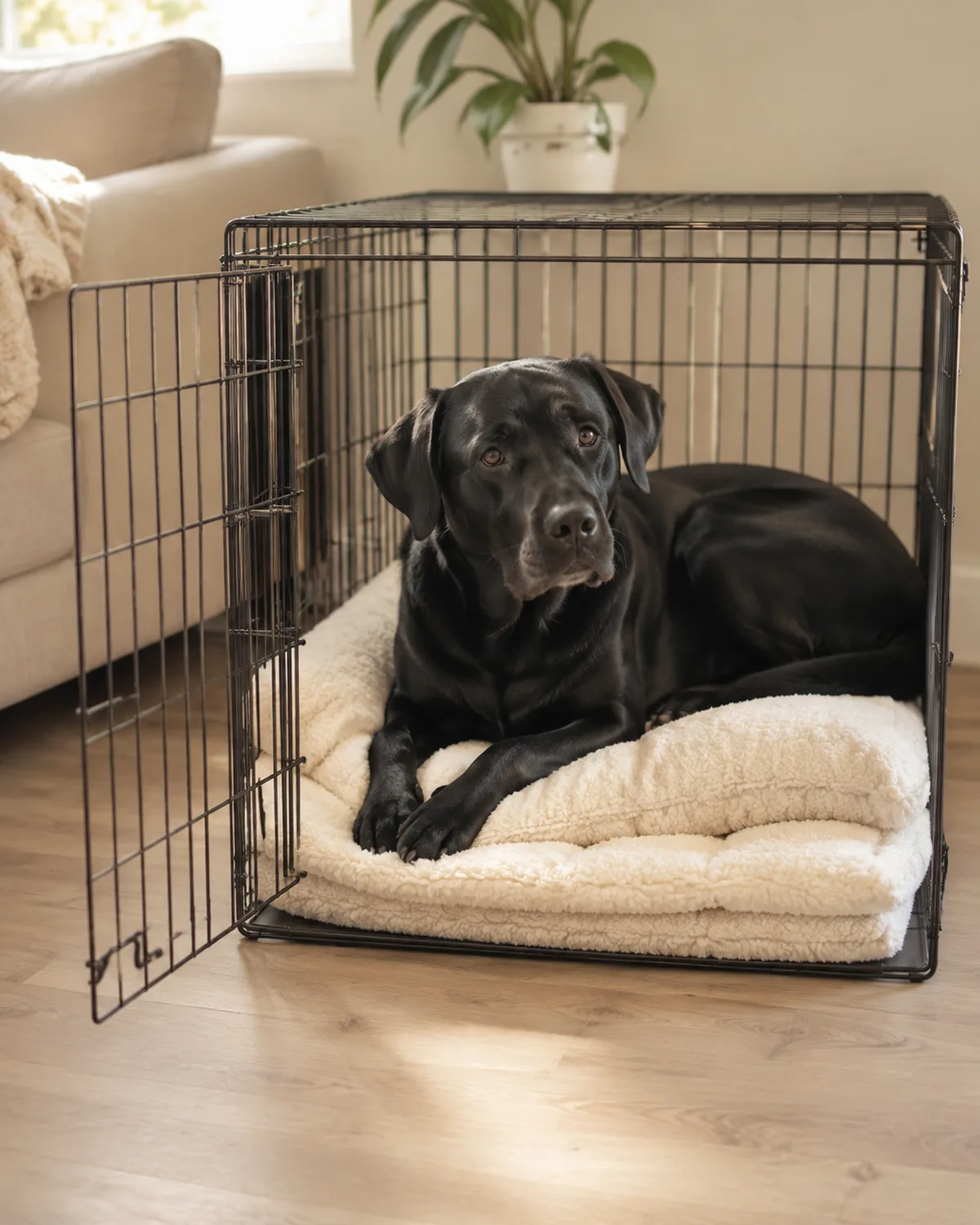
A wire crate is the most common starting point, and it works well when you add the right layers inside. Start with a washable crate pad that fits wall to wall, then add a fleece or sherpa blanket on top. The blanket gives your dog something to bunch up, nest in, and rearrange. Dogs who circle before lying down do better with a blanket they can push around than with a flat mat alone.
Wire crates have good airflow, which matters in summer and in rooms without great ventilation. They also fold flat when you need to store them. The tradeoff is visibility. Some dogs feel safer when they can see out in every direction, but anxious dogs may do better with a crate cover draped over three sides.
If your dog is still learning to love the crate, pairing this setup with positive crate training makes a real difference.
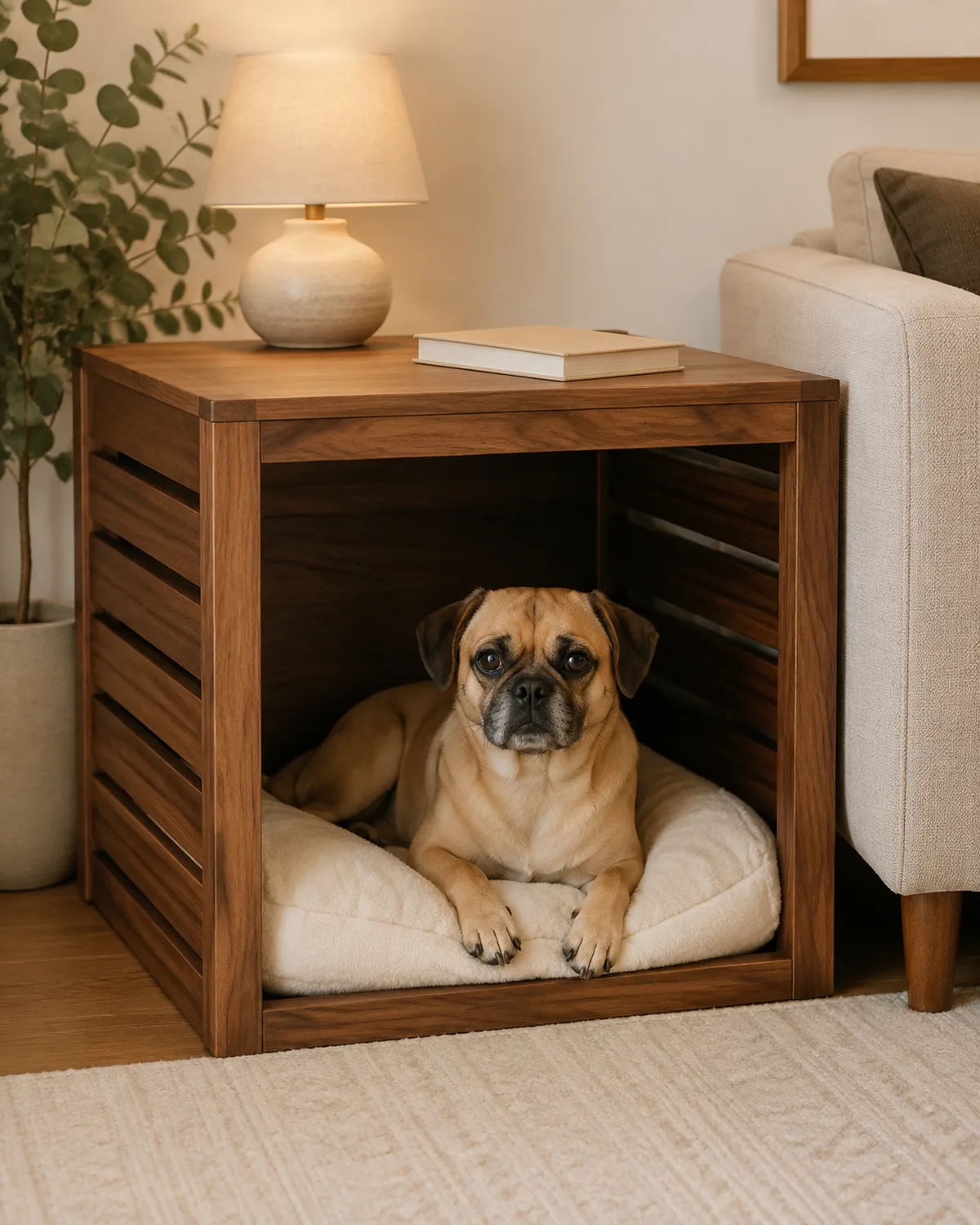
Furniture crates solve the biggest complaint about wire crates. They look like actual furniture instead of a cage sitting in your living room. A good furniture crate has solid wood or MDF panels, a flat top surface for a lamp or books, and a latched door that blends with the frame.
Most furniture crates work for dogs who are past the heavy chewing phase. Puppies and strong chewers will scratch, gnaw, or pry at wooden panels within a week. If your dog still destroys things when bored, start with a wire crate and upgrade later.
Place it next to your sofa or bed and let your dog claim it as a resting spot during the day.
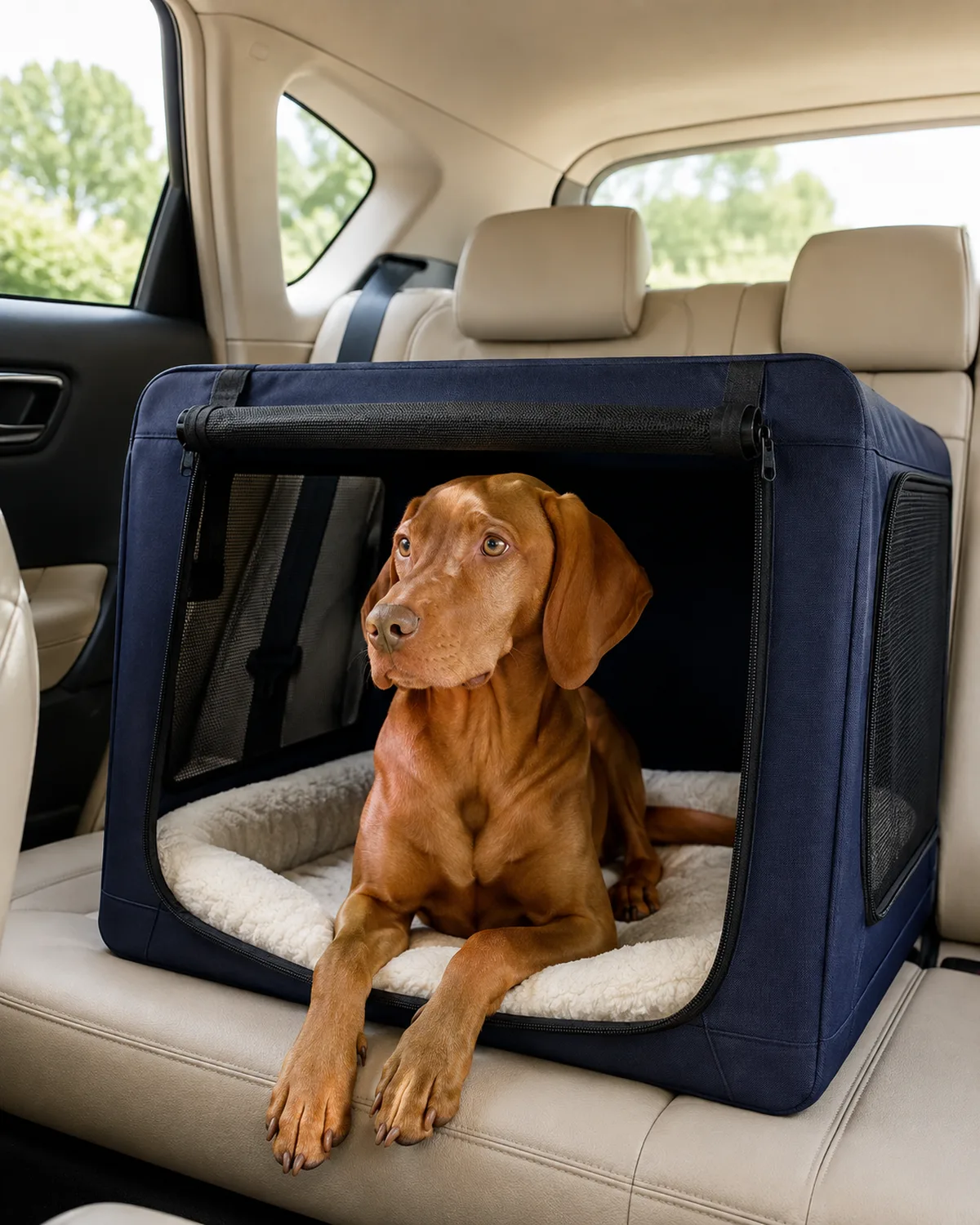
Soft-sided crates weigh almost nothing and fold down to the size of a laptop bag. They are built for travel, vet visits, and temporary setups at a friend's house. The frame is usually spring steel or fiberglass poles that pop into shape, and the walls are mesh and nylon.
These crates are not for unsupervised use. A determined chewer can unzip or tear through mesh in minutes. But for calm dogs who need a familiar space during a car ride, a soft crate is the most portable option you can find.
Pair a soft crate with a travel plan and your dog has a consistent den wherever you stop.
Each crate type solves a different problem. Pick based on your dog's temperament, your living space, and how you plan to use it.
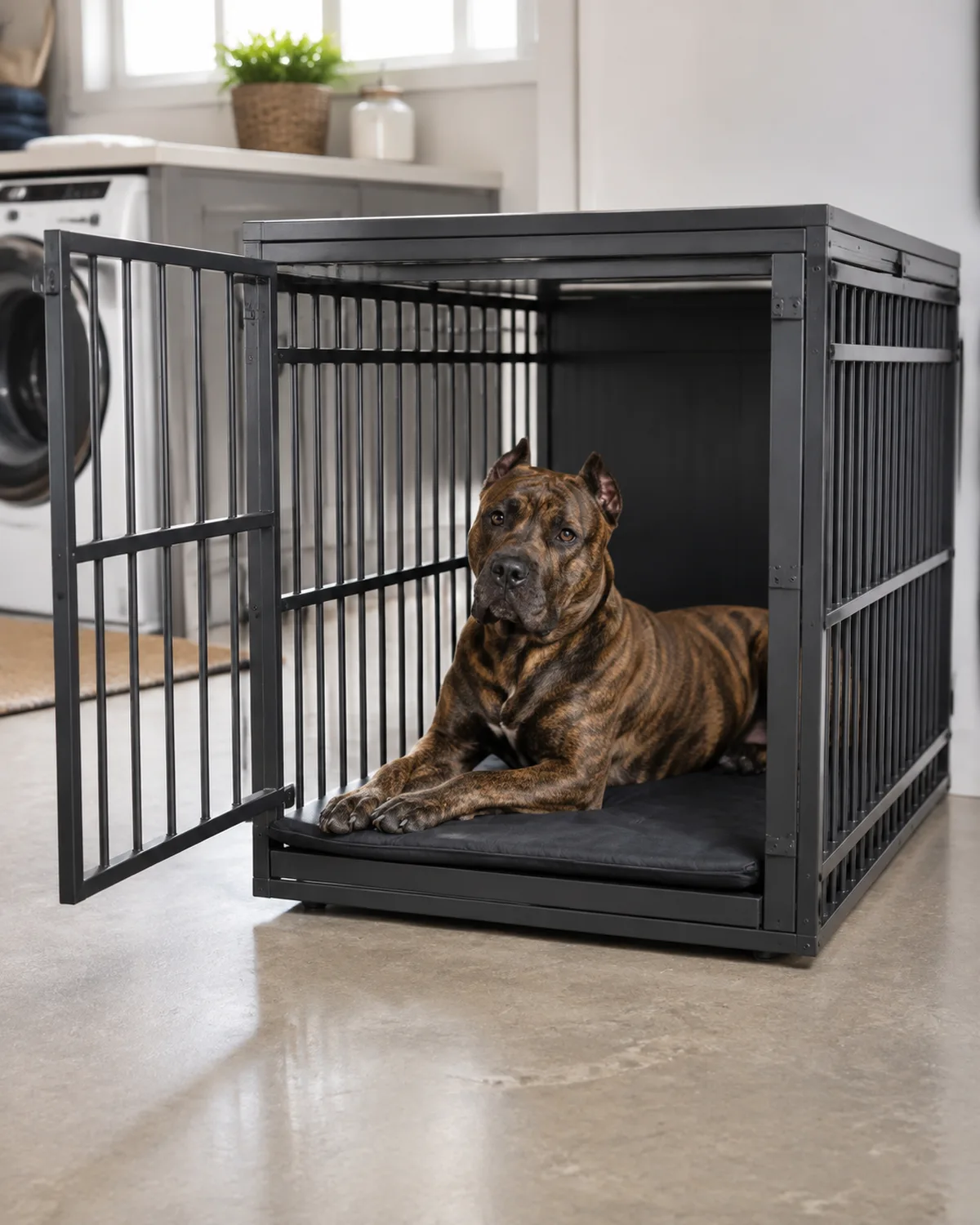
Some dogs bend wire crate bars, pop open latches, or chew through plastic panels. A heavy-duty crate is built from reinforced steel or aluminum with welded joints and slam latches that cannot be nosed open. These crates look industrial, but they solve a real safety problem for dogs with separation anxiety or extreme chewing habits.
The price is higher than a standard wire crate, but a single heavy-duty crate lasts longer than three replacement wire crates over a year. Most models also have a removable steel tray that slides out for easy cleaning.
A heavy-duty crate keeps a strong dog safe, but it is not a substitute for working on the anxiety or boredom behind the chewing. Combine it with enrichment activities and gradual alone-time training.
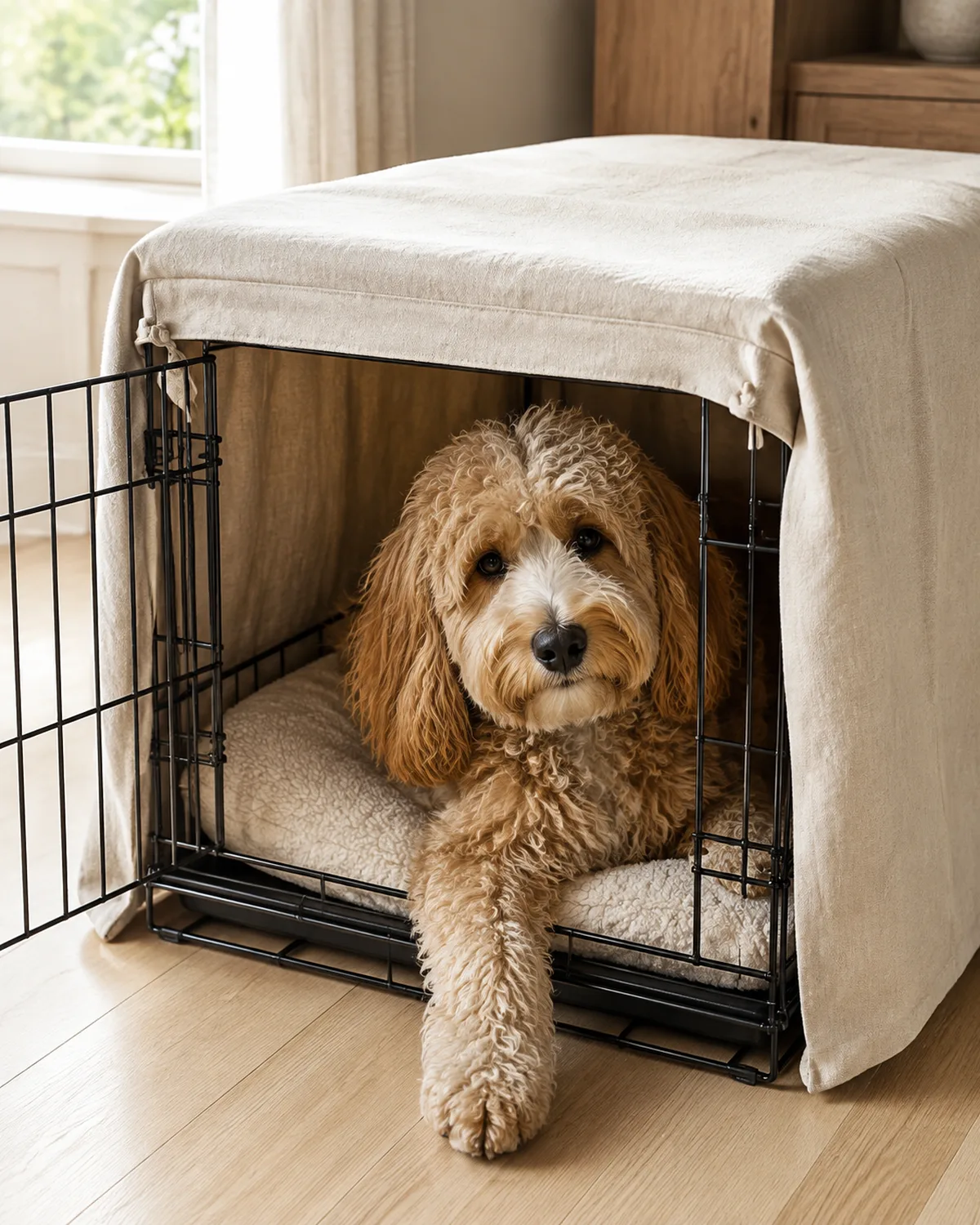
A crate cover turns an open wire crate into a dark, cozy den. You can buy a fitted cover or make one from a piece of canvas, cotton, or linen. The cover drapes over the top and three sides, leaving the front door open so your dog can walk in and out freely.
Dogs who pace in an open crate often calm down once the visual noise is blocked. The cover also muffles sound slightly, which helps dogs who startle at household noises. For dogs who overheat, use a breathable cotton fabric instead of heavy canvas.
A covered wire crate gives you the airflow of wire with the cave-like feeling of a solid crate, and it costs almost nothing if you use fabric you already have. This pairs well with a simple DIY toy basket placed near the crate entrance.
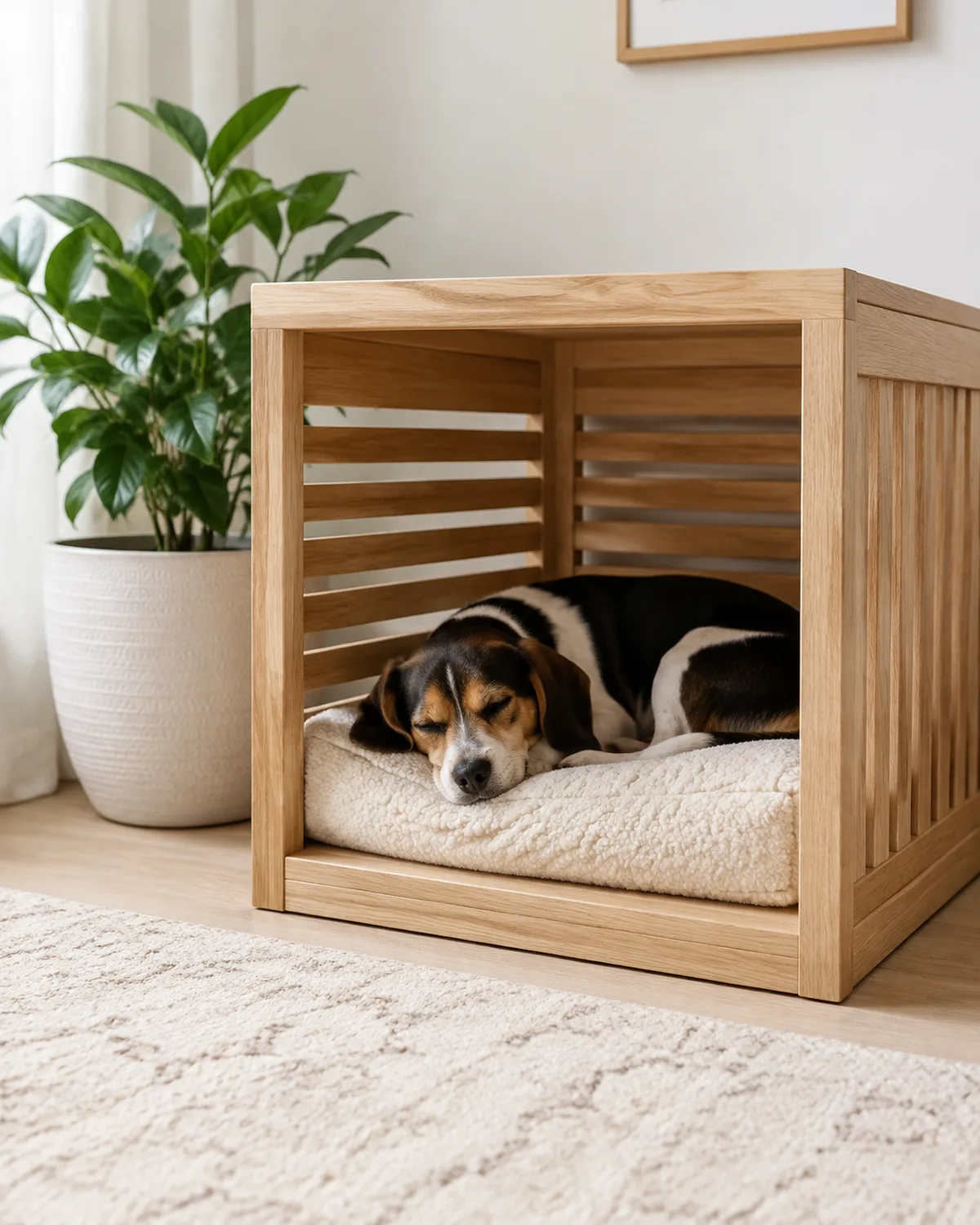
Wooden crates with slatted sides sit between a furniture crate and a decorative accent piece. They are lighter than solid MDF furniture crates and let more air circulate through the gaps. Some come stained in walnut, oak, or white wash finishes that work with modern and traditional rooms alike.
The slatted design also gives your dog partial visibility without the full exposure of a wire crate. It is a good middle ground for dogs who want to see a little bit of the room without feeling like they are on display.
A wooden crate works well in a bedroom, living room, or home office where aesthetics matter as much as function.
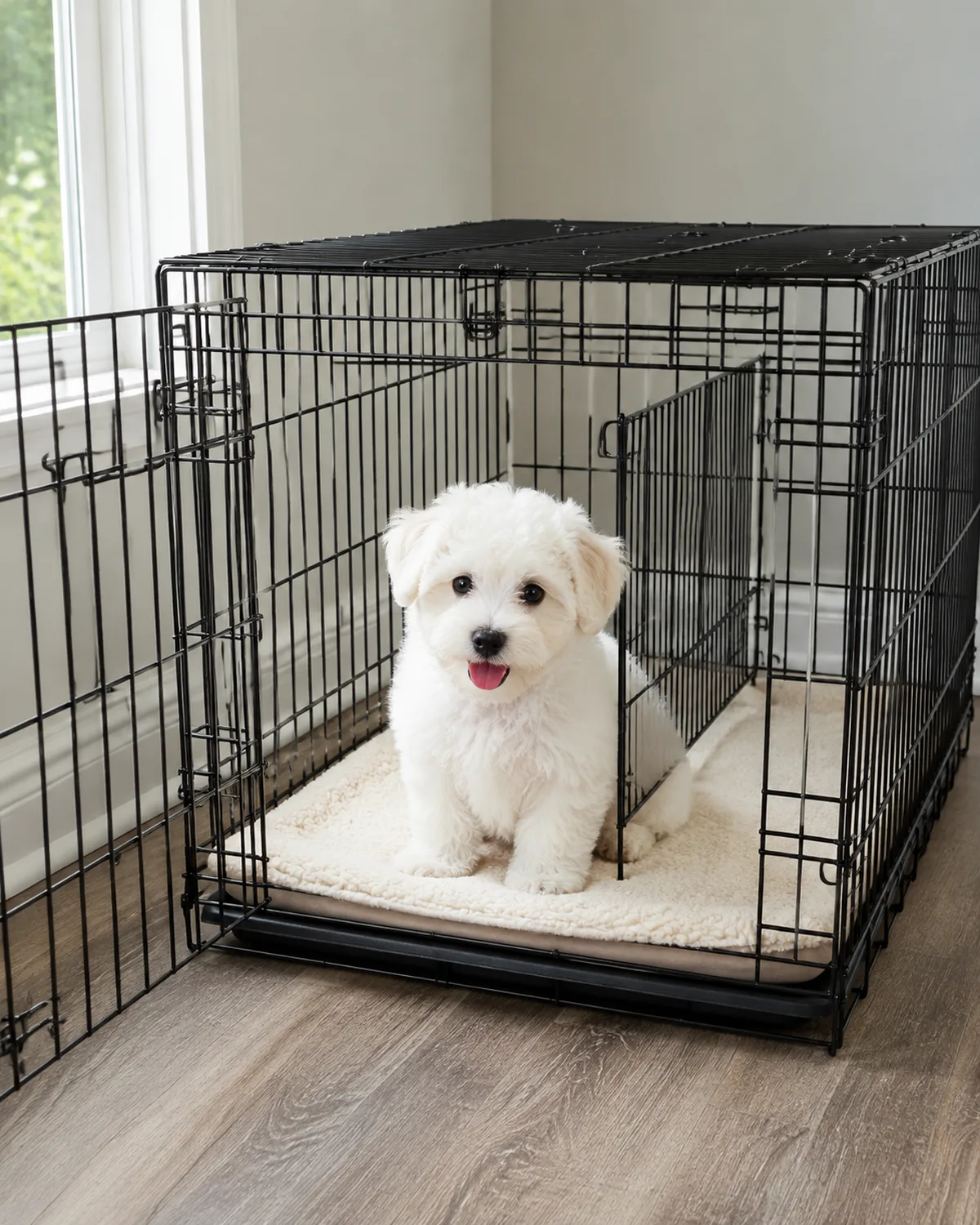
A divider panel lets you buy one crate that grows with your puppy. You slide the panel to section off a small area when the puppy is tiny, then move it back a few inches each month as the puppy gets bigger. By the time the dog is fully grown, the panel comes out and the entire crate is open.
Without a divider, a puppy in an oversized crate will sleep in one corner and use the other as a bathroom. The divider keeps the living space small enough that the puppy naturally holds it until the next trip outside.
This setup pairs directly with a gradual crate training plan because the training and the space grow at the same pace.
The wrong size crate is the number one reason dogs refuse to go inside. These four measurements prevent returns and wasted money.
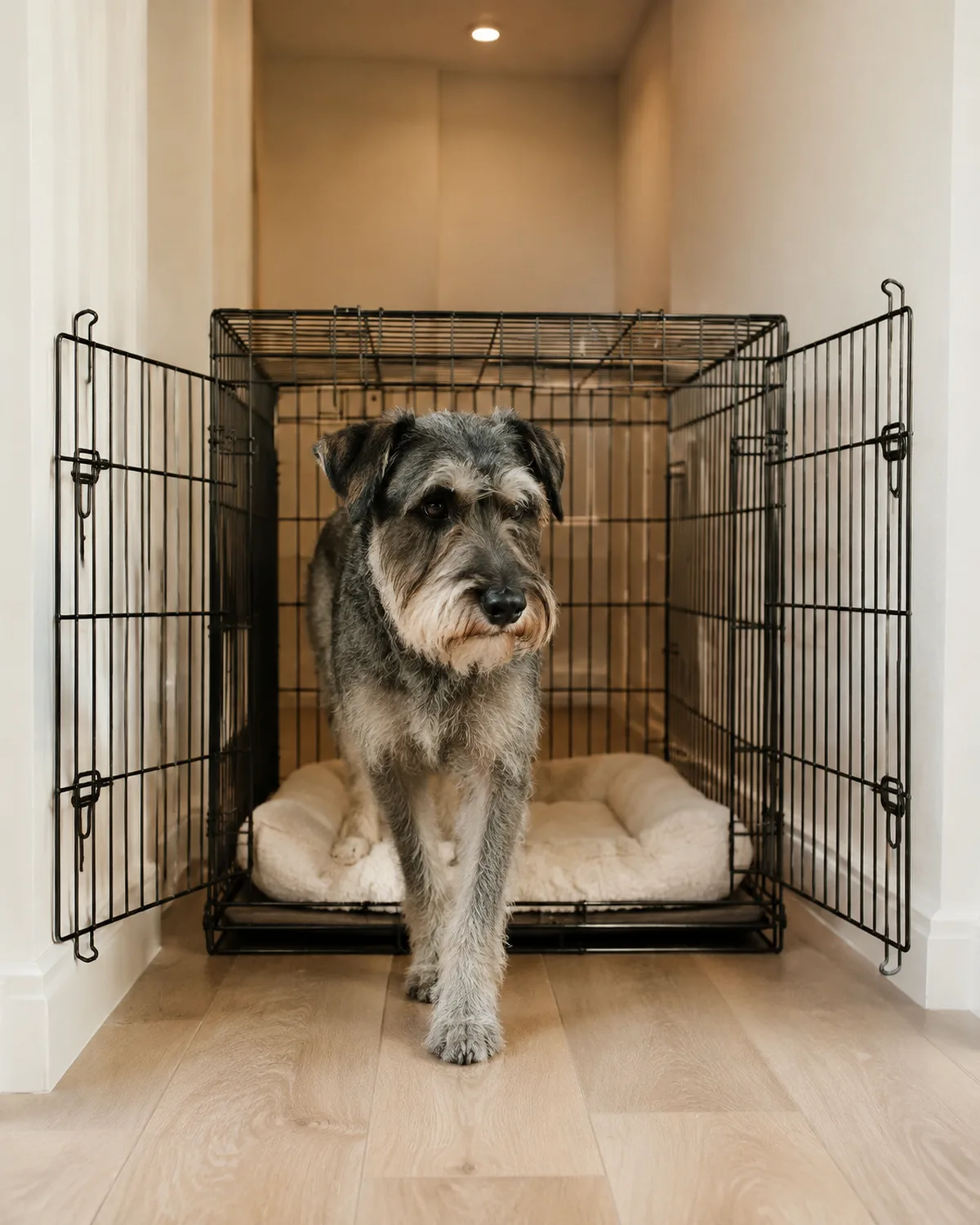
A double-door crate has a front door and a side door, which gives you more options for where to put it. A standard front-only crate has to face outward from a wall, but a double-door model can sit in a corner, an alcove, or against a piece of furniture with one door accessible from each direction.
Some double-door crates also have a top-opening panel, which makes it easier to lift a small dog in or reach inside to rearrange bedding. The extra doors do not reduce the structural strength of the crate because the frame is reinforced at each opening.
Double-door crates cost slightly more than single-door models, but the placement flexibility usually makes up for it in rooms where wall space is limited.
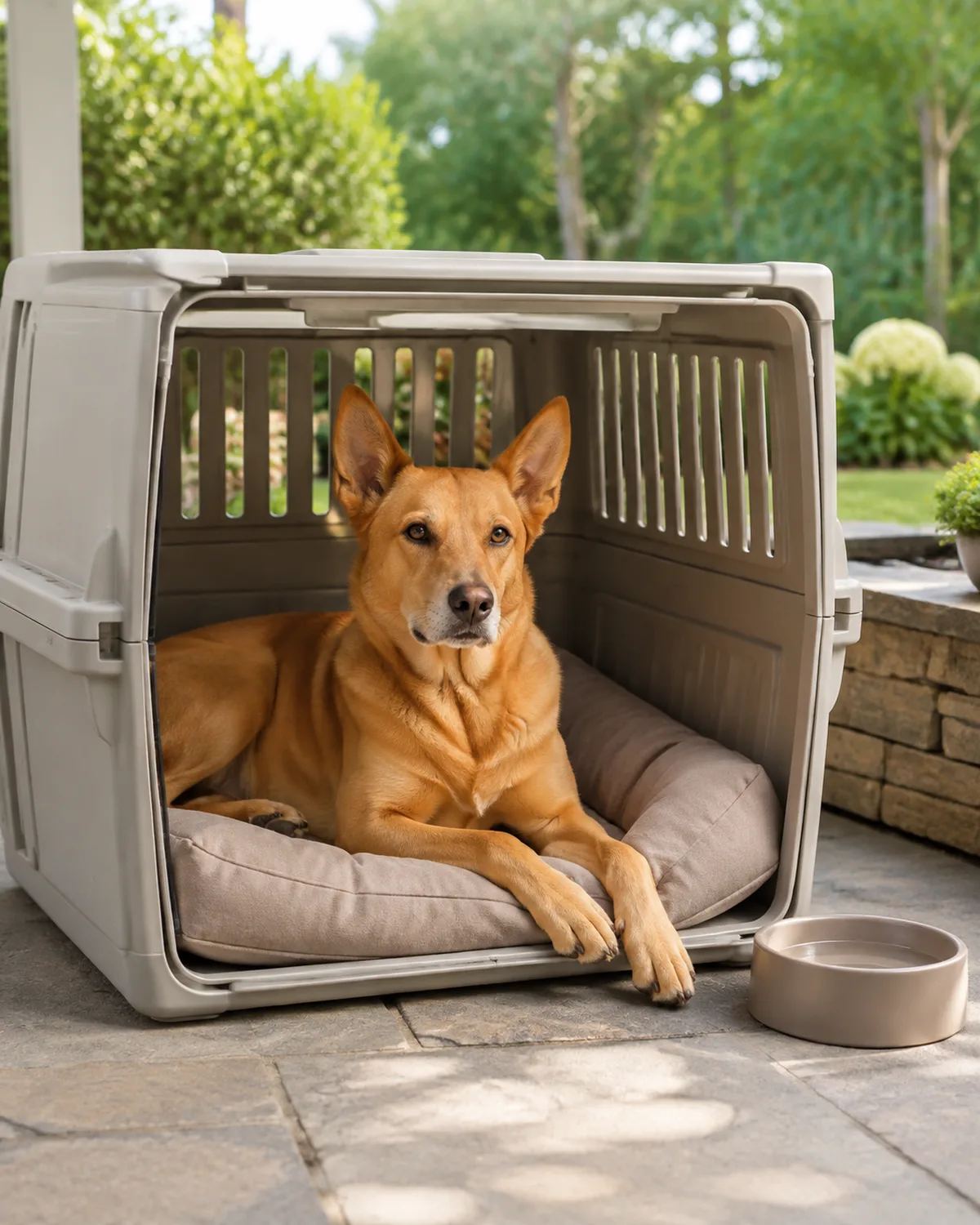
An outdoor crate gives your dog a shaded, contained space on a patio, deck, or yard without tethering them to a tie-out. These crates are usually made from UV-resistant plastic or powder-coated steel that handles rain and sun. The base is elevated or slatted so water drains instead of pooling.
This is not a permanent outdoor kennel. It is a supervised space for afternoons outside when you want your dog contained but comfortable. Always bring the dog back inside before you leave and never use an outdoor crate in extreme heat or cold.
Pair an outdoor crate with a safe backyard setup so your dog has shade, water, and a secure perimeter around the crate.
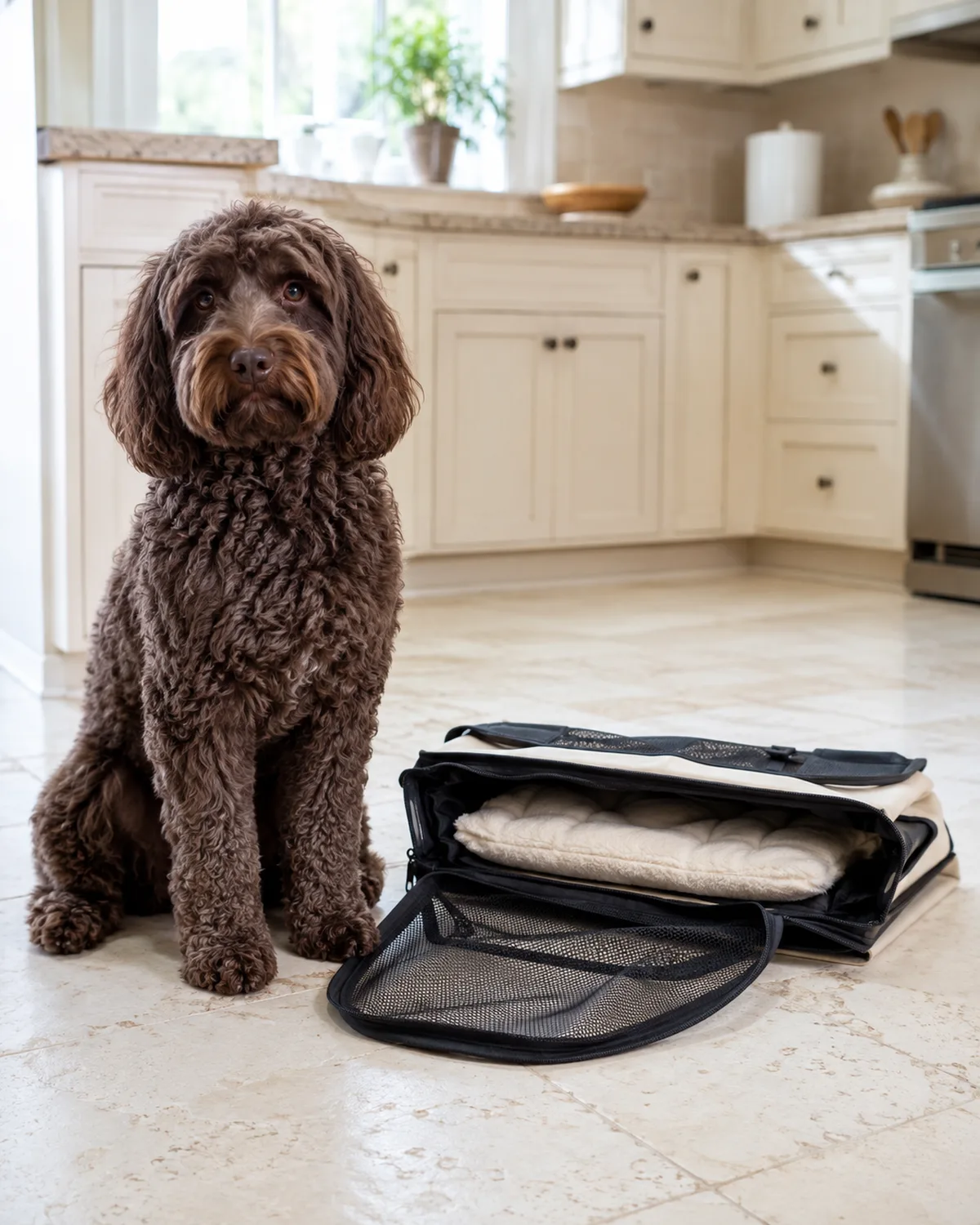
Collapsible crates fold flat in seconds and store behind a door, under a bed, or in a closet. They are ideal for apartment dwellers who do not have room for a permanent crate footprint, or for families who travel and need a crate at a relative's house but not every day.
Most collapsible models use a pop-up frame with fabric walls, similar to a soft-sided travel crate but sturdier. Some have a rigid plastic floor that keeps the shape even when unfolded on carpet.
A collapsible crate is a good second crate for families who already have a main setup at home. It fills the gap for new puppy owners who want options without cluttering the house.
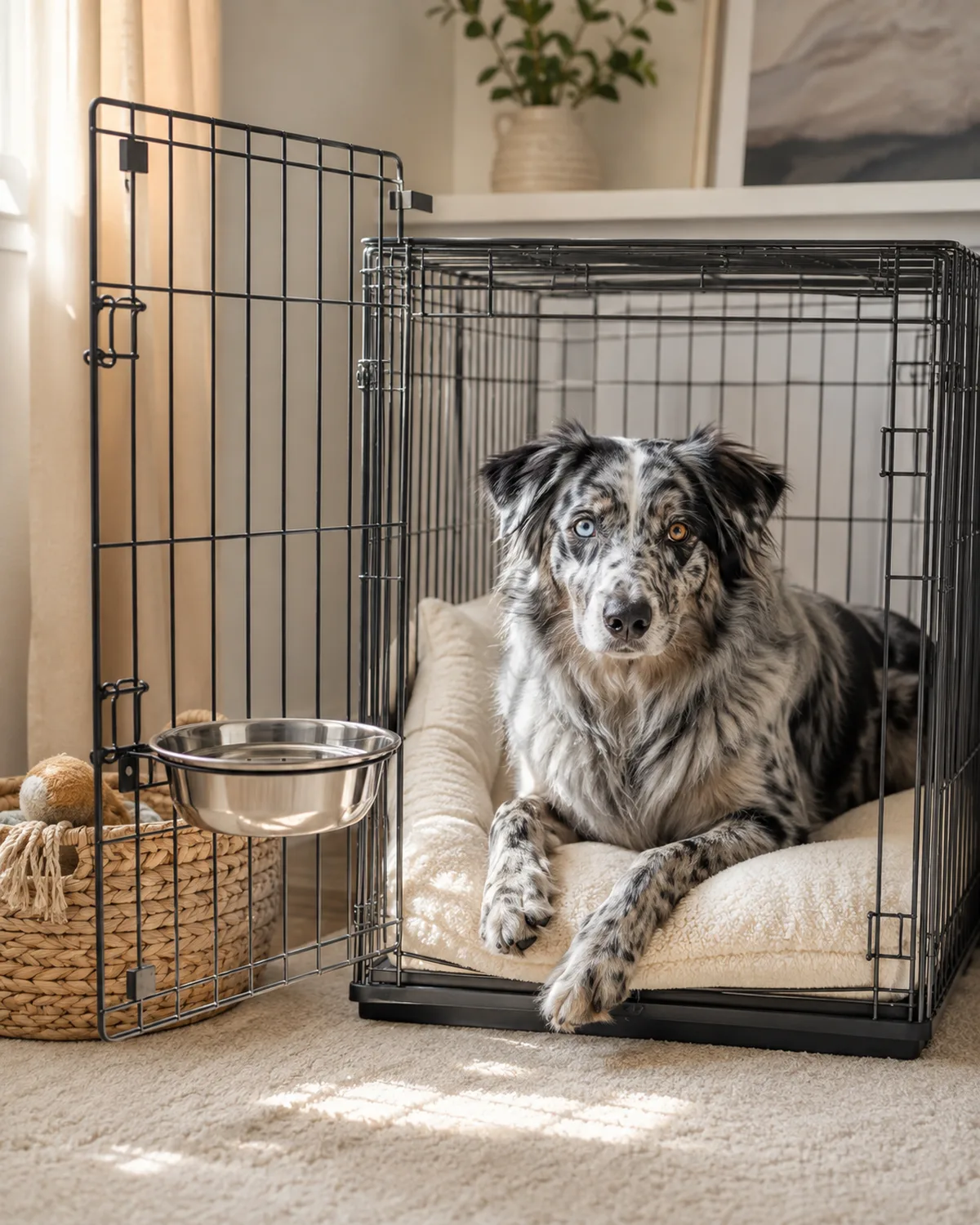
A crate station turns a plain crate into a self-contained corner. Clip a stainless steel water bowl to the inside of the crate door so your dog always has water. Place a small basket beside the crate with two or three rotating toys so your dog can grab one on the way in.
You can add a name plate or tag to the outside, a hook for the leash above the crate, and a mat underneath to catch dirt. The goal is to make the crate area feel like the dog's own room instead of a cage shoved against a wall.
A crate station works for any crate type. Wire, furniture, wooden, or heavy-duty. It is the finishing layer that makes any setup feel permanent and personal.

Dog mom to three very different dogs. Every guide on Pawliqa is based on real experience, veterinary guidance, and way too many hours reading ingredient labels. More about Jess
Leave it open whenever possible. A crate works best when the dog chooses to go inside rather than being locked in. Close the door only during crate training sessions, overnight sleeping, or when you need to contain the dog briefly for safety. If your dog goes in voluntarily and falls asleep, leave the door open and let them walk out when they wake up.
Most dogs do well with one main crate and one backup for travel. If you spend time in multiple rooms, a second crate in the bedroom can help with nighttime routines. You do not need a crate in every room unless your dog is still in the early stages of training and needs a safe space nearby at all times.
No. Plastic crates already have limited airflow because the walls are solid. Adding a blanket on top traps heat inside and can make the crate dangerously warm, especially in summer. If your dog needs a darker space in a plastic crate, move the crate to a dim corner of the room instead of covering it.
Eleven easy DIY dog toys made from materials you already own, from braided fleece tug ropes and frozen towel chews to muffin tin puzzles and denim pocket pouches, with a matching guide for every chewing style.
Read the guide