A dog bowl on the floor slides, pools water, and collects crumbs in the grout. A proper feeding station fixes all of that.
These sixteen setups range from a five-minute silicone mat to a built-in mudroom nook. Need portion sizes or a puppy feeding schedule? Start there first.
For more weekend builds, try these DIY dog bed ideas or a full dog room layout.
Jump to an idea
16 Dog Feeding Station Ideas
Raised wood, hidden drawers, wall shelves, outdoor posts — pick the one that fits your kitchen and jump straight to the build.
1. Raised Wooden Platform Feeder
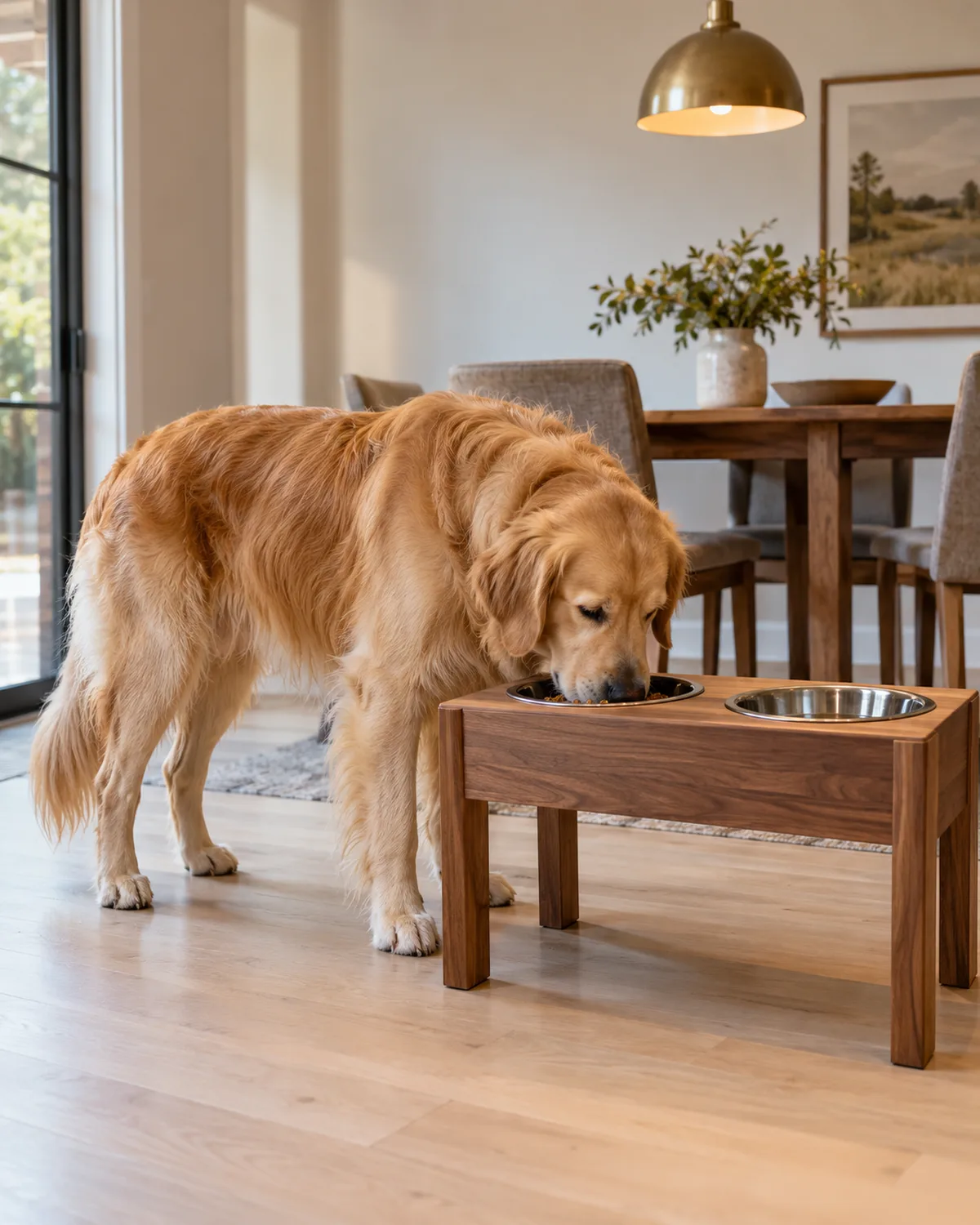
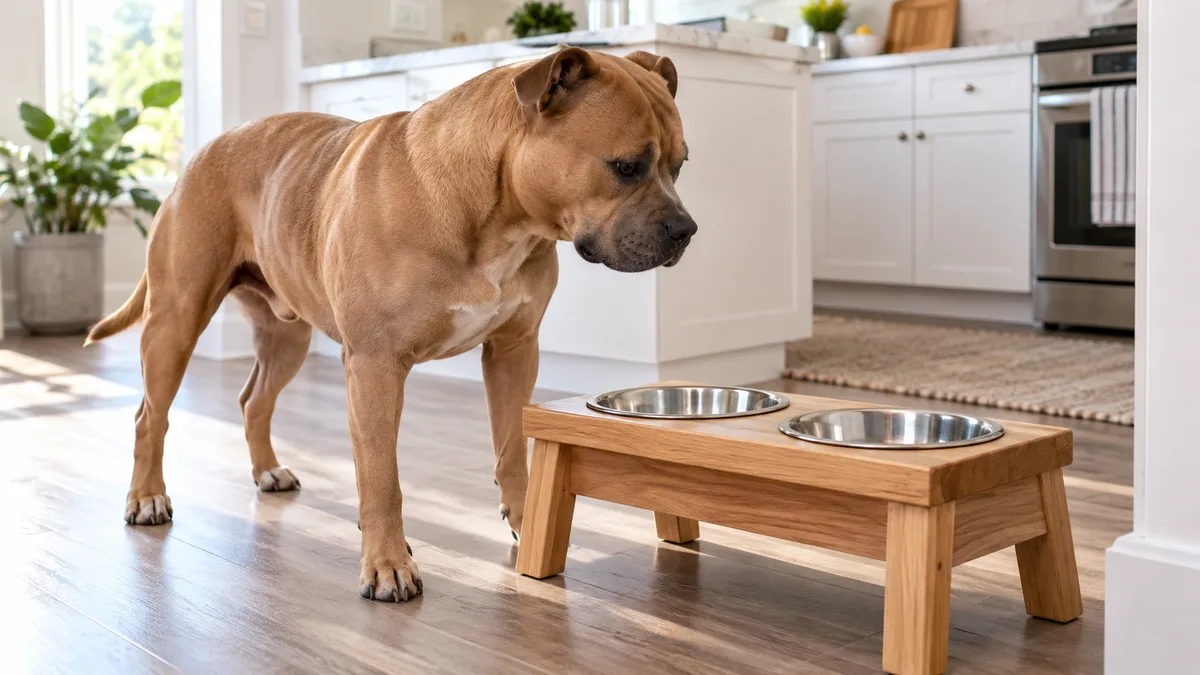
A raised platform feeder lifts the bowls to your dog's chest height so they eat without craning their neck downward. For large breeds especially, this reduces strain on the neck, shoulders, and front legs over thousands of meals.
Build one from a single piece of hardwood or butcher block. Trace the rim of your bowls onto the surface, cut the holes with a jigsaw or hole saw, and sand the edges smooth. Add four short legs — tapered furniture legs from a hardware store screw right in and look clean.
- Height guide: measure from the floor to the top of your dog's front leg at the elbow, then subtract two to three inches
- Bowl fit: cut the hole about a quarter inch smaller than the bowl rim so the bowl drops in and sits on its lip
- Finish: seal the wood with a food-safe polyurethane to protect against water rings and kibble oils
The platform catches splashes and crumbs on its surface instead of the floor. Wipe it down after each meal and you skip the daily floor mop.
2. Pull-Out Cabinet Drawer Station
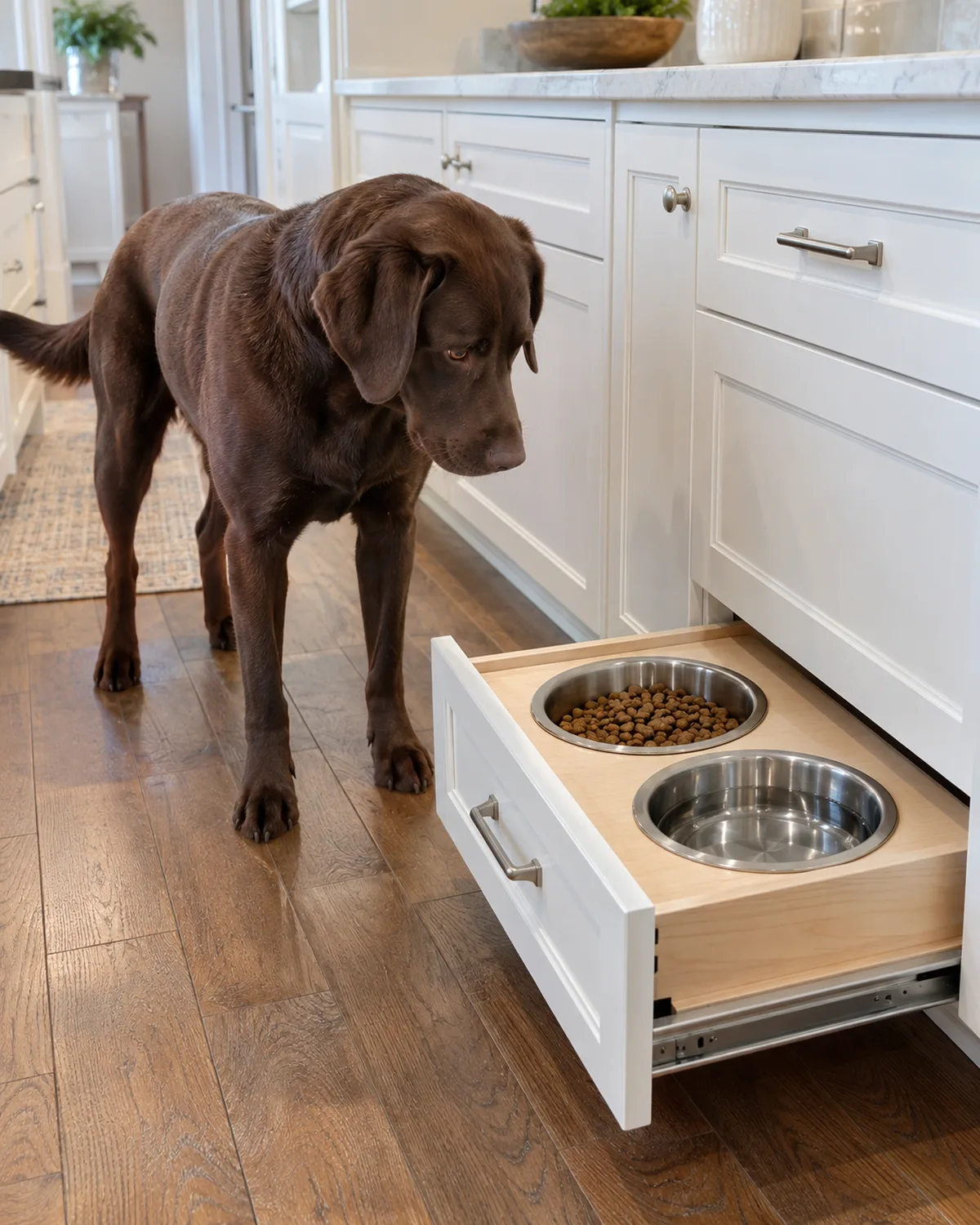
This one turns dead cabinet space into a hidden feeding station. When the drawer is pushed in, there is no sign of dog bowls anywhere. When you pull it out at mealtime, two bowls sit ready at a comfortable eating height.
Pick a lower cabinet near the kitchen sink for easy water refills. Remove the existing shelf, install a set of heavy-duty full-extension drawer slides rated for at least fifty pounds, and build a simple plywood tray that rides on the slides. Cut two bowl holes in the tray, drop in stainless steel bowls, and you are done.
- Slide rating: full-extension slides let you pull the tray all the way out so your dog can reach both bowls without wedging their head inside the cabinet
- Waterproofing: line the drawer bottom with a sheet of adhesive shelf liner or a silicone baking mat to catch drips
- Best for: small kitchens, people who dislike visible pet gear, dogs that eat in the kitchen
Push the drawer in when guests come over and nobody knows it is there. This is the cleanest-looking option on the list.
Match the station to your space
Where should you start?
You do not need all sixteen. Pick the situation that fits your home and start with one or two ideas.
3. Wall-Mounted Fold-Down Shelf
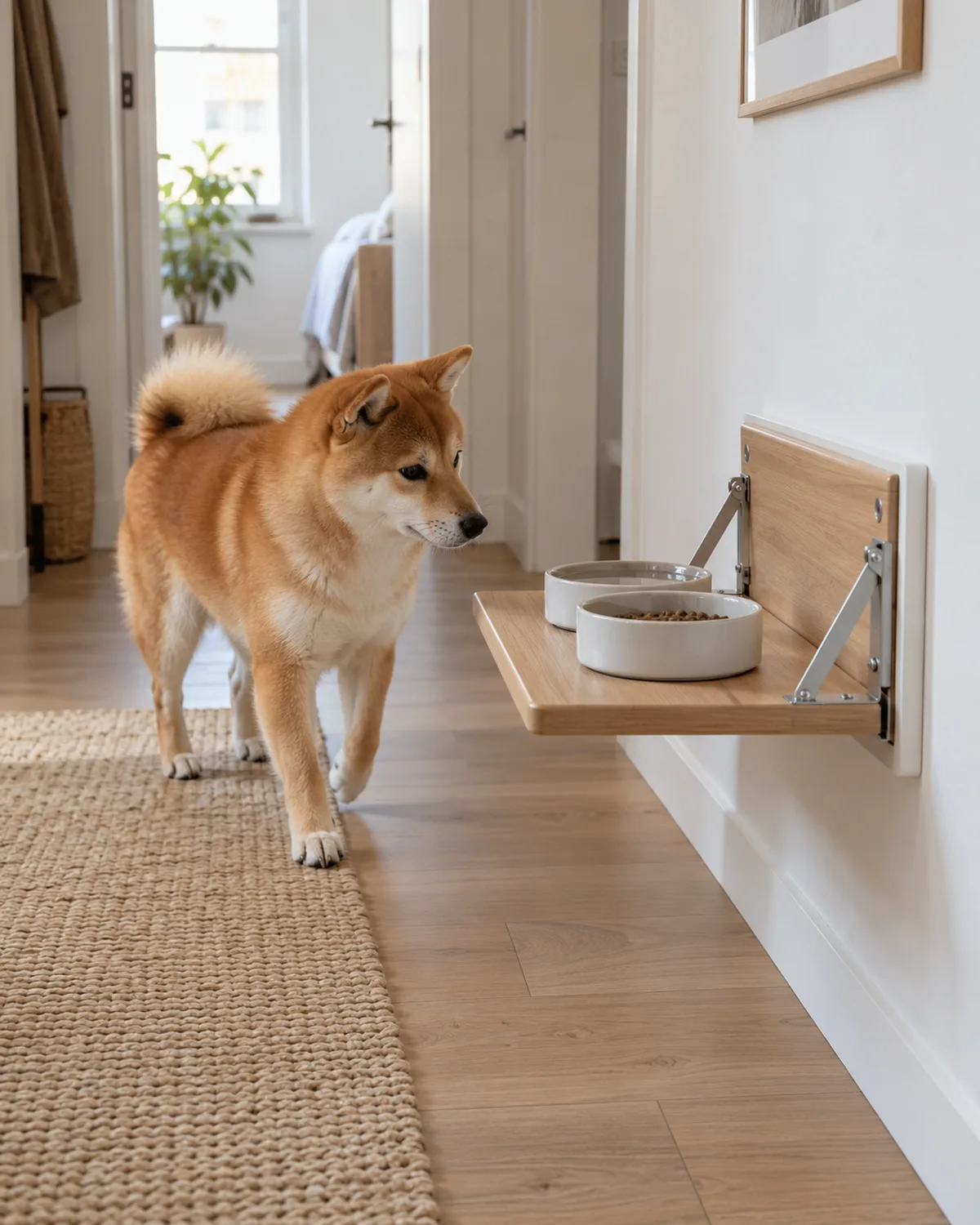
A fold-down shelf sits flat against the wall when you do not need it, then swings down into feeding position with one hand. This is the best option for tight apartments where every square foot of floor matters.
Mount a folding shelf bracket (the kind used for laundry rooms or workshop benches) into wall studs at your dog's eating height. Attach a piece of solid wood or plywood to the bracket arms, cut two bowl holes, and you have a feeding station that disappears after every meal.
- Stud mounting is non-negotiable: the shelf holds two full bowls of water and food plus a dog leaning into it — toggle bolts will pull out
- Shelf depth: eight to ten inches is enough for most bowl sizes without the shelf sticking out too far
- Best for: studio apartments, narrow hallways, people who want the floor completely clear between meals
Fold it up, wipe the wall where splashes hit, and the hallway looks like it always did. Add a small magnetic catch at the top so the shelf stays folded when not in use.
4. Repurposed Dresser Feeder
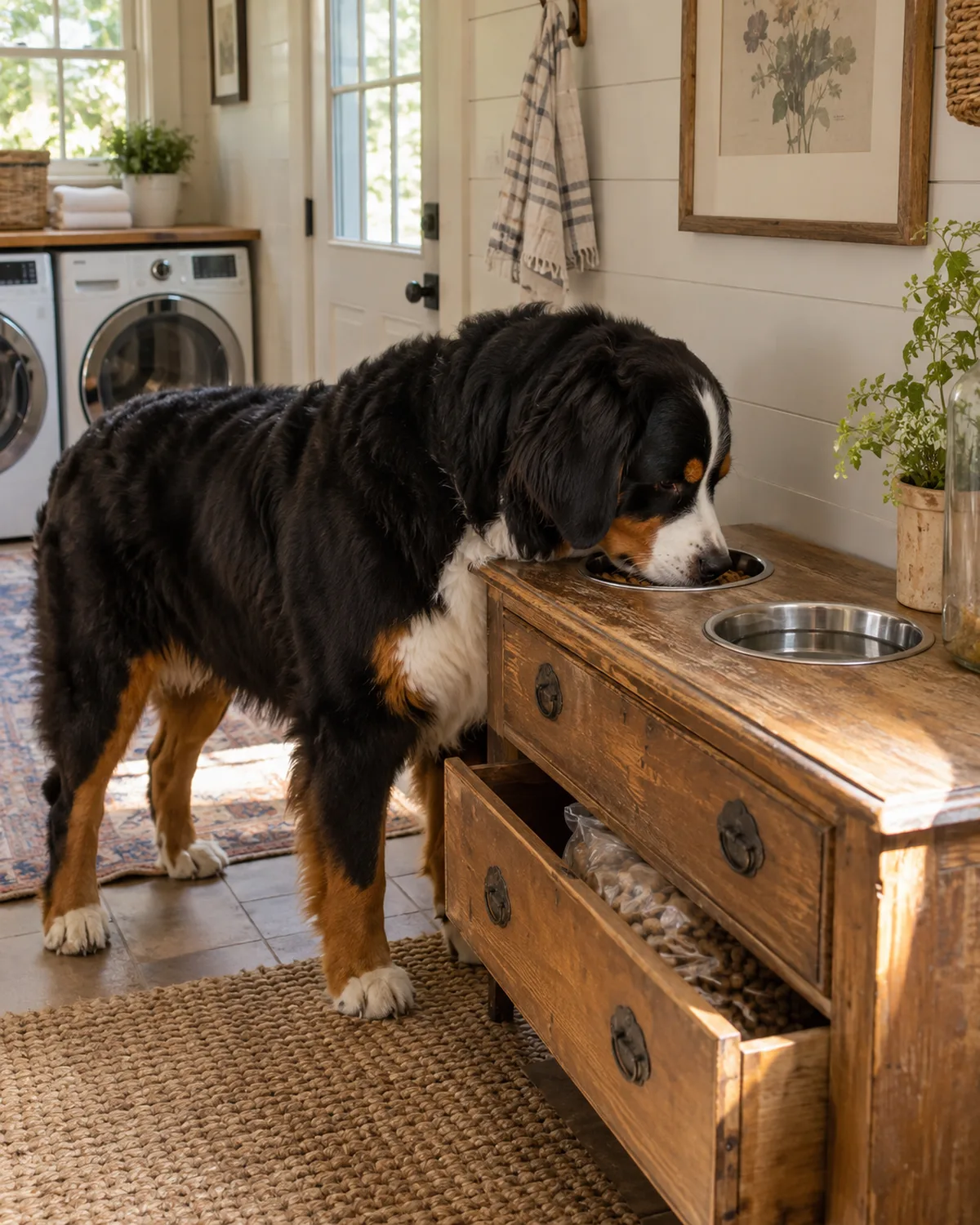
An old nightstand or low dresser from a thrift store becomes a feeding station and a kibble storage cabinet in one piece. Cut two bowl holes in the top surface with a jigsaw, drop in your bowls, and use the drawers below to store dry food, treats, and feeding scoops.
Sand the whole piece, prime it, and paint it to match your kitchen. A coat of semigloss paint cleans up easily when food splatters hit the surface.
- Drawer lining: line the kibble drawer with a resealable Mylar bag or a small airtight container that fits inside so the food stays fresh and the drawer stays clean
- Height check: a dresser that is too tall turns into a strain-free station for a Great Dane but an impossible reach for a Dachshund — measure before you commit
- Best for: farmhouse kitchens, people who want integrated storage, dogs that counter-surf (the dresser blocks sightlines to the counter)
This is a good project for furniture that is too worn for a bedroom but still structurally sound. A forty-dollar thrift store nightstand becomes something that looks custom.
5. Built-In Mudroom Nook
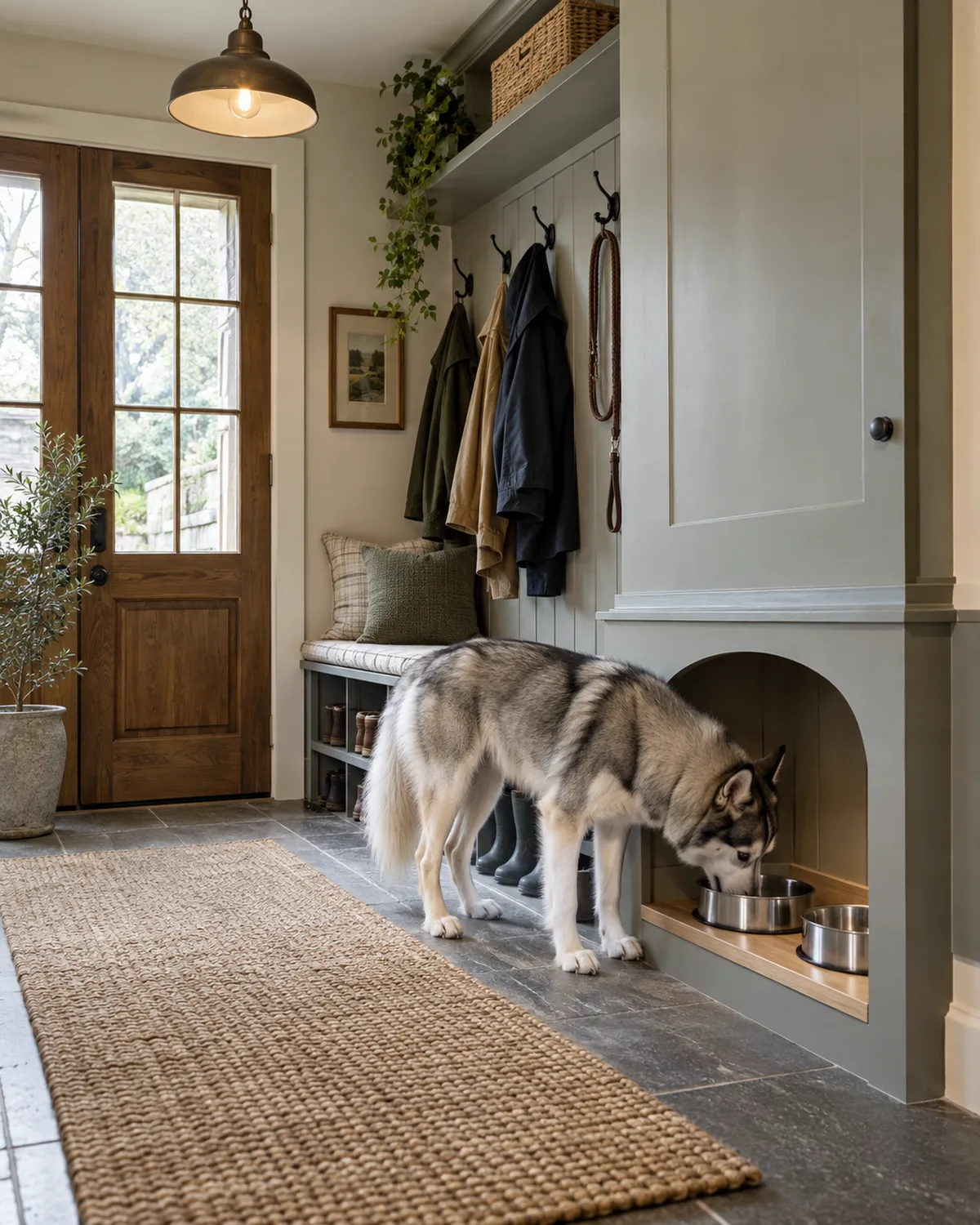
If you are already renovating a mudroom or laundry room, build a dedicated feeding nook into the lower section of a cabinet run or bench seat. Frame a small arched or squared-off opening, tile the inside for waterproofing, and set the bowls on a pull-out tray at the bottom.
The nook keeps food and water contained in one spot, away from foot traffic. Dogs also tend to eat more calmly when they have a defined space rather than eating in the middle of a busy hallway.
- Tile the interior: even two rows of subway tile along the back and sides prevent water damage from splashing
- Ventilation: leave the front open so your dog never feels trapped — a nook is a feeding spot, not a crate
- Best for: new builds or kitchen renovations, multi-dog homes (build two nooks side by side), messy drinkers
This is the most built-in option on the list and the hardest to undo, so plan the height and width carefully. Measure your dog's shoulder width plus four inches on each side for comfortable access.
6. Industrial Pipe and Wood Stand
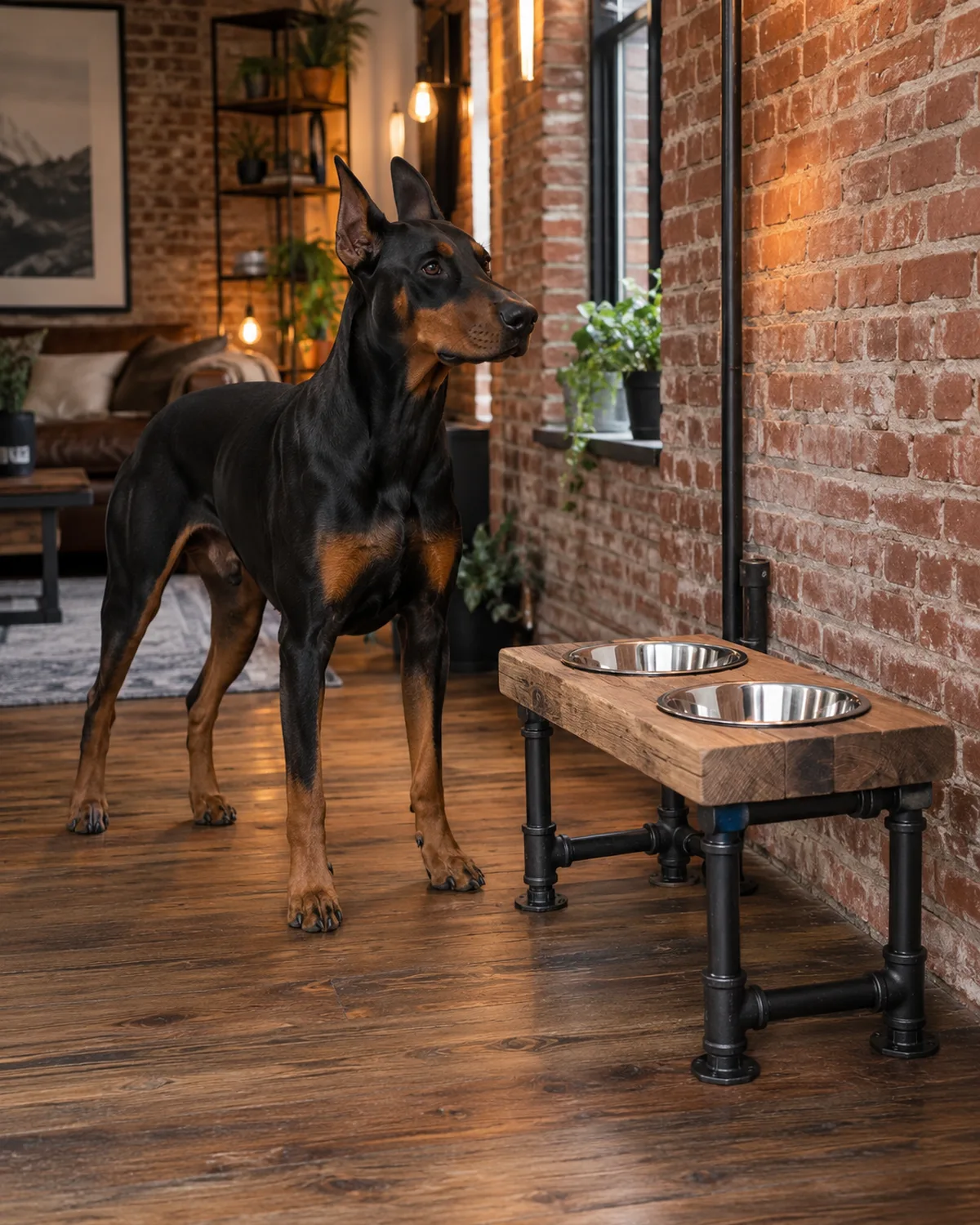
Black iron pipes and flanges from the plumbing aisle make a feeding stand that matches exposed brick, metal shelving, and concrete floors. Thread four short pipe legs into four floor flanges, screw a reclaimed wood or butcher block plank on top, and cut two bowl holes.
The whole thing costs under thirty dollars and takes about an hour. The weight of the iron pipes keeps the stand planted — no dog is pushing this one across the floor.
- Pipe size: three-quarter-inch pipe is the sweet spot — heavy enough to be stable, not so wide that the flanges look bulky on a small plank
- Finish: leave the pipes raw for an industrial look or spray them with a matte clear coat to prevent rust spots on light-colored floors
- Best for: loft apartments, industrial or modern decor, large dogs that push lightweight stands around
Pair it with a DIY dog gate made from the same pipe and wood for a matching set.
Before you build any of these
4 Rules for a Station That Lasts
A feeding station that tips, slides, or grows mold is worse than bowls on the floor. Follow these every time.
Get the height rightMeasure from the floor to the top of your dog's front leg at the elbow, subtract two to three inches, and build to that height. Too high forces the dog to eat with a raised head. Too low defeats the purpose.
Seal every surfaceWater and food oils destroy unsealed wood in weeks. Use a food-safe polyurethane or marine-grade spar varnish on any wood surface that touches bowls or splashes.
Anchor it to the floor or wallA dog leaning into a feeding station at full speed can tip a lightweight stand. Screw it to the wall, add rubber feet with adhesive grip pads, or build it heavy enough that physics does the work.
Use removable bowlsBowls that are glued or permanently fixed cannot be washed properly. Cut the holes so the bowl drops in and lifts out with one hand for daily cleaning.
7. Farmhouse Crate-Style Station
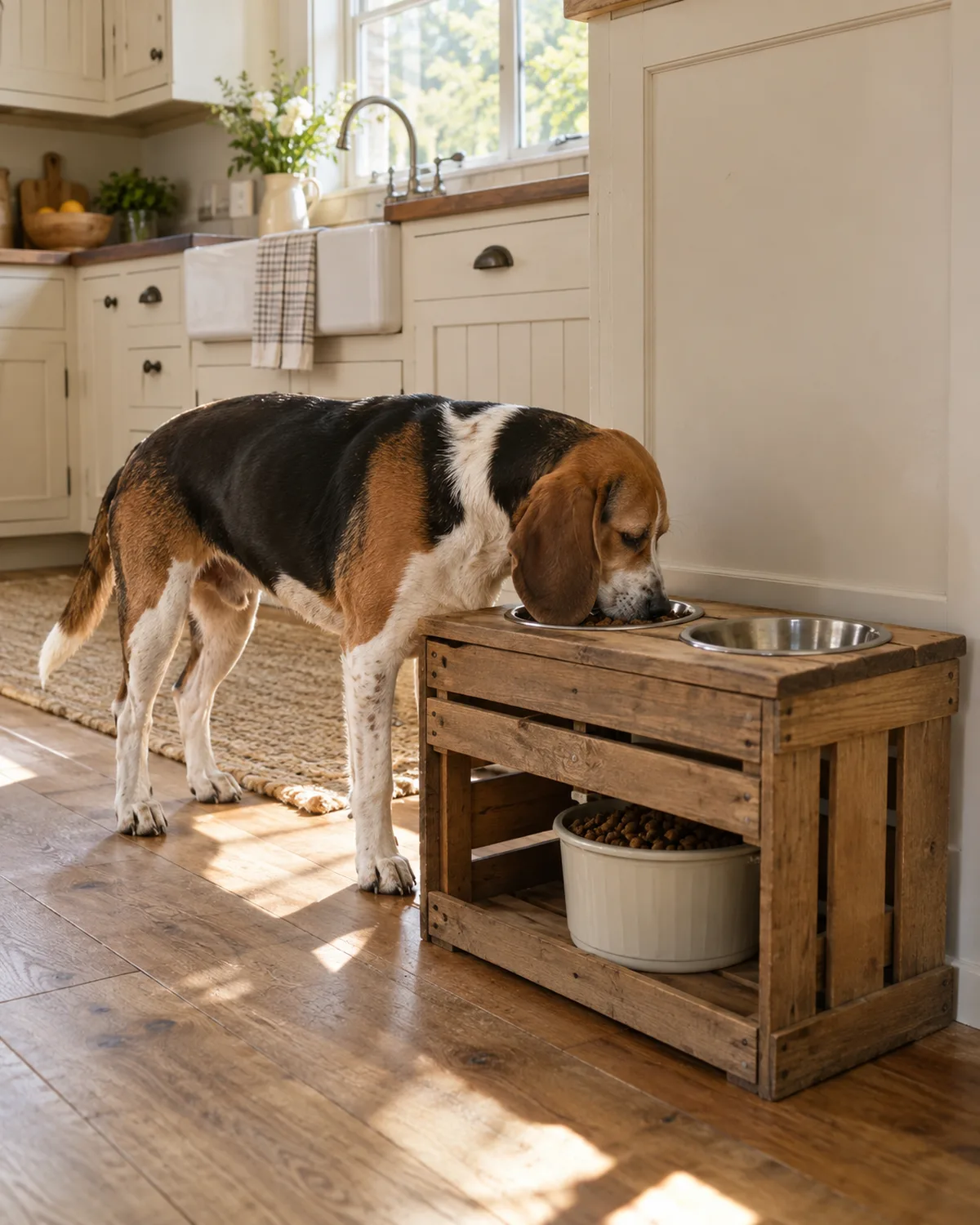
A slatted wooden crate with an open top holds two bowls on a recessed shelf inside. The crate sides contain splashes, the lower shelf stores a small kibble bucket, and the whole thing looks like it belongs in a farmhouse kitchen next to a bread box.
Build the frame from one-by-four pine boards. Cut vertical slats from one-by-two strips, space them about an inch apart, and nail them to the frame. Add a horizontal shelf halfway down for storage and cut bowl holes in the top.
- Slat spacing: keep gaps under two inches so small dogs cannot wedge a paw through
- Storage shelf: a five-pound kibble container or a bag of treats fits neatly underneath without taking up counter space
- Best for: country or farmhouse kitchens, dogs that splash water everywhere, owners who want a one-piece feeding and storage unit
Stain the crate to match your kitchen cabinets or leave it natural with a clear coat for a lighter look.
8. Silicone Mat and Low Tray Combo
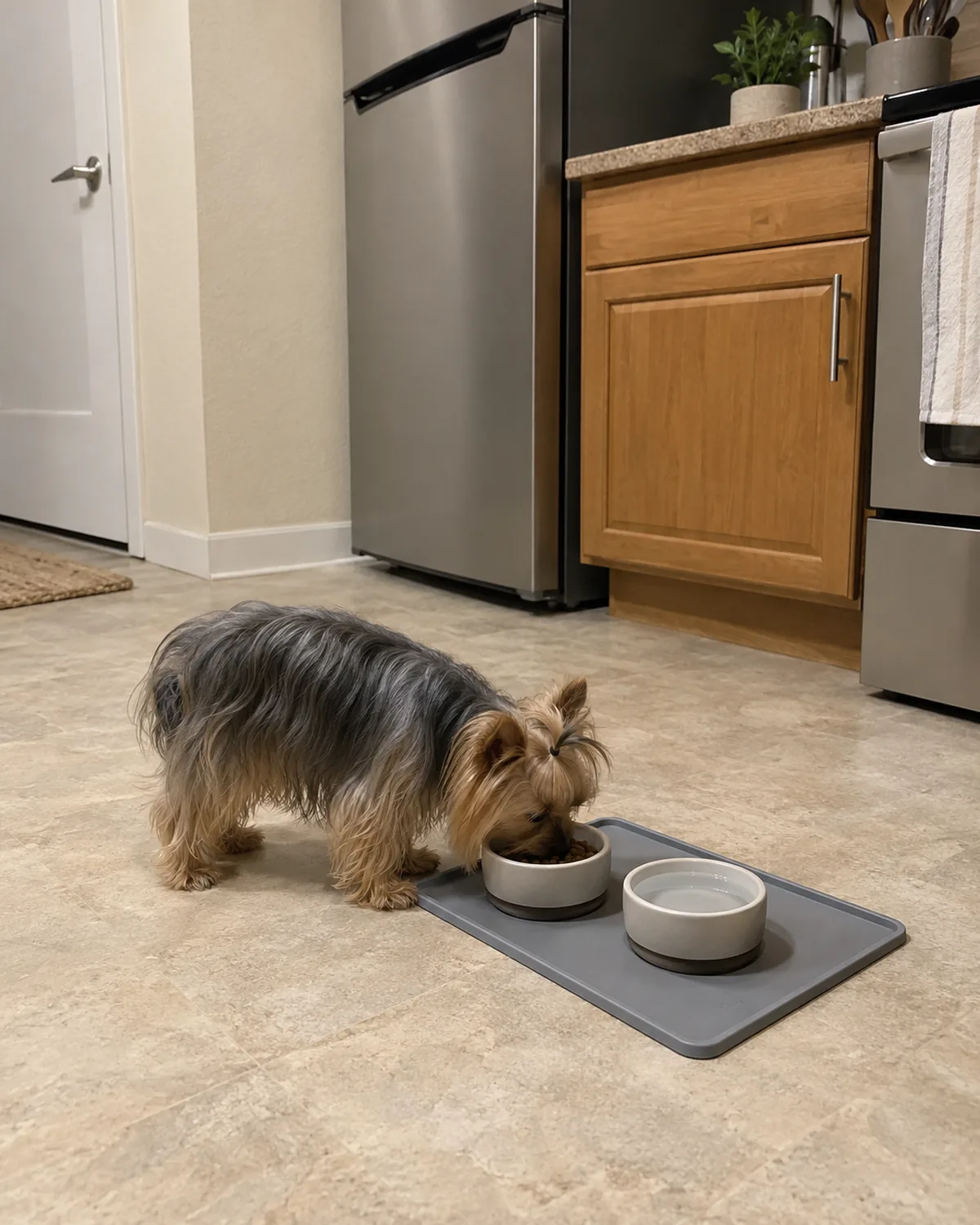
No tools, no drilling, no commitment. A food-grade silicone mat with raised edges catches water splashes and kibble crumbs. Set two bowls on top of the mat and place the whole thing on the kitchen floor. Done.
For slightly more containment, add a shallow boot tray or baking sheet underneath the mat. The tray catches anything the mat misses, and you can lift the whole setup to mop the floor underneath.
- Mat material: look for FDA-approved food-grade silicone — it is dishwasher safe, does not absorb odors, and lasts for years
- Tray tip: a dollar-store boot tray works perfectly and costs almost nothing
- Best for: renters who cannot modify the space, small dogs, temporary setups while you build something more permanent
This is the lowest-cost option on the list and the easiest to clean. Peel up the mat, rinse it in the sink, wipe the tray, and set it back down.
9. Elevated Tilted Bowl Holder
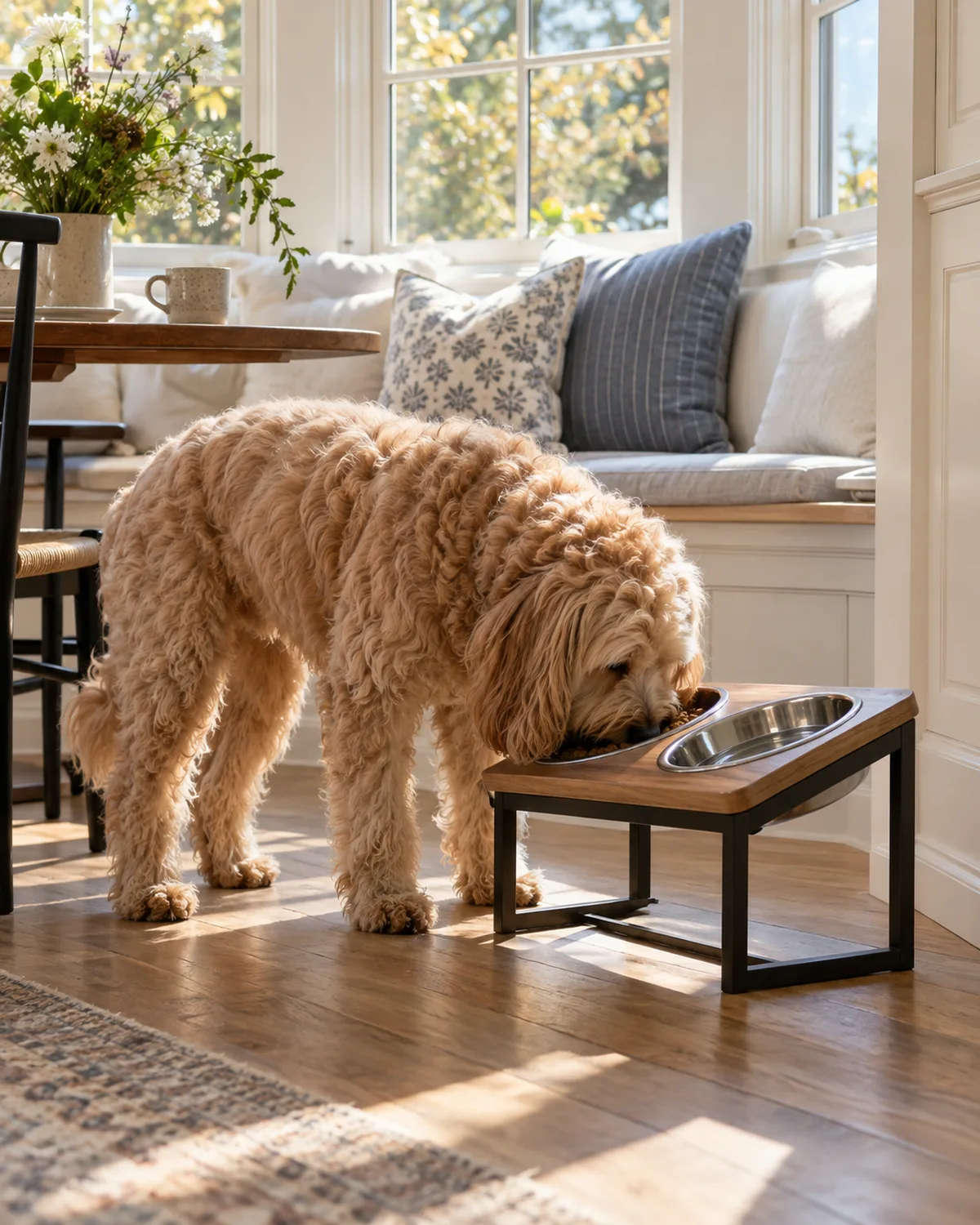
A tilted holder angles the bowl about fifteen degrees toward the dog so food slides to the front edge naturally. This reduces the amount of food left stuck at the back of the bowl and helps dogs with flat faces or short muzzles eat more comfortably.
Build or buy a simple angled platform — two pieces of wood cut at matching angles and joined with a cross-brace do the job. Drop a wide, shallow bowl into a cut hole on the tilted surface.
- Tilt angle: fifteen degrees is the standard — steeper angles cause food to pile at the front too fast
- Bowl shape: wide and shallow works better on a tilt than deep and narrow, which can spill at the edges
- Best for: dogs that leave food at the back of the bowl, flat-faced breeds, senior dogs with limited neck mobility
The tilt also helps with dogs that eat too fast. The food reaches them in a thin layer at the front instead of sitting in a deep pile they can gulp.
10. Outdoor Weatherproof Feeding Post
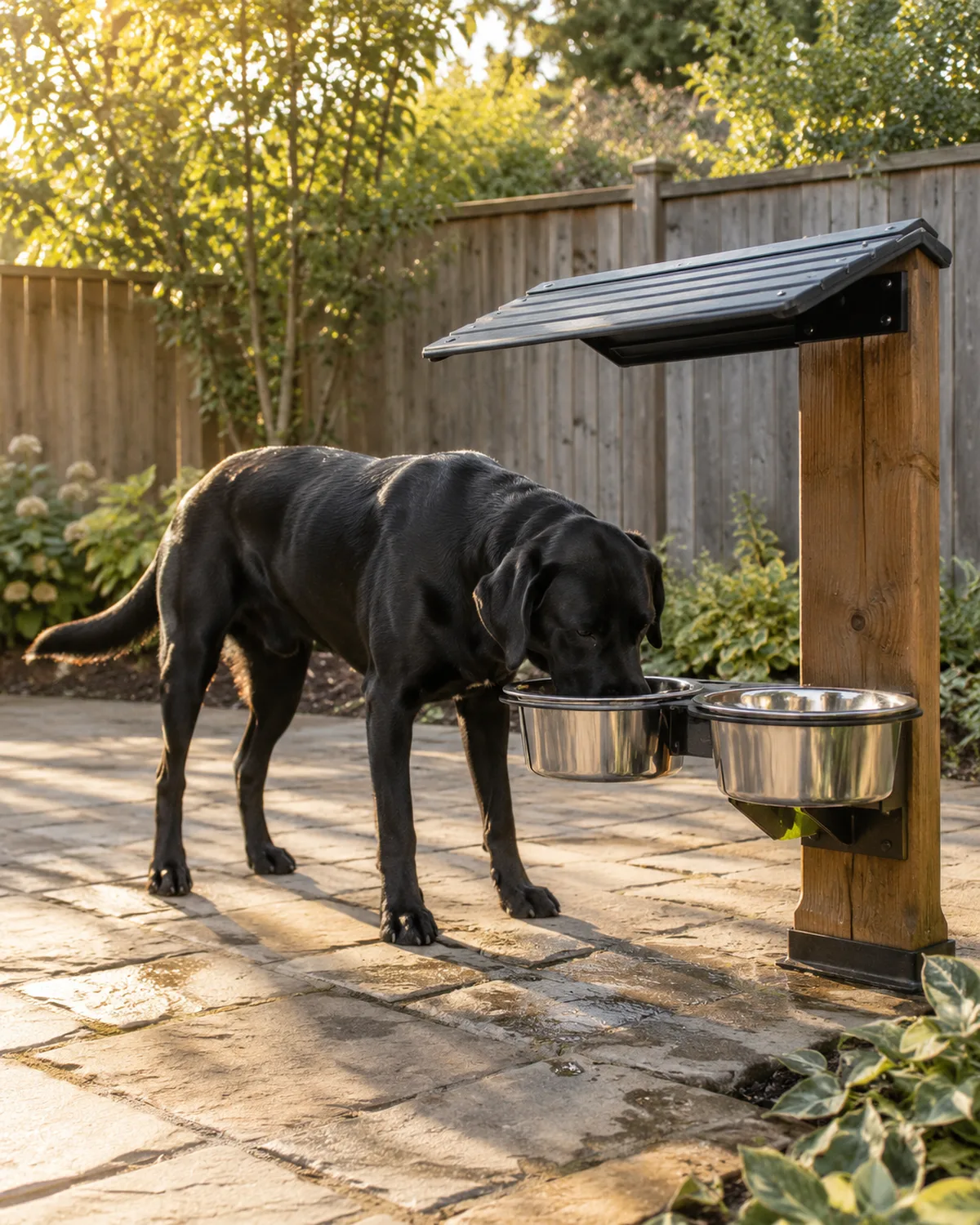
Dogs that spend a lot of time outdoors need a feeding station that handles rain, sun, and temperature swings without rusting or rotting. A pressure-treated 4x4 post set into a patio planter or bolted to a deck railing with a small wooden platform on top makes a sturdy outdoor station.
Use stainless steel bowls (not ceramic, which cracks in freezing temperatures) and attach a small canopy or overhang above the platform to keep rain out of the food.
- Post treatment: use exterior-rated wood stain and a UV-resistant polyurethane — indoor finishes will peel within one season
- Bowl attachment: bolt a stainless ring to the platform and drop the bowl into it so wind cannot blow it off
- Best for: dogs with yard access, covered patios, outdoor kennels, dual indoor-outdoor setups
Bring the food bowl inside at night to avoid attracting raccoons, opossums, or insects. Leave the water bowl out if temperatures stay above freezing.
11. Slow Feeder Integration Stand
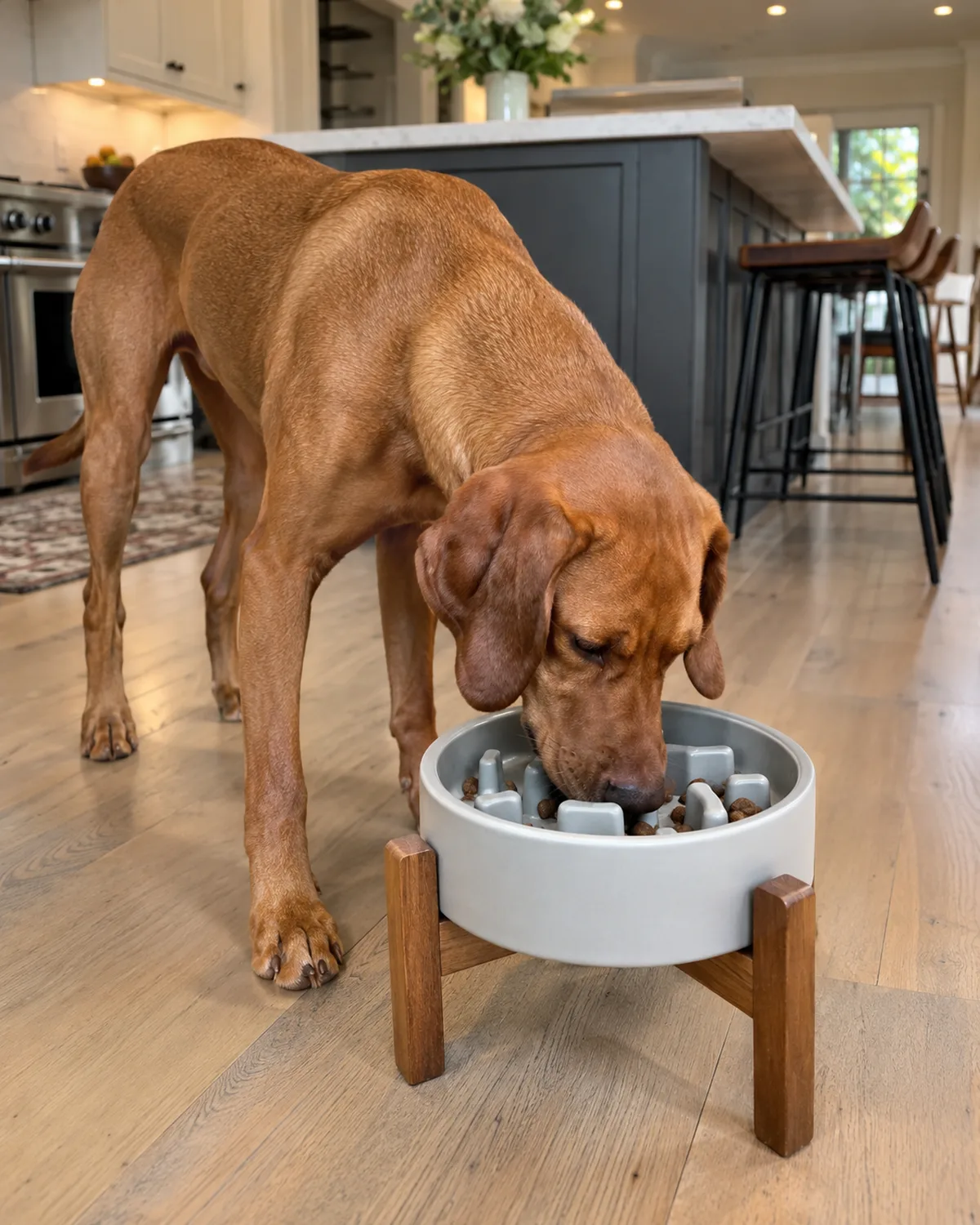
A slow feeder bowl has raised ridges or maze patterns inside that force the dog to work around the obstacles to reach the food. Integrating one into a raised stand gives you portion control and ergonomic height in one setup.
The trick is matching the stand height and hole size to the specific slow feeder bowl you own. Slow feeders tend to be wider and shallower than standard bowls, so the cutout needs to be wider — measure the bowl rim diameter and add a quarter inch.
- Pairing: use the slow feeder for the food side and a standard bowl for water — slow feeders make drinking frustrating
- Cleaning: slow feeder bowls need scrubbing between ridges daily, so make the drop-in fit easy to lift out
- Best for: dogs that eat too fast, dogs prone to bloat (though this does not replace veterinary advice — talk to your vet about bloat risk), dogs that finish meals in under sixty seconds
Pair this with the right feeding portions so the amount matches your dog's actual needs.
12. Corner-Fit Triangular Shelf
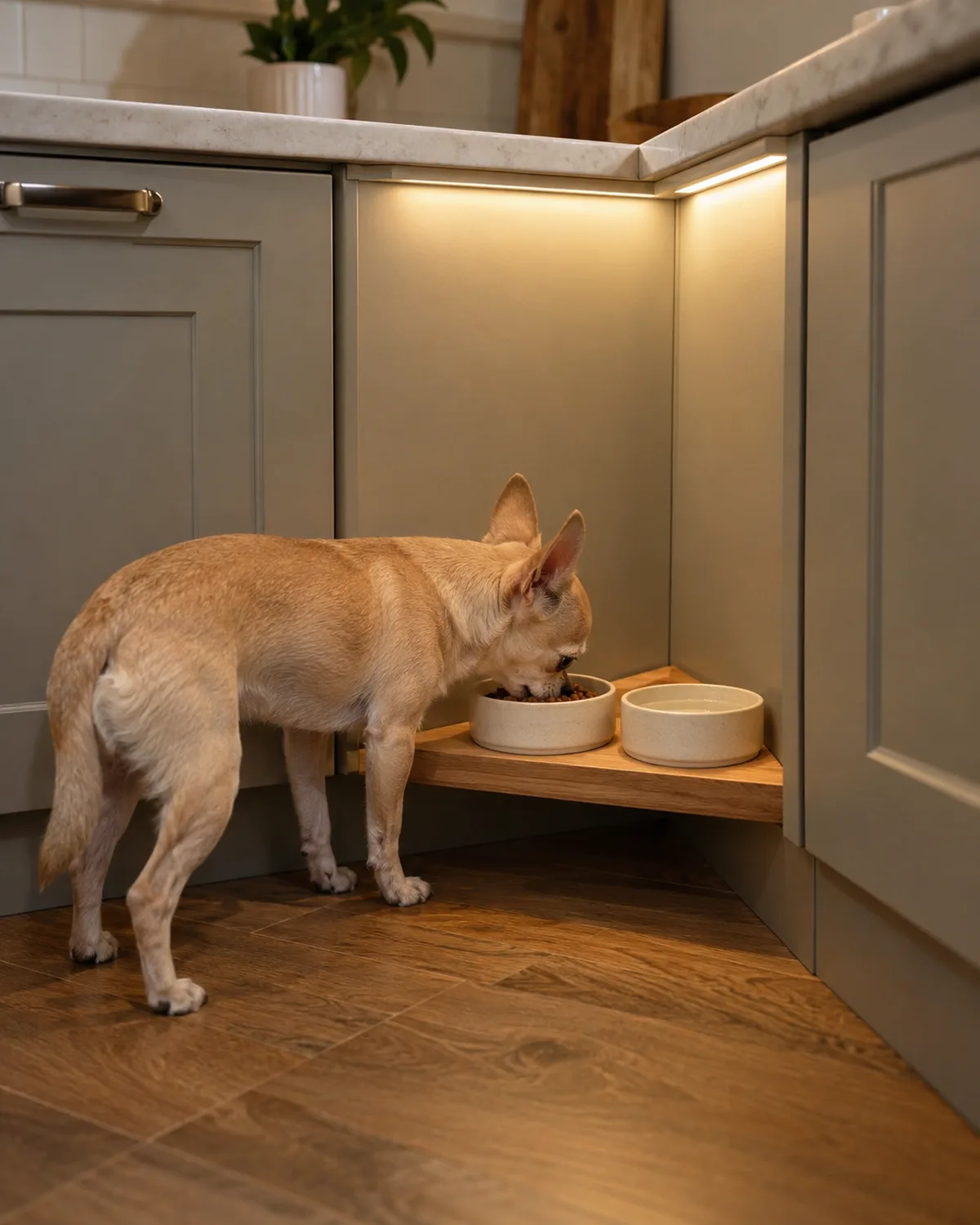
That empty corner where two cabinet runs meet is dead space in most kitchens. A triangular shelf cut to fit the angle turns it into a feeding station that takes up zero usable floor area.
Cut a right triangle from three-quarter-inch plywood with the two short sides matching the available wall space (usually twelve to sixteen inches). Mount it on a pair of corner brackets at eating height, cut one or two bowl holes, and finish with paint or stain.
- One bowl or two: a tight corner may only fit one bowl — use it for food and keep a separate water bowl on a mat nearby
- Bracket strength: use heavy-duty L-brackets rated for at least thirty pounds, screwed into studs
- Best for: galley kitchens, narrow corner spaces, small dogs that eat in the kitchen corner anyway
This works especially well for dogs that already go to the corner to eat. You are just formalizing what they chose.
Save this for later
16 Dog Feeding Station Ideas
- 1Raised Wooden PlatformEmbed two bowls at elbow height to reduce neck strain.
- 2Pull-Out Cabinet DrawerHide bowls inside a lower cabinet on full-extension slides.
- 3Wall-Mounted Fold-DownSwing a shelf down for meals, fold it up to clear the floor.
- 4Repurposed DresserCut bowl holes in a thrift-store dresser and store kibble below.
- 5Built-In Mudroom NookTile a recessed nook into a mudroom cabinet run.
- 6Industrial Pipe StandThread black iron pipes into flanges under a reclaimed wood plank.
- 7Farmhouse Crate StationBuild a slatted crate with a kibble shelf below the bowls.
- 8Silicone Mat ComboSet bowls on a raised-edge silicone mat — no tools needed.
- 9Tilted Bowl HolderAngle the bowl 15 degrees so food slides to the front edge.
- 10Outdoor Weatherproof PostMount stainless bowls on a treated-wood post with a rain canopy.
- 11Slow Feeder StandDrop a maze-ridged slow feeder into a raised wooden stand.
- 12Corner Triangular ShelfFill dead corner space with a triangle shelf at eating height.
- 13Rolling Cart StationPut bowls on a wheeled cart you can roll between rooms.
- 14Multi-Pet Tiered FeederStack two levels so dogs and cats eat at different heights.
- 15Concrete Block StandSet two cinder blocks under a wood plank for a near-free stand.
- 16Name-Engraved StationLaser-engrave your dog's name on a custom wood feeding station.
13. Rolling Cart Feeding Station
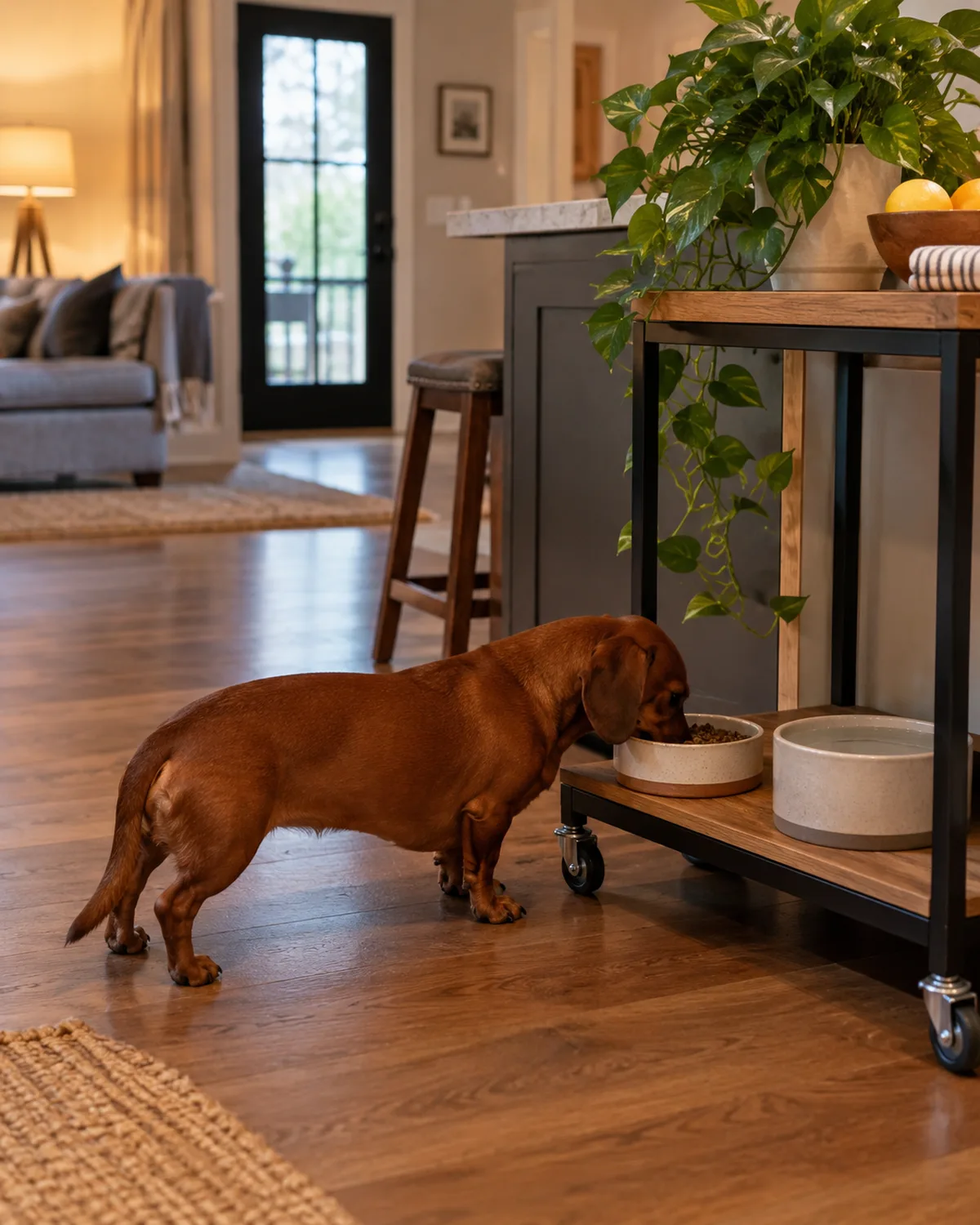
A small utility cart on casters turns a feeding station into something portable. Roll it to the kitchen for breakfast, to the living room in the evening, or out of the way when you need the floor space for mopping.
Use a two-tier bar cart or a small kitchen island cart. Set two bowls on the top shelf, store kibble, treats, and cleaning supplies on the bottom shelf, and lock the wheels when the dog is eating so the cart does not roll away mid-meal.
- Wheel locks are essential: a cart that rolls when a dog pushes into it spills water everywhere
- Top surface: add a silicone mat or a shallow lip tray on top to keep bowls from sliding
- Best for: people who feed dogs in different rooms, multi-floor homes, shared spaces where the station needs to move for cleaning
This doubles as a feeding station and a pet supply organizer. Keep everything in one spot and wheel it wherever you need it.
14. Dog-and-Cat Tiered Feeder
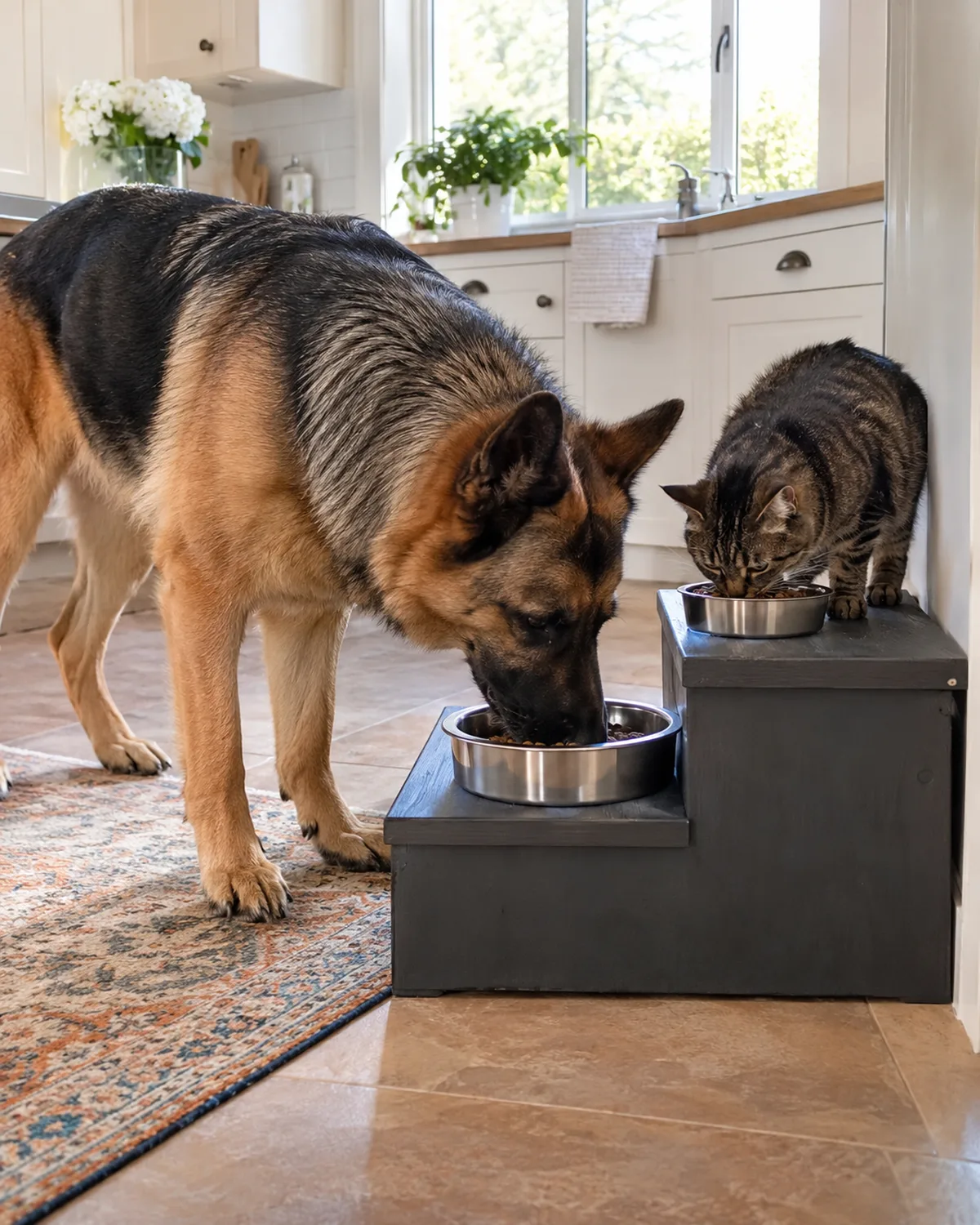
If you have both dogs and cats, a tiered feeder solves the problem of dogs eating cat food (and cats avoiding the floor when a large dog is nearby). Build a two-step platform — the lower step holds the dog bowl at the right height, the upper step holds the cat bowl out of the dog's easy reach.
The height difference does not need to be dramatic. Six to eight inches between levels is usually enough to discourage the dog from reaching the cat bowl while keeping the cat comfortable.
- Cat access: make sure the upper level is easy for the cat to jump onto — add a small ramp or step if your cat is older
- Separation distance: position the two levels at least twelve inches apart horizontally so neither animal crowds the other while eating
- Best for: multi-pet homes, dogs that steal cat food, cats that feel unsafe eating at floor level
This is one of the few feeding station ideas that solves a behavioral problem and a design problem at the same time. Separate feeding times and separate heights together stop most food-stealing.
15. Concrete Block Minimalist Stand
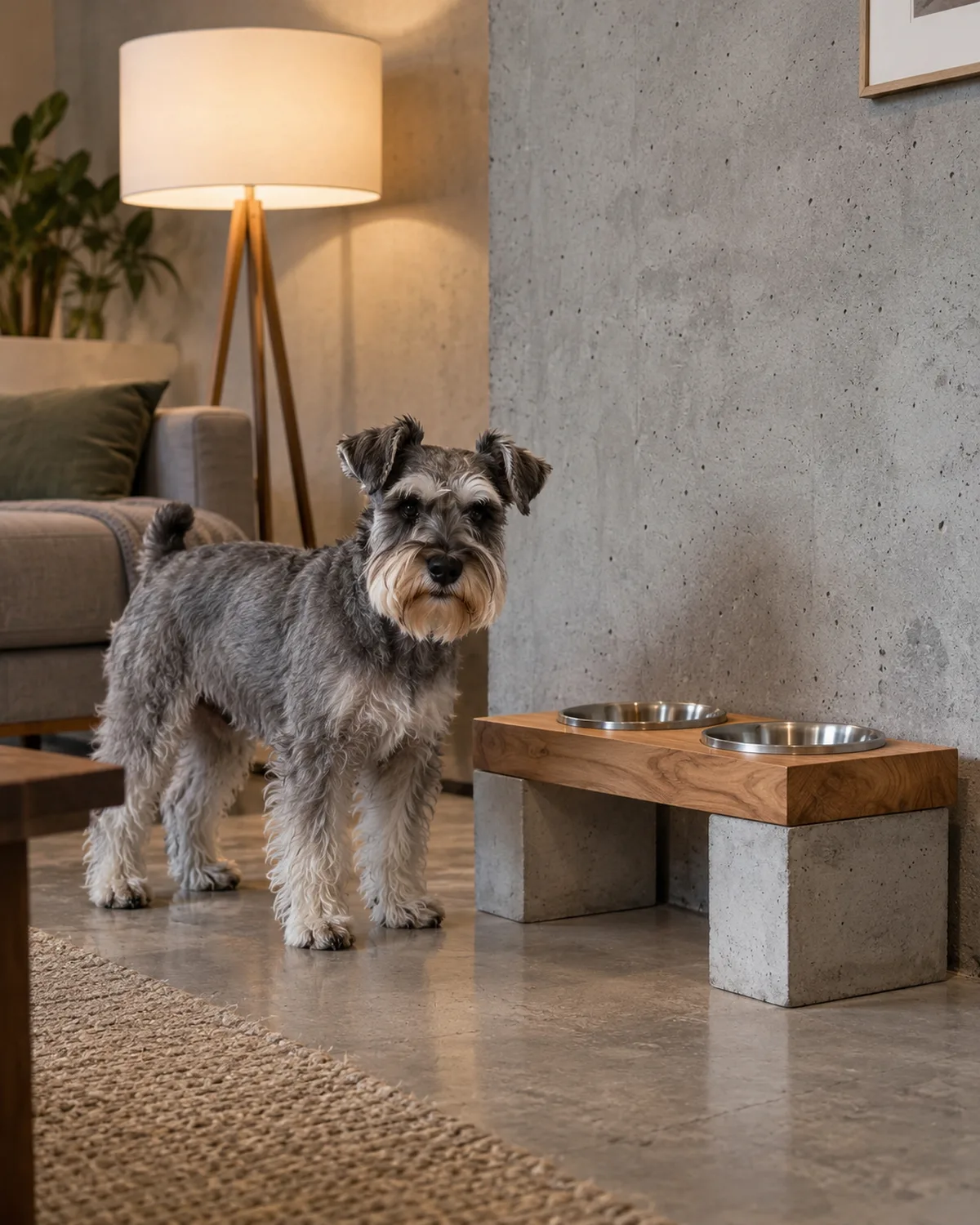
Two standard cinder blocks and a piece of wood make a feeding station that costs under ten dollars. Stand the blocks on their ends about eighteen inches apart, lay a wood plank across the top, and cut two bowl holes. That is the entire build.
The raw concrete look works in modern, industrial, or minimalist spaces. Paint the blocks matte white or charcoal if you want a cleaner finish.
- Stability: cinder blocks weigh about thirty pounds each, so the stand is not going anywhere
- Plank thickness: use three-quarter-inch plywood or a solid wood board — anything thinner will flex under the weight of full bowls
- Best for: budget builds, minimalist decor, temporary setups, dorm rooms or first apartments
Sand the concrete edges with coarse sandpaper to remove any rough spots your dog might brush against. Seal the plank with polyurethane to protect against water damage.
16. Personalized Name-Engraved Station
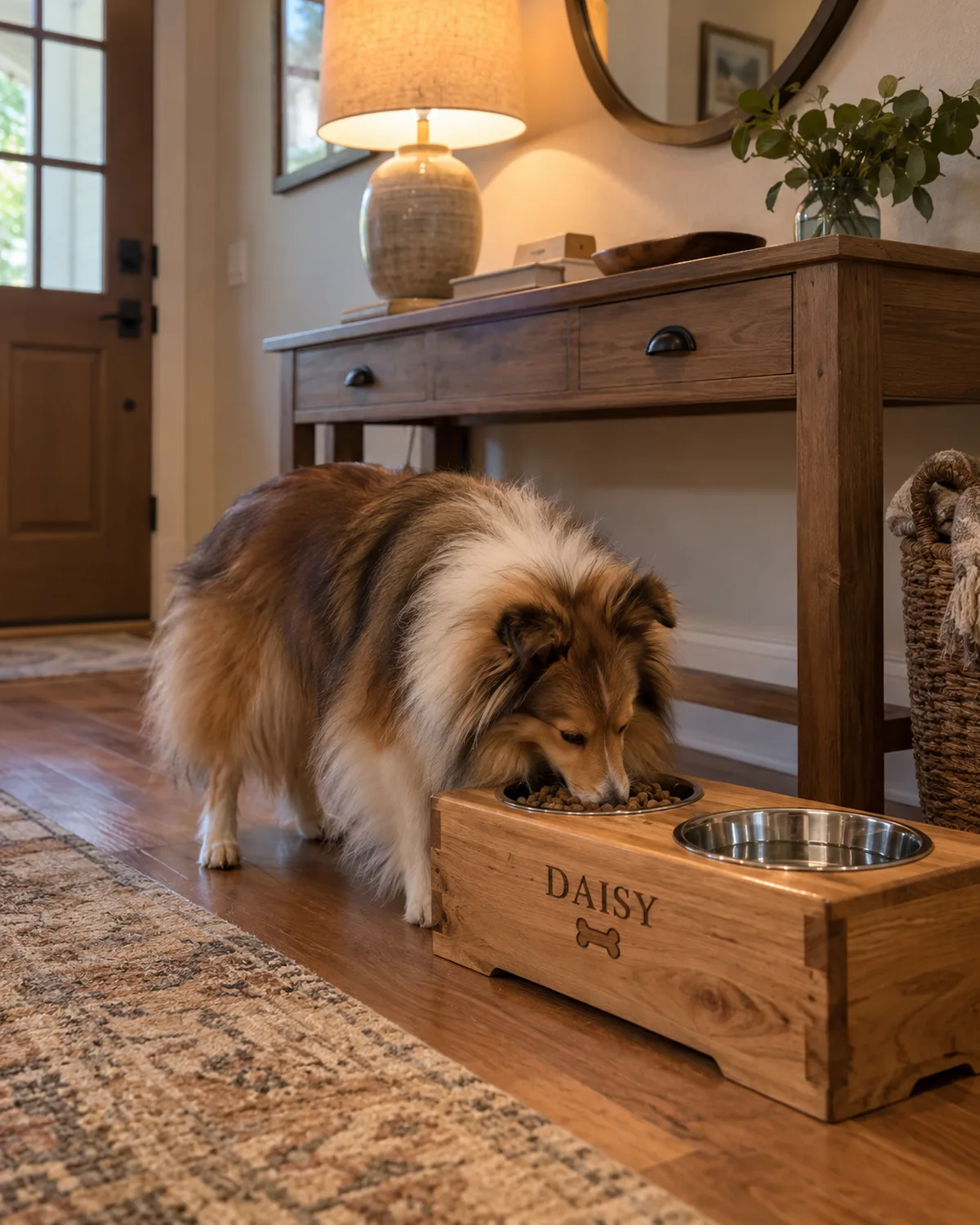
A feeding station with your dog's name laser-engraved on the front panel turns a functional piece into something personal. Start with any raised platform design from this list — the wooden platform, farmhouse crate, or concrete block stand all work — and add a name panel on the front face.
You can order laser engraving online for under twenty dollars if you send the dimensions and the file. Or use a wood-burning pen to hand-engrave the name yourself for a more rustic look.
- Font choice: simple sans-serif or serif fonts engrave cleanly — script fonts can lose detail on smaller panels
- Add-ons: a small bone, paw print, or heart icon beside the name adds a finishing touch without cluttering the design
- Best for: gift giving (new puppy gift, adoption day present), memorial stations for dogs that have passed, anyone who wants a one-of-a-kind piece
This makes a thoughtful gift for a new puppy owner — practical and personal at the same time. Pair it with a bag of the puppy's food and you have a complete welcome kit.
P
About the author
Jess Calloway
Jess Calloway edits Pawliqa, where she shares dog care, grooming, training, and new-owner tips — plus DIY and pet-friendly home ideas — for anyone who wants a happy, well-cared-for dog. As a dog mom to three very different dogs, she writes the honest, tested version of what actually works. Every guide is image-led and reviewed for clarity, usefulness, image accuracy, and Pinterest-to-page alignment before it goes live. Visit the About page.
Frequently Asked Questions
What height should a dog feeding station be?
Measure from the floor to the top of your dog's front leg at the elbow joint. Subtract two to three inches from that number and build the station to that height. A station that is too tall forces the dog to eat with a raised head, and one that is too low offers no benefit over floor-level bowls.
Are elevated feeding stations bad for dogs?
Elevated stations are generally beneficial for large breeds and senior dogs because they reduce neck and joint strain. There has been debate about whether raised bowls increase bloat risk in deep-chested breeds. Talk to your veterinarian if your dog is a breed prone to bloat before switching to an elevated station.
What material is best for a dog feeding station?
Sealed hardwood and stainless steel are the most durable and easiest to sanitize. Avoid unsealed wood (it absorbs water and grows bacteria), plastic (it scratches and harbors bacteria in the grooves), and ceramic (it chips and can crack in cold temperatures). Whatever you build, make sure the bowls are removable for daily washing.
How do I keep my dog's feeding station clean?
Wash the bowls with hot soapy water daily. Wipe the station surface after each meal to remove food residue and water spots. Deep-clean the entire station once a week by removing the bowls, spraying the surface with a pet-safe cleaner, wiping it dry, and checking for any damage to the finish or seal.
Can I use a dog feeding station for water only?
Yes. A raised water station near the back door or in a mudroom gives your dog constant access to clean water without a bowl sitting in the middle of the kitchen floor. Use the silicone mat combo or the corner shelf for a dedicated water-only spot and keep the food station in the kitchen.