My youngest dog spent her first week alone chewing through two pairs of shoes and one power cord before I figured out that leaving her with nothing to do was the problem, not her personality.
Most dogs sleep twelve to fourteen hours a day, but those waking hours need structure. A bored dog does not sit quietly and reflect on life — it finds its own entertainment, and that entertainment usually involves your furniture.
Here are fourteen ways to keep your dog happily occupied while you are at work.
Your work-day enrichment plan
14 ways to keep your dog busy while you are at work
From morning exercise and frozen KONGs to puzzle feeders, window perches, and midday dog walkers, these fourteen ideas cover every hour of your workday so your dog stays calm and entertained.
1. Tire Your Dog Out Before You Leave
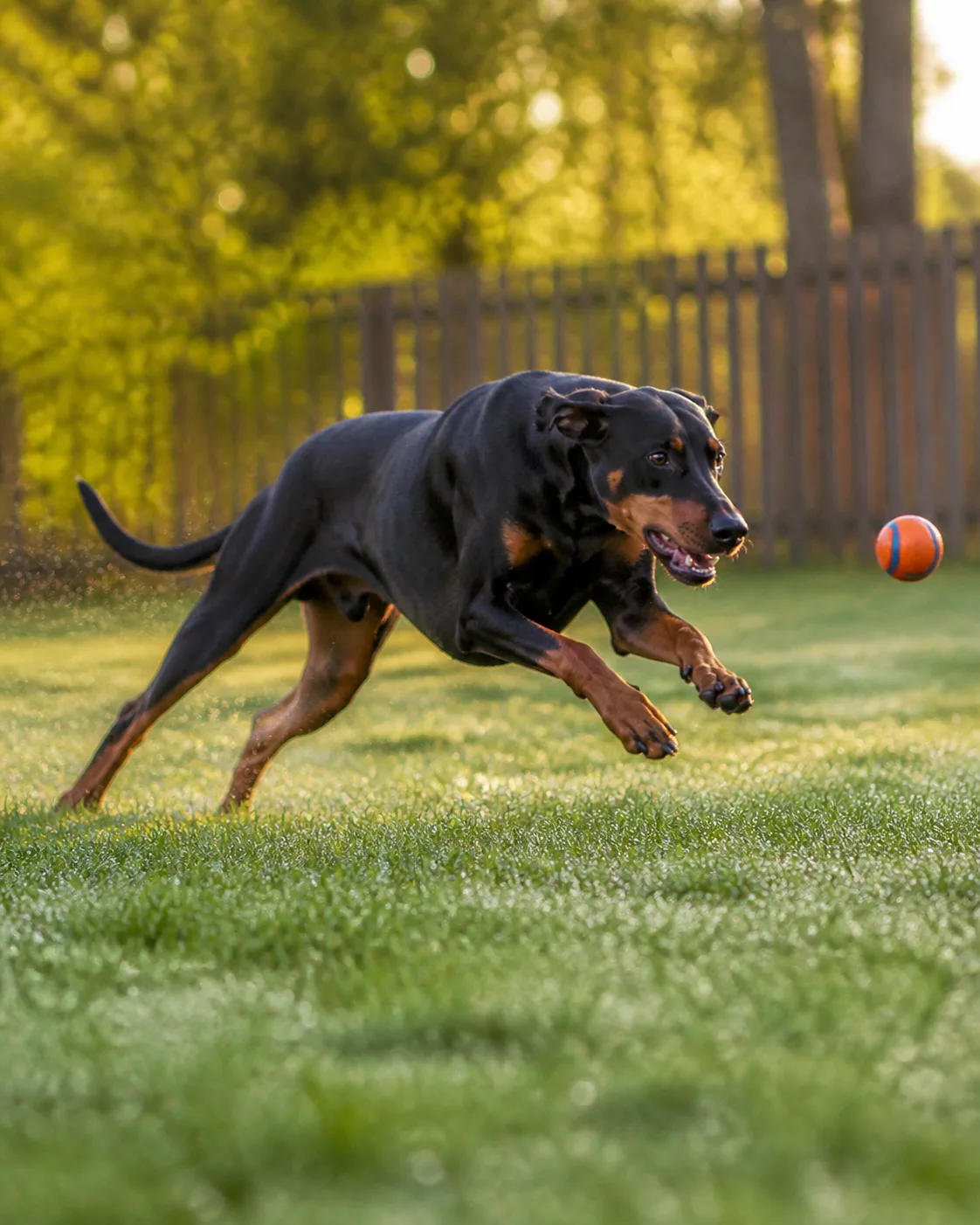
The single best thing you can do before walking out the door is burn off your dog's morning energy. A tired dog sleeps instead of looking for trouble.
Fifteen minutes of high-intensity exercise beats forty minutes of slow walking. Fetch in the backyard, a fast-paced jog around the block, or a tug session in the hallway all count. The goal is panting, not leisurely sniffing.
If mornings are tight, wake up twenty minutes earlier. That tradeoff pays for itself in furniture you do not have to replace.
- Aim for at least fifteen minutes of hard exercise, not just a bathroom walk
- Fetch and tug burn energy faster than leash walking
- End the session ten minutes before you leave so your dog has time to settle
- Adjust intensity based on age and size — a puppy needs sprints, a senior needs a brisk walk
The amount of exercise your dog actually needs varies by size and energy level. If you are not sure where to start, this guide on how much exercise your dog needs breaks it down by type and age.
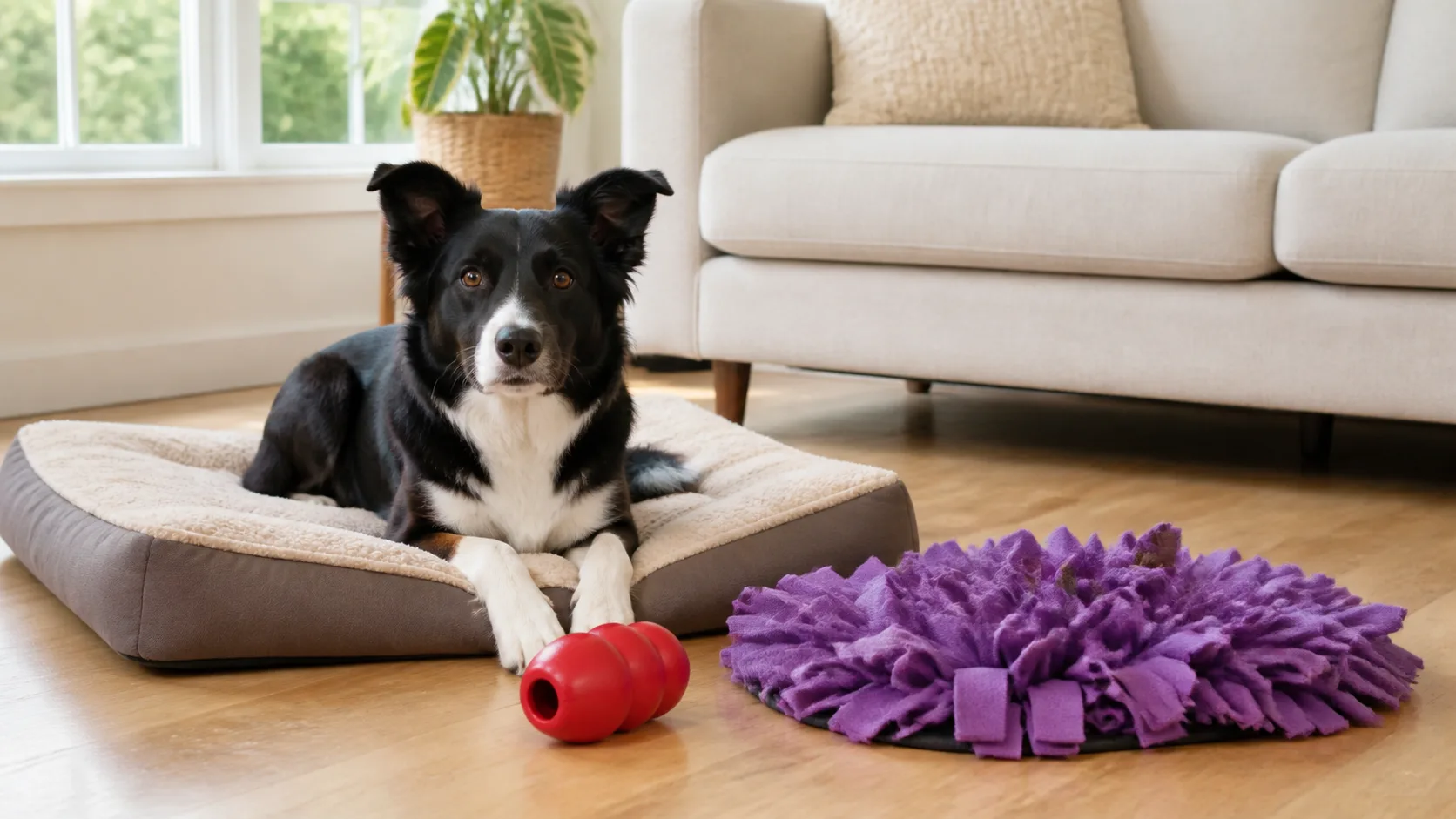
2. Leave a Frozen KONG Stuffed With Layers
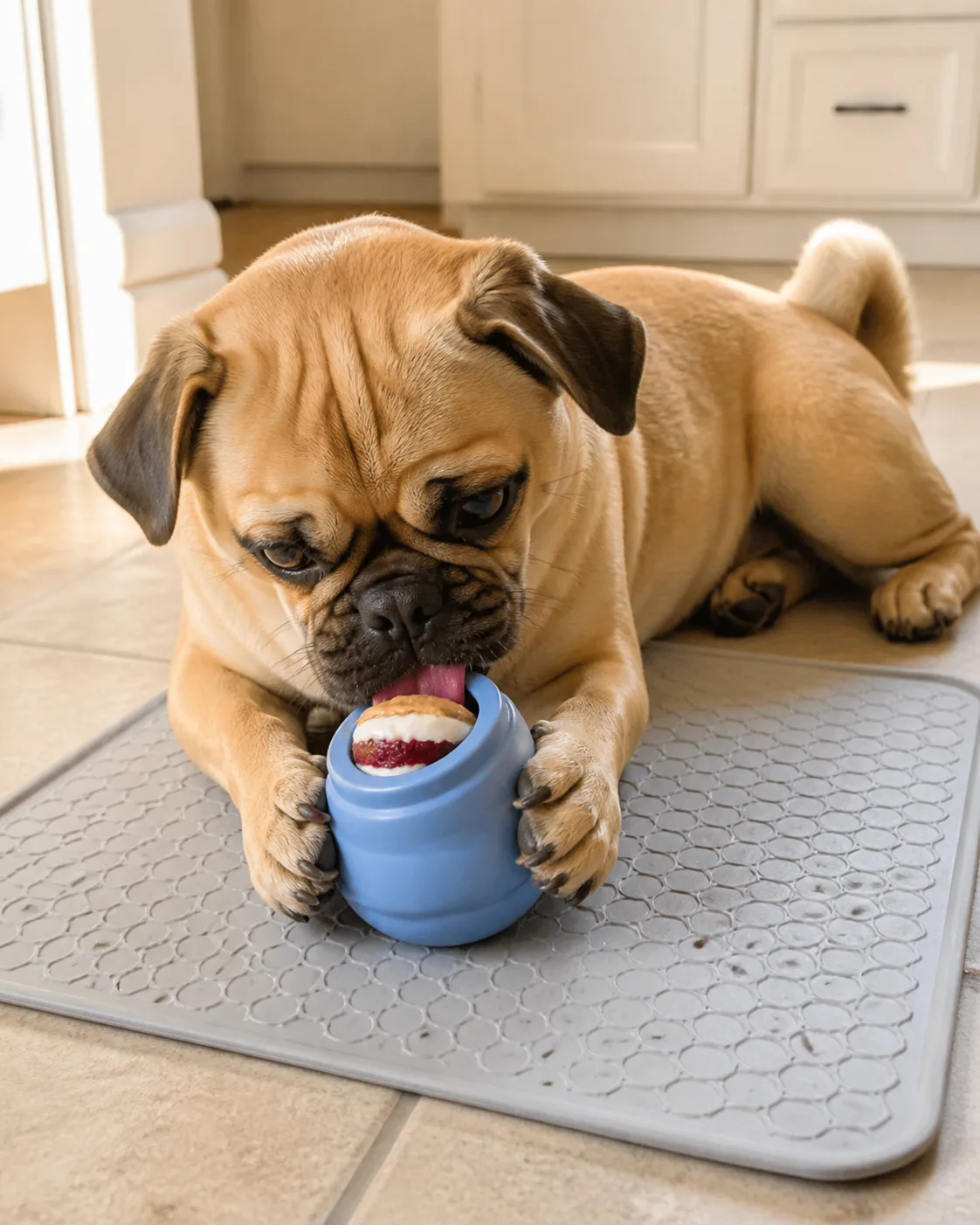
A frozen KONG is the gold standard for alone-time enrichment because it keeps dogs busy during the exact window when separation stress peaks — the first thirty to forty minutes after you leave.
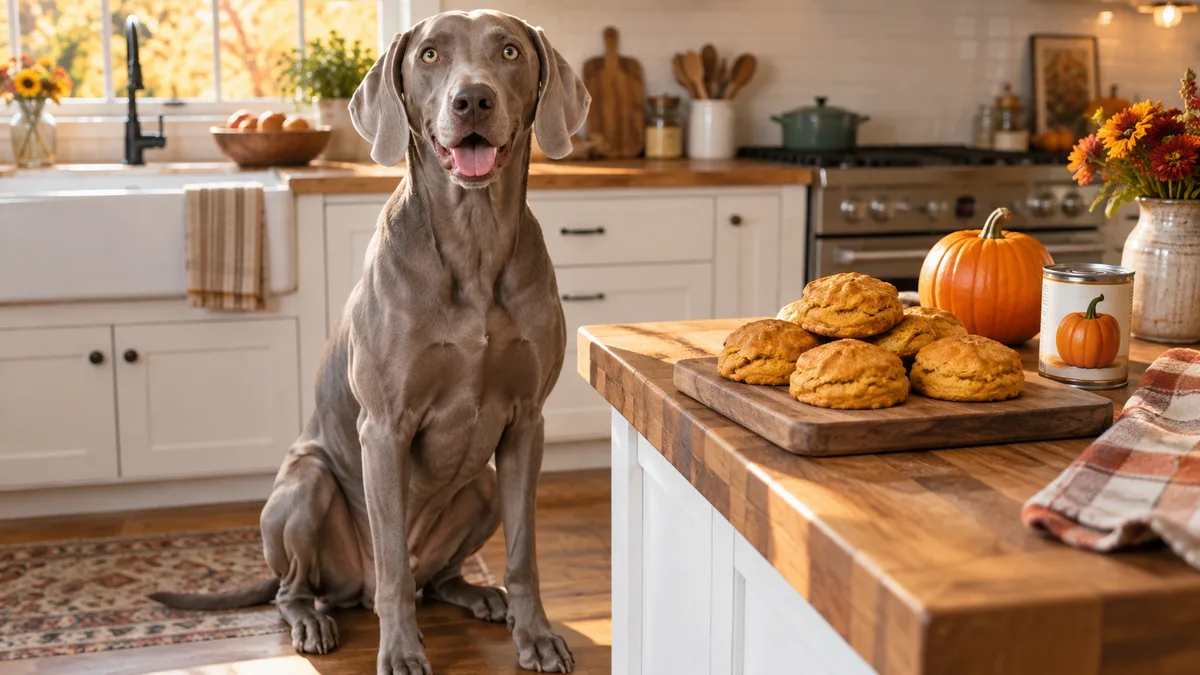
The trick is layering. Spread peanut butter across the bottom to seal it, add a mix of kibble and pumpkin puree in the middle, top with a few small treats, then freeze the whole thing overnight. Frozen solid, it takes twenty to forty minutes of focused licking to get through.
Batch prep makes this sustainable. Make five KONGs on Sunday night, freeze them all, and grab one each morning. By Friday you are restocking, and the routine is effortless.
- Layer peanut butter, kibble, pumpkin puree, and treats for varied texture
- Freeze overnight — a partially frozen KONG finishes in five minutes
- Make a full week of KONGs in one batch to keep the habit easy
- Give the KONG right as you pick up your keys so your dog links leaving with something good
3. Set Up a Snuffle Mat for Nose Work
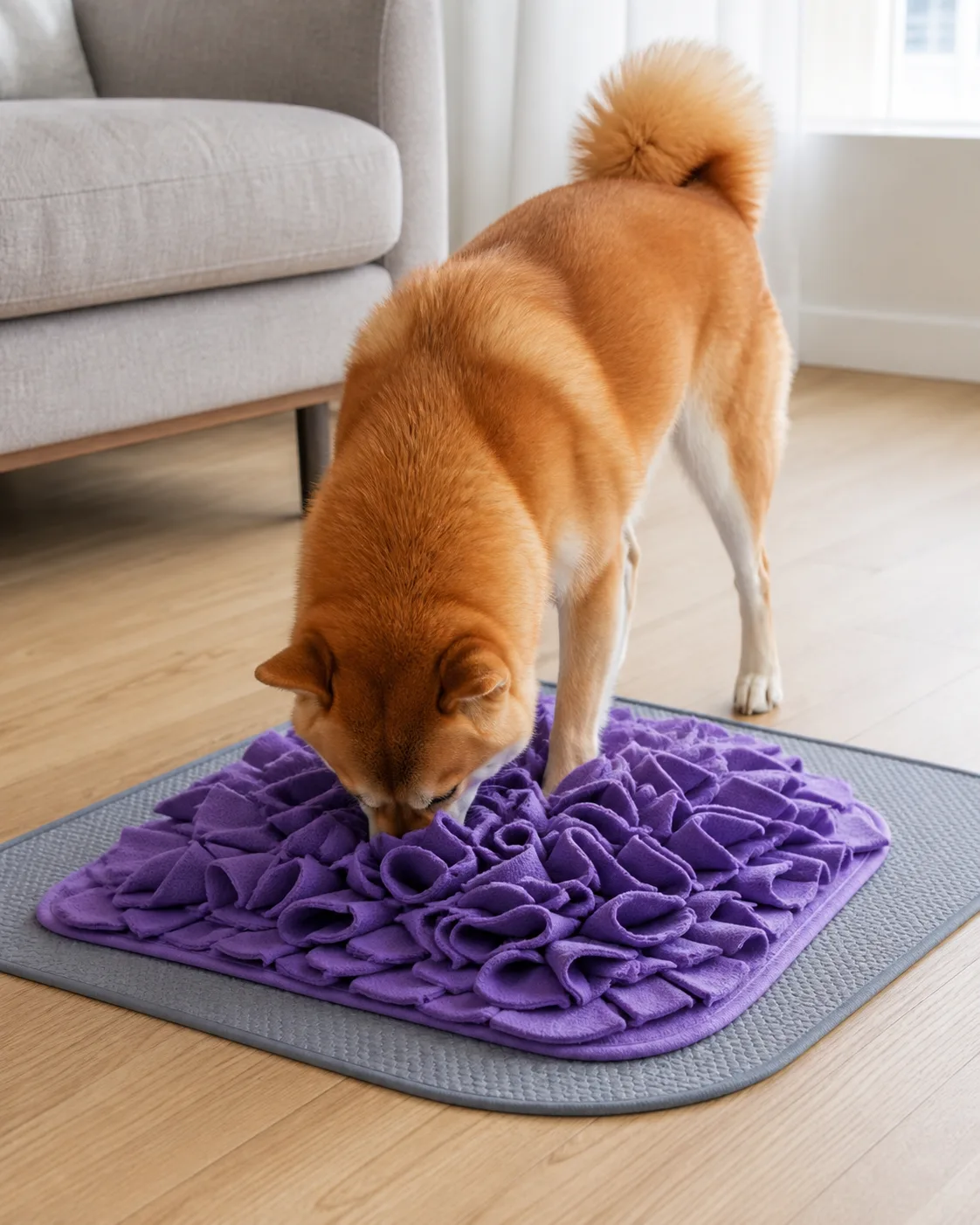
A snuffle mat turns breakfast into a fifteen-minute scavenger hunt. Scatter a portion of your dog's daily kibble into the fabric folds and let their nose do the rest.
Fifteen minutes of focused sniffing tires a dog's brain as much as a full hour of walking. That mental fatigue translates directly into calm napping once the mat is cleaned out.
Pick a mat with a non-slip rubber backing so your dog does not shove it across the floor. Machine-washable fabric matters because those folds collect drool and crumbs fast.
- Use a portion of daily food, not extra treats, to avoid overfeeding
- Start with kibble sitting on top of the folds, then gradually tuck deeper
- Wash the mat weekly to prevent buildup in the fabric layers
- Set it up right before you leave so your dog watches you hide the food
Do these before you leave tomorrow
3 Quick Wins You Can Start Right Now
You do not need to set up all fourteen ideas at once. Start with these three tomorrow morning and build from there.
Freeze a KONG tonightPeanut butter on the bottom, kibble and pumpkin in the middle, freeze overnight. Hand it to your dog as you walk out the door.
Hide five treatsTuck five training treats in easy-to-find spots before you leave. Your dog gets a thirty-minute treasure hunt for zero effort on your part.
Play musicQueue a classical or reggae playlist on low volume ten minutes before you go. It fills the silence and masks outdoor noises that trigger barking.
4. Rotate Toys on a Weekly Schedule
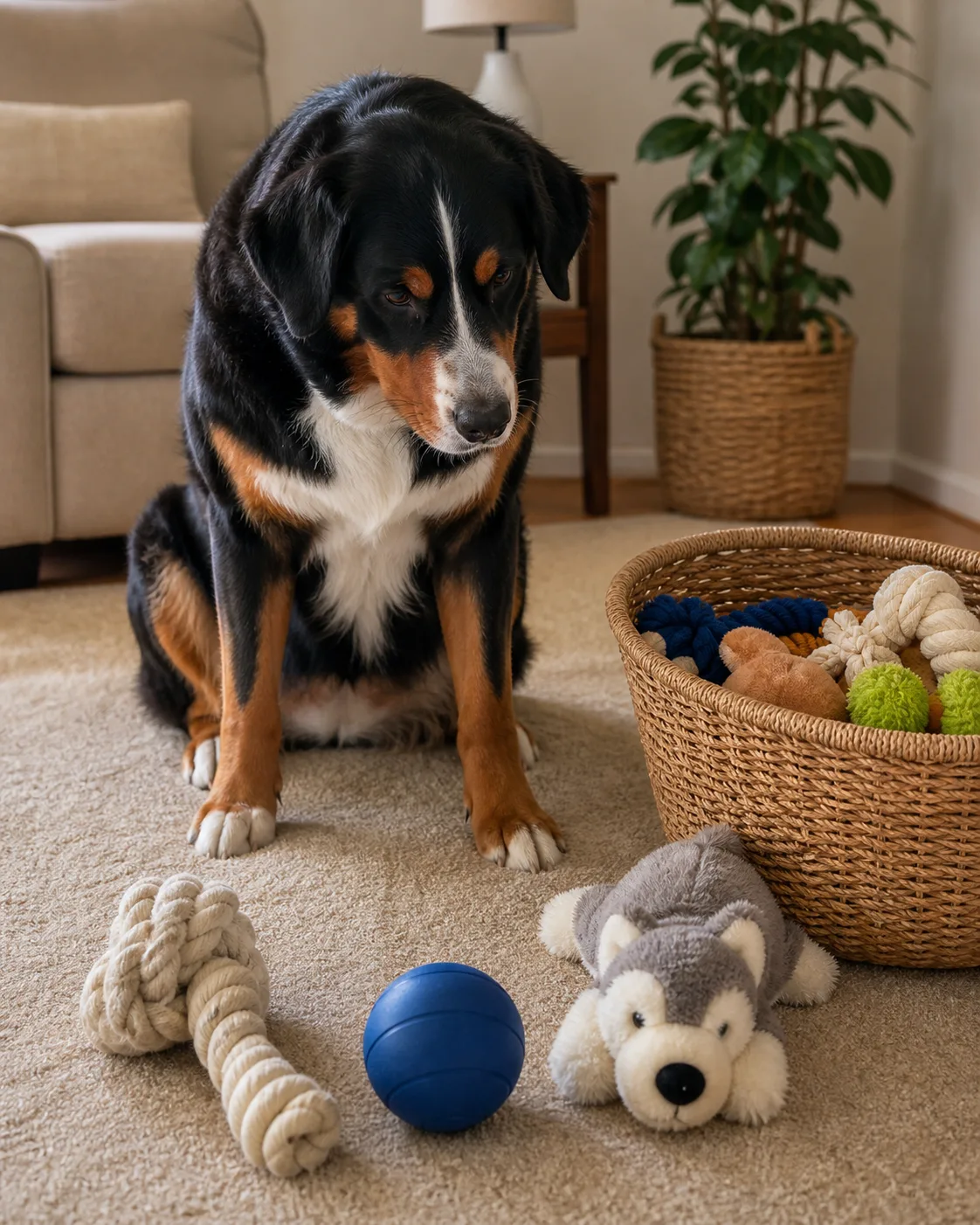
Dogs lose interest in toys the same way kids lose interest in birthday presents: fast. A tennis ball that was thrilling on Monday is invisible by Thursday.
The fix is not buying more toys. It is hiding half of them. Keep three or four toys out at a time and stash the rest in a closet. Every Sunday evening, swap the sets. The toys that reappear after a week feel brand new again.
This costs nothing and multiplies the value of every toy you already own.
- Divide your dog's toys into two or three groups
- Swap groups every week on the same day so it becomes routine
- Include a mix of textures in each group — something squeaky, something chewable, something soft
- Discard toys with loose parts, torn seams, or small pieces that could be swallowed
5. Hide Treats Around the House Before You Go
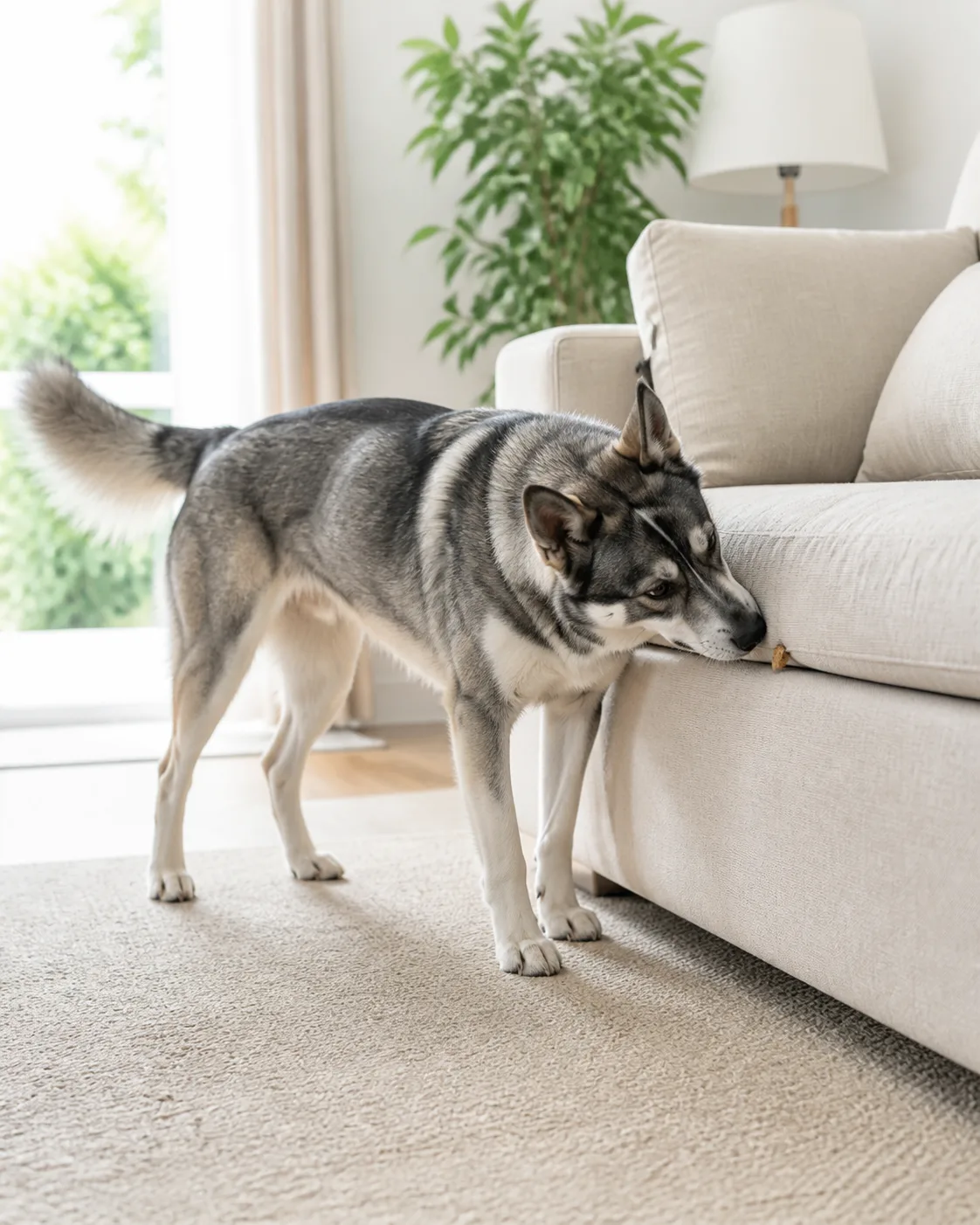
Turn your living room into a treasure hunt. Before you leave, tuck ten to fifteen small training treats in spots your dog can reach safely: behind a table leg, under a sofa cushion edge, on a low shelf, beside a shoe rack.
Your dog will spend thirty to sixty minutes methodically searching every corner with their nose. Once they have found the last treat, the mental effort will likely send them straight to their bed for a nap.
Start easy. Leave a few treats in plain sight so your dog understands the game. Over the following weeks, gradually hide them in harder spots.
- Use small, low-calorie treats to avoid overfeeding across fifteen hiding spots
- Avoid high shelves or behind heavy objects your dog could knock over
- Change hiding spots regularly so your dog cannot run the same circuit every day
- Skip this game if you have multiple dogs where resource guarding is an issue
6. Invest in a Puzzle Feeder That Matches Your Dog's Level
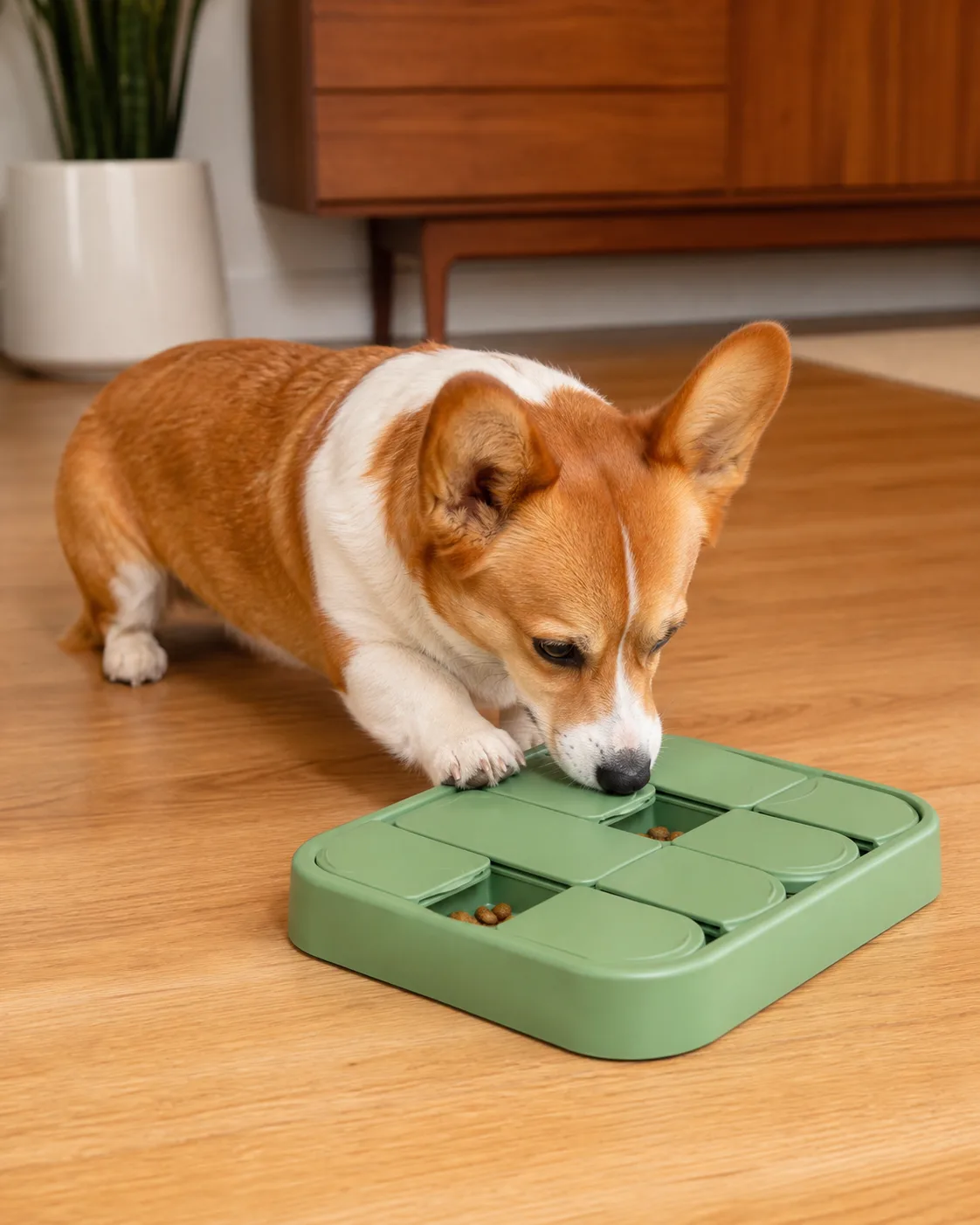
Puzzle feeders come in three rough tiers. Beginner puzzles have simple sliding lids. Intermediate ones use flip covers or spinning discs. Advanced feeders combine drawers, levers, and compartments that require multi-step problem solving.
Picking the wrong level defeats the purpose. Too easy and your dog finishes in thirty seconds, walks away bored. Too hard and your dog gives up, gets frustrated, and may chew the puzzle apart instead of solving it.
Start with a beginner feeder. If your dog clears it in under five minutes consistently, move up. The sweet spot is ten to fifteen minutes of engaged problem-solving.
- Start with level one regardless of how smart you think your dog is
- Supervise the first few sessions to make sure your dog solves it, not destroys it
- Rotate between two or three puzzles the same way you rotate toys
- Clean puzzle feeders after each use — trapped food residue attracts bacteria
7. Create a Window Perch for Passive Entertainment
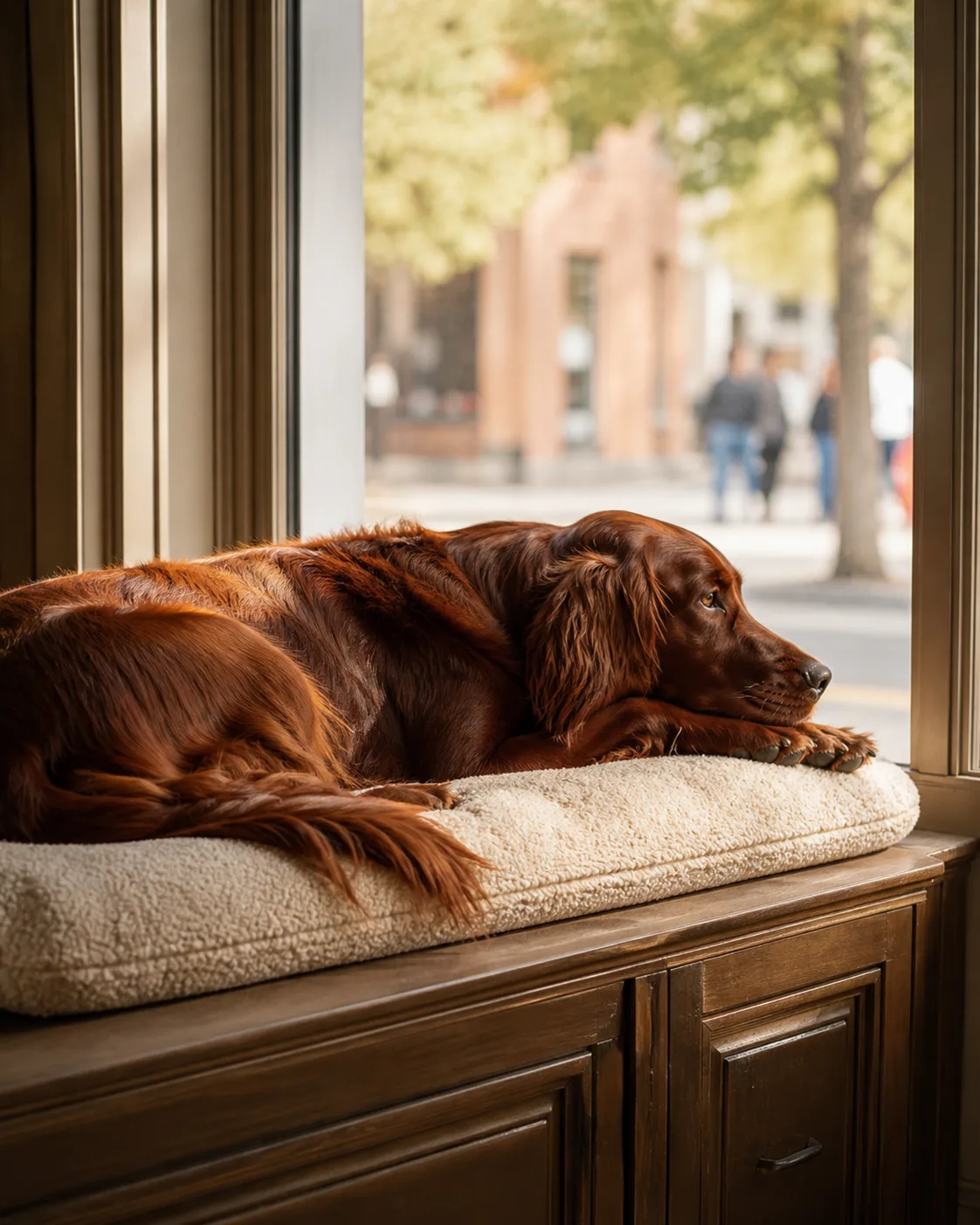
A dog bed on a low table next to a window turns passive watching into hours of low-key enrichment. Pedestrians, squirrels, delivery trucks, and blowing leaves all provide visual stimulation that costs nothing and requires zero setup once the perch is in place.
Choose a window that faces a moderately active scene. A busy street works. A quiet backyard with occasional wildlife works. What does not work is a window directly facing another yard where a dog barks constantly — that creates stress, not entertainment.
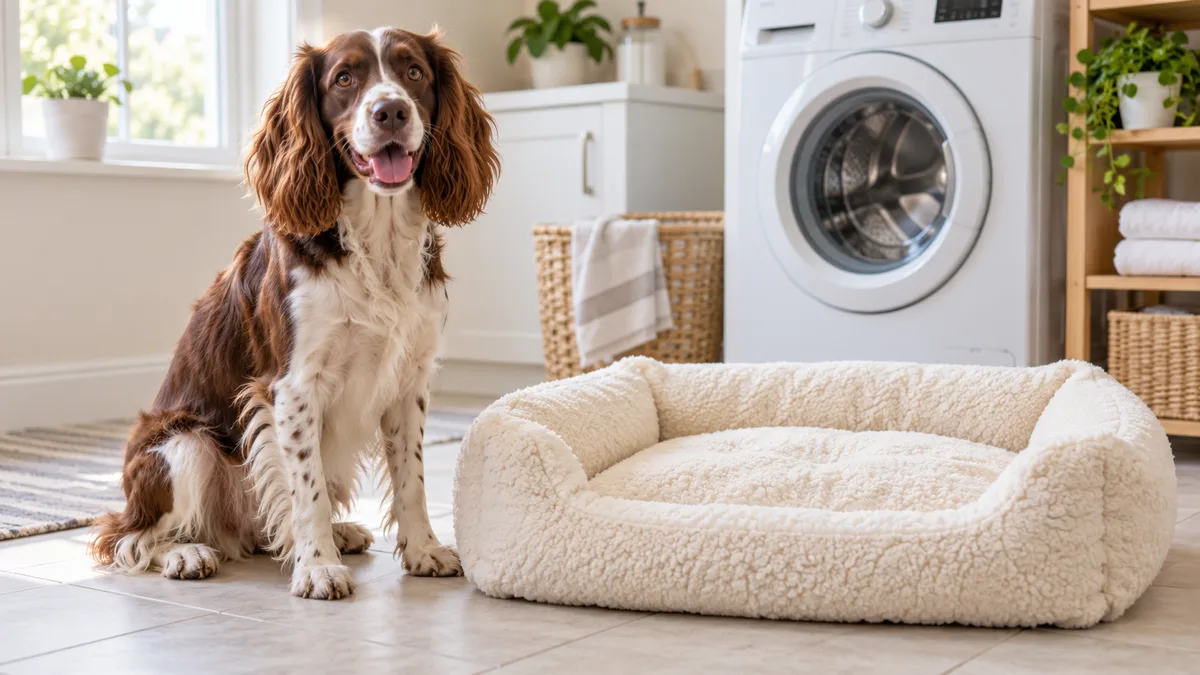
If your windowsill is too narrow, a sturdy storage bench or a low bookshelf pushed against the wall works fine. Add a non-slip mat or bolster bed on top so your dog is comfortable lying there for stretches.
- Pick a window with moderate activity, not one facing another dog
- Use a stable surface that does not wobble when your dog jumps up
- A bolster bed prevents your dog from pressing their face against glass all day
- Close blinds on that window if your dog starts barking at everything outside

Written by Jess Calloway
Dog mom to three very different dogs. My oldest is fine alone with a window and a bully stick. My youngest needs the full rotation — KONG, snuffle mat, hidden treats, and music — or she redecorates. Every idea in this guide is something I have tested on my own pack during real workdays.
8. Play Calming Music or Dog-Specific Audio
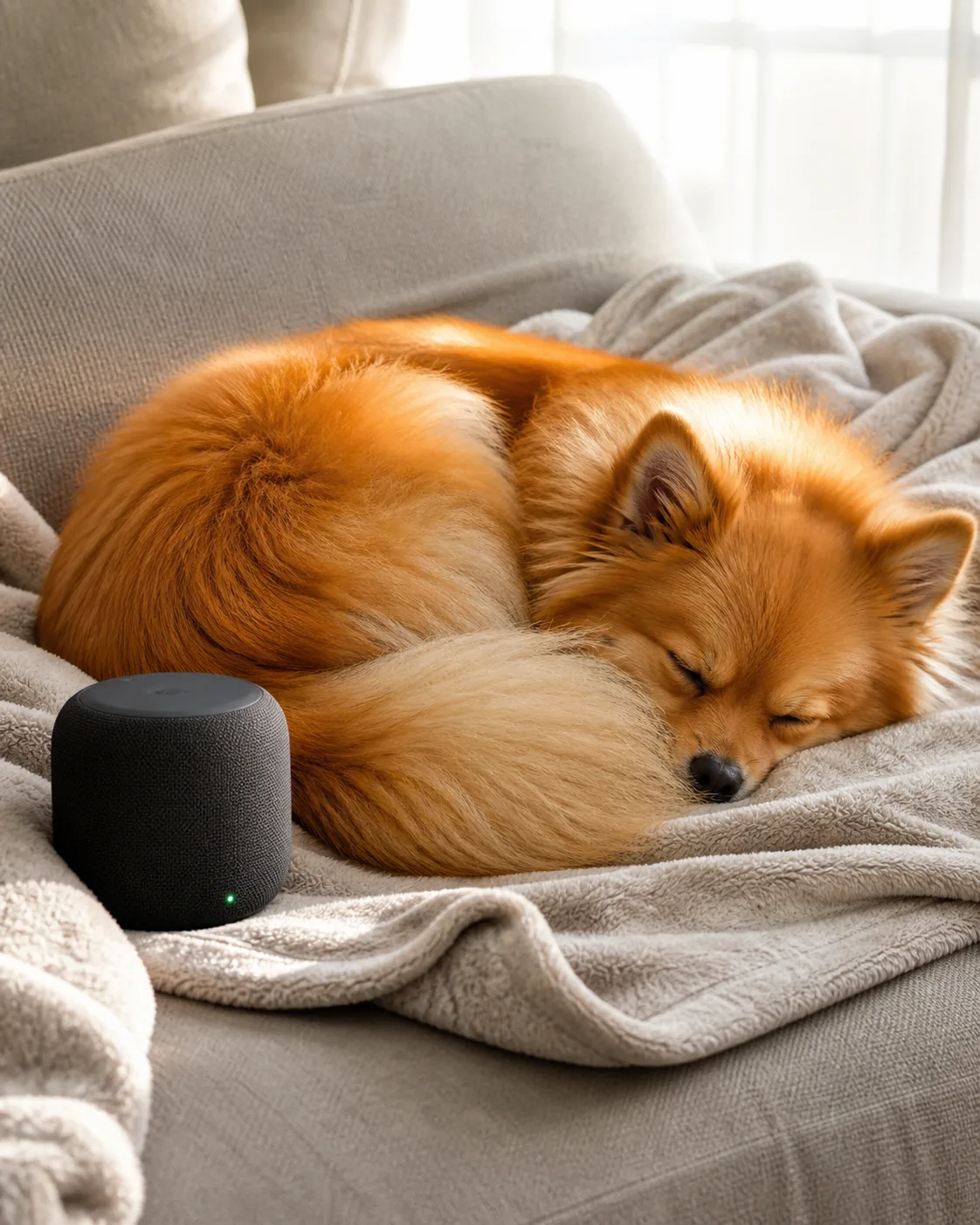
Studies on shelter dogs showed that classical music and reggae lowered heart rates and cortisol levels compared to silence. The effect held for dogs in home environments too — background audio creates an ambient layer that masks startling outdoor noises and fills the silence of an empty house.
Turn the music on ten minutes before you leave so it is already part of the background when you walk out. Keep the volume below conversation level. Set a four-to-six-hour timer so it does not play all day.
Dog-specific playlists on YouTube and Spotify use frequency tuning designed for canine hearing ranges. They are free and worth trying before spending money on dedicated devices.
- Start music before you leave, not as you walk out the door
- Keep volume low — dogs hear far better than we do
- Classical and reggae showed the strongest calming effects in studies
- Avoid talk radio or podcasts with sudden loud voices that can startle
9. Use an Automatic Treat Dispenser on a Timer
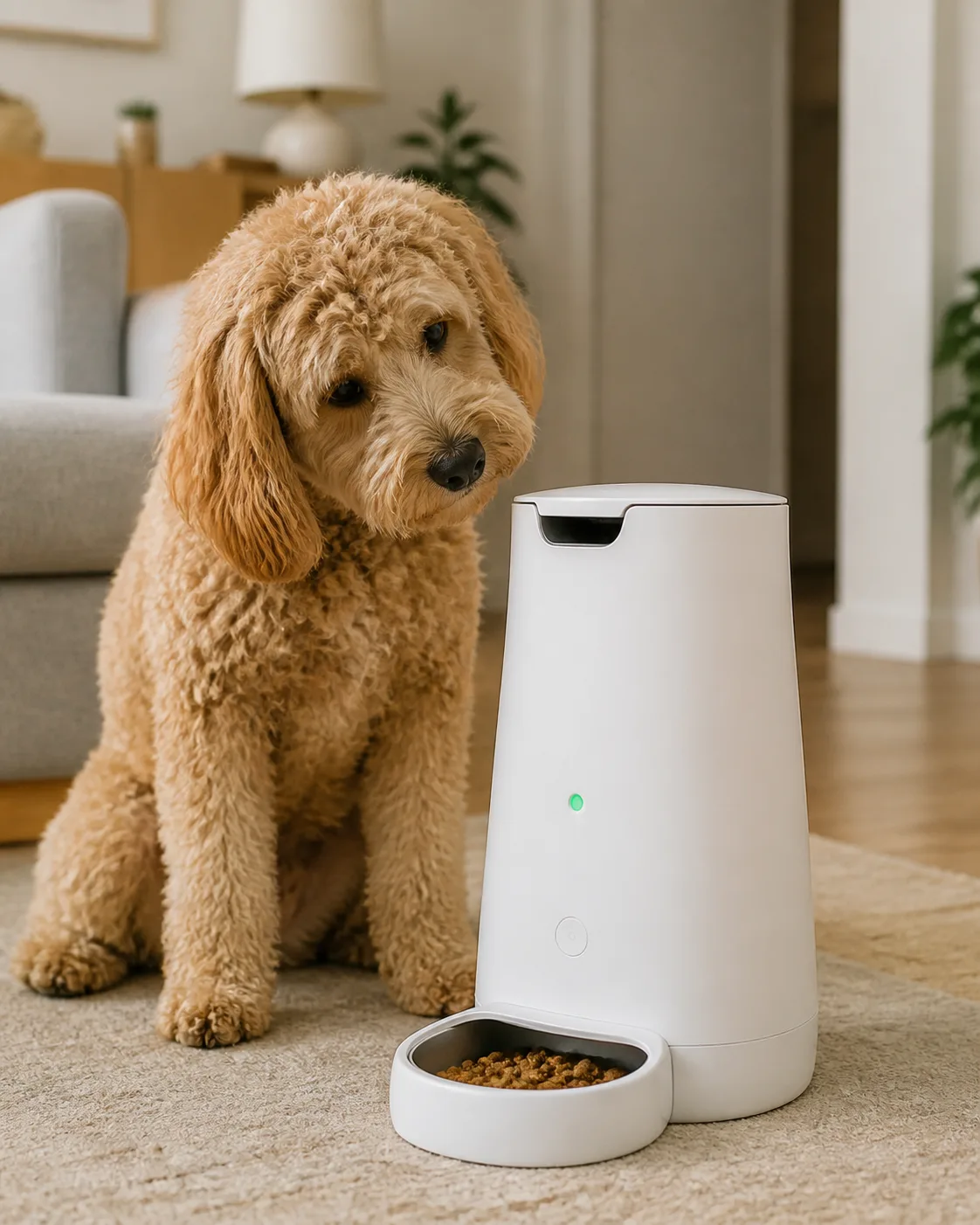
An automatic treat dispenser drops a small treat every two to three hours throughout the day. Your dog learns that good things happen on a predictable schedule even when no human is home, and predictability is one of the strongest anti-anxiety tools available.
Some dispensers come with cameras and two-way audio so you can check in, talk to your dog, and toss a treat remotely from your phone. That midday check-in can break up the longest stretch of the day.
Place the dispenser on the floor or a stable low surface. Wall-mounted options exist but floor models are easier for most dogs to access without knocking things over.
For more ways to keep your dog's brain engaged inside the house, this guide on keeping your dog entertained indoors has additional ideas that work alongside a dispenser.
- Program treats every two to three hours to break up the day
- Use the camera to check whether your dog is resting or pacing
- Place the dispenser in a central room your dog spends the most time in
- Load with small, hard treats that will not jam the mechanism
10. Set Up a Digging Box Indoors
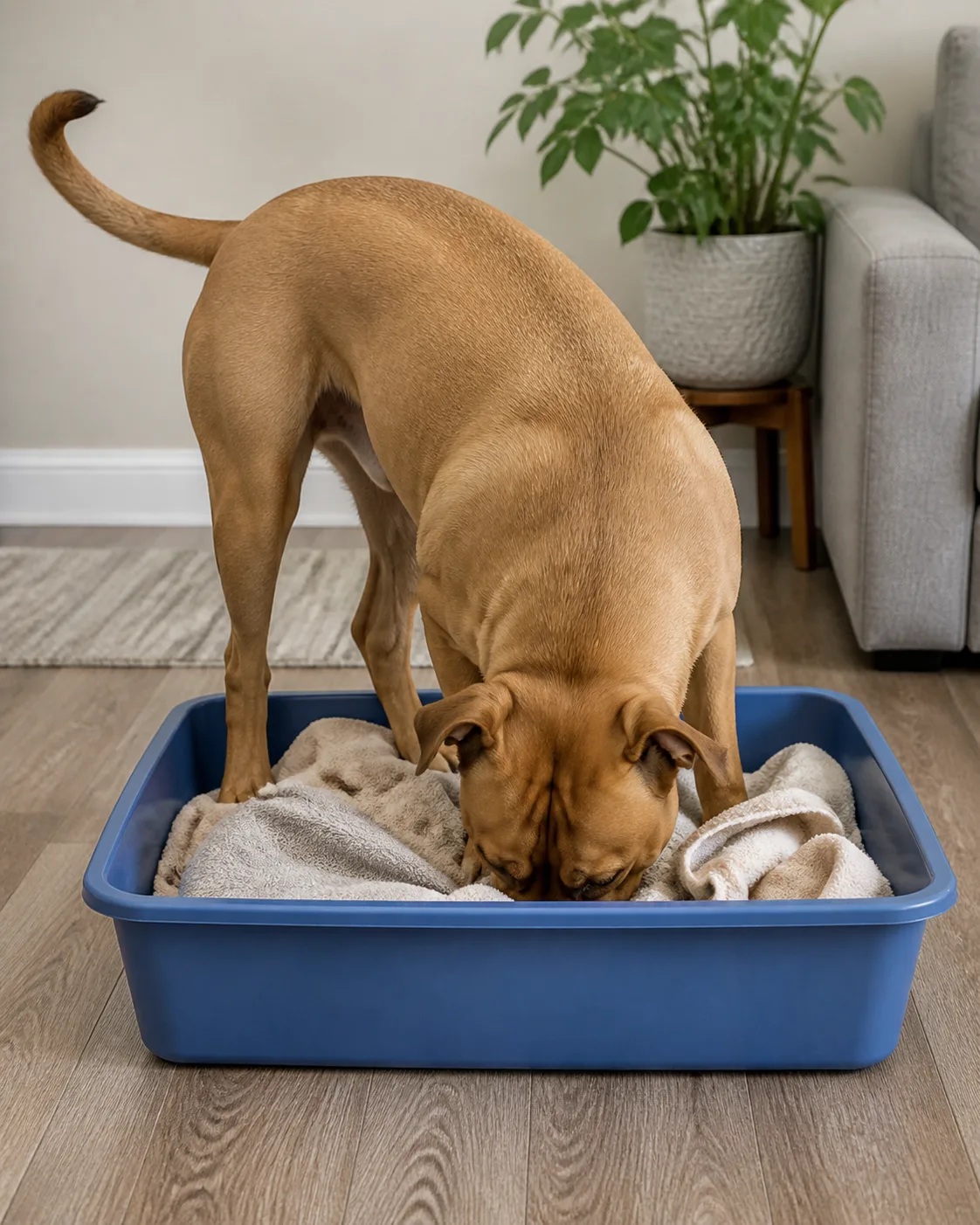
A shallow plastic storage bin filled with old towels, rags, and crumpled paper becomes a safe indoor digging station. Bury a few treats at the bottom and middle layers, and let your dog excavate.
Digging is a hardwired canine behavior. Giving it a sanctioned outlet inside means your dog satisfies the urge without ripping into couch cushions or carpet corners. The bin contains the mess, the towels are easy to shake out and reuse, and the whole thing takes sixty seconds to set up.
Size the bin so your dog can stand inside it and turn around. Too small and they will flip it.
- Use a bin large enough for your dog to stand in and turn around
- Bury treats at different depths for varied difficulty
- Rotate the bin in and out — do not leave it out every day or it loses novelty
- Supervise the first session to make sure your dog digs, not chews, the towels
11. Give a Long-Lasting Chew That Is Actually Safe
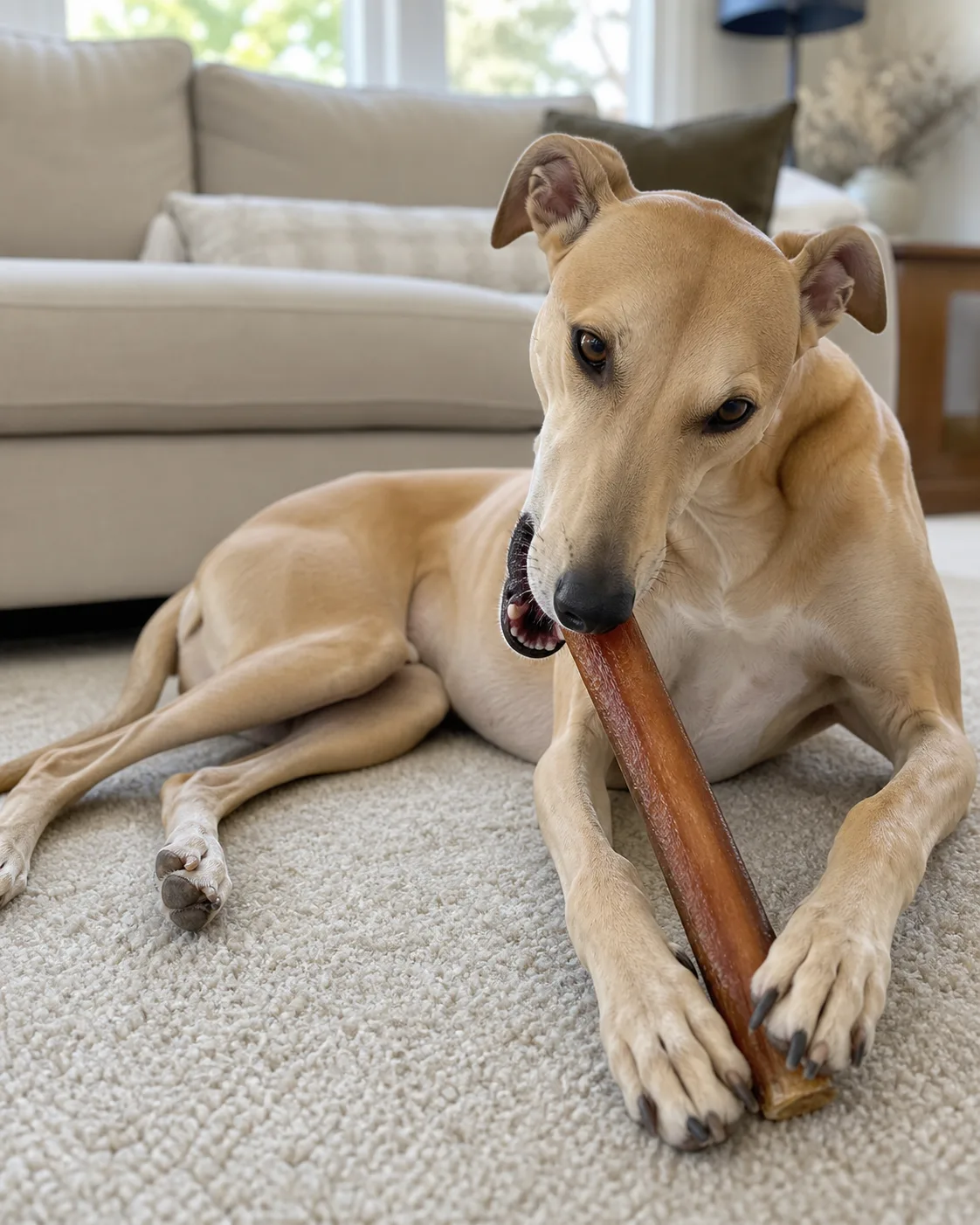
Chewing calms dogs through repetitive jaw motion the same way fidgeting calms humans. But not every chew is safe for unsupervised time.
Skip real bones — they splinter. Skip rawhide rolls — they swell and pose a choking risk. Skip anything small enough that your dog could swallow it whole.
Safe solo chews include thick bully sticks, yak chews, and durable rubber chew toys. The rule of thumb for unsupervised chewing: pick something one size larger than what you would give while you are watching.
- Thick bully sticks, yak chews, and rubber toys are the safest unsupervised options
- Skip real bones, rawhide, and anything small enough to swallow whole
- Size up — a larger chew is always safer than a smaller one when you are not home
- Replace chews when they get small enough to become a choking hazard
Save this for later
14 Ways to Keep Your Dog Busy at Work
- 1Tire them out firstFifteen minutes of hard exercise before you leave burns off morning energy so your dog sleeps instead of destroys.
- 2Frozen KONGLayer peanut butter, kibble, and pumpkin, freeze overnight. Covers the critical first 30 minutes after you leave.
- 3Snuffle matScatter kibble in the folds. Fifteen minutes of nose work equals an hour of walking in brain drain.
- 4Rotate toys weeklyKeep 3-4 out, stash the rest. Swap every Sunday. Old toys feel new again after a week hidden.
- 5Hide treatsTuck 10-15 small treats around the house before you go. A 30-60 minute treasure hunt for zero effort.
- 6Puzzle feederMatch the difficulty to your dog. Too easy equals bored in 30 seconds. Too hard equals frustrated and chewing the puzzle.
- 7Window perchA dog bed on a low table by the window gives your dog free all-day entertainment from passing pedestrians and squirrels.
- 8Calming musicClassical or reggae at low volume, started 10 minutes before you leave. Masks outdoor sounds and fills the quiet.
- 9Treat dispenserA timed dispenser drops a treat every 2-3 hours. Predictable good things reduce anxiety.
- 10Indoor digging boxA plastic bin with towels and buried treats lets your dog dig safely without destroying your sofa.
- 11Safe chewThick bully sticks or rubber toys only. No real bones, no rawhide, nothing small enough to swallow.
- 12Midday dog walkerA regular walker breaks an 8-hour stretch in half. Consistency matters — same walker every time.
- 13Daycare 1-2 daysWeekly daycare provides social and physical exhaustion that carries over into calmer solo days.
- 14Watch for anxietyBoredom destruction is random. Anxiety destruction targets doors and windows. Know the difference.
12. Hire a Dog Walker for a Midday Break
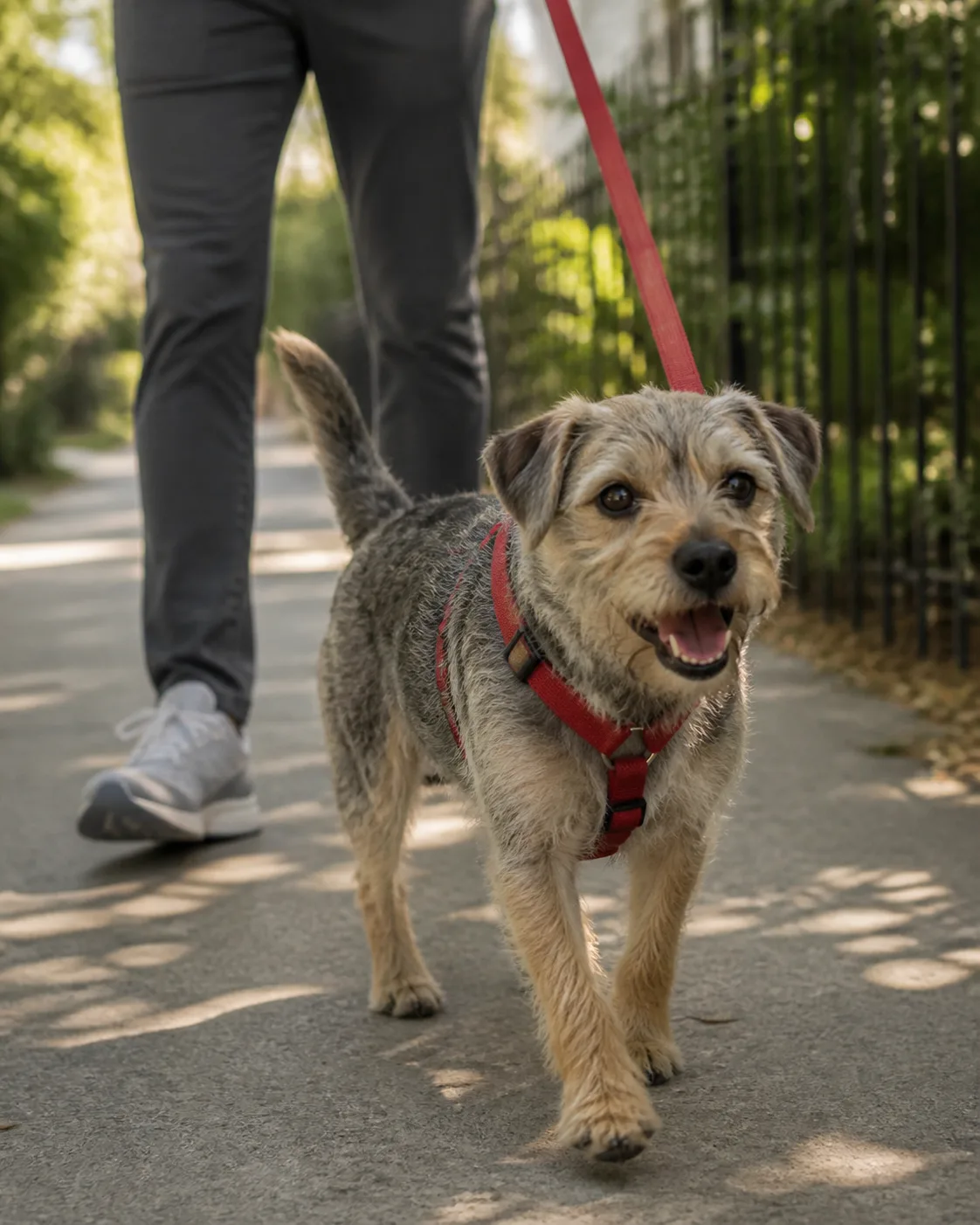
Eight or more hours alone is a long stretch even for an adult dog with good solo skills. A midday walk breaks the day in half, adds exercise, and gives your dog a brief social interaction with a human.
Consistency matters more than variety. Hire one regular walker your dog knows and trusts rather than cycling through a rotating roster of strangers. A familiar walker means your dog relaxes during the visit instead of spending the first ten minutes being nervous about who just walked in.
If budget is a concern, book walks every other day and compensate on non-walk days with a longer morning exercise session and an extra enrichment setup.
- A consistent walker is better than a rotating cast of strangers
- Thirty minutes is enough — the break matters more than the distance covered
- Ask for a brief text update or photo so you know how your dog did
- On non-walk days, add extra enrichment to compensate for the missed midday break
13. Try Doggy Daycare One or Two Days a Week
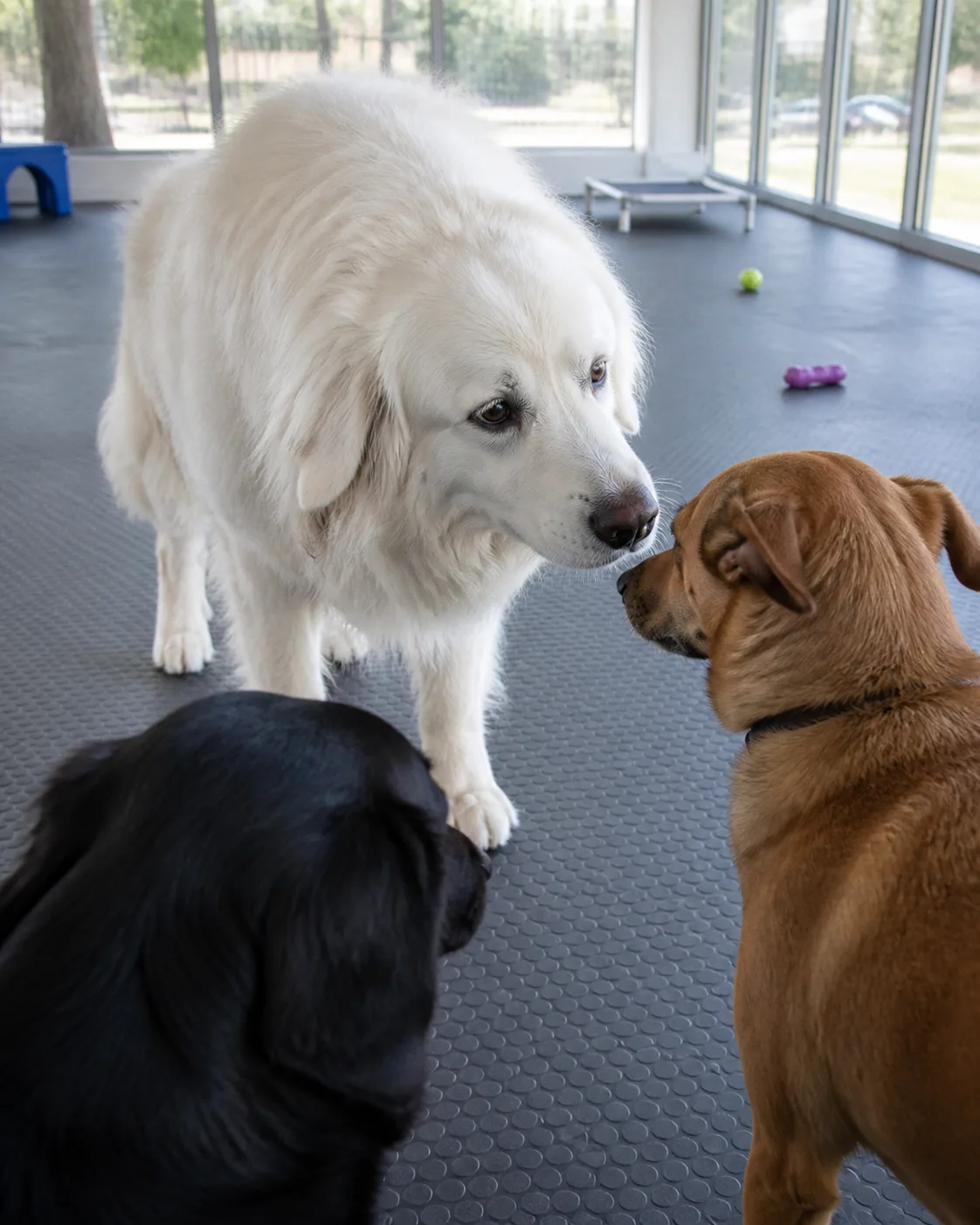
You do not need daily daycare. One or two sessions per week give your dog a heavy dose of socialization and physical exercise that carries over into calmer behavior on solo days.
Before committing, visit the facility unannounced during operating hours. Look at the dog-to-staff ratio — one handler per ten to twelve dogs is a reasonable ceiling. Check whether dogs are grouped by size and play style. Confirm there is a separate quiet area for dogs that need a break.
The post-daycare exhaustion is real. Most dogs come home, eat dinner, and sleep through the evening. That recovery carries into the next day too, making two consecutive solo days easier than two days without that social reset.
- Visit the facility before signing up — unannounced, during busy hours
- One to two days per week is enough for most dogs
- Check dog-to-staff ratios, size grouping, and rest areas
- Watch for signs your dog does not enjoy it — excessive drooling, tucked tail, refusal to enter
14. Watch for Signs That Your Dog Needs More
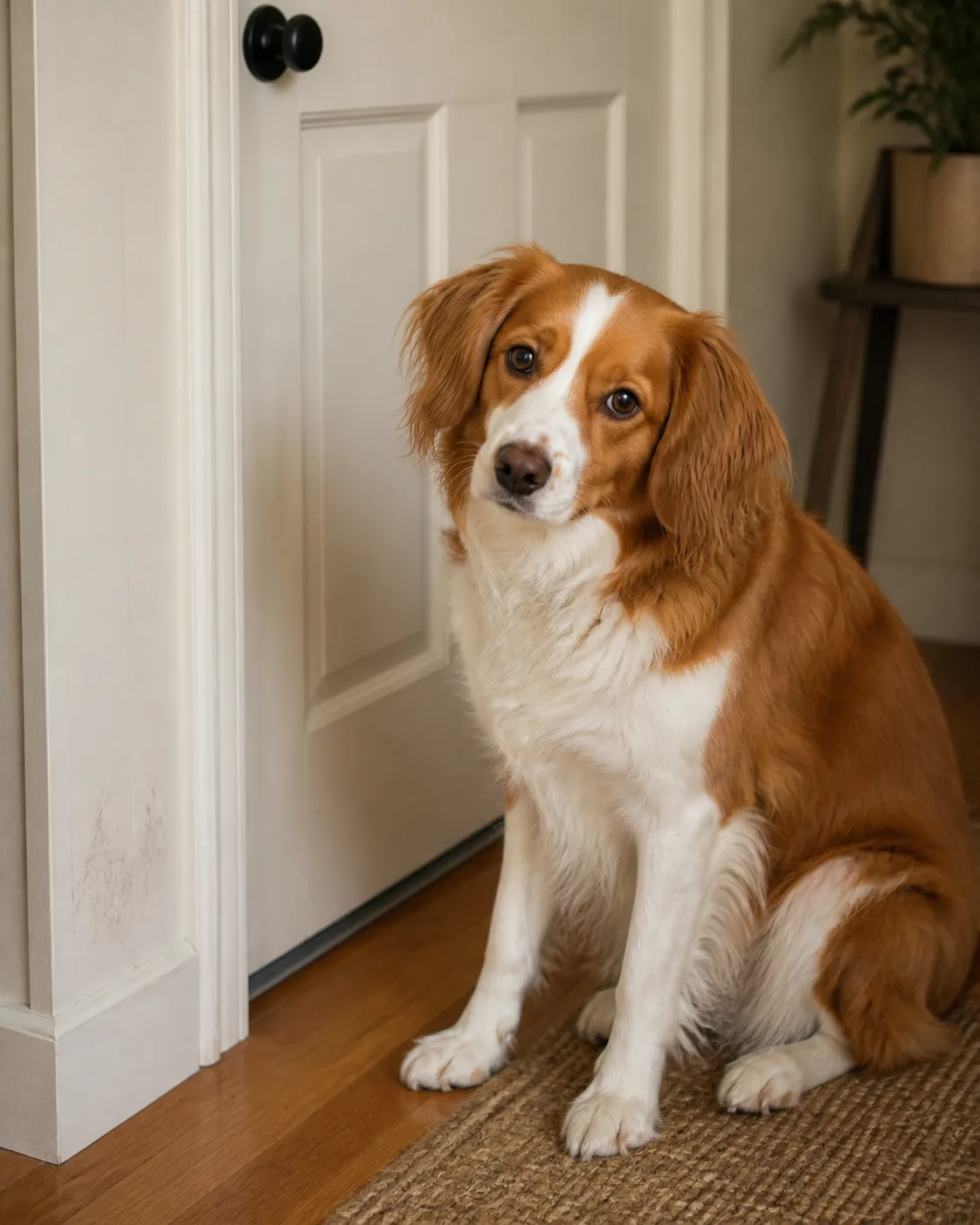
If you have tried everything above and still come home to overturned trash cans, chewed shoes, or neighbor complaints about all-day barking, the issue might not be boredom. It might be separation anxiety.
The distinction matters because the solutions are different. A bored dog destroys randomly — whichever object happened to be interesting that day. An anxious dog destroys at exit points: the front door frame, windowsills, and the crate itself. Boredom destruction is scattered. Anxiety destruction is focused.
Other anxiety signals include excessive drooling, pacing in fixed patterns, attempting to escape through windows or doors, and house-soiling from a dog that is otherwise fully housebroken.
If the pattern points to anxiety rather than boredom, puzzle feeders and treat hunts will not fix it. A certified animal behaviorist can design a desensitization protocol tailored to your dog. Talk to your vet first to rule out medical causes and get a referral.
- Boredom destruction is random — anxiety destruction targets doors and windows
- Excessive drooling, pacing, and escape attempts point to anxiety, not boredom
- Talk to your vet before assuming it is behavioral — pain and illness cause restlessness too
- A certified animal behaviorist is the right specialist for separation anxiety
Common questions
FAQ
How long can a dog be left alone during the day?
Most adult dogs can handle six to eight hours alone if they have been properly exercised and have enrichment available. Puppies under six months should not be left for more than three to four hours. Senior dogs and dogs with medical conditions may need shorter stretches.
Will leaving the TV on help my dog?
It can help some dogs, particularly those who react to outdoor noises. The visual movement is less important than the ambient sound, which masks startling sounds like doorbells and sirens. Try it for a week and watch for changes in your dog's behavior when you get home.
How do I know if my dog is bored or has separation anxiety?
Boredom looks like random destruction, mild restlessness, and occasional barking. Separation anxiety looks like focused destruction at doors and windows, excessive drooling, pacing in fixed patterns, and house-soiling from an otherwise housetrained dog. If you suspect anxiety, talk to your vet.
Should I get a second dog so my dog has company?
A second dog can help, but only if your first dog is socially comfortable with other dogs and you are prepared for double the care. Adding a second dog to a household with an anxious dog can create two anxious dogs instead of solving the problem.
What is the best toy for a dog that destroys everything?
Heavy-duty rubber toys, thick bully sticks, and frozen KONGs hold up best against aggressive chewers. Avoid plush toys, thin rubber, and anything with small removable parts. If your dog destroys every toy within minutes, focus on food-based enrichment instead.