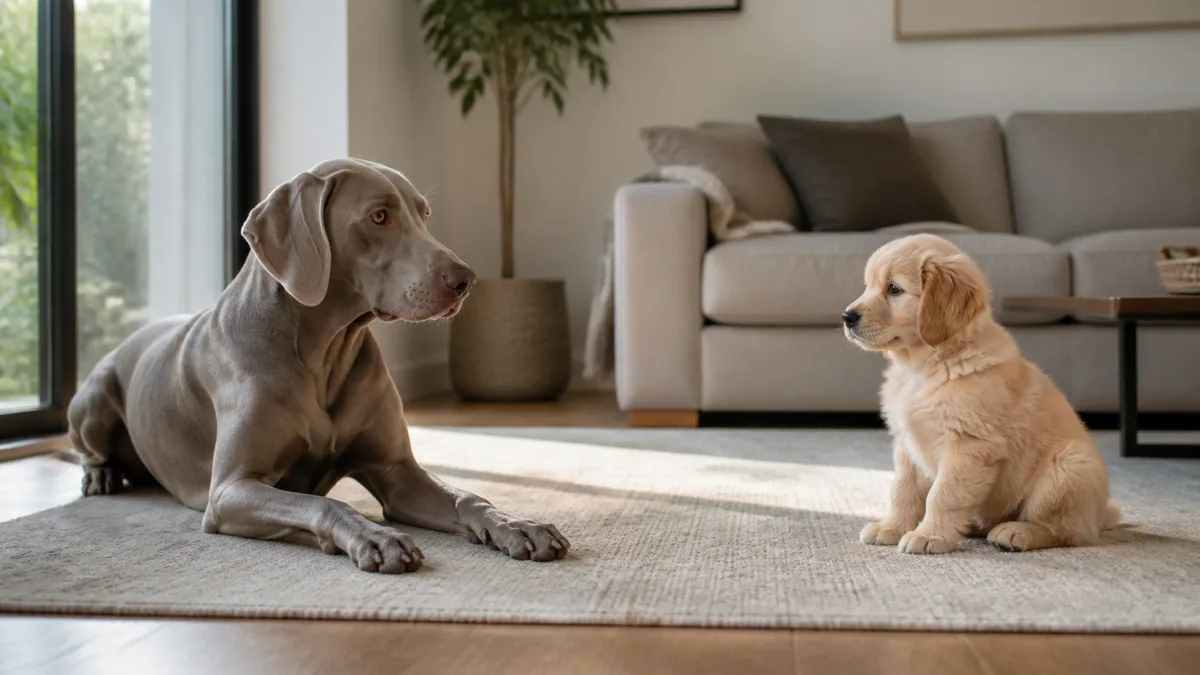
Our youngest came home on a Tuesday. Our oldest watched from the hallway with ears pinned flat and body stiff as a board.
I had prepared the puppy crate, the food, and the schedule, but I had not prepared the dog who already lived here. That first encounter set us back two full weeks.
Here are sixteen steps that make the transition smoother for every dog in the house.
Start With Scent Swaps Before the Puppy Even Arrives
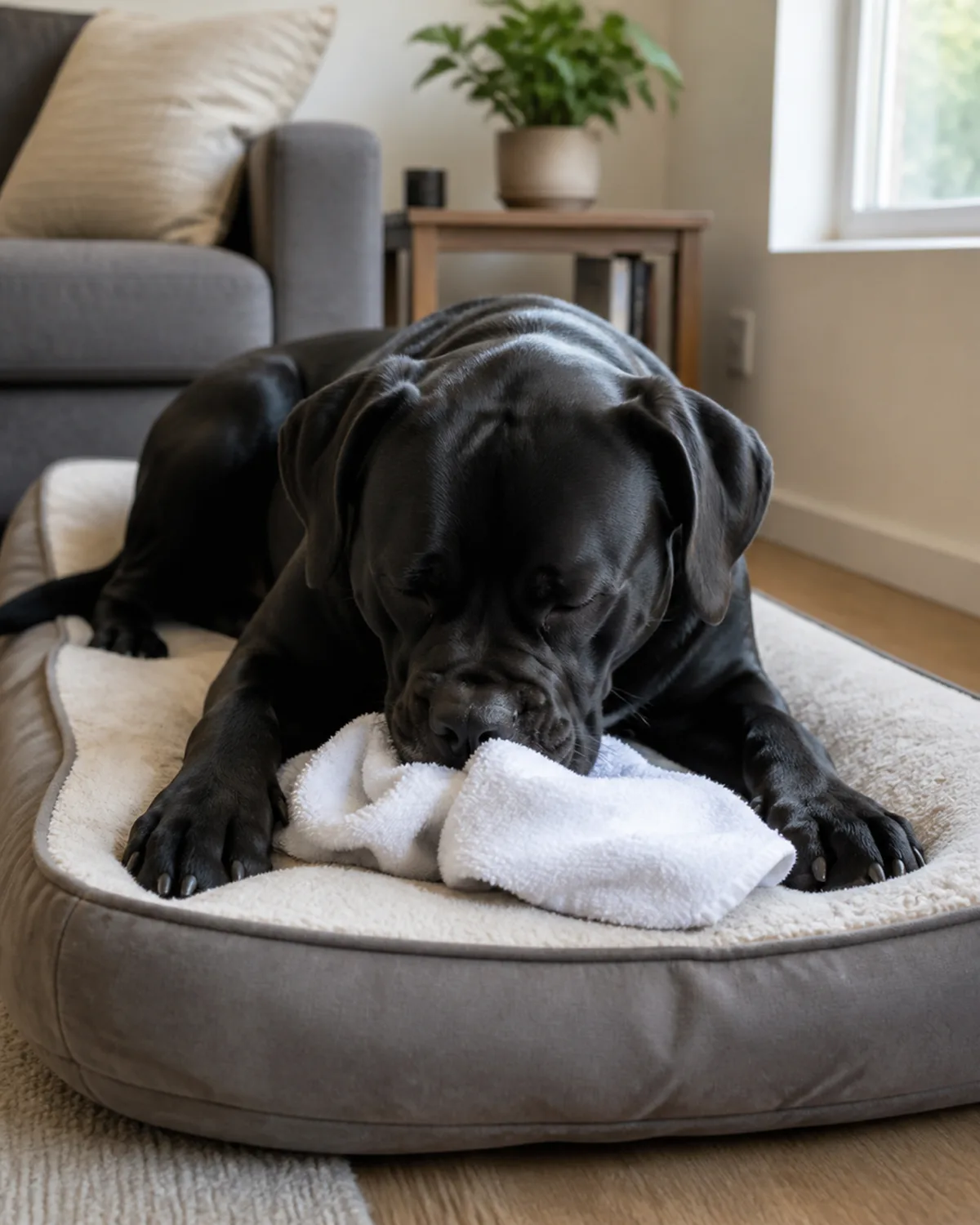
Before the puppy sets foot in your home, start with smell. Take a small towel or an old t-shirt and rub it on the puppy at the breeder or shelter. Bring that cloth home and place it near your resident dog's bed or favorite resting spot.
Do not hold the towel in front of your dog's face. Just leave it on the ground and let the older dog approach on its own terms. Some dogs sniff for thirty seconds and walk away. Others circle the towel for ten minutes. Both reactions are normal.
At the same time, send a towel carrying your resident dog's scent to the breeder to place in the puppy's sleeping area. When the two dogs finally meet face to face, they will already recognize each other's smell. That single head start removes one layer of stress from an already loaded first encounter.
Pick your starting point based on where you are right now
Where should you begin?
Set Up Completely Separate Spaces in Advance
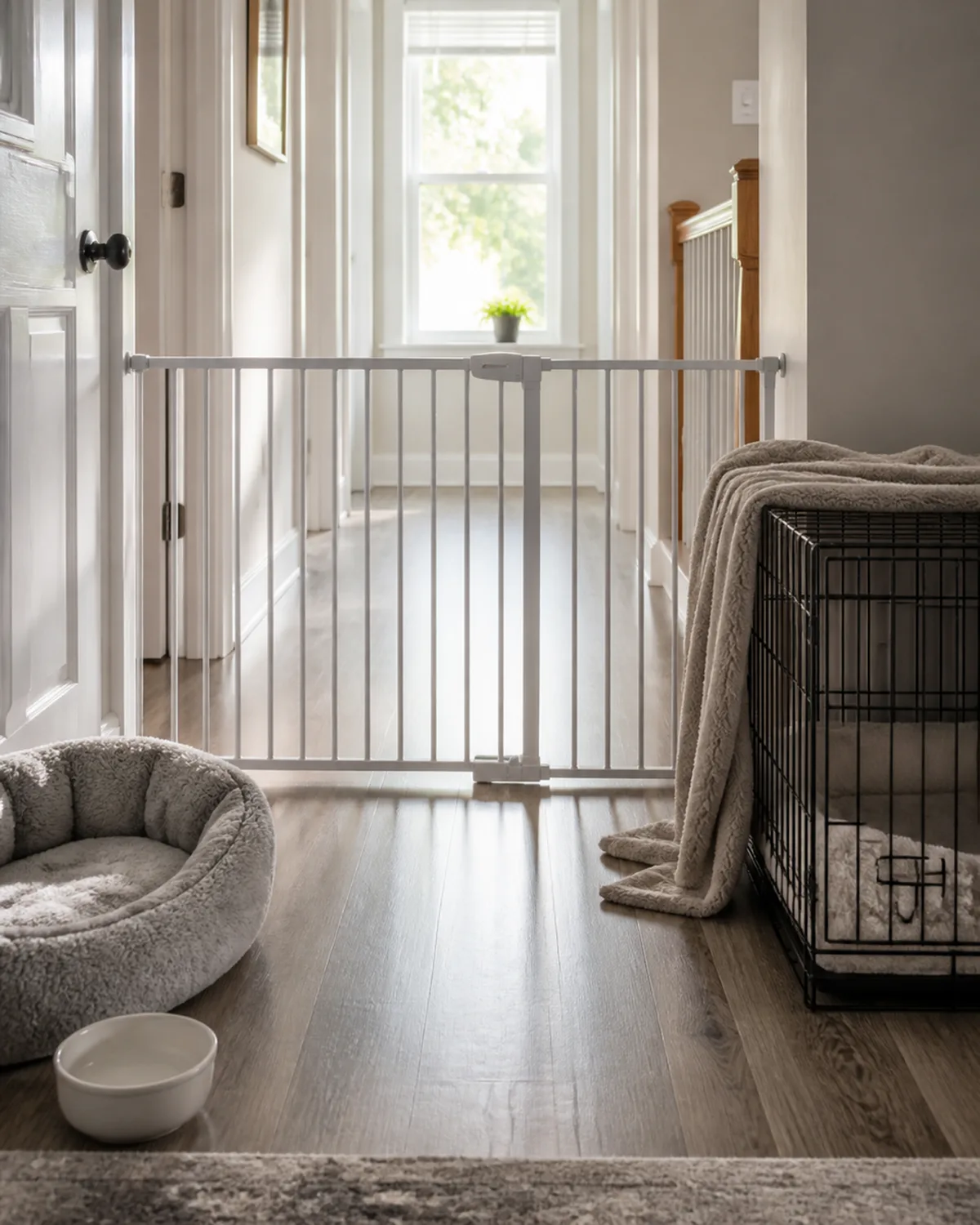
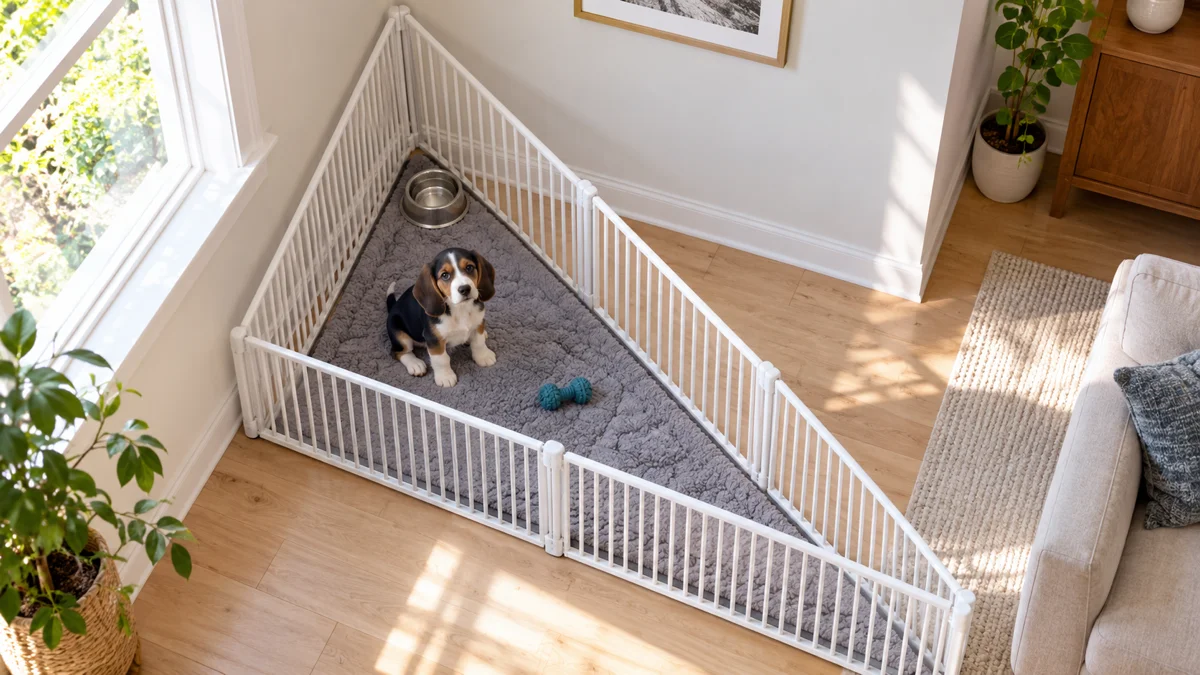
Before pickup day, create two fully independent zones in your home. Your resident dog keeps its current bed, water bowl, food station, and favorite resting spot exactly where they have always been. Nothing moves. Nothing changes.
The puppy gets a new crate, new bowls, a new bed, and a designated puppy-proofed room or penned area separated by a baby gate or a closed door. If you have been through crate training before, you know how important that safe den space is. For the new puppy, the crate is both a training tool and a physical barrier that keeps both dogs safe when you cannot watch them.
The key principle is zero overlap. No shared food bowls. No shared sleeping spots. No shared toys. Not yet. The resident dog looks around and sees that its life has not been disrupted. That baseline security is what allows tolerance to grow.
Choose a Neutral Location for the Very First Meeting
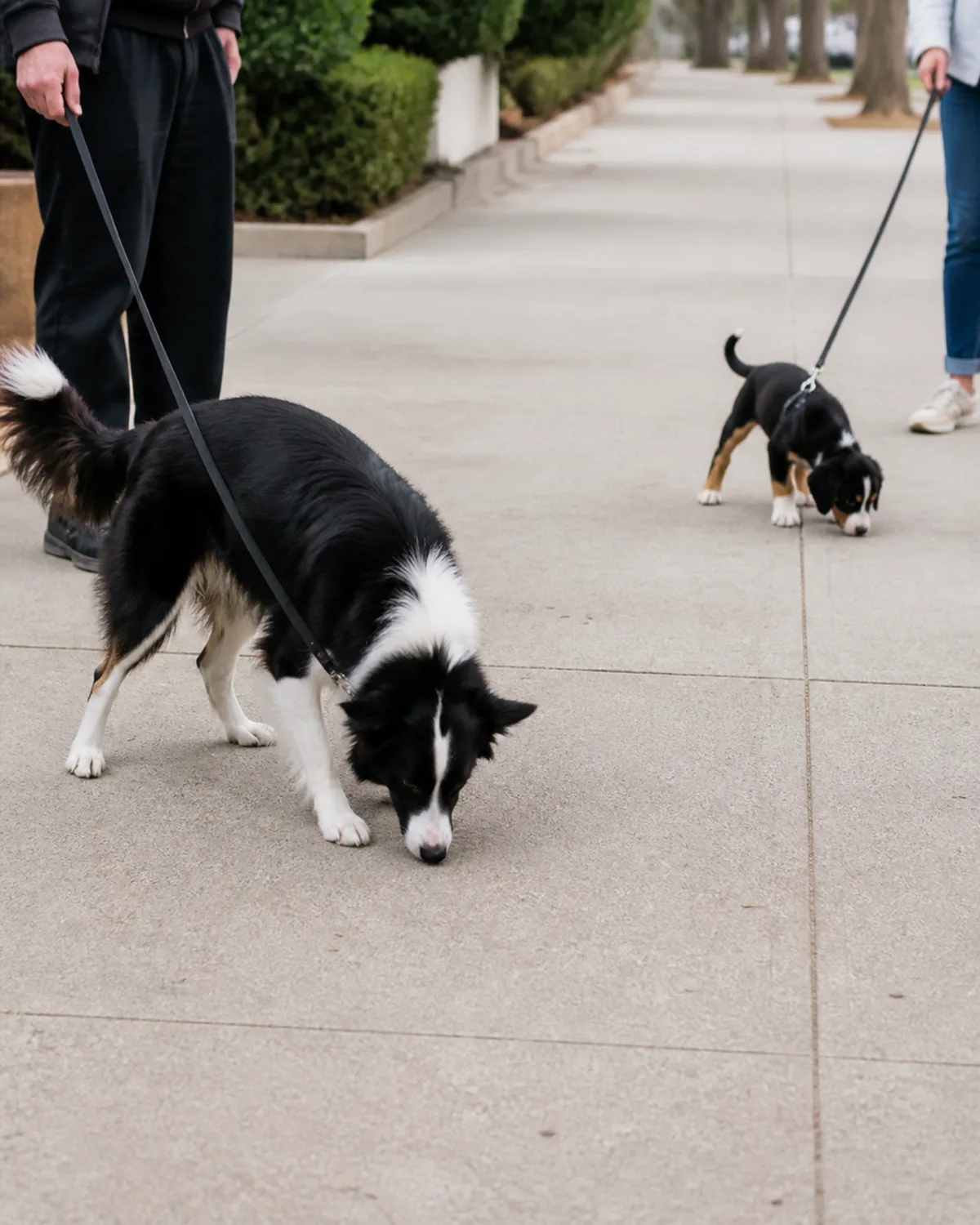
Skip the living room. Skip the backyard. Skip the park your dog visits every morning. Choose a quiet spot that neither dog has claimed as its own: a neighbor's driveway, a low-traffic side street, or an empty church parking lot on a weekday.
Neutral ground strips away territorial defense instincts. Your resident dog is not protecting the couch or the kitchen doorway. It can size up the puppy with curiosity rather than suspicion.
Arrive separately. Have the puppy already there with one handler, and bring the resident dog in from the opposite direction with a second handler. Start with three meters of distance and let both dogs sniff the ground, look around, and simply exist in each other's general area without any pressure to interact.
Keep Both Dogs on Loose Leashes With Two Handlers
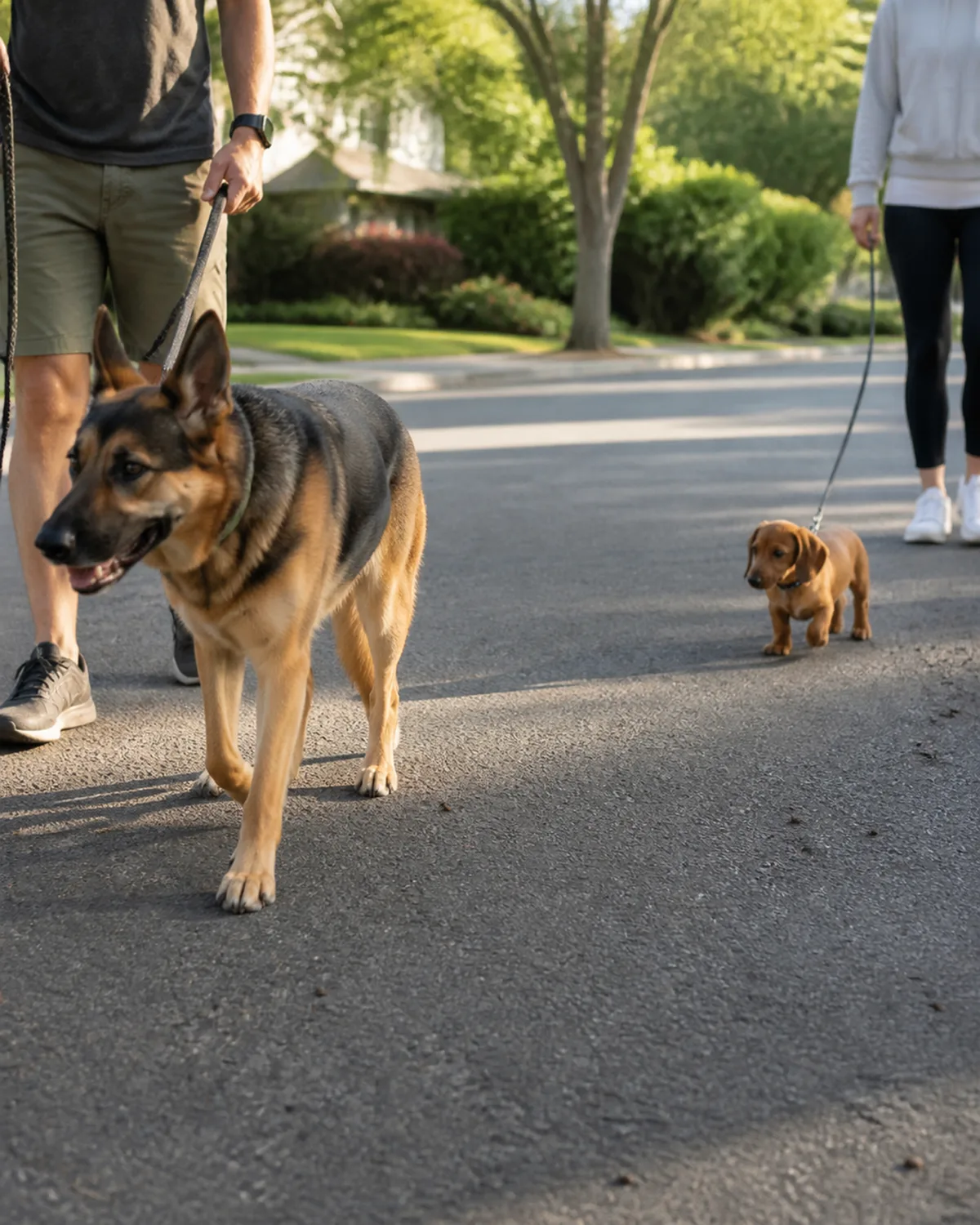
One handler per dog. Both leashes stay slack, not tight. A tight leash sends tension straight down the line and tells the dog there is something to worry about. Walk in the same direction, side by side, with two to three meters between the dogs.
Let them sniff the ground, glance at each other, and look away naturally. Over five to ten minutes, the gap between them will shrink on its own as curiosity replaces caution. Do not force the approach. Let the dogs set the pace.
If either dog stiffens, stares hard, or freezes in place, calmly increase the distance and keep walking. No scolding, no leash corrections, no drama. The goal of this first parallel walk is not friendship. It is information gathering. Both dogs are asking the same question: is this other animal safe?
Read the Body Language Signals That Tell You It Is Going Well
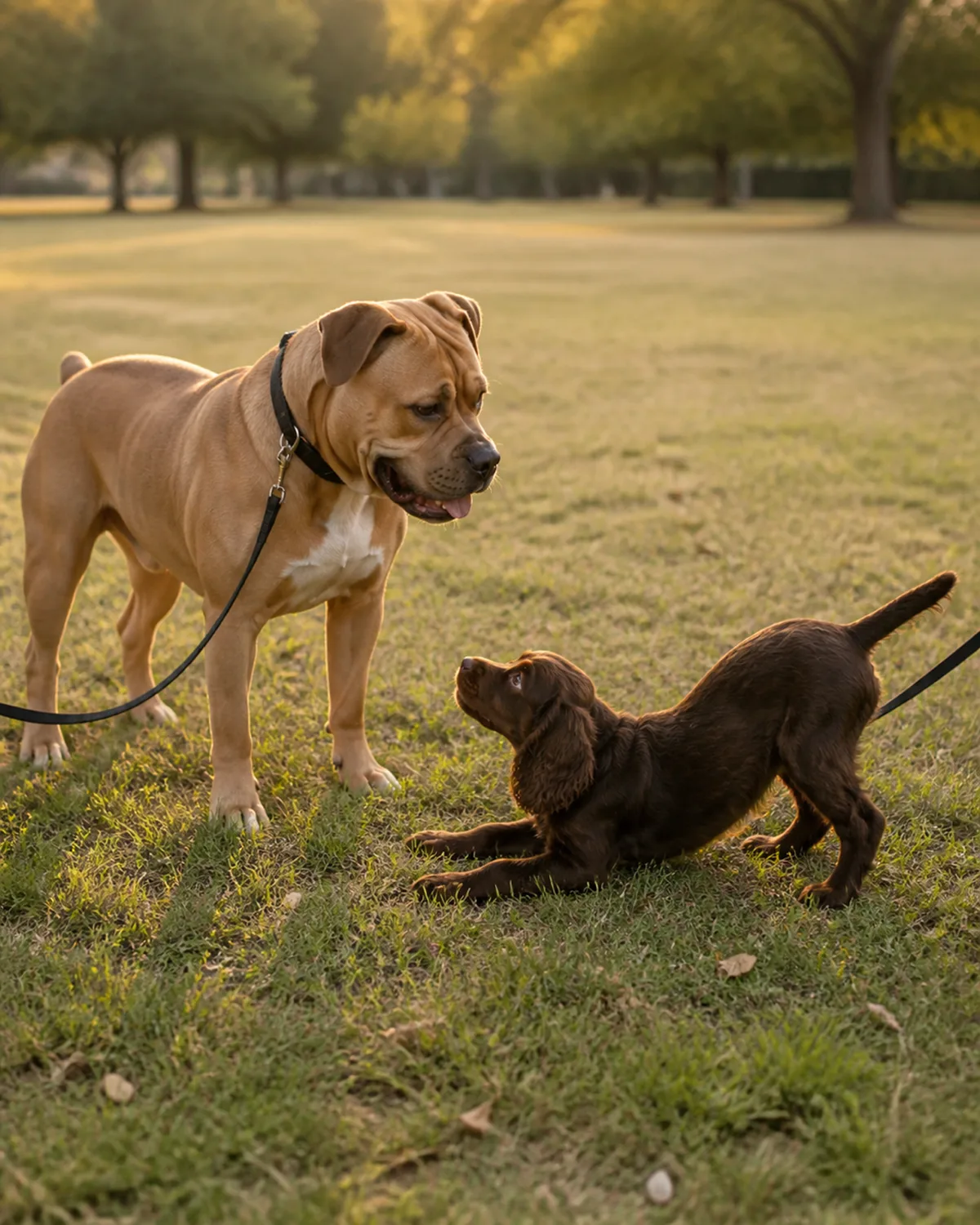
Positive signals look loose and soft. A wiggly body, relaxed ears, a tail wagging at mid-height with a broad sweep, a play bow where the front legs stretch forward and the rear end goes up, and easy look-aways where neither dog holds the other's gaze for more than a second.
Red flags look stiff and tight. A frozen posture where the dog stops moving entirely. Whale eye, where you can see the whites along the outer edge. A closed mouth with lips pressed together or curled. A tucked tail or a tail held rigid and high like a flagpole. A hard, unblinking stare directed at the other dog.
When you see warning signals, calmly add distance by walking away at an angle. Do not shout, do not yank the leash, do not push the dogs apart with your body. Adding panic to an already tense moment teaches both dogs that being near each other leads to chaos.
The subtlety most owners miss
A wagging tail does not always mean happiness. A stiff, fast wag with a high-held tail is arousal, not joy. Compare it to the whole-body wiggle of a genuinely relaxed dog and the difference becomes obvious.
Keep the First Face-to-Face Session Under Five Minutes
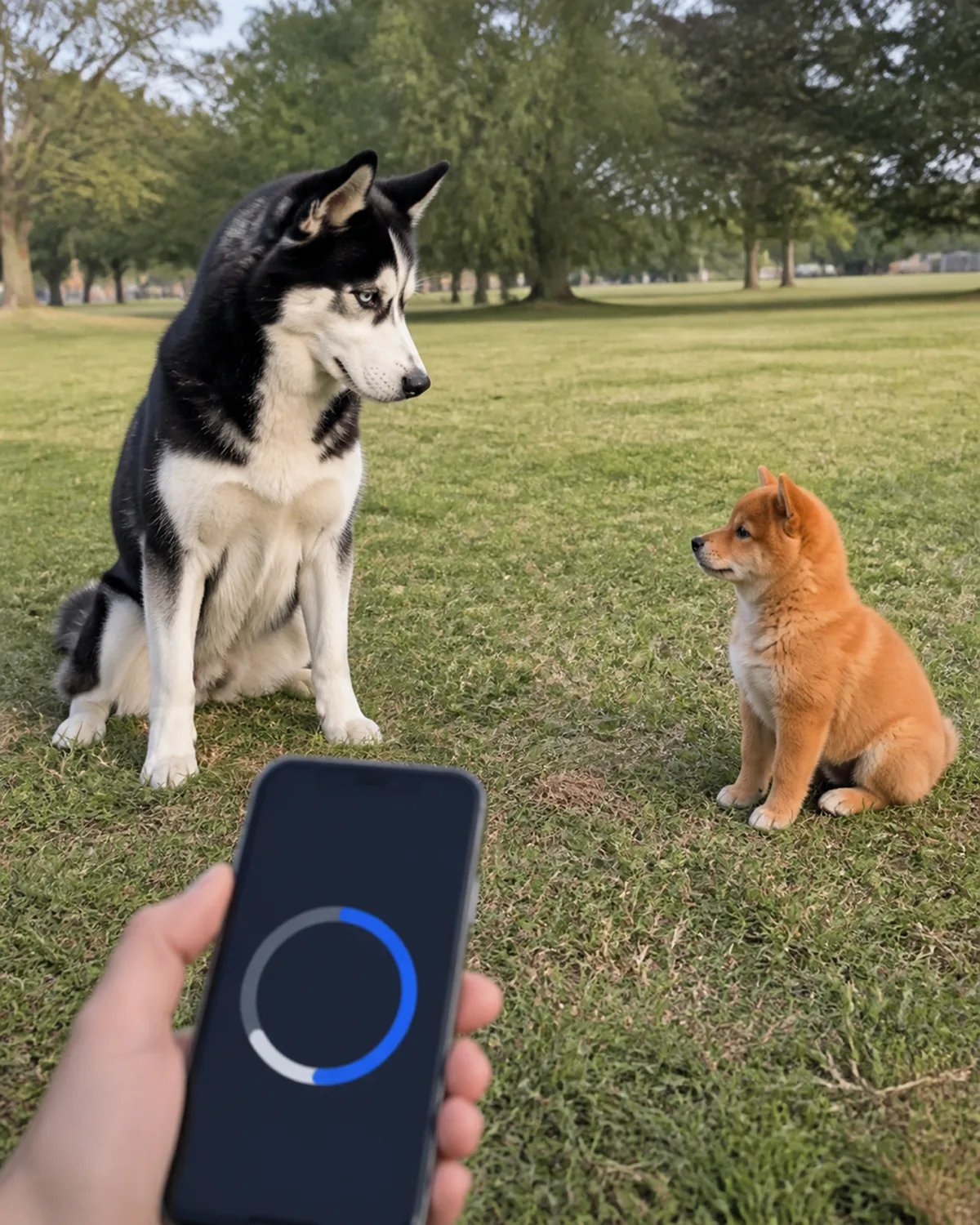
Set a phone timer for five minutes. When it goes off, cheerfully call your dog away with a treat and walk in the opposite direction. End the interaction while both dogs are still relaxed and curious, not after tension has built.
The last impression matters more than the first. A short positive encounter builds a foundation that the next session can extend. Tomorrow you add two minutes. By the end of the week, sessions can reach fifteen minutes without either dog mentally checking out.
The four boundaries that prevent most introduction failures
4 rules for a smooth transition
Separate everythingFood, water, beds, toys, and sleeping areas. Zero shared resources until both dogs consistently choose to be near each other without tension, usually three to four weeks minimum.
Supervise or separateIf you cannot watch both dogs with full attention, they are in different rooms. No exceptions for the first two weeks, no matter how well things seem to be going.
Never punish the growlA growl is communication, not aggression. Punishing it removes the warning system and makes a bite more likely because the dog skips the signal it has learned gets it in trouble.
End sessions earlyEvery interaction should end while both dogs are still calm. Waiting until tension appears means the last memory is negative, and that stacks against you for the next session.
Bring the Puppy Home While the Resident Dog Is on a Calm Walk
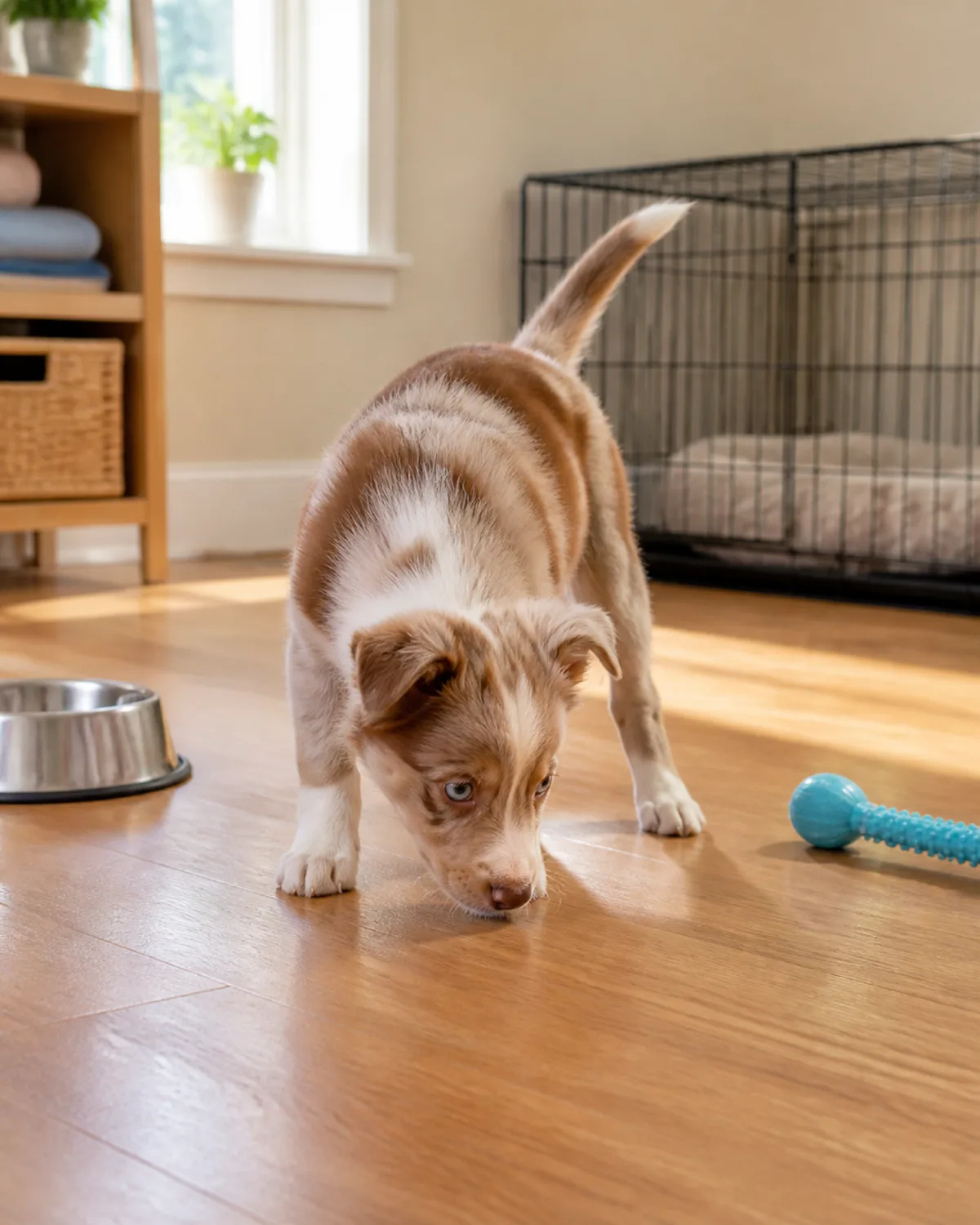
On arrival day, have a family member or a friend take the resident dog out for a thirty-minute walk. While they are gone, carry the puppy inside and settle it in the prepared puppy zone with water, a chew toy, and the scent towel from step one.
The puppy gets fifteen minutes to explore its new space without the pressure of a larger dog looming. By the time the resident dog returns, the newcomer is already calm and settled.
When the older dog comes back, do a quick parallel greeting at the front door using the same loose-leash technique from the first meeting, then guide each dog to its own separate space. The resident dog walks into a home that smells slightly different but looks exactly the same. That matters.
Supervise Every Single Interaction for the First Two Weeks
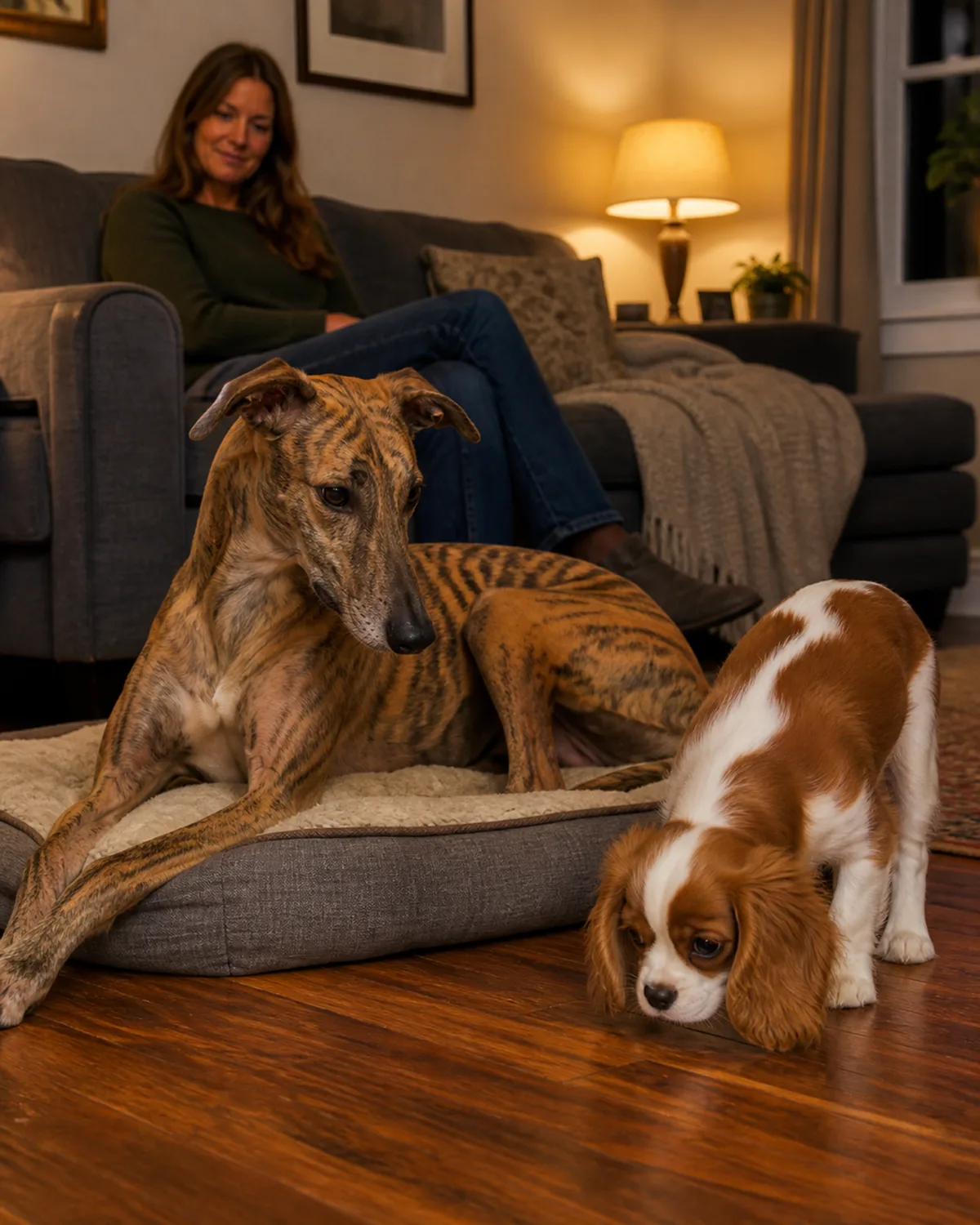
For the first fourteen days, two dogs in the same room means a human is present and paying full attention. Not scrolling a phone on the couch. Not cooking dinner with one eye on the stove. Actually watching body language, ready to redirect or calmly separate at the first sign of stiffening posture.
When you need to shower, take a call, run an errand, or sleep, the dogs go to their separate zones. Baby gate, crate, or closed door. No compromise.
Skipping this step because the dogs seemed fine on day three is how bite incidents happen on day five. A puppy's energy level fluctuates wildly, and the moment it ambushes a sleeping older dog at the wrong time is the moment things escalate. Consistent supervision is boring. It is also the single most effective insurance policy you have.
Feed Them in Separate Rooms With Doors Closed
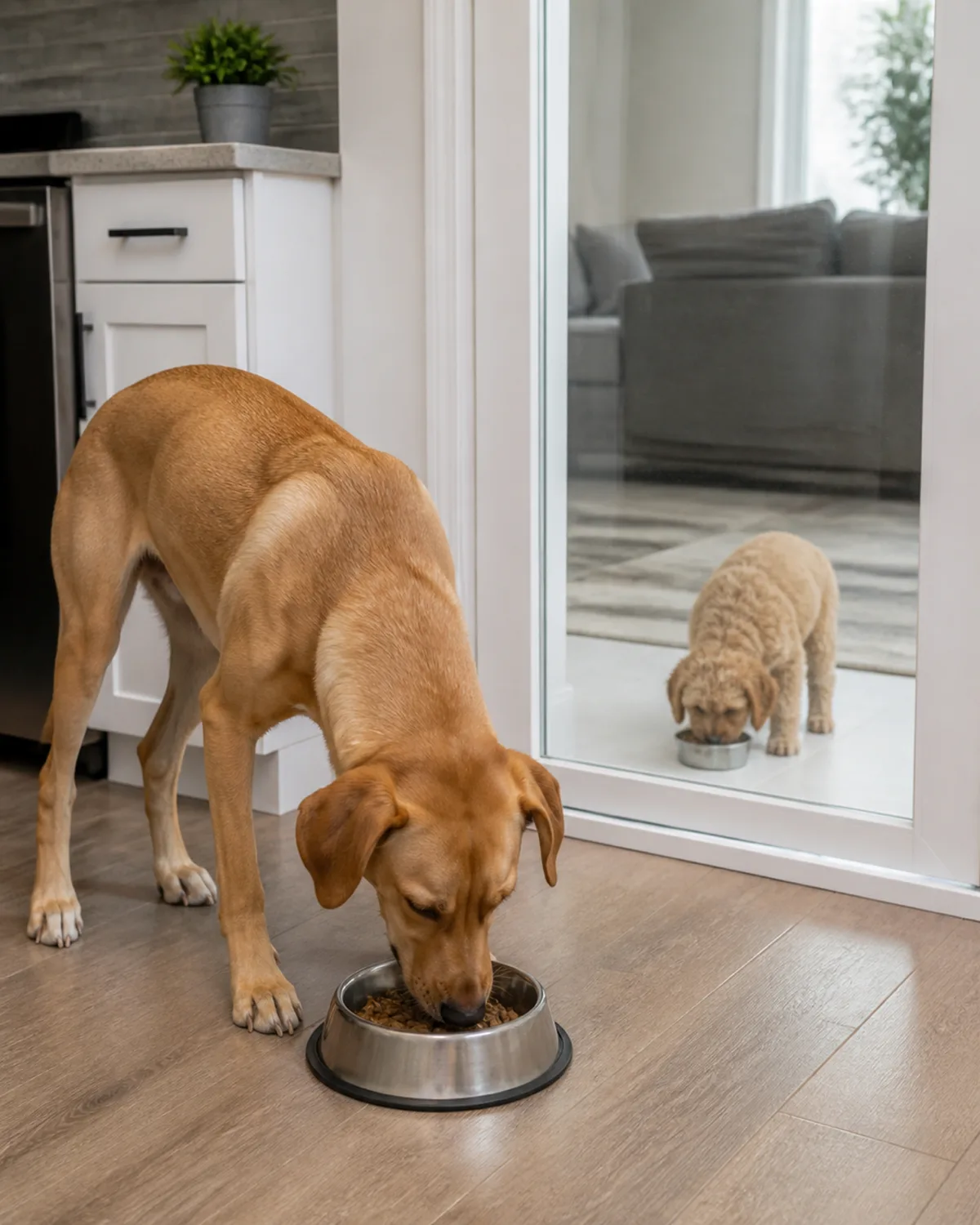
Food guarding is the number one trigger for aggression between a resident dog and a newcomer. It does not matter that your older dog has never guarded food before. A new animal near the bowl changes the calculation.
Feed the adult in its usual spot. Feed the puppy in a different room with the door shut. Pick up both bowls when they finish. The same rule applies to bully sticks, stuffed Kongs, rawhide chews, and high-value treats. If one dog is chewing something, the other dog is not in the room.
This is not optional for the first month and may need to continue permanently depending on the dogs. Some pairs never develop enough trust around food to share a kitchen floor, and that is perfectly fine. A closed door during mealtime costs you nothing.
Protect the Resident Dog's Favorite Resources
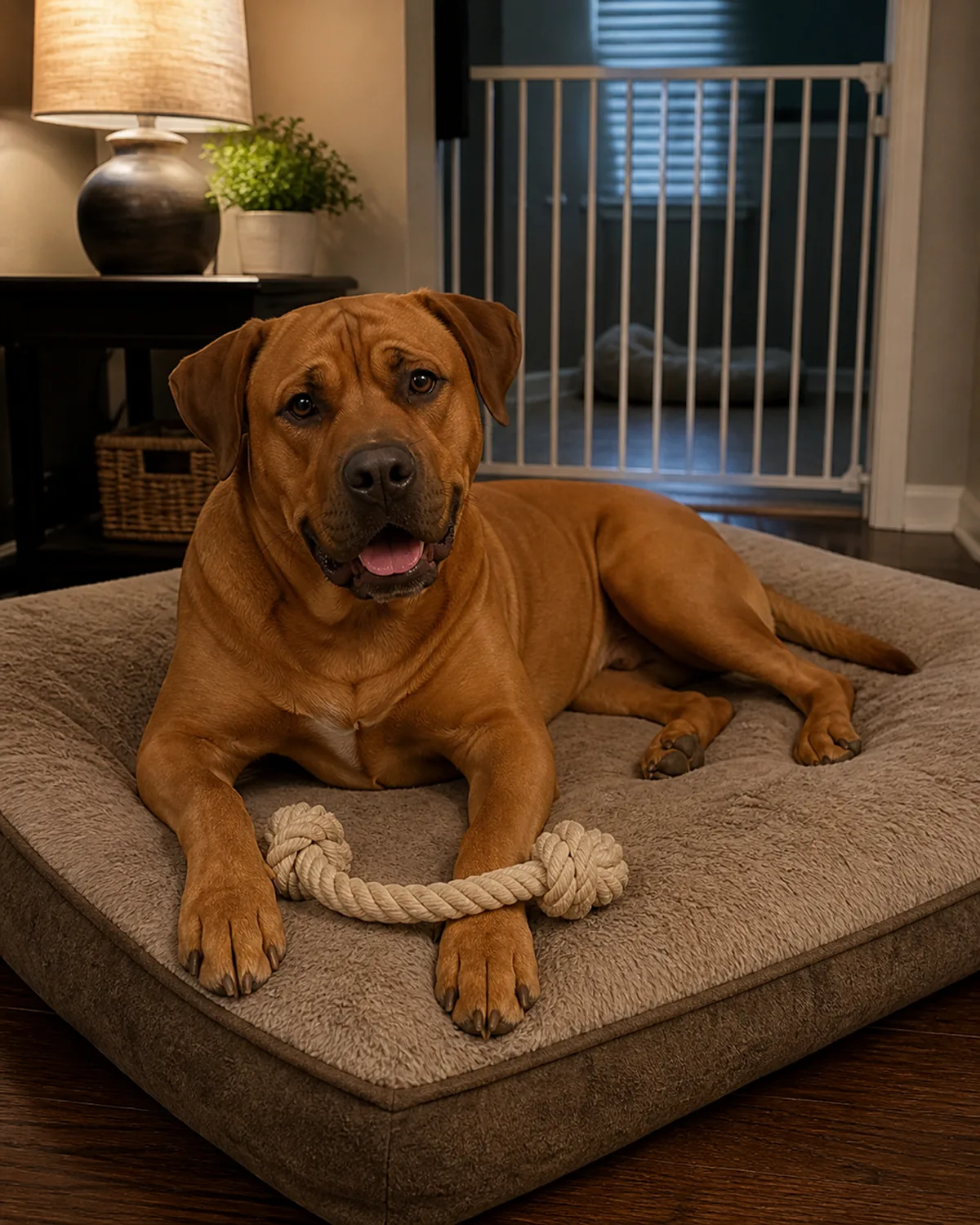
The older dog's bed stays the older dog's bed. Its rope toy, its corner of the sofa, its spot under the window. All off-limits to the puppy.
Give the puppy its own brand-new set of everything. When the resident dog sees that its valuables have not been stolen, its tolerance for the newcomer jumps dramatically. Resource protection is not about spoiling the senior member of the household. It is about removing the single biggest source of resentment between the two animals.
If the puppy wanders toward the older dog's bed, redirect it calmly with a toy of its own. No scolding. Just a gentle redirect that teaches the puppy there are boundaries. The older dog watches this happen and learns that you are the enforcer of its territory, which builds trust in you as the manager of this transition.
Give the Resident Dog Extra One-on-One Time With You
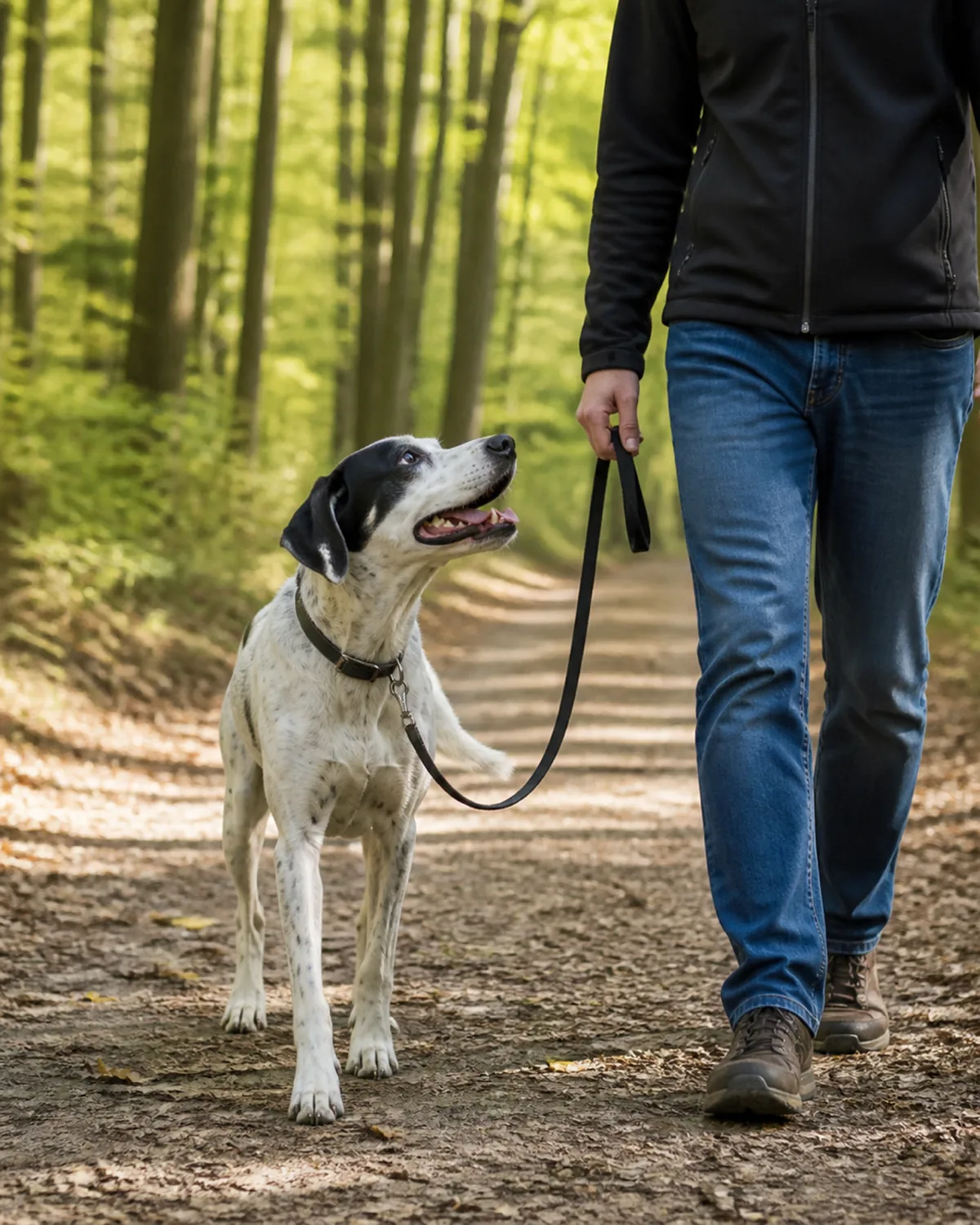
The biggest fear for most resident dogs is not the puppy. It is losing your attention. Everyone who visits wants to hold the puppy. Everyone in the household gravitates toward the cute new arrival. The older dog watches this happen and draws its own conclusions.
Carve out fifteen minutes a day for solo time with the older dog. A private walk where the puppy stays home in the crate. A short training session in the backyard with just the two of you. Quiet couch time while the puppy naps.
This is not a reward for tolerating the puppy. It is a necessity that tells the resident dog it still matters, still has its place, and has not been replaced. Once that security is established, the older dog can afford to be generous toward the newcomer because generosity requires a sense of abundance, not scarcity.
Let the Older Dog Set Boundaries Naturally
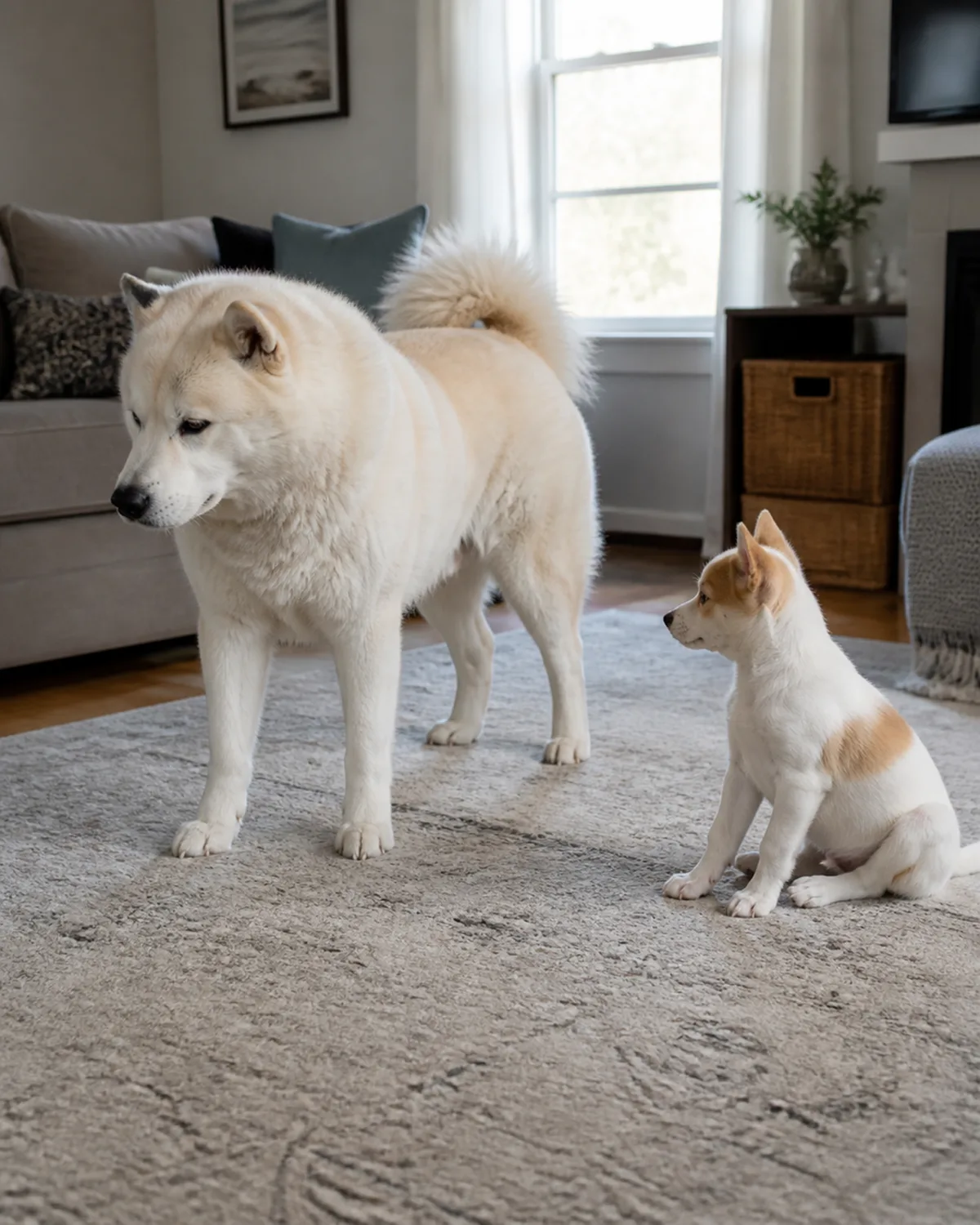
When the adult dog turns its head away from the puppy, walks off to another room, or gives a low rumbling growl, that is communication. It is the older dog teaching the younger one social rules: do not jump on my face, do not grab my ear while I am sleeping, do not steal the chew I am working on.
If you scold the adult for growling, you remove its only polite way of saying no. The next escalation after a suppressed growl is a snap, because the dog has learned that subtle warnings get punished. You will have created the very problem you were trying to prevent.
Let the adult communicate. Puppies are resilient and learn quickly from these interactions. Step in only if there is actual contact that goes beyond a harmless air snap, or if the puppy cannot physically escape the situation.
Create Positive Associations Between the Two Dogs
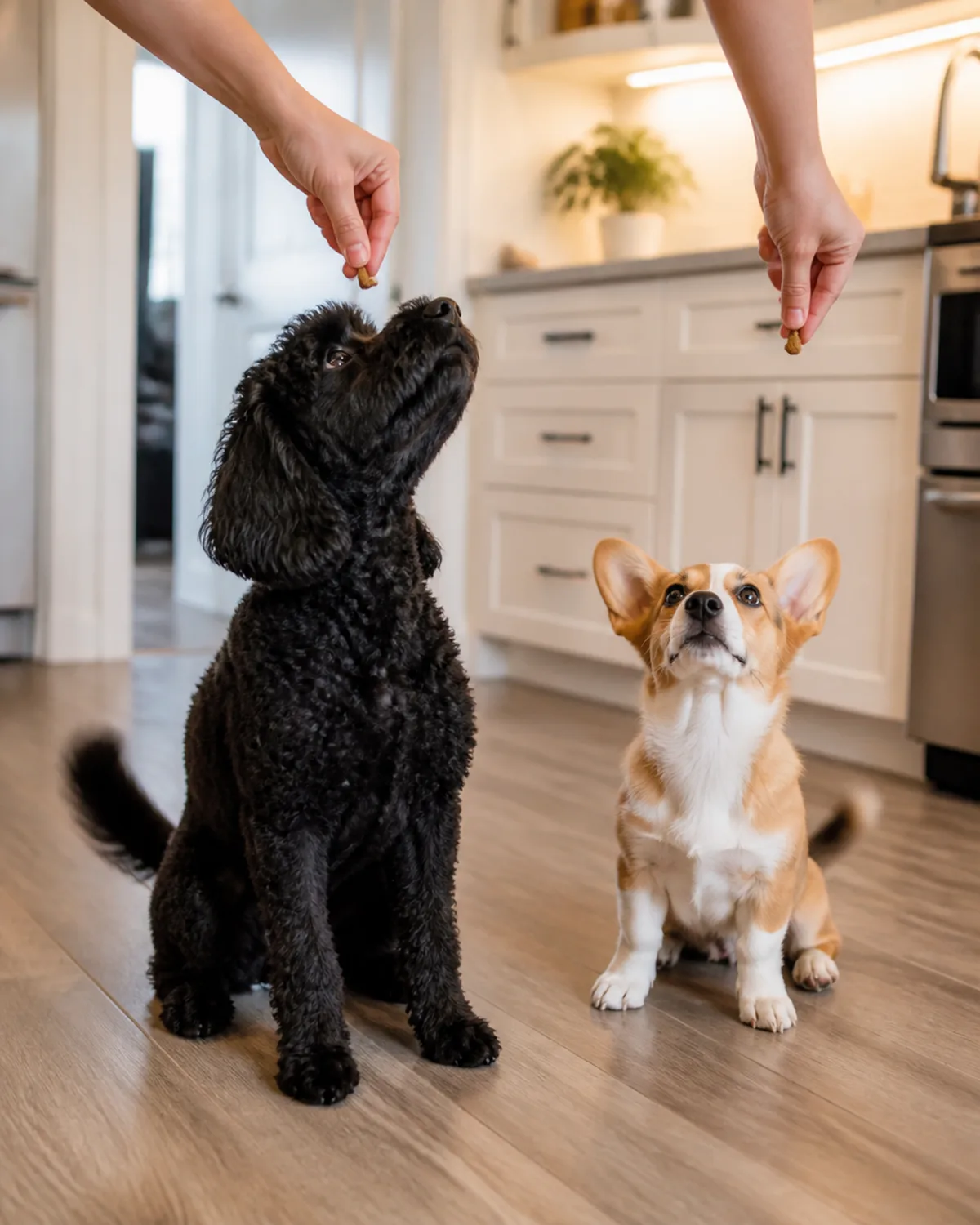
Every time both dogs are in the same room, good things appear. Treats, calm praise, a favorite chew toy. When the puppy goes back to its crate, the treats stop and the ordinary afternoon resumes.
Over the course of a week, the adult dog's brain starts connecting the puppy's presence with rewards rather than competition. Proximity becomes a predictor of good things instead of a predictor of loss.
Pair this with calm parallel activities. Both dogs lying on their own beds, each getting a Kong, while you sit between them. No forced interaction. Just two animals learning that being in the same room is a pleasant, low-pressure experience. The bond builds from proximity, not from play. Play comes later, once the foundation of trust is solid.
Save this for later
16 Steps to Introduce a New Puppy to Your Dog
- 1Scent swaps firstExchange towels carrying each dog's scent before they meet.
- 2Separate spacesTwo independent zones, zero shared resources.
- 3Neutral groundFirst meeting on territory neither dog has claimed.
- 4Loose leashesTwo handlers, slack leashes, parallel walking.
- 5Read body languageSoft wiggly means safe. Stiff frozen means increase distance.
- 6Five-minute ruleEnd the first meeting while both dogs are still relaxed.
- 7Homecoming planResident dog out on a walk, puppy settles in quietly first.
- 8Supervise alwaysTwo dogs in one room means a human watching, every second.
- 9Feed separatelyDifferent rooms, doors closed, bowls picked up after.
- 10Protect resourcesResident dog keeps its bed, toys, and favorite spots.
- 11Solo timeFifteen minutes daily with the older dog alone.
- 12Natural boundariesLet the adult teach the puppy with growls and walk-aways.
- 13Positive pairingBoth dogs present equals treats and calm rewards.
- 14Manage energyEnforced naps keep the puppy rested and the adult sane.
- 15Gradual freedomBuild unsupervised time in five-minute increments.
- 16Ask for helpSustained tension after two weeks means calling a behaviorist.
Manage Energy Mismatches With Scheduled Nap Times
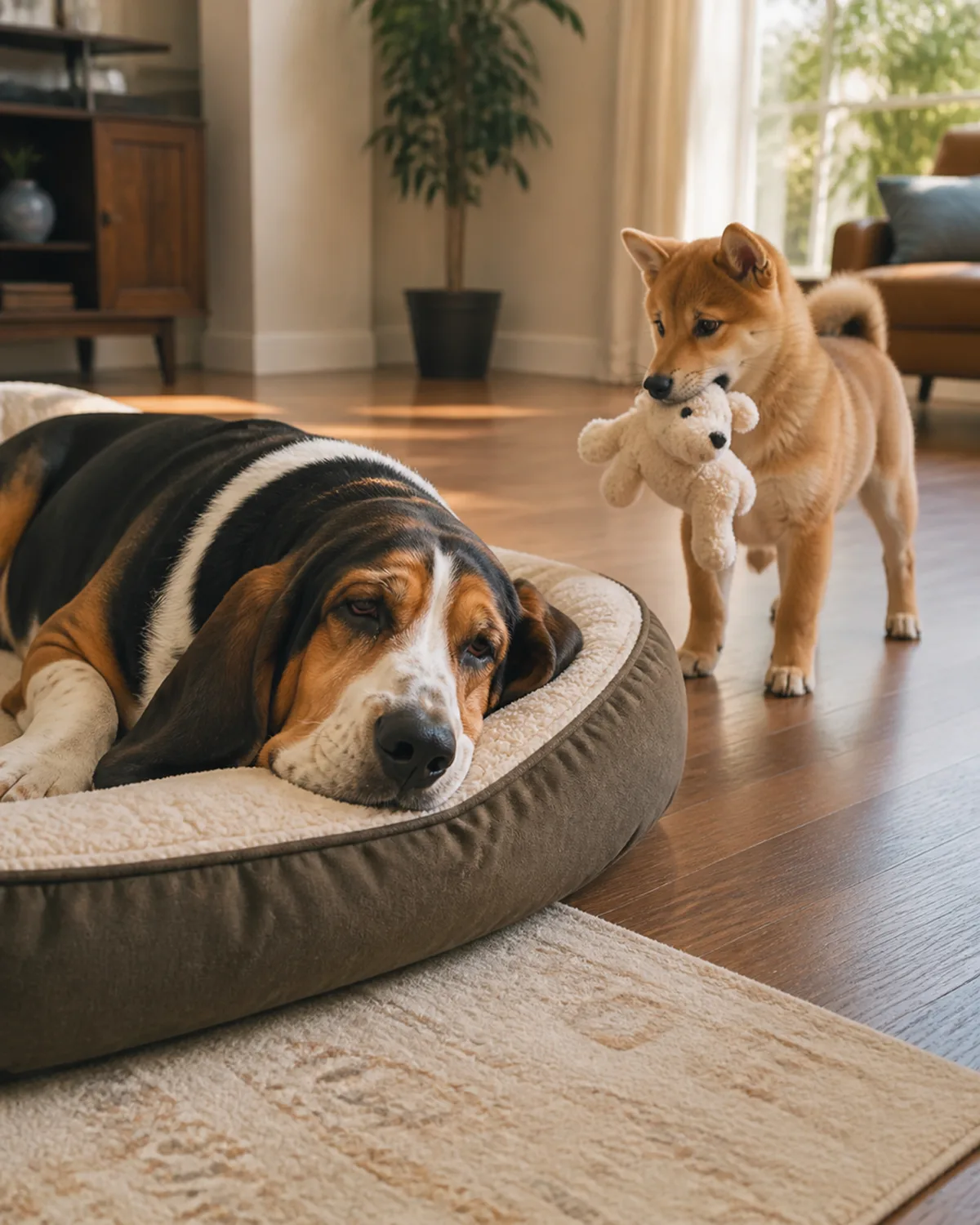
A ten-week-old puppy has roughly five times the burst energy of a five-year-old adult dog and zero concept of personal space. The puppy wants to play nonstop. The adult wants a quiet afternoon on its bed. The mismatch is not a personality conflict. It is biology.
Enforce structured nap times in the crate. One to two hours of rest for every hour of activity. The puppy needs the sleep for healthy brain development, and the adult gets breathing room to decompress. Without enforced naps, the adult's patience erodes daily until it communicates the only way it has left.
If you have already built a daily schedule, slot the nap times right after the puppy's active play windows. The schedule becomes the framework that keeps both dogs balanced.
Build Up to Unsupervised Time Gradually
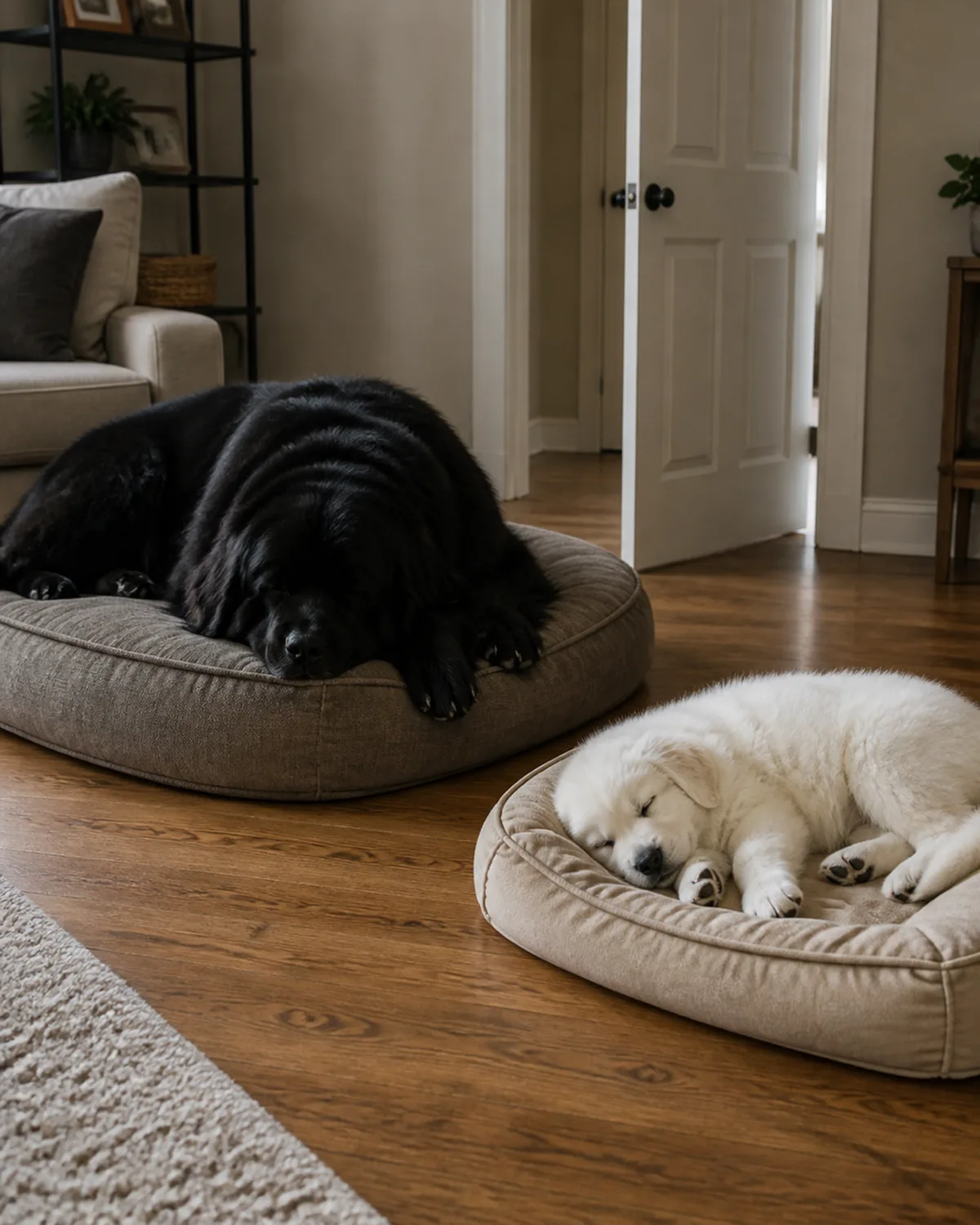
After two full weeks of supervised coexistence with zero incidents, start testing short absences. Leave the room for five minutes and return. If both dogs are calm and in the same positions, extend to fifteen minutes the next day.
Build the duration slowly. Five minutes, then fifteen, then thirty, then an hour. Any regression — growling, stiff posture, resource disputes, one dog avoiding the other — means you go back to the previous duration and hold there for another few days.
Rushing this step is how owners come home to a shredded dog bed, a terrified puppy under the couch, and a vet bill that did not need to happen. The dogs will tell you when they are ready. Your job is to listen instead of project.
Know When to Ask a Professional for Help
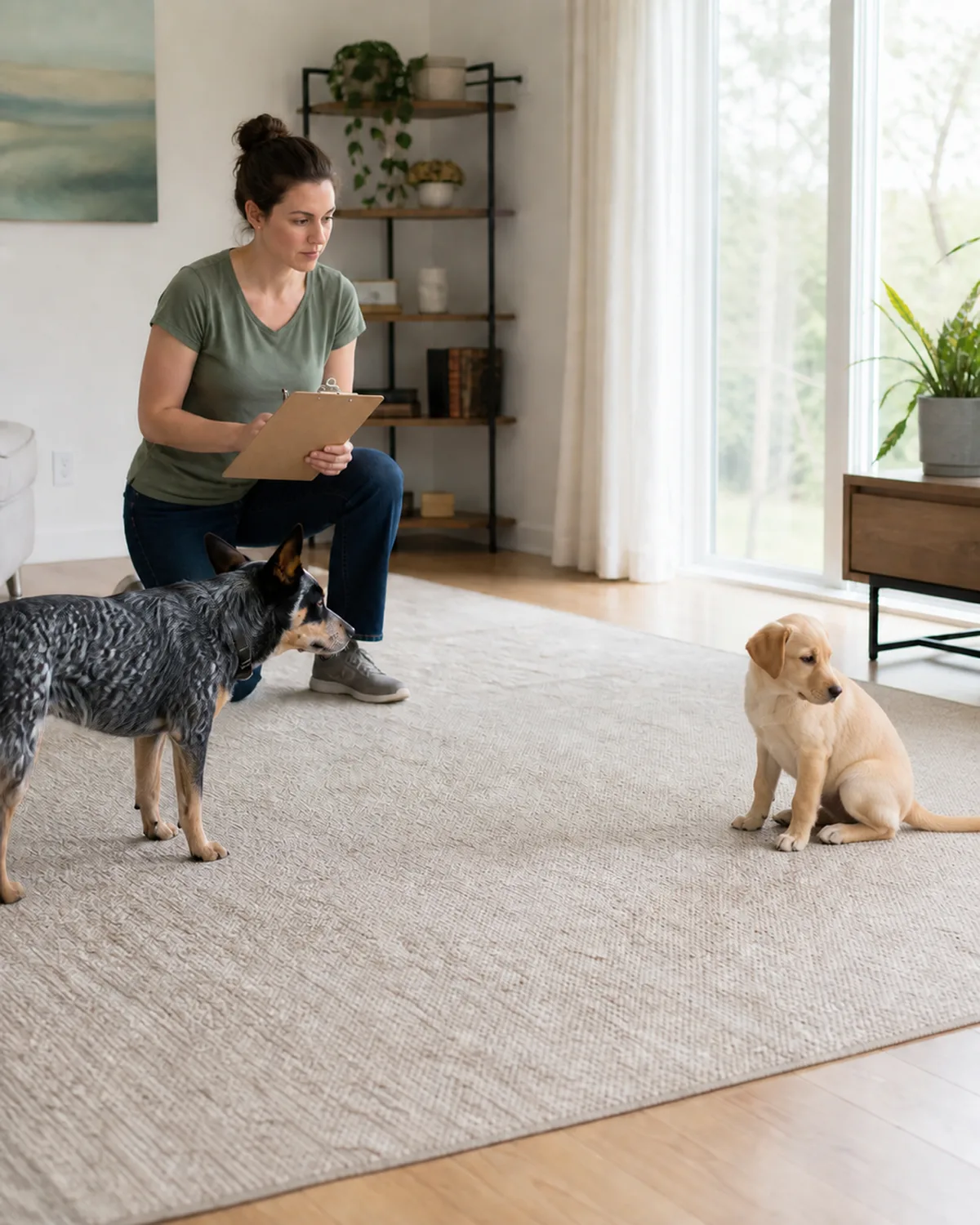
Not every introduction goes smoothly, and that is not a failure on your part. Some dogs need more time. Some dog pairs need professional guidance to bridge a gap that patience alone cannot close.
Call a certified dog behaviorist — not a general obedience trainer, but someone certified in canine behavior assessment (look for CAAB, ACVB, or IAABC credentials) — if the resident dog shows sustained stiff-body staring or low growling after two full weeks with no improvement.
Call if any snap makes physical contact with skin or fur. Call if the puppy consistently avoids the adult by hiding under furniture, refusing to enter rooms, or showing chronic stress signals like excessive yawning and whale eye.
Early intervention is easier and far less expensive than waiting until the relationship has calcified into hostility. A good behaviorist can assess the dynamic in a single session and give you a plan that is specific to your dogs, your home, and your daily routine.

Written by Jess
Dog mom to three very different dogs, none of whom agreed to share a bed without a structured introduction first. Every step in this guide came from trial, error, and eventually getting it right. Got a question? Reach out or find me on Pinterest.