I spent more on dog toys last year than I did on my own shoes. Then my youngest chewed through a twenty-dollar rope in forty minutes. That was the week I started making toys out of things I already owned.
Most DIY dog toys take less than ten minutes, cost nothing, and hold up better than you would expect. The ones in this guide use old t-shirts, socks, tennis balls, and whatever else is sitting in your donation pile.
Here are eleven DIY dog toys you can make at home with stuff you probably have right now.
Your DIY dog toy guide
11 homemade toys your dog will love
From braided fleece ropes and frozen towel chews to muffin tin puzzles and denim pocket pouches, these eleven DIY dog toys use materials you already have. Jump to whichever one fits your dog best.
1. Why DIY Dog Toys Are Worth the Effort
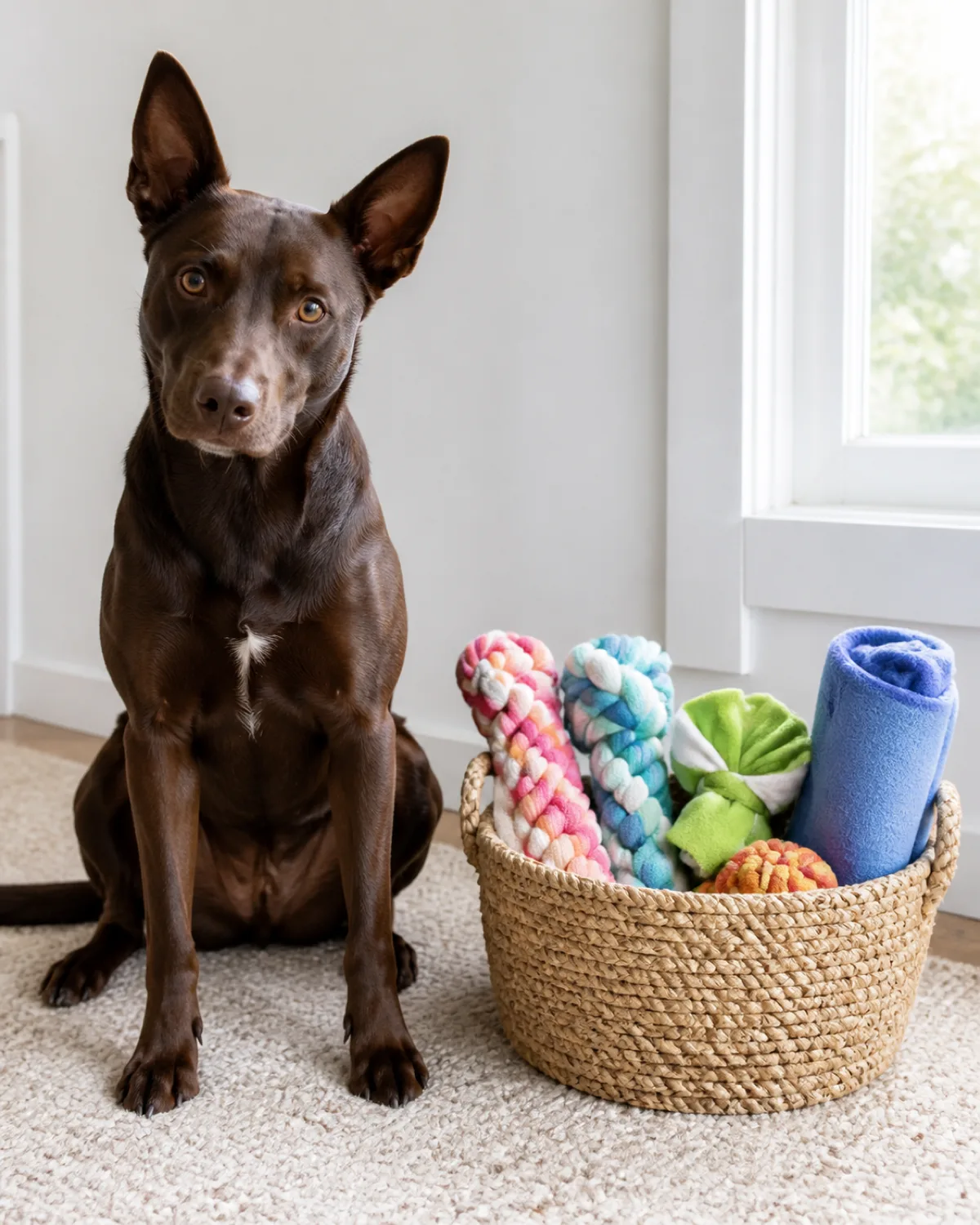
Store-bought toys have a shelf life measured in days around serious chewers. DIY toys cost nothing, take minutes to make, and you can rebuild them as many times as you want without feeling like you wasted money.
The bigger reason is mental. When you make a toy from a material your dog has never encountered — a crinkly water bottle inside a sock, a towel frozen into a twist — the novelty factor resets. Dogs get bored with familiar textures the same way kids stop playing with last month's birthday present.
- Zero cost means you can replace a destroyed toy in five minutes instead of driving to the store
- You control the materials, which matters if your dog has allergies or sensitivities
- Building the toy becomes a ritual your dog starts recognizing
DIY does not mean flimsy. Some of the toughest toys I have ever made were braided fleece ropes that outlasted their store-bought versions by weeks. The trick is matching the build to your dog's chewing style, which the last section of this guide covers.
Pick your dogs play style and start there
Which toy should you make first?
You do not need all eleven at once. Match your dog's natural play pattern to the right starting point.
2. The Braided Fleece Tug Rope
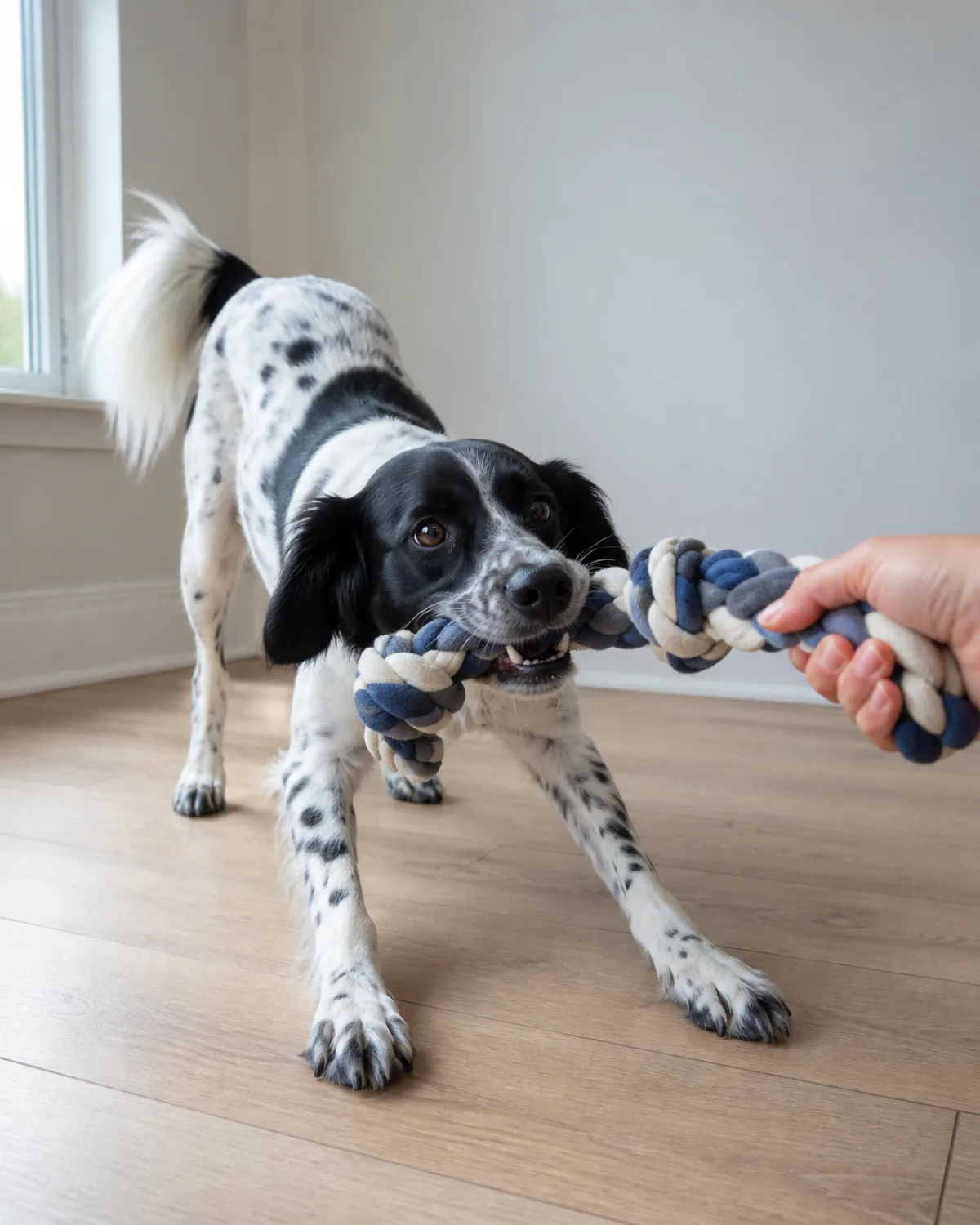
This is the one I start everyone with because it takes five minutes and lasts longer than any rope toy I have bought.
Cut three strips of fleece fabric about two inches wide and thirty inches long. Tie them together at one end with a tight overhand knot. Braid the three strips — standard three-strand braid, same as hair — pulling each cross tight so there is no slack. Tie a second overhand knot at the bottom and trim the fringe.
The result is a tug rope that has some give but does not shred the way cotton ropes do. Fleece fibers compact instead of fraying, so you get a toy that wears down evenly rather than shedding long strings your dog could swallow.
- Use fleece blankets, old scarves, or dollar-store fleece by the yard
- Three strips for a standard braid or four strips for a round braid that suits bigger dogs
- Leave about four inches of loose fringe on each end for grip
- Machine wash when it gets grimy — fleece dries fast
One thing to watch: if your dog is a shredder who tears fabric apart and eats the pieces rather than tugging, skip this one and go straight to the frozen towel or the tennis ball dispenser. Tug toys assume your dog pulls and releases, not strips and swallows.
3. The Stuffed Sock Crinkle Toy
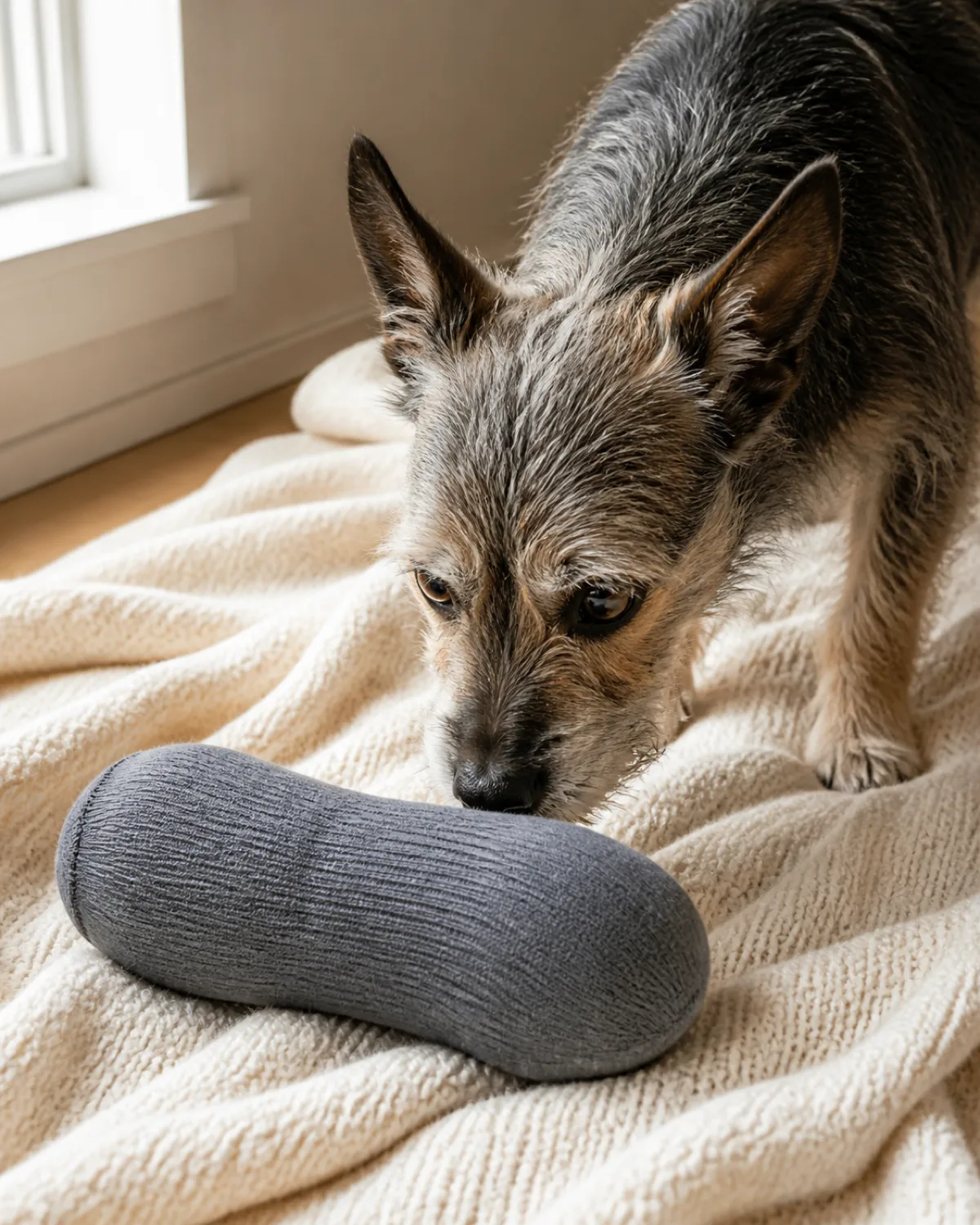
Dogs love crinkle because the unpredictable sound triggers prey drive. Store-bought crinkle toys hide a thin plastic sheet inside plush fabric. You can do the same thing with a sock and a water bottle.
Take an old sock — a knee-high works best because you get more length to knot. Stuff a cleaned, empty plastic water bottle inside so it sits in the toe. Tie a single overhand knot above the bottle to trap it. If the sock is long enough, tie a second knot for extra security.
When your dog bites down, the bottle crinkles and crackles. When the bottle gets crushed flat and the sound dies, untie the sock, drop in a fresh bottle, retie. The sock is the permanent housing. The bottle is the replaceable cartridge.
- Remove the bottle cap and the plastic ring first — those are choking hazards
- A sixteen-ounce bottle works for medium dogs; use a smaller one for toy breeds
- Replace the bottle the moment it cracks open — sharp plastic edges can cut gums
- Dust a few homemade dog treat crumbs inside the sock for a smell layer
4. The Muffin Tin Puzzle
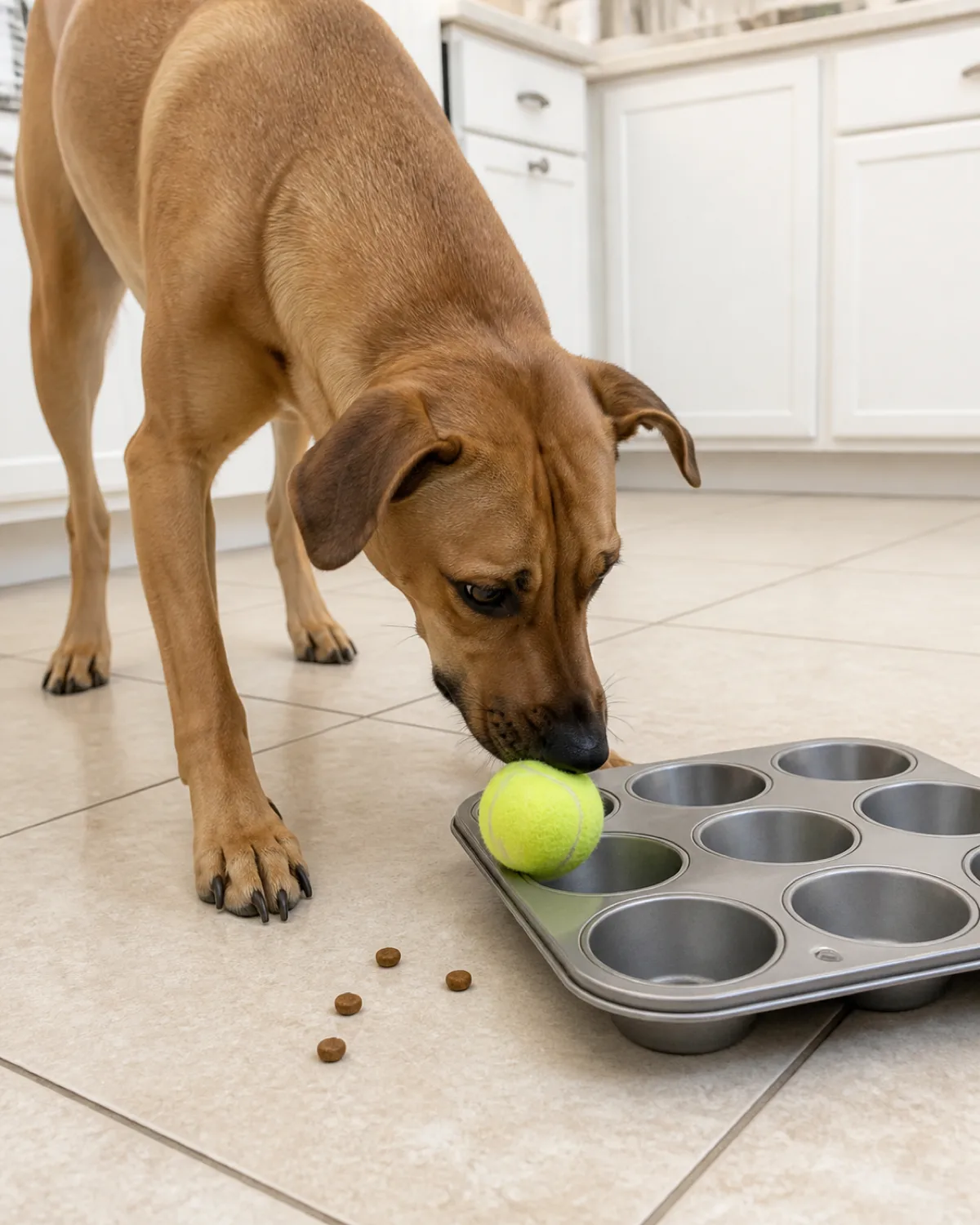
This one is not a toy you build permanently — it is a setup you arrange in sixty seconds using things already in your kitchen. Put small treats or kibble in three or four cups of a standard muffin tin, then cover each cup with a tennis ball.
Your dog has to nudge, nose, or paw the tennis balls out of the cups to reach the food underneath. It sounds basic, but it genuinely tires out dogs who are mentally bored. My youngest was exhausted after her first round and barely moved from the couch for an hour afterward.
- Start with three cups covered so your dog learns the concept before the full tin challenge
- Use the shallowest muffin tin you own — deep cups make it frustrating for flat-faced dogs
- Swap tennis balls for crumpled paper wads if your dog is a gentle nudger
- Supervise the first few rounds to make sure your dog is not trying to eat the tennis balls
This overlaps with some of the brain games for dogs you might already know, but the muffin tin version uses zero specialized equipment and takes less time to set up than any puzzle feeder.
Before you build anything
3 safety rules for every DIY dog toy
Supervise the first sessionWatch how your dog interacts with the new toy for the first ten minutes. Tuggers are fine unsupervised with rope toys. Shredders who rip and eat need supervision every time.
Retire it before it breaks apartThe moment stuffing shows, fabric tears into strips, or plastic cracks open, the toy is done. A destroyed toy is not a well-loved toy — it is a choking hazard waiting to happen.
Skip small parts entirelyNo buttons, no beads, no googly eyes. Nothing that can detach and be swallowed. Every toy on this list is made from solid single-piece materials for exactly this reason.
5. The Frozen Towel Chew
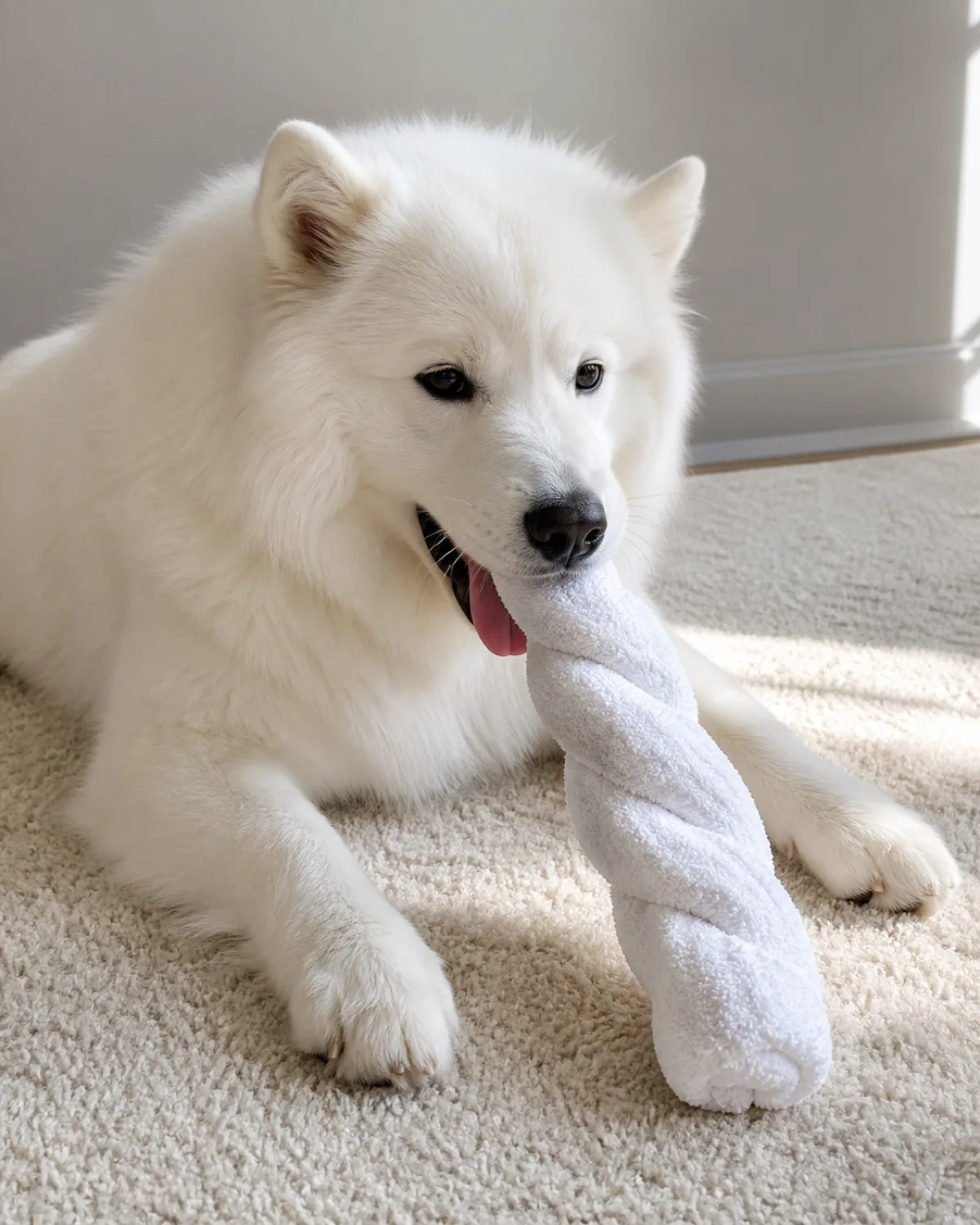
Wet a small hand towel, wring it until it is damp, twist it into a tight spiral, and put it in the freezer for three hours. What comes out is a hard, cold chew that soothes gums, keeps your dog busy, and costs nothing.
This is particularly good for puppies going through teething because the cold numbs sore gums without any medication. If you have a puppy who is currently dealing with teething pain, the frozen towel is one of the fastest things you can hand them.
For adult dogs, the frozen towel works as a warm-weather cooldown tool. On hot days, freezing two or three towels in rotation means your dog always has a fresh one.
- Use an old hand towel, not a bath towel — too much fabric unfrozen is a tangling hazard
- Twist tight before freezing so the towel holds its shape instead of freezing flat
- Offer on tile or hard floor, not carpet — it melts and gets soggy
- Toss it when the fabric starts to fray or your dog tears off pieces rather than gnawing
6. The Tennis Ball Treat Dispenser
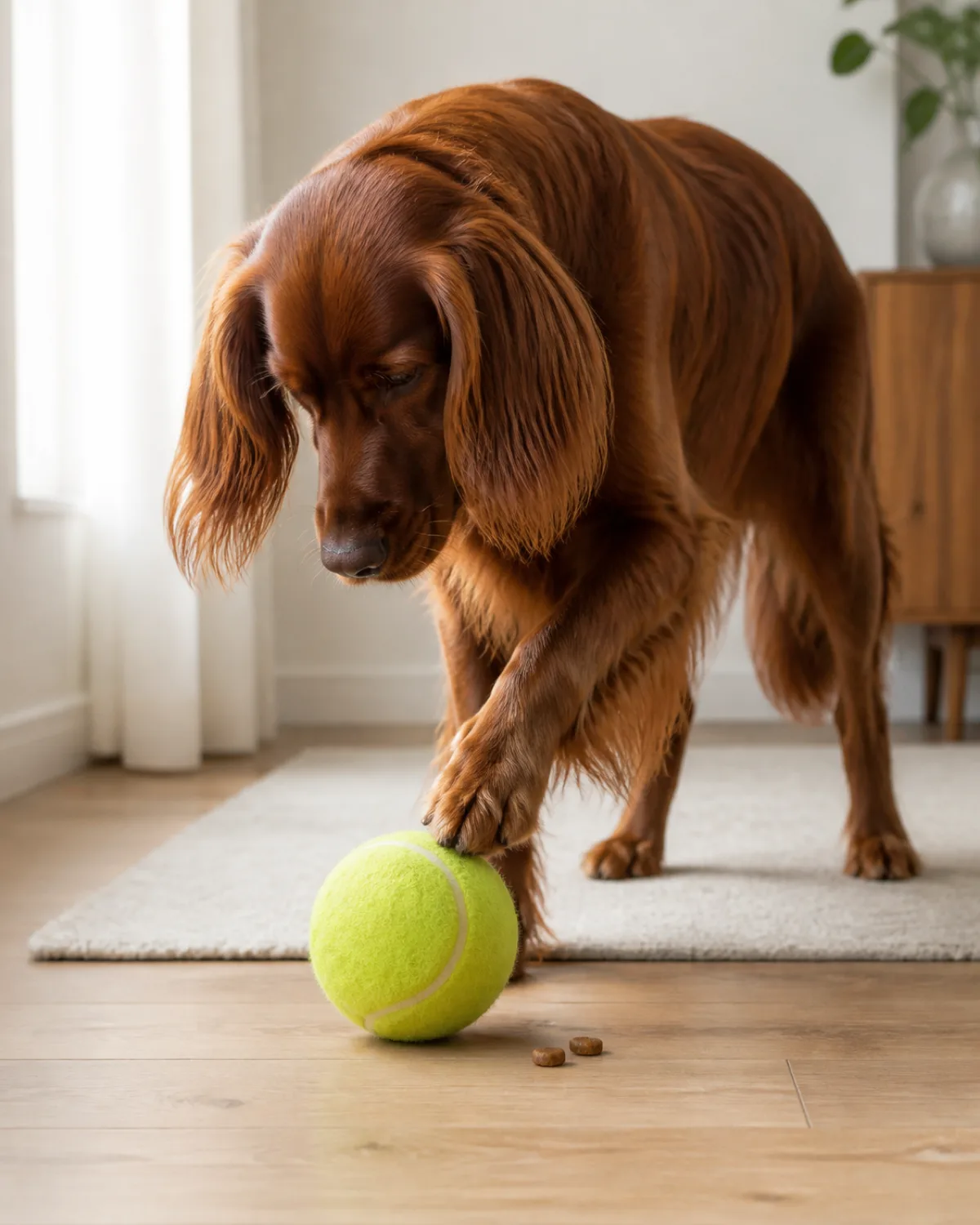
Cut a two-inch slit along one seam of a tennis ball with a box cutter or sharp knife. Squeeze the ball to open the slit and drop three or four small treats or kibble pieces inside. Release, and the slit closes on its own.
Your dog has to figure out how to squeeze, roll, or push the ball to get the treats out. It takes most dogs about five minutes to work it out the first time, and then they get faster with each session. The rubber naturally grips the treats, so they do not fall out when the ball rolls — your dog has to apply pressure.
- Use a standard tennis ball, not a mini one — the slit on a small ball is too tight for treats
- Cut along the existing seam for a cleaner slit that closes more reliably
- Fill with dry treats only — peanut butter or wet food jams up the slit and molds
- Replace the ball once the slit stops closing on its own or the felt is peeling off
This is the one I keep loaded in my bag for vet waiting rooms. It buys ten minutes of quiet focus, which is sometimes exactly what you need.
7. The Water Bottle Crunch Toy
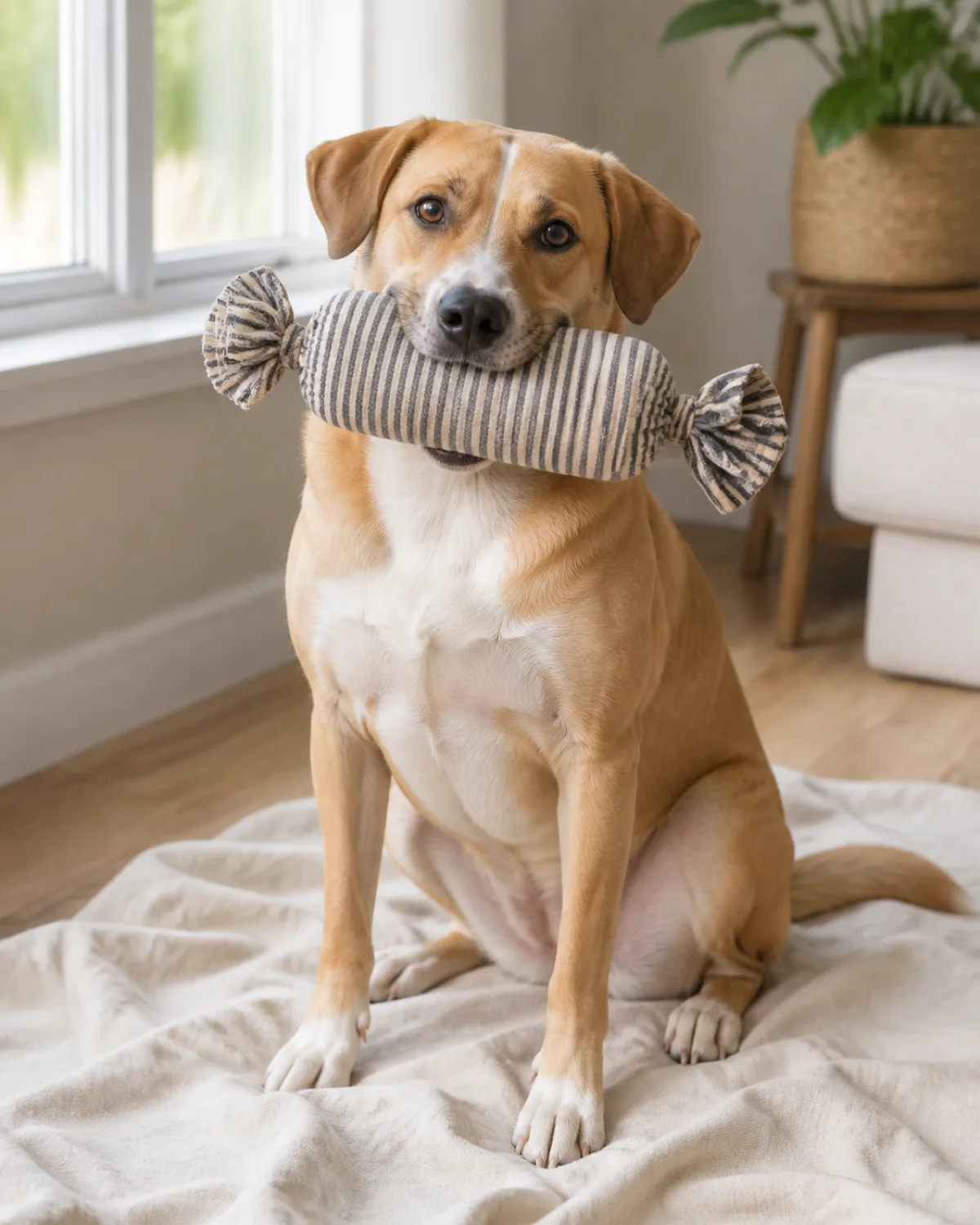
Different from the sock crinkle toy above — this one wraps the bottle in a fabric sleeve you can make from any sturdy cloth. Cut a rectangle of canvas, denim, or thick cotton about twelve inches by eight inches. Place the empty, capless bottle in the center, roll the fabric around it, and tie both ends with strips of the same fabric.
The result looks like a fabric-wrapped cracker and makes a satisfying crunch every time your dog bites down. The fabric sleeve protects your dog from sharp edges if the bottle cracks, and the tied ends give them something to grip and shake.
- Canvas or denim lasts longest — thin cotton wears through too fast
- Tie the ends tightly enough that the bottle cannot slide out but not so tight you cannot replace it
- Swap the bottle when it goes flat and loses its crunch
- If your dog rips fabric aggressively, monitor this one — the point is crunch, not destruction
The crunch sound is what makes this different from a regular tug toy. Some dogs who ignore fabric toys completely will go after this one because the auditory feedback keeps their interest loop going.
8. The No-Sew T-Shirt Rope
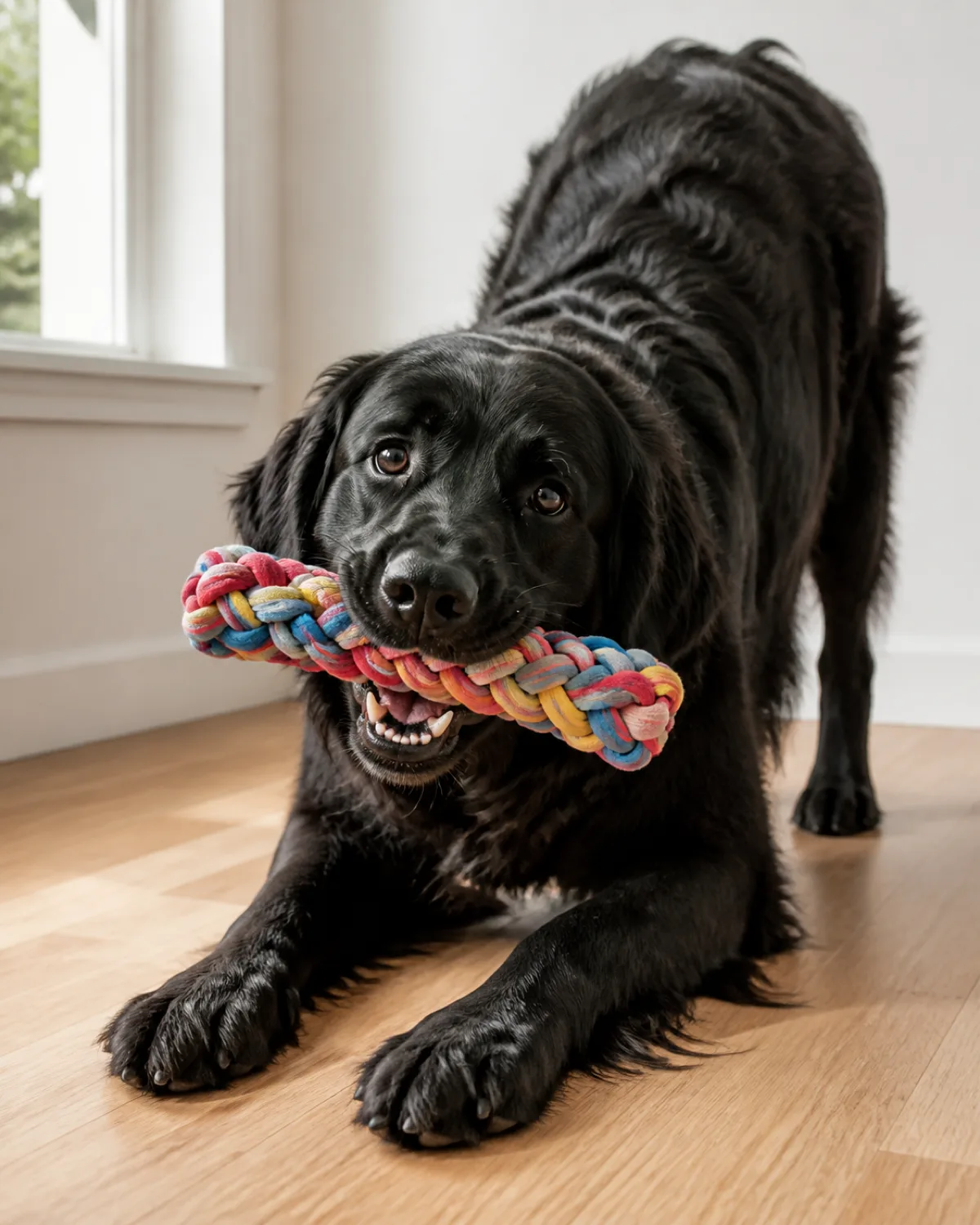
Old t-shirts stretch instead of fraying, which makes them one of the best free materials for a heavy-duty tug rope. Lay a t-shirt flat and cut it into one-inch horizontal strips from hem to armpit. You should get eight to twelve strips depending on the shirt size.
Bundle four strips together and tie an overhand knot about three inches from one end. Divide the four strips into pairs and start tying square knots — left over right, right over left, alternating pairs — until you run out of length. Tie off with a final overhand knot.
This produces a thick, stretchy rope that is noticeably tougher than the fleece version. The jersey knit material grips teeth without cutting into gums, and the square-knot pattern creates a bumpy texture dogs seem to prefer over smooth braids.
- Cotton t-shirts work better than polyester blends because they grip and do not slip
- Use two shirts in different colors for a stripe effect
- Wash in a mesh laundry bag to keep the knots from tangling with other clothes
- The stretchiness makes this one ideal for tug-of-war without jarring your dog's neck
9. The Cardboard Snuffle Box
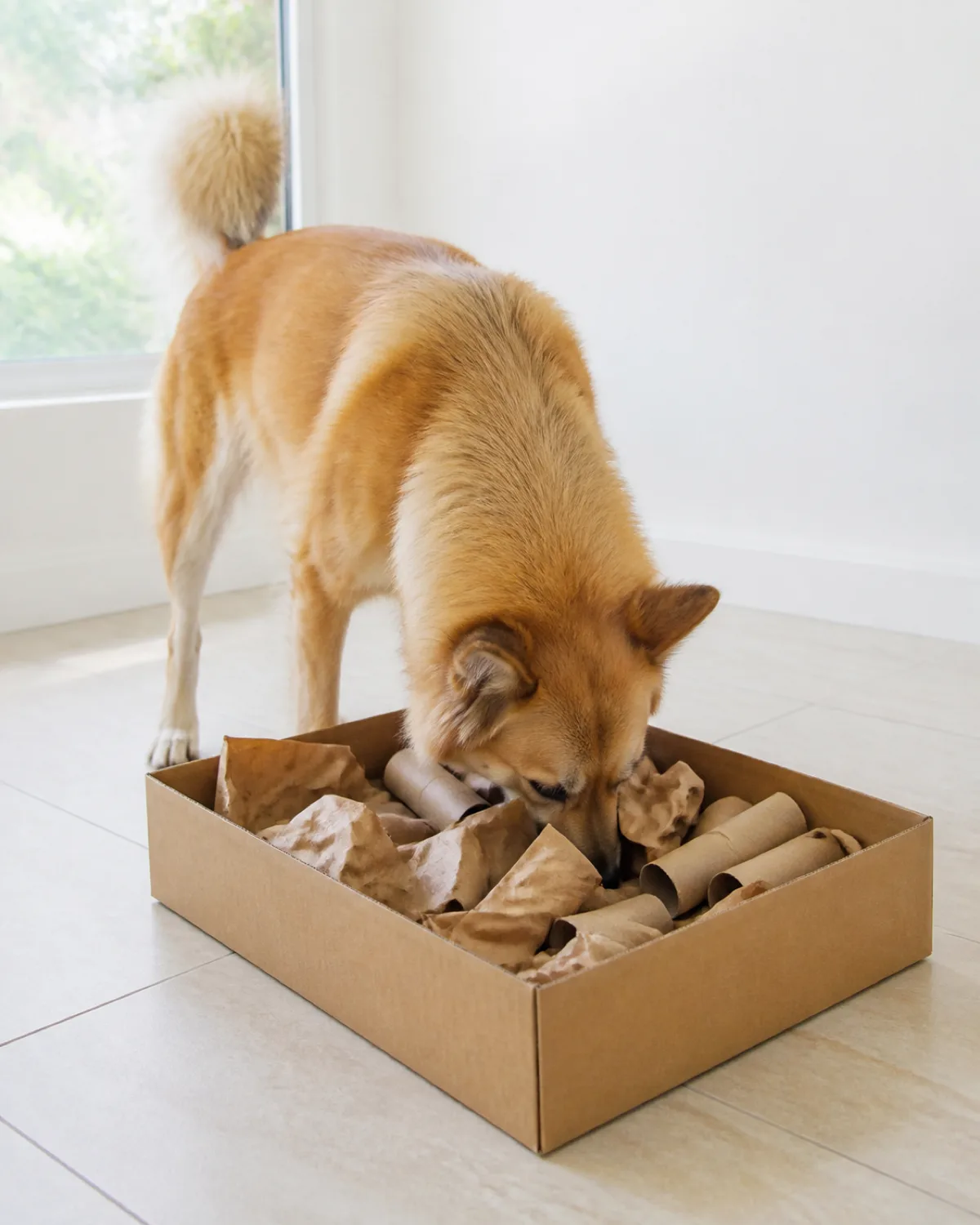
Take a shallow cardboard box — a shoebox works perfectly — and fill it with crumpled newspaper, paper towel tubes, small pieces of cardboard, and strips of fleece. Scatter kibble or small treats throughout the layers.
Your dog has to dig, nose, and paw through the layers to find every piece. This is a quieter version of a snuffle mat that you can throw away and rebuild in thirty seconds.
The novelty factor is what makes this work. Every time you rebuild it, you can change the materials — paper one day, fabric scraps the next, toilet paper tubes the day after. Your dog never quite memorizes the system because the system keeps changing.
- Remove any tape, staples, or stickers from the cardboard first
- Crumple the paper loosely — tightly packed paper frustrates dogs and makes them give up
- Start shallow with one or two layers and add depth as your dog gets better at foraging
- Toss the whole box when it gets wet or shredded and start fresh
If your dog needs more stimulation while you are away, this pairs well with the other enrichment ideas you might already have in rotation. The cardboard box is the disposable version you do not mind leaving unsupervised.
Save this for later
11 DIY Dog Toys to Make at Home
- 1Start with whyZero cost, instant replacement, and the novelty resets your dog's interest every time.
- 2Braided fleece tug ropeThree strips, two knots, five minutes. Compacts instead of fraying.
- 3Stuffed sock crinkle toyEmpty water bottle inside a sock. Replace the bottle when it goes flat.
- 4Muffin tin puzzleTennis balls over kibble in a muffin tin. Sixty seconds to set up.
- 5Frozen towel chewTwisted damp towel, frozen three hours. Soothes teething gums.
- 6Tennis ball treat dispenserSlit a tennis ball, drop treats in. Your dog squeezes them out.
- 7Water bottle crunch toyFabric-wrapped bottle for a satisfying crunch without sharp edges.
- 8No-sew t-shirt ropeSquare-knotted jersey strips. Stretchy, tough, and gentle on gums.
- 9Cardboard snuffle boxShoebox plus crumpled paper plus hidden treats. Disposable and rebuildable.
- 10Denim pocket chew pouchBack pocket off old jeans, fold treats inside. Ten to fifteen minutes of work.
- 11Match the toy to your dogTuggers get ropes, foragers get puzzles, chewers get frozen towels.
10. The Denim Pocket Chew Pouch
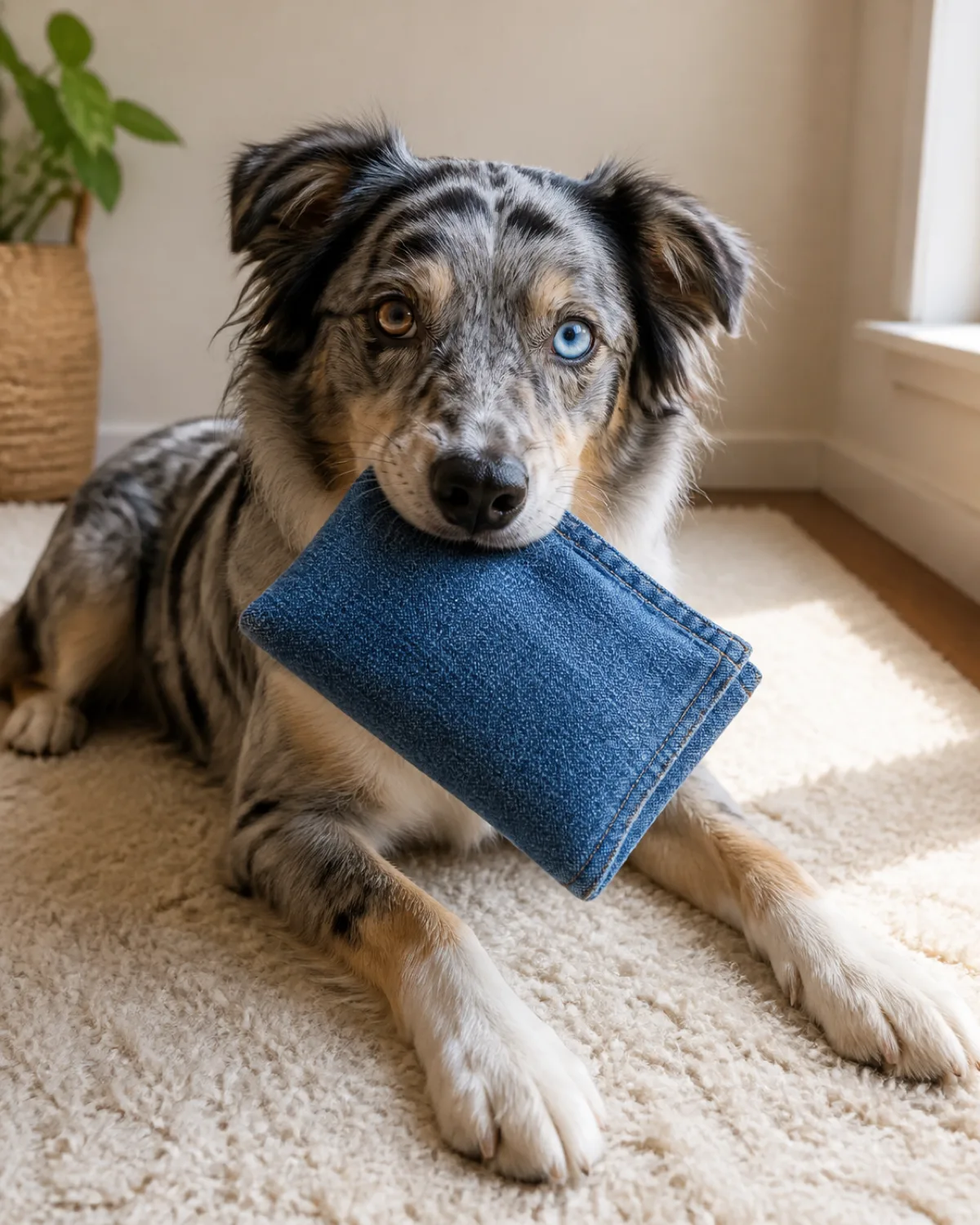
Cut the back pocket off a pair of old jeans. You now have a small denim pouch with one open side. Drop a few treats inside and fold the top edge over once. The denim is thick enough to slow your dog down but not so thick that they give up.
The pocket seams are already reinforced with double stitching, which is why this holds up better than a random piece of fabric folded around treats. Your dog has to work the fold open or chew through the denim to reach the food inside, and most dogs will spend ten to fifteen minutes on it before they succeed.
- Use the back pocket — it is thicker and has stronger stitching than front pockets
- One fold at the top is enough; more folds make it too hard and your dog loses interest
- Wash the denim first to remove any detergent residue or chemicals
- Replace when the seams start pulling apart or the denim gets thin enough to tear into strips
This is a good option for dogs who finish puzzle toys too fast. The denim creates just enough resistance to turn a two-minute treat into a fifteen-minute project. If your dog tends to get bored during the workday, the denim pouch pairs well with other ways to keep your dog busy while at work.
11. How to Match a DIY Toy to Your Dog
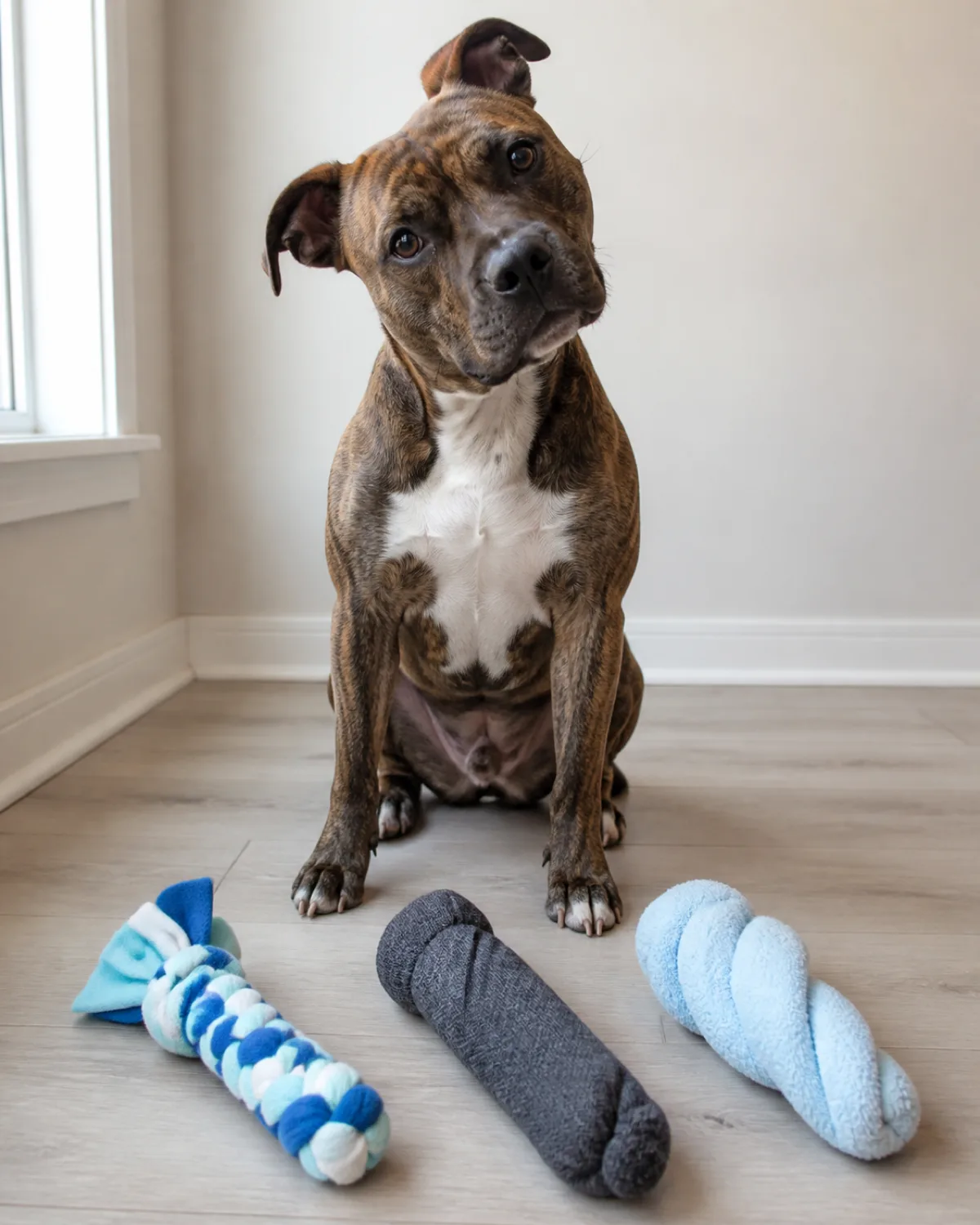
Not every toy on this list works for every dog. Aggressive chewers will tear through the sock crinkle toy in minutes but do well with the frozen towel or the tennis ball dispenser. Gentle mouthers might ignore the denim pouch but spend thirty minutes on the cardboard snuffle box.
The way to figure it out is to watch what your dog does with the toy in the first two minutes. If they tug and pull, lean toward the rope toys. If they nose and nudge, the puzzles will hold their attention. If they gnaw and compress, the frozen towel and water bottle crunch are the right fit.
-
Tuggers and shakers — braided fleece rope, no-sew t-shirt rope
-
Nuzzlers and foragers — muffin tin puzzle, cardboard snuffle box
-
Chewers and gnawers — frozen towel, denim pocket pouch
-
Crunch-seekers — water bottle crunch toy, stuffed sock crinkle
-
Treat-motivated problem solvers — tennis ball dispenser, muffin tin puzzle
-
Make two or three from different categories and rotate them daily
-
Retire a toy the moment your dog starts eating pieces instead of playing with it
-
Rebuild or replace every few days — even the best toy loses its novelty after a week
Dogs who currently chew furniture or baseboards often redirect onto a frozen towel or a t-shirt rope because those textures give them the jaw resistance they are looking for without the consequence.

Written by Jess Calloway
Dog mom to three very different dogs. Every guide on Pawliqa is based on real experience, veterinary guidance, and way too many hours reading ingredient labels. More about Jess