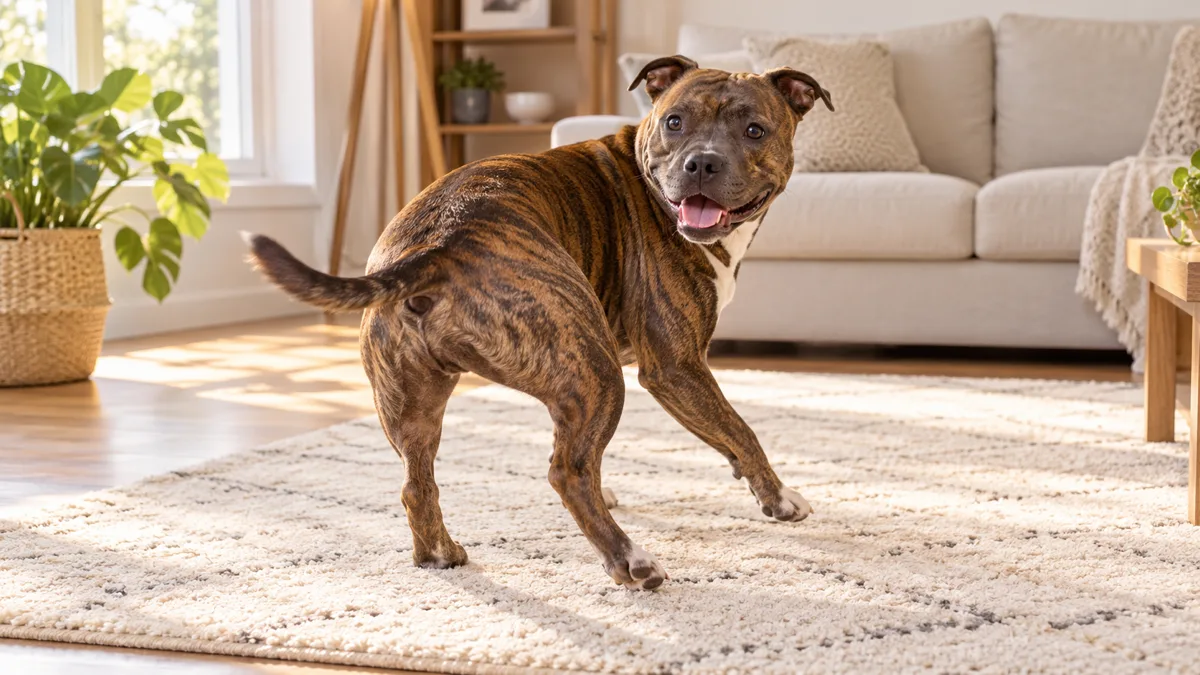
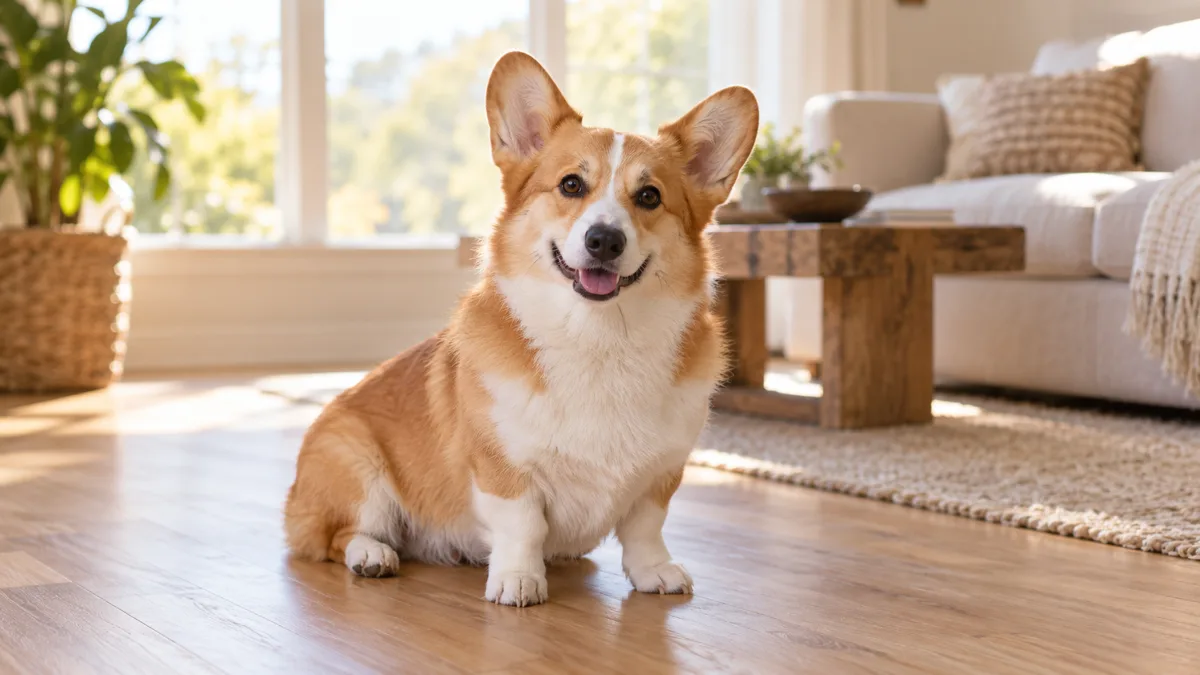
Your dog is four, or six, or nine years old and has never learned a single command. Or maybe it learned them once and forgot because nobody practiced. Either way, somewhere along the line someone told you it was too late.
It is not too late. The idea that older dogs cannot learn has been repeated so often that people treat it like biology. It is not biology. It is a proverb from the 1500s, and it was wrong then, too.
Jump to a section
How to train an older dog
From debunking the myth to building trust, teaching core commands, and fixing long-standing habits, step by step.
The saying "you cannot teach an old dog new tricks" was first recorded in 1534 by a schoolmaster named John Fitzherbert who was writing about sheep husbandry, not canine cognition. Somehow it has survived five centuries as received wisdom.
A 2020 study at the University of Vienna tracked 95 Border Collies across their lifespans and found that adult dogs learned new labels for objects at the same rate as younger dogs. Their long-term retention was comparable. The difference was not in capability. It was in processing speed — older dogs sometimes needed a few more repetitions to fully embed a new behavior.
Your older dog has two advantages a puppy does not. First, a longer attention span. A twelve-week-old puppy can focus for roughly ninety seconds before a leaf or a shadow steals the moment. An adult dog can hold attention for ten to fifteen minutes without breaking.
Second, a deeper understanding of cause and effect. Your dog already knows that sitting near the kitchen counter produces scraps, that whining at the door produces a walk, that jumping produces attention. Those patterns prove it has been learning from its environment for years — just without your input.
Training an older dog is not about teaching a blank slate. It is about redirecting an experienced learner.
Why Your Approach Needs to Change (Not the Dog)
Training a puppy is like writing on a clean page. Training an older dog is like editing a draft that already has paragraphs in it. The skill is different, and so is the mindset.
Session length shifts. Puppies burn out in five minutes. Adult dogs can work productively for ten to fifteen minutes because their focus is steadier. But they also frustrate faster than puppies when something they have always done a certain way stops working. End sessions while the dog is still succeeding, not after a string of failures.
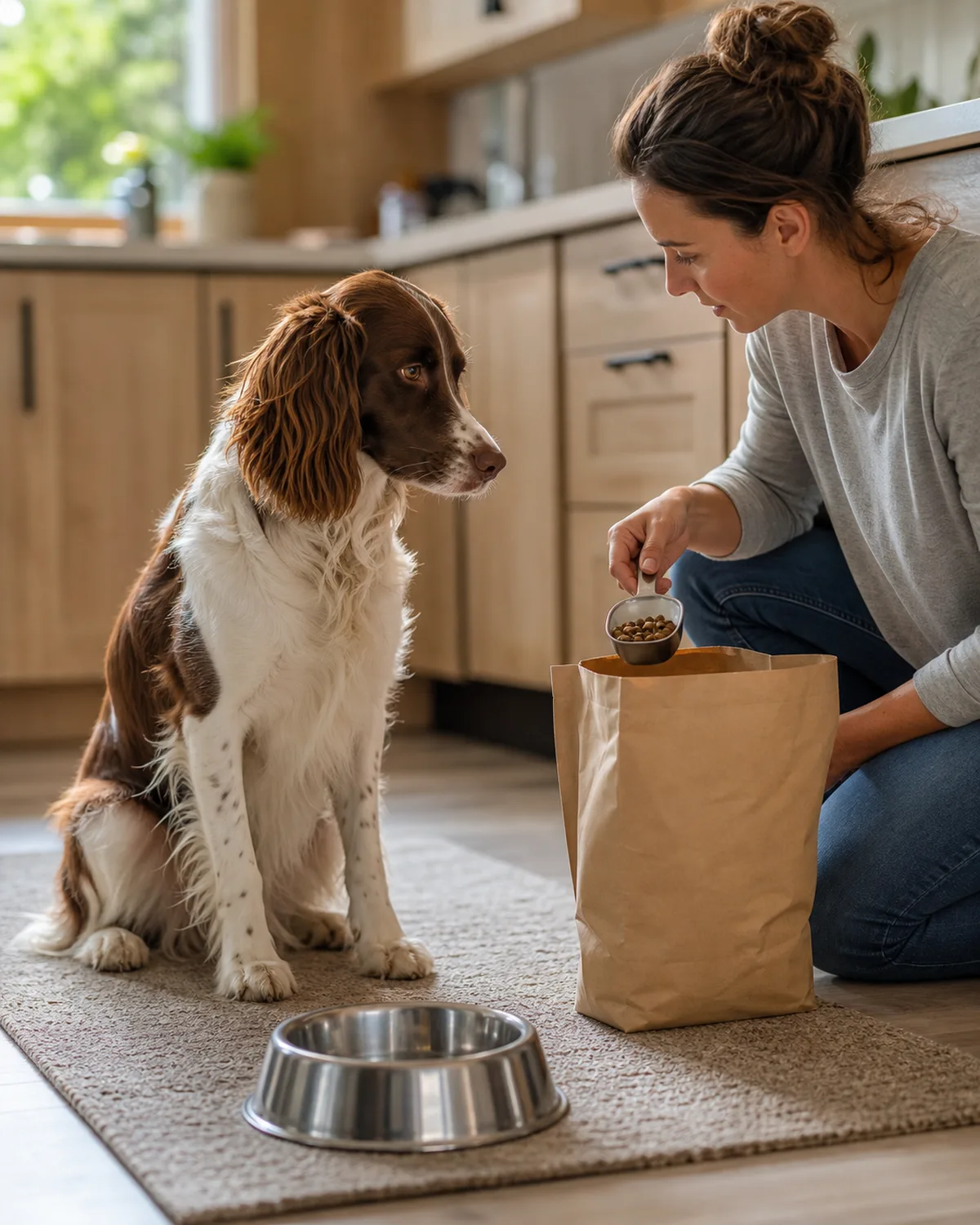
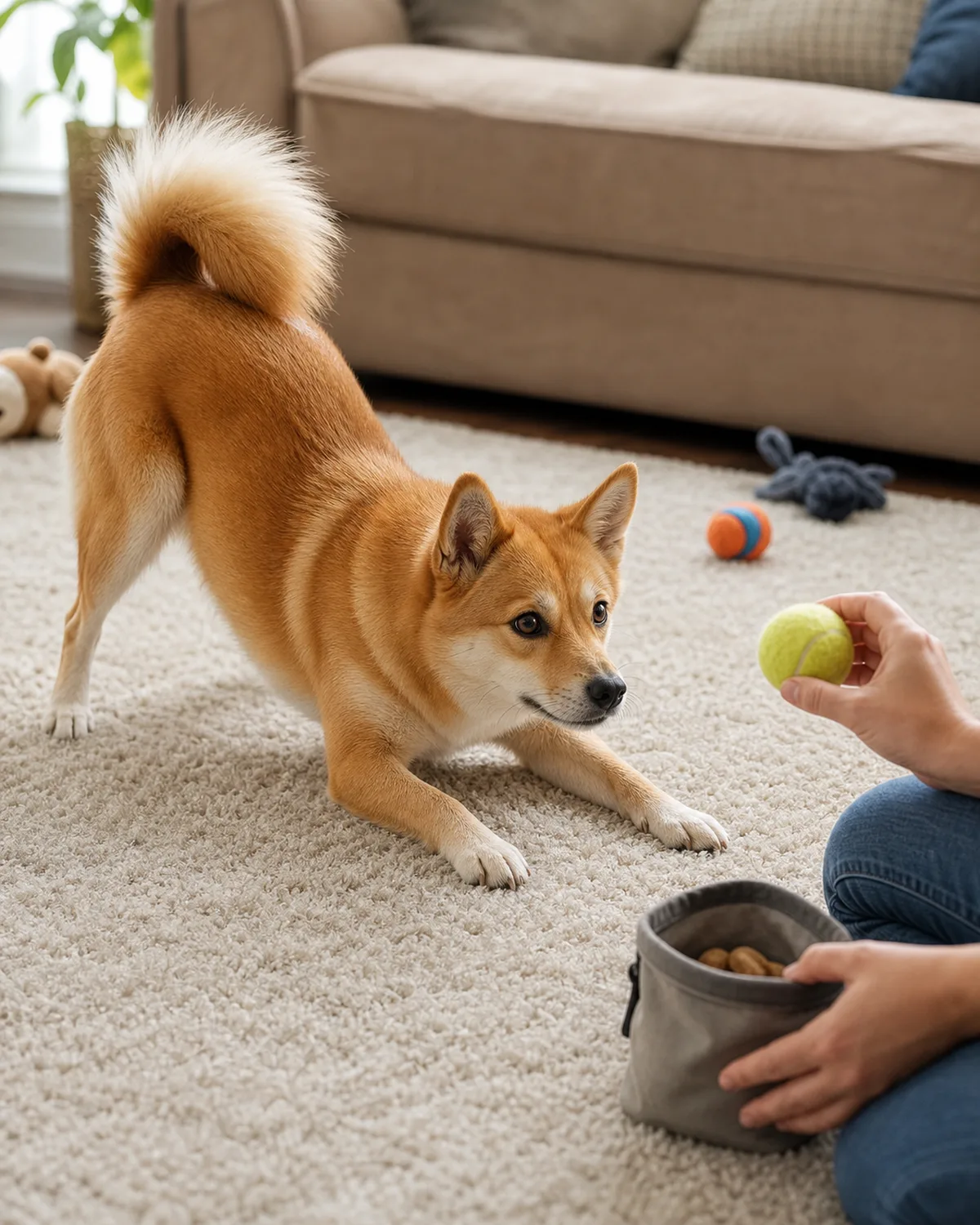
Reward specificity increases. A puppy will work for almost anything — kibble, praise, a pat on the head. An older dog has had years to develop strong preferences. Some dogs will do anything for a piece of chicken. Others could not care less about food but will run through fire for a tennis ball. Discovering this particular dog's currency is not optional — it is the foundation of every session.
Your timeline expands. A puppy with no history learns sit in a day. An adult dog that has spent three years ignoring the word sit while getting everything it wanted anyway is not learning a new behavior — it is overwriting an old one. Overwriting takes longer. That does not mean the dog is slow. It means the job is bigger.
Build Trust Before You Build Commands
If your dog is a recent adoption, or if it has lived in your home for years but has never been trained with positive methods, skip the obedience drills for now.
Spend the first one to two weeks doing nothing but building safety. Let the dog learn your rhythms — when you wake up, when you eat, when you leave, when you come back. Predictability is the foundation of trust, and trust is the foundation of training. A dog that does not trust you will comply out of fear, and compliance built on fear collapses the moment the pressure lifts.
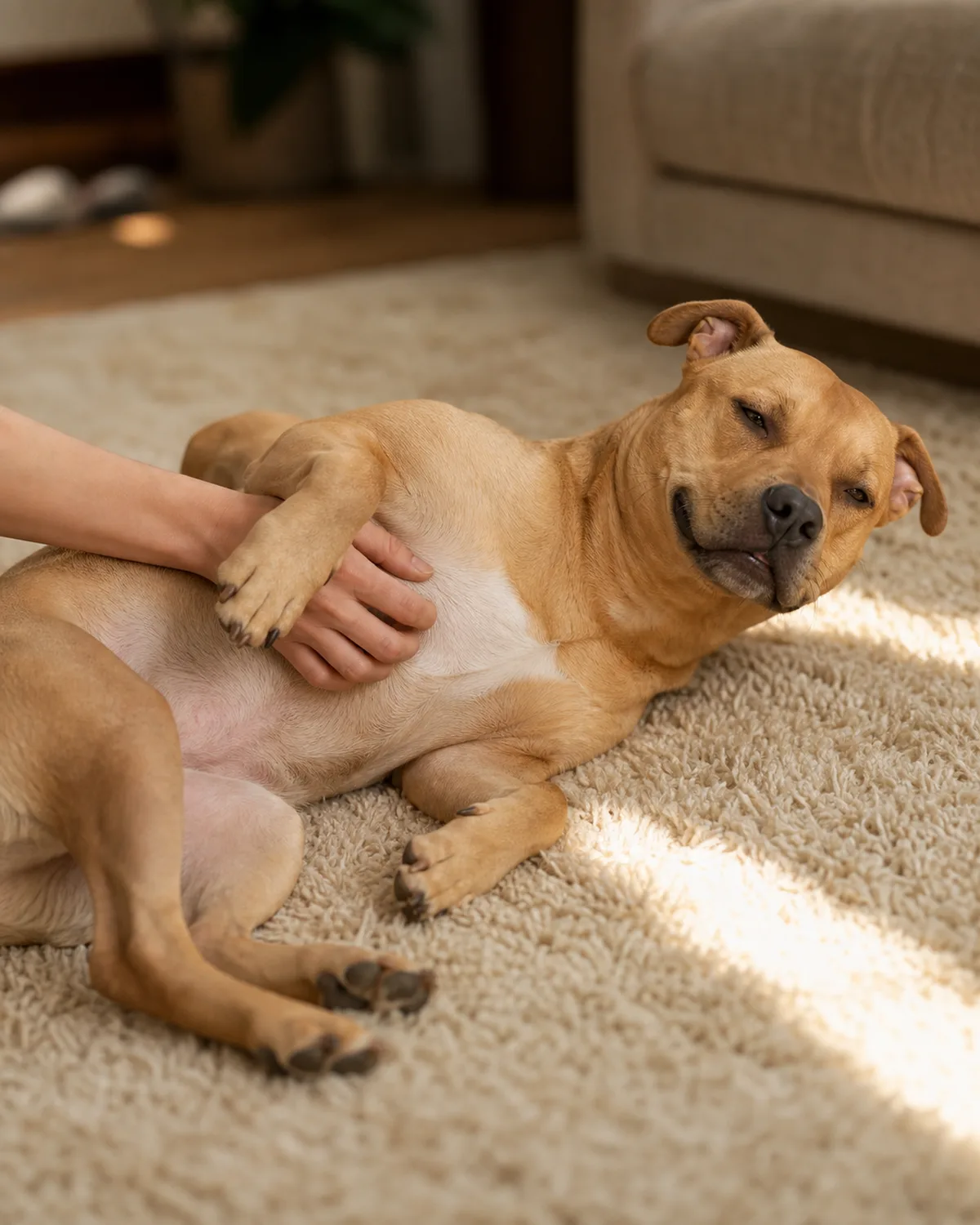
The signals that trust has taken hold are physical. The dog rolls onto its back near you. It approaches when you sit down without being called. It does not flinch or duck when you extend your hand. These are not tricks. They are the dog volunteering vulnerability, and vulnerability offered freely is the only honest starting point for training.
If you recently adopted a dog, the decompression period described in our guide on helping a newly adopted dog settle in applies here. That timeline — two weeks minimum — is not something to rush through to get to the fun training part. It is the training part.
Start With the Three Commands That Matter Most
Once trust is established, begin with three commands: sit, look at me, and recall. Not because they are basic, but because they are the ones your dog will use every single day.
Sit replaces jumping at the door, lunging at the leash, and mobbing the food bowl. When your dog knows that sitting is the behavior that produces everything good, half of your behavior problems disappear without ever being directly addressed.
Look at me gives you a reset button. When your dog is fixated on a squirrel, another dog, or a dropped piece of pizza, a reliable "look at me" pulls focus back to you. It is the single most underrated command in dog training.
Recall is a safety net. A dog that comes when called can be trusted with more freedom, which means a better life for both of you. For a detailed breakdown of building recall from scratch, see our guide on teaching a dog to come when called.
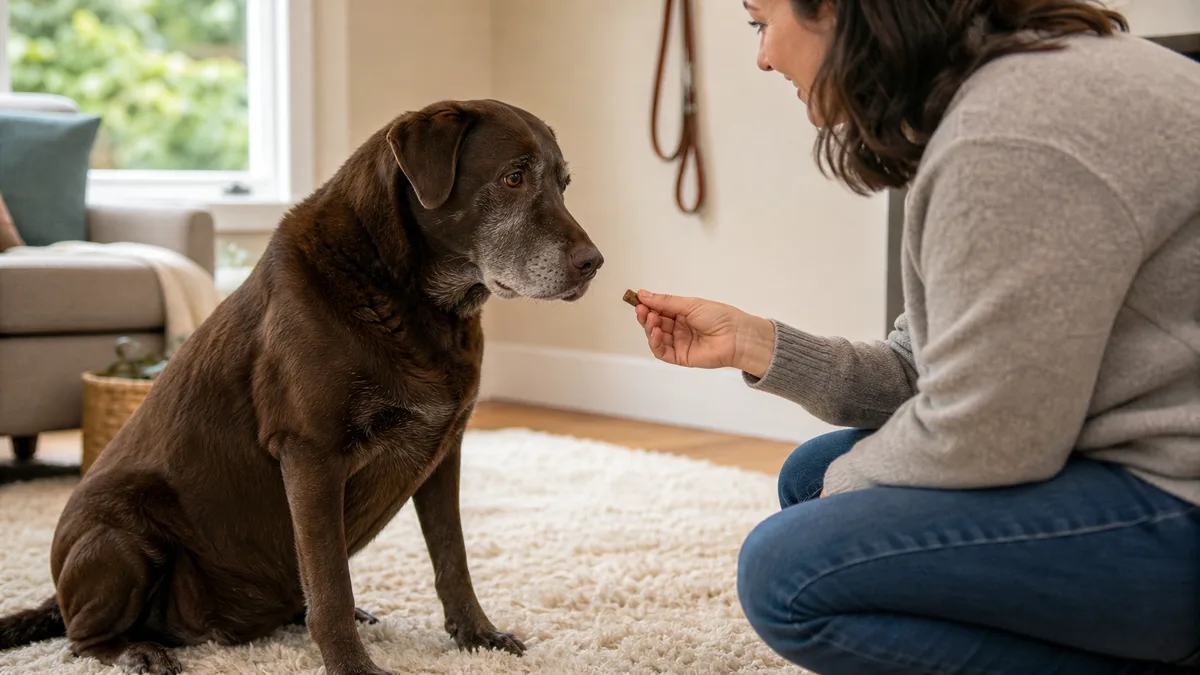
Teach each command with food luring, not physical positioning. Do not push a dog's rear end down to teach sit. Lure its nose up with a treat so the rear end goes down naturally. Mark the correct moment with a clear "yes" and deliver the reward. Three sets of five repetitions, spread across the day. Your dog will likely have sit within a few days and a basic recall within two to four weeks.
How to Fix a Habit Your Dog Has Had for Years
Leash pulling. Counter surfing. Jumping on guests. Barking at the mail carrier. If a behavior has been practiced for three or more years, you are not training — you are rewriting.
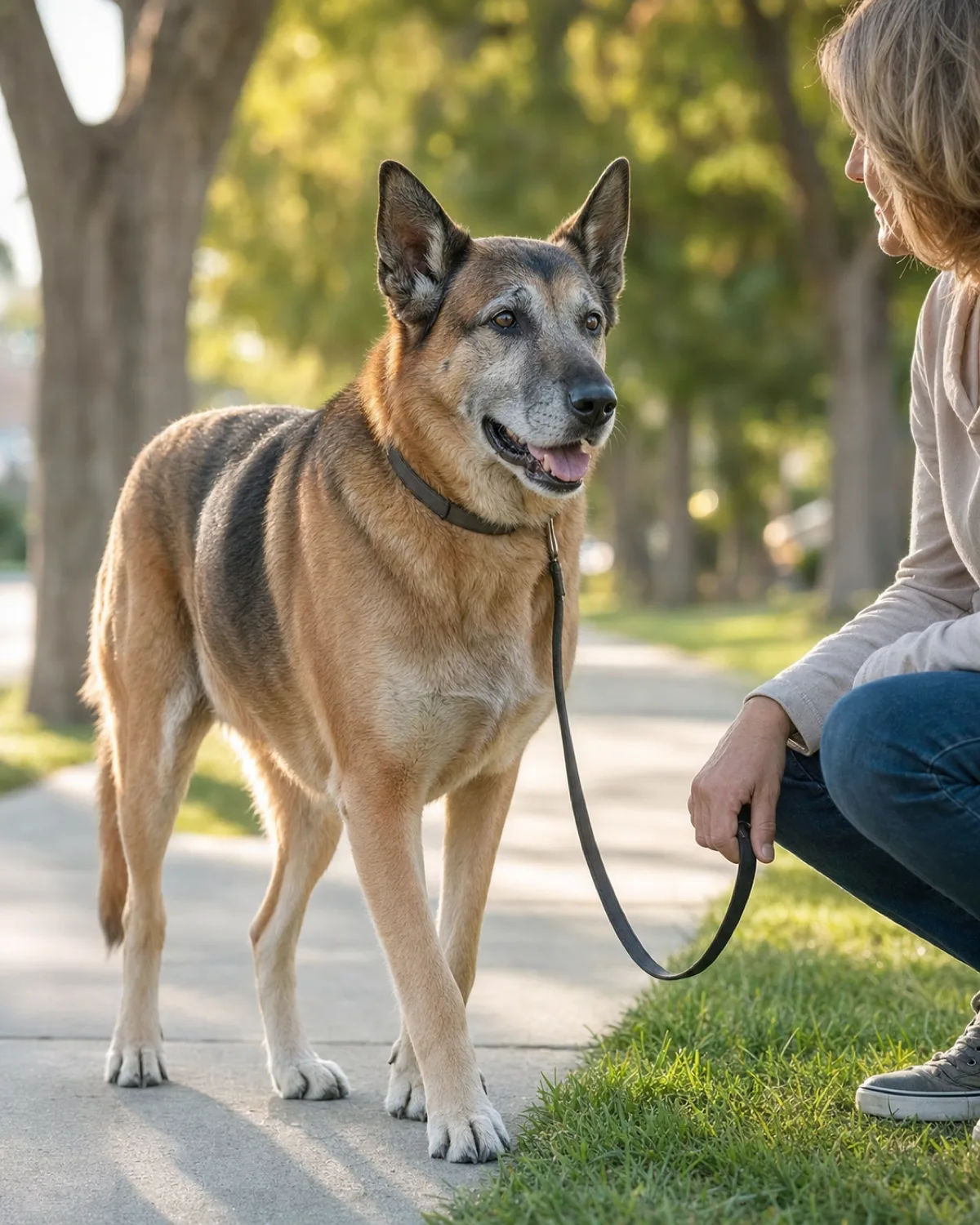
First, identify the replacement behavior. "Stop pulling" is not a behavior. "Walk next to me with a loose leash" is a behavior. "Stop jumping" is not a behavior. "Keep all four paws on the floor when someone enters" is a behavior. The dog needs to know what to do, not just what to stop doing.
Second, practice the replacement in the exact context where the old behavior happens. Teaching "four on the floor" in your quiet kitchen does nothing if you never practice it when an actual guest walks through the door.
Third, recalibrate your timeline. A habit that took three years to build will not dissolve in a weekend. Expect six to twelve weeks of consistent practice before you see stable change. Progress looks like the old behavior happening less often and the recovery time getting shorter — not like the old behavior vanishing overnight.
Which pattern fits your dog?
Your dog already does something you want to change — what is the pattern?
Identify the type of unwanted behavior so you can choose the right starting strategy.
SPECIFIC TRIGGERIt only happens in response to one thingDoorbell, other dogs, food dropped on the floor — the behavior is predictable and context-locked. Start by managing the environment: remove the trigger temporarily, practice basic obedience in calm conditions, then gradually reintroduce the trigger at low intensity while rewarding the replacement behavior.
ALL THE TIMEIt happens constantly, no single triggerNonstop pulling, persistent barking, constant digging with no clear cause. First rule out physical causes — pain, anxiety, thyroid issues — with a vet check. Then build the replacement behavior from scratch with consistent daily practice for six to twelve weeks.
Training Sessions for Dogs With Stiff Joints
A nine-year-old dog with mild arthritis in its hips can still learn new things. But the training setup has to respect its body.
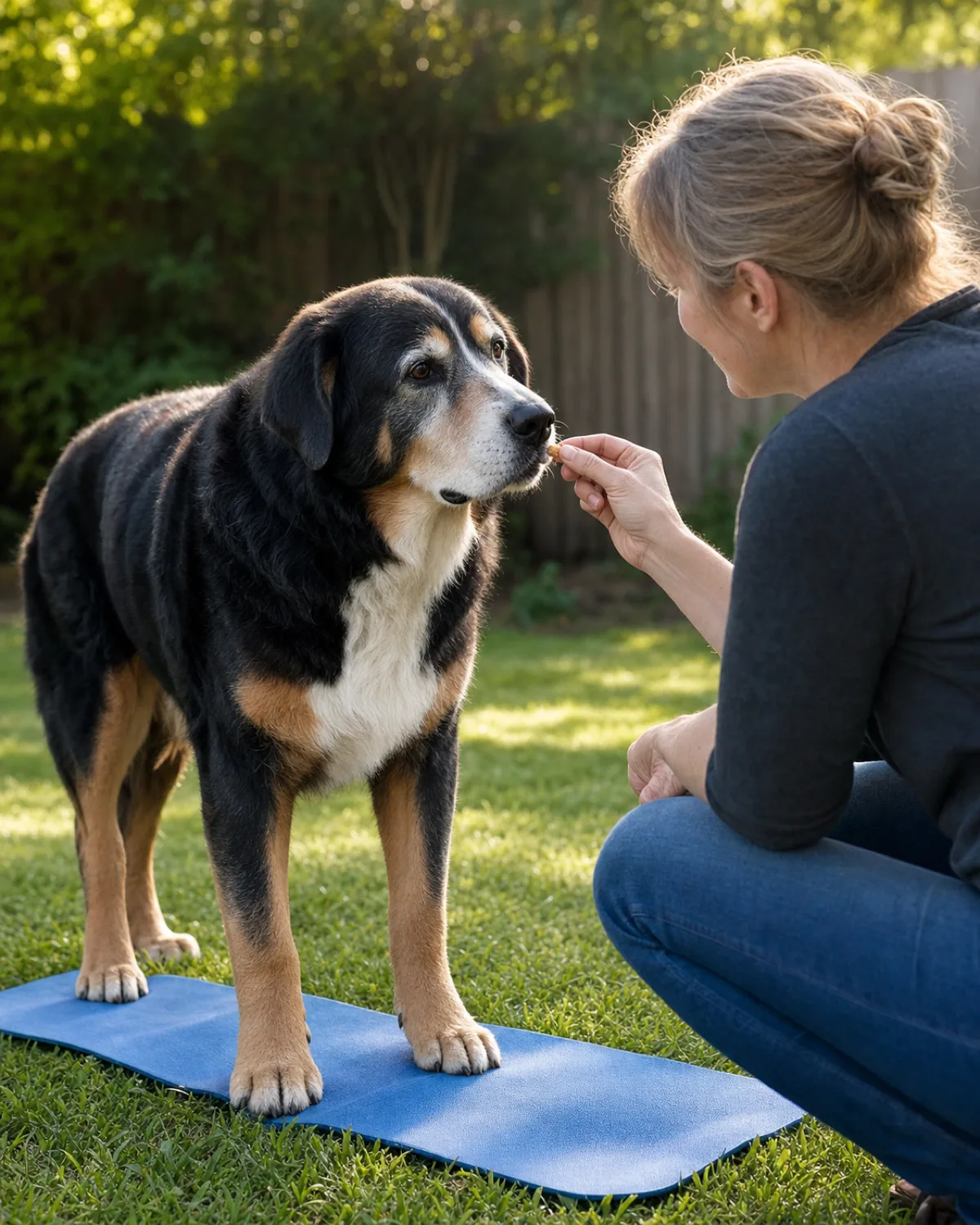
Train on soft surfaces. Carpet, grass, or a yoga mat on the floor. Hard tile and smooth hardwood are bad for aging joints and worse when those joints have to repeatedly sit and stand during a session.
Swap sit for stand-stay if sitting is uncomfortable. Not every command has to look textbook. If your dog's hips make sitting painful, teach it to stand still and hold position instead. The mental discipline is identical. The physical cost is lower.
Shorten sessions to five to eight minutes. An older dog's attention span is fine, but its body tires faster than its mind. Ending while the dog is still physically comfortable means it will look forward to the next session instead of dreading it.
Use soft, small treats. Aging teeth struggle with hard biscuits. Soft training treats broken into pea-sized pieces work for aging mouths and keep the calorie count manageable.
None of these adjustments mean you are going easy. They mean you are training smart. Mental exercise protects against cognitive decline in older dogs the same way it does in older humans. A dog that learns something new at nine is building neural pathways it would not build lying on the couch.
The Reward That Works for Your Dog (It May Not Be Food)
Most training guides default to treats. For most dogs, treats work. But an older dog — especially one from a specific background — may not care about food during training, and pushing food on a dog that is not food-motivated produces zero results.
Three reward categories exist, and every dog has a ranking.
Food. High-value means something the dog does not get at any other time. Boiled chicken, freeze-dried liver, string cheese. If you are using regular kibble as a training reward, you are asking the dog to work for its minimum wage.
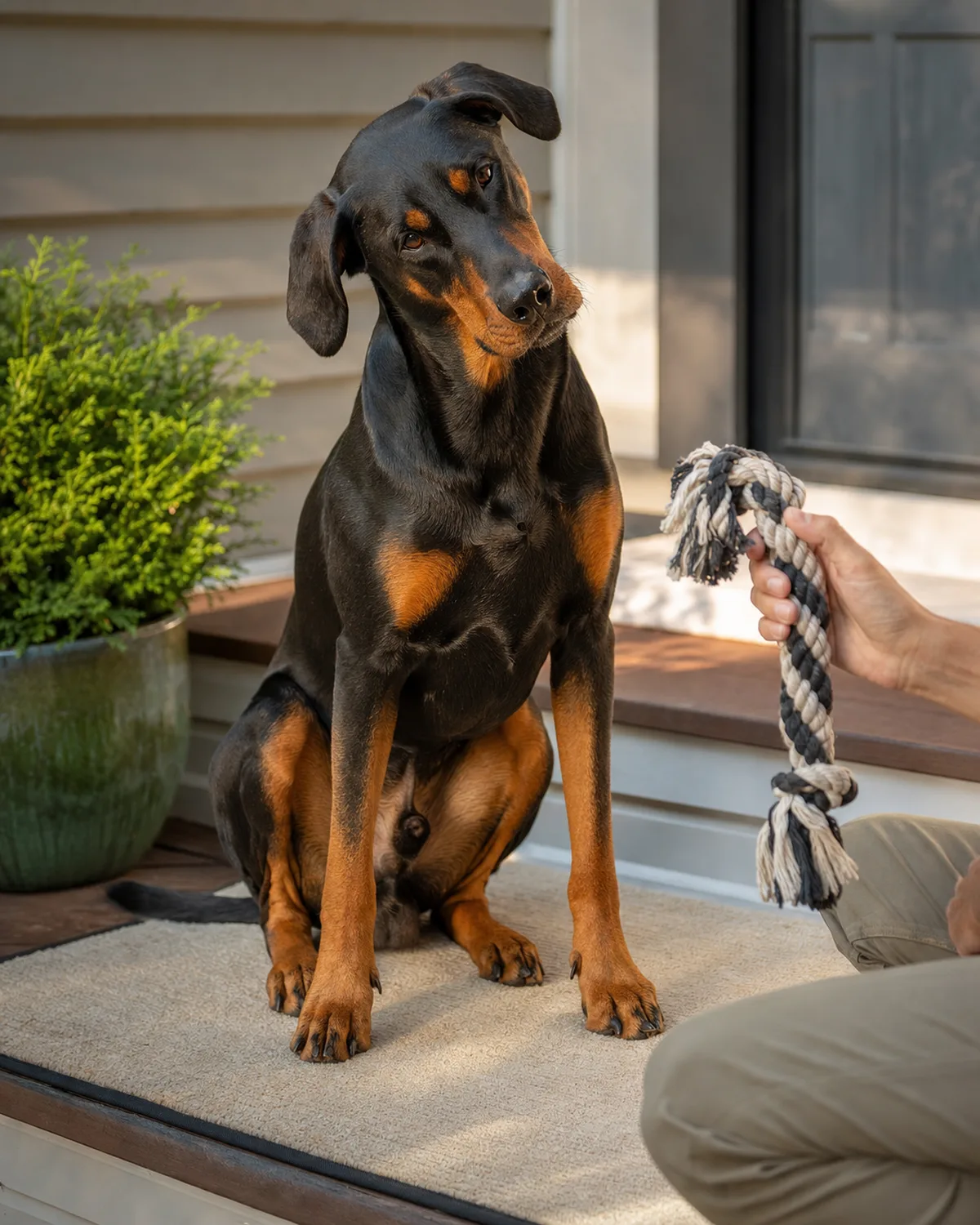
Toys and play. A thirty-second tug session, a ball throw, a chance to chase. Some dogs are wired to find a play reward more compelling than food. Watch the body language: if its eyes track the ball but ignore the treat, you have your answer.
Social reward. Verbal praise, physical contact, your sustained attention. For dogs deeply bonded to one person, a few seconds of focused praise and a chest scratch can outrank a piece of chicken.
Run the test. Put all three options in front of your dog at once. The one it goes to first, three times in a row, is its primary motivator. Use that as the default training reward and save the other two for breakthrough moments.
Ground rules
Older Dog Training Rules
The non-negotiables that keep training effective and safe for adult and senior dogs.
ALWAYS
Limit sessions to 10-15 minutes for adults, 5-8 for seniors
Build trust for 1-2 weeks before formal training
Work on one old habit at a time — never two simultaneously
Use this dog's highest-value reward, not a generic treat
Practice replacements in the real trigger context
Measure progress monthly, not daily
Train senior dogs on soft surfaces only
NEVER
Use choke chains, prong collars, or shock collars
Yell at or physically punish the dog
Force training when the dog is in pain or discomfort
Expect a years-old habit to disappear in one week
Skip the trust-building phase and jump to commands
Try to fix leash pulling, jumping, and barking all at once
What Realistic Progress Looks Like (Week by Week)
Weeks one and two. Trust building only. No formal commands. Mark and reward good behavior as it occurs naturally — your dog sits on its own, you say "yes" and give a treat. You are not teaching anything yet. You are loading the reward system.
Weeks three and four. Introduce sit and look at me in a quiet room with no distractions. Three short sessions per day. By the end of week four, most adult dogs will sit on the verbal cue alone, without the food lure, in that specific room.
Weeks five and six. Add recall, starting at three feet of distance indoors and gradually extending. Begin asking for sit in real-life moments — before meals, before the door opens, before the leash clips on.
Weeks seven and eight. Begin addressing one established behavior you want to change. Only one. Identify the replacement, practice in context, and stay consistent.
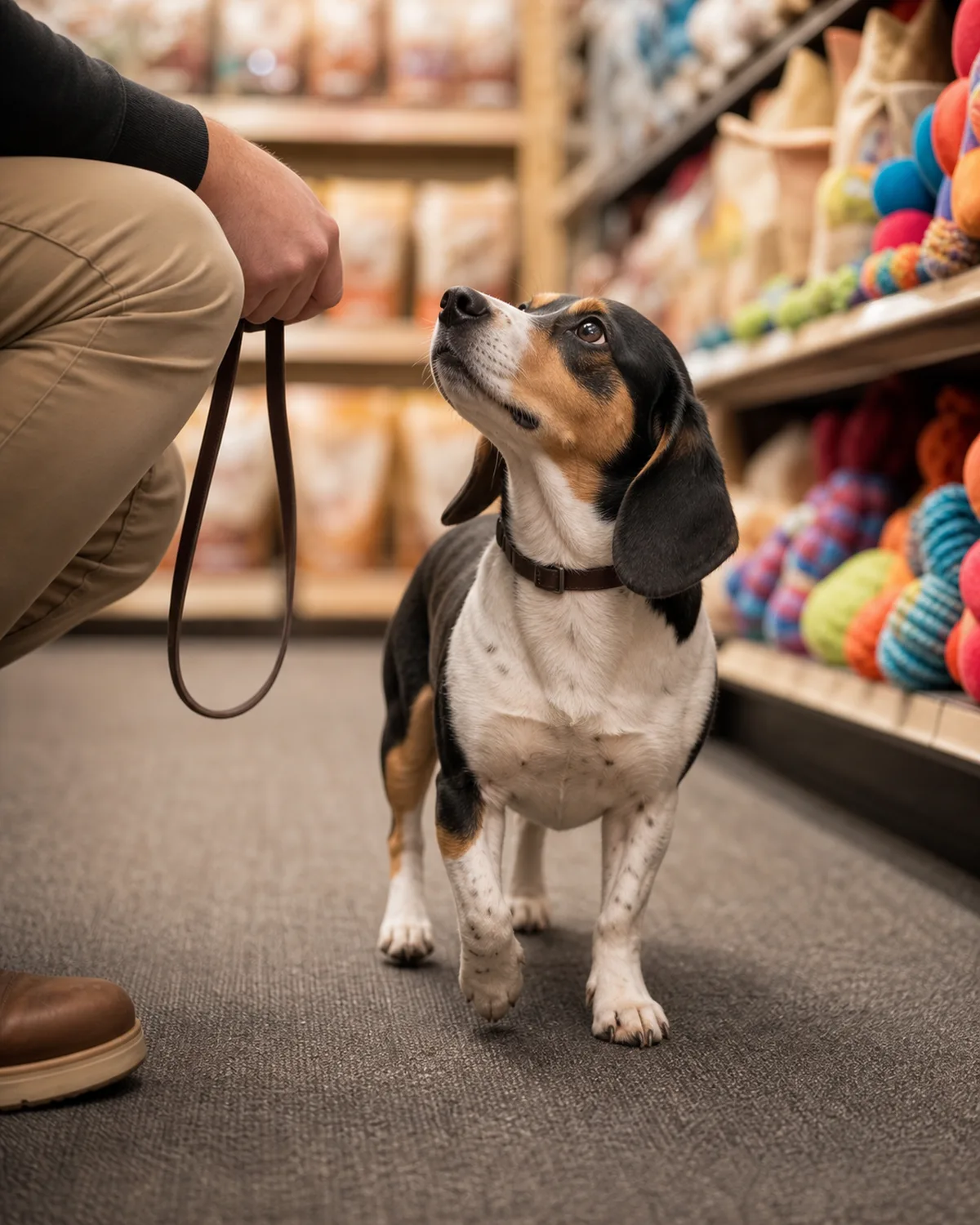
Weeks eight through twelve. Consolidation. Take learned commands into new environments — the pet store, a friend's house, a park bench. The dog will regress slightly in each new context. That is not failure. That is the dog relearning that sit means the same thing everywhere.
This timeline is not a contract. Some dogs move faster. Some need more time. The metric that matters is monthly comparison — where your dog is now versus four weeks ago.
Save this
Your Older Dog Training Roadmap
Week 1-2: Build trust — no formal training, just mark good behavior
Week 7-8: Start fixing one old habit (one at a time only)
Week 8-12: Consolidate — take commands to new environments
Find your dog's primary reward type (food / toy / praise)
Session length: adults 10-15 min / seniors 5-8 min
Senior dogs: train on carpet, grass, or a yoga mat
Use soft, small treats for aging teeth
Measure progress monthly — daily view is too noisy
Regression is normal — it is not failure
pawliqa.com
One More Walk, One More Treat, One More Try
Training an older dog does not come with the built-in excitement of a new puppy. Nobody films a seven-year-old dog sitting for the first time and puts it on social media. There is no puppy smell, no tiny paws, no first-day-home photo that makes strangers stop and say congratulations.
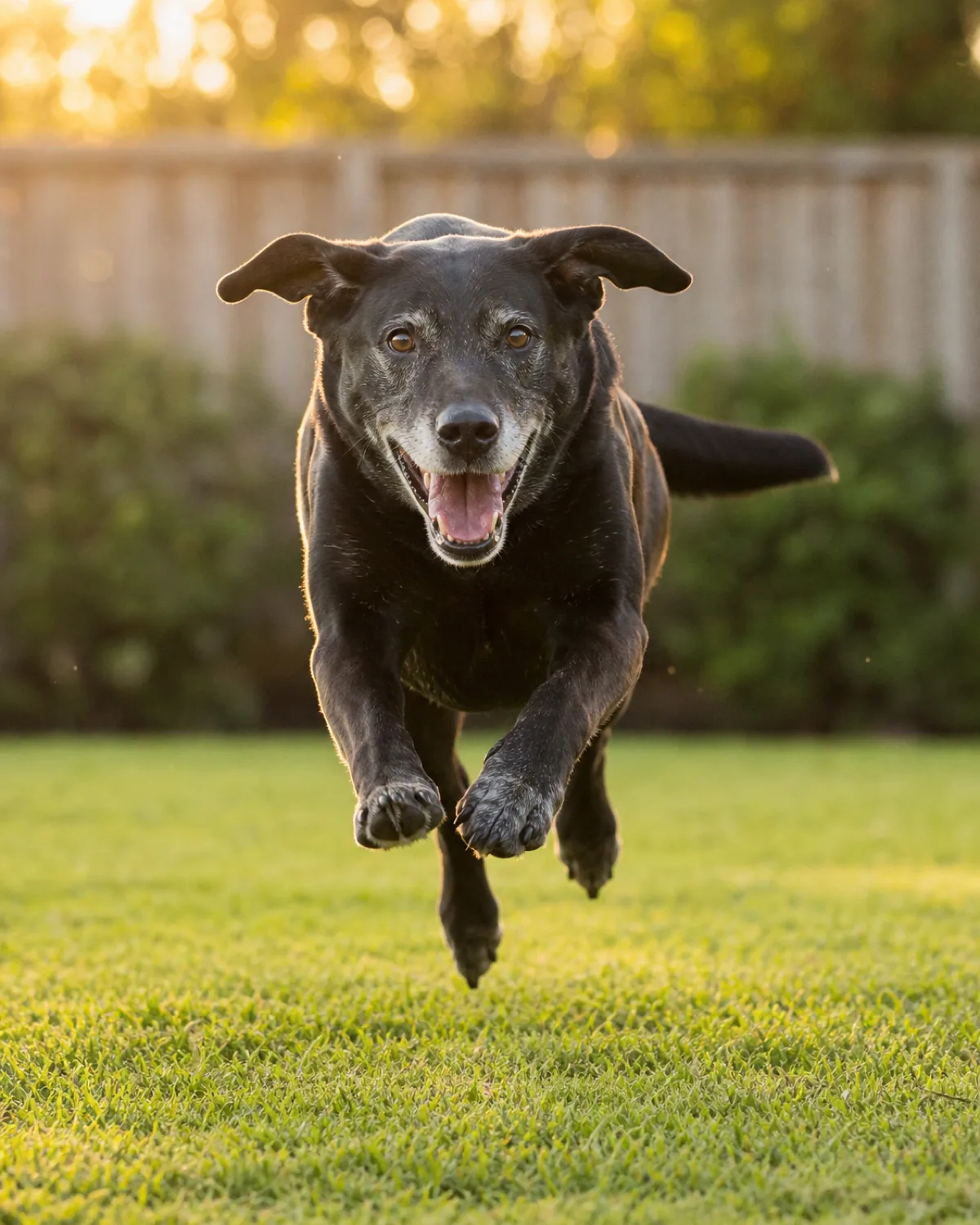
But when your eight-year-old rescue — the one that spent its first years in a backyard with no name, no leash, no one who cared whether it sat or stayed or came — runs toward you across the park because you called its name, and its ears are back, and its whole body is wagging, not just the tail — that moment carries a weight that puppy training never touches.
You did not just teach a command. You told a dog that had given up on being taught that it was still worth the effort.
One more walk. One more treat. One more try.
Jess Calloway
Dog mom to three very different dogs and the voice behind Pawliqa. Jess writes from daily experience — the muddy paws, the 5 a.m. walks, the training wins that take six weeks instead of six minutes. Not a veterinarian; always a believer in asking yours.
Teaching a dog to spin starts with a food lure at nose level, progresses to an open-palm hand gesture, and ends with a verbal cue alone. This guide walks through every stage, flags the mistakes that stall progress, and shows how to keep training sessions short and productive.
An overstimulated dog is not being bad. This guide walks through the place cue, structured down-stays, environment management, and daily decompression routine that teach a dog to settle on its own.
Fourteen puppy training games covering hide and seek recall, the name game, touch targeting, cup puzzles, puppy pushups, which hand, red light green light, muffin tin puzzles, tug with rules, scent work, two-toy fetch, obstacle courses, spin tricks, and settle mat training for puppies who learn best through play.