Our middle dog used to destroy one shoe per week. Not because she was bad. Because she was bored out of her mind, and a leather loafer was the most interesting thing within reach.
The day I started hiding kibble around the living room instead of pouring it into a bowl, the shoe casualties dropped to zero. She did not need more exercise. She needed more to think about.
Here are sixteen enrichment ideas that give your dog something real to do with their brain, their nose, and their body — without buying a single expensive gadget.
Jump to an enrichment idea
16 ways to enrich your dog’s day
From nose-work scavenger hunts to dedicated sniff walks, these sixteen ideas give your dog something real to do with their brain, nose, and body. Jump to whichever one fits your afternoon.
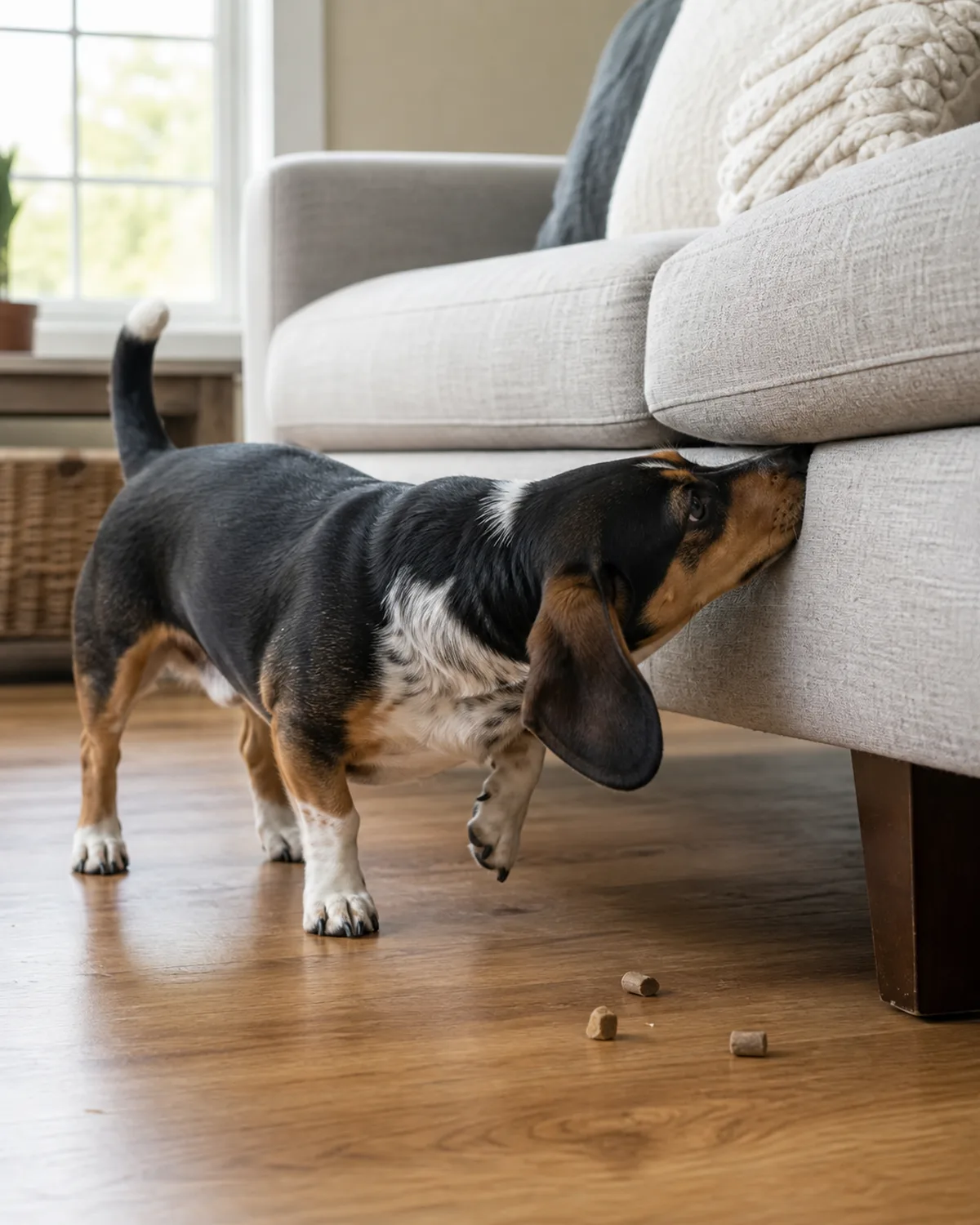
1. Hide treats around the house for a nose-work scavenger hunt
Start by letting your dog watch you place three or four treats in obvious spots — behind the couch leg, on a low shelf, next to the water bowl. Once they understand the game, move the treats to harder locations in other rooms or tucked inside a loosely folded towel.
Begin with treats your dog can see, then progress to hidden spots.
Use high-value treats (small pieces of cheese or freeze-dried liver) so the payoff is worth the search.
Add a verbal cue like "find it" each time so your dog learns when the game has started.
Fifteen minutes of nose work drains as much mental energy as a thirty-minute walk. You can run this game on a rainy afternoon with zero equipment beyond the treats you already have.
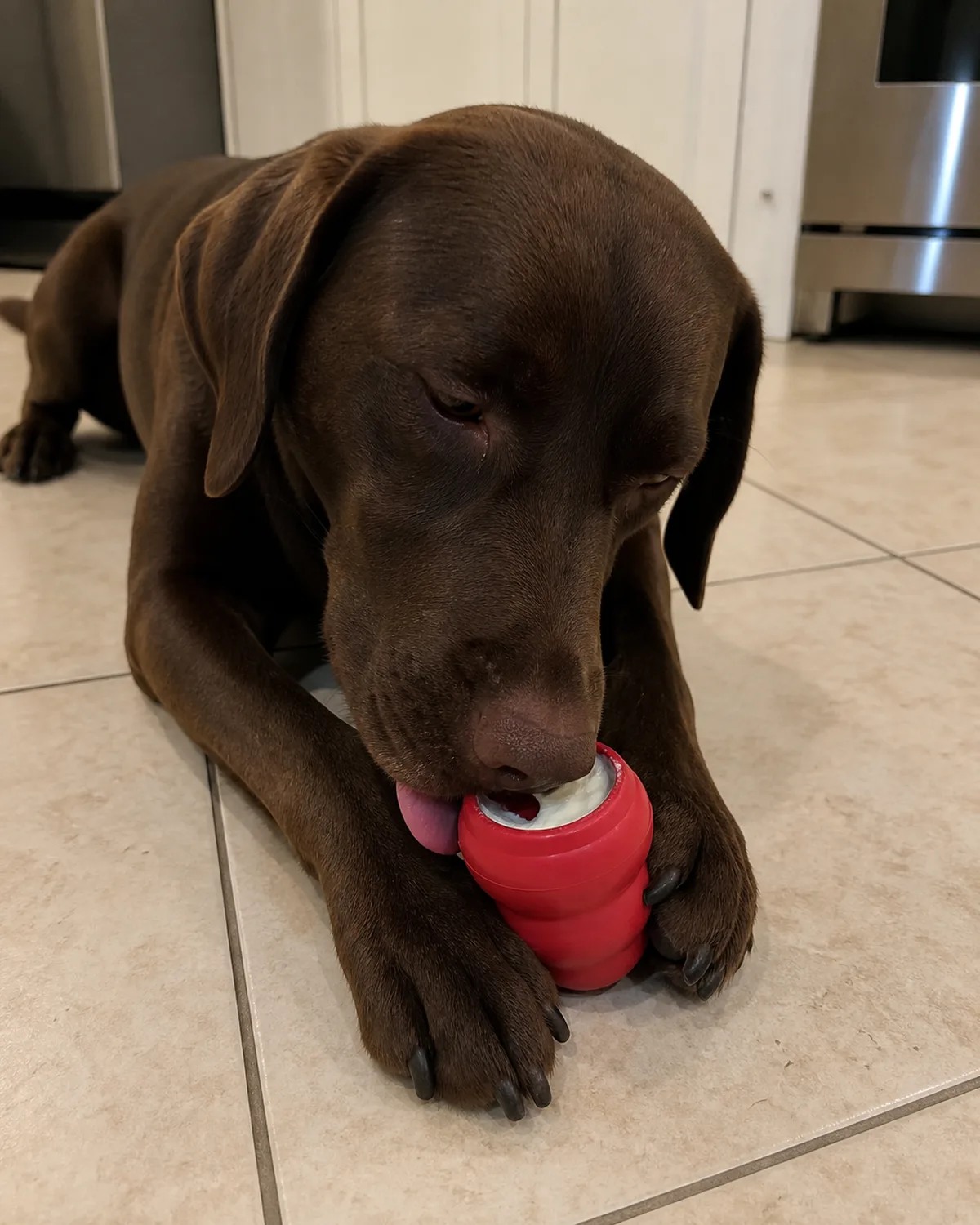
2. Freeze treats in a Kong or silicone mold for a long-lasting lick session
Layer peanut butter, mashed banana, and plain yogurt inside a Kong, then stand it upright in a mug and freeze it overnight. One frozen Kong keeps most dogs focused on licking for twenty to forty minutes — long enough to get through a phone call or a load of laundry.
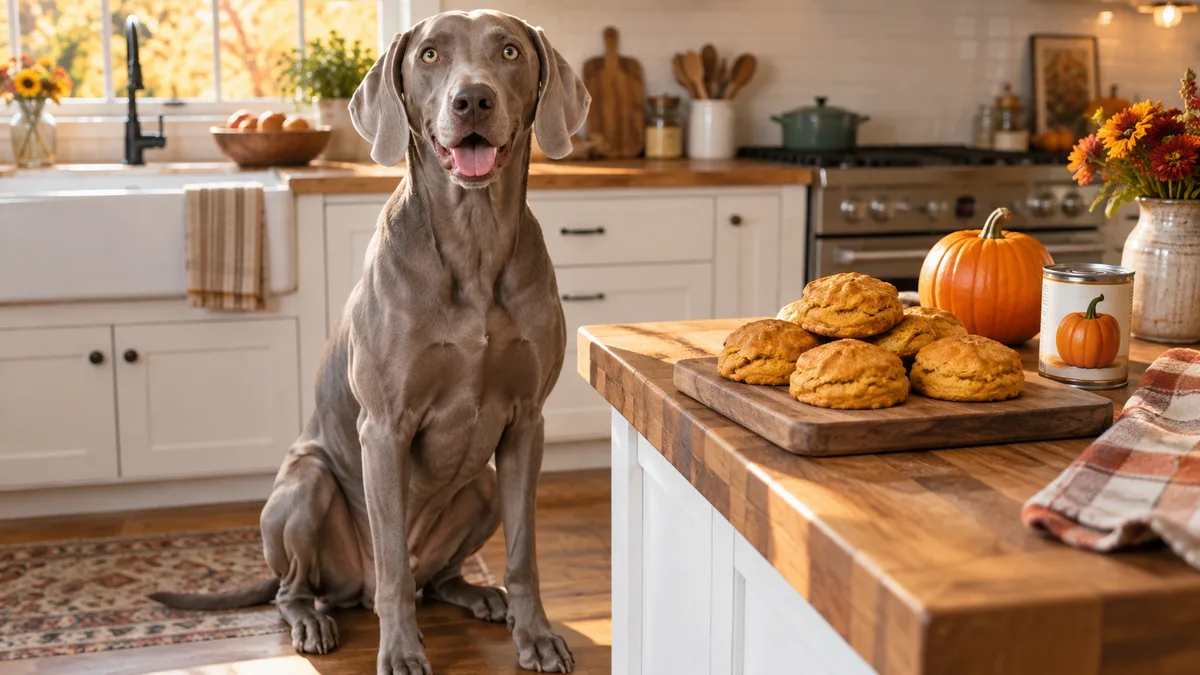
A silicone lick mat works the same way. Spread a thin layer of yogurt or pumpkin puree across the surface, freeze for two hours, and hand it over. The repetitive licking motion is self-soothing and slows the heart rate, which makes this a particularly good option before crate time or a thunderstorm.
If you make homemade dog treats, the leftover dough or puree works as Kong filling.
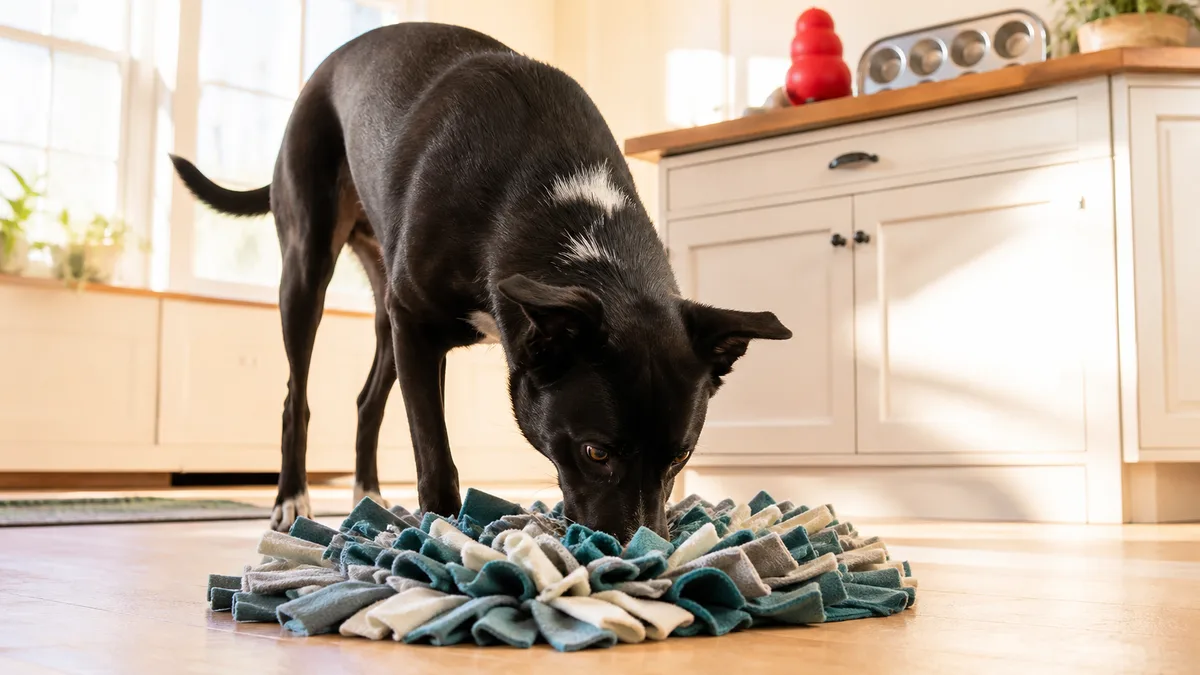
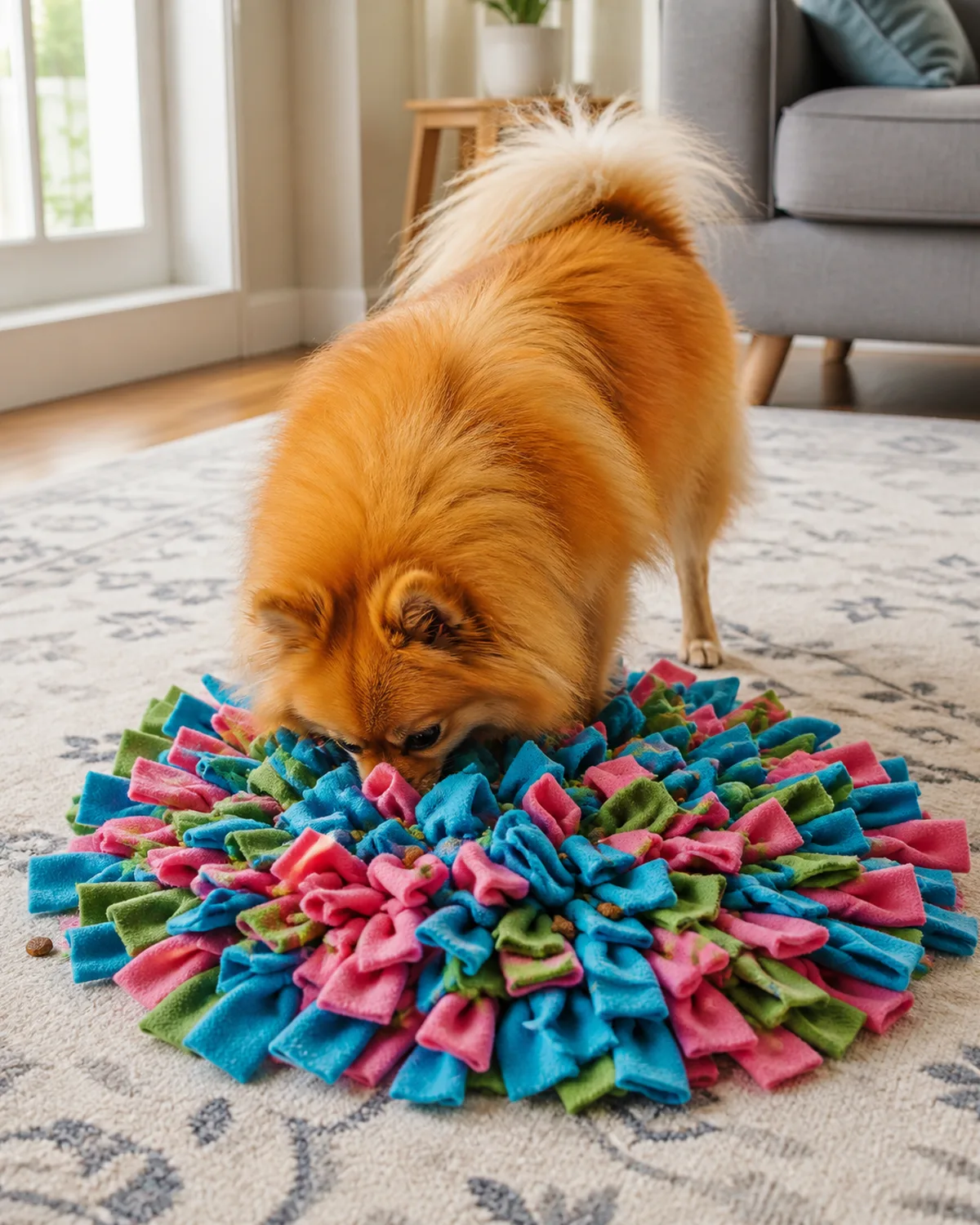
3. Set up a snuffle mat to turn mealtime into a foraging game
Instead of pouring kibble into a bowl, scatter the entire meal across the fleece strips of a snuffle mat. Your dog pushes, sniffs, and roots through the fabric to find every piece — activating the same foraging instinct their ancestors used to survive.
The slow-down effect is real. A dog that inhales a bowl in thirty seconds will spend eight to twelve minutes working through the same portion on a snuffle mat.
Buy one: Look for mats with multiple fabric lengths and a non-slip rubber base.
DIY version: Cut fleece into strips and tie them through the holes of a rubber sink mat. Total cost is under five dollars.
Use the mat once a day to replace one bowl feeding and you have a built-in enrichment session that requires zero extra time from you.
Quick decision
Which enrichment type fits right now?
Match the enrichment to your dog’s current energy level and your available time.
Low energy, short on timeFrozen Kong, snuffle mat, or slow-feeder bowl. Prep once, hand it over, walk away.
High energy, needs to burn it offFlirt pole, structured tug, or an obstacle course. Physical effort plus mental engagement in one burst.
Bored but calmScavenger hunt, toy naming, or a muffin tin puzzle. Brain work without physical frenzy.
Needs social stimulationPlaydate with a compatible dog or a dedicated sniff walk in a new neighborhood.
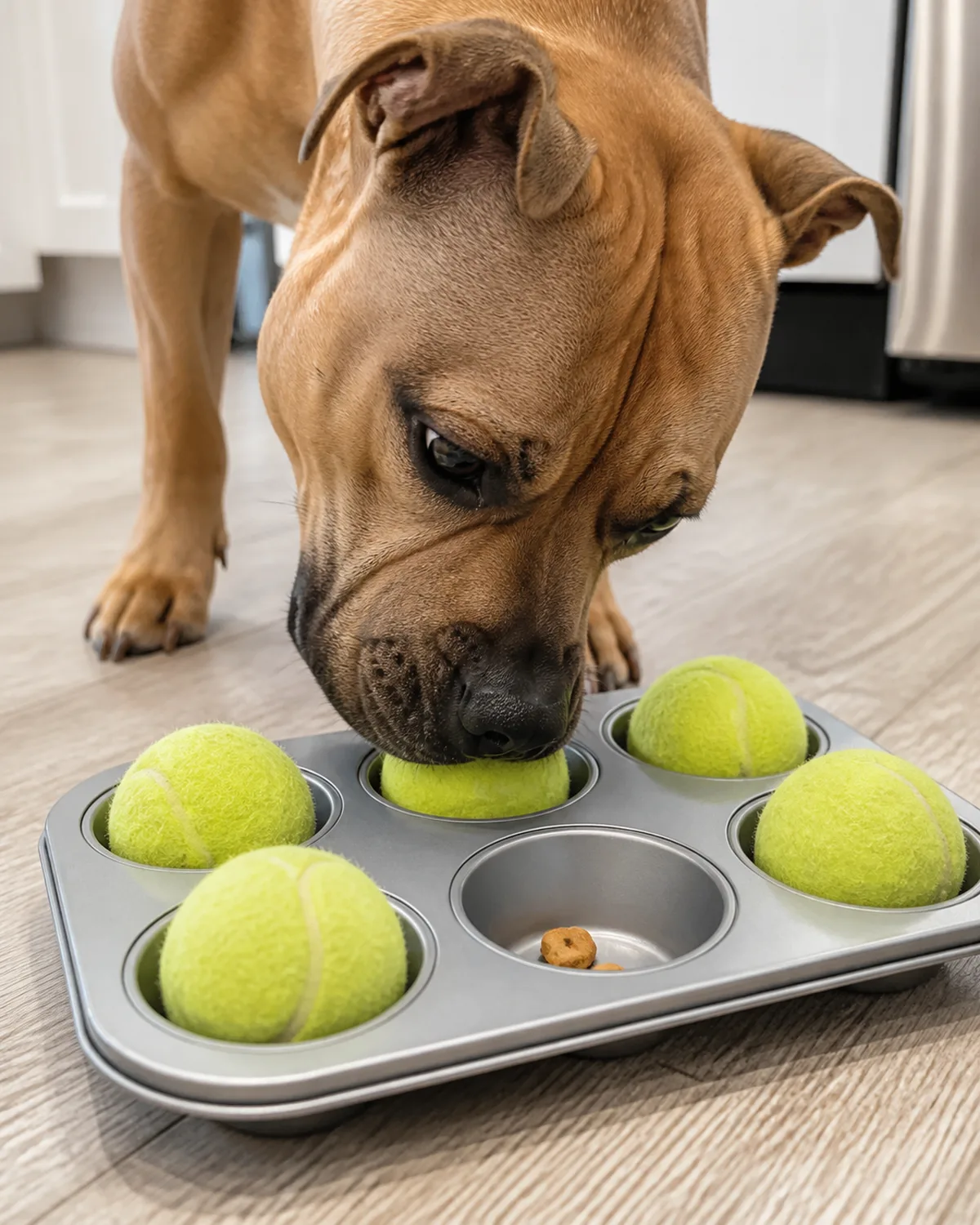
4. Build a DIY puzzle feeder from a muffin tin and tennis balls
Drop a treat or two into each compartment of a twelve-cup muffin tin, then cover every compartment with a tennis ball. Your dog nudges each ball off with their nose or paw to reach the treat underneath.
This costs nothing if you already own a muffin tin and a bag of old tennis balls. To raise the difficulty:
Use smaller balls that sit deeper in the cups.
Place treats in only half the compartments so your dog has to check each one.
Swap tennis balls for crumpled paper towels that need to be pulled out.
Most dogs figure out the basic version in under a minute, which makes this a good starter puzzle for dogs that have never tried food-based enrichment.
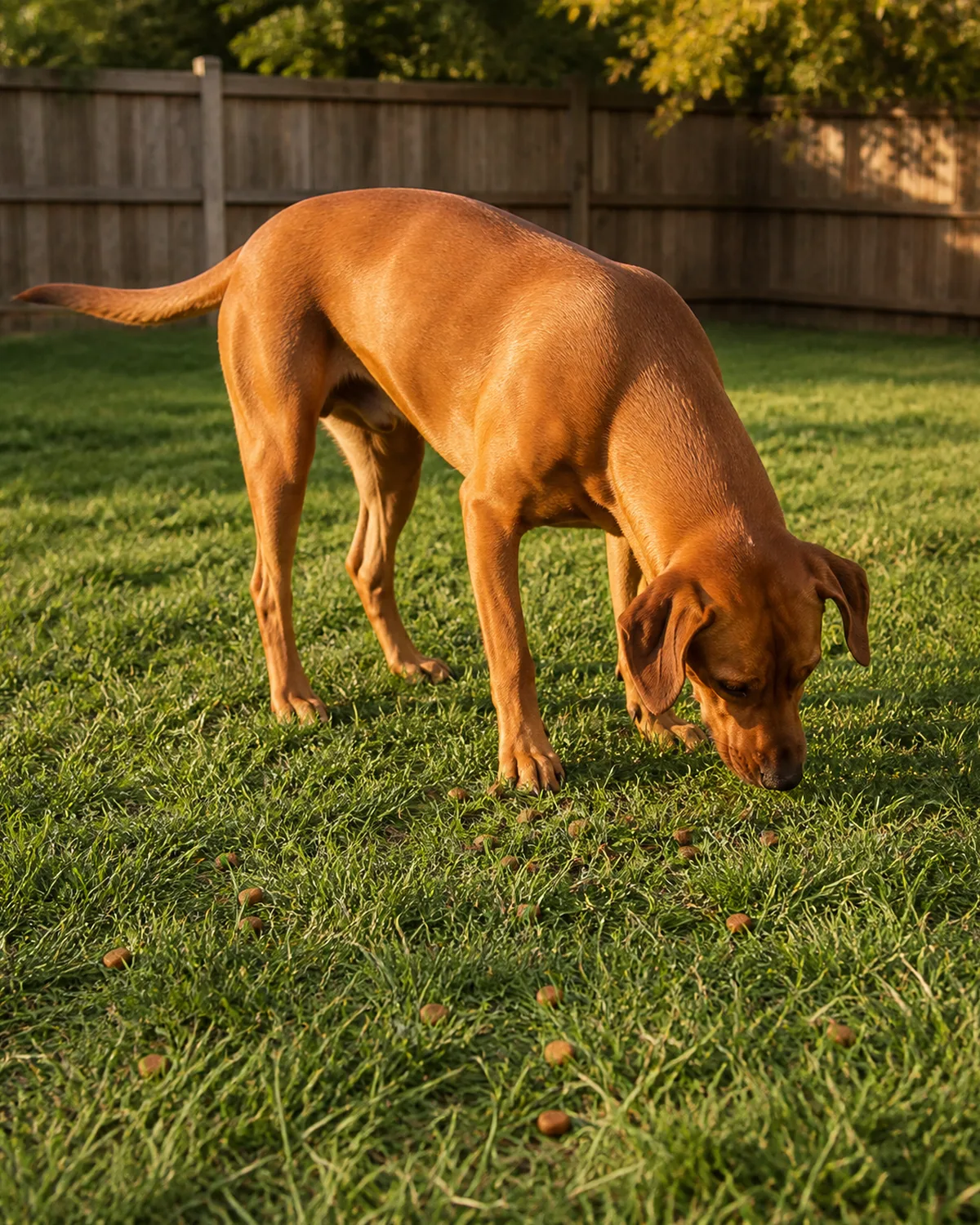
5. Scatter kibble in the grass for an outdoor foraging session
Toss a handful of your dog's regular kibble across a section of lawn and step back. They will spend the next ten minutes nose-down, methodically sniffing through the grass to find every piece.
Scatter feeding combines three benefits in one action:
Nose work: Every blade of grass hides a different scent trail.
Slow eating: Individual pieces take effort to locate, so the meal stretches out.
Outdoor time: Your dog gets fresh air and sunlight without a structured walk.
On rainy days, scatter kibble on a textured bath towel or across the living room rug for the same effect indoors.
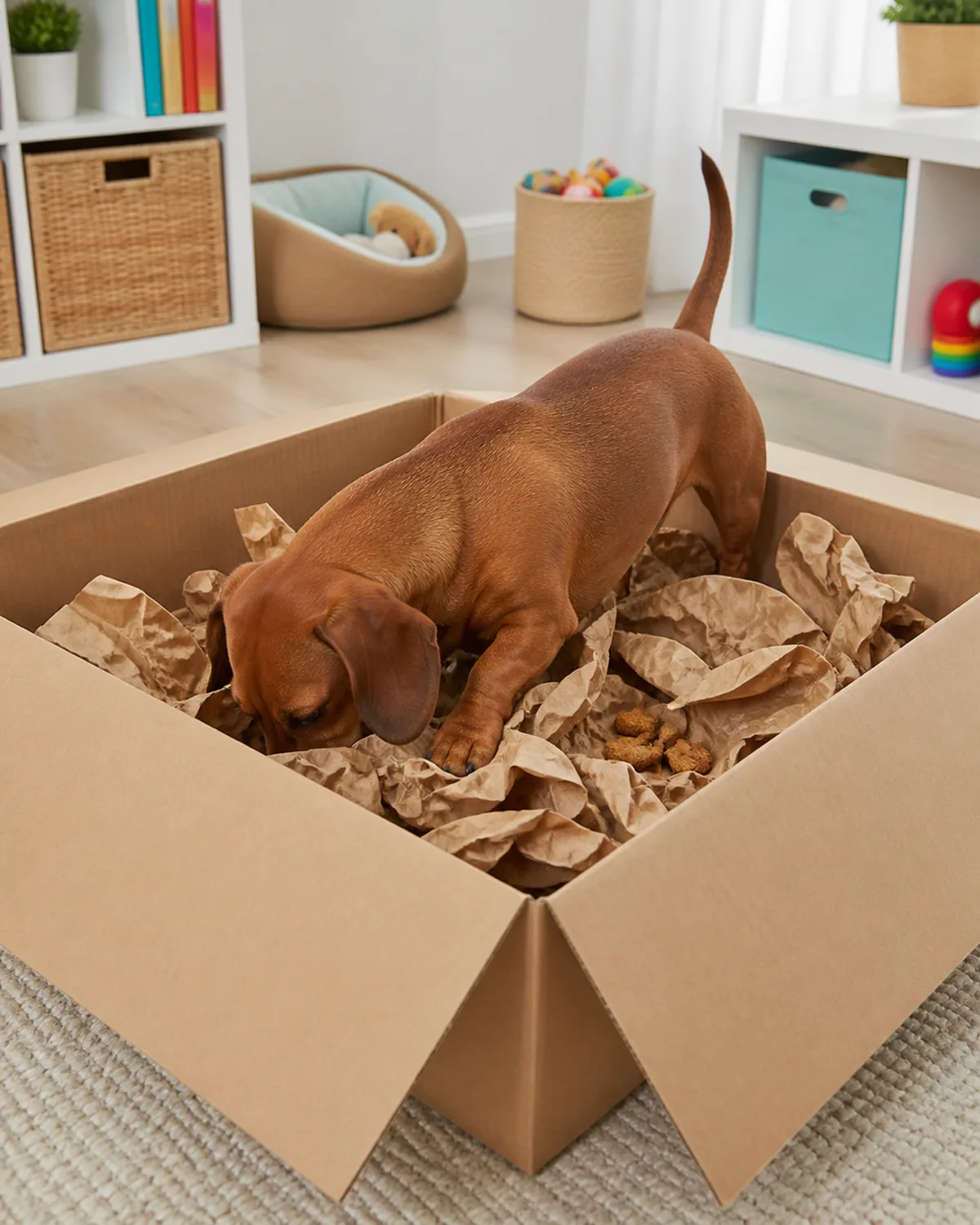
6. Create a cardboard box dig pit filled with crinkled paper
Fill a large shipping box with crumpled newspaper, packing paper, or old paper towel rolls. Hide a handful of treats at the bottom and between layers. Your dog digs through the pile to find them — satisfying the same digging instinct that sends them tearing through your yard without the crater in the flower bed.
Use paper only (no plastic wrap, no packing peanuts, no stapled labels).
Supervise the first session to make sure your dog rips but does not swallow the paper.
Swap to a fresh box when the paper gets soggy or flat.
The crinkling sound adds an extra sensory layer that most dogs find genuinely exciting. One box lasts three to five sessions before it needs replacing.
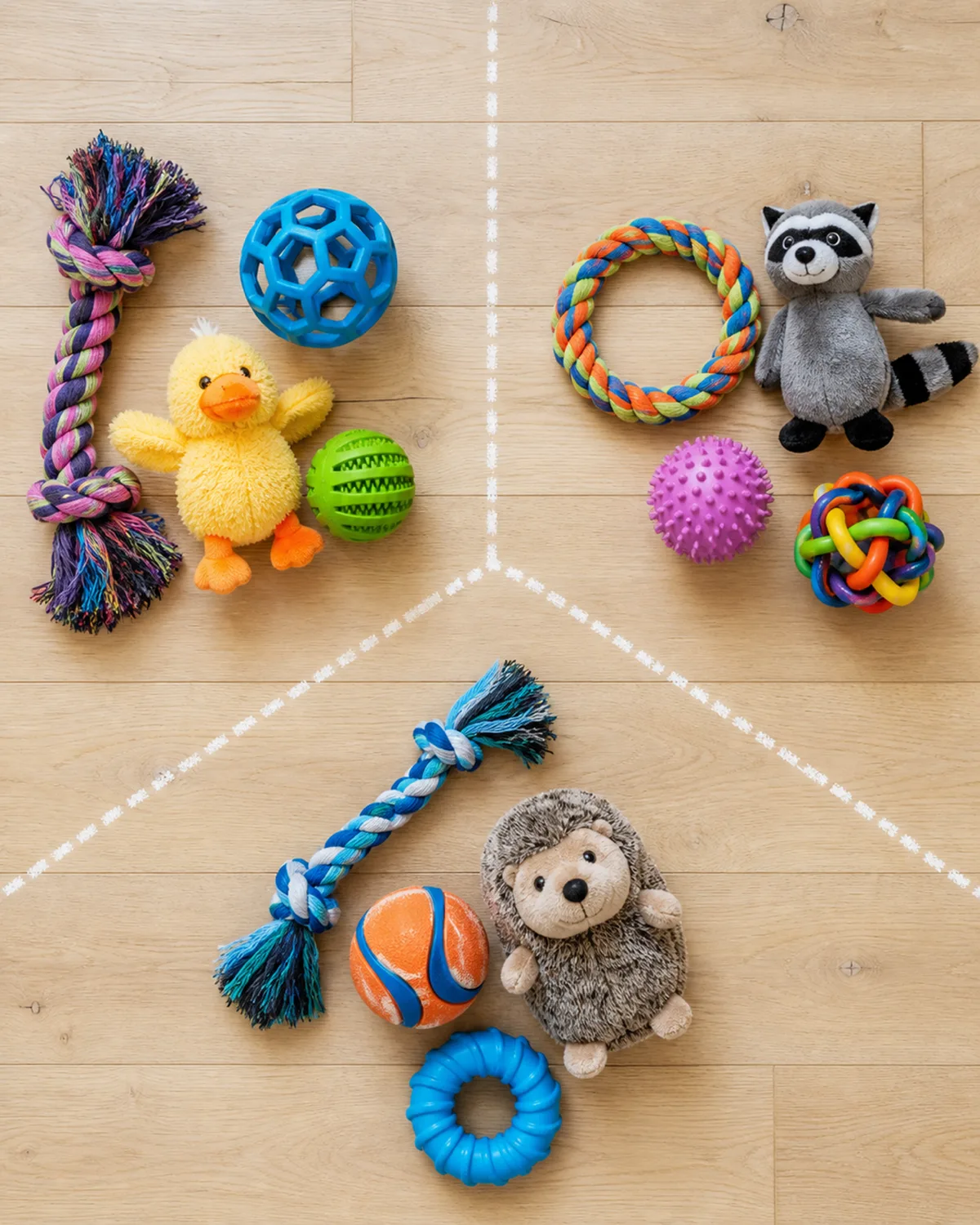
7. Rotate toys on a weekly schedule instead of leaving them all out
Split every toy your dog owns into three or four groups. Set one group out for the week and store the rest in a closet. When you swap groups the following week, the returning toys feel brand new.
This works because dogs habituate to stimuli that stay constant. A rope toy that has been lying on the floor for a month is invisible. The same rope toy pulled from a bag after two weeks away is fascinating again.
Group toys by type (one group of chew toys, one of tug toys, one of squeaky toys) or mix them for variety.
Keep one absolute favorite out permanently — rotation should add novelty, not remove comfort.
Zero cost, zero time investment beyond the three-minute swap. This is the lowest-effort enrichment idea on the list, and it works better than buying new toys every month.
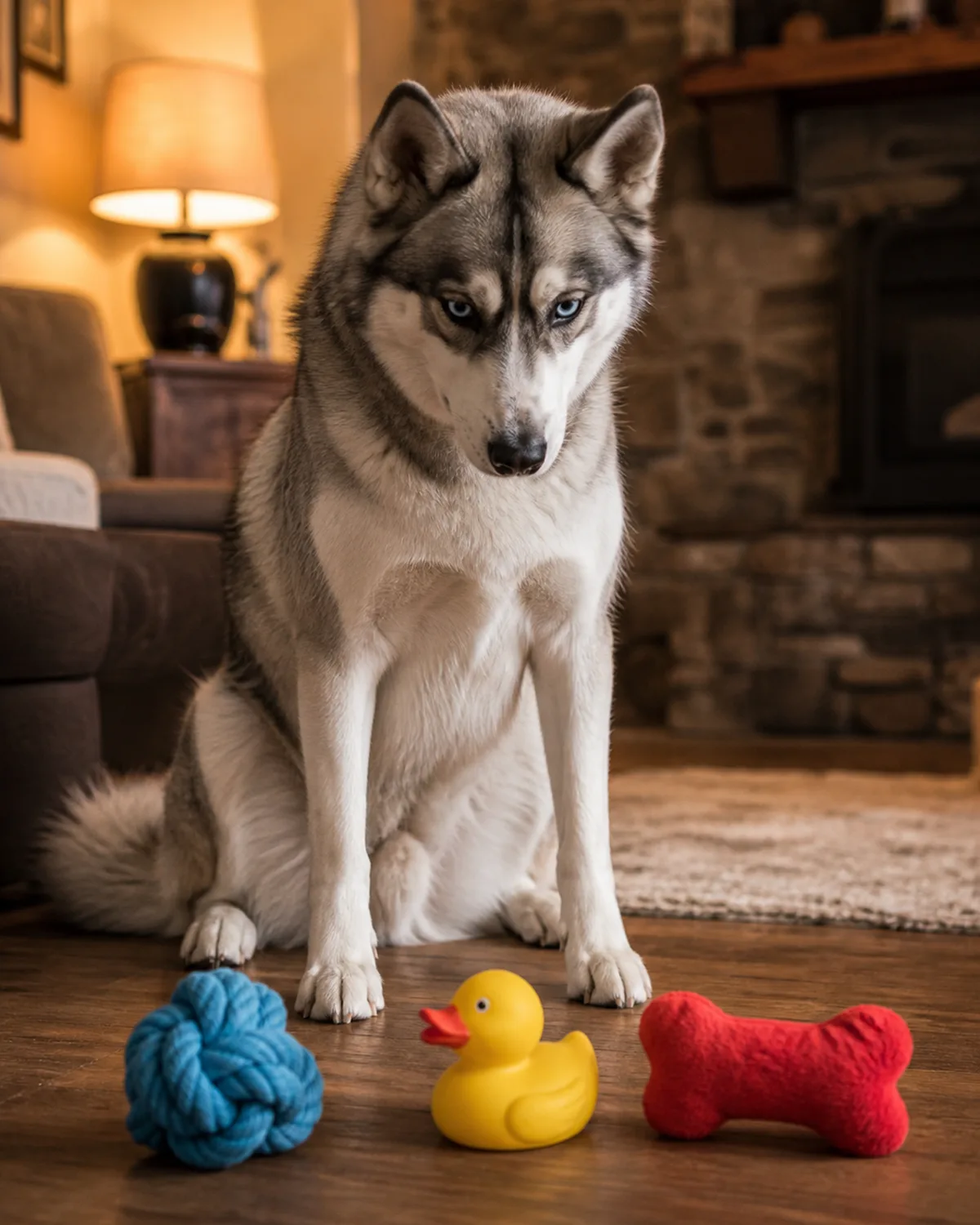
8. Teach your dog the names of specific toys
Pick one toy and give it a clear, short name — "duck," "rope," "bone." Hold it up, say the name, and reward your dog for touching or taking it. Repeat until they reliably grab that toy when you say the word.
Once the first name is solid, introduce a second toy. Place both on the floor and ask for one by name. When your dog picks the right one, mark it and reward.
This is one of the most mentally demanding enrichment activities you can do at home. Each naming session forces your dog to:
Listen to a specific word.
Scan the available options.
Make a choice and commit.
Three five-minute sessions per day is enough to build a vocabulary of five to eight toy names within a few weeks. This builds directly on the kind of brain games that exhaust mental energy faster than any physical exercise.
Ground rules
4 rules for safe, effective enrichment
Enrichment should challenge your dog, not frustrate or endanger them. Keep these four principles in mind for every activity on this list.
Supervise new activitiesWatch the first session of any new enrichment activity. Remove pieces that are being swallowed, and intervene if your dog gets frustrated instead of engaged.
Match the difficultyStart every puzzle at its easiest setting. If your dog gives up within sixty seconds, the challenge is too hard. Dial it back and rebuild gradually.
End before boredomStop each session while your dog is still interested. Leaving on a high note preserves motivation for the next round. Sessions do not need to be long to be effective.
Rotate the rotationEven enrichment becomes routine. Alternate between nose work, physical challenges, and food puzzles throughout the week so no single type goes stale.
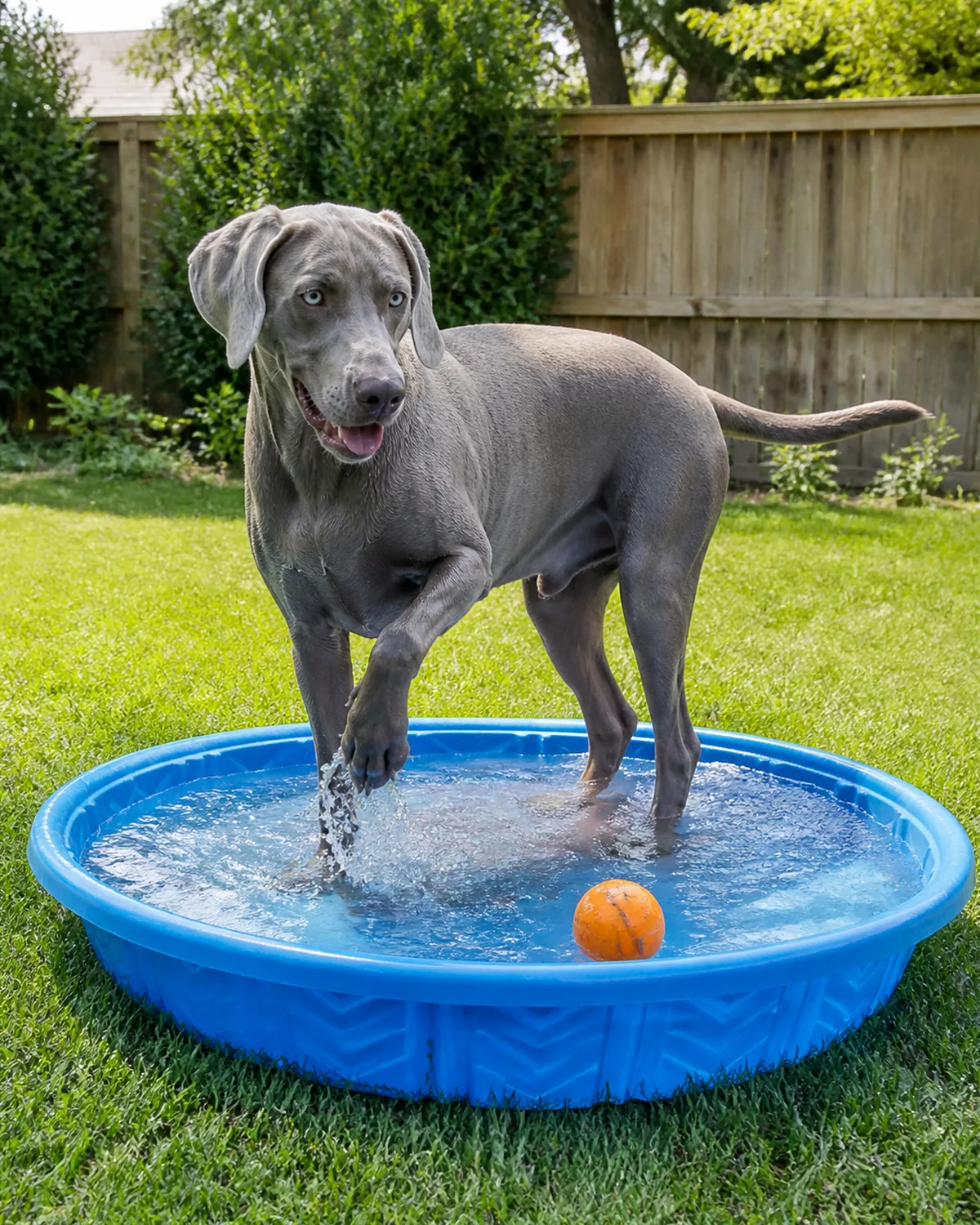
9. Set up a sprinkler or kiddie pool for water enrichment
Fill a shallow plastic kiddie pool with a few inches of water and drop in a floating ball or two. Dogs that enjoy water will splash, paw at the surface, and try to catch the ball — a full-body workout with a built-in cooldown.
For dogs that are nervous about standing water, a lawn sprinkler works as a gentler introduction. The moving jets trigger chase instincts without requiring any paw submersion.
Keep the water shallow enough that your dog can stand comfortably.
Add treats that sink to encourage diving with the nose.
On hot days, this doubles as a cooling strategy and an enrichment session at the same time.
Dump and refill the pool daily to prevent mosquito breeding and algae buildup.
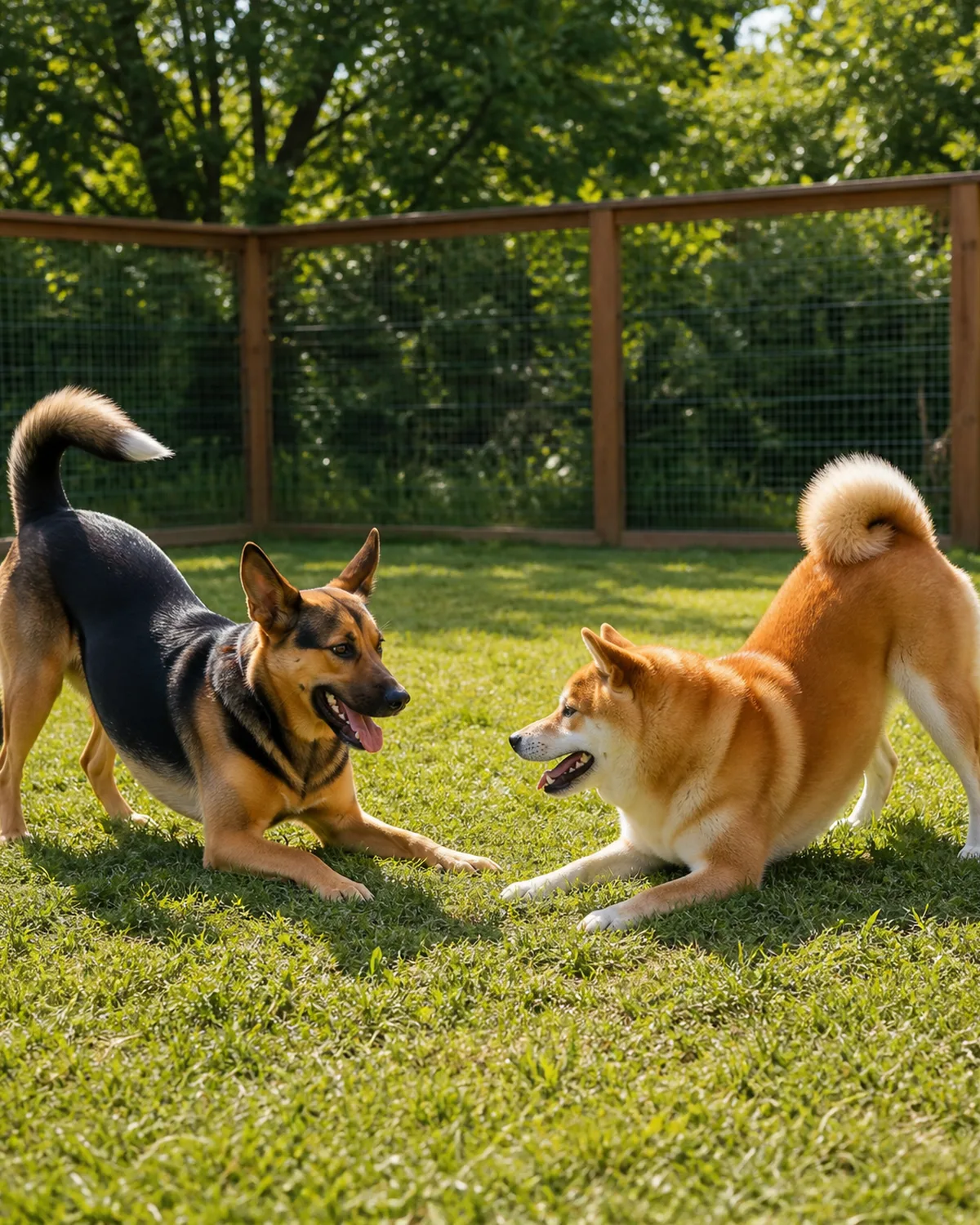
10. Arrange a playdate with a compatible dog for social enrichment
Social interaction is a category of enrichment that no toy or puzzle can replace. One hour of off-leash play with a temperament-matched dog provides physical exercise, social feedback, and emotional regulation all at once.
The key is compatibility. Not every dog needs to be best friends — parallel play (sniffing the same area, walking in the same direction) counts as social enrichment too.
Start on neutral ground so neither dog feels territorial.
Match energy levels: a high-drive adolescent paired with a mellow senior usually ends in frustration for both.
Keep sessions under an hour to prevent overstimulation.
If your dog has not spent much time around other dogs, build the foundation with socialization basics before jumping into off-leash play.
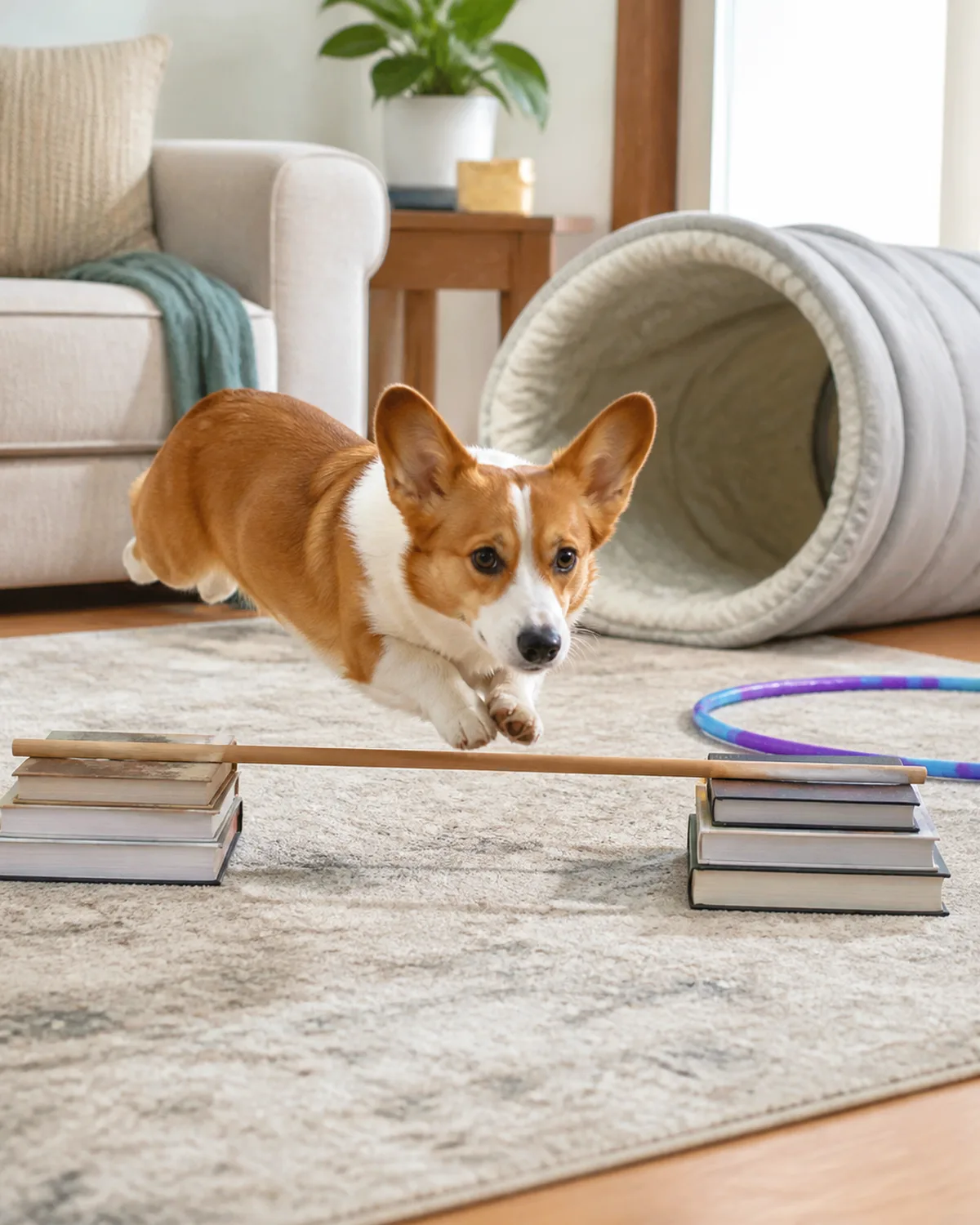
11. Build an obstacle course in your living room or backyard
You do not need professional agility equipment. A broomstick balanced on two stacks of books is a jump. A row of chairs with a blanket draped over them is a tunnel. A hula hoop held vertical is a tire jump.
Walk your dog through the course with a treat lure the first few times, then start using a verbal cue for each obstacle. "Over" for jumps, "through" for tunnels, "around" for weave poles.
Keep jumps low enough that your dog clears them without straining.
Change the layout every week so the course never becomes a memorized routine.
Build in a sit-stay at the start line so the course begins with impulse control.
This combines physical movement, directional listening, and problem-solving into a single session that takes ten minutes and uses household items you already own.
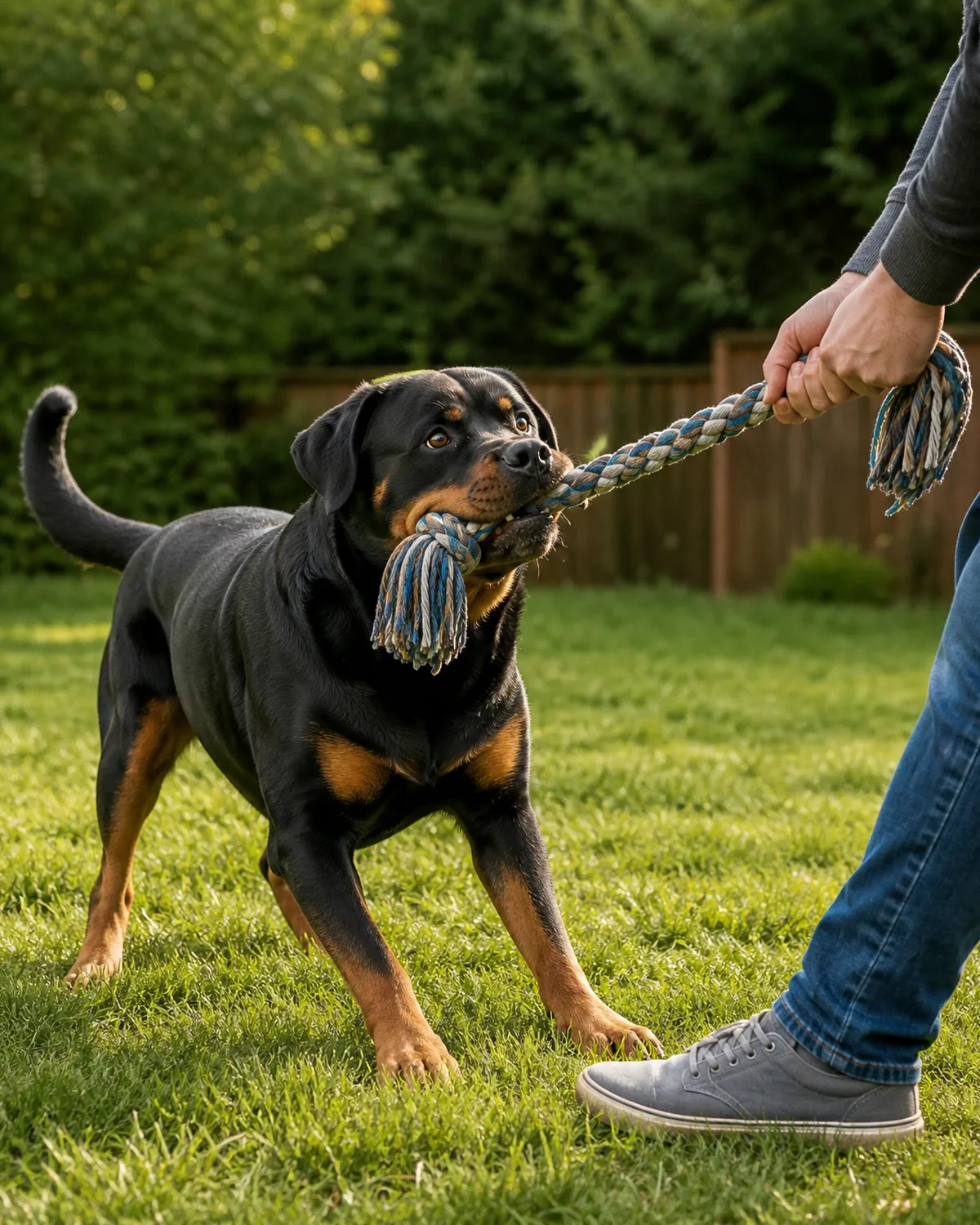
12. Play a structured game of tug with clear start and stop rules
Tug is one of the highest-value enrichment activities available. It combines physical effort, mental engagement, and impulse control into a single game — but only if you add rules.
Here is the structure that makes tug productive instead of chaotic:
Start cue: Hold the toy out and say "get it." The game does not begin until you give the cue.
Drop cue: Say "drop" and freeze the toy. Wait for your dog to release, then reward with another round. This teaches them that releasing earns a restart, not a loss. If you have been working on basic commands, the drop cue transfers directly.
Let your dog win most rounds. The goal is engagement, not dominance. A dog that always loses stops playing.
Use a sturdy rope toy or rubber tug toy — nothing that shreds into swallowable pieces. Three to five minutes of structured tug is enough to tire most dogs.
13. Introduce new textures underfoot during a walk
Most daily walks follow the same route across the same sidewalk. Intentionally steering onto different surfaces — grass, gravel, wood chips, leaf piles, shallow puddles, sand — turns a boring commute into a sensory experience.
Each texture stimulates different nerve endings in the paw pads and changes the way your dog processes the ground beneath them. This is a form of environmental enrichment that requires no props and no extra time beyond choosing a slightly different path.
For puppies, texture exposure doubles as critical desensitization work during the socialization window.
For adult dogs, a boardwalk trail, a pebble beach, or even a different neighborhood sidewalk counts as genuine novelty.
When you are ready to level up your regular walks, texture variety is the easiest upgrade.
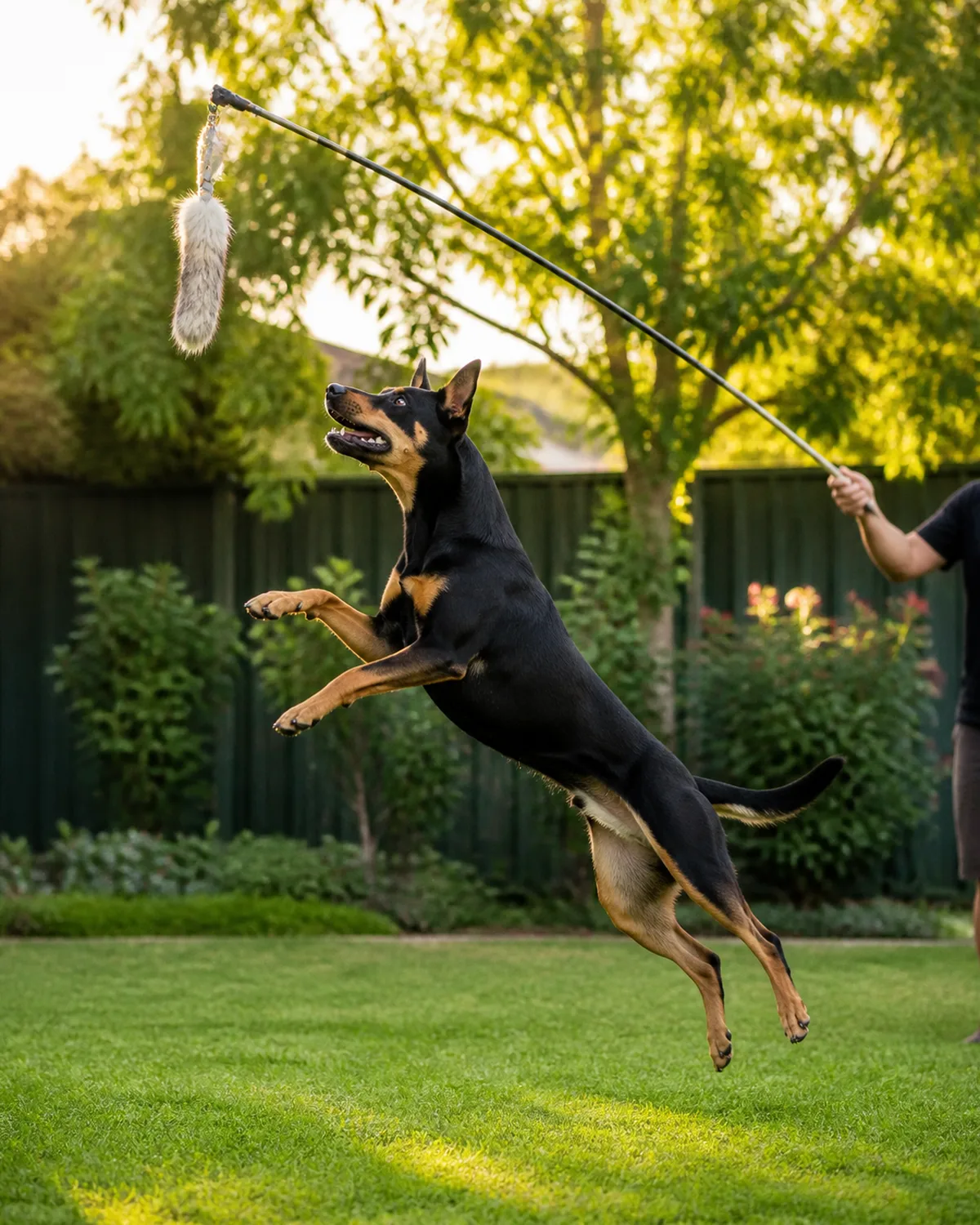
14. Use a flirt pole for a quick burst of prey-drive enrichment
A flirt pole is an oversized cat wand: a three-to-five-foot handle, a length of rope, and a fuzzy lure at the end. You drag the lure along the ground or swing it in an arc, and your dog chases, pounces, and shakes.
This taps into the prey-drive sequence (search, stalk, chase, grab, shake) without an actual prey animal. Five to ten minutes is enough to physically exhaust most dogs because the sprinting is maximal effort.
Build in a sit-before-release rule. Your dog sits, you say "get it," and the chase begins. This adds impulse control to the physical workout.
Drag the lure along the ground rather than holding it high. Jumping and twisting at full speed can strain joints, especially in large breeds.
End the session with a "drop" cue and a handful of treats so the game has a clean finish.
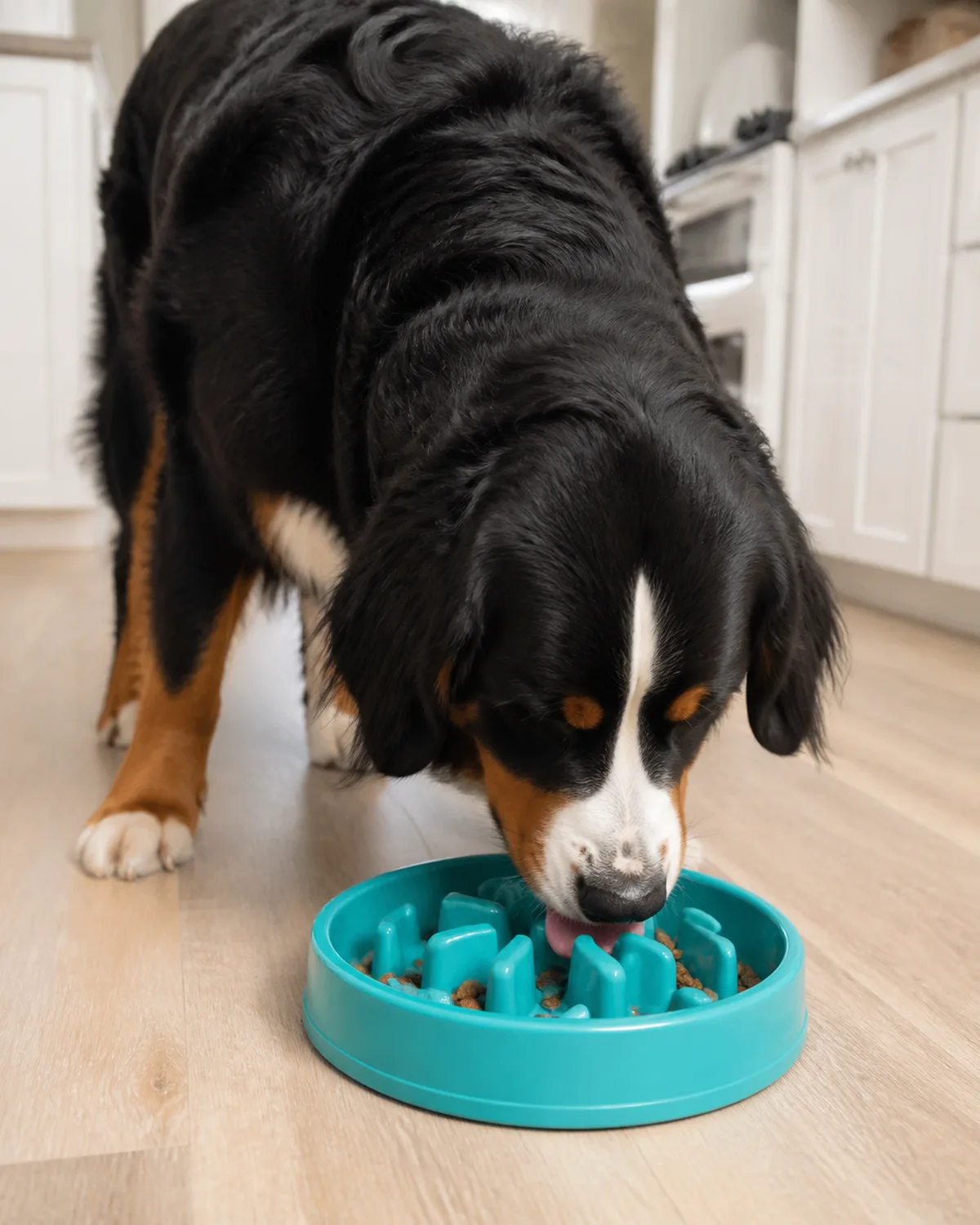
15. Try a slow-feeder bowl or food-dispensing ball for everyday meals
Replace your dog's regular bowl with a slow-feeder (a bowl with raised ridges or maze-like channels) or a kibble-dispensing ball that rolls across the floor. Every meal becomes a ten-to-fifteen-minute problem-solving session instead of a thirty-second inhale.
This is the most passive enrichment idea on the list because it requires zero additional time from you. Your dog was going to eat that meal anyway. You are just changing the delivery method.
Slow-feeder bowls work best for wet food or larger kibble that lodges in the channels.
Dispensing balls work best for round, dry kibble that rolls out as the dog pushes the ball.
Start with the easiest setting. A dog that cannot get any food out of the puzzle will give up and stare at you instead.
If you started your dog on regular bowls as a puppy, the transition is straightforward. Puppy feeding habits establish the baseline, and slow-feeders extend it.
📌 Save this list
16 Dog Enrichment Ideas
1Scavenger huntHide treats around the house and let your dog search by scent.
2Frozen KongLayer and freeze peanut butter, banana, and yogurt for a twenty-minute lick session.
3Snuffle matScatter kibble in fleece strips instead of a bowl to activate foraging instincts.
4Muffin tin puzzleCover treats with tennis balls in a twelve-cup muffin tin.
5Scatter feedingToss kibble across the lawn and let your dog nose through the grass.
6Dig boxFill a cardboard box with crinkled paper and bury treats inside.
7Toy rotationSplit toys into weekly groups so returning toys feel new.
8Toy namingTeach your dog to fetch a specific toy by name.
9Water playSet up a kiddie pool or sprinkler for splash-and-chase fun.
10Social playdateArrange one-on-one play with a compatible dog.
11Obstacle courseBuild jumps, tunnels, and weave poles from household items.
12Structured tugPlay tug with clear start, drop, and restart cues.
13Texture walkRoute walks across grass, gravel, wood, and sand for paw-pad stimulation.
14Flirt poleDrag a lure on a long pole to satisfy prey-drive instincts in five minutes.
15Slow-feeder bowlSwap the regular bowl for a maze bowl or dispensing ball at mealtime.
16Sniff walkLet your dog lead on a long leash, stopping to smell everything.
🐾 pawliqa.com
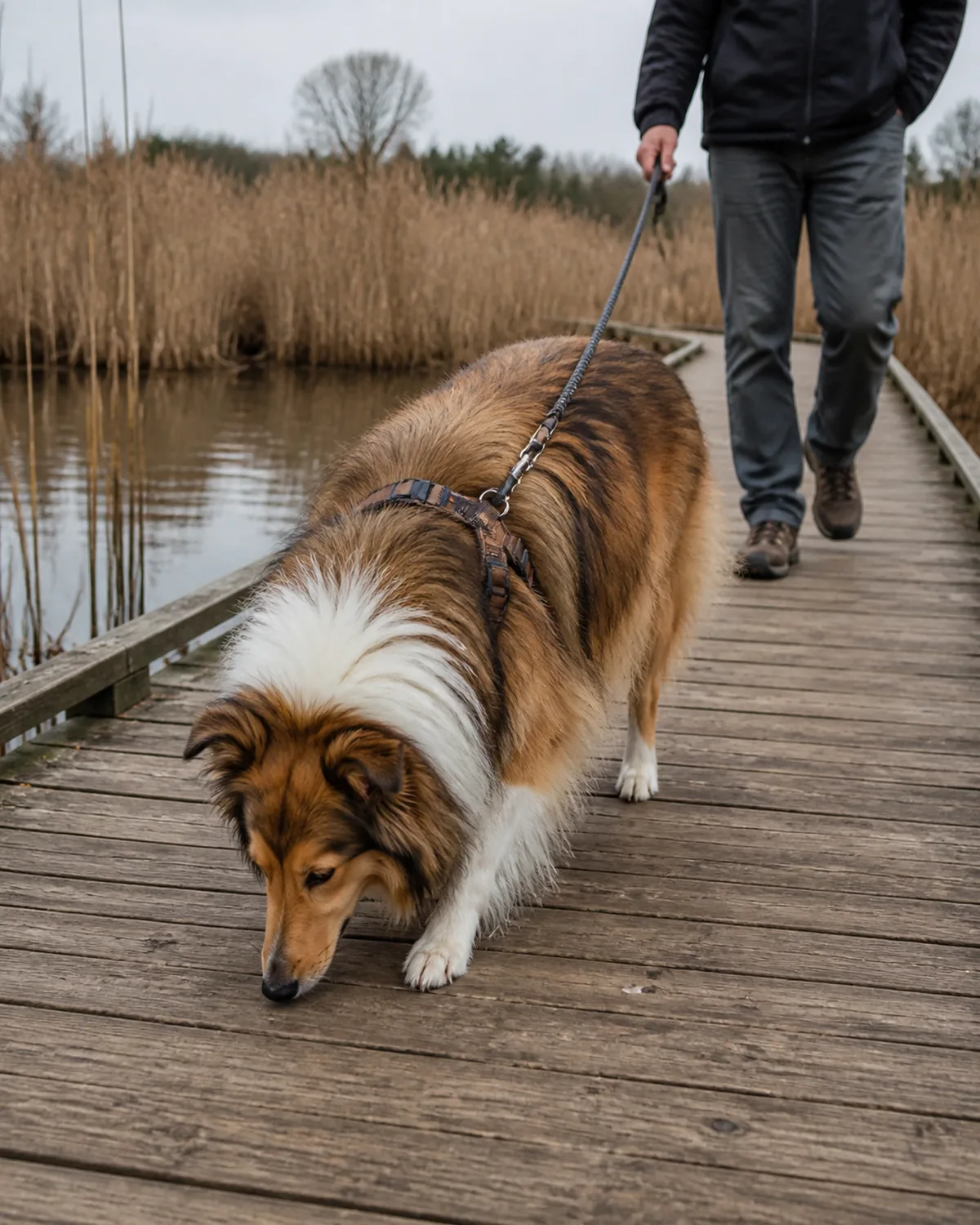
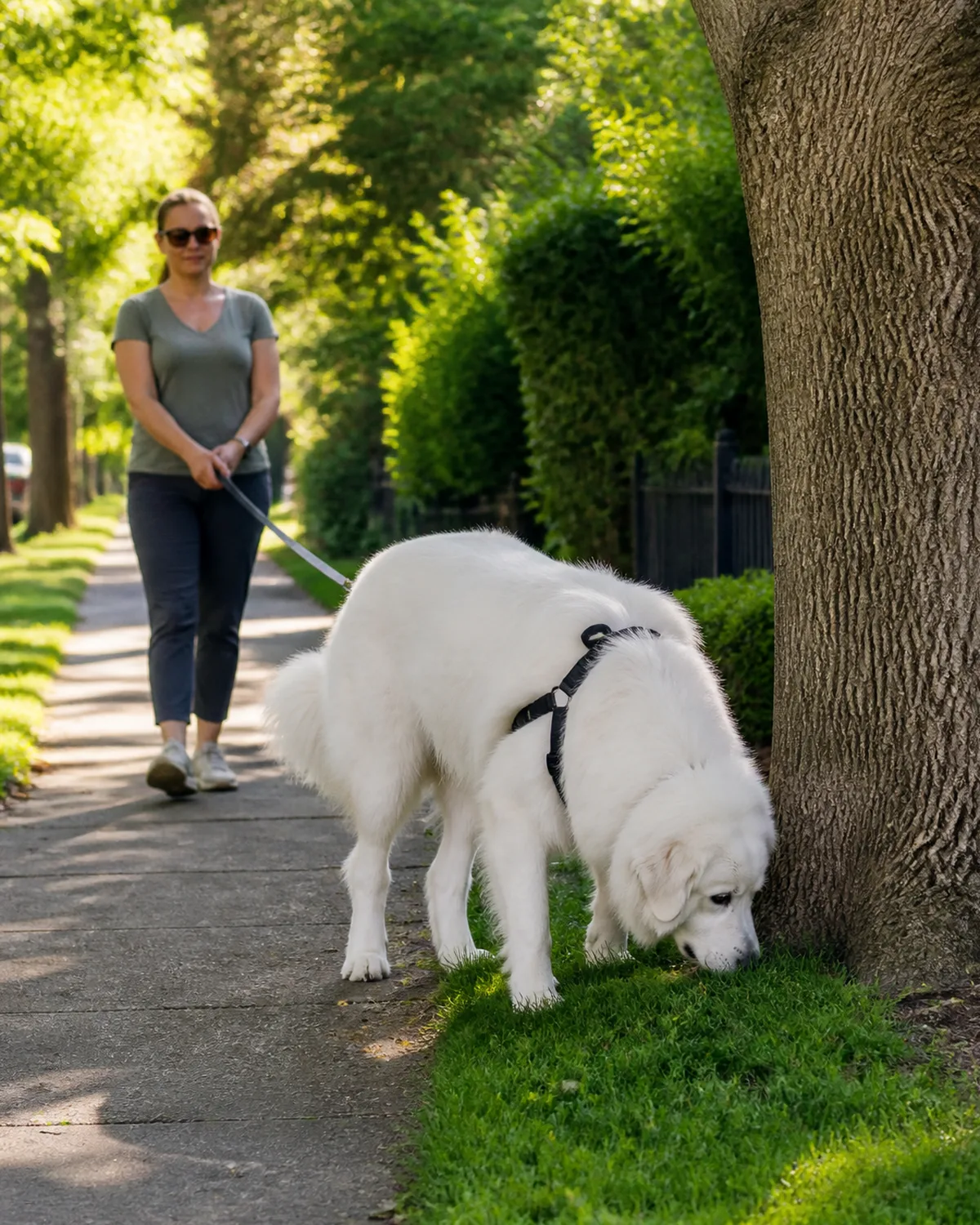
16. Take your dog on a dedicated sniff walk where they lead
A sniff walk is the opposite of a structured heel. You clip on a long leash, step outside, and let your dog choose the route, the pace, and how long to linger at each spot. Your only job is to follow and not pull.
Processing scent information uses more brain power than processing visual information. A dog on a sniff walk is reading a newspaper, checking social media, and solving a puzzle all at once. Twenty minutes of uninterrupted sniffing provides more mental satisfaction than forty minutes of brisk walking at your pace.
Use a six-to-ten-foot leash or a long line so your dog has room to investigate.
Pick a quiet route with varied surfaces and lots of grass, trees, or hedges.
Resist the urge to hurry past spots they want to smell for a long time. That is the entire point.
This is the single lowest-barrier enrichment idea on the list. You were going to walk your dog anyway. The only change is who gets to decide where to stop.
If you are keeping your dog entertained indoors most of the day, a dedicated sniff walk is the outdoor complement that rounds out their enrichment menu.
P
About the author
Jess Calloway
Jess Calloway edits Pawliqa, where she shares dog care, grooming, training, and new-owner tips — plus DIY and pet-friendly home ideas — for anyone who wants a happy, well-cared-for dog. As a dog mom to three very different dogs, she writes the honest, tested version of what actually works. Every guide is image-led and reviewed for clarity, usefulness, image accuracy, and Pinterest-to-page alignment before it goes live. Visit the About page.
Dog beds collect more than fur. This guide covers machine-washable beds, hand washing, memory foam inserts, proper drying, and the quick spot-clean tricks that keep a bed fresh between full washes.