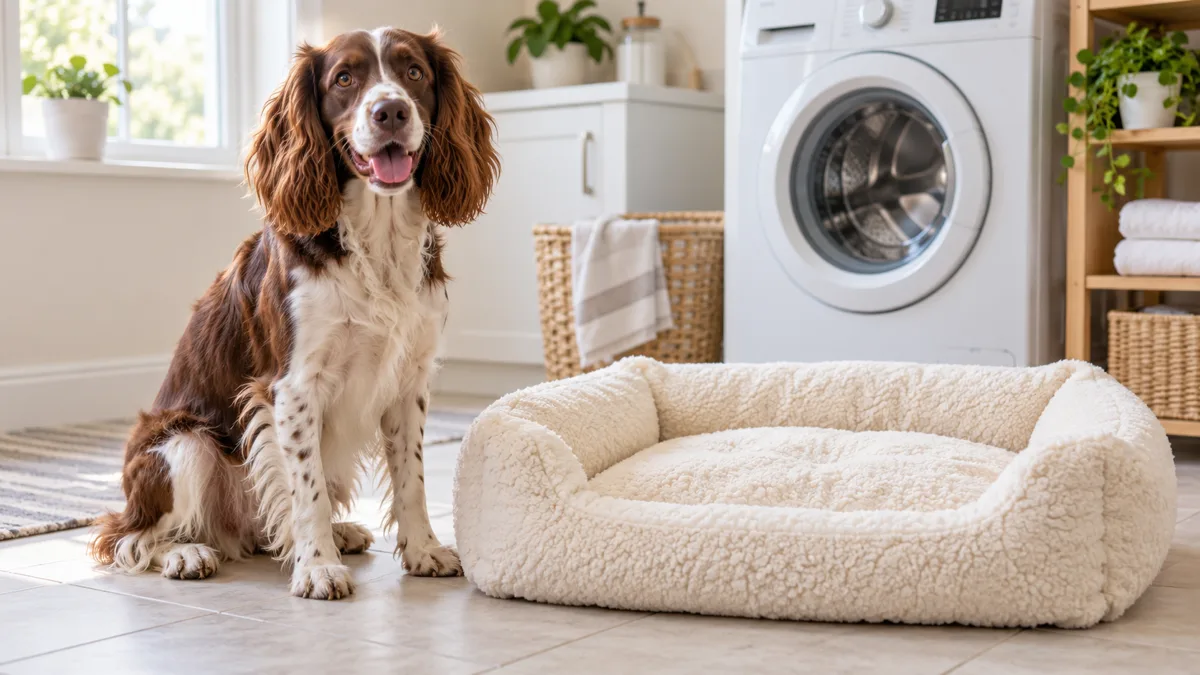
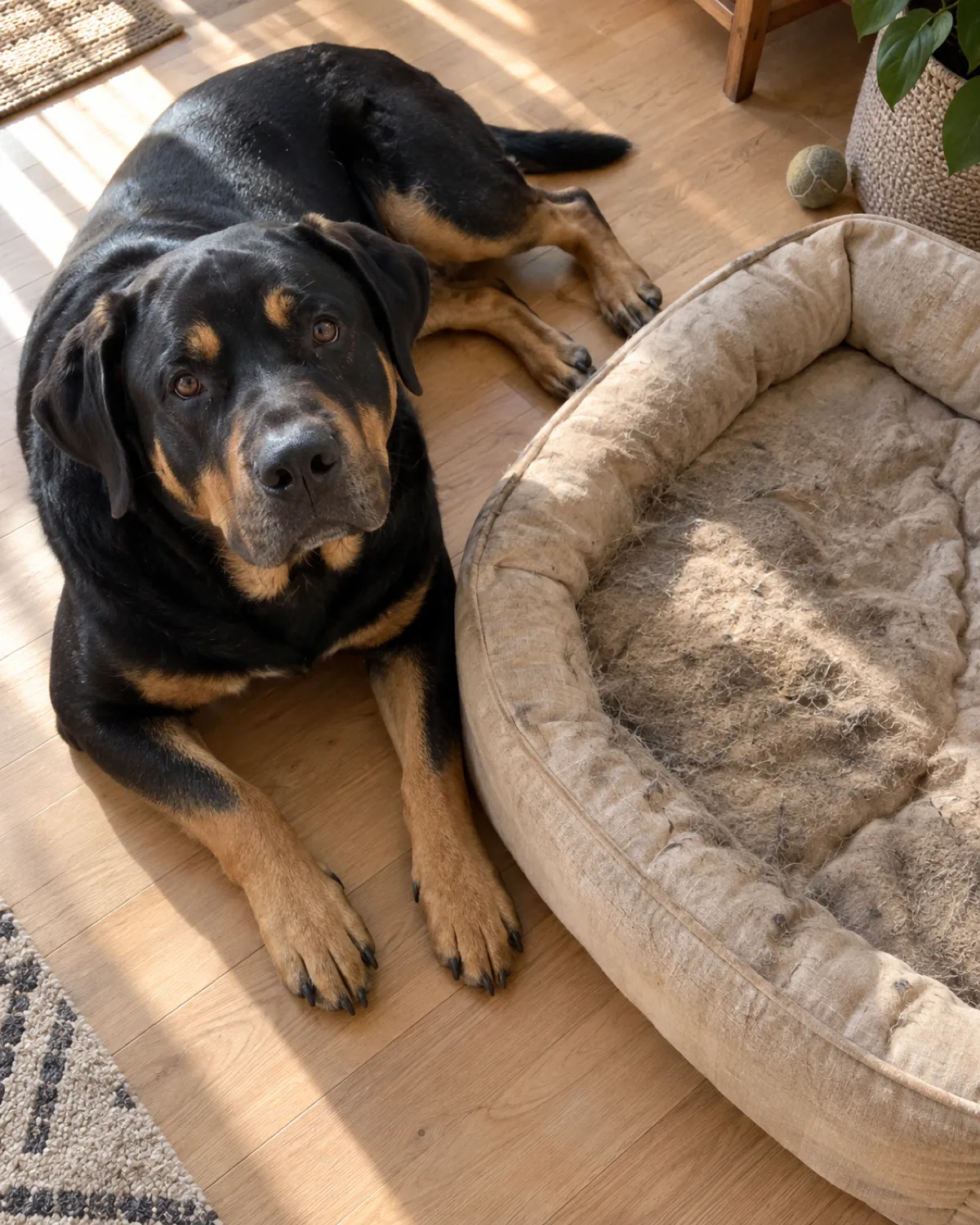
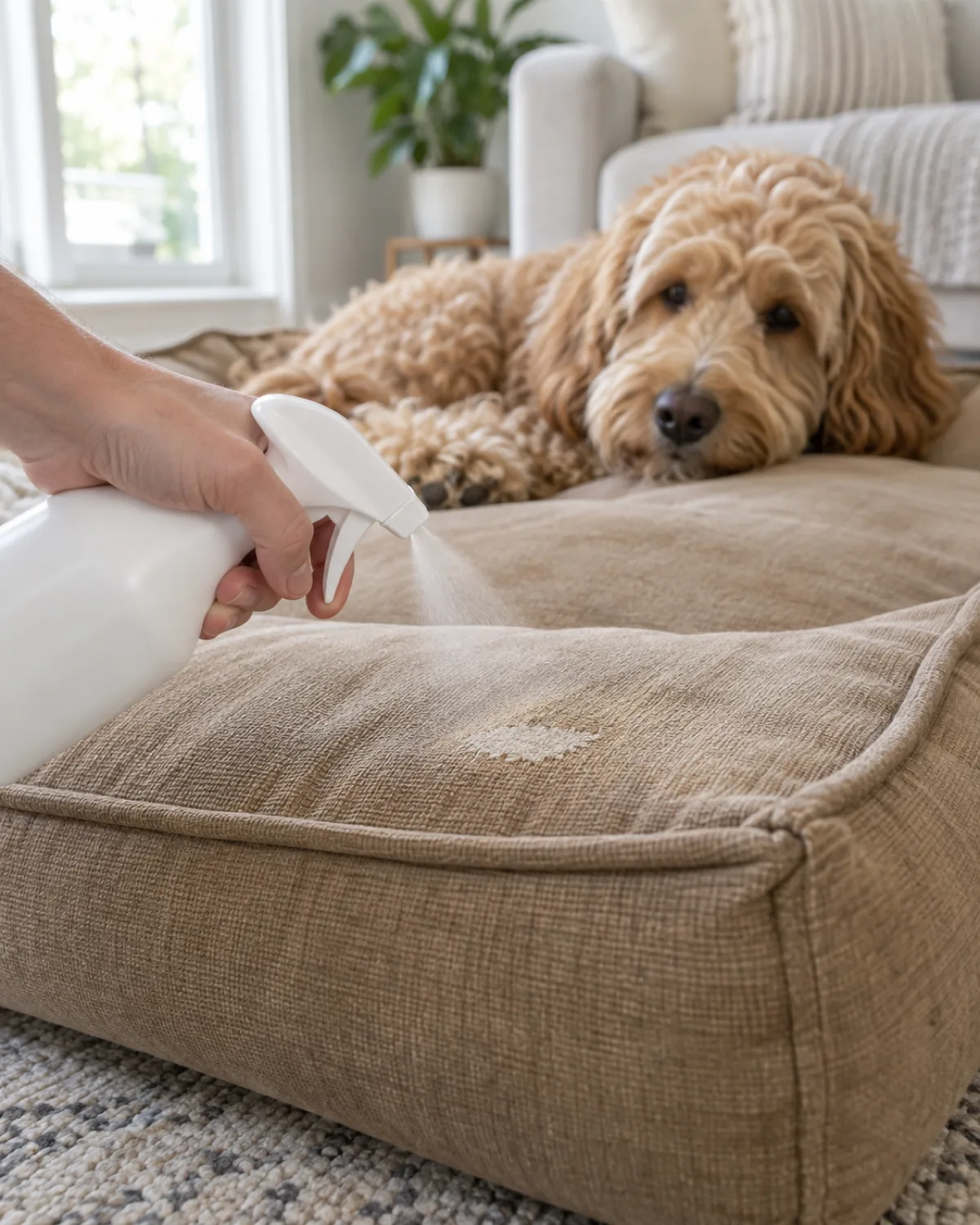
A dog bed collects drool, dander, paw dirt, and oils faster than you think. To dust mites, bacteria, and flea eggs, that buildup is a five-star hotel.
Washing it wrong can ruin the bed or make things worse. This guide covers every type, from machine-washable bolsters to orthopedic foam. Need a new bed instead? Start with the dog bed ideas guide.
Jump to a section
Washing a Dog Bed the Right Way
This guide walks through why regular washing matters, how often to do it by bed type, machine washing, hand washing, memory foam care, drying, and quick spot-cleaning between washes.
You do not have to read top to bottom. Pick the situation that matches what you are dealing with right now.
The bed has a removable cover and you want a quick washUnzip the cover and jump to machine-washable beds.
The bed is one solid piece with no zipperIt probably needs a bathtub soak. Start at hand-washing beds.
You just need to clean a stain or remove the smellSkip the full wash and go straight to quick spot-clean tricks.
Why Regular Washing Matters
A dog bed collects everything your dog carries: dead skin cells, saliva, oils from the coat, dirt from paws, and whatever they rolled in on the last walk. Over a few weeks that buildup creates a warm, moist environment where dust mites, bacteria, and fungal spores thrive.
The result is not just a smell problem. Dogs with skin allergies, hot spots, or ear infections often improve once their bedding is on a regular wash cycle because the allergen load drops. The humans in the house benefit too — pet dander is one of the most common indoor allergens, and a dirty dog bed is a concentrated source of it.
Dust mites feed on shed skin and produce waste particles that trigger allergic reactions in both dogs and people.
Flea eggs and larvae survive in fabric fibers even after you treat the dog. Washing the bed in hot water kills the lifecycle.
Bacterial and yeast buildup on the bed transfers back onto your dog every time it lies down, which can worsen existing skin conditions.
If your dog has a persistent odor even after a bath, the bed is often the missing piece. The dog smell guide covers whole-house odor sources, but the bed is usually where you should start.
Three rules that protect the bed and the dog
Bed Washing Ground Rules
These three non-negotiables apply to every bed type. Skip one and you risk damaging the bed or irritating your dog's skin.
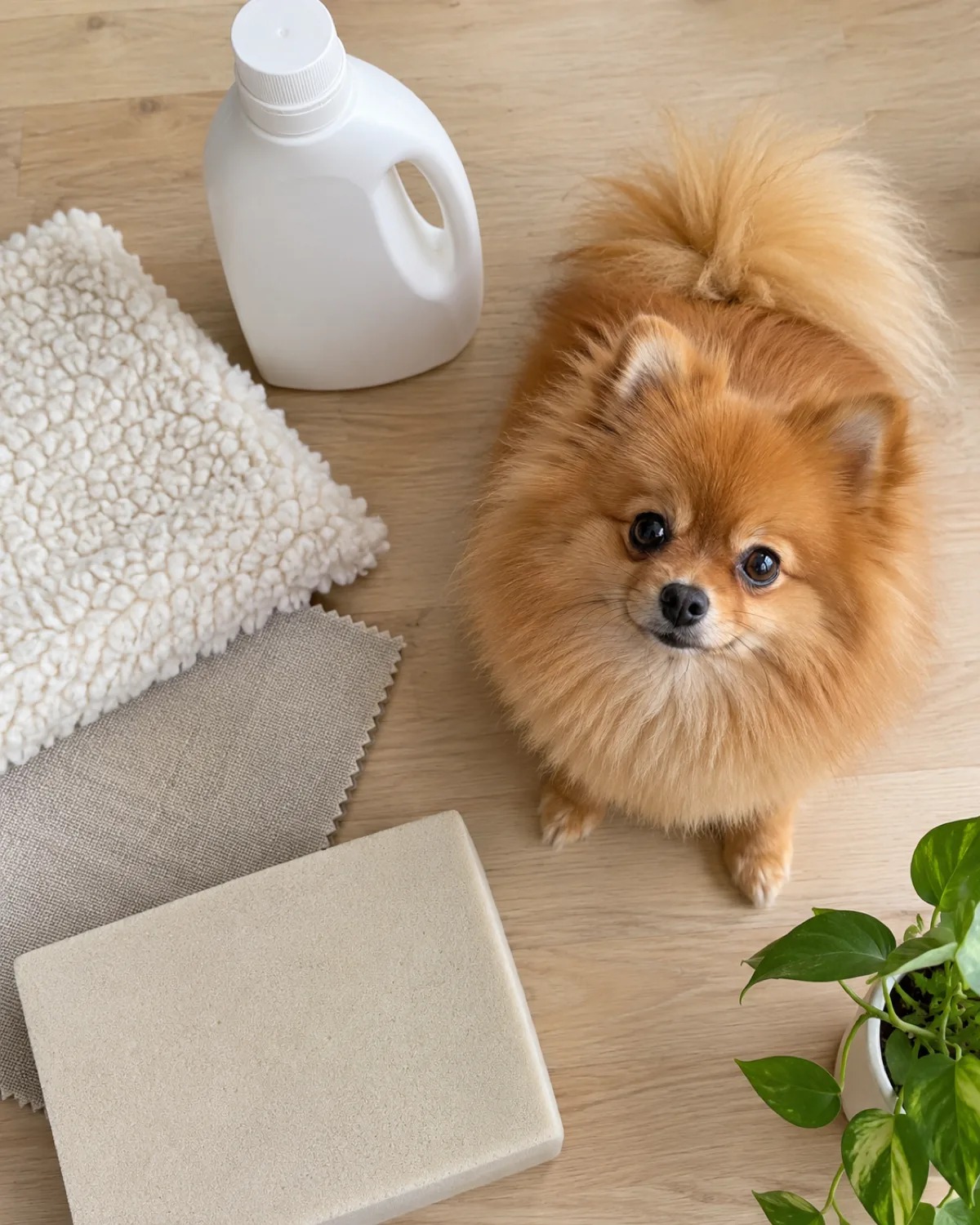
Use fragrance-free, dye-free detergent onlyScented detergents leave chemical residues that can trigger contact dermatitis, itching, and hot spots. If the label says "fresh linen scent" or "spring meadow," it is not safe for a surface your dog presses its face into for hours. Choose a plant-based, hypoallergenic formula or a detergent specifically labeled for pet bedding.
Never machine-wash memory foamA washing machine will break down the cell structure of memory foam, turning a supportive slab into a lumpy, waterlogged sponge that takes days to dry and molds inside before it does. Memory foam gets surface-cleaned only — see the dedicated section below.
The bed must be completely dry before reassemblyA damp insert zipped back into its cover is a mold incubator. Press your face into the center of the insert and inhale. If it smells even slightly musty or feels cool to the touch in the core, it needs more time. Mold inside a bed insert is invisible until the dog starts sneezing.
Setting a Washing Schedule by Bed Type
Not every dog bed needs the same wash frequency. The material, the dog, and the environment all change the math.
Bed type
Cover
Insert / full bed
Zippered cover + poly fill
Every 2 weeks
Monthly
One-piece bolster
—
Every 2–3 weeks
Memory foam orthopedic
Every 2 weeks
Surface clean only
Elevated cot / mesh
Wipe weekly
Wash sling monthly
Heated / electric
Unplug first
Per manufacturer
Bump the frequency up if any of these apply:
Skin allergies or medicated shampoo cycle. More washing removes allergens the shampoo is managing.
Outdoor dog. Mud, grass, and pollen ride back to the bed daily.
Multiple dogs share the bed. Double the dogs, double the buildup.
Humid room. Moisture accelerates mold growth in the fill.
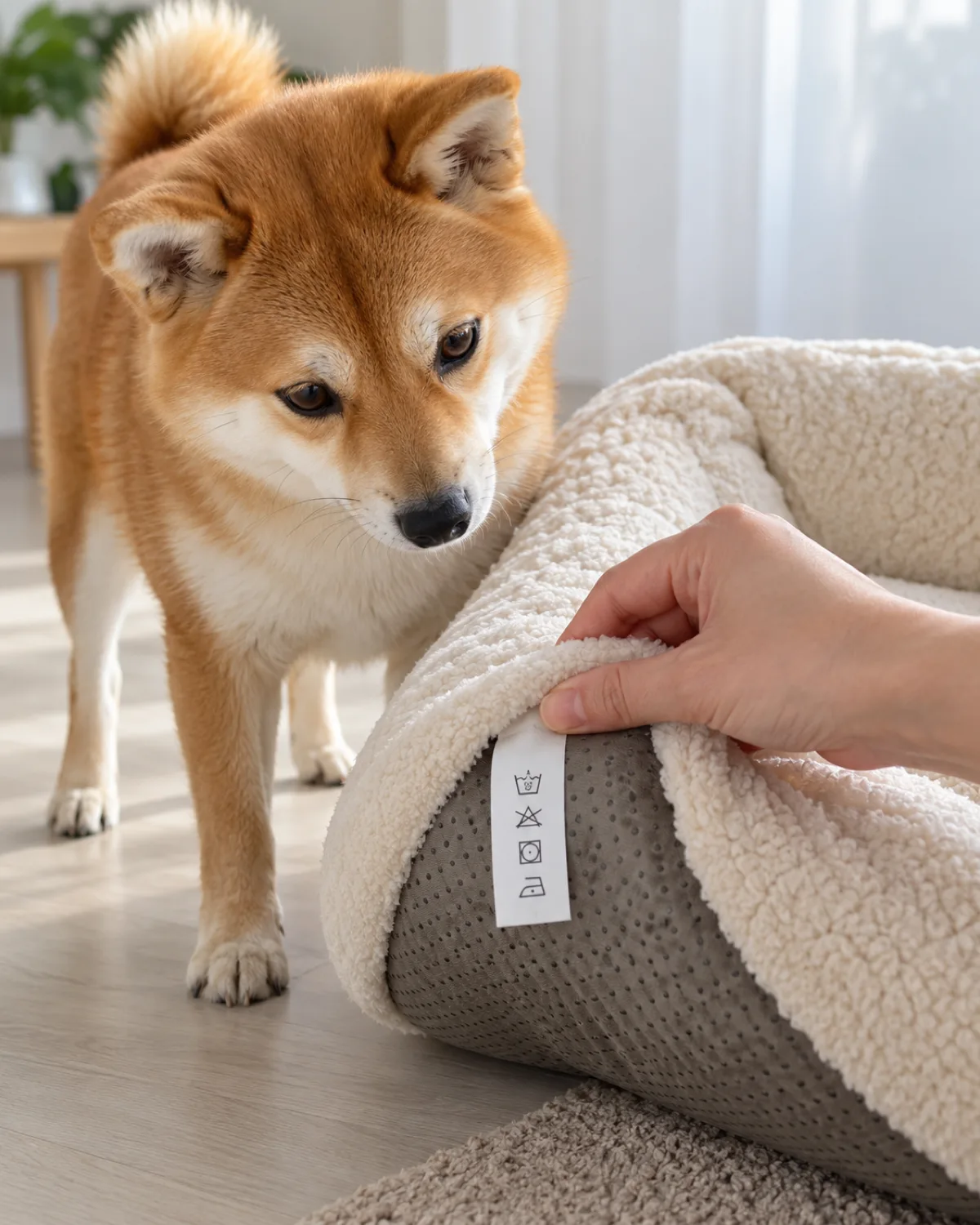
Check the Care Label First
Before you strip the bed and haul it to the laundry room, flip it over and find the care label. Most dog beds have one stitched into a bottom seam or tucked inside the cover near the zipper.
The label tells you three things you need:
Fabric composition — polyester, cotton, microfiber, or a blend. This determines safe water temperature and spin speed.
Maximum wash temperature — cold (30°C) is safe for nearly every bed. Hot (60°C) kills mites and flea eggs but can shrink cotton.
Dryer instructions — a square-with-circle icon means tumble dry is fine. Crossed out means air dry only.
If the label is missing or unreadable, default to cold water, gentle cycle, and air drying. That combination is safe for virtually any fabric and avoids the two most common mistakes: heat shrinkage and waterproof liner damage.
Machine-Washable Beds Step by Step
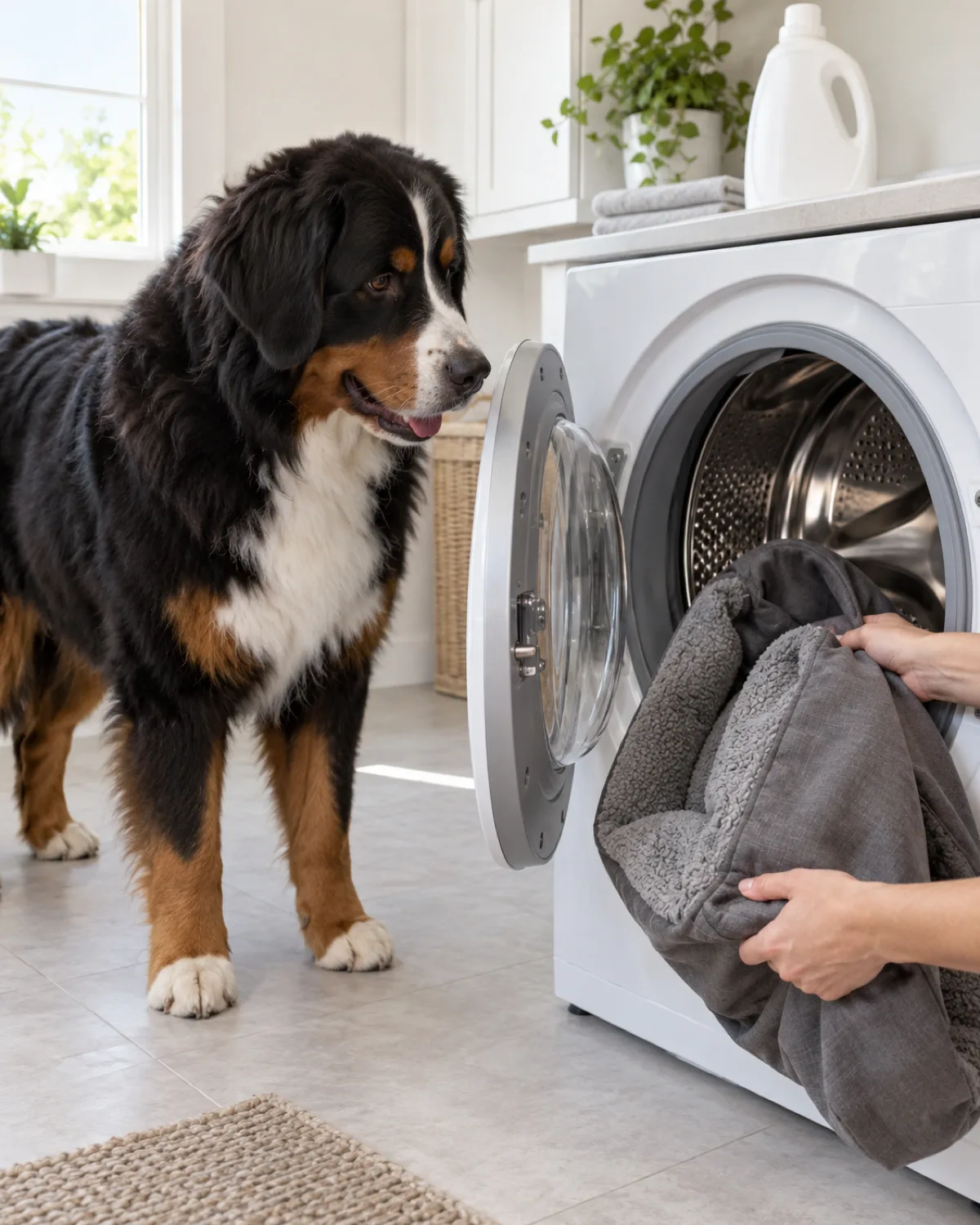
If the bed has a removable cover and the care label allows machine washing, this is the easiest path. Here is the full sequence:
Before the machine:
Vacuum the cover and insert separately. Use an upholstery attachment to pull out embedded fur that the machine would otherwise clump and clog.
Pre-treat visible stains with an enzyme-based pet stain remover. Spray, wait ten minutes, blot.
Unzip the cover and remove the insert. They wash separately.
In the machine:
Cold or warm water only (hot only if the label allows and you are targeting flea eggs).
Fragrance-free, dye-free detergent at the recommended amount. Extra soap leaves irritating residue.
Gentle or delicate cycle to protect seams and shape.
An extra rinse cycle. Soap residue is the top cause of post-wash itching.
After the machine:
Shake the cover out to redistribute the fabric before drying.
If the care label allows, tumble dry on low heat. Toss in two clean tennis balls or dryer balls to keep the fabric from clumping.
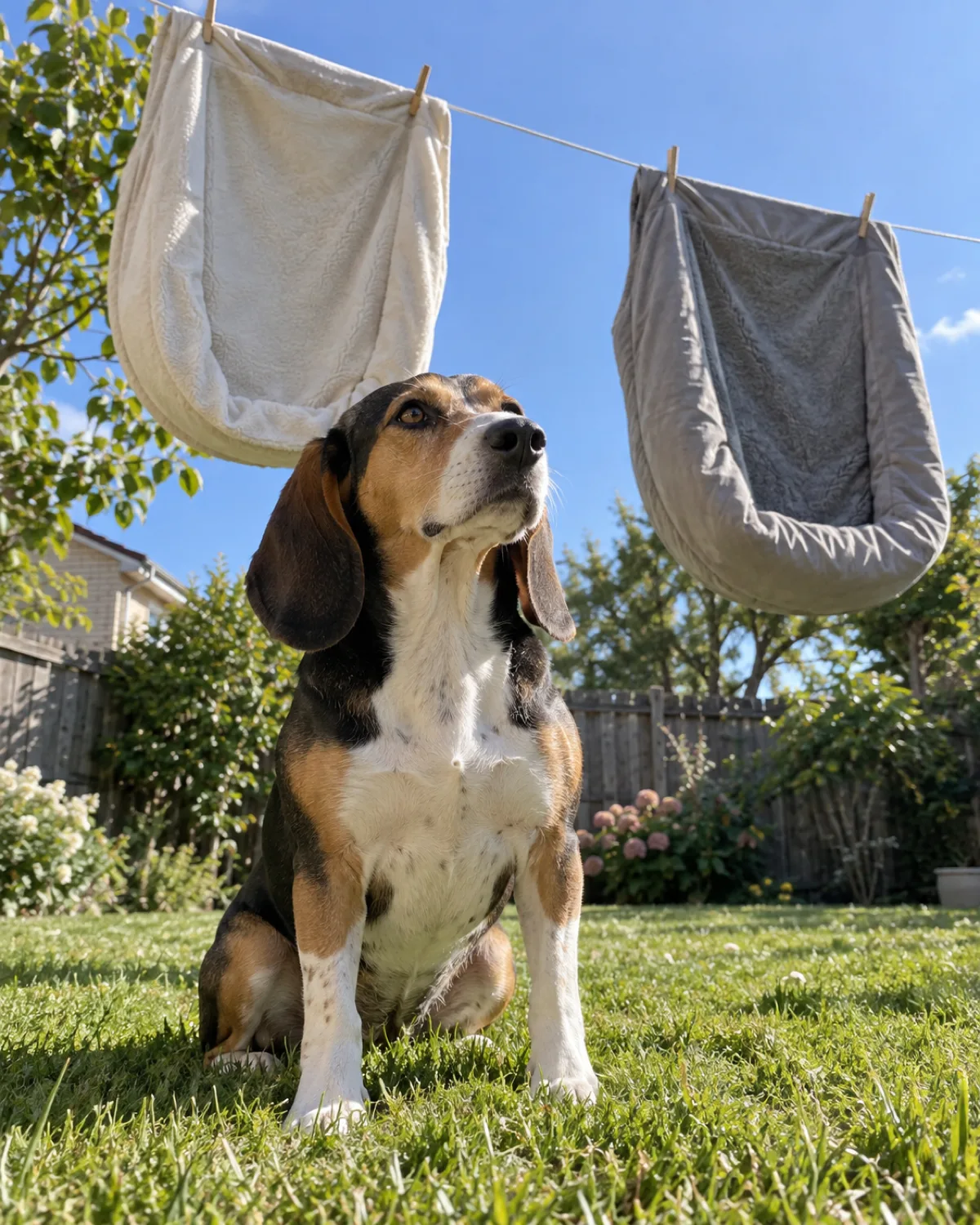
If air drying, drape the cover flat over a drying rack or clothesline in direct sunlight. Sunlight is a natural disinfectant and deodorizer.
For the polyester fill insert: most can go in a large-capacity front-loading machine on a gentle cycle. Top-loading machines with a center agitator can tear the fill apart. If you are unsure, hand-wash the insert instead.
Hand-Washing Beds That Cannot Go in the Machine
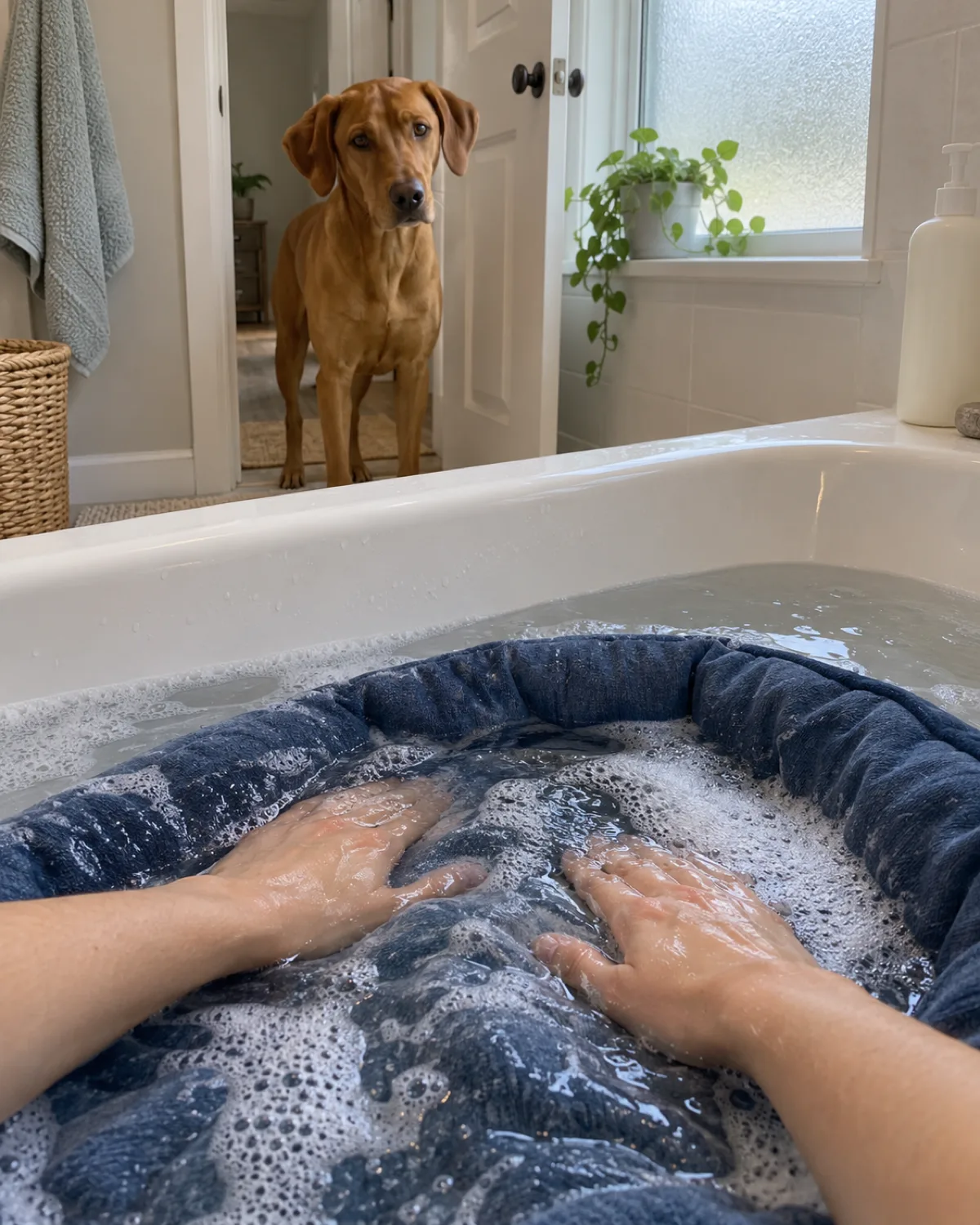
Some beds are too large for a home washing machine, have no removable cover, or have a care label that says hand-wash only. The bathtub is your friend here.
Vacuum the bed thoroughly first. Every loose hair you catch now is one less clogging your drain.
Fill the bathtub with lukewarm water. Add about a tablespoon of fragrance-free liquid detergent and stir.
Submerge the bed, press down to saturate, and let it soak for fifteen minutes.
Knead gently from one end to the other, focusing on the center and any stains. Do not wring or twist.
After soaking and kneading:
Drain the tub and press the bed against the bottom to squeeze out soapy water. Do not lift while waterlogged — the weight can tear seams.
Refill with clean water and press again. Repeat until water runs clear (usually two to three rinses).
Press out remaining water, then roll the bed in clean towels to absorb more.
The drying section below covers how to get a hand-washed bed fully dry without mold forming inside.
Cleaning Memory Foam and Orthopedic Inserts
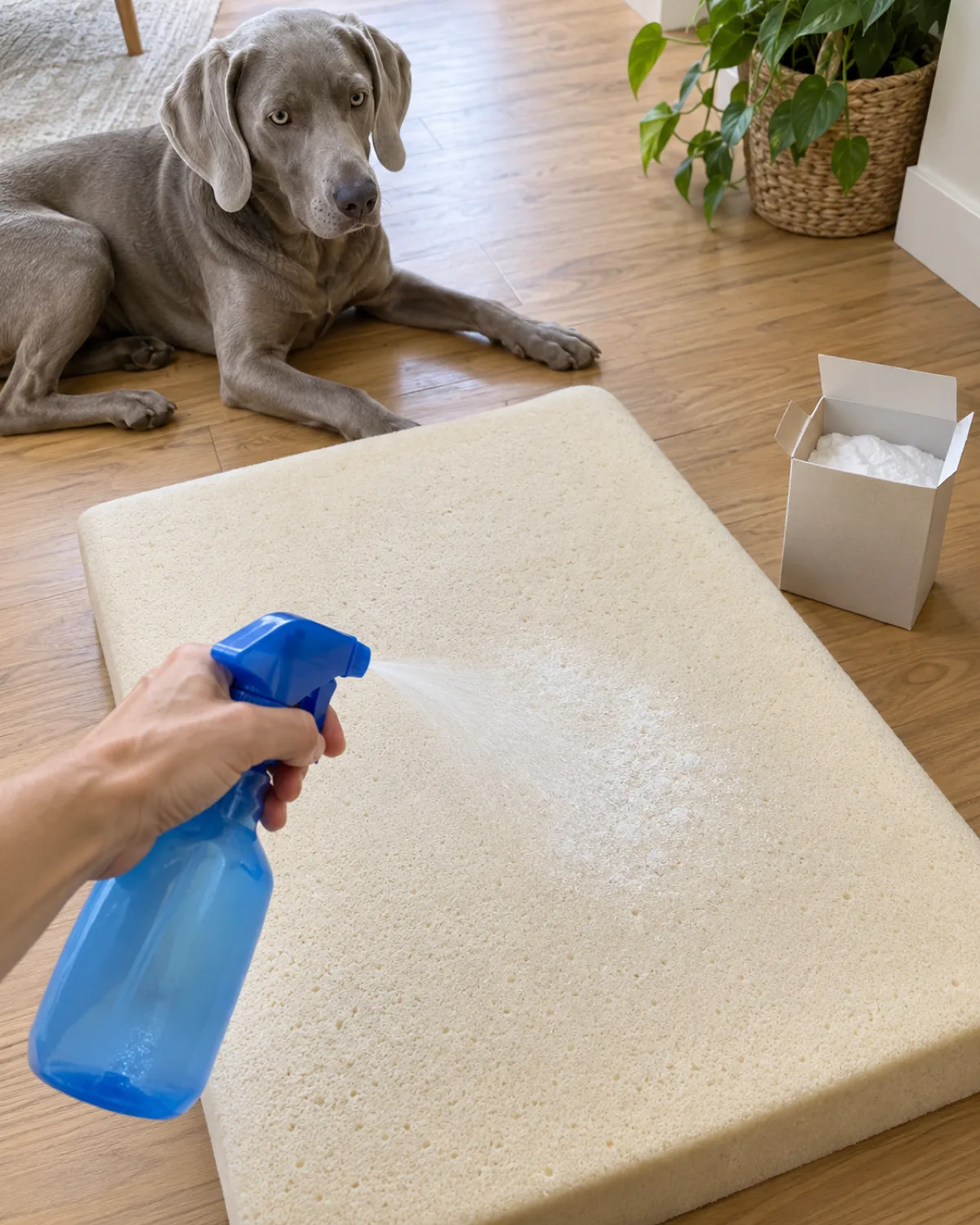
Memory foam and solid orthopedic inserts are the one type you cannot submerge. Water saturates the foam's open-cell structure, takes days to dry in the center, and creates the perfect conditions for mold growth inside a material you cannot see into.
Here is the surface-cleaning method that works:
Remove the insert from its cover. Wash the cover in the machine using the steps above.
Vacuum both sides of the foam with an upholstery attachment.
Spot-treat stains by spraying enzyme cleaner onto a cloth (not the foam), then blotting inward. Air dry.
For deodorizing:
Sprinkle baking soda over the surface. Let it sit thirty minutes or overnight.
Vacuum the baking soda off thoroughly.
Stand the insert on its edge near a window or fan for a few hours to air out.
If the foam insert has absorbed urine or a large spill and the odor persists after surface treatment, it may be time to replace just the insert. Many manufacturers sell replacement inserts for less than the cost of a full new bed.
Drying and Reassembly Tips
A bed that goes back together while still damp inside will develop mold and a musty smell within days. Drying is the step most people rush, and it is the step that matters most.
Covers and thin inserts:
Tumble dry on low heat if the care label allows. High heat melts waterproof liners and shrinks cotton blends.
If air drying, drape flat over a rack or line — never bunch on a chair. Bunching traps moisture in the folds.
Direct sunlight is ideal. UV light kills bacteria and breaks down odor molecules. Even an hour of direct sun makes a noticeable difference.
Thick polyester fill inserts:
Lay flat on a clean outdoor surface in direct sunlight. These hold more water than you expect.
Flip every few hours so the bottom dries evenly.
In humid weather, use a fan or dehumidifier. A thick insert can take a full day.
The press test before reassembly:
Press your palm firmly into the center of the insert — the thickest part where moisture hides longest. If it feels even slightly cool or damp, it is not ready. Zip it back into the cover only when the center feels the same temperature as the room and completely dry to the touch.
Keeping a second cover on rotation makes this easier. Wash one, put the spare on the bed, and let the washed cover dry without any rush.
Quick Spot-Clean Tricks Between Washes
A full wash every two weeks is the baseline, but things happen between washes. A muddy paw print, a drool patch, or an accident does not require stripping the entire bed.
Here are the three spot-clean tools that handle most situations:
Enzyme cleaner for biological stains. Urine, vomit, drool, and blood respond to enzyme cleaners that break down the proteins causing the stain and odor. Spray, wait five to ten minutes, blot with a clean cloth. Never use hot water on biological stains — heat sets the protein permanently.
Baking soda for odor. Sprinkle over the surface, wait fifteen to thirty minutes, vacuum off. Safe for every bed type including memory foam.
Lint roller or rubber glove for daily hair. Roll or wipe in one direction every few days. A damp rubber dishwashing glove catches embedded fur a lint roller misses. Under a minute, big allergen reduction.
Two habits that extend the time between full washes:
Add a waterproof liner under the insert if your dog is a puppy, a senior, or recovering from surgery. It keeps the insert dry and means only the cover needs washing.
Vacuum the bed weekly with an upholstery attachment. It removes embedded dander that spot-cleaning alone misses.
The apartment dogs guide covers space-efficient cleaning routines for small homes where odors concentrate faster.
Save this for later
Washing a Dog Bed in 8 Takeaways
1Wash regularly to cut allergensDog beds harbor dust mites, bacteria, and flea eggs that transfer back to your dog daily.
2Match frequency to bed typeZippered covers every two weeks, full beds monthly, memory foam surface-clean only.
3Always check the care labelFabric type, max temperature, and dryer instructions prevent shrinkage and liner damage.
4Machine wash with extra rinseCold water, fragrance-free detergent, gentle cycle, and an extra rinse to remove all soap residue.
5Hand wash oversized beds in the tubSoak, knead gently, rinse until water runs clear, and never wring or twist the fabric.
6Surface-clean memory foam onlyEnzyme spray on a cloth for stains, baking soda for odor, airflow for freshness — never submerge.
7Dry completely before reassemblyPress the center of the insert — if it feels cool or damp, it is not ready and will mold inside.
8Spot-clean between full washesEnzyme cleaner for stains, baking soda for odor, lint roller for daily hair removal.
pawliqa.com
Dog Bed Washing FAQ
Can I use regular laundry detergent on a dog bed?
You can, but choose a fragrance-free, dye-free formula. Standard scented detergents leave chemical residues that can irritate a dog's skin, especially on a surface the dog presses its face and belly into for hours. Plant-based hypoallergenic detergents or pet-specific formulas are the safest option.
How do I get the dog smell out of a bed that is already clean?
If the bed smells even after washing, the odor is likely trapped in the fill rather than the cover. Sprinkle baking soda over the insert, let it sit overnight, and vacuum it off. For persistent odor, stand the insert in direct sunlight for several hours — UV light breaks down the odor-causing compounds that baking soda alone cannot reach.
Is it safe to use bleach on a dog bed?
Diluted bleach kills bacteria, but it weakens fabric, damages colors, and can irritate skin. An enzyme cleaner or oxygen-based bleach alternative does the same job without those risks. If you do use bleach, dilute it (one tablespoon per gallon), rinse three times, and dry thoroughly in sunlight before the dog uses it.
How do I wash a dog bed that is too big for my washing machine?
Use the bathtub method described in the hand-washing section above. Fill the tub, soak, knead, and rinse. For very large beds, a commercial laundromat with oversized front-loading machines is another option — just bring your own fragrance-free detergent and run an extra rinse cycle.
When should I just replace the dog bed instead of washing it?
Replace it when the fill no longer bounces back after washing, the foam has permanent odor, the waterproof liner is cracked, or the cover is thinning at the seams. A bed that cannot support the dog's joints is worse than a dirty one. The dog bed ideas guide covers what to look for in a replacement.
P
About the author
Jess Calloway
Jess Calloway edits Pawliqa, where she shares dog care, grooming, training, and new-owner tips — plus DIY and pet-friendly home ideas — for anyone who wants a happy, well-cared-for dog. As a dog mom to three very different dogs, she writes the honest, tested version of what actually works. Every guide is image-led and reviewed for clarity, usefulness, image accuracy, and Pinterest-to-page alignment before it goes live. Visit the About page.
Sixteen factors that determine how much to feed a dog covering body weight and calorie math, the body condition score system, puppy versus adult versus senior needs, activity-level multipliers, kibble calorie density differences, measuring cups versus kitchen scales, daily treat limits, wet-and-dry mixing ratios, seasonal appetite swings, spayed or neutered metabolism shifts, pregnant and nursing intake, multi-dog household portion control, signs of overfeeding, signs of underfeeding, when to adjust mid-bag, and the annual vet-check recalibration habit.