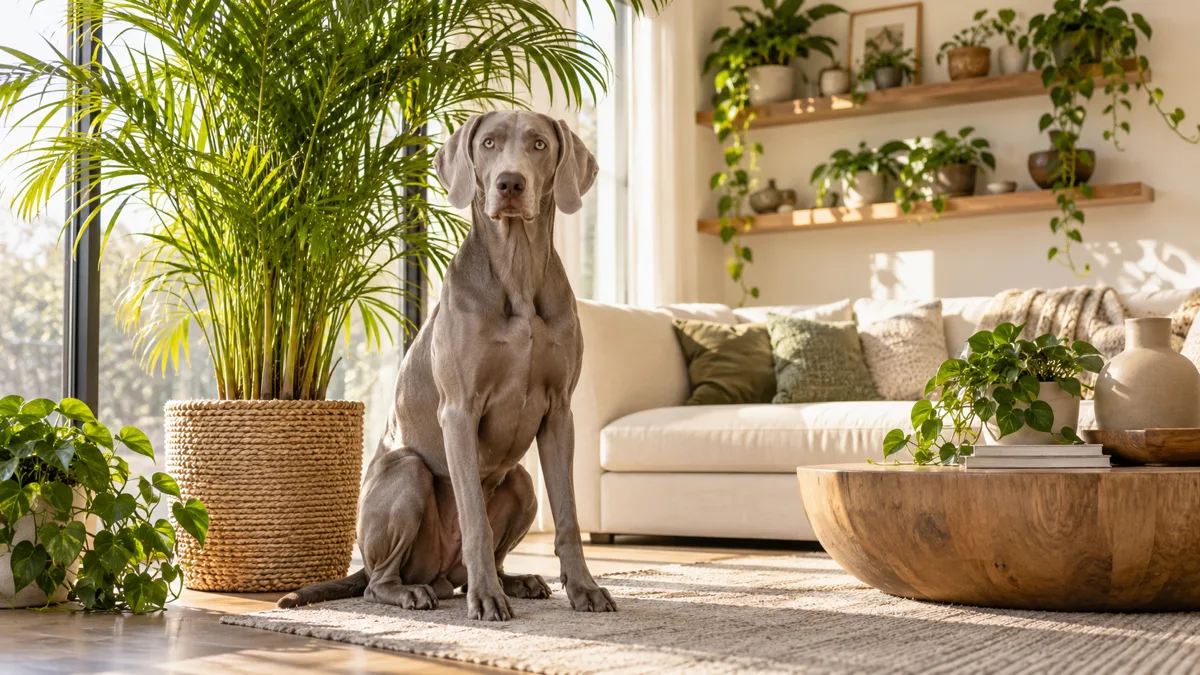
You want greenery in the house. Your dog wants to sniff, paw, and occasionally mouth every leaf within reach. Those two goals only clash when the plant is toxic.
These fifteen dog friendly plants are all confirmed non-toxic by the ASPCA. If your dog chews something and you are not sure what it was, call your vet or the ASPCA Animal Poison Control Center at (888) 426-4435.
For outdoor-safe yard setups, see dog-friendly backyard ideas. And if you also want to know what to keep out of the kitchen, check foods dogs can't eat.
Jump to a plant
15 Dog Friendly Plants
Every plant below is ASPCA-verified non-toxic for dogs. Tap any name to jump straight to its care and placement tips.
1. Spider Plant
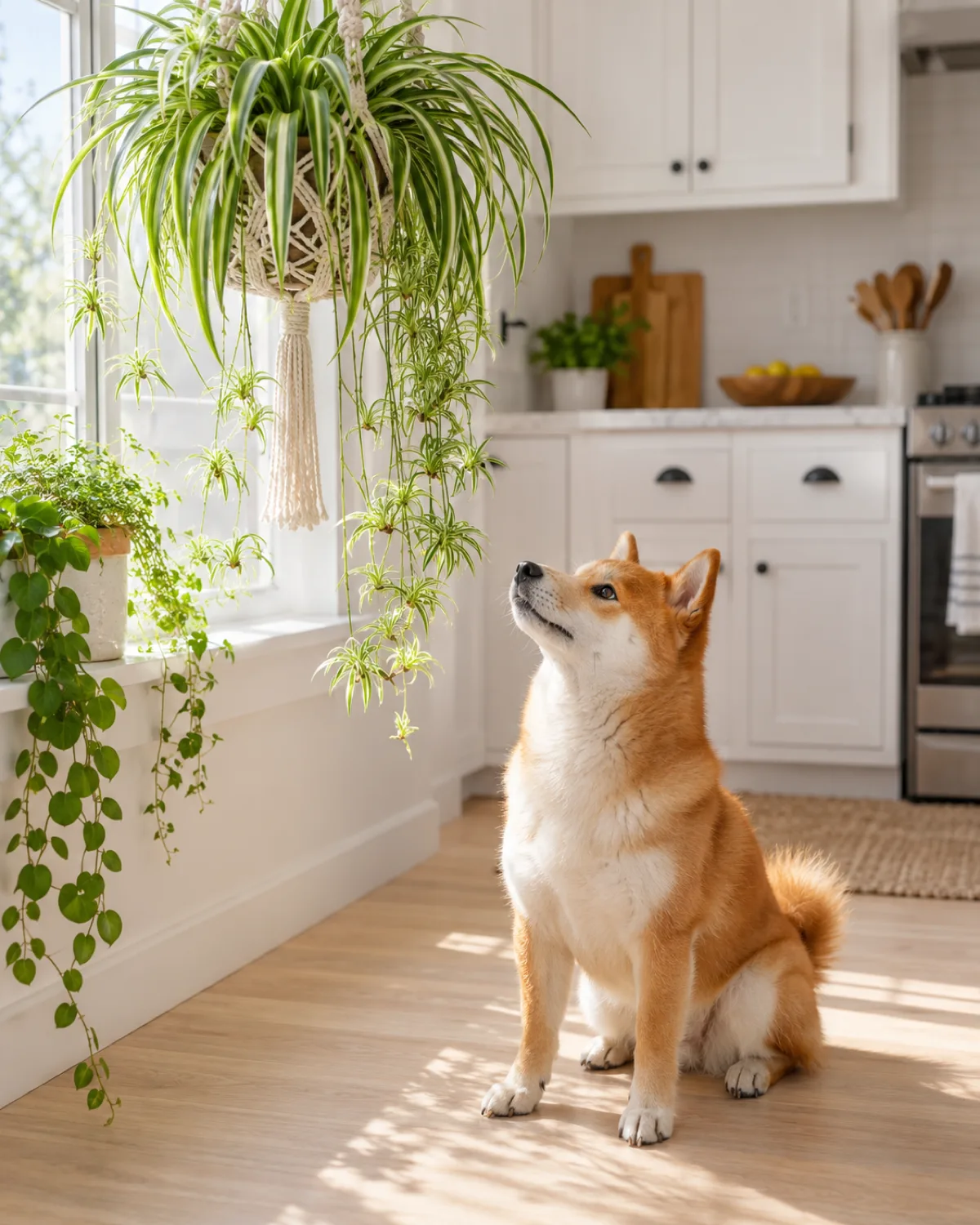
Spider plants (Chlorophytum comosum) top almost every pet-safe list, and for good reason. They tolerate neglect, bounce back from missed waterings, and produce trailing baby plantlets you can snip and repot for free.
Hang yours in a macramé planter near a window that gets bright indirect light. The hanging position keeps the dangling offshoots away from curious mouths, though a nibble will not hurt your dog.
- Light: Bright indirect to low light
- Water: When the top inch of soil feels dry
- Dog note: Non-toxic, but excessive chewing can cause mild stomach upset in some dogs — elevation solves it
2. Boston Fern
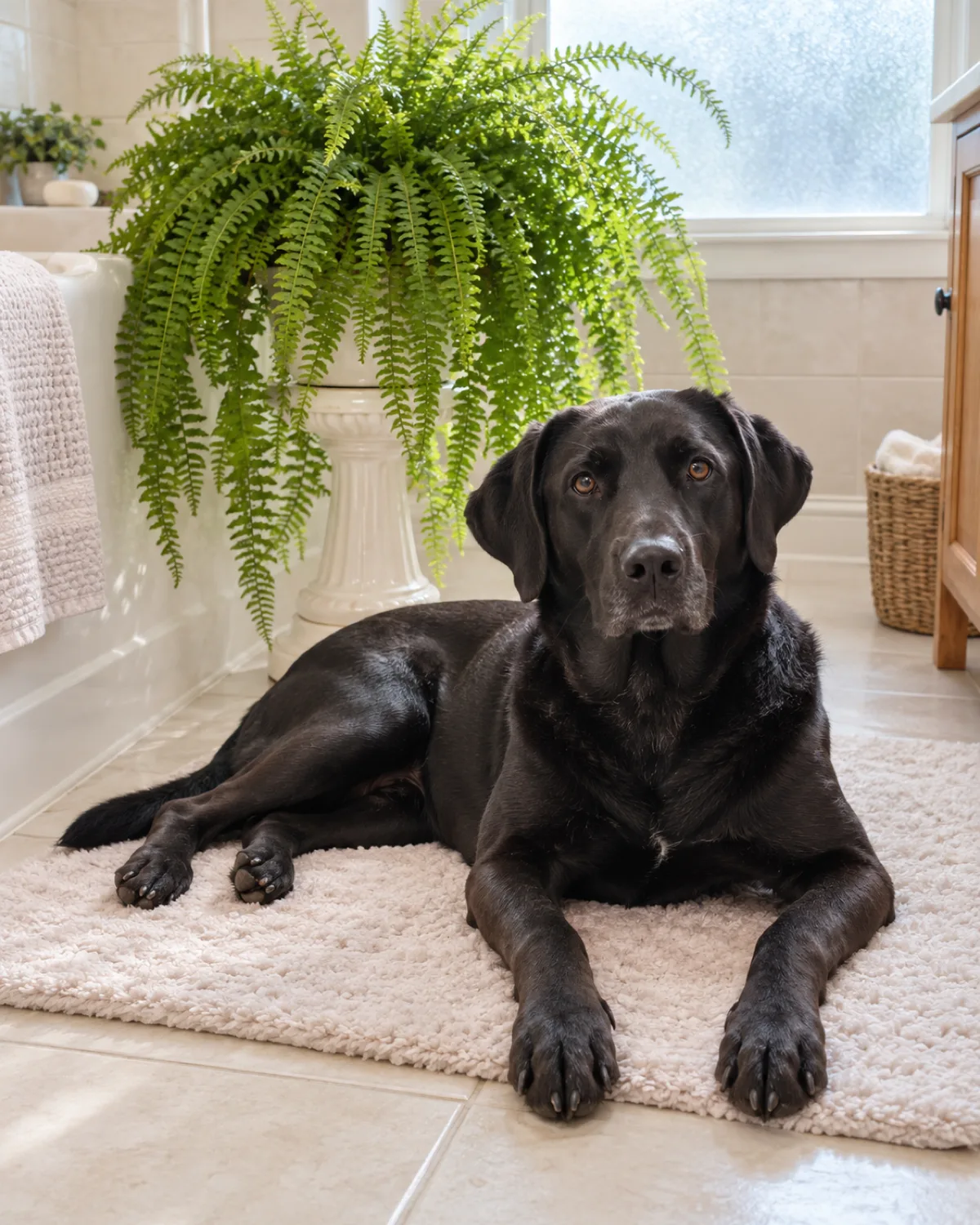
Boston ferns (Nephrolepis exaltata) bring a lush, cascading look to bathrooms and shaded porches. They love humidity, which makes a steamy bathroom their ideal spot.
The fronds shed occasionally, so expect to sweep — but those dropped leaves are harmless if your dog picks one up.
- Light: Bright indirect to medium, no direct sun
- Water: Keep soil consistently moist, mist the fronds weekly
- Dog note: Completely non-toxic; safe in any room
3. Areca Palm
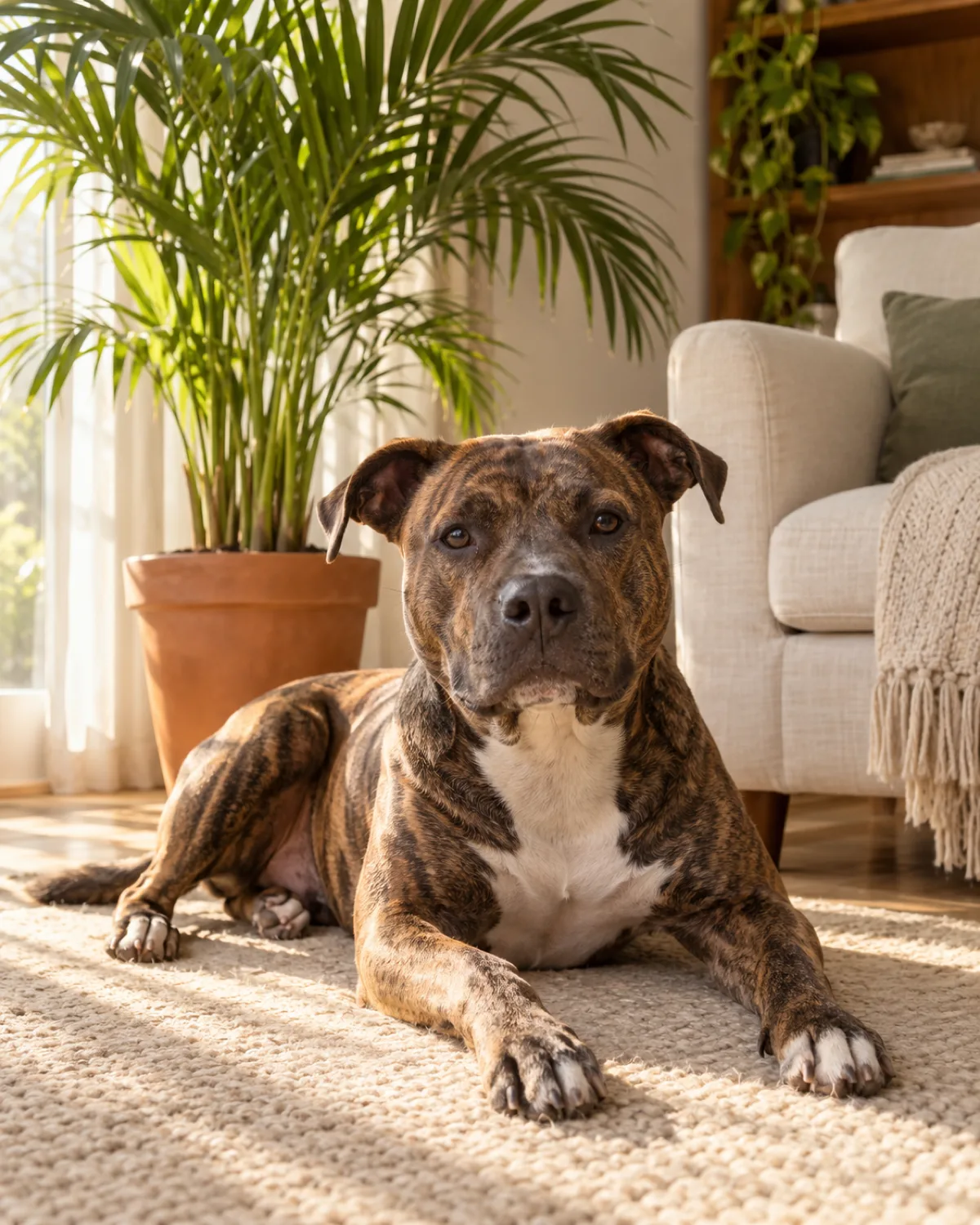
The areca palm (Dypsis lutescens) grows tall enough to fill a corner and gives any room an instant tropical feel. It is one of NASA's top air-purifying houseplants — and completely safe for dogs.
Place it where it gets bright filtered light. Direct afternoon sun scorches the frond tips. Water when the top two inches of soil dry out, and expect the palm to slow its growth in winter.
- Light: Bright indirect light
- Water: When the top two inches of soil are dry
- Dog note: Non-toxic; fronds are tough enough that most dogs ignore them after the first sniff
4. Calathea

Calatheas — sometimes sold as prayer plants — are the showpieces of low-light rooms. Their patterned leaves in greens, purples, and pinks fold upward at night and spread open in the morning.
They demand consistent humidity and hate direct sun, which makes them a good fit for a bathroom shelf or a bedroom corner. The leaves are non-toxic, but the wide, papery texture seems to attract chewers.
- Light: Low to medium indirect light
- Water: Keep soil lightly moist; use filtered water to prevent brown tips
- Dog note: Non-toxic; if your dog chews leaves often, move the pot to a high shelf or use a plant stand
Pick your starting point
Which plants fit your space?
You do not need all fifteen. Match your light level and effort tolerance to the right group, then start with two or three.
5. Peperomia
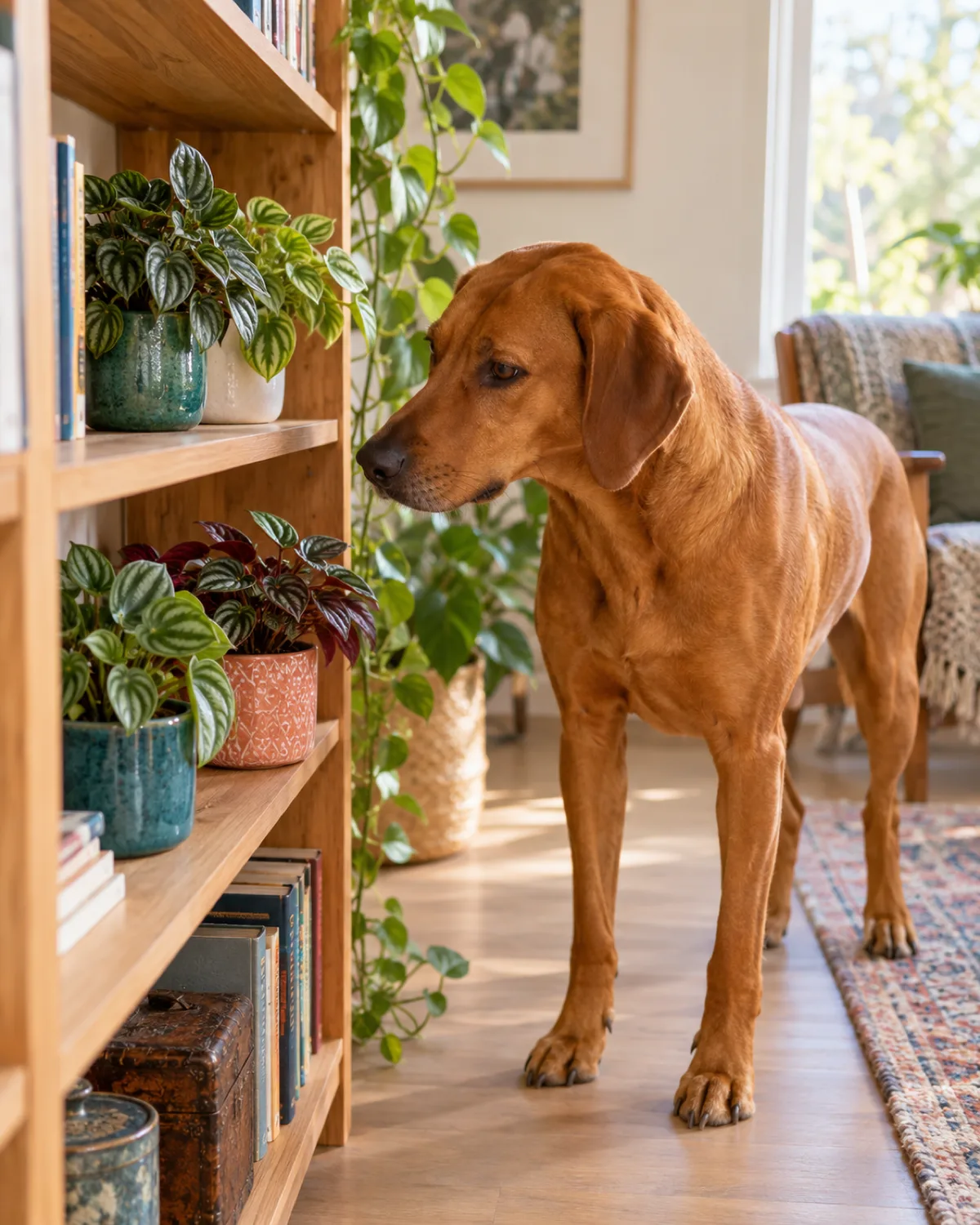
Peperomias come in dozens of varieties — watermelon-patterned leaves, deep red undersides, thick succulent-like stems — and every single one is non-toxic to dogs.
They stay small, which makes them ideal for shelves, desks, and side tables. Most prefer bright indirect light but survive in medium light, too. Overwatering is the main killer; let the soil dry between drinks.
- Light: Bright to medium indirect light
- Water: Let soil dry almost completely between waterings
- Dog note: Non-toxic across all varieties
6. African Violet
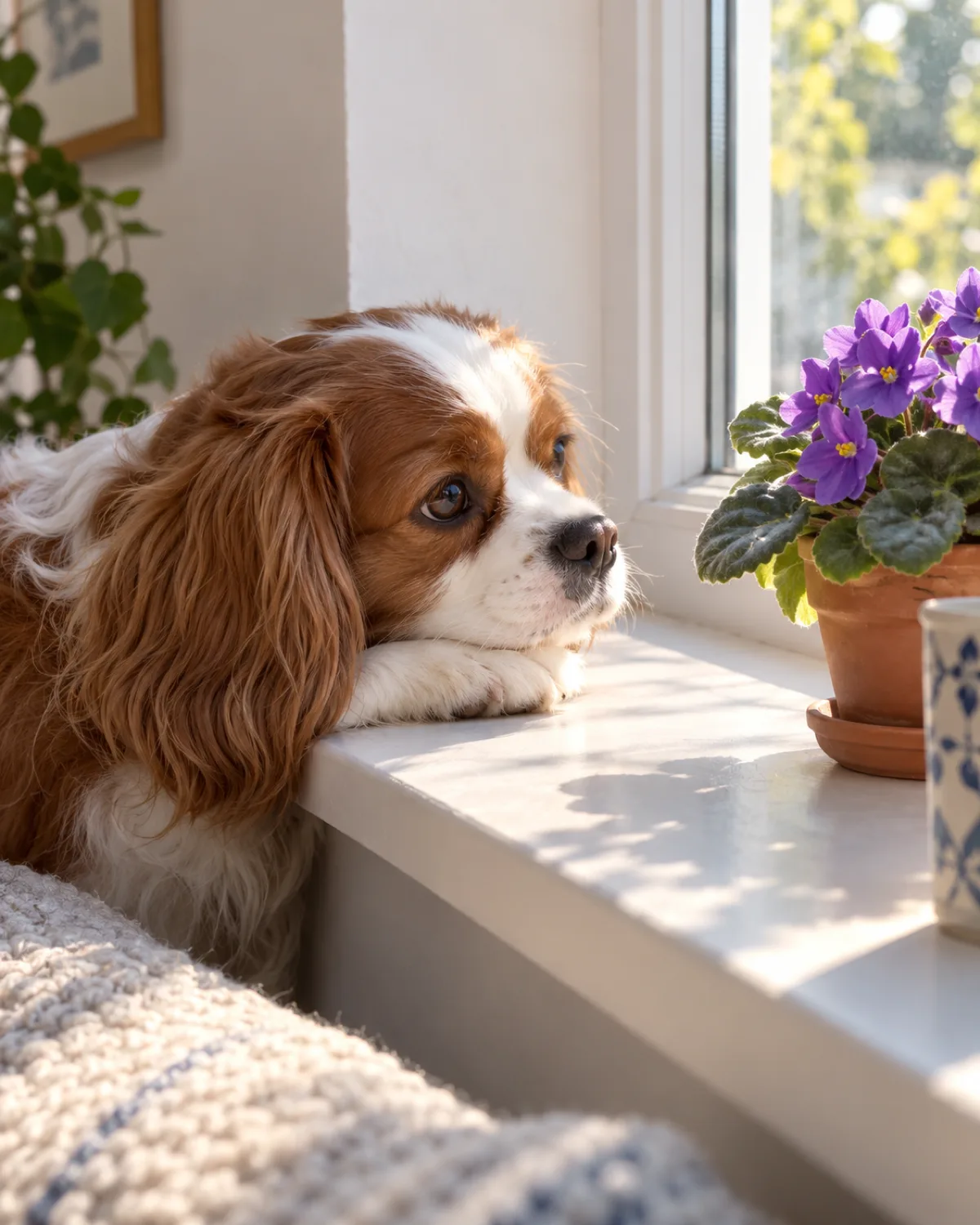
African violets (Saintpaulia) are one of the few flowering houseplants that are safe for dogs. They bloom in purples, pinks, and whites for weeks at a time and stay compact enough for a windowsill.
Water from the bottom to avoid leaf spots — set the pot in a saucer of water for 20 minutes, then drain. They prefer east-facing windows where morning sun is gentle.
- Light: Bright indirect, ideally morning sun
- Water: Bottom-water when soil surface feels dry
- Dog note: Non-toxic; the fuzzy leaves rarely attract chewers
7. Polka Dot Plant
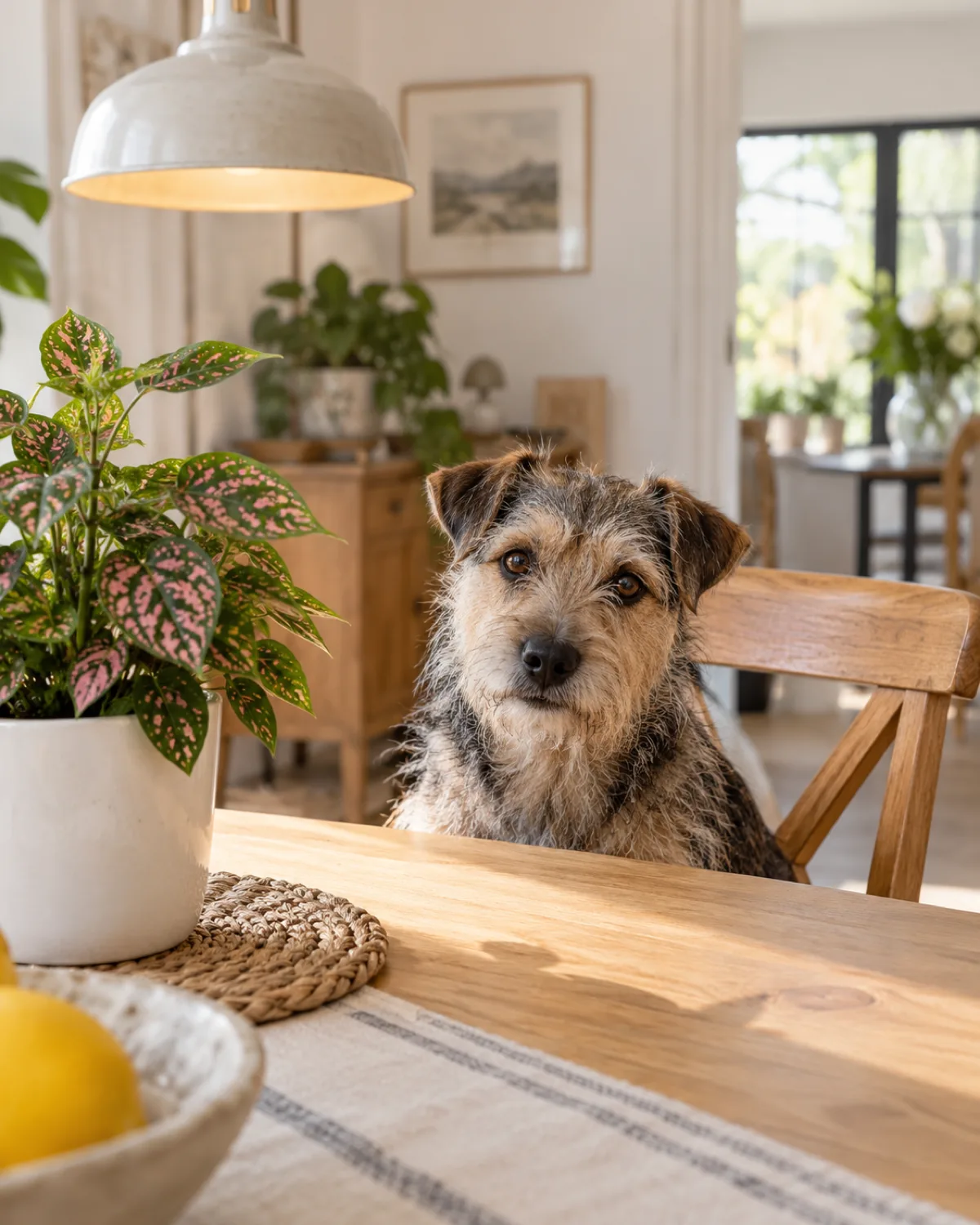
The polka dot plant (Hypoestes phyllostachya) earns its spot on camera with splashes of pink, white, or red freckles across green leaves. It grows fast, stays small, and works well as a tabletop accent.
Pinch back leggy stems every few weeks to keep it bushy. It enjoys bright indirect light; too little light fades the freckles to plain green.
- Light: Bright indirect light
- Water: Keep soil evenly moist but not soggy
- Dog note: Non-toxic; fast growth means a nibbled stem bounces back quickly
8. Parlor Palm
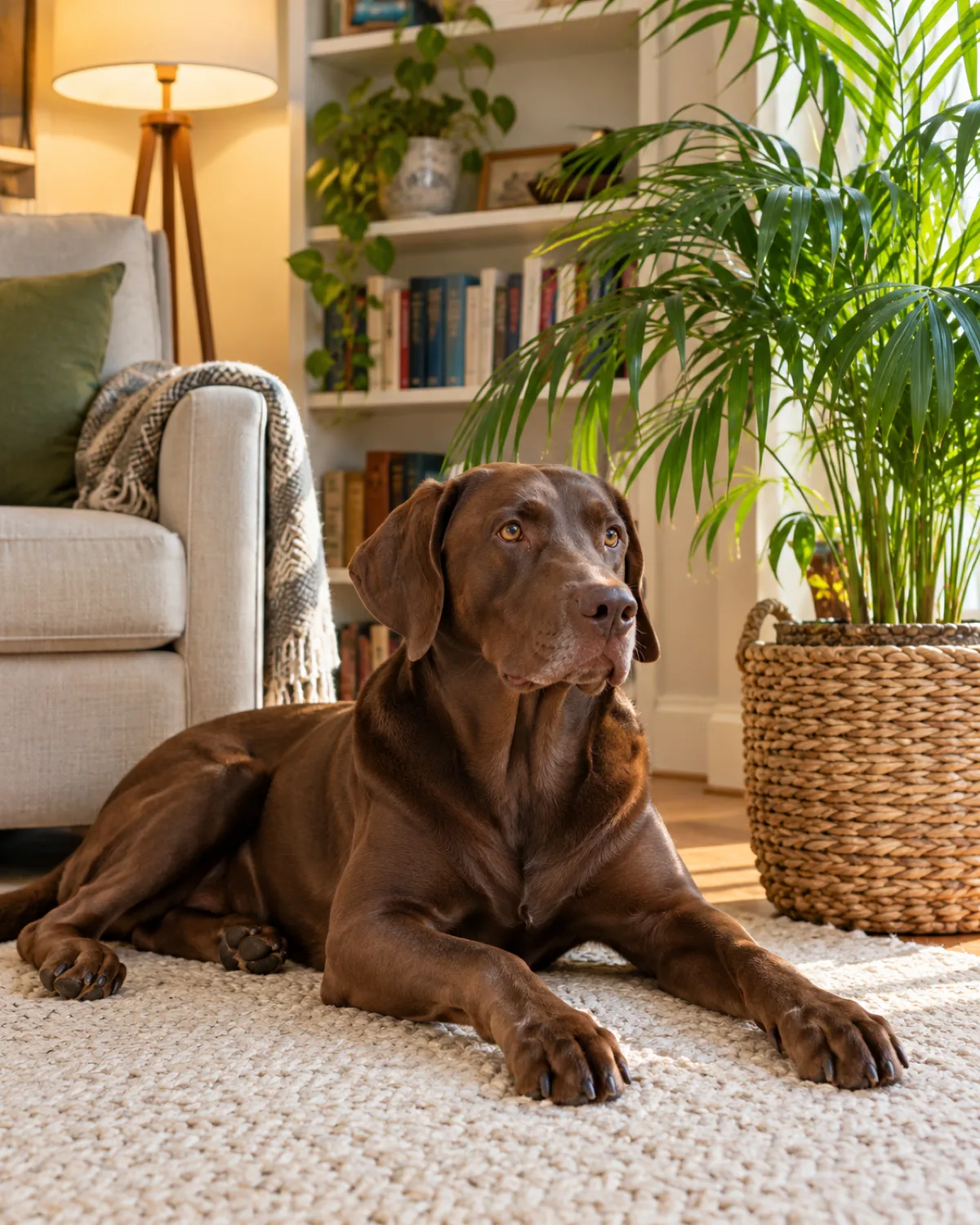
The parlor palm (Chamaedorea elegans) has been a favorite indoor plant since the Victorian era, and it remains one of the easiest palms to grow inside. It tolerates low light, dry air, and occasional neglect.
Unlike the areca palm, the parlor palm stays smaller — usually two to four feet indoors. That compact size makes it a good fit for apartments.
- Light: Low to medium indirect light
- Water: When the top inch of soil is dry; do not overwater
- Dog note: Non-toxic; the thin fronds sometimes attract playful batting, but no harm done
If you live in an apartment, pair a parlor palm with a few enrichment toys to keep your dog busy — see brain games for dogs for ideas that redirect chewing energy.
Keep these rules in mind
4 Rules for Dog-Safe Plant Keeping
Even non-toxic plants need smart placement. Follow these four habits so your dog and your greenery coexist without drama.
Check ASPCA FirstBefore buying any plant, search its name on the ASPCA Toxic and Non-Toxic Plants database. Common names overlap — "lily" covers dozens of species, and some are deadly while others are fine.
Elevate When PossibleHanging planters, wall-mounted shelves, and tall plant stands keep foliage out of mouth reach. This is especially useful for puppies who chew everything during teething.
Watch for Chewing PatternsA dog that shreds one plant leaf will probably try the next one. Bitter apple spray on the pot rim deters most repeat offenders without harming the plant.
Call Your Vet If UnsureIf your dog vomits after chewing a plant and you cannot identify the species, call your vet or the ASPCA Poison Control line. Do not wait for symptoms to worsen.
9. Cast Iron Plant
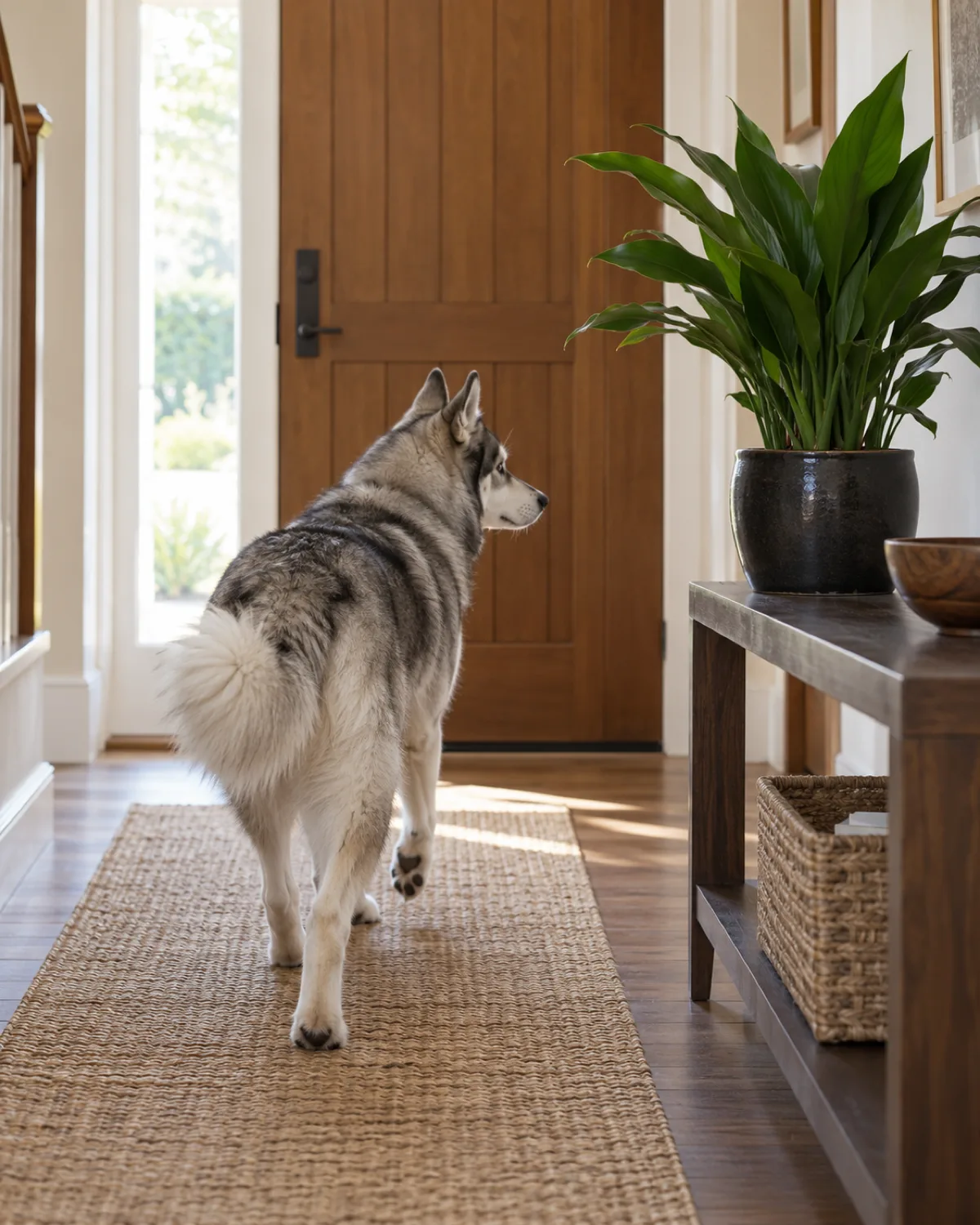
The cast iron plant (Aspidistra elatior) earns its name by surviving conditions that kill everything else — low light, temperature swings, inconsistent watering, and dry air. If you have never kept a plant alive, start here.
Its long, dark green leaves grow slowly and stay upright, giving a clean, architectural look to entryways and hallways. Dust the leaves every few weeks so they keep absorbing light efficiently.
- Light: Low to medium indirect light; tolerates near-darkness
- Water: When soil is dry an inch down; drought-tolerant
- Dog note: Non-toxic and virtually indestructible
10. Haworthia
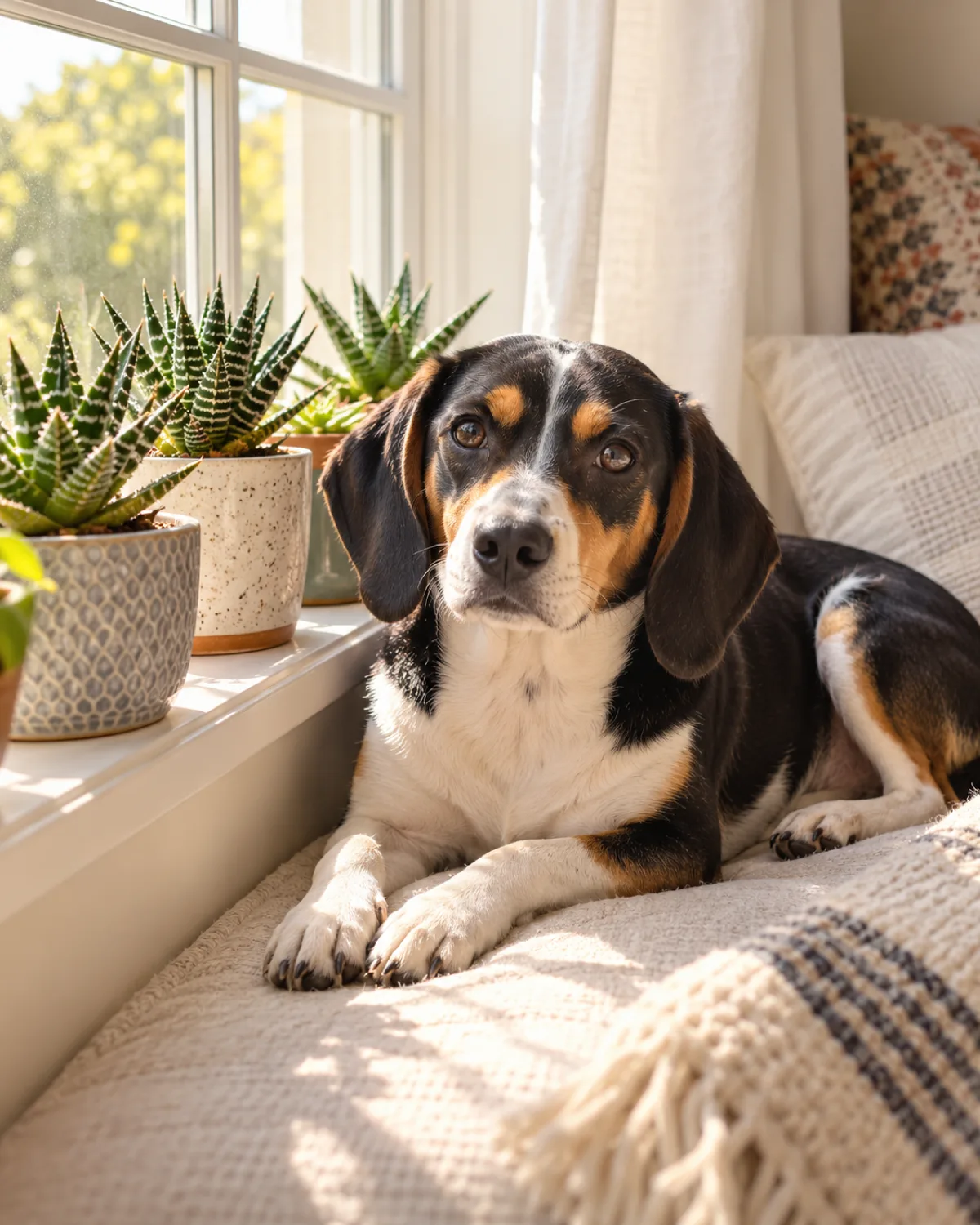
Haworthias look like small, geometric rosettes — similar to aloe vera but without the toxicity. That distinction matters: aloe is toxic to dogs, while haworthia is completely safe.
These succulents stay compact, rarely exceeding five inches, and thrive on a sunny windowsill with minimal watering. They store water in their thick leaves, so you only need to water every two to three weeks.
- Light: Bright indirect to direct morning sun
- Water: Every two to three weeks; let soil dry completely
- Dog note: Non-toxic; the firm, spiky leaves discourage chewing naturally
11. Orchid
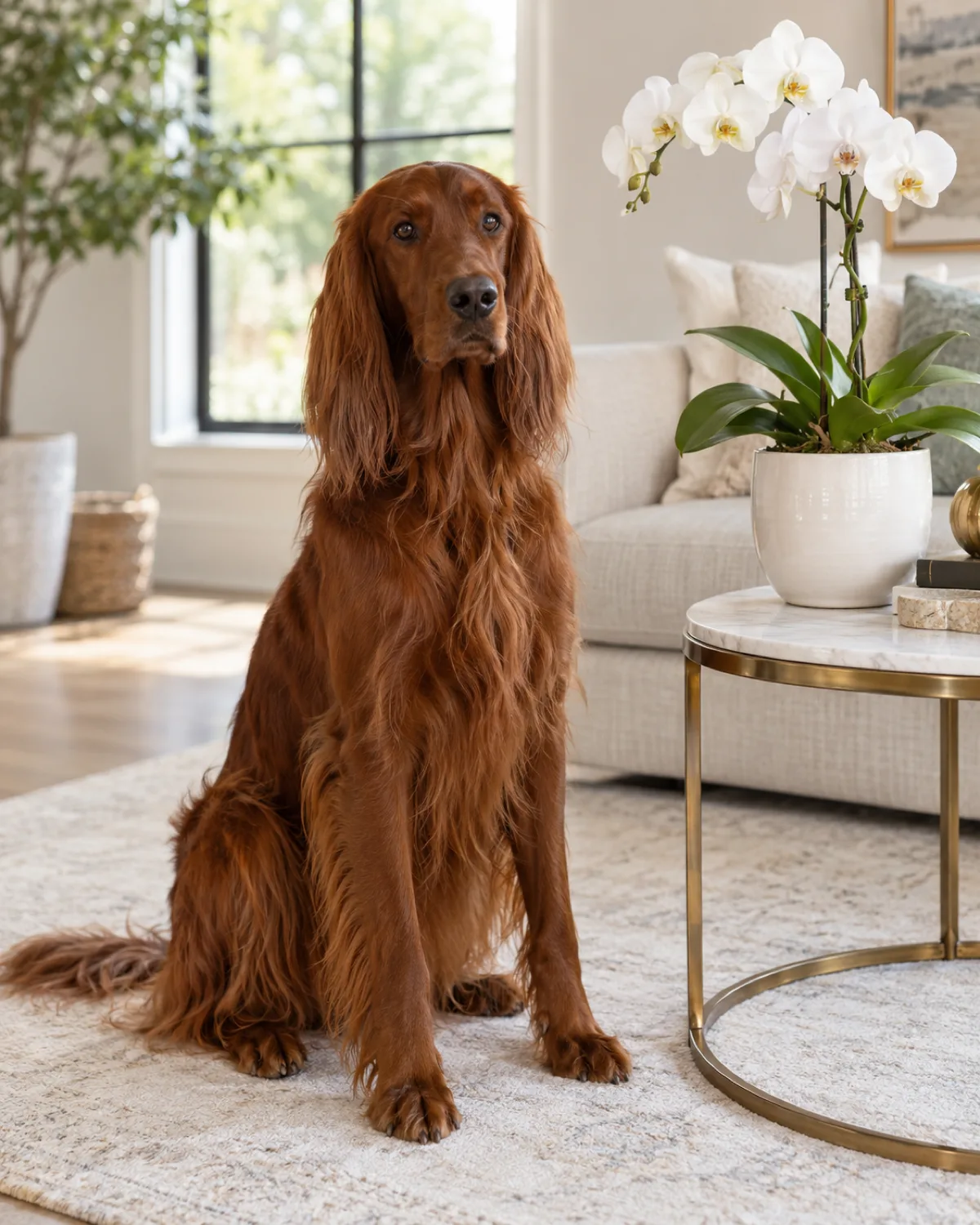
Phalaenopsis orchids — the kind you find at every grocery store — are non-toxic to dogs and bloom for two to three months at a time. When the flowers drop, cut the stem above the second node and wait for a rebloom.
They prefer bright indirect light and a weekly soak. Drop the pot in a bowl of room-temperature water for 15 minutes, let it drain fully, then put it back on the saucer.
- Light: Bright indirect light, no direct sun
- Water: Weekly soak-and-drain method
- Dog note: Non-toxic; the waxy petals and elevated position on a table make them low-interest for most dogs
12. Money Tree
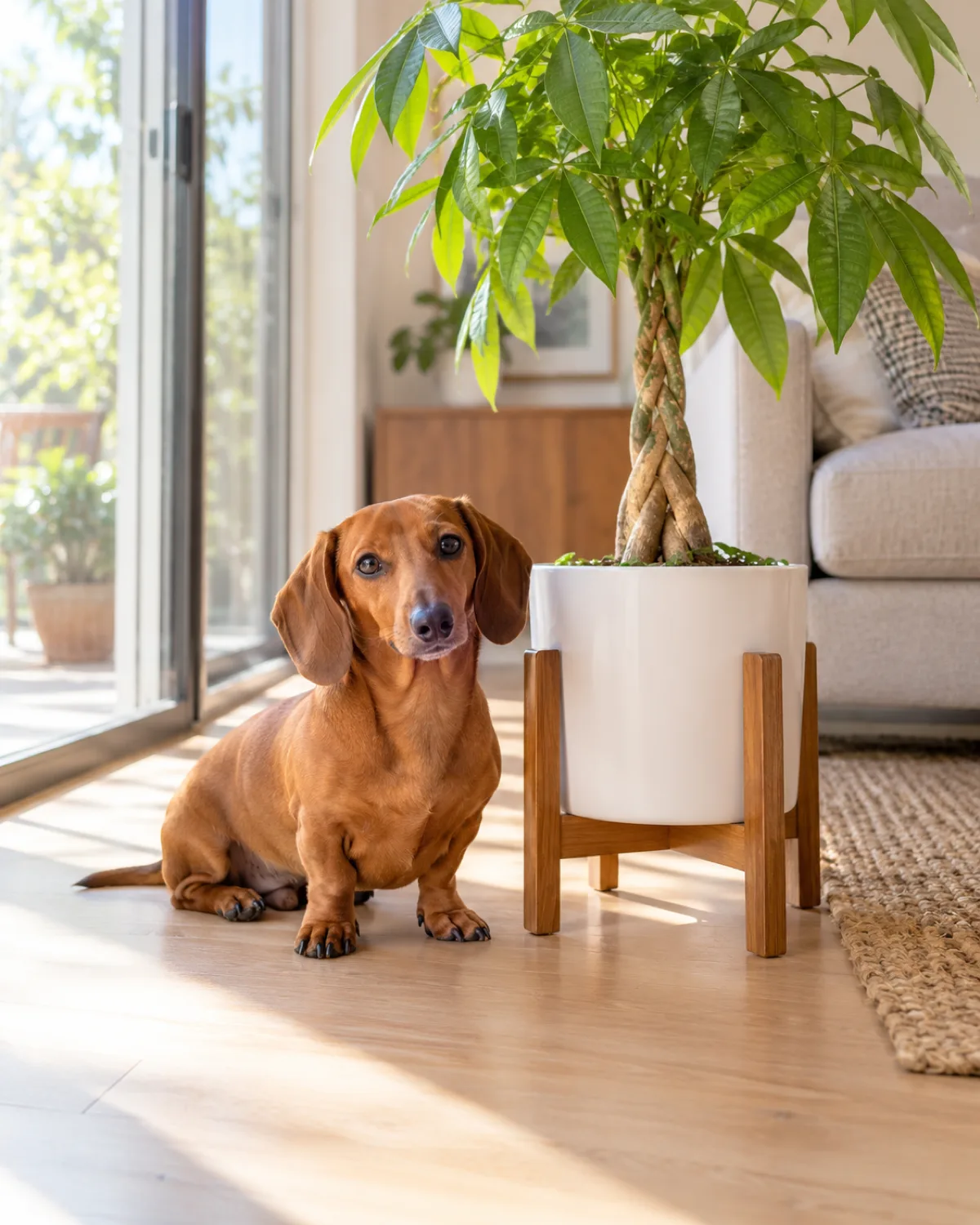
The money tree (Pachira aquatica) features a braided trunk that gives it a sculptural quality most houseplants lack. It grows well in medium to bright indirect light and only needs water when the top few inches of soil dry out.
ASPCA lists it as non-toxic to dogs and cats. It can reach five to six feet indoors but stays manageable with occasional pruning of the top growth.
- Light: Medium to bright indirect light
- Water: When top two to three inches of soil are dry
- Dog note: Non-toxic; the braided trunk is sturdy enough to handle a curious nudge
Save this for later
15 Dog Friendly Plants
- 1Spider PlantHang it in a macramé planter for safe, trailing greenery your dog can look at but not reach.
- 2Boston FernPut it in the bathroom where humidity keeps the fronds lush and your dog stays unbothered.
- 3Areca PalmFill a corner with tropical fronds that purify the air and pose zero risk to your dog.
- 4CalatheaAdd patterned leaves to a low-light room where your dog can admire them safely.
- 5PeperomiaLine a bookshelf with compact colorful varieties that are non-toxic across the board.
- 6African VioletSet a blooming pot on a windowsill for pet-safe flowers that last weeks.
- 7Polka Dot PlantDrop a freckled tabletop plant on the coffee table for a quick pop of pink.
- 8Parlor PalmTuck a low-light palm into an apartment corner where your dog can nap beside it.
- 9Cast Iron PlantSet this near-indestructible plant in a dim hallway and forget about it for weeks.
- 10HaworthiaChoose this aloe look-alike for a sunny windowsill without the toxicity risk.
- 11OrchidPlace a phalaenopsis on a side table for months of elegant, dog-safe blooms.
- 12Money TreeAdd a braided-trunk statement plant that is safe for dogs and cats alike.
- 13RosemaryGrow a kitchen herb that doubles as a cooking ingredient and a dog-safe houseplant.
- 14SunflowerPlant bold blooms along a fence or patio where your dog can play without worry.
- 15Christmas CactusSwap out toxic holiday plants for this pet-safe alternative that blooms every winter.
13. Rosemary
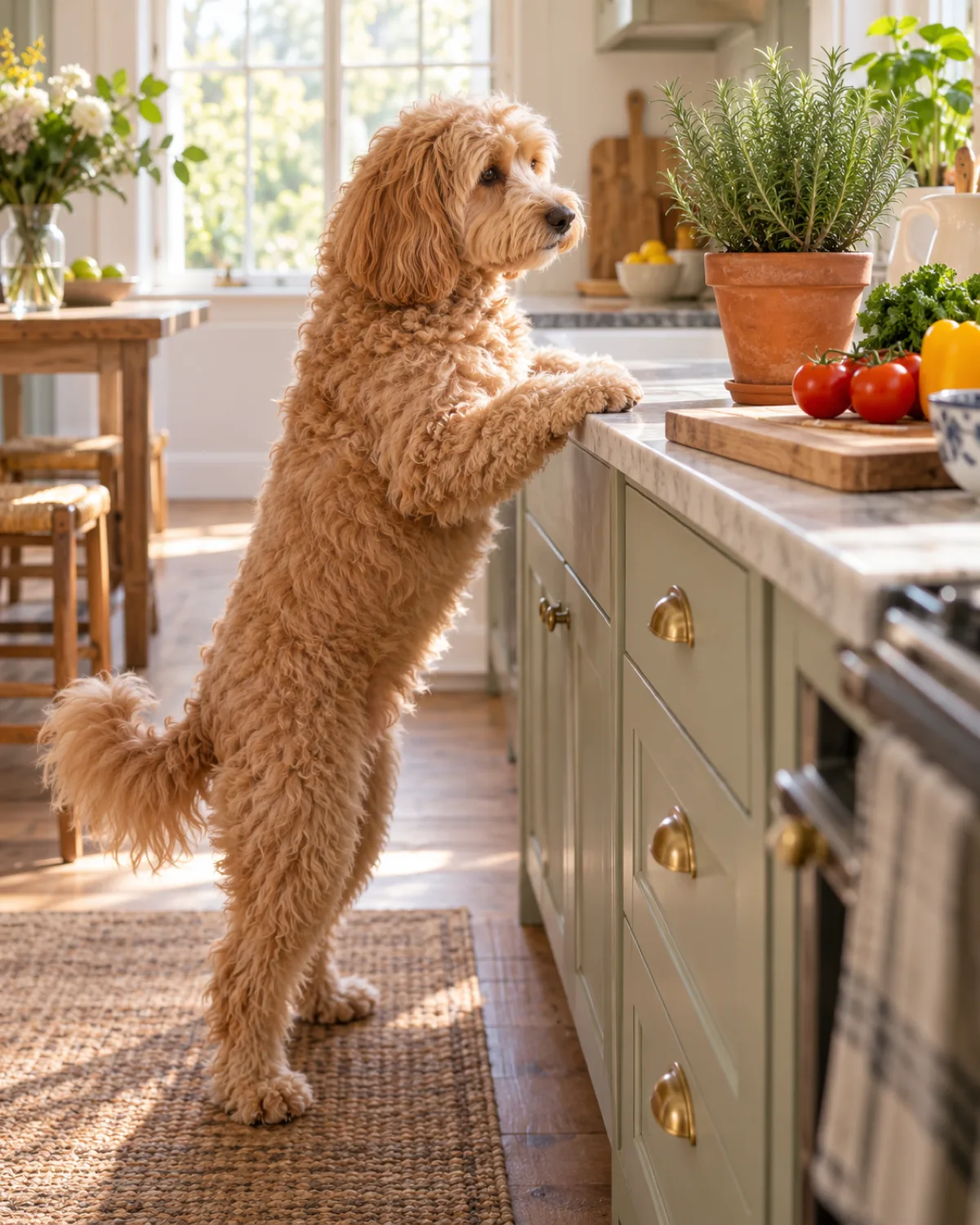
Rosemary (Salvia rosmarinus) is one of the few kitchen herbs that is both useful for cooking and completely safe for dogs. Grow it on a sunny kitchen windowsill, snip sprigs for roasting, and let it scent the air naturally.
It prefers full sun and well-drained soil. Overwatering causes root rot faster than underwatering causes wilting, so err on the dry side.
- Light: Full sun, at least six hours daily
- Water: When soil is completely dry; good drainage is critical
- Dog note: Non-toxic; the strong scent often deters dogs from chewing it
For a dog-safe outdoor garden that goes beyond herbs, check dog-friendly backyard ideas for fencing, shade, and layout tips.
14. Sunflower
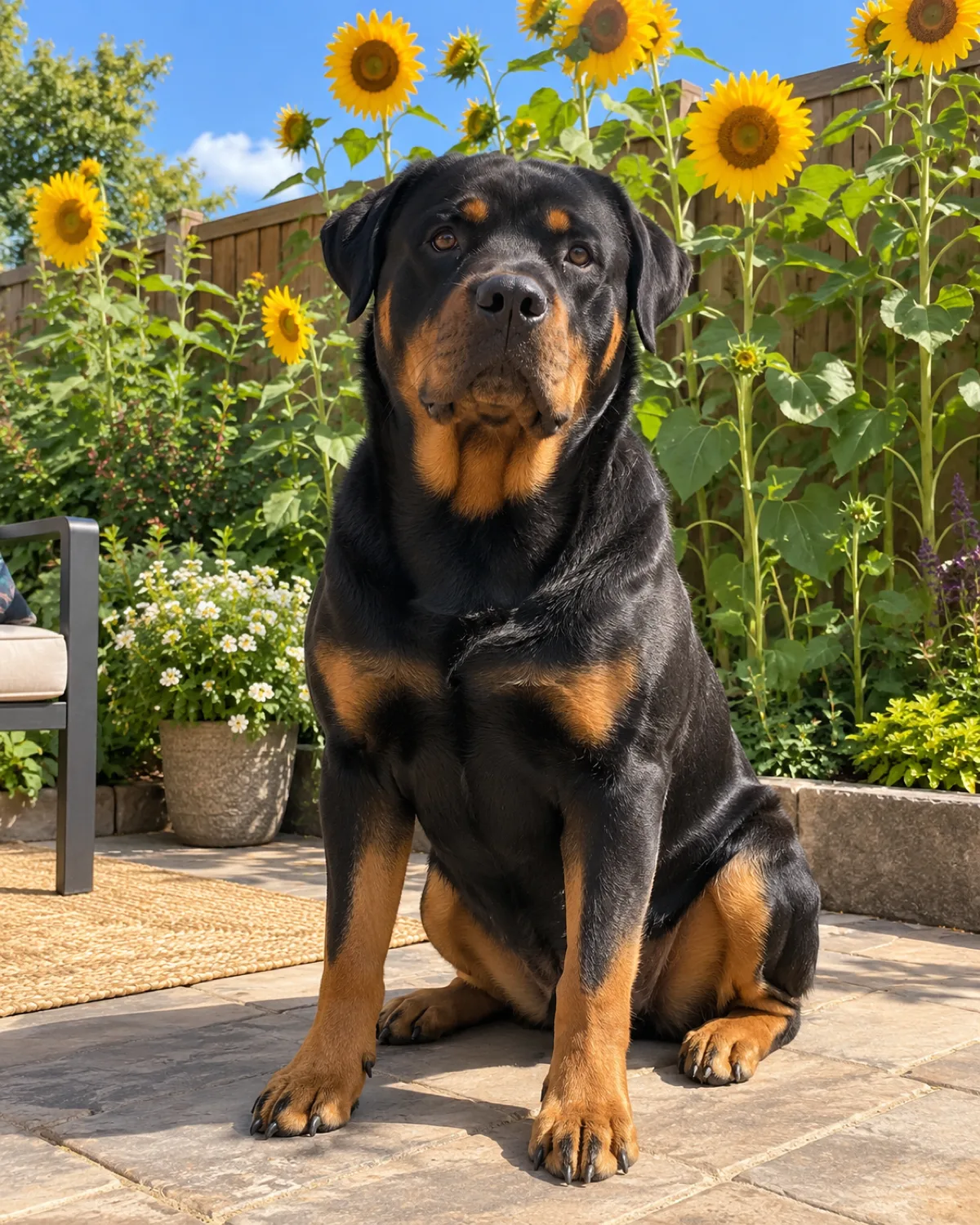
Sunflowers (Helianthus annuus) are completely non-toxic to dogs — stems, leaves, petals, and seeds are all safe. They grow fast, bloom big, and give a backyard or patio instant summer energy.
Plant seeds directly in the ground after the last frost. Choose dwarf varieties for patio pots or full-size types for a fence-line border. Stake tall stems if your dog likes to lean against things.
- Light: Full direct sun, at least six to eight hours
- Water: Deep watering once a week; they are drought-tolerant once established
- Dog note: Non-toxic in all parts; a dog who eats fallen petals will be fine
If you are planning a camping trip with your dog, knowing which outdoor plants are safe matters even more — read camping with dogs for trail and campsite safety.
15. Christmas Cactus
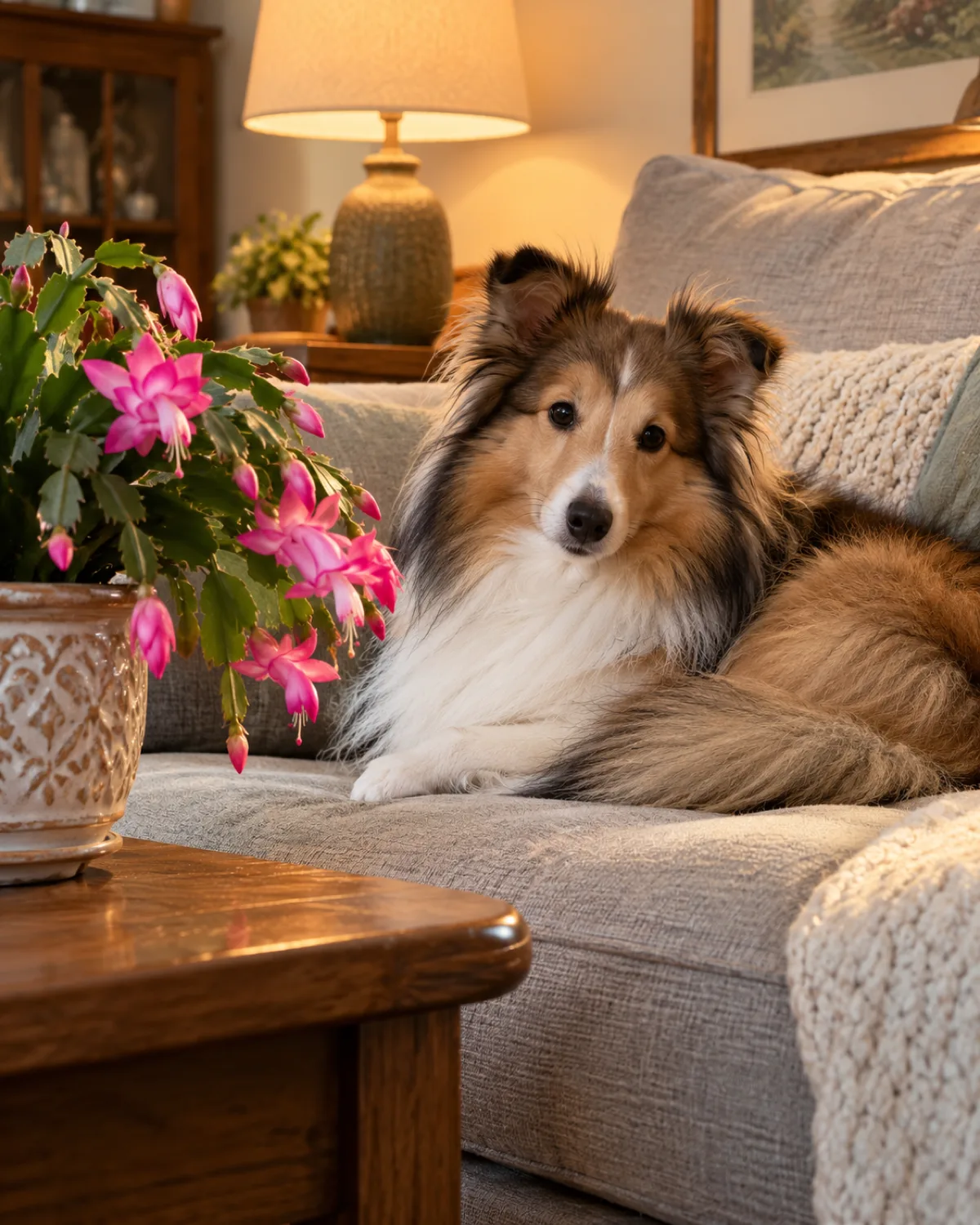
The Christmas cactus (Schlumbergera) blooms in late fall and winter, filling the seasonal gap when most houseplants go dormant. Its pink, red, or white flowers last for weeks, and it is completely safe for dogs.
Many traditional holiday plants — poinsettias, amaryllis, holly, and especially lilies — are toxic to dogs. A Christmas cactus gives you festive color without the risk.
- Light: Bright indirect light; a north or east window works well
- Water: When the top inch of soil is dry; reduce watering after blooming
- Dog note: Non-toxic; one of the safest holiday plant alternatives
P
About the author
Jess Calloway
Jess Calloway edits Pawliqa, where she shares dog care, grooming, training, and new-owner tips — plus DIY and pet-friendly home ideas — for anyone who wants a happy, well-cared-for dog. As a dog mom to three very different dogs, she writes the honest, tested version of what actually works. Every guide is image-led and reviewed for clarity, usefulness, image accuracy, and Pinterest-to-page alignment before it goes live. Visit the About page.
Frequently Asked Questions
What common houseplants are toxic to dogs?
Lilies (all types), sago palms, pothos, dieffenbachia, philodendron, aloe vera, snake plants, peace lilies, and English ivy are among the most common toxic houseplants. If you already have any of these, move them to a room your dog cannot access or replace them with a non-toxic option from this list.
Can dogs get sick from chewing safe plants?
Even non-toxic plants can cause mild stomach upset if a dog eats a large amount. Vomiting or loose stool after heavy chewing is a normal digestive reaction, not a sign of poisoning. If symptoms persist beyond 24 hours or your dog seems lethargic, call your vet.
How do I keep my dog from eating my plants?
Elevate plants on shelves or in hanging planters. Apply a pet-safe bitter spray to the pot rim. Redirect chewing energy with appropriate toys — brain games for dogs work well for this. Most dogs lose interest in plants once they have enough mental stimulation.
Are succulents safe for dogs?
Some are and some are not. Haworthia and Christmas cactus are safe. Aloe vera, jade plants (Crassula), and kalanchoe are toxic. Always check the specific species on the ASPCA database before bringing a succulent home.
Should I call my vet if my dog eats a plant?
If you can identify the plant and it is on the ASPCA non-toxic list, monitor your dog for 24 hours. If the plant is unknown or on the toxic list, call your vet or the ASPCA Animal Poison Control Center at (888) 426-4435 immediately. Bring a leaf or photo of the plant to the appointment.