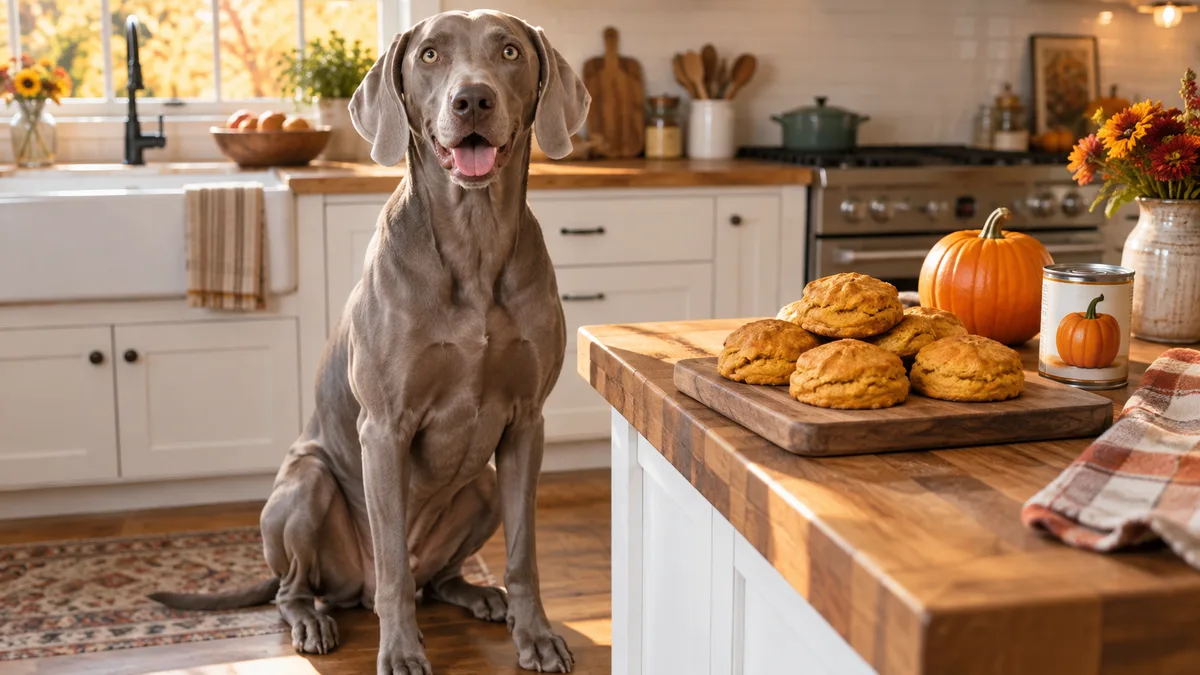
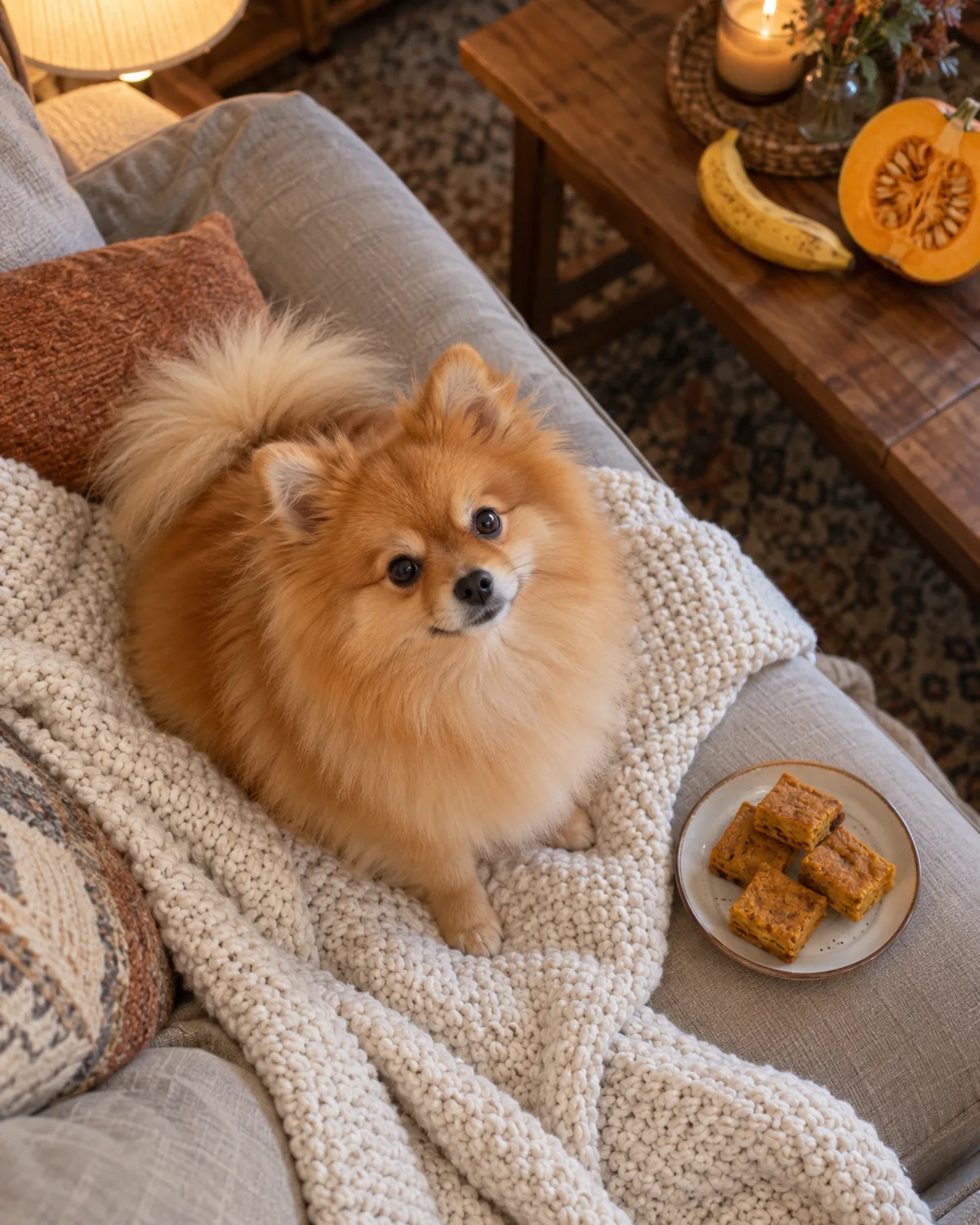
Pumpkin shows up in every dog treat recipe for a reason. It is high in fiber, low in calories, gentle on sensitive stomachs, and most dogs will eat it straight from the can without hesitation.
Most homemade dog treat lists bury one pumpkin recipe among unrelated flavors. This list is all pumpkin — twelve treats, each a different texture and method.
Every recipe uses plain canned pumpkin (not pie filling), pantry staples, and no added sugar. New to pumpkin? Start with the frozen yogurt bites or the Kong filling.
Jump to a recipe
12 pumpkin dog treat recipes to try this fall
Every recipe starts with canned pumpkin puree and pantry staples. Tap any recipe below to jump straight to it.
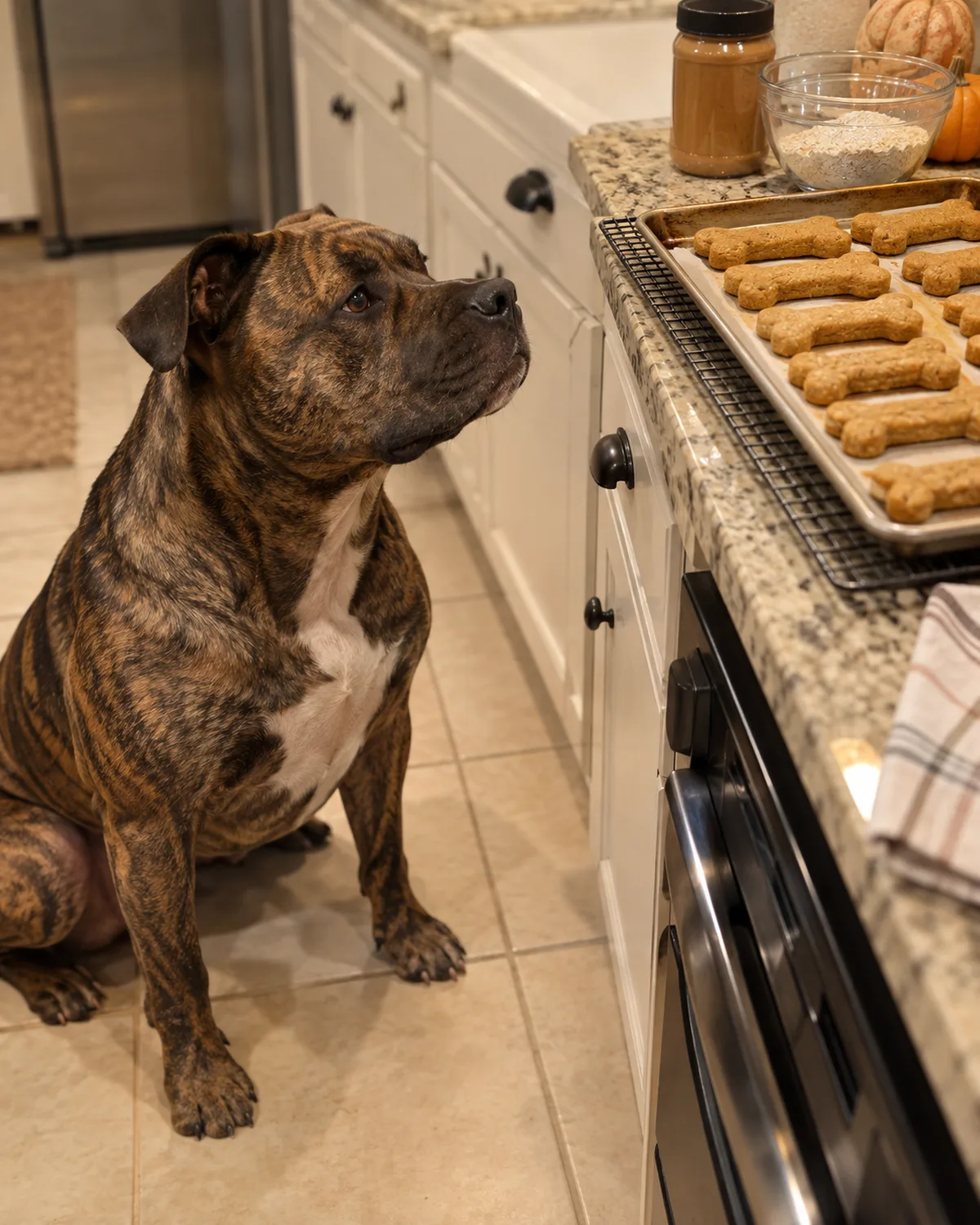
Three ingredients turn this into the batch you make every Sunday for the rest of fall. Mix one cup of pumpkin puree, half a cup of natural peanut butter (check the label — no xylitol), and two cups of oat flour until you get a stiff dough.
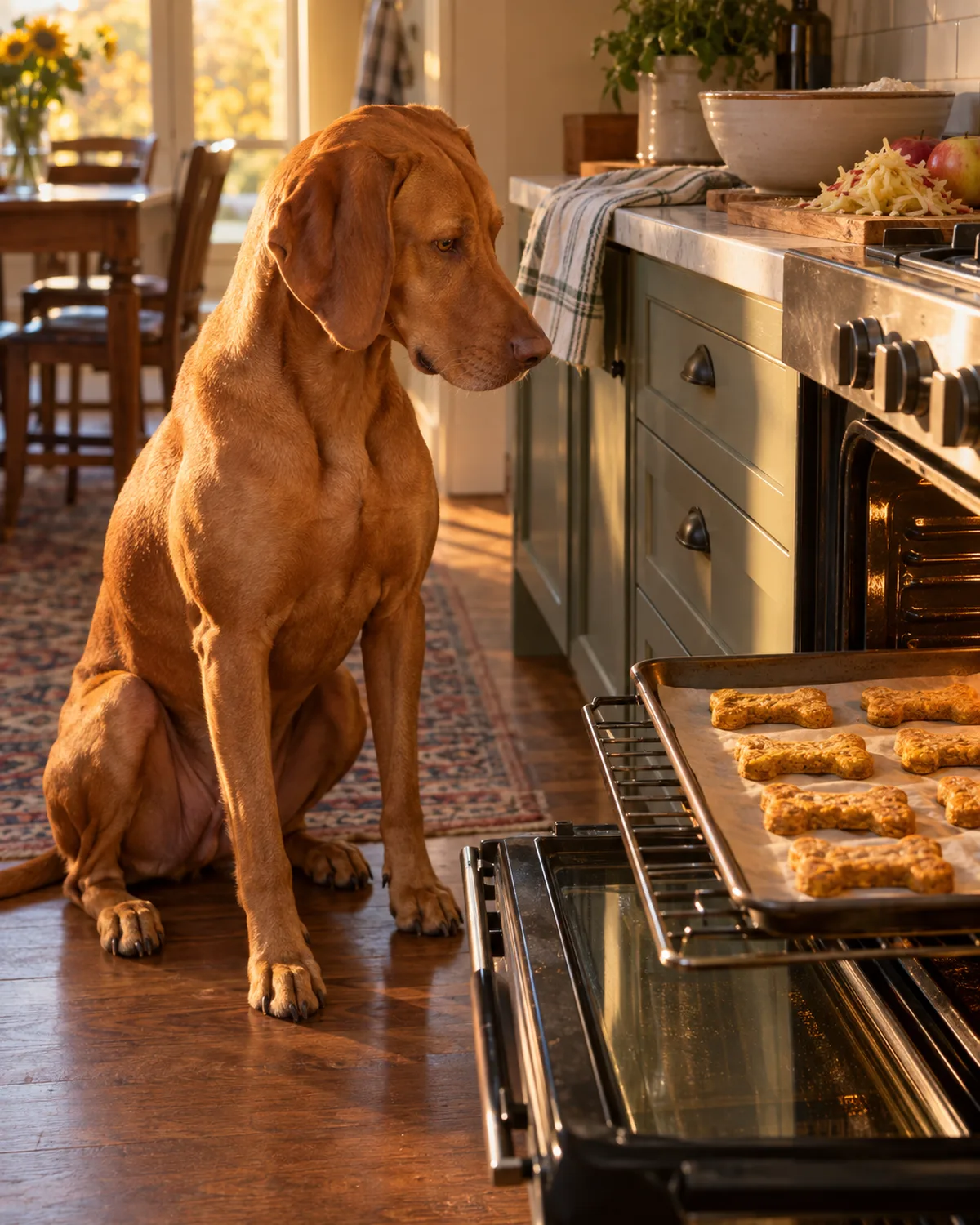
Roll the dough out to about a quarter inch thick on a floured surface. Stamp out shapes with a bone cookie cutter or just slice into squares with a knife. Bake at 350 degrees for 20 minutes, then turn the oven off and leave them inside for another 10 minutes so they harden all the way through.
Texture: crunchy once cooled, satisfying snap
Shelf life: 7 days in an airtight container at room temperature, 3 weeks frozen
Best for: dogs who like a crunch and will work through a hard treat
The oat flour is the key here. Regular wheat flour works too, but oat flour is gentler on dogs with mild wheat sensitivity. Make your own by pulsing rolled oats in a blender for 30 seconds.
2. Frozen Pumpkin Yogurt Bites
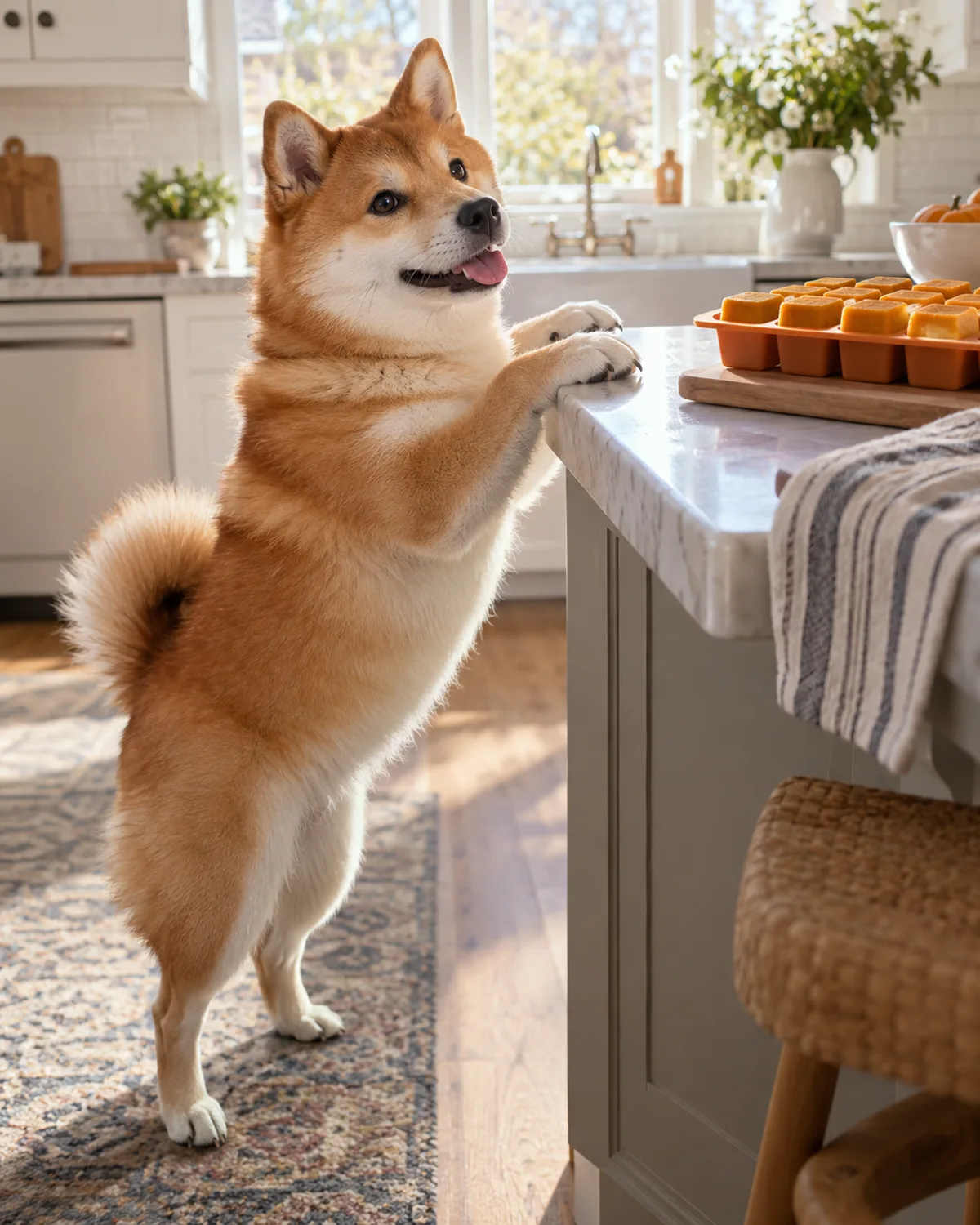
Blend half a cup of pumpkin puree with half a cup of plain unsweetened yogurt. Pour the mixture into a silicone ice cube mold and freeze for at least four hours.
Pop them out and serve one at a time. The frozen texture makes dogs slow down, which is the whole point — these last five to ten minutes instead of the two seconds a regular treat gets.
Texture: frozen, slow-melt
Shelf life: 2 months in a freezer bag
Best for: teething puppies, warm-weather cool-downs, dogs who eat too fast
Skip flavored yogurt entirely. The added sugar is unnecessary and some brands use artificial sweeteners that are not safe for dogs. Plain Greek yogurt works best because the thicker consistency holds its shape in the mold.
3. No-Bake Pumpkin Oat Balls
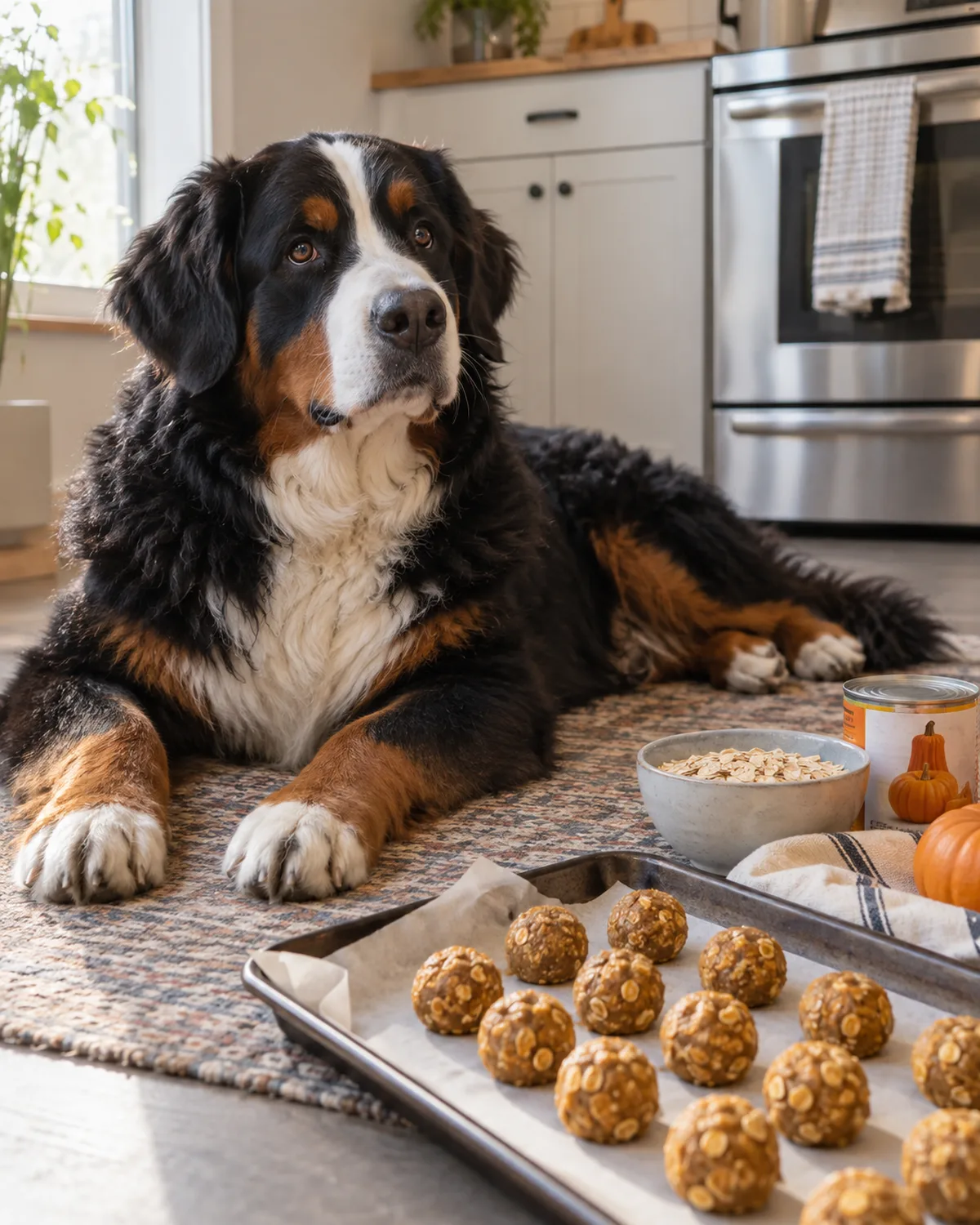
Combine one cup of pumpkin puree, two cups of rolled oats, and one tablespoon of honey in a bowl. Stir until everything holds together, then roll into balls about the size of a large marble.
Set them on a parchment-lined tray and refrigerate for at least an hour. The cold firms them up enough to handle without them falling apart in your hand or in the treat pouch.
Texture: soft and chewy
Shelf life: 5 days refrigerated, 1 month frozen
Best for: senior dogs with fewer teeth, puppies, dogs who skip hard treats
The honey is optional. It helps bind the oats and adds a faint sweetness that some dogs respond to, but if your dog is already excited about pumpkin, leave it out and reduce the sugar content to zero.
4. Pumpkin and Banana Soft Chews
Mash one ripe banana until smooth. Mix in half a cup of pumpkin puree and a quarter cup of coconut flour until the batter thickens into a paste that holds its shape.
Spread the batter into a parchment-lined 8x8 baking pan, about half an inch thick. Bake at 325 degrees for 18 minutes, then let it cool completely before slicing into one-inch squares.
Texture: soft, slightly chewy, no crumble
Shelf life: 4 days refrigerated (banana browns faster than other ingredients)
Best for: small dogs, picky eaters, dogs who reject hard treats
The riper the banana, the sweeter the chew. An overripe banana with brown spots works better than a fresh yellow one because it mashes smoother and the natural sugars are more concentrated.
Before you start baking
Pumpkin treat safety rules
Four things to check every time you open a can of pumpkin for your dog.
Plain pumpkin onlyCanned pumpkin puree and canned pumpkin pie filling look almost identical on the shelf. Pie filling contains sugar, spices, and sometimes xylitol. Read the ingredient list every time — the only ingredient should be pumpkin.
Check the peanut butterSome peanut butter brands use xylitol as a sweetener, which is toxic to dogs even in small amounts. Flip the jar and scan the ingredients. If it lists xylitol, birch sugar, or any sugar alcohol, do not use it.
Cool before servingFresh-from-the-oven treats can burn a dog's mouth and they will eat them anyway. Let baked treats cool completely on the counter — at least 30 minutes — before offering one.
Portion by body weightTreats should make up no more than 10 percent of daily calories. For a 30-pound dog that means roughly 70 treat calories per day — about three to four of these biscuits. Ask your vet if your dog is on a restricted diet.
5. Dehydrated Pumpkin Jerky Strips
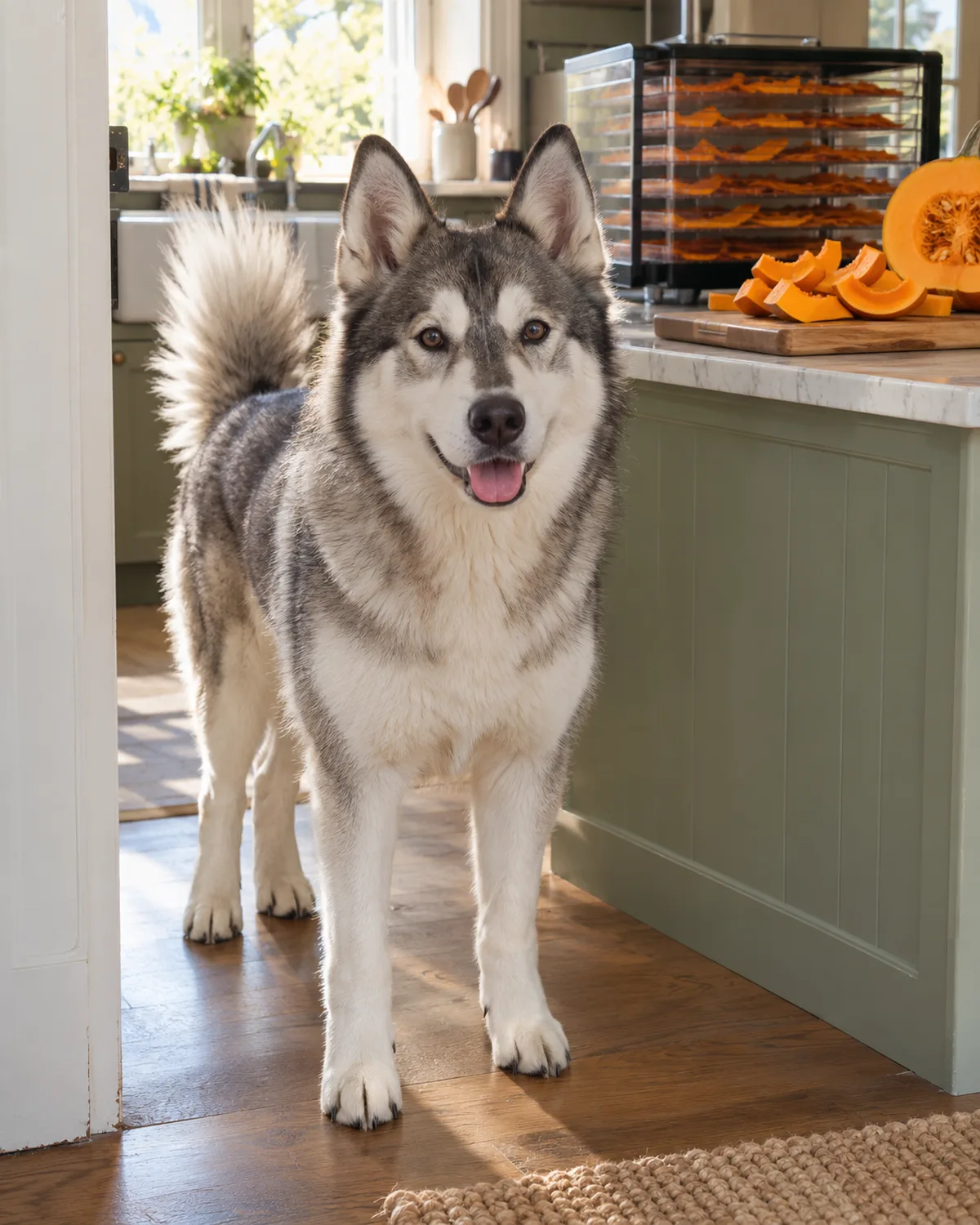
Slice a fresh sugar pumpkin (not a carving pumpkin) into strips about a quarter inch thick and four inches long. Lay the strips on dehydrator trays in a single layer without overlapping.
Dehydrate at 155 degrees for 8 to 10 hours until the strips are leathery and bend without snapping. If you do not have a dehydrator, use your oven on the lowest setting with the door cracked open.
Texture: chewy, jerky-like
Shelf life: 2 weeks at room temperature in an airtight jar, 2 months frozen
Best for: dogs who love to chew, dogs who need a longer-lasting treat
Use sugar pumpkins or pie pumpkins, not the large carving variety. Carving pumpkins have thinner, stringier flesh that dries out too much and turns brittle instead of chewy.
6. Pumpkin Apple Crunch Cookies
Grate one medium apple (core removed, skin on) into a bowl. Add three-quarters of a cup of pumpkin puree, one egg, and two cups of whole wheat flour. Mix until a shaggy dough forms.
Roll out and stamp into shapes or drop tablespoon-sized rounds onto a lined baking sheet. Bake at 350 degrees for 25 minutes. The grated apple creates pockets of moisture inside the cookie that keep it from turning into a rock after a day.
Texture: crunchy outside, slightly soft inside
Shelf life: 5 days at room temperature, 3 weeks frozen
Best for: dogs who like variety, treat bags for long walks
Remove apple seeds before grating. Apple seeds contain amygdalin, which releases small amounts of cyanide when chewed. A few seeds are unlikely to harm a large dog, but there is no reason to include them when removing them takes five seconds.
7. Pumpkin Stuffed Kong Filling
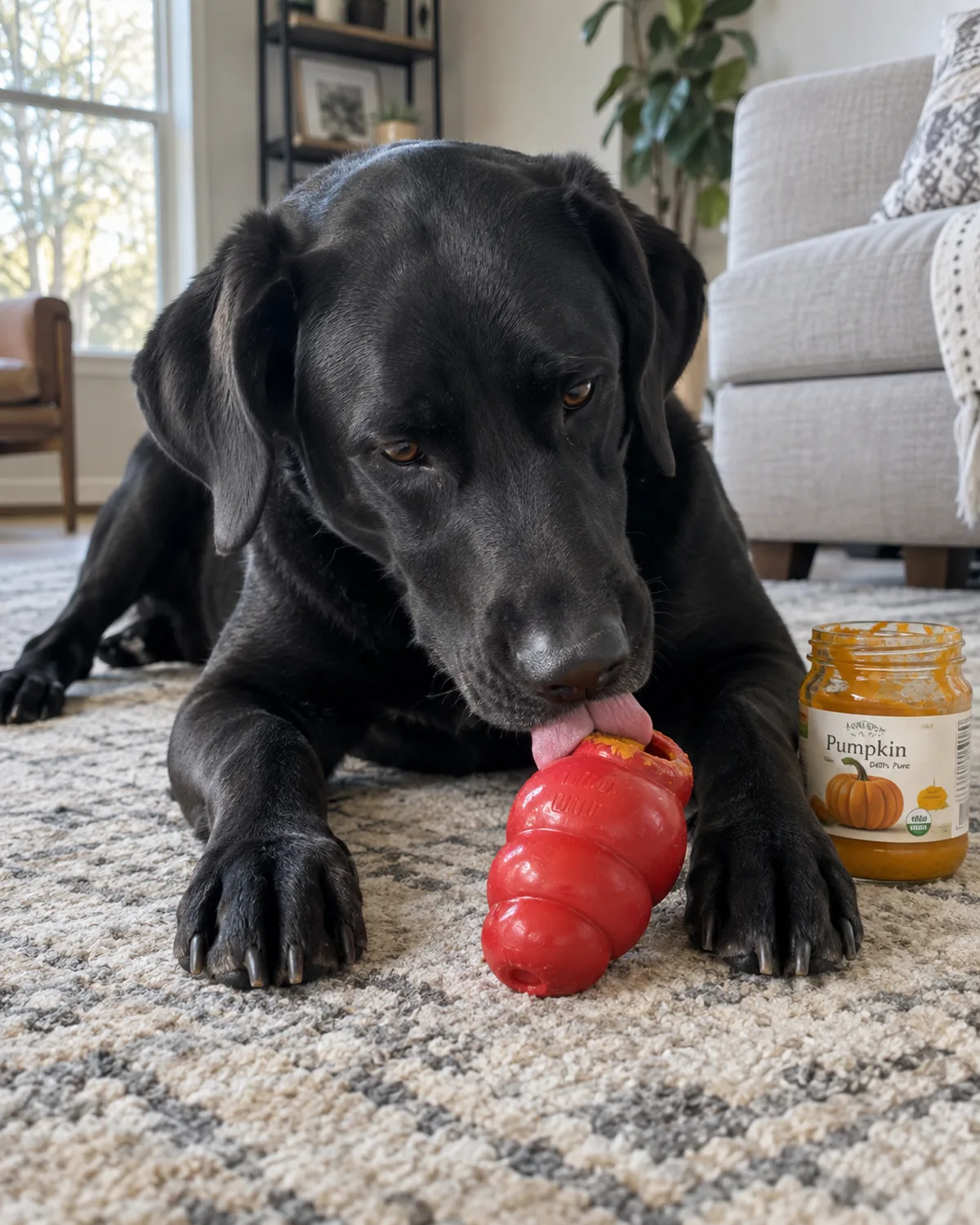
Blend half a cup of pumpkin puree, half a banana, and a tablespoon of peanut butter until smooth. Pipe or spoon the paste into a Kong toy, packing it tight so there are no air pockets.
Stand the Kong upright in a cup and freeze for at least six hours. The frozen filling turns a ten-second treat into a 30-minute project that keeps a dog occupied while you are on a work call or cooking dinner.
Texture: frozen paste, requires licking and working
Shelf life: prep a week's worth and freeze them standing in a muffin tin
Best for: dogs who need mental stimulation, crate training sessions, brain game rotations
Layer the filling in stages for an advanced version. Pipe pumpkin paste halfway, freeze for an hour, then add a layer of plain yogurt and freeze again. The different textures make the dog switch strategies midway through.
8. Pumpkin Sweet Potato Training Bites
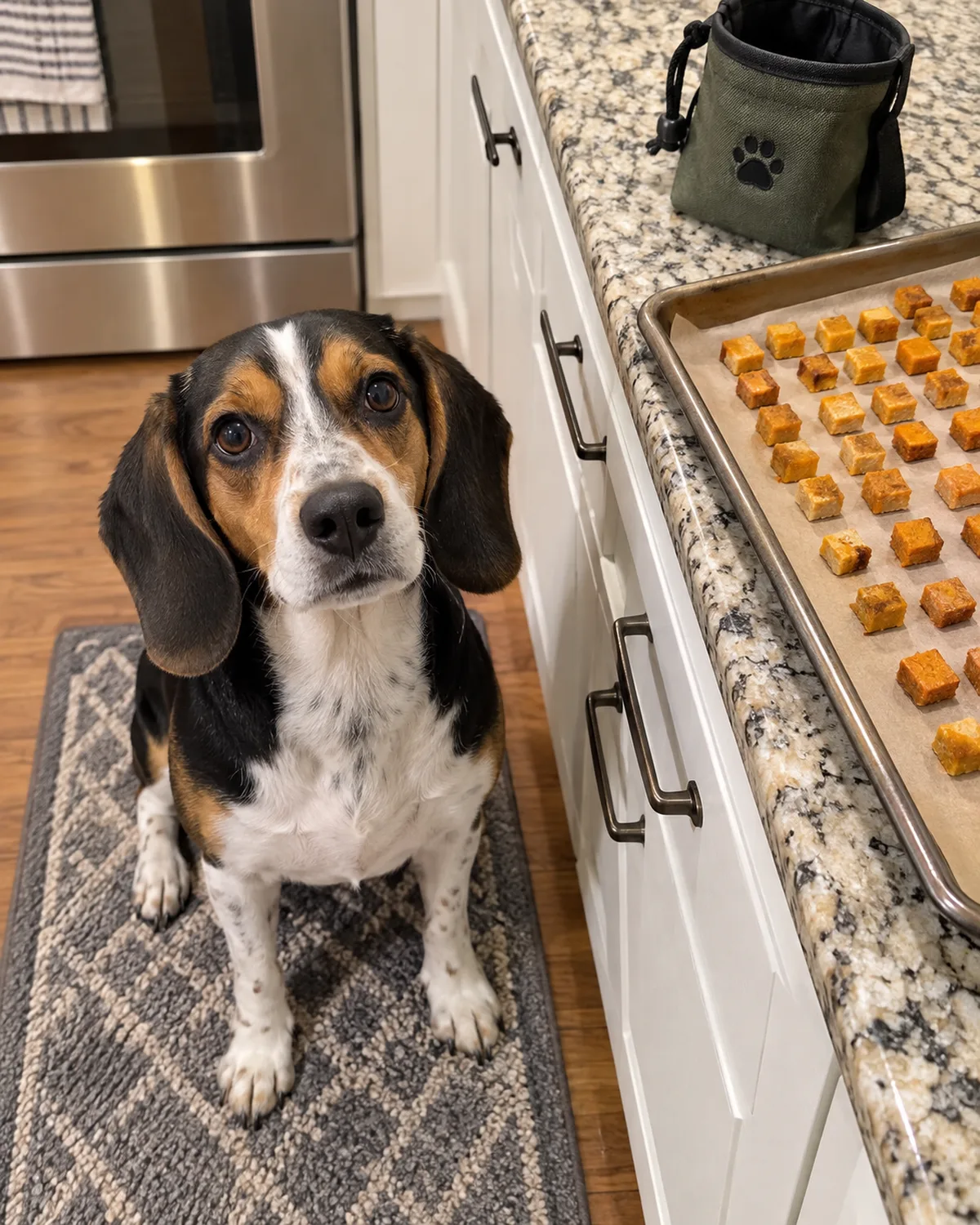
Peel and dice one medium sweet potato into quarter-inch cubes. Boil until fork-tender, about 8 minutes, then drain and mash. Mix the mashed sweet potato with half a cup of pumpkin puree and one cup of oat flour.
Press the dough into a parchment-lined sheet pan about a quarter inch thick. Bake at 325 degrees for 20 minutes. Once cooled, slice into half-inch squares — small enough that a full training session of 30 repetitions does not fill the dog up.
Texture: firm but not crunchy, breaks cleanly
Shelf life: 5 days refrigerated, 1 month frozen
Best for: training sessions, clicker work, dogs learning new commands
The half-inch size matters. Most commercial training treats are already this size, but homemade treats tend to get cut too large because the baker is thinking about snacking, not repetition. Cut them small on purpose.
Which recipe is right for your dog
Pick by texture preference
Dogs have texture preferences just like people. Match the treat to how your dog likes to eat.
CrunchersYour dog bites through hard treats in one snap and wants more. Go with the Peanut Butter Biscuits (#1), Apple Crunch Cookies (#6), or Coconut Flour Donuts (#10).
ChewersYour dog works a treat slowly and prefers something with give. Try the Dehydrated Jerky (#5), Oat Balls (#3), or Banana Soft Chews (#4).
LickersYour dog goes for wet food first and prefers tongue work over jaw work. The Frozen Yogurt Bites (#2), Kong Filling (#7), or Chia Seed Pudding (#9) are your recipes.
Tiny or senior dogsSmall mouths or fewer teeth. Start with the Training Bites (#8) for size and the Oat Balls (#3) or Banana Chews (#4) for softness.
9. Pumpkin Chia Seed Pudding Cups
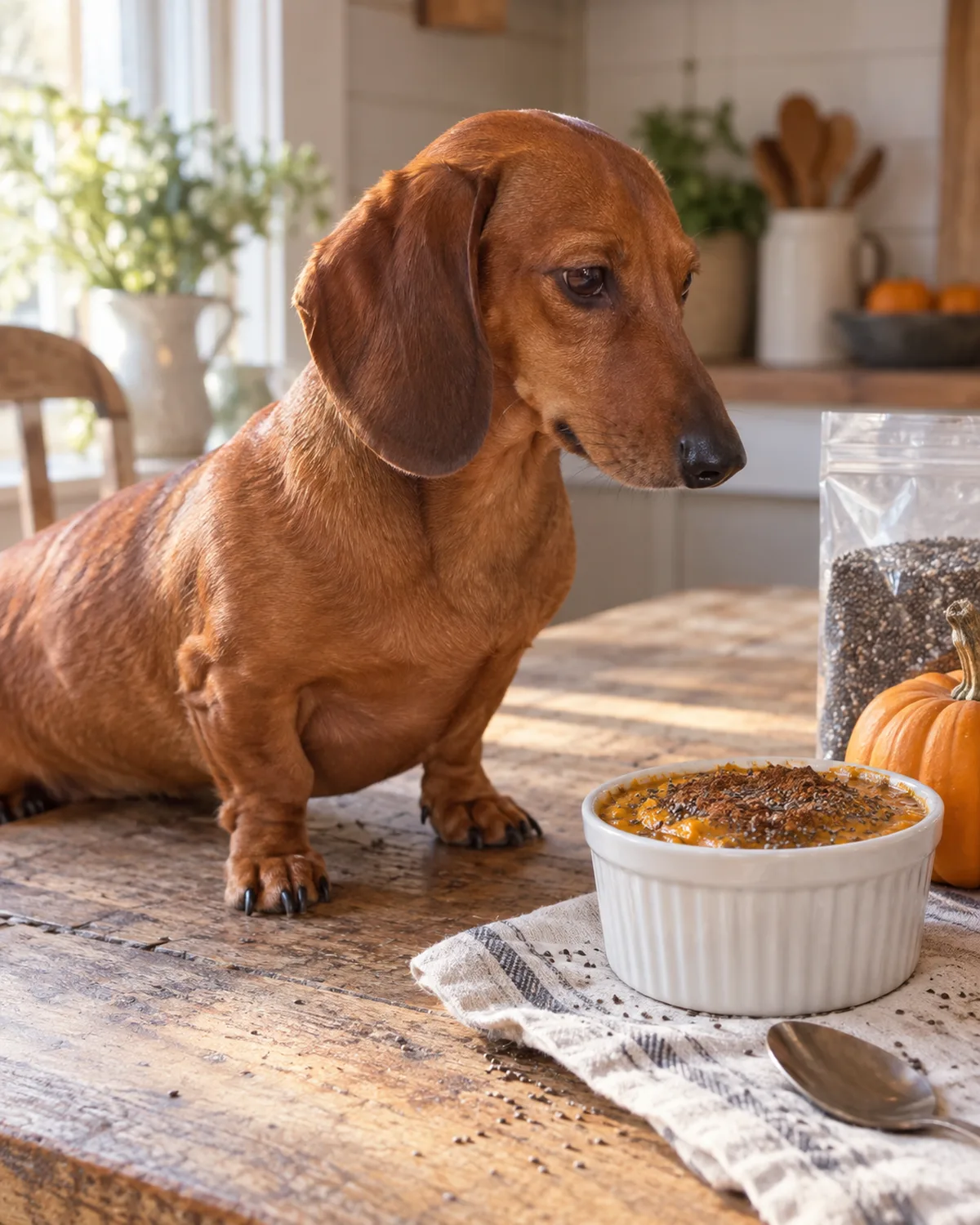
Stir two tablespoons of chia seeds into half a cup of pumpkin puree and a quarter cup of goat milk. Cover and refrigerate overnight or for at least six hours until the chia seeds absorb the liquid and form a thick gel.
Serve a tablespoon-sized portion in a small bowl. The gel texture is genuinely novel for most dogs — different from kibble, different from wet food, different from every other treat on this list — and the novelty alone keeps them interested.
Texture: thick gel with small seed pops
Shelf life: 3 days refrigerated
Best for: digestive support, dogs who need fiber, novel texture enrichment
Goat milk is easier on dog stomachs than cow milk because it has smaller fat globules and less lactose. If your dog is fully lactose intolerant, substitute water and add a teaspoon of coconut oil for richness.
10. Pumpkin Coconut Flour Donuts
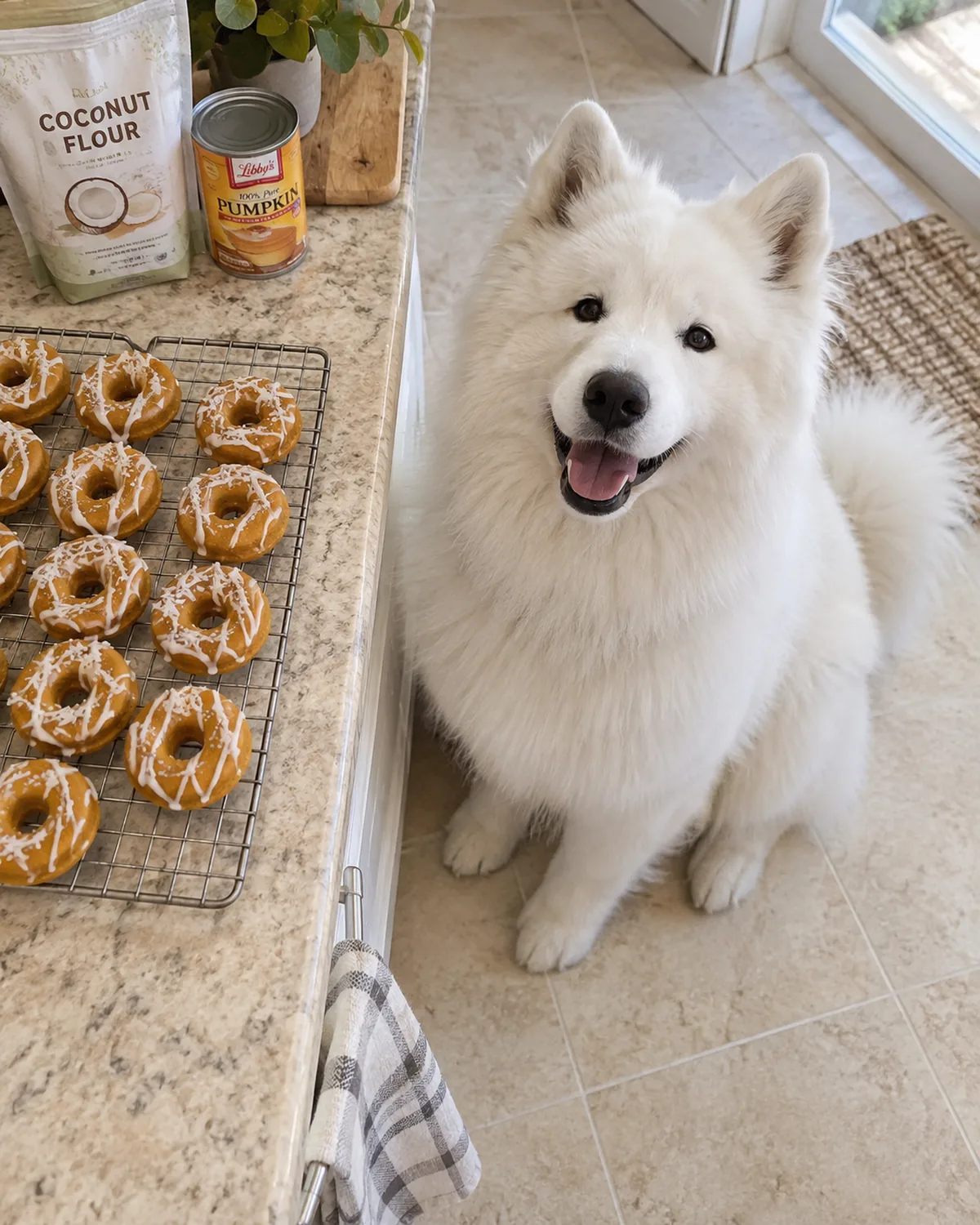
Whisk together one cup of coconut flour, half a cup of pumpkin puree, two eggs, and a quarter cup of coconut oil (melted). Spoon the batter into a greased mini donut mold, filling each cavity about three-quarters full.
Bake at 350 degrees for 15 minutes. Let them cool completely, then drizzle with a thin line of plain yogurt for the photo — the dogs do not care about the drizzle, but you will want to photograph these before they disappear.
Texture: dense, cake-like, grain-free
Shelf life: 4 days at room temperature, 3 weeks frozen
Coconut flour absorbs significantly more liquid than wheat flour. Do not substitute equal amounts — one cup of coconut flour replaces roughly a quarter cup of regular flour. If the batter seems too thick, add another tablespoon of pumpkin puree rather than more liquid.
P
About the author
Jess Calloway
Jess Calloway edits Pawliqa, where she shares dog care, grooming, training, and new-owner tips — plus DIY and pet-friendly home ideas — for anyone who wants a happy, well-cared-for dog. As a dog mom to three very different dogs, she writes the honest, tested version of what actually works. Every guide is image-led and reviewed for clarity, usefulness, image accuracy, and Pinterest-to-page alignment before it goes live. Visit the About page.
11. Pumpkin Carrot Muffins
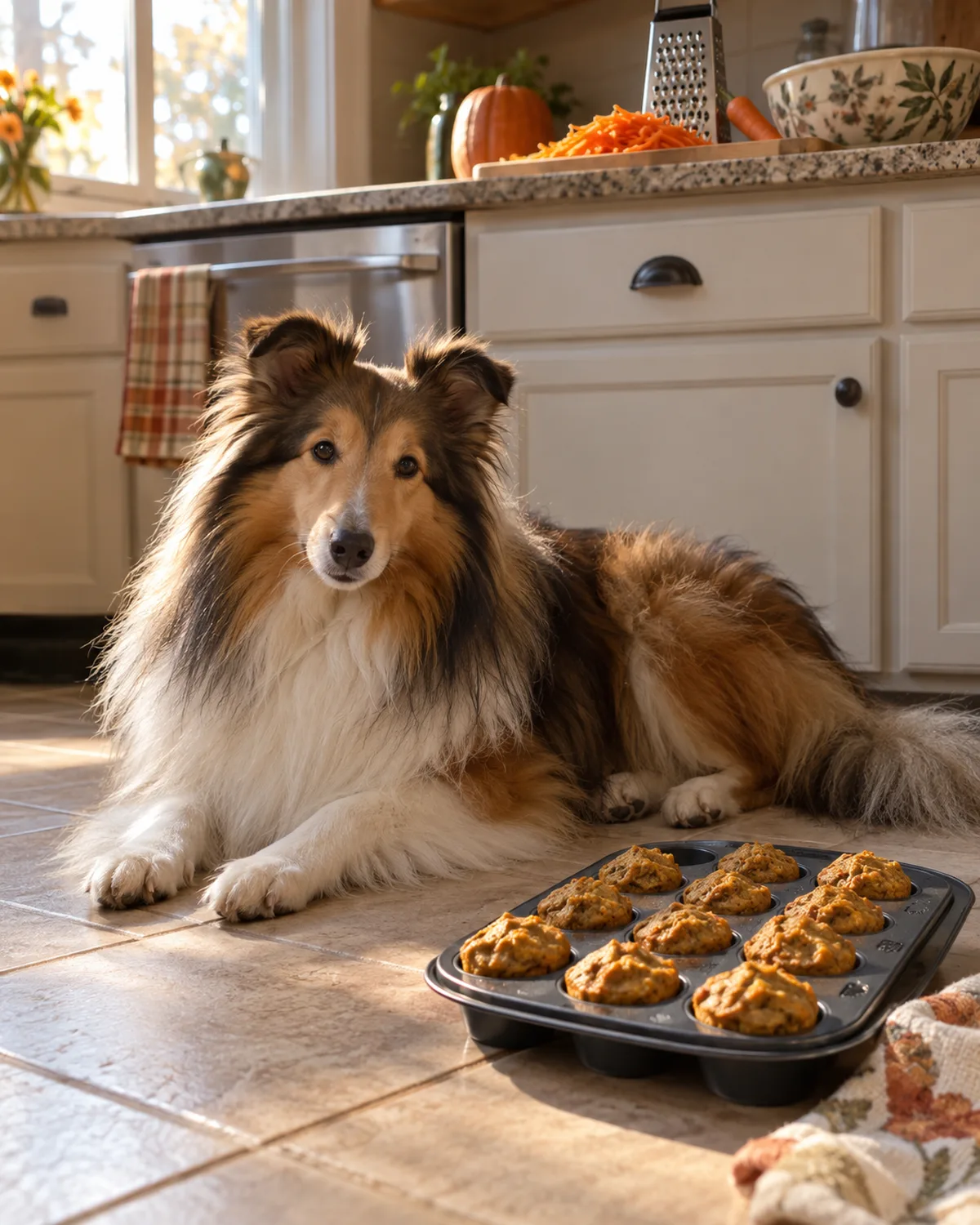
Shred one large carrot and mix it with half a cup of pumpkin puree, one egg, and one cup of oat flour. Spoon the batter into a greased mini muffin tin, filling each well about two-thirds full.
Bake at 350 degrees for 18 minutes. The mini muffin size is the whole point — each one is already portioned so you do not have to break a full-sized muffin into pieces and end up with crumbs everywhere.
Texture: soft, moist, with crunchy carrot pockets
Shelf life: 4 days refrigerated, 1 month frozen
Best for: portion control, dogs who eat fast, adding vegetables to a picky dog's diet
The shredded carrot does double duty. It adds crunch texture inside the soft muffin and contributes beta-carotene on top of what the pumpkin already provides. Do not use baby carrots for this — they do not shred well.
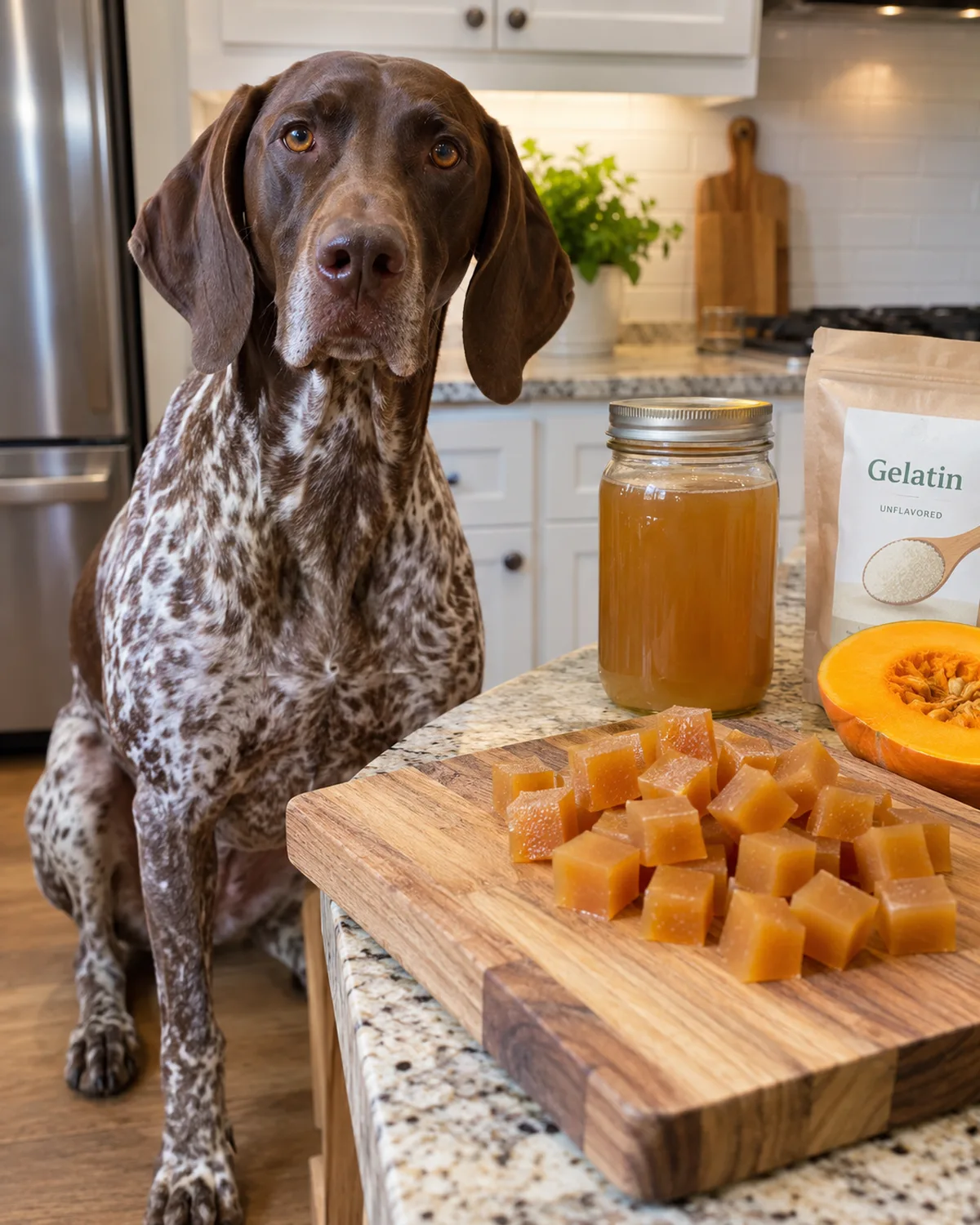
12. Pumpkin Bone Broth Gelatin Bites
Heat one cup of bone broth in a saucepan until warm but not boiling. Sprinkle two tablespoons of unflavored gelatin powder over the surface and whisk until fully dissolved. Stir in half a cup of pumpkin puree.
Pour the mixture into a parchment-lined 8x8 pan and refrigerate for at least three hours until fully set. Cut into one-inch cubes. The gelatin gives these a jiggly, gummy texture that dogs find fascinating.
Texture: firm jelly, bouncy
Shelf life: 5 days refrigerated (do not freeze — gelatin texture degrades)
Best for: dogs who love bone broth, joint support, a novel treat experience
Use plain bone broth with no onion or garlic in the ingredient list. Many store-bought bone broths contain onion powder for flavor, which is toxic to dogs. The safest option is a dog-specific bone broth or one you made yourself from plain bones and water.
Save this list
12 Pumpkin Dog Treats
1Peanut Butter BiscuitsThree-ingredient stamped biscuits, crunchy after cooling
2Frozen Yogurt BitesSilicone mold cubes, perfect for teething or hot days
3No-Bake Oat BallsRolled energy balls, soft for senior dogs
4Banana Soft ChewsNaturally sweet squares, no added sugar
5Dehydrated JerkyChewy strips, shelf-stable for weeks
6Apple Crunch CookiesBone-shaped cookies with grated apple pockets
7Stuffed Kong FillingFrozen paste, 30-minute enrichment
8Training BitesHalf-inch squares for repetitive sessions
9Chia Seed PuddingGel texture with fiber, novel enrichment
10Coconut Flour DonutsGrain-free mini donuts with yogurt drizzle
11Carrot MuffinsMini muffins with crunchy carrot pockets
12Bone Broth GelatinJiggly cubes with joint-supporting gelatin
pawliqa.com
Frequently Asked Questions
Is canned pumpkin safe for dogs?
Plain canned pumpkin puree is safe and nutritious for most dogs. The critical distinction is between pumpkin puree (ingredient list: pumpkin) and pumpkin pie filling (ingredient list: pumpkin, sugar, spices, and sometimes artificial sweeteners). Pie filling is not safe. Always check the label even if you have bought the same brand before — manufacturers occasionally change formulas.
How much pumpkin can I give my dog per day?
A general guideline is one to four tablespoons of pumpkin puree per day depending on the dog's size:
Small dogs (under 15 pounds): one tablespoon
Medium dogs: two tablespoons
Large dogs: up to four tablespoons
Too much pumpkin at once can cause loose stools because of the high fiber content. Start small and increase gradually. Ask your vet for specific guidance if your dog has digestive issues.
Can puppies eat pumpkin treats?
Puppies can eat plain pumpkin treats once they are fully weaned and eating solid food, typically around 8 weeks. Start with softer options — the frozen yogurt bites or the oat balls — and offer a small piece first to check for stomach upset.
Avoid recipes with honey for puppies under one year, and skip the chia seed pudding until at least six months old.
Do pumpkin treats help with dog digestion?
Pumpkin is commonly recommended for dog digestive issues because it works in both directions. The soluble fiber absorbs excess water (helping with diarrhea), and the insoluble fiber adds bulk (helping with constipation).
That said, pumpkin treats are supplemental — not a substitute for veterinary care if your dog has ongoing digestive problems.
How long do homemade pumpkin dog treats last?
Shelf life varies by recipe:
Baked crunchy treats (biscuits, cookies): about a week at room temperature in an airtight container
Soft treats (oat balls, banana chews): three to five days refrigerated
Frozen treats: two months or more in the freezer
When in doubt, refrigerate. Homemade treats have no preservatives, so they spoil faster than commercial ones. If a treat smells off, feels slimy, or shows mold, throw it out.
Dog beds collect more than fur. This guide covers machine-washable beds, hand washing, memory foam inserts, proper drying, and the quick spot-clean tricks that keep a bed fresh between full washes.
Sixteen factors that determine how much to feed a dog covering body weight and calorie math, the body condition score system, puppy versus adult versus senior needs, activity-level multipliers, kibble calorie density differences, measuring cups versus kitchen scales, daily treat limits, wet-and-dry mixing ratios, seasonal appetite swings, spayed or neutered metabolism shifts, pregnant and nursing intake, multi-dog household portion control, signs of overfeeding, signs of underfeeding, when to adjust mid-bag, and the annual vet-check recalibration habit.