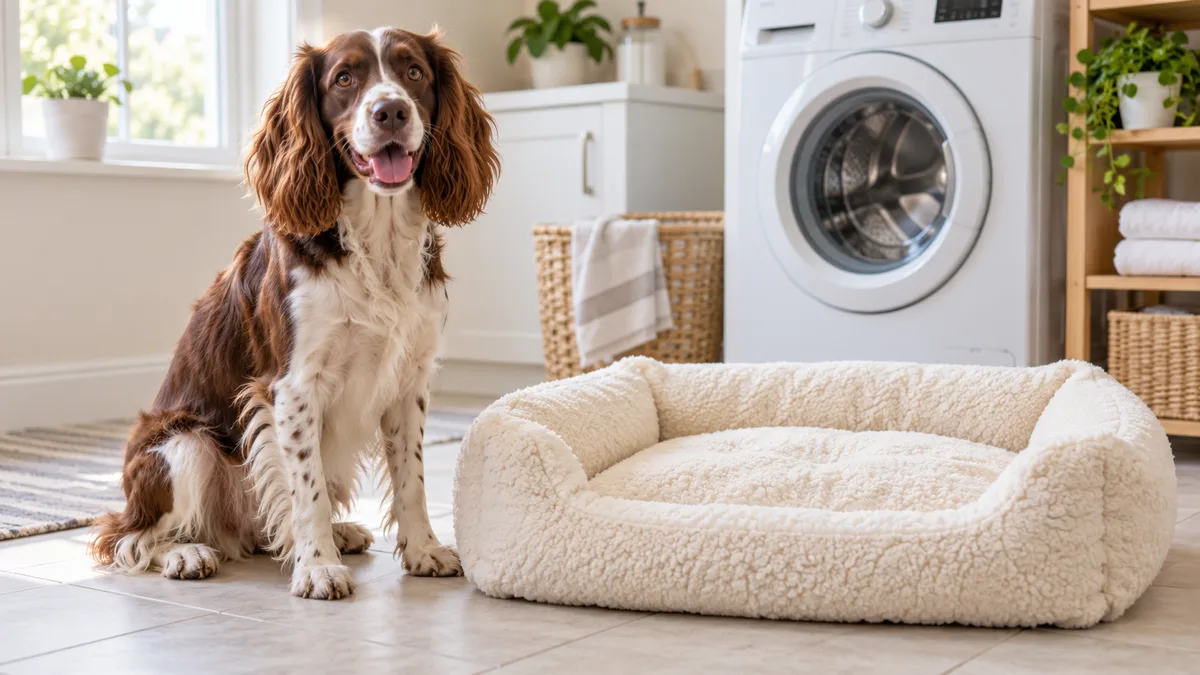
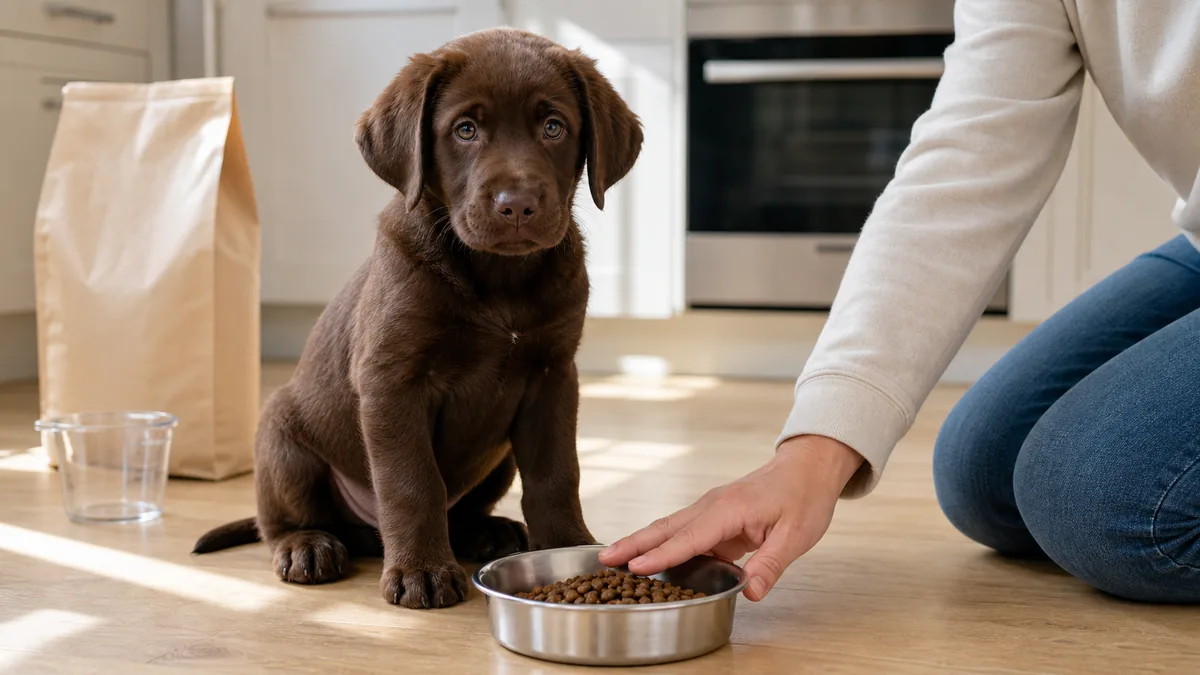
Puppy feeding is mostly rhythm and consistency, not expensive bags or secret formulas. Same time, same place, same bowl, measured portion, and a body you check by feel every Sunday. That’s the whole skeleton.
This is the calm, stage-by-stage version: how many meals at each age, how much to put in the bowl, when to drop to two meals, when to switch to adult food, and the half-dozen signals that tell you it’s working — or that something is off.
I have three dogs, one small, one medium, one large. The schedule scaled cleanly across all of them, but the food itself didn’t — my largest one was on a large-breed puppy formula on purpose, to slow the bones down. That detail matters more than most owners realize, and we’ll get to it.
This is the rhythm-and-consistency version of feeding a puppy — meal counts by age, portion size by body, when to drop meals, when to switch foods, and the signals that tell you it’s working. Skip to whatever you need right now.
- 1The one rule that beats every feeding chart
- 2What “complete and balanced for growth” actually means (AAFCO)
- 3Large-breed puppy formula: when your puppy will exceed 50 lb
- 4The stage schedule from 8 weeks to 1 year
- 5How much to feed: use the bag, then adjust
- 6Switch from 4 meals to 3 (around 12 weeks)
- 7Switch from 3 meals to 2 (around 6 months)
- 8When to switch from puppy food to adult food
- 9Treats count: the 10% rule
- 10Water: how much, when, and where
- 11Where to feed: make mealtime a calm anchor
- 125 signals you’re feeding wrong (and 5 right)
- 13When to call the vet
The One Rule That Beats Every Feeding Chart
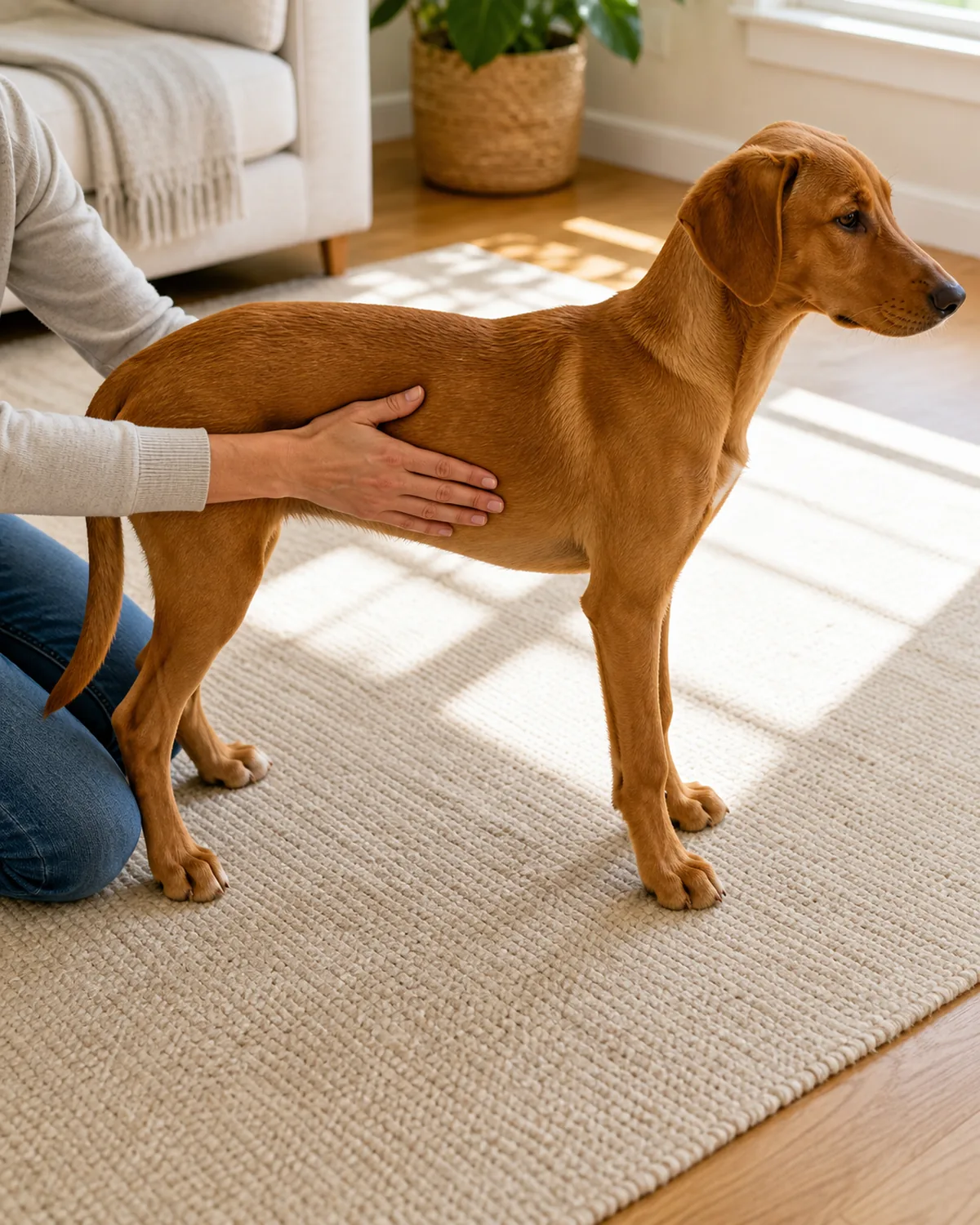
The single most useful tool for feeding a puppy is your hand on their ribs once a week. Healthy ribs feel like a washboard under a thin blanket — you can feel each rib but not see them sharply. From above, the puppy should have a visible waist tuck behind the ribs, an hourglass shape.
This is called body condition score, and it’s the ground truth. The number on the bag’s feeding chart is a starting point, not the answer. If you can’t feel ribs at all, cut food by about ten percent for the next week. If the ribs are showing sharply, add ten percent. Adjust weekly, not daily, so you’re reading the trend instead of chasing the day.
- Feel for ribs every Sunday and look down for a clear waist tuck from above.
- Adjust portion size by ten percent at a time, weekly, not daily.
- Trust body condition over any printed feeding chart on a bag.
What “Complete and Balanced for Growth” Actually Means (AAFCO)
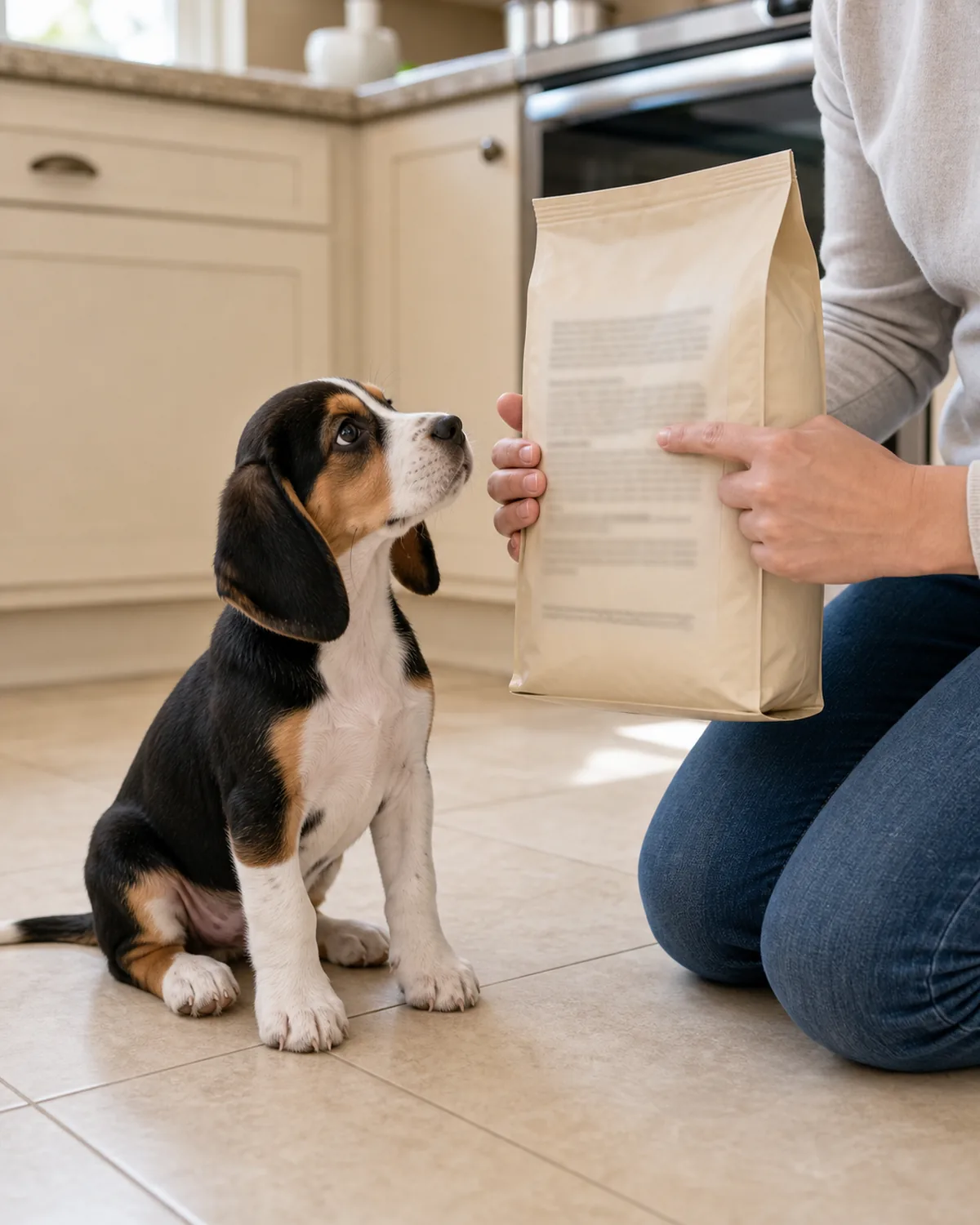
Flip the bag. The line that decides eighty percent of the safety question is on the back panel, in the AAFCO nutritional adequacy statement. It needs to say “complete and balanced for growth” or “complete and balanced for all life stages.” A bag that only says “for maintenance” is an adult formula and will not support a growing puppy, no matter what the front of the bag promises.
Marketing on the front of the bag is noise. Pretty grain photos, “vet-recommended,” “premium” — none of that is the contract. The AAFCO statement on the back is the contract. If you can’t find it, put the bag back and pick a different one.
- Look for “complete and balanced for growth” or “all life stages” on the back.
- Skip any bag whose AAFCO statement says only “for maintenance” — that’s adult food.
- Treat the front of the bag as marketing and the back panel as the real spec.
Large-Breed Puppy Formula: When Your Puppy Will Exceed 50 lb
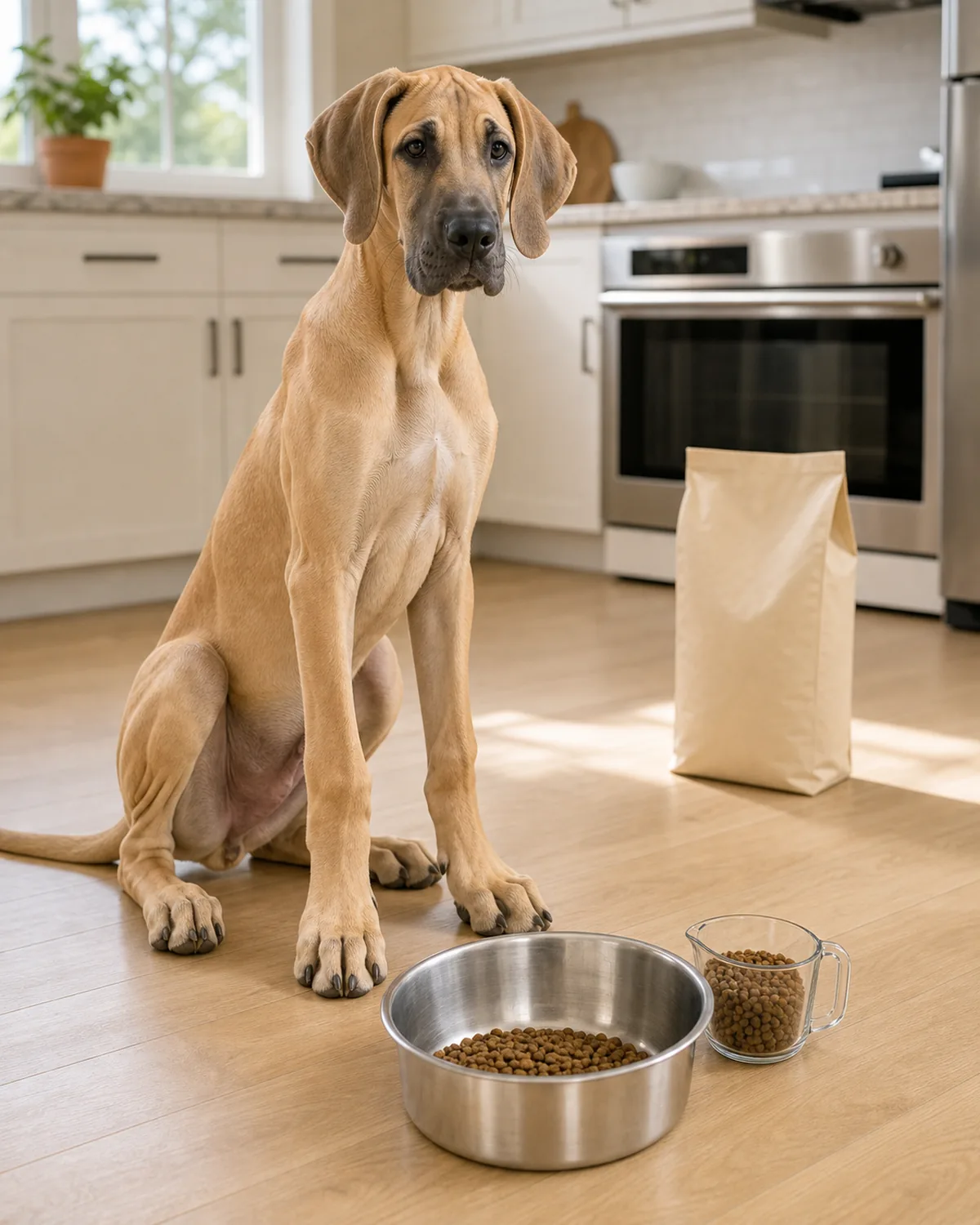
If your puppy will grow past about fifty pounds as an adult, you want a large-breed puppy formula, not a standard one. These formulas control calcium and total energy density on purpose so bones grow more slowly.
Standard puppy food has more calcium than a giant puppy can use and pushes the body to grow too fast, which is associated with joint development problems including hip dysplasia.
This isn’t marketing — it’s a real industry consensus. Small and medium puppies use a standard puppy formula. Giant breeds expected to pass eighty pounds stay on a large-breed puppy formula even longer, often well past their first birthday. When in doubt about predicted adult size, ask the vet at the first checkup; the answer changes the food.
- Pick a large-breed puppy formula for any puppy expected past about fifty pounds.
- The slower controlled growth lowers the risk of joint development problems later.
- Giant breeds stay on large-breed puppy formula longer than other large dogs.
You do not need every step at once. Find the version of “your puppy” below and begin there.
The Stage Schedule from 8 Weeks to 1 Year (At a Glance)
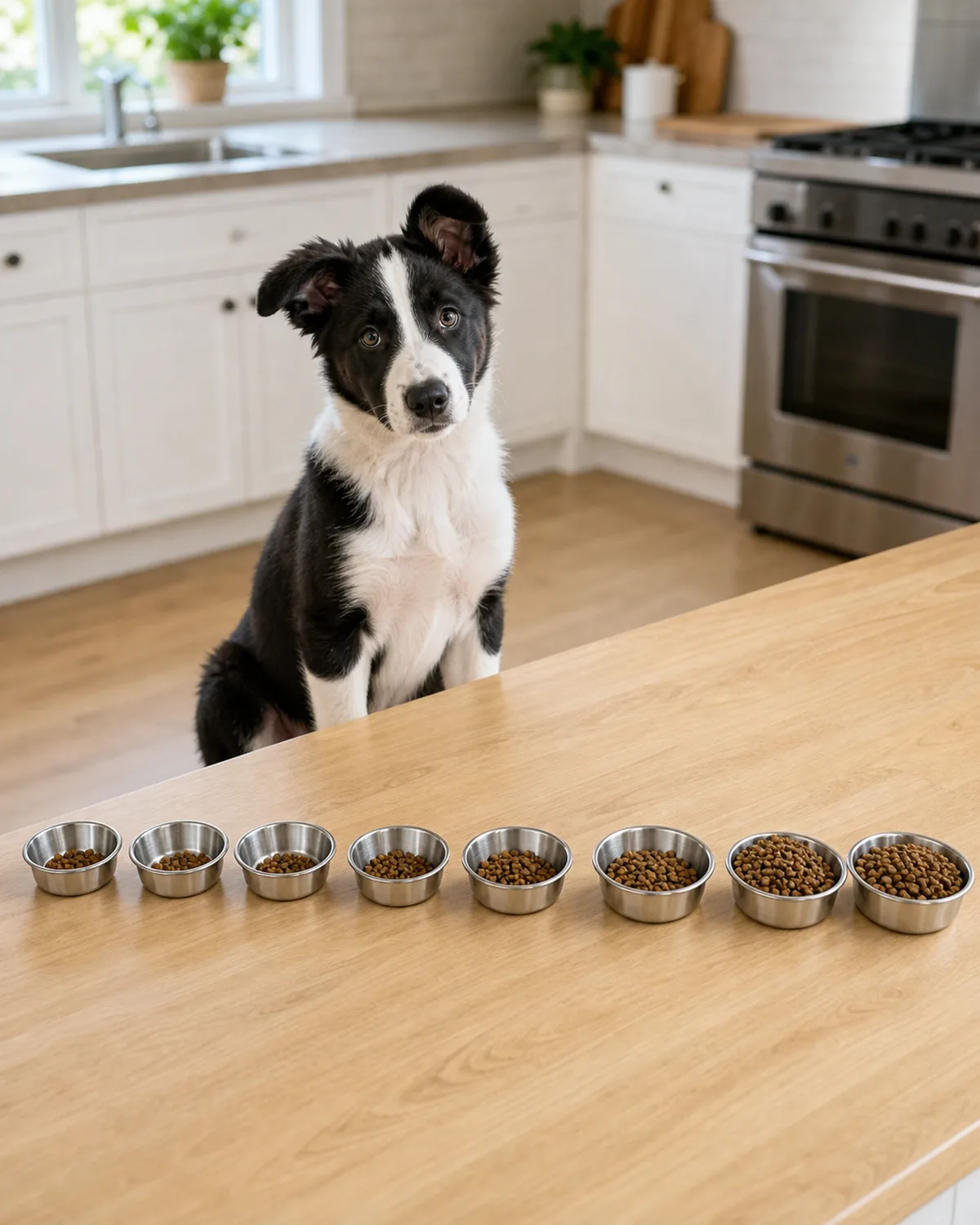
Here is the skeleton you can hang the rest of the article on. Eight to twelve weeks: four meals a day, evenly spaced. Three to six months: three meals a day. Six to twelve months: two meals a day. After one year — pushed back to twelve to twenty-four months for large and giant breeds — two meals on adult food.
Same time each day, same corner, same bowl. Pour the measured amount in, give the puppy five to fifteen minutes to eat, then lift the bowl whether they finished or not. You are teaching rhythm, not anxiety. Free-feeding by leaving a bowl out all day breaks the rhythm and makes potty training harder.
- Four meals at eight to twelve weeks, three at three to six months, two at six months on.
- Same time, same corner, same bowl — and pick the bowl up after fifteen minutes.
- Free-feeding all day breaks the rhythm and makes potty training measurably harder.
How Much to Feed: Use the Bag, Then Adjust by Body Condition
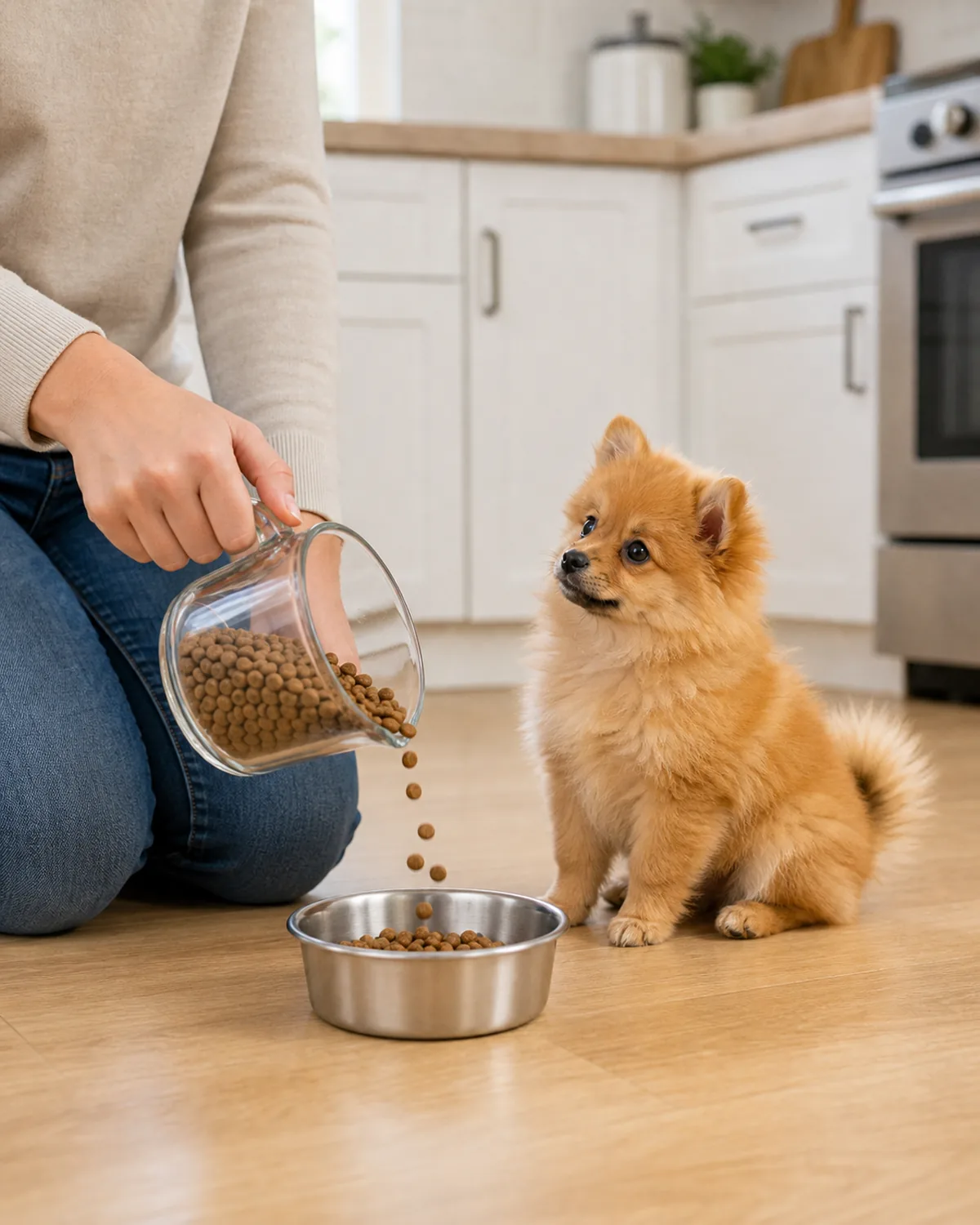
The bag’s feeding guide is indexed by estimated adult weight plus current age, not current puppy weight. Look up the daily total for the size your puppy will be as an adult, then divide by the number of meals to get a per-meal portion. Feed that for the first week.
In week two, use body condition to adjust. Can’t feel ribs: cut by about ten percent. Ribs jutting out: add ten percent. The most common mistake is reading the chart at the puppy’s current weight, which is the adult math, and it usually doubles what a growing puppy needs. Measure, don’t eyeball — the measuring cup pays for itself in saved food and a leaner dog.
- Look up the daily total by estimated adult weight, not by current puppy weight.
- Use a measuring cup every meal; eyeballing drifts by twenty percent within weeks.
- Adjust portions by ten percent weekly based on what the ribs and waist tell you.
Switch from 4 Meals to 3 (Around 12 Weeks)
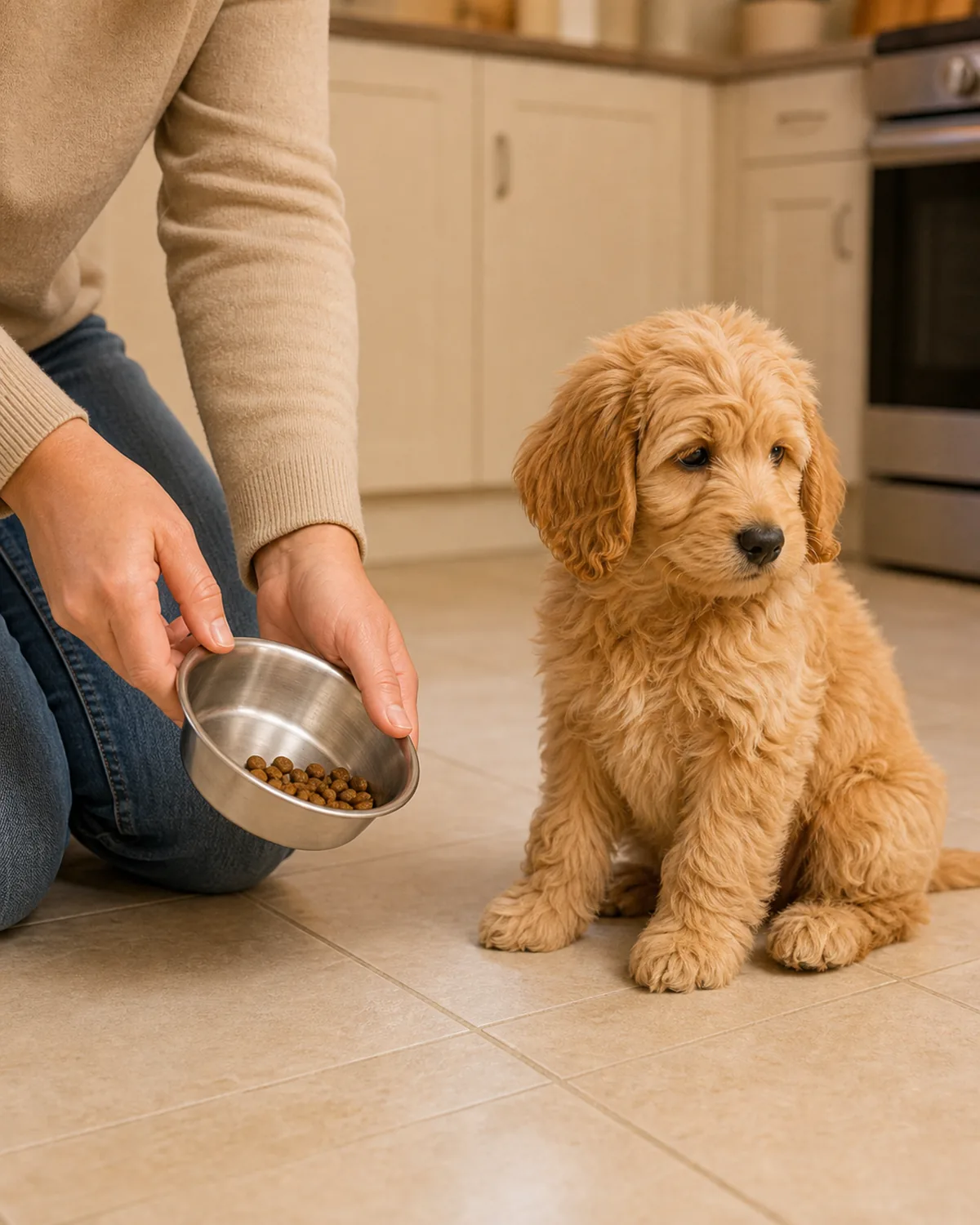
Around twelve weeks the last meal of the day quietly starts getting half-eaten or skipped. That’s the cue to drop the fourth meal. Don’t drop it overnight — that’s a hungry-belly morning. Phase it across three days: shrink meal four to half, then a quarter, then gone, while you add the trimmed portion back proportionally to the first three meals.
Hold the remaining three meals evenly spaced — roughly breakfast, midday, and dinner. The puppy’s stomach is bigger and they can handle a slightly larger sitting at three meals than they could at four. Watch the body condition the following week — the transition itself sometimes uncovers a small over- or under-feeding you were running before.
- The first sign is the fourth meal getting refused or eaten only halfway.
- Phase the drop across three days; redistribute the calories into the other meals.
- Recheck body condition a week after the change in case totals need tweaking.
The steps work because of four ideas underneath them. Get these right and feeding stays calm and predictable; ignore them and these are the mistakes that keep showing up.
Switch from 3 Meals to 2 (Around 6 Months)
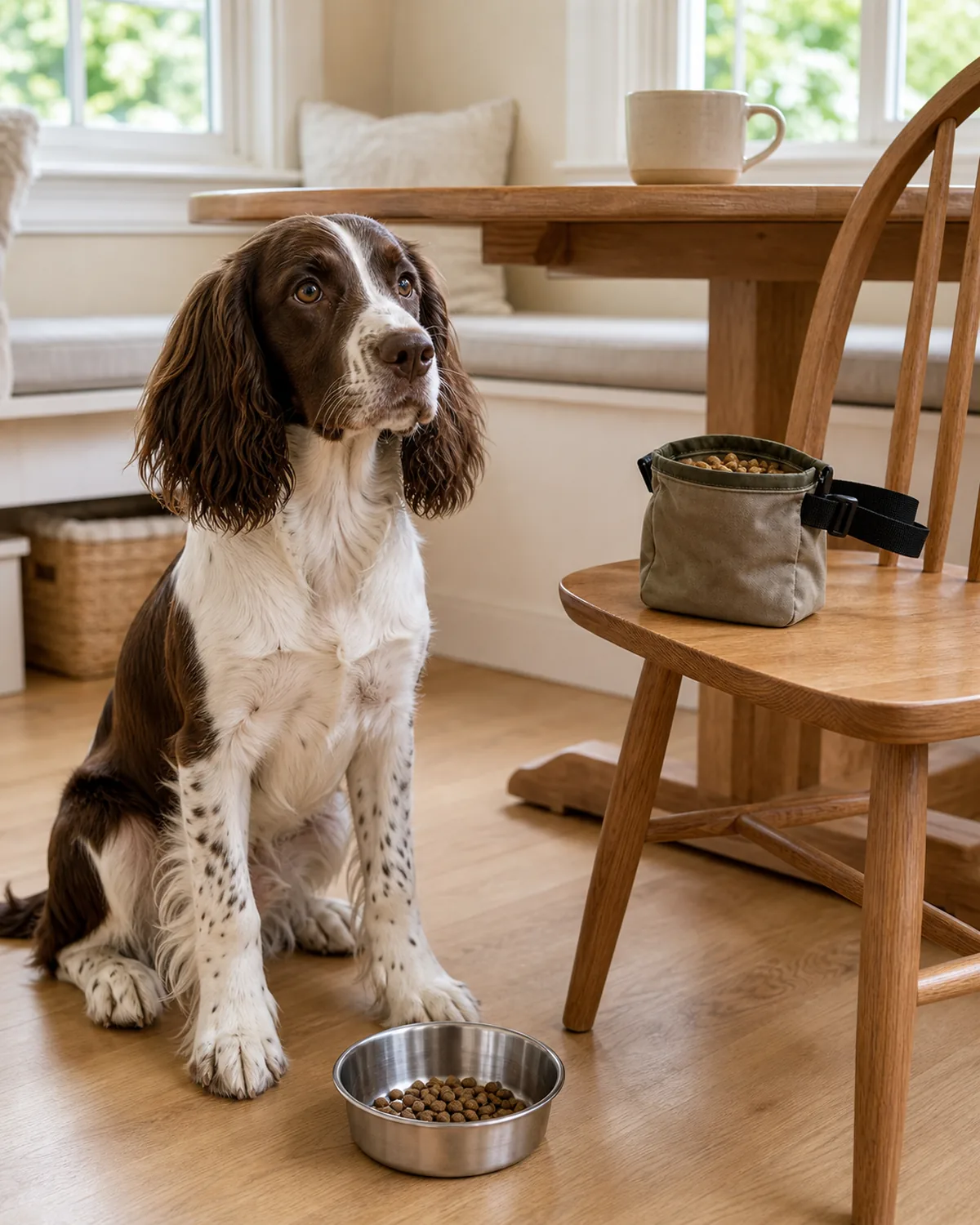
Around six months, the midday meal becomes the one that gets ignored. Small breeds usually reach that point earlier, around four or five months; large and giant breeds reach it later, around eight or nine. Move to two meals a day — breakfast and dinner — and use a small midday handful of kibble as training rewards instead.
Don’t rush the giant puppies onto two meals just because they’re now six months. And don’t double the remaining meal sizes to compensate; large and giant breeds eating one huge meal at a time raise the risk of bloat and the gastric dilatation that can follow. Two appropriately-sized meals beat one giant one every time, at every size.
- Watch the midday meal first — that’s the meal that drops out around six months.
- Small breeds hit two meals earlier than large; let the puppy’s appetite lead the date.
- Never double the remaining meals; the bloat risk in big dogs is real and serious.
When to Switch from Puppy Food to Adult Food (Not by Date — by Size)
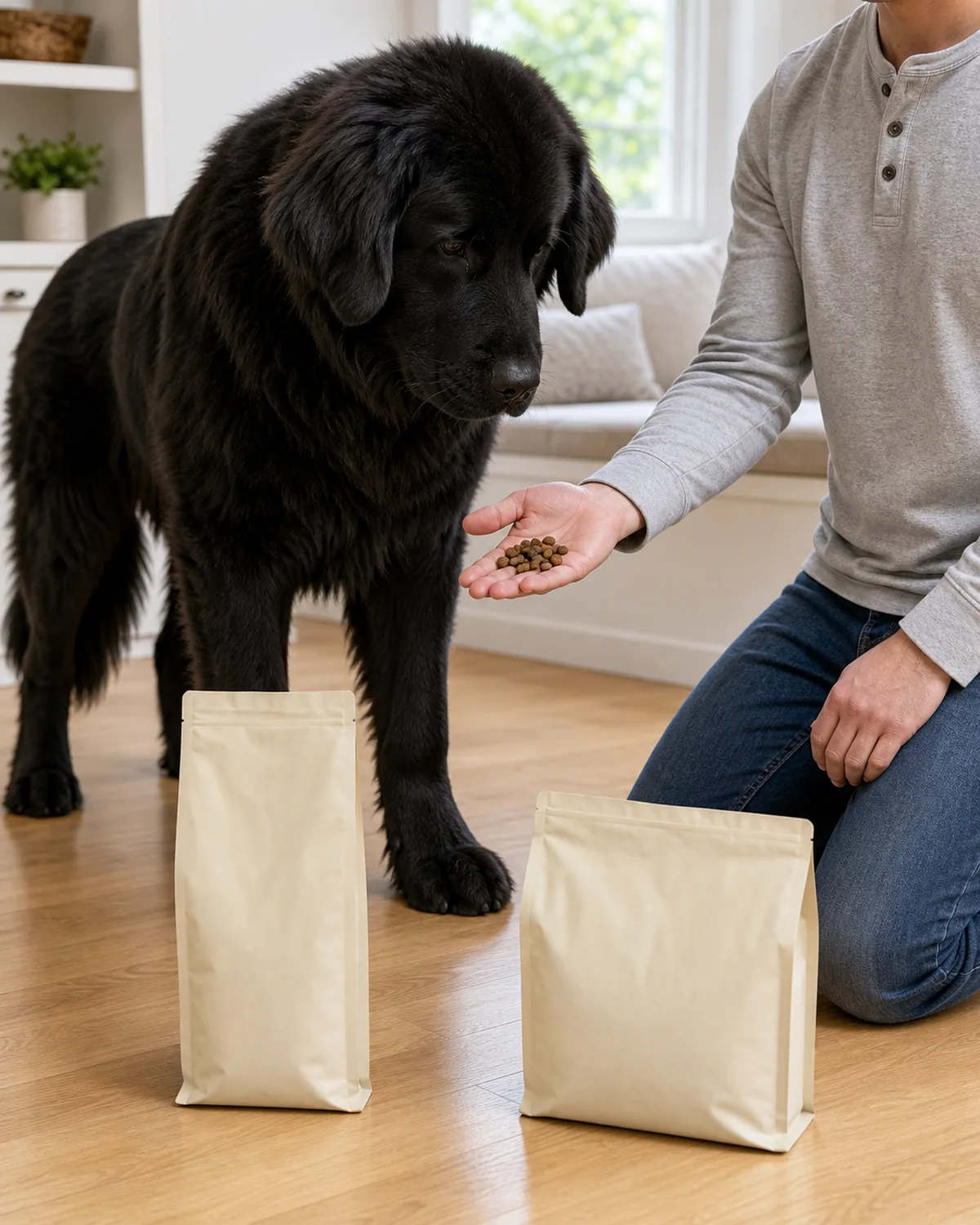
The switch trigger is adult size, not a birthday. A small breed under twenty pounds adult switches to adult food around nine to twelve months. A medium twenty-to-fifty-pound dog switches around twelve months. A large breed past fifty pounds waits until twelve to eighteen months. A giant past eighty pounds stays on large-breed puppy formula until eighteen to twenty-four months.
Switching too early shortcuts the nutrition that finishes bones and joints. When the time comes, transition over seven to ten days, not overnight — twenty-five percent new food for two to three days, then fifty, then seventy-five, then one hundred. Watch the stool; if it loosens, slow down. A clean transition with no GI upset is the goal, and it’s worth taking the extra few days.
- Switch by adult size, not by birthday — small to medium to large to giant timeline.
- Stay on a large-breed puppy formula longer if your puppy will exceed fifty pounds.
- Transition over seven to ten days at 25-50-75-100 percent and read the stool.
Treats Count: The 10% Rule
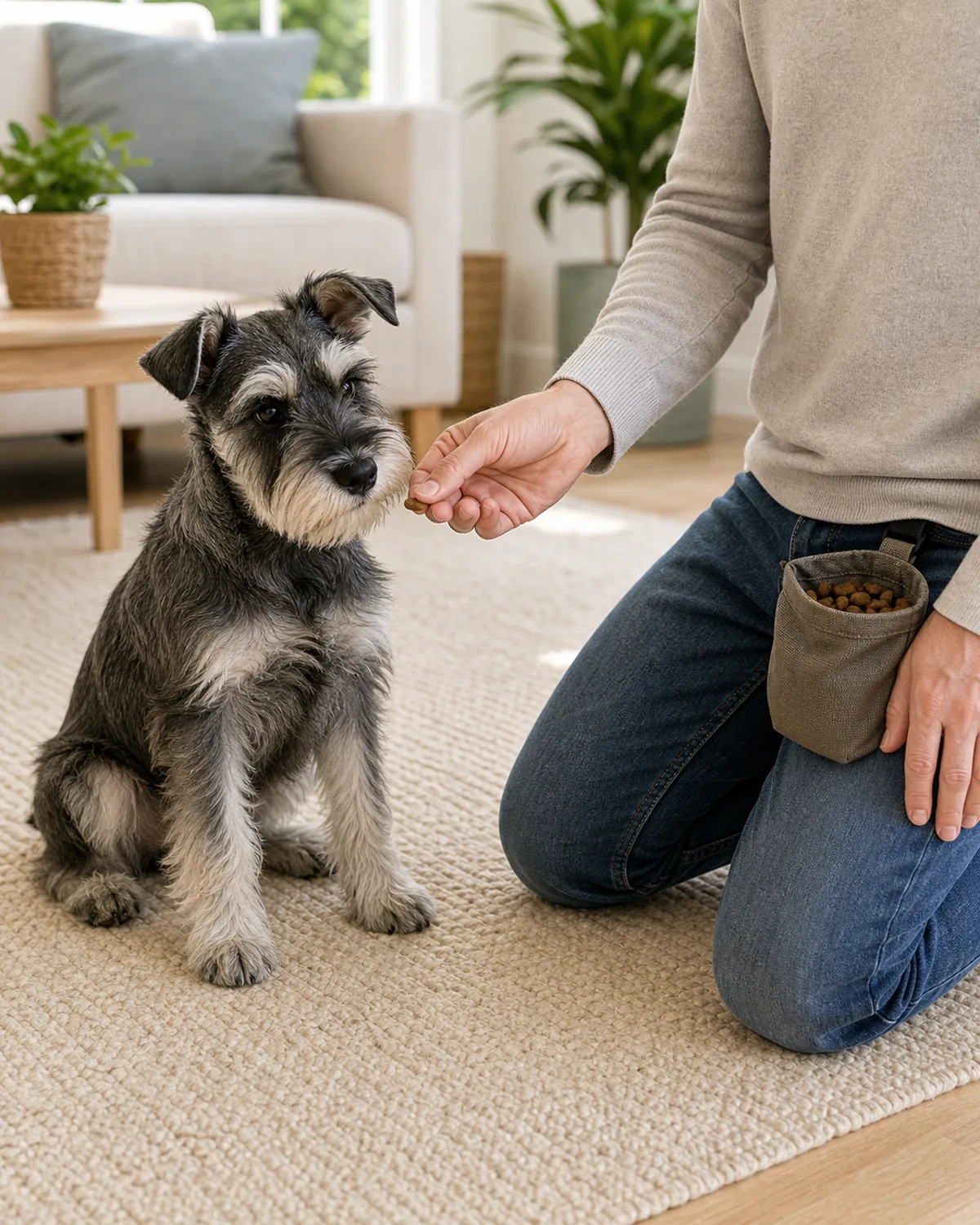
Treats aren’t bonus calories — they’re part of the daily total. Keep treats under about ten percent of daily calories so the remaining ninety percent comes from the complete-and-balanced formula keeping the nutrition profile honest.
During heavy training weeks, the simplest trick is to scoop the day’s training reward from the morning meal’s measured kibble and put it in the treat pouch, then subtract that scoop from the next meal. The puppy is just as motivated by the kibble they already love, and you don’t add extra calories.
As for human food: grapes, raisins, onions, garlic, chocolate, xylitol, macadamia nuts, avocado, and raw bread dough are all hard never-feed. The list of safe human foods is much shorter than the list of unsafe ones, so when in doubt, don’t.
- Keep treats at ten percent of daily calories so the formula keeps doing its job.
- Pull training rewards from the day’s measured kibble; subtract from a later meal.
- Treat the unsafe-human-food list as a hard line: grapes, chocolate, onion, xylitol.
How to Feed a Puppy: 8 Weeks to 1 Year
- 1Body condition firstFeel the ribs Sunday; look down for a waist tuck — that’s your ground truth.
- 2AAFCO statementBack panel must say complete and balanced for growth — front of bag is noise.
- 3Large-breed formulaIf puppy will exceed 50 lb adult, use a large-breed puppy formula — slower growth.
- 4Stage schedule4 meals 8-12 wk, 3 meals 3-6 mo, 2 meals 6-12 mo, then adult food.
- 5Bag, then adjustLook up by adult weight; measure not eyeball; nudge 10 percent weekly.
- 64 to 3 mealsAround 12 weeks when meal four gets refused; phase the drop over 3 days.
- 73 to 2 mealsAround 6 months when midday gets refused; midday handful becomes training rewards.
- 8Switch by sizeSmall 9-12 mo, medium 12 mo, large 12-18 mo, giant 18-24 mo; transition 7-10 days.
- 910 percent treatsPull rewards from daily kibble — grapes, chocolate, onion, xylitol are hard no’s.
- 10Two water bowlsKitchen and sleep area; ~0.5-1 oz per pound per day; pull water by 8 pm.
- 11Feed in the crateSame corner; household 5 ft away; prevents resource guarding before it starts.
- 12Read the signalsWeigh weekly; look at the trend curve, not the single-day number.
- 13Vet breaks ties24-hour refusal, 2+ vomits, bloody stool — call. Bring the weight curve.
pawliqa.com
Water: How Much, When, and Where
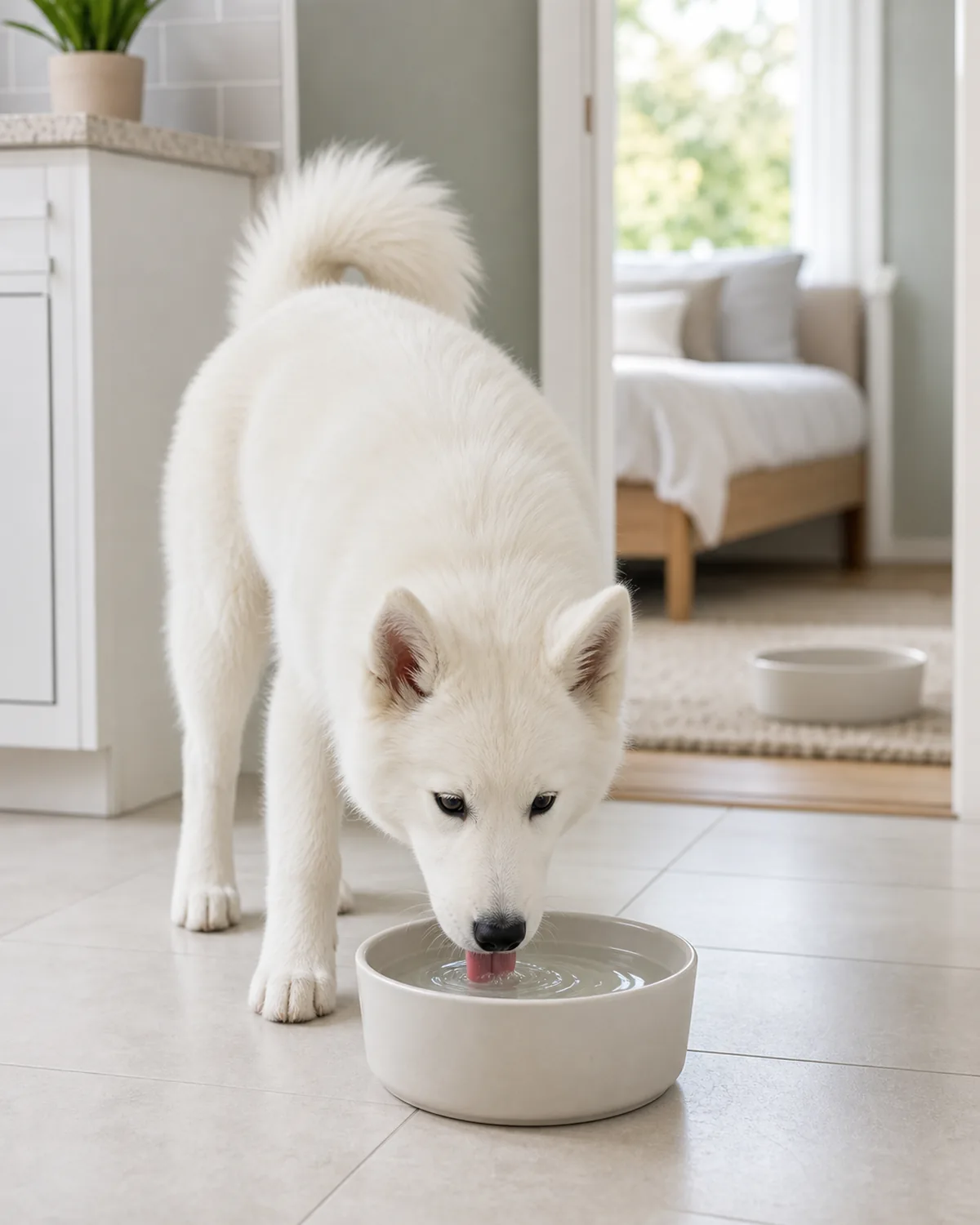
A puppy needs about half an ounce to one ounce of water per pound of body weight per day. An eight-pound puppy is looking at four to eight ounces. Leave water out during the day and pull it around eight in the evening to keep night potty trips manageable.
Two bowls beat one. Put one near the kitchen and one near where the puppy sleeps, so water is never far away. Refill after play and after walks. Watch for sudden changes in water intake — a clear doubling or halving over a couple of days is a vet signal worth paying attention to, since it can flag urinary, endocrine, or hydration issues earlier than other symptoms do.
- About half an ounce to one ounce of water per pound of body weight per day.
- Two bowls in two locations beats one — kitchen plus sleep area is the easy split.
- Pull water around eight in the evening to keep night potty trips reasonable.
Where to Feed: Make Mealtime a Calm Anchor (Crate Tie-In)
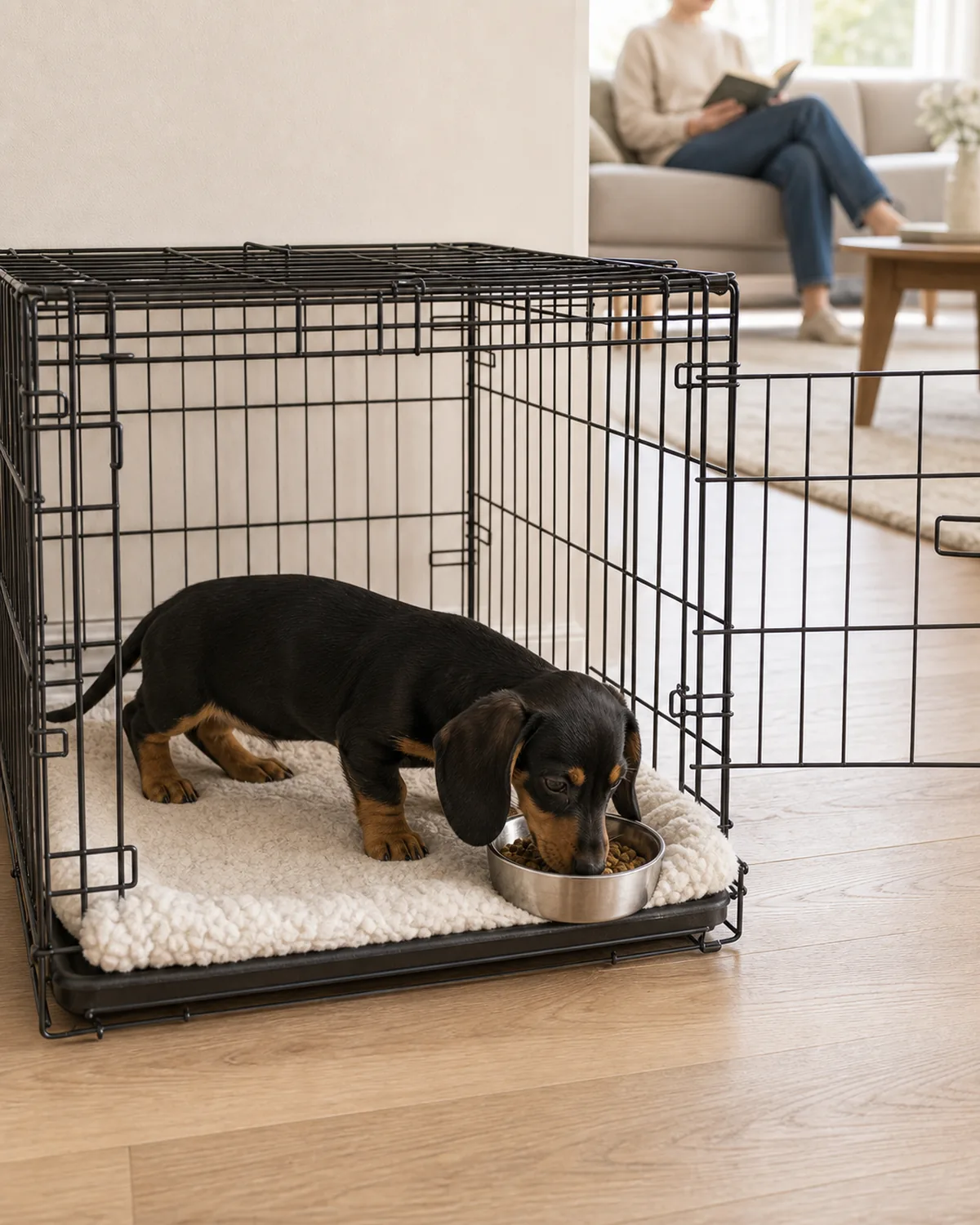
Pick one corner of one room and stick to it. Feeding inside the crate is even better — it quietly builds the crate as a calm, safe, owned space, which pays off all over the rest of training. Open the door, drop the bowl in, let the puppy eat, lift the bowl out fifteen minutes later.
Have everyone in the household give the puppy five feet of space at mealtime. Don’t hover, don’t pet, don’t add toppings mid-meal, don’t let kids stand watching. The lesson you’re teaching is “the bowl is mine, nobody steals it, I don’t need to gulp.” That’s the cleanest way to prevent resource guarding before it starts.
- One corner, one bowl, fifteen minutes — same setup every meal of every day.
- Feeding inside the crate doubles as positive crate conditioning at zero extra cost.
- Five feet of space from the rest of the household prevents resource guarding early.
5 Signals You’re Feeding Wrong (and 5 You’re Doing Right)
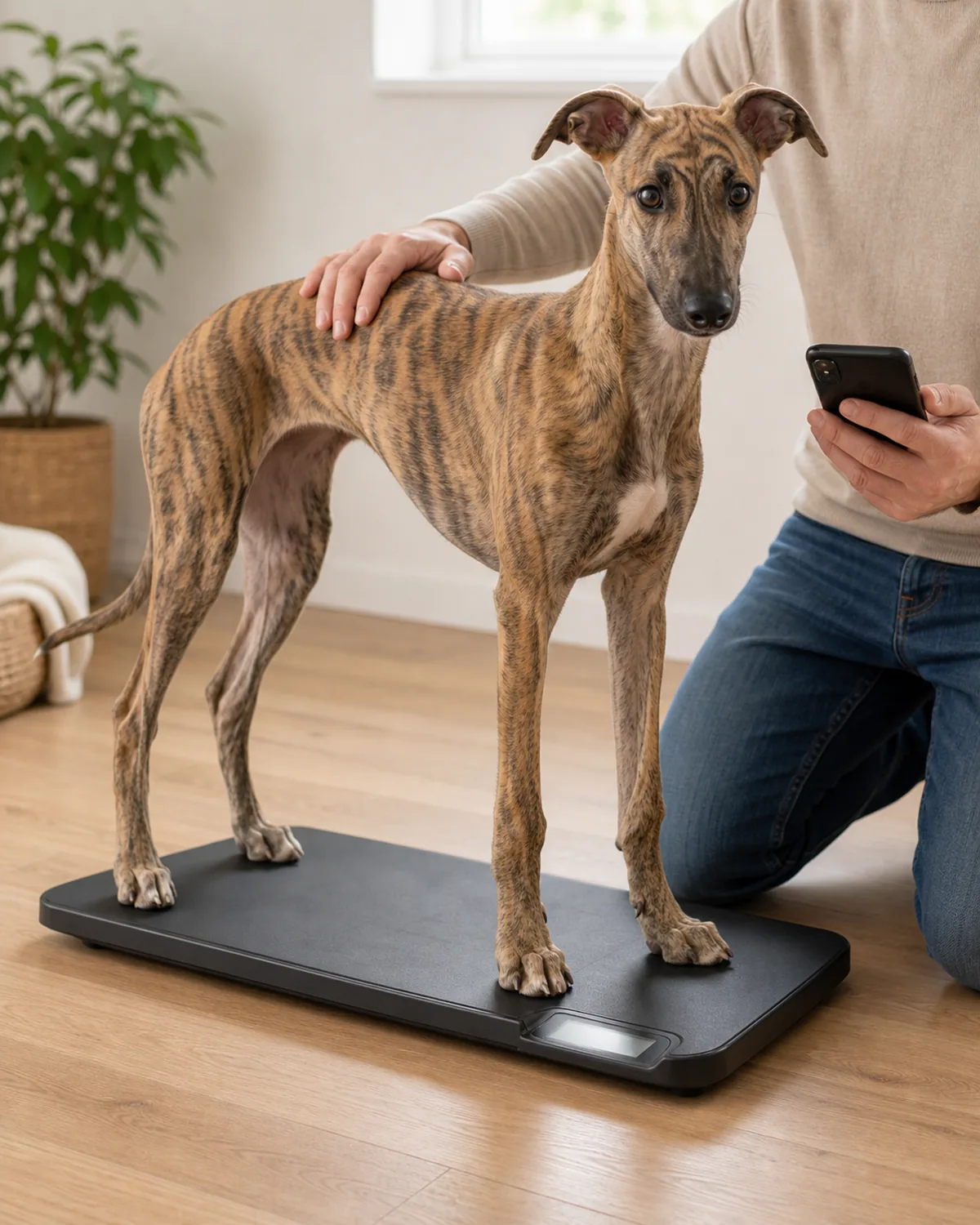
Wrong signals come in clusters. Weight jumping two pounds in a week. Ribs sharply visible from across the room. Pre-meal frantic pacing or hand-mouthing that’s escalating. Soft stool that sticks to the ground. Belly distention after meals so the puppy can’t walk freely. Any one of those is worth a portion review; two or more is a vet call.
Right signals are quieter and easier to miss. Body condition stable at four or five out of nine. Formed firm stool. Calm between meals — no begging marathons. Glossy coat and clear bright eyes. A weight curve that climbs smoothly week over week instead of in spikes. Weigh weekly, jot it in your phone, and look at the trend monthly. Single-day weight is noise; the curve is the signal.
- Wrong: weight spikes, sharp ribs, frantic begging, soft stool, post-meal bloat.
- Right: stable body condition, formed stool, calm between meals, glossy coat.
- Weigh weekly and read the trend — single-day numbers are mostly noise.
When to Call the Vet (Not Just Google the Symptom)
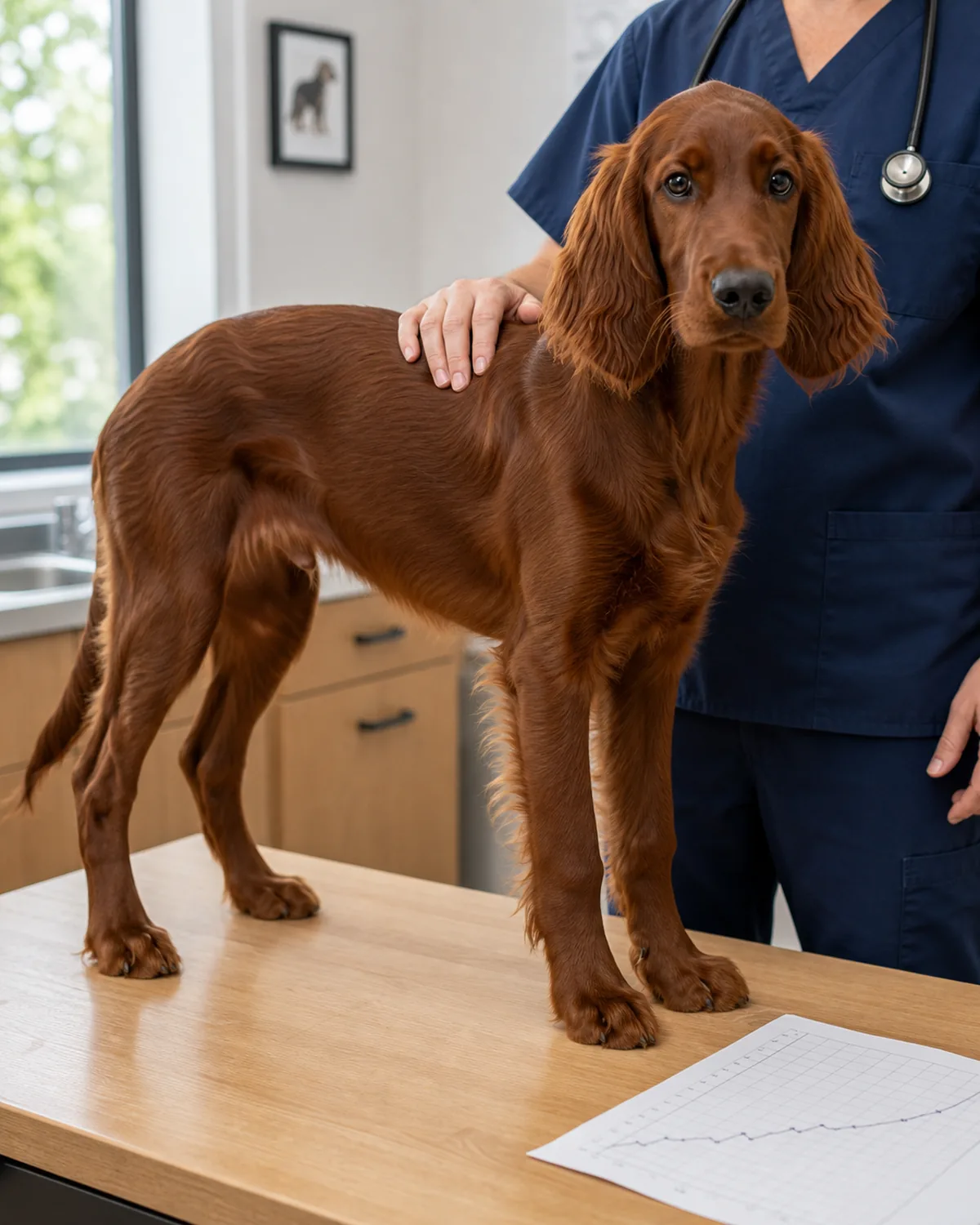
Some symptoms are vet calls, not Google calls. Refusing food for a full twenty-four hours. Vomiting twice or more. Bloody or tar-black stool. A sudden spike or drop in thirst and urination. Listing to one side, limping, or losing five percent of body weight in a single week. Any one of those, call the clinic.
Get a full vet checkup somewhere in the first eighteen months and bring the weight curve with you. A vet who knows your specific puppy can tune food amount more accurately than any bag chart can.
Activity and energy shape feeding too — for the dog-care backbone underneath this, see how much exercise does your dog need. The bag, the body, and the vet are the three sources of truth — and the vet is the tie-breaker.
- Twenty-four-hour food refusal or two-plus vomits is a same-day vet call.
- Bring the weight curve to the first eighteen-month checkup for an honest portion tune-up.
- The bag is a starting point, the body condition is the ground truth, the vet breaks ties.

Jess Calloway edits Pawliqa, where she shares dog care, grooming, training, and new-owner tips — plus DIY and pet-friendly home ideas — for anyone who wants a happy, well-cared-for dog. As a dog mom to three very different dogs, she writes the honest, tested version of what actually works. Every guide is image-led and reviewed for clarity, usefulness, image accuracy, and Pinterest-to-page alignment before it goes live. Visit the About page.