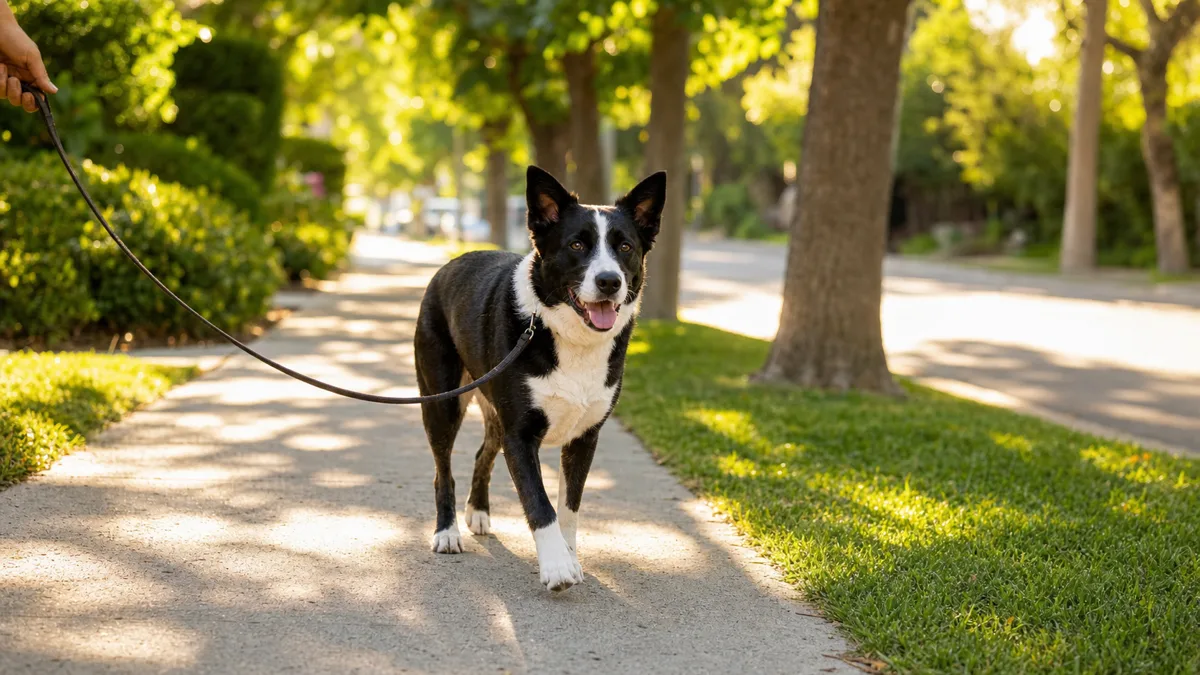
A 30-minute walk on the same sidewalk at the same pace every day checks a box. It does not tire the dog out.
Most dogs come home from that walk and start pacing, chewing, or barking within the hour. The missing piece is not more minutes. It is more mental engagement — sniffing, route novelty, pace variation, and knowing when to stop.
These are the adjustments that turn a daily obligation into something that actually settles the dog.
Jump to a section
Dog walking tips that make every walk count
From sniffing strategy to heat safety to the right gear, these ten adjustments turn a daily loop into a walk that actually tires the dog out.
Why Most Dog Walks Do Not Actually Tire the Dog Out
A 30-minute walk on the same sidewalk at the same pace every day is the canine equivalent of sitting on a bus. The body moves, but the brain idles.
Most dogs come home from this kind of walk and start pacing, chewing, or demanding attention within the hour. The owner thinks the dog needs more exercise. Usually, the dog needs a different kind of walk.
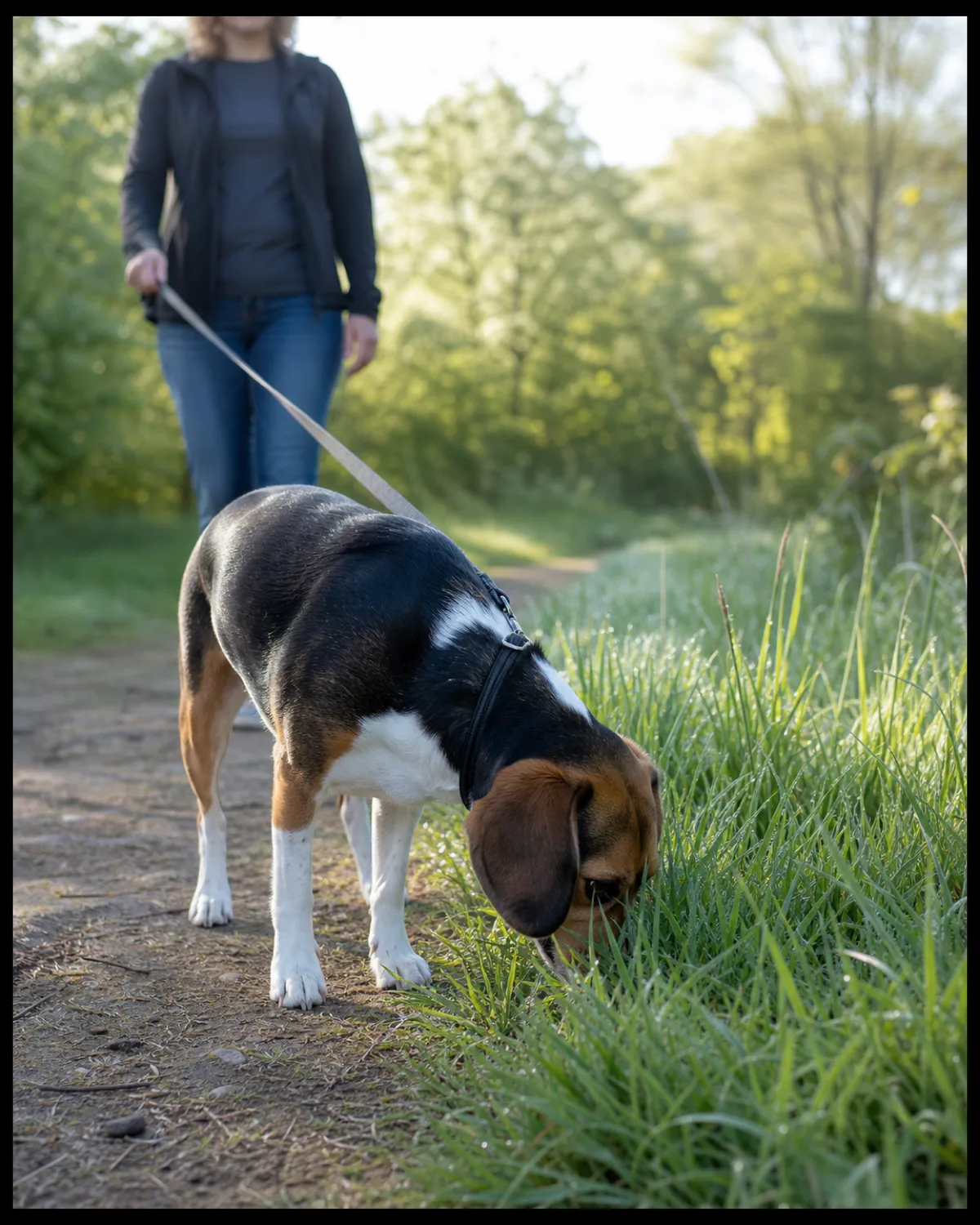
The missing piece is mental engagement. Sniffing, route novelty, and pace variation are what actually process the dog's energy. A 20-minute walk with three sniff stops and one route change will settle most dogs faster than a 45-minute march on the same sidewalk.
Sniffing is not a bathroom break that went too long. It is the dog processing its environment.
A dog's nose contains up to 300 million olfactory receptors compared to about 6 million in a human nose. Every fire hydrant, tree base, and patch of grass is a news feed. Pulling the dog away from a sniff is like someone closing your laptop mid-sentence.
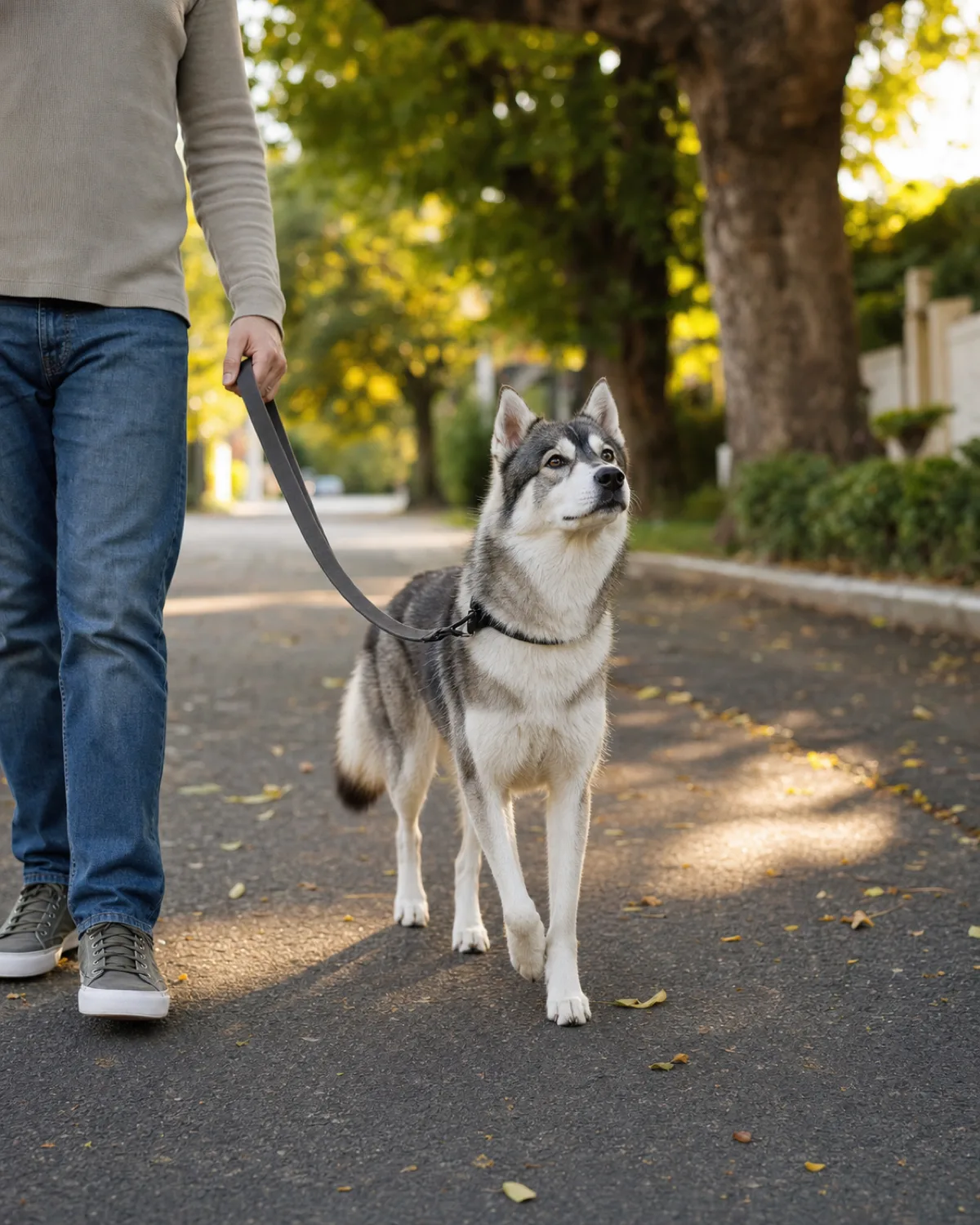
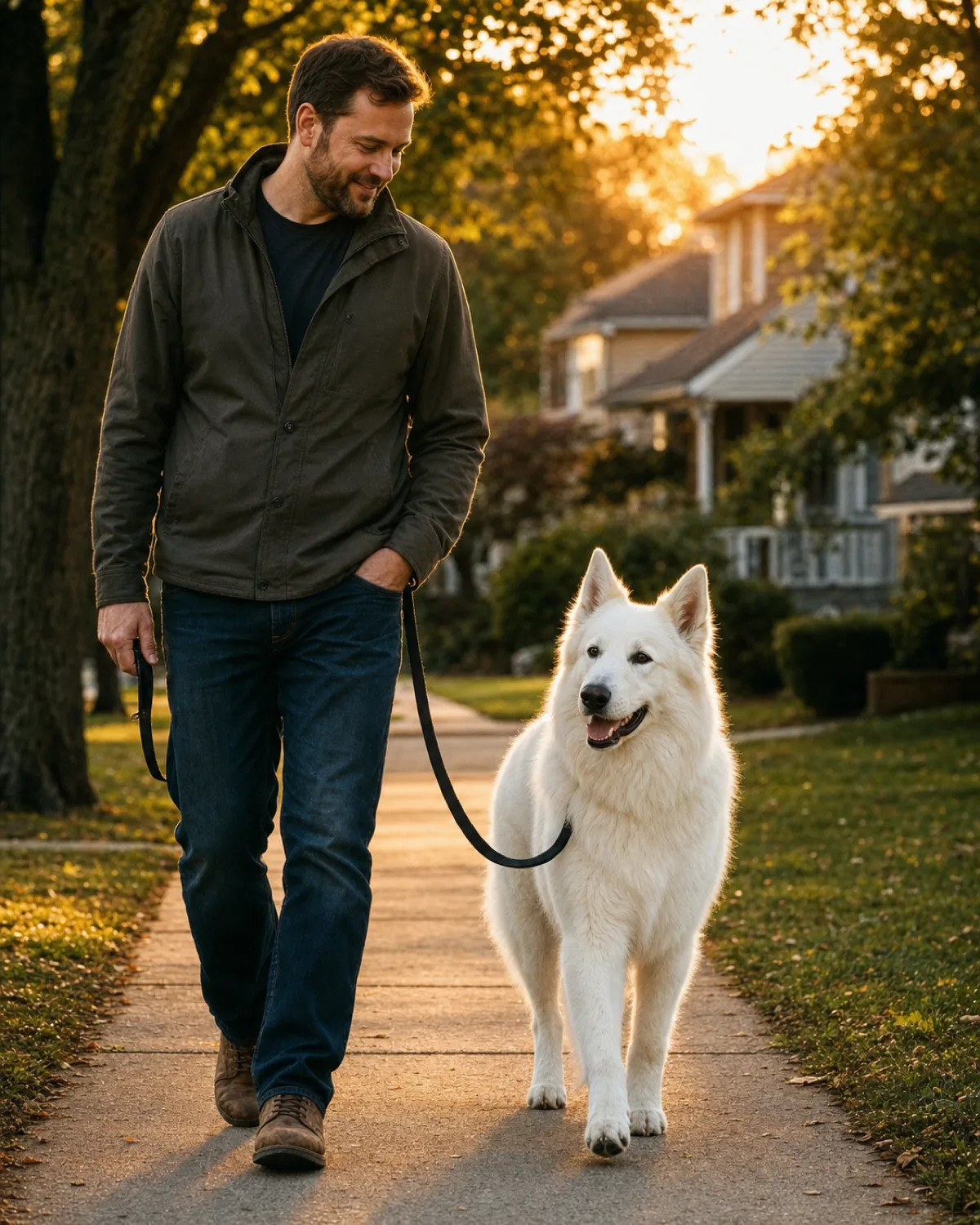
Build two or three sniff zones into every walk. These are spots where you stop, drop the leash to its full length, and let the dog investigate whatever it wants for 60 to 90 seconds. Between zones, you walk at your pace and the dog moves with you.
The result is a dog that learns the walk has a structure: focused walking sections and investigation sections. Most dogs settle into this rhythm within a week.
Match the Pace to the Dog
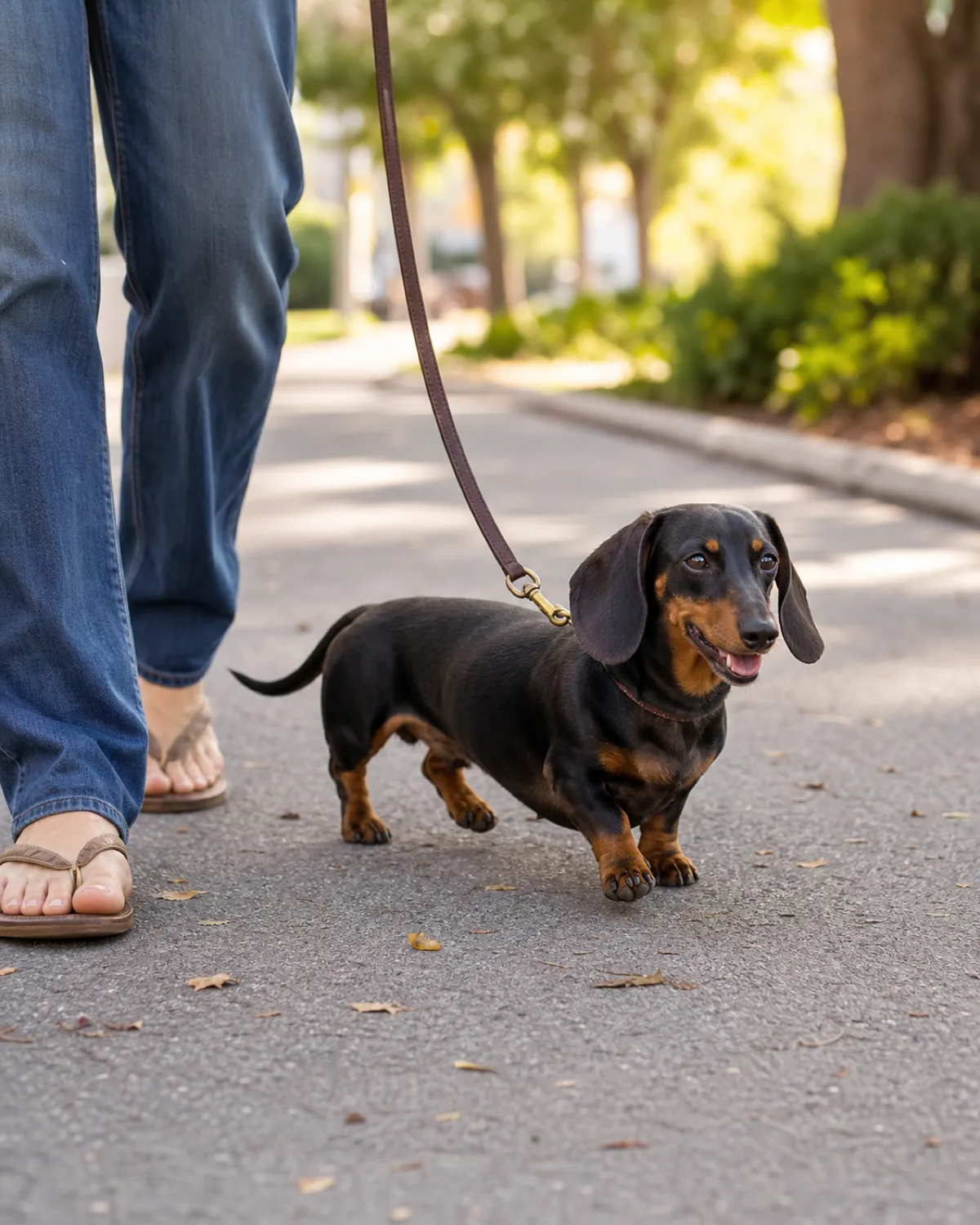
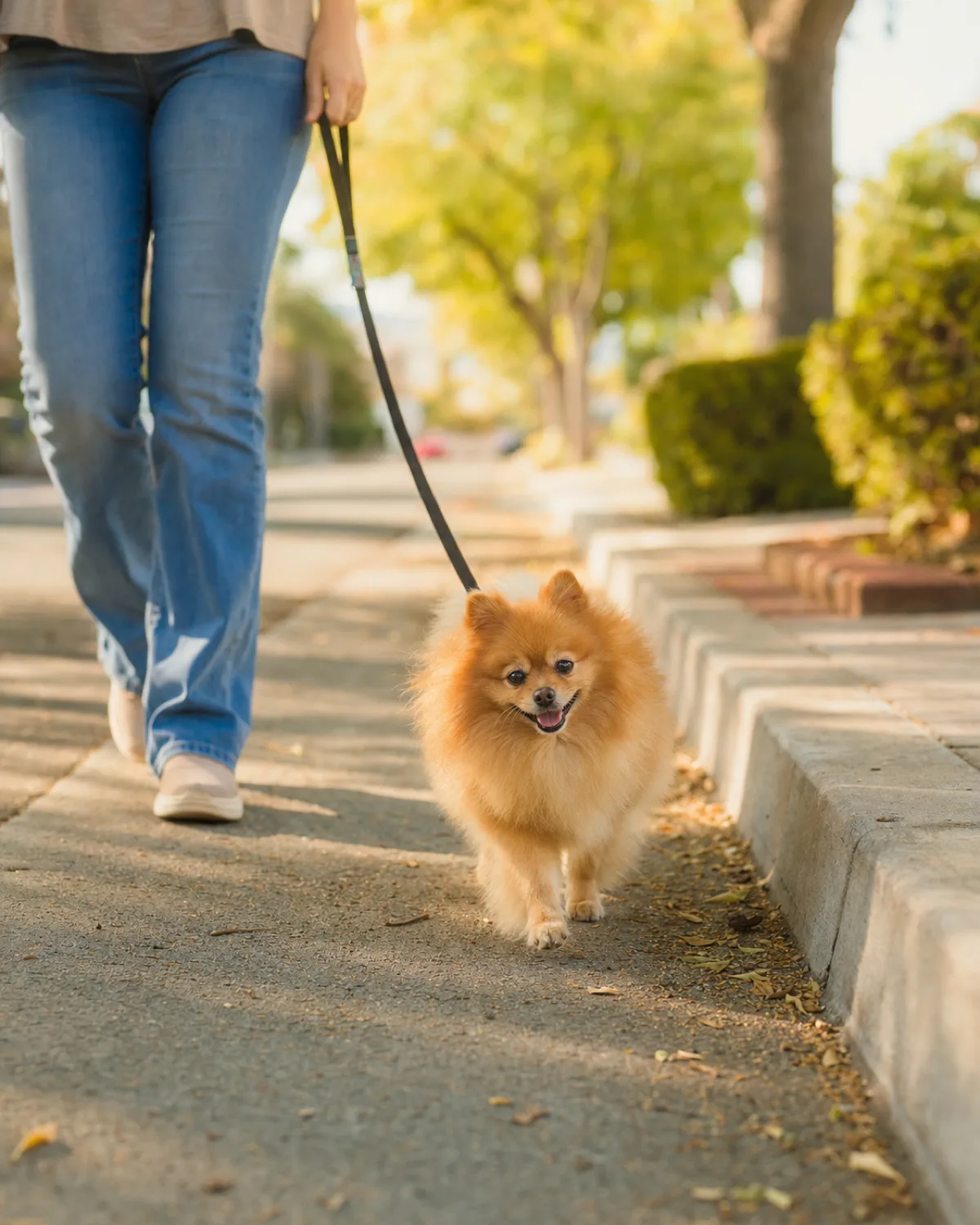
A short-legged dog trotting to keep up with your normal stride is working twice as hard as you are. Its legs are a quarter the length of yours. That trot is its jog.
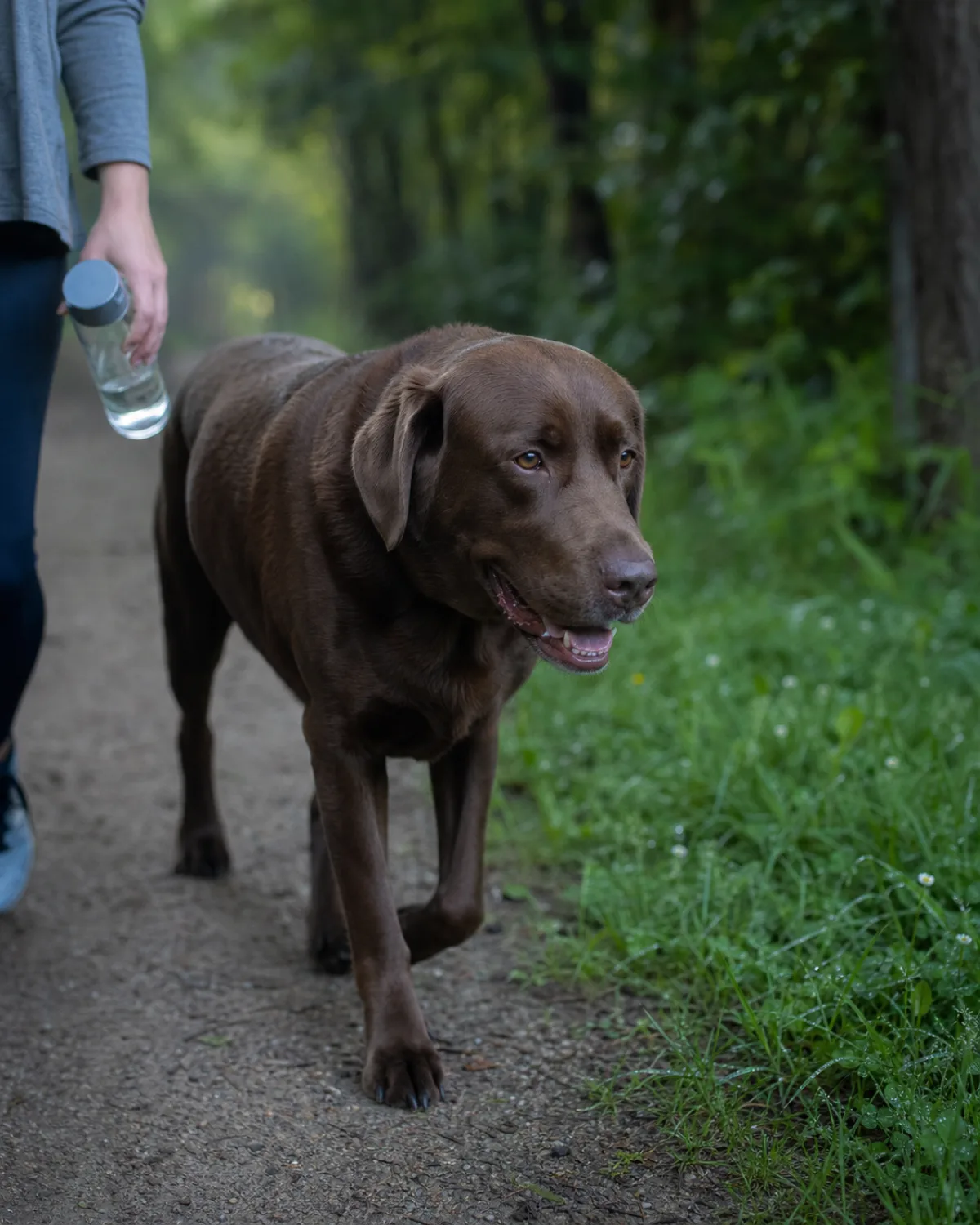
A young, athletic large dog walking at your pace is barely moving. Its natural gait covers more ground per step. That walk is its stroll.
Watch the dog's gait. If it constantly breaks into a trot to stay beside you, slow down. If it pulls ahead with a loose body and wagging tail — not reactive pulling, just moving — you are probably too slow.
The right pace is the one where the dog can walk in a natural four-beat gait without rushing or dragging. For most medium dogs, that is slightly faster than a comfortable human stroll.
Match the walk to the dog in front of you
Small dog pace vs. large dog pace
The same 30-minute loop feels completely different depending on the dog's body type. Start here.
Small or short-legged dogSlow your stride by half. Watch for a constant trot — that means you are still too fast. Shorter walks with more sniff stops tire these dogs better than longer distance.
Large or high-energy dogPick up the pace or add terrain changes (hills, trails). If the dog barely registers the walk, it needs more intensity — not more minutes on flat pavement.
Senior or recovering dogLet the dog set the pace. Frequent stops are fine. End the walk before the dog lags behind — a tired senior should not be pushed to finish the route.
Puppy (under 12 months)Five minutes per month of age, twice a day. A four-month-old gets two 20-minute walks. Overwalking a puppy damages developing joints more than underwalking.
Change the Route Every Few Days
Same route means same smells. Same smells means same neural input. Same neural input means boredom.
You do not need to drive to a park or find a trail. Walk the same neighborhood in reverse. Turn left where you usually turn right. Cross the street halfway through and walk back on the other side.
For a dog's nose, a 50-meter detour is a brand-new environment. That fire hydrant on the next street over has completely different scent information than the one on your usual corner.
Rotate between three or four routes and the dog approaches each walk with genuine curiosity instead of going through the motions.
How to Walk in Heat Without Overheating
Pavement absorbs and radiates heat long after the air temperature drops. On a 30-degree Celsius day, asphalt can reach 60 degrees. That will burn paw pads in under a minute.
The pavement test is simple. Press the back of your hand flat on the surface for five seconds. If you cannot hold it there, the dog cannot walk on it.
Walk early in the morning or after sunset. Choose shaded routes. Bring water and offer it every 15 minutes. Short-nosed dogs get half the distance at most because their compressed airways make cooling less efficient.
Stop immediately at the first sign of heavy open-mouth panting with a widened tongue, excessive drooling, or stumbling. Move to shade, offer water, and head home. For the full heat safety guide, that article covers what to do when overheating has already started.
How to Walk in Cold Weather Safely
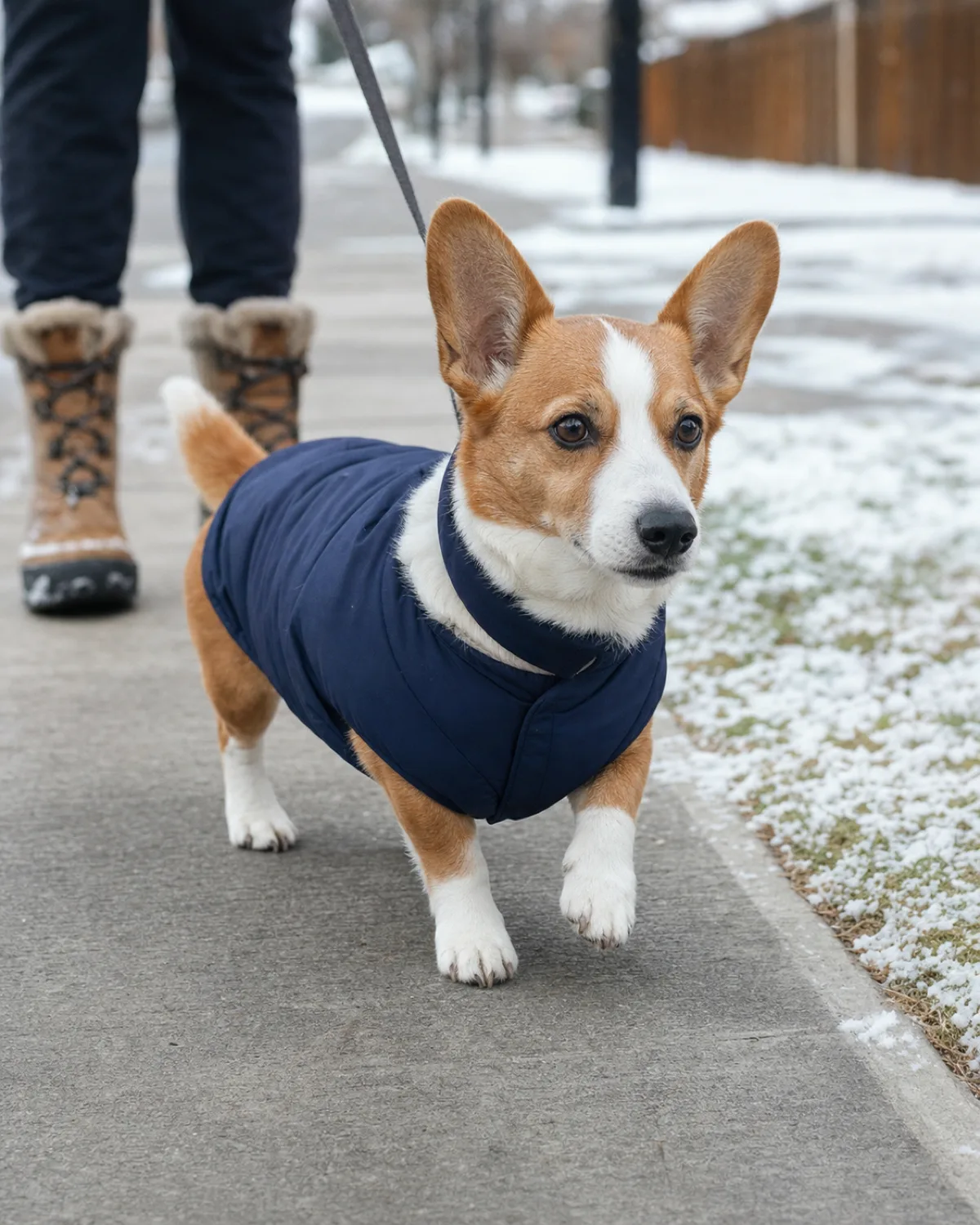
Cold air hits small dogs and short-coated dogs harder because they lose body heat faster relative to their mass. A fitted jacket that covers the chest and belly makes a measurable difference once temperatures drop below about 4 degrees Celsius.
Keep winter walks shorter but more intense. More sniff stops packed into a tighter route, a slightly faster pace between them, and deliberate changes of direction. The dog generates more body heat when it stays mentally and physically engaged.
Watch for shivering, lifting a paw off the ground, or slowing down and refusing to move forward. These are not stubbornness. They are the dog telling you it is too cold to continue. Turn around.
The real risk on winter sidewalks is chemical de-icer residue, which can irritate skin on contact and cause illness if the dog licks its paws afterward. Booties or paw balm applied before the walk keeps that layer off the skin entirely. For the full breakdown on protecting paws from winter hazards, see how to protect your dog's paws in winter.
Walking a Reactive Dog Without Making It Worse
Reactivity on walks — barking, lunging, or fixating on other dogs, people, or bikes — is not a walking problem. It is a training problem that shows up on walks.
The worst thing you can do is tighten the leash, yank the dog back, or yell. All three increase the dog's stress level and confirm that the trigger is something worth reacting to.
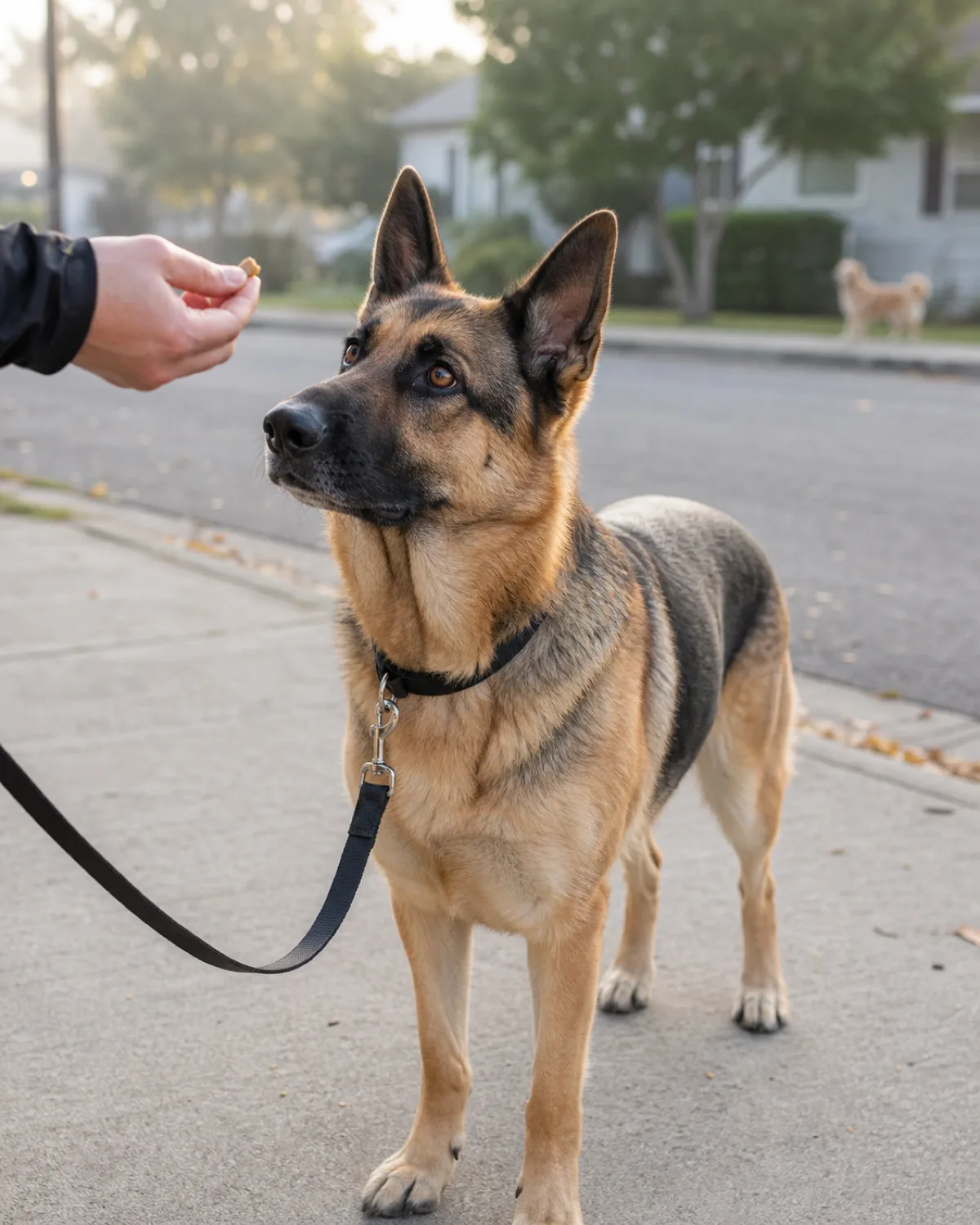
Instead, manage distance. When you see the trigger, cross the street or change direction before the dog locks on. If you are too late and the dog is already staring, use a treat to redirect its nose toward you and move away.
Walk at low-traffic times while you work on the underlying reactivity separately. Early mornings and late evenings on quiet streets give the dog a chance to practice walking without constant triggers.
The goal is not to expose the dog to triggers until it gives up. The goal is to keep every walk below the threshold where the reaction fires.
Managing reactivity on walks without making it worse
4 distance rules for reactive dogs
Reactivity is a training challenge, not a walking failure. These four rules keep walks productive while you work on the underlying issue separately.
Cross the street earlyThe moment you spot the trigger, change sides or turn around. Waiting until the dog locks on is too late — by then, the stress response has already fired.
Redirect with food, not forceA treat near the nose breaks the stare. A leash yank confirms the trigger is dangerous. Use the treat before the dog reacts, not after.
Walk at quiet hoursEarly mornings and late evenings have fewer triggers. Every walk without a reaction builds the dog's confidence. Every blowup sets it back.
Never correct the warningGrowling and stiffening are the dog communicating discomfort. Punishing those signals teaches the dog to skip the warning and go straight to lunging.
The Right Gear
A well-fitted harness or flat collar. A standard 6-foot fixed-length leash. Poop bags. Water on walks longer than 20 minutes. That covers it.
Retractable leashes teach pulling. The dog learns that tension on the leash means more slack is coming, which is the opposite of loose-leash walking. They also give you no control in traffic or around other dogs.
Choke chains and prong collars suppress the pulling behavior through discomfort or pain. The dog stops pulling not because it learned to walk nicely, but because pulling hurts. That is suppression, not training, and it often creates new problems.
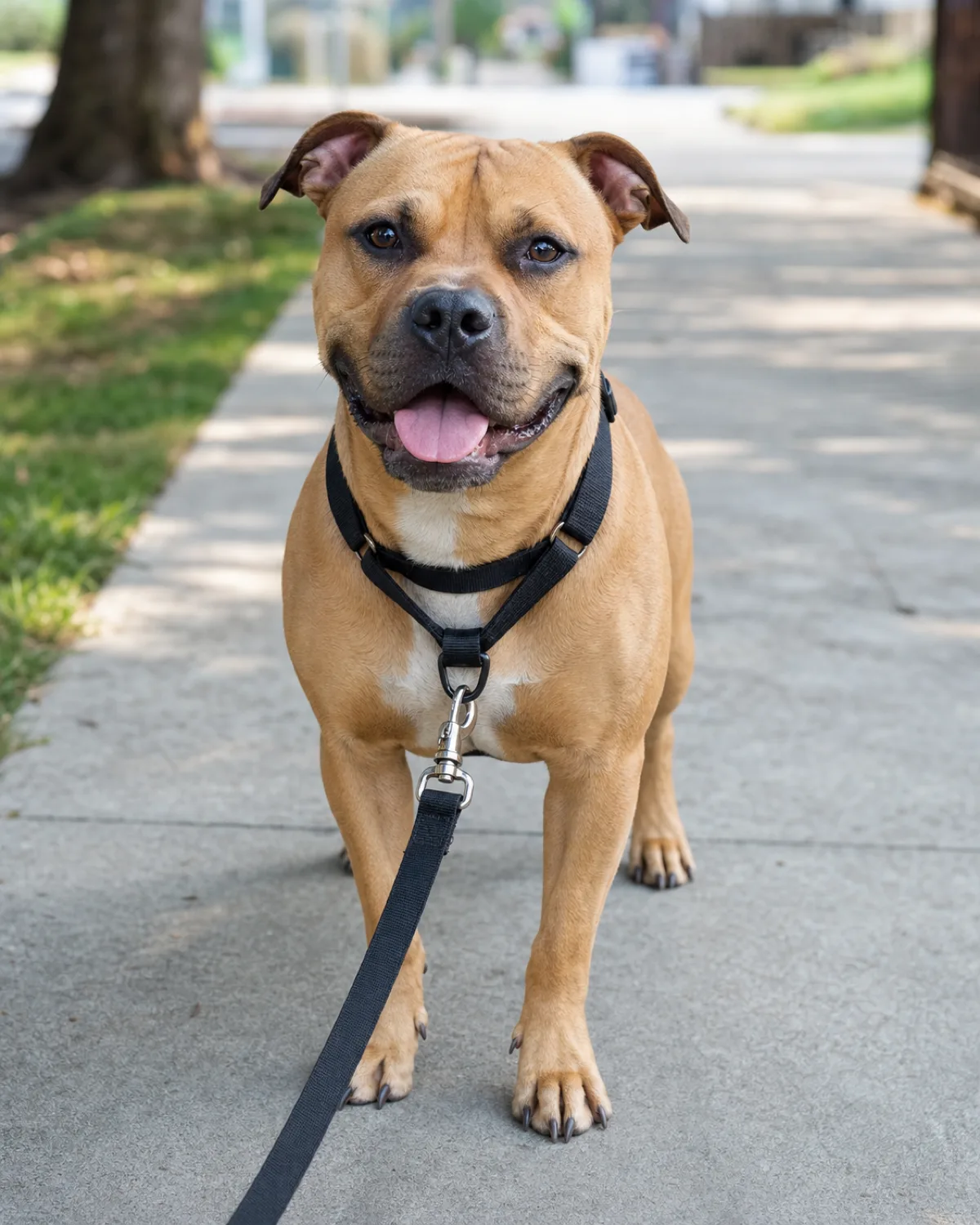
Front-clip harnesses reduce pulling mechanics by redirecting the dog's chest. They are a useful management tool while you teach loose-leash walking, but they are not a substitute for training the dog to walk on a loose leash.
How Long Should the Walk Actually Be
There is no universal number. Walk duration depends on the dog's age, body type, fitness, and the weather.
Puppies follow the five-minute rule: five minutes of walking per month of age, twice a day. A four-month-old puppy gets two 20-minute walks. Their joints are still developing, and overwalking causes more damage than underwalking.
Senior dogs need shorter, slower walks. Watch for lagging behind, sitting down mid-walk, or heavy panting that takes more than 10 minutes to resolve after stopping.
High-energy dogs that were bred to run, herd, or hunt all day need 45 to 90 minutes total, split across two sessions. Low-energy dogs do well with 20 to 30 minutes at their own pace.
The real test is what happens at home. A well-walked dog comes inside, drinks water, and settles within 15 minutes. A dog that paces the house after a walk was underwalked. A dog that pants for 30-plus minutes or limps was overwalked.
Save this for later
10 Dog Walking Tips That Make Every Walk Count
1Add sniff zonesTwo or three 60-second stops where the dog leads and investigates.
2Match the paceWatch the gait — constant trotting means you are too fast.
3Change the routeWalk in reverse or take the next block over for new scents.
4Pavement test in heatBack of your hand, five seconds. Too hot for you means too hot for paws.
5Jacket up in coldShort-coated dogs need chest and belly coverage below 4 degrees C.
6Cross the street for triggersRedirect before the dog locks on, not after.
8Use the 5-minute puppy ruleFive minutes per month of age, twice a day. Joints first.
9Watch the settle testDog settles in 15 minutes at home = walk was right.
10Alternate hard and easy daysLong new route one day, short familiar loop the next.
pawliqa.com
A Walking Routine That Builds Over Time
Start where the dog is, not where you want the dog to be.
Week one is about finding the baseline. Walk until the dog starts to lose interest or shows mild fatigue. Note the time and distance. That is your starting point.
Add five minutes per week. Alternate between intense days — longer route, new neighborhood, more sniff zones — and easy days with a familiar loop, shorter distance, and calm pace.
Rest days are fine. Dogs do not need to walk every single day, especially if they have other enrichment at home like puzzle feeders, training sessions, or play. A missed walk is not a failure. A forced walk when the dog is sore, sick, or overheated is.
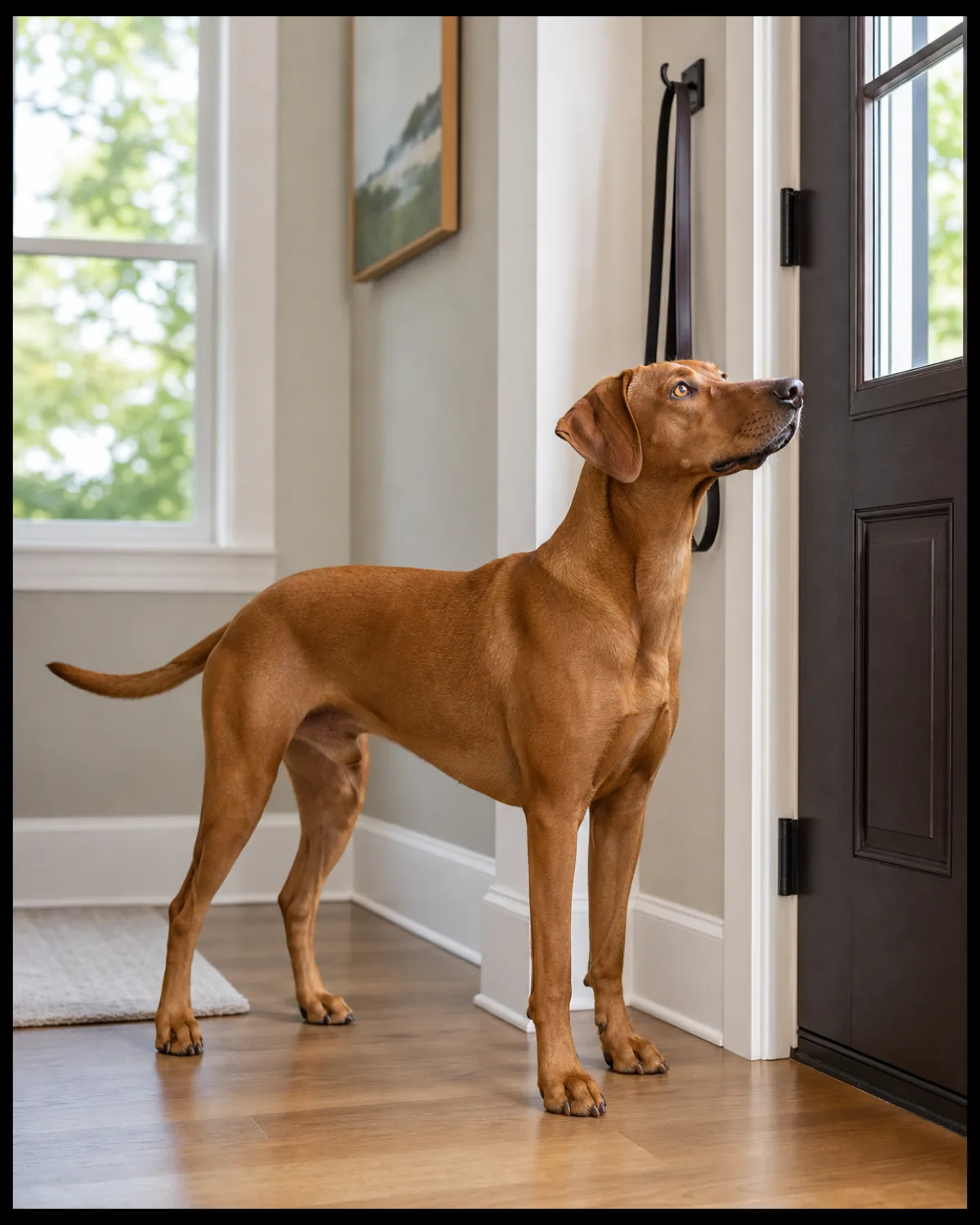
The dog will tell you when the routine is working. It will move toward the door when it sees you reaching for the leash, walk with a relaxed gait and a loose tail, and settle quickly after returning home.
About the author
Jess Calloway
Jess Calloway edits Pawliqa, where she shares dog care, grooming, training, and new-owner tips — plus DIY and pet-friendly home ideas — for anyone who wants a happy, well-cared-for dog. As a dog mom to three very different dogs, she writes the honest, tested version of what actually works. Every guide is image-led and reviewed for clarity, usefulness, image accuracy, and Pinterest-to-page alignment before it goes live. Visit the About page.
Dog beds collect more than fur. This guide covers machine-washable beds, hand washing, memory foam inserts, proper drying, and the quick spot-clean tricks that keep a bed fresh between full washes.