The ingredient list on the back of most commercial dog treats reads like a chemistry experiment. Corn syrup, artificial coloring, something vaguely called "meat by-products."
I started making treats at home after reading one of those labels and realizing I had no idea what half the words meant. A few pantry staples, ten minutes, and you have a batch that costs less and contains exactly what you put in it.
Jump to a section
How to make homemade dog treats
From ingredient safety to six easy recipes to storage, everything you need to start making treats at home.
Why Homemade Treats Beat the Store-Bought Bag
Turn over the bag of treats you bought last week. Past the first two ingredients you will find corn syrup, artificial coloring agents, and something labeled "meat by-products" — a term vague enough to cover almost anything.
Homemade treats put you back in control. You pick every ingredient. You know exactly what your dog is eating. For dogs with food allergies or sensitivities, this is not a nice-to-have — it is the difference between guessing and knowing.
Most recipes cost 40 to 60 percent less than their commercial equivalents. A jar of peanut butter, a bag of oats, and a few bananas produce three to four batches. Each batch freezes for up to three months.
You do not need baking experience. If you can stir a bowl and set a timer, you can make dog treats.
The Ingredient Safety Checklist (Print This Before You Start)
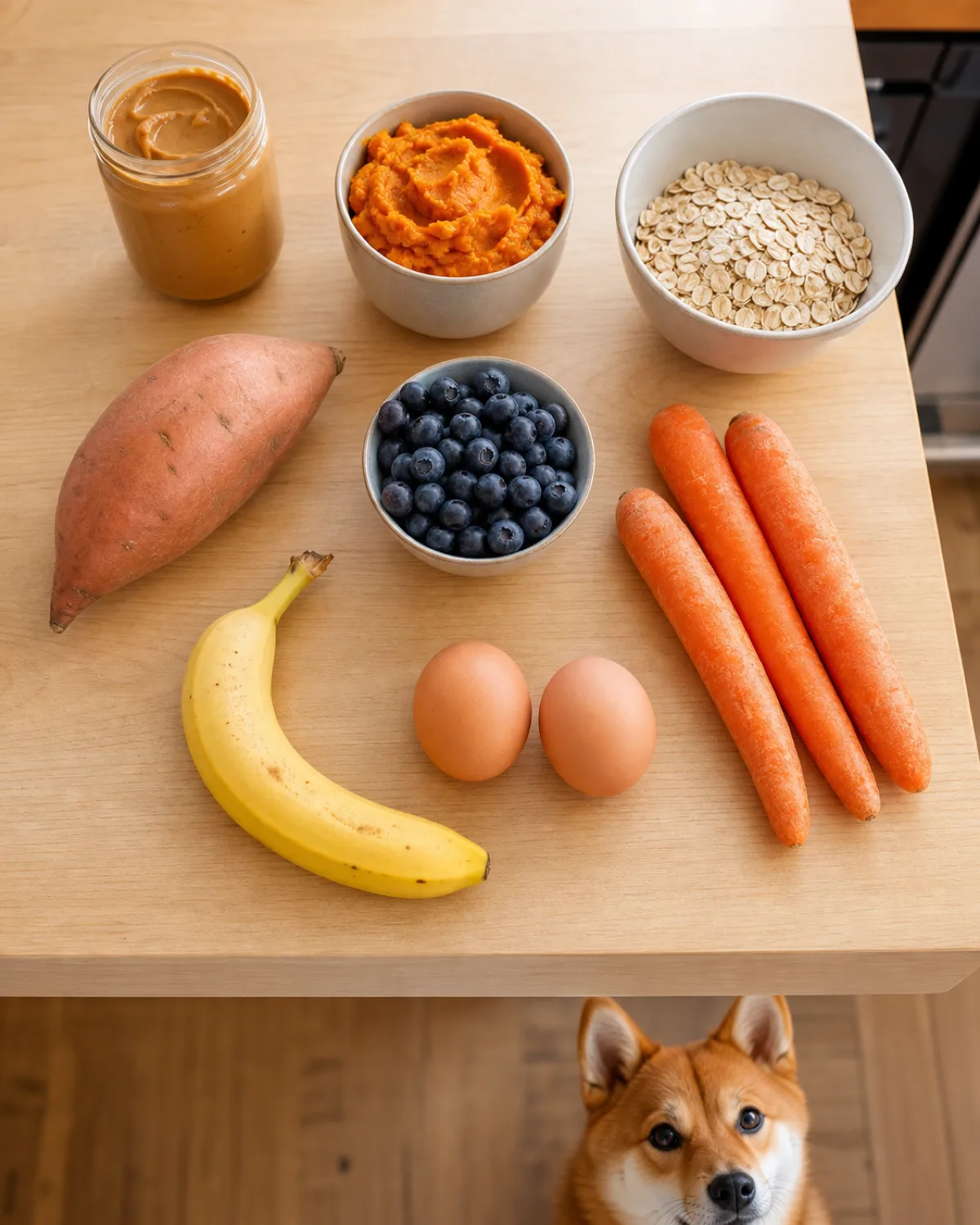
Before anything goes into the mixing bowl, check it against these two lists.
Safe staples: peanut butter (check the label — it must not contain xylitol), plain canned pumpkin (pure pumpkin, not pie filling), rolled oats, sweet potatoes, blueberries, bananas, carrots, apples (cored and deseeded every time), coconut oil, eggs, whole wheat flour.
Toxic — never use: chocolate or cocoa powder in any form, grapes or raisins, onions or garlic in any form, xylitol (hidden in some peanut butters, sugar-free gum, and sugar-free baked goods), macadamia nuts, avocado, alcohol, raw yeast dough.
The ingredient most people miss is xylitol. It hides in products that otherwise look safe. If the peanut butter label lists xylitol, birch sugar, or any sweetener you cannot identify, put it back. For a broader rundown of foods dogs should never eat, see the puppy feeding safety basics.
The one rule that prevents every mistake
Check every ingredient before it goes into the bowl. Not once per recipe — every single time you make a batch. Reformulations happen. The peanut butter brand you trusted last month may have changed its formula.
Three-Ingredient Peanut Butter Bites
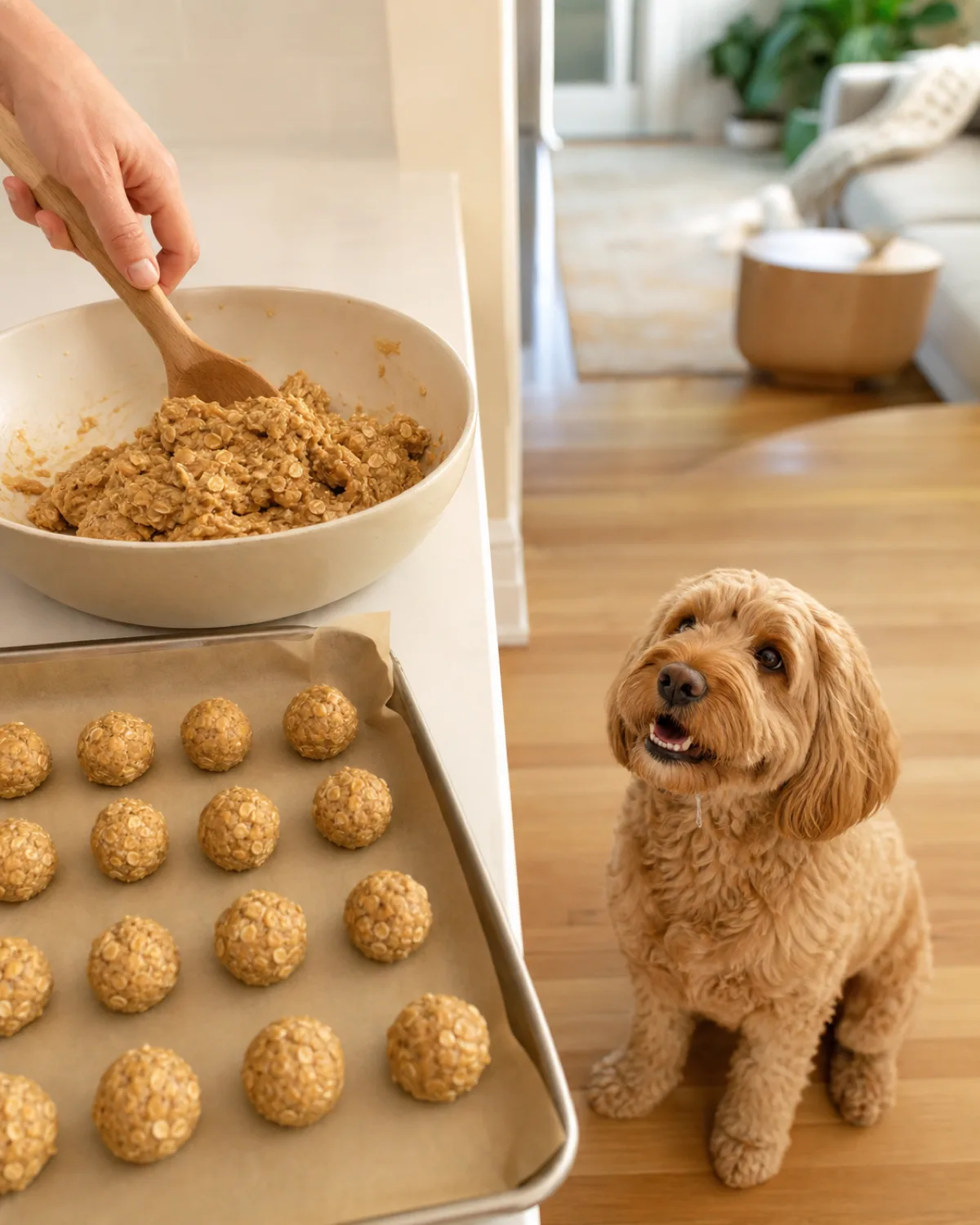
This is the recipe to start with because you cannot get it wrong.
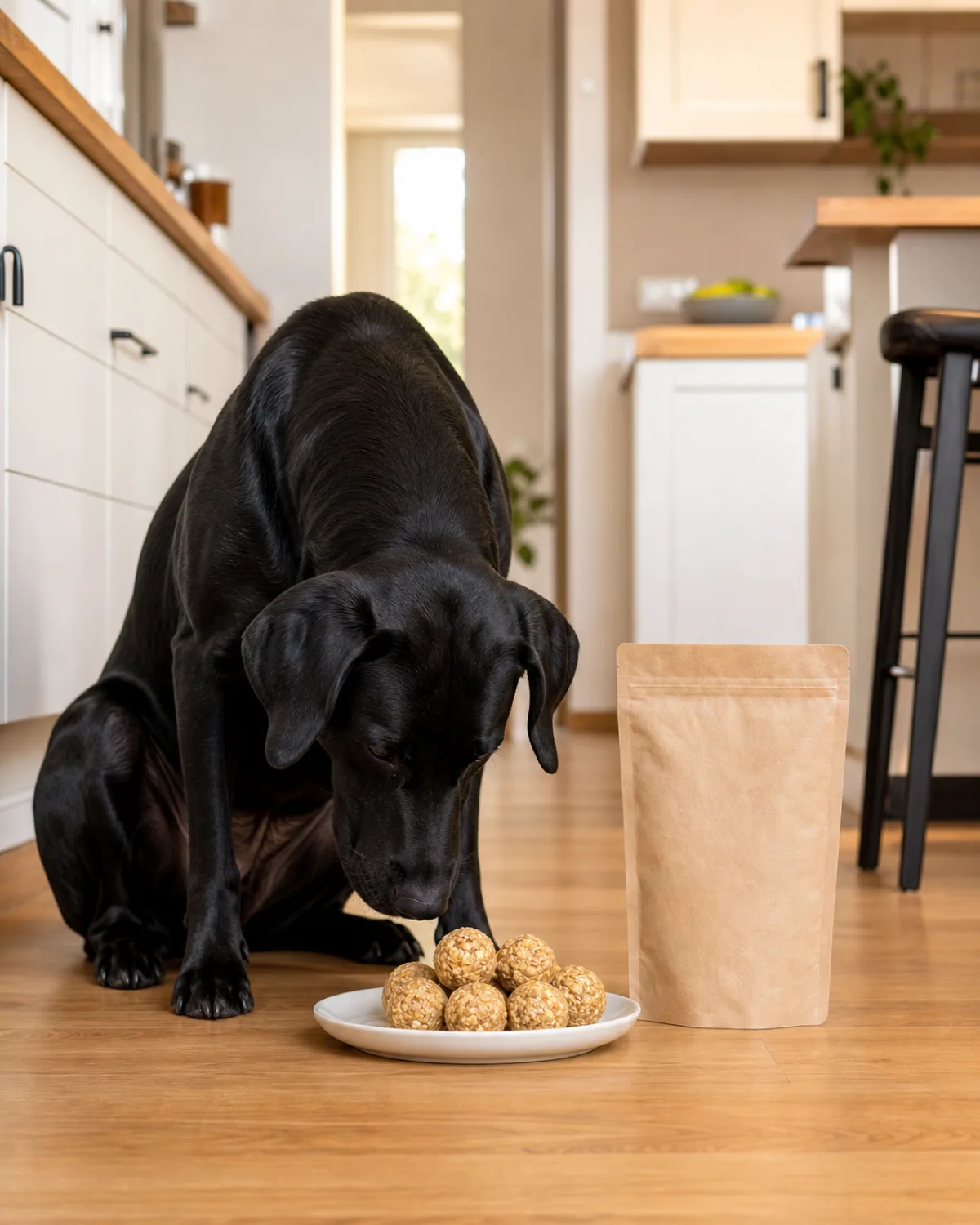
One cup of peanut butter. One cup of rolled oats. One mashed banana. Stir until it forms a sticky dough. Roll into marble-sized balls. Place on a parchment-lined tray and freeze for two hours.
No oven required. No special equipment. Under ten minutes from start to freezer. Each ball is roughly 15 calories — a commercial treat of similar size runs 40 to 80 calories.
Store in the refrigerator for up to one week or the freezer for up to three months. They soften slightly at room temperature, which most dogs prefer. If your dog tends to inhale treats without chewing, freeze them harder — the cold slows eating speed.
Pumpkin and Oat Cookies
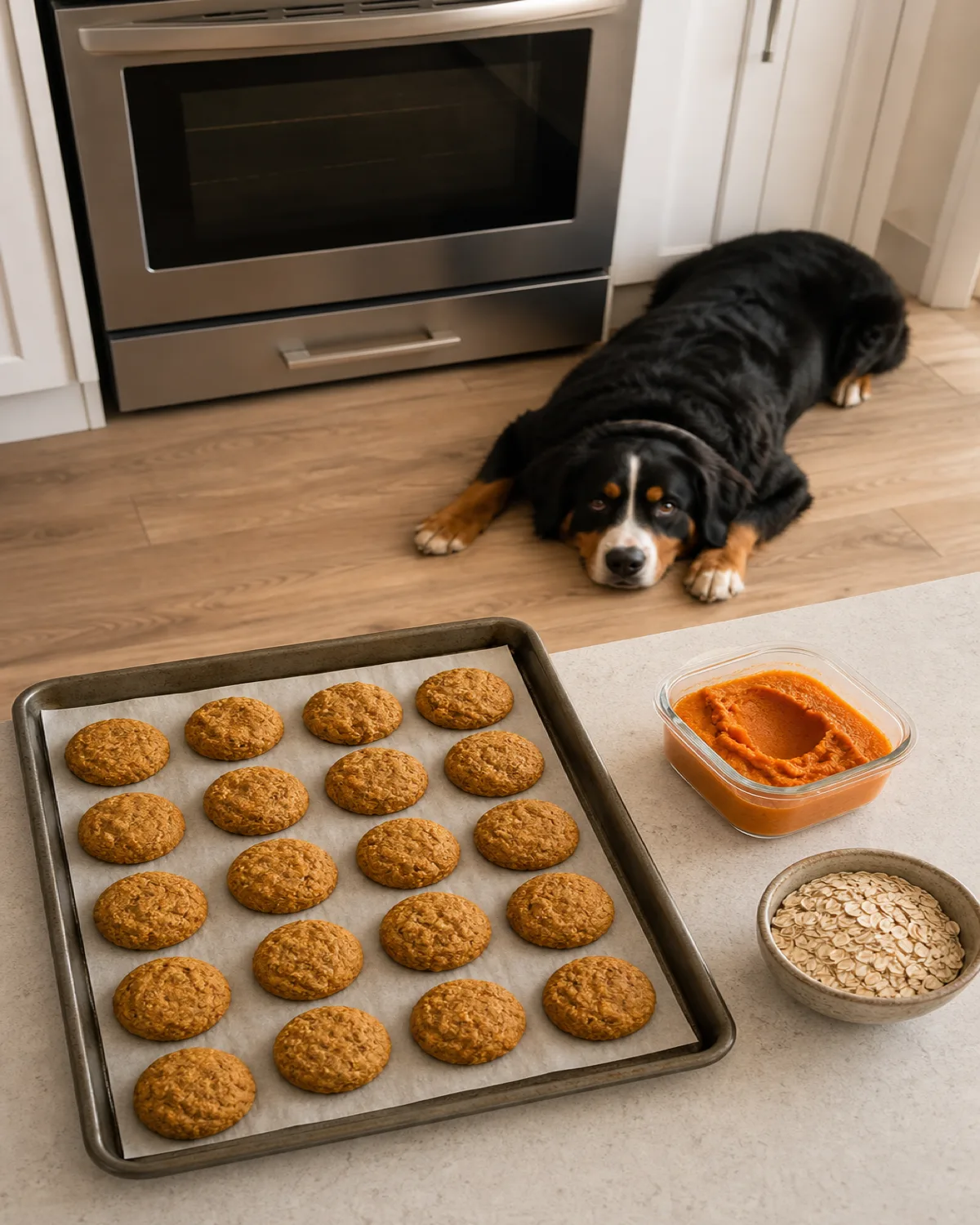
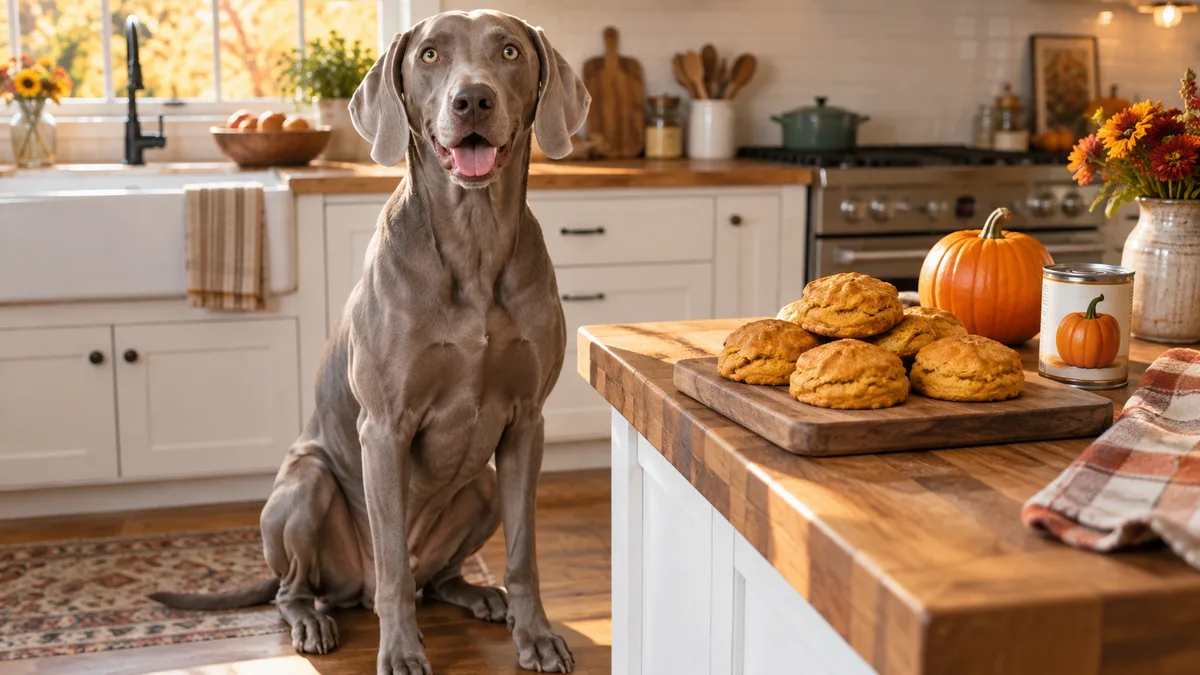
Pumpkin is a nutritional powerhouse for dogs — high in fiber, low in calories, and gentle on sensitive stomachs. Reach for this recipe when your dog has loose stools or sluggish digestion.
One cup of plain canned pumpkin. Two cups of rolled oats. One egg. A quarter teaspoon of cinnamon (safe for dogs in small amounts).
Mix until combined. Spoon tablespoon-sized mounds onto a parchment-lined baking sheet. Bake at 350 degrees Fahrenheit for 20 minutes until the edges turn golden and the centers feel firm.
The finished cookies are crunchy enough to give a light tooth-cleaning effect as the dog chews through them. They last five days in a sealed jar at room temperature, two weeks in the refrigerator, and three months in the freezer.
Sweet Potato Chews (The Dehydrator-Free Version)
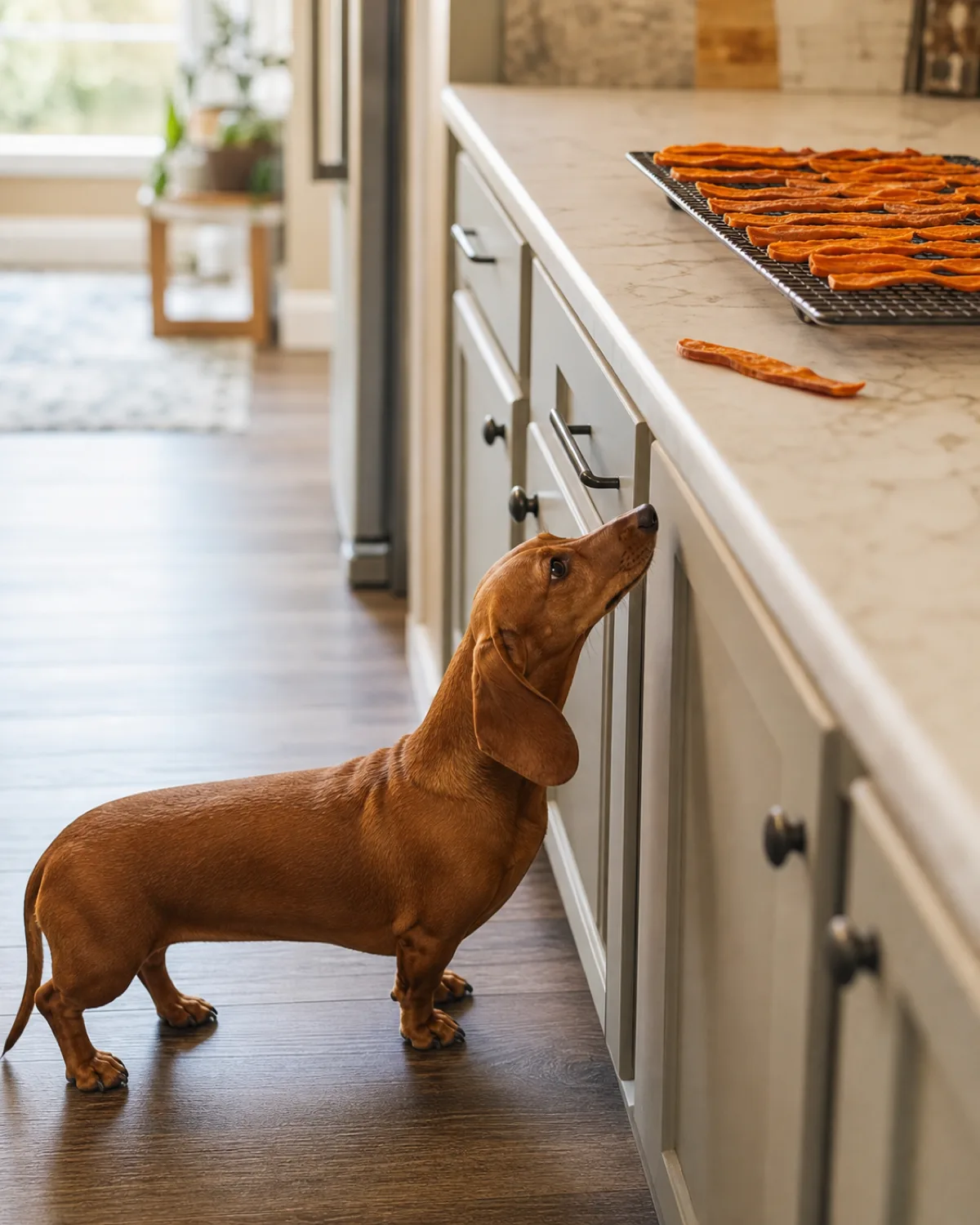
If your dog loves long chewing sessions, this recipe replaces the commercial jerky strips that come loaded with preservatives and sodium.
Wash one medium sweet potato and slice it lengthwise into quarter-inch strips. Lay the slices on a wire rack set over a baking sheet so air circulates underneath. Bake at 250 degrees Fahrenheit for three hours, flipping once at the halfway mark.
The result is a chewy, pliable strip with enough resistance to keep a dog occupied for several minutes. One medium sweet potato yields roughly 20 strips. These work well as high-value training props — the kind of long-lasting reward you can use during leave-it practice when you need something your dog genuinely wants to hold onto.
Store in a sealed container at room temperature for one week or refrigerated for up to three weeks.
Match the recipe to the restriction
Your dog has a dietary restriction — which recipe path works?
Not every recipe suits every dog. Pick the path that matches your situation and skip the recipes that do not fit.
Path A — Grain-freeNo grains or flour neededYour dog has a grain sensitivity or you prefer grain-free options. Stick with peanut butter bites (oat-free version: sub coconut flour), sweet potato chews, and frozen blueberry yogurt drops. Skip the pumpkin oat cookies and carrot apple crunchies, which both use flour or oats.
Path B — Low-fatReduced fat for weight or pancreas healthYour dog is overweight or at risk for pancreatitis. Use pumpkin cookies, frozen blueberry drops, and carrot apple crunchies — all naturally low in fat. Skip peanut butter bites (high fat content) and limit coconut oil recipes. Frozen blueberries and raw carrot coins also work as near-zero-calorie training treats.
Frozen Blueberry Yogurt Drops
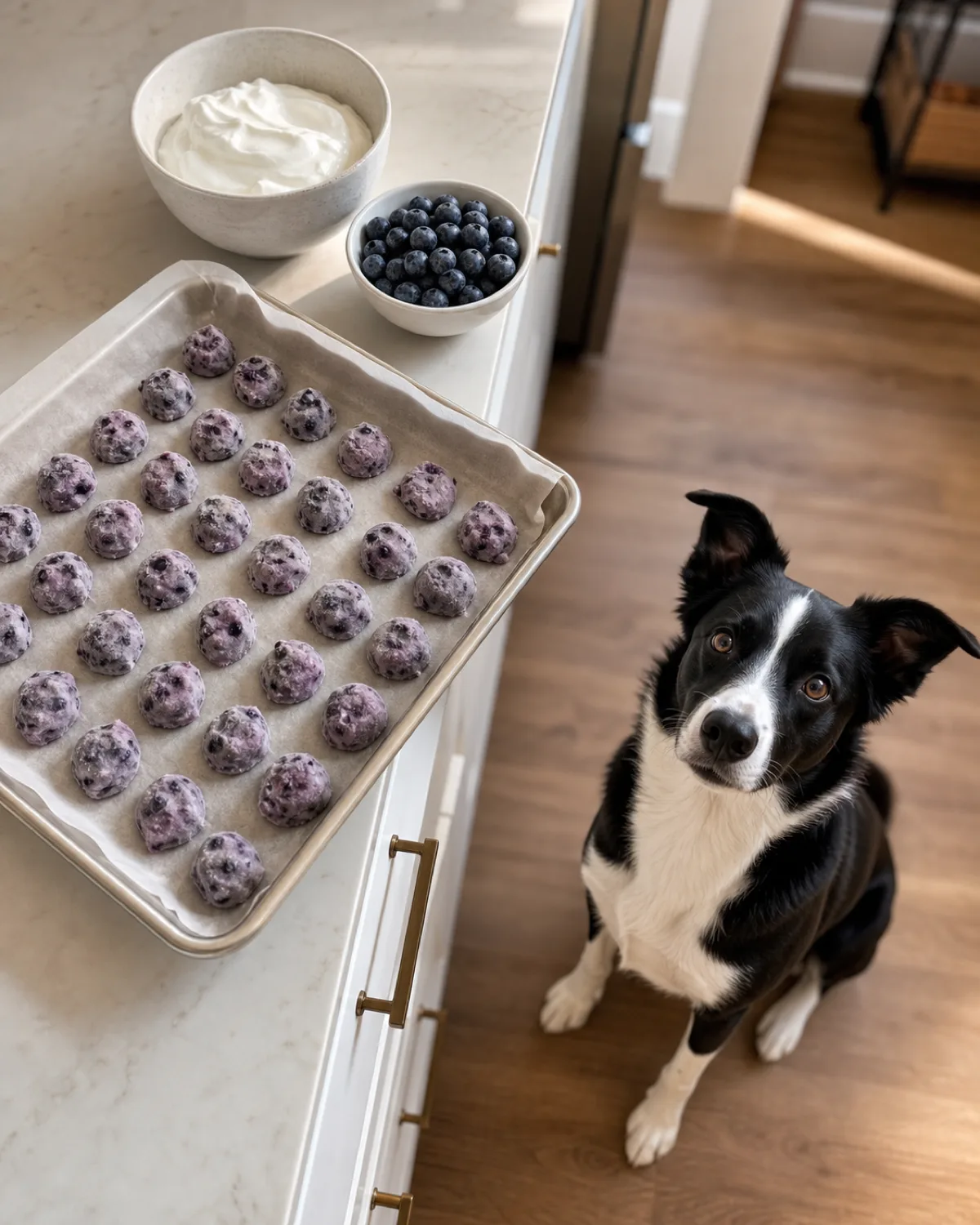
Summer heat calls for frozen treats, and these are the simplest version that still delivers real nutritional value.
Half a cup of plain unsweetened Greek yogurt. A quarter cup of fresh or frozen blueberries. Mash the blueberries roughly, stir into the yogurt, and pipe or spoon small dots onto parchment paper. Freeze for two hours.
Each drop is under five calories. The small size makes them ideal as training treats — you can go through 30 or 40 in a session without denting the daily calorie budget.
Use only plain, unsweetened yogurt. Flavored yogurt contains added sugar. Sugar-free yogurt may contain xylitol. If the label lists anything beyond milk and live cultures, skip it. You can swap blueberries for strawberries, mashed banana, or a tablespoon of pumpkin puree.
They keep in the freezer for up to two months.
Carrot and Apple Crunchies
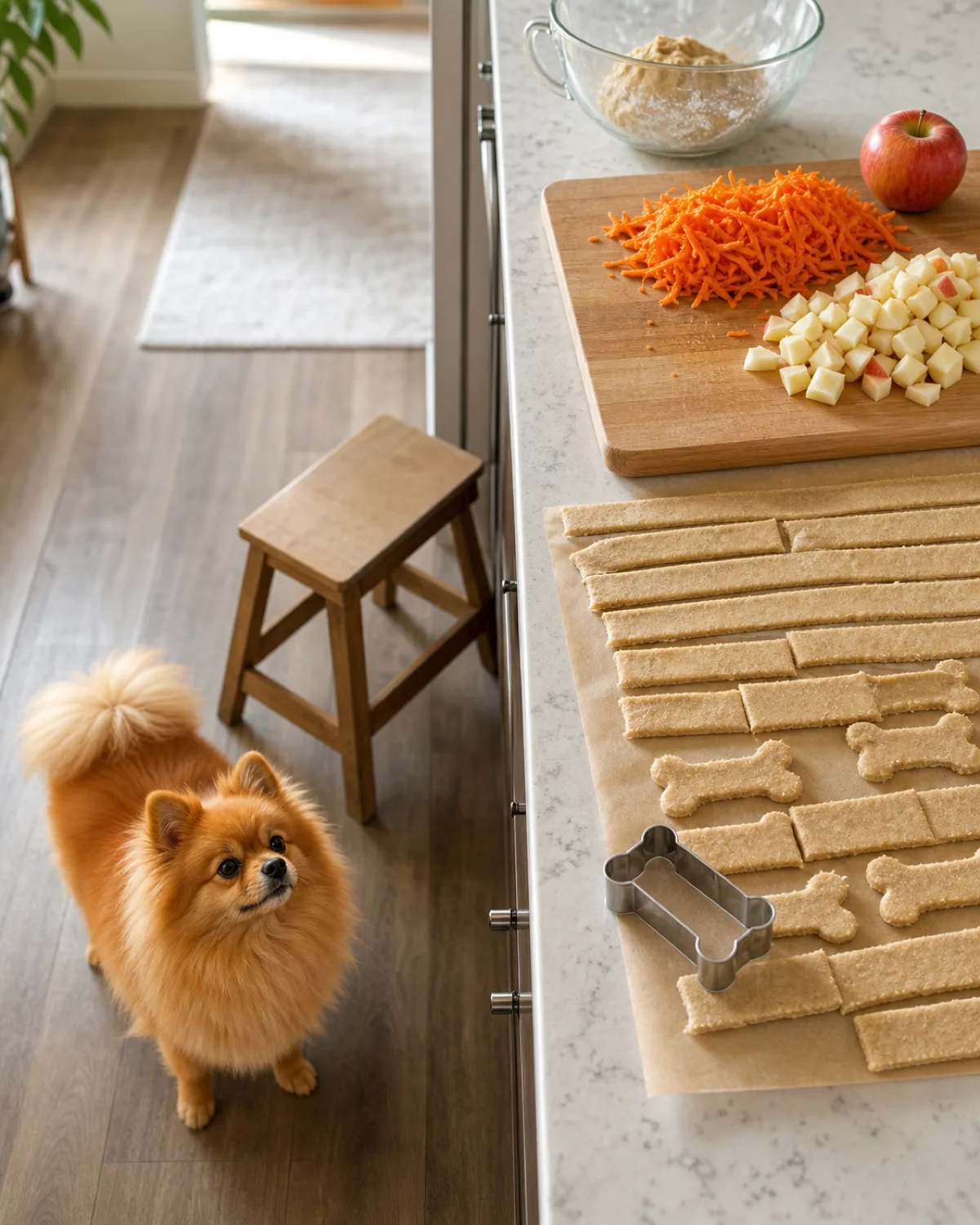
Carrots and apples provide natural sweetness without any added sugar. The hard crunch also gives a mild tooth-cleaning benefit as the dog bites through.
One cup of grated carrots. One cup of diced apple — cored and deseeded, every single time. Apple seeds contain trace amounts of cyanide compounds, and while a few seeds are unlikely to cause acute harm, removing them is a zero-effort precaution you should never skip.
One and a half cups of whole wheat flour. One egg. Mix until a stiff dough forms. Roll out to about a quarter inch thick on a floured surface. Cut into strips or use a cookie cutter. Bake at 350 degrees Fahrenheit for 25 minutes until golden and firm.
These store well in a sealed jar at room temperature for up to a week, making them a reliable batch-and-grab option for daily use.
The boundaries that keep every batch safe
Homemade treat ground rules
These apply to every recipe in this guide and any future ones you try. Break one and you risk your dog's health.
Always
- Check peanut butter labels for xylitol before every batch
- Core and deseed apples completely every time
- Keep treats under 10 percent of daily caloric intake
- Label every container with the date you made it
- Try a new ingredient in a small amount first and watch for 24 hours
- Store soft treats in the refrigerator or freezer
Never
- Never use chocolate or cocoa powder in any form
- Never use grapes, raisins, or currants
- Never use onions or garlic in any form
- Never use any product containing xylitol
- Never feed macadamia nuts to a dog
- Never let a dog eat raw yeast dough
How to Size Treats for Training vs. Snacking
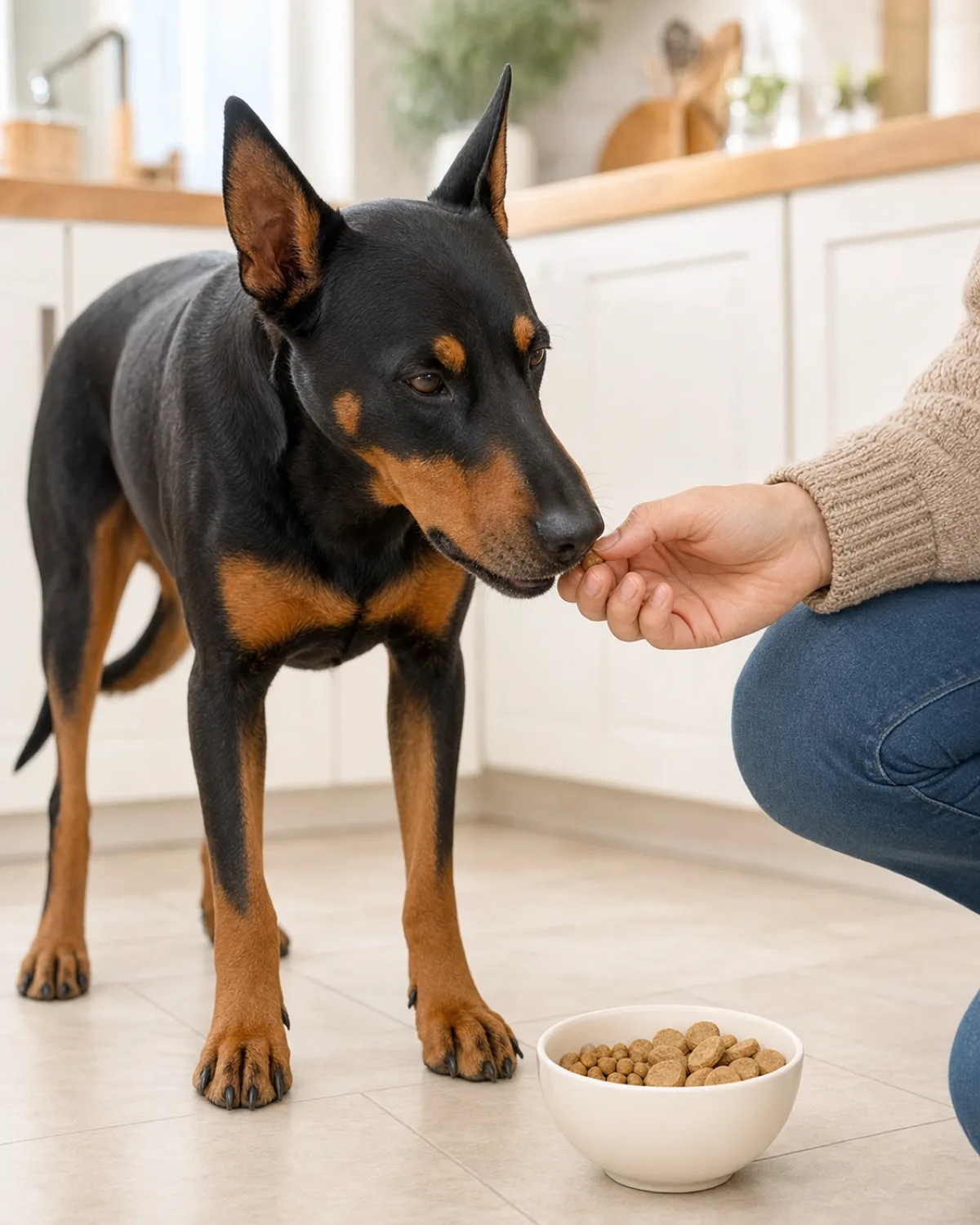
A treat used during training is not the same object as a treat given as an afternoon snack. The difference is size, and getting it wrong wastes calories or undermines the training.
Training treats should be pea-sized. The goal is a burst of flavor, not a meal. A single training session might burn through 30 to 50 treats, so each one needs to be small enough that the total calorie hit stays low. Frozen blueberry drops and small fragments of peanut butter bites work well here.
Snacking treats can be coin-sized — something the dog chews for a few seconds and enjoys. Two or three per day is a reasonable ceiling for most dogs.
The veterinary consensus is that treats of all kinds should not exceed 10 percent of daily caloric intake. If your dog eats 800 calories a day, that is 80 calories in treats — roughly five peanut butter bites or a dozen blueberry drops.
For dogs working on weight management, frozen blueberries and small raw carrot coins make effective training treats at nearly zero calories.
Storing Treats So They Last (and Stay Safe)
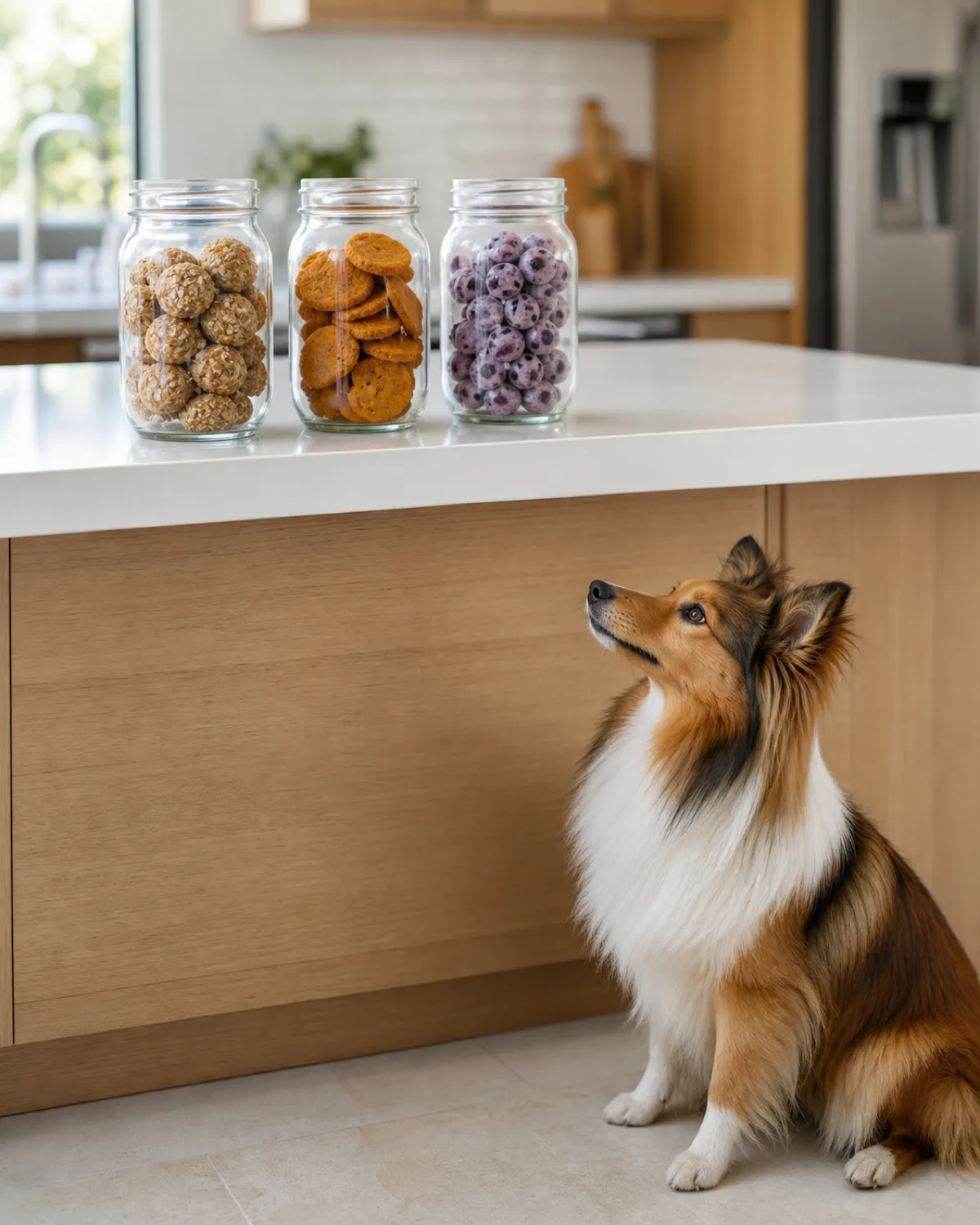
No preservatives means no forgiveness. Homemade treats spoil faster than commercial ones, and the texture gives fewer visual cues — a peanut butter ball that has gone bad looks identical to a fresh one until you smell it.
Dry, crunchy treats like pumpkin cookies and carrot crunchies last three to seven days in a sealed glass jar at room temperature. Soft, moist treats like peanut butter bites and yogurt drops need an airtight container in the refrigerator and last one to two weeks. All types keep for two to three months in the freezer in sealed bags or containers.
Label everything with the date you made it. Dough and finished treats look the same after a week in the freezer. If anything changes color, develops an off smell, or grows visible mold, discard the entire batch — not just the affected pieces.
The Sunday batch workflow
Make one large batch on the weekend. Divide into weekly portions. Freeze everything except this week's supply. Each Sunday, pull next week's bag from the freezer to the fridge. Repeat. Ten minutes of work once covers the entire week.
Save this for later
Your Homemade Dog Treat Quick Guide
- Stock safe staples: peanut butter, pumpkin, oats, sweet potato, blueberries, banana, carrots, apples, eggs
- Confirm peanut butter label says no xylitol, birch sugar, or unknown sweeteners
- Core and deseed all apples completely
- Starter recipe: PB bites (3 ingredients, no oven, 10 min)
- Baked recipe: pumpkin oat cookies at 350°F for 20 min
- Low-temp recipe: sweet potato chews at 250°F for 3 hours
- Frozen recipe: blueberry yogurt drops, freeze 2 hours
- Training treats = pea-sized; snacking treats = coin-sized
- All treats stay under 10 percent of daily calories
- Room temp (dry): 3-7 days; fridge (soft): 1-2 weeks; freezer (all): 2-3 months
- Label every container with the date
- New ingredient? Small amount first, watch for 24 hours
What Your Dog Actually Cares About (Hint: Not Presentation)
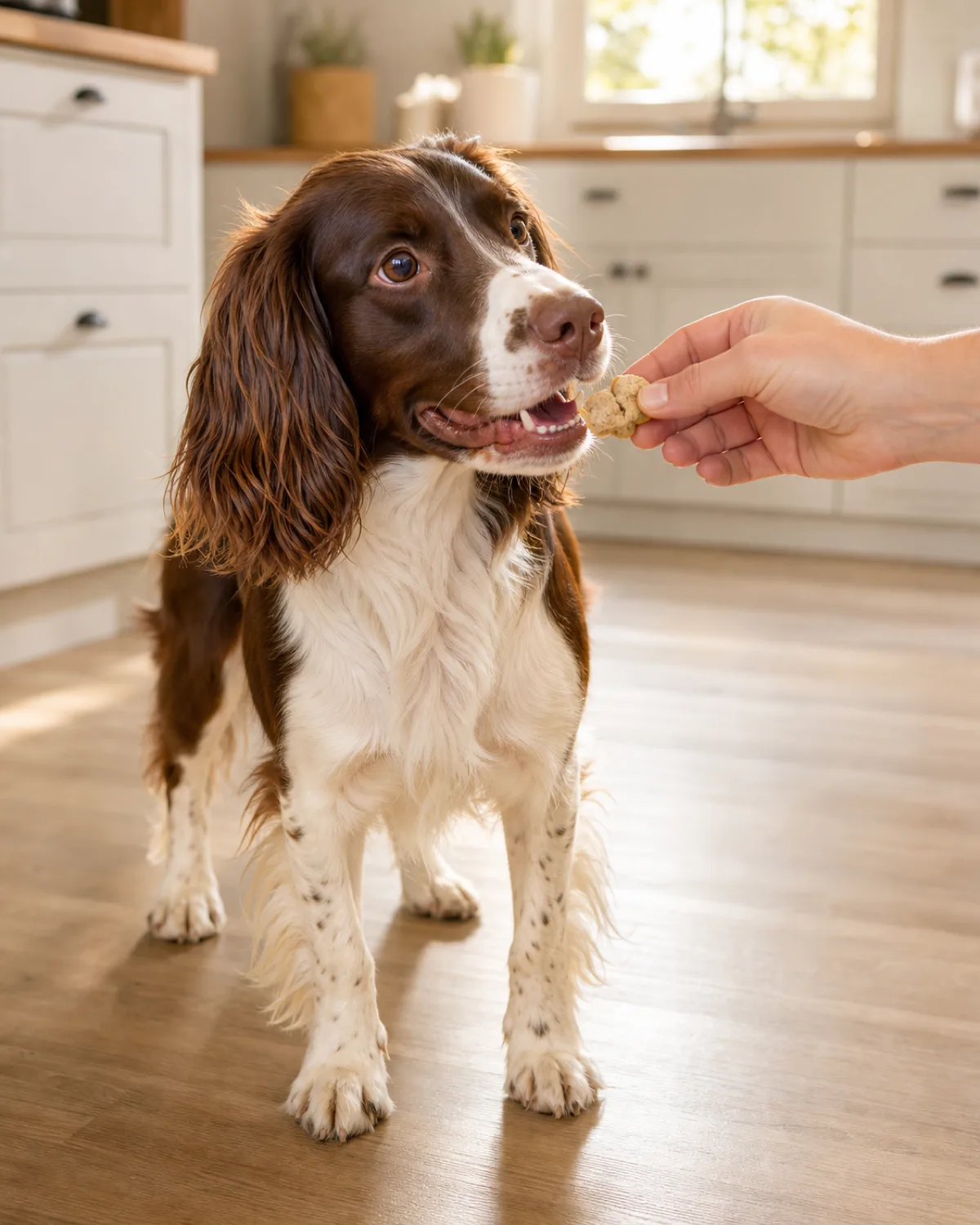
You spent ten minutes making a batch of peanut butter balls. They are lumpy, uneven, and a few of them cracked when you rolled them.
Your dog does not care.
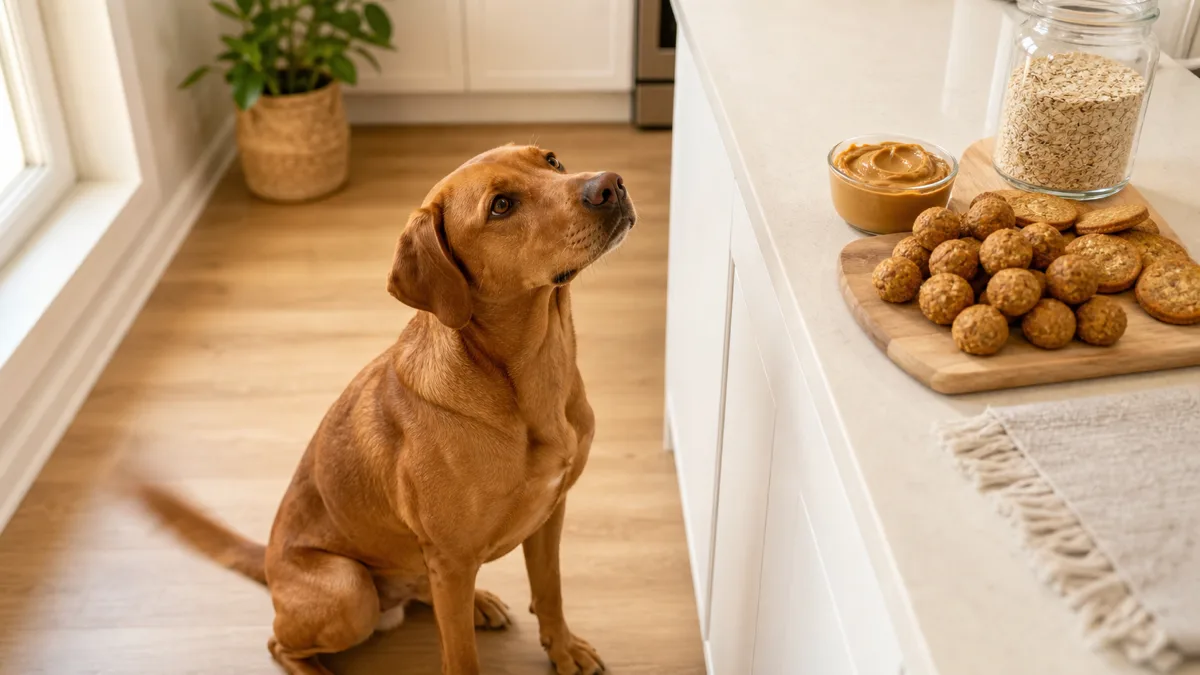
Your dog heard the peanut butter jar lid twist open. Your dog heard the oats hit the mixing bowl. Your dog has been sitting four feet from the counter this entire time, tail sweeping the floor, waiting.
When you hand over the first misshapen ball, your dog is not evaluating technique. That treat tastes like peanut butter and banana and the faint warmth of your fingertips. It arrived directly from your hand. As far as your dog is concerned, it is the greatest thing that has ever existed.
Perfect-looking treats belong on social media. Effective treats are the ones you made with safe ingredients in your own kitchen in under ten minutes. Your dog will not know the difference. Your dog will know that you made them.

About the author
Jess Calloway
Jess Calloway edits Pawliqa, where she shares dog care, grooming, training, and new-owner tips — plus DIY and pet-friendly home ideas — for anyone who wants a happy, well-cared-for dog. As a dog mom to three very different dogs, she writes the honest, tested version of what actually works. Every guide is image-led and reviewed for clarity, usefulness, image accuracy, and Pinterest-to-page alignment before it goes live. Visit the About page.