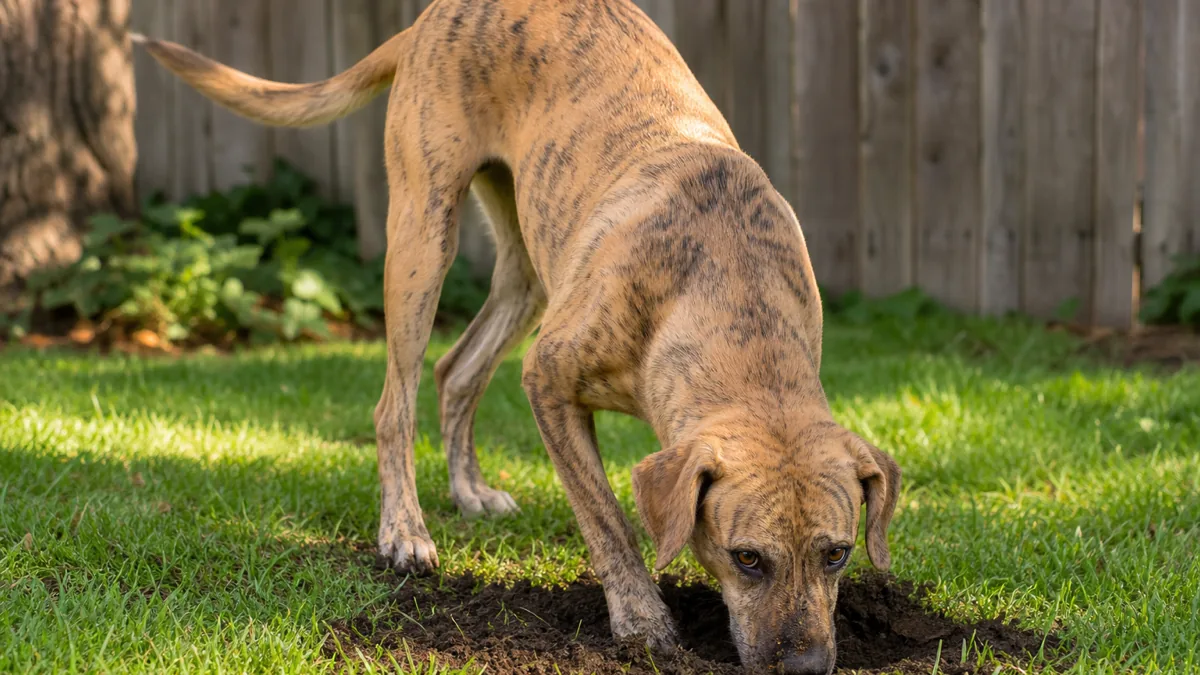
The first hole didn't bother me. The eleventh one did — right in the middle of the flowerbed I'd just replanted. My first instinct was to march outside and make a scene. My second, better instinct was to figure out why he was doing it.
Digging isn't one problem with one fix. A dog chasing a scent, a dog burning off unused energy, a dog trying to cool down on a hot afternoon, and a dog trying to get out from under a fence are all "digging," and they all need a different response.
Here's how to tell which one you're dealing with, why yelling at the hole rarely works, and what actually gets a dog to stop treating your yard like a construction site.
Jump to a section
How to stop a dog from digging in the yard
Why dogs really dig, and the redirect-not-punish plan that actually stops it.
1. Why Dogs Dig in the First Place
Digging is old behavior. Dogs dig to track a scent underground, to give chase to something small that just disappeared into the grass, or simply because turning up loose dirt is satisfying in the same way that scratching a specific itch is satisfying — it's not a malfunction, it's a working nose and a working set of front paws doing what they're built to do.
Separate from instinct, digging shows up for reasons that have nothing to do with prey drive: too much unused energy with nowhere to go, a hot day and a search for cooler dirt underneath the surface, or real distress about being left alone.
Knowing which bucket your dog's digging falls into changes everything about what you do next, which is exactly why the diagnosis comes before the fix.
2. What Kind of Digging You're Actually Dealing With
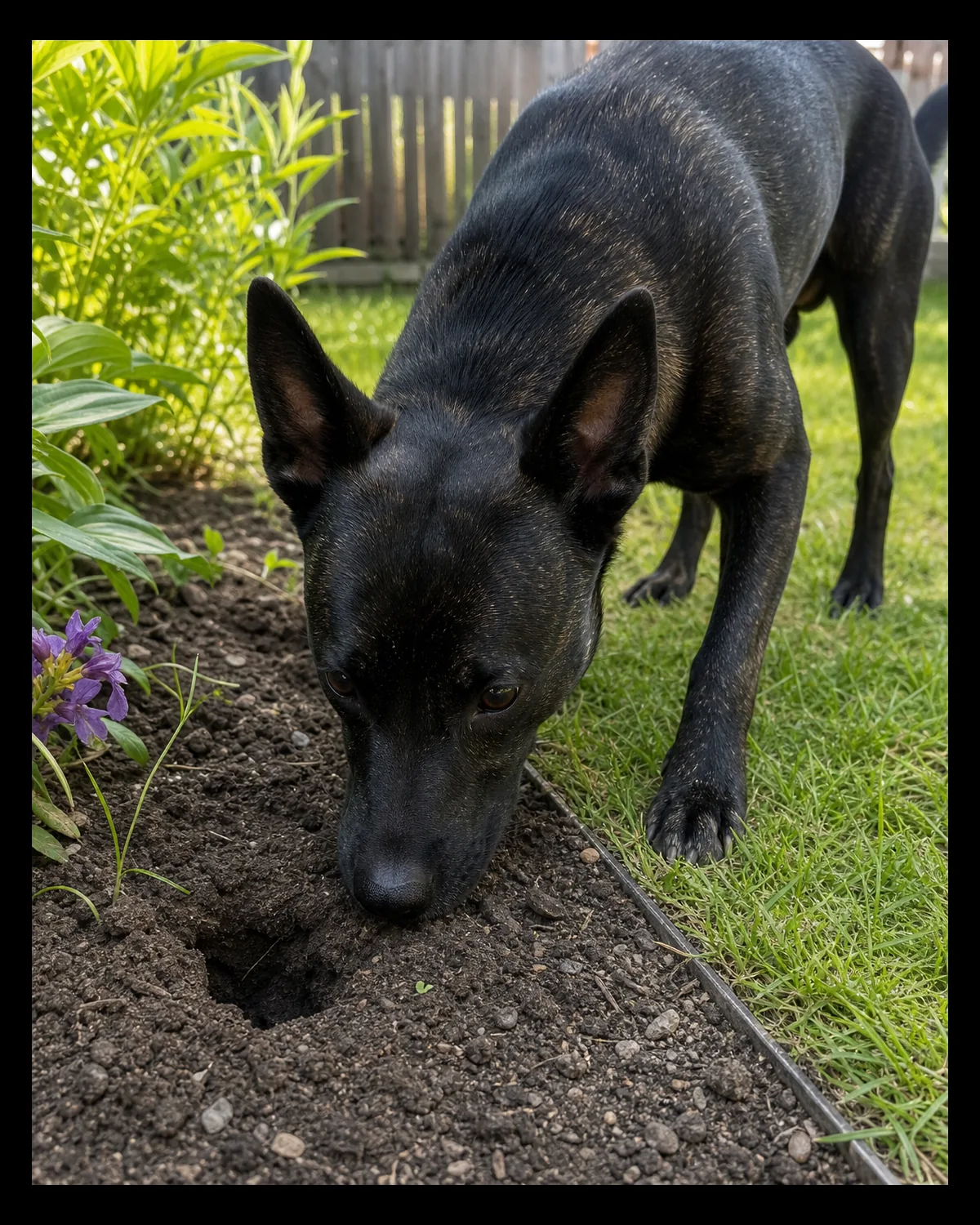
Two details tell you almost everything: where the holes show up, and when they happen. Scattered small holes with no obvious pattern, appearing whenever your dog is out in the yard, usually point to instinct or plain interest in a scent.
Digging concentrated near the fence line is a different signal entirely than digging in the middle of the lawn or under a shade tree. Fence-line holes deserve a security check first, before any training conversation even starts.
Digging that only happens while you're gone, especially alongside other signs like whining or chewed doorframes, points toward something a redirect exercise won't solve on its own.
Which kind of digging are you actually seeing
Match the pattern to the right fix
Location and timing are the two clues that matter most.
Scattered, no patternInstinctSmall holes anywhere, chasing a scent or a critter. Give it a legal outlet — a dig zone works well here.
Whenever alone, plus other damageBoredom / excess energyDigging pairs with other destructive habits. Add exercise and mental work before anything else.
Deep pits in shade, dog lies in themCoolingUsually spikes hard in summer. A shade structure or cooling mat solves most of it.
Only when you're gone, at the fenceAnxiety / escapeOften paired with howling or pacing. Record when it happens and involve a professional this week.
Seeing fence-line holes no matter which tier you're in? Check the fence itself first — that's a safety issue before it's a training one.
3. The Biggest Mistake: Punishing the Hole After You Find It
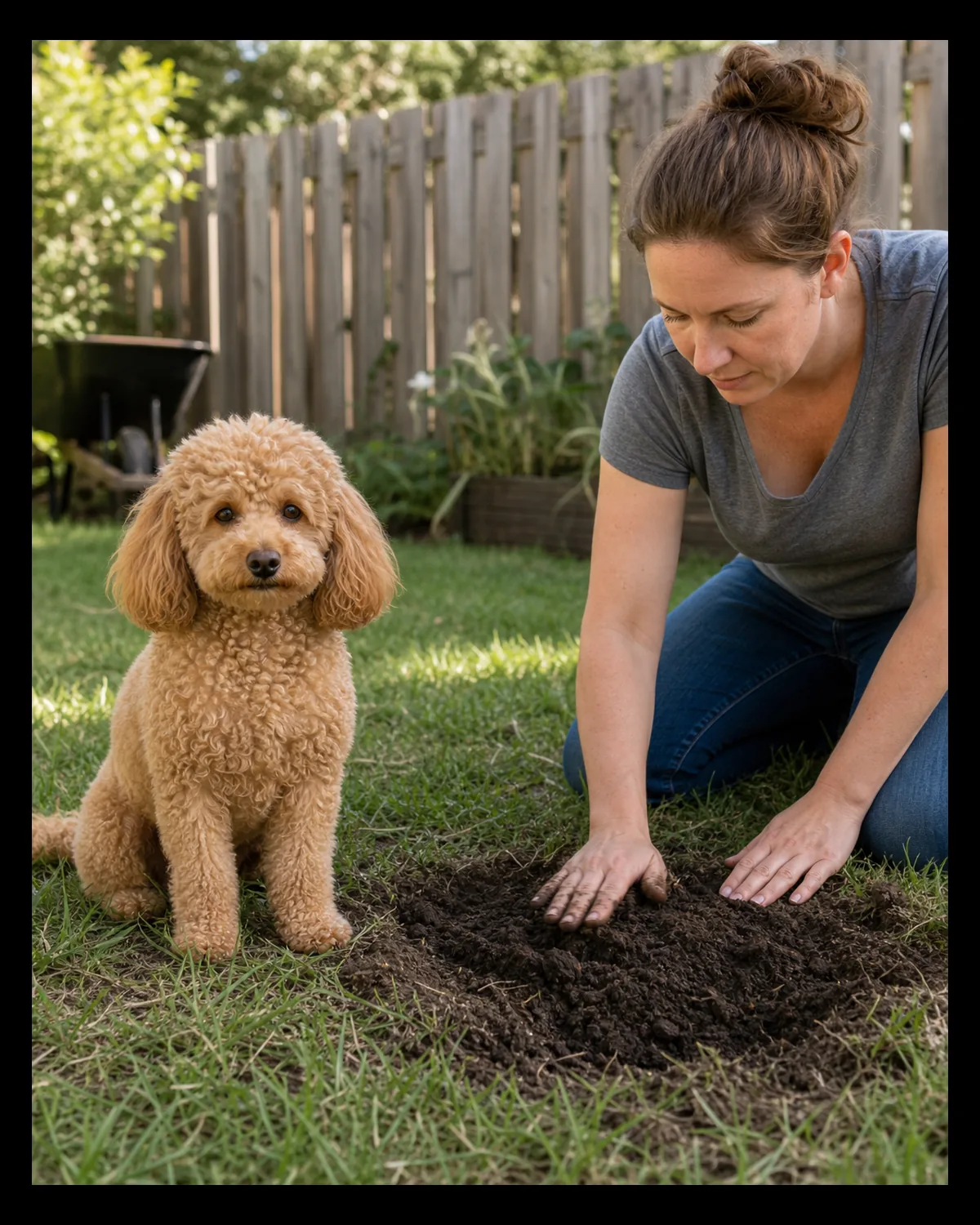
Coming home to a ruined flowerbed and marching your dog over to the hole to scold them feels like the obvious response. It also doesn't work, because dogs don't connect a consequence to something they did twenty minutes — or twenty hours — earlier.
What that scolding actually teaches is that you get upset sometimes for reasons your dog can't identify, which adds a layer of anxiety on top of whatever was driving the digging in the first place. Anxious dogs, as a rule, dig more, not less.
The fix has to happen either in the moment the digging starts, or before it ever does, through the environment and the routine — not after the fact, over a hole that's already there.
4. Rule Out Boredom First: More Exercise and Mental Work Before Anything Else
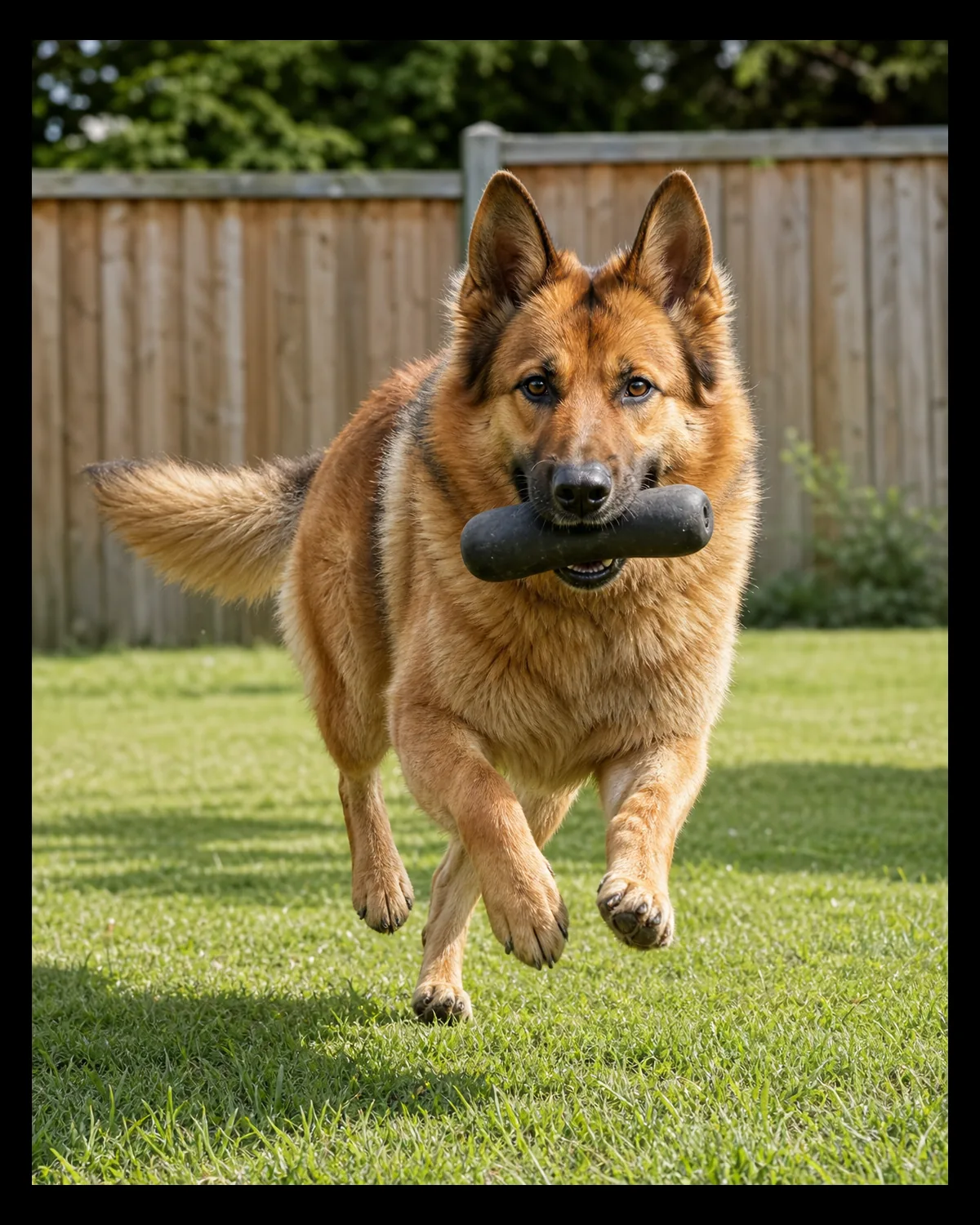
A dog with pent-up energy and nothing to do finds a job for himself, and digging is a very available job. Before any other intervention, the groundwork covered in how much exercise your dog actually needs is worth revisiting — a genuinely tired dog has a lot less interest in excavating the backyard.
Structured indoor downtime, the kind covered in crate training a puppy, can also take the edge off a dog who never fully settles between bursts of energy.
Physical exercise matters, but mental work matters just as much. Puzzle feeders, scent games, and short training sessions tire a dog out in a way that a lap around the block sometimes doesn't.
Plenty of "unexplained" digging clears up almost entirely once the underlying boredom is addressed, before a single dedicated digging intervention is even introduced.
5. Build a Legal Dig Zone Your Dog Will Actually Use
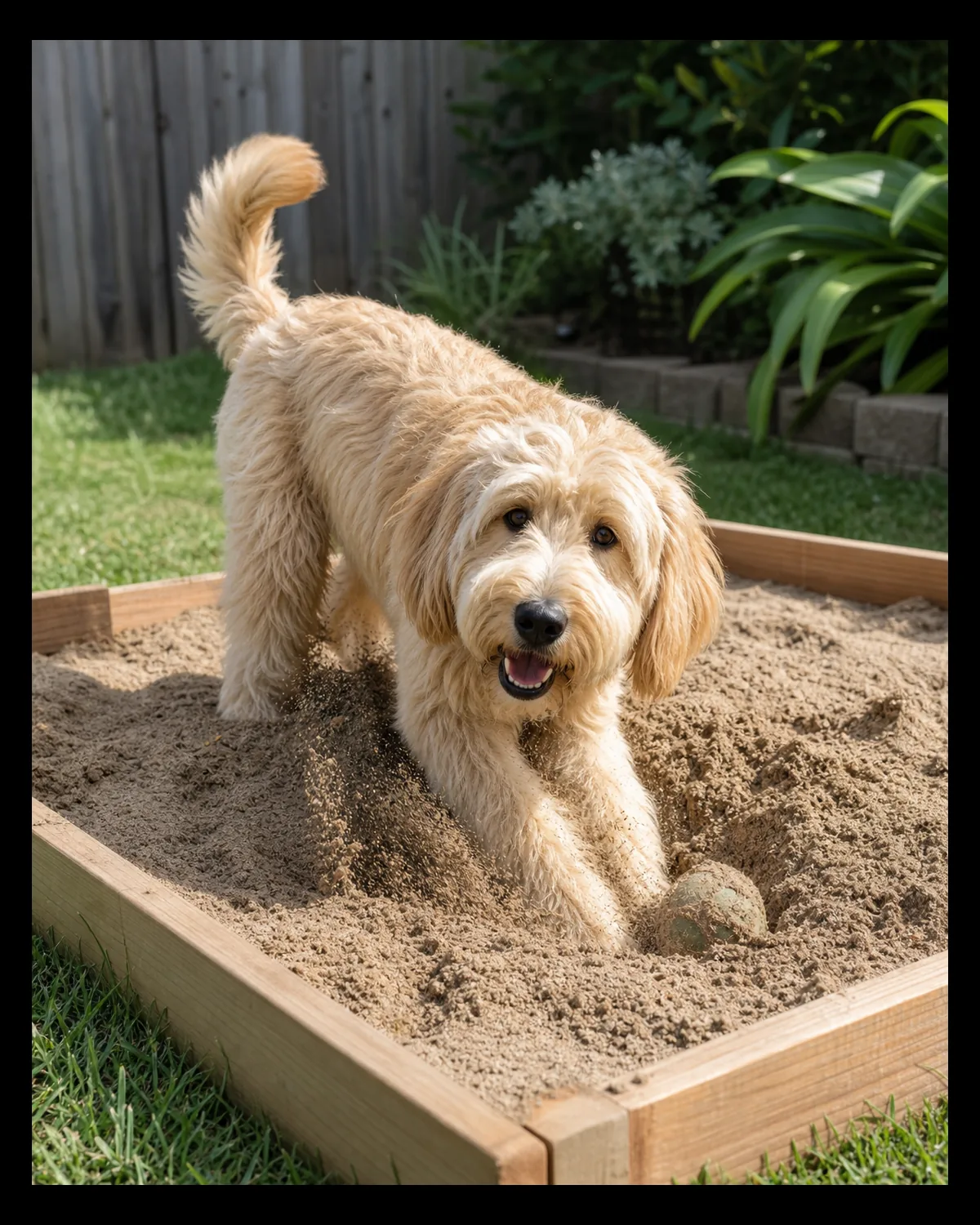
Trying to eliminate digging entirely fights against instinct that isn't going anywhere. Giving it somewhere to go works a lot better: a designated sandbox, a framed-off patch of loose dirt, or even a kiddie pool filled with sand gives your dog a legal outlet.
Seed it deliberately. Bury a few toys or treats just under the surface so the first few visits are genuinely rewarding, and your dog learns fast that this specific spot is where the good stuff turns up.
Every time you catch digging happening somewhere else, walk your dog over to the dig zone instead. The goal isn't fewer holes everywhere — it's all the holes ending up in one place you don't mind.
6. Cool the Ground Instead of Fighting the Heat
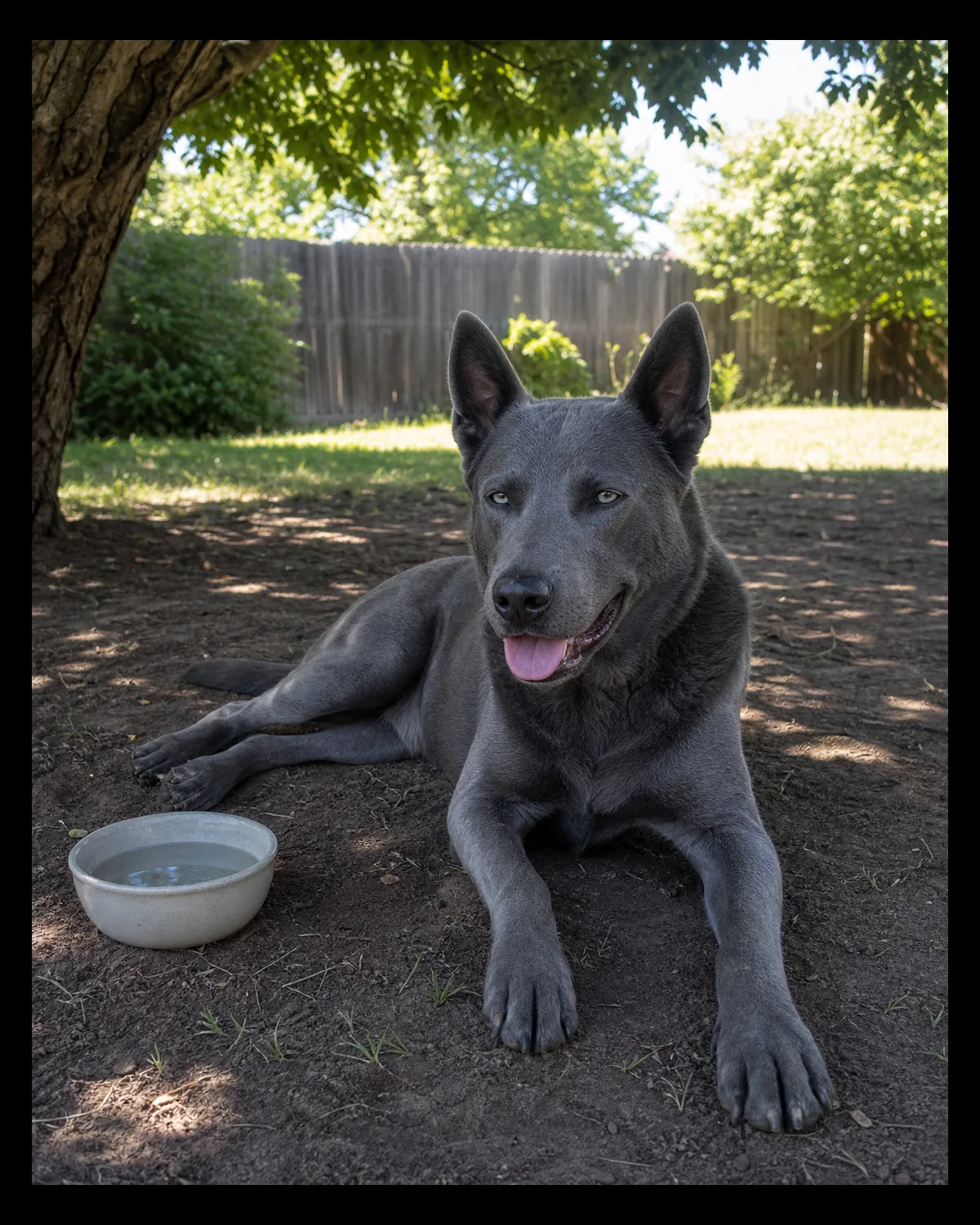
A dog digging a shallow pit under a tree or against the side of the house on a warm afternoon, then lying down in it, is usually chasing cooler dirt, not entertainment. That digging tends to spike hard in summer and barely show up the rest of the year.
Give that instinct an easier answer: shade structures, a shallow kiddie pool, a raised cot bed that lets air move underneath, or a damp cooling mat in a favorite outdoor spot. Once a cooler resting option exists, the motivation to dig one from scratch usually drops.
This is one of the few digging drivers that isn't really about training at all — it's about giving a dog a comfortable enough environment that digging stops being the only option.
7. Digging Along the Fence Usually Means "Let Me Out," Not Boredom
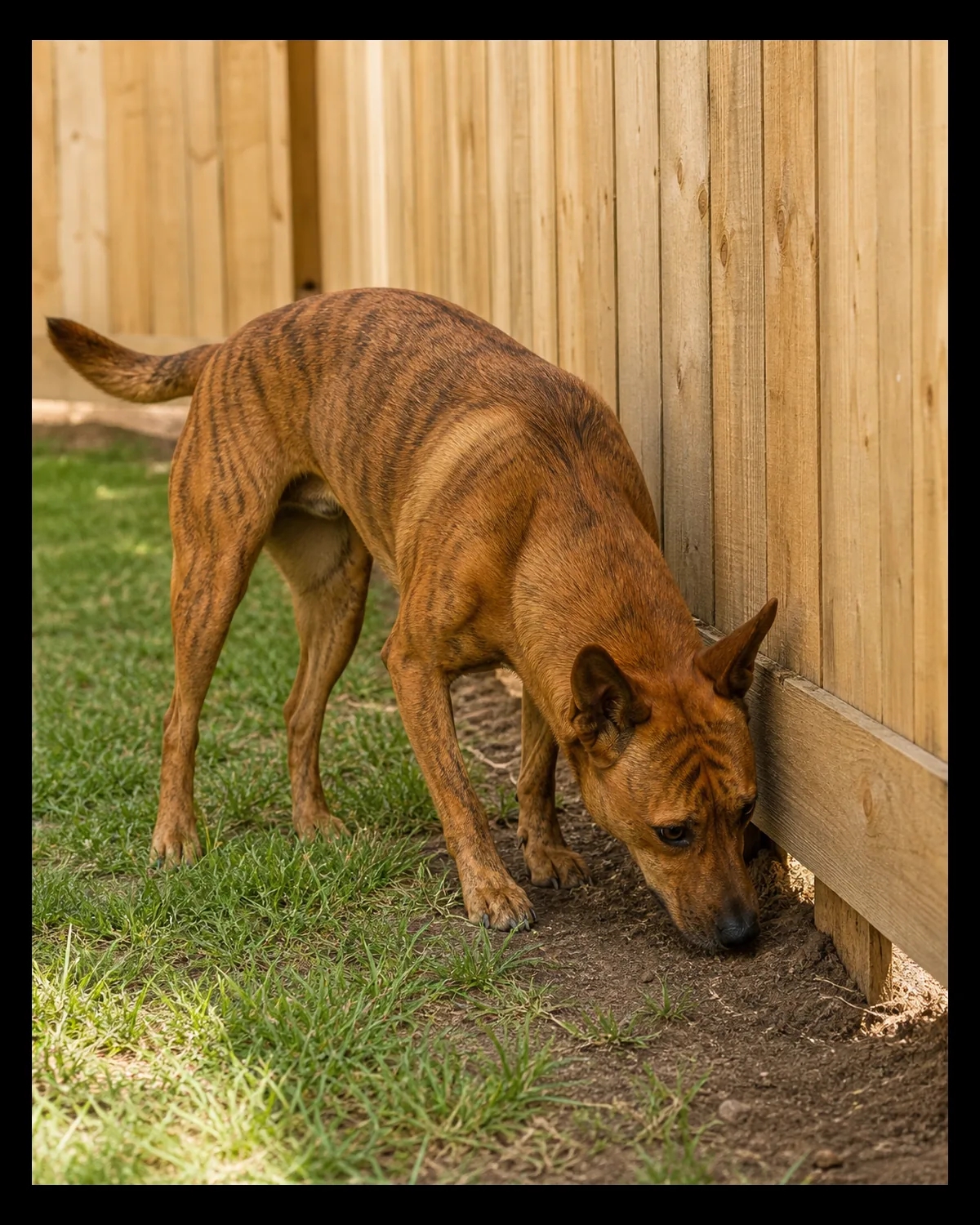
Holes concentrated along the fence line, especially ones that keep reappearing in the same spot no matter how many times they're filled in, are a different category of problem than digging in the open lawn.
Walk the perimeter and check for actual gaps, soft or shifting soil, or spots where the fence doesn't sit flush with the ground. Sometimes the fix is physical — buried wire mesh, pavers, or L-footers along the base — before any behavioral fix even gets a chance to work.
Treat fence-line digging as a safety issue first and a training issue second. A dog who's already found one way out will keep testing that same spot even after everything else on this list has improved.
The digging do’s and don’ts
What to do — and skip — while you retrain
Most stalled digging fixes trace back to one of these lines.
Always Do
- Check the fence itself for gaps before assuming it's a behavior problem.
- Add exercise and mental work before any dedicated digging fix.
- Give your dog a designated dig zone and seed it deliberately.
- Interrupt calmly the moment digging starts, then redirect right away.
- Reward every voluntary visit to the dig zone, not just the first ones.
- Use temporary physical protection around garden beds while you retrain.
- Log the exact time and place digging happens if you suspect anxiety.
Never Don’t
- Never scold or punish your dog over a hole found after the fact.
- Never shout or grab a dog away from a hole in progress.
- Never just fill the hole back in without addressing the cause.
- Never ignore fresh digging concentrated along the fence line.
- Never expect one successful redirect to end the habit permanently.
- Never attempt to correct suspected separation anxiety on your own.
- Never write off one lapse as proof the whole plan has failed.
8. Redirecting a Dig-in-Progress Without Yelling
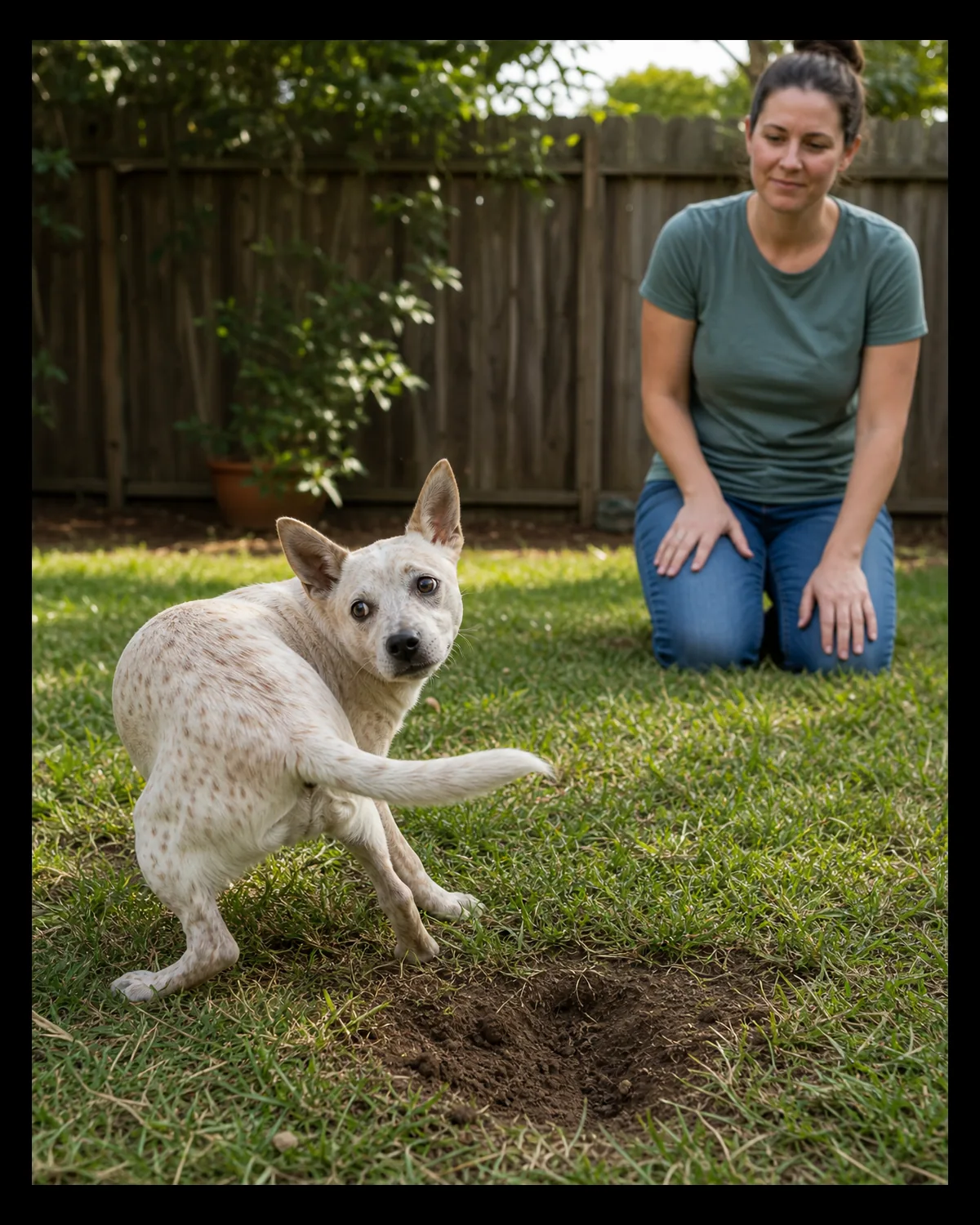
Catching digging as it starts is worth far more than any after-the-fact correction. A calm interruption — a clap, a name call, a light touch — followed immediately by walking your dog toward the legal dig zone teaches the association a scolding never will.
Keep your voice and body language neutral. The goal is to redirect attention, not to startle or intimidate, since a dog who's suddenly afraid of you tends to dig in places you're less likely to see, not fewer places overall.
The moment your dog engages with the dig zone instead, reward it immediately. That immediate payoff is what actually shifts the habit, not the interruption on its own.
9. Making the Dig Zone Stick: Reinforcement That Actually Works
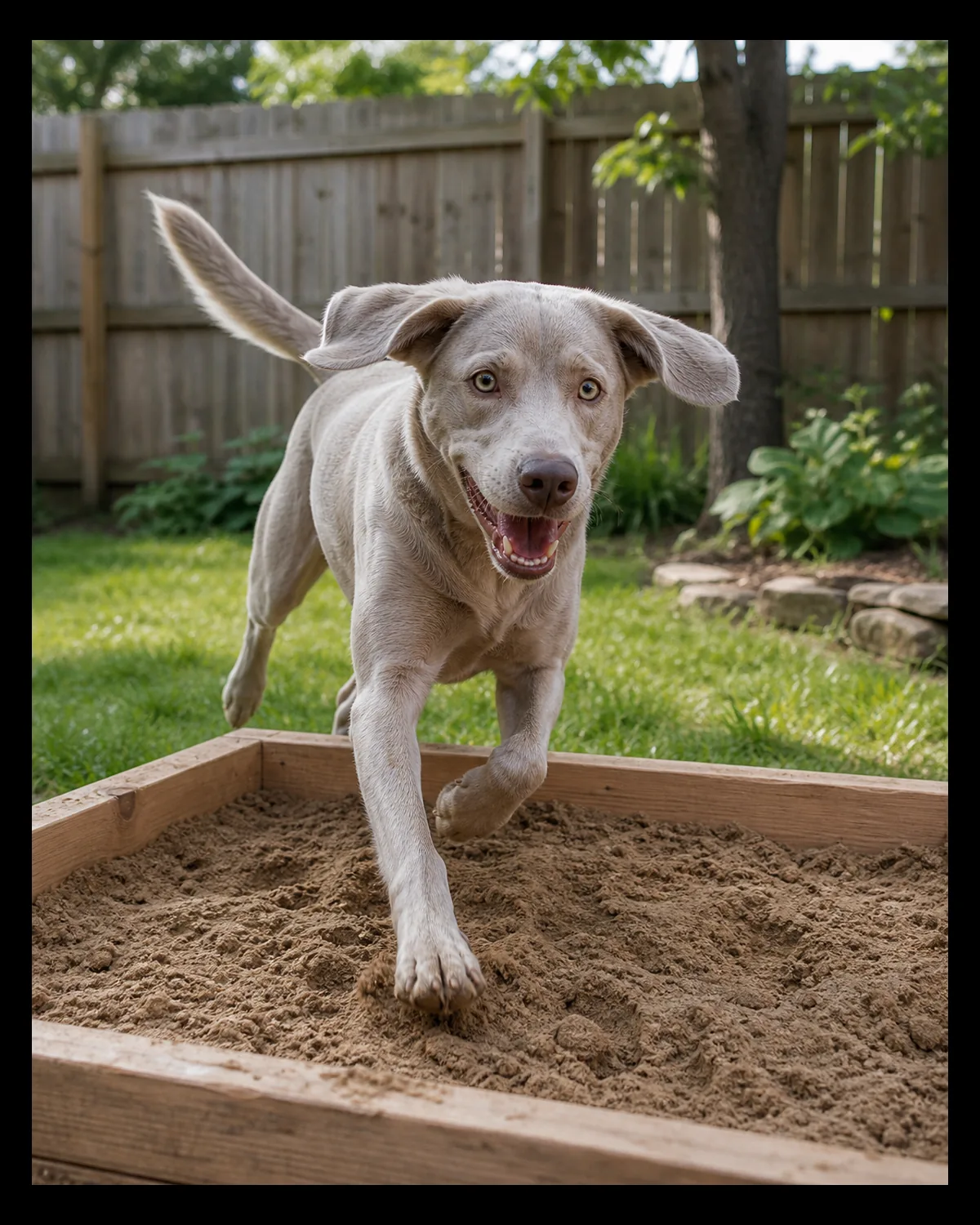
One good experience in the dig zone isn't enough to override a habit that's been building for weeks or months. Keep seeding it with buried treats and toys every few days for the first several weeks, well past the point where it feels unnecessary.
Reward every voluntary visit, not just the first ones. A dog who wanders over to sniff the dig zone on their own and gets nothing is learning that the zone isn't actually special, which undoes a lot of the earlier progress quietly.
Expect the old digging spots to get an occasional visit even while the dig zone is working. Consistency over several weeks, not a single successful redirect, is what makes the new habit outlast the old one.
Save this before you start retraining
Digging Diagnosis Checklist
Match what you're seeing to the pattern, then do the matching first step.
- Random small holes anywhere → instinct, give it a legal dig zone.
- Digging plus other damage, mostly while alone → boredom, add exercise and mental work.
- Deep pits in shade the dog lies in → cooling, add shade or a cooling mat.
- Only while you're gone, at the fence → anxiety, log timing and call a professional.
- Fresh holes along the fence line → check for gaps before anything else.
- Seed the dig zone with buried treats for several weeks, not just once.
- Protect existing garden beds temporarily while the new habit takes hold.
General behavior guidance, not a substitute for a certified trainer or veterinary behaviorist on persistent anxiety-driven digging.
10. Protecting Garden Beds While You Retrain
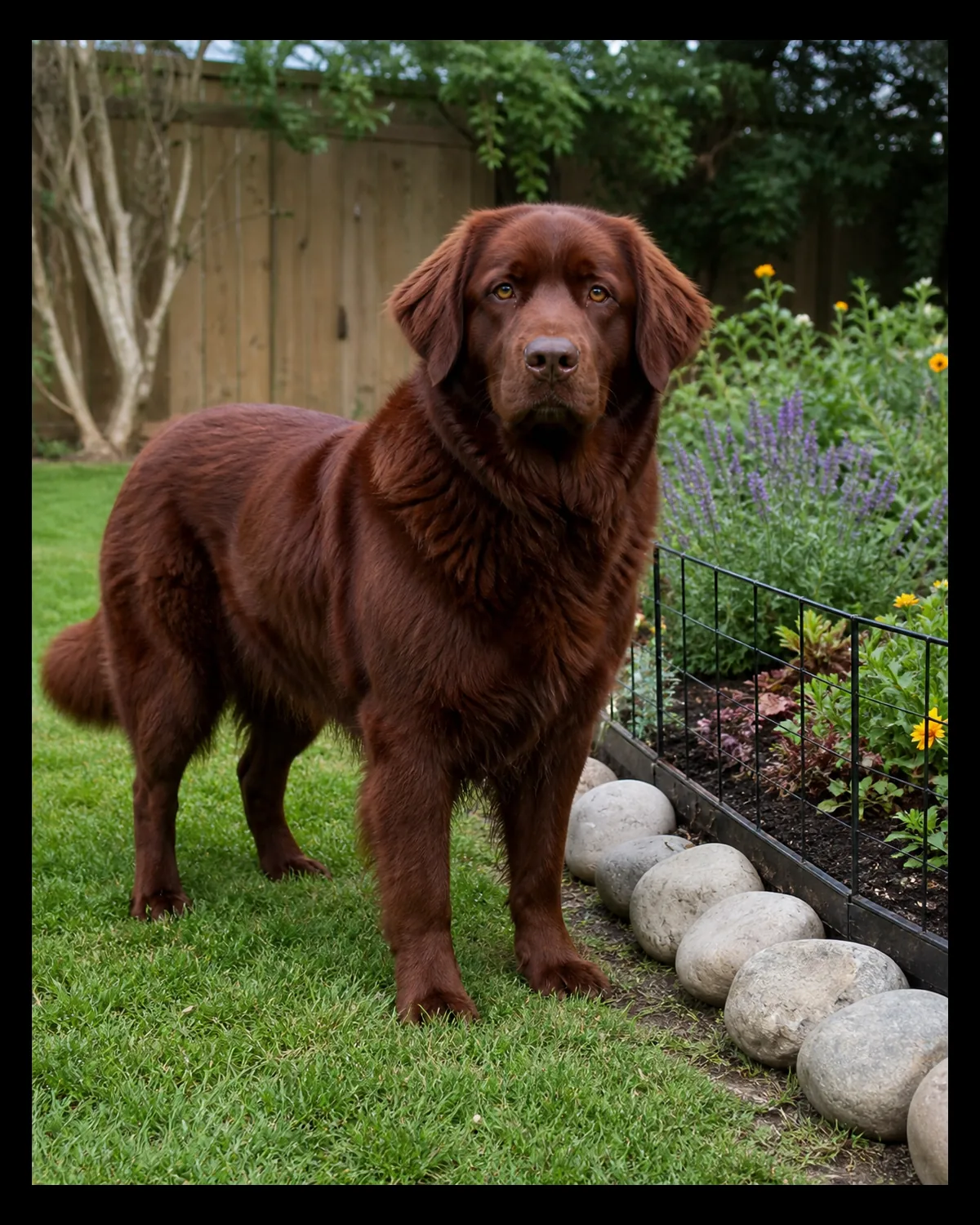
While the retraining above takes hold, a flowerbed that's already been hit a few times needs some short-term physical protection. A low decorative fence, a row of large smooth river rocks along the border, or chicken wire laid just under the mulch all make the spot less inviting without punishing anything.
Treat this as scaffolding, not a permanent solution. The physical barrier buys time for the dig zone and the routine changes to actually take effect, rather than standing in for them indefinitely.
Once a dog reliably prefers the dig zone, most owners find they can start easing the garden bed protection back, a little at a time, and see whether the new habit holds.
11. When Digging Points to Separation Anxiety Instead
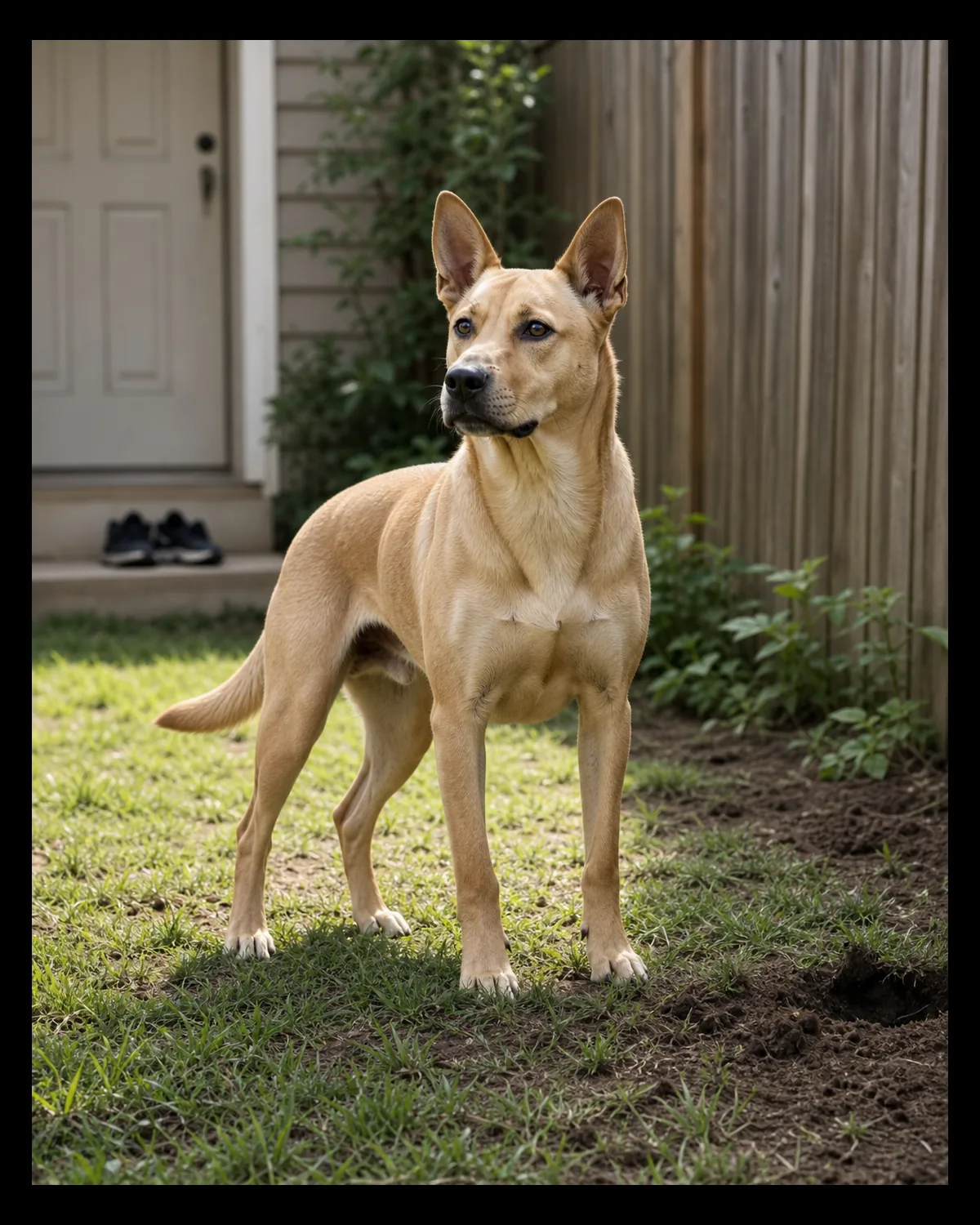
Digging that happens almost exclusively while you're away — especially paired with pacing, howling, destroyed door frames, or holes concentrated right at an exit point — is often less about the yard and more about genuine distress at being alone.
This version doesn't respond well to a sandbox or a tired-out dog on its own. It calls for a real look at how departures are handled, and often benefits from a professional trainer or veterinary behaviorist who can assess what's actually driving it.
Digging in this category is a symptom, not the core issue. Treating only the holes while the underlying anxiety goes unaddressed tends to produce a dog who simply finds a new outlet for the same distress.
12. How Long Retraining Usually Takes
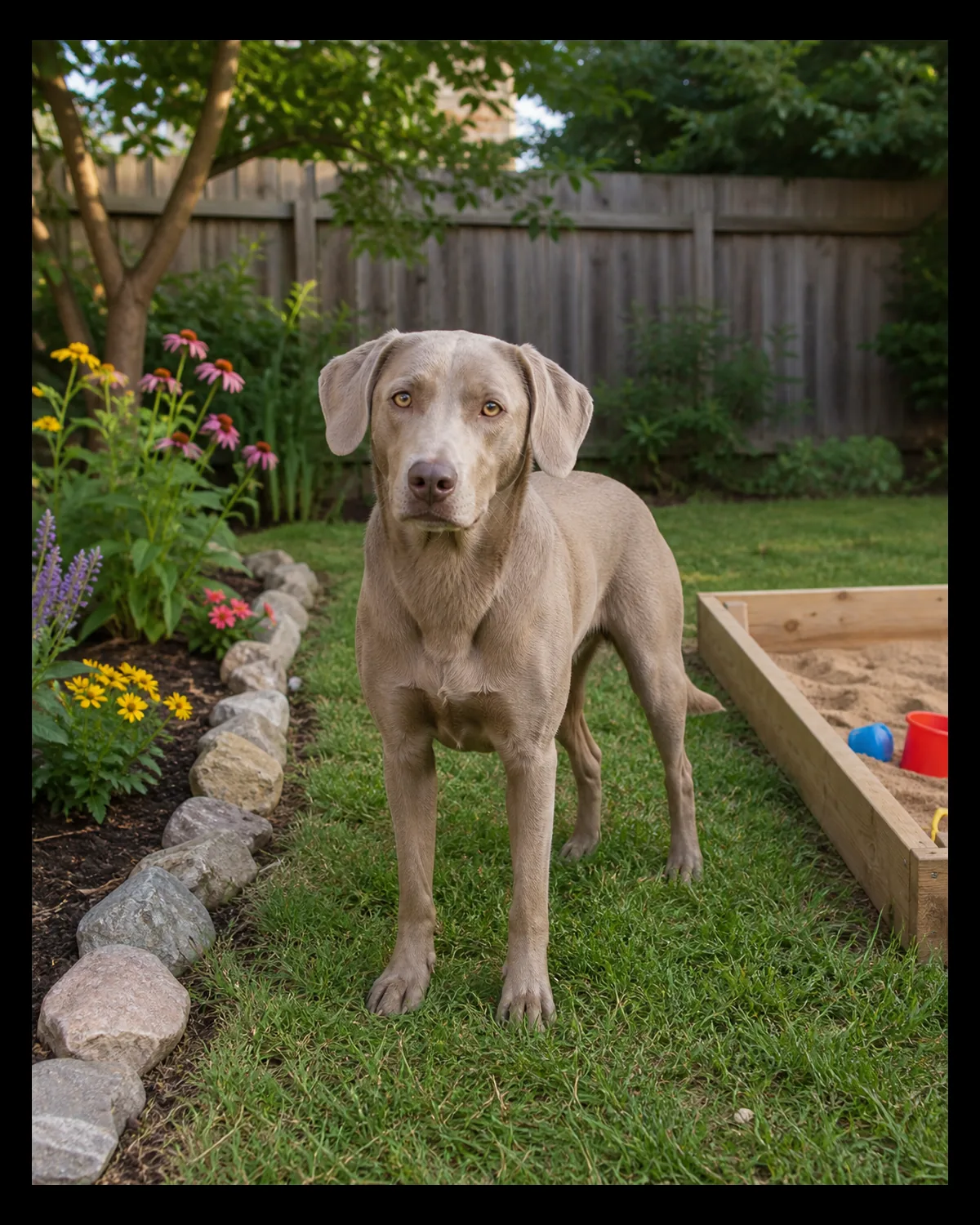
Most digging habits that have been running for weeks or months don't reverse in a single afternoon, even with every step above in place. A realistic timeline is several weeks of consistent redirection and reinforcement before old spots stop getting revisited at all.
Instinct-driven and boredom-driven digging tend to improve fastest, often within two to three weeks of consistent exercise, mental work, and a well-seeded dig zone. Heat-driven digging usually resolves as soon as a cooler resting spot is available.
Expect some backsliding along the way, especially during a heat wave or a stretch of missed exercise. That's a normal part of the process, not a sign that the plan isn't working.
13. Small Wins Along the Way

The first time your dog chooses the dig zone without being walked over to it is worth noticing. So is the first full week without a new hole in the garden bed, and the first hot afternoon your dog heads for the shade cot instead of digging one from scratch.
None of these moments look dramatic on their own, but they're the actual signs that the redirect is working, well before the yard looks completely restored.
A yard that's mostly holes today can be a yard with one designated sandy corner in a season, provided the underlying reason for the digging gets addressed instead of just the digging itself.
About the author
Jess Calloway
Jess is a dog mom of three, including one enthusiastic excavator who taught her the hard way that a filled-in hole and a five-minute lecture never once stopped the next one. This guide covers why dogs dig in the first place, how to tell which kind of digging you're actually dealing with, the biggest mistake most owners make punishing the hole after the fact, ruling out boredom first, building a legal dig zone your dog will actually use, cooling the ground instead of fighting the heat, what fence-line digging usually means, redirecting a dig in progress without yelling, making the dig zone stick, protecting garden beds while you retrain, when digging points to separation anxiety instead, and how long retraining usually takes. Visit the About page.