A smaller home does not mean a smaller life for your dog. Apartments just require a different rhythm — structured walks instead of a backyard, a predictable potty schedule, and a living room corner that doubles as an enrichment station.
The dogs who struggle in apartments are rarely the wrong size. They are under-exercised, under-stimulated, or living in spaces that were never set up with their needs in mind. Fix those three things and most dogs settle in remarkably well.
Here are twelve tips for keeping your dog happy, calm, and well-adjusted in a small-space home.
In this article
12 Apartment Dog Tips
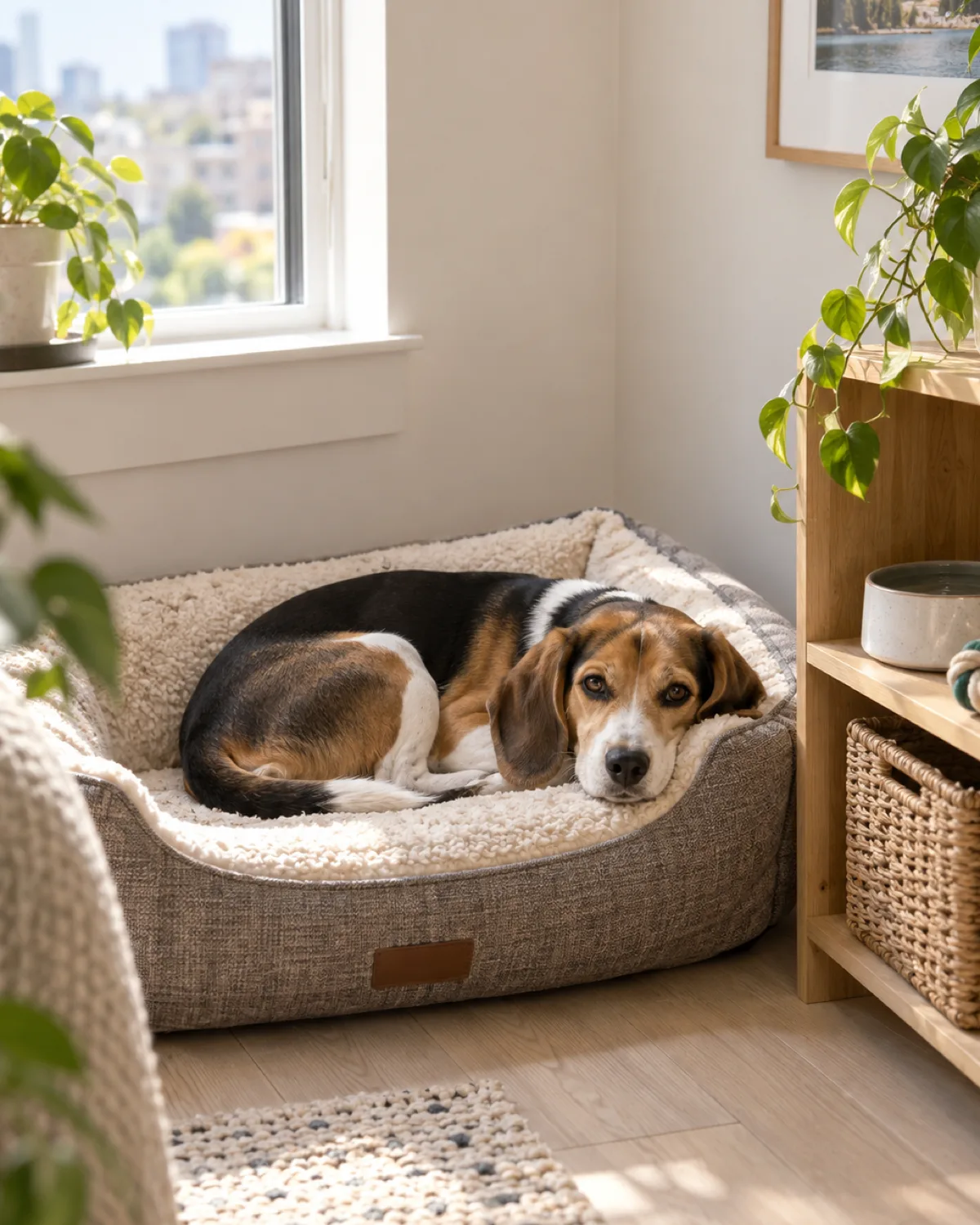
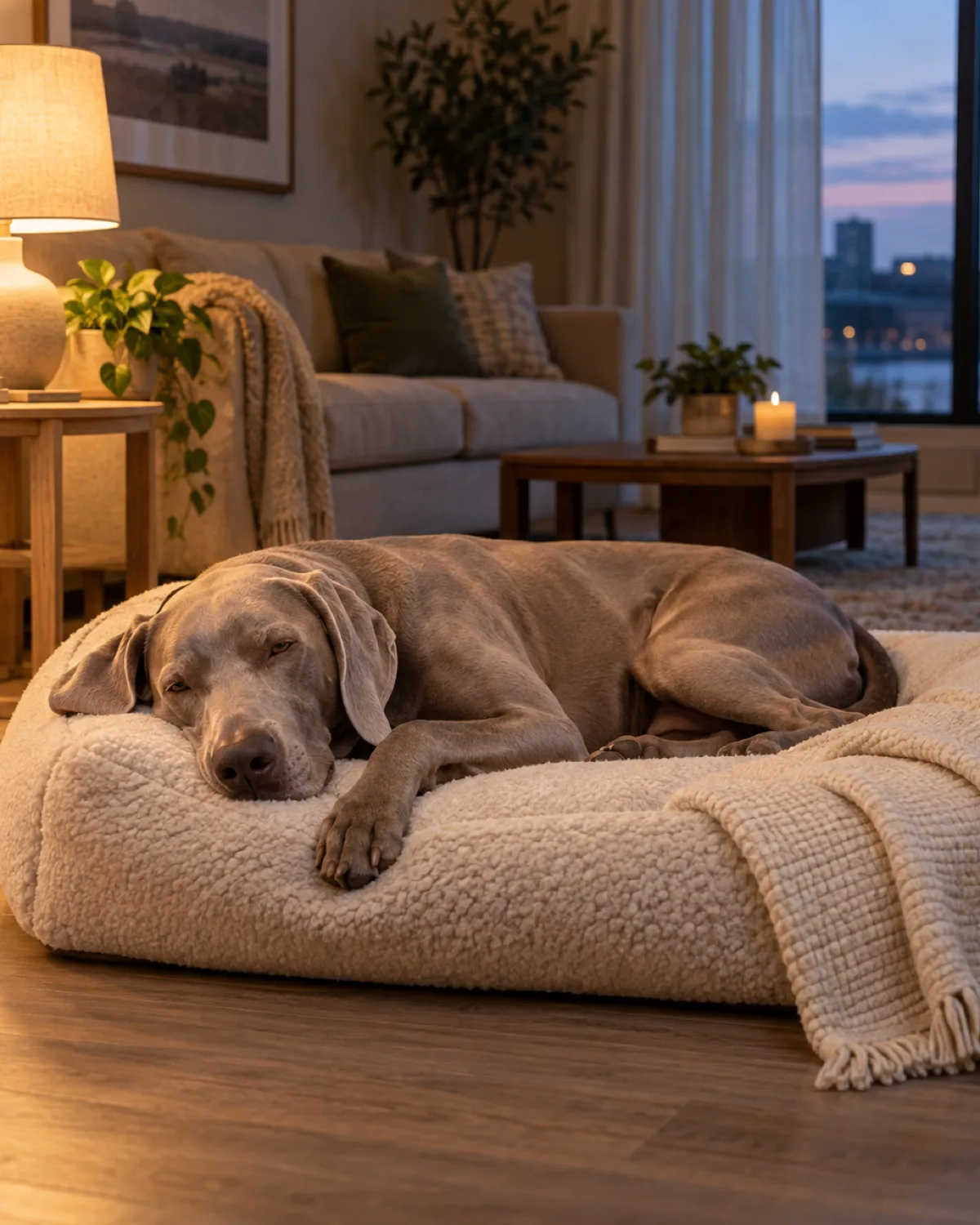
Set Up a Dedicated Dog Zone in a Quiet Corner
Every apartment dog needs one spot that is entirely theirs — a place they can retreat to when the doorbell rings, when you are on a call, or when they just need to decompress. Without it, the dog cycles between the couch, the door mat, and your feet, never fully settling.
Pick the quietest corner in your apartment, away from the front door and the kitchen traffic lane. Set up a bed that fits the dog with a few inches to spare on every side, and place a water bowl and one or two quiet chew toys within reach.
What makes the zone work:
Location matters more than aesthetics — a calm corner near a window beats a stylish bed in the hallway where every footstep outside triggers a reaction
Keep it consistent — do not move the bed around or swap it out weekly; the dog needs to associate that exact spot with safety
No punishment zone — never send the dog there as a timeout; the zone should feel like a reward, not a penalty
Add a familiar scent — an old shirt of yours under the bed cover settles most dogs faster than any calming spray
If you have a crate-trained dog, the crate itself can serve as the zone. Leave the door open so it feels like a den, not a cage. For a deeper crate setup walkthrough, see our crate training guide.
Build a Consistent Potty Schedule Around Your Work Hours
Apartment dogs do not have the option of scratching at a back door and letting themselves out. Every potty break is a trip down stairs, through hallways, and outside — which means consistency is the only thing standing between you and accidents on the living room rug.
Build the schedule around your actual work hours, not an ideal version of your day. Most adult dogs can hold it for four to six hours, but the number drops sharply with age, size, and hydration level.
A reliable apartment potty framework:
First thing in the morning — within ten minutes of waking up, every day, no exceptions
Right before you leave for work — even if the morning walk was only an hour ago
Midday break — if you work outside the home and cannot return, a dog walker or a neighbor covers this slot
Immediately after you get home — before you change clothes, check mail, or sit down
Last thing before bed — the final trip sets the overnight hold window
The key is that the times stay roughly the same every day, including weekends. Dogs cannot tell the difference between Tuesday and Saturday, and a disrupted weekend schedule often causes Monday accidents. For a more detailed puppy-specific breakdown, see our potty training guide.
Save this
12 Apartment Dog Essentials
1Dog ZoneQuiet corner, comfy bed, water bowl, one or two chew toys. Same spot every day.
2Potty ScheduleFive fixed times daily. Same on weekends. Midday walker if you work away.
3Quiet CommandAcknowledge the trigger, redirect, mark silence with treat. Practice daily.
4Morning ExerciseThirty to forty-five minutes before you leave. Walk plus a short fetch or tug session.
5Puzzle ToysRotate three to four toys on a weekly cycle. Frozen stuffed toys for longer sessions.
6Balcony SafetyPlexiglass or mesh on railings. No toxic plants at dog height. Never unsupervised.
7Vertical StorageWall hooks for leashes. Floating shelves for treats and bags. Floor stays clear.
8Entry RoutineMat at the door. Practice place command before door opens. Calm reentry every time.
9Cleanup KitCaddy by the door with waste bags, towel, spray cleaner, collapsible bowl.
10Calm GreetingsShort leash, sit before approaching. Reward four-on-the-floor in hallways.
11Midday MovementFifteen-minute walk or indoor play session. Even on work-from-home days.
12Wind-Down RoutineLast walk, then chew toy or lick mat, lights dimmed. Same sequence nightly.
pawliqa.com
Teach a Reliable Quiet Command for Shared Walls
Barking is the fastest way to burn through goodwill with apartment neighbors. One alert bark at a delivery driver is normal. Five minutes of sustained barking every time someone walks past your door is a noise complaint waiting to happen.
The fix is not a bark collar or a spray bottle. It is a trained quiet command that lets the dog bark once or twice to alert, then stop on cue.
How to teach it:
Wait for a natural bark trigger — a knock, a doorbell, a hallway noise
Let the dog bark two or three times, then say your quiet cue in a calm, low voice
The moment the dog stops barking — even for a second — mark it with a treat
Repeat until the dog begins to look at you after barking instead of continuing
Common mistakes in apartments:
Yelling "quiet" while the dog is barking — the dog reads your raised voice as joining in, not correcting
Punishing the bark itself — the dog was doing its job alerting you; you want to shorten the duration, not eliminate the instinct
Inconsistency — if you sometimes let the dog bark for a minute before intervening and other times correct immediately, the dog never learns the threshold
For a deeper step-by-step on reducing excessive barking, see our barking guide.
Front-Load Exercise Before You Leave for the Day
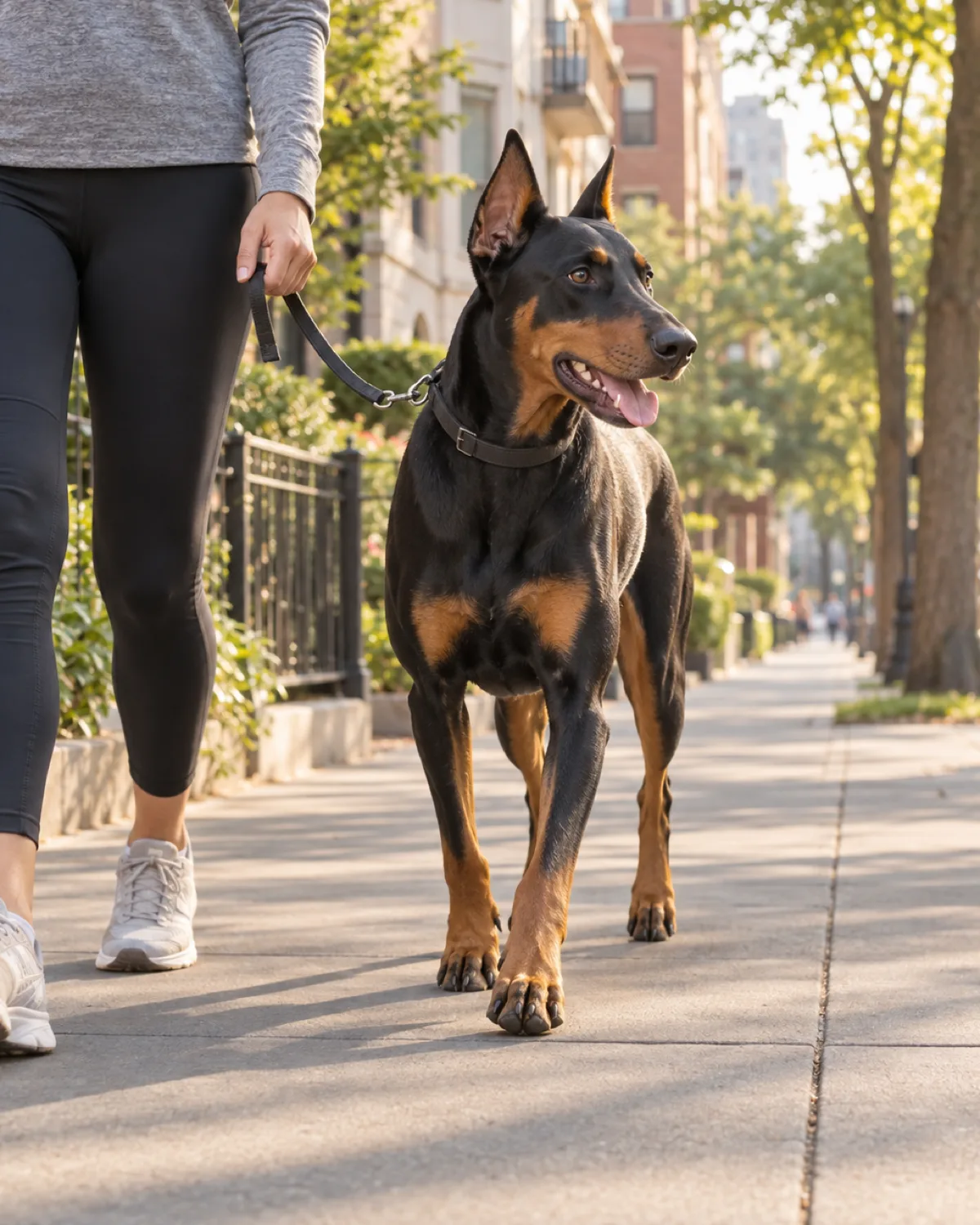
A tired dog is a quiet dog. The single most effective thing you can do to prevent barking, chewing, pacing, and whining while you are gone is to drain your dog’s energy before you walk out the door.
This does not mean a casual five-minute stroll around the block. It means a real exercise session — thirty to forty-five minutes of movement that gets the heart rate up and the brain engaged.
What counts as a proper pre-departure workout:
Brisk walk with direction changes — not a sniff-and-stop meander, but a pace that keeps the dog moving and attentive
Fetch in a park or open area — fifteen minutes of sprinting and retrieving burns more energy than a forty-minute slow walk
Tug-of-war at home — for rainy days, a solid ten-minute tug session followed by a short walk provides enough physical output
Time of Day
Activity
Duration
Why It Works
6:00–6:30 AM
Brisk walk
30 min
Drains physical energy before the workday
6:30–6:45 AM
Short training session
10–15 min
Drains mental energy on top of the walk
6:45–7:00 AM
Breakfast in a puzzle feeder
10–15 min
Keeps the dog occupied while you get ready
The goal is that by the time you leave, the dog is ready to nap — not pacing the apartment looking for something to do. For more on calibrating the right exercise load, see our exercise guide.
Quick check
Enough Exercise or Not?
Use these signs to tell whether your dog is getting enough daily movement in your apartment.
Getting enoughSettles within fifteen minutes of you leaving. Naps during the day. Greets you calmly when you return. No destructive chewing.
Needs morePaces or whines after you leave. Chews furniture or shoes. Barks at every hallway noise. Still wired at bedtime.
Rotate Puzzle Toys to Replace Backyard Stimulation
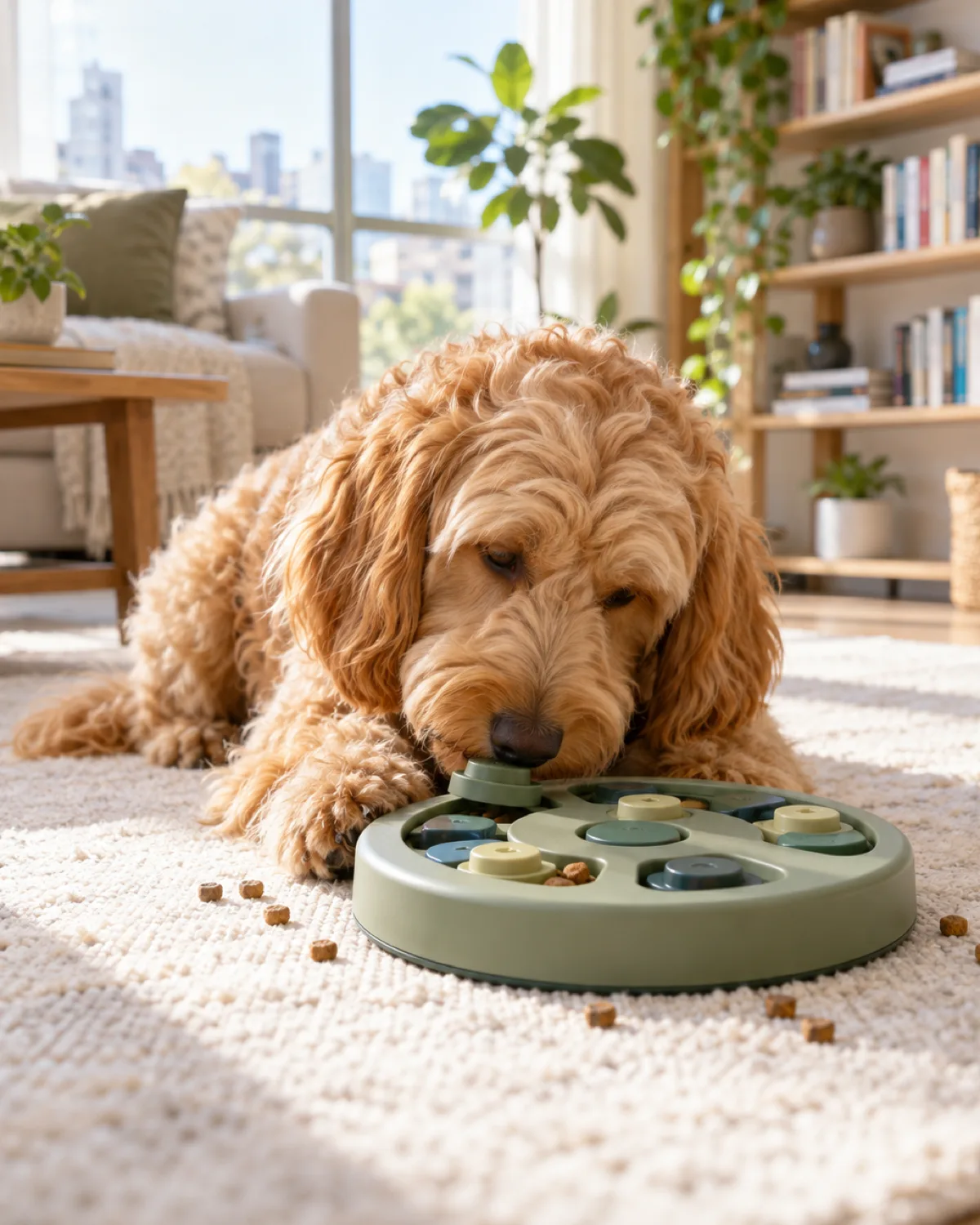
A dog with a backyard can watch squirrels, sniff the fence line, dig in a corner, and patrol the perimeter. An apartment dog gets none of that unless you build it into the indoor routine. Puzzle toys are the closest indoor equivalent — they engage the nose, the brain, and the mouth simultaneously.
The trick is rotation. A dog who gets the same Kong every day figures it out in a week and starts ignoring it. Keep three to four puzzle toys in rotation and swap one out every few days.
Apartment-friendly puzzle categories:
Stuffable rubber toys — fill with peanut butter and kibble, freeze overnight, and hand it over when you leave; a frozen Kong can occupy a dog for thirty to sixty minutes
Snuffle mats — scatter dry food in the fabric folds; the dog uses its nose to find every piece, which is mentally exhausting in a good way
Sliding-tile puzzles — the dog pushes panels to uncover treats; start on the easiest setting and increase difficulty over weeks
Lick mats — spread soft food thin across the surface; the repetitive licking motion has a calming effect backed by behavioral research
For a larger list of indoor enrichment ideas that work well in apartments, see our enrichment guide.
Dog-Proof Your Balcony or Patio Before Giving Access
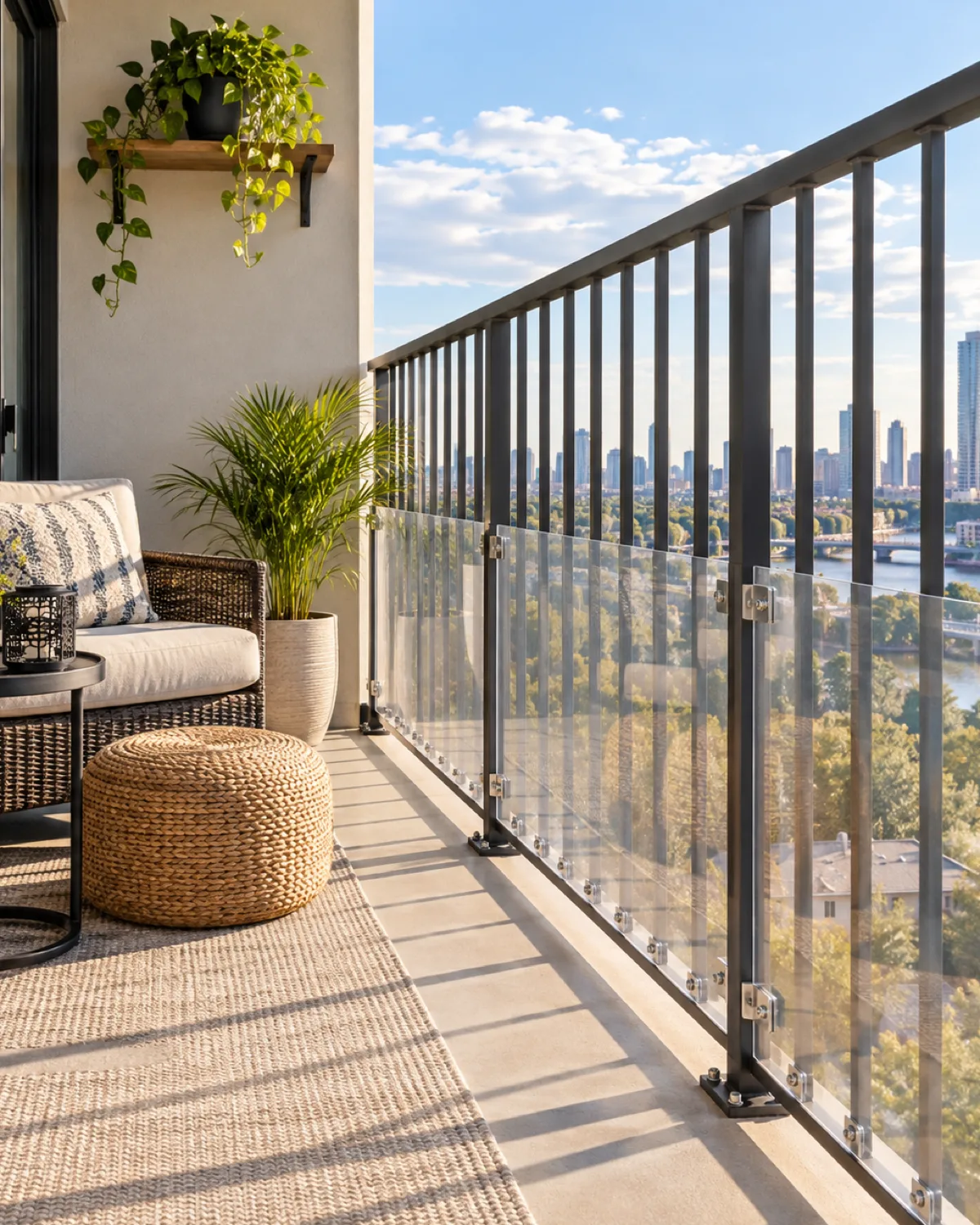
A balcony can be a genuine quality-of-life upgrade for an apartment dog — fresh air, outdoor sounds, a patch of sunlight to lie in. But an unprotected balcony is a fall risk, an escape risk, and a toxic plant risk all at once.
Before you ever let the dog out there unsupervised, do a full safety pass:
Railing gaps — if the gap between balusters is wider than your dog’s head, install plexiglass panels or sturdy mesh along the inside of the railing
Railing height — small dogs can squeeze under low railings; large dogs can jump low ones; measure and add extensions if needed
Plants — remove anything from the common toxic plant lists (lilies, sago palm, oleander, dieffenbachia); replace with pet-safe options like spider plants or Boston ferns, and keep even safe plants on high shelves to prevent digging
Chemicals — no fertilizer, no rodent bait, no insect traps at floor level
Drainage holes — some balconies have wide drainage gaps at the base; block them with a strip of weather-resistant mesh
Even after proofing, never leave a dog on a balcony unsupervised for extended periods. Heat builds up fast on a concrete balcony in direct sun, and a panicked dog can chew through mesh if something frightens it.
Quick reference
Balcony Safety Checklist
Railing GapsInstall plexiglass or mesh if gaps are wider than the dog’s head. Test by trying to push a tennis ball through.
Toxic PlantsRemove all toxic species. Move safe plants to high shelves. No fertilizer at floor level.
TemperatureConcrete absorbs heat. Test the surface with the back of your hand before letting the dog out in summer.
SupervisionAlways supervised. Never leave the dog on the balcony while you are away from home.
Use Vertical Space for Storage So the Floor Stays Clear
Floor space in an apartment is a shared resource between you and your dog. Every leash, toy basket, food bin, and grooming caddy that sits on the floor is one more thing the dog steps around, trips over, or chews when bored. Moving dog gear vertical frees up the floor for what actually matters — room to walk, play, and settle.
Simple vertical storage wins:
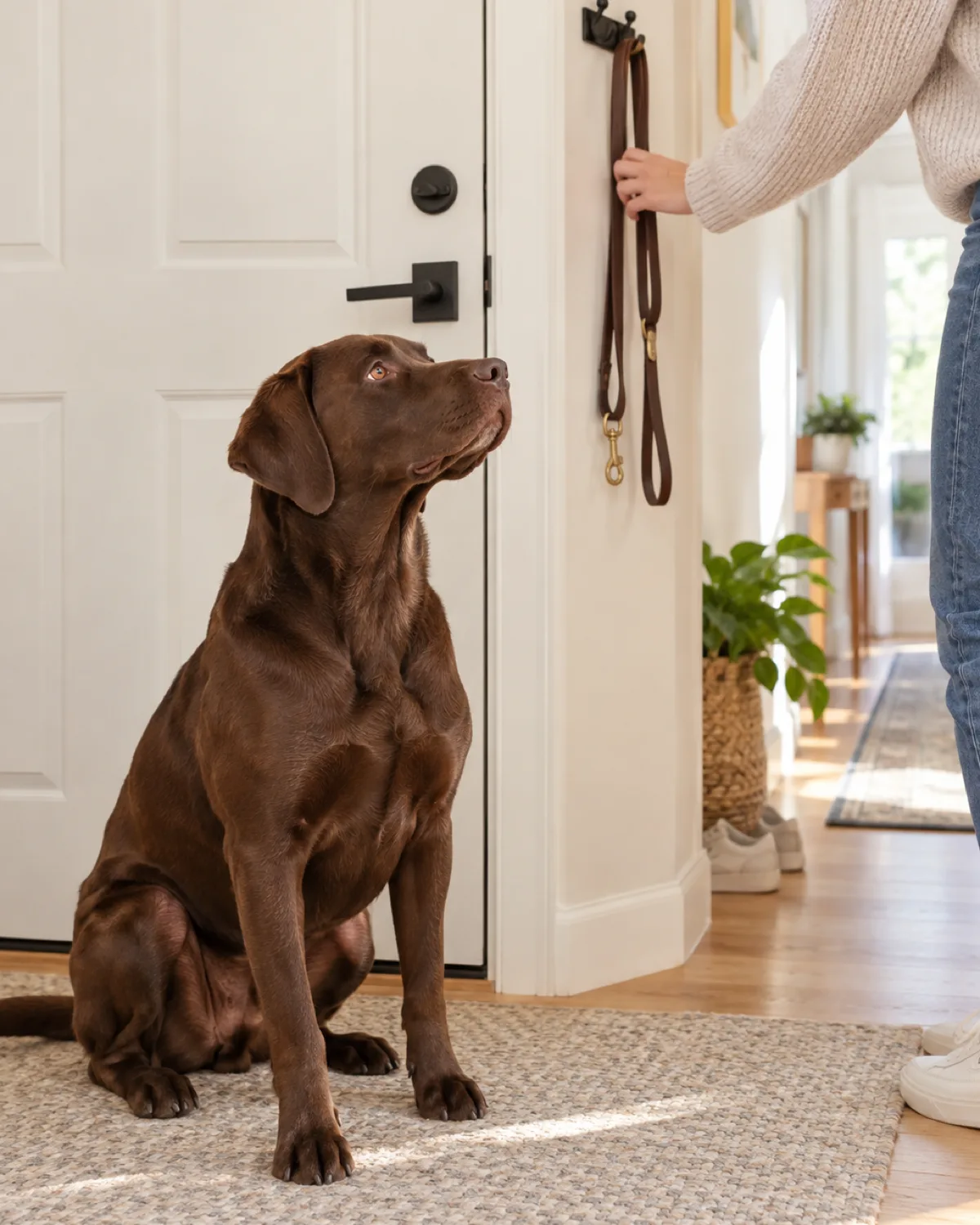
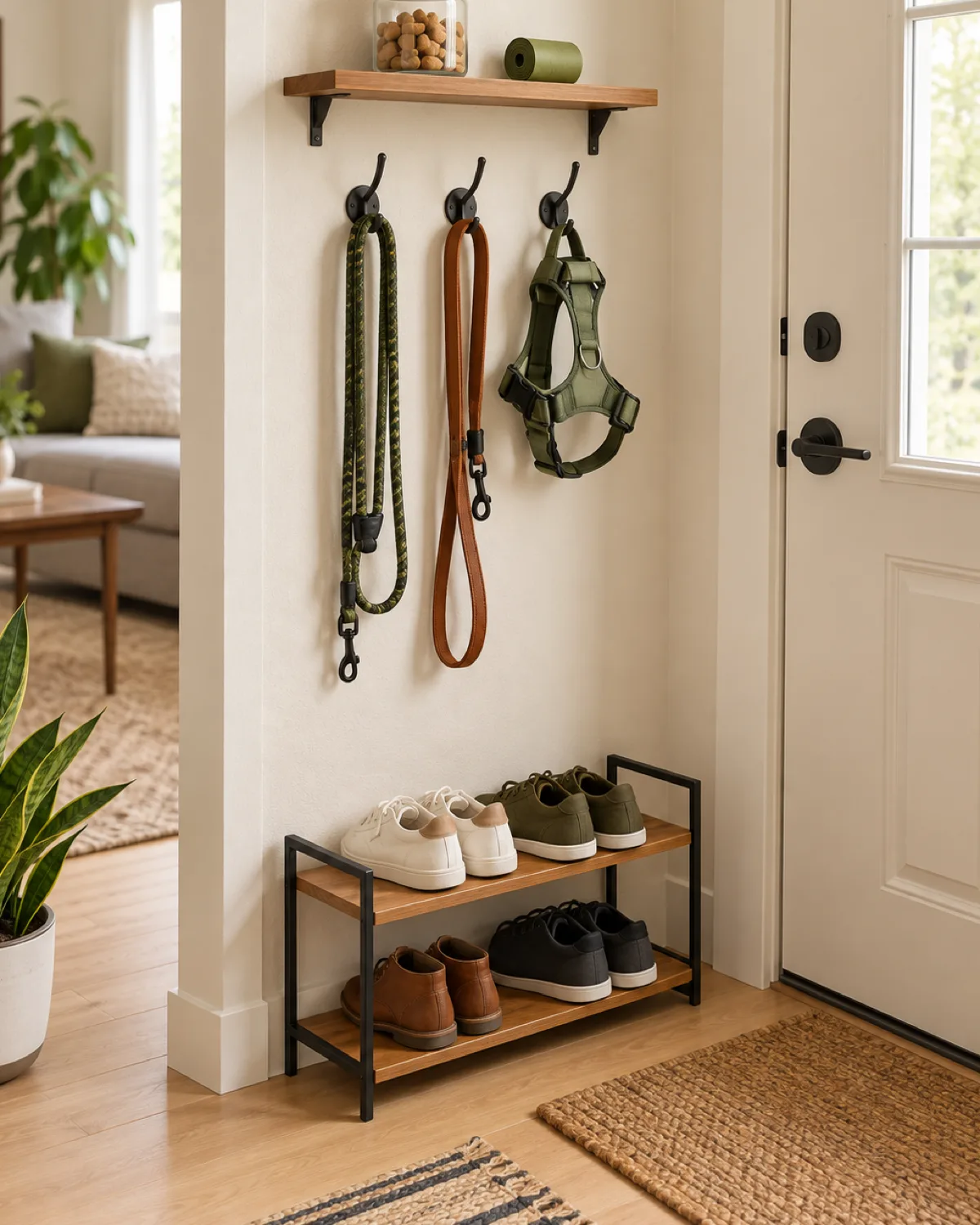
Wall-mounted hooks at the door — two hooks handle the daily leash, harness, and waste bag holder; grabbing everything on the way out takes three seconds instead of a dig through a drawer
Floating shelf above the hooks — treat jar, extra bags, a small flashlight for night walks; everything visible and within reach
Over-the-door organizer — the pocket kind designed for shoes works for smaller items like tick tools, grooming wipes, and training pouches
Narrow tall bin for food — a slim airtight container that fits in a pantry gap stores a twenty-pound bag without taking floor space
The goal is that the only dog items on the floor are the bed, the water bowl, and whatever toy is currently in rotation. Everything else goes up.
Soundproof Your Entry Routine to Reduce Barking Triggers
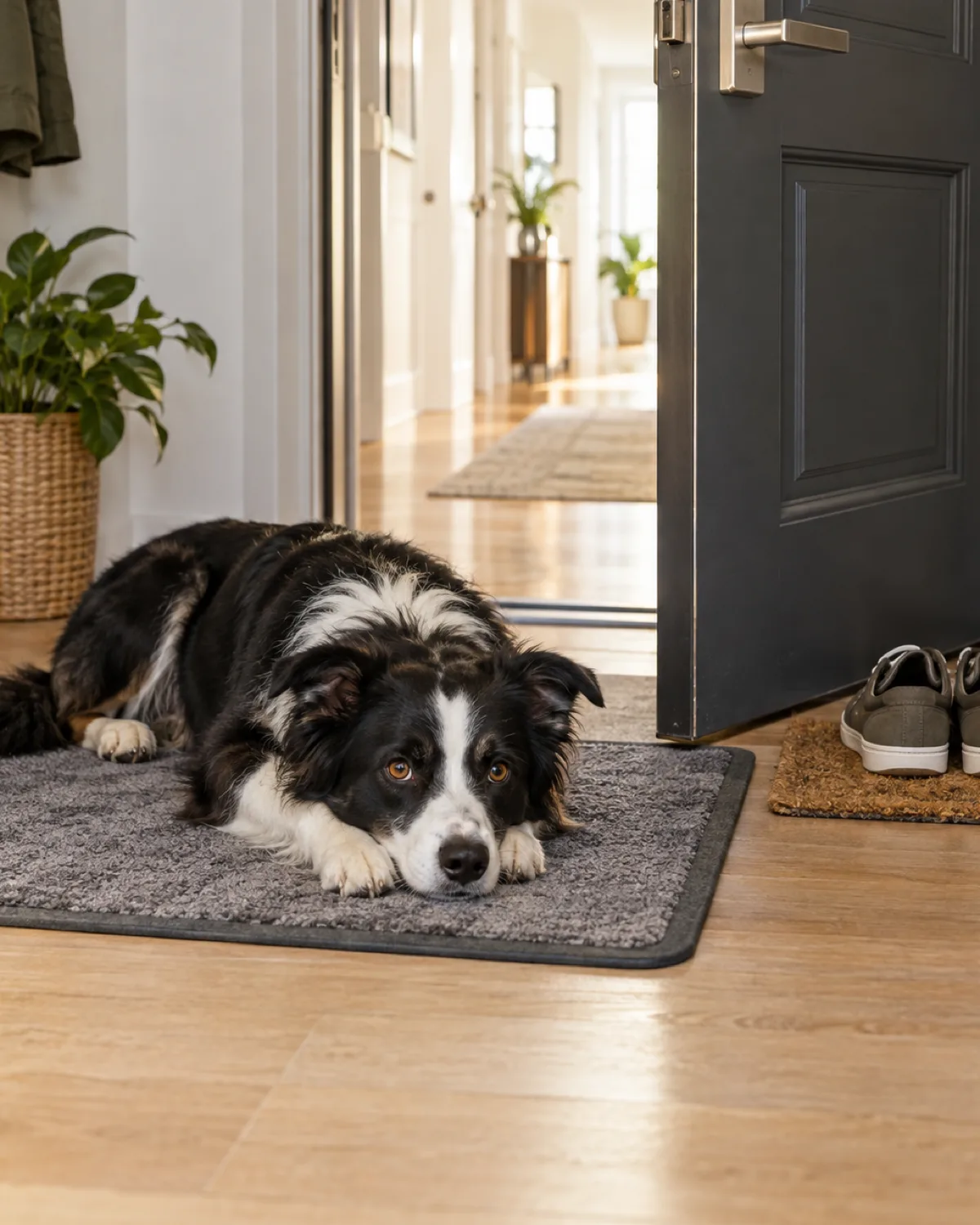
Most apartment barking happens at the front door. Keys jingling, the lock turning, footsteps in the hallway, deliveries being set down outside — every one of these sounds travels through thin apartment doors and walls straight to a dog whose job description includes alerting you to activity near the den.
You cannot make the hallway quiet, but you can reduce how much sound reaches your dog and change how your dog responds to what does get through.
Practical soundproofing:
Weatherstrip the door frame — the same foam strips that block drafts also muffle hallway sound by a surprising amount
Add a door sweep — the gap under an apartment door leaks noise and light; a rubber sweep blocks both
Thick entry mat — absorbs your own footstep sound when you come and go, reducing the "someone is approaching" trigger
Behavioral changes:
Practice the place command — train the dog to go to its mat when it hears the door sound, instead of running to the door
Desensitize the triggers — play recordings of hallway sounds at low volume while the dog is calm, and gradually increase over days
Reward silence, not the bark — when someone knocks and the dog does not bark, that is the moment that earns the treat
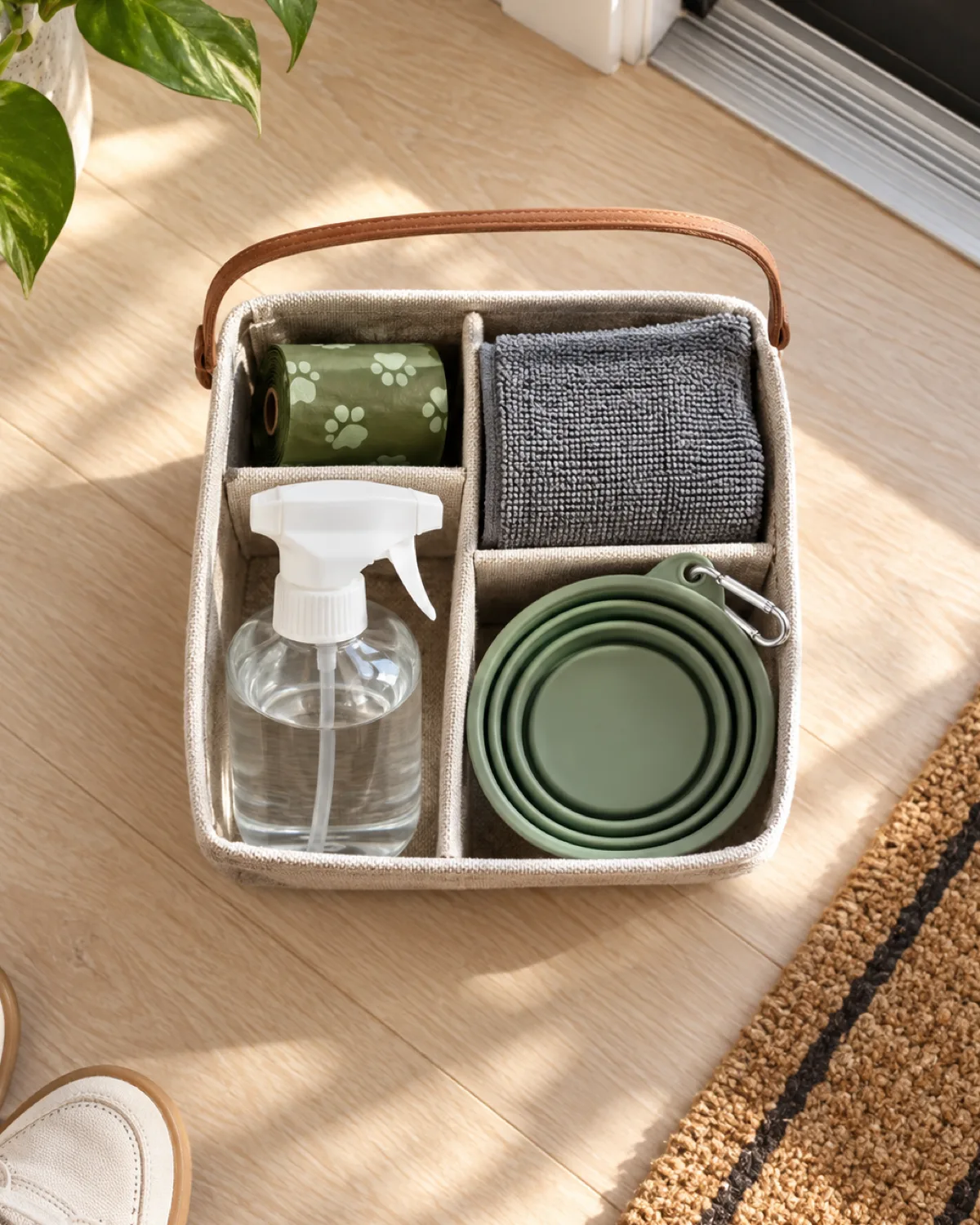
Keep a Cleanup Kit by the Door for Fast Post-Walk Resets
Apartment living means every walk ends with an airlock moment — the transition from outside to inside, where mud, rain, sidewalk grime, and whatever the dog stepped in gets either cleaned up at the door or tracked across every room.
A cleanup kit eliminates the decision fatigue. It sits by the door, it is always stocked, and the routine takes under two minutes.
What goes in the kit:
Microfiber towel — for paw wipes and wet-fur blotting; microfiber picks up more dirt than a regular towel and dries faster
Spray bottle of diluted floor cleaner — one squirt on the towel handles muddy paws without hauling the dog to the bathtub
Waste bags — a roll mounted on the caddy so you never leave without one
Collapsible water bowl — a quick drink right at the door so the dog does not drip-trail to the kitchen bowl
Small jar of paw balm — for days when sidewalk salt or rough surfaces leave the pads dry
The post-walk routine becomes automatic: leash off, four paws wiped, quick drink, paw check if needed, then free to roam. For a full post-walk paw cleaning routine, see our paw cleaning guide.
Practice Calm Greetings So Hallway Encounters Stay Peaceful
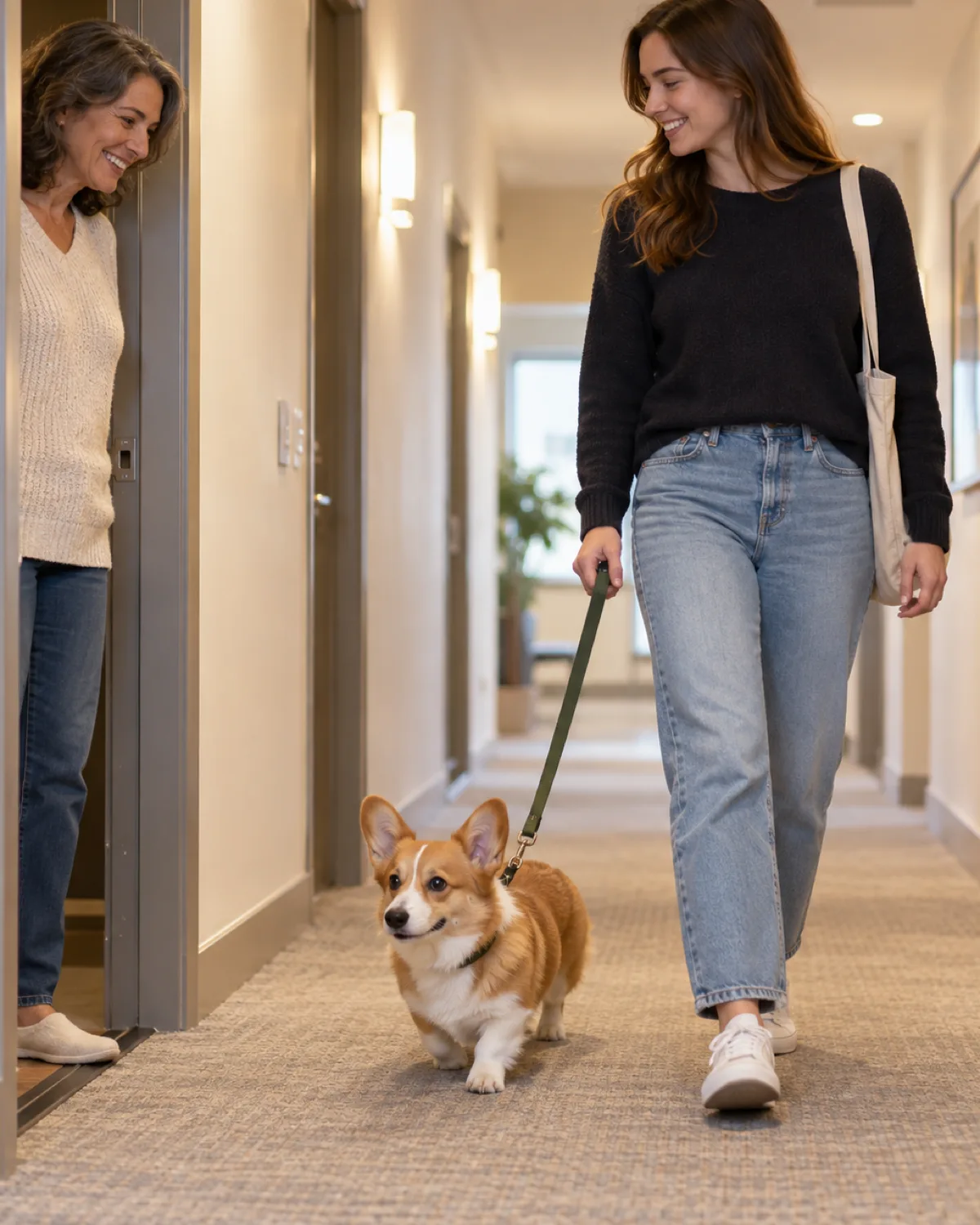
Hallways, elevators, and lobbies are the shared spaces where your dog’s behavior directly affects your neighbors’ experience. A dog that lunges, barks, or jumps during a hallway encounter makes every future encounter tense — for the neighbor, for you, and for the dog.
The standard you are training for is four-on-the-floor: the dog keeps all four paws on the ground during any encounter with a person or another dog in a common area.
How to build it:
Short leash, not tight leash — keep the leash short enough that the dog cannot reach the other person, but do not pull it taut; a tight leash creates tension that the dog reads as a threat signal
Ask for a sit before the encounter — when you see someone approaching in the hallway, stop, ask the dog to sit, and wait for the person to pass
Treat the calm, ignore the excitement — the moment the person passes and the dog stays seated, mark and reward; if the dog breaks, reset and try again on the next encounter
Schedule Midday Movement Even on Work-From-Home Days
Working from home creates an illusion of togetherness. The dog is in the same room, you are there all day, and it feels like the dog is getting plenty of attention. But physical proximity is not the same as physical activity. A dog lying next to your desk for eight hours is not exercised — it is waiting.
Without a scheduled midday break, work-from-home dogs often develop the same restlessness and behavioral issues as dogs left home alone. The difference is that you witness the pacing instead of coming home to the aftermath.
Build a non-negotiable midday movement block:
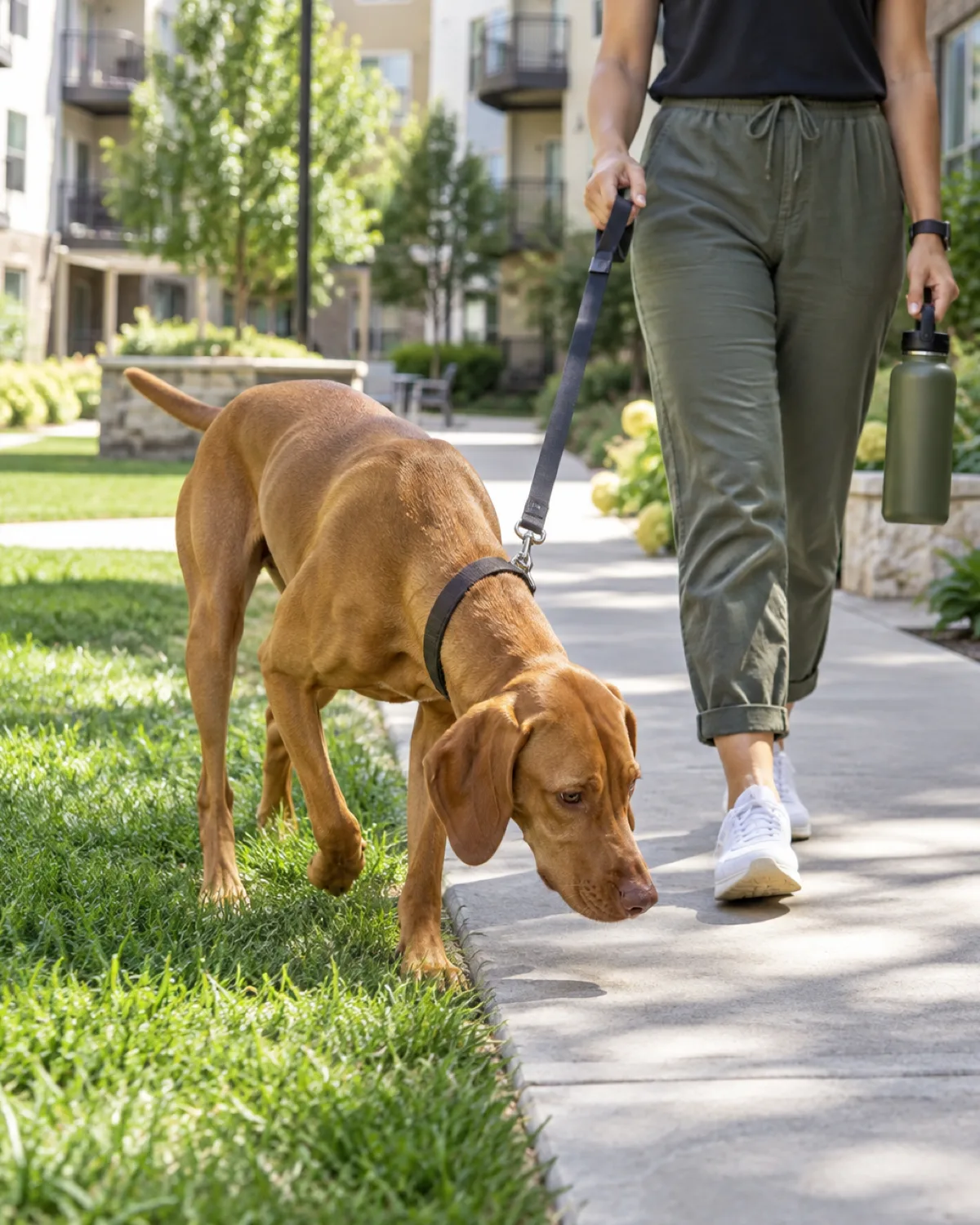
Fifteen-minute walk — around the block, through the courtyard, to the nearest park and back; it does not need to be long, it needs to be real movement
Five-minute training drill — practice three commands, reward generously; this counts as mental exercise and resets the dog’s energy
Indoor play if weather is bad — tug, fetch down a hallway, or a quick puzzle toy session
The timing matters more than the duration. A fixed midday break every day creates a rhythm the dog can predict, and predictability is what keeps apartment dogs calm.
Create a Wind-Down Routine That Signals the Day Is Over
Dogs are pattern animals. They do not read clocks, but they read sequences. A consistent wind-down routine tells the dog that the active part of the day is over, that no more walks or play sessions are coming, and that it is time to settle.
Without it, apartment dogs often stay alert late into the evening — watching the door, tracking your movement from room to room, startling at every hallway sound — because nothing in the environment signaled that the day has shifted into rest mode.
Build a three-step sequence that stays the same every night:
Last walk — a short calm walk for elimination only; ten minutes, no play afterward
Quiet activity — a lick mat, a long-lasting chew, or a frozen stuffed toy; repetitive licking calms the nervous system
Environmental shift — dim the lights, lower the TV volume, settle into your routine; the ambient change is the dog’s clearest cue
Within a week of consistent repetition, most dogs begin self-settling as soon as step one starts. They know what comes next, and the predictability itself is calming.
If your dog still struggles to settle at night, the issue is usually unspent energy from earlier in the day. Revisit the morning exercise block before adding more evening activity. For strategies to help a puppy specifically settle at night, see our puppy nighttime guide.
Frequently Asked Questions
Can large dogs live happily in an apartment?
Yes. Size matters less than energy management. A mellow large dog that gets two good walks a day often does better in an apartment than a small high-energy dog that gets one. The key factors are daily exercise, mental stimulation, and a consistent routine — not square footage.
How many walks does an apartment dog need per day?
Most adult apartment dogs do well with three to four walks per day — a longer morning walk for exercise, a midday break, an afternoon outing, and a short evening walk before bed. Puppies need more frequent but shorter trips. Adjust based on your dog’s age, energy level, and breed tendencies.
What is the best way to handle barking at hallway noises?
Teach a quiet command paired with desensitization. Play recordings of hallway sounds at low volume while the dog is calm, gradually increasing the volume over days. When the dog hears a real hallway noise and stays quiet, mark and reward immediately. Avoid yelling or punishment, which usually increases the barking.
How do I keep my apartment from smelling like a dog?
Wash the dog bed cover weekly, wipe paws at the door after every walk, keep an enzymatic cleaner for accidents, and open windows for fifteen minutes daily when weather allows. A small air purifier near the dog’s zone helps with dander and lingering odor.
Is it okay to leave my dog on the balcony while I am at work?
No. Balconies overheat in direct sun, pose fall and escape risks, and offer no shelter from sudden weather changes. A dog left on a balcony for hours is also a noise complaint risk if it barks. Use the balcony for supervised fresh-air breaks, not as a substitute for indoor space.
Written by
Jess Calloway
Dog mom to three very different dogs and the voice behind Pawliqa. Jess writes about the messy, rewarding reality of life with dogs — from the training wins to the chewed-up couch cushions. Every tip here has been tested on at least one reluctant patient.
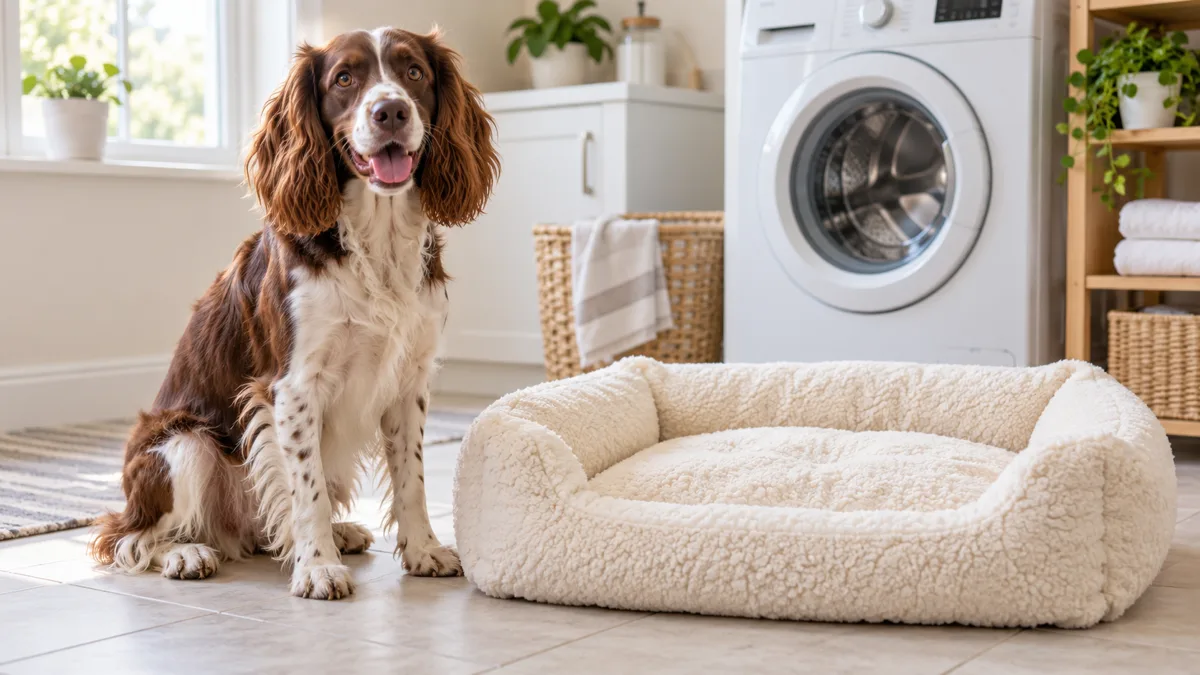
Dog beds collect more than fur. This guide covers machine-washable beds, hand washing, memory foam inserts, proper drying, and the quick spot-clean tricks that keep a bed fresh between full washes.