The first week I started cleaning my dogs' paws after every walk, I noticed something I had been ignoring for years: the dark grime on the towel. Road residue, lawn chemicals, gravel fragments. All of it had been tracked inside.
It took less than a minute to wipe four paws. The difference on the towel made this a permanent habit.
This guide covers a quick wipe method, a deeper wash for muddy or salty days, and how to set up a paw station so cleanup takes under two minutes.
Jump to a section
How to clean your dog’s paws after a walk
A quick wipe for dry days, a full wash for muddy ones, and the paw station that makes it automatic.
1. Why Post-Walk Paw Cleaning Matters More Than You Think
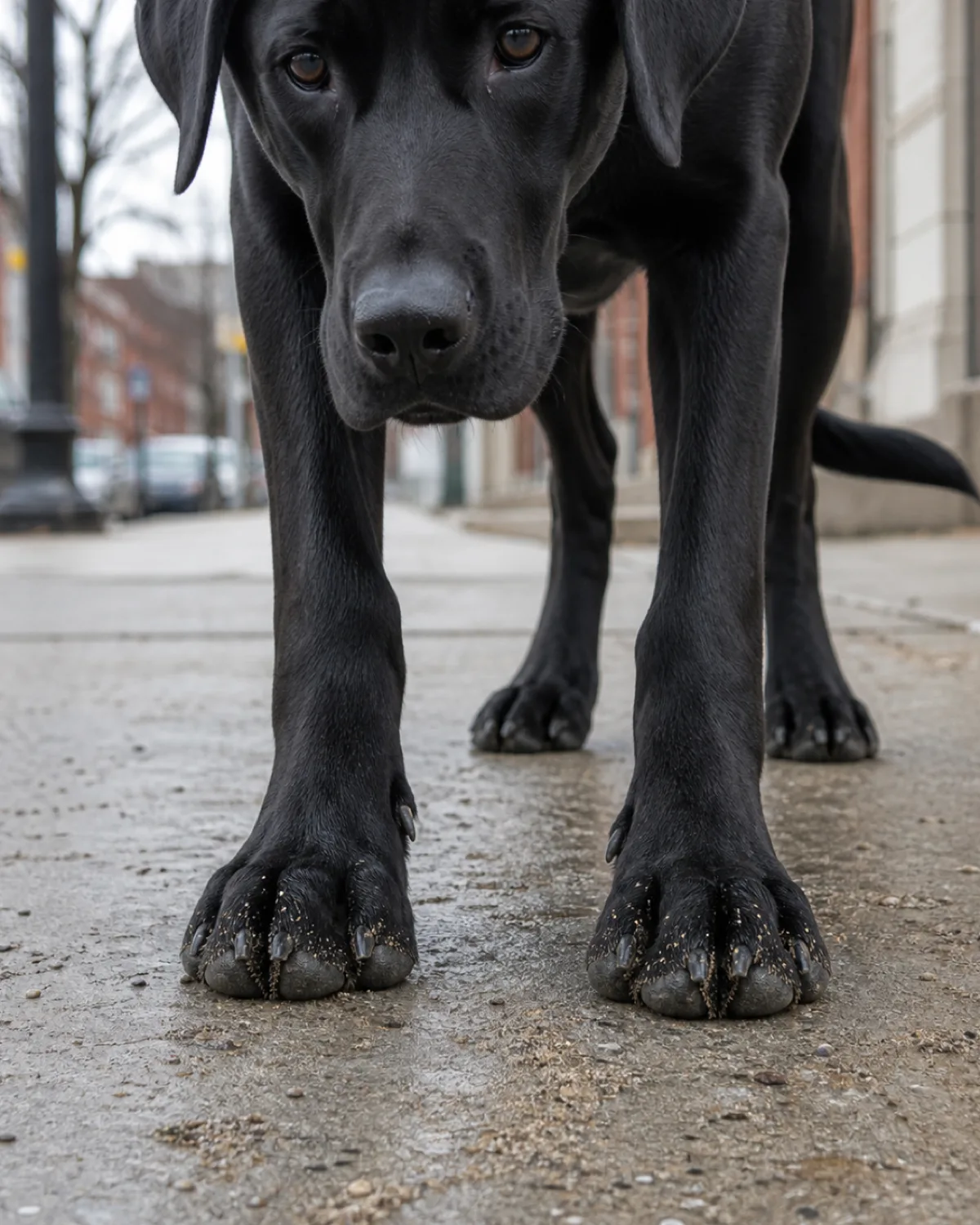
Your dog’s paws pick up more than dirt. City sidewalks carry residue from cleaning products, vehicle fluids, and discarded food. Suburban lawns hold herbicides, pesticides, and fertilizer granules. Winter streets add road salt and chemical de-icers that can irritate and crack paw pads.
Dogs lick their paws constantly. Every chemical, bacteria colony, and micro-fragment they walked through goes straight into their system. Paw cleaning is not about keeping your floors nice, though that is a welcome side effect. It is about reducing your dog’s ingestion of things that do not belong in their body.
The Hidden Layer Between the Toes
The spaces between the toes trap moisture, debris, and organic material that create a perfect environment for yeast and bacterial growth. A dog who chronically licks or chews their paws after walks often has irritation in those toe spaces that regular cleaning would have prevented.
2. Quick Wipe vs. Full Wash: How to Decide
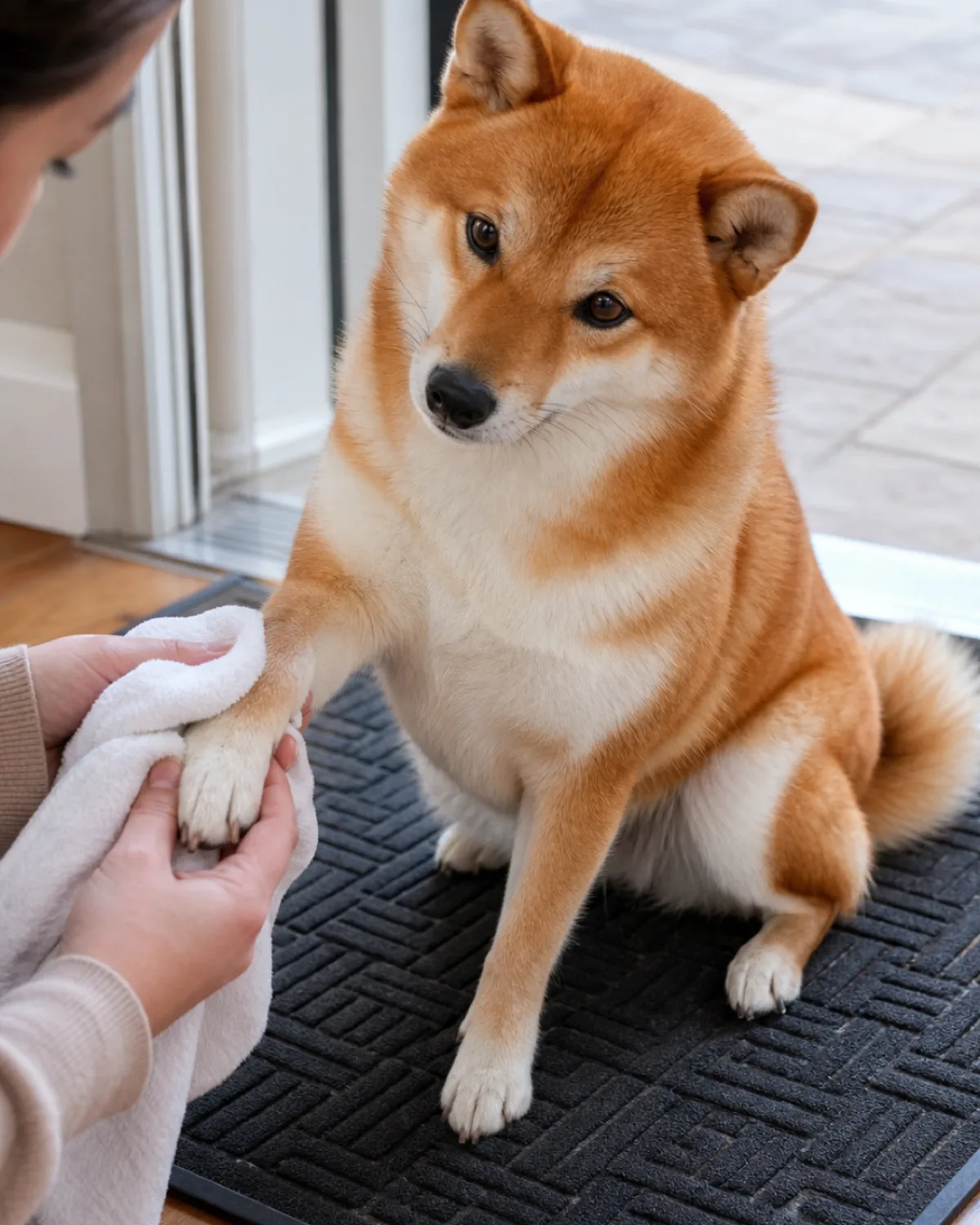
Not every walk demands a full paw soak. Matching your cleaning level to what your dog actually walked through saves time and protects the natural oils on their paw pads.
A quick wipe with a damp microfiber cloth handles dry-weather walks on pavement or short grass. It takes about thirty seconds for all four paws and removes surface dust, pollen, and light residue.
When a Full Wash Is Worth the Extra Minute
A full wash in a shallow basin makes sense after rain walks, muddy trails, snowy outings where road salt is present, or any time your dog walked through a recently treated lawn. The water lifts what a wipe cannot reach, especially from the toe spaces and the textured surface of the paw pads.
Which cleaning level does your dog need today?
Quick wipe or full wash
Match the method to what your dog walked through.
Quick wipe — 30 secondsDry weather, pavement, short grassDamp microfiber cloth from paw pad to toe spaces. No soap needed. Handles surface dust, pollen, and light sidewalk residue. Use this for most daily walks.
Full wash — 2 minutesRain, mud, snow salt, treated lawnsShallow basin with one to two inches of lukewarm water. Swirl each paw for ten seconds, then dry with a towel — especially between the toes. Use this after anything that sticks.
When in doubt, go with the full wash. The extra minute is worth it if your dog walked through anything you would not want them licking off their paws.
3. Setting Up a Paw Station by Your Door
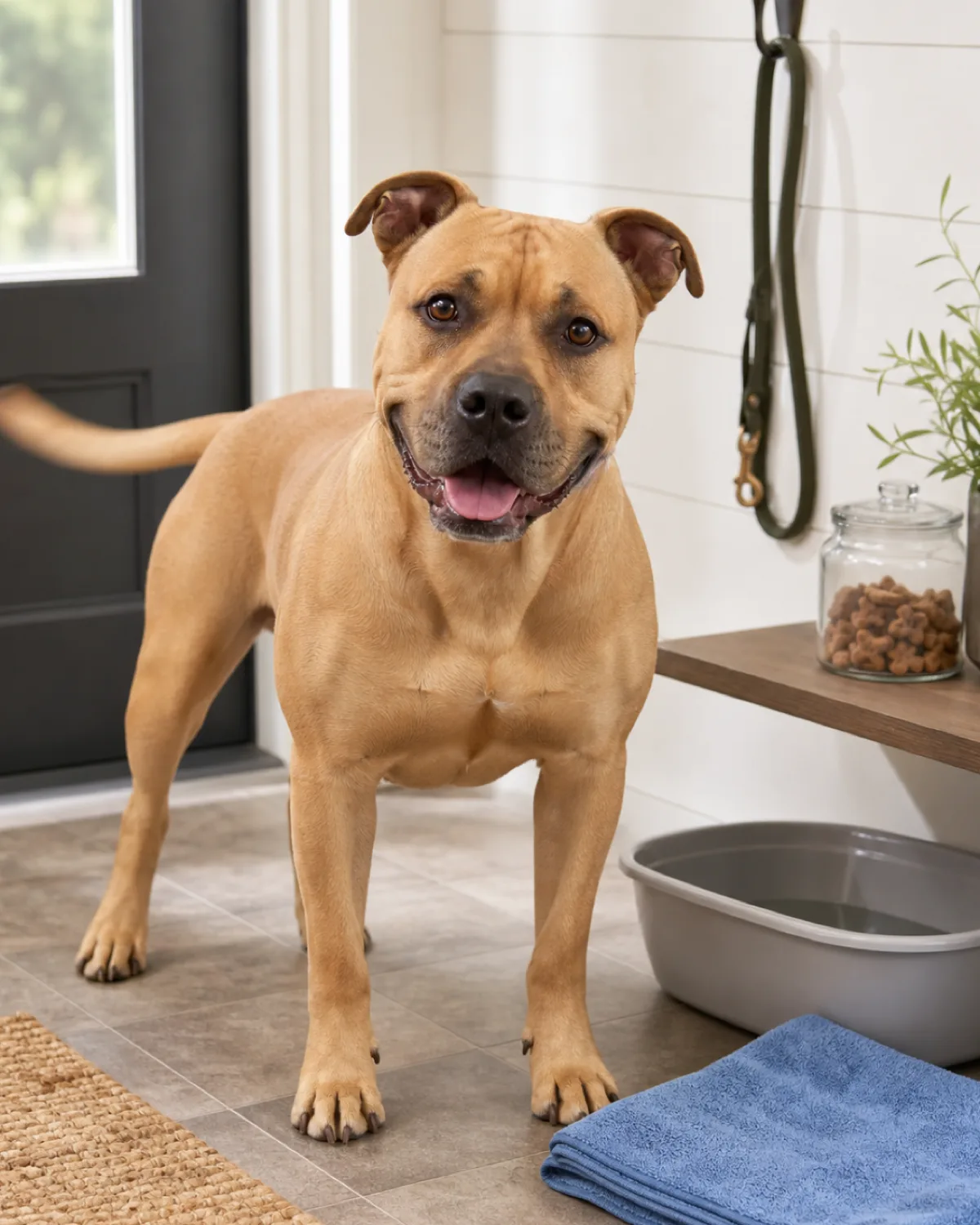
The biggest barrier to consistent paw cleaning is not willingness but convenience. If you have to walk to the bathroom, fill a basin, find a towel, and locate treats every single time, the habit will not stick.
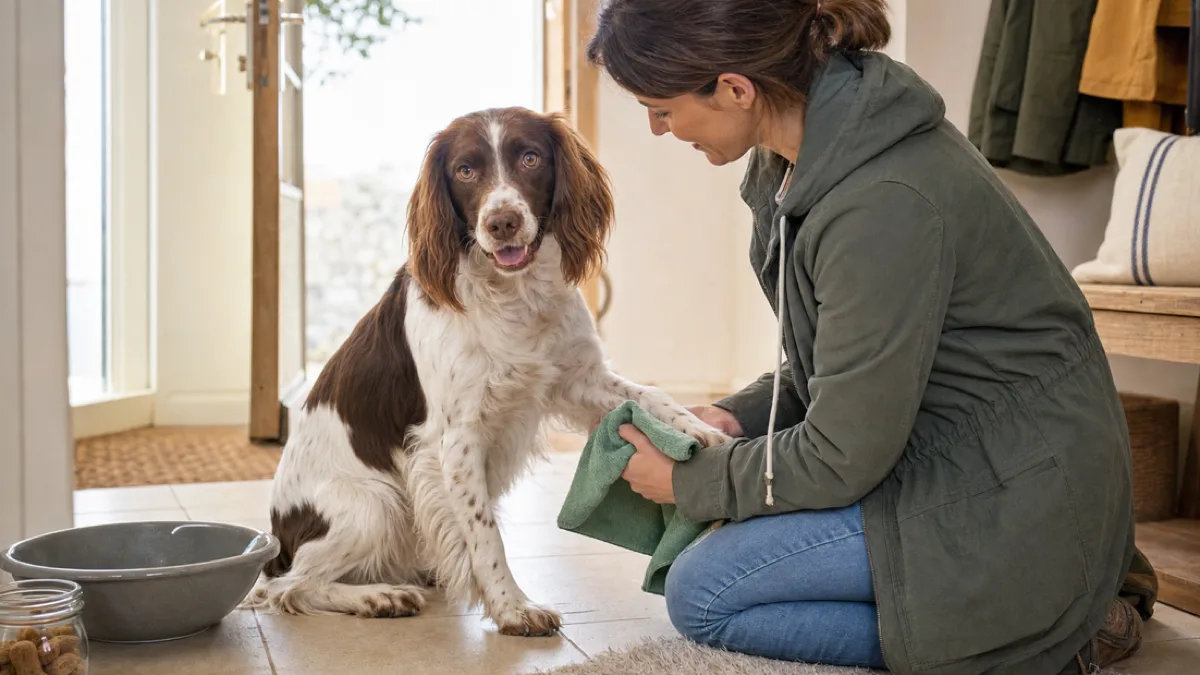
A paw station eliminates that friction. Place it at whatever door you use most after walks. The setup is minimal: a dedicated microfiber towel hanging on a hook, a shallow basin stored underneath, and a small jar of training treats within reach.
Making the Station Part of the Walk Routine
Clip the leash to a hook near the station so your dog stops in the right spot automatically. Within a week, most dogs learn that this pause between outside and inside is where they get a treat, and they start cooperating before you even reach for the towel.
4. The 30-Second Quick Wipe Routine
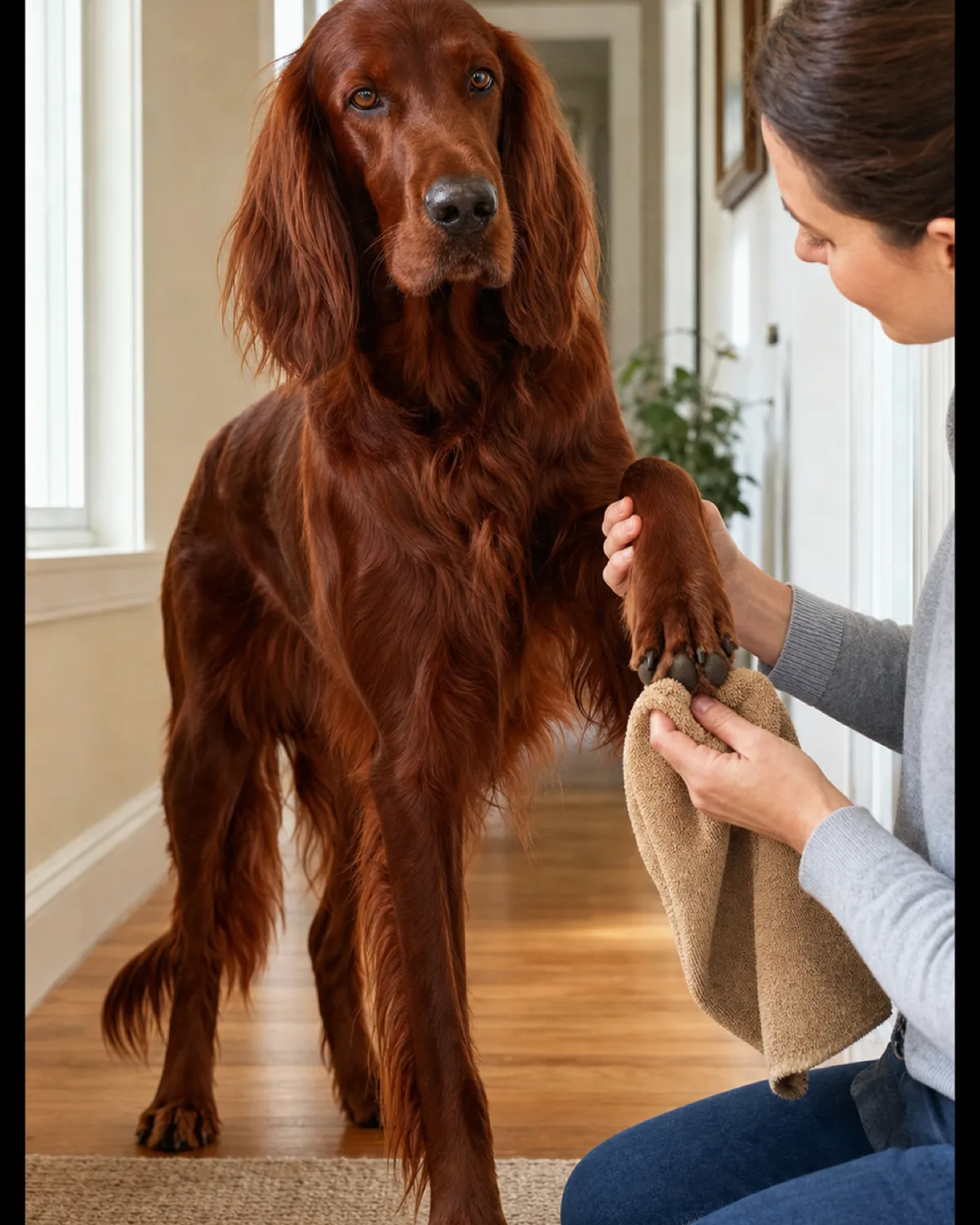
Dampen a microfiber cloth with plain water. Lift one paw gently with your non-dominant hand, supporting the leg at the wrist joint rather than pulling the toes.
Wipe the paw pad surface first, then work the cloth between each toe. Microfiber catches particles that a regular cotton towel slides over. Set that paw down, move to the next one, and repeat for all four.
The Touch That Makes Dogs Cooperate
Support the leg rather than gripping the paw. Dogs resist when their toes are squeezed or pulled outward, but most accept a gentle lift at the wrist. If your dog pulls away, the desensitization approach from the brushing guide applies here too — same logic, different body part.
5. The Two-Minute Deep Wash for Muddy Days
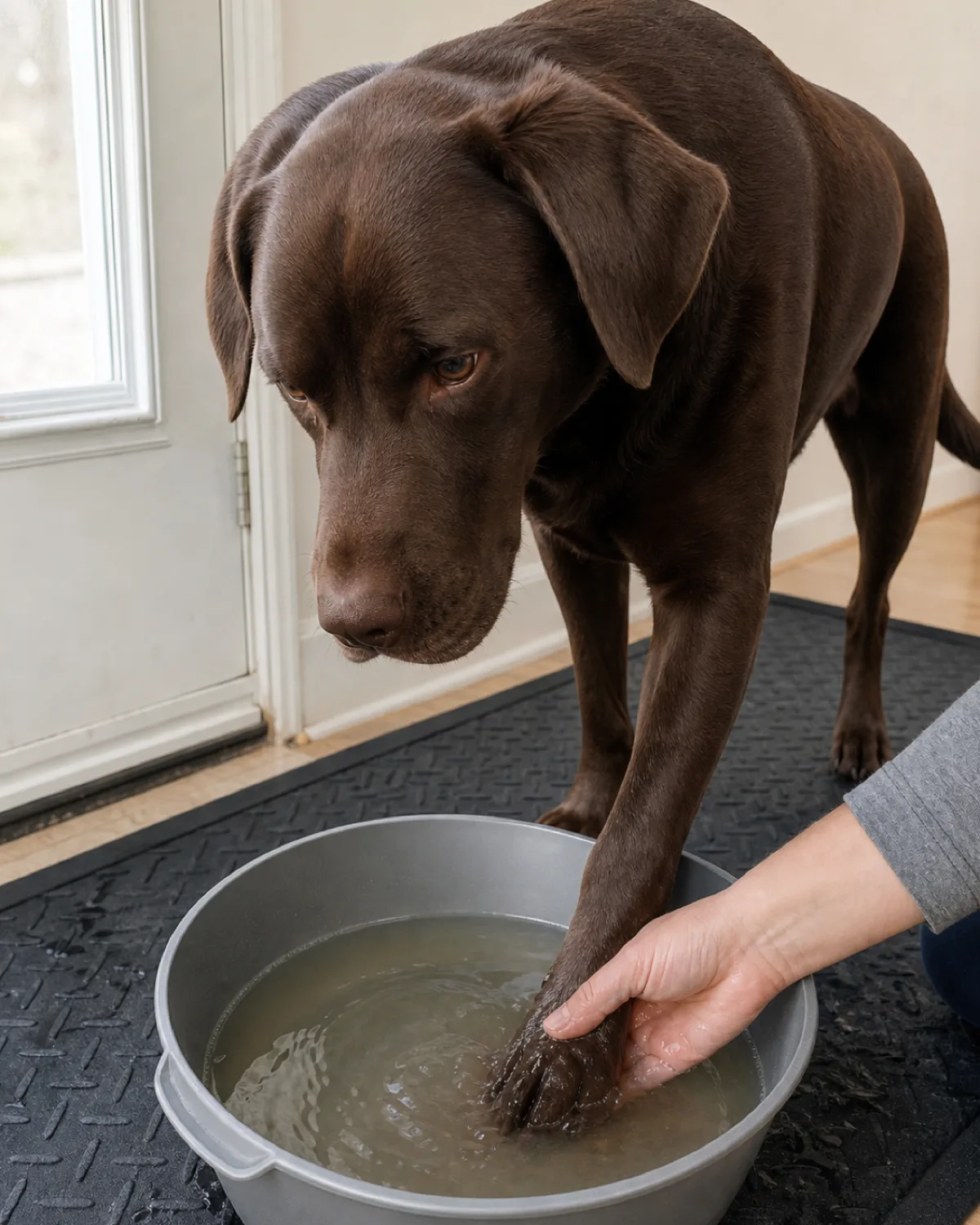
Fill a shallow basin with one to two inches of lukewarm water. No soap needed for routine mud removal — water alone dissolves mud and lifts salt residue effectively.
Place one front paw in the basin and gently swirl it for about ten seconds. Lift the paw out and dry it immediately with a microfiber towel, pressing the towel between each toe. Repeat with the other front paw, then the rear paws.
Winter Salt Demands the Full Wash
Road salt and chemical de-icers are the single strongest reason to upgrade from a quick wipe to a full wash. These products can cause chemical burns on paw pads if left on, and your dog will ingest them when they lick their feet.
The winter paw protection guide covers salt exposure in detail — the rinse step here is the daily follow-through on that protection.
6. Drying Between the Toes: The Step Most People Skip
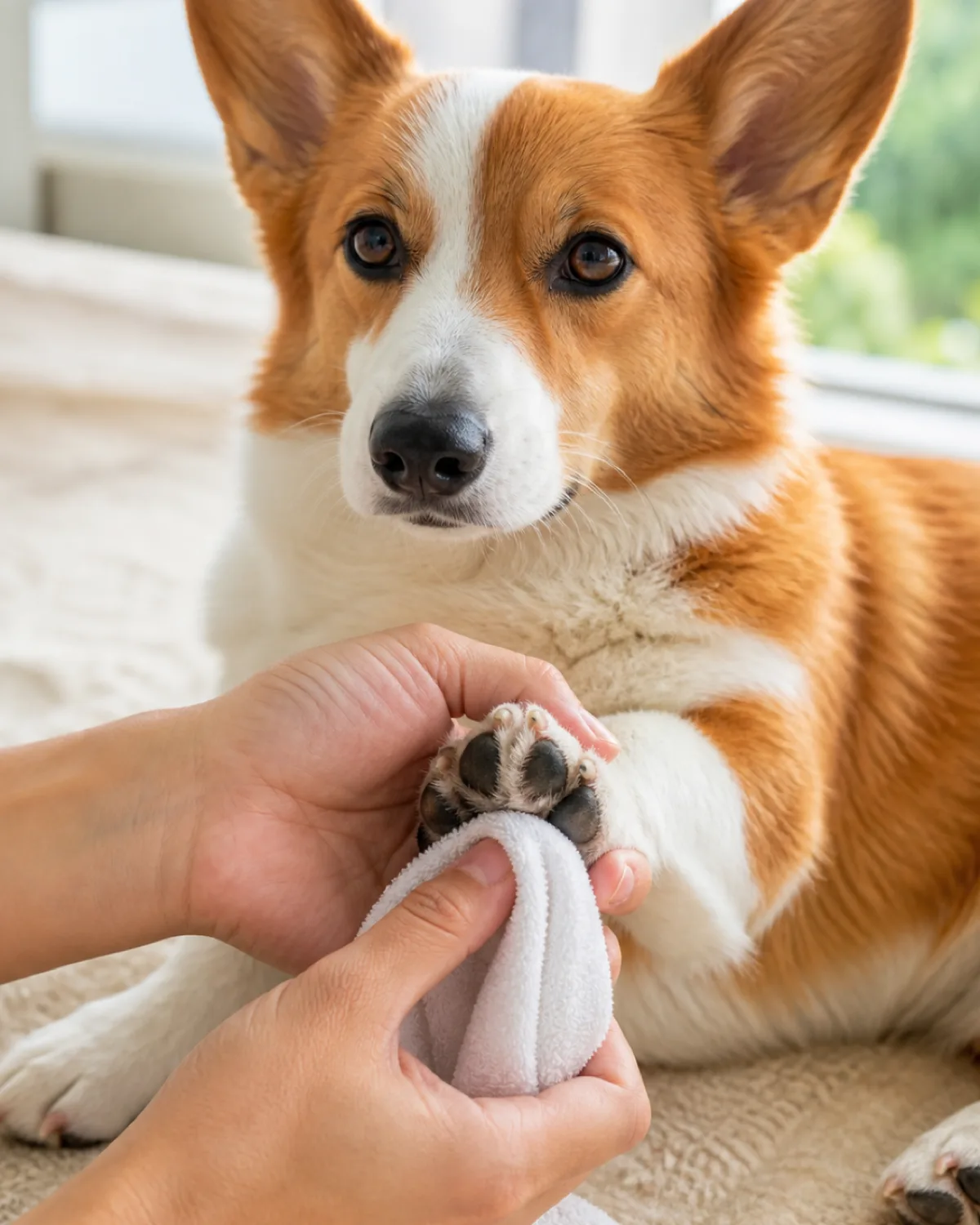
Wiping the paw pads and calling it done leaves the most vulnerable area untouched. The spaces between the toes stay damp, warm, and dark — ideal conditions for yeast overgrowth and bacterial infection.
Take the microfiber towel and work it gently between each toe after every wash. For dogs with long fur between the toes, the towel needs to reach the skin, not just the surface of the fur.
When Toe Fur Creates a Permanent Moisture Trap
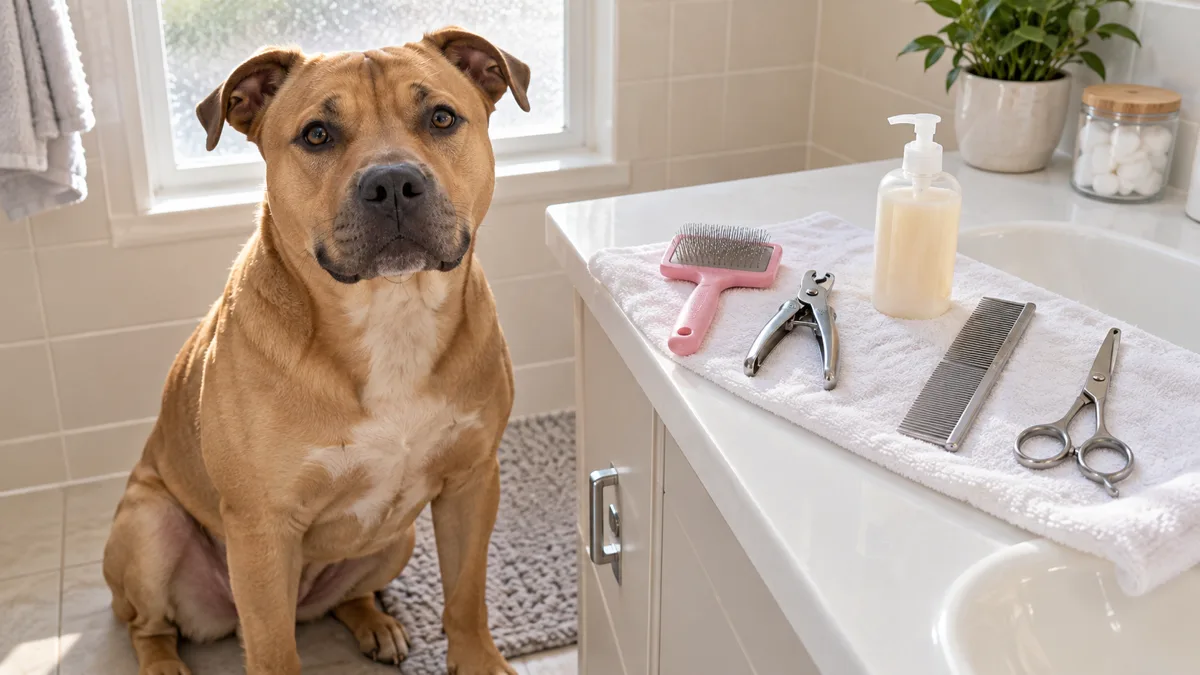
Long-haired and double-coated dogs often grow dense fur between their toes that holds moisture for hours after a wash. Trimming this fur with blunt-tipped grooming scissors makes both cleaning and drying faster and eliminates the chronic dampness that leads to yeast infections and that distinctive corn-chip smell.
The non-negotiables
Always do this — never do that
These rules keep the routine effective without overdoing it.
Always Do this
- Wipe or wash all four paws after every walk.
- Dry between the toes — not just the paw pads.
- Trim toe fur on long-haired dogs to prevent moisture trapping.
- Keep the paw station at the door you use most.
- Give a treat after cleaning to build a positive association.
- Check paw pads and toenails for damage during cleaning.
Never Avoid this
- Use human soap or alcohol-based cleaners on paw pads.
- Forcefully grab or squeeze the paw of a resistant dog.
- Skip the toe-drying step after a full wash.
- Use soap every time — plain water handles routine cleaning.
- Use hot water — lukewarm or cool only.
- Ignore persistent redness, swelling, or smell between the toes.
7. Teaching a Paw-Shy Dog to Accept Handling
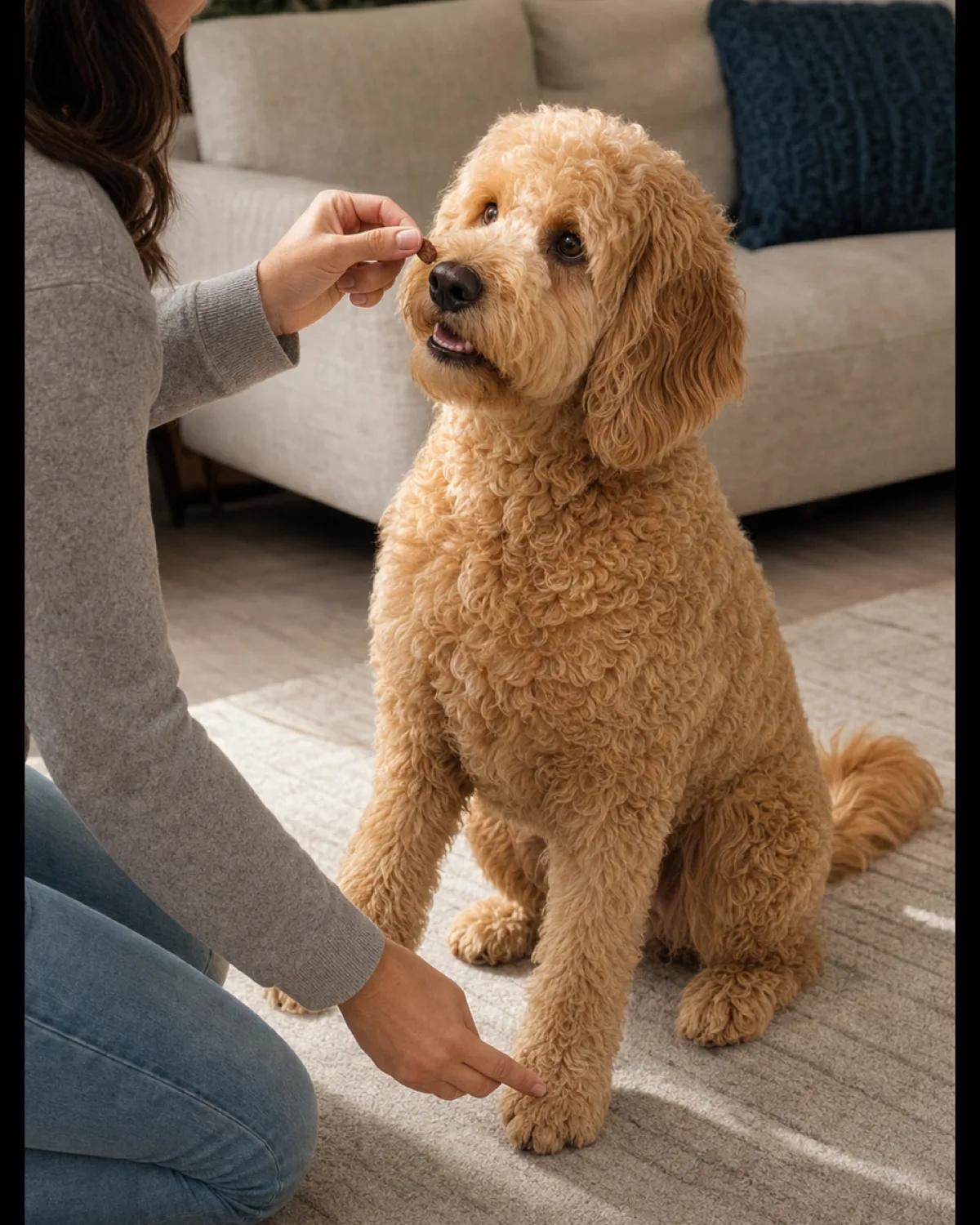
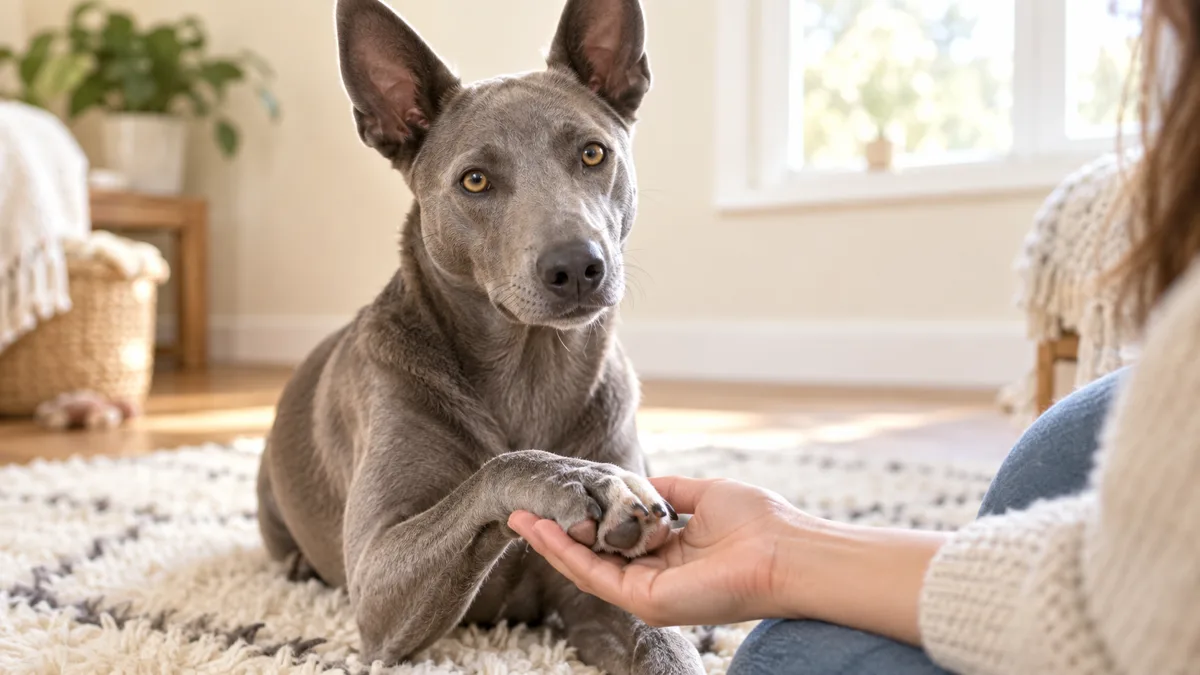
Some dogs pull their paws away the instant you touch them. This is not stubbornness — paws are sensitive, and many dogs have never had positive associations with paw handling.
The fix is a short desensitization process that takes about two weeks. Days one through three: touch the paw briefly and immediately give a treat. Do not wipe, hold, or lift. Days four through seven: touch and gently hold the paw for two seconds, then treat. Days eight through fourteen: hold the paw and lightly touch it with the towel, then treat.
A Bridge for the In-Between Days
During those two weeks, your dog still comes home with dirty paws. A silicone paw washer cup works as a hands-off interim solution — your dog steps into it, the bristles do the work through the water, and you do not need to grip or lift the paw at all.
8. Products That Help (and What You Do Not Need)
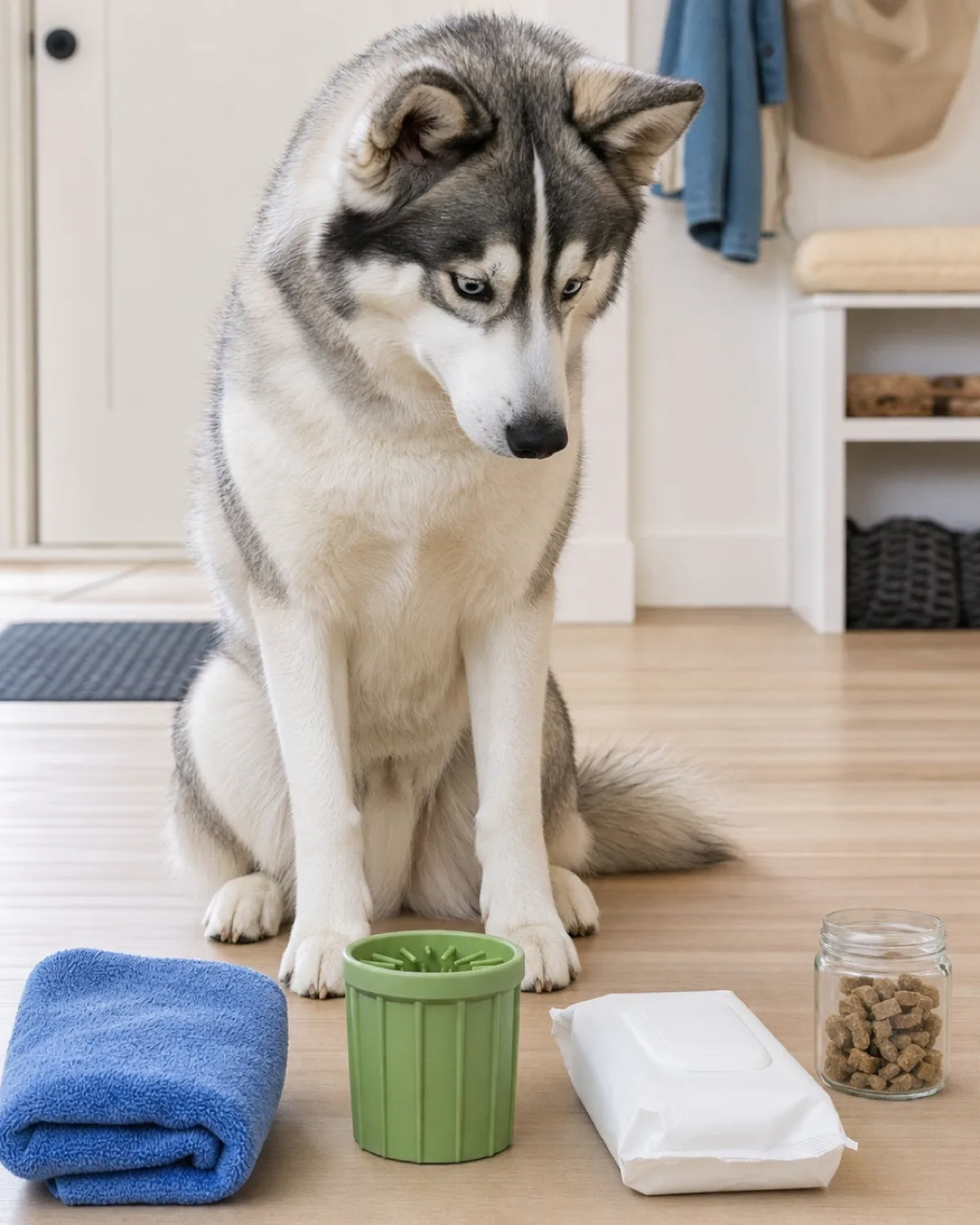
Microfiber towels are the single most useful paw-cleaning tool. They absorb five to seven times their weight in water and pick up particles that smooth cotton misses. Keep two or three in rotation so you always have a dry one ready.
A silicone paw washer cup is useful for small to medium dogs and for dogs who resist paw holding. Your dog steps in, you add water, twist gently, and the interior bristles clean the paw.
What You Can Skip
Antibacterial soap is unnecessary for routine cleaning and strips the natural oils that keep paw pads supple. Human baby wipes have a different pH than dog skin and can cause irritation with daily use. A hair dryer is overkill — paw pads air-dry quickly, and the noise often stresses dogs out. Stick with plain water and a good towel.
Save this routine
Your Paw-Cleaning Checklist
- Set up a paw station by the door (towel, basin, treat jar).
- Decide: quick wipe (dry day) or full wash (mud, salt, treated lawn).
- Lift each paw at the wrist — wipe pad first, then between each toe.
- Dry between every toe (the step most people skip).
- Check paw pads for cracks, cuts, or embedded debris.
- Check toenails for splits or breaks.
- Give a treat and praise — make cleanup the best part of the walk.
- Wash the paw station towel weekly.
9. Checking for Problems While You Clean
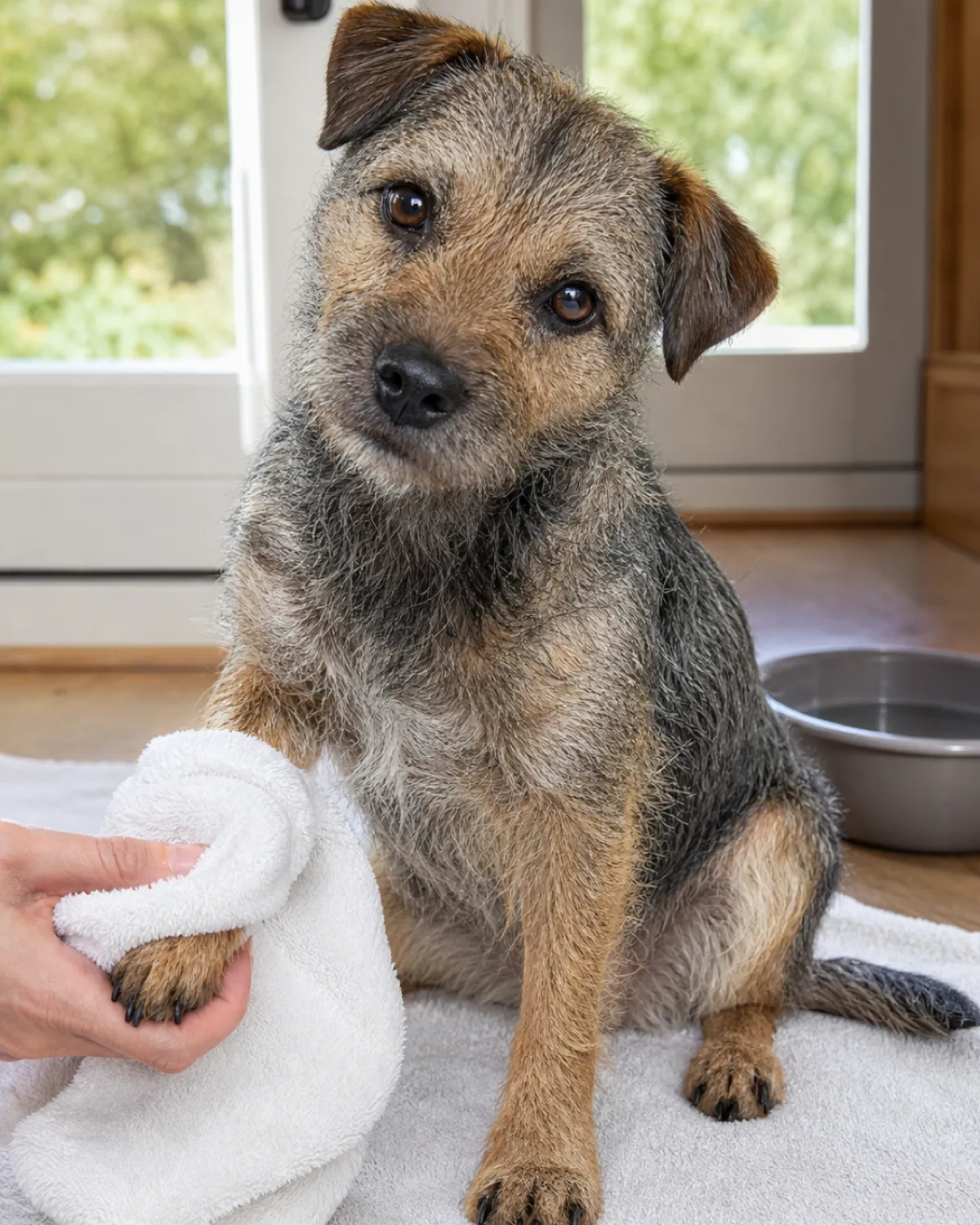
Paw cleaning doubles as a daily health check. You are already holding each paw and looking at it closely, which makes this the natural time to spot issues early.
Run your thumb across each paw pad and feel for cracks, cuts, or embedded debris. Tiny glass fragments or thorns wedge into paw pads more often than most owners realize. Check each toenail for splits or breaks, especially after walks on rough terrain.
What the Toe Spaces Tell You
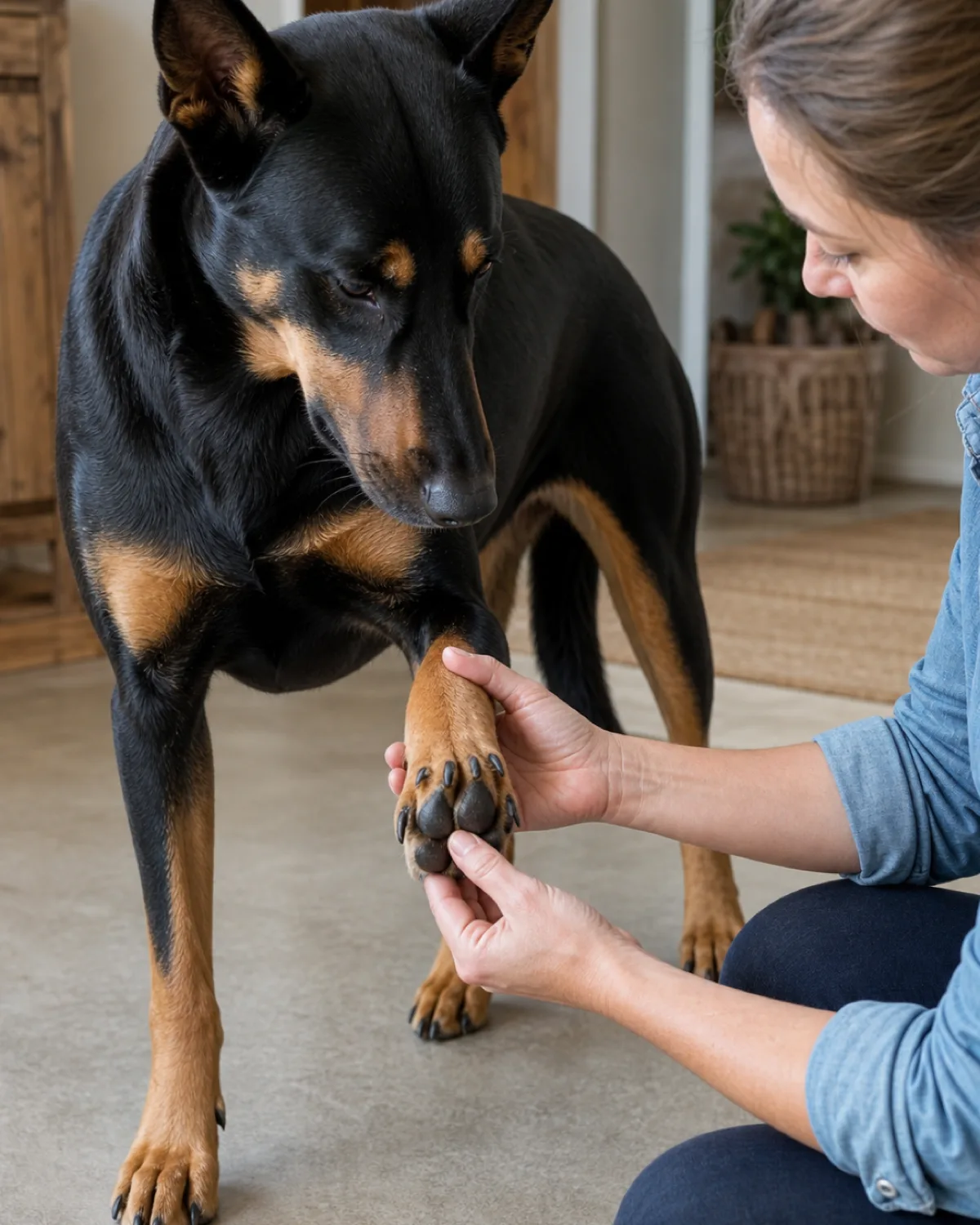
Redness, swelling, or a yeasty smell between the toes means irritation is already underway. Occasional mild redness after a long walk on rough ground can be normal, but persistent redness, swelling, or discharge warrants a vet visit. Catching it during a routine cleaning means catching it early.
10. Making It a Habit Both of You Look Forward To
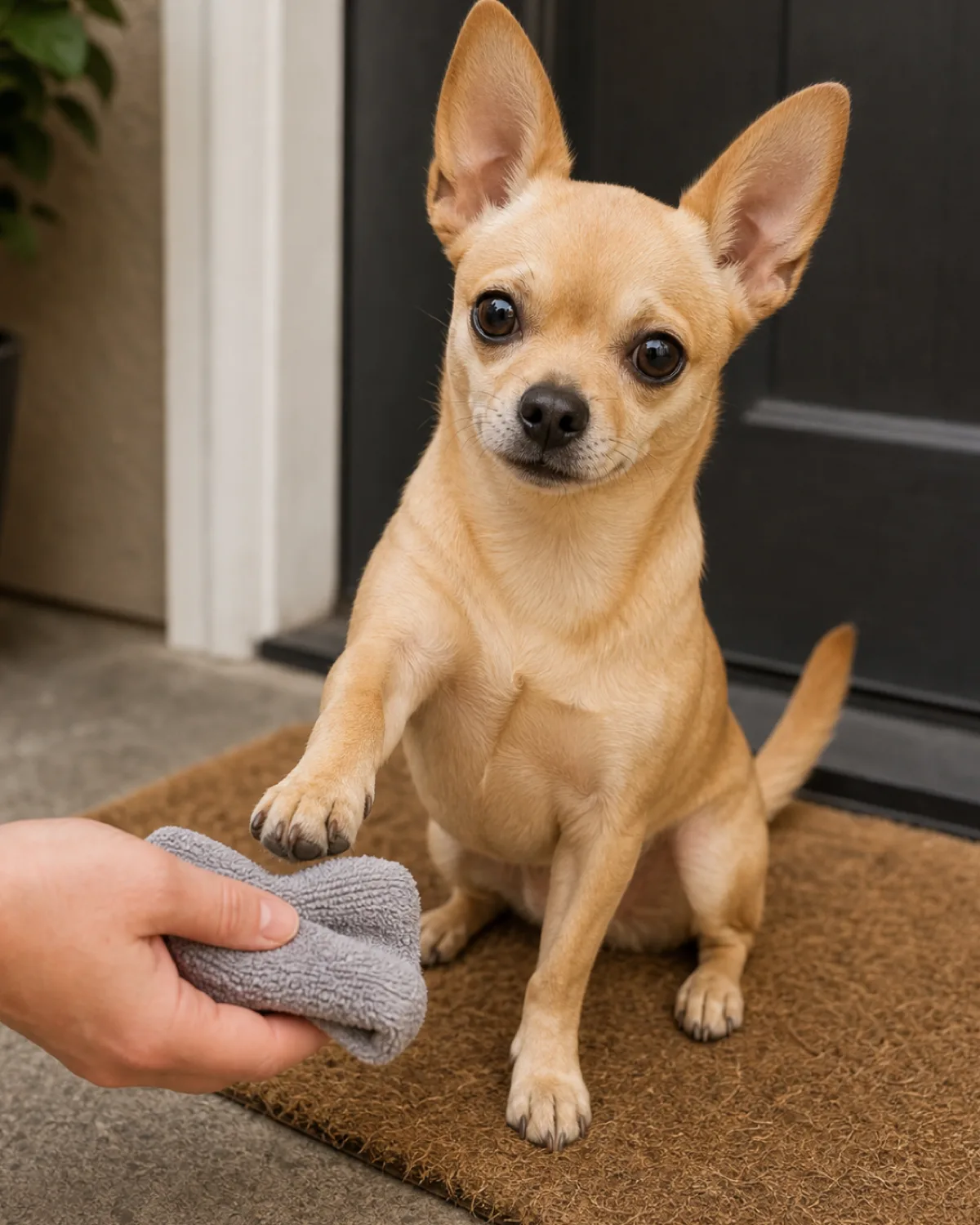
Consistency turns paw cleaning from a chore into an automatic routine. The most effective approach is to treat it as part of the walk itself, not a separate task that happens after.
Walk ends at the door. Leash clips to the hook. Dog sits at the paw station. Four paws get wiped. Treat happens. Door opens. Within two weeks of this exact sequence, most dogs start sitting at the station without being asked because they know the treat is coming.
The Long-Term Payoff
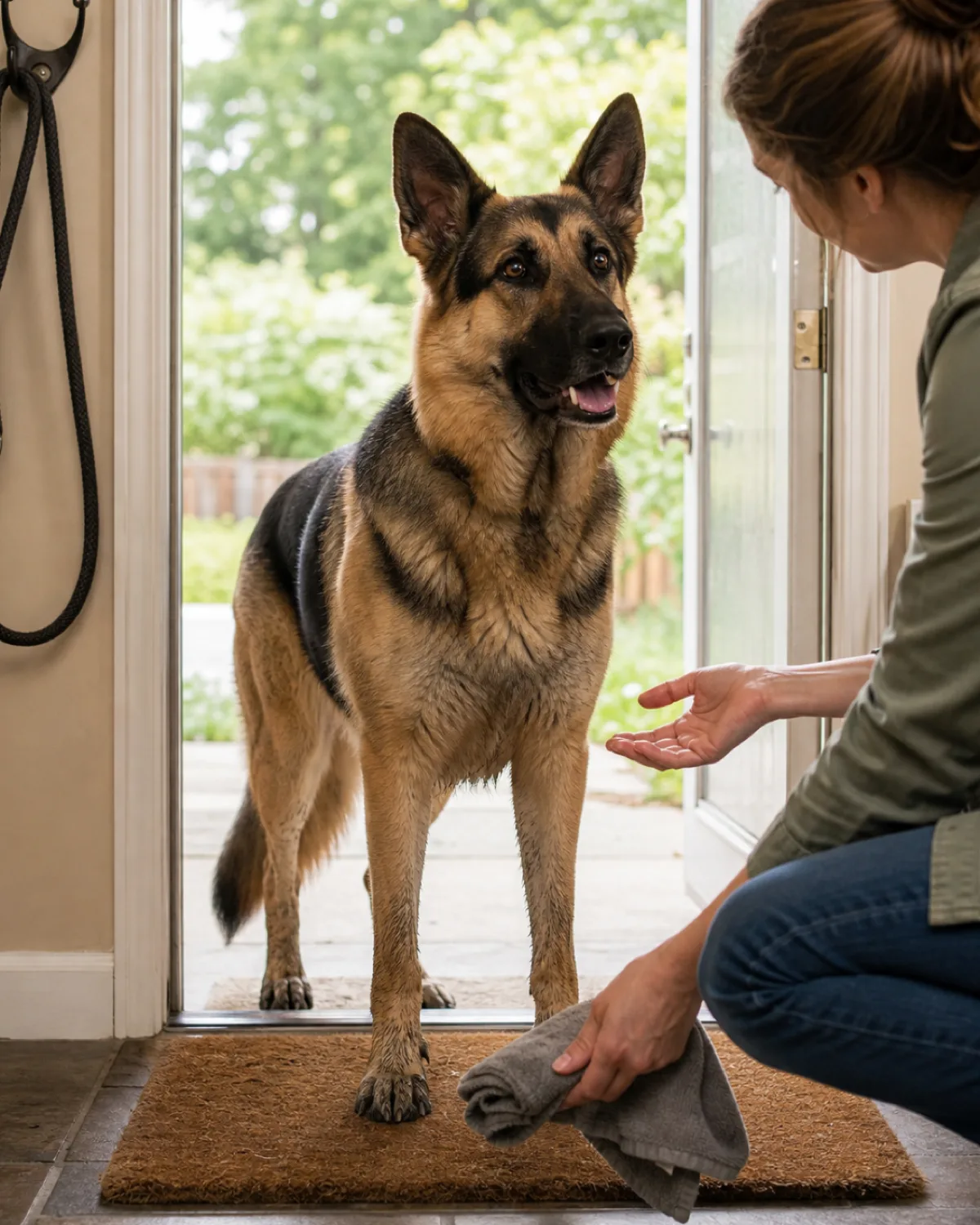
A dog who offers their paw at the door is a dog who will also tolerate nail trims, vet exams, and first-aid treatment on their feet without a fight. Daily paw handling builds the kind of trust that pays off in every other grooming and care situation.

About the author
Jess Calloway
Jess Calloway edits Pawliqa, where she shares dog care, grooming, training, and new-owner tips — plus DIY and pet-friendly home ideas — for anyone who wants a happy, well-cared-for dog. As a dog mom to three very different dogs, she writes the honest, tested version of what actually works. Every guide is image-led and reviewed for clarity, usefulness, image accuracy, and Pinterest-to-page alignment before it goes live. Visit the About page.