Nobody tells you the hardest part of getting a puppy is the guilt you feel closing the front door behind you. The first time I left our youngest alone, I sat in the driveway watching the camera feed, convinced she would cry until a neighbor called.
She chewed her Kong for about twelve minutes, circled her bed twice, and fell asleep. It was completely anticlimactic — but only because we had practiced for two weeks before that moment.
Here are ten steps that teach a puppy to stay home alone calmly, starting today.
Jump to a step
10 steps for leaving a puppy home alone
From the first five-minute practice run to building up to a full workday, these ten steps teach your puppy that being alone is safe, boring, and perfectly fine. Start wherever you are right now.
Start With Five Minutes, Not Five Hours
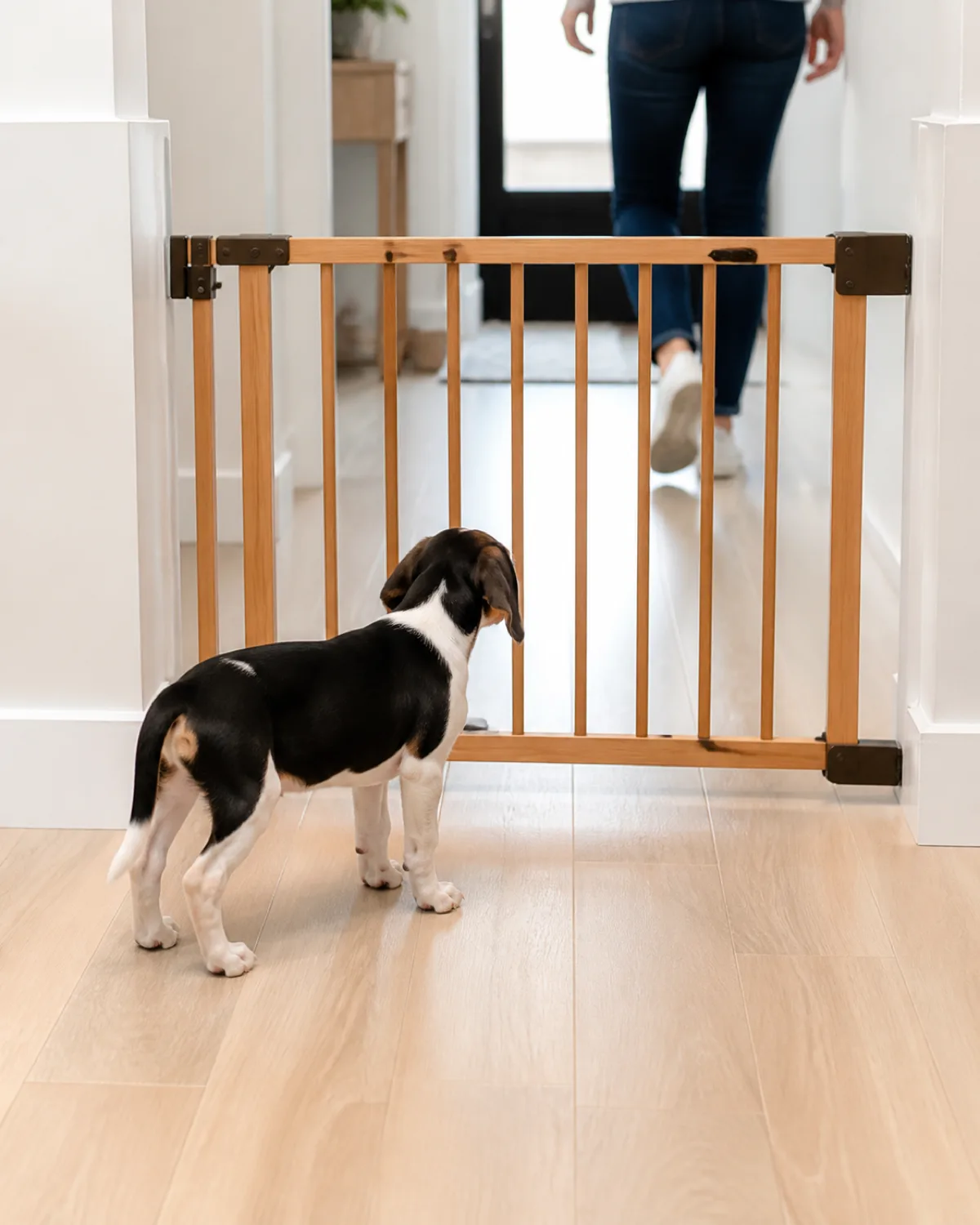
The biggest mistake new puppy owners make is treating the first day alone like a test. They leave for work, come back eight hours later, and find a puddle, a chewed baseboard, and a puppy that is now terrified of being left.
Start with absurdly short sessions. Walk to the front door, step outside, close the door, count to thirty, and come back in. If the puppy stayed quiet, repeat and add a minute. If the puppy cried the entire time, shorten it. The goal is for the puppy to experience you leaving and returning before it has time to panic.
Five minutes of calm alone time teaches more than eight hours of stressed alone time. The puppy needs dozens of repetitions of this short loop — door closes, nothing bad happens, door opens — before the pattern sticks.
Do three to five short rounds a day for the first week. By the end of that week, most puppies can handle fifteen to twenty minutes without fussing.
Create a Safe Space Your Puppy Actually Wants to Be In
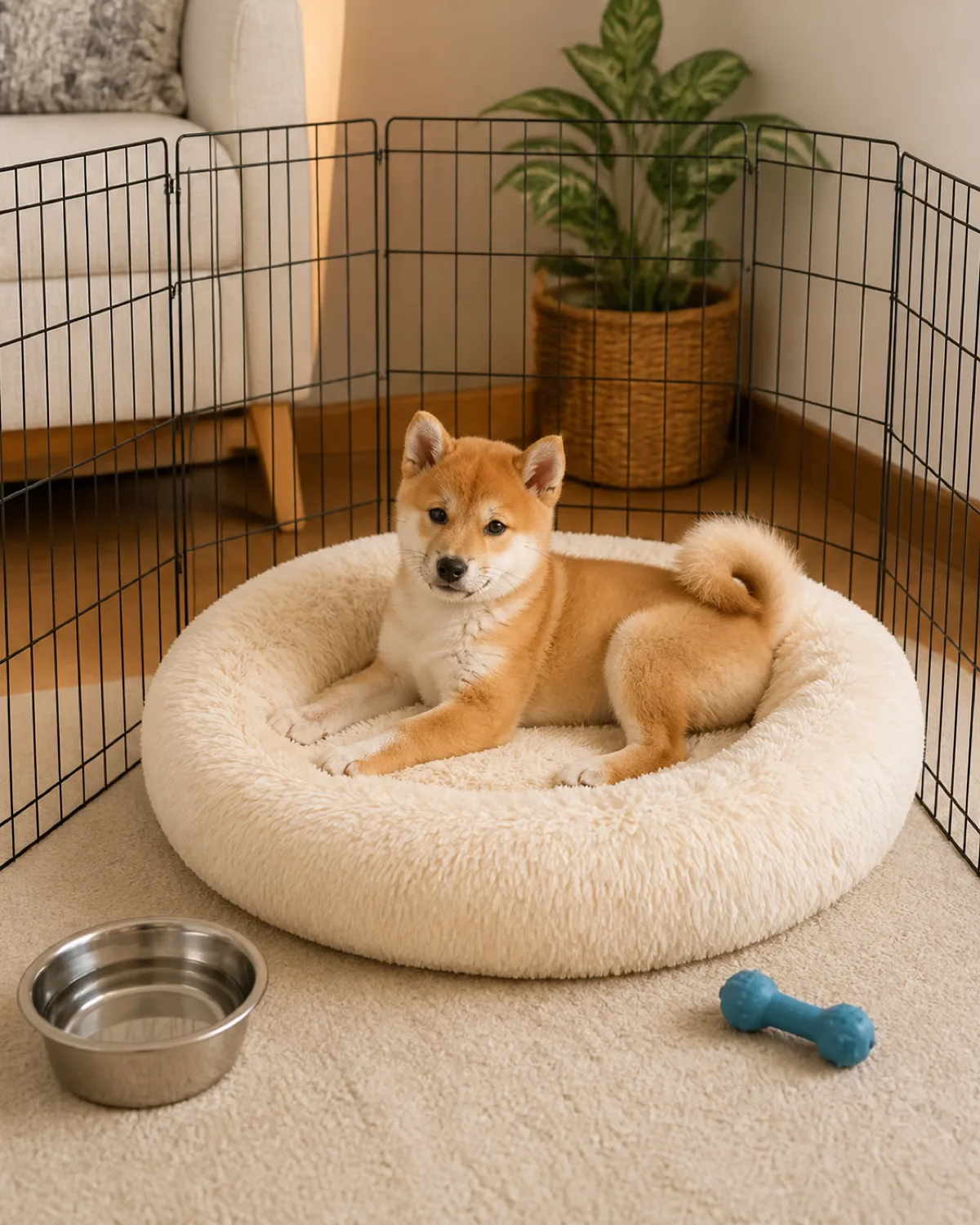
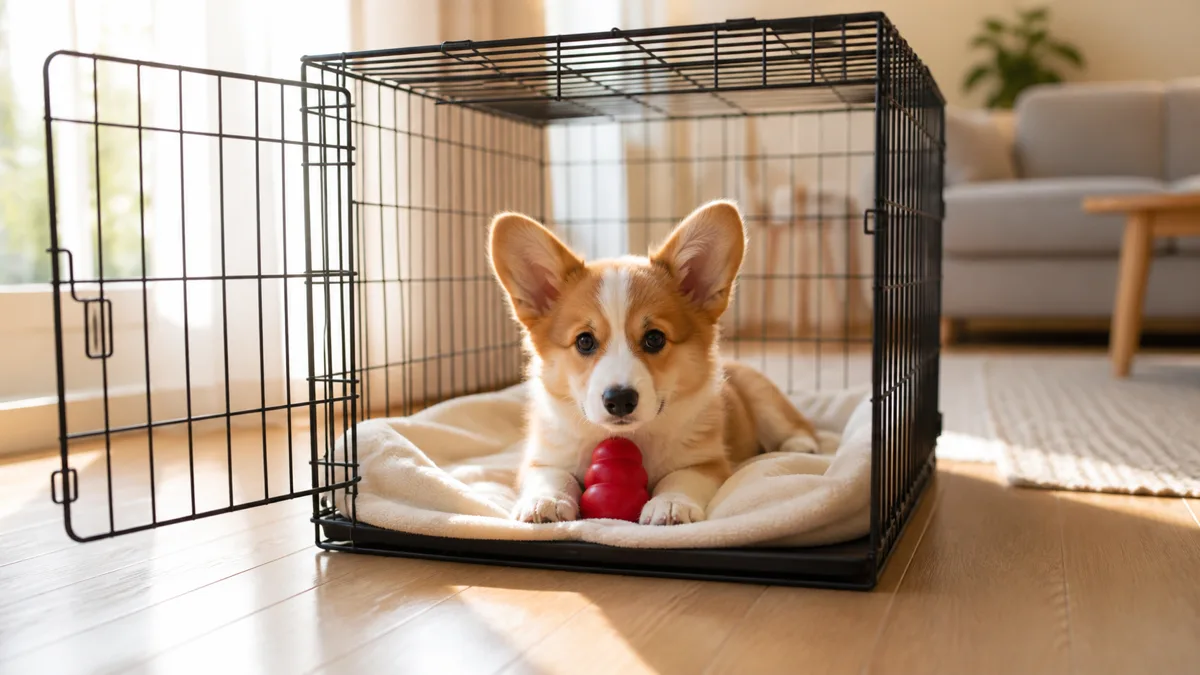
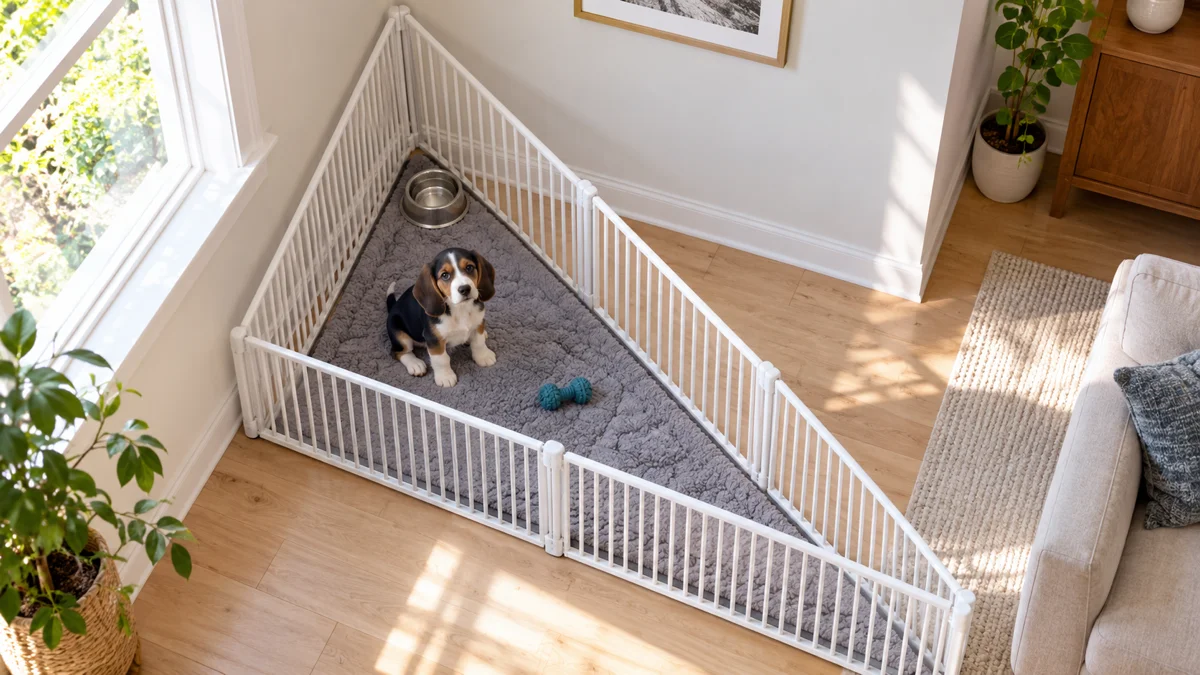
A puppy left alone in a whole house will find something to destroy. A puppy left in a well-set-up pen or open crate with a bed, water, and a chew toy will settle down because there is nothing else to do.
The space should be small enough to feel cozy but big enough for the puppy to stand, turn around, and stretch out. An exercise pen in a living room corner or an open crate with the door propped work well. Put the bed in there, add a water bowl that cannot tip, and toss in one or two safe chew toys.
The key is making this space a place the puppy chooses to hang out in even when you are home. Feed meals inside it. Drop treats into it randomly during the day. Let the puppy nap in it with the door open while you sit nearby. If the puppy only goes in there when you leave, it becomes a signal for loneliness instead of a signal for rest.
For a deeper guide on building positive crate associations from scratch, read our full walkthrough on how to crate train a puppy.
Practice Leaving and Returning Without Drama
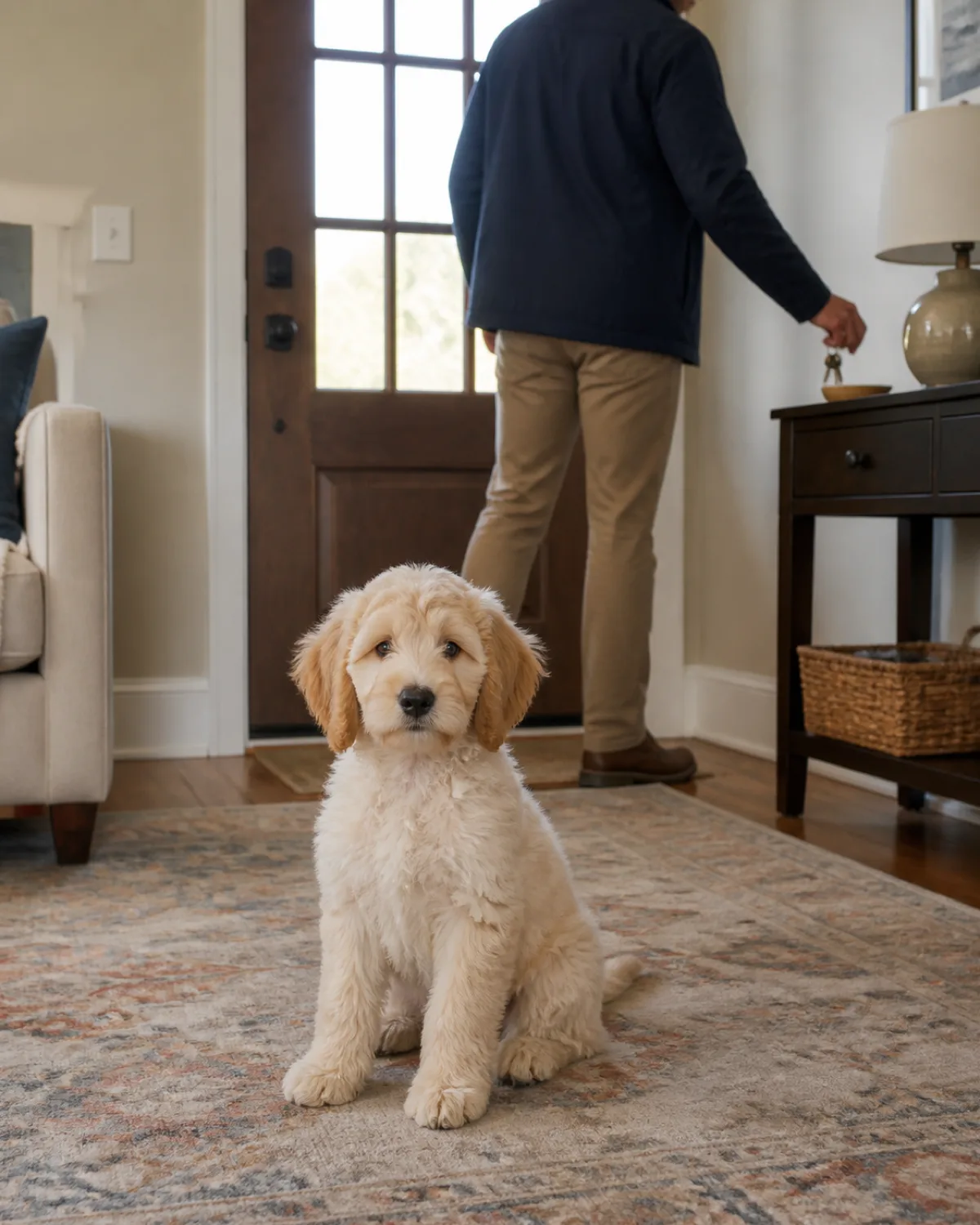
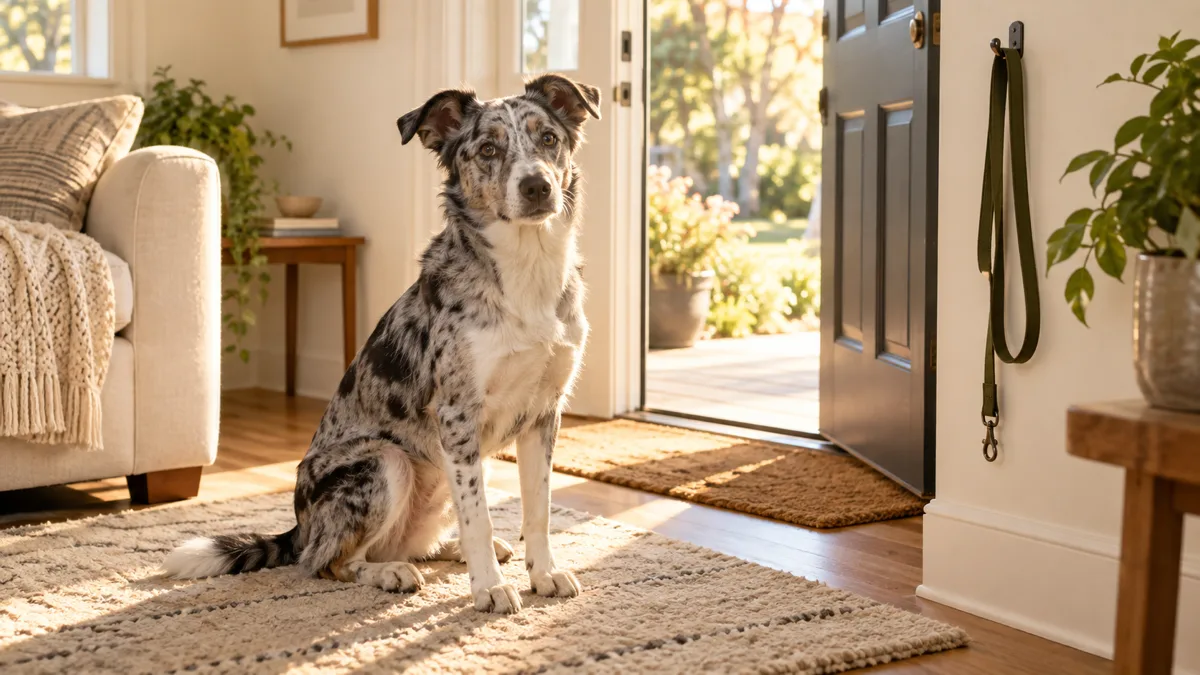
The way you leave matters more than you think. Long, emotional goodbyes — crouching down, talking in a sad voice, repeatedly telling the puppy you will be right back — teach the puppy that departures are a big deal worth getting upset about.
Pick up your keys, put on your shoes, and walk out. No eye contact. No narration. Just leave.
The return is the same. Walk in, set your things down, and ignore the puppy for the first minute or two. Once it has four paws on the floor and has stopped wiggling or jumping, then greet it calmly. You are rewarding the calm state, not the frantic excitement of your arrival.
This feels cold, but it reframes the entire experience. Leaving and returning become non-events, which is exactly what you want — because a non-event is not worth panicking about.
Where you are right now determines where to start
Which step to tackle first
Every puppy is different. Pick the scenario that sounds most like your situation and start there.
Leave Something That Smells Like You
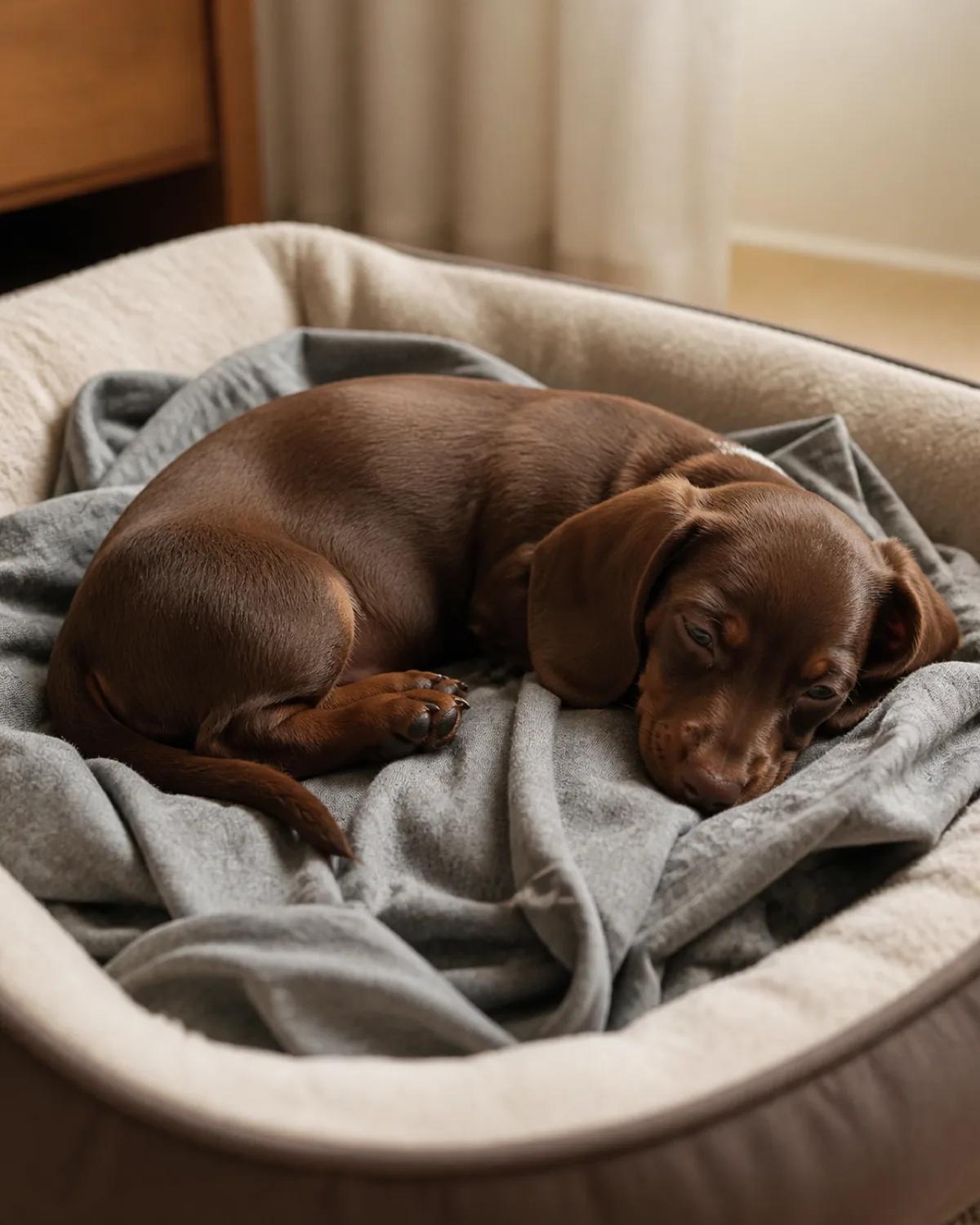
Your scent is the most powerful comfort tool you own, and it costs nothing. Take a T-shirt you have worn for a day or two — not freshly washed — and drape it over the puppy's bed or tuck it inside the crate.
Puppies navigate the world through their noses first. A shirt that smells like you tells the puppy's brain that you are nearby even when you are not visible. It does not replace the practice of short departures, but it lowers the baseline anxiety level enough that those practice sessions go more smoothly.
Swap the shirt every few days so the scent stays strong. An old shirt that has lost your smell is just a rag and does nothing.
Frozen Treats Keep a Puppy Busy Longer Than Any Toy
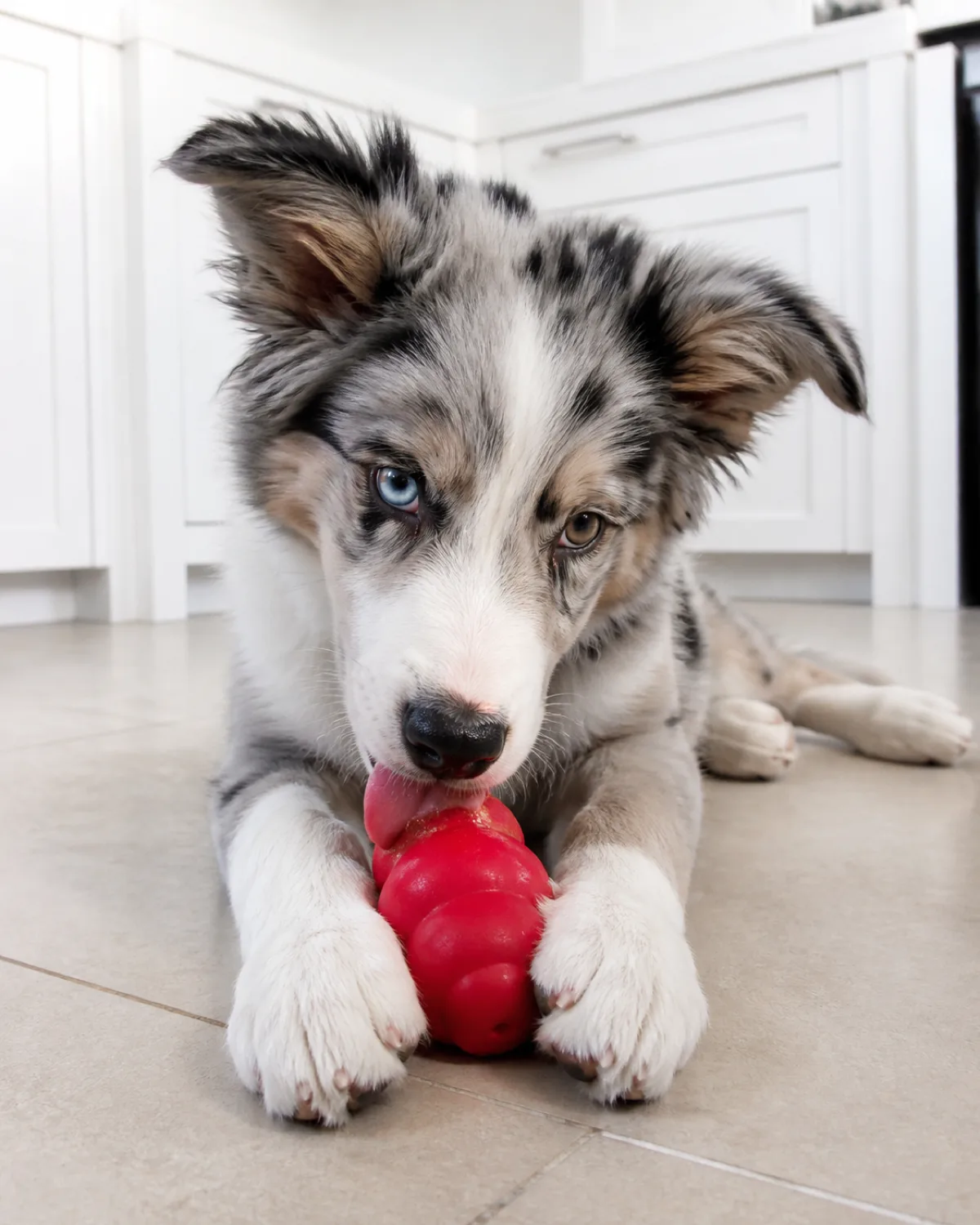
The first ten to fifteen minutes after you leave are the hardest for a puppy. That is when the anxiety spikes, and if the puppy has nothing to do during that window, it will cry, pace, or chew something it should not.
A frozen Kong stuffed with peanut butter, mashed banana, or soaked kibble takes fifteen to twenty minutes to work through. By the time the puppy finishes, the stress peak has passed and the puppy is tired enough to nap.
Prepare two or three stuffed Kongs the night before and keep them in the freezer. Hand one to the puppy as you walk out the door — not five minutes before, right as you leave. The treat becomes the new association with your departure instead of the anxiety.
For more ideas on keeping a puppy occupied with enrichment activities, check our guide on how to keep your dog entertained indoors.
Background Noise Helps Fill the Silence
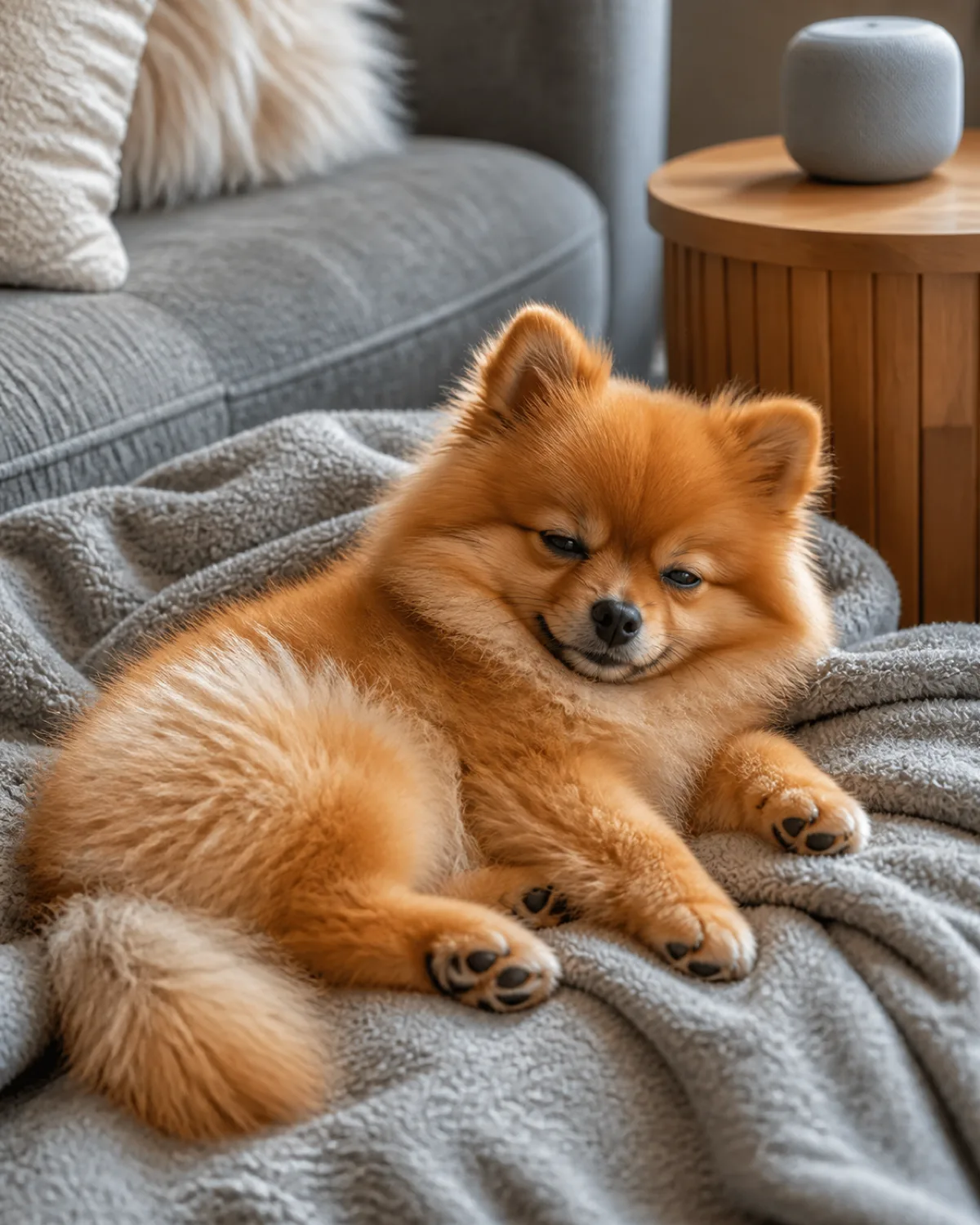
A quiet house amplifies every sound. The neighbor's car door, a bird on the gutter, a delivery truck — each one triggers a puppy's alert response, which leads to barking, pacing, or full alarm mode.
Leave a radio, podcast, or TV playing at a low, steady volume. The constant background noise masks the random sounds that set off the puppy and fills the silence that can feel unnatural to a young dog used to having people around.
Classical music and talk radio tend to work better than action movies or music with heavy bass. The goal is a calm, monotone backdrop — not entertainment.
Start playing the background noise while you are still home so the puppy does not learn to associate it only with being alone. If the radio only goes on when you leave, it becomes another departure cue.
The system behind stress-free alone time
4 rules that make solo time work
Every step in this guide builds on these four principles. Keep them in mind and the details will fall into place on their own.
Short and boring beats long and dramaticDozens of short, uneventful absences build confidence faster than one long test. The puppy learns the pattern — you leave, nothing bad happens, you come back — through repetition, not willpower.
Prevent the panic, do not punish itIf the puppy panics while alone, the absence was too long. Shorten the next session. Punishing a puppy for what it did while scared teaches nothing except that your return is unpredictable too.
The safe space must be a choice, not a sentenceThe crate or pen should be a place the puppy walks into voluntarily during the day. If it only means being left, it becomes a trigger for stress instead of a signal for rest.
Calm departures and calm arrivals are the frameHow you leave and how you come back set the emotional tone for everything in between. Boring transitions teach the puppy that alone time is a normal, low-energy part of the day.
Puppy-Proof the Alone Zone Before You Walk Out
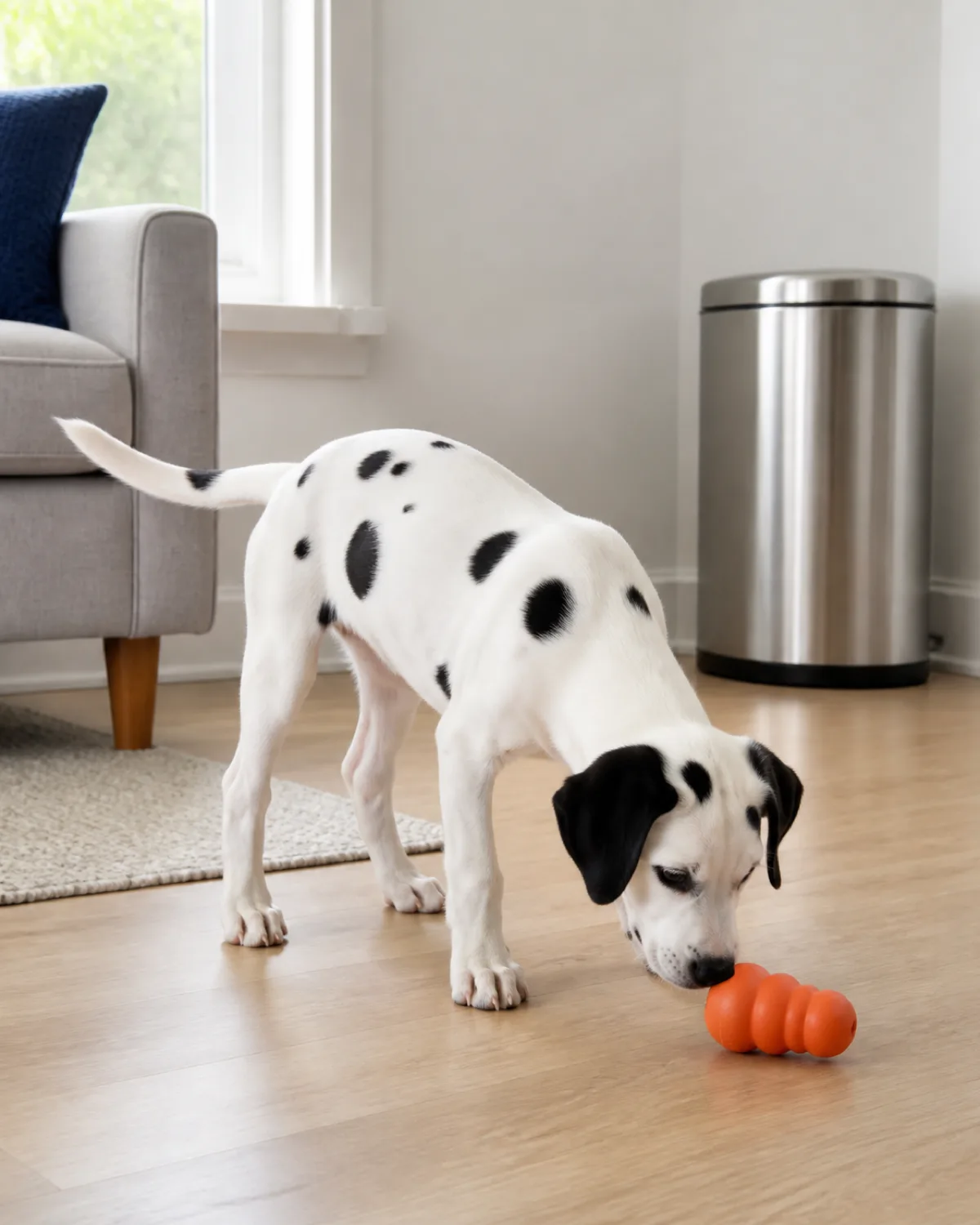
A puppy left alone in an unsafe space will find trouble. It is not misbehavior — it is a puppy being a puppy with no supervision and too many options.
Before every departure, scan the alone zone. Electrical cords tucked behind furniture or covered with cord protectors. Trash can removed or switched to a heavy lid model. Shoes, socks, and anything chewable picked up. Houseplants moved out of reach, especially anything toxic like lilies, pothos, or sago palm.
Leave only items the puppy is allowed to chew: a Kong, a Nylabone, a braided rope toy rated for the puppy's size. Anything small enough to swallow or soft enough to shred into pieces should not be in the space unsupervised.
This is not a one-time setup. Puppies grow, reach higher, and get more creative. What was safe at ten weeks may not be safe at sixteen weeks. Re-scan the zone every few days as the puppy's reach and energy level change.
Build Up to Your Actual Work Schedule Gradually
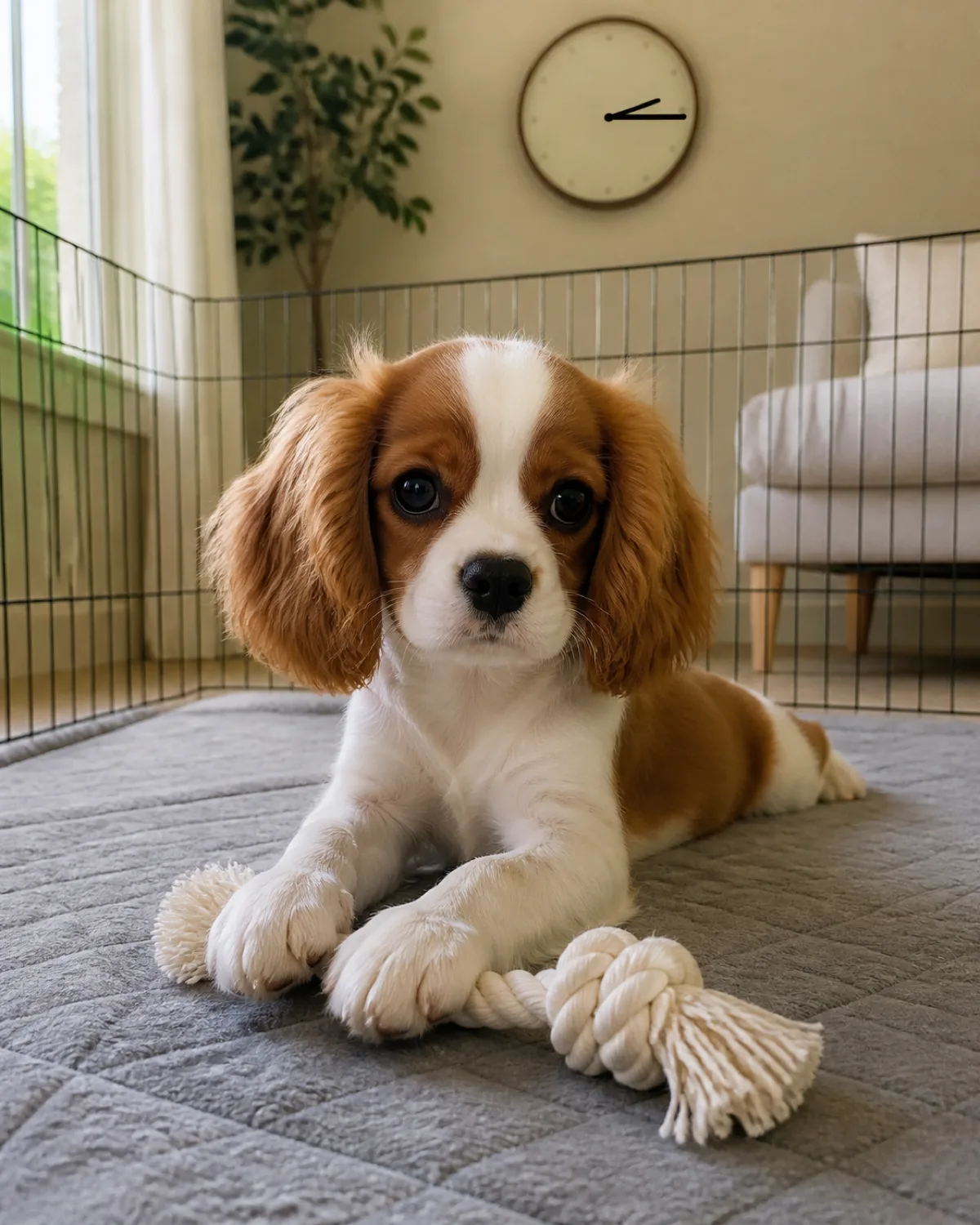
If you work eight hours a day, the puppy does not need to handle eight hours on day one. It needs to handle fifteen minutes first. Then thirty. Then an hour. Then two.
Increase the duration by about fifty percent each successful session. If the puppy handled twenty minutes well yesterday, try thirty today. If thirty went fine, try forty-five tomorrow.
If any session produces real distress — sustained howling, drooling, or destructive behavior — drop back to the last successful duration and hold there for two or three days before trying again.
For puppies under four months, plan on a midday break. A young puppy's bladder cannot hold for eight hours, and leaving it that long without a bathroom trip sets it up to fail. Arrange for a neighbor, dog walker, or midday visit home until the puppy is old enough to hold it comfortably.
The timeline is different for every puppy. Some handle four hours within two weeks. Others need a month of gradual building. Follow the puppy's behavior, not a calendar.
Know When It Is Normal Fussing and When It Is Real Distress
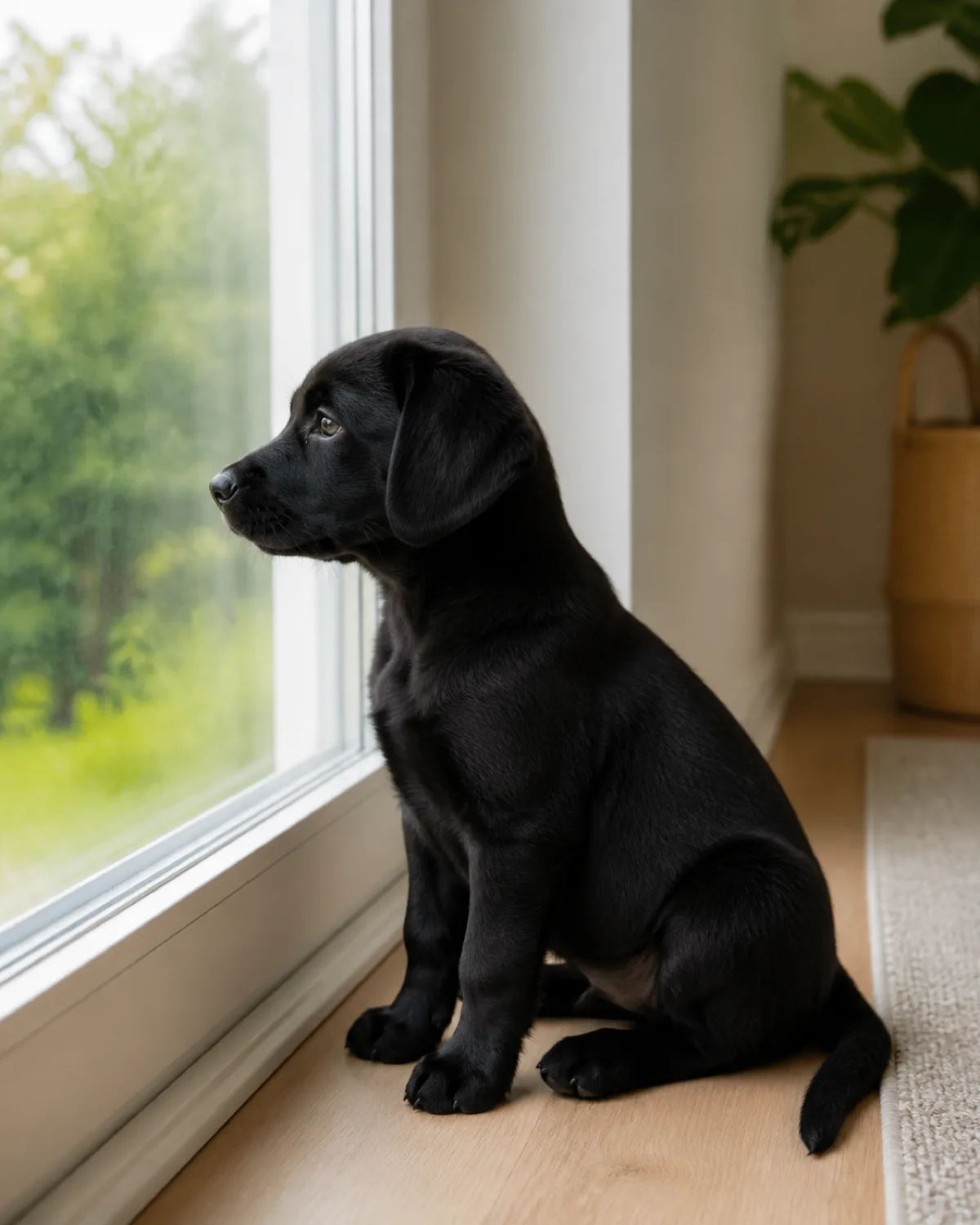
Some whining when you first leave is normal. A puppy that whimpers for two or three minutes and then settles down is learning to self-soothe. That is progress, not a problem.
Real distress looks different. A puppy in true separation anxiety will howl continuously for the entire absence, drool excessively, scratch at doors or crate bars until its nails bleed, urinate or defecate despite being recently taken outside, or destroy furniture in a frantic attempt to escape.
If the puppy quiets within five minutes of your departure, you are on track. If the crying escalates instead of fading, the session was too long. Drop back to the last duration that worked and rebuild from there.
A pet camera is worth its cost during this phase. Watching the footage after you leave tells you exactly how long the fussing lasted and whether the puppy settled or spiraled. Without it, you are guessing, and guessing usually leads to pushing too fast.
We covered the nighttime version of this same pattern — short whimpering that fades versus sustained distress — in our guide on how to stop a puppy from crying at night.
Coming Home Should Be Calm, Not a Celebration
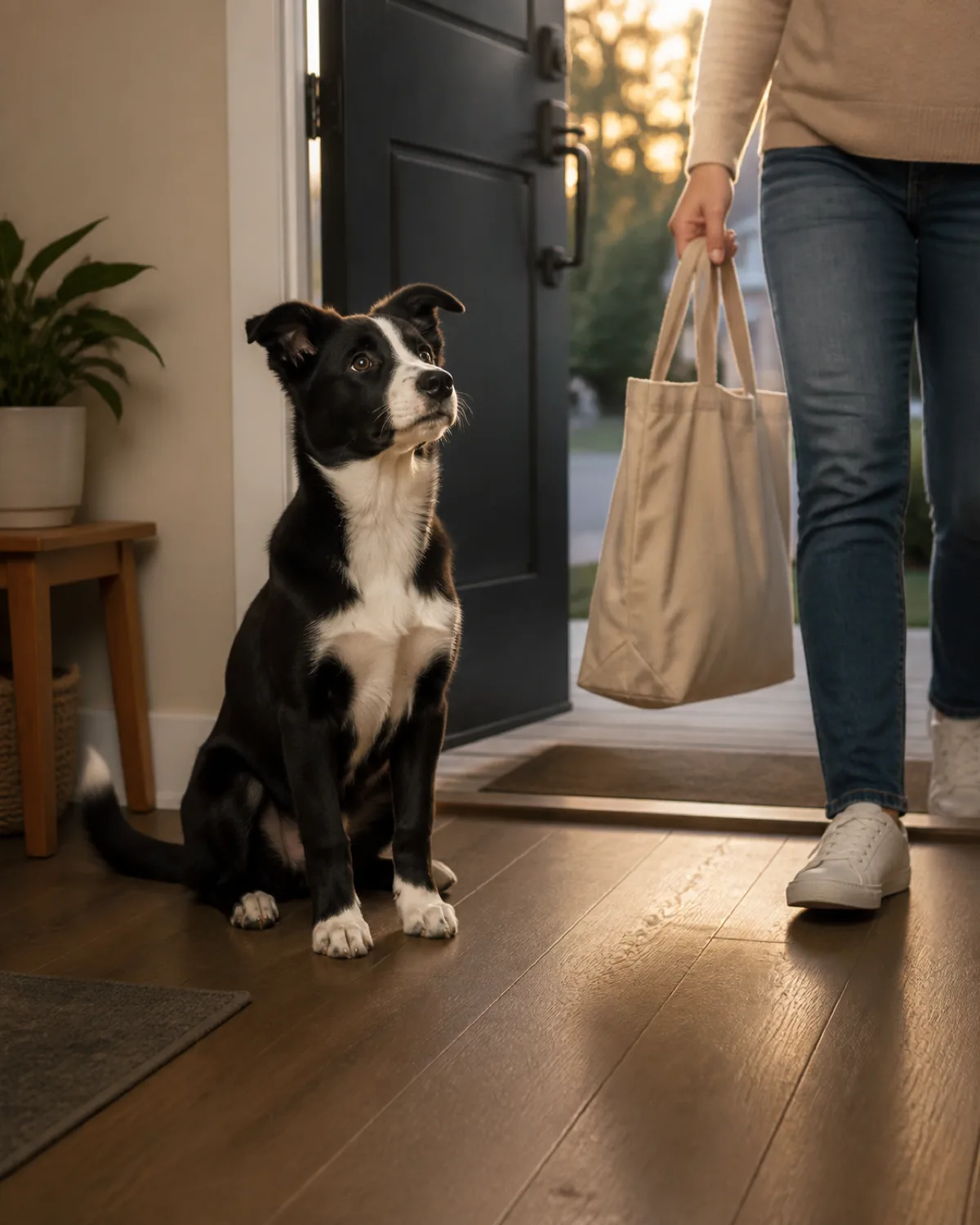
It is tempting to match the puppy's excitement when you walk through the door. The puppy is bouncing, spinning, and acting like you have been gone for three years. But matching that energy reinforces the idea that reunions are the emotional peak of the day, which makes separations feel worse by contrast.
Walk in, set your things down, and wait. Do not talk to the puppy, do not look at it, do not reach down. Give it sixty to ninety seconds to calm down on its own. Once all four paws are on the floor and the body language has shifted from frantic to relaxed, then crouch down and give a quiet, calm greeting.
What you are teaching is that your return is not a reward for surviving alone time — it is just the next normal thing that happens. The puppy that learns this stops treating departures as losses and starts treating them as pauses.
Save this for later
10 Steps for Leaving a Puppy Home Alone
- 1Start with five minutes, not five hoursShort practice runs build confidence faster than one long test.
- 2Create a safe space your puppy wants to be inA pen or open crate with a bed, water, and a chew toy beats a whole house.
- 3Leave and return without dramaBoring departures teach the puppy that being alone is a non-event.
- 4Leave something that smells like youA worn T-shirt on the bed lowers anxiety through scent alone.
- 5Frozen treats keep a puppy busy longerA stuffed Kong covers the hardest first fifteen minutes after you leave.
- 6Background noise fills the silenceA radio or podcast masks outside sounds that trigger barking.
- 7Puppy-proof the alone zoneCords, trash, and toxic plants must be out of reach every time.
- 8Build up to your work scheduleIncrease duration by fifty percent each session and follow the puppy.
- 9Know fussing from real distressBrief whimpering that fades is normal. Sustained howling means you went too fast.
- 10Come home calmWait for four paws on the floor before you greet the puppy.
How long can a puppy be left alone by age?
A general guideline is one hour per month of age, up to about four to six hours for an adult dog. An eight-week-old puppy should not be alone for more than two hours. A four-month-old can usually handle three to four hours. These are maximums, not targets — shorter is always better while the puppy is still learning.
What if my puppy destroys things while I am gone?
Destruction during alone time is almost always a sign of anxiety or boredom, not spite. The fix is not punishment — it is management. Shrink the space, add a frozen Kong for the first fifteen minutes, and drop back to a shorter absence duration.
If the destruction is severe or happens even during very short absences, talk to your vet about clinical separation anxiety.
Should I leave the crate door open or closed?
For most puppies learning to be alone, an open crate inside a pen works best. The crate gives the puppy a cozy den to retreat to, and the pen gives it room to move without access to the whole house.
Once the puppy consistently chooses the crate on its own, you can try closing the door for short periods — but only after the puppy has built a positive association with the crate through meals, treats, and nap time.
Is it okay to leave a radio or TV on for a puppy?
Yes, and most trainers recommend it. A steady, low-volume background sound — talk radio, classical music, or a podcast — masks the random outdoor noises that trigger barking and fills the silence that can feel unsettling to a young dog. Start playing it while you are home so it does not become another departure cue.
When should I worry about separation anxiety?
If the puppy howls or barks the entire time you are gone, drools heavily, has accidents despite being recently outside, or damages things in a frantic escape attempt, those are signs of true separation anxiety rather than normal adjustment fussing.
Mild cases often respond to the gradual desensitization steps in this guide. Severe cases — where the puppy injures itself or the distress never decreases — need professional help from a vet or certified animal behaviorist.
About the author
Jess Calloway
Jess Calloway edits Pawliqa, where she shares dog care, grooming, training, and new-owner tips — plus DIY and pet-friendly home ideas — for anyone who wants a happy, well-cared-for dog. As a dog mom to three very different dogs, she writes the honest, tested version of what actually works. Every guide is image-led and reviewed for clarity, usefulness, image accuracy, and Pinterest-to-page alignment before it goes live. Visit the About page.