We spent two summers watching our dogs turn the backyard into a dirt crater. One dug along the fence, another knocked over every plant, and the third barked at nothing because there was nothing else to do.
The fix was not a bigger yard or a taller fence. It was giving each zone an actual purpose that made sense for a dog.
Here are fifteen upgrades that turned our mess of a backyard into a space all three dogs actually use.
Your dog-friendly yard plan
15 backyard upgrades your dog will actually use
From a dedicated dig pit to nighttime path lighting, these fifteen ideas turn a bare yard into a space that keeps your dog busy, safe, and comfortable in every season. Jump to the one your yard needs most.
1. Build a Dedicated Dig Zone So They Stop Destroying Your Lawn
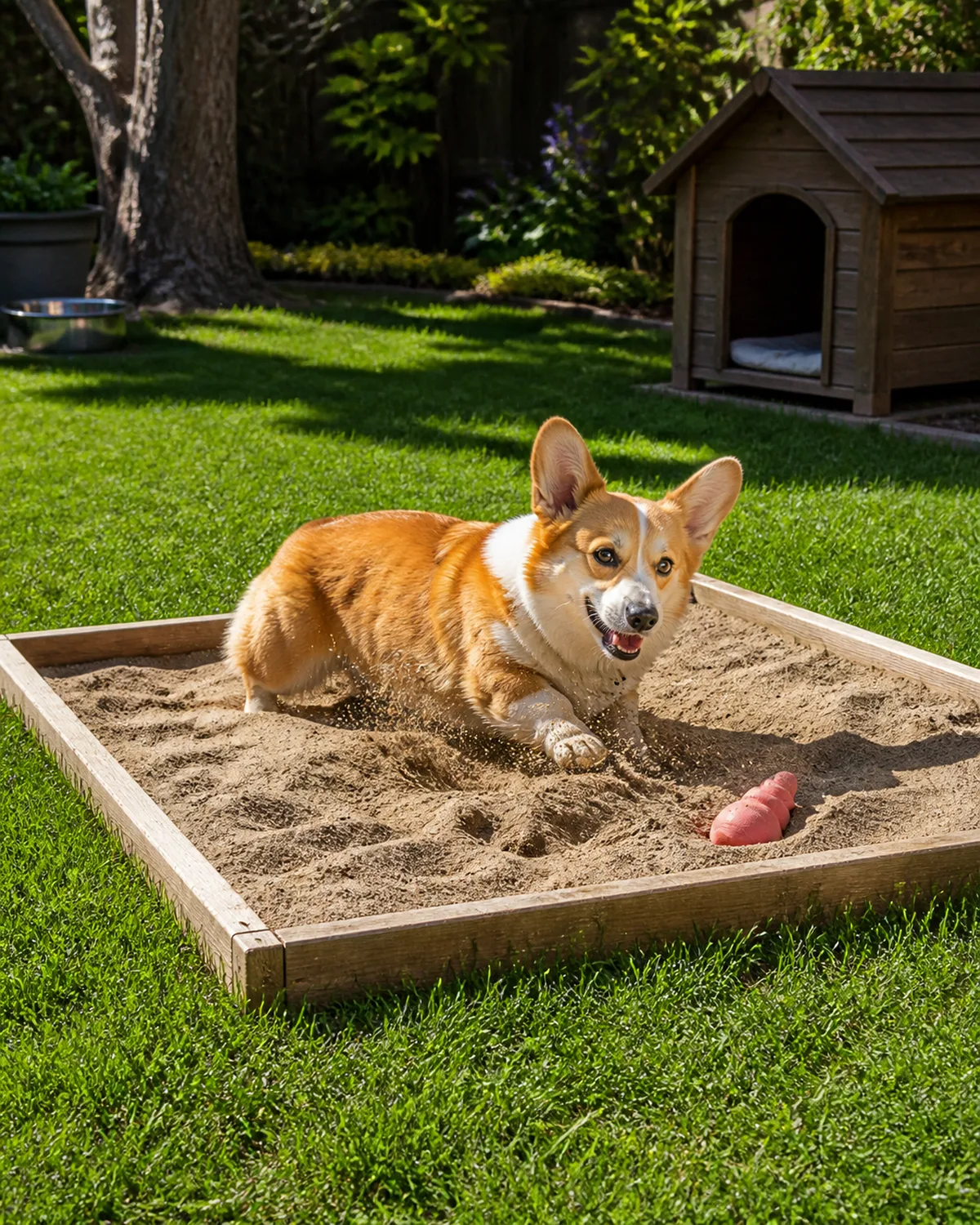
Dogs dig because it feels good, not because they want to ruin your lawn. Fighting that instinct is a losing game, but redirecting it works almost every time.
Frame out a three-by-five-foot rectangle with untreated lumber and fill it with play sand or loose soil. Bury a few treats and a rubber toy just below the surface so the first dig is immediately rewarding.
- Size: 3×5 feet minimum for medium dogs, 4×6 for large breeds
- Fill: play sand or loose garden soil — avoid gravel, which hurts paw pads
- Starter bait: bury 5–10 treats and one favorite toy an inch below the surface
- Maintenance: rake flat and re-bait every few days to keep interest high
- Location: a shaded corner so the sand does not get scalding hot in summer
When your dog starts digging in the lawn, interrupt calmly, walk them to the dig zone, and praise the moment they start digging there. Most dogs figure out the game within a week. For a deeper dive on redirecting the digging habit, see our guide on how to stop a dog from digging in the yard.
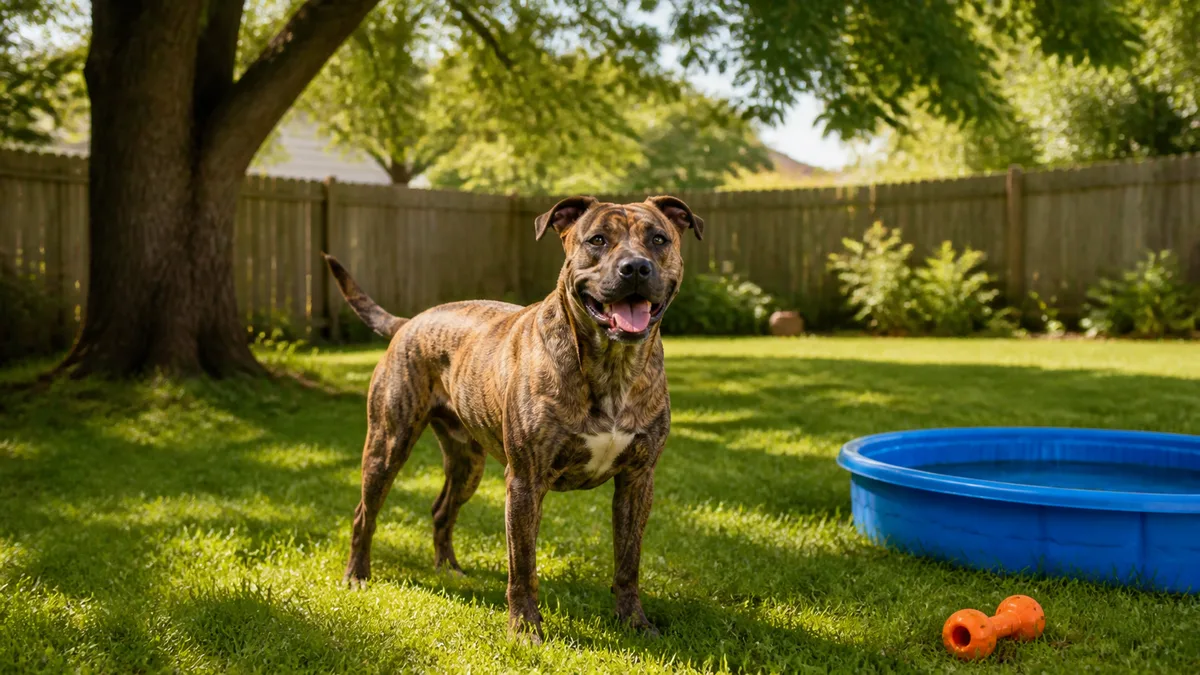
2. Set Up a Splash Pool for Hot-Weather Cool-Downs
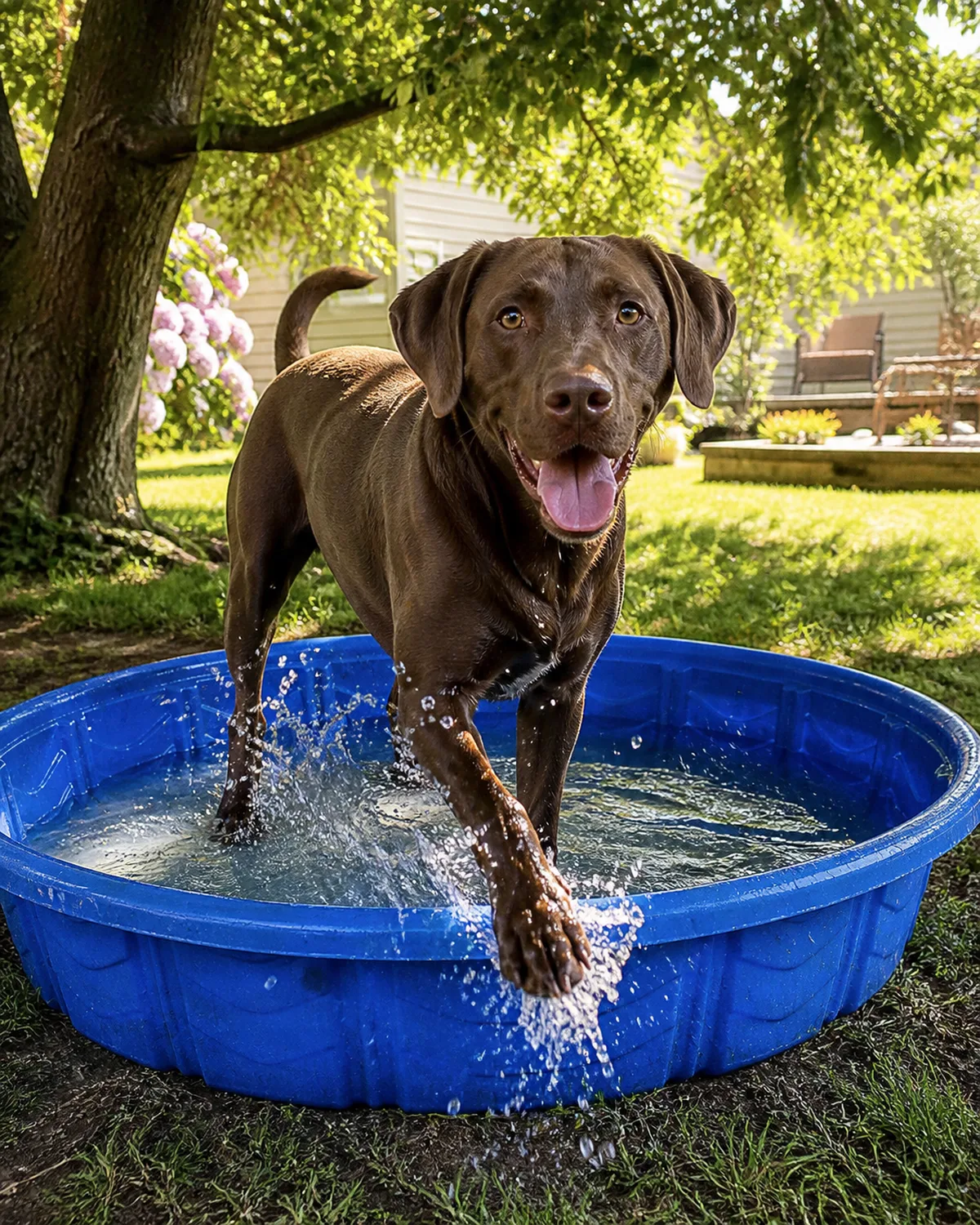
A kiddie pool is one of the cheapest additions you can make and one of the few that most dogs start using on day one with zero training.
Use a hard-shell molded plastic pool, not an inflatable one. Nails and teeth go right through vinyl, and you will be buying a replacement every two weeks. Livestock water troughs are even tougher and work well for large breeds.
Fill it to about two to four inches. That is enough for splashing and paw-dipping without creating a drowning risk for small dogs or puppies. Set the pool on level ground in a shaded spot so the water stays cool longer.
- Material: hard-shell plastic or galvanized livestock trough — never inflatable
- Depth: 2–4 inches for safety, deeper only with supervision for strong swimmers
- Location: shaded area, level ground, away from electrical outlets
- Water: dump and refill daily to prevent algae and bacterial buildup
Some dogs walk right in. Others need encouragement. Toss a few floating treats or drop a ball into the water, and most dogs will step in to grab them. Once their paws are wet, the rest usually follows. Our guide on keeping your dog cool in summer covers more heat-safety strategies.
3. Create Shaded Rest Stations at Multiple Spots
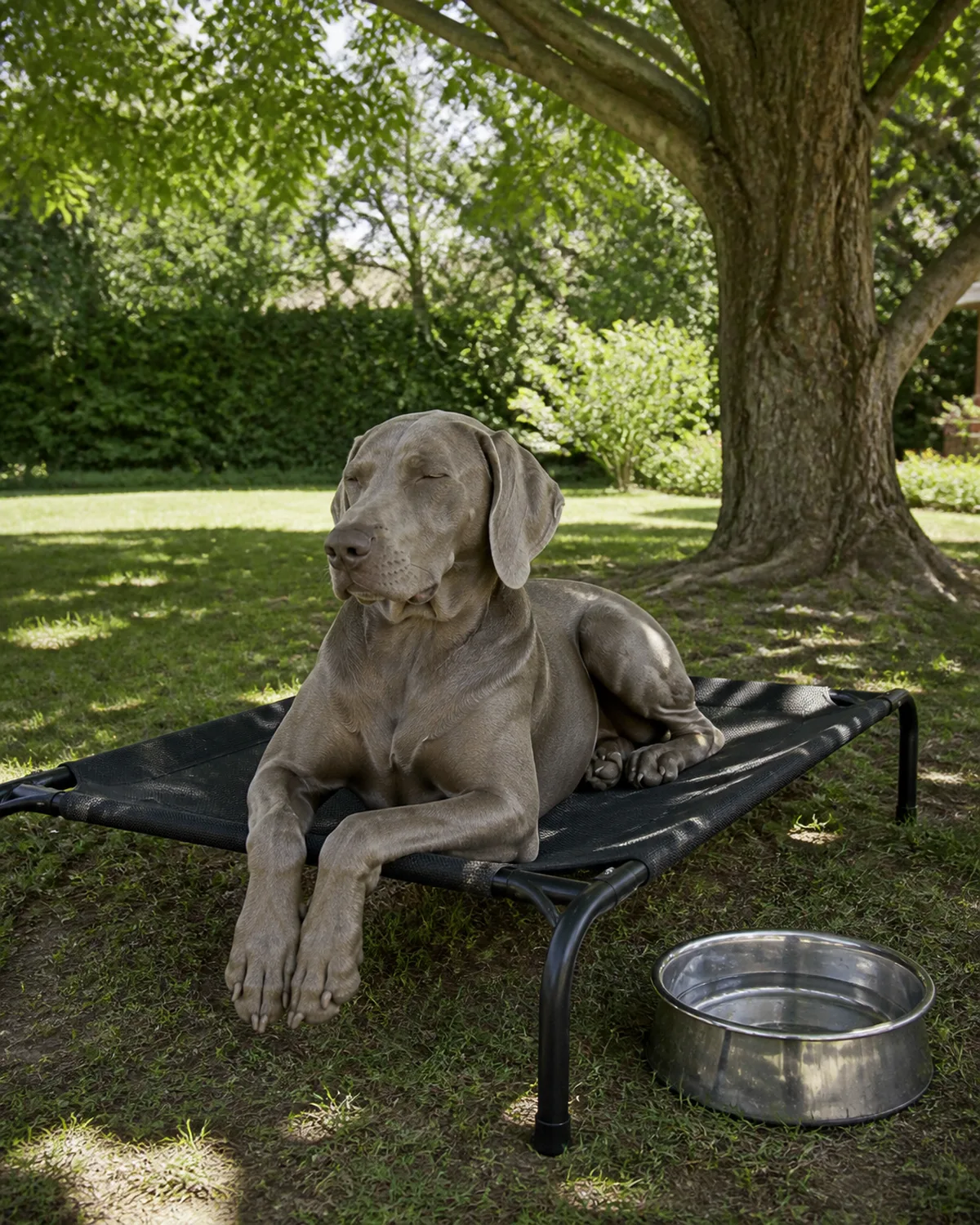
One shaded area is not enough. The sun moves, the shade shifts, and a dog stuck on a hot patio because the tree shadow has moved is a dog overheating.
Set up two or three rest stations across your yard using a combination of natural tree shade and portable shade structures. A sail shade or patio umbrella over a deck area gives you reliable coverage even in a yard without mature trees.
Put an elevated mesh cot at each station. Mesh beds lift the dog off hot ground and allow airflow underneath, which makes a measurable difference on summer afternoons. Ground-level beds trap heat against the belly, which is where dogs dump body heat the fastest.
- Stations: at least 2–3 in different zones to follow the shade as it moves
- Shade sources: mature trees, sail shades, patio umbrellas, pergola covers
- Bed type: elevated mesh cots — airflow underneath beats any ground-level pad
- Extras: a water bowl at each station so your dog does not have to cross hot ground to drink
The surface temperature difference between direct sun and full shade can reach twenty degrees Fahrenheit. An elevated cot in the shade brings that down another few degrees compared to a dog lying flat on shaded concrete.
Pick the upgrade your yard needs most and start there
Where should you start?
You do not need all fifteen at once. Pick the problem below that matches your yard, start with those two or three ideas, and add the rest over time.
4. Install a Sensory Path With Different Textures
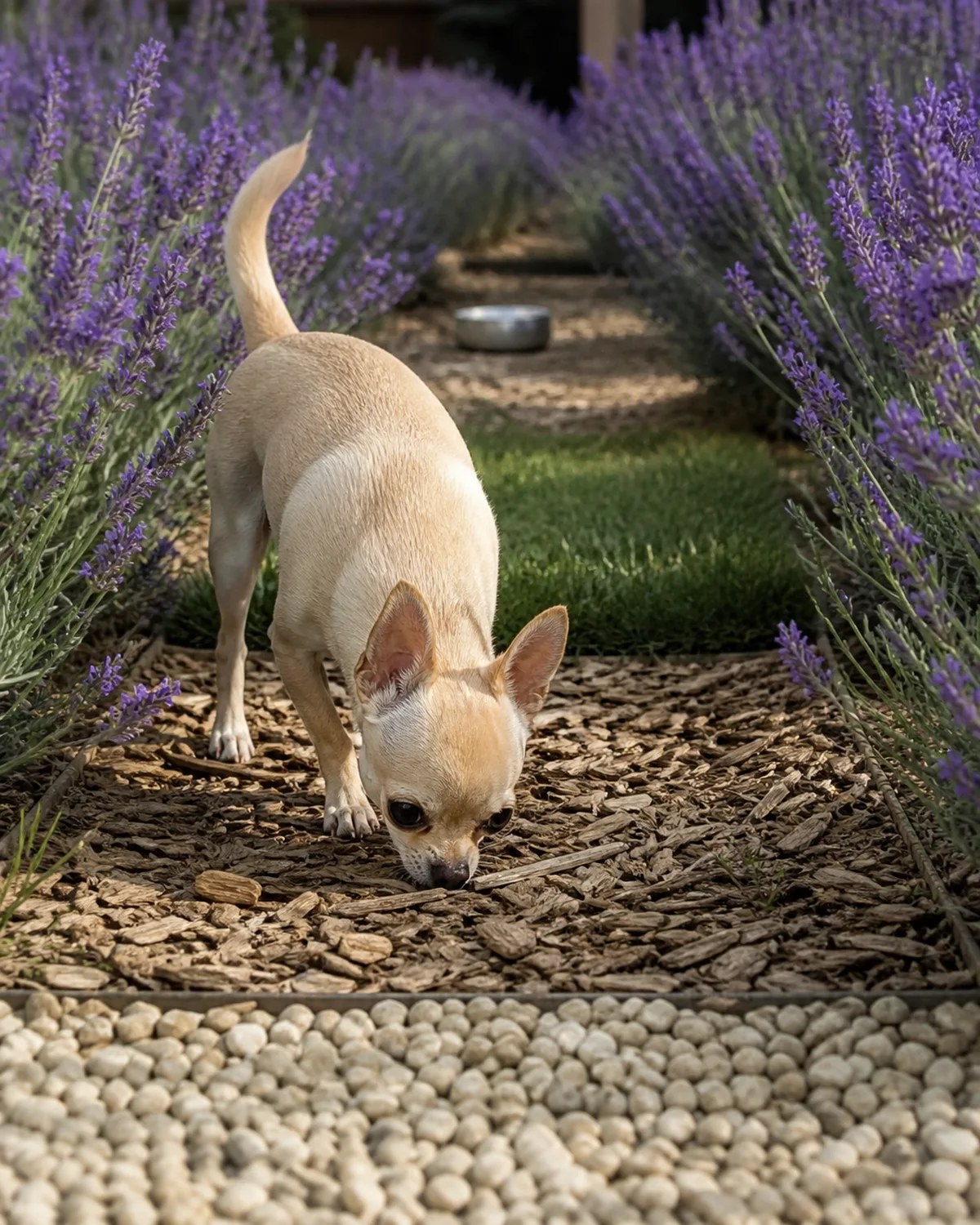
Dogs experience the world through their noses and paw pads. A lawn with one uniform texture is like a room with no furniture — technically usable, but nothing to explore.
Lay a two-foot-wide path that alternates between three or four textures. Pea gravel, wood chips, short grass, rubber matting, and packed sand all feel different underfoot and hold different scents. The variety encourages slow, investigative walking instead of the usual sprint-and-bark loop.
Sensory paths are especially valuable for two groups. Senior dogs with early cognitive decline benefit from novel sensory input that keeps the brain active. Puppies in the socialization window gain exposure to new surfaces in a safe, controlled environment.
- Width: about 2 feet — wide enough to walk comfortably, narrow enough to feel like a path
- Textures: alternate pea gravel, wood chips, short grass, rubber matting, packed sand
- Length: 10–20 feet is plenty for most yards
- Borders: low edging keeps the textures from mixing together
- Enrichment boost: sprinkle a few treats along the path to encourage sniffing
5. Plant a Dog-Safe Garden With Herbs They Can Sniff
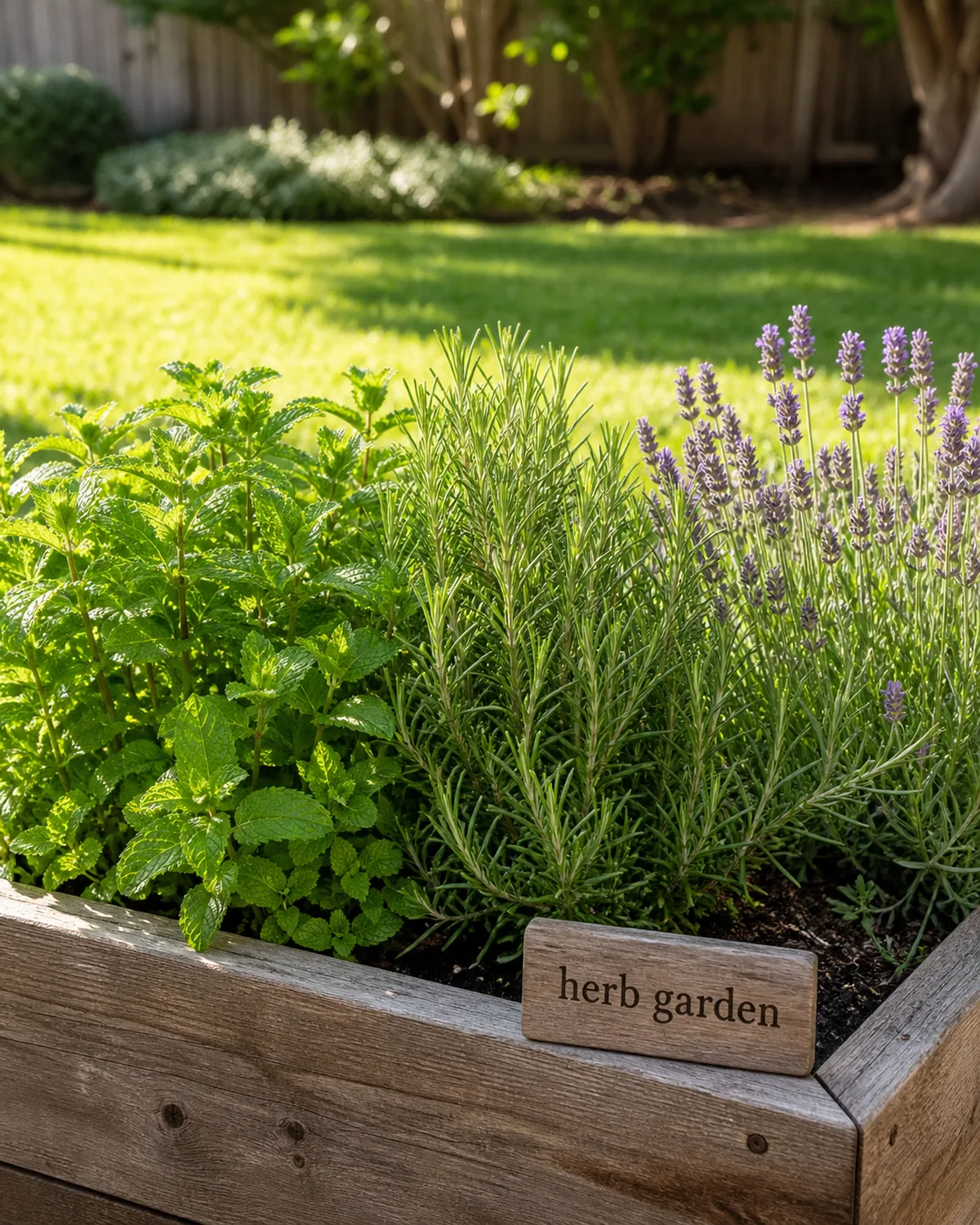
A garden full of scent is the closest thing a backyard gets to a dog enrichment center. Herbs that are safe and fragrant give dogs a reason to investigate a part of the yard that most owners fence off.
Stick to plants that are confirmed safe for dogs. Mint, rosemary, lavender, thyme, basil, sunflowers, and marigolds are all non-toxic and produce strong scents that dogs find interesting. Plant them in a raised bed or planter box to reduce trampling.
The critical part is knowing what to avoid. Some of the most common garden plants are seriously toxic to dogs.
- Safe to plant: mint, rosemary, lavender, thyme, basil, sunflower, marigold, snapdragon
- Toxic — never plant: lily (all types), azalea, oleander, castor bean, tulip bulbs, sago palm, foxglove
- Planter style: raised beds reduce paw traffic and keep roots intact longer
- Bonus: mint and rosemary also act as natural insect deterrents around the yard
If your dog is a dedicated plant chewer, fence the herb bed with a low decorative border. The scent still drifts, the dog still gets to sniff, and your rosemary survives longer than a week.
6. Add a Tunnel or Agility Station for Daily Exercise
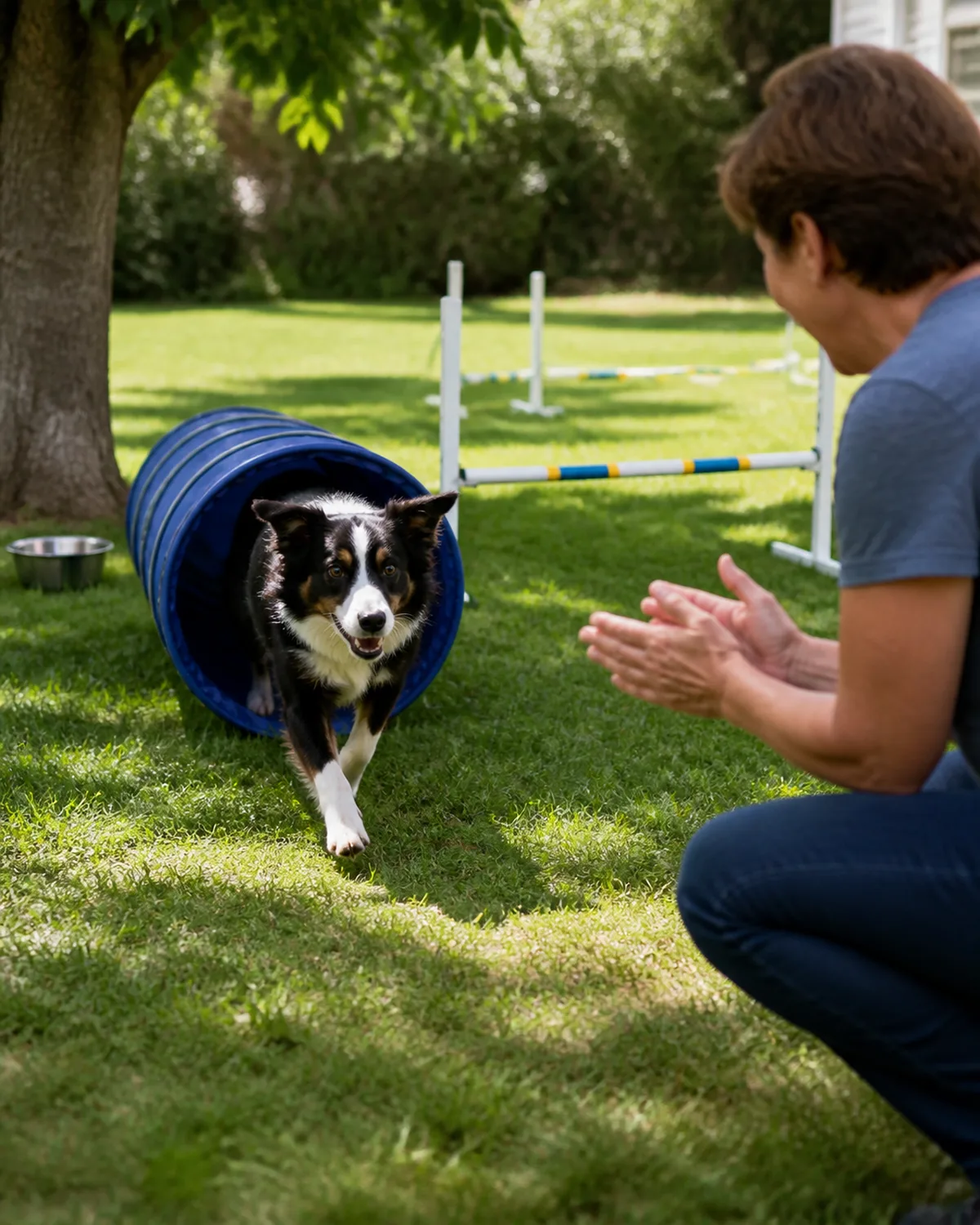
Ten minutes on a backyard agility course burns more energy than thirty minutes of aimless wandering. The combination of sprinting, turning, jumping, and listening to cues taxes the body and the brain at the same time.
You do not need competition-grade equipment. A collapsible nylon tunnel from any pet store, two or three low jump bars made from PVC pipe, and a few weave poles are all it takes. Total materials cost for a DIY setup runs under forty dollars.
- Tunnel: collapsible nylon, 10–15 feet long — start with it fully collapsed and gradually extend
- Jump bars: PVC pipe on adjustable stands — set bar height at or below your dog's elbow
- Weave poles: six garden stakes spaced 20 inches apart
- Surface: grass is best — avoid concrete, which is hard on joints during repeated jumps
- Sessions: 5–10 minutes, twice a day — quit while the dog is still eager
Start with one obstacle at a time. Lure through the tunnel with a treat. Once that is easy, add a jump, then weave poles. Keep each session short and high-energy. The moment the dog loses focus, you have gone too long. Our guide on how much exercise your dog needs explains how to match intensity to age and breed.
7. Upgrade Your Fence to Close Every Escape Route
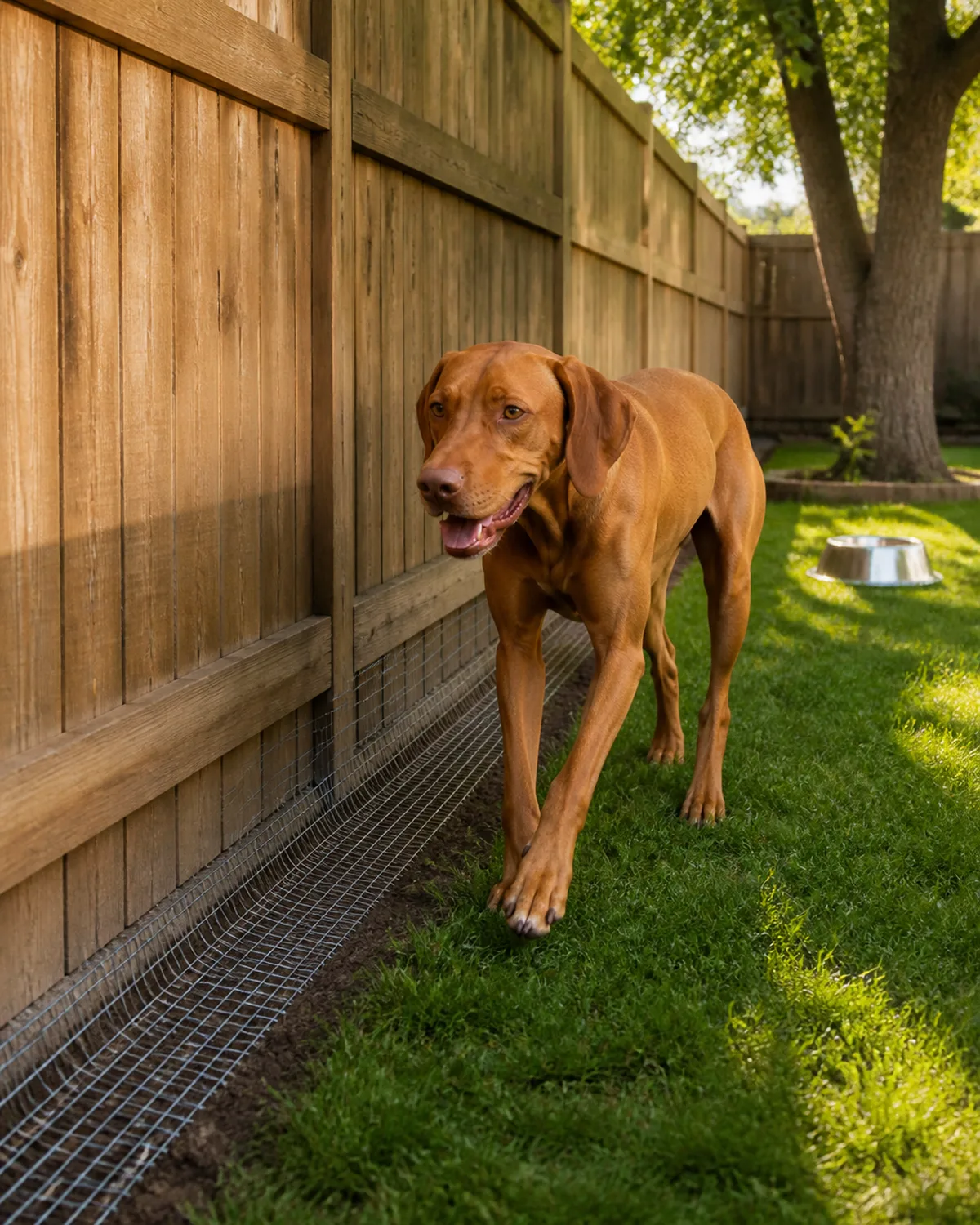
A backyard is only dog-friendly if the dog cannot leave it. Most escape routes fall into three categories, and each one has a specific fix.
Diggers go under. Bury a six-inch L-shaped apron of galvanized hardware cloth along the fence base, extending outward into the yard. When the dog digs down and hits mesh, the route is blocked.
Jumpers go over. Coyote rollers — spinning bars mounted along the fence top — prevent any animal from gaining a grip to pull themselves up and over. For a cheaper fix, angled fence extensions that lean inward add visual height without a full rebuild.
Squeezers go through. Walk the entire perimeter and measure every gap between boards. If a gap exceeds three inches, a determined small dog can push through. Replace rotted boards, tighten loose ones, and add a board where the gap is structural.
- Under: L-shaped hardware cloth, 6 inches deep and 6 inches out, galvanized
- Over: coyote rollers or 45-degree inward-angled extensions
- Through: maximum 3-inch gap between boards; repair or replace rotted sections
- Inspection: walk the full perimeter monthly — look for rust, rot, and loose fasteners
A fence that works today can develop a new weakness next month. Add a monthly fence walk to your yard maintenance routine, and you catch problems before your dog does.
Check ground temperature before barefoot play
The 5-Second Pavement Test
Press the back of your hand flat against the ground and hold it there for five seconds. If you cannot keep it down the full five seconds without pain, the surface is too hot for your dog's paw pads. Concrete and dark-colored decking can reach 150 degrees Fahrenheit on a summer afternoon. Move playtime to grass or wait until evening.
Test before every outdoor sessionSurface temperature changes hour by hour. A patio that was fine at nine in the morning can burn paw pads by noon. Test every time you open the back door during warm months.
Grass is almost always coolerEven in direct sun, grass stays twenty to thirty degrees cooler than concrete or asphalt. If the pavement fails the hand test, redirect play to a grassy area of the yard.
Shade is not optional in summerA shaded concrete pad is still cooler than an unshaded one. If you cannot avoid hard surfaces, make sure the path from the door to the grass has shade coverage or lay stepping stones across the hot zone.
Watch for limping or lifting pawsIf your dog is already outside and starts lifting one paw, hopping, or refusing to walk, move them to grass or carry them inside. Paw pad burns are painful and slow to heal.
8. Build a Raised Outdoor Water Station That Stays Clean
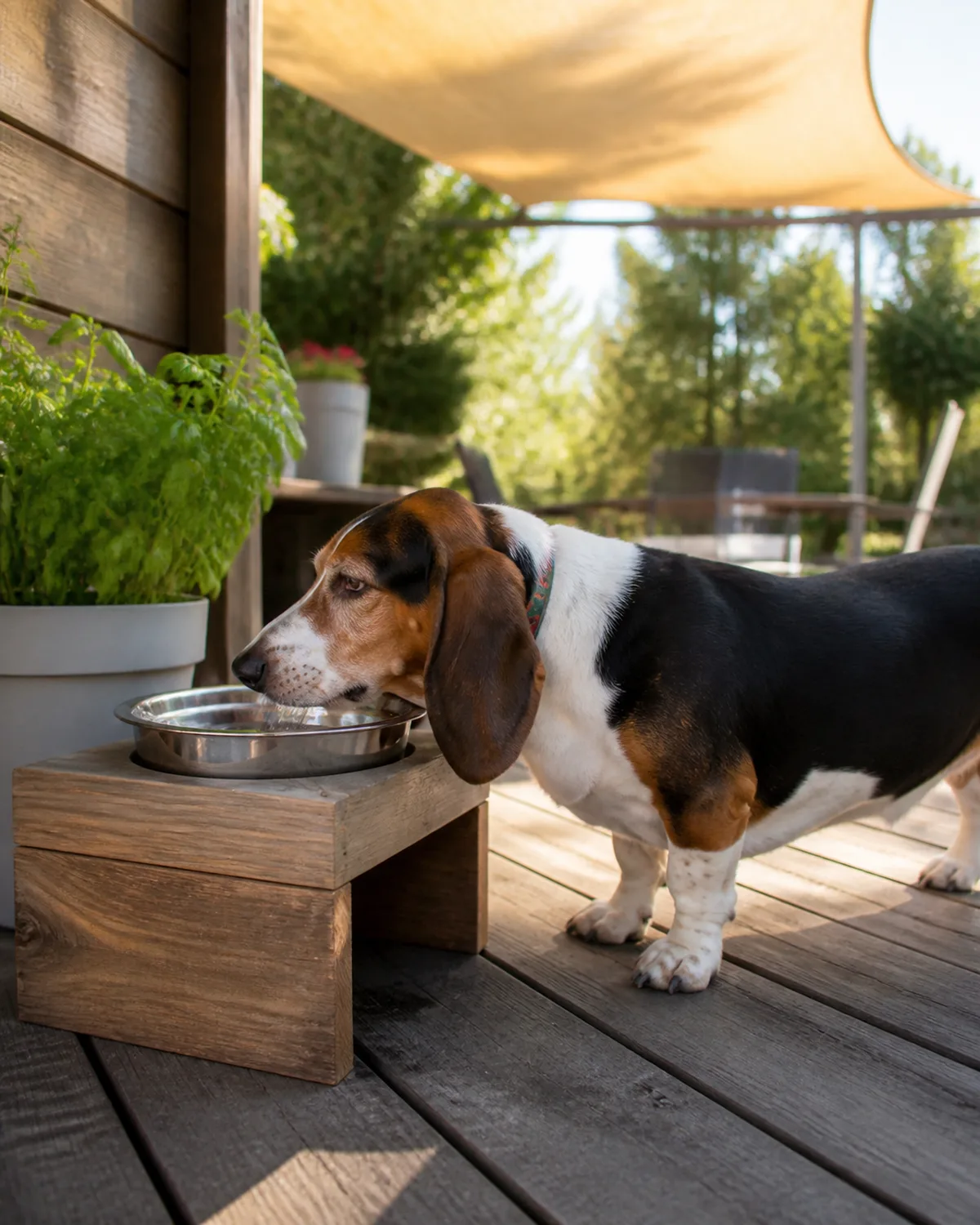
A bowl on the ground collects grass clippings, dirt, and bugs within minutes. An elevated station keeps water cleaner for longer and puts less strain on your dog's neck and joints.
Match the platform height to your dog's size. Large breeds drink comfortably from a station twelve to sixteen inches high. Small dogs need four to six inches. The goal is a natural standing posture where the dog does not have to crane its neck downward at a steep angle.
Use stainless steel bowls, not plastic. Plastic scratches easily, and those scratches harbor bacteria even after washing. Stainless steel is non-porous, dishwasher safe, and does not leach chemicals in heat.
- Heights: 12–16 inches for large breeds, 6–10 inches for medium, 4–6 inches for small
- Bowl material: stainless steel — non-porous, easy to sanitize, no chemical leaching
- Upgrade: a small pet fountain module keeps water circulating — moving water stays fresher and most dogs prefer drinking from it
- Cleaning: wash bowls daily, sanitize weekly with diluted white vinegar
Place the station on a level, shaded surface. Direct sun heats water quickly and accelerates bacterial growth. If you use a fountain module, you will need a weatherproof outdoor power source — solar-powered models exist but tend to be underpowered for continuous flow.
9. Lay Down Dog-Safe Ground Cover Instead of Bare Dirt
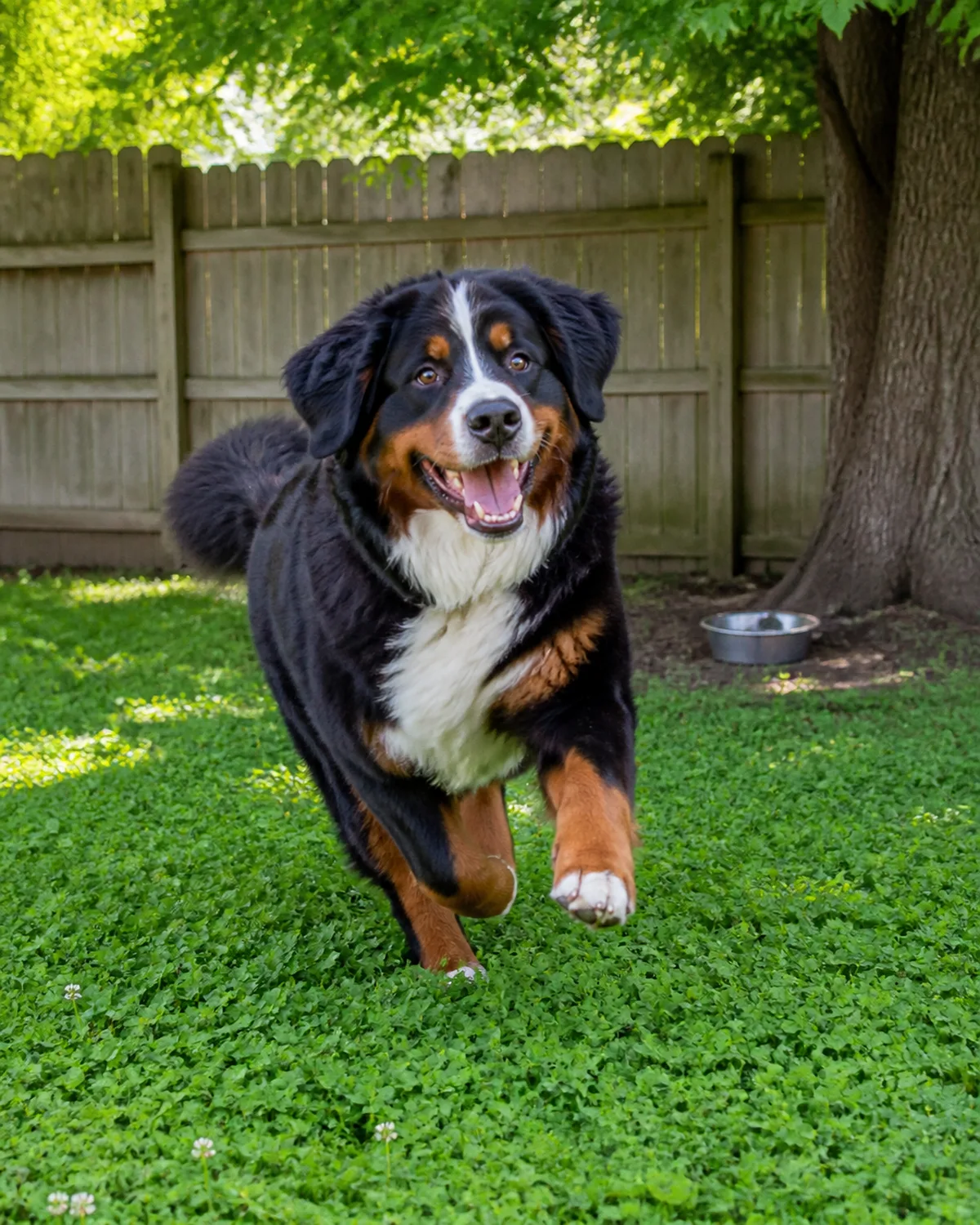
Bare dirt turns to mud when it rains, dust when it dries, and gets tracked into the house every single time. The right ground cover solves the mess problem and is easier on paw pads than packed earth.
Clover is the standout for yards with heavy dog traffic. It tolerates trampling, repairs itself, stays green without chemical fertilizers, and does not need mowing. White dwarf clover is the variety most commonly used for dog yards.
Artificial turf works but requires a proper drainage sub-layer. Without one, urine pools underneath and creates a smell that no surface cleaning fixes. If you go the turf route, invest in the drainage base — it is the difference between a yard that works and one that reeks within two months.
- Clover: self-repairing, no fertilizers needed, stays green, tolerates heavy traffic
- Artificial turf: durable and low-maintenance, but must have a drainage sub-layer or it will smell
- Pea gravel: excellent drainage, but choose rounded stones — angular gravel lodges between paw pads
- Avoid cocoa shell mulch: contains theobromine, the same compound that makes chocolate toxic to dogs
- Avoid dyed wood chips: chemical dyes can irritate paw pads and cause stomach problems if chewed
10. Set Up an Outdoor Potty Station in One Corner
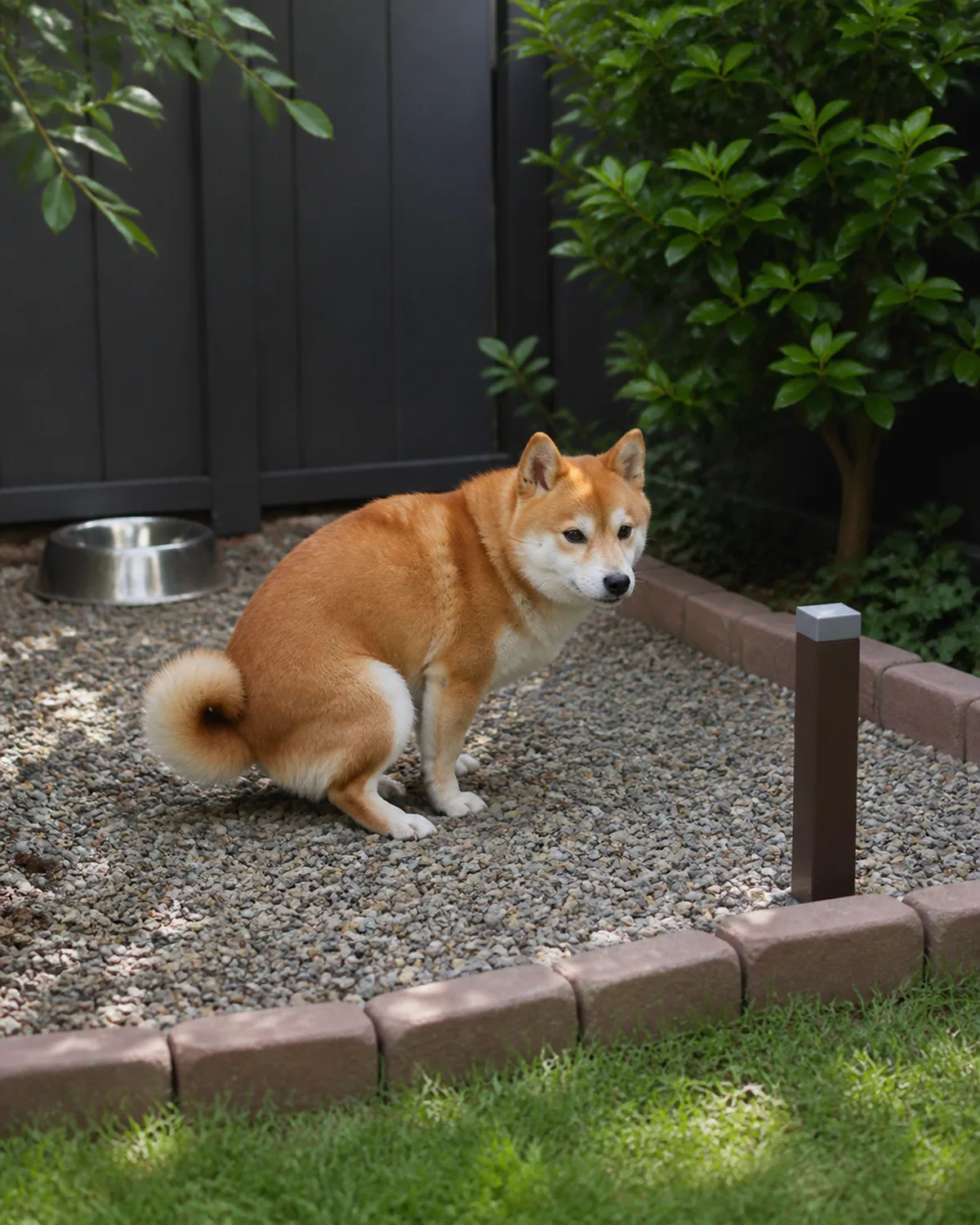
Designating one area as the bathroom makes cleanup faster, keeps the rest of the yard cleaner, and reinforces potty training consistency for dogs that already know the routine.
A four-by-six-foot rectangle of pea gravel or artificial turf in one corner works well. Border it with low bricks or landscape edging to keep the surface material contained. The key is using a material that drains fast and can be rinsed with an enzymatic cleaner.
Walk your dog to the station on leash during the training phase. Reward them for using it. Within one to two weeks, most dogs default to that spot on their own because it smells like the right place.
- Size: 4×6 feet for medium and large dogs, 3×4 feet for small breeds
- Surface: pea gravel (best drainage) or artificial turf with drainage base
- Cleaning: enzymatic cleaner rinse every other day — regular soap does not break down urine salts
- Solids: pick up daily, same as any yard
- Location: a corner away from play zones, shade stations, and the herb garden
11. Create a Window Lookout So They Can Watch the World
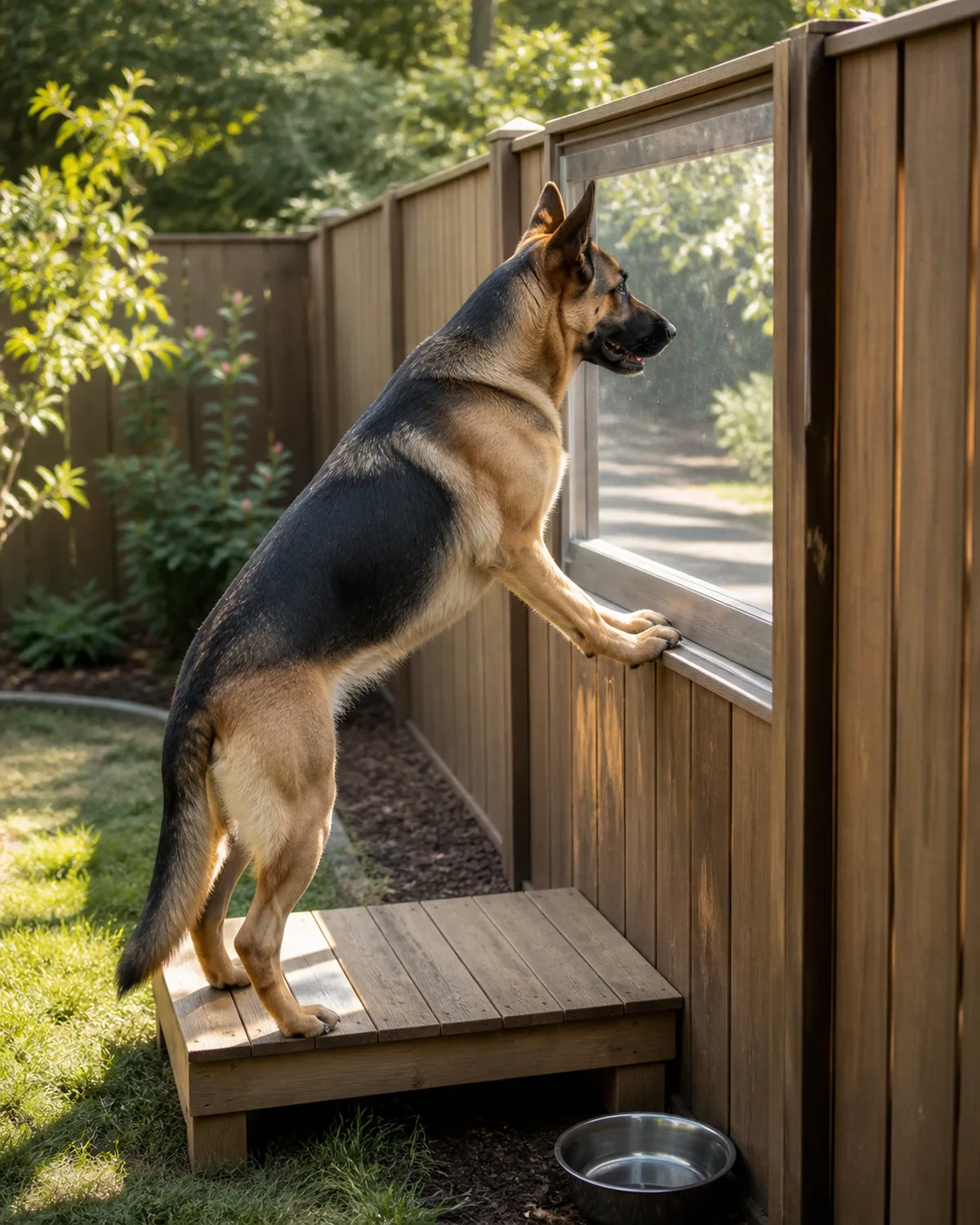
Dogs that bark at every sound on the other side of the fence are often frustrated because they can hear and smell activity but cannot see it. A visual window reduces that frustration and cuts down on barrier-reactive barking.
Install a clear acrylic panel in one fence section, or build a low platform that lets your dog see over a shorter portion of the fence. Acrylic is safer than glass — it does not shatter if a dog bumps into it — and withstands weather without yellowing for several years.
Position the lookout along the side of the fence that gets the most foot traffic or activity. That is the side your dog is already most interested in.
- Material: clear cast acrylic, at least a quarter-inch thick — impact-resistant and UV-stable
- Size: 18×24 inches is enough for one dog to look through comfortably
- Height: bottom edge at your shortest dog's chest level when standing
- Mounting: secure to the fence frame with stainless steel bolts, not adhesive
- Platform option: a low wooden step below the window for small dogs that cannot reach
Some dogs watch calmly. Others get more excited. If the window increases barking rather than decreasing it, the issue is reactivity, not boredom — in that case, the window helps you identify the trigger, which is the first step in training against it.
12. Add Outdoor Enrichment Toys That Rotate Weekly
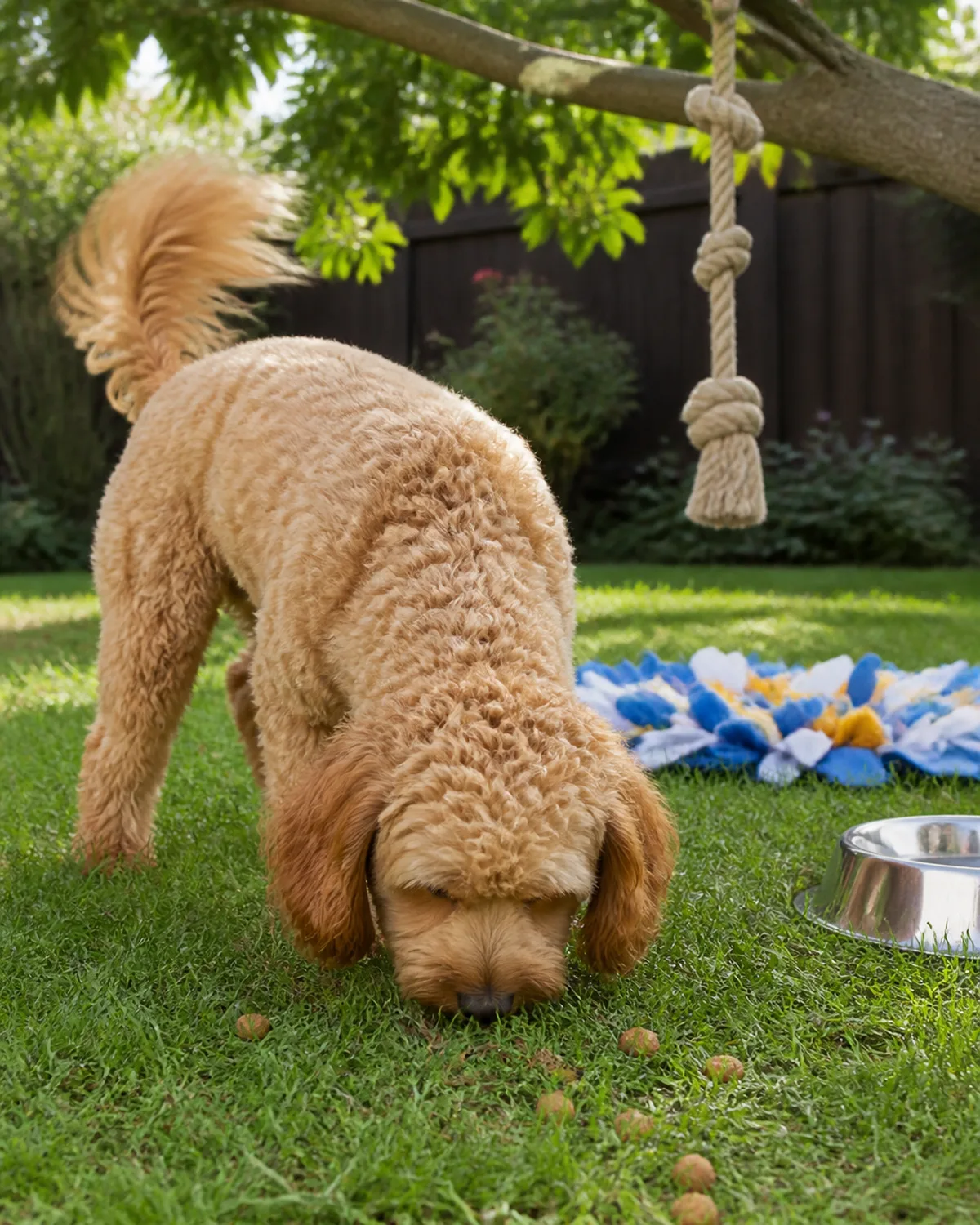
A yard full of the same toys every day becomes invisible. Dogs stop interacting with objects they have already fully explored, which is why that expensive ball your dog loved for two days is now gathering dust.
The rotation trick is free. Put out three or four toys for the week. At the end of the week, collect them and bring out a different set. By the time the first batch comes back out the following week, it feels novel again.
Outdoor-specific enrichment works better than dumping indoor toys in the yard. A snuffle mat staked to the ground, a rope knot hung from a low branch for solo tug, and a scatter feed across the lawn all use the outdoor space in ways indoor play cannot.
- Rotation cycle: 3–4 toys per week, swap every Sunday
- Snuffle mat: stake or weight it so it does not blow away
- Solo tug: a thick rope knot tied to a low, flexible tree branch — the branch provides resistance
- Scatter feed: toss a handful of kibble across the lawn and let the dog search — replaces one meal
- Frozen treats: a Kong filled and frozen survives longer outdoors in summer than a regular treat
For more ideas that work with this rotation system, check our guide on dog enrichment ideas.
13. Install Path Lighting for Safe Nighttime Potty Runs
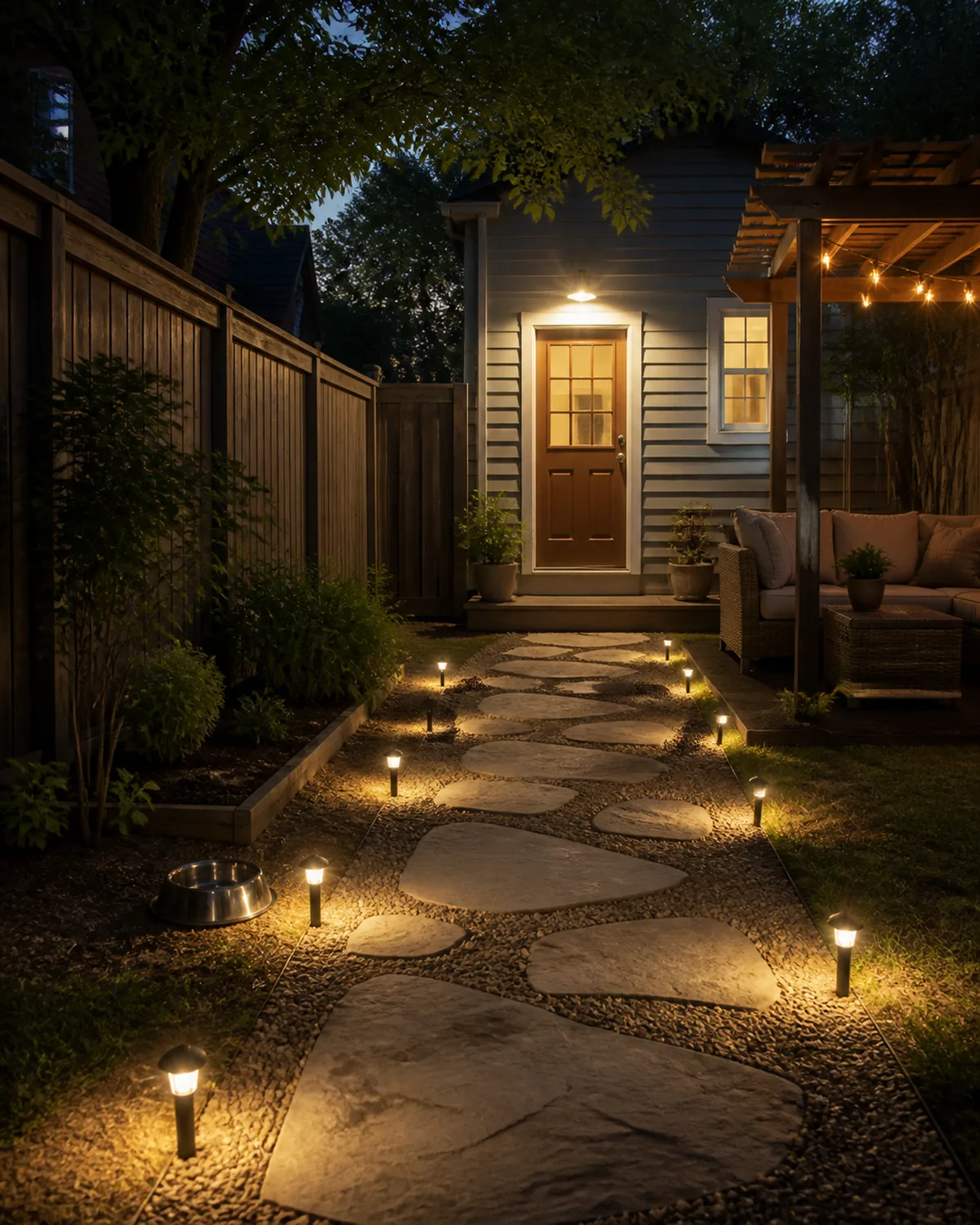
The backyard at night is a different place. Things hide in the dark that are fine to step on or step over during the day — fallen branches, garden tools left out, toads, and in some regions, snakes.
Solar-powered ground stakes along the main path from the door to the potty area give you enough light to see where you and your dog are walking. They charge during the day and run all night without adding to your electric bill.
Add a motion-activated floodlight at the back door. It kicks on automatically when you open the door, lights up the immediate area, and turns off on its own when you go back inside.
- Path lights: solar-powered low stakes, warm amber tone — avoid harsh white LEDs that blind adapted eyes
- Spacing: every 4–6 feet along the main walking path
- Motion light: one unit above or beside the back door, aimed at the deck or patio area
- Avoid: lights aimed directly at the yard at dog-eye level, which can startle or disorient
- Side benefit: path lighting also deters nocturnal wildlife from settling in the yard
The goal is visibility, not a football stadium. Soft, low light along the path and one bright light at the door is all you need.
14. Remove Every Toxic Hazard Before You Let Them Out
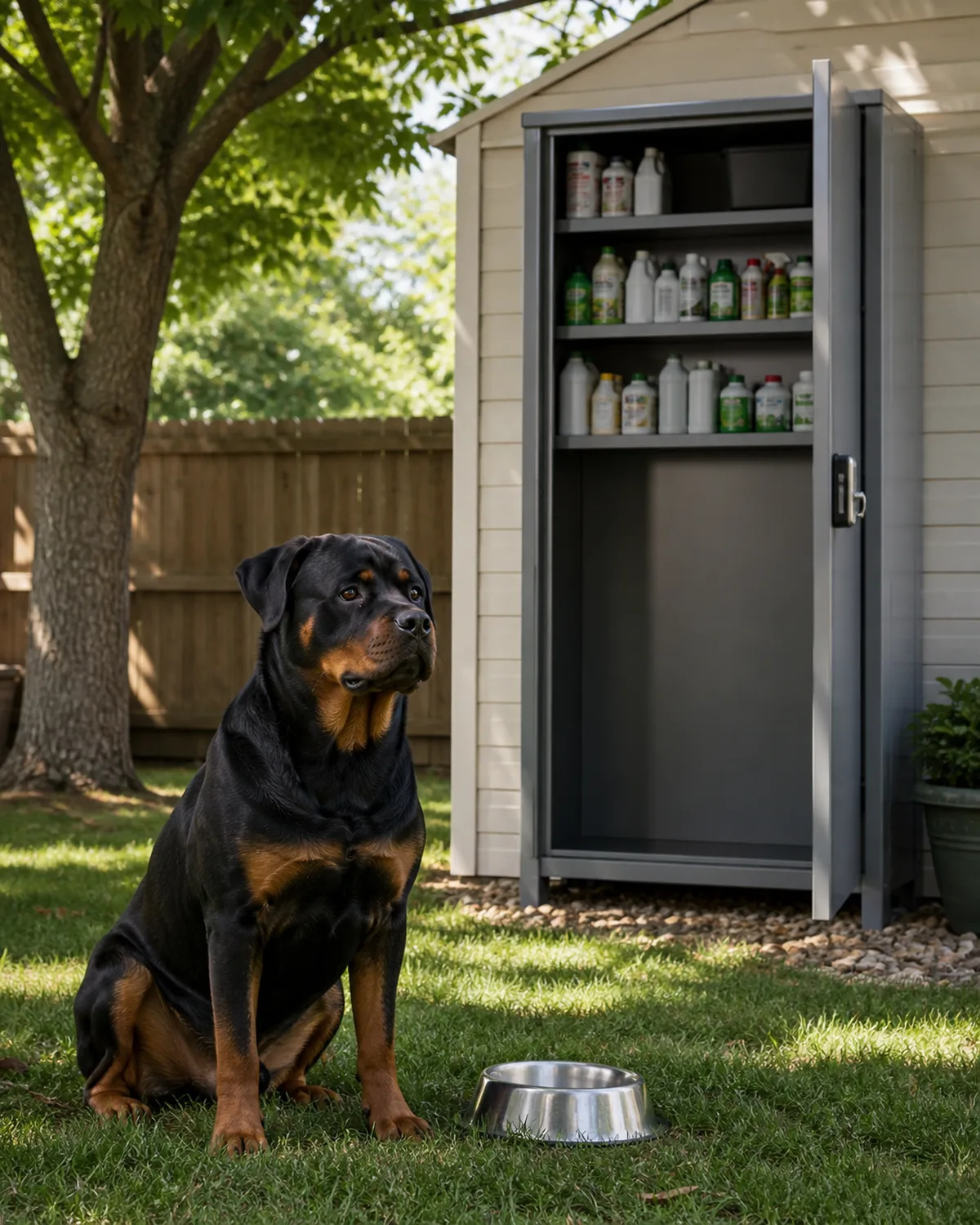
Every upgrade on this list becomes pointless if the yard contains something that can poison your dog. The hazard list is longer than most people expect, and some of the most dangerous items are ones that dogs actively seek out because they taste or smell appealing.
Herbicides and pesticides are the most common source of accidental poisoning in backyard dogs. If you treat your lawn, keep the dog off it for at least forty-eight hours after application. Better yet, switch to pet-safe lawn treatments or skip chemical treatments entirely — clover lawns and manual weed pulling work.
Certain yard materials are toxic in ways that surprise people. Cocoa shell mulch contains theobromine, the same compound that makes chocolate dangerous. Rat bait and slug pellets are designed to taste good to pests, which means they taste good to dogs too. Antifreeze puddles from a parked car have a sweet flavor that dogs lick up eagerly.
- Herbicides and pesticides: 48-hour minimum exclusion after application, or switch to pet-safe products
- Cocoa shell mulch: contains theobromine — replace with pine bark or cedar chips
- Rat bait and slug pellets: use tamper-proof bait stations mounted out of reach, never loose pellets on the ground
- Antifreeze: clean up spills immediately — consider propylene glycol-based antifreeze, which is less toxic
- Garden chemicals: store in a locked cabinet, never on the ground or on low shelves
Walk the full yard before letting your dog out after any lawn treatment, storm, or period of yard work. Look for new puddles, displaced chemical containers, and fallen plant material. A two-minute check before opening the back door prevents emergencies.
15. Design a Chill Zone Where They Can Just Do Nothing
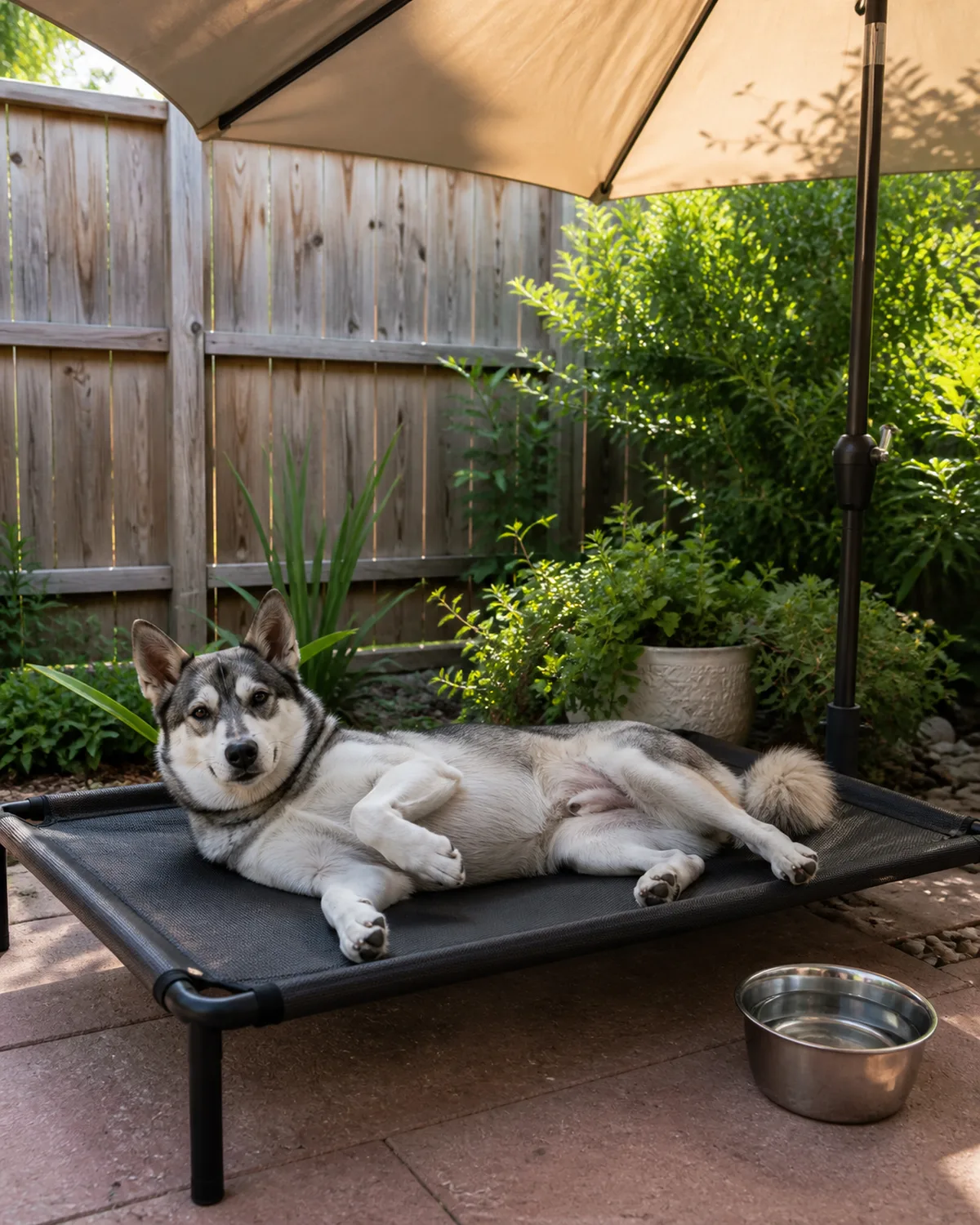
Not every corner of the yard needs to stimulate, challenge, or exercise your dog. Dogs also need a place where the only job is lying there.
Pick the quietest corner of the yard — away from the fence line where foot traffic passes, away from the agility station, away from the dig zone. Put up a shade structure, set down an elevated cot, and place a water bowl within reach. That is the whole setup.
The value of a chill zone is that it teaches your dog the yard is not all-action-all-the-time. Dogs that cannot settle in the yard tend to be the ones that bark constantly, pace the fence, and come inside wired instead of tired.
- Location: the quietest, most sheltered corner — away from high-activity zones and fence lines
- Shade: patio umbrella, sail shade, or pergola — not optional in summer
- Bed: elevated mesh cot — cooler than any ground-level option
- Water: a clean bowl within reach so the dog does not have to leave the zone to drink
- Rule: no toys, no food puzzles, no training — the chill zone is for doing nothing
Some dogs take to it immediately. Others need to be guided there after a play session when they are already tired. Once they learn that the chill zone is comfortable and peaceful, most dogs start choosing it on their own.
Save this for later
15 Dog-Friendly Backyard Upgrades
- 1Build a dedicated dig zoneA framed sandbox with buried treats redirects digging away from your lawn.
- 2Set up a splash poolA hard-shell pool with a few inches of water for instant hot-day relief.
- 3Create shaded rest stationsElevated mesh cots under shade at two or three spots across the yard.
- 4Install a sensory pathAlternating textures give paws and noses something new to explore.
- 5Plant a dog-safe herb gardenMint, rosemary, and lavender in a raised bed for safe sniffing.
- 6Add a tunnel or agility stationA nylon tunnel and PVC jump bars burn serious energy in ten minutes.
- 7Upgrade your fenceL-shaped mesh below, coyote rollers above, and no gap wider than three inches.
- 8Build a raised water stationStainless steel bowl on a platform matched to your dog's height.
- 9Lay dog-safe ground coverClover, turf with drainage, or rounded pea gravel instead of bare dirt.
- 10Set up an outdoor potty stationA bordered gravel corner with enzymatic cleaner keeps the rest of the yard clean.
- 11Create a window lookoutAn acrylic panel in the fence lets your dog see the world and bark less.
- 12Add outdoor enrichment toysRotate three or four toys weekly so the yard always feels new.
- 13Install path lightingSolar stakes along the path and a motion light at the door for safe night trips.
- 14Remove every toxic hazardLock chemicals up high, skip cocoa mulch, and walk the yard before each session.
- 15Design a chill zoneA quiet corner with shade, a cot, and water where the only job is resting.
Common questions
FAQ
How much does it cost to make a backyard dog-friendly?
You can start for under fifty dollars with a splash pool, a dig zone built from scrap lumber, and a rotation of toys you already own. A full setup with fencing upgrades, ground cover, and an agility station might run three hundred to five hundred dollars depending on yard size and material choices.
Is artificial turf safe for dogs?
Yes, as long as you install a proper drainage sub-layer beneath it. Without drainage, urine pools under the turf and creates persistent odor and bacterial growth. Choose turf rated as non-toxic and rinse it with an enzymatic cleaner weekly. Artificial turf does get hotter than natural grass in direct sun, so provide shaded areas nearby.
What plants should I avoid in a dog-friendly yard?
Lilies, azaleas, oleander, sago palm, castor bean, tulip bulbs, and foxglove are all toxic to dogs and should not be planted in a yard where dogs have free access. If you are unsure about a specific plant, check the ASPCA Toxic Plants database before planting.
How do I stop my dog from eating mulch?
Switch to a mulch type with less appeal. Pine bark and cedar chips are less interesting to most dogs than cocoa shell or dyed wood chips. Supervise until you know your dog's chewing habits, and redirect to a chew toy if they start mouthing the mulch. If the behavior persists, replace mulch with pea gravel or clover ground cover in areas your dog accesses.
Can I leave my dog unsupervised in a fenced backyard?
A fenced yard with the upgrades on this list is safer than an open one, but no yard is risk-free without supervision. Escape attempts, wildlife encounters, weather changes, and toxic plant exposure are all possible. Short unsupervised periods in a thoroughly dog-proofed yard are reasonable for adult dogs. Puppies and new dogs should be supervised until you trust the setup.

Written by Jess Calloway
Dog mom to three very different dogs. Every guide on Pawliqa is based on real experience, veterinary guidance, and way too many hours reading ingredient labels. More about Jess