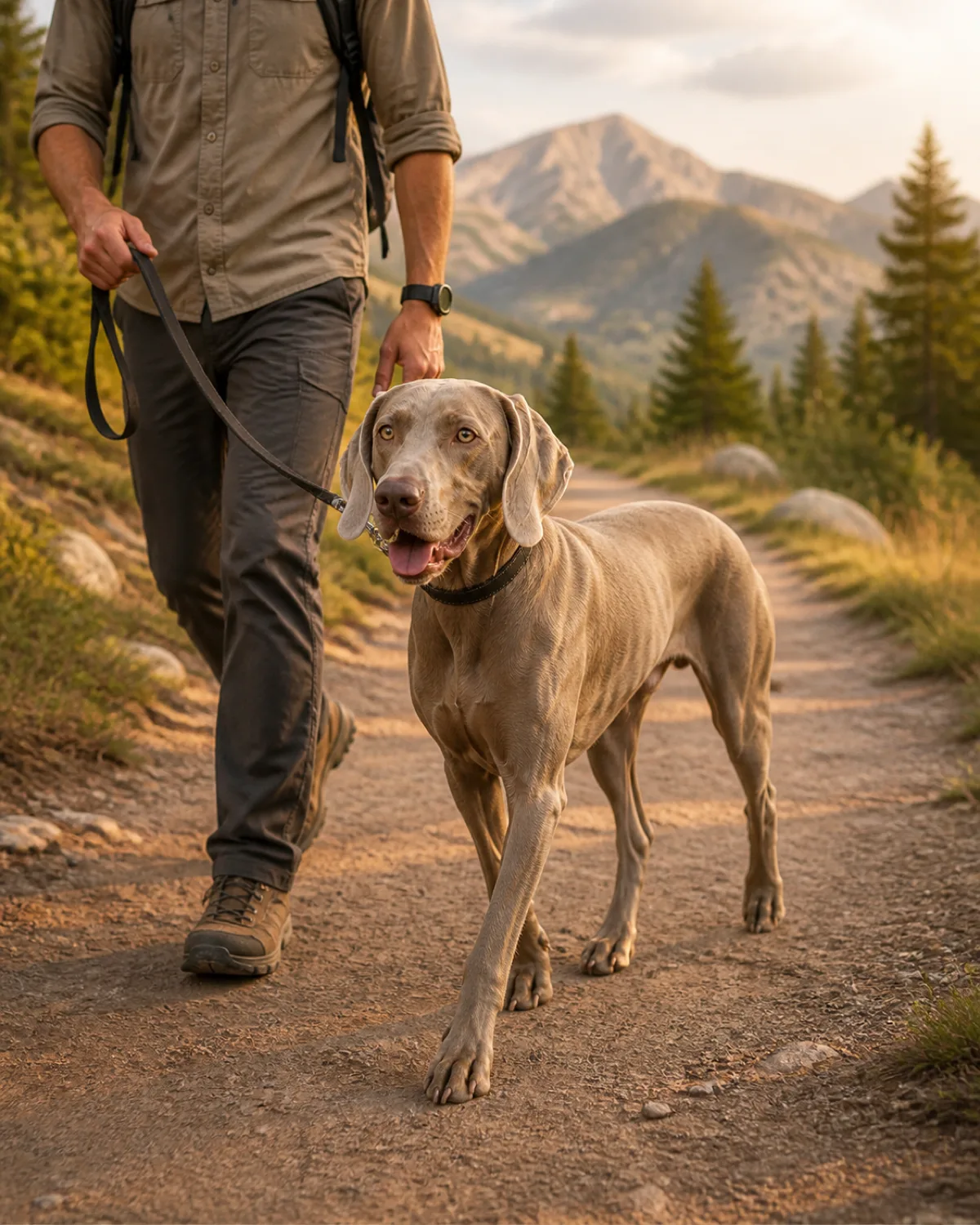
Our first long road trip with a dog ended with a stressed pup, a soaked car seat, and a midnight vet search in a town we had never been to. Every trip since then has been different — because we stopped guessing and started planning around the dog.
Traveling with your dog does not have to be stressful. It takes some preparation, a few non-negotiable safety rules, and the willingness to build the trip around your dog instead of hoping they will figure it out.
These are the ten things that turned our travel from chaos into something both of us actually look forward to.
Jump to a section
10 rules for traveling with a dog
Safety, comfort, and preparation for car trips, flights, and hotel stays with your dog.
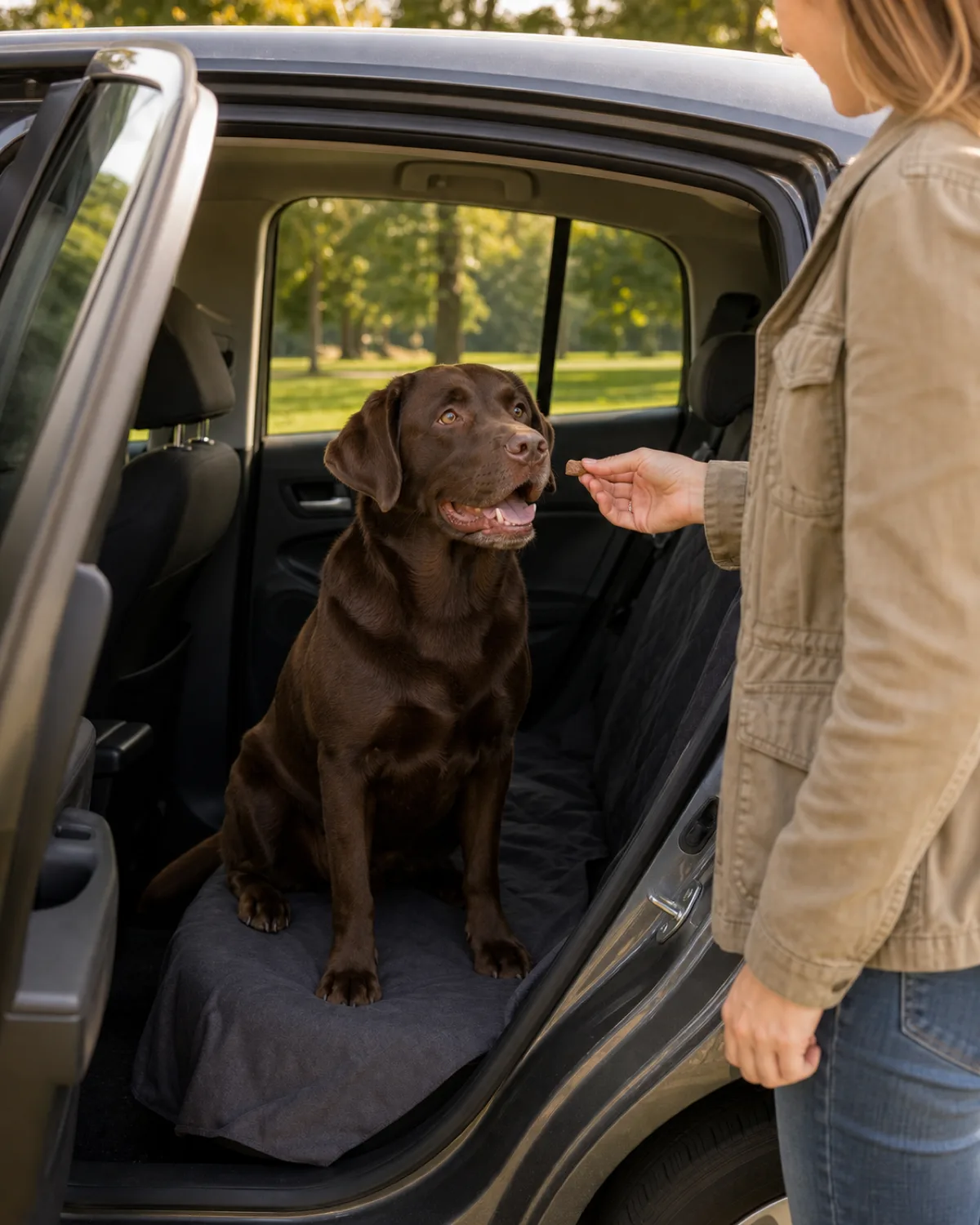
A dog that has never ridden in a car for more than ten minutes will not handle a six-hour highway stretch. Start small — five-minute drives to a park, a trail, a friend's yard. Pair every car ride with something your dog enjoys at the other end so the car becomes a signal for adventure, not anxiety.
Stretch the duration gradually over two to three weeks. If your dog drools, pants heavily, or vomits on short rides, talk to your vet about motion sickness options before planning anything longer. Building a positive car association before the trip prevents the problem from starting in the first place.
Pick the Right Restraint for Your Dog's Size
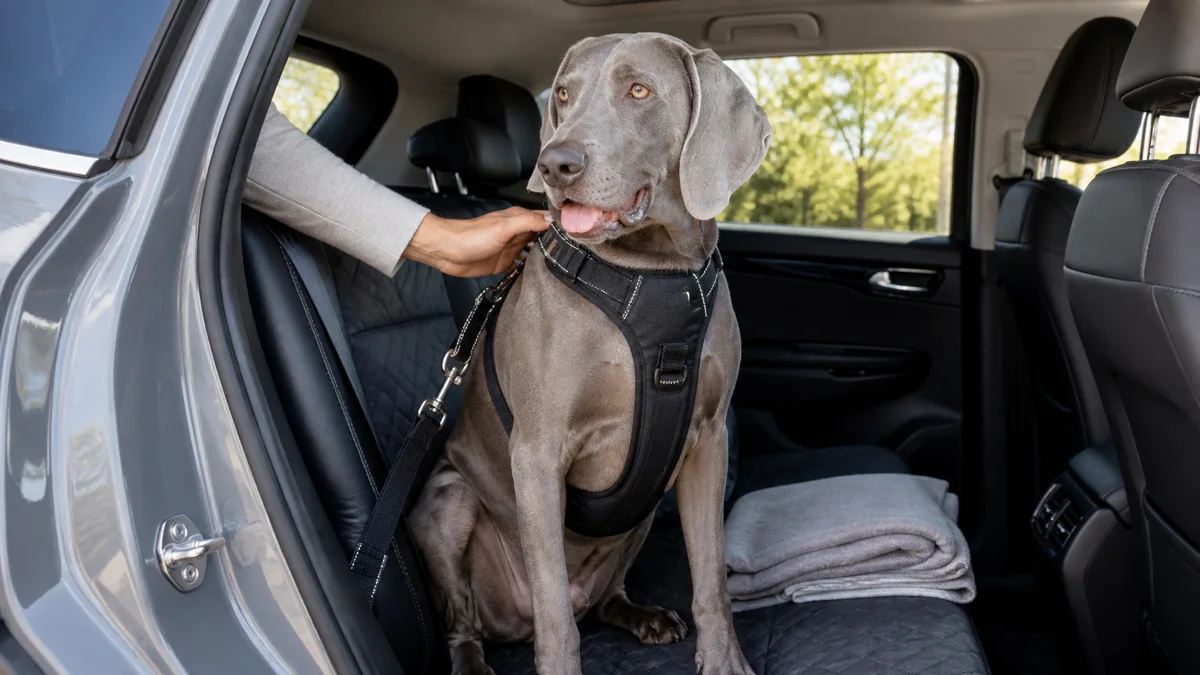
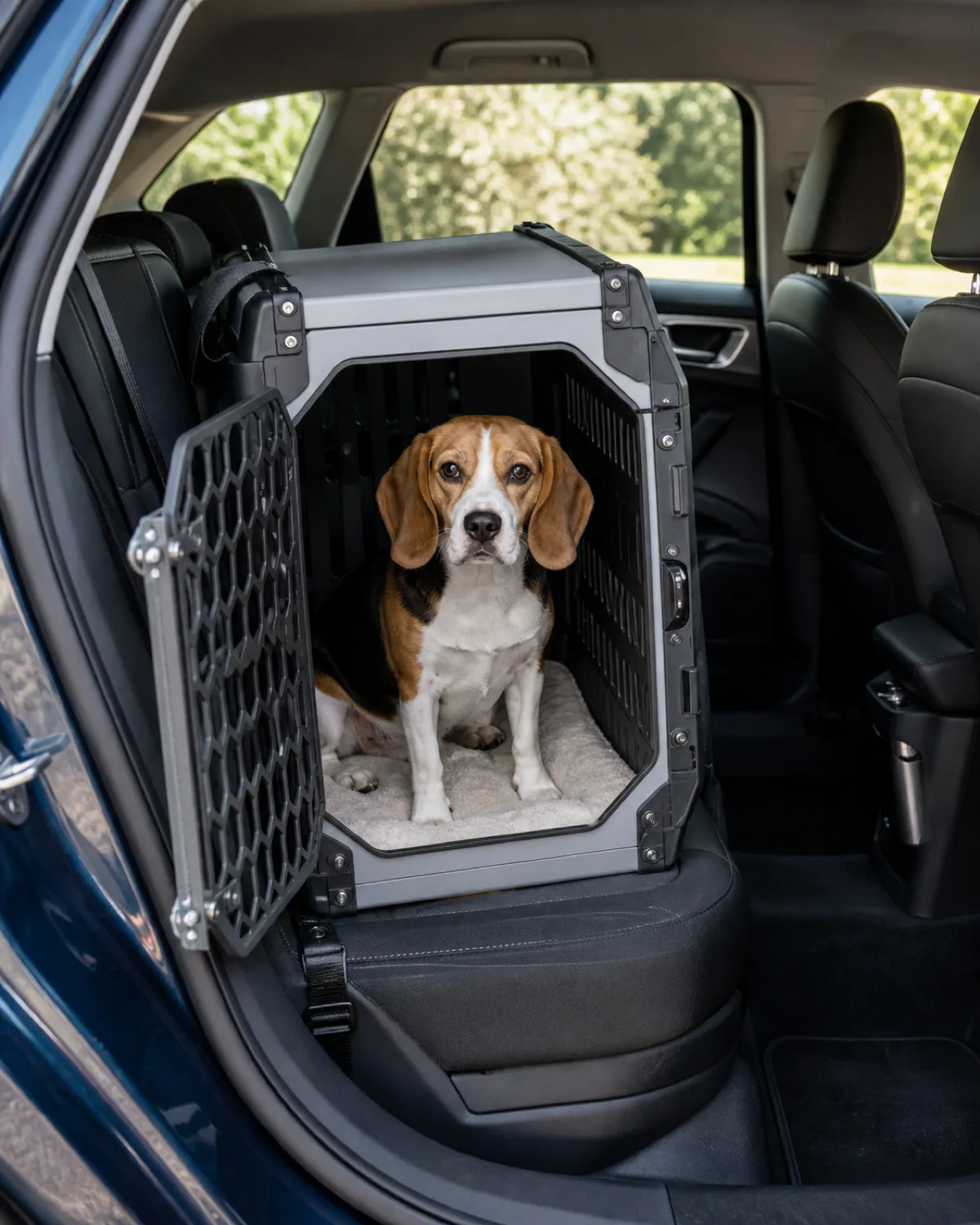
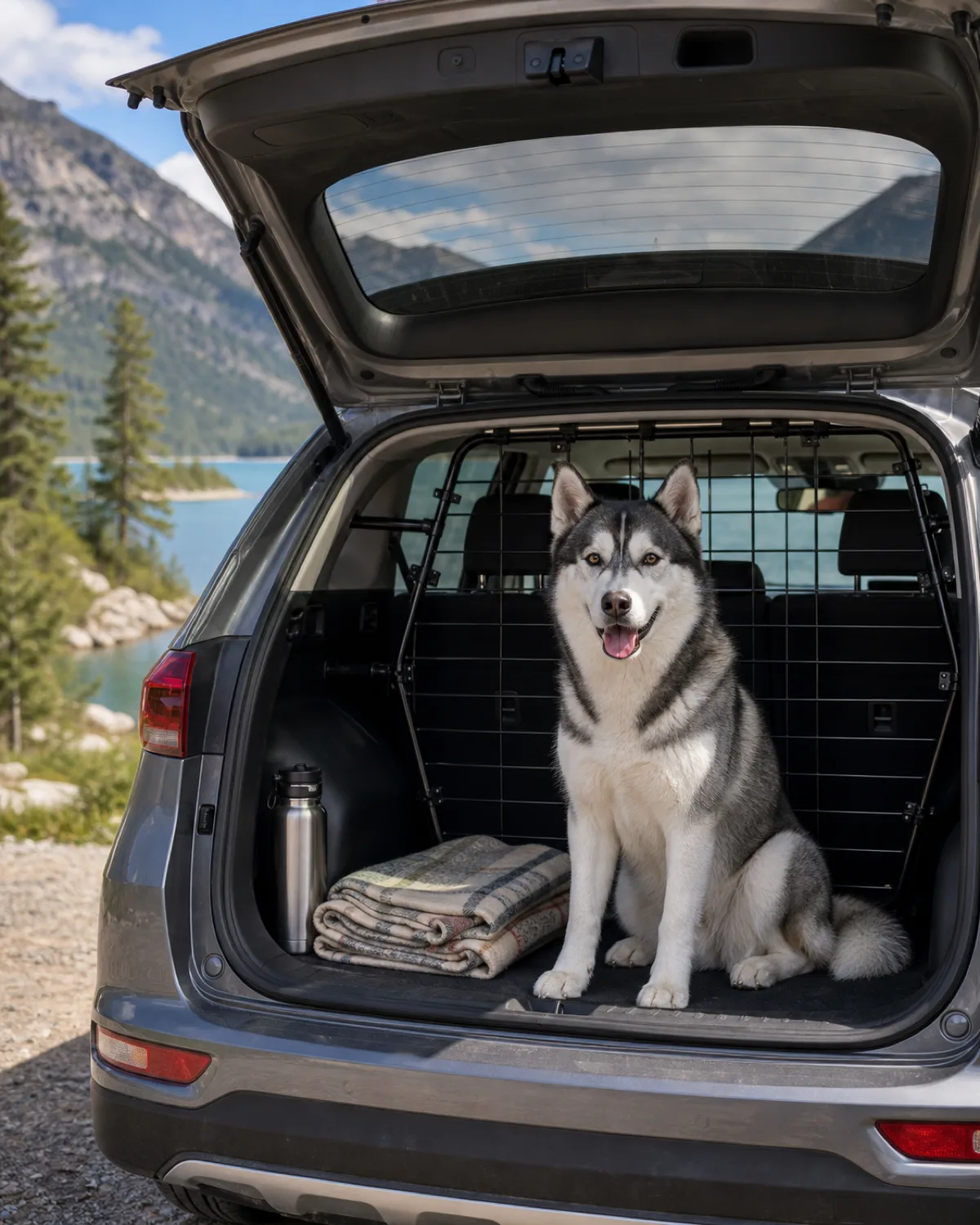
An unrestrained dog in a moving car is a projectile in a sudden stop. For small dogs under twenty pounds, a crash-tested travel crate or a car seat with a harness tether works well. Medium dogs do best with a crash-tested harness that clips into the seatbelt buckle. Large dogs need either a secured crate in the cargo area or a heavy-duty harness rated for their weight.
Avoid attaching anything to a collar — in a collision, all the force goes straight to the neck. Whatever you choose, let your dog wear it at home a few times before the trip so it feels familiar, not alarming.
Restraint quick guide
Two size-based restraint rules
Under 30 poundsCrash-tested crate or raised car seat with a harness tether. The crate should be secured with a seatbelt through the handle so it cannot slide.
Over 30 poundsCrash-tested harness clipped to the seatbelt buckle, or a heavy-duty cargo crate in the back of an SUV. Never clip to the collar.
Pack a Travel Bag Your Dog Actually Needs
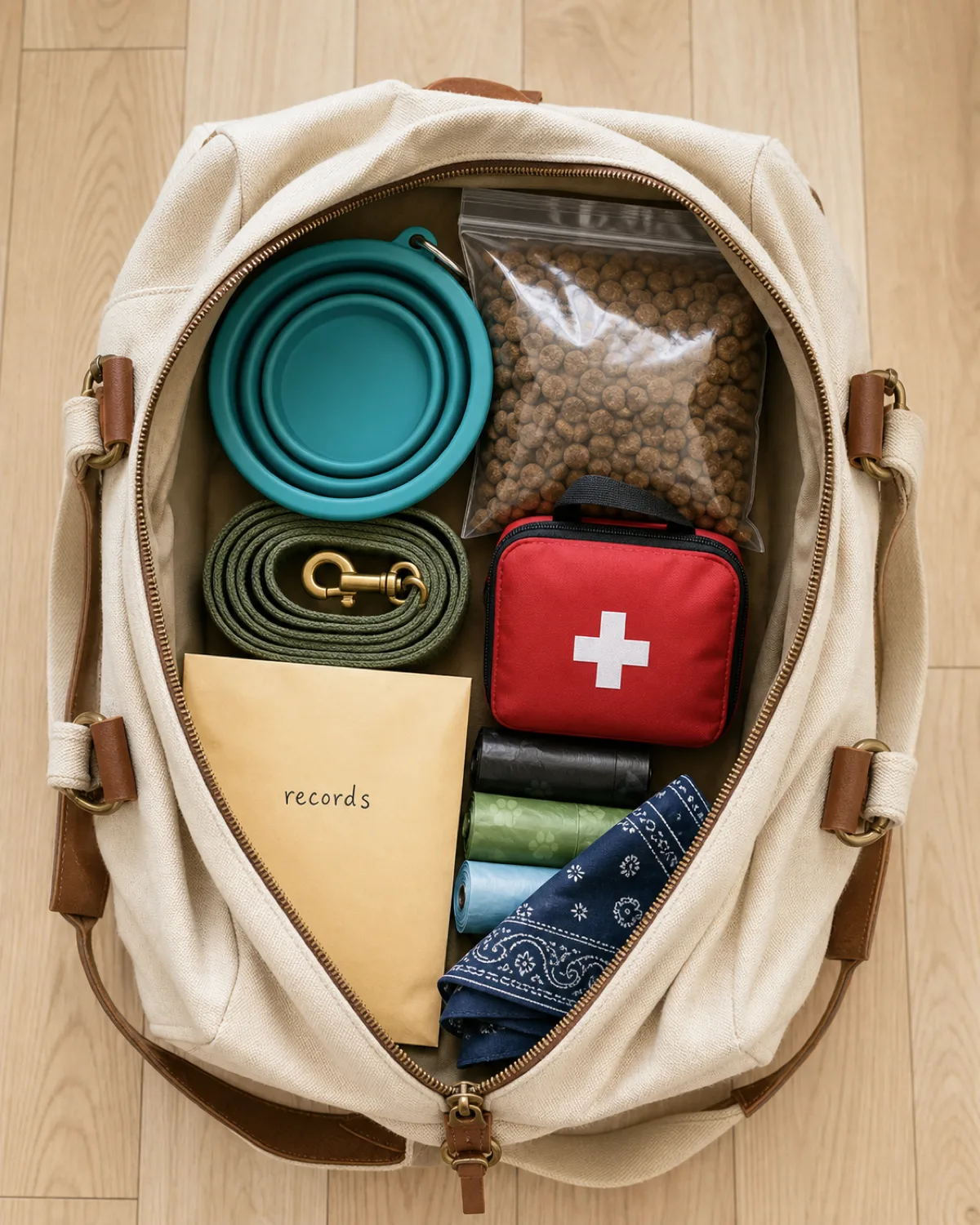
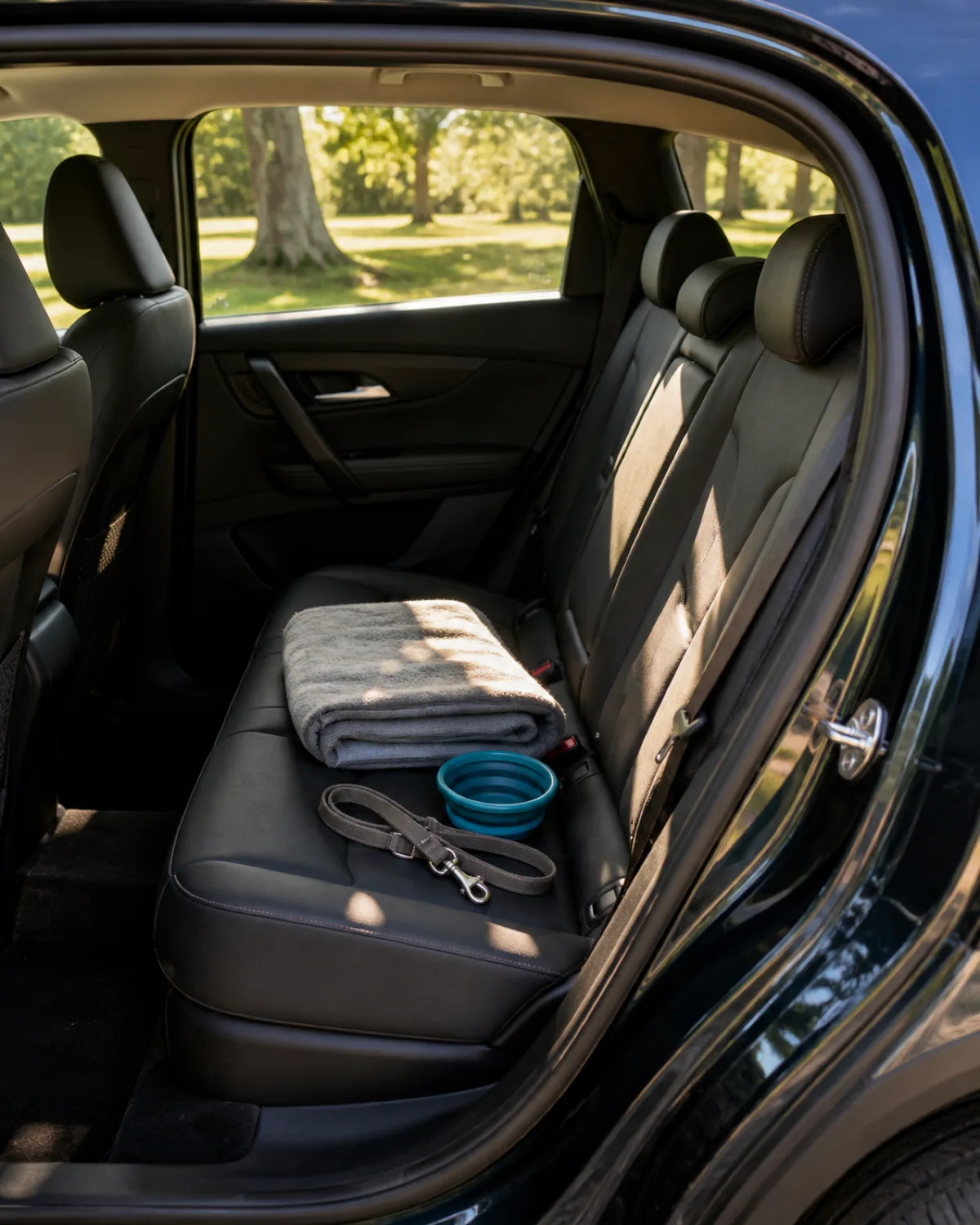
Overpacking is easy. Underpacking means a frantic pet store search at eleven at night in an unfamiliar town. A solid dog travel bag has a collapsible water bowl, enough food for the trip plus two extra days, any daily medications, a current copy of vaccination records, and a basic first-aid kit with gauze and antiseptic wipes.
Add poop bags, a spare leash and collar with ID tags, and one familiar blanket or comfort item.
Skip the five extra toys. One chew toy and one comfort item are enough. Everything else is weight you carry and clutter you sort through when you need the leash fast.
Plan Pit Stops Every Two Hours
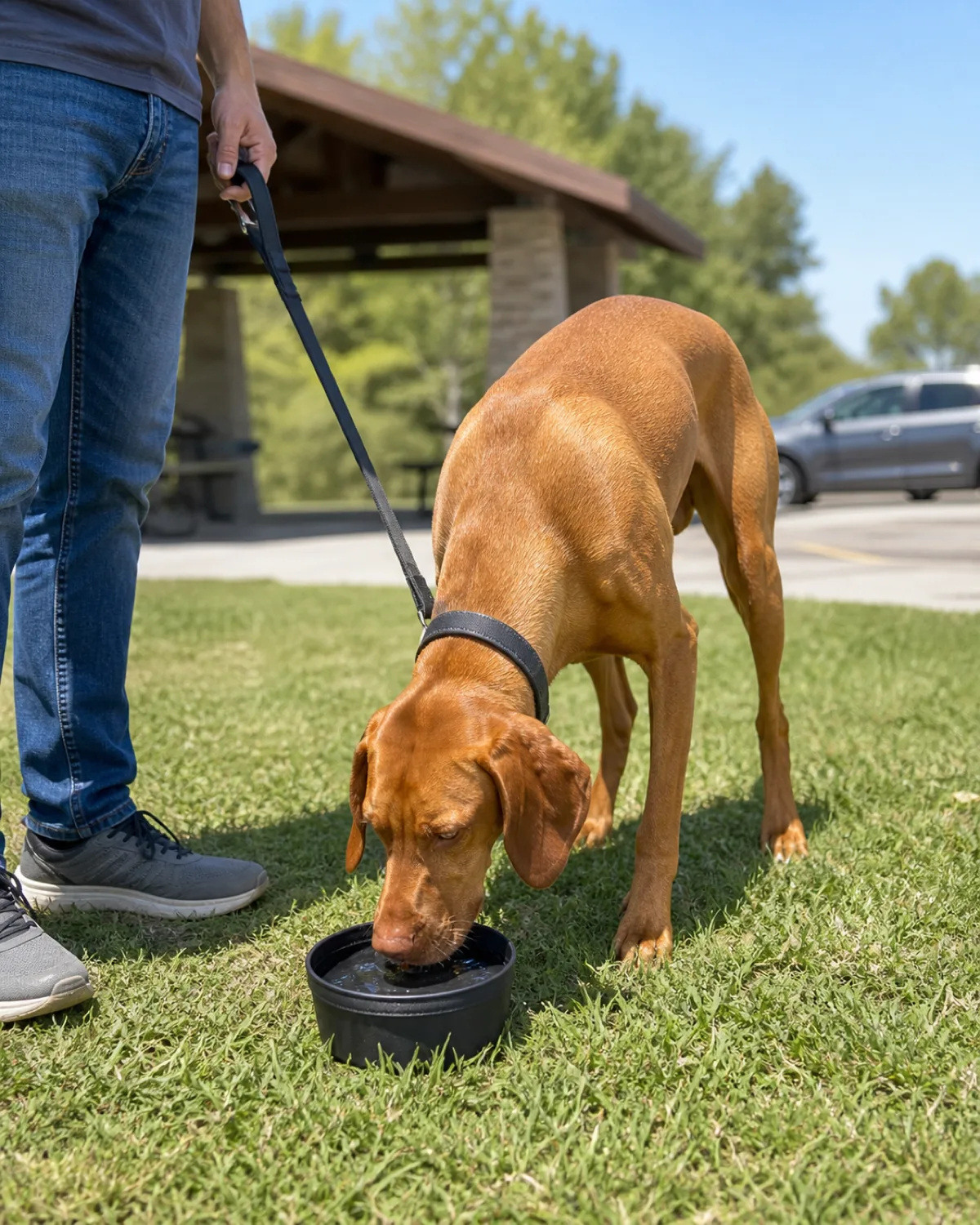
Dogs need to stretch, drink water, and relieve themselves regularly on long drives. Stop every two hours, even if your dog seems fine. Find a safe grassy area away from highway traffic, clip the leash on before opening the car door, and give your dog at least ten minutes to walk around and sniff.
Offer water at every stop. These breaks keep your dog comfortable and keep you alert. They also burn off the restless energy that builds in a confined space — the same principle behind daily exercise needs but compressed into short bursts across a long drive.
Never Leave Your Dog Alone in a Parked Car
Even on a mild seventy-degree day, the inside of a parked car can reach over a hundred degrees in less than thirty minutes. Cracking the windows does almost nothing. Leaving the AC running with the engine on is a gamble — engines stall, AC units fail.
The only safe rule is absolute: if you cannot take your dog inside, one person stays in the car with the dog and the AC running while the other goes in. Traveling solo means planning stops around places that welcome dogs or using drive-throughs. No errand is worth the risk.
Non-negotiable car safety
Four rules that protect your dog on every trip
Restrain alwaysHarness or crate every time the car moves. No exceptions, even on short drives.
Leash before doorClip the leash before opening any car door. A spooked dog bolts into traffic in under a second.
Never aloneNo dog left in a parked car unattended. Not for five minutes, not with the window cracked.
Water at every stopOffer fresh water each time you pull over. Dehydration builds silently on long drives.
Feed a Light Meal Three Hours Before Departure
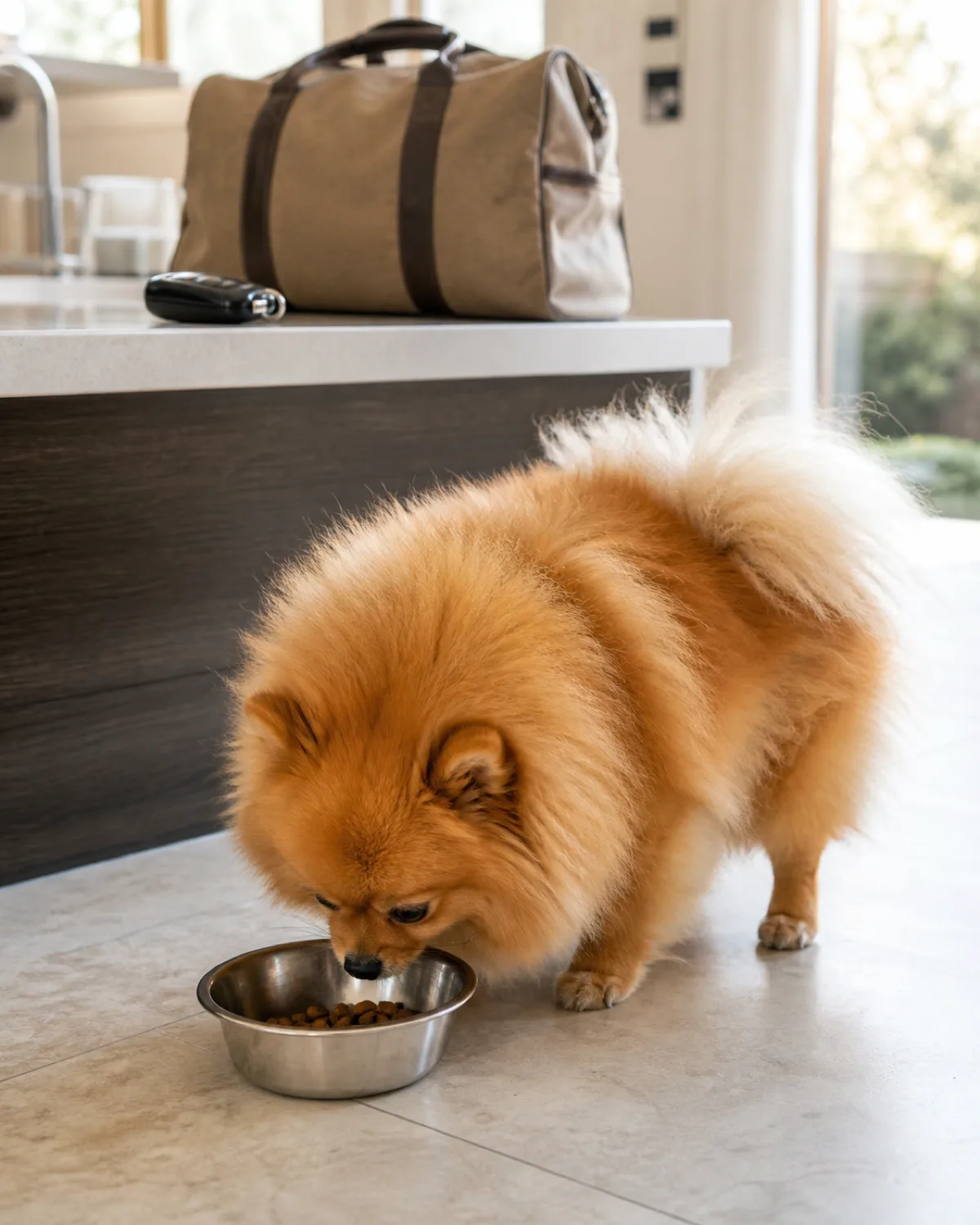
A full stomach plus car motion is a reliable recipe for nausea. Feed your dog a smaller-than-usual meal about three hours before you plan to leave, so the food has time to settle. For dogs prone to car sickness, your vet may recommend skipping the pre-trip meal entirely and feeding at the first long stop.
Avoid treats and chews during the drive itself — save those for pit stops. Keep water available in a spill-proof travel bowl, but do not let your dog gulp large amounts right before getting in the car.
Make the Crate Feel Like Home for Flights
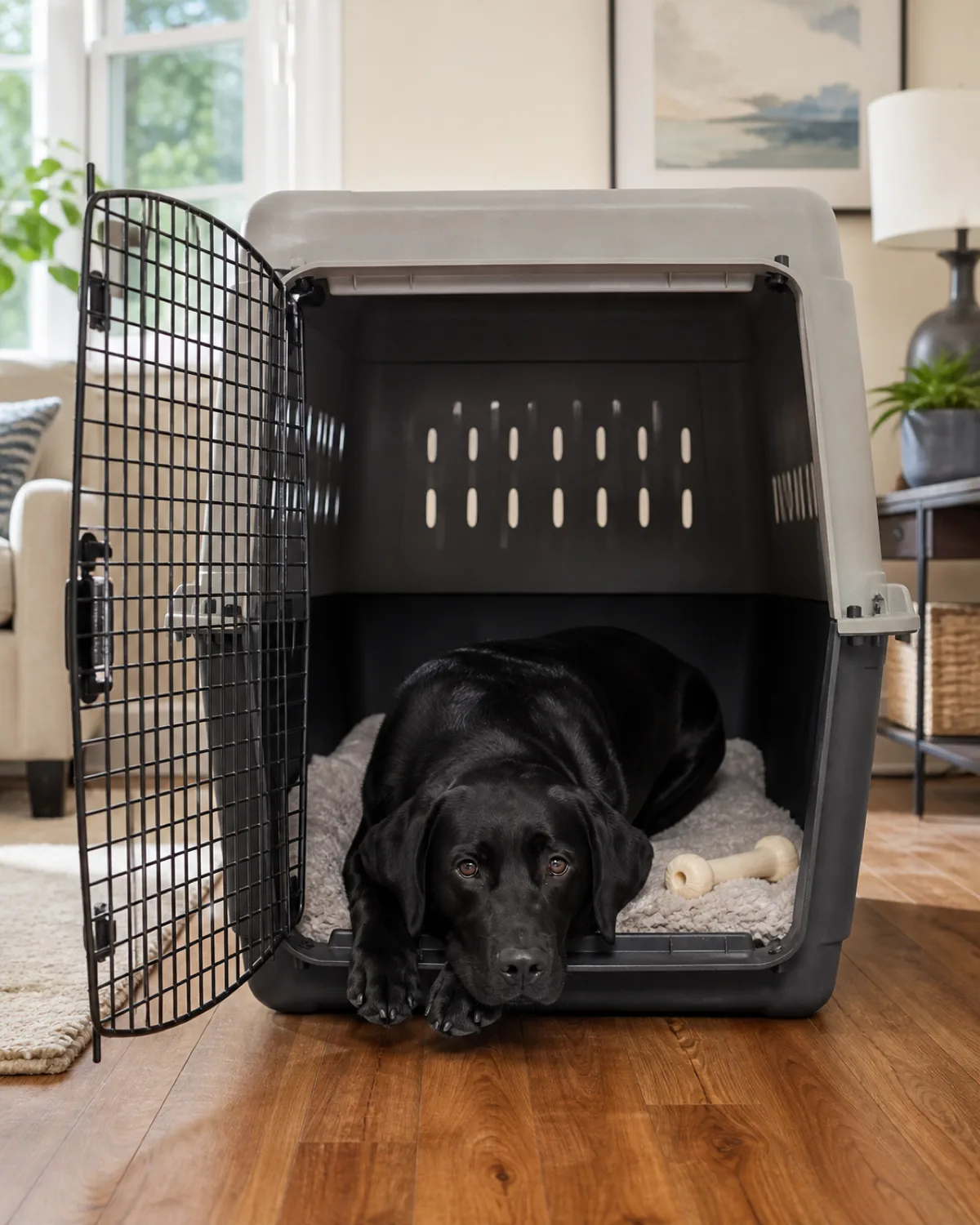
If you are flying with your dog, the airline-approved hard-shell crate needs to be a place your dog already knows and chooses — not something introduced the night before departure. Start crate training at least four weeks before the flight.
Feed meals inside the crate, leave it open in your living room with a blanket and a familiar toy, and gradually work up to closing the door for longer stretches.
Your dog should be able to stand, turn around, and lie down comfortably with the door closed and show no signs of distress. Label the crate with your name, phone number, flight number, and a photo of your dog taped to the top.
Research Pet Policies Before Every Booking
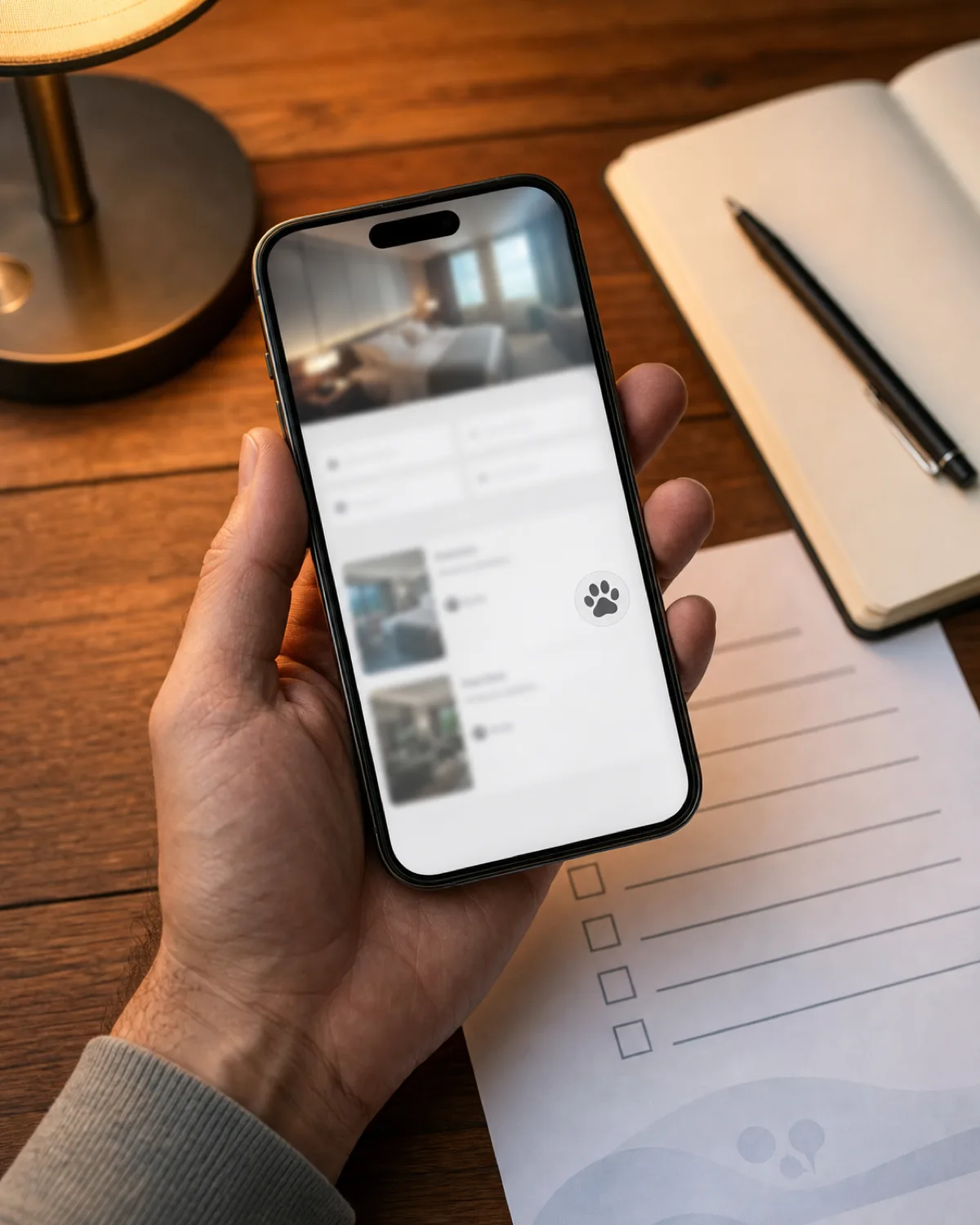
Not every pet-friendly hotel is equally welcoming. Some charge steep cleaning fees, limit dog size, or restrict dogs to certain room types on the ground floor. Call ahead — do not rely solely on the website, because policies change and online listings lag behind.
For flights, every airline has different rules for cabin pets versus cargo, breed restrictions, carrier dimensions, and health certificate requirements. Rental car companies vary too — some charge extra cleaning fees, some ban pets entirely. Doing this research before you book saves you from scrambling at check-in or getting turned away at the counter.
Bring Familiar Items to Reduce Travel Anxiety
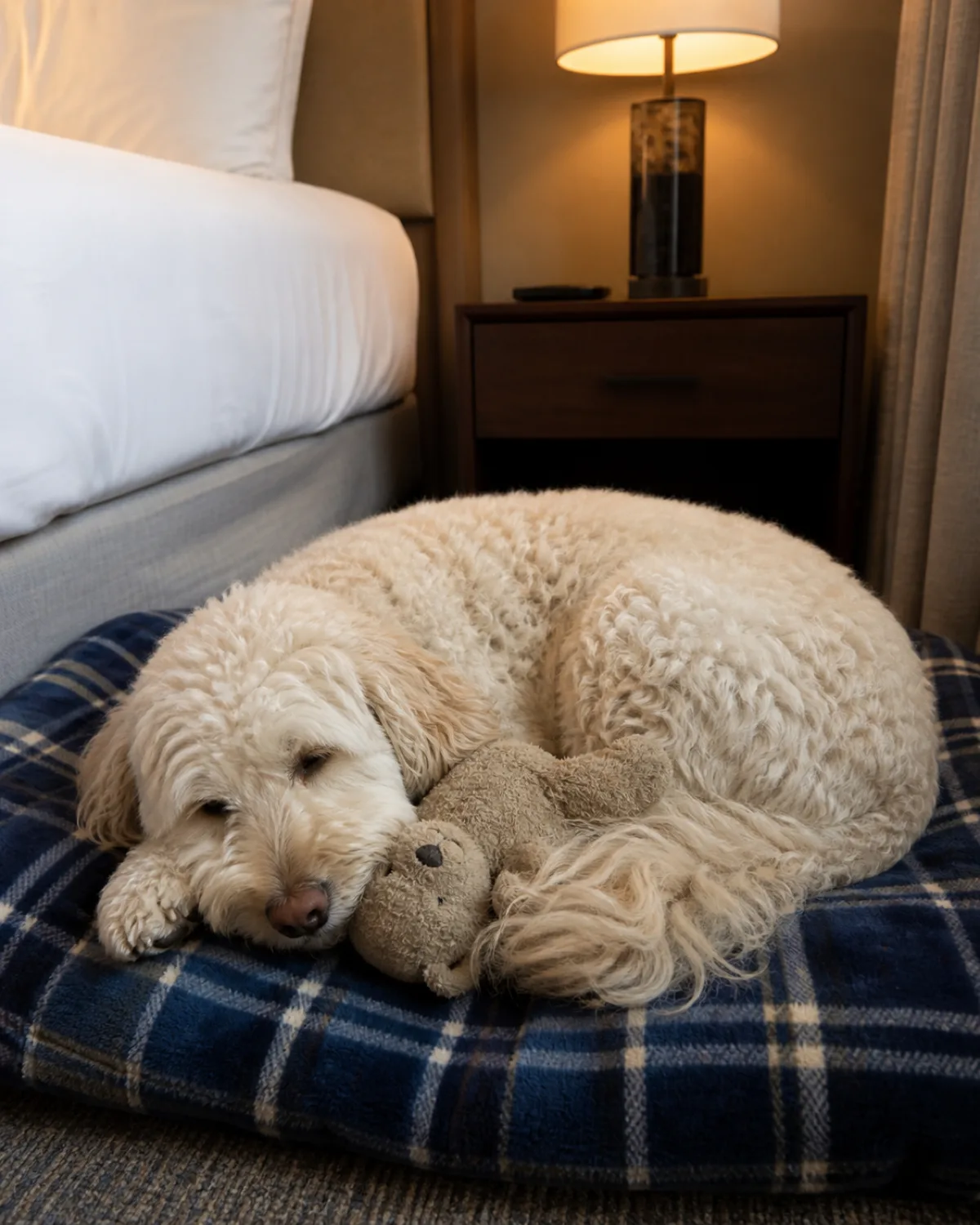
Dogs navigate the world through scent and routine, and travel strips both away at once. Packing a few familiar items can make a hotel room or a relative's guest bedroom feel less foreign. Bring the blanket or bed your dog sleeps on at home — not a new one, but the one that smells like your house.
A well-loved toy helps too. Some owners toss a worn t-shirt into the crate for the same reason. These small anchors give your dog something predictable in a string of unpredictable environments, and they cut the time it takes to settle into a new place from hours to minutes.
Save this for later
10 Rules for Traveling with a Dog
1
Short drives firstBuild a positive car association with five-minute trips before the big one
2
Right restraintCrash-tested crate for small dogs, seatbelt harness for medium and large
Stop every two hoursLeash on, ten minutes to walk and drink, then back on the road
5
Never alone in a carSeventy degrees outside means over a hundred inside in thirty minutes
6
Light meal beforeFeed three hours before departure to prevent nausea, skip treats during the drive
7
Crate equals homeStart crate training four weeks before a flight, not the night before
8
Check pet policiesCall ahead for hotels, airlines, and rental cars — websites lag behind reality
9
Familiar itemsTheir blanket, their toy, your worn shirt — scent anchors cut settling time
10
Keep the routineSame feeding times, same walk times, same bedtime — predictability beats novelty
pawliqa.com
Keep Your Dog's Routine As Close to Normal As Possible
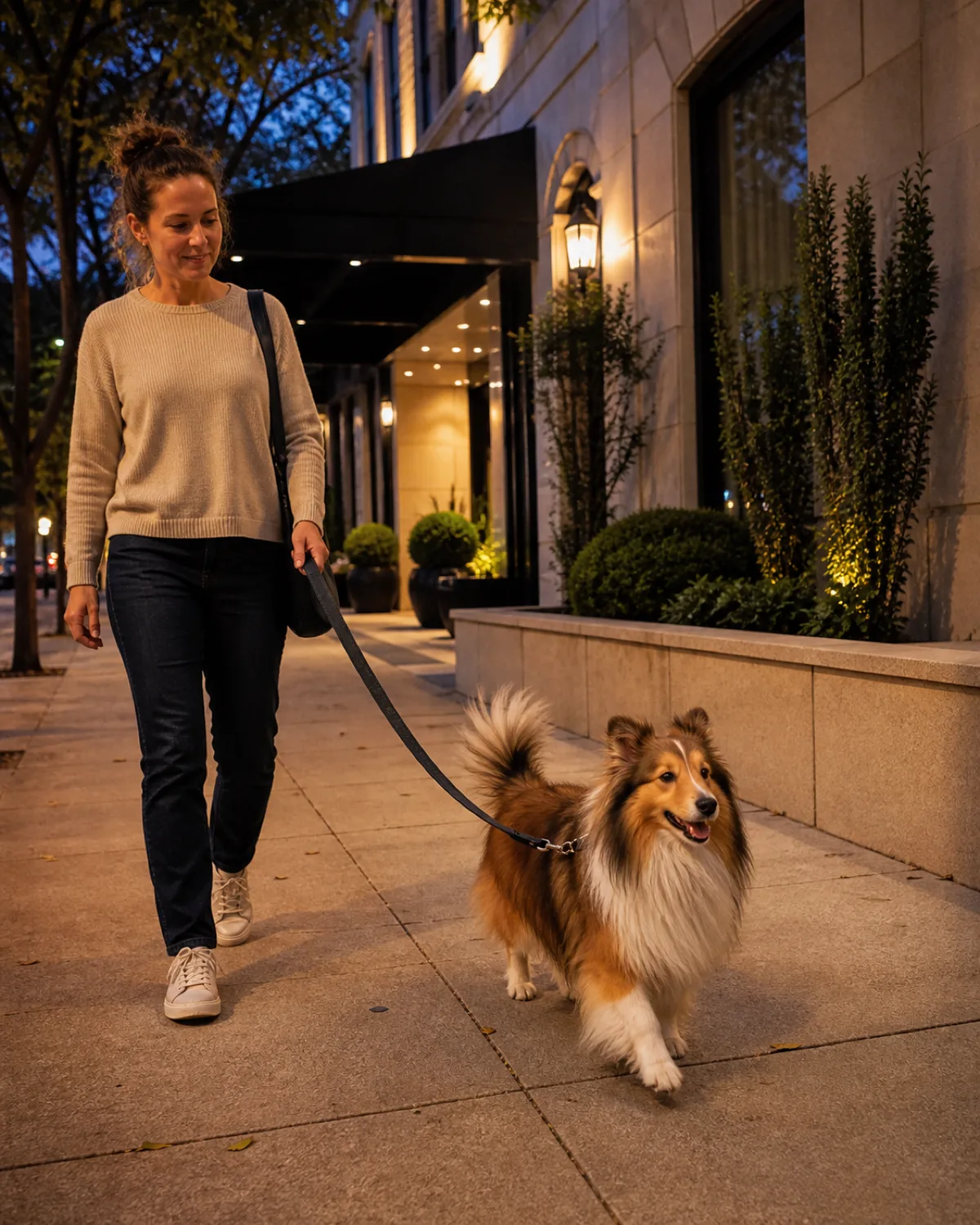
Dogs thrive on predictability. When everything around them changes — new smells, new floors, new sounds — the one thing you can hold steady is their schedule. Feed at the same times you feed at home. Walk at roughly the same times. Keep bedtime consistent.
If your dog is used to a twenty-minute evening walk, find a safe route near your hotel and do the same. You will not match the home routine perfectly, and that is fine. But the closer you get, the less anxious your dog will be and the faster they settle each night in a new place.
Road trips get easier the more you do them. Your dog learns the rhythm — the car, the stops, the new room, the walk, the blanket — and each trip takes less adjustment than the last.
The best travel dogs are not born calm. They are dogs whose owners prepared, packed, planned the stops, kept the schedule, and never once left them alone in a hot car. That is the whole formula.
About the author
Jess Calloway
Jess Calloway edits Pawliqa, where she shares dog care, grooming, training, and new-owner tips — plus DIY and pet-friendly home ideas — for anyone who wants a happy, well-cared-for dog. As a dog mom to three very different dogs, she writes the honest, tested version of what actually works. Every guide is image-led and reviewed for clarity, usefulness, image accuracy, and Pinterest-to-page alignment before it goes live. Visit the About page.
Frequently Asked Questions
Can I give my dog medication for car sickness?
Yes, but only after consulting your vet. Some dogs benefit from anti-nausea medication for long trips, especially if desensitization drives alone did not resolve the problem. Your vet can recommend the right option and dosage based on your dog's weight and health history.
How do I know if my dog is too stressed to travel?
Watch for excessive panting, drooling, trembling, refusal to eat, or trying to hide. A dog that shows these signs consistently during short practice drives may need more gradual desensitization, calming aids, or a conversation with your vet before you plan a longer trip.
Is it better to fly with my dog or drive?
Driving gives you more control over your dog's comfort, stops, and schedule. Flying is faster but more stressful, especially for dogs that must travel in cargo. If you can drive, drive. If you must fly, invest the four weeks in crate preparation and choose direct flights to minimize transit time.
What documents do I need when traveling with my dog?
At minimum, bring a current rabies vaccination certificate and a health certificate from your vet dated within ten days of travel. Some states and all international destinations require additional paperwork. Airlines have their own documentation requirements — check these before you book, not the night before you fly.
Can my dog ride in the front seat?
It is not recommended. Airbags deploy with enough force to injure or kill a dog. The back seat is the safest spot, whether your dog is in a crate or wearing a crash-tested harness.
Dog beds collect more than fur. This guide covers machine-washable beds, hand washing, memory foam inserts, proper drying, and the quick spot-clean tricks that keep a bed fresh between full washes.