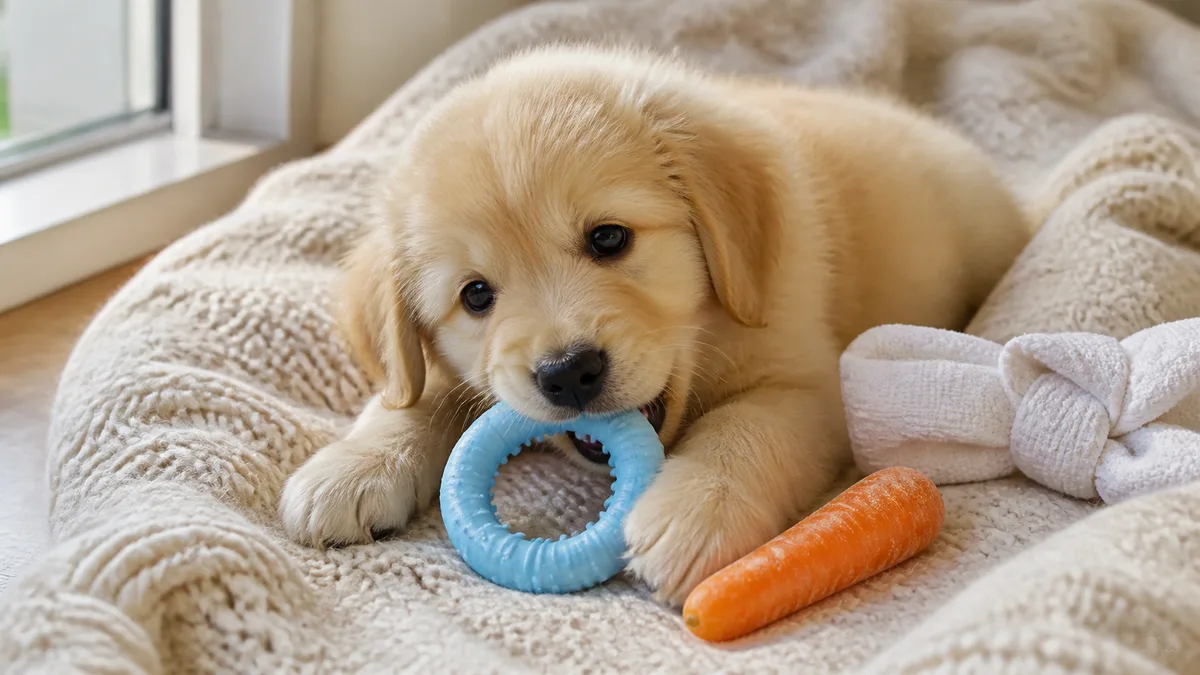
Our youngest puppy destroyed four pairs of shoes, two remote controls, and one baseboards corner in a single week. She was four months old with every tooth either loose, missing, or pushing through swollen gums.
Teething is a phase every puppy goes through, and the only question is whether you manage it or let your belongings manage it for you.
Here are sixteen things that actually soothe a teething puppy without costing a fortune or requiring a trip to the vet.
Your teething relief toolkit
16 ways to soothe sore puppy gums
From frozen washcloths to bedtime routines, these sixteen ideas cover every angle of puppy teething relief so you and your puppy both survive the chewing phase. Jump to whichever one you need right now.
1. Freeze a Damp Washcloth for Instant Gum Relief
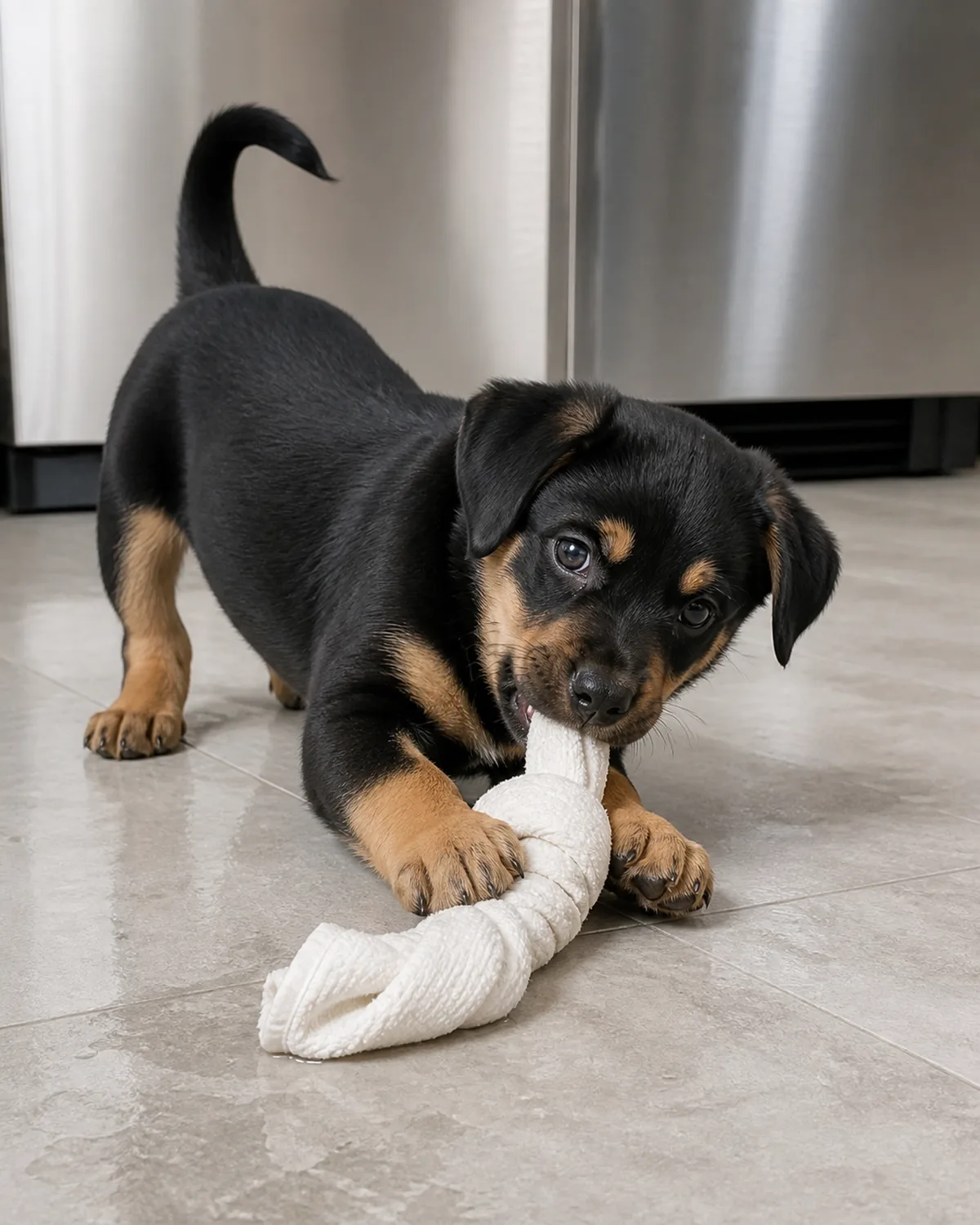
This is the fastest teething fix you can make with things already in your kitchen. Take a clean washcloth, run it under water, wring it until it is damp but not dripping, twist it into a rope, and put it in the freezer for about two hours.
The cold numbs sore gums on contact and the textured fabric gives the puppy something satisfying to gnaw. It works better than ice cubes because ice is too hard for baby teeth and can crack a loose one.
- Prep time: under one minute to twist and freeze
- Freeze duration: 2 hours for firm, not rock-hard
- Reuse cycle: toss it in the washing machine after each session and refreeze
- Keep three in rotation: one in the freezer, one in use, one in the wash
Tip
The Thumbnail Test for Chew Toy Safety
Press your thumbnail into any chew toy before handing it to your puppy. If you can leave an indent, the toy is soft enough for baby teeth. If your nail slides off without a mark, the toy is too hard and could crack a loose tooth.
2. Offer Chilled Carrots as a Crunchy Frozen Treat
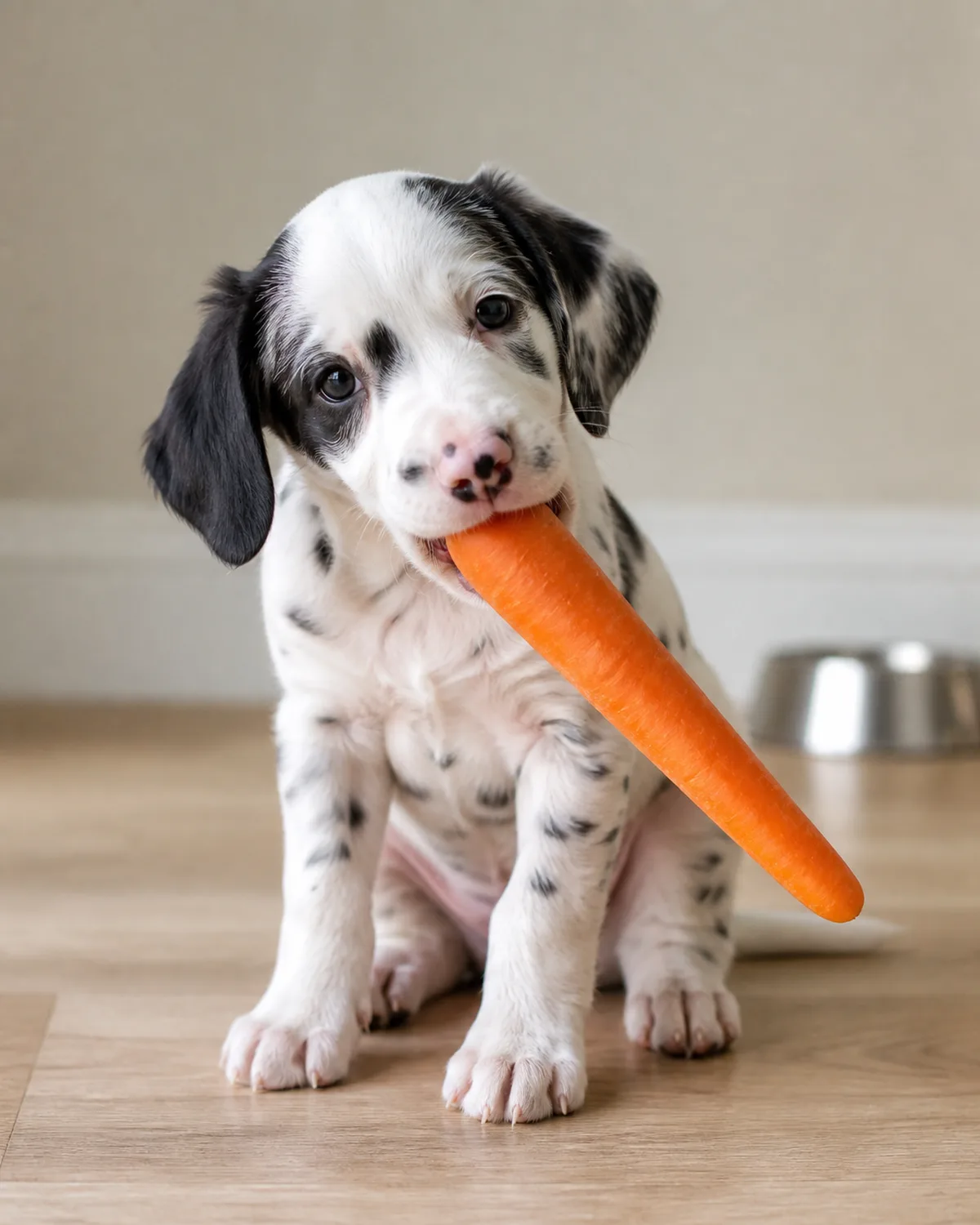
A whole carrot from the refrigerator — chilled, not frozen solid — gives a teething puppy twenty minutes of focused gnawing. The cool temperature soothes inflammation, and the firm-but-forgiving crunch is satisfying without being hard enough to damage baby teeth.
Carrots are low-calorie enough that they do not mess up meal portions, and most puppies accept them without any coaxing because they like the texture.
- Temperature: refrigerator-cold, not freezer-hard
- Size guide: full carrot for medium to large breed puppies, half carrot for small breeds under twelve weeks
- Supervision: always watch — small puppies can bite off chunks large enough to choke on
- Frequency: one carrot per day as a teething snack is safe for most puppies
3. Stock Up on Puppy-Specific Teething Toys
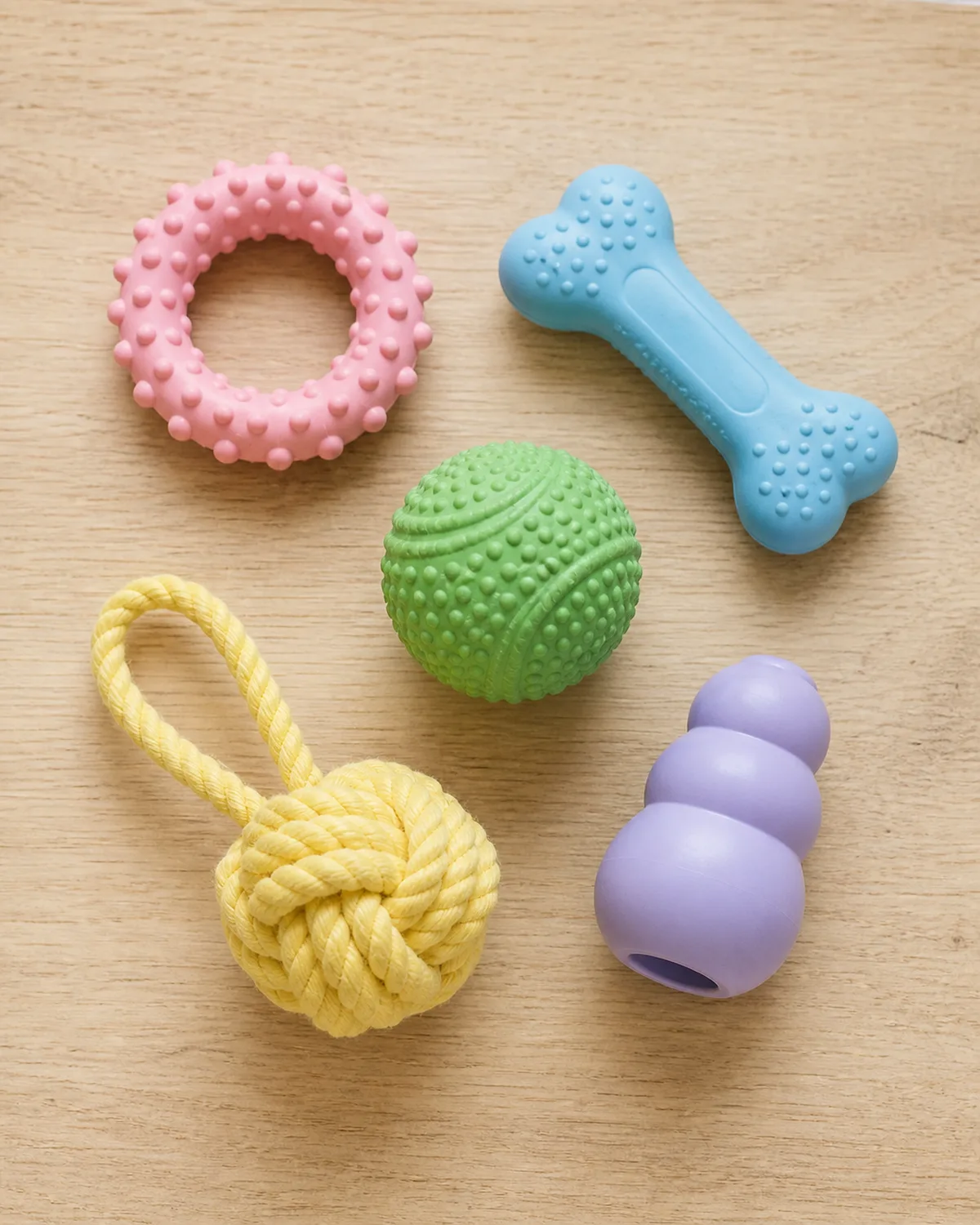
Not every chew toy in the pet store is safe for a teething puppy. Most of them are designed for adult dogs with fully set permanent teeth, and the hardness difference matters more than you would expect.
Look for products specifically labeled for puppies. Brands like KONG Puppy and Nylabone Puppy use softer rubber compounds that flex under pressure instead of resisting it. The thumbnail test from the tip above applies here: if your nail leaves an impression, the toy is safe for baby teeth.
- Safe materials: soft rubber, braided cotton rope, food-grade silicone
- Avoid: nylon bones rated for aggressive chewers, real antlers, cow hooves, hard pressed rawhide
- Texture variety: nubbed, ridged, smooth, and rope — different textures feel different on sore spots
- Starter count: five to six toys covers a full rotation without repeating the same one two days in a row
4. Fill a KONG With Frozen Peanut Butter for Long-Lasting Comfort
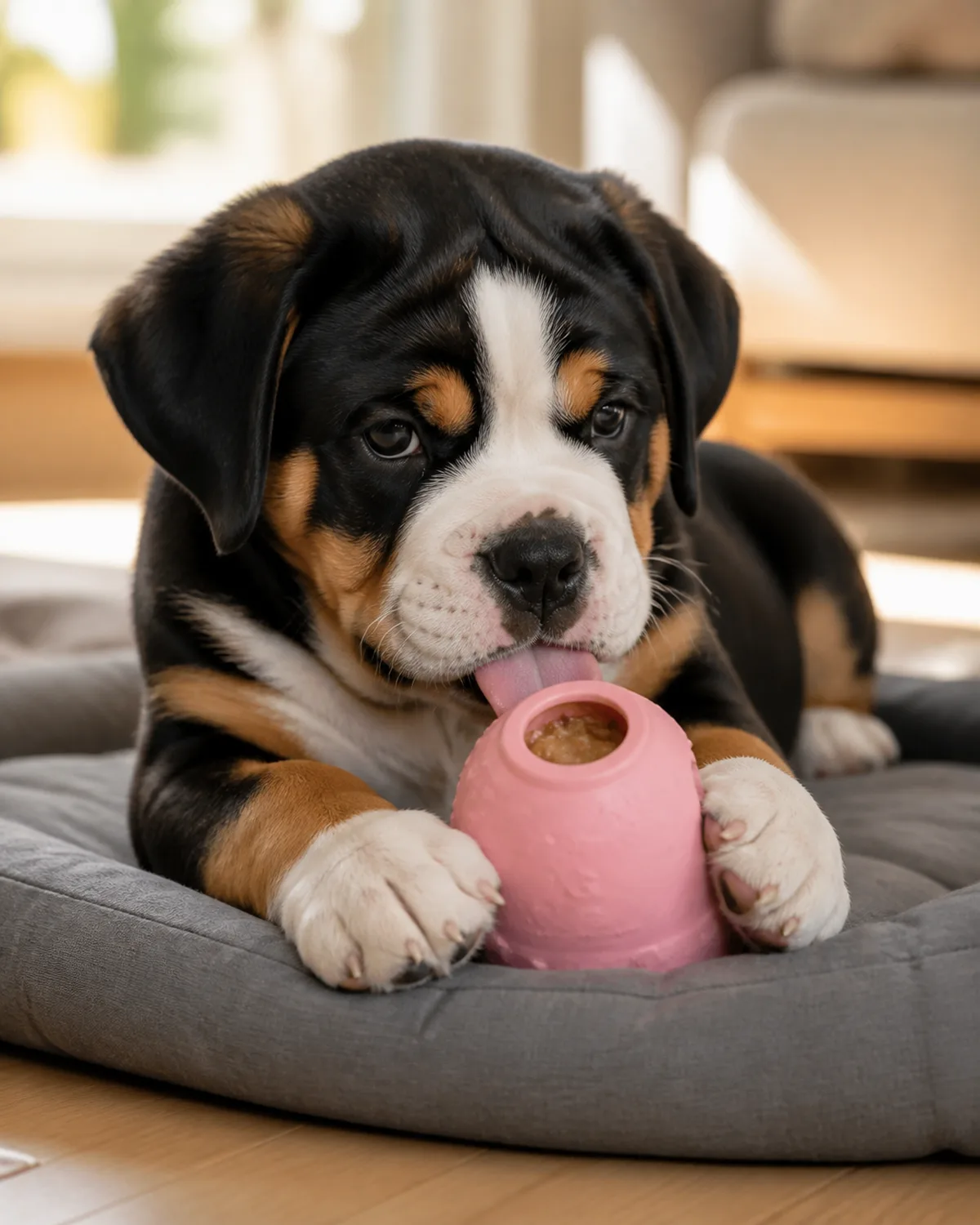
A frozen KONG is three problems solved at once. The cold soothes swollen gums. The licking and working for food burns mental energy. And the twenty to thirty minutes of focused activity is time your puppy is not chewing on furniture or your hands.
Use a puppy-sized KONG and fill it with unsweetened peanut butter, plain pumpkin puree, or soaked puppy kibble. Freeze it for at least four hours before serving. The frozen filling takes much longer to work through than room-temperature filling.
For puppies adjusting to time alone, a frozen KONG in the crate turns a stressful separation into a welcome ritual. More on crate feeding strategies in our guide on how to feed a puppy.
- Fill options: unsweetened peanut butter (check label — xylitol is toxic), plain pumpkin puree, mashed banana, soaked kibble
- Freeze time: minimum four hours, overnight is better
- Serving size: one KONG per session, count it toward daily calorie intake
- Cleaning: soak in warm soapy water after each use — a bottle brush gets the inside clean
5. Rotate Chew Toys Daily to Keep the Novelty Factor
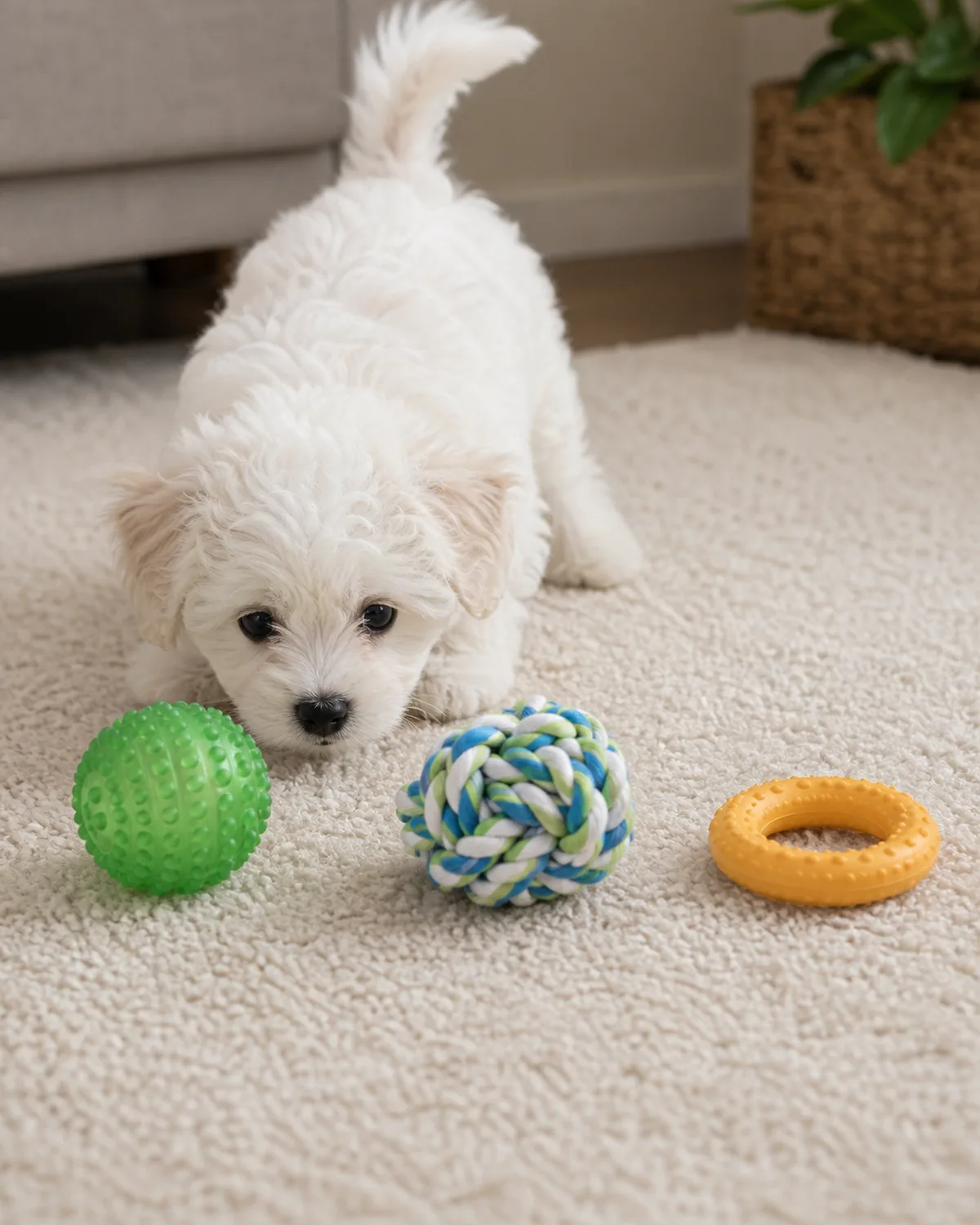
A puppy that ignores its chew toys is not being difficult. It is bored with them. Dogs — especially young ones — lose interest in objects they have fully explored, which is why the toy they loved on Tuesday is invisible by Friday.
The rotation system is free and takes thirty seconds. Keep five or six chew toys total. Put out two or three each day. At the end of the day, swap them for different ones. By the time the first set comes back out in a few days, it feels new again.
This matters for teething because a puppy with no interesting chew option nearby will default to whatever is closest — your shoe, the table leg, the corner of the rug.
- Daily set: two to three toys out at a time, rest stored out of sight
- Swap cycle: rotate every day or every other day
- Material variety: mix textures within each daily set — one rubber, one rope, one frozen item
- Storage: a shoebox or basket in a closet works fine
6. Try Frozen Fruit Cubes for a Sweet Gum Soother
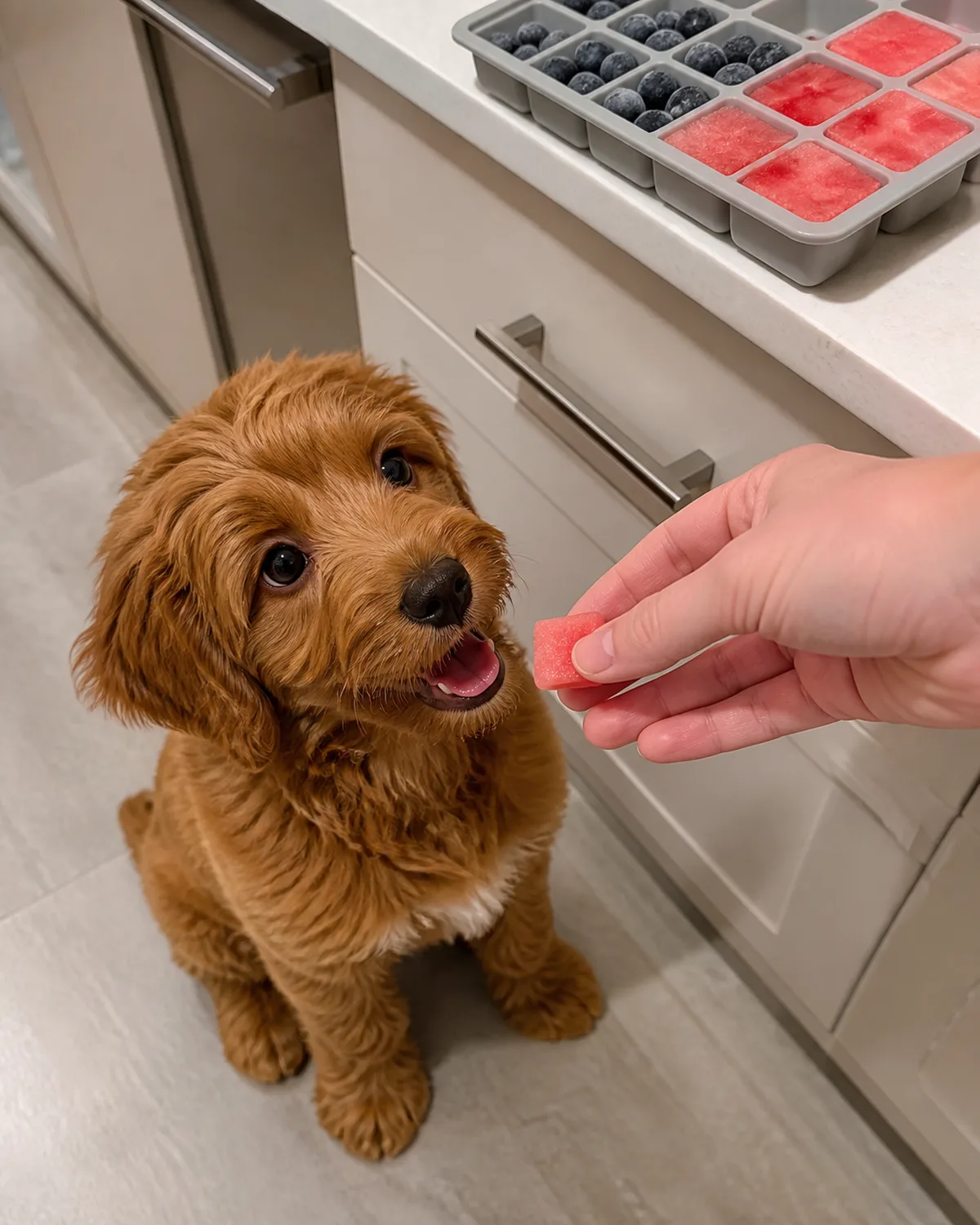
Blueberries, small watermelon chunks, and banana slices frozen in an ice cube tray make bite-sized cold treats that melt slowly in a puppy's mouth. The cold eases gum soreness and the sweetness makes them more appealing than a plain frozen washcloth.
For extra appeal, pour low-sodium chicken broth into the tray before freezing. The broth adds flavor without adding much in the way of calories or sodium.
- Safe fruits: blueberries, watermelon (seedless), banana, strawberries, apple (no seeds)
- Avoid: grapes and raisins (toxic), cherries (pit and stem toxic), citrus in large amounts
- Portion limit: three to four small cubes per day — fruit sugar adds up
- Tray tip: silicone trays pop out cleaner than rigid plastic ones
Did you know
Puppies Lose 28 Baby Teeth in About Five Months
Most of those teeth are swallowed during meals without you or your puppy noticing. Finding a tiny tooth on the floor is the exception, not the rule. If you never spot a single baby tooth, that is completely normal and nothing to worry about.
7. Soak and Freeze Puppy Kibble for a Cold Meal Hack
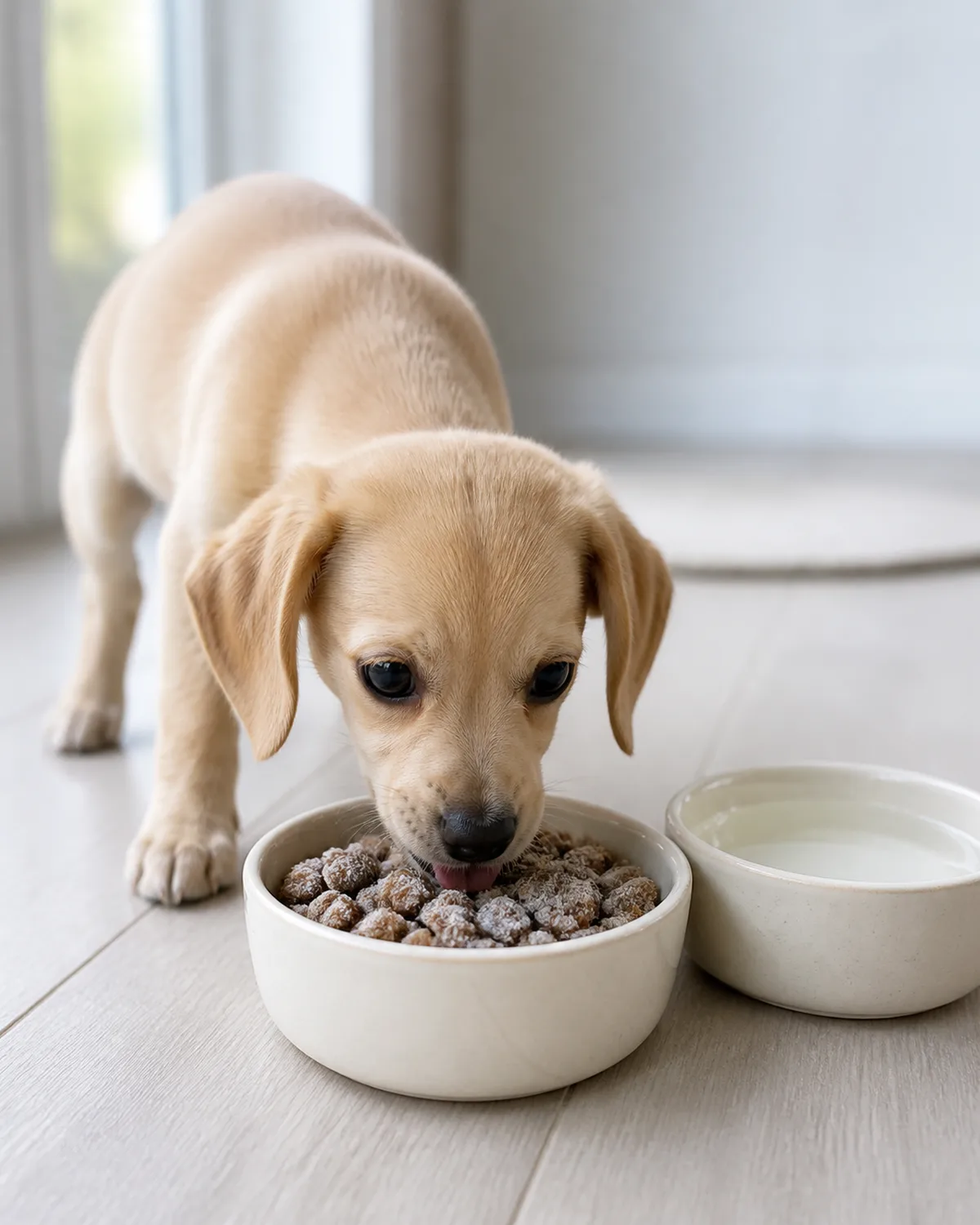
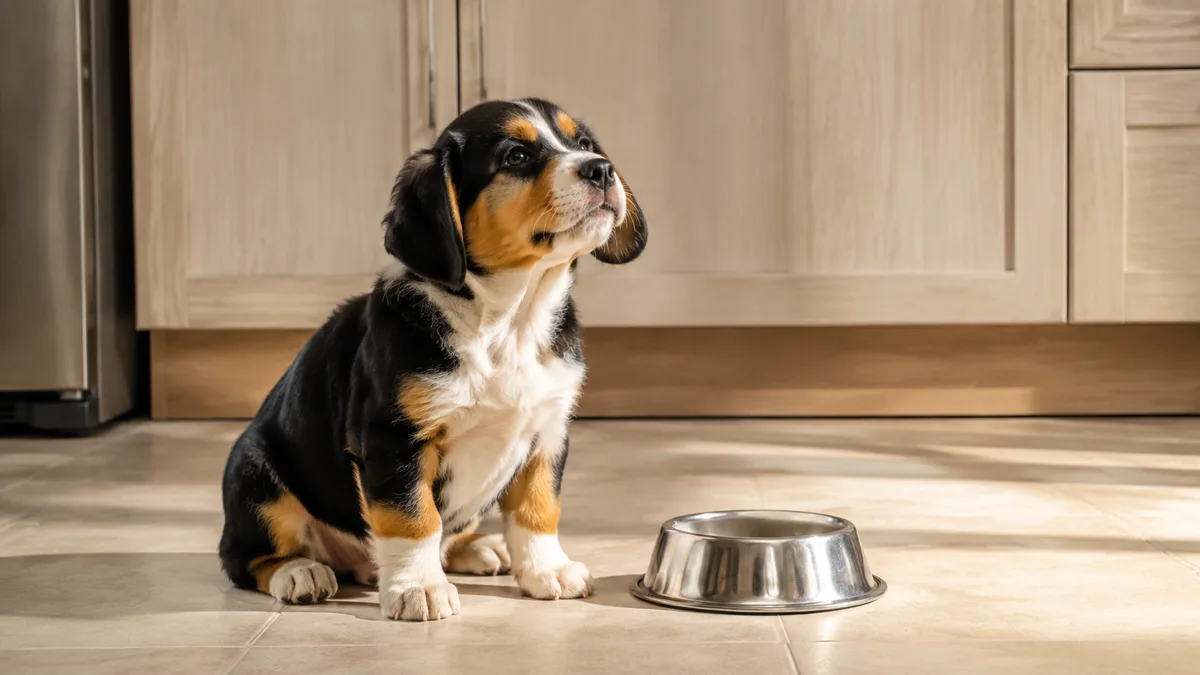
During the worst teething days, some puppies refuse dry kibble because crunching hurts. Soaking kibble in warm water for ten minutes softens it enough to eat comfortably, but adding a freezing step turns an ordinary meal into a teething tool.
Soak the kibble, divide it into meal-sized portions in a silicone muffin tin, and freeze overnight. At mealtime, pop out one frozen puck and serve it in the bowl. It is cold enough to numb sore gums, firm enough to provide some chewing resistance, and nutritionally identical to the regular meal.
- Soak ratio: enough warm water to just cover the kibble, let sit ten minutes
- Freeze vessel: silicone muffin tin or small ramekins
- Serving: one frozen puck equals one meal portion
- Transition: on days when teething pain is lighter, go back to dry kibble to maintain jaw strength
8. Use a Rubber Finger Brush to Massage Sore Gums
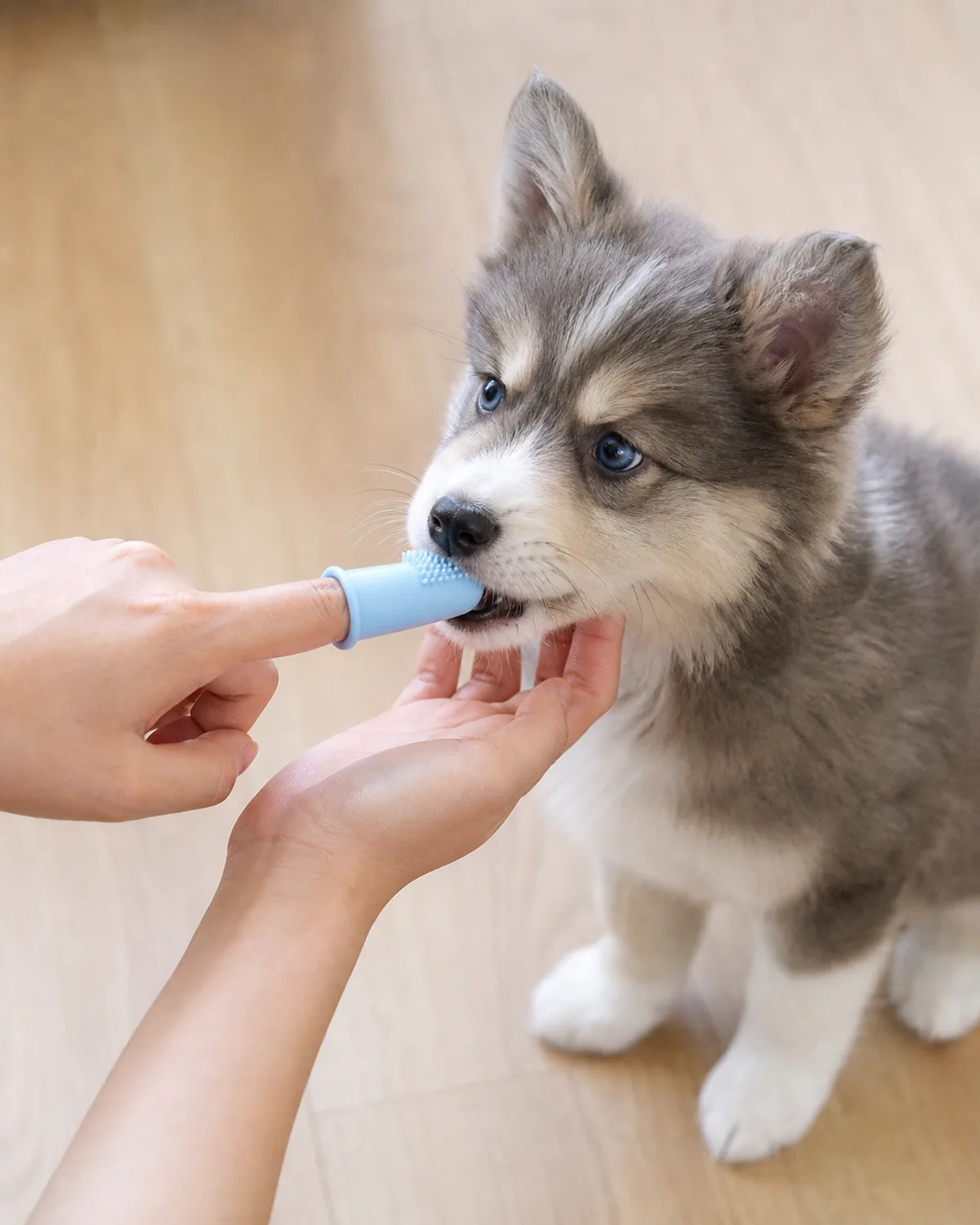
A silicone finger brush dipped in cool water and gently rubbed along the gum line does two things. It provides immediate pressure relief on swollen areas, and it teaches the puppy that having hands near its mouth is a calm, positive experience.
That second benefit pays off for years. Puppies that learn to tolerate mouth handling during the teething phase accept tooth brushing as adults far more easily. More on building that habit in our guide on how to brush your dog's teeth at home.
Keep the sessions short. Thirty seconds of gentle massage is enough. If the puppy pulls away or mouths your hand, stop. On the worst teething days, skip it entirely rather than turning it into a fight.
- Brush type: soft silicone finger brush, not a bristle toothbrush
- Dip: cool water only — no toothpaste until adult teeth are in
- Duration: thirty seconds maximum per session
- Frequency: once or twice a day on calm days, skip on painful days
9. Redirect Biting to Toys the Second It Happens
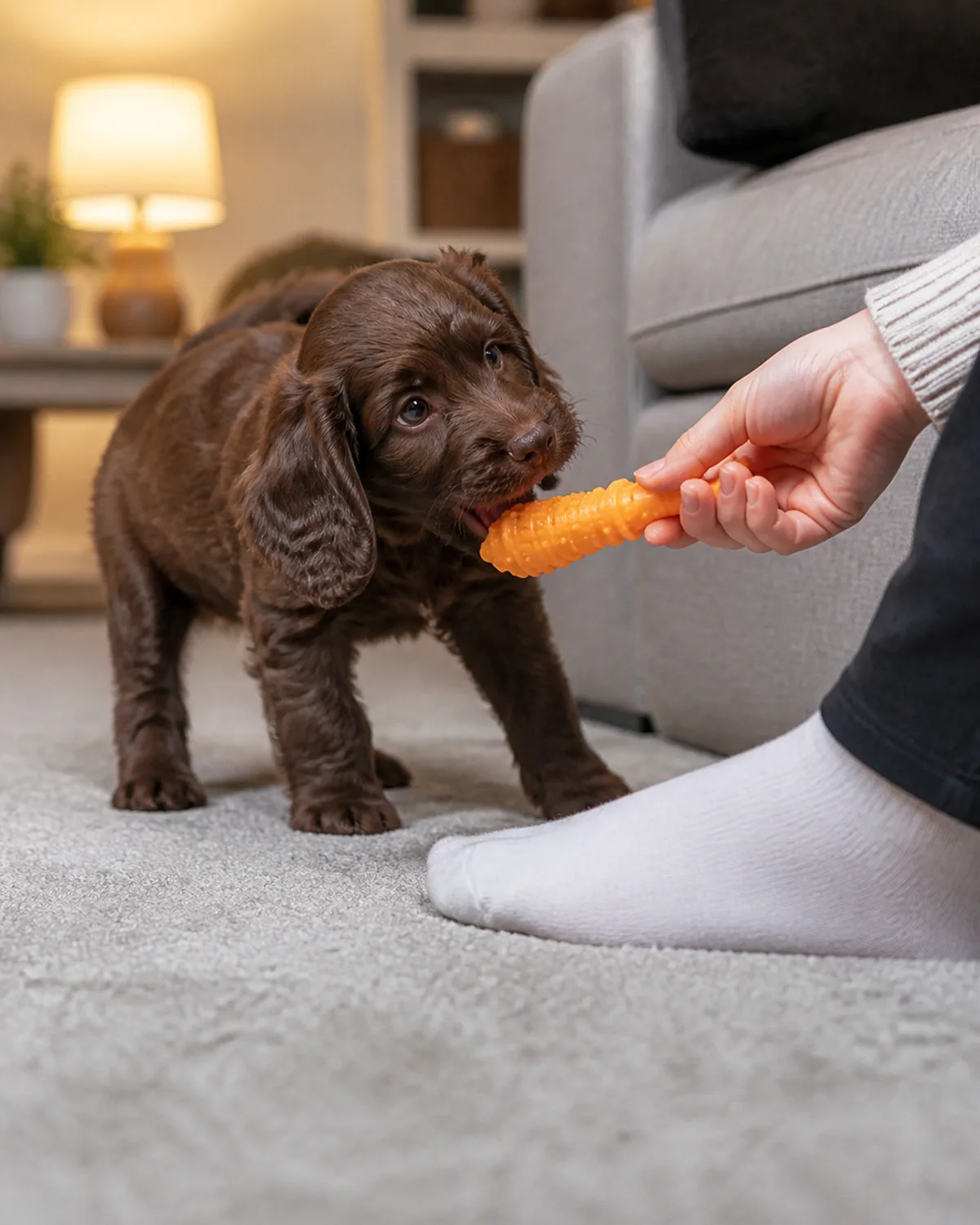
A teething puppy bites your hands, your ankles, your pant legs, and your socks because its gums itch and you are the closest chewable thing. It is not aggression. It is not dominance. It is a four-month-old with a mouth full of loose teeth looking for relief.
The fix is mechanical, not emotional. The instant teeth touch skin or clothing, slide a chew toy into the puppy's mouth. No yelling, no pushing, no dramatic reaction. Just a quiet swap. The puppy gets something appropriate to chew, and you get your ankle back.
This will happen dozens of times a day during peak teething. That is normal. The consistency of the redirect matters more than any single correction. If you need more strategies for managing puppy biting, our guide on handling your puppy's first week home covers the broader picture.
- Response time: within three seconds of teeth on skin
- Swap technique: gently push the toy between your body part and the puppy's mouth
- Tone: calm, neutral — no loud yelps or scolding
- Expectation: thirty to fifty redirects per day is normal during peak teething
10. Set Up a Teething Station in Their Favorite Spot
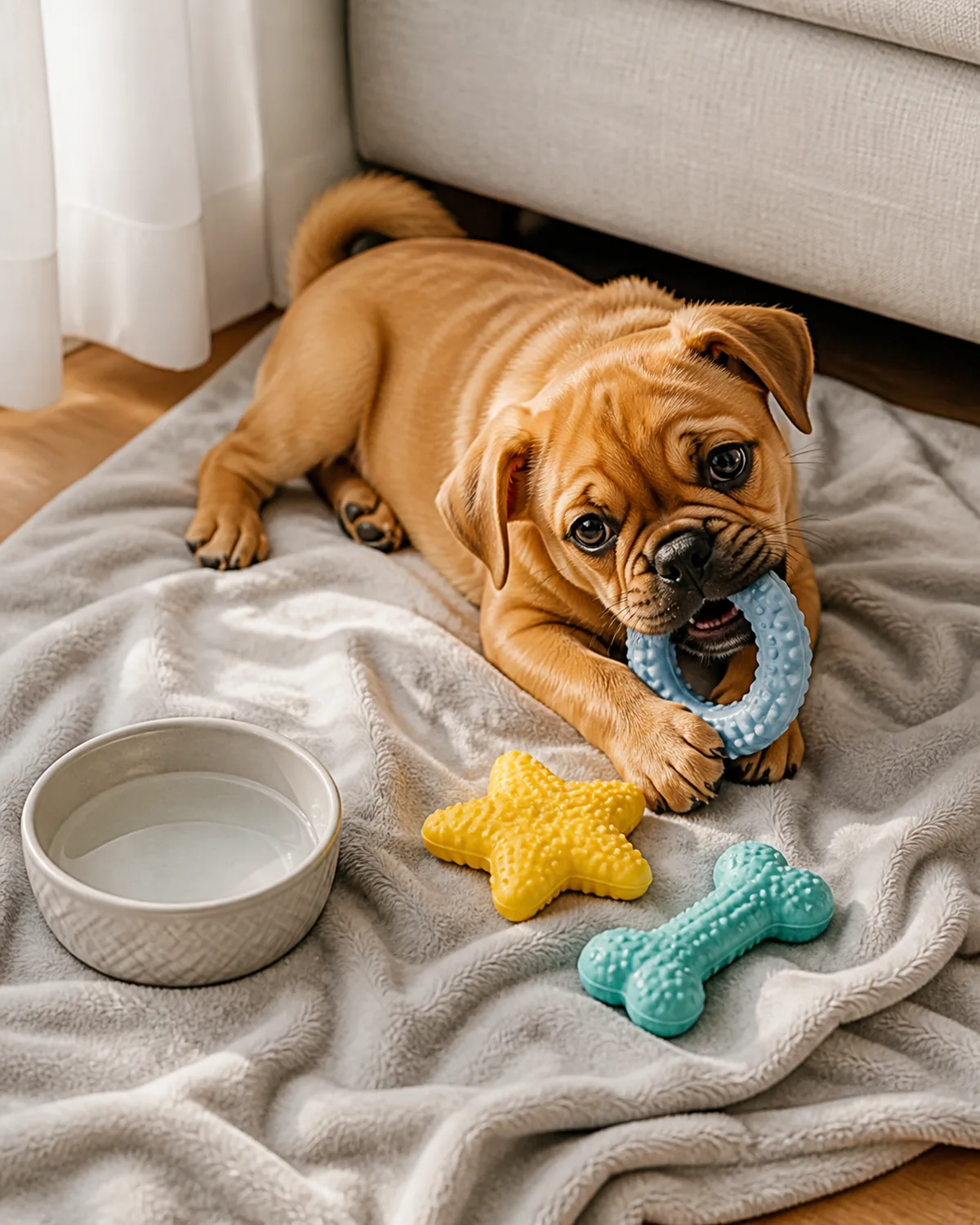
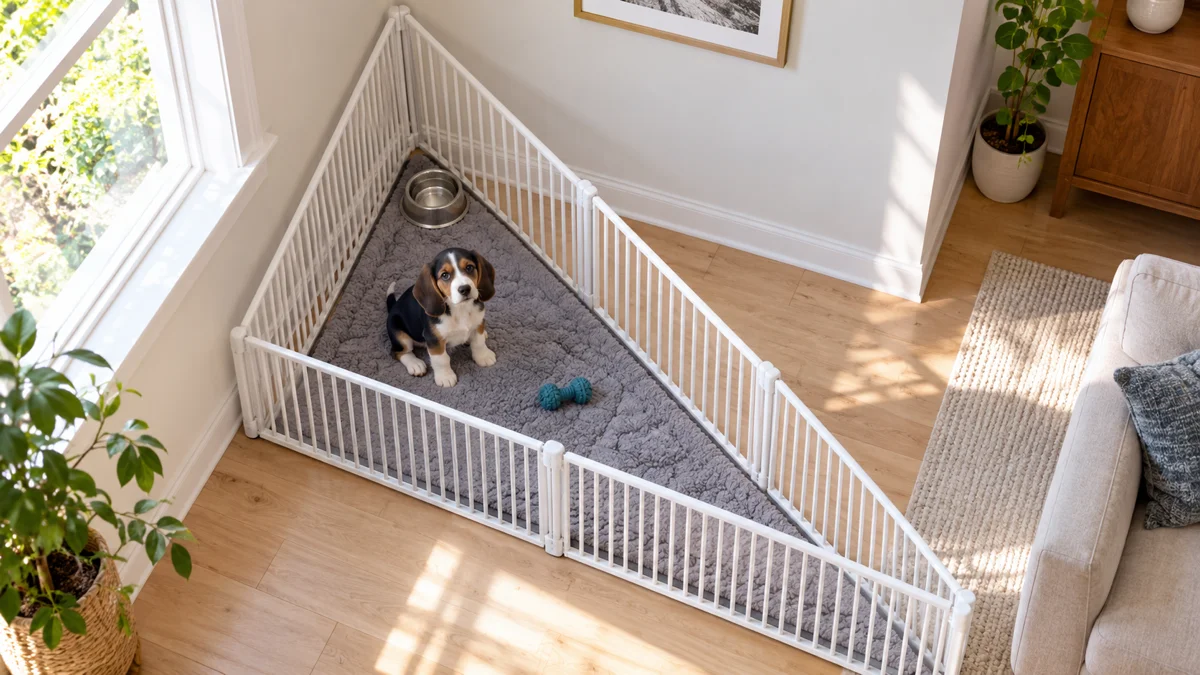
Instead of chasing your puppy around the house with a chew toy, put the relief where the puppy already goes. Find the spot where your puppy naturally settles — usually near the couch, by a sunny window, or in a corner of the kitchen — and set up a small teething station there.
A small blanket, two or three of the day's rotation toys, and a bowl of cool water is the entire setup. The puppy learns that relief is always in one reliable place, and you stop playing whack-a-mole with chewing incidents across six rooms.
- Location: wherever the puppy naturally chooses to lie down
- Setup: small blanket or mat, two to three chew toys, a water bowl
- Refresh: swap the toys at the same time you do the daily rotation
- Benefit: teaches the puppy to self-soothe by going to one spot instead of chewing whatever is closest
11. Know the Timeline So You Stop Panicking
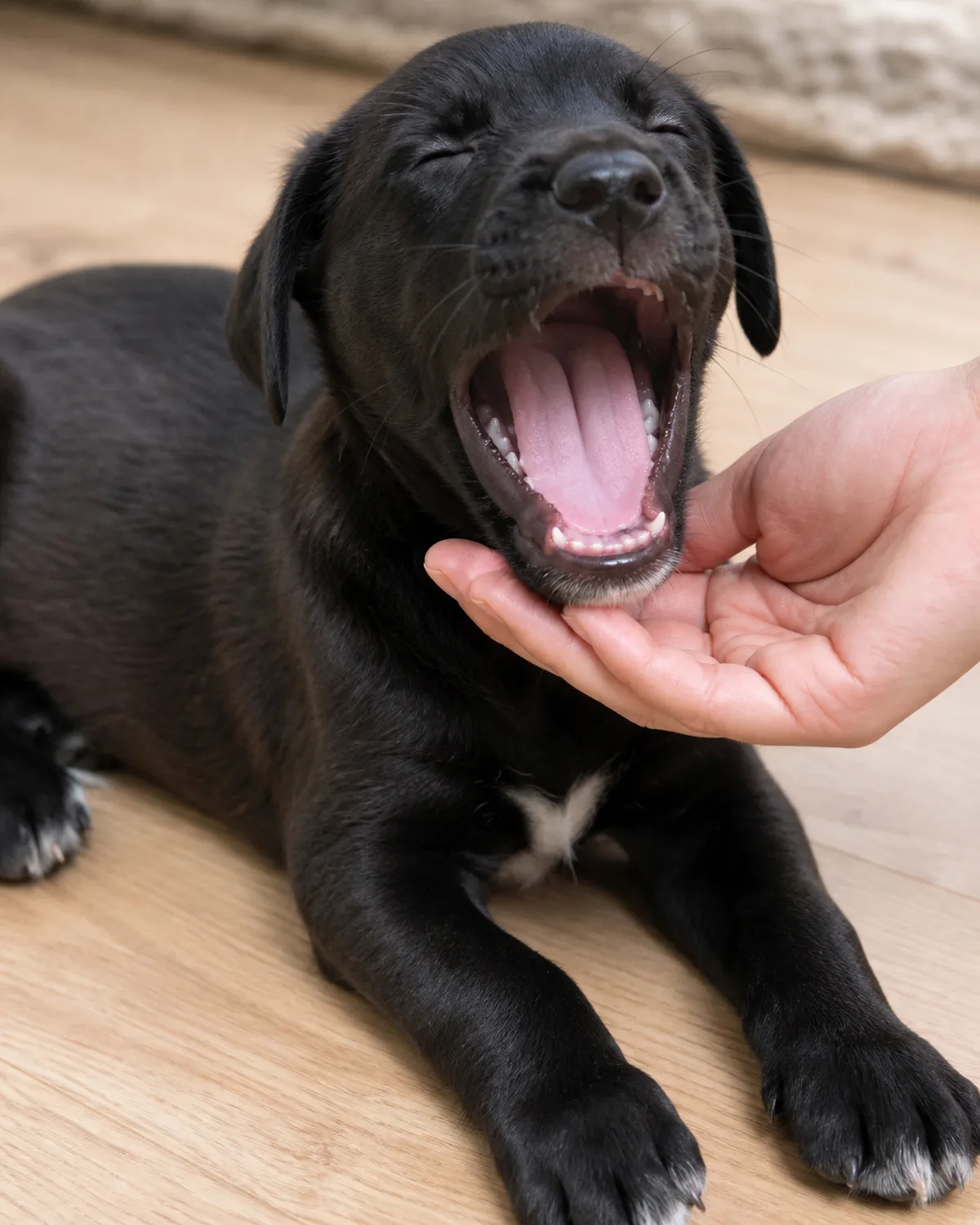
Teething feels endless when you are in the middle of it, but it follows a predictable schedule. Knowing where your puppy is on the timeline takes the panic out of the process.
Puppies start growing their first set of twenty-eight baby teeth at around three to four weeks old. Those baby teeth begin loosening and falling out between twelve and sixteen weeks. From four to six months, the forty-two adult teeth push through one by one. By seven to eight months, the full set of permanent teeth is usually in place.
The worst window is the four-to-five-month stretch when the large premolars and molars are coming in. That is when chewing peaks, drooling increases, and some puppies temporarily refuse hard food.
- 3–4 weeks: baby teeth start erupting (28 total)
- 12–16 weeks: baby teeth begin falling out
- 4–6 months: adult teeth replace baby teeth (42 total)
- 7–8 months: teething complete — all permanent teeth in place
- Peak pain window: 4–5 months, when molars are pushing through
12. Watch for Signs That Need a Vet Visit

Most teething symptoms are normal and resolve on their own. Slightly red or swollen gums, occasional pink-tinged saliva on a chew toy, and finding small baby teeth on the floor or in the food bowl are all part of the process. Many baby teeth get swallowed during meals, which is harmless.
A few signs mean something else is going on and warrant a vet check.
- Normal: mildly red gums, light drooling, pink saliva on toys, finding loose teeth, temporary food pickiness lasting a day or two
- See your vet: refusal to eat for more than twenty-four hours, dark purple or black swelling on the gums, persistent bleeding that does not stop on its own, a baby tooth still firmly in place after the adult tooth has fully emerged beside it (retained deciduous tooth — needs extraction), or unusually strong bad breath that was not there before
Retained baby teeth are the most common issue that requires veterinary intervention. If you see two teeth occupying the same spot — one small and one large — bring it up at the next vet visit rather than waiting.
13. Avoid These Common Teething Mistakes That Backfire
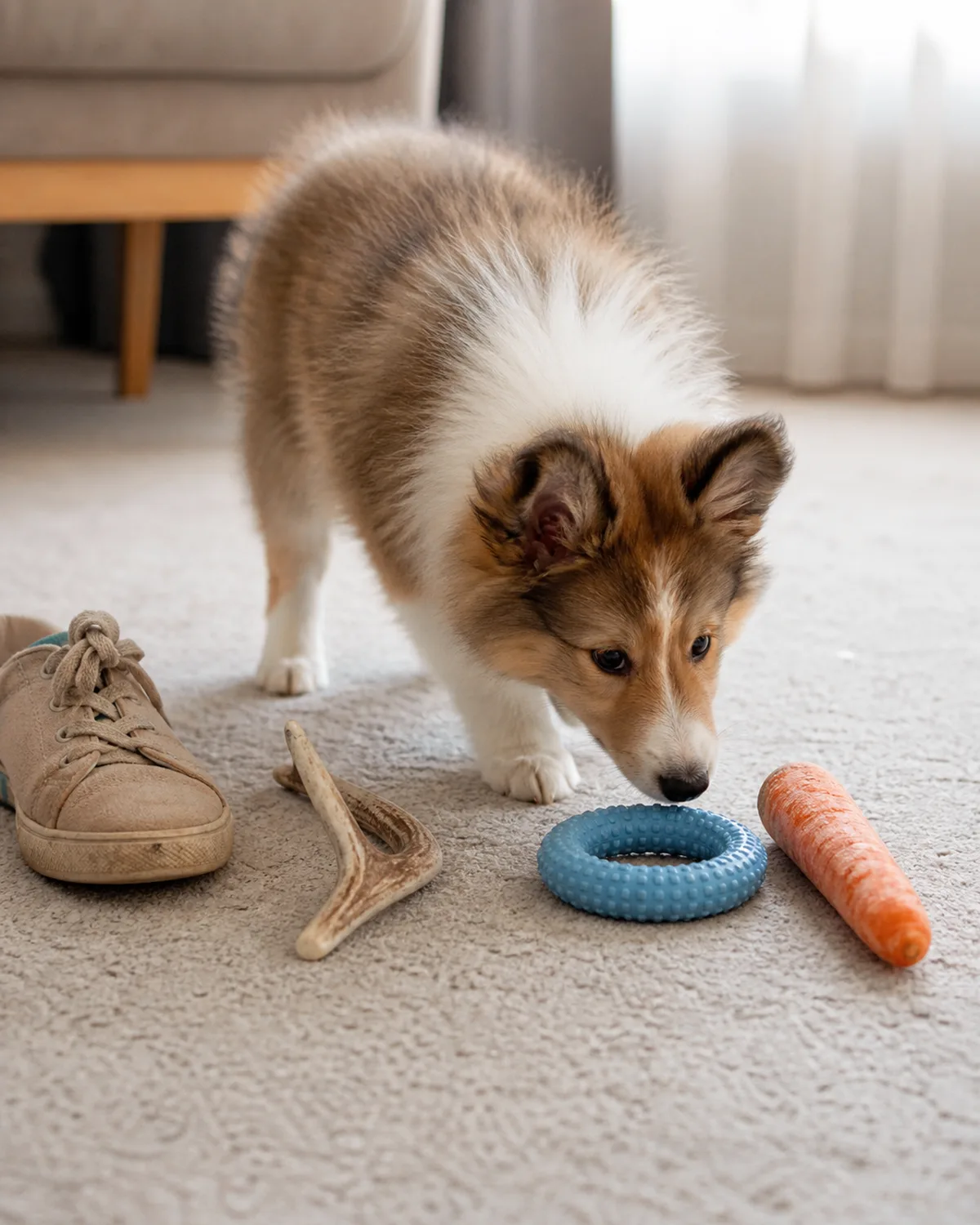
Some of the most popular teething advice online actually makes things worse. Here is what to avoid and why.
- Ice cubes straight from the freezer: too hard for baby teeth — a loose tooth can crack on impact; use frozen washcloths or frozen fruit cubes instead
- Old shoes or socks as chew toys: your puppy cannot tell the difference between the old sneaker you gave it and the new one by the front door; use purpose-made toys only
- Antlers, cow hooves, and hard nylon bones: designed for adult dogs with set teeth — baby teeth are not built for that level of resistance and can fracture
- Using your fingers as a game toy: playfully letting a puppy chew on your hand reinforces the idea that biting human skin is fun — it is not fun when they are forty pounds heavier
- Punishing chewing behavior: the puppy is in pain and looking for relief; scolding does not address the cause and damages trust during a critical bonding window
Every one of these mistakes makes the chewing phase longer and harder. The common thread is that they either give the wrong chewing target or add stress to a puppy that is already uncomfortable.
14. Puppy-Proof Your Home for the Chewing Phase
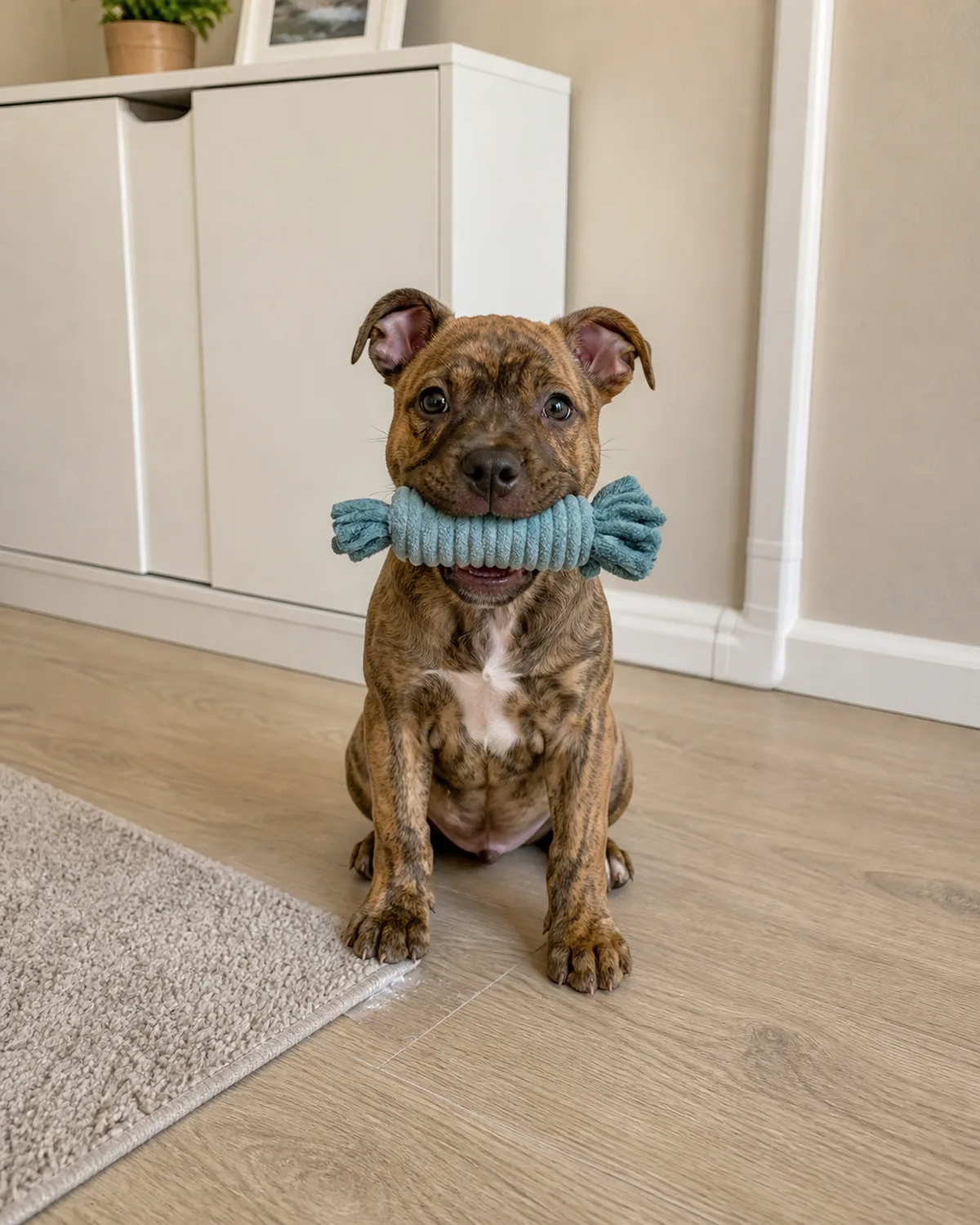
The four-to-six-month teething window is when your home is most at risk. A teething puppy will chew anything it can reach, and its self-control is genuinely at zero during peak discomfort. The solution is not more training — it is removing the targets.
Think of it the same way you would baby-proofing a house. The goal is not to teach a four-month-old to resist temptation. The goal is to make sure there is nothing dangerous or valuable within reach while the phase runs its course. For a fuller walkthrough of making your home safe, check our guide on how to puppy-proof your home.
- Electrical cords: cover with cord protectors or route behind furniture — a bitten cord is a burn and shock hazard
- Shoes and slippers: inside a closed closet, every time, no exceptions
- Remote controls and phones: off the couch cushions and onto high surfaces
- Rug corners: tape down any curling edges — a raised corner is an irresistible chewing target
- Trash cans: switch to a can with a locking lid for the duration of the teething phase
- Houseplants: move anything within puppy reach to a high shelf — some common plants are toxic if chewed
15. Build a Calm Bedtime Routine for Teething Nights
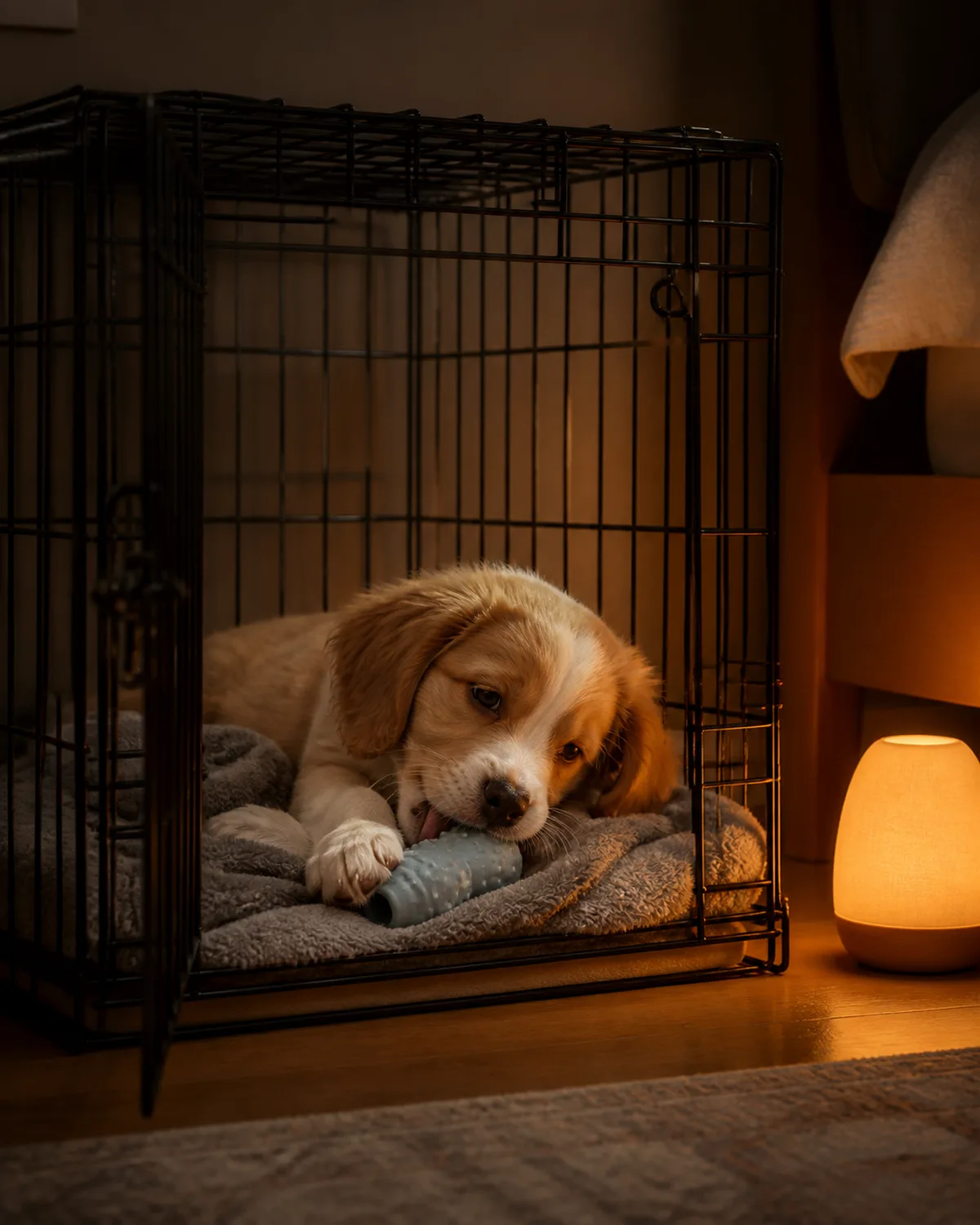
Teething hurts more at night. During the day, play and exploration distract from the discomfort. At night, there is nothing else to focus on, and that is when the whimpering and restlessness peak.
A bedtime teething routine adds enough comfort to get through the night without turning it into a battle. Fifteen minutes before crate time, give the puppy a freshly frozen KONG to work on inside the crate.
Lay a blanket that spent ten minutes in the freezer so it is cool but not stiff. Turn on a white noise machine or a fan to muffle the puppy's own fussing sounds, which can escalate into full crying if the puppy hears itself.
If the puppy wakes up in the middle of the night, swap the spent KONG for a fresh frozen chew toy without turning on lights or talking. Keep it boring and brief.
- Pre-bed: frozen KONG in the crate fifteen minutes before lights out
- Blanket: ten minutes in the freezer — cool to the touch, not frozen solid
- Sound cover: white noise machine, fan, or a phone app on loop
- Night wake: silent swap — fresh frozen toy in, spent one out, no lights, no conversation
- Duration: this routine is usually only needed for four to six weeks during peak teething
16. Track Progress With a Simple Tooth Chart
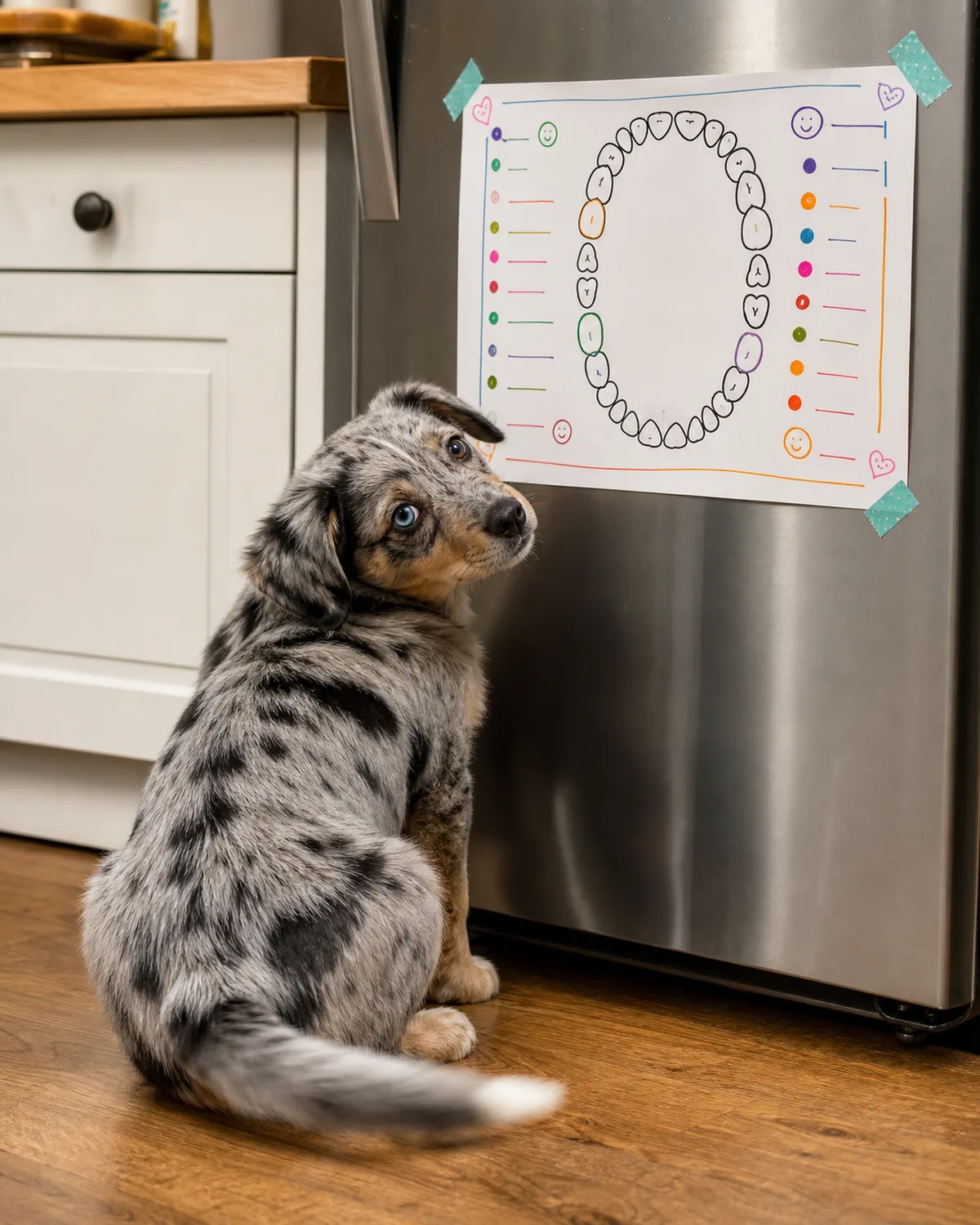
Teething feels like it will never end — until you start tracking it. A simple chart taped to the refrigerator door turns a frustrating open-ended phase into something with a visible finish line.
Draw or print a chart with spaces for twenty-eight baby teeth going out and forty-two adult teeth coming in. Every time you find a baby tooth on the floor or notice a new adult tooth emerging, mark the date. Most owners start seeing real momentum around five months when multiple teeth shift in the same week.
The chart also helps at vet visits. If your veterinarian asks how the teething is progressing, you have actual data instead of a vague sense that it has been going on forever.
- Format: a simple grid or timeline on paper, taped to the fridge
- Track: date of each found baby tooth, date each new adult tooth is spotted
- Milestone: around seven to eight months, you will mark the last one — and that is the day the chewing phase is officially over
- Bonus: some owners save a few baby teeth in a small jar as a keepsake — entirely optional but surprisingly common
Save this for later
16 Puppy Teething Relief Ideas
- 1Freeze a damp washclothTwist, freeze two hours, let the puppy gnaw the cold fabric for instant gum relief.
- 2Offer chilled carrotsRefrigerator-cold whole carrots soothe and satisfy without adding calories.
- 3Stock puppy teething toysSoft rubber labeled for puppies — thumbnail test confirms safe hardness.
- 4Freeze a filled KONGPeanut butter or pumpkin puree frozen overnight for thirty minutes of cold comfort.
- 5Rotate toys dailyTwo or three out per day, rest stored away — novelty keeps chewing on target.
- 6Try frozen fruit cubesBlueberries or watermelon in ice trays with broth for a sweet cold treat.
- 7Freeze soaked kibbleRegular meals frozen in silicone molds for pain-free eating on bad days.
- 8Massage with a finger brushThirty seconds of gentle gum pressure plus a head start on tooth-brushing habits.
- 9Redirect biting instantlySlide a chew toy in within three seconds of teeth on skin — calm, quiet, every time.
- 10Set up a teething stationA blanket, two toys, and water in the spot your puppy already claims.
- 11Learn the timelinePeak pain hits at four to five months and wraps up by eight — knowing helps.
- 12Watch for vet signsRetained baby teeth, refusal to eat past twenty-four hours, or dark gum swelling.
- 13Skip the common mistakesNo ice cubes, no old shoes, no antlers, no finger games, no punishment.
- 14Puppy-proof the houseCords covered, shoes in closets, trash locked — remove targets, not willpower.
- 15Build a bedtime routineFrozen KONG in the crate, cool blanket, white noise — teething hurts more at night.
- 16Track with a tooth chartMark each lost baby tooth on a fridge chart so the finish line stays visible.
Common questions
FAQ
How long does puppy teething last?
The full process runs from about three weeks old (when baby teeth start) to seven or eight months (when all forty-two adult teeth are in place). The most uncomfortable stretch is between four and six months when the large premolars and molars are pushing through. After eight months, the chewing urge drops significantly.
Is it normal for a teething puppy to bleed?
A small amount of blood on a chew toy or light pink saliva is normal when a baby tooth is loosening or has just fallen out. Persistent bleeding that does not stop within a few minutes, or blood pooling in the mouth, is not typical and warrants a call to your vet.
Can I give my puppy ice cubes for teething?
Plain ice cubes from the freezer are too hard for baby teeth and can crack a loose tooth. Frozen washcloths, frozen fruit cubes, and chilled carrots are safer alternatives that still provide the cold relief without the fracture risk.
Should I pull a loose baby tooth myself?
No. Baby teeth fall out on their own when the adult tooth beneath pushes them loose. Pulling a tooth that is not ready can break the root and leave a fragment in the gum. If a baby tooth is still firmly attached and an adult tooth has fully emerged beside it, your vet can safely extract it.
Why does my teething puppy refuse to eat?
Crunching dry kibble hurts when gums are swollen and teeth are shifting. Soak the kibble in warm water for ten minutes to soften it, or freeze the soaked kibble into pucks for a cold, pain-free meal. If your puppy refuses all food for more than twenty-four hours, check with your vet to rule out issues beyond teething.

Written by Jess Calloway
Dog mom to three very different dogs. Every guide on Pawliqa is based on real experience, veterinary guidance, and way too many hours reading ingredient labels. More about Jess