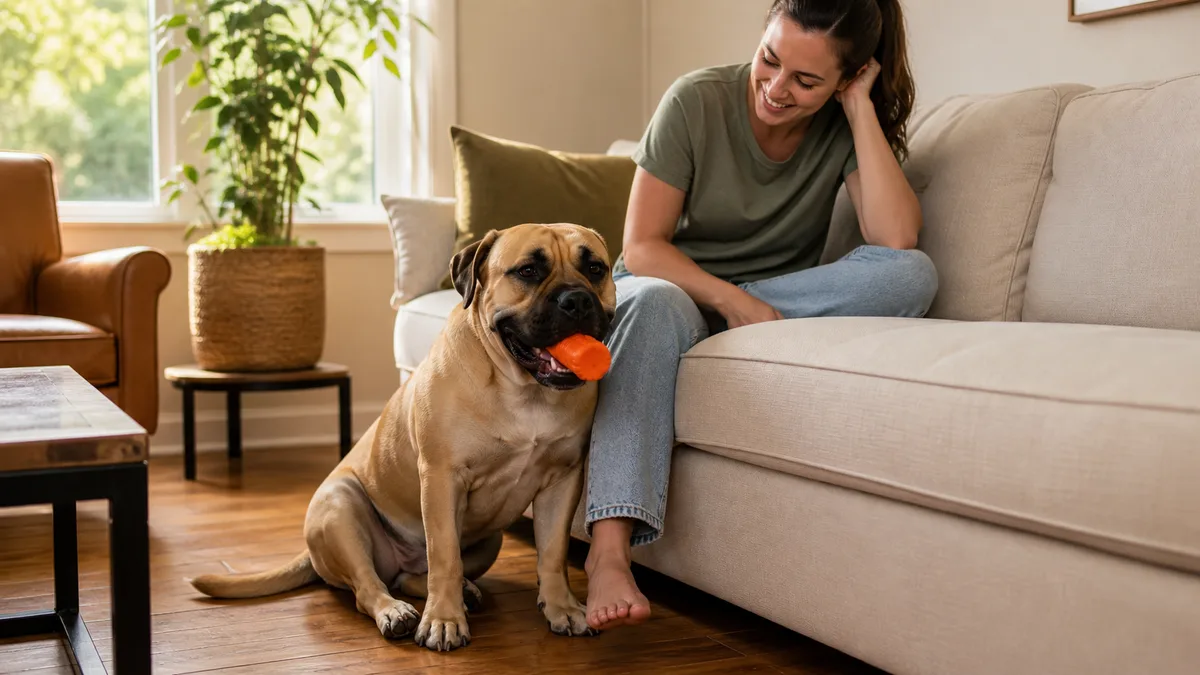
Our middle dog chewed through two chair legs, a couch corner, and a bookshelf edge before she turned one. We tried yelling from the other room, which did nothing. Hiding the chairs is not a real strategy when you want to sit down.
What actually worked was understanding why she was doing it and then stacking a few small changes that addressed the real cause instead of the symptom.
Here are eleven practical fixes that stopped the chewing in our house, starting with the one most people skip.
How to save your furniture
11 fixes for destructive chewing
Each fix targets a different root cause. Start with the ones that match your dog and stack as needed.
1. Figure Out Why Your Dog Is Chewing Before You Try to Fix It
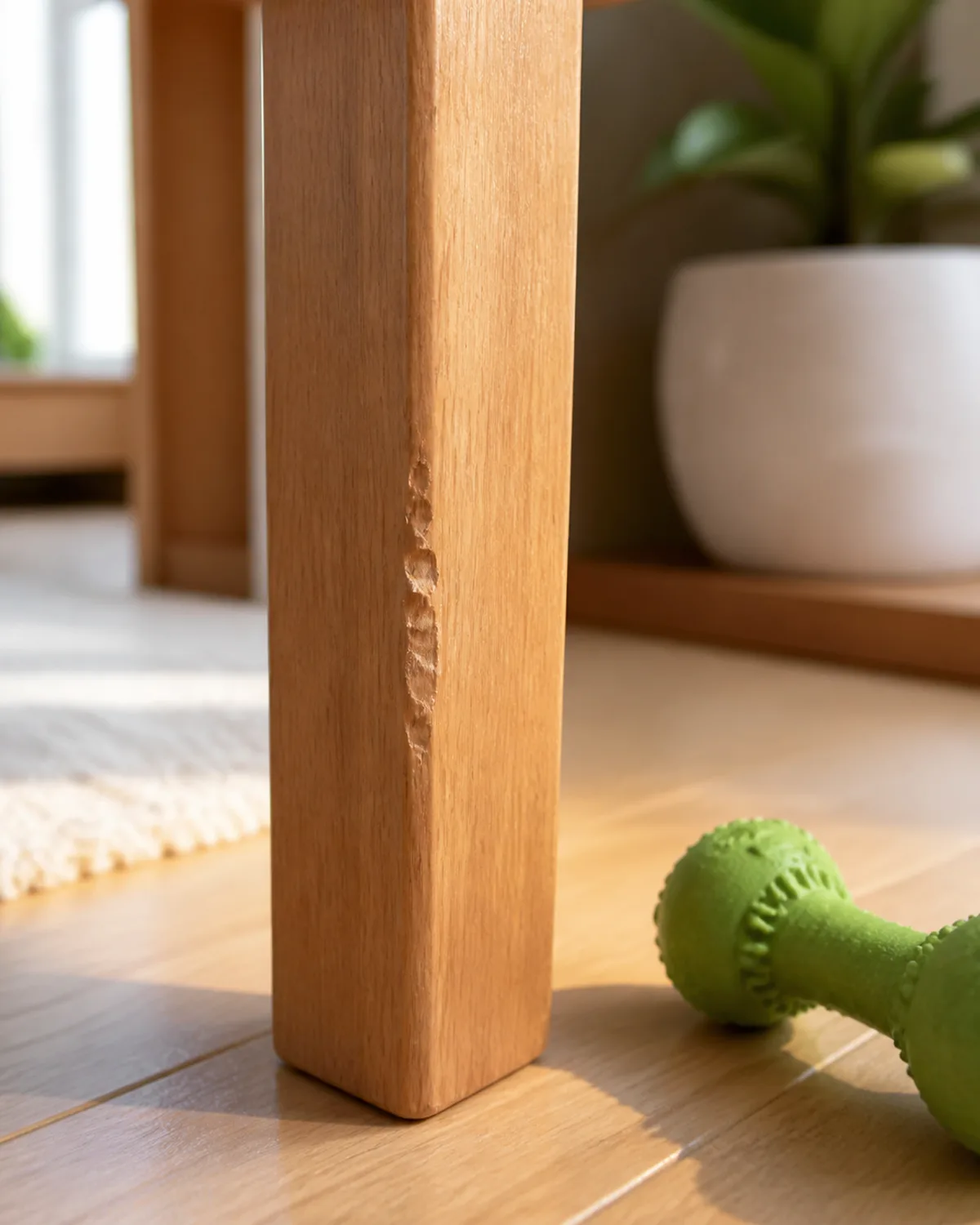
Chewing is not one problem. It is at least five completely different problems wearing the same disguise, and the fix for each one is different.
A puppy chewing during teething needs cold relief and appropriate chew targets. An adult dog chewing out of boredom needs more mental stimulation. A dog that only chews when left alone is probably dealing with separation anxiety, not a training gap.
Before you buy a bitter spray or sign up for a training class, spend a few days observing when the chewing happens.
- Does it happen only when you leave the house?
- Does it happen after a long stretch without exercise or play?
- Does it happen during certain times of day, or is it constant?
- Is your dog under seven months old and still losing baby teeth?
The answers point to different sections of this guide. A bored dog needs sections two, three, and ten. An anxious dog needs section eight. A teething puppy needs section nine. Most dogs are some combination, so read the whole list, but know which ones matter most for your situation.
When you catch them mid-chew
The 30-Second Redirect Rule
You have about thirty seconds to complete this sequence. After that, your dog has already moved on mentally and will not connect your response with the chewing.
1Say their name or a calm interruption sound. Do not yell or clap.
2Remove the furniture item or gently guide them away from it.
3Immediately hand them a chew toy, placing it directly in front of their mouth.
4Praise them the moment they put their mouth on the toy. This step matters most.
2. Increase Daily Exercise to Burn the Energy That Drives Chewing

A tired dog does not chew furniture. That sentence oversimplifies, but not by much.
Most destructive chewing in dogs between one and three years old traces back to unspent physical energy. These dogs need more than a casual walk around the block twice a day. They need running, fetch, swimming, or structured play that gets their heart rate up.
The target for a young, active dog is at least 60 to 90 minutes of genuine exercise daily, split into two or more sessions.
- A 30-minute run or vigorous fetch session before you leave for work cuts afternoon chewing dramatically
- Off-leash play with other dogs burns energy faster than any on-leash walk
- Breeds with working-dog ancestry often need two hours or more
If you increase exercise and the chewing drops within a week, you found your primary cause. If it does not change, the chewing is probably driven by something other than energy, and the next sections cover those.
3. Provide Chew Toys That Actually Compete With Furniture
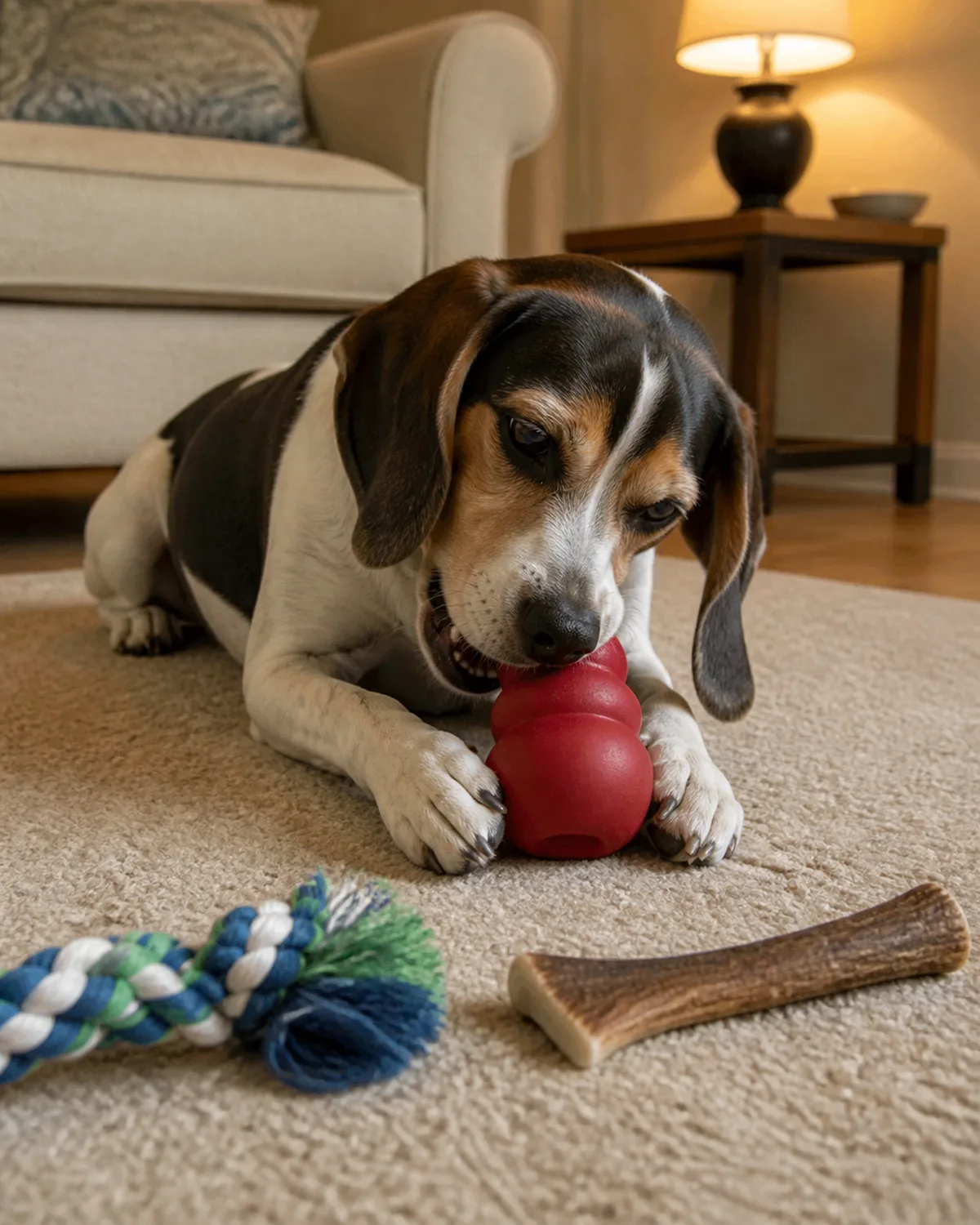
Most people buy one rubber bone, set it on the floor, and wonder why their dog went back to the couch leg. The problem is usually that the chew toy is not interesting enough to compete with the texture and resistance of real furniture.
Dogs have chewing preferences just like people have food preferences. Some want something hard they can gnaw against. Some want fabric they can tear. Some want something that gives and bounces back.
- Hard chewers need solid rubber toys like Kongs, Nylabones, or Benebones that hold up to sustained pressure
- Fabric rippers do better with braided rope toys or plush toys rated for aggressive chewing
- Teething puppies want cold items: a frozen washcloth, a rubber toy filled with frozen peanut butter, or a refrigerated teething ring
- Wood-lovers respond to safe alternatives like coffee-wood or olive-wood chews that splinter into soft fibers instead of sharp shards
The trick is matching the toy to the furniture your dog prefers. If they chew chair legs, they want something hard and narrow. If they pull at couch cushions, they want fabric.
Put the right chew toy directly next to the furniture your dog targets, so the alternative is always within reach.
4. Use Bitter Spray as a Temporary Deterrent, Not a Permanent Fix
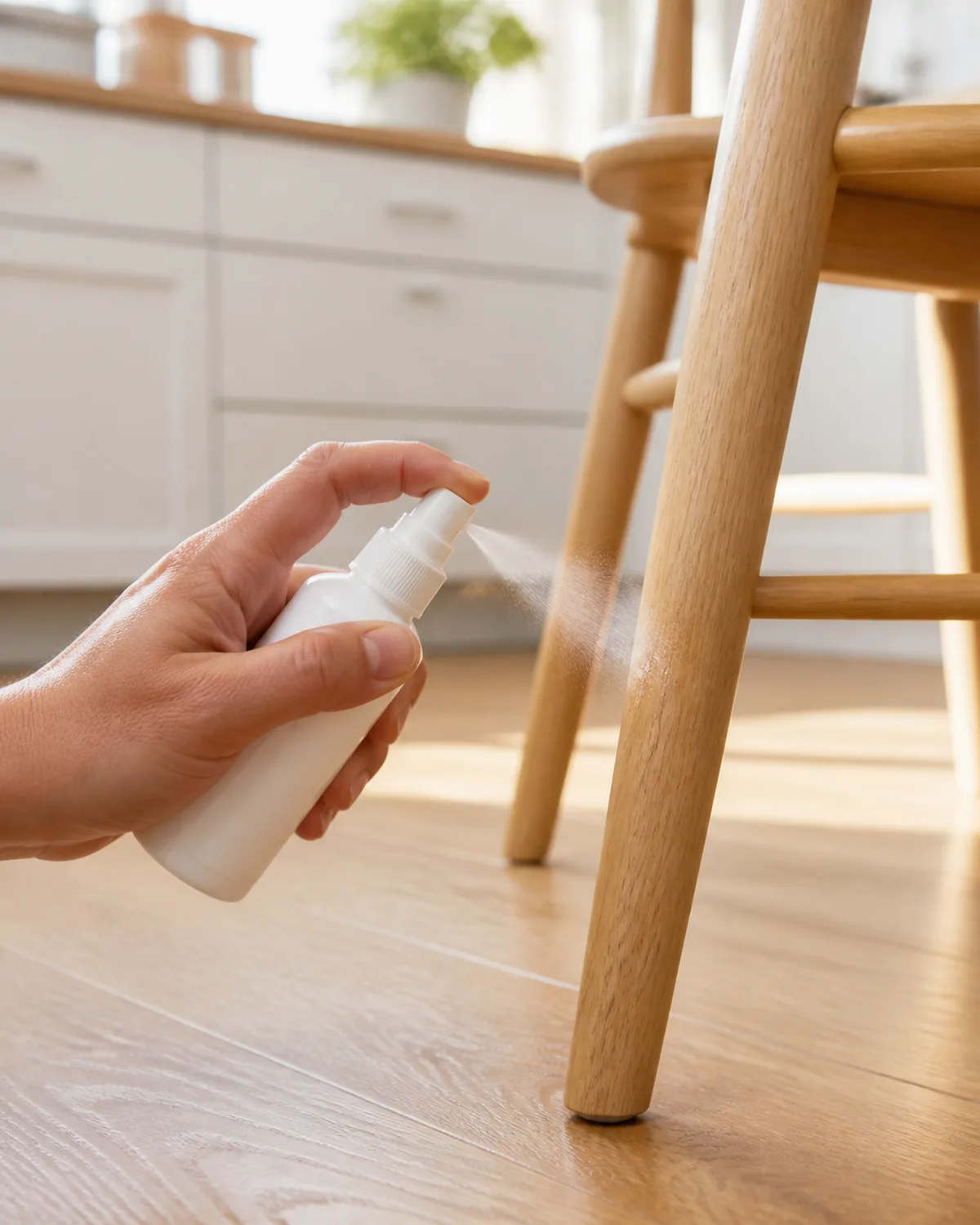
Bitter apple spray works. It tastes terrible and most dogs will avoid treated surfaces after a few licks. But it is not a solution by itself, and treating it like one is the most common mistake.
The spray wears off and needs reapplication every few days. Some dogs get used to the taste over a week or two. A few actually seem to like it.
Use bitter spray to buy yourself time while you work on the real fixes: more exercise, better chew alternatives, and training. Think of it as a temporary fence around a construction zone, not the finished building.
- Apply it to the specific areas your dog targets, not the entire piece of furniture
- Reapply every two to three days, or after cleaning
- Pair it with a chew toy placed right next to the treated spot
- Test it on an inconspicuous area first, as some sprays can stain certain fabrics
If the spray alone stops the chewing, the problem was probably mild. If your dog chews right through it, the underlying cause is strong enough that you need the behavioral and environmental changes in the rest of this list.
Worth knowing
Puppies Lose 28 Baby Teeth
Between three and six months old, puppies lose every single baby tooth and grow 42 adult ones. That process hurts, and chewing provides pressure relief on sore gums the same way a teething ring works for a human baby. Punishing a teething puppy for chewing is punishing them for a biological process they cannot control.
5. Redirect in the Moment Without Punishing
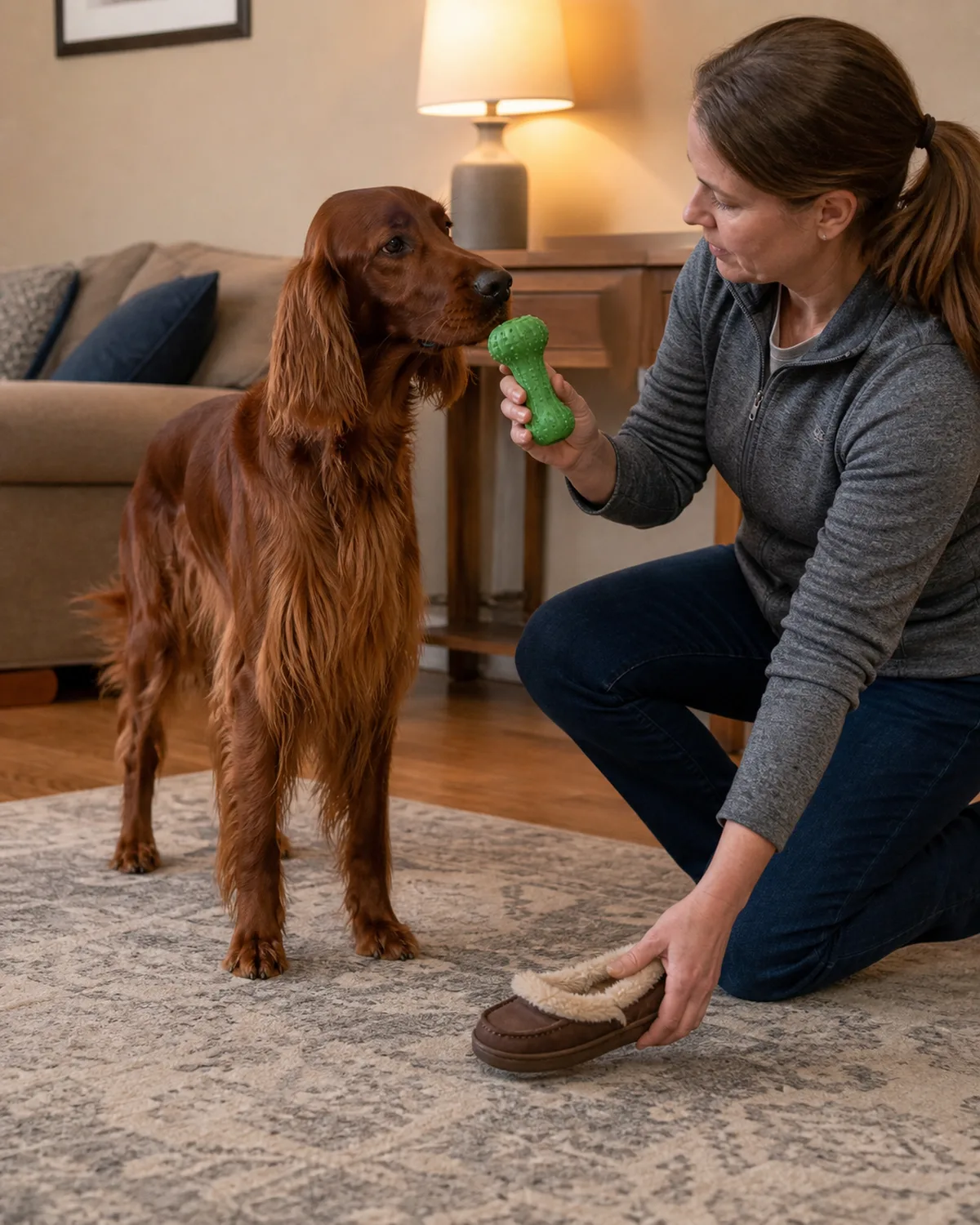
Catching your dog mid-chew gives you a teaching opportunity, but only if you handle it correctly. Yelling, swatting, or shoving their nose toward the damage does not teach them what to do instead. It teaches them to chew when you are not in the room.
The redirect sequence takes about five seconds.
- Say their name or a calm interruption sound, not to scare
- Remove the furniture item or gently guide them away from it
- Immediately hand them a chew toy
- Praise them the moment they put their mouth on the toy
That praise at the end is the piece most people skip, and it is the most important part. Your dog needs to connect the chew toy with your approval, not just the furniture with your disapproval.
- Never punish after the fact because your dog will not connect the punishment with something they chewed twenty minutes ago
- Keep a chew toy within arm's reach in every room where your dog spends time
- The leave it command is the verbal version of this redirect and is worth teaching alongside it
Consistency is everything. If three people live in the house and only one of them redirects while the others yell, the dog learns nothing.
6. Manage the Environment When You Cannot Supervise
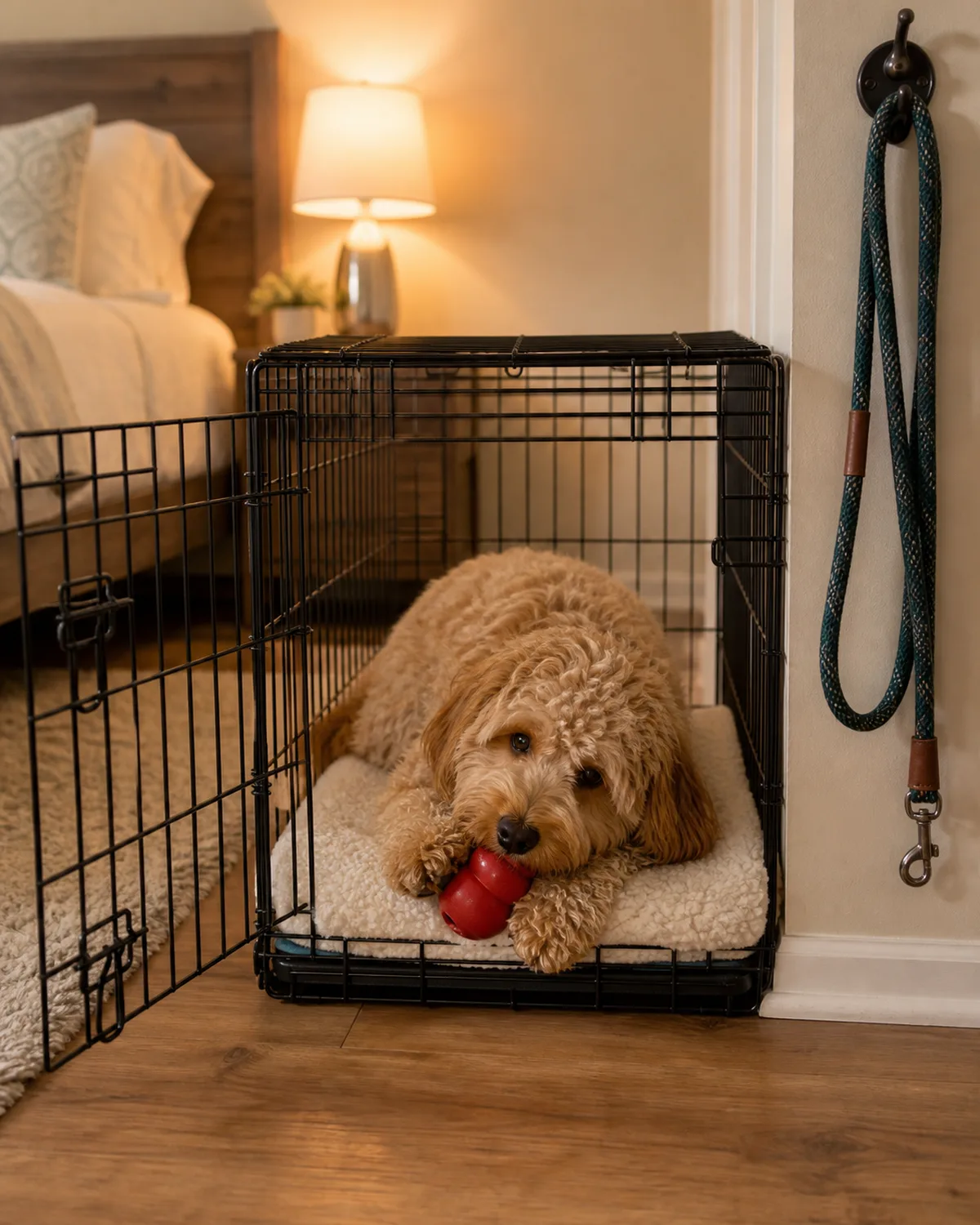
Every minute your dog spends unsupervised around chewable furniture is a minute of practice. And practice makes the habit stronger, not weaker.
When you cannot watch your dog, limit their access to the rooms with vulnerable furniture. This is not punishment. It is management.
- A crate with a stuffed Kong is the most reliable option for short absences
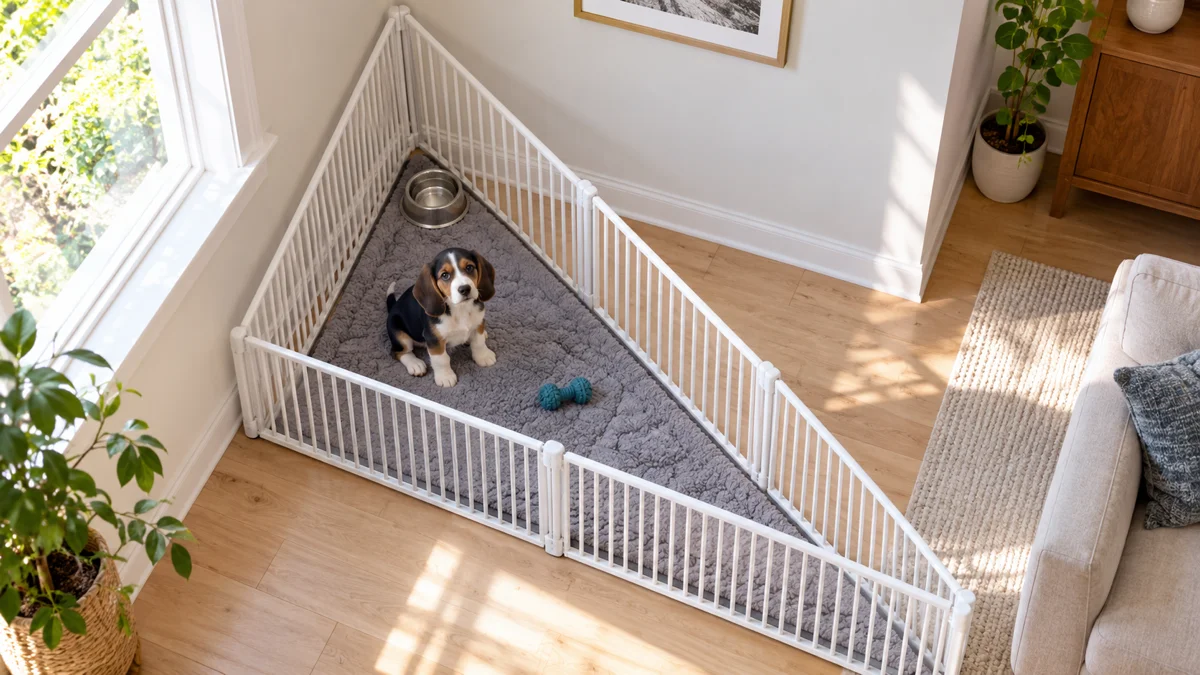
- An exercise pen or baby gate restricts access to a safe area without full confinement
- A snuffle mat or lick mat given right before you leave occupies the first 10 to 15 minutes, which is when most destructive chewing starts
The goal is not to keep your dog confined forever. It is to prevent unsupervised practice while the training and exercise changes take effect. Most dogs earn full house access within a few weeks to a few months once the chewing drops.
Puppy-proofing the room before you leave also helps. Move throw pillows off the couch, push chairs under the table, and pick up shoes.
7. Teach Leave It and Drop It as Your Two Emergency Commands
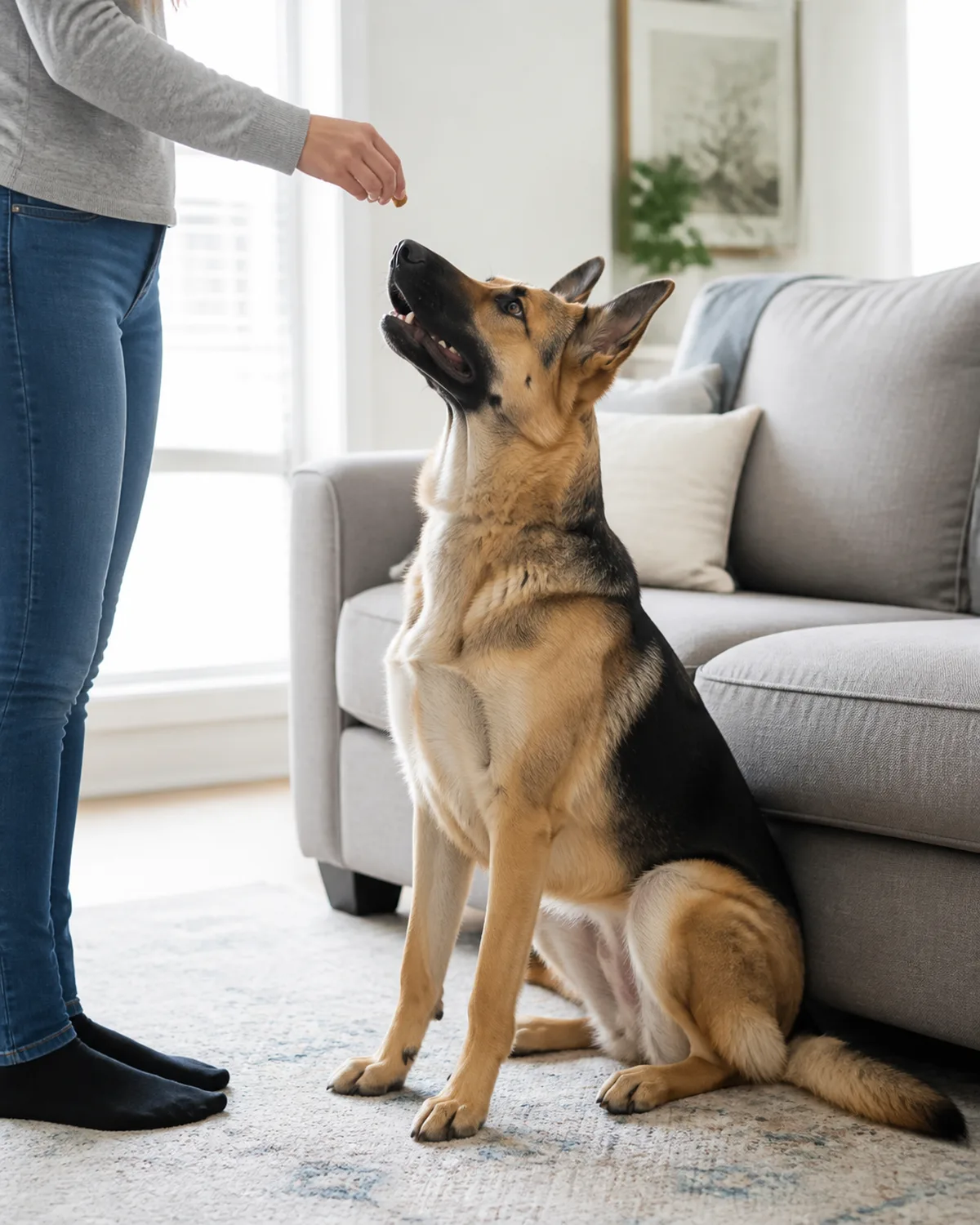
Leave it tells your dog not to engage with something they are approaching. Drop it tells them to release something they already have in their mouth. Together, they cover the full chewing timeline.
Leave it is the preventive tool. You see your dog eyeing the table leg, you say leave it, they look away, and you reward them. Over time, they learn that ignoring furniture pays better than chewing it.
Drop it is the recovery tool. Your dog already has the cushion corner in their mouth. You say drop it, they release, and you swap in a chew toy.
- Start training both commands with low-value items before using them on furniture
- Use treats that outrank whatever your dog has in their mouth
- Practice in short sessions, five minutes at a time, two or three times a day
Teaching these two commands is covered in detail in our leave it guide. The short version is that you start by holding a treat in your closed fist, wait until your dog stops trying to get it, and mark that moment with praise and a better treat from your other hand.
8. Address Separation Anxiety If Chewing Only Happens When You Leave
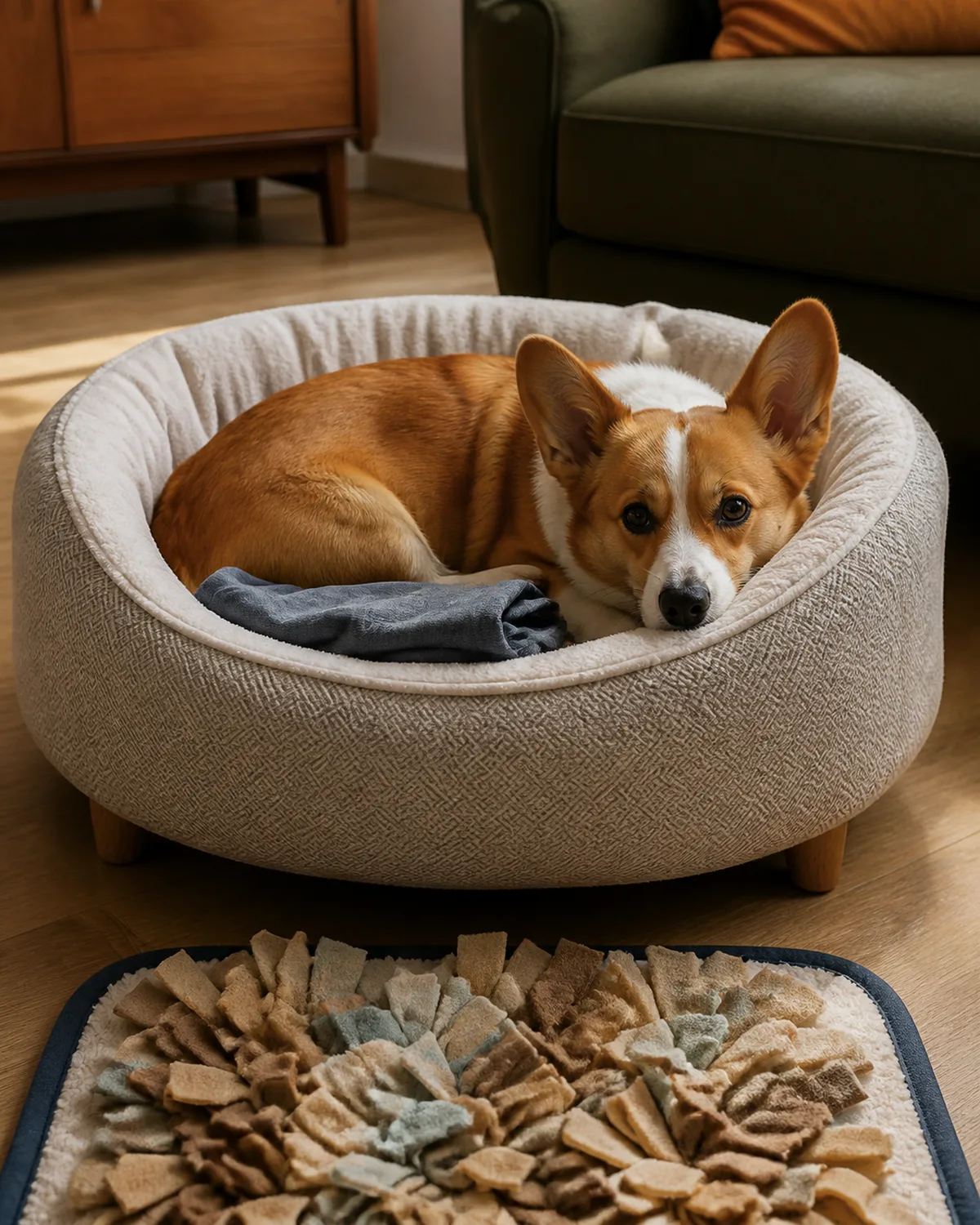
If your dog chews furniture exclusively when home alone, the chewing is a symptom of anxiety, not a behavioral choice. The approach is completely different from everything else in this guide.
Signs that chewing is anxiety-driven rather than boredom-driven:
- Chewing happens only when you leave, never when you are home
- Your dog follows you from room to room and gets agitated when you pick up your keys
- The chewing is frantic and focused on exits: door frames, window sills, and crate bars
- There are other signs like panting, pacing, drooling, or barking that start as soon as you leave
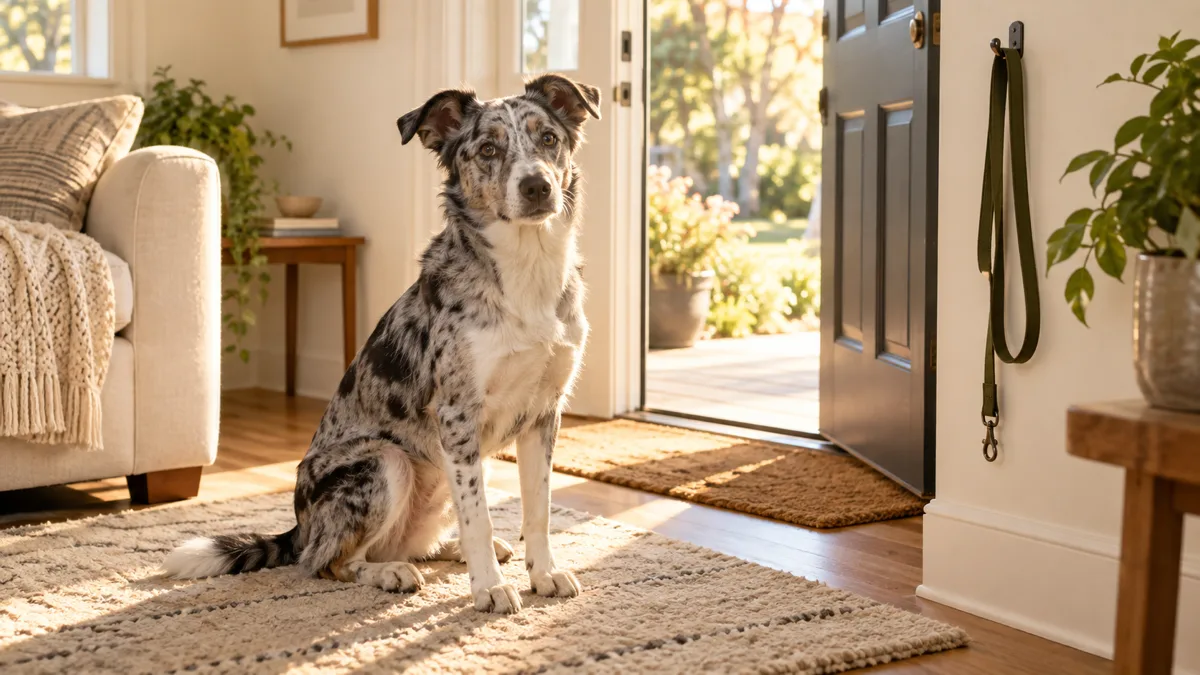
Gradual desensitization is the foundation. That means practicing leaving for very short periods, starting with 30 seconds, and slowly building up so your dog learns that you always come back.
- Pick up your keys and sit back down ten times before you actually leave
- Walk out the door, count to ten, and come back in without making a fuss
- Extend the absences gradually over weeks, not days
- Give your dog a safe space with a familiar scent item and a long-lasting chew before you leave
If the anxiety is severe, your dog injures themselves trying to escape or destroys heavy furniture, talk to your veterinarian. Medication combined with behavior work is more effective than either one alone for moderate to severe separation anxiety.
9. Puppy-Proof for Teething If Your Dog Is Under One Year
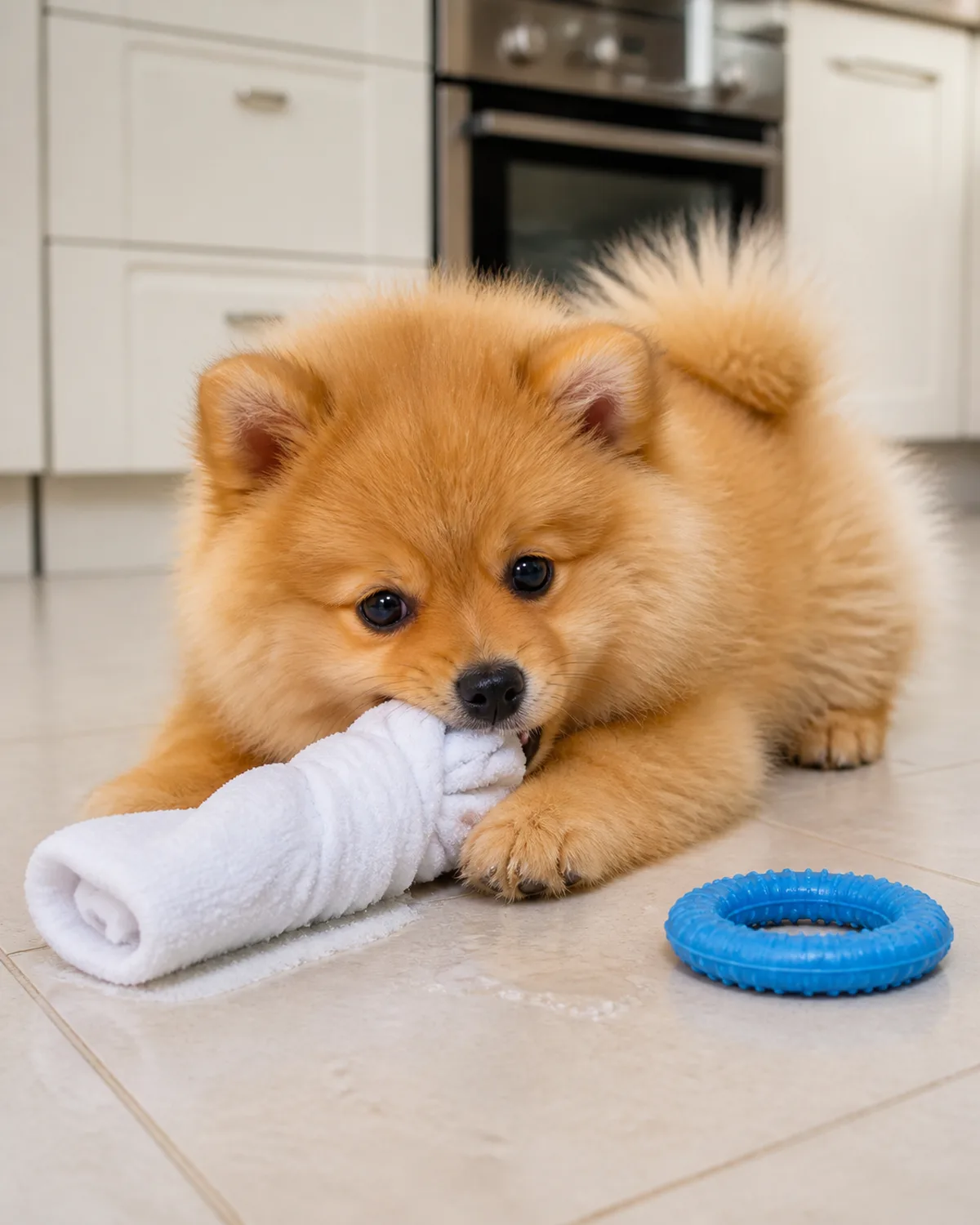
Puppies between three and six months old are losing 28 baby teeth and growing 42 adult ones. That process hurts, and chewing provides pressure relief on sore gums the same way a teething ring works for a human baby.
Punishing a teething puppy for chewing is punishing them for a biological process they cannot control. The fix is offering better chewing options and limiting access to furniture during the worst months.
- Wet a washcloth, twist it into a rope, and freeze it for a cold chew that soothes inflamed gums
- Freeze a Kong stuffed with plain yogurt or mashed banana for 20 to 30 minutes of occupied chewing
- Rubber teething rings designed for puppies work well when refrigerated for an hour
- Rotate cold chews every few hours so there is always a fresh cold option available
Restrict furniture access with baby gates or an exercise pen during peak teething months. This is temporary. Most puppies stop destructive chewing by seven to eight months once their adult teeth are fully in.
If your puppy is over one year and still chewing aggressively, the cause has shifted from teething to one of the other reasons in this guide. Go back to section one and reassess.
10. Rotate Toys Weekly to Keep Them Interesting
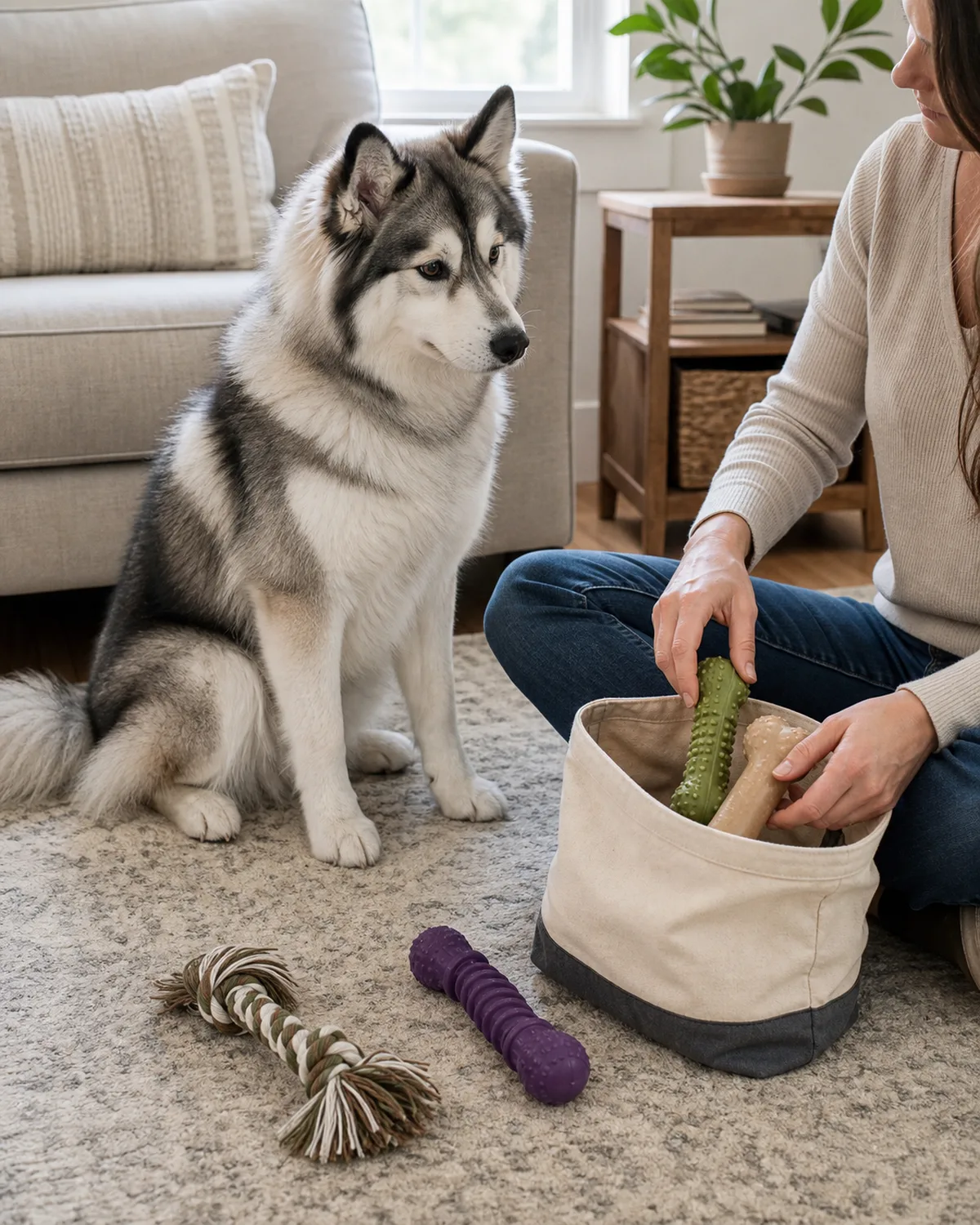
Dogs lose interest in toys the same way kids lose interest in the toy they begged for two weeks after getting it. The fix is not buying more toys. It is rotating the ones you have.
Split your dog's toy collection into three or four groups. Put one group out and store the rest in a closet. Every week, swap to the next group. When last month's toys come back out, your dog treats them like brand-new discoveries.
- Label storage bags by week number to make rotation automatic
- Include different categories in each group: one hard chew, one soft toy, one puzzle or food toy
- Keep one comfort toy out permanently if your dog has a favorite they sleep with
- Indoor enrichment activities fill the same novelty gap and pair well with toy rotation
Rotation costs nothing and takes two minutes. It is one of the easiest changes on this list and one of the most effective for boredom chewers.
11. Know When to Call a Professional Trainer
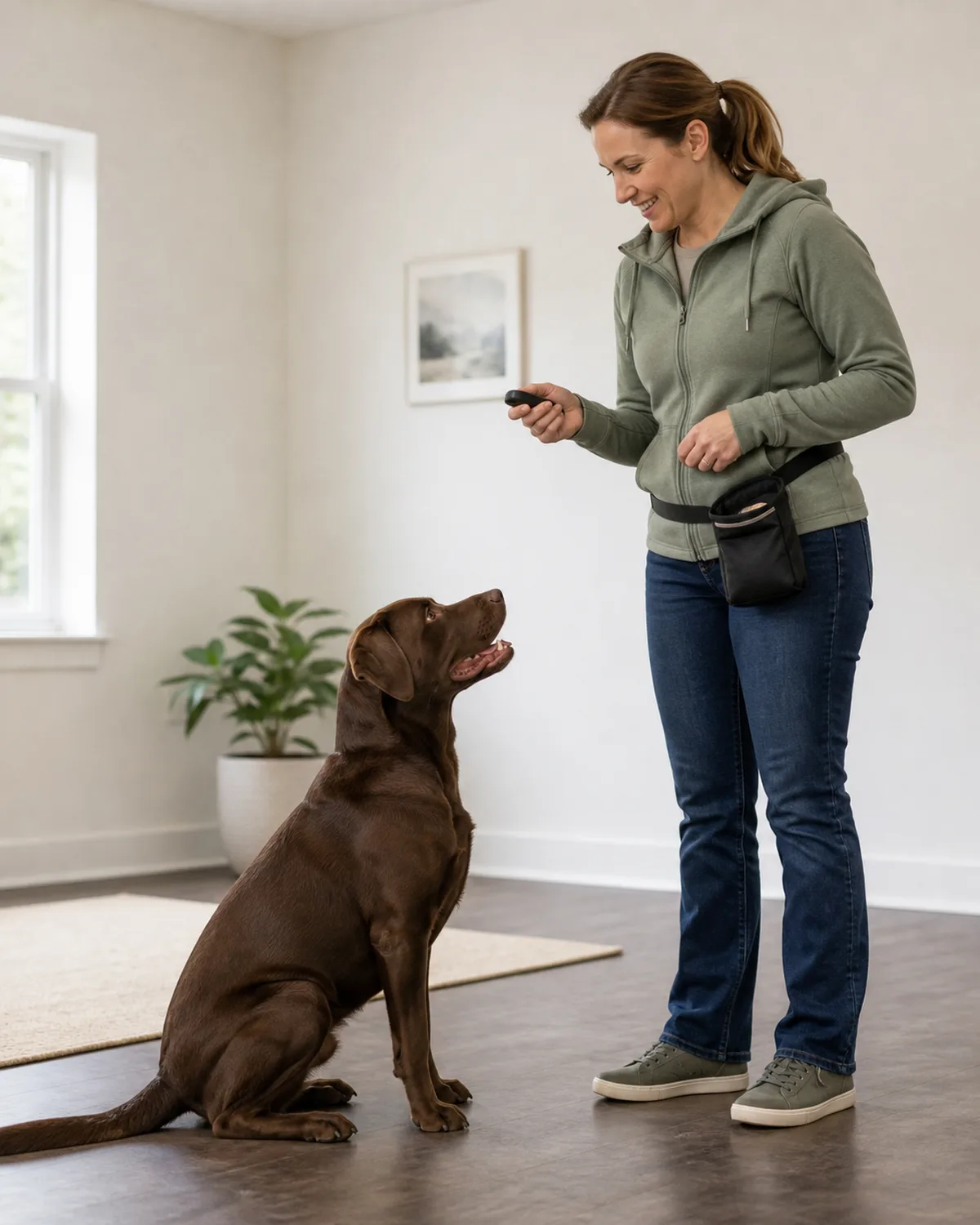
Not every chewing problem responds to a guide on the internet. Some situations need a certified professional trainer or a veterinary behaviorist who can observe your dog in person and build a plan around your specific circumstances.
Signs you need professional help:
- An adult dog that suddenly starts chewing after months or years of not chewing, which can signal a medical issue like dental pain or cognitive decline
- Chewing that escalates to swallowing pieces of fabric, wood, or plastic, which creates an obstruction risk
- Severe separation anxiety that involves self-injury, escape attempts, or destruction of heavy objects
- No improvement after four to six weeks of consistently applying the strategies in this guide
A certified professional dog trainer (CPDT-KA) or a veterinary behaviorist (DACVB) can distinguish between behavioral chewing and chewing driven by medical causes. Your regular vet is a good starting point if you suspect pain or a dental problem.
Asking for help is not a failure. It is the responsible next step when the problem is bigger than the tools you have at home.
Save this list
11 Ways to Stop Furniture Chewing
- 1Find the causeBoredom, anxiety, teething, habit, and excess energy need completely different fixes. Observe when the chewing happens before choosing a strategy.
- 2More exerciseSixty to ninety minutes of real exercise daily, especially a vigorous morning session, cuts most boredom chewing within a week.
- 3Better chew toysMatch the toy to the texture your dog craves. Hard chewers need solid rubber, fabric rippers need rope, teethers need cold items.
- 4Bitter sprayWorks as a temporary deterrent while you train. Reapply every few days and always pair it with a chew toy placed nearby.
- 5Redirect calmlyInterrupt, remove, offer a toy, praise. No yelling, no punishment after the fact. Consistency across the whole household matters.
- 6Manage the spaceCrate, pen, or gate when unsupervised. Unsupervised practice makes the habit stronger, not weaker.
- 7Leave it and drop itTwo commands that cover the full timeline. Leave it prevents engagement, drop it recovers from it.
- 8Address anxietyChewing only when alone means anxiety, not a training gap. Gradual desensitization and a safe space are the foundation.
- 9Teething reliefFrozen washcloths, cold Kongs, and rubber teething rings. Restrict furniture access with gates during the worst months.
- 10Rotate toysSplit toys into weekly groups and swap. Last month's toys feel brand new when they come back out.
- 11Call a proSudden onset in adults, swallowing pieces, severe anxiety, or no improvement after six weeks all warrant professional help.
Common questions
FAQ
At what age do most dogs stop chewing furniture on their own?
Most puppies stop the intense teething-driven chewing by seven to eight months once their adult teeth are fully in. Boredom chewing and habit chewing can persist at any age if the root cause is not addressed. A two-year-old dog that has never been taught what to chew instead will not grow out of it.
Does punishing my dog after I find chewed furniture work?
No. Dogs connect consequences with actions that happened within seconds, not minutes or hours. If you come home to a chewed cushion and scold your dog, they associate the scolding with your arrival, not with the chewing they did an hour ago. The guilty look is a response to your body language, not a sign of understanding.
Can I use hot sauce instead of bitter apple spray?
Hot sauce can irritate a dog's mouth, eyes, and stomach. Bitter apple spray is formulated to taste bad without causing irritation. Stick with products specifically designed for this purpose, apply them to the furniture, and always pair the deterrent with an appealing chew alternative.
My dog only chews one specific piece of furniture. Why?
Texture, location, and scent all play a role. A chair leg at the right height feels satisfying against sore gums. A couch cushion near the door picks up your scent the most, making it a target for anxious chewers. Identify what is special about that piece and you identify the root cause.
Is crating a dog all day a good solution for chewing?
Crating prevents chewing while you are away, but extended crating without adequate exercise and mental stimulation creates new problems. Most adult dogs should not be crated for more than four to six hours at a stretch. Combine short crating periods with exercise, enrichment, and gradual freedom as the chewing behavior improves.

Written by Jess Calloway
Dog mom to three very different dogs. Every guide on Pawliqa is based on real experience, veterinary guidance, and way too many hours reading ingredient labels. More about Jess