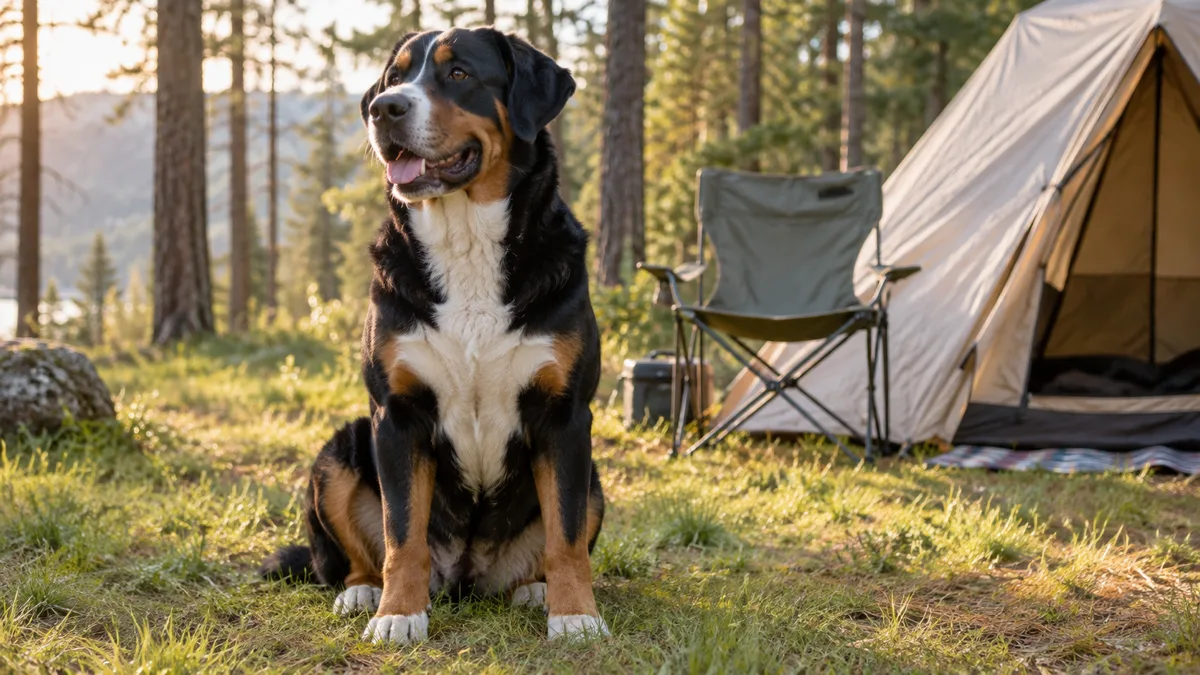
Camping with dogs sounds simple until the first night, when your dog paces the tent, drinks from a questionable puddle, and bolts toward a rustle in the brush.
Most of the problems people run into are not about whether a dog can handle the outdoors — dogs are built for it. The problems come from skipping the small prep steps that make the difference between a trip you repeat and one you survive.
These sixteen tips cover the gear, the training, and the safety calls that keep a camping trip comfortable for both ends of the leash.
Jump to a camping tip
16 tips for camping with dogs
From backyard test runs to wildlife exit plans, these sixteen tips cover gear, safety, training, and comfort. Jump to whatever your trip needs most.
1. Test Your Dog's Camping Readiness With a Backyard Overnight
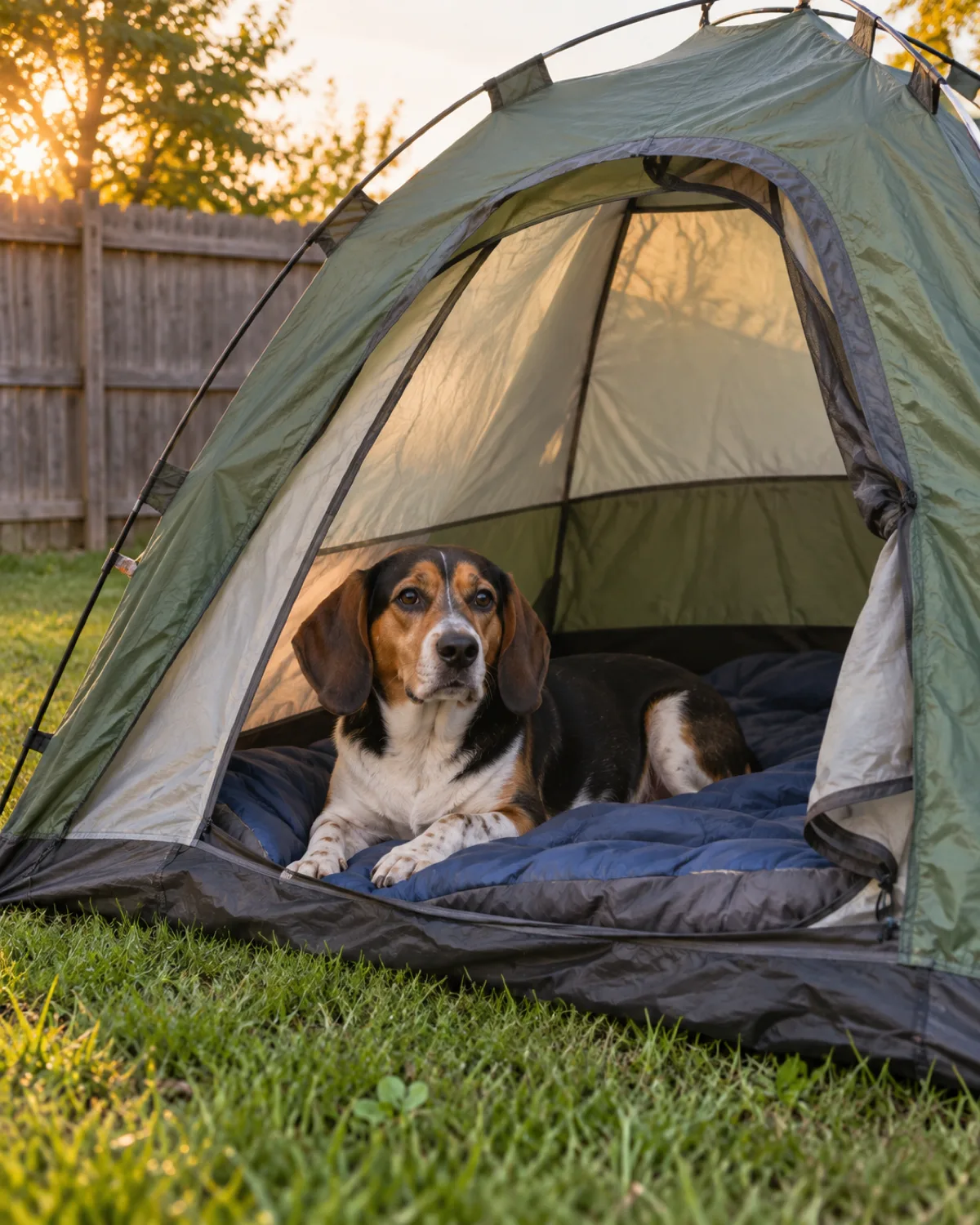
A backyard tent night tells you everything a day hike cannot. You will find out whether your dog settles in an enclosed space, how they react to unfamiliar nighttime sounds, and whether they can sleep without pacing.
Set up the tent in the afternoon and let your dog explore it on their own terms. Toss a few treats inside, leave the flap open, and let them walk in and out without pressure. By evening, feed dinner inside the tent and stay in there with them.
-
If your dog settles within thirty minutes and sleeps through most of the night, they are ready for a real campsite.
-
If they pant, pace, or scratch at the tent wall for hours, work on crate training or tent desensitization for a few more weeks before booking a site.
-
If they bark at every neighborhood sound, expect that to multiply at a campground with wildlife, other campers, and crackling fires.
One backyard night is worth more than ten gear purchases. It costs nothing and saves you from a miserable first trip with a dog who was never introduced to sleeping outdoors.
2. Pack a Collapsible Crate for a Familiar Sleeping Spot
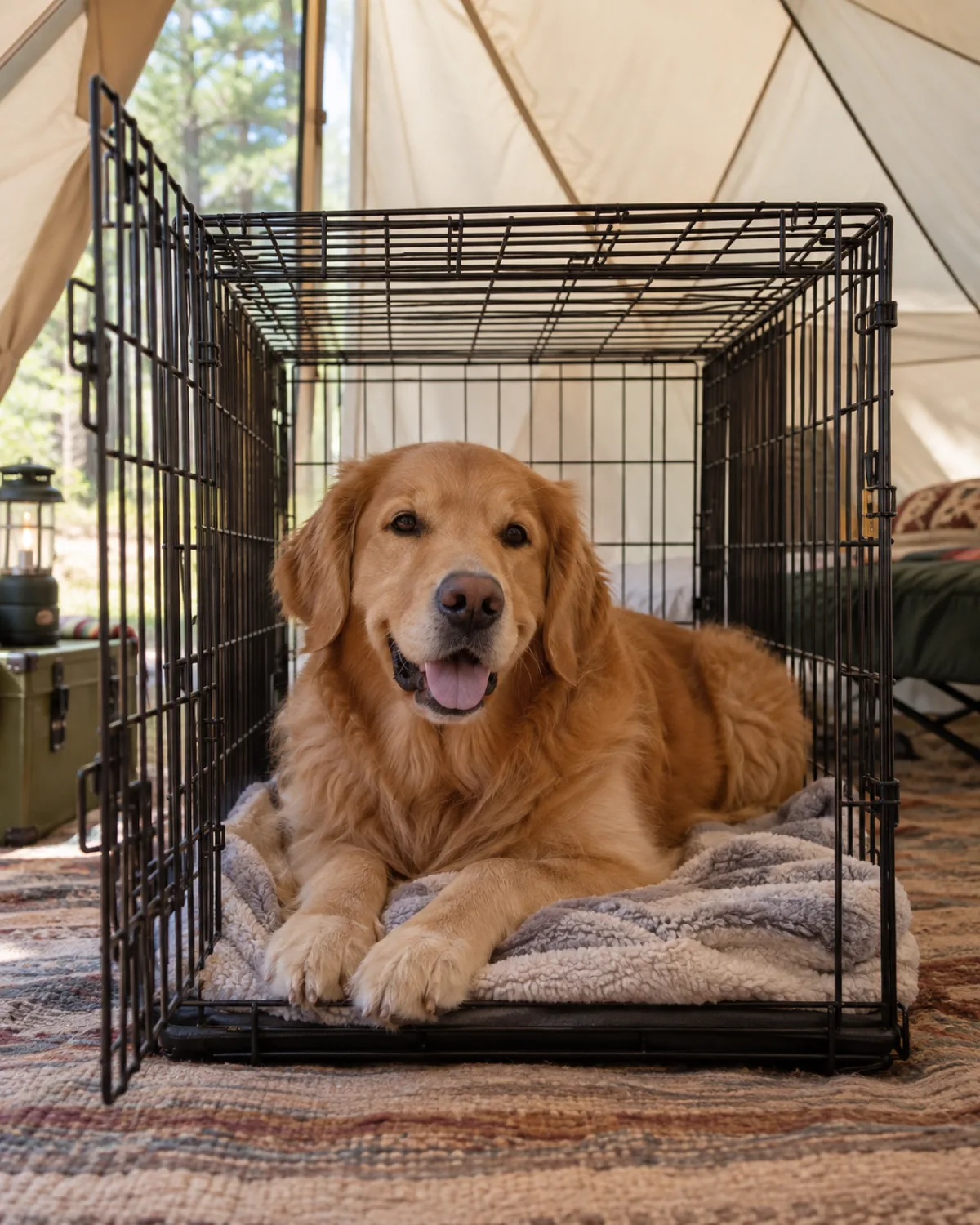
A crate gives your dog a defined space inside the tent that smells like home. Collapsible wire or soft-sided crates fold flat for the car and pop open in under a minute at the site.
The crate does three things at camp that nothing else can:
-
Prevents tent escapes. A zipper is not a lock. Dogs who hear a raccoon at two in the morning will push through a tent flap, but they will not push out of a latched crate.
-
Reduces anxiety. Dogs who already sleep in a crate at home carry that calm association to the campsite. The crate is the one thing that did not change.
-
Gives you hands-free time. Setting up camp, cooking, and breaking down gear all go faster when you are not also holding a leash.
Line the crate with a blanket your dog already uses at home. The familiar scent matters more than the blanket's warmth.
3. Bring a Stake-Out Cable Instead of Tying to a Tree
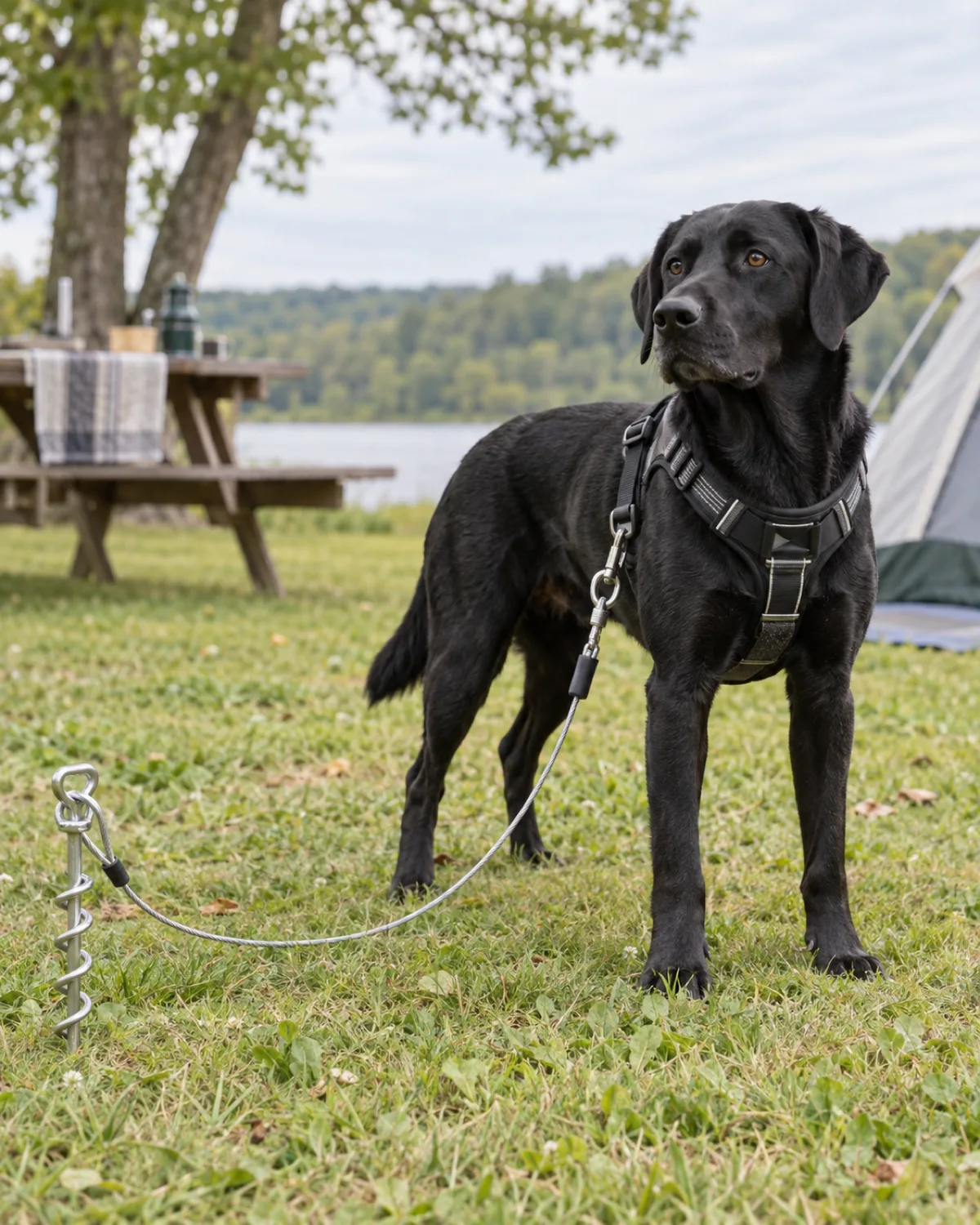
Tying a leash to a tree trunk seems logical until the leash wraps, shortens, and pins your dog against the bark. A spiral ground stake with a fifteen-to-twenty-foot cable gives your dog a full circle of movement without the tangling problem.
Screw the stake into soft ground at a spot clear of tent lines, fire rings, and sharp objects. Clip the cable to a harness, not a collar, so there is no choking risk if your dog hits the end at speed.
- Check the stake every few hours. Soft soil or rain can loosen it.
- Never leave a staked dog unsupervised. The cable can wrap around a leg or catch on a root.
- If the ground is too rocky for a stake, use a heavy-duty tie-out attached to a picnic table leg with a carabiner.
A stake-out cable is campsite freedom without off-leash risk. It lets your dog lie in the sun, sniff the air, and still be exactly where you left them.
4. Layer a Sleeping Pad Under the Dog Bed for Ground Insulation
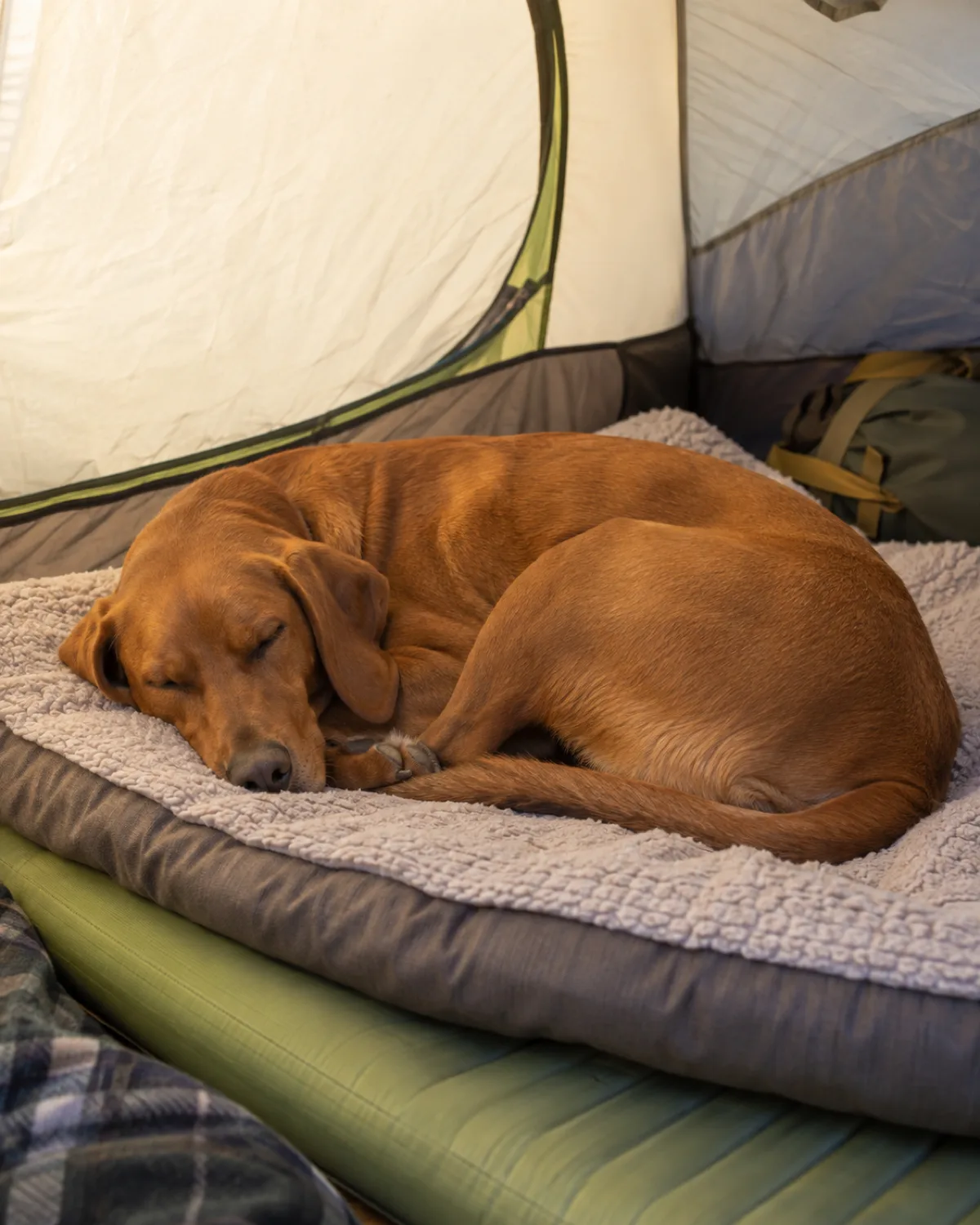
Ground cold transfers through a tent floor faster than most people expect, and a dog bed alone does not block it. A closed-cell foam pad underneath the bed creates a barrier between your dog and the cold earth.
This matters most in spring and fall camping when daytime temperatures are comfortable but the ground holds overnight chill. A dog lying directly on nylon tent flooring over cold soil will curl tighter, shiver, and sleep poorly even in a mild-weather bag.
- Use a cheap closed-cell foam pad, not your own inflatable. Dog nails puncture air pads.
- Cut the foam to match the dog bed footprint so it does not slide around the tent.
- In summer heat, swap the foam for a cooling mat — the same principle in reverse, pulling body heat away instead of insulating against cold.
The pad weighs almost nothing and rolls into a tube that fits alongside tent poles. It is the single cheapest upgrade that makes the biggest difference in how well your dog sleeps outdoors.
5. Carry a Portable Water Filter and a Collapsible Bowl
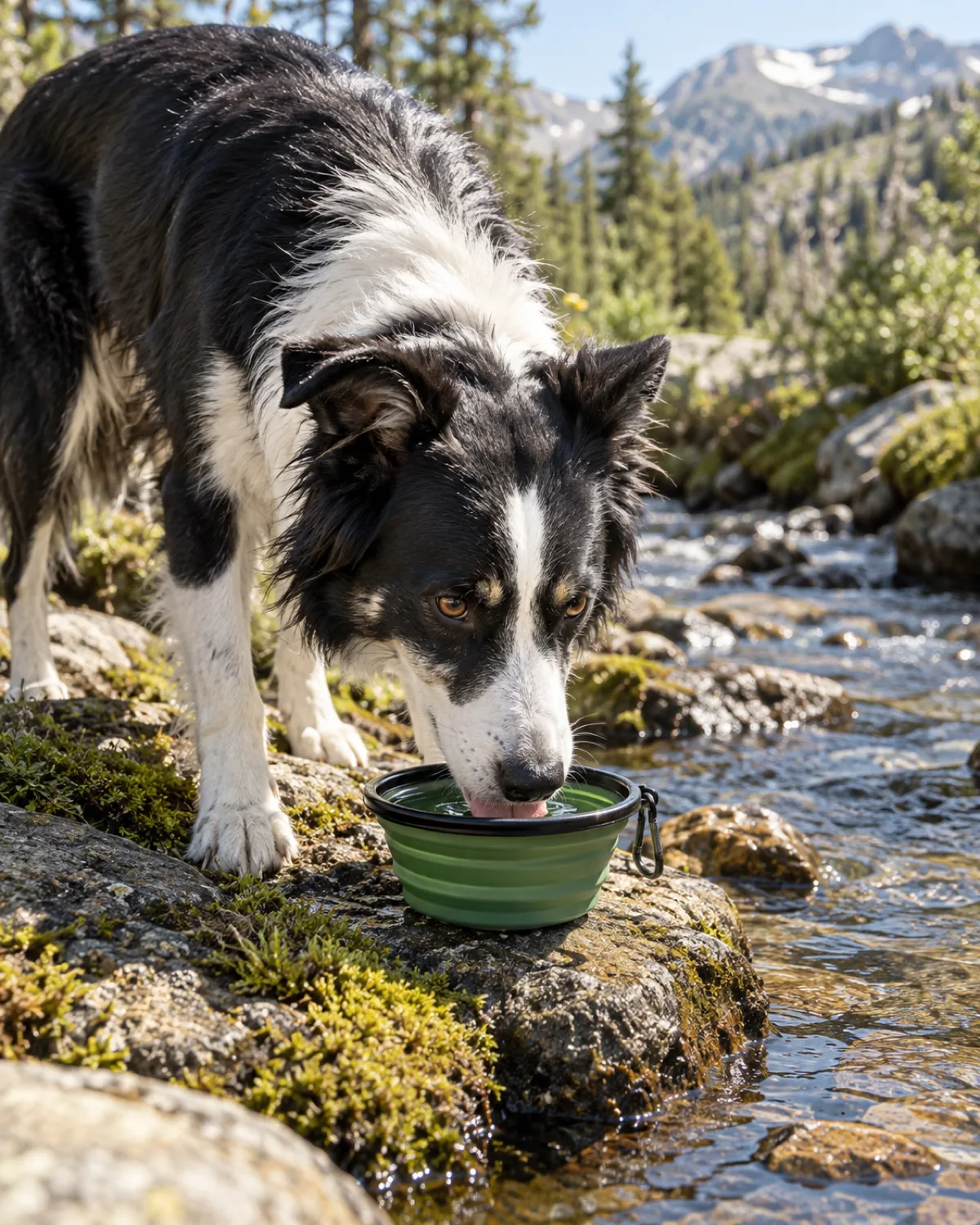
Stream water looks clean but carries giardia, leptospirosis, and bacteria that will send your dog to an emergency vet forty miles from the nearest one. A portable pump or squeeze filter takes thirty seconds and removes the parasites that make dogs violently sick within days of exposure.
Pack more water capacity than you think you need:
-
A dog doing moderate trail activity drinks roughly one ounce of water per pound of body weight per day, sometimes more in heat.
-
A fifty-pound dog needs at least fifty ounces, or about a liter and a half, just for drinking — not counting what you use to rinse paws or cool them down.
-
Carry a collapsible silicone bowl that clips to your pack. Hard bowls take up space and break. Silicone bowls flatten into a pocket and hold up for years.
Offer water every thirty minutes on the trail, not just when your dog starts panting. By the time a dog pants heavily, they are already behind on hydration.
6. Build a Dog-Specific First Aid Kit Before You Leave
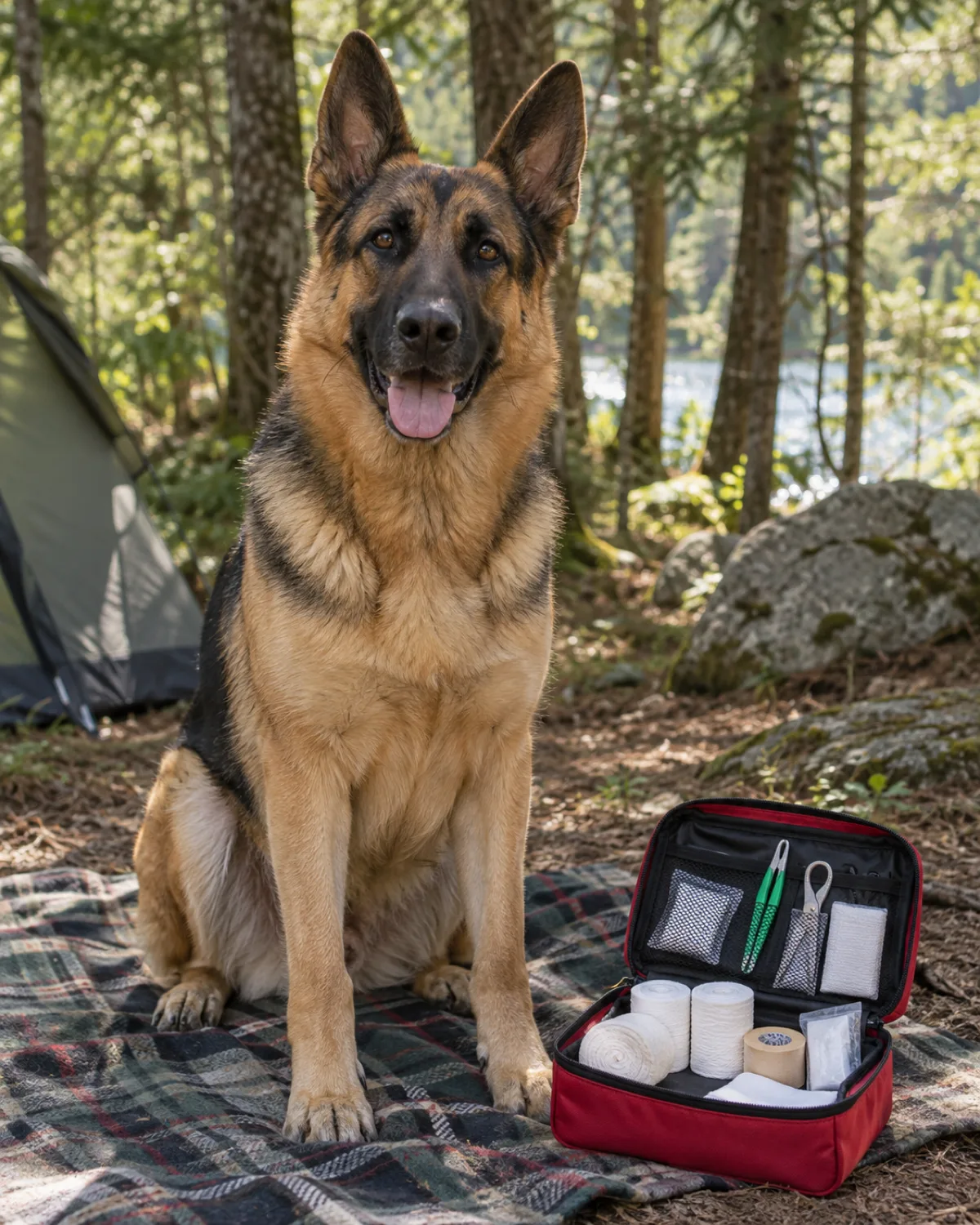
A human first aid kit covers some of what a dog needs, but not the specific tools that matter most in the backcountry. Build a separate pouch with items sized for your dog and situations that happen outdoors, not at home.
What to pack:
-
Tick removal tool or fine-point tweezers
-
Styptic powder for torn nails (common on rocky trails)
-
Self-adhesive vet wrap for paw or leg bandaging
-
Antiseptic wipes for cleaning cuts and scrapes
-
Benadryl tablets (ask your vet for the correct dose before the trip)
-
A muzzle — even gentle dogs may bite when in pain, and you need to examine an injury safely
-
A copy of your dog's vaccination records and your vet's emergency number
Keep the kit in a dry bag inside your main pack, not buried in the car. The injuries that happen at camp — thorn punctures, insect stings, cut paw pads — happen away from the parking lot.
Match your prep to the trip you are actually taking
Where should you start?
Not every camping trip needs every tip here. Pick the scenario below that matches your next trip and start with those priorities.
7. Use a Reflective Vest and Clip-On Light After Dark
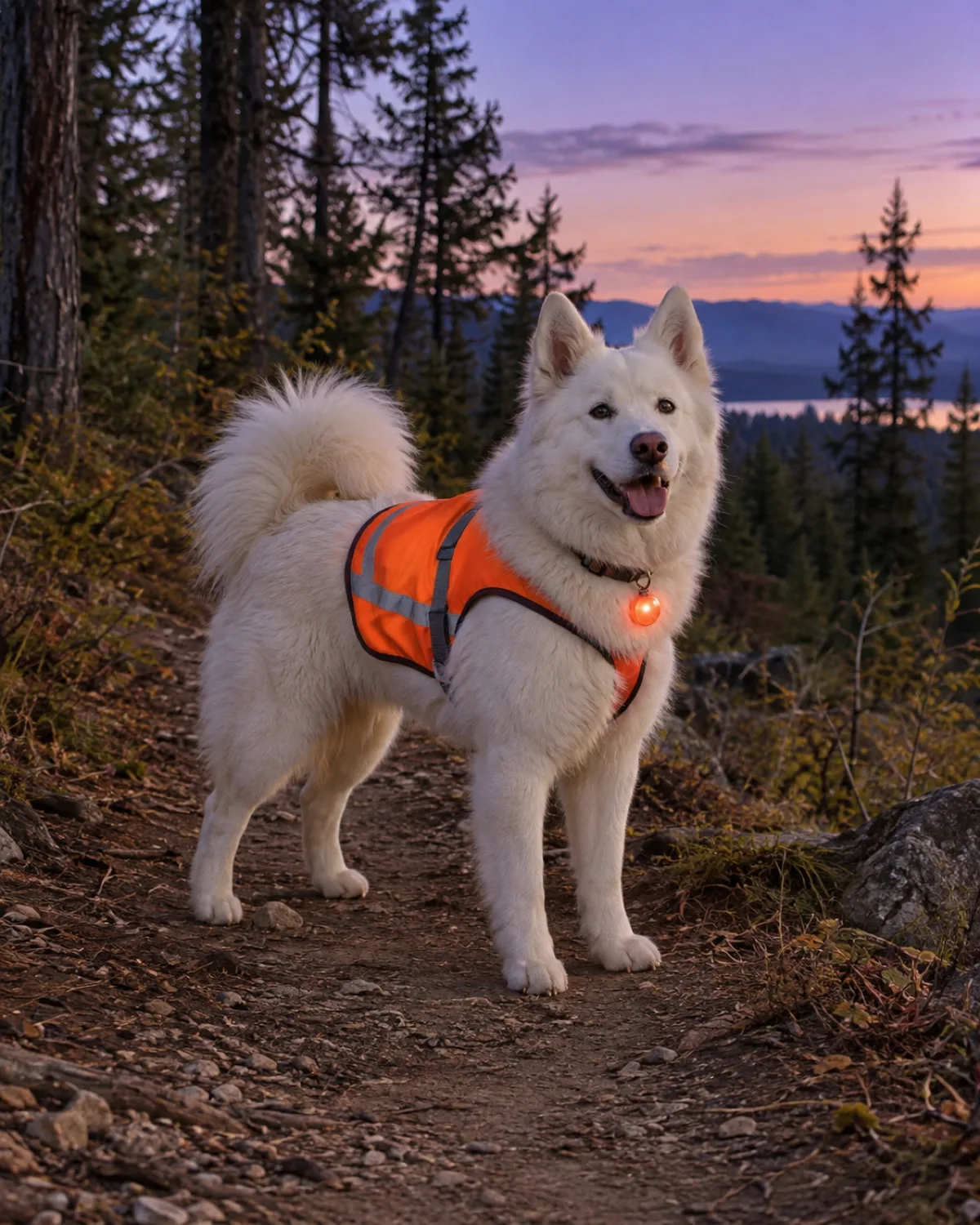
Campgrounds get dark in a way that suburban neighborhoods do not. There are no streetlights, no porch lights, and no ambient glow. A dog ten feet away becomes invisible, and drivers on campground roads will not see them.
A reflective vest wraps the torso and catches headlights, flashlights, and even moonlight at a distance. A clip-on LED on the collar adds active visibility that works even when no external light source is aimed at your dog.
- Put the vest on before dusk, not after dark when your dog is already hard to track.
- Choose a vest with adjustable straps. Loose vests shift and bunch, which some dogs will try to pull off.
- Battery-powered collar lights last longer than glow sticks and attach without adhesive.
This is not optional gear for dogs who are off-leash at camp or on late-evening bathroom walks. It is the difference between seeing your dog and hearing something crash through the brush and hoping it was them.
8. Keep Your Dog on a Long Line Near Water and Cliffs
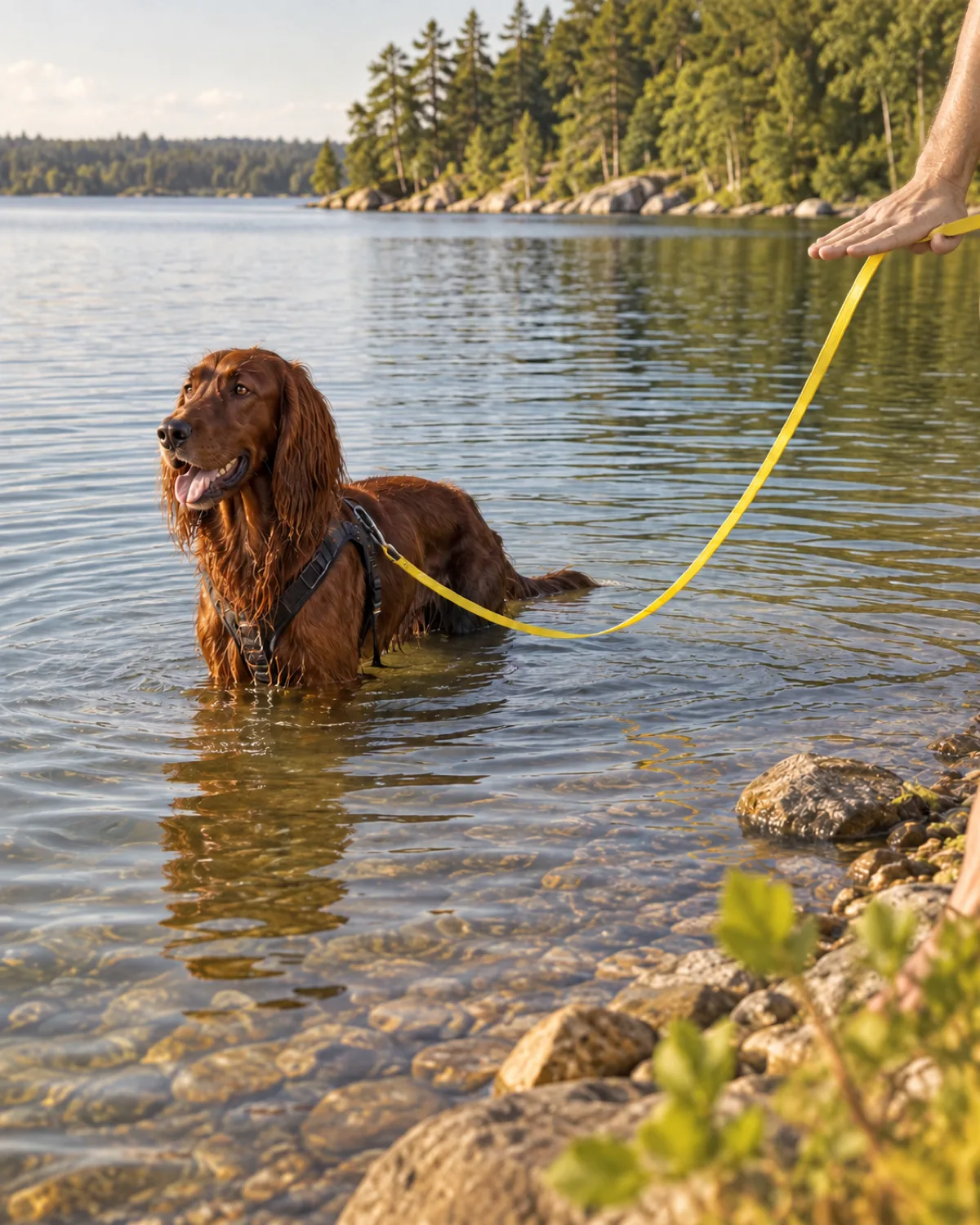
Rivers with undercurrents, lake drop-offs, and cliff edges are the three places where off-leash camping turns dangerous fast. A thirty-foot long line gives your dog room to explore, swim, and sniff while keeping you connected to them at all times.
Dogs are not natural judges of water depth or current strength. A dog who swims confidently in a calm pond may paddle straight into a river current that pulls them downstream before you can react.
- Use a biothane or waterproof long line near water. Nylon lines absorb water, get heavy, and drag.
- Keep the line slack, not taut. You want your dog to feel free while you hold the safety net.
- Near cliff edges or steep banks, shorten to fifteen feet and keep the line in your hand, not staked.
The long line is the single most important piece of safety gear for waterside camping. It lets your dog enjoy the water without you standing ankle-deep in the lake holding a six-foot leash.
9. Walk the Campsite for Toxic Plants Before Settling In
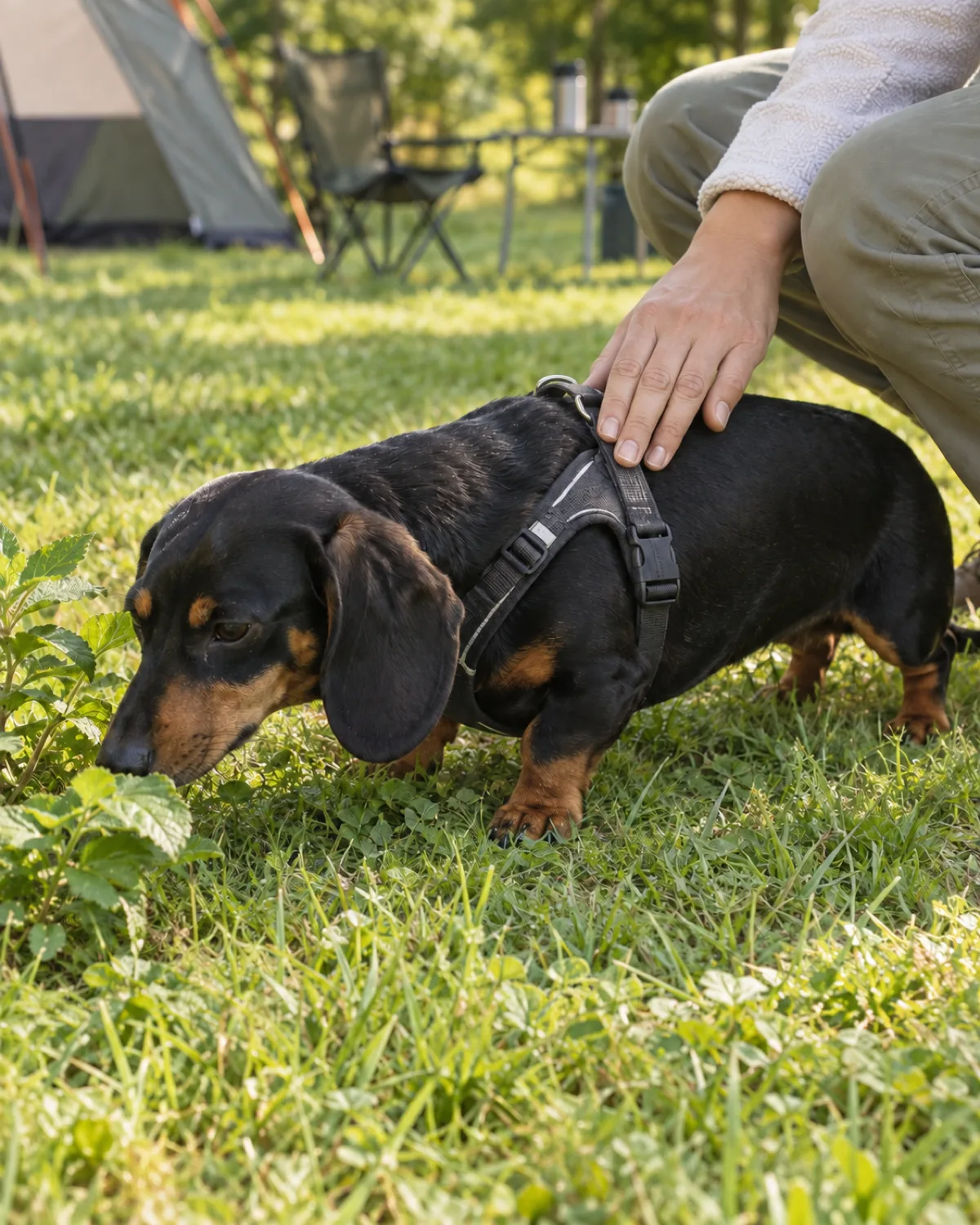
Dogs eat things on the ground without hesitation, and campgrounds sit in wild areas where toxic plants grow freely. A five-minute walk around your site before you unload gear lets you spot and avoid the most common dangers.
Plants to watch for at North American campsites:
-
Wild mushrooms — caps on the ground near tree bases, ranging from mild nausea to organ failure
-
Foxglove — tall stems with bell-shaped purple or pink flowers, extremely dangerous to the heart
-
Poison hemlock — tall with white umbrella flower clusters and purple-spotted stems, fatal if eaten
-
Sago palm (Southern sites) — short palm-like fronds near landscaped areas, causes liver failure within hours
-
Acorns and oak leaves — found under oaks in fall, kidney damage in large quantities
You do not need to identify every species. You need to scan the area where your dog will spend the most time — around the tent, the fire ring, and the path to the water source — and remove or block access to anything they might chew.
If your dog eats something you cannot identify, photograph it immediately. That photo is the fastest way for a vet to narrow down treatment.
10. Pack Extra Food and Treats Beyond Your Usual Portions
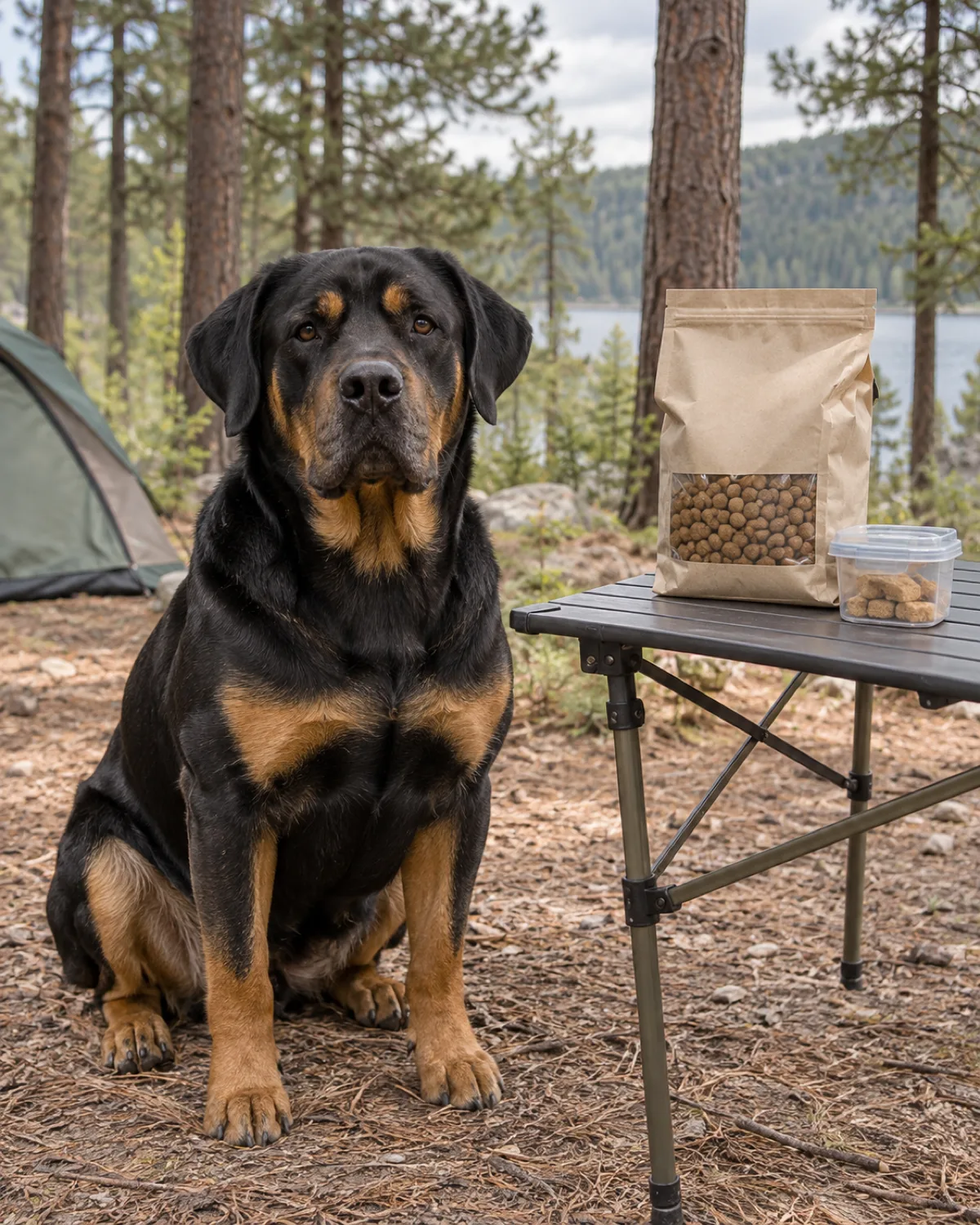
A dog hiking, swimming, and exploring all day burns significantly more calories than the same dog lying on the couch at home. Most camping guides say to pack twenty-five to fifty percent more food than your dog's normal daily amount, and that estimate holds up.
Bring the food your dog already eats. A camping trip is the wrong time to introduce a new brand, a raw diet, or unfamiliar treats. Digestive upset in the backcountry means cleaning up a mess inside a tent at three in the morning with no running water.
- Portion the food into daily zip-lock bags before the trip. It keeps feeding consistent and reduces the amount of open kibble exposed to wildlife scent.
- Pack treats separately in a hard-sided container. Soft treat bags puncture and leak smell, which attracts animals.
- Add one extra day of food beyond your planned trip length. Weather delays, car trouble, and extended stays happen.
The extra food is cheap insurance. Running out at a remote campsite means a hungry dog and a drive to the nearest town, which may be an hour away.
Four rules that keep every camping trip with a dog safe and repeatable
The 4-rule system for dog camping
Gear lists change by trip. These four principles do not. Follow them and most campsite problems never start.
Leash or line at all times unless fencedOff-leash freedom feels right until your dog chases a squirrel into traffic, charges another camper's dog, or disappears into dense brush at dusk. A long line gives the feeling of freedom with none of the risk. Even well-trained dogs lose recall around wildlife.
Filter every water source, no exceptionsIf you would not drink it unfiltered, your dog should not either. Giardia and leptospirosis take days to show symptoms, so a sick dog on the drive home means an emergency vet visit with no clear cause unless you know they drank from a stream.
Never leave food accessible at nightDog food attracts bears, raccoons, and coyotes. Seal kibble in a bear canister or hang it with your human food. A raccoon ripping open a bag at midnight wakes the entire campground and puts your dog in a confrontation they cannot win.
Know the nearest emergency vet before you leaveSearch the emergency vet clinic closest to your campsite and save the address and phone number before you lose cell service. A snake bite, a porcupine quill, or a severe allergic reaction needs professional care within hours, not a panicked roadside Google search.
11. Set Up a Shade Tarp for Midday Rest
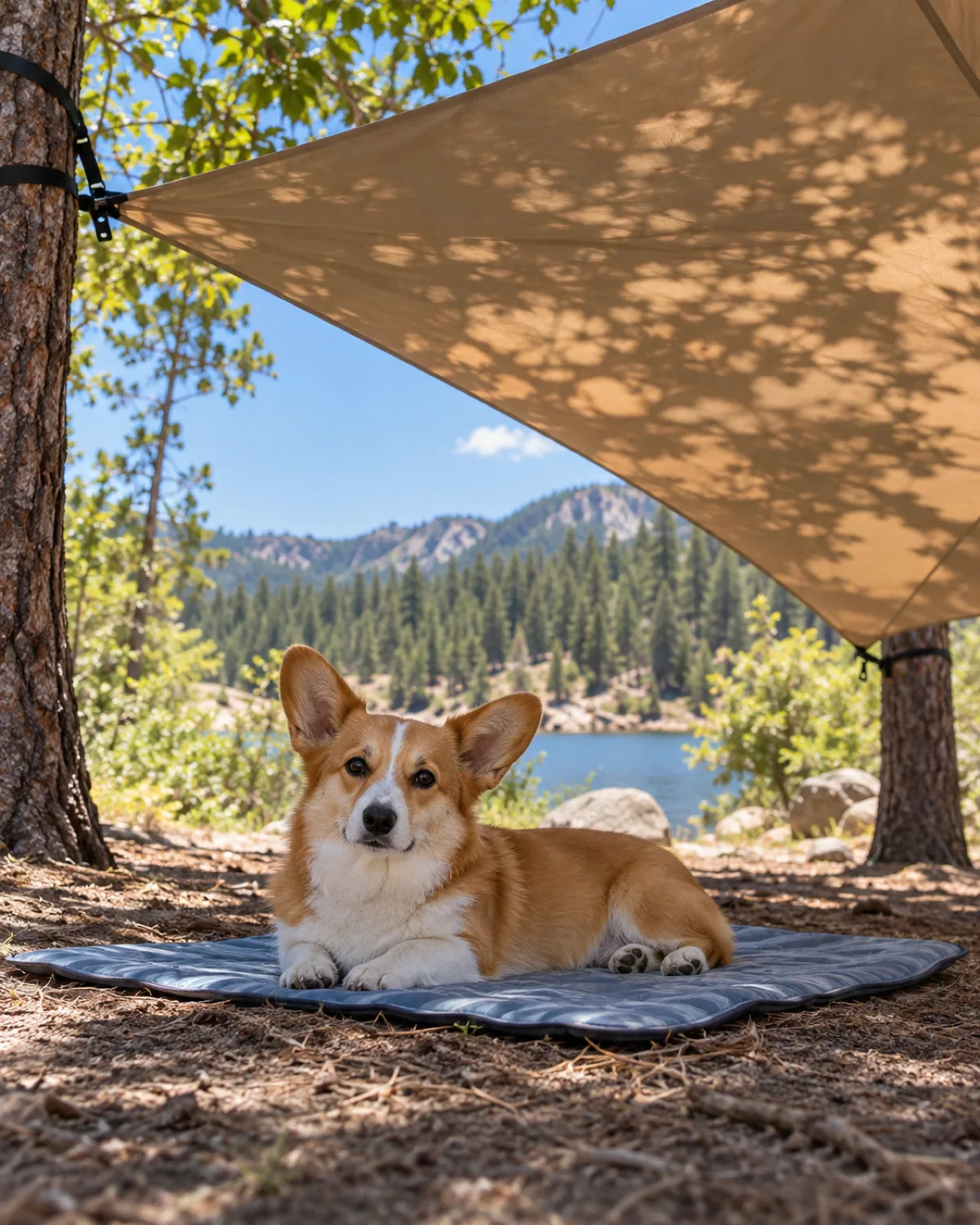
Trees provide some shade, but campsite shade moves with the sun and disappears entirely at midday when the heat peaks. A simple tarp strung between two trees or poles creates a reliable cool zone your dog can use all afternoon.
Dogs overheat faster than humans because they cool primarily through panting, which becomes less effective as humidity rises. A shaded rest area drops the ground temperature by ten to fifteen degrees compared to direct sun, which is enough to prevent heat exhaustion on a hot day.
- Hang the tarp high enough that air circulates underneath. A low tarp traps heat.
- Place your dog's water bowl and a cooling mat under the tarp so they have everything they need without leaving the shade.
- Check on your dog every thirty minutes during peak heat. Heavy panting, drooling, or wobbly movement means they need to cool down immediately — wet their belly and paw pads with cool water.
If your campsite has no trees to anchor a tarp, a pop-up canopy works. The point is guaranteed shade that does not depend on the sun's position.
12. Practice Recall Commands in Distracting Environments Before the Trip
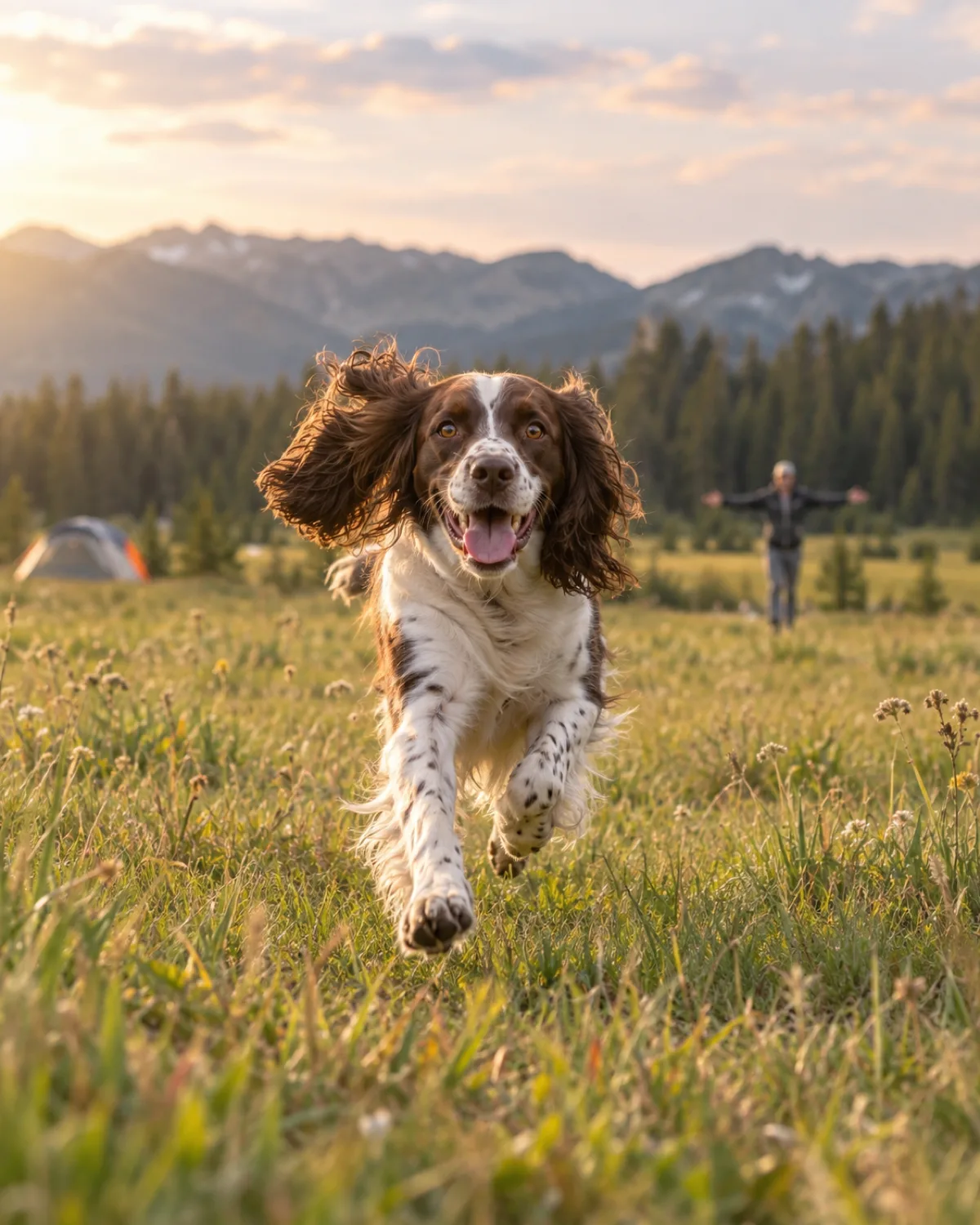
A dog who comes when called in your backyard may ignore you completely at a campsite full of new smells, other dogs, and wildlife. Recall is not a trick — it is a safety skill that needs to work under pressure, and it only works under pressure if you have practiced it there.
Before your trip, train recall in progressively more distracting places:
- Start in your yard with a long line, rewarding every return with a high-value treat.
- Move to a park with other dogs and foot traffic. Use the long line as backup.
- Graduate to a trail or open field where scent distractions are high.
At camp, never test recall without a long line as insurance. A dog who bolts after a deer will not stop because you yelled their name. The long line catches what your voice cannot.
Recall at a campsite is not about obedience. It is about getting your dog back before they reach a road, a cliff, a porcupine, or another camper's aggressive dog. Train it like it matters, because at camp it does.
13. Store All Food in a Bear Canister or Hang Bag
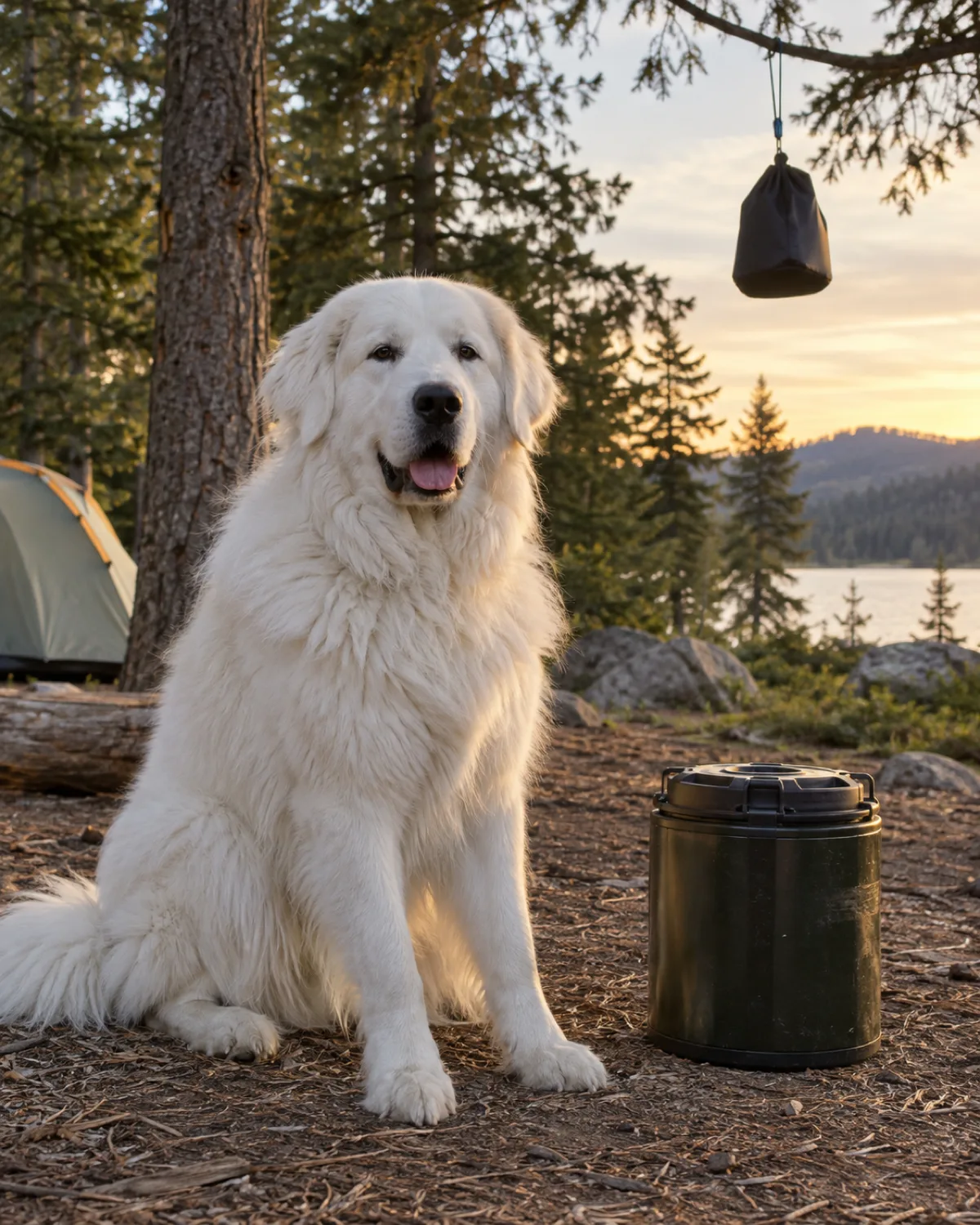
Dog food smells as strong as human food to wildlife, sometimes stronger. Leaving a bag of kibble in your tent or next to your cooler is an open invitation to bears, raccoons, and coyotes — and a confrontation between your dog and any of those animals can end badly.
Storage rules that apply to every campsite:
-
Seal all dog food, treats, and chews in a bear canister or an approved bear hang bag at night and anytime you leave the site.
-
Store the canister at least two hundred feet from your sleeping area, the same distance recommended for human food.
-
Do not leave food bowls out after meals. Rinse them and store them with the food.
-
Scented items count too — flavored medications, dental chews, and even peanut-butter-filled toys attract animals.
In bear country, these are not suggestions. They are campground regulations enforced with fines, and a bear that learns to associate campsites with dog food becomes a problem bear that often gets destroyed.
Even at sites without bears, raccoons will tear through a tent to reach a bag of kibble. Proper food storage is the baseline for every overnight trip, not just backcountry ones.
14. Apply Paw Wax for Hot Sand and Rocky Trails
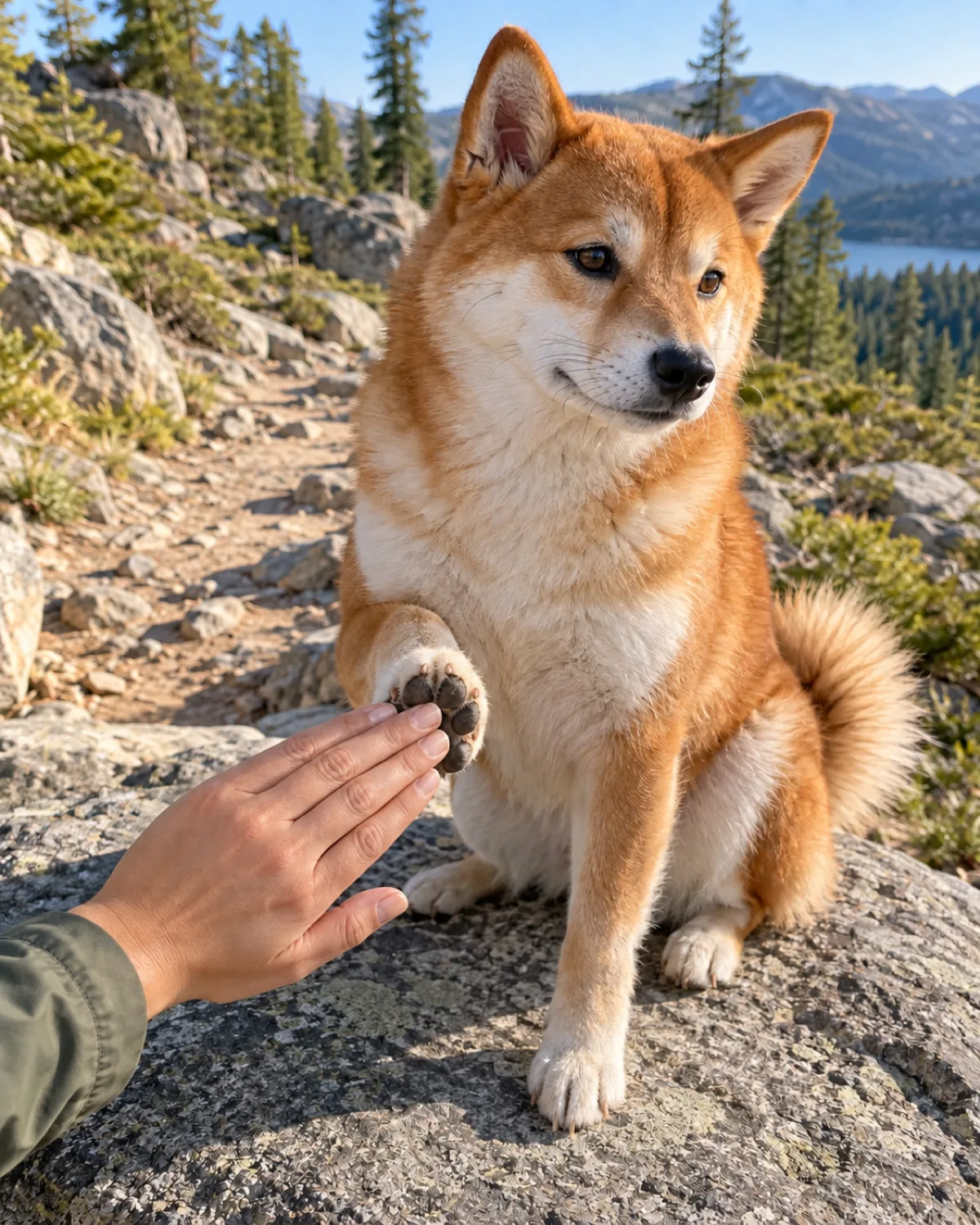
Paw pads are tough but not indestructible. Hot sand, sharp gravel, and rocky trails wear them down faster than pavement walks at home, and a torn or blistered pad at a remote campsite means carrying your dog out or cutting the trip short.
Paw wax creates a thin protective barrier that reduces friction and blocks heat transfer from hot surfaces. Apply it before each hike, rubbing a small amount into each pad until it absorbs.
- Check pads every evening at camp. Look for cracks, raw spots, or embedded gravel.
- If a pad is already cracked, clean it with antiseptic, apply a thin bandage with vet wrap, and limit walking until it heals.
- Dog boots are an alternative for dogs who tolerate them, but most dogs need weeks of practice at home before they walk naturally in boots.
The wax is invisible once applied and does not leave residue in the tent. One small tin lasts an entire camping season and weighs almost nothing in a pack.
15. Bring Familiar Blankets and Toys to Reduce Camp Anxiety
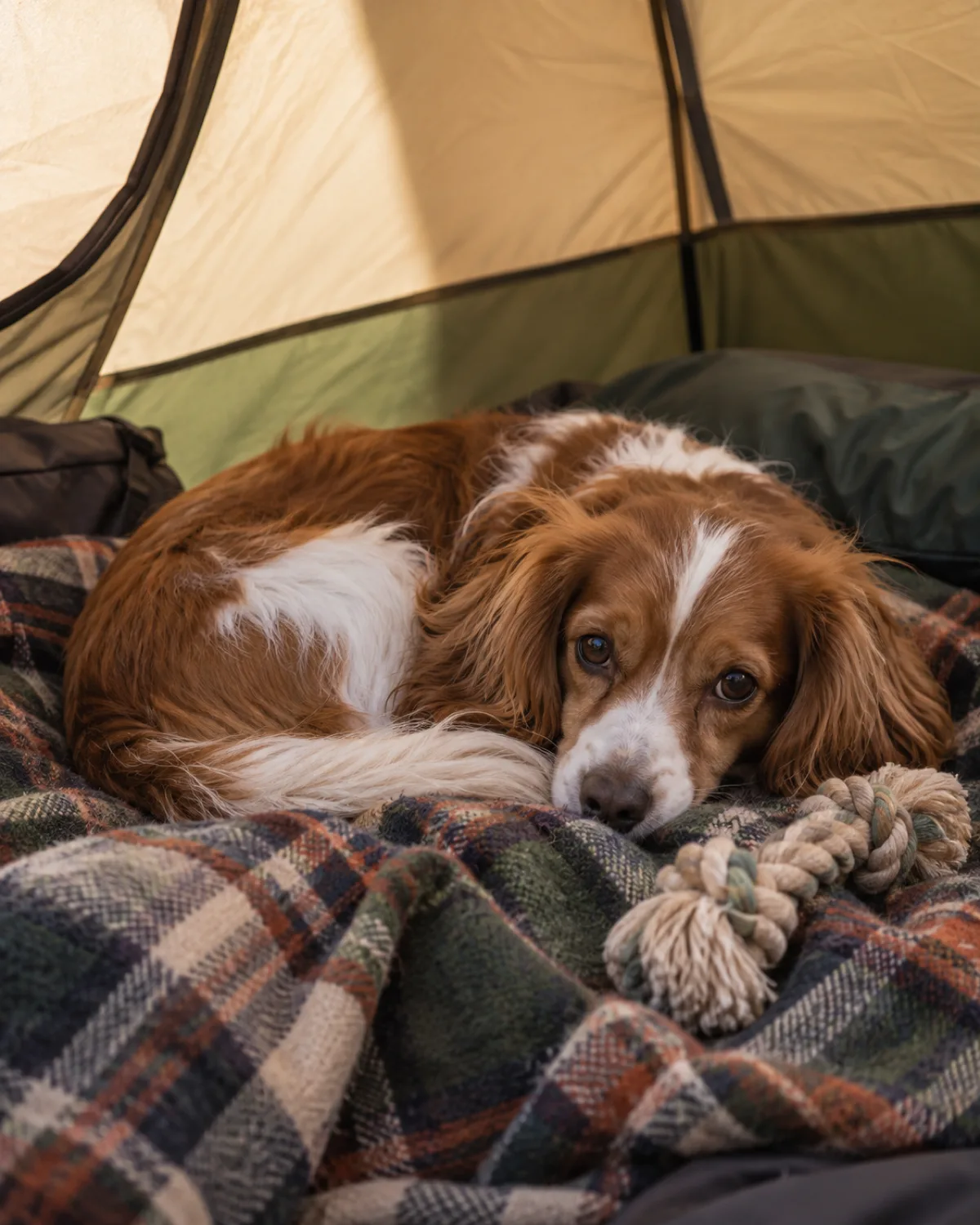
Everything at a campsite is new — the smells, the sounds, the sleeping surface, the temperature, and the routine. A dog who thrives on predictability at home can become anxious, clingy, or restless when every familiar anchor disappears at once.
Familiar items bridge the gap:
- The blanket they sleep on at home carries their scent and yours. Lay it inside the crate or on their sleeping pad so the tent smells like the living room.
- A well-used chew toy gives them something to do when the campsite activity gets overwhelming. Chewing is a natural calming behavior.
- Their regular food bowl keeps mealtime feeling normal even in a new place.
Do not bring new toys or new bedding for the trip. The whole point is scent familiarity, and new items do not have it. Grab the blanket off the couch, the toy they have been gnawing on all week, and the bowl they eat from every day.
These items take up almost no extra space in the car, and they are the cheapest, most effective anti-anxiety tool you can pack.
16. Plan Your Exit Route in Case of a Wildlife Encounter
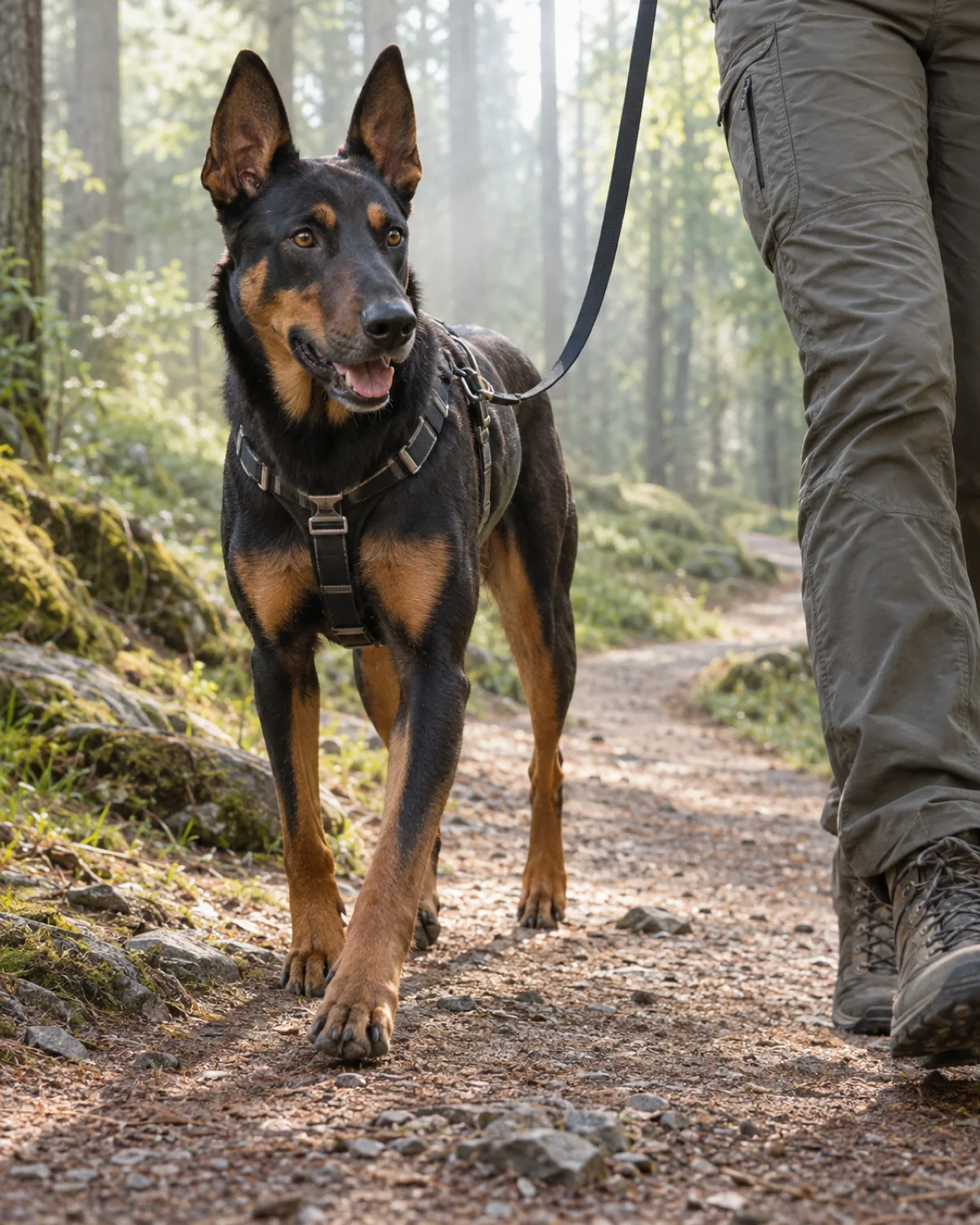
Most wildlife encounters at campsites are brief — a deer passing through, a raccoon testing your cooler, a coyote trotting along the tree line. But some are not, and the thirty seconds after you spot a bear, a moose, or a mountain lion are not the time to figure out your plan.
Before you settle in, walk your site and identify:
-
The direction of the nearest road or building. That is your primary retreat path.
-
A second route in case the animal is between you and the first exit. A wide loop around your campsite through open ground, not through dense brush where you cannot see.
-
Where to put your dog. Inside a vehicle is the fastest, safest containment during a wildlife encounter. If your car is at the site, that is your fallback.
When you see a large animal, leash your dog immediately and move away calmly. Do not run — running triggers a chase response in predators.
Do not let your dog bark, lunge, or approach. Understanding your dog's body language helps you read their reaction before it escalates. Shorten the leash to your side and back away slowly while making yourself appear large.
A planned exit is not paranoia. It is the same thinking behind knowing where the fire extinguisher is. You probably will not need it, but if you do, you will not have time to look for it.
Save this for later
16 Tips for Camping With Dogs
- 1Test readiness with a backyard overnightSet up the tent at home first so your dog learns to settle in an enclosed space before the real trip.
- 2Pack a collapsible crateA familiar crate prevents tent escapes and gives your dog a calm, defined sleeping spot.
- 3Bring a stake-out cableA spiral ground stake with a long cable gives campsite freedom without tangling or off-leash risk.
- 4Layer a sleeping pad under the bedClosed-cell foam blocks ground cold so your dog sleeps warm on chilly nights.
- 5Carry a water filter and bowlFilter every stream and offer water every thirty minutes on the trail.
- 6Build a dog first aid kitPack tick tools, styptic powder, vet wrap, and Benadryl in a separate dry bag.
- 7Use reflective gear after darkA vest and clip-on LED make your dog visible at campgrounds with zero ambient light.
- 8Long line near water and cliffsA thirty-foot biothane line lets your dog swim and explore without off-leash danger.
- 9Walk the site for toxic plantsScan the tent area, fire ring, and water path for mushrooms, foxglove, and hemlock before settling in.
- 10Pack extra food and treatsActive dogs burn more calories outdoors — bring at least one extra day of portions.
- 11Set up a shade tarpA tarp between two trees drops ground temperature by ten to fifteen degrees at midday.
- 12Practice recall before the tripTrain in distracting places so your dog comes when called around wildlife and other campers.
- 13Store food in a bear canisterSeal all kibble, treats, and scented items at night and whenever you leave camp.
- 14Apply paw wax for rough terrainA thin layer of wax protects pads from hot sand, sharp gravel, and rocky trails.
- 15Bring familiar blankets and toysHome-scented items ease anxiety when everything else at camp is new.
- 16Plan a wildlife exit routeIdentify two retreat paths and the nearest vehicle before you settle into the site.
Frequently Asked Questions About Camping With Dogs
Can I take my puppy camping?
Puppies under four months old should not camp because they have not completed their vaccination series. Distemper, parvo, and leptospirosis are all present in outdoor environments, and an unvaccinated puppy has no protection against them.
After four months, start with a short one-night trip at a developed campground with vehicle access. Avoid backcountry trips until your puppy has solid recall and can settle in a crate for extended periods.
How do I keep my dog warm in a tent at night?
Layer a closed-cell foam pad under their bed to block ground cold, and add a fleece blanket they can burrow into. For cold-weather camping below forty degrees, a dog sleeping bag or insulated jacket helps breeds with thin coats. Small dogs and short-coated breeds lose body heat faster and may need to sleep in your sleeping bag with you.
What should I do if my dog gets a tick at the campsite?
Use a tick removal tool or fine-point tweezers to grip the tick as close to the skin as possible and pull straight out with steady pressure. Do not twist, burn, or apply petroleum jelly.
Clean the bite site with antiseptic and save the tick in a sealed bag in case symptoms develop later. Check your dog's entire body — ears, armpits, groin, and between toes — every evening at camp, not just after hikes.
Are campfires safe around dogs?
Campfires are safe as long as your dog is leashed or crated at a distance where embers cannot reach them. Dogs are drawn to the warmth and may lie too close, and a popping ember can burn fur or skin before either of you reacts. Keep your dog at least six feet from the fire ring, and never leave them unattended near an active fire.
How much water does a dog need while camping?
A general guideline is one ounce of water per pound of body weight per day during normal activity. On active hiking days, that amount can double. A sixty-pound dog may need three to four liters on a hot trail day. Offer water every thirty minutes on the move, and always filter water from natural sources before letting your dog drink.
P
About the author
Jess Calloway
Jess Calloway edits Pawliqa, where she shares dog care, grooming, training, and new-owner tips — plus DIY and pet-friendly home ideas — for anyone who wants a happy, well-cared-for dog. As a dog mom to three very different dogs, she writes the honest, tested version of what actually works. Every guide is image-led and reviewed for clarity, usefulness, image accuracy, and Pinterest-to-page alignment before it goes live. Visit the About page.