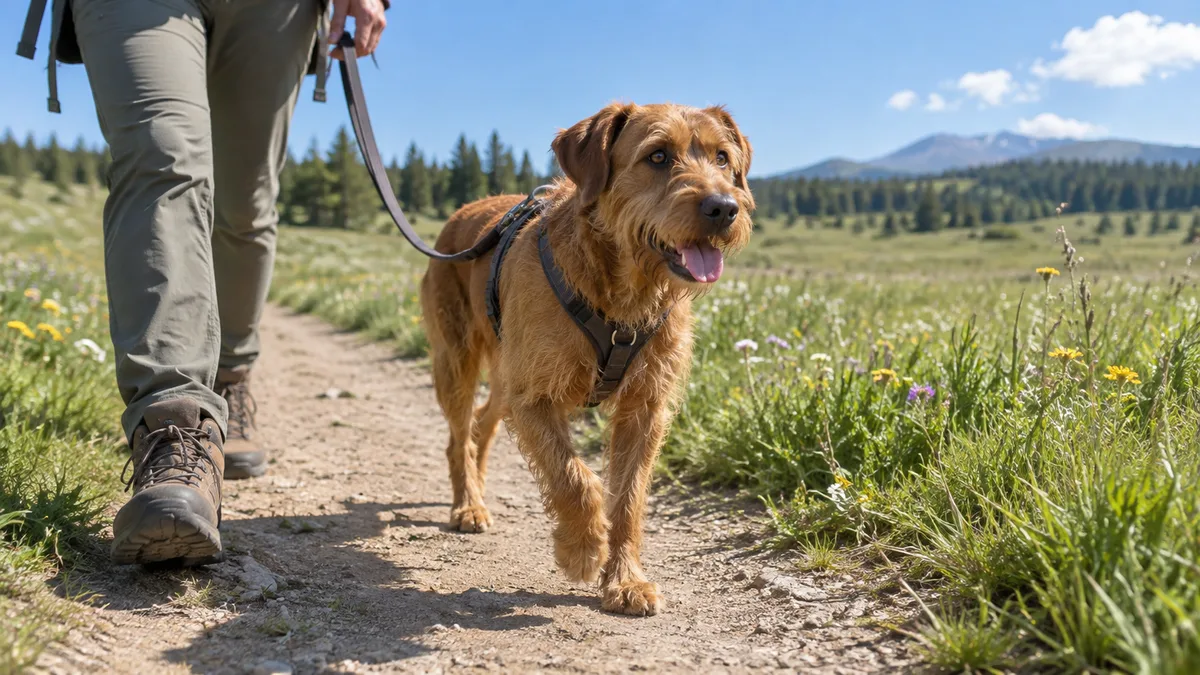
Most dogs love the idea of a hike more than they love the actual hike. Fifteen minutes of enthusiasm, then sore paws, panting in the shade, and a limp the next morning.
The gap between a walk around the block and a four-mile trail with elevation is bigger than most owners expect. Conditioning, gear, water math, and knowing when to turn back are the difference between a great day and a vet visit.
Here are eleven trail-tested tips that keep hikes fun and safe, whether you are starting with flat creek paths or working up to rocky ridge lines.
A four-mile trail with roots, rocks, and a few hundred feet of elevation gain is not the same as a neighborhood walk. Dogs that go from couch to summit in one weekend often end up limping by mile two.
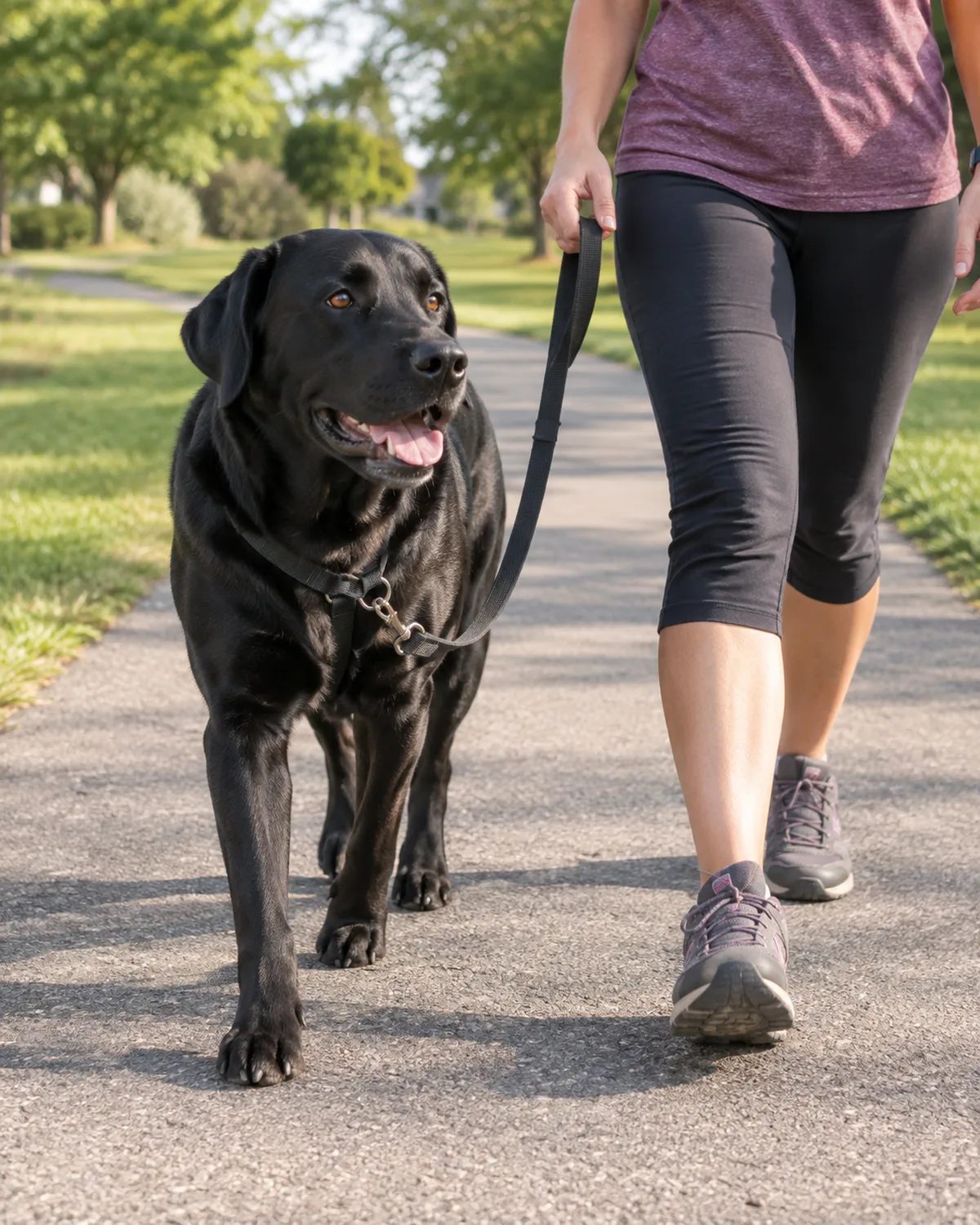
Build up gradually over two to three weeks. Start with longer-than-usual walks on pavement, then move to unpaved paths with gentle inclines. Add distance and elevation in small steps, about ten to fifteen percent more each outing.
Week one: two 30-minute walks on flat gravel or packed dirt
Week two: two 45-minute walks with mild slopes
Week three: one 60- to 90-minute walk on a real trail at low elevation
This is also the window where you spot joint issues, pad tenderness, or breathing problems that are easy to miss on a short block walk. A dog that tires after 20 minutes on flat ground is not ready for a mountain loop.
Hiking is a natural extension of your dog's regular exercise routine, but the jump in intensity means conditioning first, trail second.
Pick a Dog-Friendly Trail That Matches Your Dog
Not every trail allows dogs, and not every dog-friendly trail suits every dog. A five-pound dog with short legs and a flat face needs a different trail than a 60-pound dog built for endurance.
Check three things before you drive to the trailhead:
Dog policy: some parks ban dogs entirely, some require leashes, some allow off-leash in certain zones. National parks in the US generally restrict dogs to paved areas and campgrounds, while most national forests and BLM land allow leashed dogs on trail.
Trail surface: packed dirt and pine needle paths are easy on paws. Loose scree, sharp rock shelves, and exposed root networks are harder. Small dogs struggle with big step-ups between boulders.
Distance and elevation: match the trail to your dog's current fitness, not the fitness you hope they will have by the turnaround point.
Read recent trail reviews from other dog owners. They will mention water crossings, scramble sections, and spots where a leashed dog will struggle to navigate safely.
A short, shaded loop with a creek crossing is worth more to your dog than a long exposed ridge hike that sounds impressive on paper.
Pack the Right Gear for Dog and Human
Gear for hiking with dogs does not need to be complicated, but it does need to be intentional. Forgetting water or waste bags on a trail with no trash cans turns a good day into a problem.
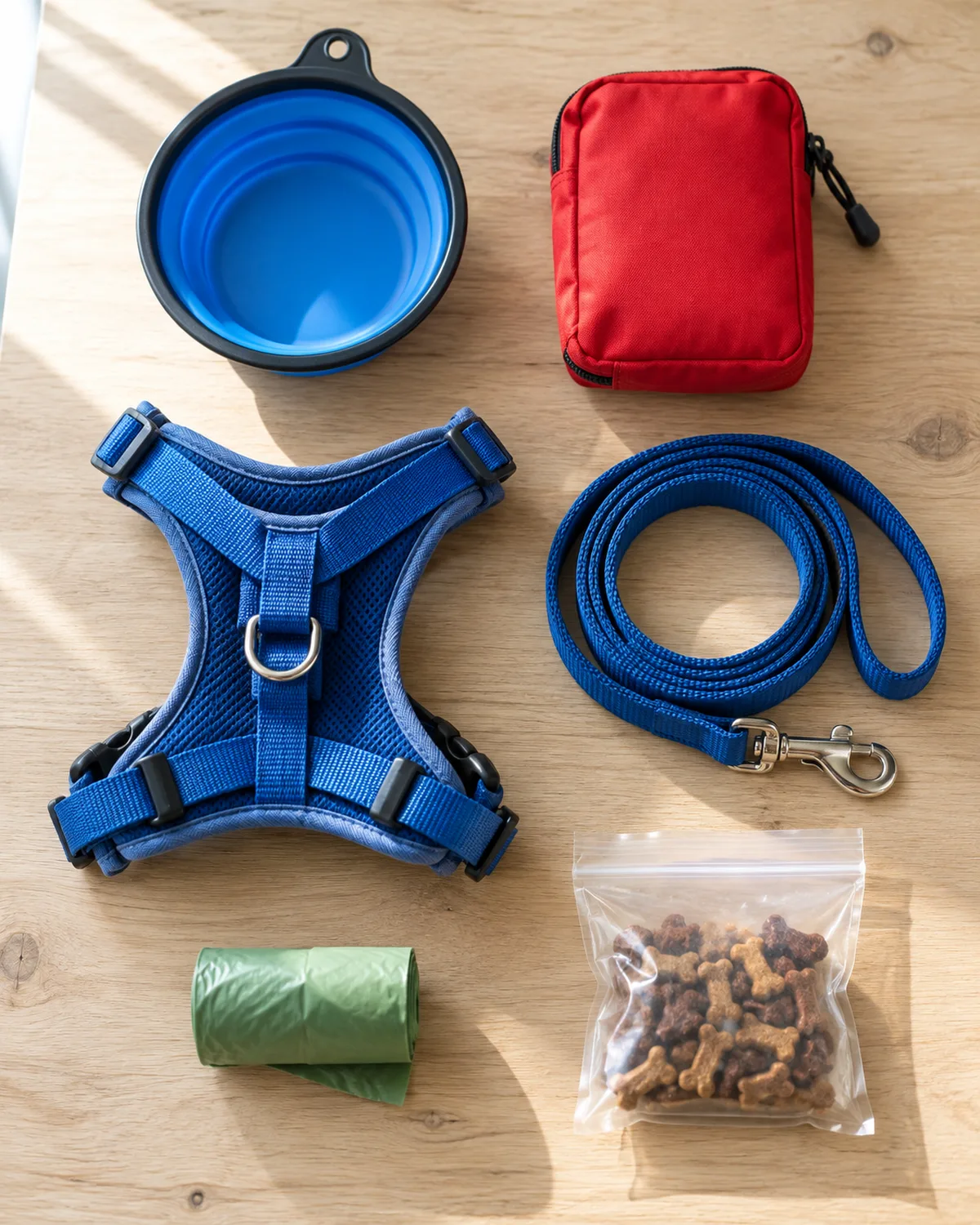
The essentials fit in any daypack:
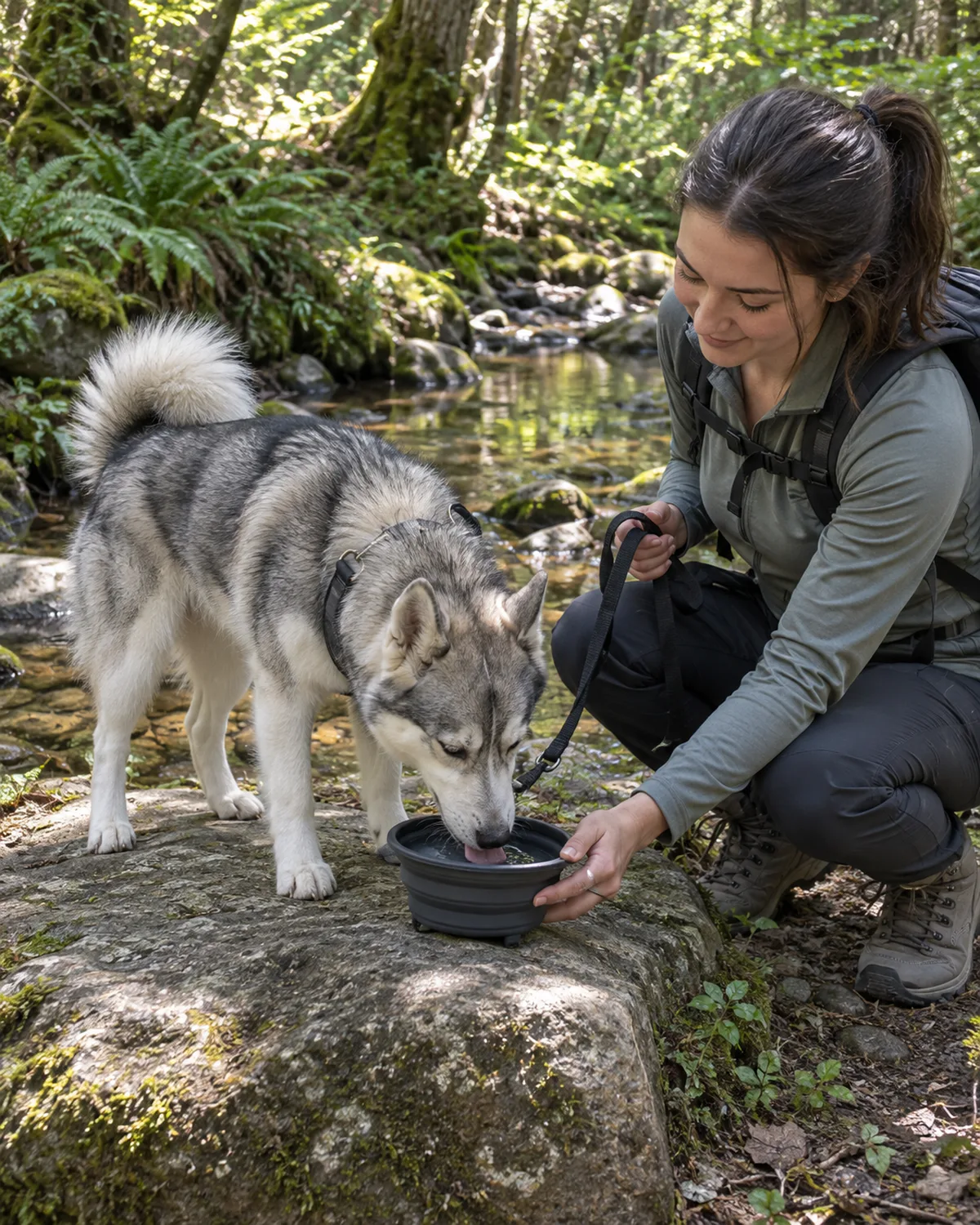
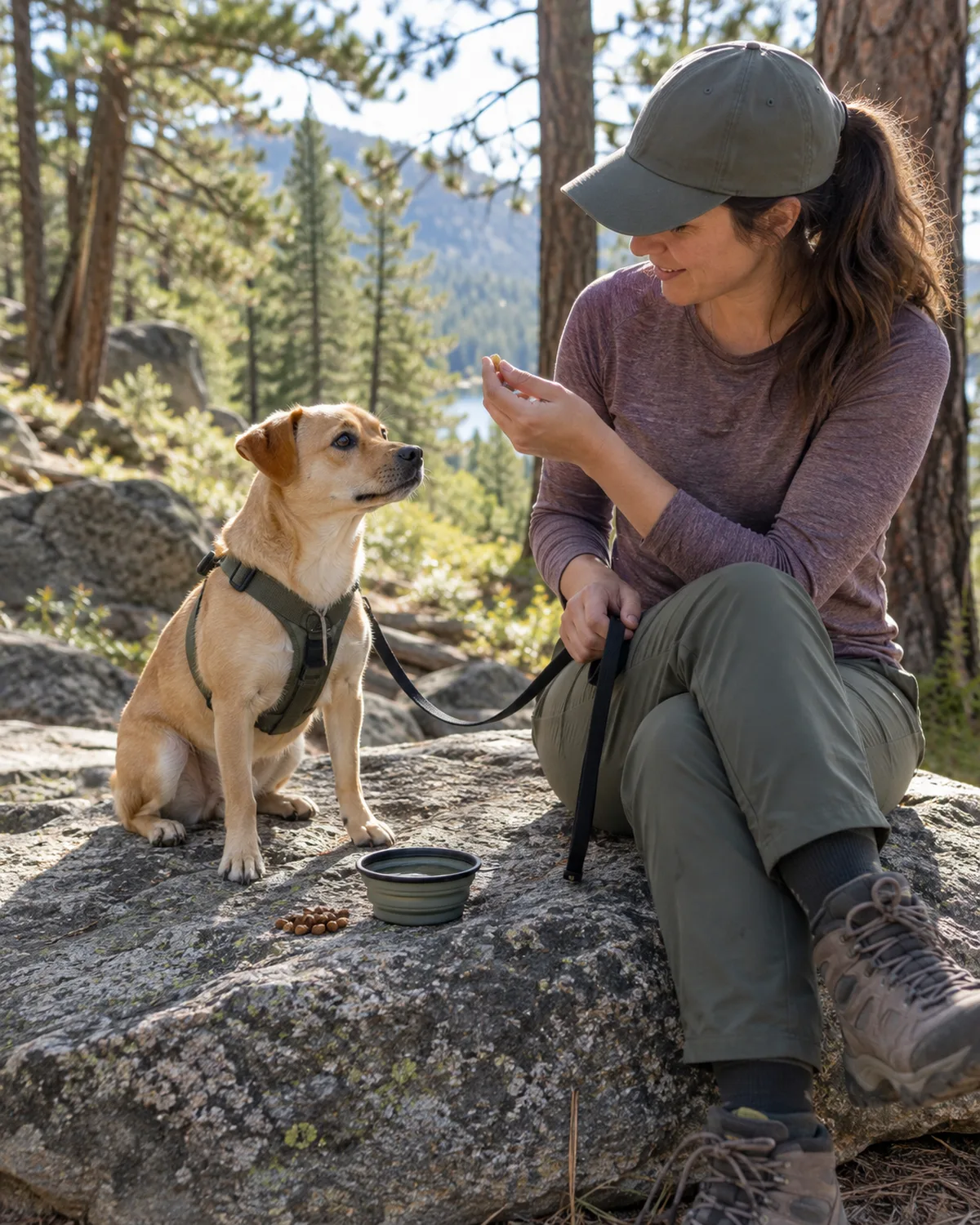
Collapsible water bowl: dogs cannot drink from a bottle or stream safely on the move
Extra water (1 oz per pound per hour): streams may be dry, stagnant, or contaminated
Leash, 6-foot fixed length: retractable leashes snag on rocks and give no control on narrow trails
Harness with a front clip: distributes pull force across the chest instead of the neck
A few more items round out the kit:
Waste bags and a sealable carry pouch: pack it out on every trail, no exceptions
Small first-aid kit: tweezers, styptic powder, gauze, antiseptic wipes, an emergency bootie
High-value treats: recall reinforcement and mid-hike fuel
Skip the dog backpack until your dog has several hikes under their belt. Adding weight to an unconditioned dog increases joint stress and slows them down in sections where you want steady movement.
Quick check
Trail-Day Gear Checklist
Water math1 oz of water per pound of body weight per hour of hiking, minimum. A 40-pound dog on a 2-hour hike needs at least 80 oz.
Leash checkFixed 6-foot leash, not retractable. Clip to harness, not collar. Test the clasp before you leave the car.
Exit planKnow the shortest route back to the car from the midpoint. If something goes wrong at mile 3, you do not want to discover the only way out is mile 6.
Protect Paws From Rocks, Heat, and Debris
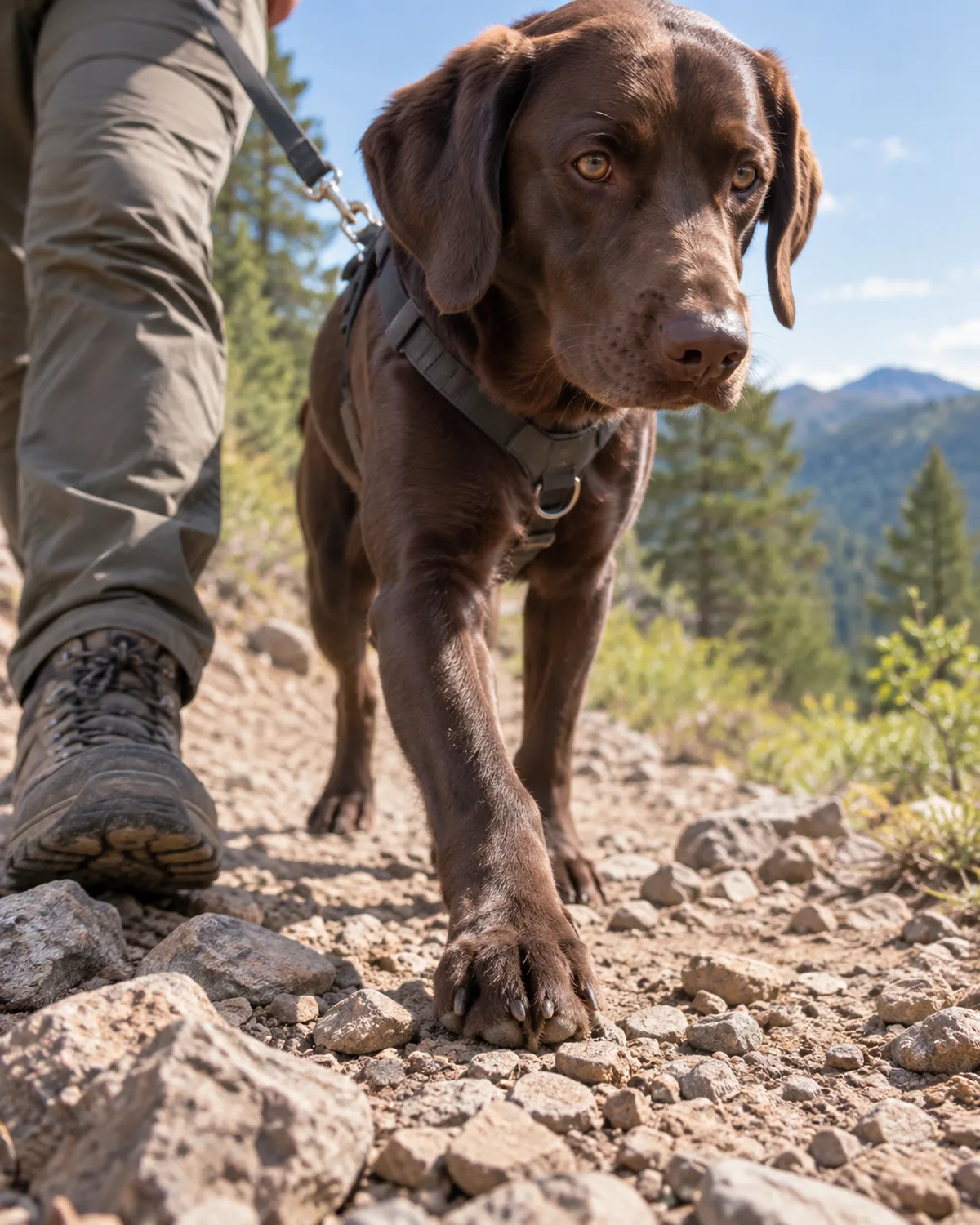
Dog paw pads are tough, but they are not indestructible. Rocky terrain, hot exposed surfaces, and sharp debris on the trail can cut, burn, or bruise pads faster than most owners expect.
Three paw threats to watch:
Sharp rocks and gravel: loose scree and broken slate can slice pads open. If you can feel the edges through your boot sole, your dog feels them more.
Hot surfaces: dark rock, exposed dirt, and wooden boardwalks absorb heat. The five-second hand test applies on trail the same as it does on asphalt. If you cannot hold your palm flat on the surface for five seconds, it will burn pads.
Glass, thorns, and burrs: trailside debris from other hikers and from the trail edge itself. Burrs embed in the fur between pads and cause limping within minutes.
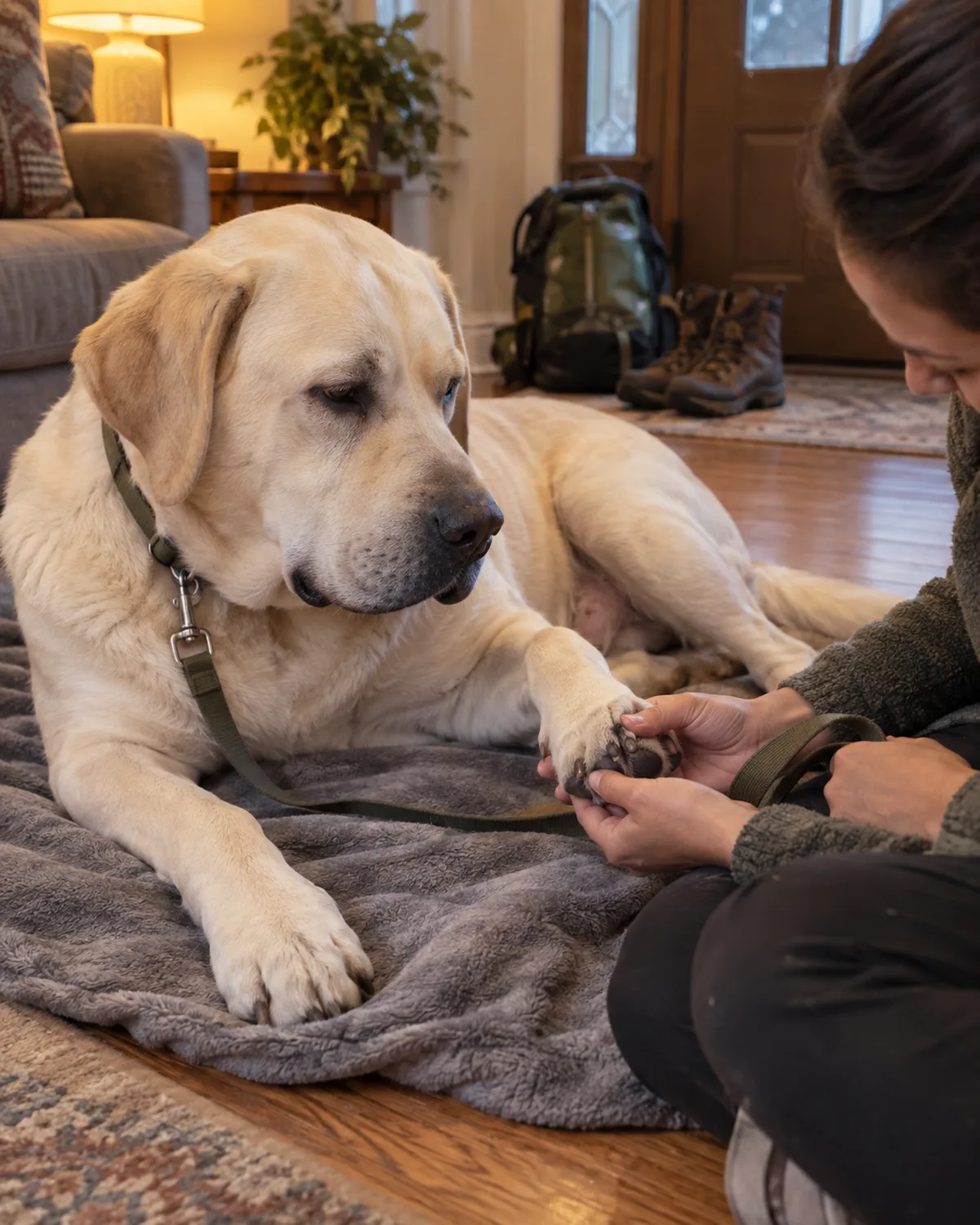
Check paws at every rest stop. Spread the toes and look between the pads for embedded objects, raw spots, or small cuts. Carry styptic powder and a gauze wrap for anything that bleeds.
Dog booties work for some dogs on rough terrain, but they take practice. Try them at home first, then on short walks, then on trail. A dog that has never worn booties will spend the first mile trying to shake them off instead of hiking.
Dehydration on trail is the most common preventable problem when hiking with dogs. Most owners bring enough water for themselves and assume the dog will drink from a creek. Creeks dry up in summer, and standing water carries giardia and leptospirosis.
The baseline formula is straightforward: one ounce of water per pound of body weight per hour of active hiking. A 50-pound dog on a three-hour hike needs at least 150 ounces, which is just over a gallon. That is heavy, but dehydration is worse.
Offer water every 15 to 20 minutes, not just when the dog looks thirsty. By the time a dog is panting hard with thick saliva, they are already behind on fluids.
Use a collapsible bowl, not a squeeze bottle aimed at the mouth. Dogs lap water. They cannot catch a stream from a bottle.
If you plan to refill from a natural source, bring a portable filter rated for giardia cysts. Flowing water over rocks is safer than still pools, but neither is guaranteed clean.
Watch the urine color at rest stops. Pale yellow is fine. Dark yellow or amber means the dog is dehydrated and needs more water and shade before continuing.
Watch for Overheating on Warm-Weather Trails
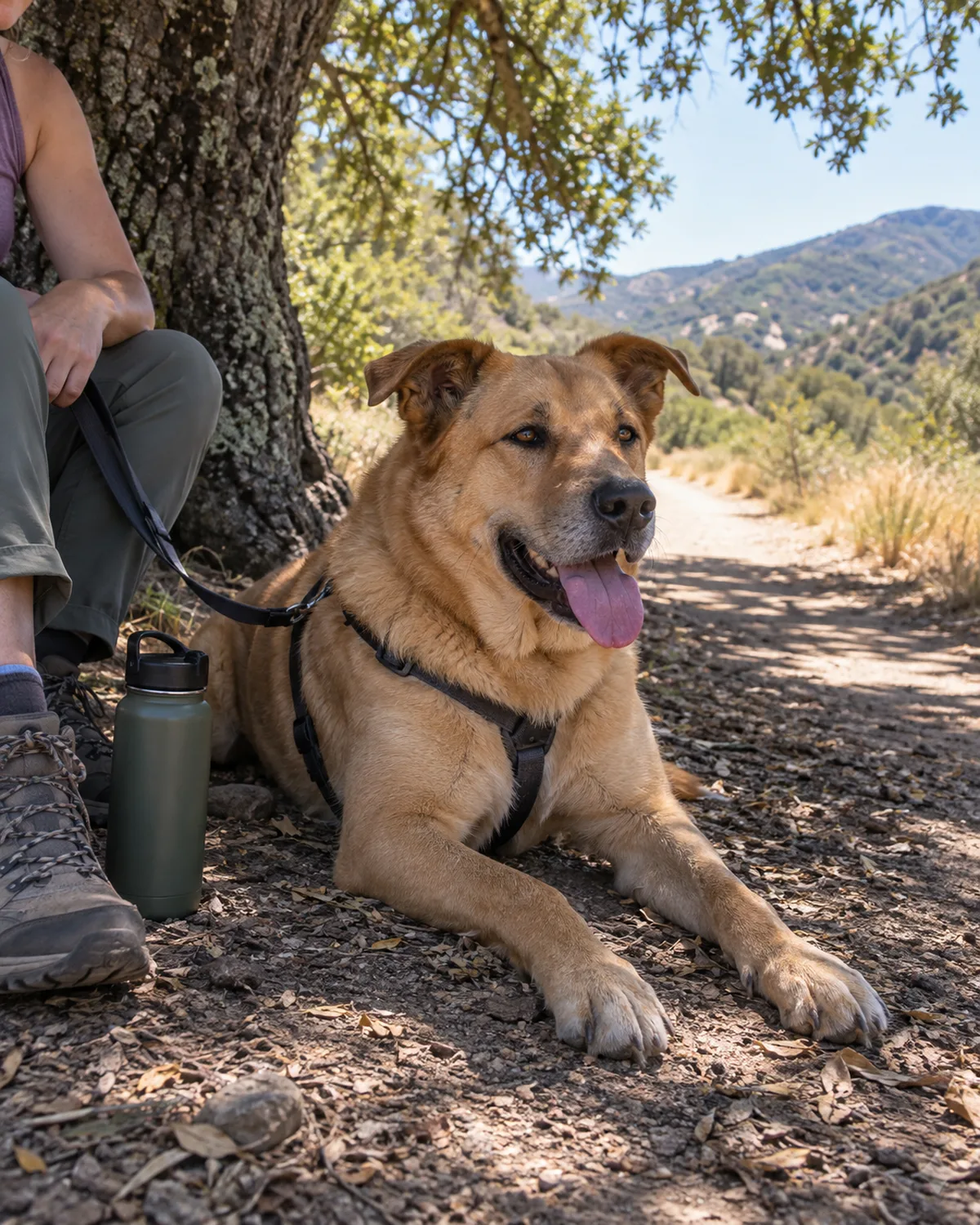
Dogs cool themselves almost entirely through panting. They do not sweat through their skin the way humans do, which means they overheat faster on warm trails, especially in direct sun with no shade.
Early warning signs of overheating:
Heavy rapid panting that does not slow down after a few minutes of rest
Bright red gums and tongue instead of the normal pink
Thick ropy drool instead of thin clear saliva
Stumbling, slowing, or lying down and refusing to get up
Glazed or unfocused eyes
If you see any of those signs, stop immediately. Move to shade, offer cool water in small amounts, and wet the paw pads and belly with cool water. Do not pour ice water over the dog, as the sudden temperature drop can cause shock.
Pro tip
The 60-Second Cool-Down
When your dog starts panting harder than usual on trail, do not wait for the next planned rest stop. Stop right where you are and do this.
Wet the pads and bellySplash cool water on the paw pads, inner thighs, and belly. These are the areas where blood vessels sit closest to the surface. Evaporation pulls heat out faster here than anywhere else.
Wait and watch gumsAfter 60 seconds, check the gum color. If it returns to normal pink and panting slows, resume at a slower pace. If gums stay bright red or the dog seems dazed, turn back and head to a vet.
The safest approach on warm days is to hike early morning or late afternoon, stick to shaded trails, and cut the distance in half. A dog that can handle five miles on a cool overcast day may struggle past two miles in 85-degree heat.
Handle Wildlife Encounters Without Panic
Deer, squirrels, snakes, and the occasional porcupine are part of trail life. A dog that lunges after wildlife puts itself at risk and can pull you off balance on uneven ground.
The response depends on the animal:
Deer and rabbits: the dog will alert and want to chase. Hold the leash firm, keep your body between the dog and the animal if possible, and wait until the animal moves off. Chasing is how dogs get lost in the woods.
Snakes: give wide clearance. Back up the way you came and go around. Dogs that stick their nose toward a rattlesnake get bitten on the face, which swells fast and needs emergency vet care.
Porcupines: do not let the dog approach. Quills embed on contact and require vet removal under sedation in most cases.
Bears or mountain lions: make yourself large, back away slowly, keep the dog close and quiet. Do not run. Check the local wildlife advisory before hiking in bear country and carry bear spray if recommended.
A solid recall command is your best tool on trail. Practice it in low-distraction environments before you rely on it in the woods. A dog that ignores recall around squirrels at the park will ignore it around deer on the trail.
Keep Your Dog on Leash Near Ledges and Other Hikers
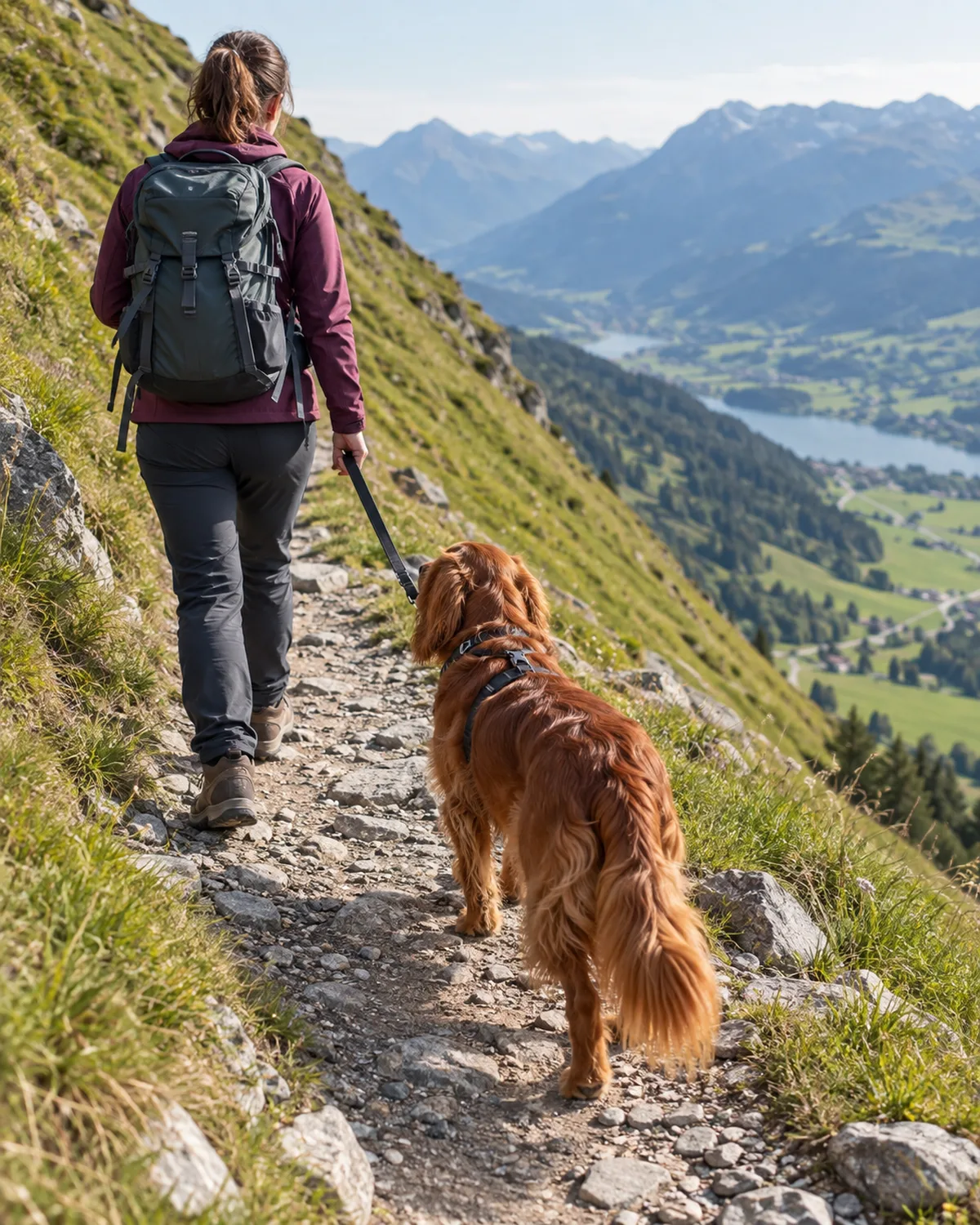
Even in areas that allow off-leash hiking, there are spots where a leash is non-negotiable. Ledges, steep drop-offs, narrow ridge lines, and any section where the trail passes close to a cliff edge require a short leash and steady control.
A dog that bolts after a chipmunk near a drop-off can go over the edge before you react. This is not theoretical. Search-and-rescue teams recover dogs from trail falls every hiking season.
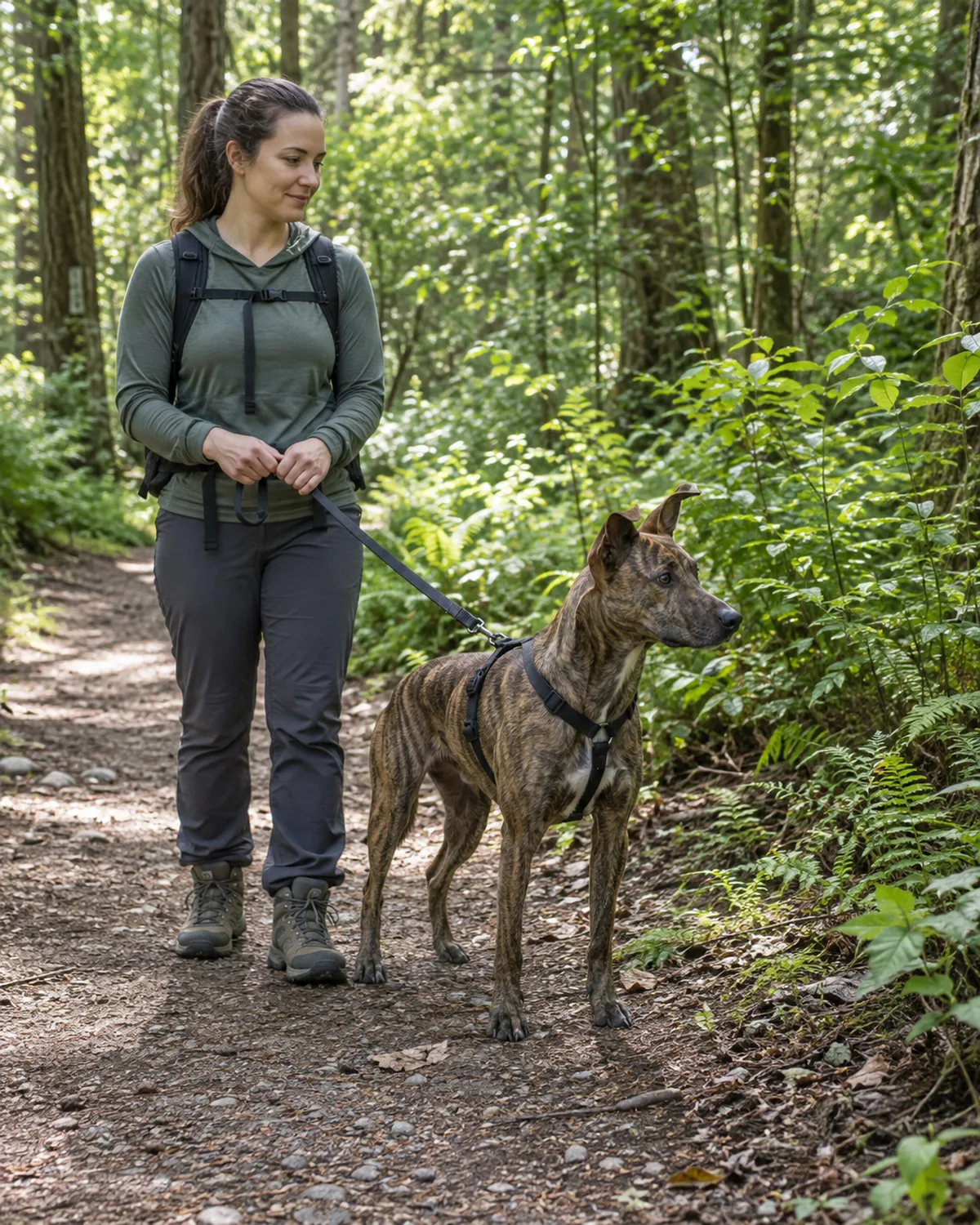
Keep the leash at four to six feet in exposed sections. No retractable leashes on trail, ever.
Walk on the inside of the trail (away from the edge) and keep the dog on the inside with you.
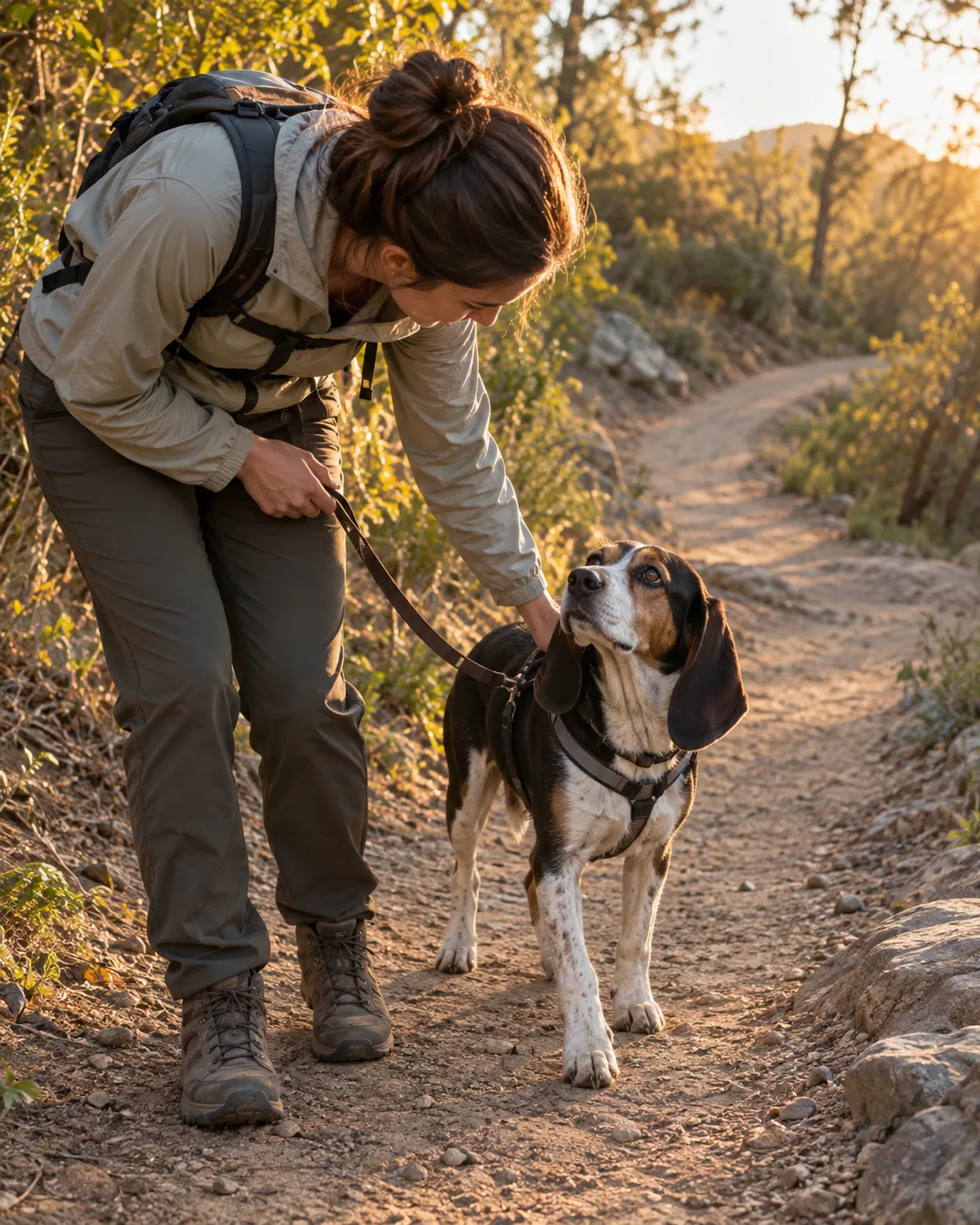
On narrow sections where you pass other hikers, shorten the leash to two feet and step to the side. Not every hiker is comfortable around dogs, and a dog that jumps on a stranger on a narrow trail can knock someone off balance.
Courtesy matters on shared trails. A leashed, well-managed dog makes the case for keeping trails open to dogs. An off-leash dog that charges other hikers or chases wildlife is the reason trails get closed to dogs.
Plan Snacks and Fuel Stops for Longer Hikes
On hikes longer than 90 minutes, your dog needs mid-trail fuel the same way you do. A handful of high-value treats every 30 to 45 minutes keeps energy steady and reinforces good trail behavior.
Good trail snacks for dogs:
Small pieces of cooked chicken or turkey, packed in a sealed bag
Commercial training treats that do not crumble or melt
A few pieces of kibble from their regular food, portioned into a zip-top bag
Avoid anything that needs a lot of water to digest, like bully sticks or dense chews. The dog will need even more water to process heavy protein on the move, and the extra chewing time slows the group down on sections where you want to keep moving.
Save this
11 Hiking With Dogs Essentials
1Build Fitness FirstTwo to three weeks of longer walks before the first real trail.
2Match the TrailCheck dog policy, surface, distance, and elevation before you go.
4Protect the PawsCheck between pads at every rest stop for cuts and debris.
5Water Every 20 MinOne ounce per pound per hour, minimum. Do not rely on streams.
6Watch for HeatHeavy panting, red gums, thick drool — stop and cool immediately.
7Wildlife ProtocolHold leash, back away, never chase. Solid recall is your best tool.
8Leash Near LedgesShort leash on exposed sections, always on the inside of the trail.
9Mid-Hike FuelSmall treats every 30 to 45 minutes on hikes longer than 90 minutes.
10Know When to StopLimping, refusing to move, or heavy panting that will not stop — turn back.
11Post-Hike CheckPaws, ears, coat, hydration, and 24-hour rest before the next outing.
pawliqa.com
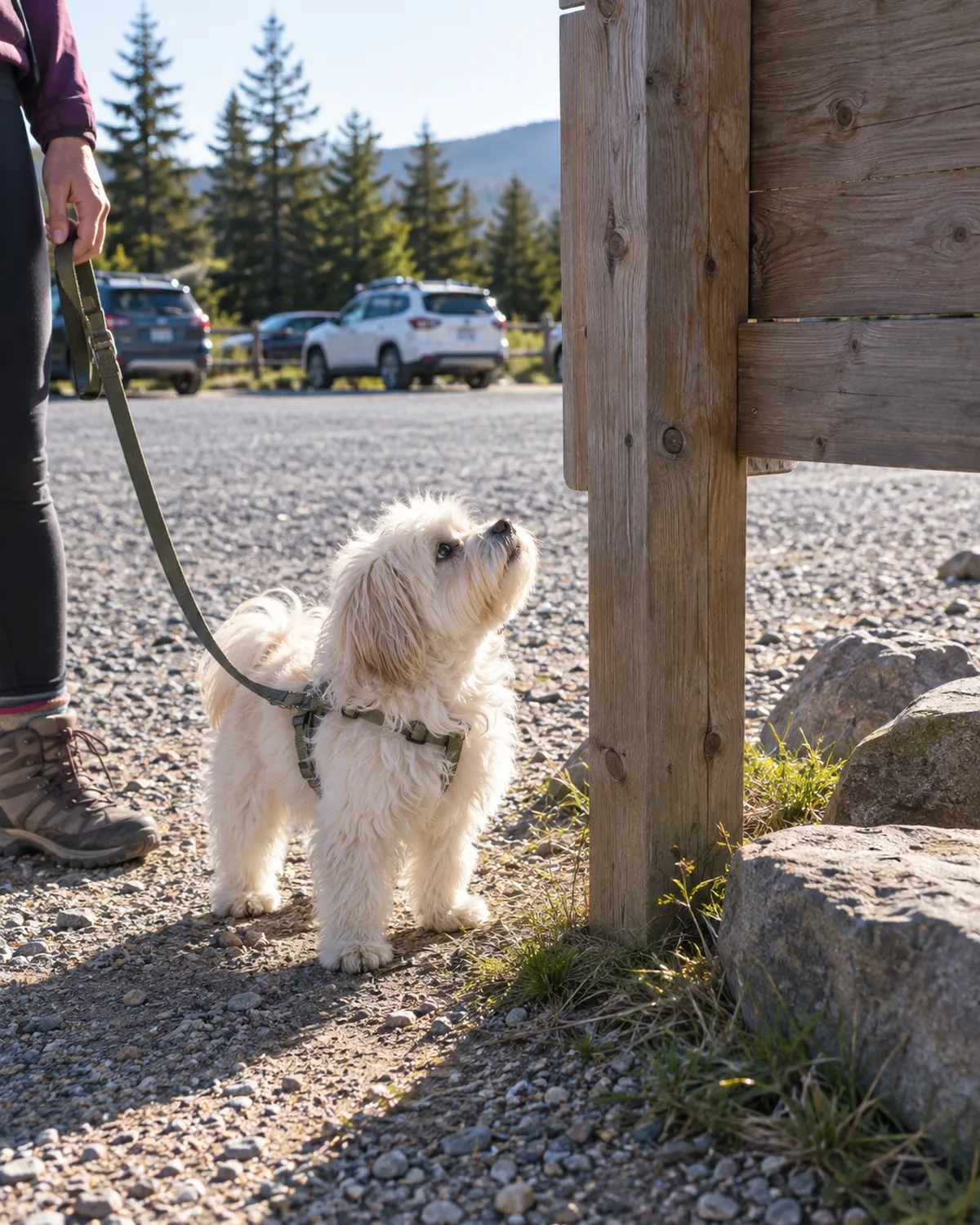
Plan your rest stops before you start walking. Every 30 to 45 minutes, find a shaded flat spot, offer water, hand out a few treats, and let the dog sniff around for a minute or two. These micro-breaks prevent the crash that comes from pushing through without stopping.
Know the Signs That Say Turn Back Early
Turning back early is not quitting. It is the single most important skill when hiking with dogs, and the one most owners skip because they want to reach the summit or close the loop.
Turn back immediately if you see:
Limping or favoring a paw: could be a cut, a bruise, a thorn, or a strain. Continuing makes it worse.
Refusing to move: a dog that lies down and will not get up is telling you something. They are either in pain, overheated, or too exhausted to continue.
Heavy panting that does not improve after five minutes of rest, shade, and water
Vomiting or diarrhea on trail: could be from contaminated water, overheating, or something they ate from the ground
Sudden anxiety or cowering: thunderstorms approaching, a scent they find threatening, or pain they cannot communicate
The turnaround rule is simple: if any of those signs appear, the hike is over. Walk back at the dog's pace, not yours. Carry a small dog if needed. Drive straight to the vet if limping worsens, gums stay pale or bright red, or the dog seems disoriented.
Most trail emergencies are preventable by turning back 30 minutes earlier than the owner wanted to.
Do a Post-Hike Check and Recovery Routine
The hike does not end at the car. A quick post-hike check catches problems that would otherwise show up as a vet bill two days later.
Run through this checklist within an hour of getting home:
Paw pads: flip each paw and check for cuts, raw spots, embedded thorns, or cracked pads. Rinse with clean water and dry between the toes.
Ears: trail debris, seeds, and moisture get trapped in floppy ears. Check inside the ear flap and the canal opening. Wipe gently with a damp cloth.
Coat and skin: run your hands through the entire coat, feeling for ticks, burrs, foxtails, and any lumps or tender spots the dog flinches at.
Hydration: offer fresh water and a small meal. If the dog refuses water or food for more than an hour after the hike, watch closely for other signs of distress.
Rest: give the dog a full 24 hours of low activity after a strenuous hike. No fetch, no rough play, no long walk the next morning. Muscles need recovery time the same way yours do.
If the dog seems stiff the next day, that is normal mild soreness and should clear within 24 to 48 hours. If the stiffness gets worse, shifts to one leg, or the dog refuses to put weight on a paw, call your vet.
A good post-hike routine builds trust. The dog learns that coming home from the trail means comfort, food, and rest, which makes them more willing to get in the car for the next one.
P
About the author
Jess Calloway
Jess Calloway edits Pawliqa, where she shares dog care, grooming, training, and new-owner tips — plus DIY and pet-friendly home ideas — for anyone who wants a happy, well-cared-for dog. As a dog mom to three very different dogs, she writes the honest, tested version of what actually works. Every guide is image-led and reviewed for clarity, usefulness, image accuracy, and Pinterest-to-page alignment before it goes live. Visit the About page.
Frequently Asked Questions
How far can a dog hike in a day?
A healthy, conditioned adult dog can handle three to eight miles depending on breed, size, fitness level, and terrain. Start with shorter distances and build up gradually. A dog that has never hiked before should not attempt more than two to three miles on the first outing.
What age can a puppy start hiking?
Most vets recommend waiting until the puppy is at least 12 months old and growth plates have closed, which happens later in large breeds. Short, flat walks on easy terrain are fine earlier, but sustained trail hiking with elevation should wait until the skeletal system is mature.
Do dogs need hiking boots?
Not always, but boots help on rough rocky terrain, hot surfaces, and icy winter trails. The key is getting the dog used to them at home first. Most dogs need several practice sessions before they walk normally in boots.
How do I know if my dog is too tired to keep hiking?
Watch for slowing pace, lying down at rest stops and refusing to get up, heavy panting that does not recover, and limping. If any of those appear, the hike is over. Walk back at the dog's pace.
Can I let my dog drink from streams on the trail?
Natural water sources can carry giardia, leptospirosis, and blue-green algae. Carry your own water or use a portable filter rated for giardia cysts. Flowing water over rocks is generally safer than still pools, but neither is guaranteed clean.
Dog beds collect more than fur. This guide covers machine-washable beds, hand washing, memory foam inserts, proper drying, and the quick spot-clean tricks that keep a bed fresh between full washes.