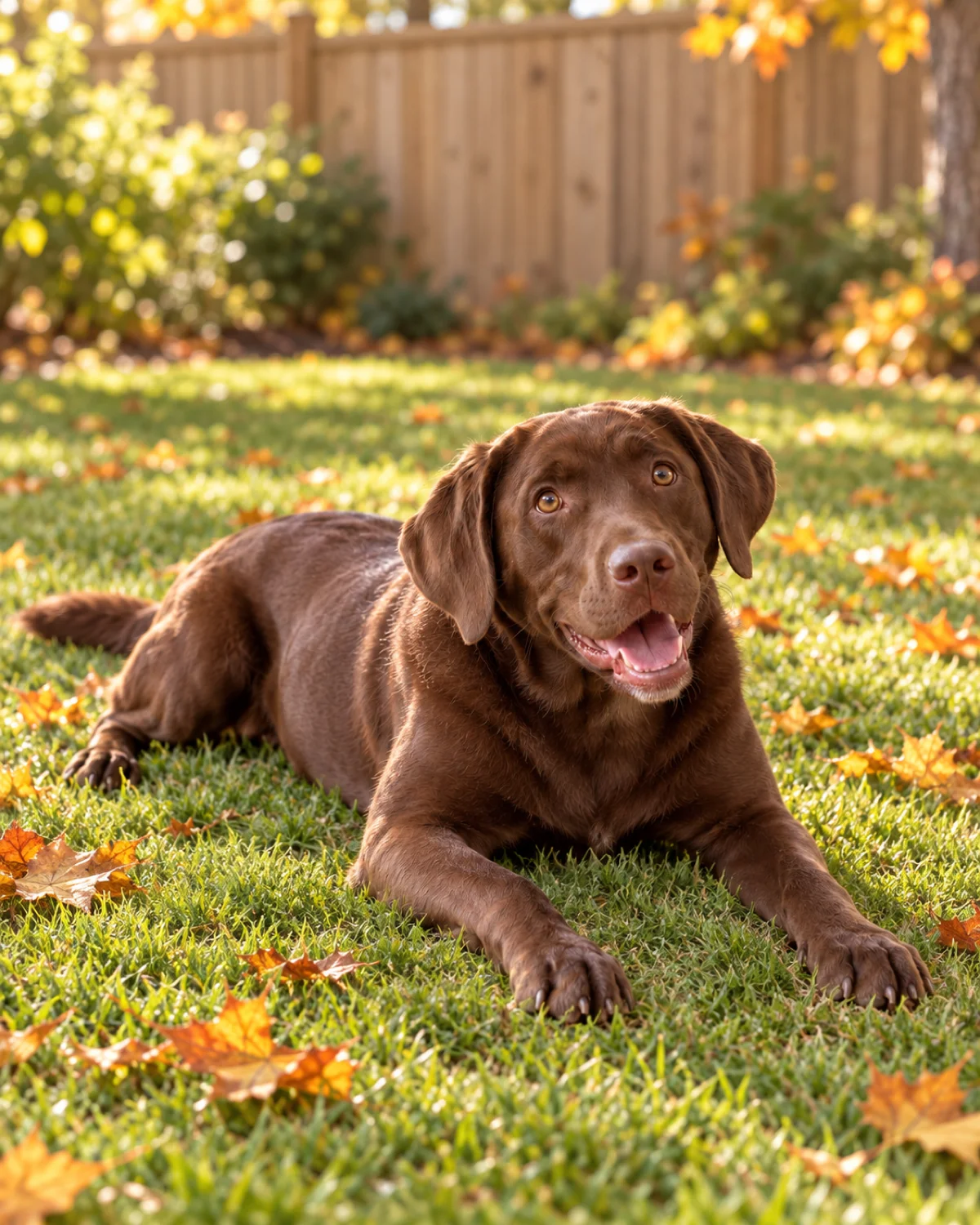
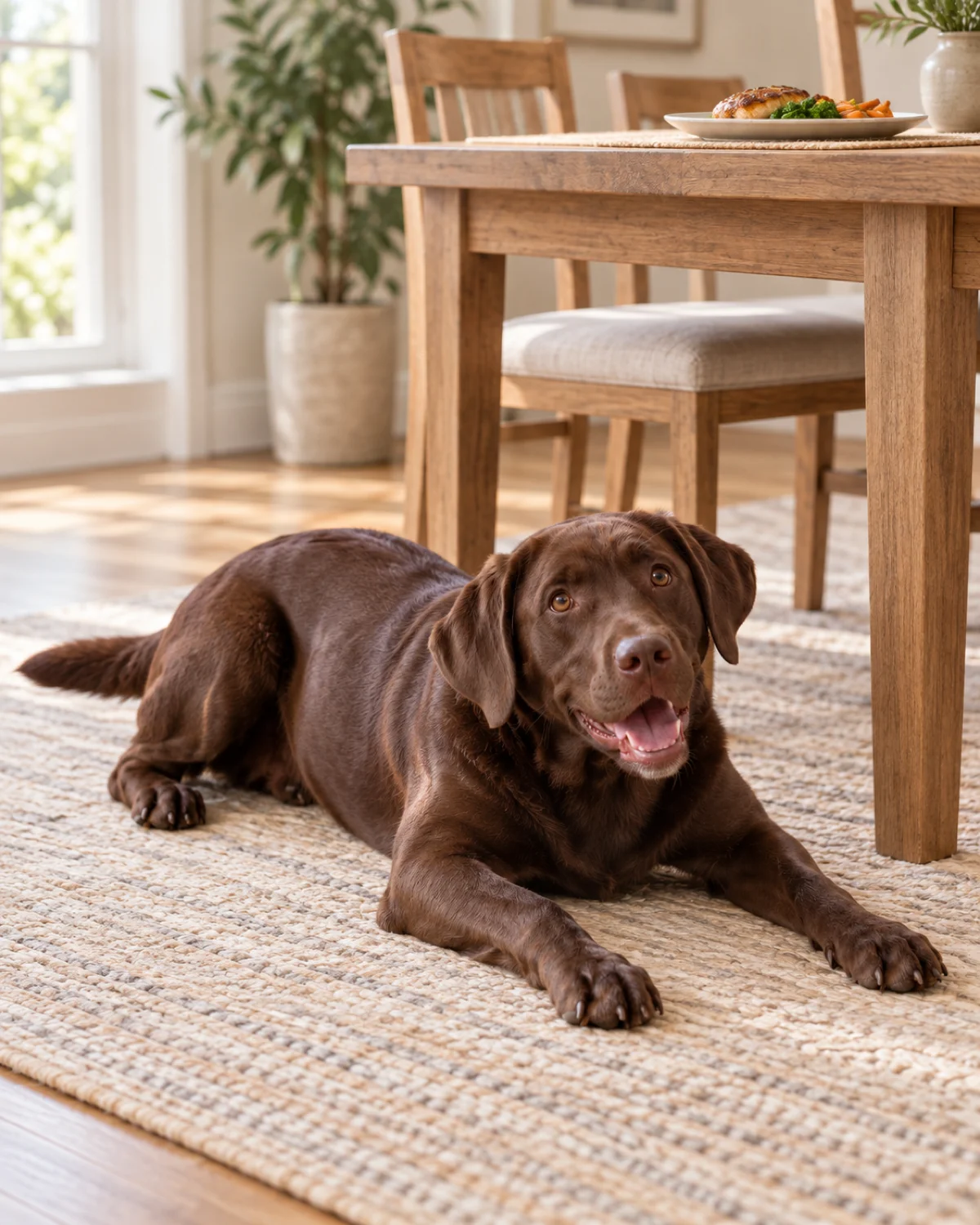
Most dogs learn to sit in a single afternoon. Down is the command that stalls everyone for weeks.
The problem is not your dog. Sitting is natural — lying flat on a hard floor with someone standing over them takes trust and a clear signal that good things happen when their belly touches the ground.
These sixteen steps break it into small, repeatable pieces — from a simple treat lure on a quiet floor to a calm down-stay while you eat dinner.
In This Guide
16 Steps to Teach Your Dog to Lay Down
The down command is a chain of smaller skills — luring, marking, cueing, and proofing. These sixteen steps build each piece in order so your dog drops into a confident, relaxed down on any surface in any room.
Down builds on sit. If your dog does not have a reliable sit yet, start there first — then come back here.
Ready to startYour dog can hold a sit for at least three seconds and will follow a treat held near their nose. Start at Step 1.
Needs sit firstIf your dog pops out of sit the moment you move your hand, work on how to teach a dog to sit before starting down.
Puppy under 12 weeksPuppies this young can learn the lure motion, but keep sessions under two minutes and skip duration work until they are older.
Older dog or rescueThe same steps work at any age. Go slower on the trust-building steps and use extra-high-value treats to build positive associations with the position.
1. Why the Down Command Is Worth Teaching Early
Down is not just another trick in the rotation. It is the command that makes the difference between a dog who can settle during dinner and a dog who circles the table begging for scraps.
A reliable down does three things that sit cannot:
It is harder to break. A sitting dog can pop up and bolt in a fraction of a second. A dog lying flat has to shift weight, push up, and reorient — that extra half-second of effort is enough time for you to redirect.
It naturally calms arousal. The physical position of lying down triggers a mild relaxation response. Dogs who practice extended downs become noticeably calmer in high-stimulation environments.
It transfers everywhere. Once your dog learns down at home, you can use it at the vet, in a coffee shop, at a friend's house — anywhere you need your dog to hold still and stay relaxed.
Start early if you have a puppy. The lure method works from about ten weeks old, and puppies who learn down young tend to offer it voluntarily when they want something. That is a much better default behavior than jumping.
2. Set Up a Comfortable Floor Surface and Grab Soft Treats
Down training has one requirement that other commands do not: your dog needs to feel comfortable lying flat on the floor. A cold tile surface or a slick hardwood floor can make dogs refuse to drop their belly down, and you will spend the whole session fighting a problem that has nothing to do with training.
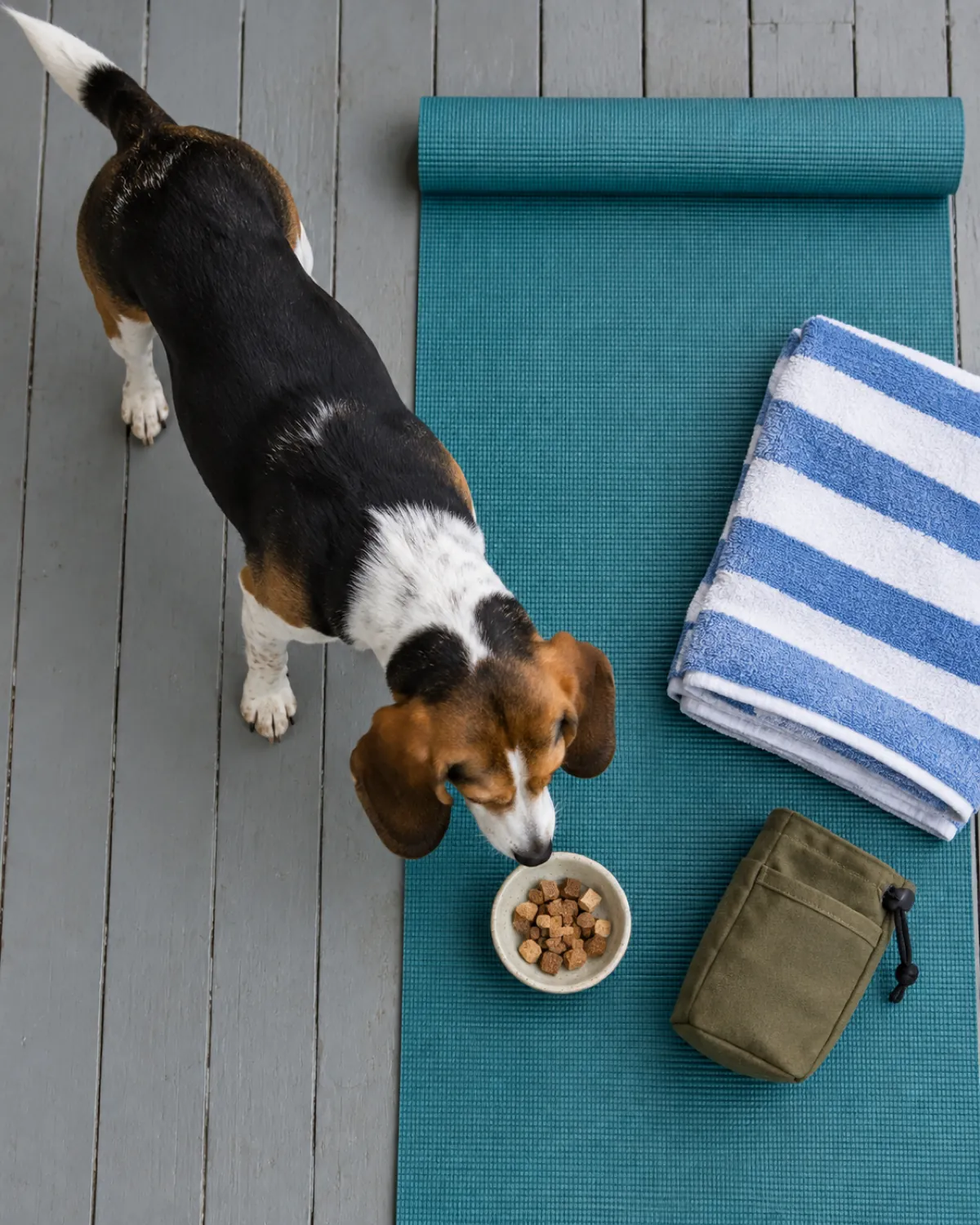
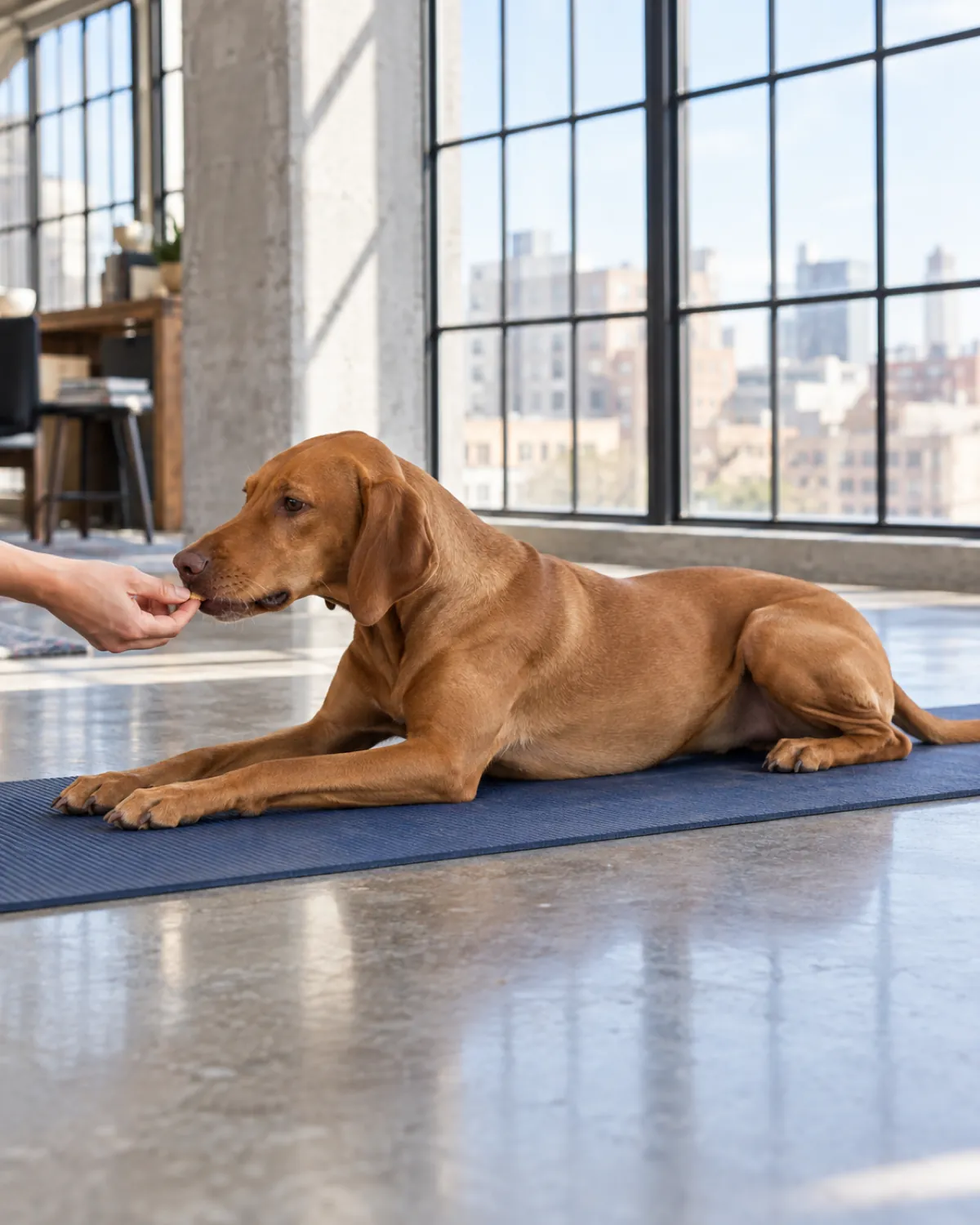
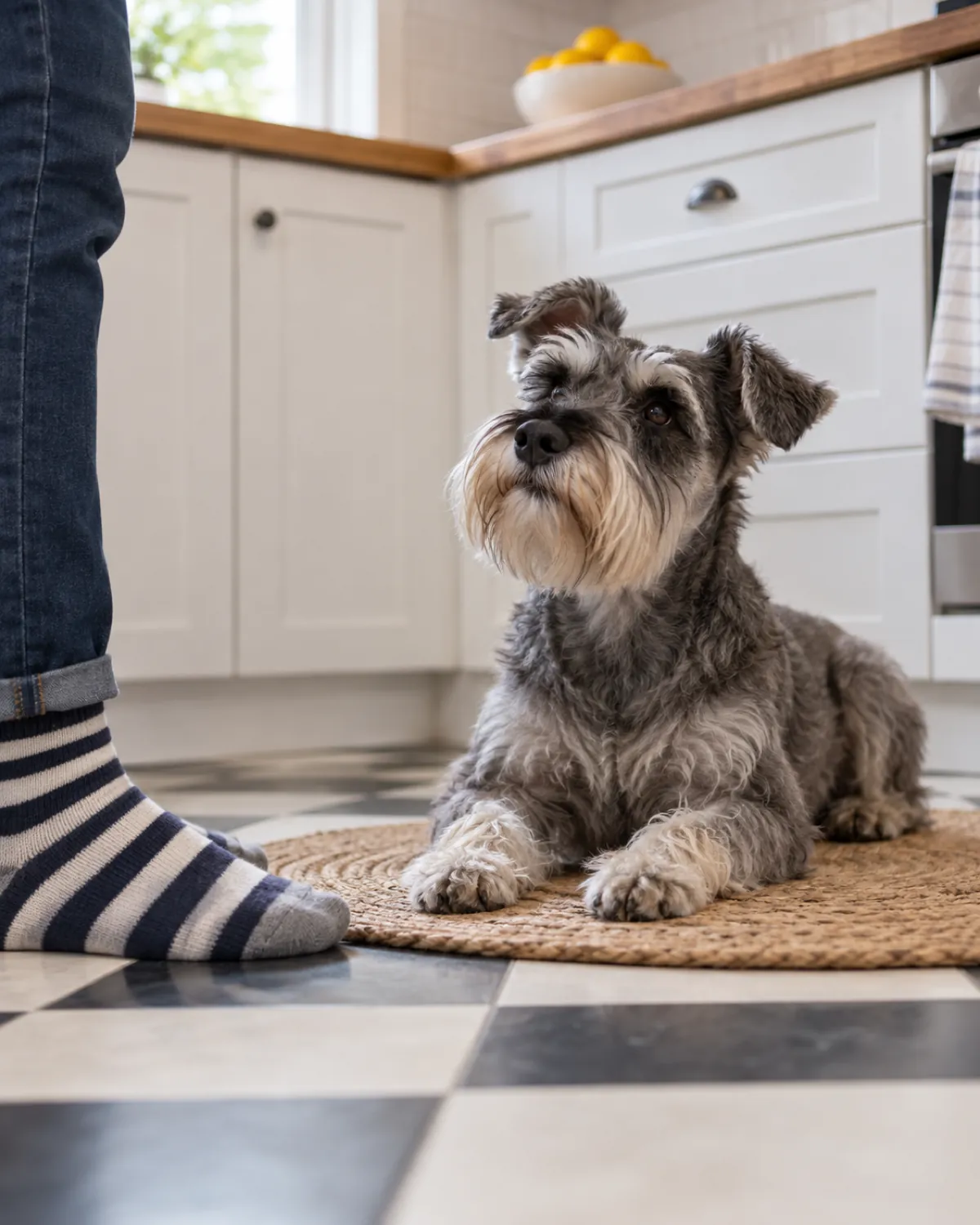
Lay down a yoga mat, a bath towel, or a thin dog bed in your training area. The surface should be large enough for your dog to lie fully stretched out without any paws hanging off the edge. This becomes the target — and later, you can fade it or move it to new locations as a portable "down spot."
For treats, pick something soft enough that your dog can swallow it in one second flat. You will be holding the treat close to your dog's nose and drawing it toward the floor in a slow L-shaped path, so anything crunchy creates a chewing pause right when you need your dog focused on the motion. Freeze-dried liver, tiny cheese cubes, or pea-sized commercial training treats all work well.
Keep the treats in a pouch behind your hip or in a small bowl on a nearby table — not in an open bag on the floor where your dog can see and obsess over the supply.
Ground Rules
4 Rules Before You Start Training Down
Short sessionsFive minutes maximum. Three perfect reps beats twenty sloppy ones. Quit while your dog is still engaged.
No pushingNever push your dog into a down. It breaks trust, creates a negative association, and does not teach them to choose the position.
Mark the instantThe reward must come within one second of belly touching the ground. Delayed rewards confuse the dog about which behavior earned the treat.
End on successAlways stop after a good rep. If your dog is struggling, make the next rep easier so you can end with a win.
3. Pick a Quiet Distraction-Free Training Spot
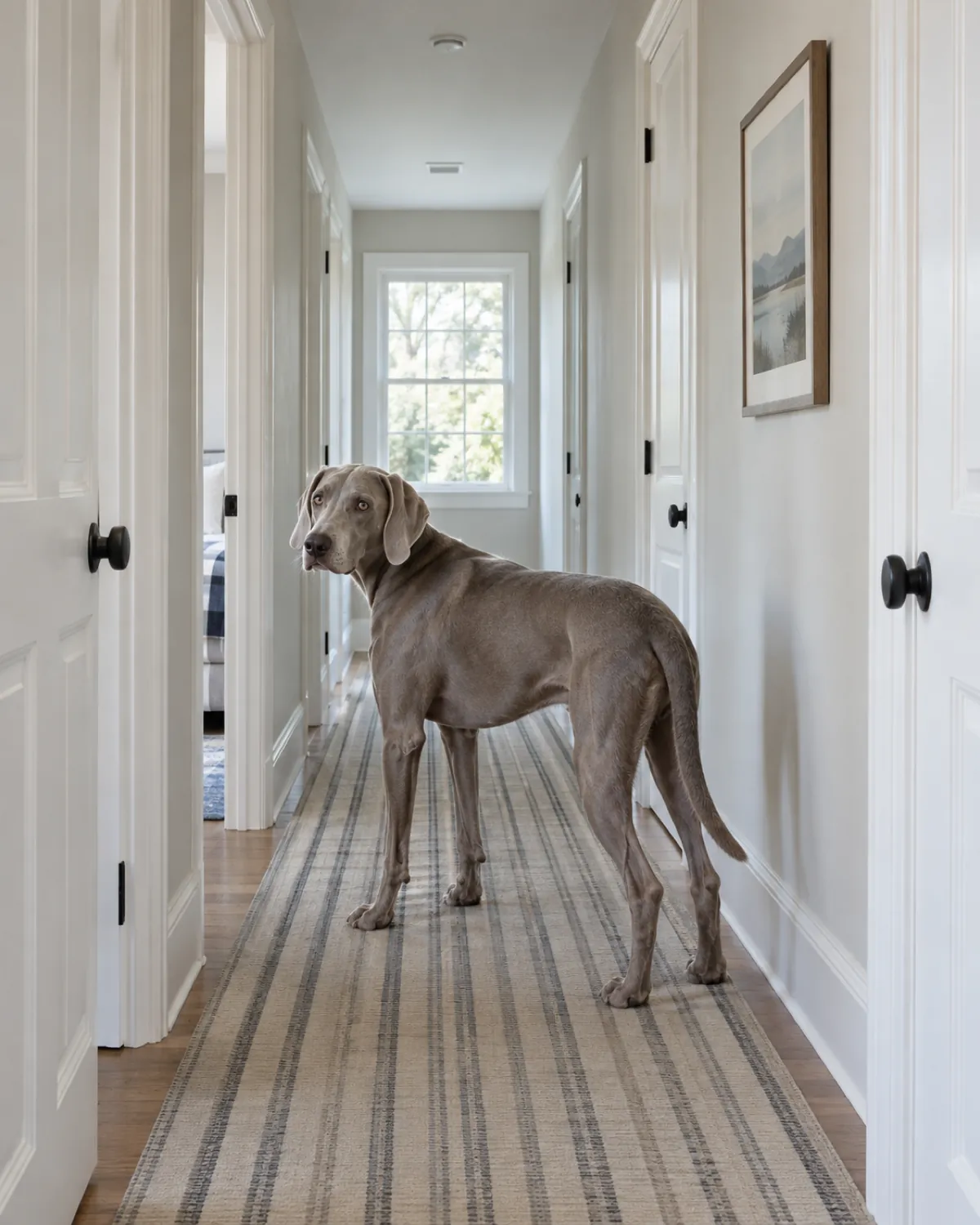
The first few sessions should happen in the most boring room you have. No other pets, no kids running through, no TV playing in the background.
Your dog needs to give you their full attention during the lure phase, and every distraction makes that harder. A quiet hallway, a spare bedroom, or a corner of the living room during a calm moment all work.
The floor surface matters more than you think. Most dogs resist lying down on cold tile or slippery hardwood because the position feels unstable. A carpet, a yoga mat, or even a folded towel on the floor gives your dog traction and warmth under their belly.
You will move to busier locations later — that is what proofing is for. Right now, set the environment up so success is almost guaranteed.
4. Start With Your Dog in a Sit Position
Down is easiest to teach from a sit because the dog is already halfway there. From a stand, they have to fold both the front and the rear at the same time, which is a much harder coordination task for a beginner.
Ask your dog to sit. If they do not have a reliable sit yet, go back and build that first — a shaky sit makes the lure step nearly impossible because your dog will stand up the moment your hand moves.
Once they are sitting, take a breath. You want your dog to be calm and focused, not vibrating with anticipation. If they are already whining or pawing at you, wait for a quiet moment before you move to the next step.
If your dog already knows basic dog commands, you can use sit as a warm-up rep to get their brain into training mode before introducing the lure.
5. Use a Treat Lure to Guide the Nose Toward the Floor
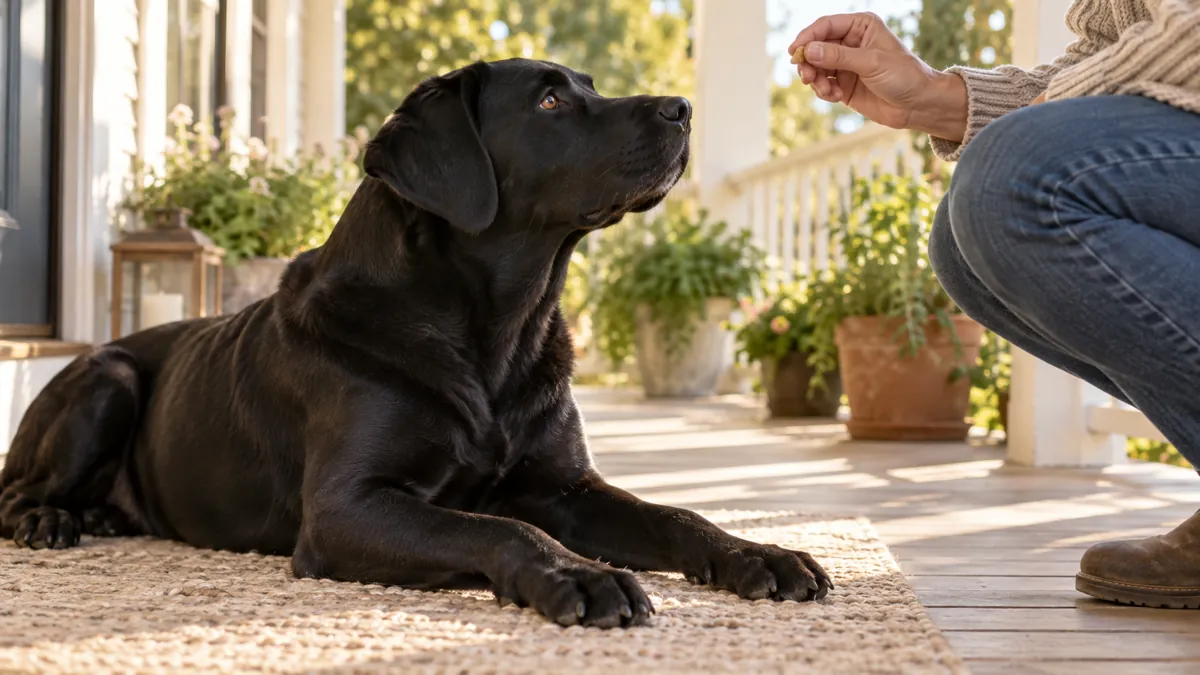
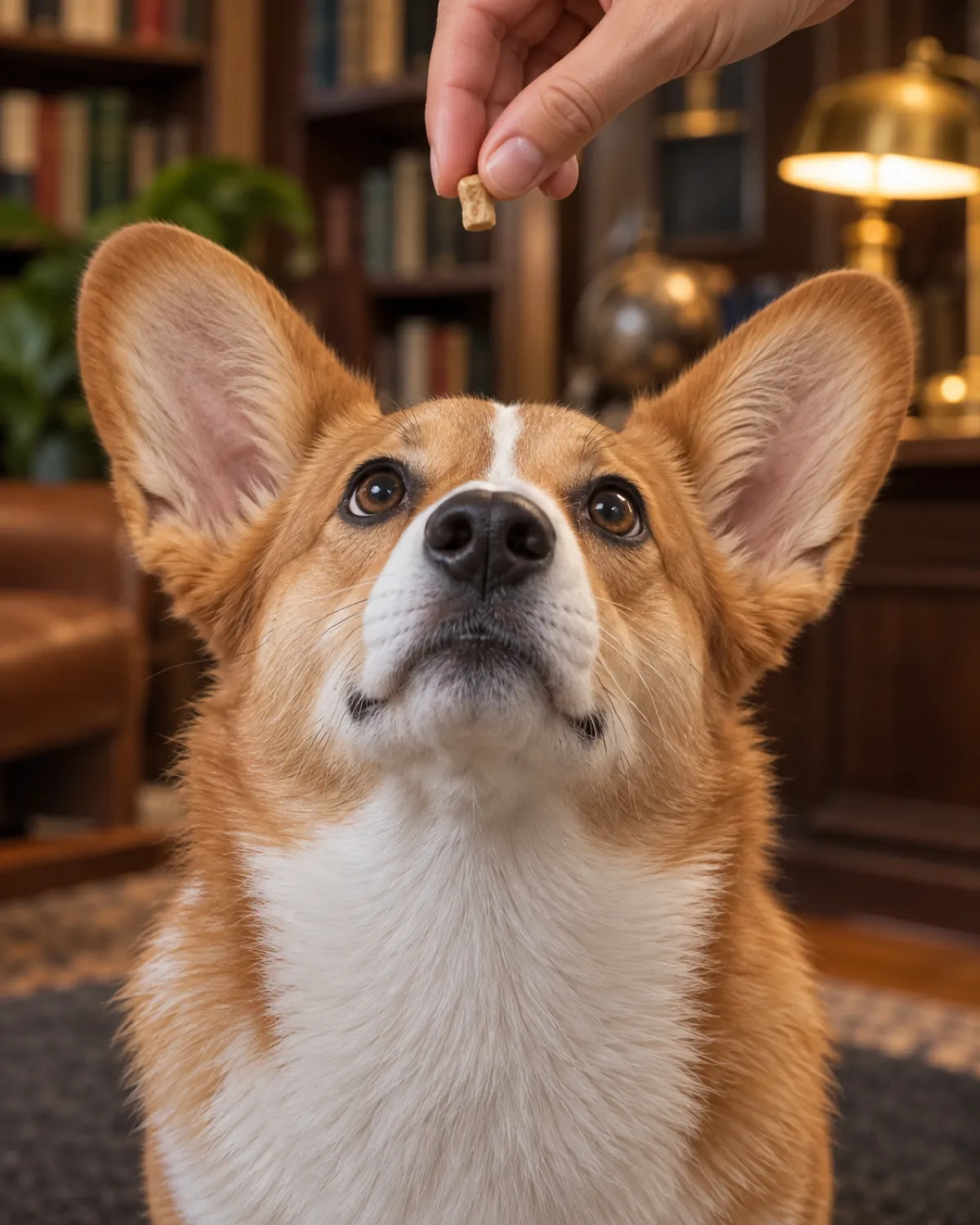
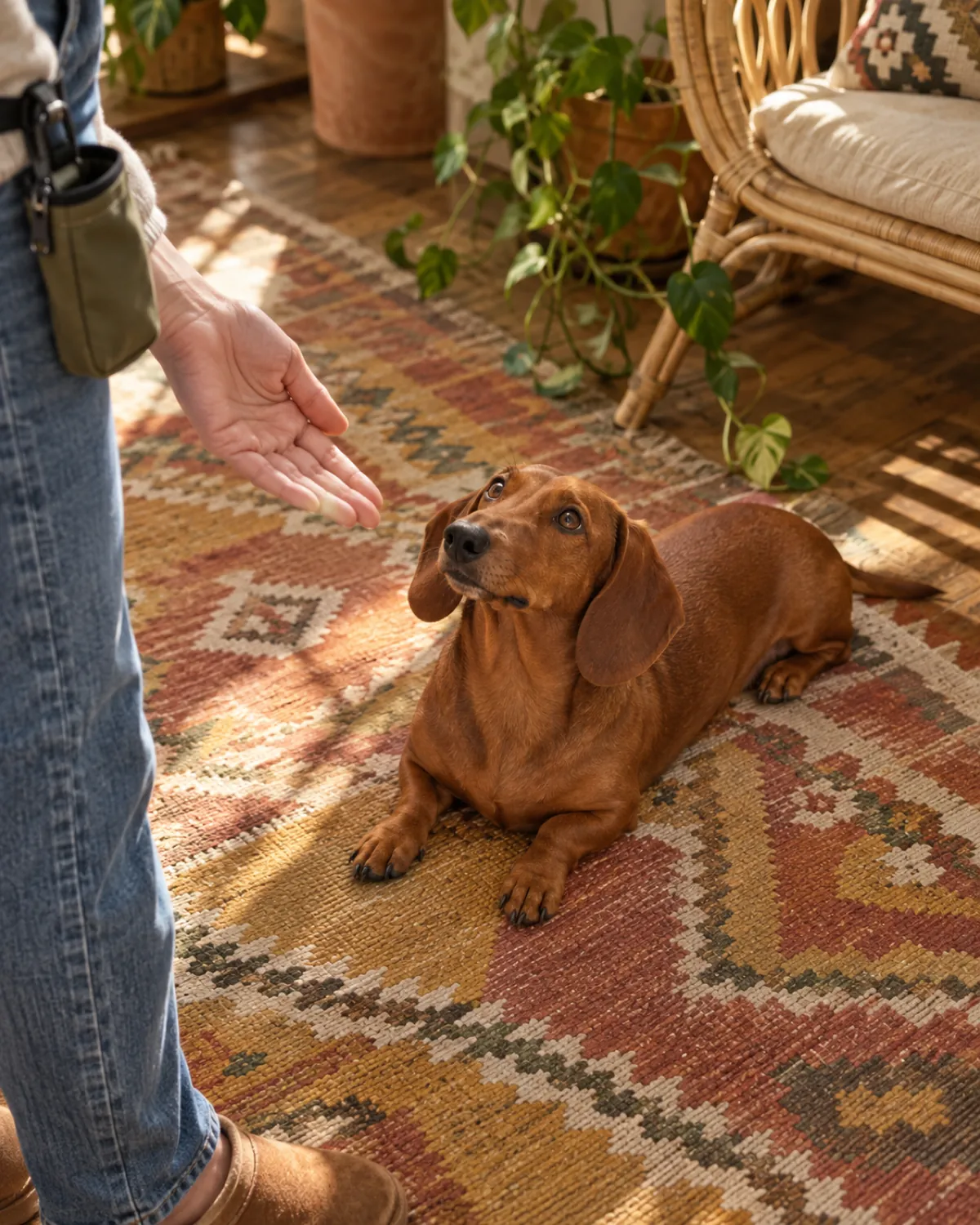
This is the core mechanic. Hold a treat between your thumb and fingers (pinched, not open-palm) and bring it right to your dog's nose while they are sitting.
Slowly draw the treat straight down from the nose toward the floor, then pull it slightly toward you along the ground. The path should look like an L — straight down, then out. Your dog's nose follows the treat, the head dips, and the body folds down to follow.
Key details that make or break this step:
Go slow. If you move the treat too fast, your dog will stand up to chase it instead of folding down. Think one inch per second.
Keep the treat close to the body. If you pull the treat too far forward, your dog will crawl toward it instead of lying down in place.
Stay low. Your hand should nearly touch the floor. If you hold the treat even a few inches above the ground, your dog's elbows will not touch down.
Most dogs will not get a full down on the first try. That is normal. Reward any movement in the right direction — a head dip, an elbow bend, a weight shift forward. You are shaping the behavior, not expecting perfection.
6. Mark the Exact Moment the Belly Hits the Ground
The instant — not a second later, the instant — your dog's belly touches the floor, say "yes" in a bright, quick voice and give the treat.
This timing is everything. If you wait even two seconds, your dog does not know which part of the sequence earned the reward. Was it the head dip? The elbow bend? Getting back up?
A few reps in, your dog will start to connect the dots: belly on floor equals treat. Once you see that lightbulb moment — they fold down faster and more deliberately — you know the marker timing is landing.
Common mistakes at this stage:
Marking when the elbows touch but the belly is still off the ground. That rewards a partial down.
Holding the treat in your hand after saying "yes." Deliver it immediately. The gap between marker and reward should be under one second.
Repeating the cue word over and over ("down, down, dowwwn"). You have not added a verbal cue yet — that comes in Step 7. Right now, the treat lure is doing all the work.
If your dog keeps standing up instead of folding down, revisit the lure path. The most common fix is pulling the treat closer to the dog's chest instead of away from them.
7. Add the Verbal Cue Once the Motion Is Consistent
Do not add the word "down" until your dog is reliably following the lure into a full down at least eight out of ten times. Adding the cue too early just teaches your dog to ignore it.
When you are ready, say "down" once — clear, calm, normal volume — right before you begin the lure motion. The sequence is: say the word, pause half a second, then lure. Over many reps, your dog will start to anticipate the lure when they hear the word, and eventually the word alone will trigger the behavior.
Pick one word and stick with it. "Down," "lay down," and "off" all work, but everyone in the household must use the same one. Inconsistent cues are one of the top reasons dogs seem to "know" the command with one person but ignore it with another.
Avoid using the same word you use to tell your dog to get off the couch. If "down" already means "stop jumping" or "get off the furniture," pick a different cue for the lying position — "lay" or "settle" or "flat" all work.
8. Pair a Hand Signal With the Verbal Cue
Dogs read body language faster than they process spoken words. A hand signal paired with the verbal cue gives your dog two channels of information, which speeds up response time and makes the command work even in noisy environments.
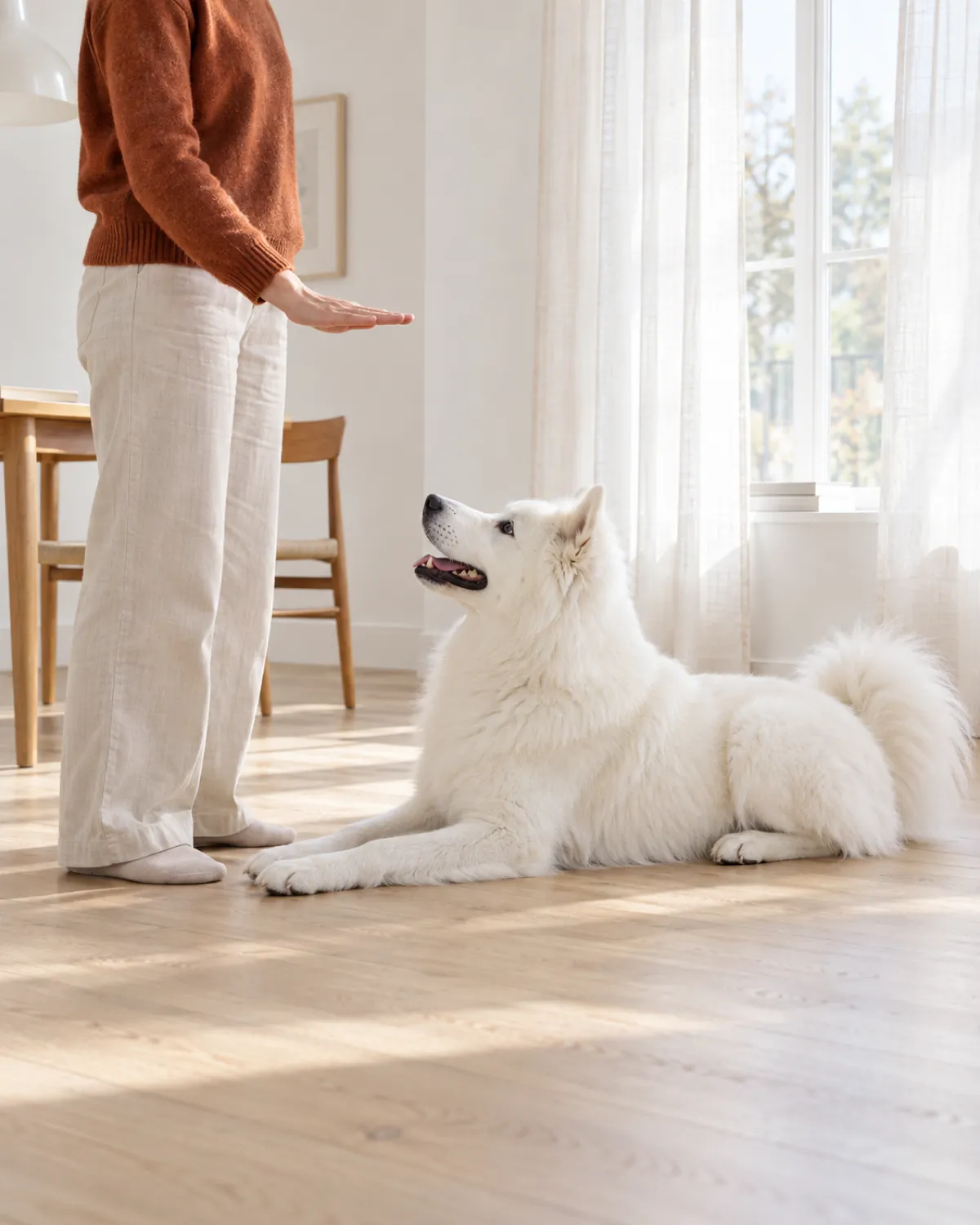
The standard hand signal for down is a flat palm facing the floor, moved from chest height to waist height in a single smooth downward motion. It is basically a refined version of the lure you have already been doing, just without the treat in your hand.
Start by giving the verbal cue, then the hand signal, then the old lure motion. Over a few sessions, make the lure motion smaller and the hand signal more prominent. Eventually the hand signal alone will trigger the down.
This is also the step where you start building clicker training habits if you want to add a clicker. The click replaces your voice marker and gives you slightly sharper timing, which helps when you start working on duration in Step 10.
9. Phase Out the Treat Lure Gradually
If you always have a treat visible in your hand, your dog is following the food, not responding to the cue. The goal is a dog who lies down on a verbal cue or hand signal alone and then gets rewarded afterward.
Phase the lure out in stages:
Stage 1 — Do the full lure motion but with an empty hand. Reward from your treat pouch after your dog completes the down.
Stage 2 — Shrink the hand motion. Instead of going all the way to the floor, stop at knee height. Your dog should fill in the rest.
Stage 3 — Use only the hand signal (palm-down sweep) from a standing position. Reward from behind your back or from the pouch.
If your dog stalls at any stage, go back one step for a few reps, then try again. Lure fading is not a one-session process — expect it to take three to five sessions spread over a week.
Keep treats in your pouch for every session, even after the lure is fully faded. You are removing the lure, not the reward. The treat still comes after every successful down — it just comes from the pouch instead of from your hand.
10. Build Duration Before Adding Difficulty
A one-second down is useless in real life. You need your dog to hold the position for at least thirty seconds before you start proofing in new locations.
Build duration with this simple protocol:
Cue the down. Count to two in your head. Mark and reward.
Next rep, count to four. Mark and reward.
Next rep, count to seven. Mark and reward.
Next rep, drop back to three. Mark and reward.
The pattern is: gradually increase, then drop back, then push a little further. The random drops keep your dog guessing about when the reward will come, which actually strengthens the stay.
Two common mistakes to avoid:
Adding too much time too fast. Going from two seconds to twenty seconds in one session sets your dog up to fail. If they break position three times in a row, you jumped too far.
Always rewarding at the same duration. If you always mark at exactly ten seconds, your dog learns to hold for ten and then pop up. Vary the timing so they never know when the treat is coming.
Once your dog can hold a relaxed down for thirty seconds in your quiet training room, they are ready for proofing. This is also the right time to introduce how to teach a dog to stay as a separate cue if you want a formal stay command.
11. Practice in a Second Room to Start Proofing
Your dog does not generalize the way you do. A down in the living room and a down in the kitchen are two completely different behaviors in your dog's brain until you prove otherwise.
Move to a second room and start from the beginning — full lure, short duration. You will be surprised how many dogs act like they have never heard the word "down" in a new environment. That is normal. They are not being stubborn; they genuinely have not connected the cue to this new context.
Three to five successful reps in the new room, and most dogs will start responding at the same speed they do in the original training room. Once they are solid in two rooms, try a third. Each new location goes faster than the last because your dog is learning the rule behind the rule: "down" means the same thing everywhere.
Pick rooms with different floor surfaces — carpet, tile, hardwood — so your dog gets comfortable lying down on each one. A dog who only practices on carpet may refuse to down on cold tile at the vet.
12. Move Training to the Backyard or a Quiet Sidewalk
Outdoor proofing is where most training plans fall apart. The smells, the sounds, the squirrels — your dog's brain is running at full speed and "down" barely registers.
Start in your own backyard where the distractions are familiar. Ask for a down, and if your dog responds, reward generously — outdoor success deserves a jackpot (three or four treats in a row) because the difficulty jump is real.
If they do not respond, do not repeat the cue. Lure them down the same way you did in the first session and reward when the belly hits the ground. You are rebuilding the association in a new context, not testing whether they remember it.
Once backyard downs are solid, progress through these locations in order:
A quiet sidewalk near your house with minimal foot traffic
A calm corner of a local park during off-peak hours
A pet-friendly store or a friend's front porch
Keep outdoor sessions short — three to five reps — and always end on a success. Use a leash during outdoor proofing even in fenced areas as a safety net, not a correction tool.
13. Troubleshoot the Dog That Pops Back Up Immediately
The most common problem: your dog hits the down position and immediately springs back up before you can even say "yes."
This usually means one of three things:
Your timing is late. You are marking after the dog is already getting up, which rewards the get-up instead of the down. Practice marking faster — say "yes" the instant the belly touches, even if it is only for a split second.
The floor is uncomfortable. Cold tile, wet grass, or hard concrete can make the position genuinely unpleasant. Add a mat and see if the problem disappears.
The dog is too excited. High-arousal dogs struggle to hold still in any position. Burn off some energy with a short walk or play session before training.
A useful fix: lower your criteria temporarily. Instead of waiting for a full down, mark and reward the moment both elbows touch the floor. Build back up to belly-on-ground once the elbows-down is reliable.
If your dog is an older dog learning new commands, go even slower. Older dogs may have joint stiffness that makes the down-to-up transition uncomfortable, so they rush through it.
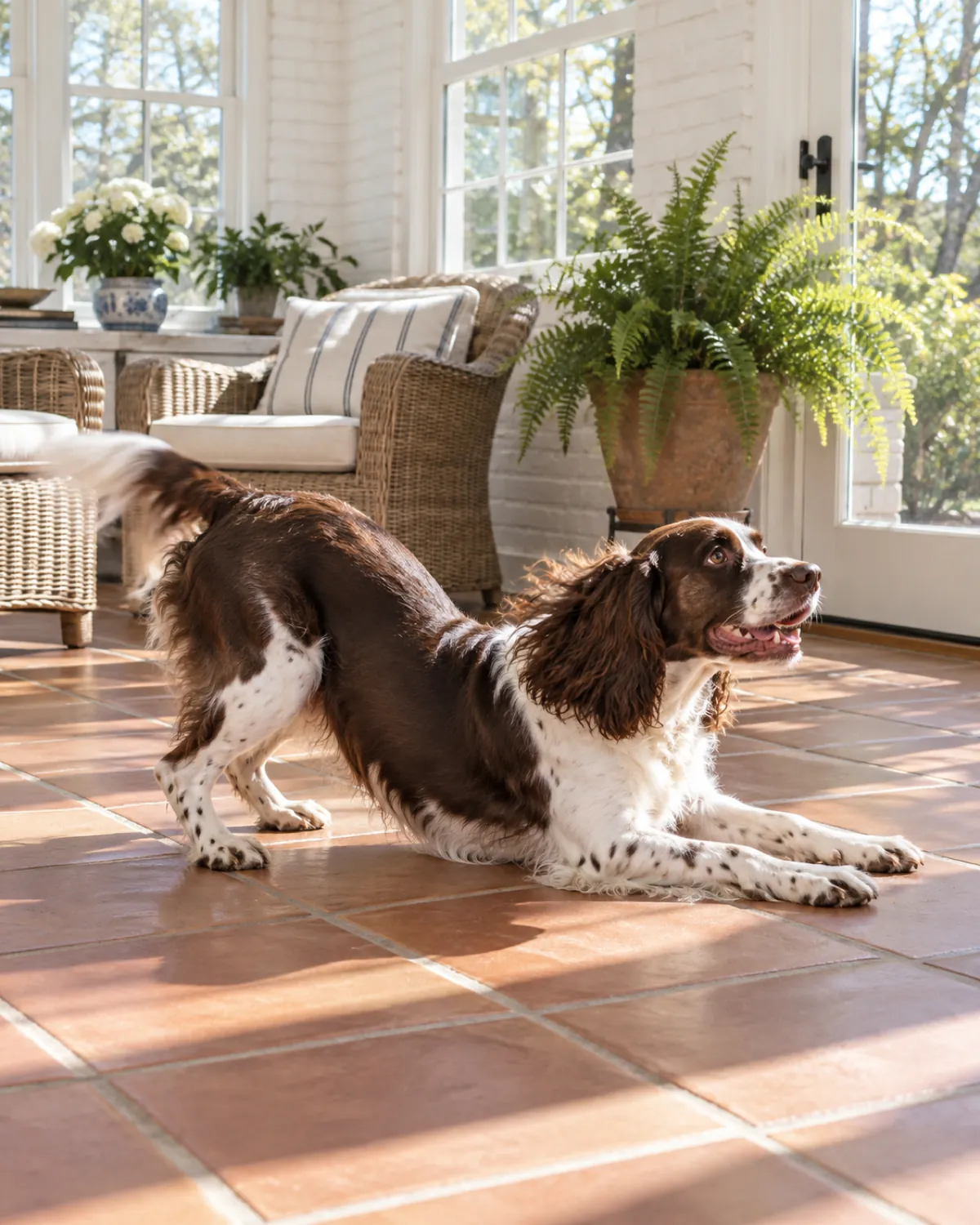
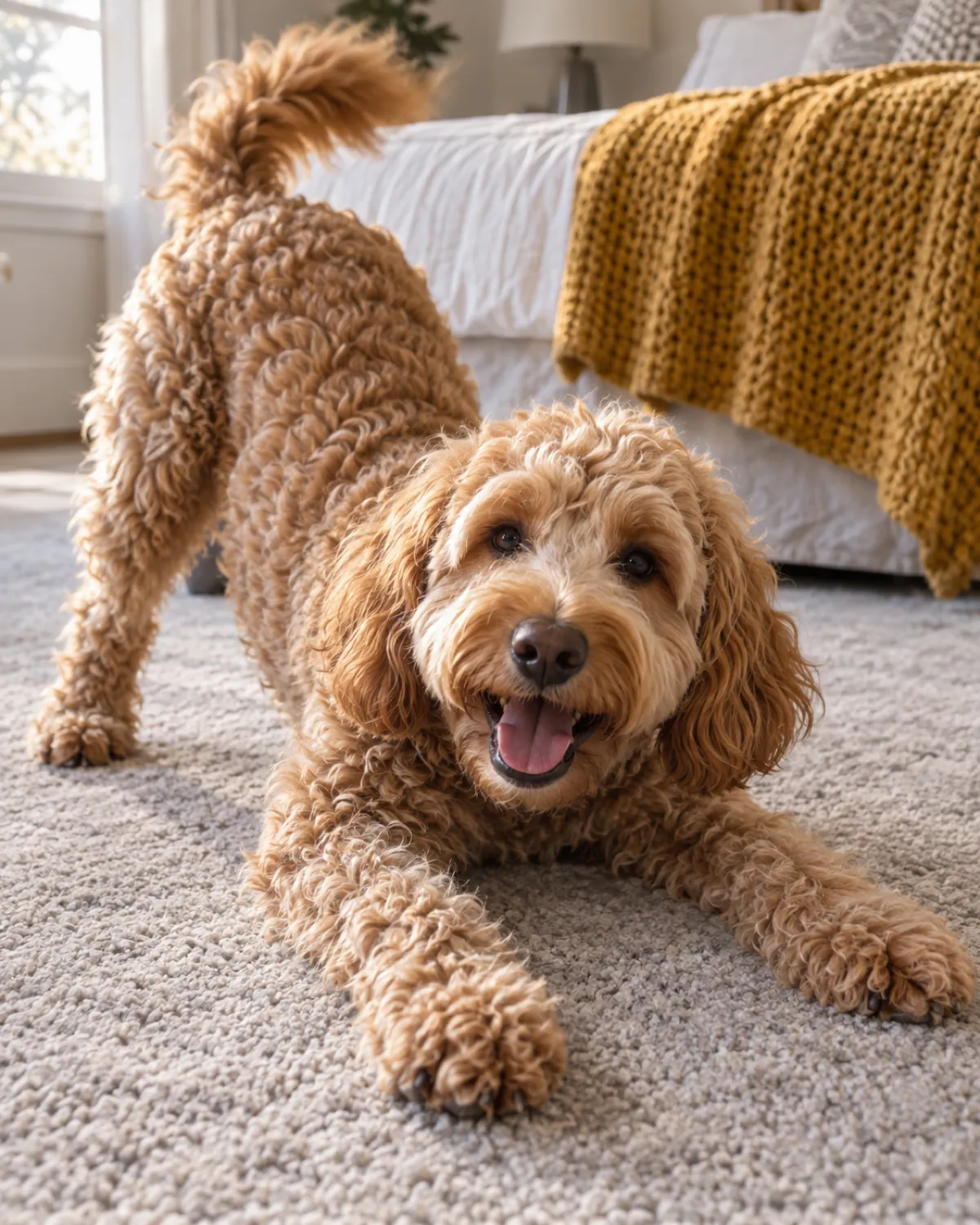
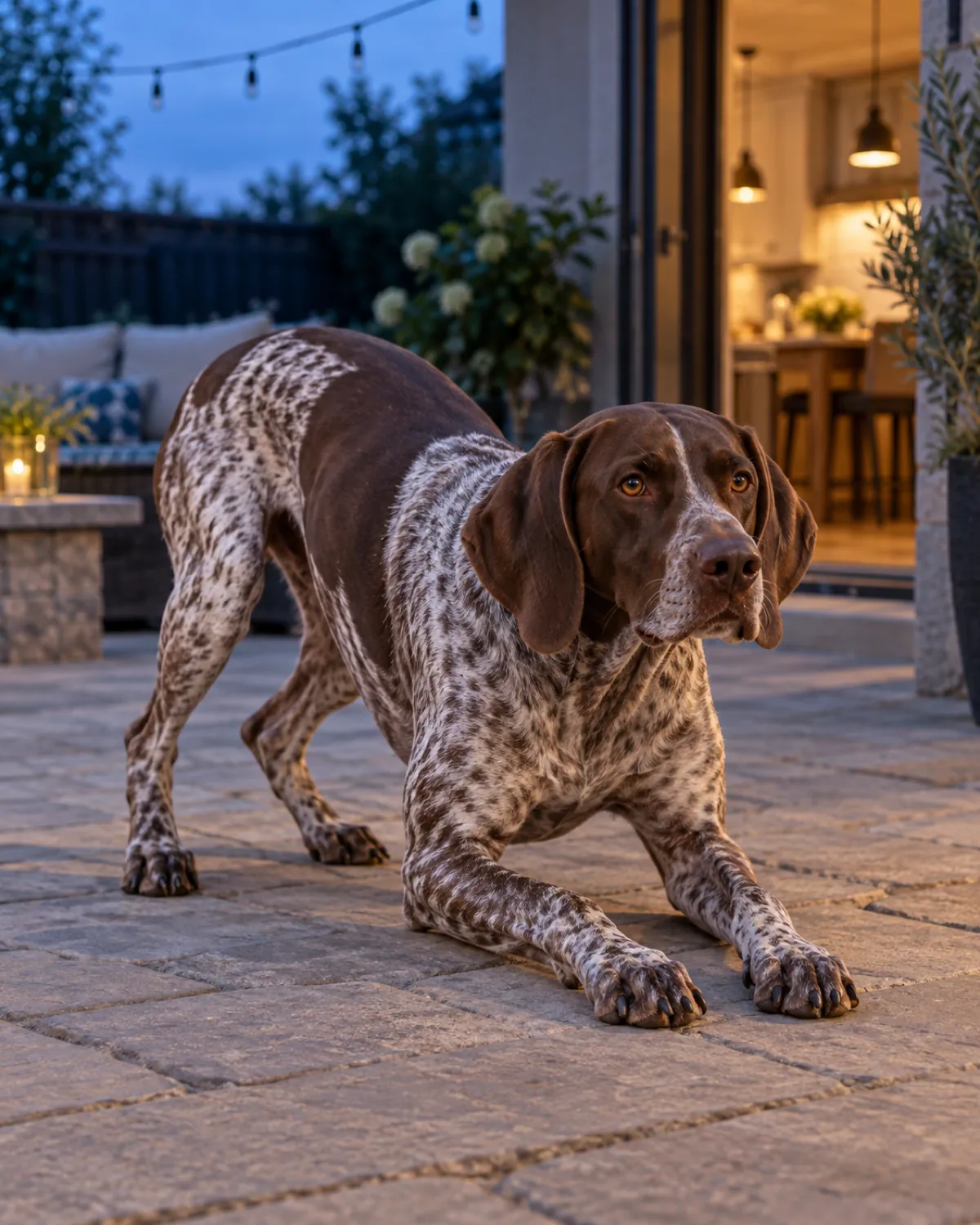
14. Fix the Halfway Play Bow That Never Reaches the Floor
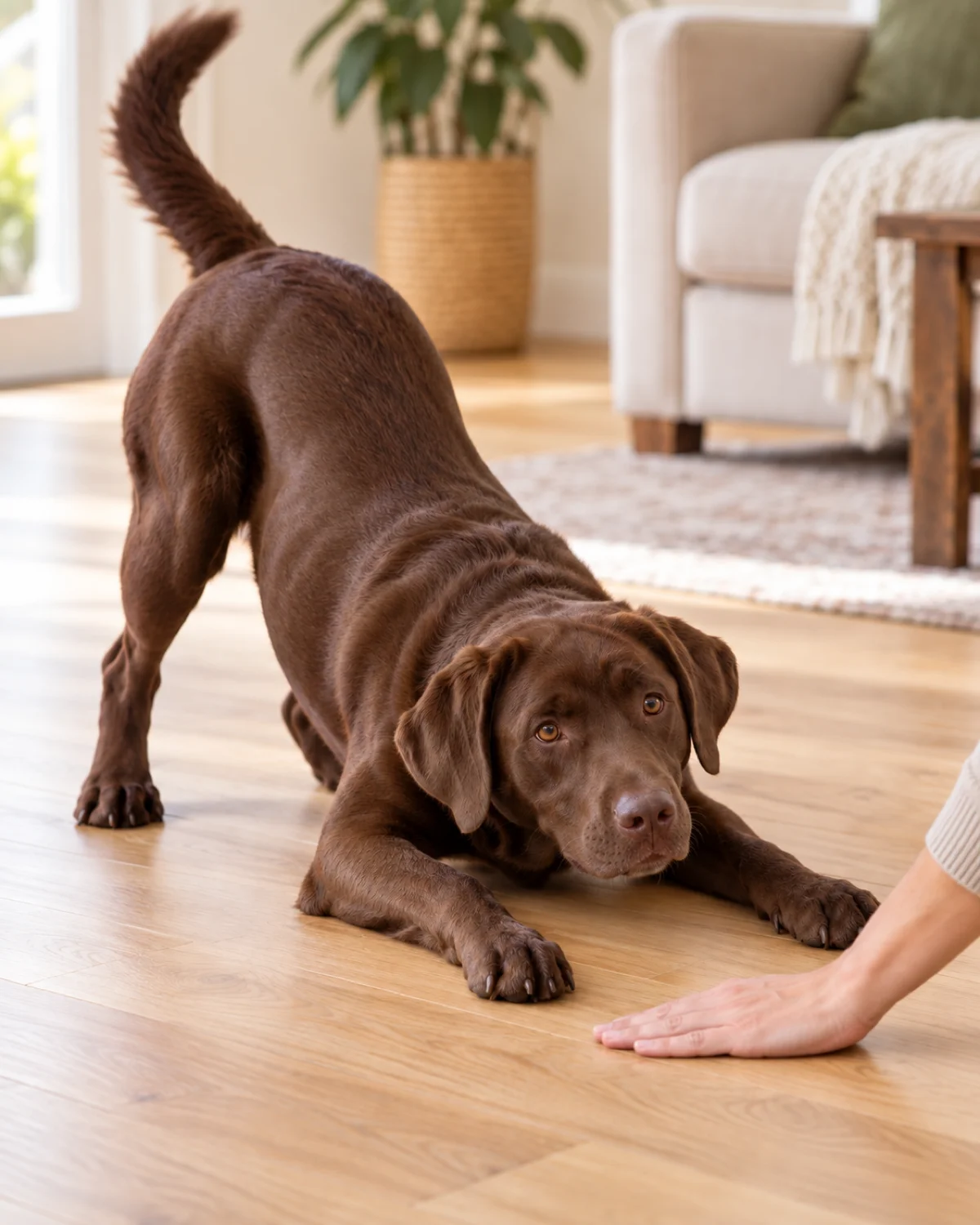
Some dogs get stuck in a play bow — front end down, rear end up, tail wagging. They think they are doing what you asked, and honestly, they are pretty close. The problem is that the play bow is a social invitation to play, not a resting position.
The fix depends on why they are stalling:
The lure path is too far forward. If your hand moves away from the dog instead of straight down, the front end drops but the back end stays planted. Pull the treat closer to the dog's front paws instead of away.
They are excited, not confused. The play bow is a high-energy position. Wait them out. Hold the treat on the floor between their paws and do nothing. Most dogs will eventually shift their weight back and slide into a full down. Mark the instant they do.
They have never completed the full motion. Some dogs genuinely do not know what comes after the elbow drop. Use a low surface like a couch cushion placed on the floor — the soft, slightly raised surface makes it easier for them to slide into a full down because their body naturally sinks into the cushion.
Do not push their rear end down. It does not teach the behavior, and most dogs will push back against the pressure.
15. Train a Down From a Standing Position
Until now, you have been cueing down from a sit. In real life, your dog will not always be sitting when you need them to lie down. A dog who can only down from a sit is only half-trained.
The stand-to-down is mechanically harder because the dog has to fold both the front and the rear at once instead of just folding the front while the rear is already grounded. Expect this step to take a few extra sessions.
Start with the same lure technique, but from a standing position:
Hold the treat at your dog's nose level while they are standing.
Draw it straight down between their front paws to the floor.
Then pull it slightly back toward their chest (not forward — forward makes them walk).
Most dogs will fold their front end down first, then tuck the rear.
If your dog keeps walking forward instead of folding down, practice against a wall. Position your dog with their rear end near the wall so they cannot back up, and lure straight down. The wall prevents the forward creep and forces the fold.
Once stand-to-down is solid, alternate between sit-to-down and stand-to-down in the same session so your dog learns that "down" means the same thing regardless of their starting position.
16. Use Down-Stay for Real-Life Situations at Home
The whole point of teaching down was to use it. Here are the situations where a reliable down-stay changes daily life:
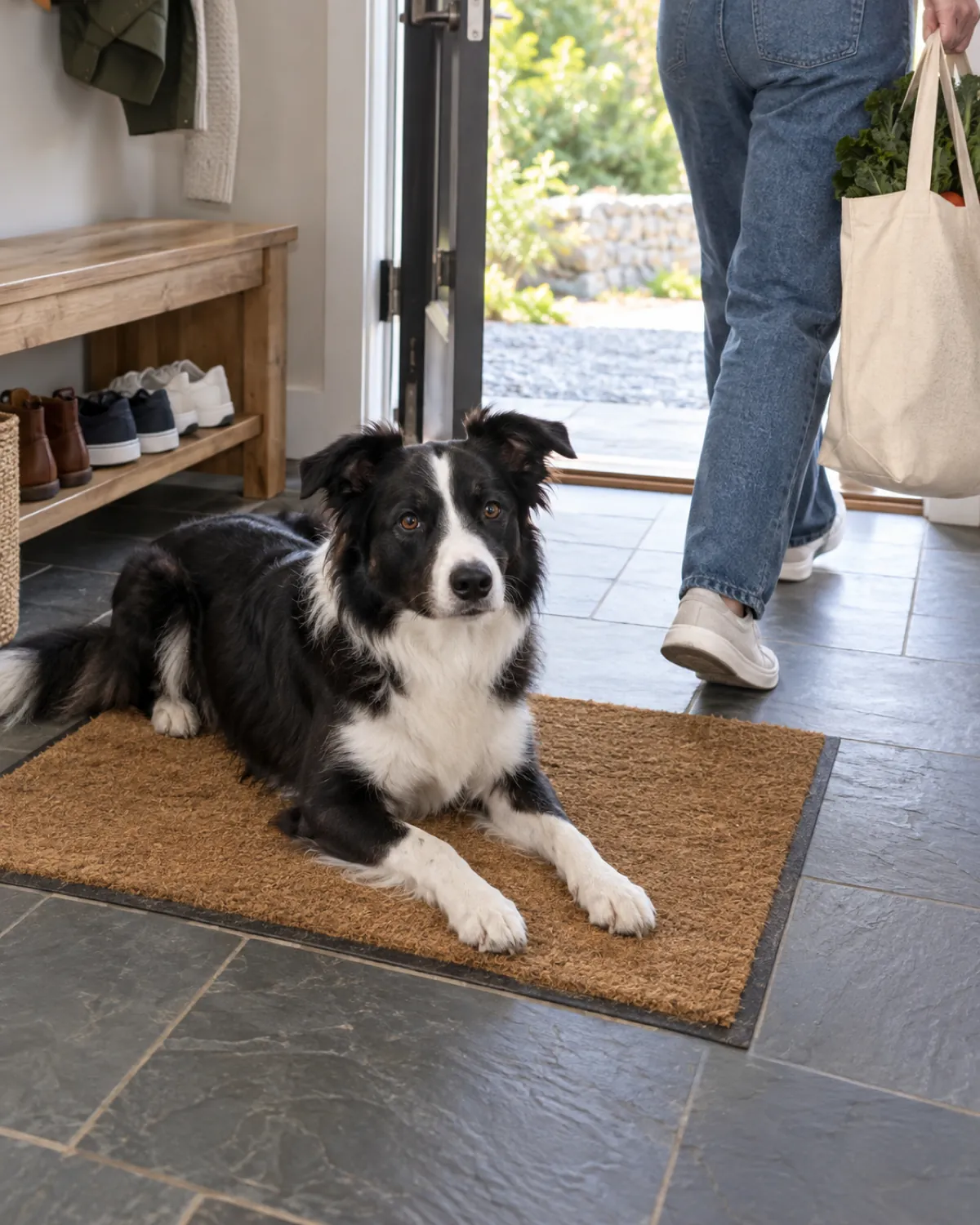
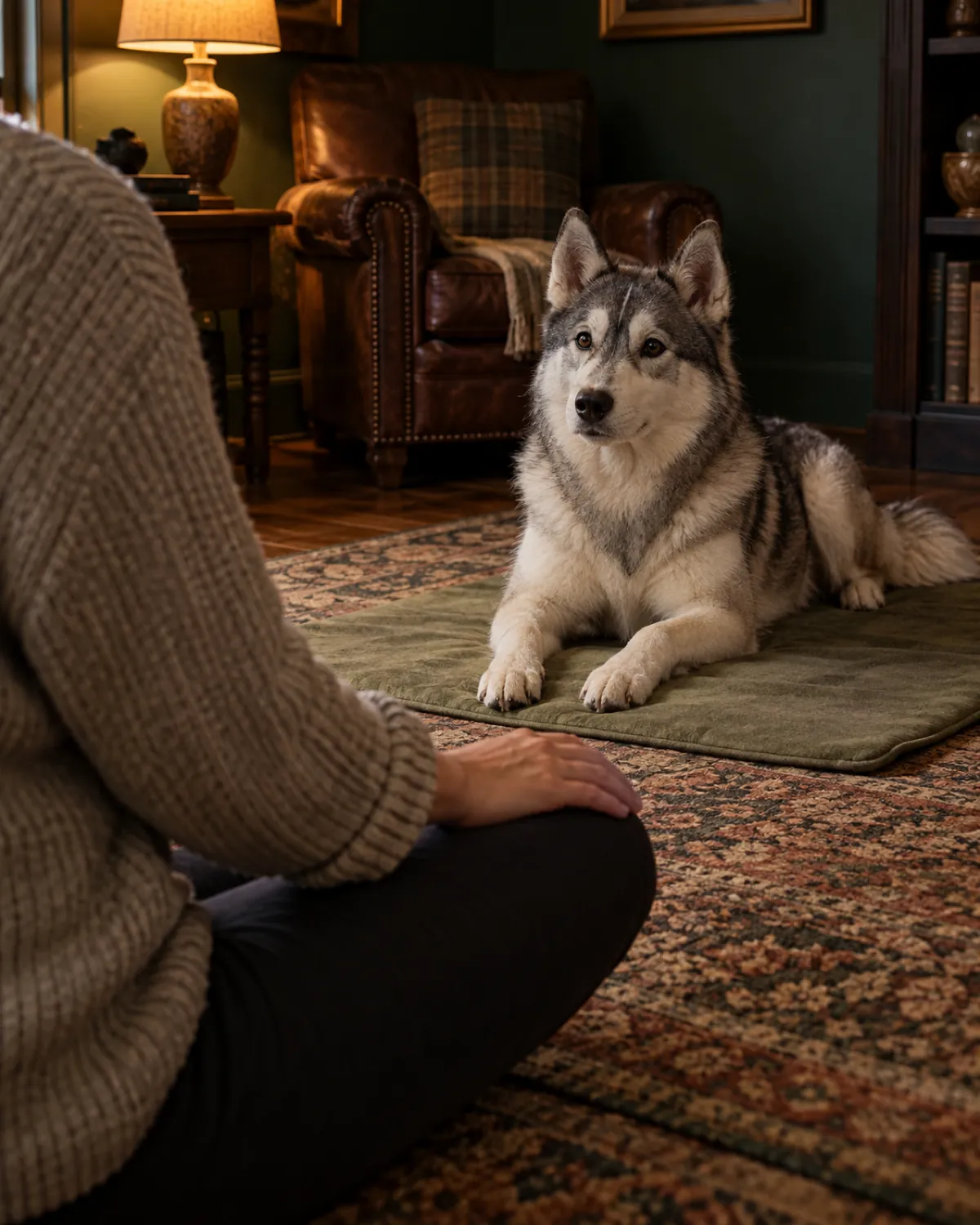
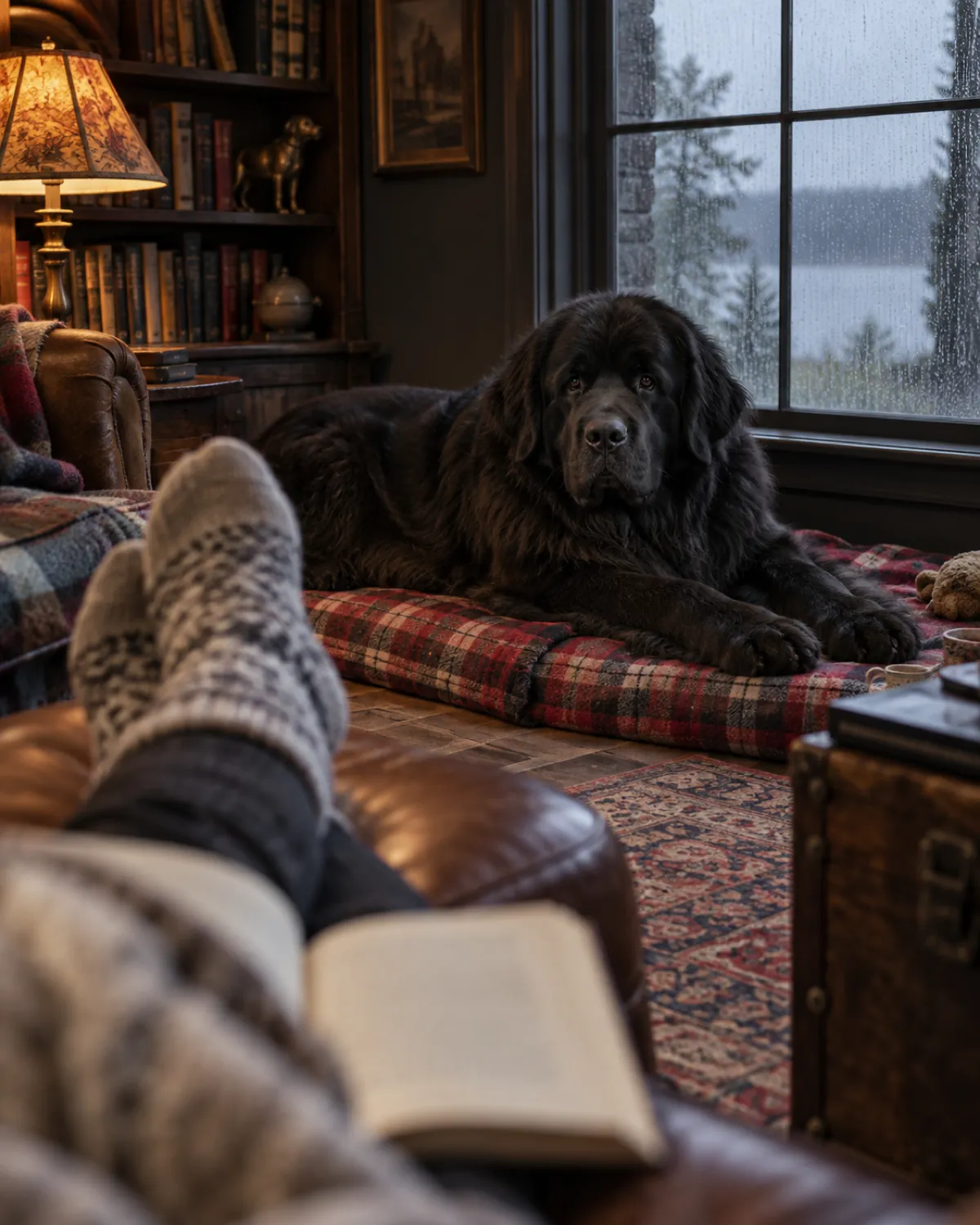
During meals — Cue your dog to down on their mat before you sit down to eat. They learn that meal time means settle time, not begging time. Start with short meals and gradually extend.
When guests arrive — A down-stay at the door prevents jumping. Practice with family members coming and going before you try it with real guests.
At the vet or groomer — A dog who can hold a relaxed down in a waiting room is dramatically easier to manage. The calm position also keeps their stress lower than pacing or pulling on the leash.
During work-from-home hours — A down on a mat near your desk gives your dog a job (hold position) and keeps them out of trouble during calls.
The key to real-life down-stays is releasing your dog before they break on their own. If your dog holds a down for two minutes during dinner and then gets up, you waited too long. Next time, release and reward at ninety seconds. Gradually push the duration so the release always comes from you, not from your dog deciding they are done.
Pair this with the other basic commands your dog should know — sit, stay, come, leave it — and you have a dog who can handle almost any everyday situation calmly.
Save this for later
16 Steps to Teach Your Dog to Lay Down
1Teach down earlyDown builds calm settling habits that sit alone cannot provide.
2Set up the floor surfaceLay a mat where your dog will train — comfort on the floor is the difference-maker for down.
3Pick a quiet spotBoring room, comfortable floor surface, zero distractions.
4Start from a sitSitting gives your dog a head start — the front end is already low.
5Lure the nose downTreat to nose, straight down, then slightly toward you along the floor.
6Mark the belly-downSay yes the instant the belly touches — not a second later.
7Add the verbal cueSay down once before the lure, then let your dog connect the word to the action.
8Pair a hand signalFlat palm sweeping downward — dogs read body language faster than words.
9Fade the lureEmpty hand first, then smaller motion, then hand signal only.
10Build durationCount up in small steps with random drops to keep your dog guessing.
11Proof in a second roomDogs do not generalize — same cue, new room, start from the beginning.
12Move training outdoorsBackyard first, then quiet sidewalk, with jackpot rewards for success.
13Fix the pop-upMark faster, add a mat, or burn off energy before training.
14Fix the play bowLure closer to the paws and wait — most dogs slide into a full down.
15Train from standingLure straight down between front paws, use a wall to prevent forward creep.
16Use it in real lifeMeals, guests, vet visits, work hours — release before your dog decides to get up.
pawliqa.com
About the author
Jess Calloway
Jess Calloway edits Pawliqa, where she shares dog care, grooming, training, and new-owner tips — plus DIY and pet-friendly home ideas — for anyone who wants a happy, well-cared-for dog. As a dog mom to three very different dogs, she writes the honest, tested version of what actually works. Every guide is image-led and reviewed for clarity, usefulness, image accuracy, and Pinterest-to-page alignment before it goes live. Visit the About page.
Frequently Asked Questions
How long does it take to teach a dog to lay down?
Most dogs learn the basic lure-to-down in three to five days of short daily sessions. Adding the verbal cue takes another week. A fully proofed down that works in any location typically takes four to six weeks of consistent practice.
What if my dog will not follow the treat lure?
The treat is not high-value enough. Switch to something smellier — freeze-dried liver, tiny pieces of cooked chicken, or string cheese. If your dog still ignores the lure, try training right before a meal when they are hungry.
Can older dogs learn the down command?
Yes. Older dogs learn the same way puppies do. The only adjustment is that some older dogs have joint stiffness that makes lying down uncomfortable. Use a thick mat or dog bed as the training surface and keep sessions especially short.
Should I push my dog into a down position?
No. Physically pushing a dog into a down creates a negative association with the position and teaches them to resist pressure rather than choose the behavior. The lure method works because the dog decides to lie down on their own.
How many times a day should I practice the down command?
Two to three sessions of five minutes each is ideal. Space sessions at least an hour apart so your dog has time to process what they learned. More frequent but shorter sessions produce better results than one long session.
Teaching a dog to spin starts with a food lure at nose level, progresses to an open-palm hand gesture, and ends with a verbal cue alone. This guide walks through every stage, flags the mistakes that stall progress, and shows how to keep training sessions short and productive.
An overstimulated dog is not being bad. This guide walks through the place cue, structured down-stays, environment management, and daily decompression routine that teach a dog to settle on its own.
Fourteen puppy training games covering hide and seek recall, the name game, touch targeting, cup puzzles, puppy pushups, which hand, red light green light, muffin tin puzzles, tug with rules, scent work, two-toy fetch, obstacle courses, spin tricks, and settle mat training for puppies who learn best through play.