Our oldest dog learned to beg from exactly one piece of chicken that fell off a plate three years ago. One accidental drop, and she became a full-time dinner-table surveillance unit who never misses a shift.
Begging looks cute in the moment, but it gets old fast — especially when guests are over and your dog parks herself six inches from every plate on the table.
Here are twelve ways to stop the begging habit without yelling, punishing, or banishing your dog to another room.
Your anti-begging playbook
12 ways to stop a dog from begging for food
From place training and mealtime timing to family rules and guest protocols, these twelve tips cover every angle of the begging problem. Jump to whichever one you need first.
1. Teach a Solid Place Command Before Anything Else
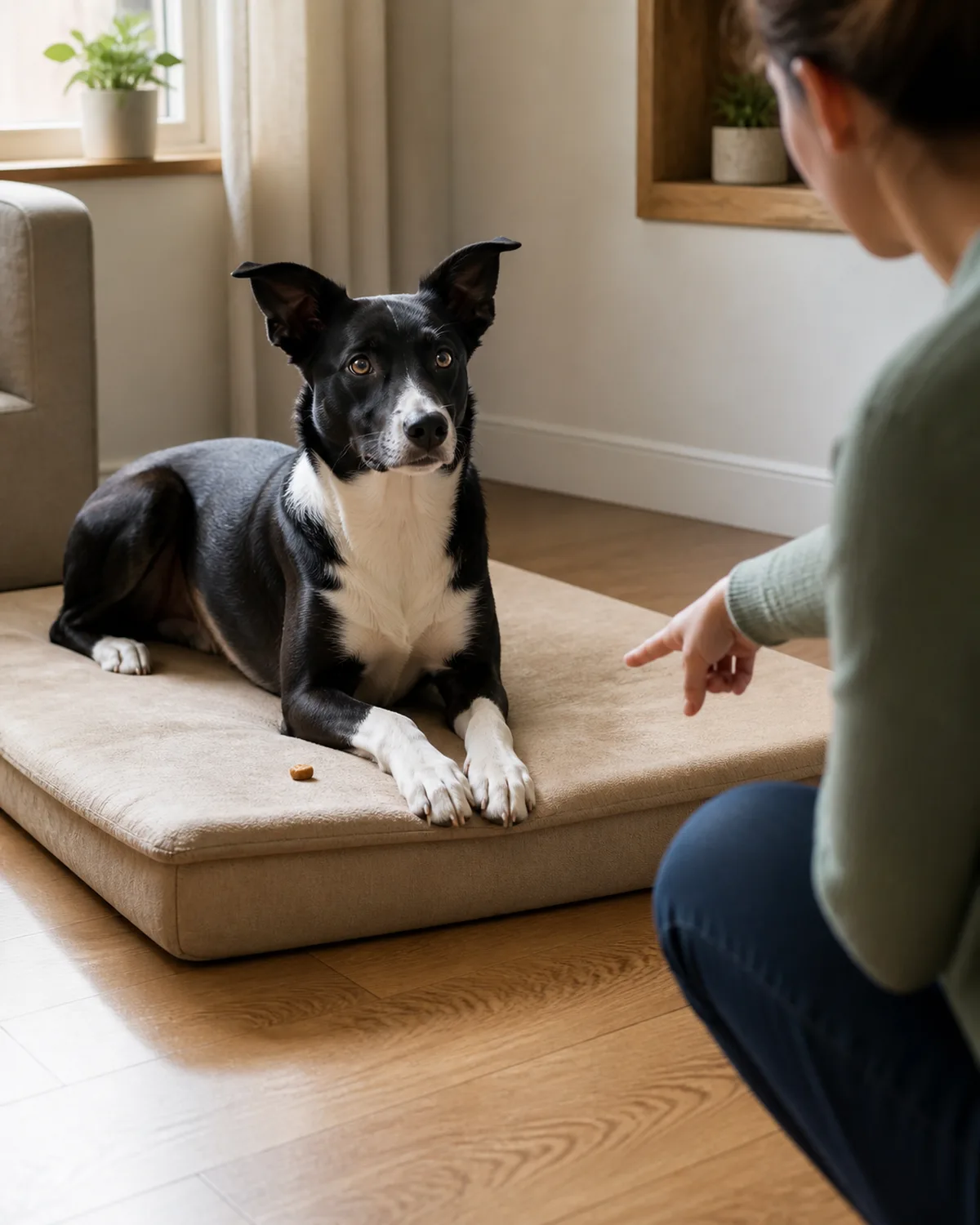
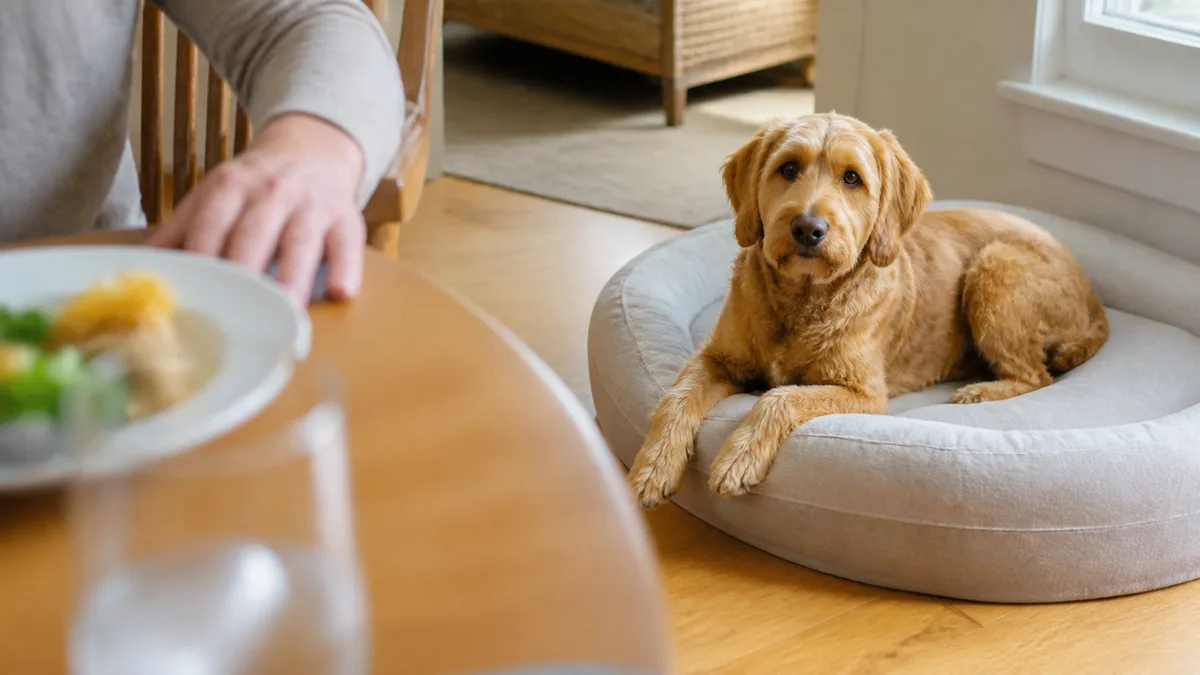
Every other tip on this list works better when your dog already knows a reliable place command. Pick one spot — a dog bed, a mat, a folded blanket — and teach your dog that going to it and lying down earns treats.
Start with five-minute sessions away from mealtimes. Lure your dog onto the mat, mark the moment all four paws land, and reward. Add duration gradually: five minutes, then ten, then twenty. Proof it with mild distractions before you introduce the dinner table.
A dog with a solid place command has a clear job during meals: go to your spot and wait. That clarity alone reduces most begging because the dog knows exactly what to do instead of hovering near your chair.
- Start training place during calm, non-mealtime moments
- Use a specific mat or bed that stays in the same spot every day
- Reward for duration, not just for arriving at the mat
- Graduate from no distractions to mild distractions before using at meals
The place command is also the foundation for crate training, which gives your dog another management option during meals if the open mat is not working yet.
2. Feed Your Dog Before You Sit Down to Eat
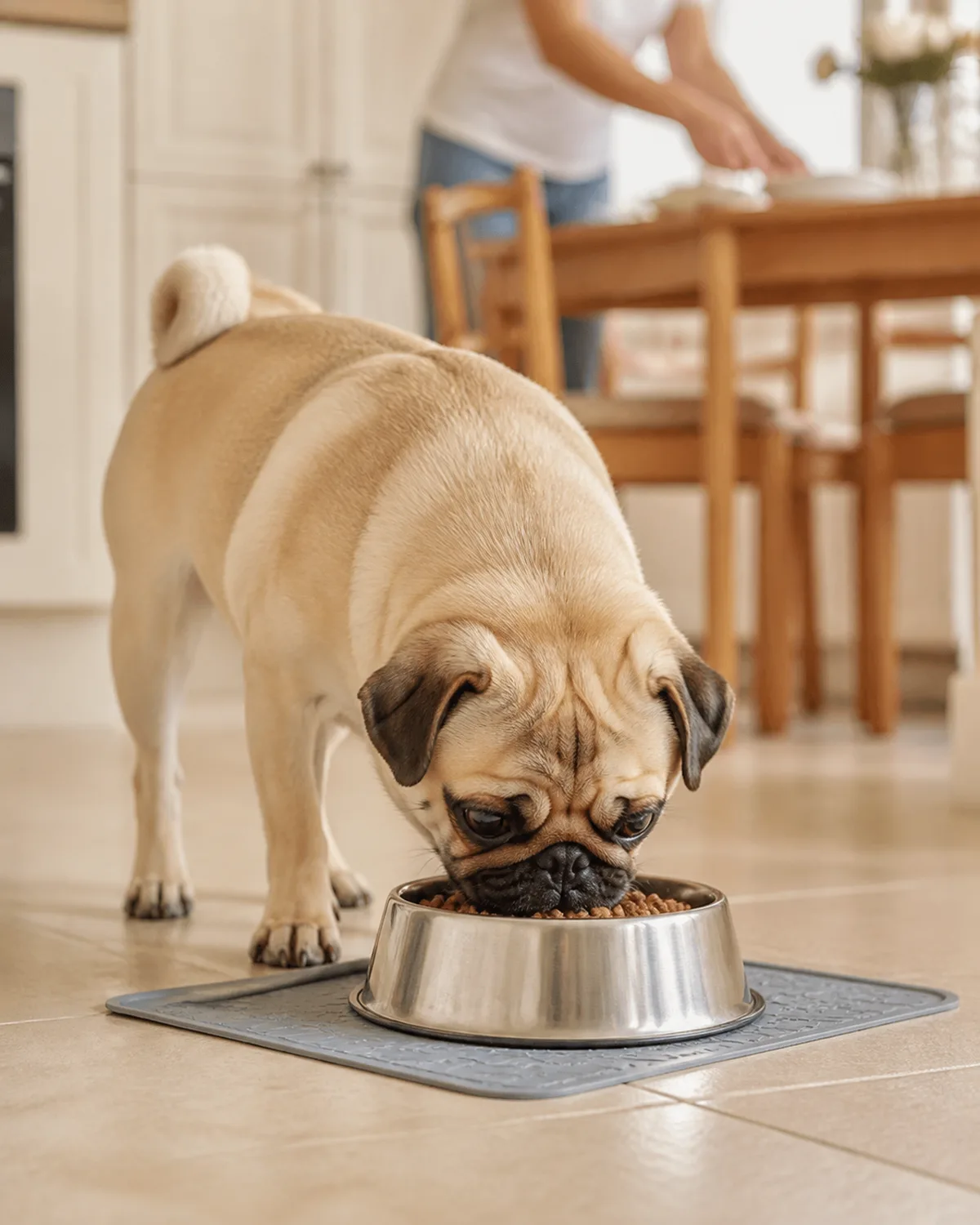
The simplest timing trick in the book: feed your dog their full meal fifteen to twenty minutes before you sit down to eat yours.
A dog with a full stomach still notices food, but the urgency drops significantly. The difference between a hungry dog watching you eat steak and a fed dog watching you eat steak is the difference between desperation and mild curiosity.
If your household eats at roughly the same time each day, shift your dog's feeding schedule twenty minutes earlier. For irregular schedules, feed the dog first as part of your dinner prep routine — right when you start cooking.
This alone will not eliminate begging, but it takes the edge off every other technique on this list.
3. Never Reward Begging — Not Even Once
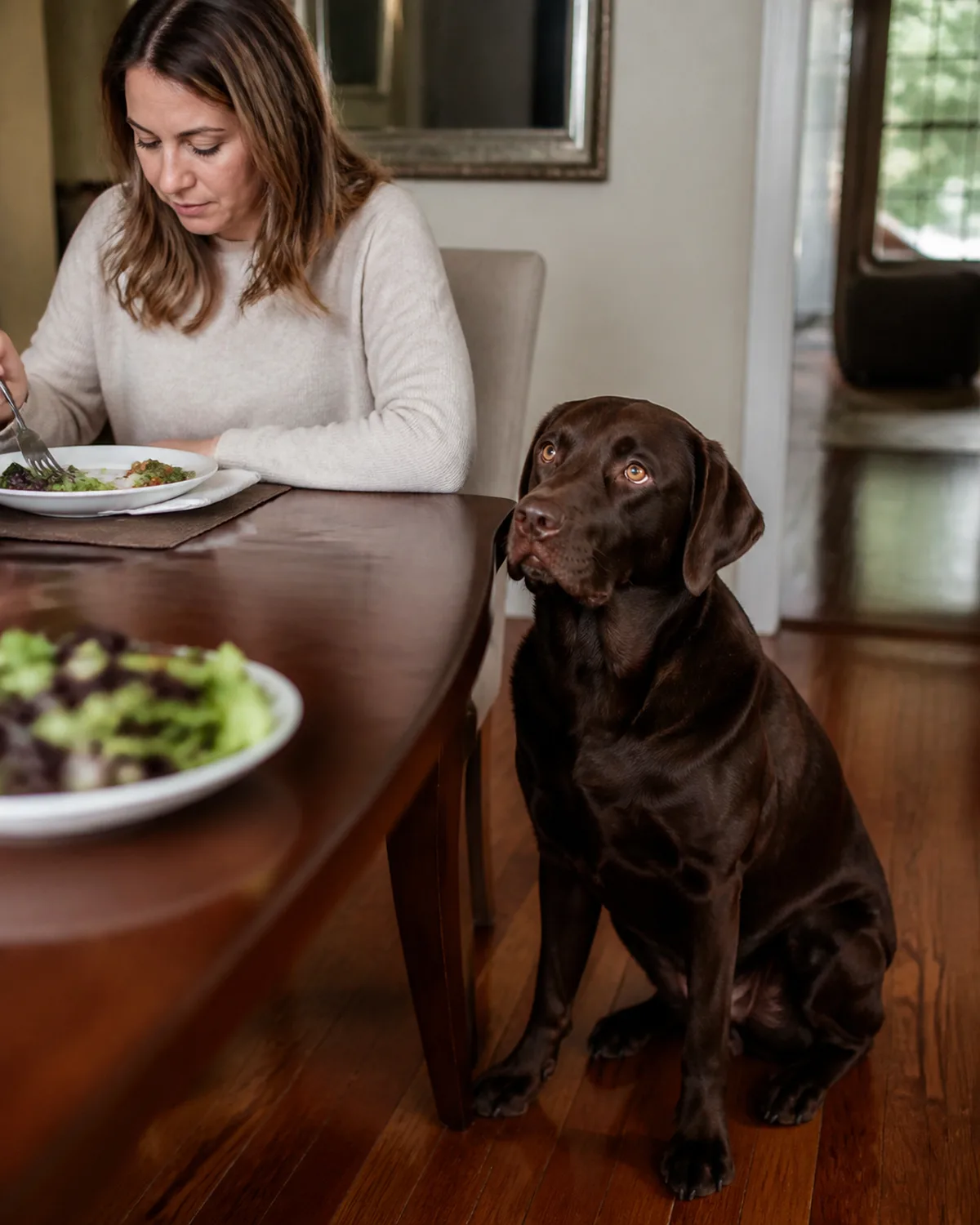
This is the single most important rule on this entire list, and it gets broken the most.
One piece of chicken from the table teaches your dog that staring plus whining equals food. The behavioral science behind it makes things worse: intermittent reinforcement — rewarding a behavior randomly rather than every time — creates habits that are dramatically harder to break than consistent ones.
A dog that gets table scraps every single meal will actually stop begging faster when you stop than a dog that gets scraps unpredictably. The unpredictable reward keeps the dog trying because maybe this time it will work.
Every person in the household must follow this rule. One family member who sneaks food to the dog under the table while everyone else ignores the begging will undo weeks of progress in a single meal.
- Never give food from the table, plate, or cooking area
- Intermittent rewards create stronger begging habits than consistent ones
- Every household member must follow the same rule
- Even one slip resets the training clock
Do these tonight
3 Quick Wins You Can Start Right Now
You do not need to master all twelve tips before dinner. Start with these three tonight and build from there.
Feed firstGive your dog their full meal 15 minutes before you sit down to eat. A full stomach cuts urgency in half.
Pick a matPut a dog bed or blanket at least six feet from the table. Point to it, reward your dog for going there.
Zero responseIf your dog begs, do not look, speak, push, or react. Continue eating as though the dog is not there.
4. Use a Baby Gate or Physical Barrier During Meals
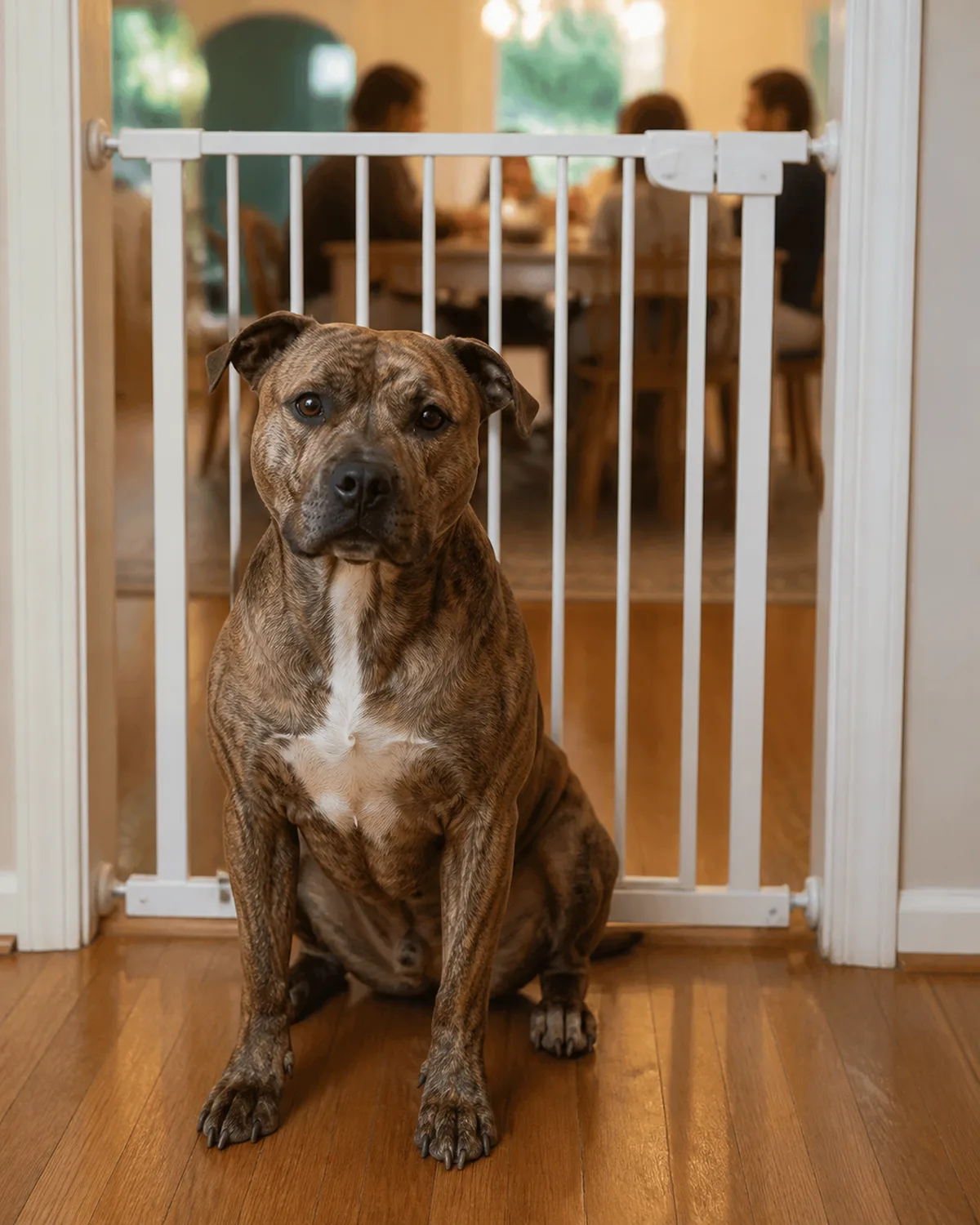
During the early stages of training — when your dog's self-control around food is still developing — a physical barrier is more reliable than willpower alone.
A baby gate across the dining room doorway keeps your dog out of the eating zone while still letting them see the family. This matters: shutting a dog in a separate room with the door closed can trigger separation anxiety and make mealtimes stressful rather than calm.
The gate is not a punishment. Frame it positively by giving your dog a treat or a chew toy on their side of the gate every time you put it up. Over time, your dog associates the gate going up with something good on their side.
- Choose a gate that lets your dog see through it, not a solid barrier
- Give a treat on their side every time the gate goes up
- As place command improves, remove the gate for one meal per week, then two
- If the dog stays calm without the gate, it can come down permanently
5. Redirect With a Long-Lasting Chew at Dinnertime
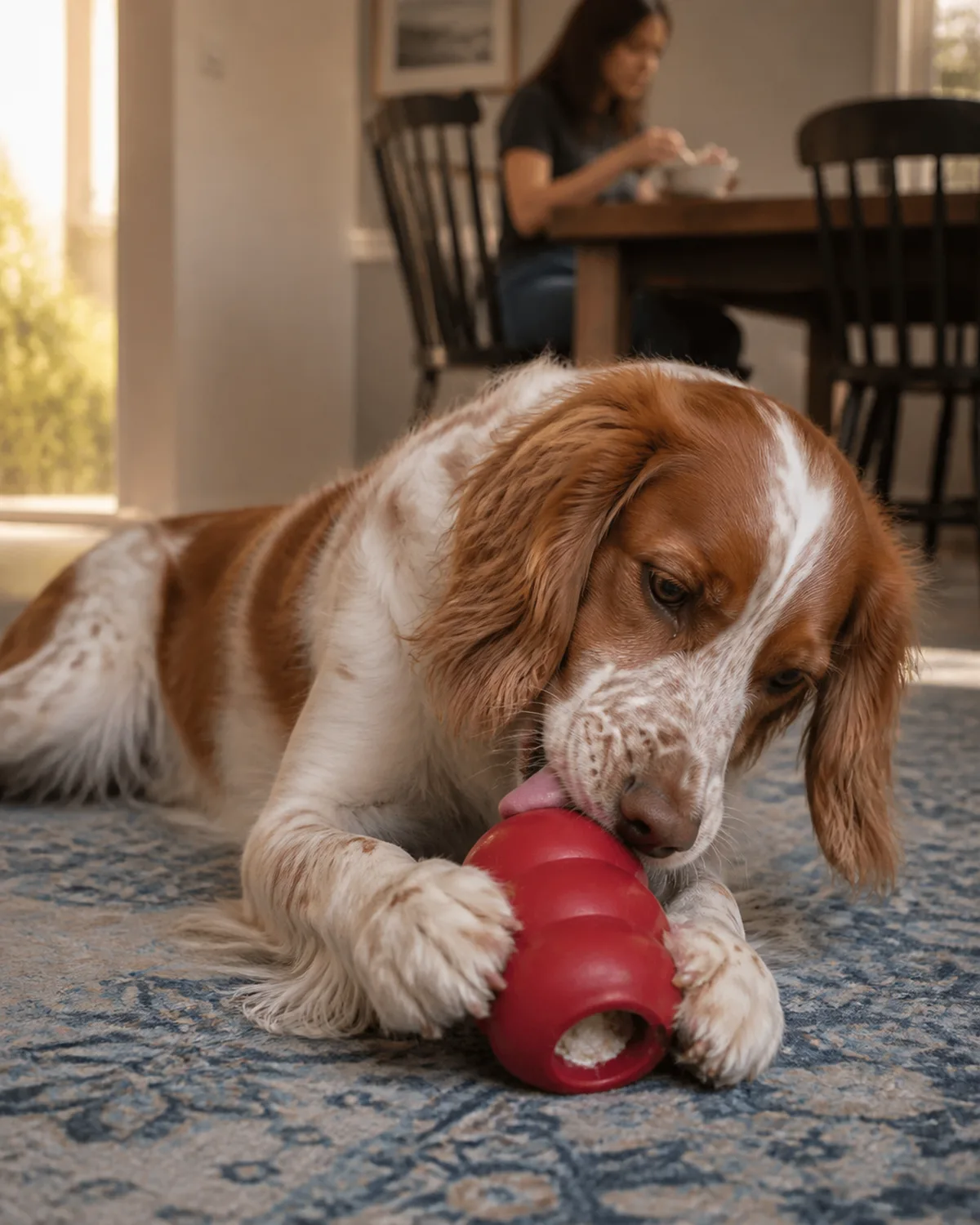
Give your dog something that keeps their mouth and brain busy for the entire duration of your meal. A frozen KONG stuffed with peanut butter, a bully stick, or a lick mat smeared with pumpkin puree — anything that takes twenty to thirty minutes to finish.
The timing is critical: give the chew before you sit down, not after your dog starts begging. Handing it over mid-beg rewards the begging behavior. Set it up as part of the dinner routine: you start plating food, dog gets their KONG on their mat, everyone sits down.
This works especially well combined with the place command. Dog goes to mat, gets a frozen KONG, and has zero reason to come bother anyone at the table because the best thing in the room is already in front of them.
If you need ideas for healthy fillings that keep a dog busy, homemade dog treats work well as KONG stuffing when mashed and frozen.
- Frozen KONGs last longer than room-temperature ones
- Lick mats with pumpkin or yogurt are good alternatives
- Always give the chew before you sit down to eat
- Pair with the place command for the strongest results
6. Practice True Ignoring — No Eye Contact, No Words, No Touch
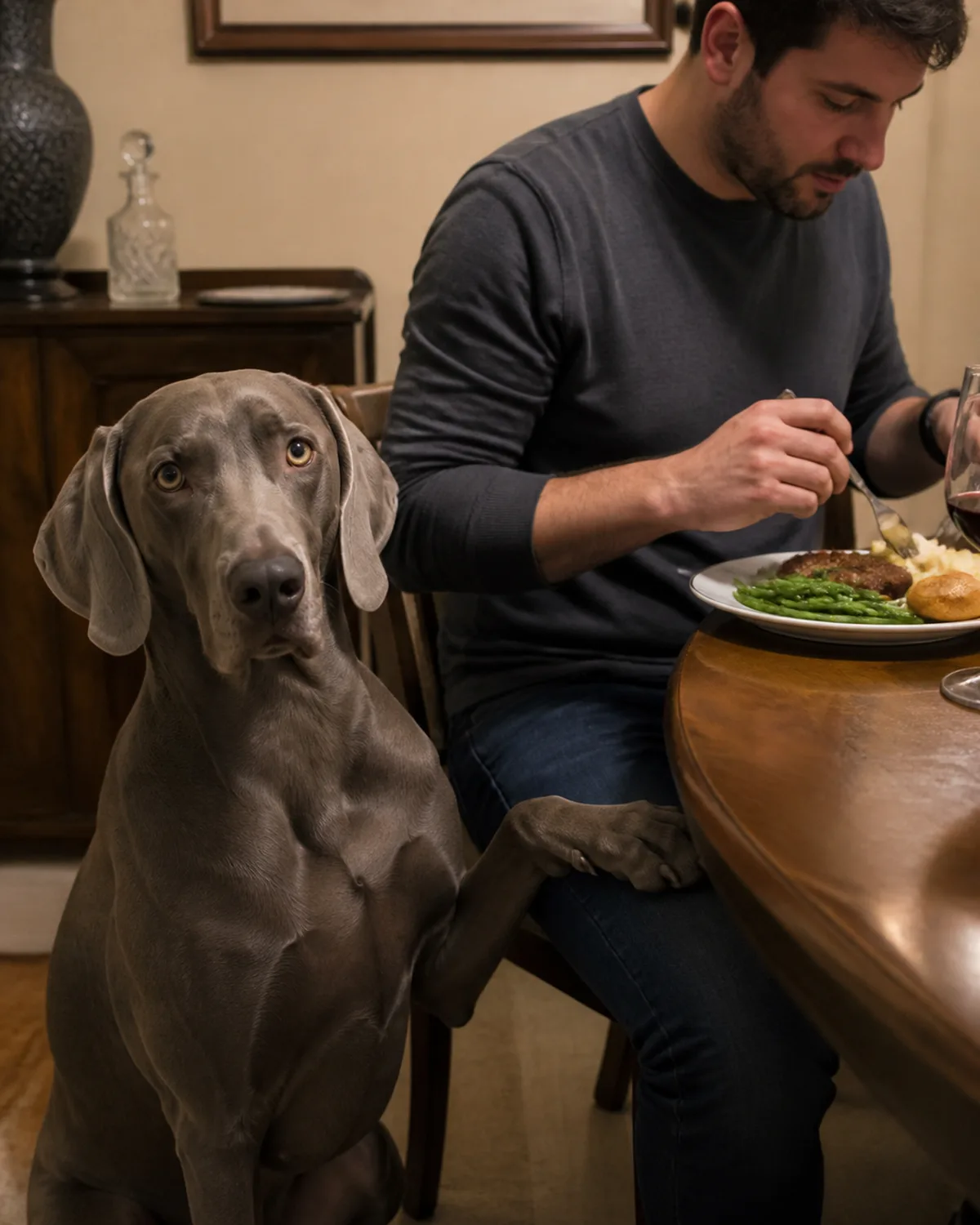
Most owners think pushing a dog away or saying "no" counts as discouraging begging. From the dog's perspective, those responses are all forms of attention — and attention is what the dog wants.
True ignoring means zero eye contact, zero verbal response, and zero physical interaction. When your dog puts a paw on your leg, you do not look down. When they whine, you do not say "stop." When they nudge your hand, you do not push them away. You continue eating as if the dog does not exist.
This is harder than it sounds, and it gets harder before it gets easier. The first few days of true ignoring often produce an extinction burst — the behavior temporarily escalates because the dog is trying harder to get the response that used to work.
- Zero eye contact, even a quick glance
- Zero verbal response, including "no" and "stop"
- Zero physical interaction, including pushing the dog away
- The extinction burst is temporary — hold firm through it
If you hold firm through the extinction burst, the behavior drops off sharply. If you crack during the escalation, you teach the dog that escalating works.
7. Train an Alternative Behavior That Pays Better
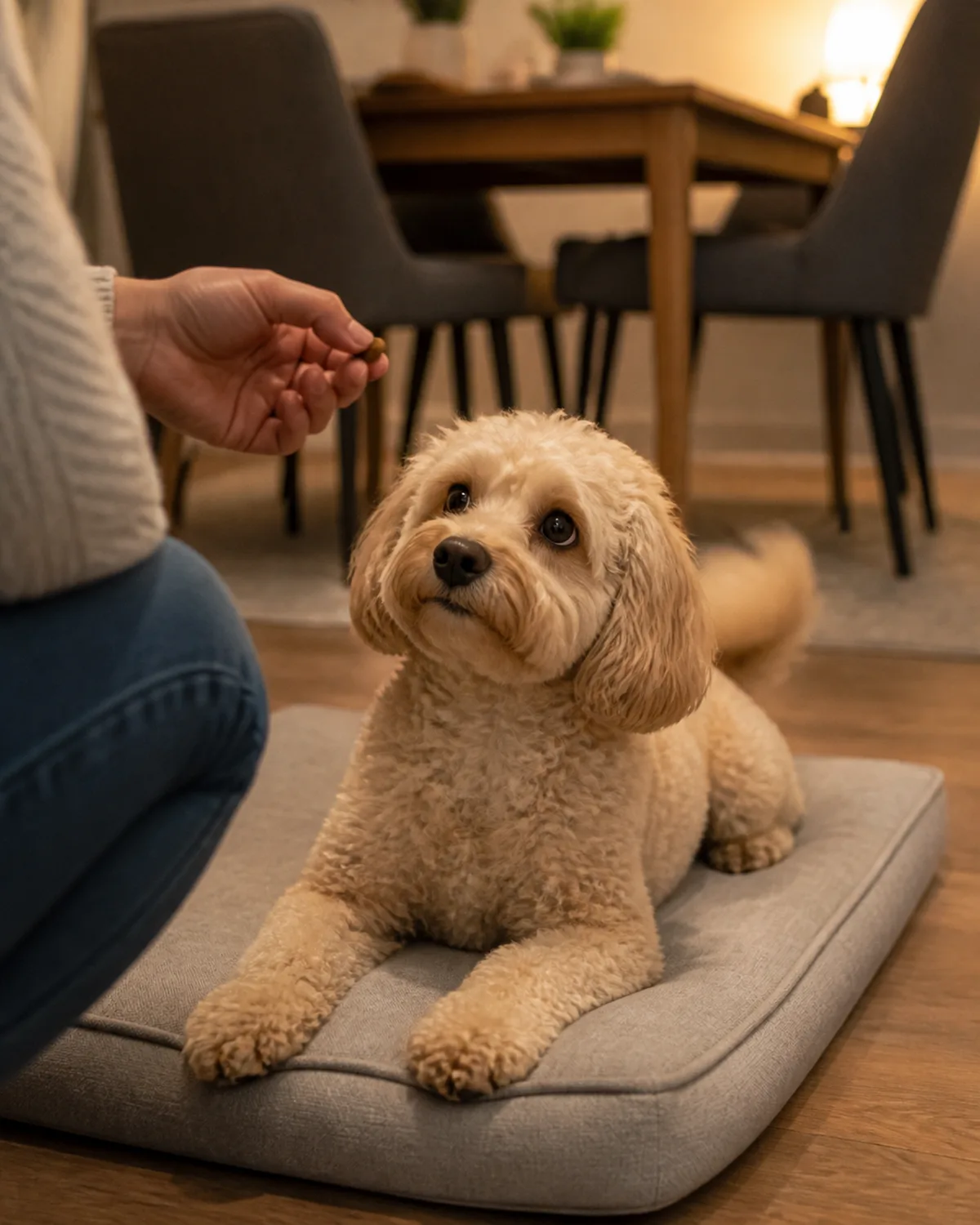
Instead of telling your dog what not to do, teach them what to do instead. This is the foundation of positive-reinforcement training: make the desired behavior more rewarding than the undesired one.
The formula is straightforward. During dinner, lying quietly on the place mat equals a high-value treat when the meal ends. Begging at the table equals nothing — no food, no attention, no reaction.
Over time, the dog runs the math. The place mat pays reliably. The table never pays. Given a choice between a guaranteed reward and a gamble that never hits, every dog eventually picks the guarantee.
- Start with short meals and immediate end-of-meal rewards
- Use high-value treats that compete with what is on your plate
- Gradually extend the wait time as the dog gets reliable
- The end-of-meal treat becomes a ritual the dog looks forward to

Written by Jess Calloway
Dog mom to three very different dogs. Every guide on Pawliqa is based on real experience, veterinary guidance, and way too many hours reading ingredient labels. More about Jess
8. Get Every Family Member on the Same Page
You can follow every technique on this list perfectly, and one family member who slips a piece of cheese to the dog under the table will erase all of it.
Begging is a household-level problem that requires a household-level solution. Sit everyone down and agree on three rules:
- No food from the table goes to the dog, ever
- When the dog begs, everyone ignores completely
- Rewards happen only on the place mat, after the meal ends
For young children, make the rules concrete: "If food falls on the floor, you pick it up and put it on your plate. Do not let the dog eat it." Kids are the most common weak link because dogs learn fast who drops food and who hands it over.
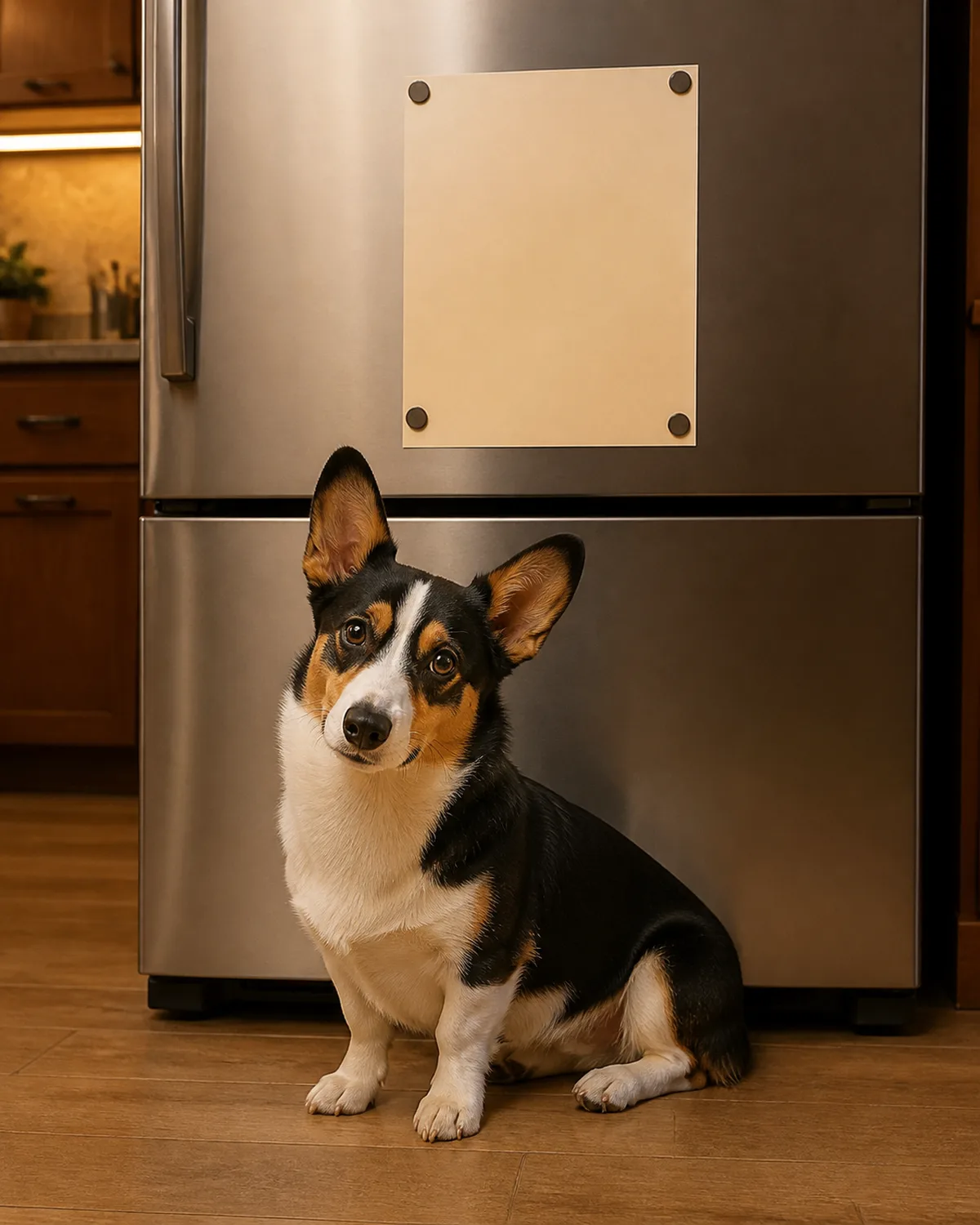
Post the rules on the refrigerator. Visible reminders work — especially for guests and extended family who visit occasionally and do not know the routine.
9. Handle Guests Who Want to Sneak Table Scraps
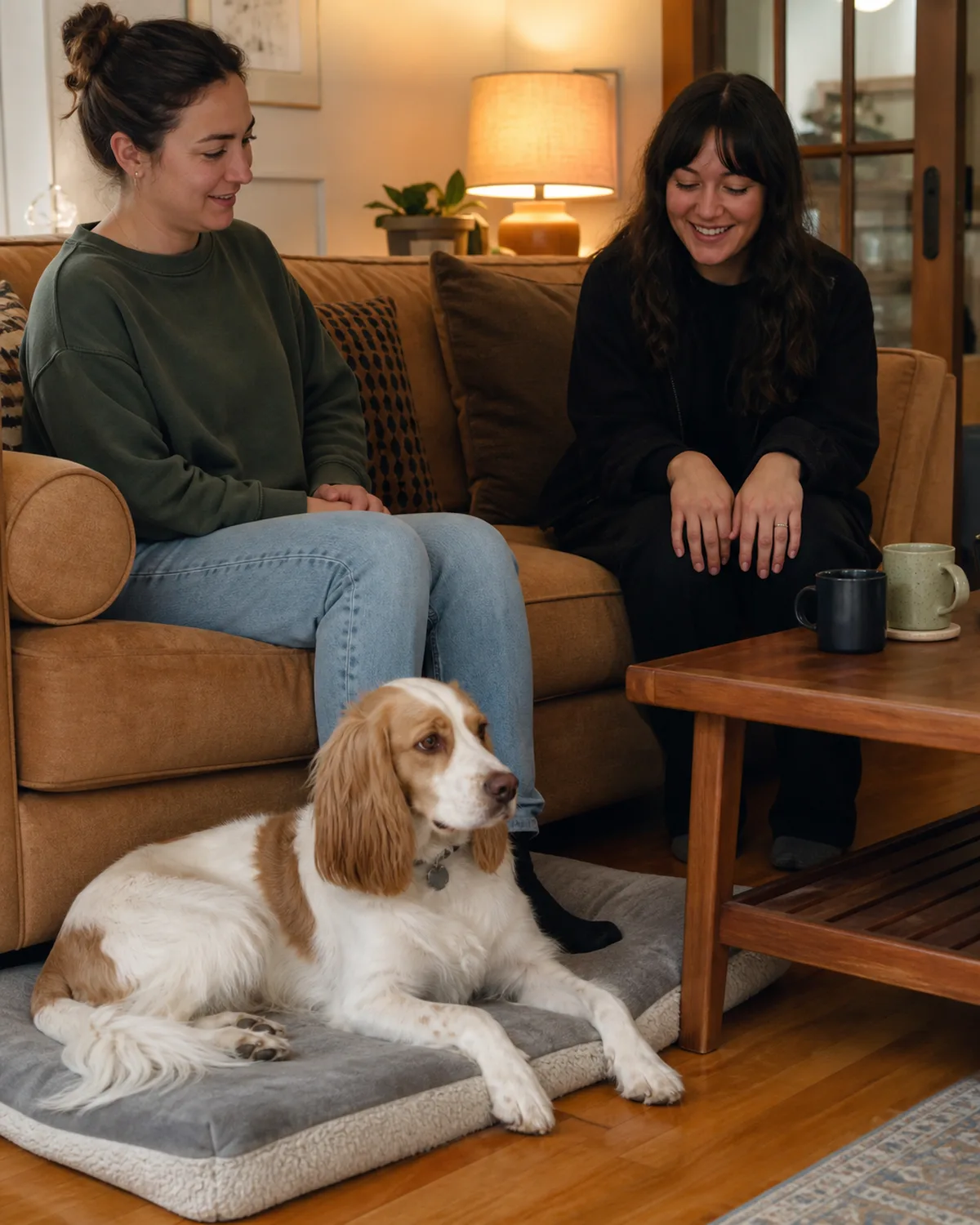
Guests are the biggest threat to your training progress. Most people mean well — they think feeding your dog is being friendly, and they do not realize one sneaked treat can undo weeks of work.
Tell guests before the meal: "We are training her not to beg, so please do not give her any food from the table." Keep the tone light and matter-of-fact.
Offer guests an alternative that lets them interact with your dog without undermining training. After dinner, hand a guest a training treat and let them ask the dog for a sit or a shake. This satisfies the guest's desire to bond with your dog while keeping the mealtime boundary intact.
- Tell guests before the meal starts, not mid-meal
- Position the dog's place mat where guests can see it but cannot reach the dog
- After dinner, let guests give a training treat for a trick
- Keep the request light — do not lecture
10. Keep Meal Prep Areas Off-Limits
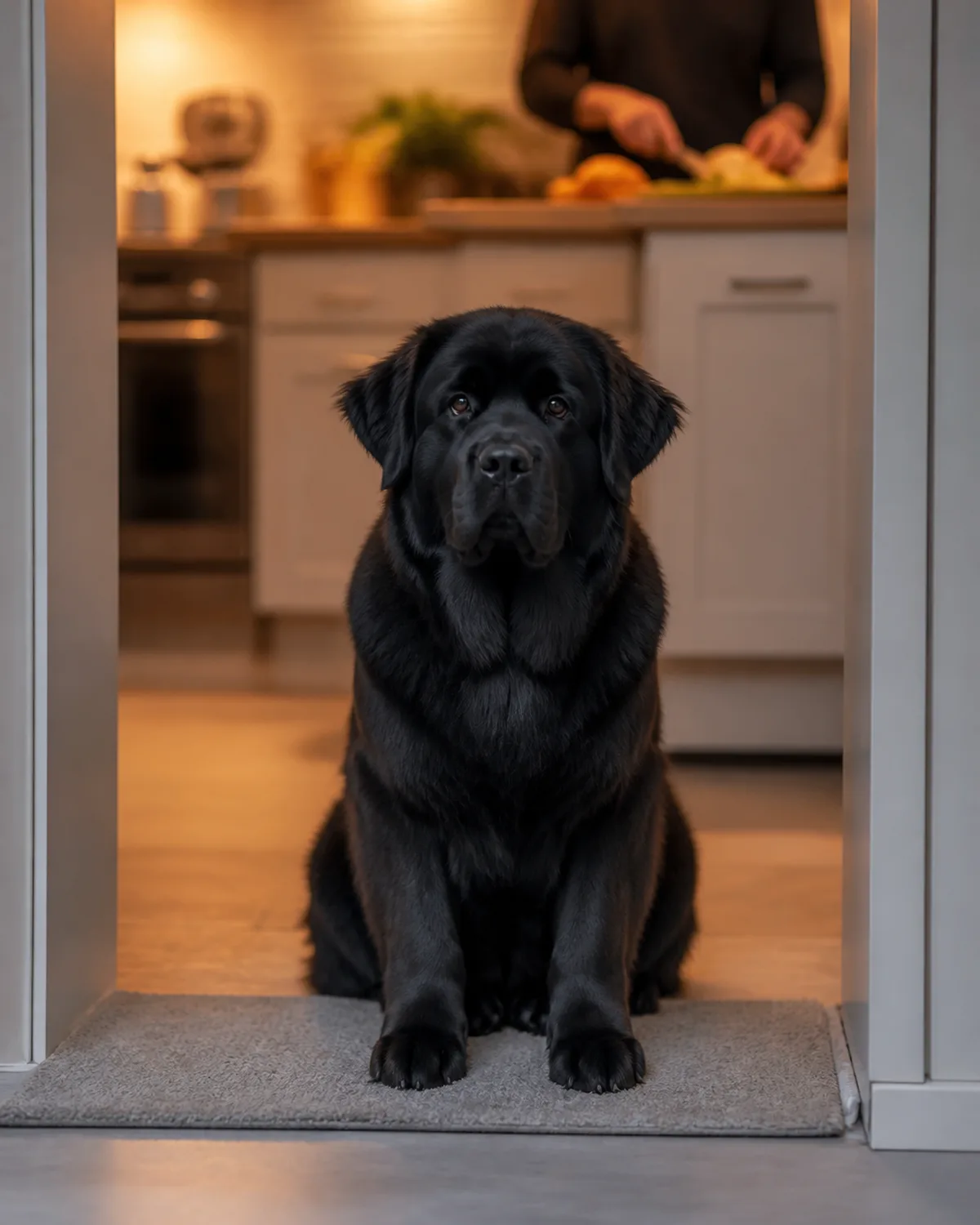
Begging does not only happen at the dinner table. The kitchen during meal prep is often worse because food is at counter height, things fall on the floor, and your dog learns that hovering near the cutting board pays off randomly.
Set a clear boundary at the kitchen entrance. A baby gate works, but even a visual line — a mat or a strip of painter's tape on the floor — can serve as a threshold your dog learns not to cross.
Teach the boundary the same way you teach place: reward the dog for staying behind the line, gradually increase duration, and add distractions. If food drops during prep, you pick it up — do not let the dog rush in to grab it.
- Put a visual or physical boundary at the kitchen entrance
- Reward your dog for staying behind the line during prep
- Pick up dropped food yourself, every single time
- Combine with a scatter feeding session in another room to redirect attention
11. Add Mental Exercise Before Dinner to Lower the Drive
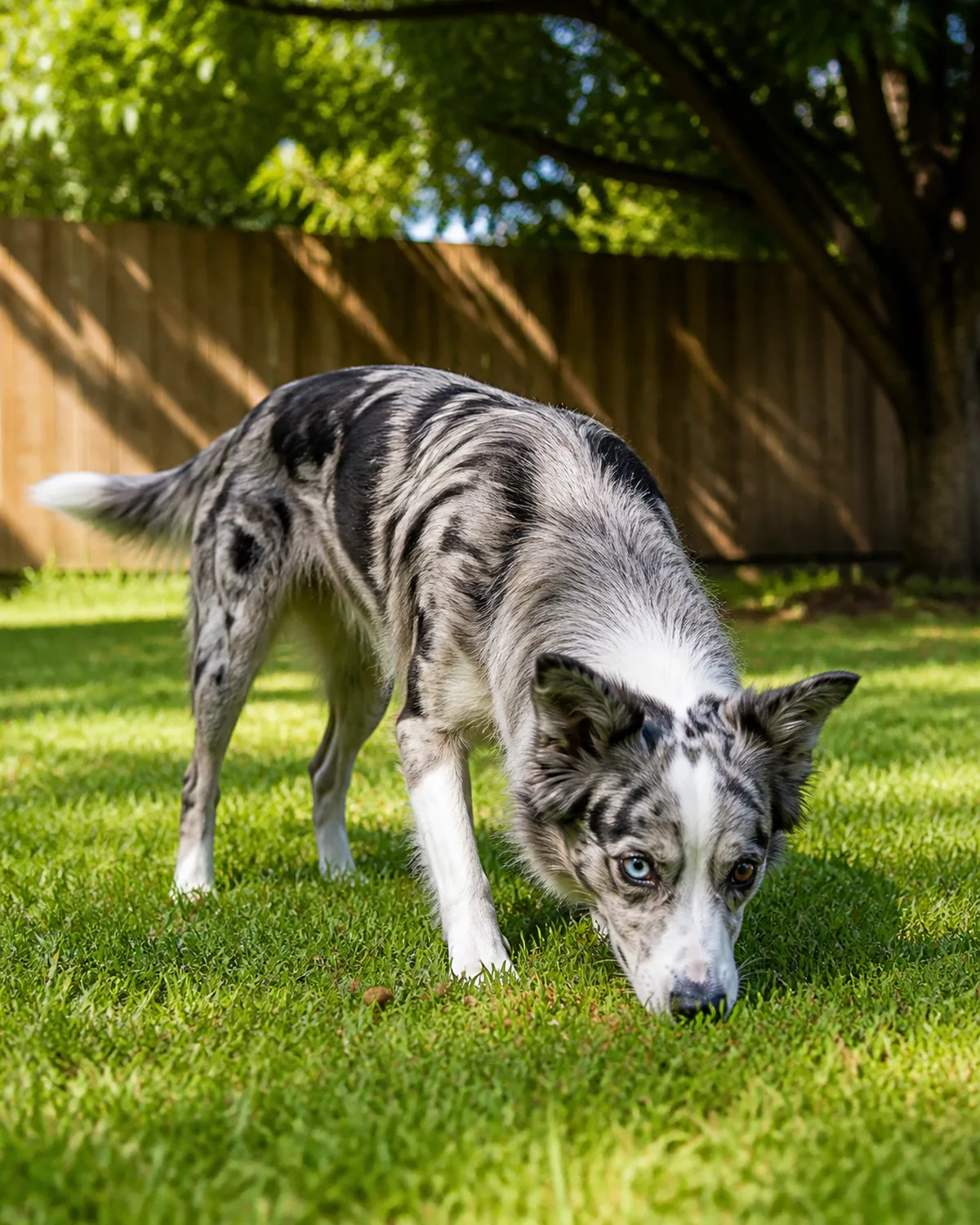
A mentally tired dog has less impulse energy to direct at your plate. Thirty minutes before dinner, run a quick brain session.
Scatter feeding in the backyard works well: toss a handful of kibble across the grass and let your dog sniff out every piece. This engages the seeking circuit — the same brain pathway that drives begging — and partially satisfies it before the meal starts.
Other quick options that burn mental energy fast:
- A puzzle feeder that takes ten to fifteen minutes to solve
- A five-minute rapid-fire training session cycling through known commands like sit, stay, and come
- A snuffle mat with kibble hidden in the folds
- A short game of hide-and-seek with treats around the house
Dogs that get regular mental enrichment before meals show measurably less food-oriented anxiety. The begging will not disappear overnight, but the intensity drops enough to make every other technique on this list more effective.
Save this for later
12 Ways to Stop Dog Begging
- 1Teach place firstGive your dog a clear job during meals with a reliable place command on a mat.
- 2Feed before you eatYour dog gets their full meal 15 minutes before you sit down to eat yours.
- 3Never reward itOne piece of table food undoes weeks of training. Intermittent rewards are the hardest to break.
- 4Use a baby gateA physical barrier during early training is more reliable than willpower alone.
- 5Redirect with a chewA frozen KONG or lick mat given before you sit down keeps mouths and brains busy.
- 6Practice true ignoringZero eye contact, zero words, zero touch. Push through the extinction burst.
- 7Train an alternativeMake lying on the mat more rewarding than begging at the table.
- 8Align the familyOne person sneaking scraps erases everyone else's progress. Post rules on the fridge.
- 9Brief your guestsTell them before the meal, offer a post-dinner treat alternative for bonding.
- 10Block kitchen accessA mat or gate at the kitchen entrance stops prep-time begging at the source.
- 11Tire the brain firstScatter feeding or a puzzle feeder 30 minutes before dinner drains food-seeking energy.
- 12Check for medical causesSudden begging plus weight loss or behavior changes could signal something a vet should see.
12. Know When Begging Might Signal a Real Problem
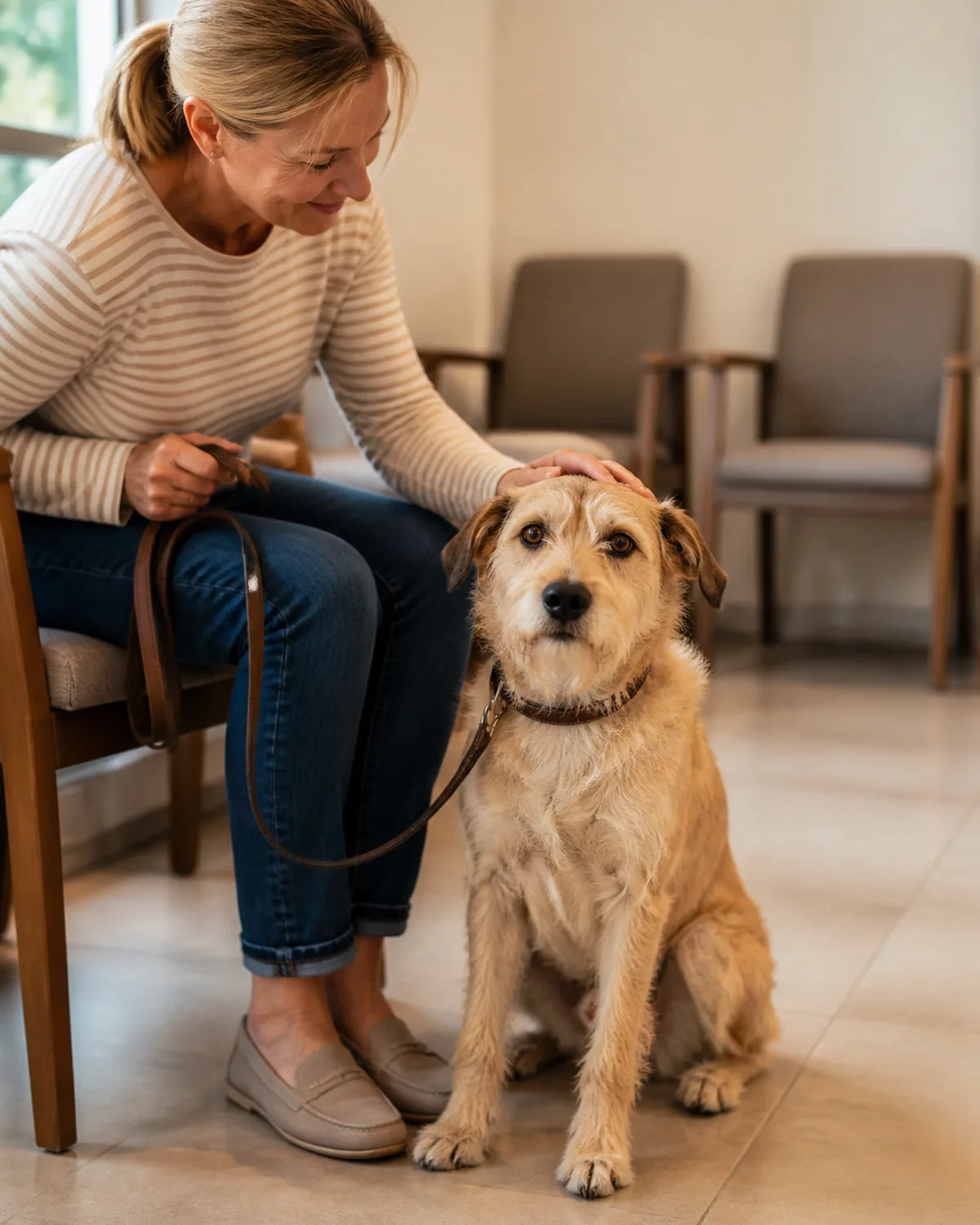
Most begging is a learned behavior that responds to training. But in a small number of cases, sudden or dramatically increased begging can signal something medical.
Watch for these combinations:
- Sudden increase in begging plus unexplained weight loss — could indicate intestinal parasites, malabsorption, or pancreatic insufficiency
- An older dog that never begged before suddenly starting — may be an early sign of canine cognitive dysfunction, which changes established behavior patterns
- Extreme food obsession combined with increased thirst and urination — worth checking thyroid function and ruling out metabolic conditions
If your dog's begging does not respond at all to consistent training over four to six weeks, and especially if it comes with other changes like weight loss, lethargy, or behavioral shifts, schedule a vet visit to rule out underlying causes.
Training addresses the behavior. A vet visit addresses the possibility that the behavior is a symptom of something else entirely.
Common questions
FAQ
How long does it take to stop a dog from begging?
Most dogs show significant improvement within two to three weeks of consistent training. Complete elimination of the behavior typically takes four to eight weeks depending on how long the dog has been begging and how consistently every household member follows the same rules.
Should I put my dog in a crate during meals?
A crate can work as a short-term management tool, but it does not teach the dog anything about mealtime behavior. A place command on an open mat is better long-term because the dog learns to self-regulate around food rather than being removed from the situation.
Why does my dog only beg from certain family members?
Dogs beg from whoever has rewarded the behavior in the past. If your dog targets one specific person, that person has almost certainly given the dog food from the table at some point — even if they deny it. The fix is getting that person on board with the same rules as everyone else.
Is it okay to feed my dog healthy table scraps?
You can share dog-safe foods like plain cooked chicken or carrots, but never from the table and never during your meals. Put the food in the dog's bowl during their regular feeding time to keep the mealtime boundary clear.
My dog stares silently without whining — is that still begging?
Yes. Silent staring is the same behavior with a quieter presentation. The dog is still expecting food from the table, just without the vocalization. Treat it the same way: ignore completely and reward the place command instead.