We brought our youngest home at eight weeks and spent the next six weeks agonizing over the same question every new puppy parent asks. Can she go in the backyard? Can we carry her to the coffee shop? What about the sidewalk?
The answer is not a single date on the calendar. It depends on where your puppy is in their vaccine schedule, where you want to take them, and how you manage the gap between socialization needs and disease risk.
Here are thirteen safety rules that helped us navigate those early weeks without missing the socialization window or taking unnecessary chances.
1. Understand the Vaccination Window Before You Plan Any Outings
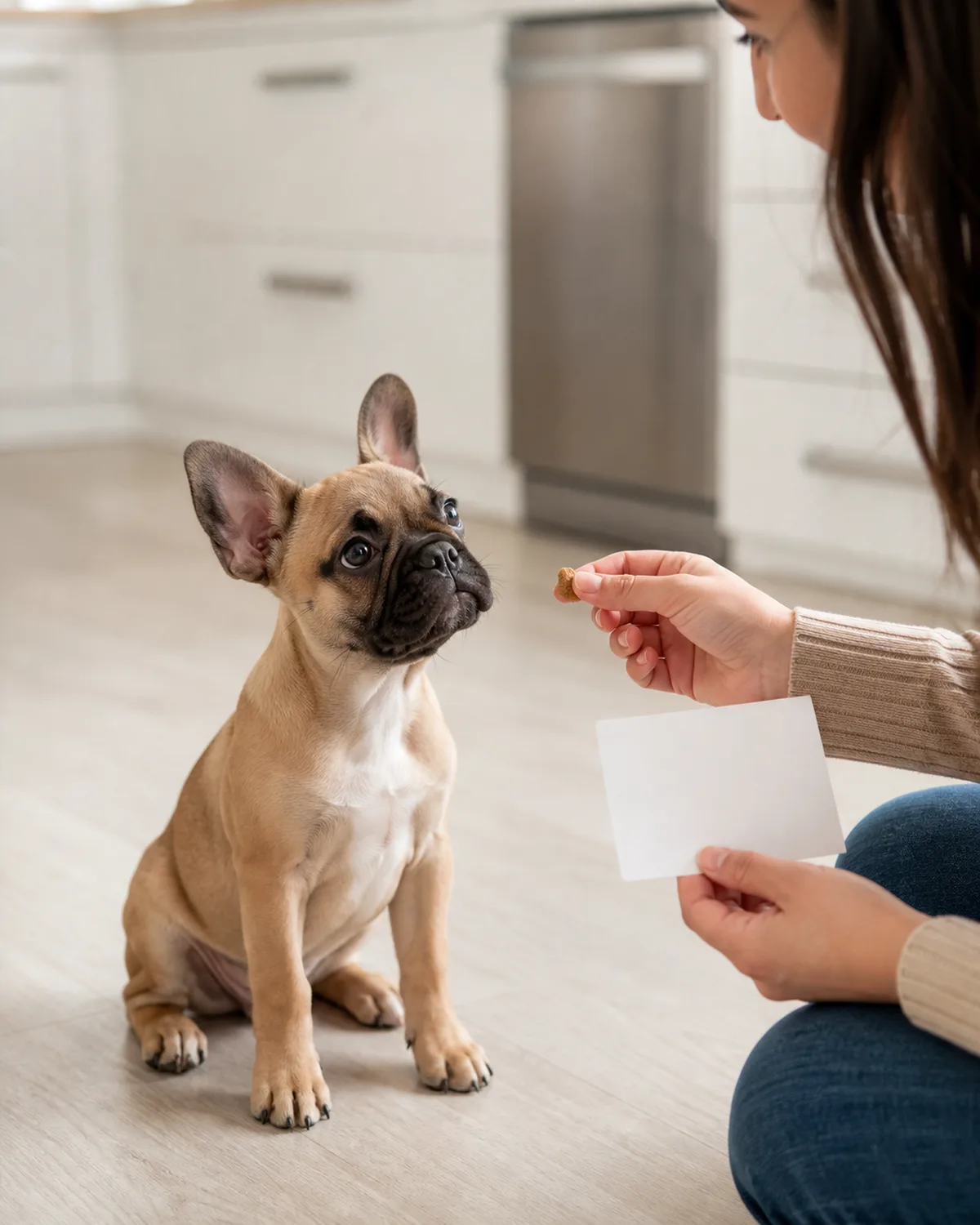
Your puppy starts their core vaccine series between six and eight weeks old. The full course wraps up somewhere between twelve and sixteen weeks, depending on the schedule your vet chooses and whether your puppy needs an extra booster.
During that gap, protection is partial. Diseases like parvovirus and distemper spread through contaminated ground, infected feces, and nose-to-nose contact with sick animals. The answer to "when can my puppy go outside" depends entirely on where they are in this timeline.
- 6-8 weeks: first round of core vaccines (DHPP). Protection is building but not reliable.
- 10-12 weeks: second round. Antibodies are rising but still gaps exist.
- 14-16 weeks: final booster. Full protection begins roughly two weeks after this shot.
Your vet's specific schedule for your puppy is the only calendar that matters. Do not rely on a neighbor's advice or a generic chart online. Ask your vet directly: "At what point is my puppy safe for public ground?" and follow that answer.
For the full vaccine timeline breakdown, see our puppy vaccination schedule guide.
2. Use Your Own Backyard as the Safest First Outdoor Space
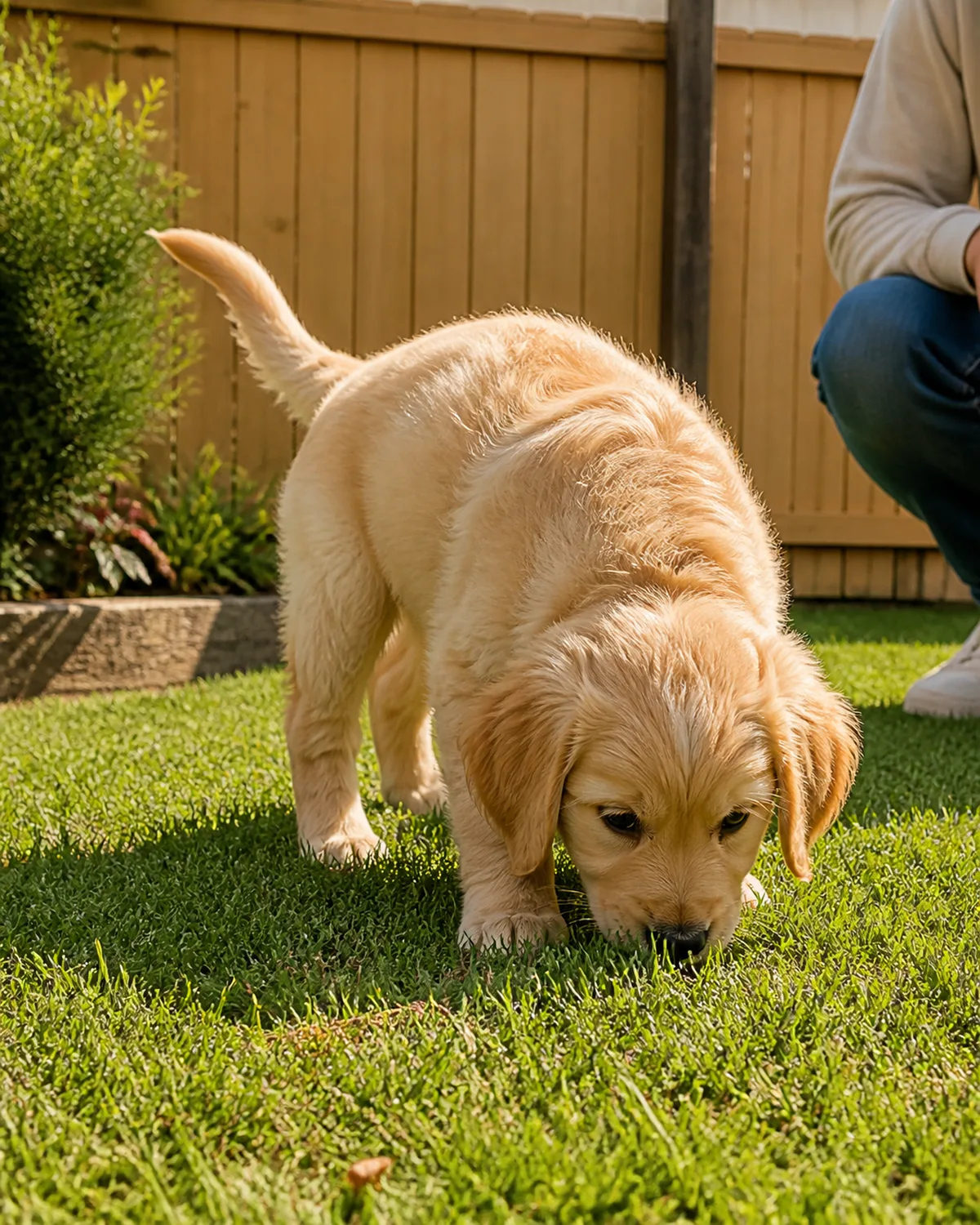
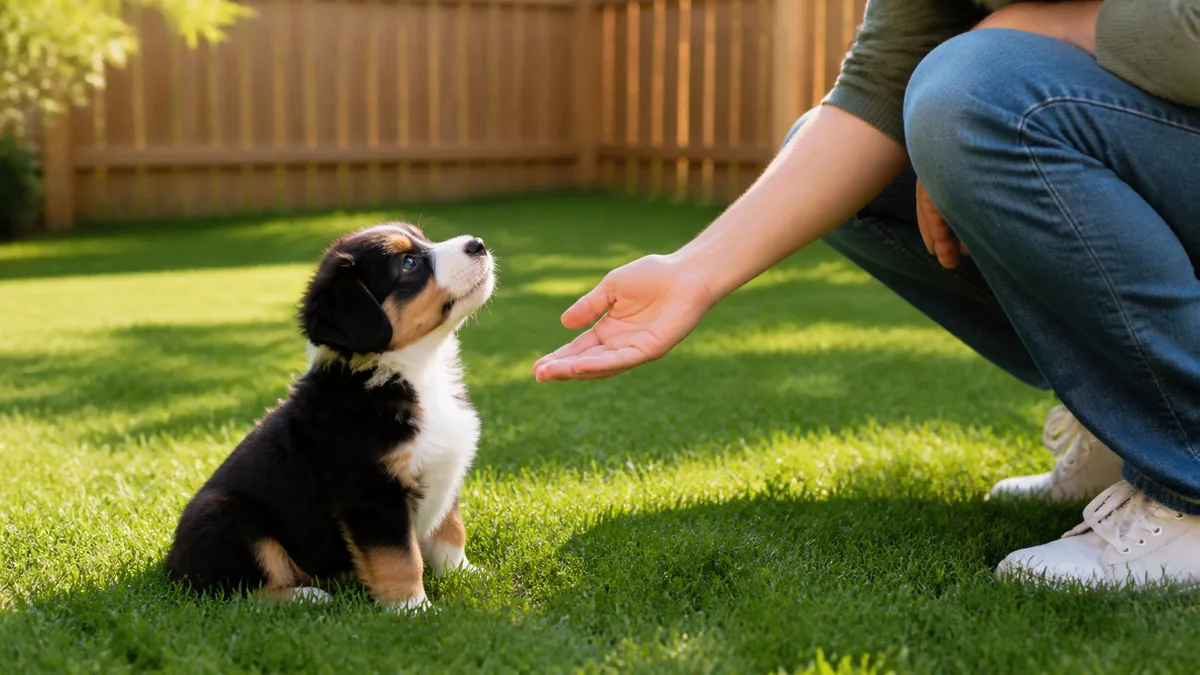
Your fenced backyard is the lowest-risk outdoor space available before vaccines are complete. You know what animals have been there, you control the environment, and you can check for hazards.
Before letting your puppy explore, do a quick sweep:
- Remove any standing water (breeding ground for bacteria and mosquitoes).
- Check for toxic plants like azaleas, lily of the valley, or sago palms.
- Clear animal droppings from raccoons, birds, or neighborhood cats.
- Make sure the fence is solid at ground level — puppies find gaps adults never notice.
Once the yard is clear, let your puppy loose. Let them sniff the grass, feel the sun on their coat, hear the birds, and experience wind for the first time. This early sensory input is critical for brain development, and a private yard delivers all of it with almost none of the disease risk.
Tip
Backyard Is Also Potty Training Ground
Your backyard doubles as the safest potty training spot during the vaccine window. For a complete yard-based approach, see our potty training guide.
3. Carry Your Puppy in Public Before Vaccines Are Complete
The socialization window closes around fourteen to sixteen weeks. That overlaps directly with the vaccination window. Waiting until every shot is done to expose your puppy to the world means missing developmental experiences that cannot be recovered later.
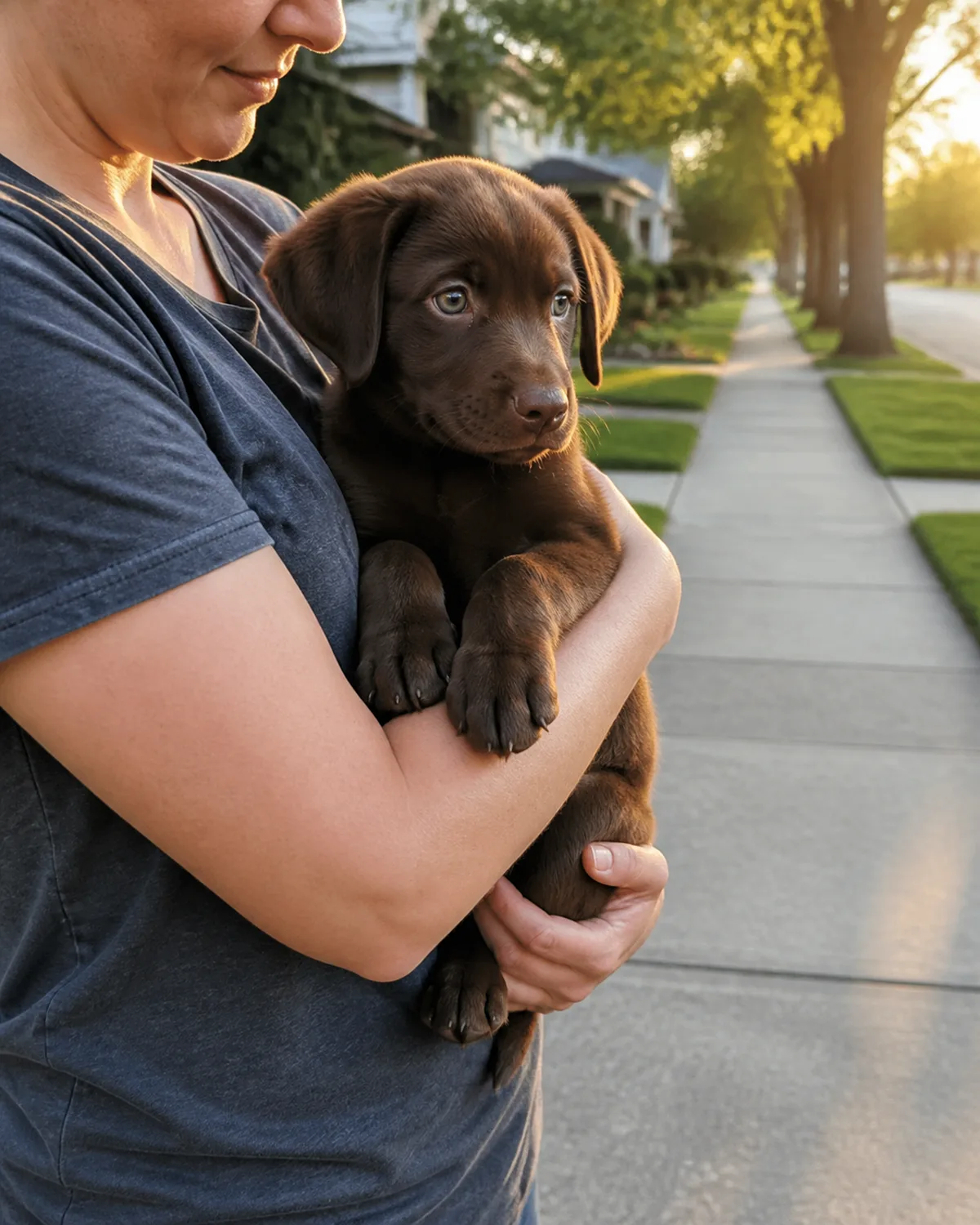
The workaround is straightforward: carry your puppy. Hold them securely against your chest and walk through a neighborhood. Stand outside a café. Visit a friend's front porch. Sit on a park bench.
Your puppy sees people, hears traffic, smells other animals, and watches the world move — all without touching contaminated ground. Paws off the ground cuts the primary transmission route for parvovirus and distemper.
- Use a sturdy sling or carrier if your puppy is heavy or wiggly.
- Let people approach and say hello while you hold the puppy — this counts as positive socialization.
- Avoid letting strangers' dogs sniff your puppy nose-to-nose unless you know their vaccination status.
4. Know Which Surfaces and Places Carry the Highest Risk
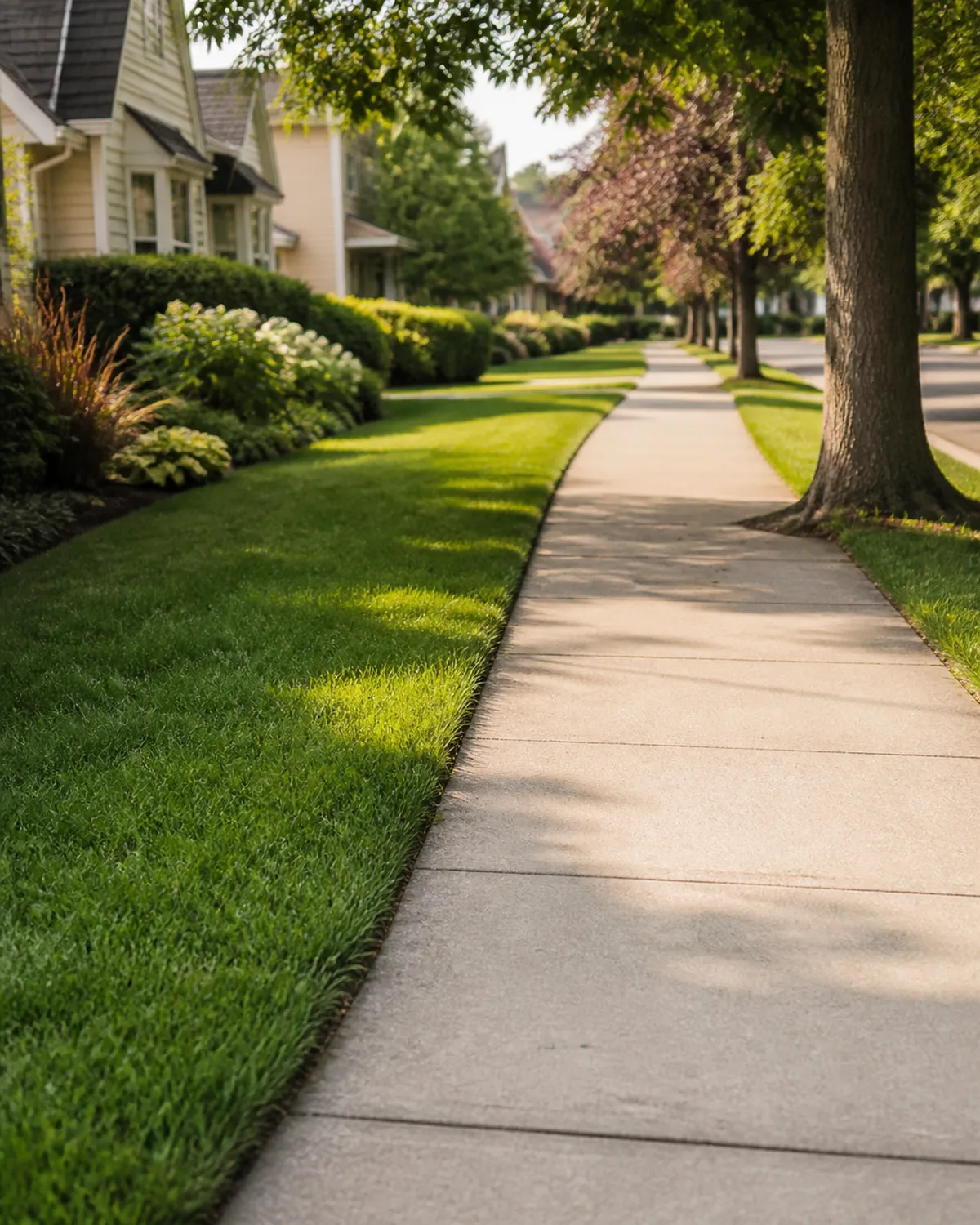
Not all outdoor ground is equally dangerous. Understanding the risk spectrum lets you make smart decisions instead of locking your puppy indoors for four months.
| Risk level |
Examples |
| High |
Dog parks, pet store floors, vet clinic lots, stagnant puddles |
| Medium |
Busy urban sidewalks, apartment common grass |
| Lower |
Quiet residential sidewalks, friend's vaccinated-dog yard |
| Lowest |
Your own fenced backyard, clean indoor spaces |
Parvovirus survives in soil for months. High-traffic dog areas concentrate that risk.
- A residential sidewalk where few dogs walk each day carries far less viral load than a dog park entrance.
- A friend's backyard with fully vaccinated dogs is safer than any public grass.
- When in doubt, carry your puppy over the questionable surface.
Save This
Risk Spectrum Quick Reference
- 1Your own fenced yardSafest outdoor space — you control what animals visit and can clear hazards
- 2Quiet residential sidewalksLow dog traffic means minimal viral contamination on the ground
- 3Friend's yard with vaccinated dogsKnown vaccination status removes the biggest variable
- 4Dog parks and pet storesHighest concentration of unknown dogs — wait until vaccines are fully complete
5. Start Leash Walks Two Weeks After the Final Vaccine Round
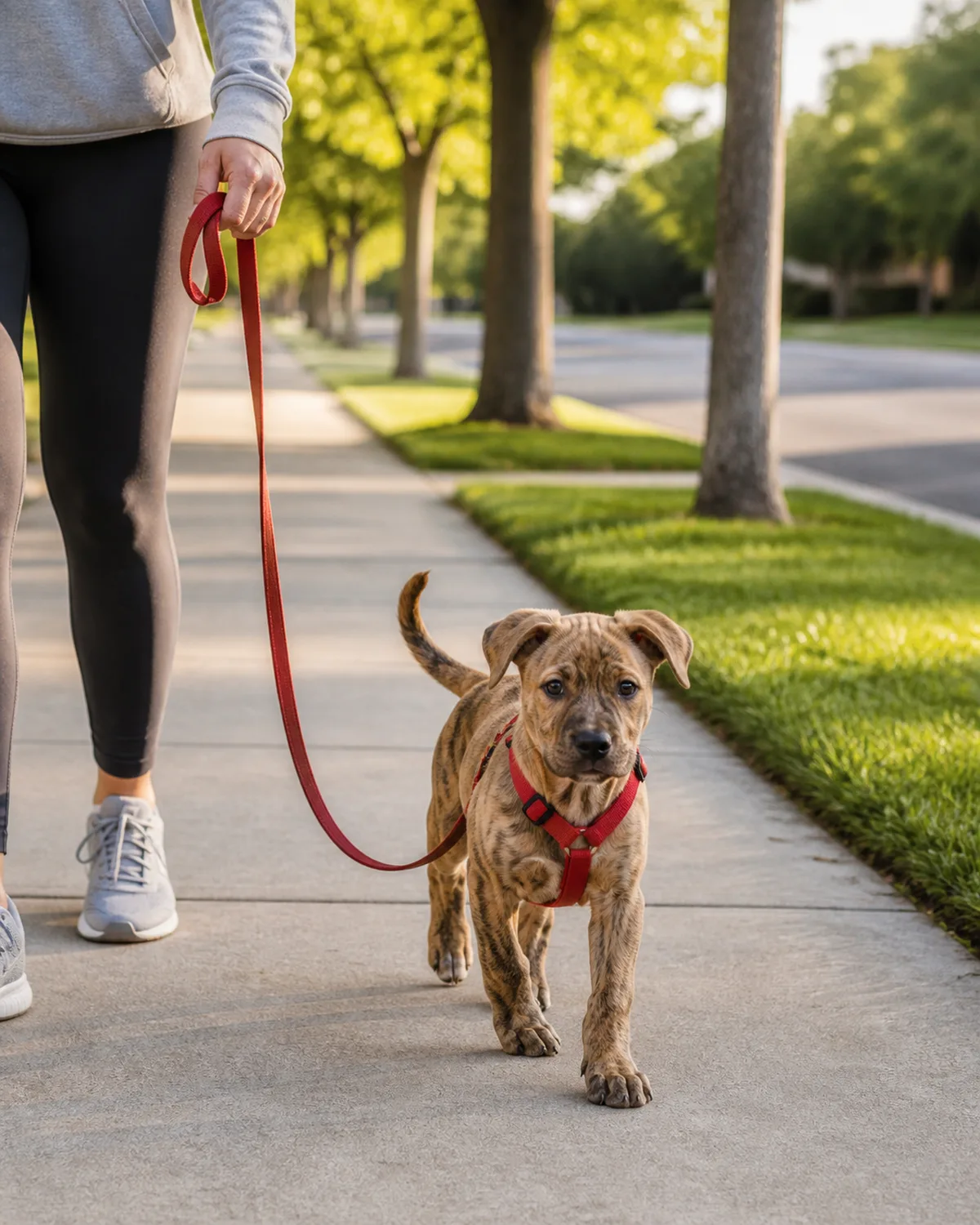
Your puppy's immune system needs roughly two weeks after that last booster to build peak antibody levels. Once your vet confirms full protection, real leash walks begin.
Start small:
- First week: five-to-ten-minute walks on quiet residential streets. Same route each day so the environment feels safe.
- Second week: extend to ten-to-fifteen minutes. Add one new block or turn.
- Third week onward: gradually increase distance and introduce busier streets, but always watch your puppy's energy.
This is not the day for a crowded park trail or a pet store run. Keep it calm, keep it short, and let your puppy process everything at their own speed. You are building a foundation, not logging miles.
6. Watch the Weather and Adjust Your Timing
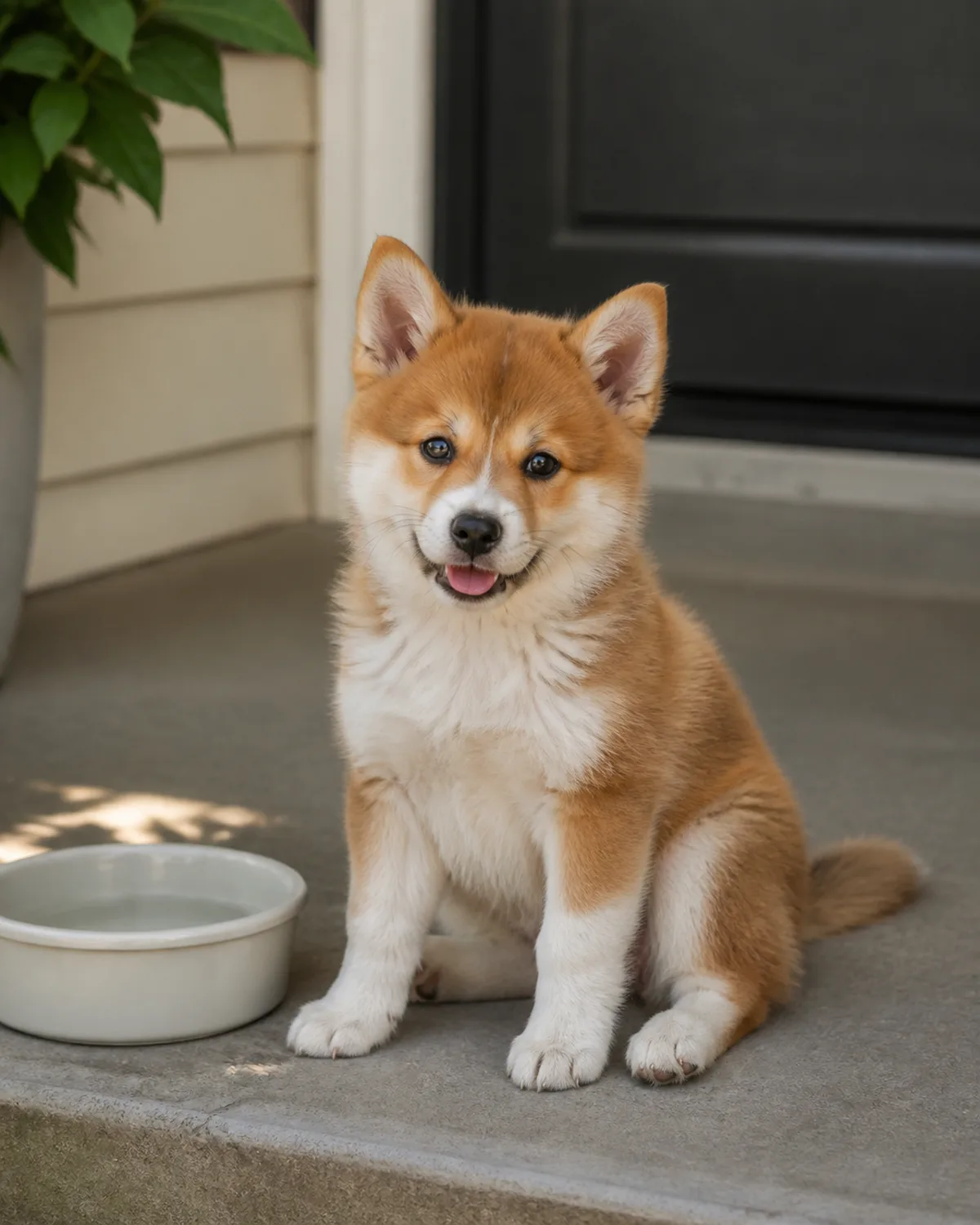
Puppies cannot regulate body temperature the way adult dogs can. Their small body mass heats up and cools down faster, and they have not yet developed the instinct to seek shade or shelter.
- Hot days (above 27°C / 80°F): walk early morning or after sunset. Place the back of your hand flat on the pavement for five seconds — if it burns you, it will burn puppy paw pads.
- Cold days (below 5°C / 41°F): short outings only. Watch for shivering, lifting paws, or trying to turn back. Small breeds and short-coated puppies need a light jacket below freezing.
- Rain: puddles may harbor bacteria and parasites. Skip the walk or stick to covered sidewalks and dry immediately after.
The safest windows are early morning and early evening during warm months, and midday during cold months. Weather dictates the schedule, not your routine.
Quick Guide
Weather Safety at a Glance
Hot PavementBack-of-hand test for 5 seconds. Too hot for you = too hot for paws. Walk before 8am or after 7pm.
Freezing ColdLimit outings to 10-15 minutes. Watch for paw lifting and shivering. Dry paws when you get home.
Rain and PuddlesStanding water harbors bacteria. Stick to covered paths or skip the walk. Towel-dry your puppy after.
Wind and StormsLoud noises scare young puppies. Wait for calm weather — forced exposure to storms builds fear, not resilience.
7. Pick a Properly Fitted Harness Instead of a Collar for Early Walks
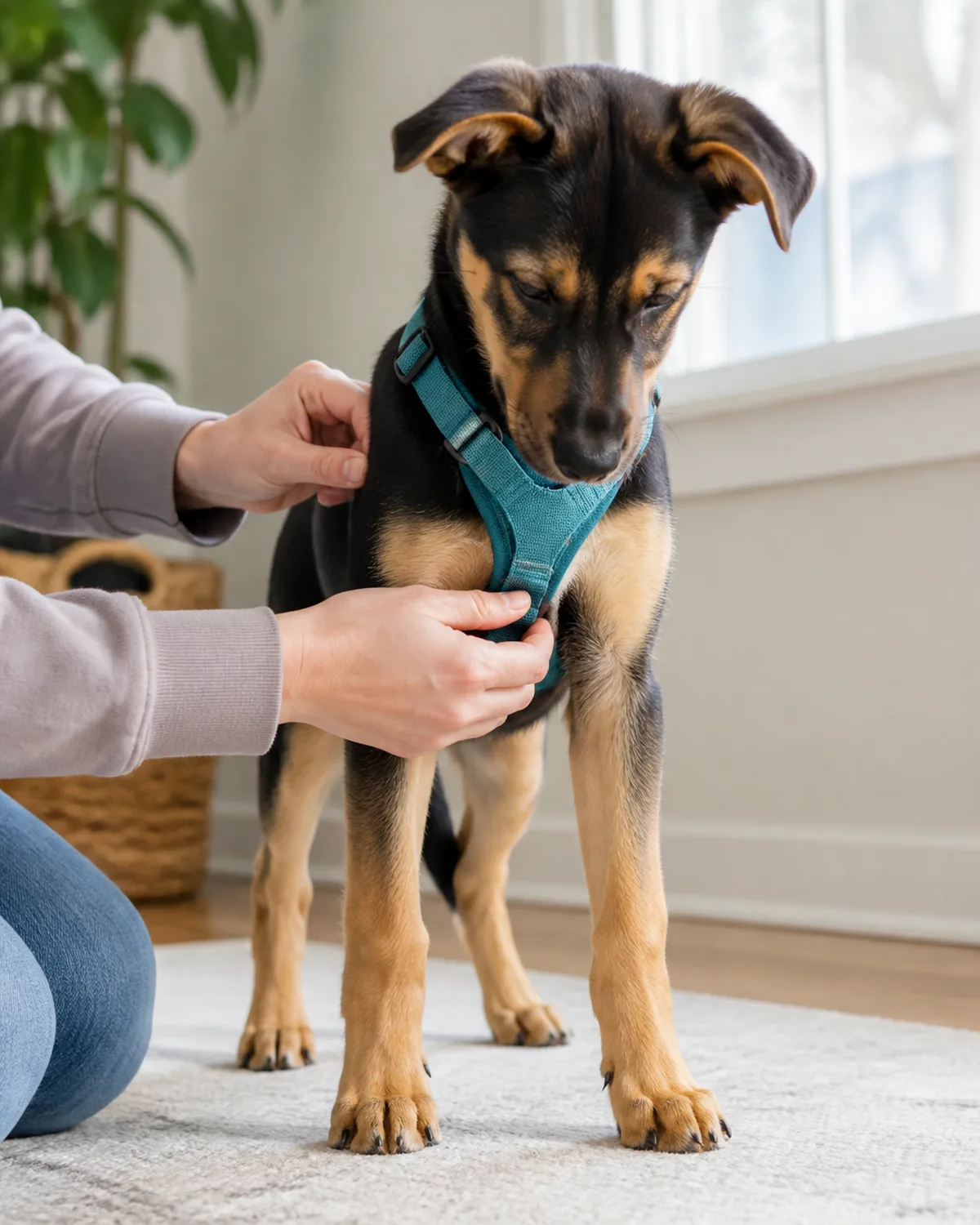
A puppy's trachea is soft cartilage, not the rigid structure in an adult dog. A flat collar with a leash attached puts all pulling force directly on that developing windpipe. One hard lunge can cause coughing, gagging, or long-term tracheal damage.
A Y-shaped harness distributes pressure across the chest and shoulders instead. Look for:
- Two points of adjustment (chest strap and belly strap) for a snug but not tight fit.
- Two-finger rule: you should be able to slide two fingers between the harness and your puppy's body at any point.
- No front-clip designs for very young puppies — these can affect gait development in growing dogs. A back-clip is fine until your puppy is old enough for loose-leash training.
Check the fit every two to three weeks. Puppies grow fast enough to outgrow a harness between vet visits.
8. Keep First Walks Short and Let Your Puppy Set the Pace
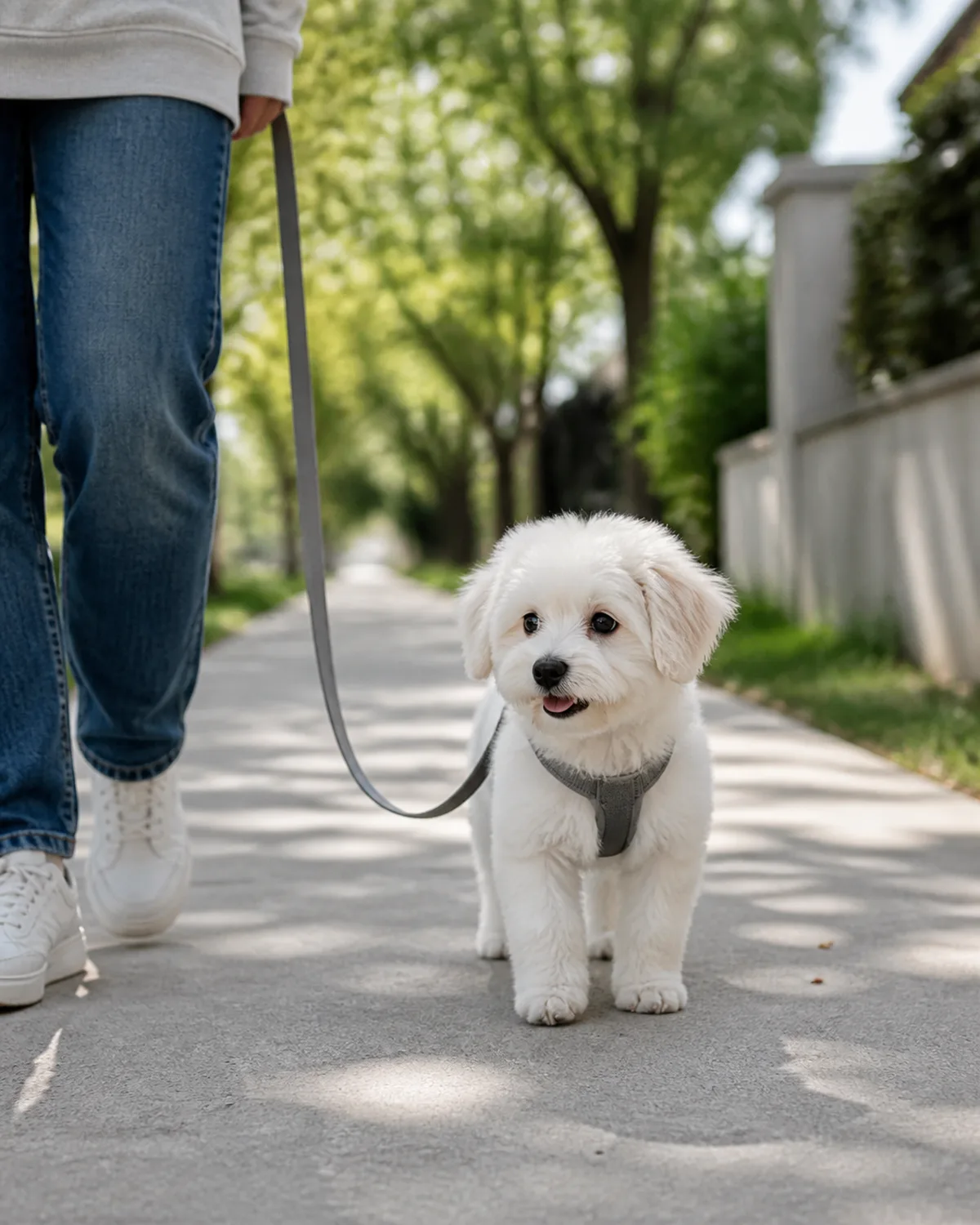
Here is a rough guide by age:
| Puppy age |
Walk length |
Notes |
| 8-12 weeks |
5-10 minutes |
Backyard only if vaccines incomplete |
| 12-16 weeks |
10-15 minutes |
Quiet streets after vet clears |
| 16-20 weeks |
15-20 minutes |
Gradually add distance |
| 20+ weeks |
20-30 minutes |
Watch energy, not the clock |
If your puppy sits down and refuses to move, they are tired, not stubborn. Scoop them up and head home. Do not drag them forward.
Overexercising a growing puppy stresses developing joints and growth plates. The damage often does not show up until months later as limping or an awkward gait. A common rule is five minutes of structured walking per month of age, twice a day — but watching your individual puppy matters more than any formula.
Tip
Sitting Down Is Not Defiance
A puppy who plants and refuses to move is communicating exhaustion, not stubbornness. Respond by ending the walk, not by pulling harder.
9. Let Your Puppy Sniff Everything Instead of Pulling Them Forward
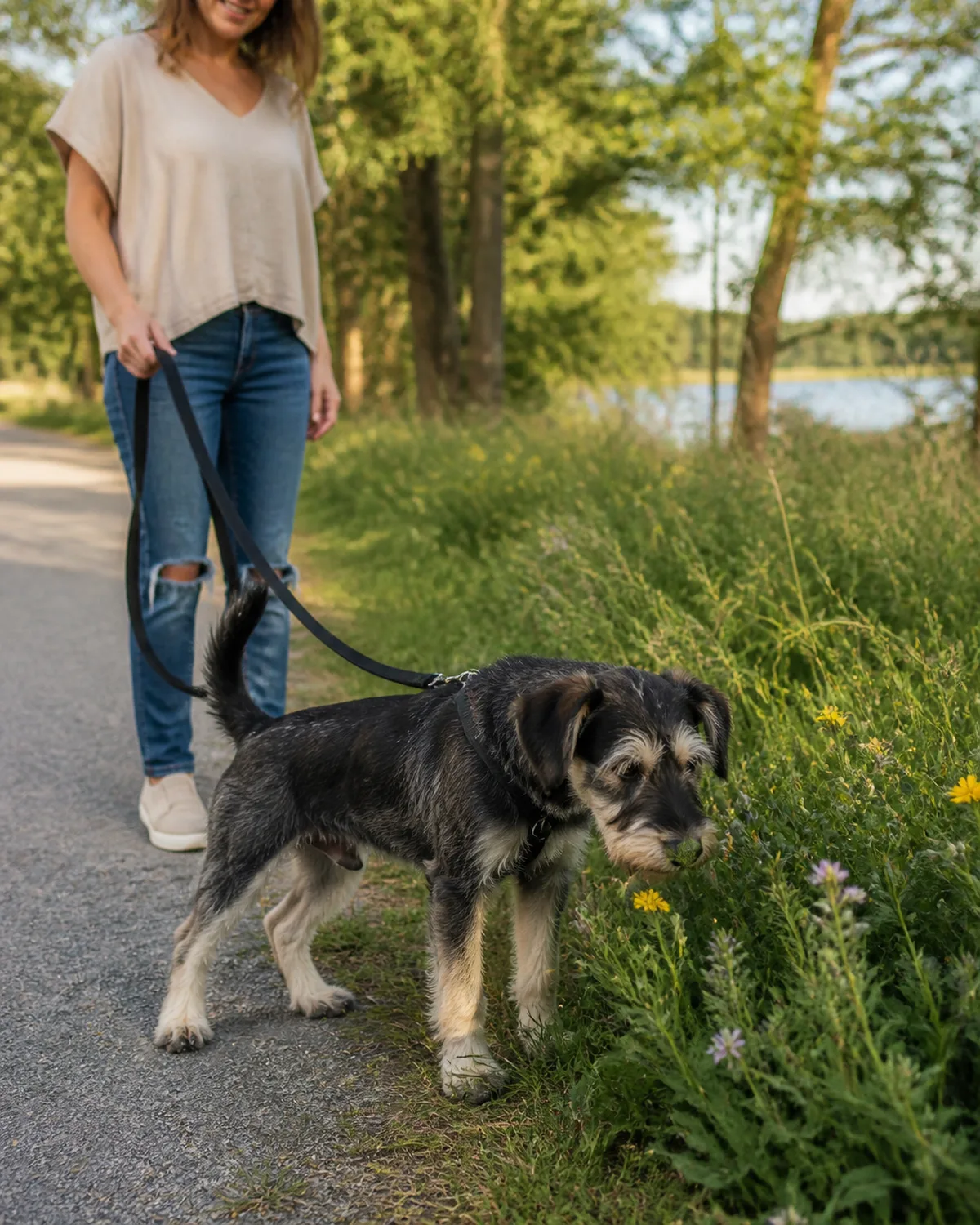
Sniffing is how puppies read the world. Every fire hydrant, leaf pile, and patch of grass carries information about who has been there, what animals live nearby, and what the ground smells like after rain.
Pulling your puppy away from every sniff spot is the outdoor equivalent of covering their eyes during a field trip.
Dedicate at least half of every walk to free sniffing at your puppy's chosen pace. A "sniff walk" where your puppy leads and you follow is more mentally enriching than a brisk march around the block. One fifteen-minute sniff walk can tire a puppy out more than a thirty-minute structured walk.
- Let your puppy choose the direction when it is safe to do so.
- Avoid yanking the leash when they stop to investigate.
- The only time to redirect is if they head toward something genuinely unsafe — a busy road, broken glass, or animal droppings.
10. Introduce One New Environment at a Time
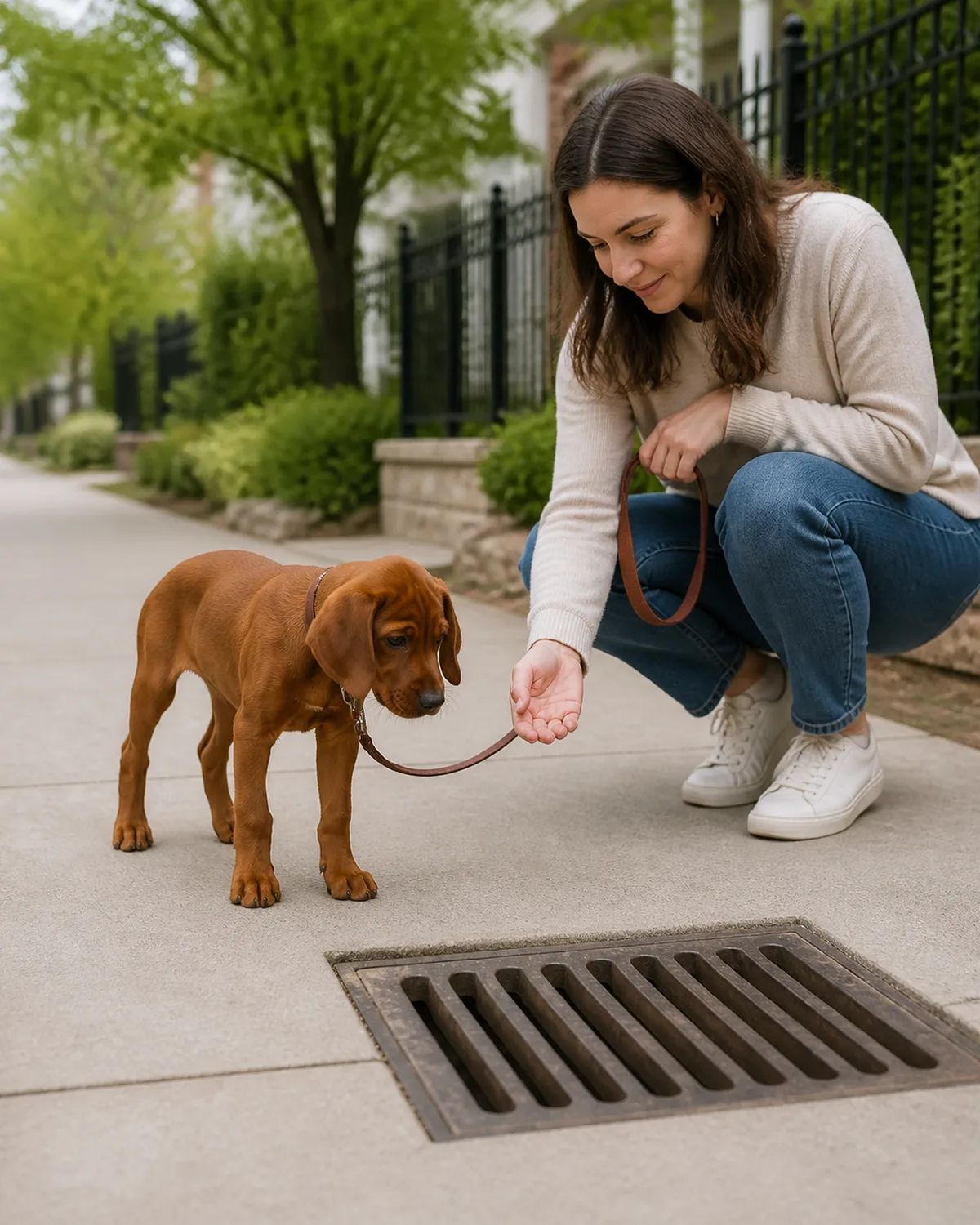
Today: a quiet residential block. Tomorrow: a path with metal grates and drain covers. The day after: a street where bicycles pass occasionally.
Each new environment adds one layer of sensory input, giving your puppy time to process and form a positive connection before you stack another stimulus on top.
Throwing a puppy into a busy farmer's market on their second outdoor outing overwhelms them. An overwhelmed puppy does not build confidence — they build fear associations that take weeks to undo.
How to layer new experiences
- Start with the most predictable, quietest version of the environment.
- Let your puppy observe from a distance before walking closer.
- Reward calm curiosity with treats and a soft voice.
- If your puppy freezes or tries to retreat, back up to a comfortable distance and try again tomorrow.
Related Guides
Building Outdoor Confidence
11. Bring Treats to Build Positive Associations With the Outside World
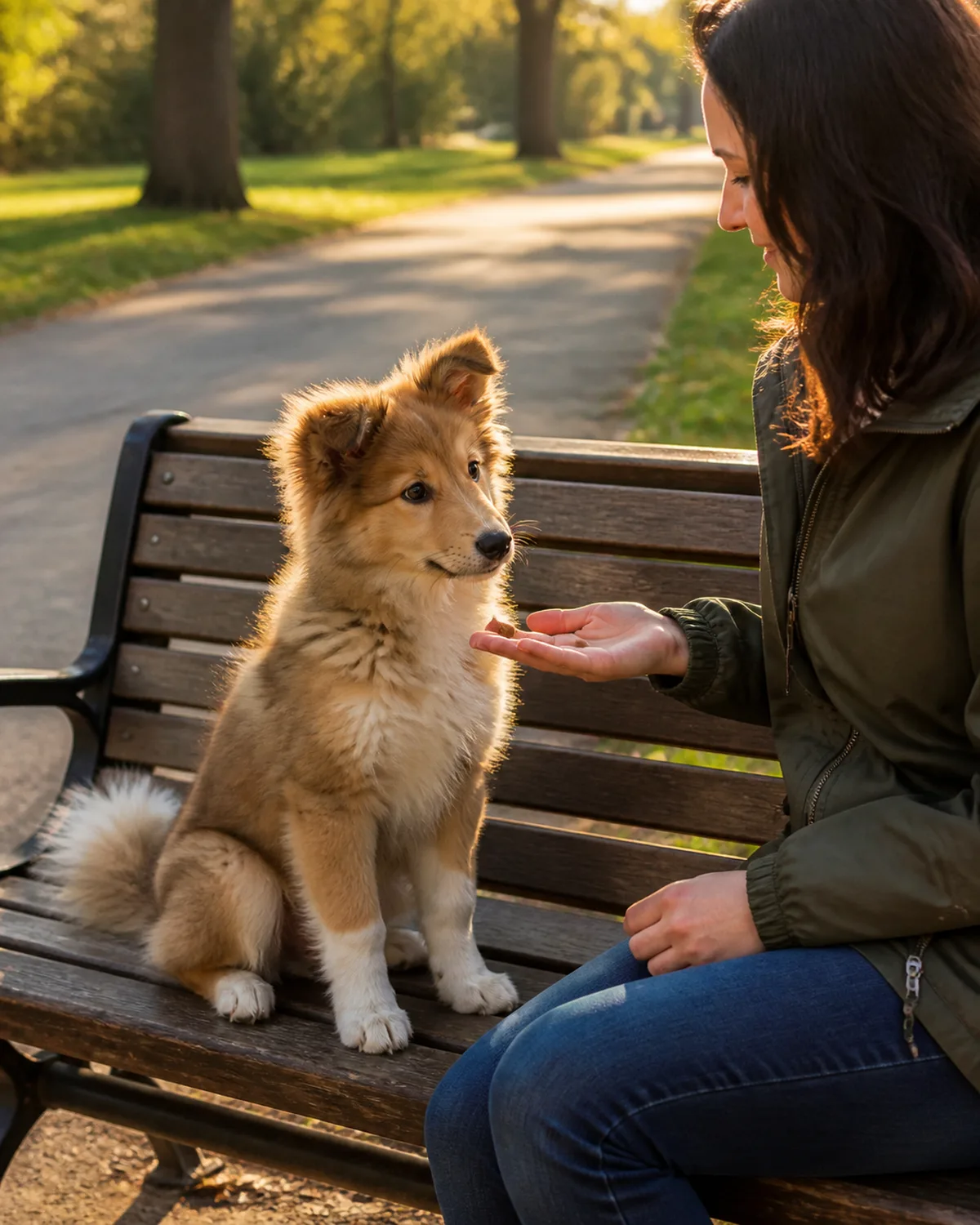
Every new stimulus your puppy encounters outdoors is a chance to deposit into their "the world is safe" bank account.
- Garbage truck rumbles past — treat.
- Child on a scooter zips by — treat.
- Sprinkler hisses on the lawn — treat.
- Strange dog barks from behind a fence — treat.
Without treats, outdoor exposure lands as neutral at best and frightening at worst. You waste the irreplaceable socialization window.
Carry small, soft, high-value treats in a pouch on every single outing until your puppy is at least six months old. The pouch becomes part of your walking gear, no different from the leash or the poop bags.
The treats do not need to be elaborate. Tiny cubes of cooked chicken, commercial training treats broken in half, or bits of string cheese all work. The key is speed — one small piece swallowed instantly — so the positive association lands in the same moment as the new experience.
12. Practice Recall in a Fenced Area Before Trusting Off-Leash Time
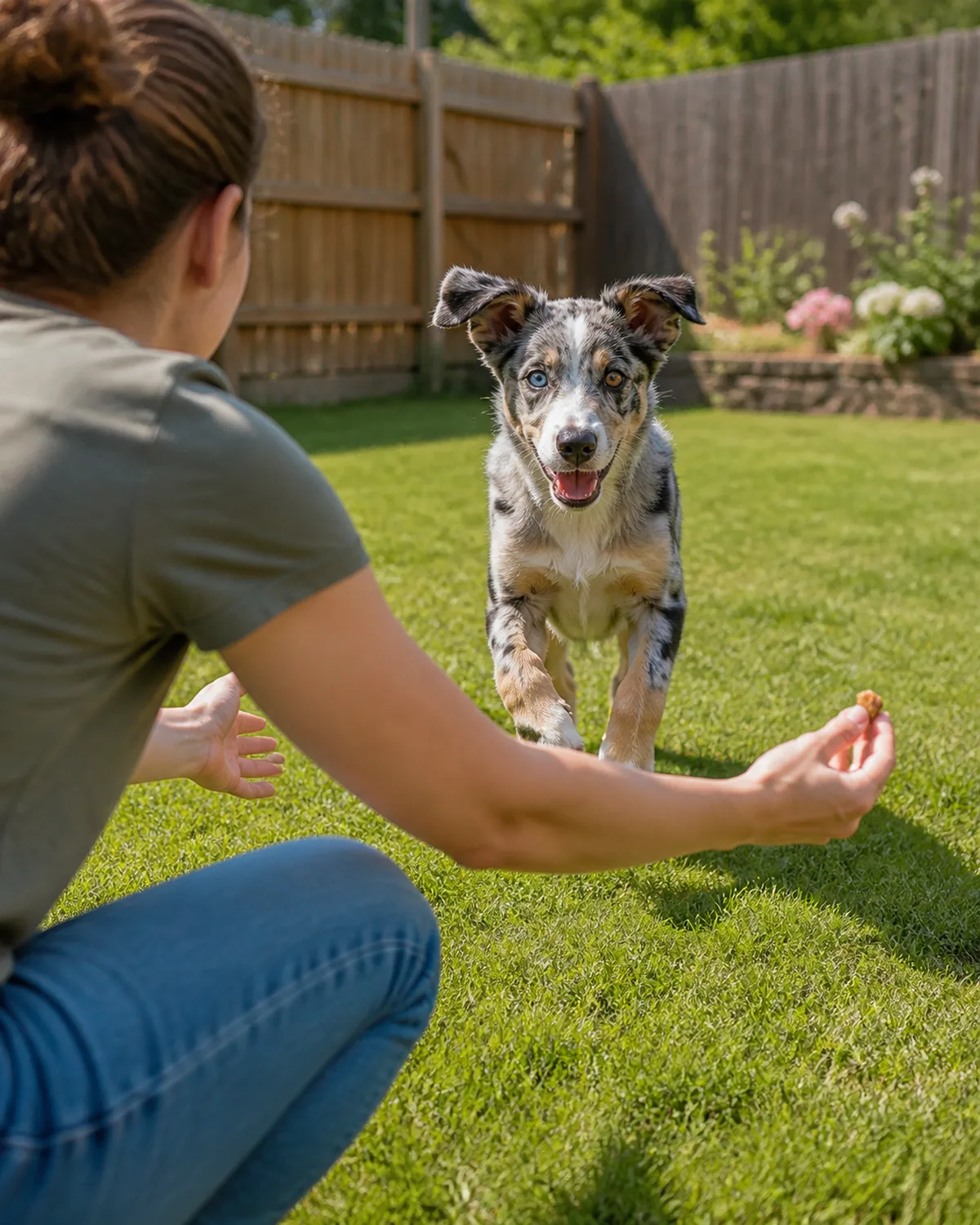
A puppy with no recall training and an open field is a puppy who will chase the first squirrel, bicycle, or blowing bag they see. The instinct to investigate is stronger than any bond at this age.
Start recall practice in your fenced backyard where the worst-case outcome is a lap around the yard, not a dash toward traffic.
- Say your puppy's name plus "come" in an upbeat voice.
- When they run to you, reward with a high-value treat and excited praise.
- Practice five to ten repetitions per session, three sessions per day.
Once your puppy comes to you nine out of ten times in that controlled space, try a fenced dog-free park with a long line attached. Only consider true off-leash time in open areas after months of consistent recall in progressively distracting environments.
For the complete recall training method, see our teach your dog to come when called guide.
Save This
13 Puppy Outdoor Safety Rules
- 1Check the vaccine timelineFull protection arrives two weeks after the final booster — ask your vet for the exact date
- 2Start in your own yardFenced backyard with no wildlife droppings is the safest first outdoor space
- 3Carry before vaccines finishHold your puppy in public — paws off the ground cuts the main disease transmission route
- 4Know the risk spectrumDog parks are high risk. Residential sidewalks are lower. Your yard is lowest.
- 5Wait two weeks post-final-shotAntibodies need time to reach full strength before public ground contact
- 6Watch the weatherHot pavement burns pads. Cold temps risk hypothermia. Walk early morning or evening in summer.
- 7Use a harness, not a collarPuppy tracheas are soft cartilage — a Y-shaped harness protects the developing windpipe
- 8Keep walks shortFive minutes per month of age, twice daily. Sitting down means tired, not stubborn.
- 9Let them sniff freelyHalf of every walk should be dedicated sniff time — it is mental enrichment, not dawdling
- 10One new place at a timeStack environments slowly so your puppy builds confidence instead of fear
- 11Treat every new stimulusGarbage truck + treat = safe association. Without treats, new things land as scary.
- 12Practice recall firstFenced yard at 90% success → fenced park with long line → then consider off-leash
- 13Watch for stress signalsYawning, lip licking, tucked tail, or freezing = time to shorten the outing and head home
13. Watch for Signs Your Puppy Is Overwhelmed and Needs to Go Home
Puppies cannot tell you they have had enough. But their body language speaks clearly if you know what to watch for.
Stress signals to recognize
- Lip licking (when no food is around): a self-soothing gesture.
- Repeated yawning: not sleepy, stressed.
- Tucked tail: the classic fear posture.
- Flattened ears: pressed tight against the skull.
- Freezing in place: the puppy stops moving entirely and stares.
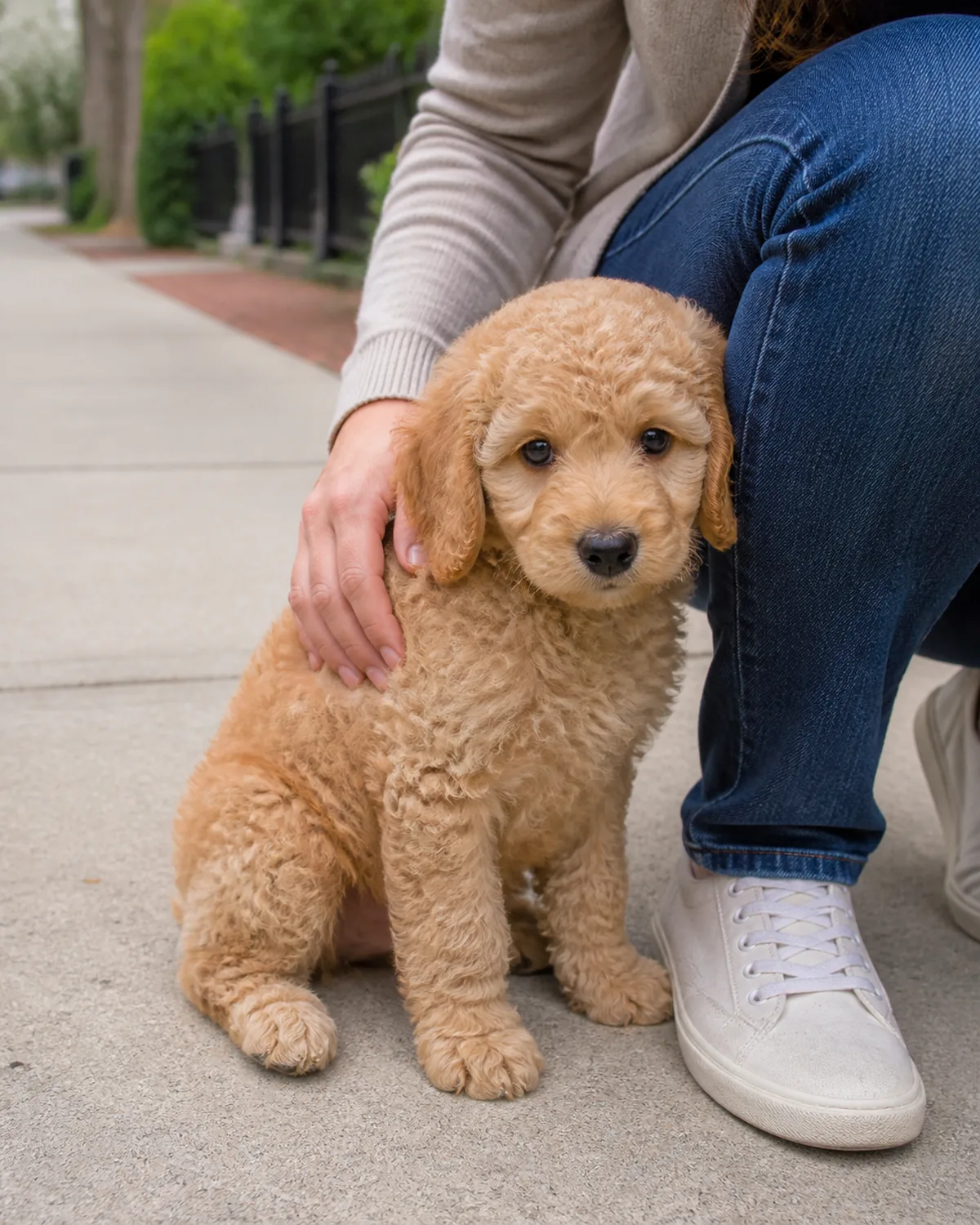
- Pressing against your leg: seeking physical safety from you.
- Sitting down and refusing to walk: exhaustion or overwhelm, not defiance.
When you see any combination of these, shorten the outing immediately. Pick your puppy up if needed and head home. Do not push through it hoping they will "get used to it." Pushing past a puppy's threshold teaches them that outside is something to endure, not enjoy.
Next time, go half the distance and bring twice the treats. Confidence builds in layers, not in one marathon session.
Tip
Half the Distance, Twice the Treats
If your puppy showed stress signals on today's walk, cut tomorrow's route in half and double the treat frequency. Building back slowly creates lasting confidence.
Written by
Jess Calloway
Dog mom to three very different dogs and the voice behind Pawliqa. Jess writes practical, experience-tested guides for real dog parents — not perfect ones. More about Jess
The vaccination window feels like a cage, but it is actually a runway. Every carried outing, every backyard sniff session, every porch-step observation is real experience landing in your puppy's developing brain.
By the time the final booster kicks in and real leash walks begin, a puppy who has been safely exposed to the world is not starting from zero. They are picking up where they left off, with a full bank of good associations and the confidence to spend them.