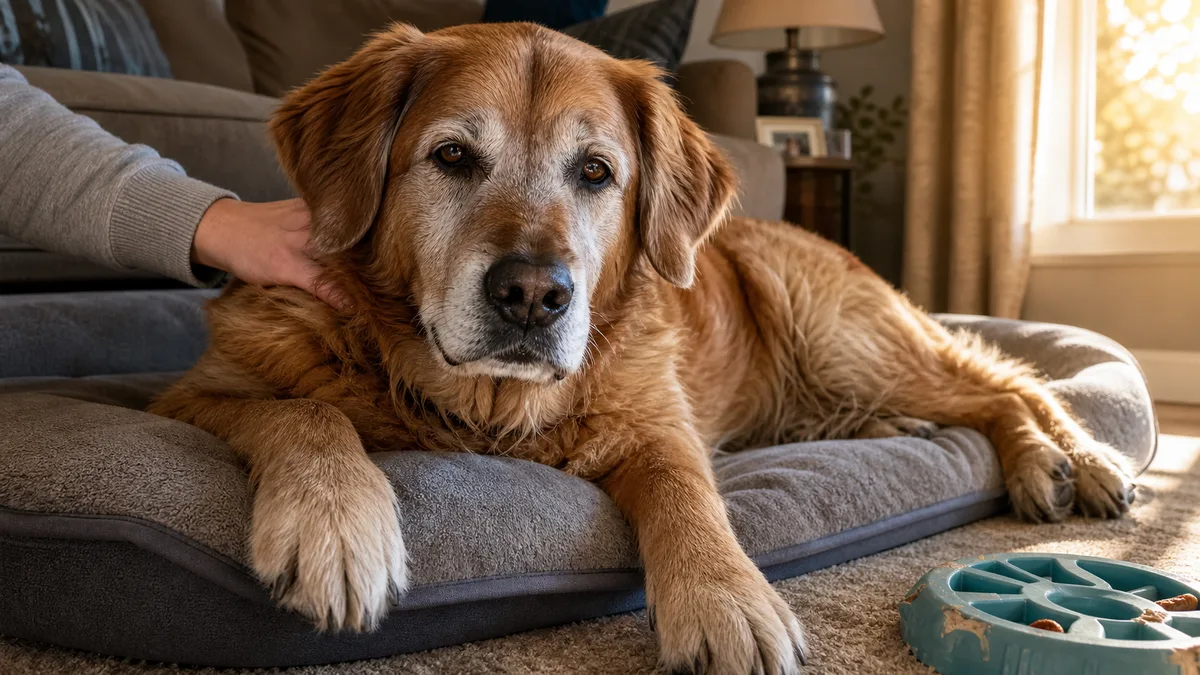
The morning my oldest dog went grey around the muzzle, I noticed something else: he took an extra second to stand up from his bed. Not injured, not sick. Just older.
That was the moment I stopped treating him like a younger version of himself and started paying attention to what he actually needed now.
This guide covers the practical adjustments that keep a senior dog comfortable and happy — from exercise and diet to joint support, mental enrichment, and knowing when to call the vet.
Jump to a section
How to care for a senior dog
From adjusting exercise and diet to making your home joint-friendly and keeping their mind sharp.
1. When Does a Dog Become a Senior
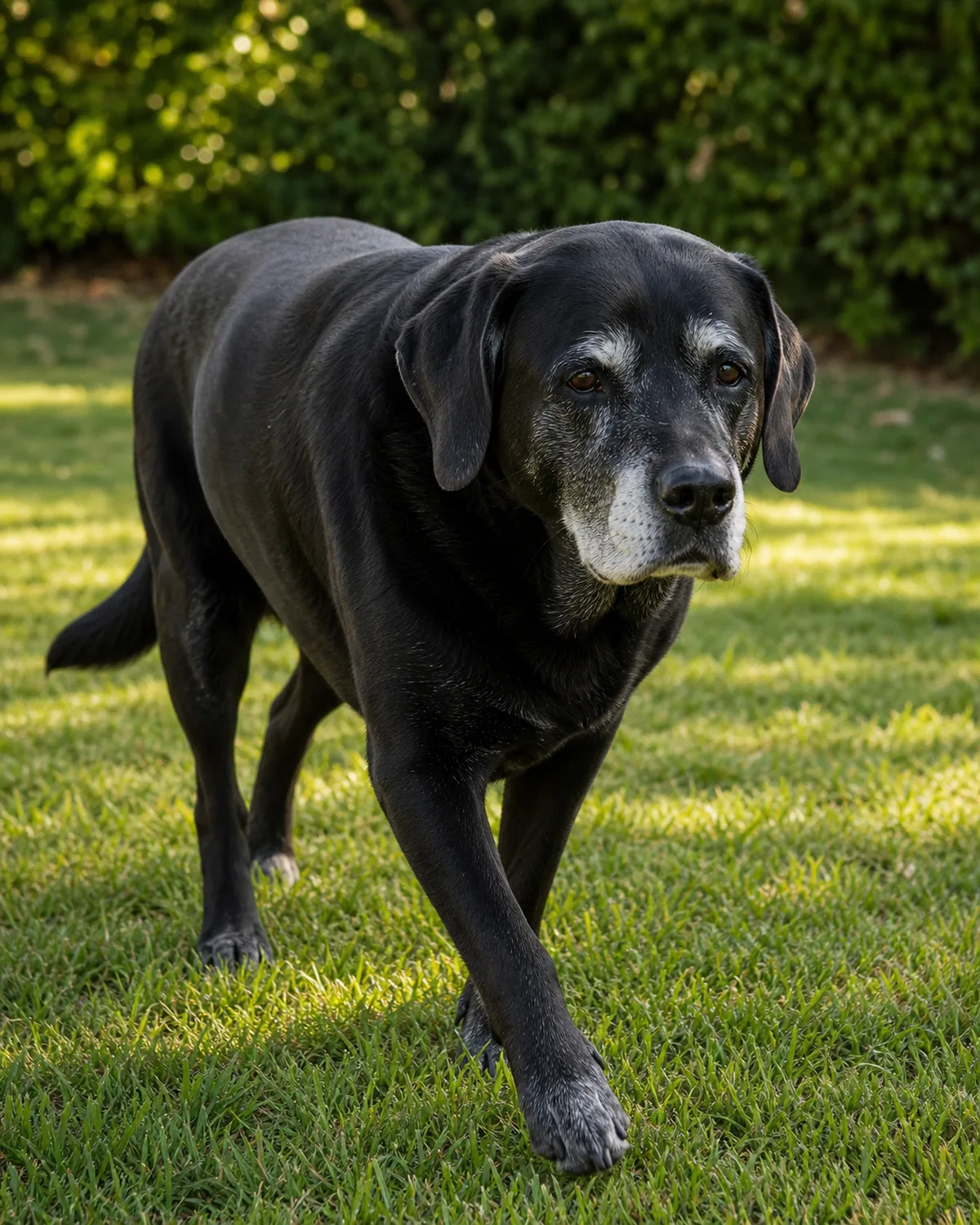
There is no single birthday that flips a dog from adult to senior. The transition depends almost entirely on body size, because larger dogs age faster at a cellular level than smaller ones.
Small dogs under twenty pounds often do not show aging signs until ten to twelve years old. Medium dogs between twenty and fifty pounds typically enter senior territory around eight to ten. Large dogs over fifty pounds start slowing down between six and eight. Giant breeds over ninety pounds can show senior changes as early as five.
Watch the Dog, Not the Calendar
A birthday does not mean much if your dog is still sprinting after squirrels at nine. And a six-year-old giant breed who hesitates at stairs is telling you something the calendar already predicted. The shift is gradual, and the signs show up in behavior before they show up in lab work.
2. The First Signs You Might Notice
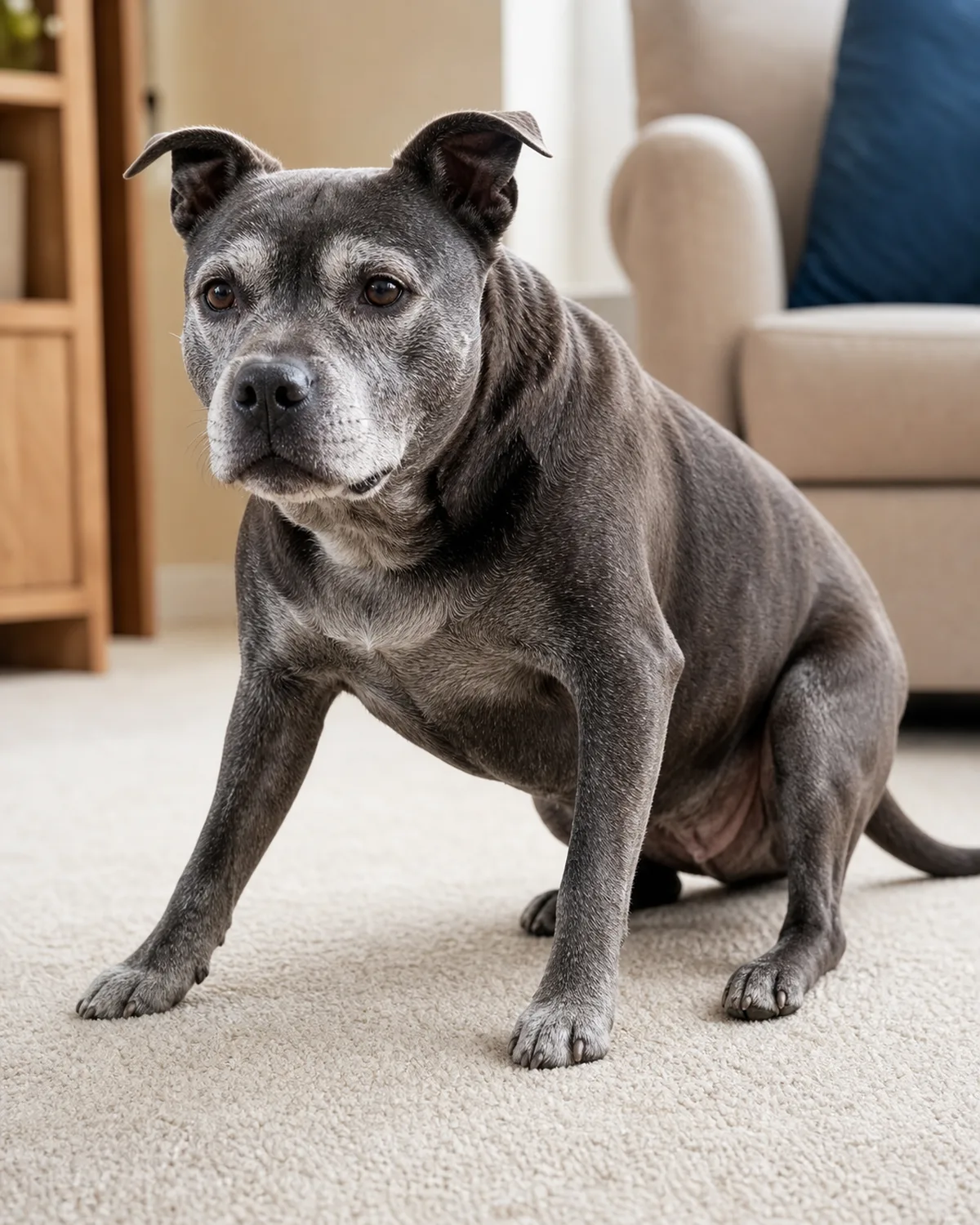
The grey muzzle gets all the attention, but it is the least important change. Greying is cosmetic. The signals that matter are functional.
Your dog hesitates at the top of the stairs before committing to going down. Their walk distance shortens on its own because they slow down or sit mid-route. They stop jumping onto the couch or into the car without being asked to stop. The response to the doorbell takes a beat longer. Daytime naps get longer and more frequent.
These Are Not Problems to Accept
Every one of those changes has a corresponding adjustment you can make. Hesitating at stairs means their joints need support. Shorter walks mean the route needs restructuring, not eliminating. Skipping the couch means a ramp would help. None of these are reasons to stop engaging with your dog. They are reasons to engage differently.
Understand what your dog is telling you
Is your dog slowing down or in pain?
Normal aging and pain look similar from the outside. The difference determines whether you adjust at home or call the vet.
Normal agingWalks slower but still willing to go. Takes an extra beat to stand up. Prefers quiet activities over roughhousing. Naps more during the day. Gradual changes over weeks or months.
Pain signalsLimping or refusing to walk. Flinching or snapping when touched in a specific area. Sudden aggression that was never there before. Whining or panting at night. Sudden onset, not gradual.
The key difference: Normal aging is gradual and your dog still engages with life. Pain signals are sudden, specific, and your dog withdraws. If you see pain signals, schedule a vet visit before adjusting anything else.
3. Adjusting Exercise Without Cutting It Out
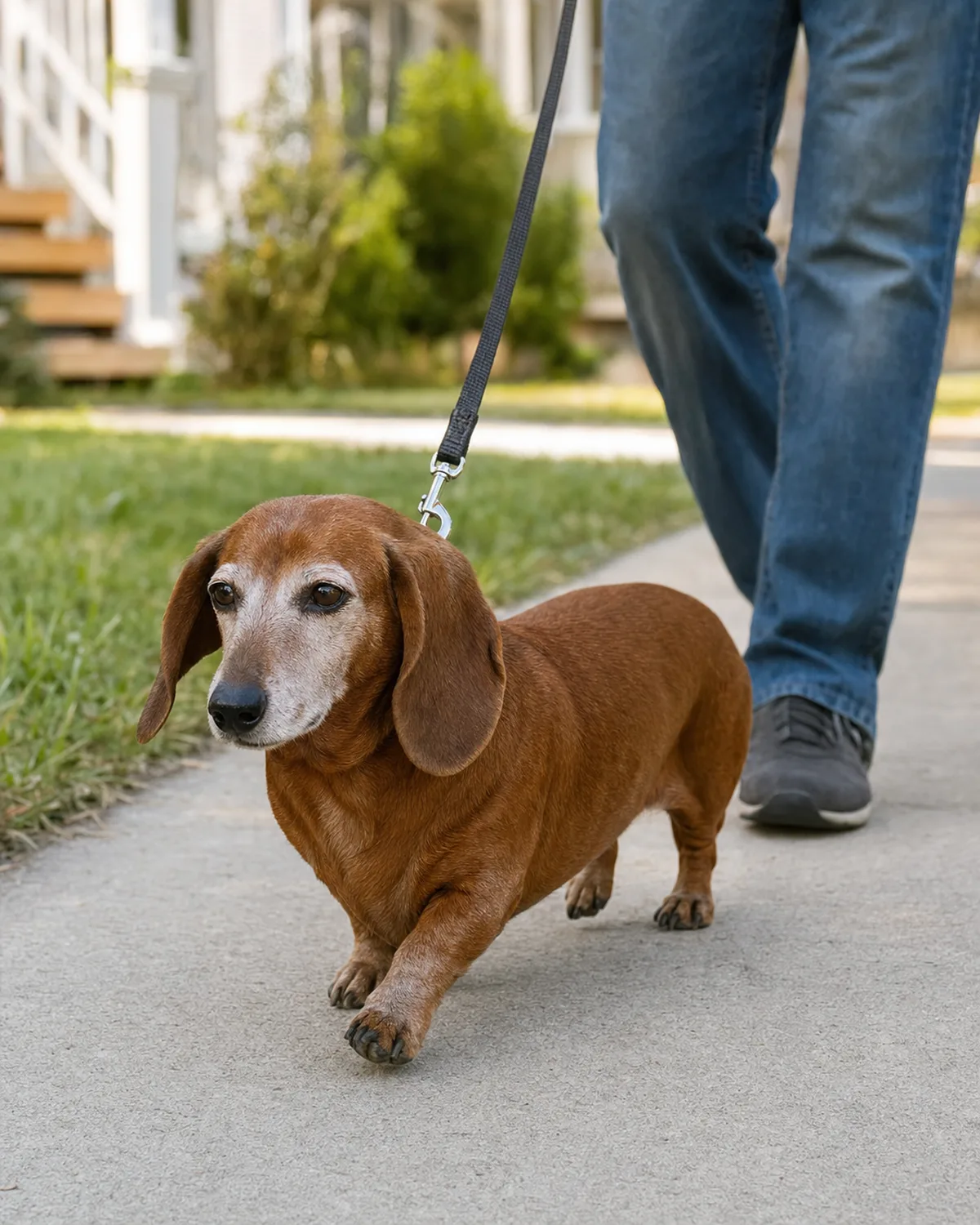
The single worst thing you can do for a senior dog is stop exercising them. Muscle loss accelerates joint instability, weight gain increases joint load, and boredom erodes mental sharpness. Movement is medicine at every age.
What changes is the format. Replace one long walk with two shorter ones. Fifteen to twenty minutes twice a day keeps circulation moving, joints lubricated, and the brain engaged without pushing past their recovery capacity.
Surfaces Matter More Now
Soft ground absorbs impact that hard ground sends straight into aging joints. Grass, dirt trails, and rubberized paths are easier on an older body than concrete sidewalks. If concrete is your only option, slow the pace and keep the distance short. Swimming is the gold standard for senior exercise because it builds muscle with zero joint impact — even five minutes in a shallow kiddie pool counts.
The exercise guide covers baseline amounts by size. For a senior dog, reduce that baseline by about thirty to fifty percent and split it across multiple sessions.
4. Feeding an Aging Body
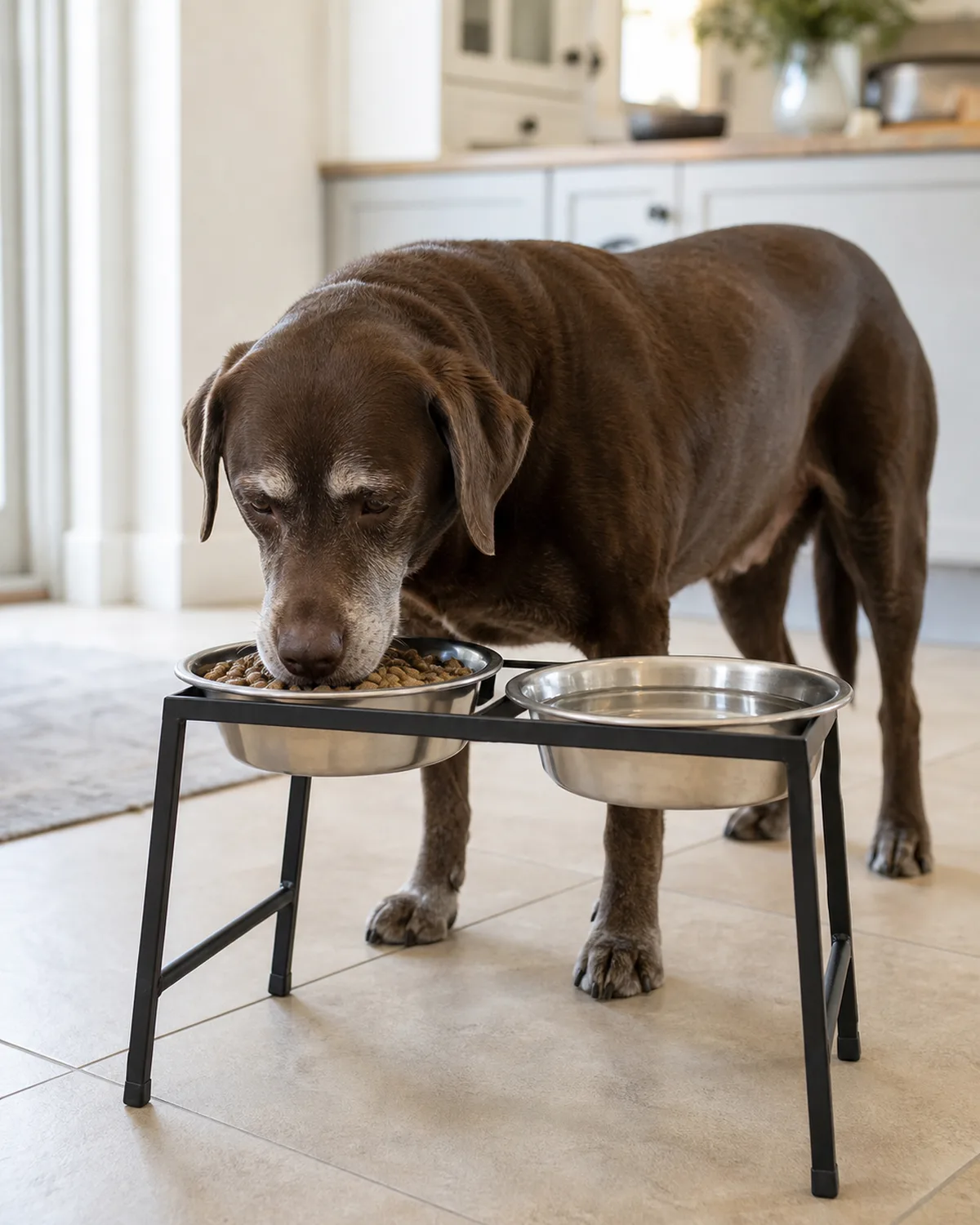
A senior dog's metabolism slows, which means they need roughly ten to twenty percent fewer calories to maintain the same weight. But their protein requirement actually goes up, not down, because aging muscles break down faster and need more raw material to rebuild.
Supplements Worth Considering
Glucosamine and chondroitin support cartilage health. Fish oil provides omega-3 fatty acids that reduce joint inflammation. Both are widely available as dog-specific supplements or as ingredients already included in senior-formula kibble. Ask your vet about dosing — the right amount depends on body weight.
Hydration Becomes Critical
Senior dogs are more prone to dehydration than younger ones, partly because their thirst drive can diminish. Keep water bowls in multiple locations, especially near their bed and near their food. If you notice a sudden increase in drinking, that is a vet-worthy signal — it can indicate kidney issues or diabetes.
5. Keeping Their Mind Sharp
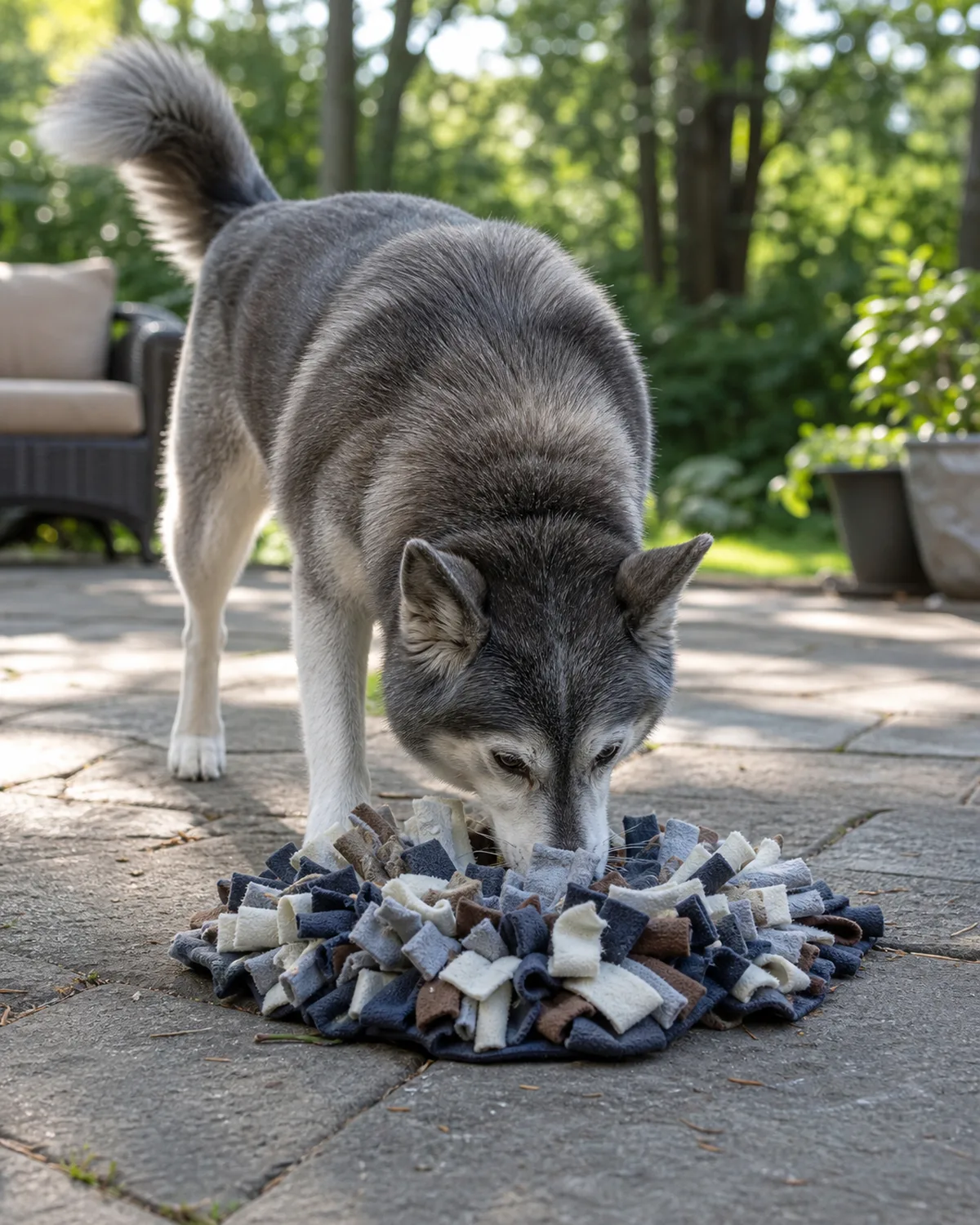
Cognitive decline in dogs follows a pattern similar to what happens in humans. The brain needs regular stimulation to maintain its connections, and a senior dog whose days consist only of sleeping and eating will lose mental sharpness faster than one who is challenged daily.
Sniffing is the lowest-effort, highest-reward brain exercise for a dog. Scatter a few treats in the grass and let them hunt. Use a snuffle mat indoors. Rotate walking routes so their nose encounters new information. These activities tire a senior dog mentally without taxing their joints.
Early Signs of Cognitive Decline
A dog who starts circling in one direction, staring at walls, wandering at night, or forgetting commands they have known for years may be showing early cognitive dysfunction. These are not normal aging — they are a specific condition that benefits from early intervention. Talk to your vet if you notice a cluster of these behaviors.
The non-negotiables for senior dog care
Always and never
These guidelines protect your senior dog from the two biggest risks: pain that goes unnoticed and decline that accelerates from inaction.
Always
- Keep daily exercise going — shorter and gentler, not eliminated
- Monitor water intake for sudden increases
- Provide an orthopedic memory foam bed
- Put non-slip mats on hard floors
- Schedule vet checkups every six months
- Offer daily mental enrichment — sniff games, puzzles, short training
- Check for new lumps during every grooming session
Never
- Ignore pain signals because you assume it is just old age
- Stop all exercise suddenly
- Let a senior dog walk on slippery hard floors without mats
- Use a stiff brush on aging, thinning skin
- Skip the semi-annual vet visit
- Dismiss sudden changes in weight, thirst, or breath odor
6. Making Your Home Comfortable for Stiff Joints
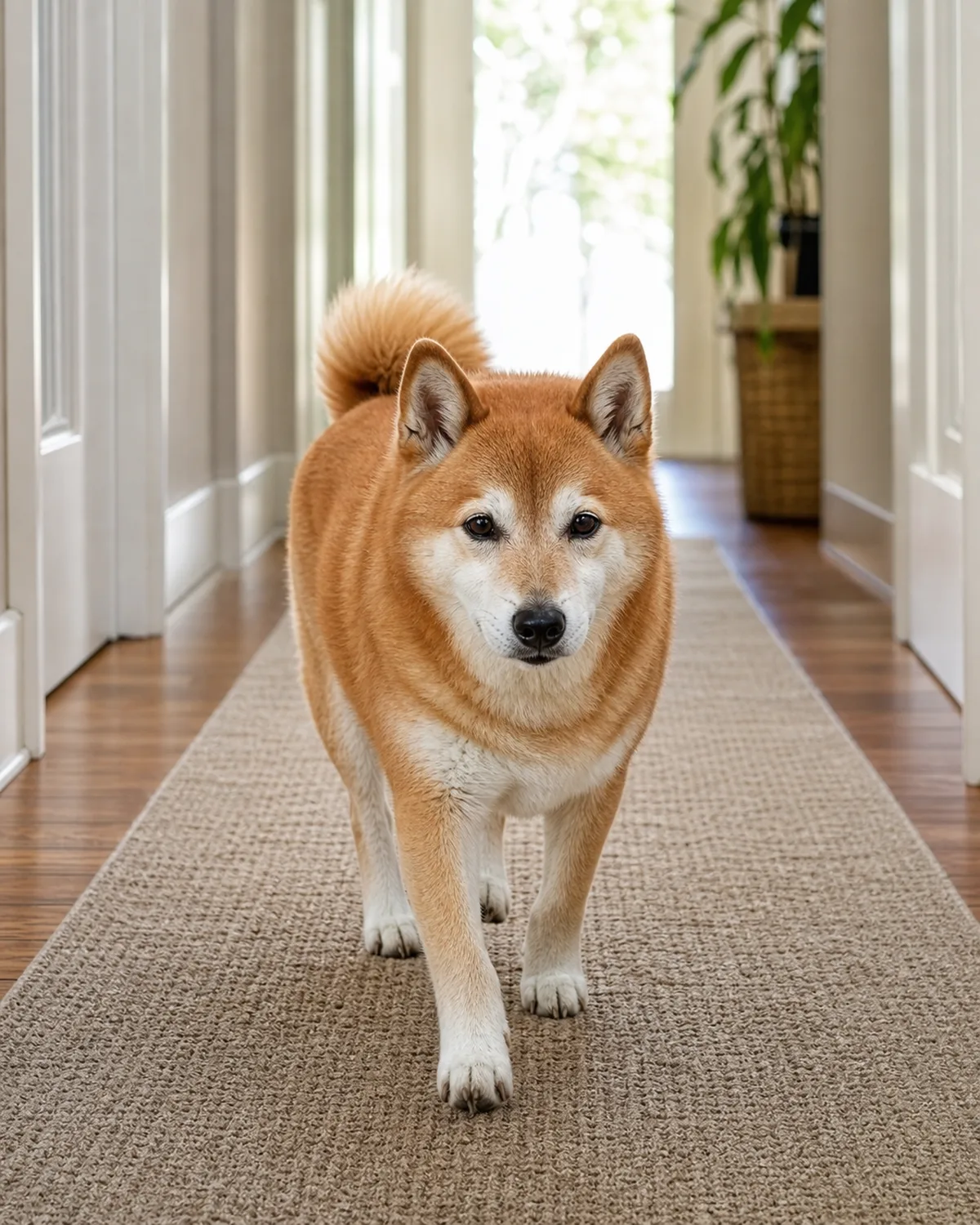
Slippery floors are dangerous for senior dogs. A dog whose legs slide out on tile or hardwood is one awkward landing away from a serious joint injury. Area rugs, carpet runners, or adhesive non-slip pads in high-traffic areas give them traction where they need it most — hallways, in front of the food bowl, beside their bed, and at the base of any stairs they still use.
The Bed Upgrade That Changes Everything
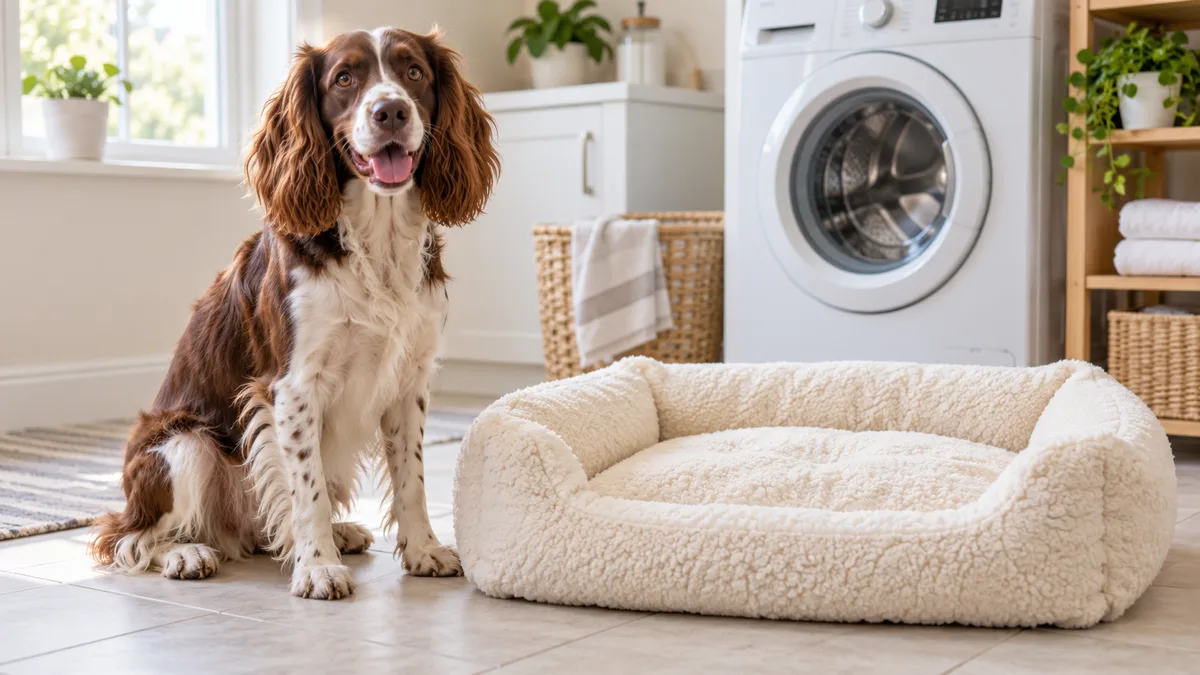
A flat cushion on the floor distributes pressure unevenly, which means a dog with stiff hips or elbows wakes up sorer than when they lay down. An orthopedic memory foam bed conforms to their body and relieves pressure points. It is the single most impactful purchase you can make for a senior dog.
Ramps Replace Jumping
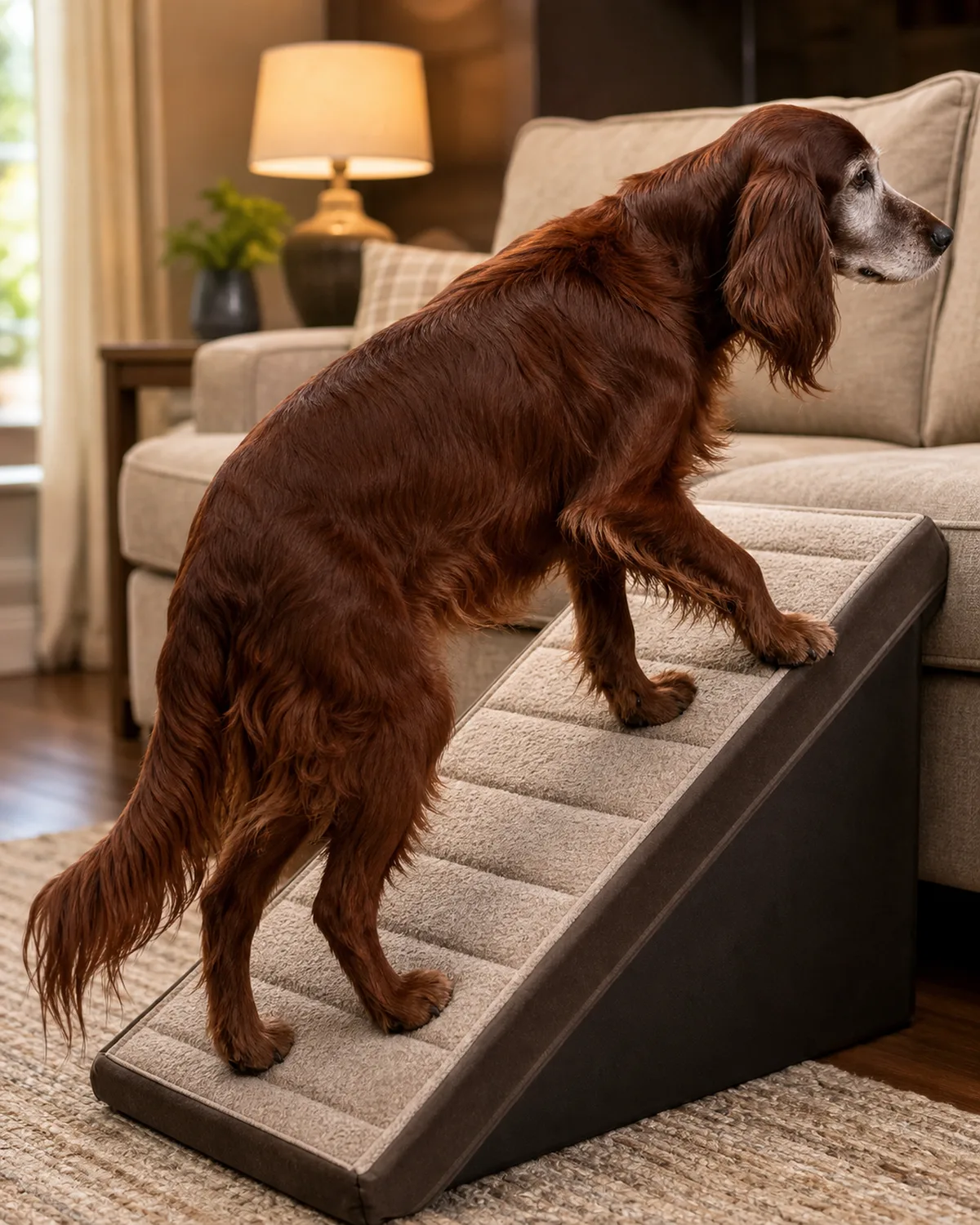
If your dog used to jump onto the couch, the bed, or into the car, replace that jump with a ramp or pet stairs. The impact of landing from even a low jump sends shock through aging joints. A ramp with a non-slip surface lets them reach the same spots without the impact.
Raise the Food Bowl
A dog who has to bend their neck down to floor level to eat puts strain on their cervical spine and front shoulders with every meal. An elevated feeder that brings the bowl to chest height eliminates that strain. This is especially noticeable in large and giant breeds whose necks have the longest distance to travel.
7. Grooming Gets Gentler
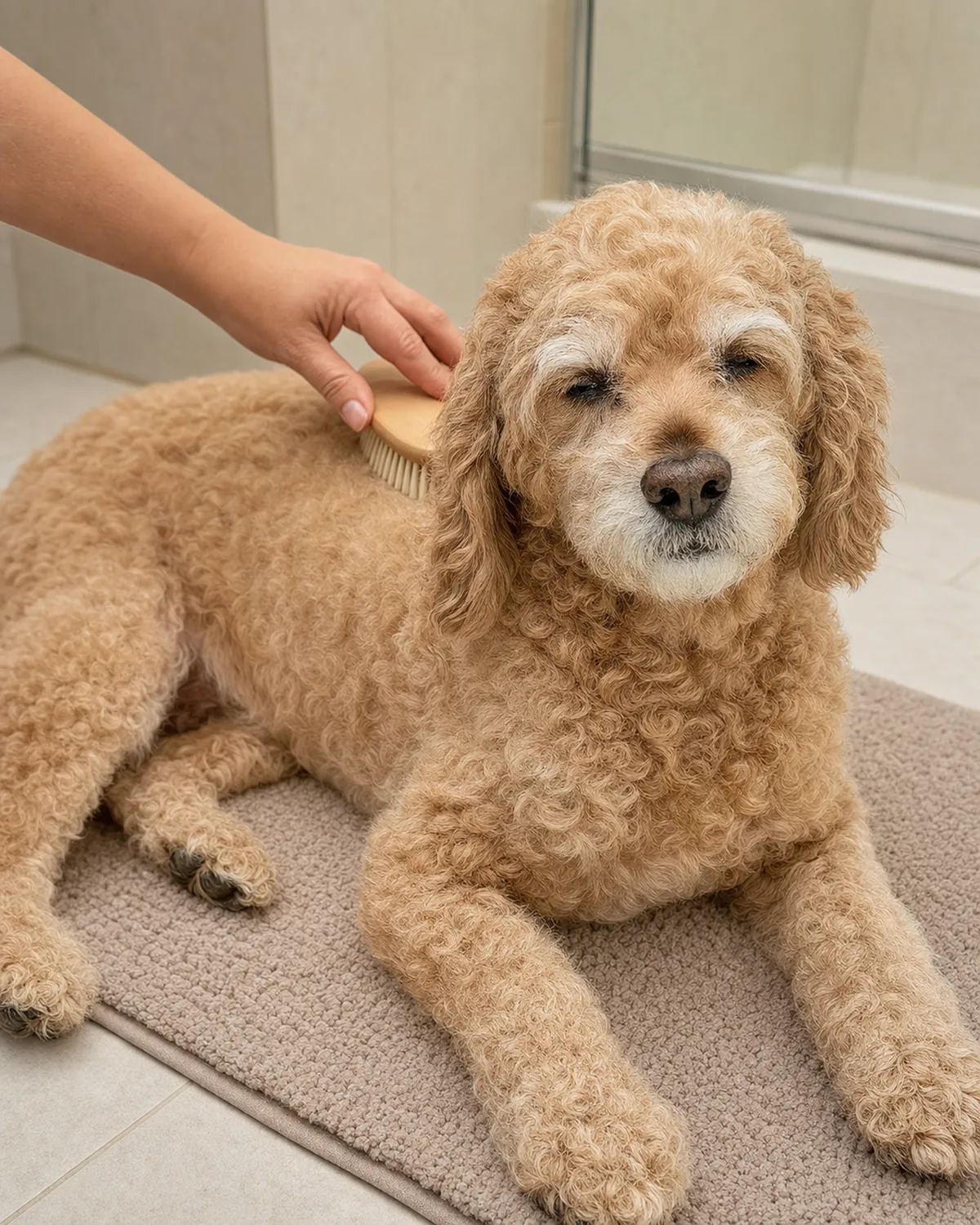
Senior skin is thinner, drier, and more sensitive than it was a few years ago. The same brushing pressure that worked at age three can cause discomfort or micro-abrasions at age ten.
Switch to a softer brush — a rubber curry brush or a soft-bristle brush — and use lighter strokes. Reduce bath frequency because aging skin loses its natural oils faster and takes longer to replenish them. Between baths, a warm damp cloth wipe-down handles surface dirt without stripping oils.
Nails Need More Attention, Not Less
Older dogs walk less and on softer surfaces, which means their nails get less natural wear. The nails still grow at roughly the same rate, so they need more frequent trimming to prevent overgrowth that changes their gait and adds stress to already-stiff joints.
The Skin Check That Saves Lives
Every grooming session is a chance to run your hands over your dog's entire body. Lumps, bumps, or changes in existing growths are the earliest warning signs of conditions that are most treatable when caught early. Make the full-body check a habit, not an afterthought.
8. Health Changes to Watch For
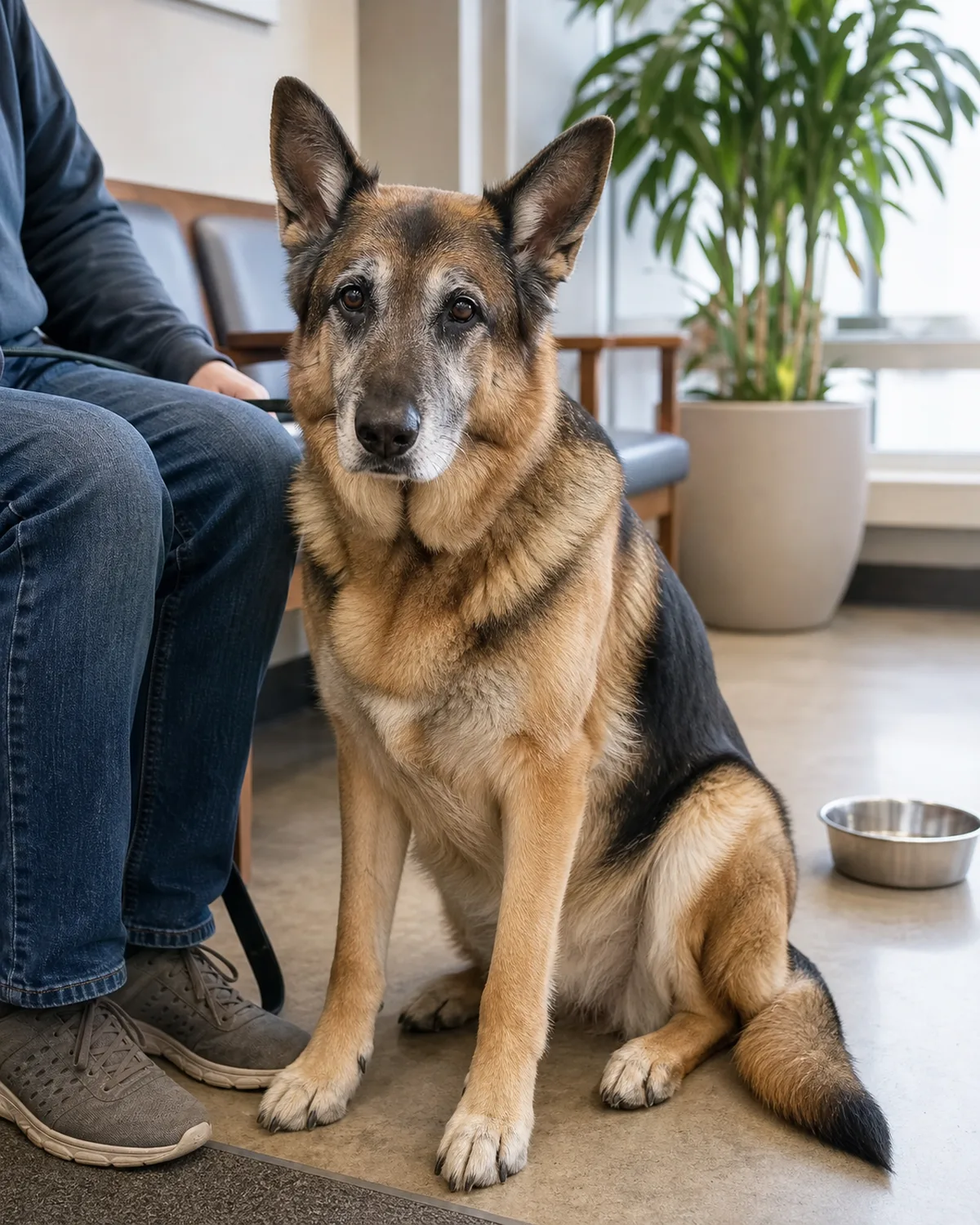
Annual vet visits should become semi-annual once your dog enters their senior years. Blood work, urinalysis, and a physical exam twice a year catch shifts that annual visits miss.
Between visits, watch for these patterns: a sudden increase in water consumption, unexplained weight loss, worsening breath, changes in breathing pattern, persistent cough, or any new reluctance to do something they used to do willingly.
Building a Vet Relationship That Works
A vet who knows your dog's baseline makes better decisions when something changes. If you have not established that relationship yet, the guide to choosing a vet walks through what to look for — and for a senior dog, that relationship matters more than at any other life stage.
Save this for later
Your Senior Dog Daily Care Checklist
- Two short walks (15-20 minutes each, soft ground when possible)
- At least one sniff game, food puzzle, or short training session
- Check that water intake looks normal
- Watch how they get up and move — any new stiffness or hesitation
- Orthopedic bed is clean and in the right spot
- Non-slip mats are in place on all hard-floor paths
- Weekly nail check — trim if needed
- Weekly full-body touch to check for new lumps
- Semi-annual vet visit marked on the calendar
9. Small Changes That Add Up Over Time
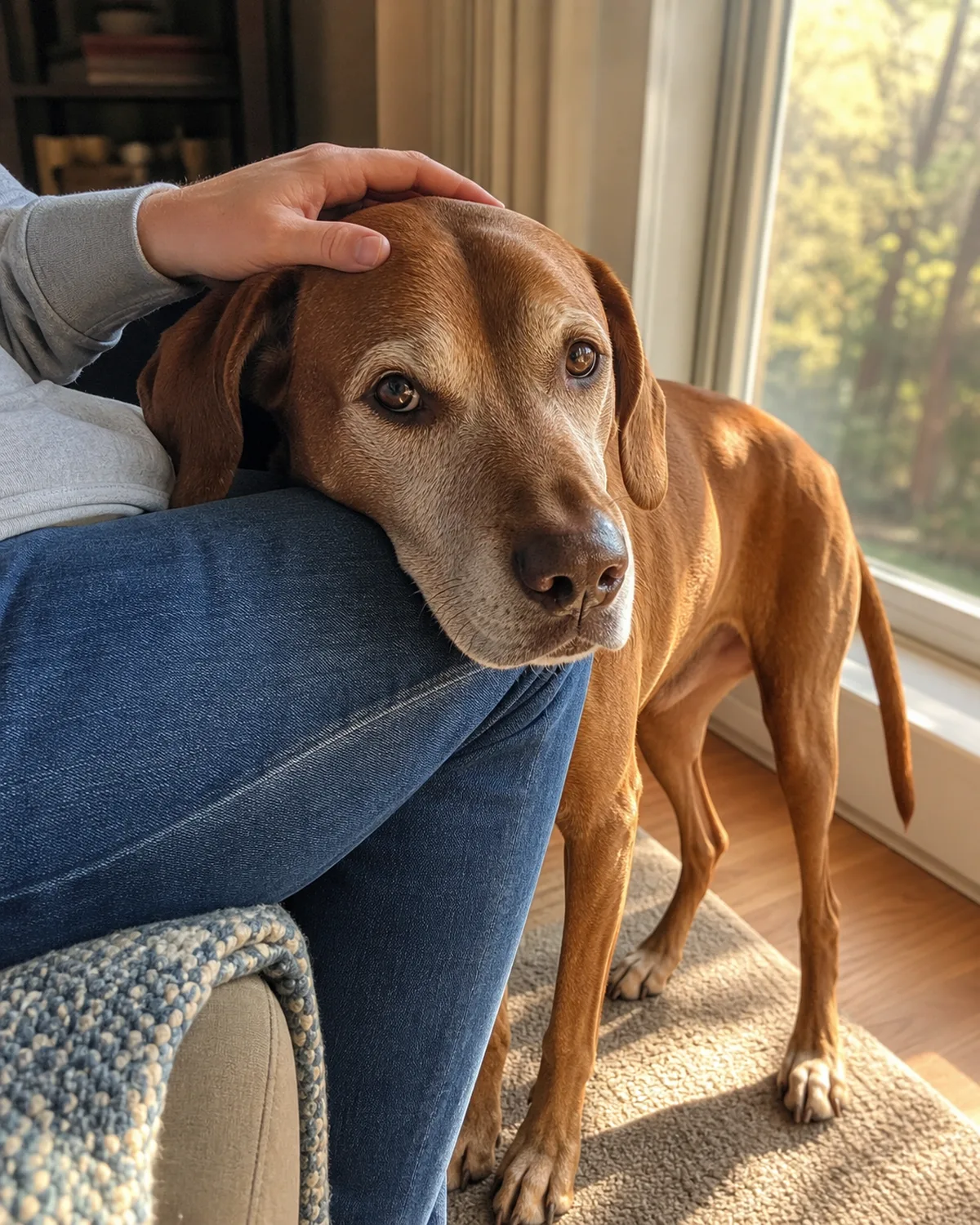
The most effective senior dog care is not a single dramatic overhaul. It is a collection of small adjustments, each one removing a friction point from your dog's day.
A ramp by the couch. A memory foam bed in the corner. Two short walks instead of one long one. A snuffle mat after dinner. Semi-annual vet visits marked on the calendar. A joint supplement mixed into breakfast. Non-slip mats on the kitchen tile. A softer brush. Elevated food bowls. Five minutes of nose work in the yard.
None of these is complicated. Together, they add months or years of comfortable living to a dog who has spent their whole life making your days better.

About the author
Jess Calloway
Jess Calloway edits Pawliqa, where she shares dog care, grooming, training, and new-owner tips — plus DIY and pet-friendly home ideas — for anyone who wants a happy, well-cared-for dog. As a dog mom to three very different dogs, she writes the honest, tested version of what actually works. Every guide is image-led and reviewed for clarity, usefulness, image accuracy, and Pinterest-to-page alignment before it goes live. Visit the About page.