A bath at home shouldn’t end with you soaked, the floor flooded, and your dog hiding under the bed. Most bath-time chaos comes from skipping the prep and rushing the order, not from the dog being difficult.
This is the calm, step-by-step routine I use: how often to wash, what to set out first, the right water temperature, how to lather and rinse so nothing gets missed, and how to dry without the drama.
I’m a dog mom to three very different dogs, including one who used to bolt at the sound of running water, so the gentle version here is the one that actually holds up.
This is the low-stress way to bathe a dog at home, from how often to wash to drying without the drama, built one simple step at a time. Jump to whatever part you need right now.
- 1How often should you actually bathe a dog?
- 2Gather your supplies before you start
- 3Brush before you bathe
- 4Choose the right spot: tub, sink, or outside
- 5Get the water temperature just right
- 6Wet the coat from the neck down
- 7Lather up with dog shampoo (not yours)
- 8Protect the ears, eyes, and face
- 9Rinse until the water runs clear
- 10Towel dry, then finish the job
- 11End on a high note with treats and praise
- 12If your dog is scared of bath time
- 13Building an easy bath-time routine
How Often Should You Actually Bathe a Dog?
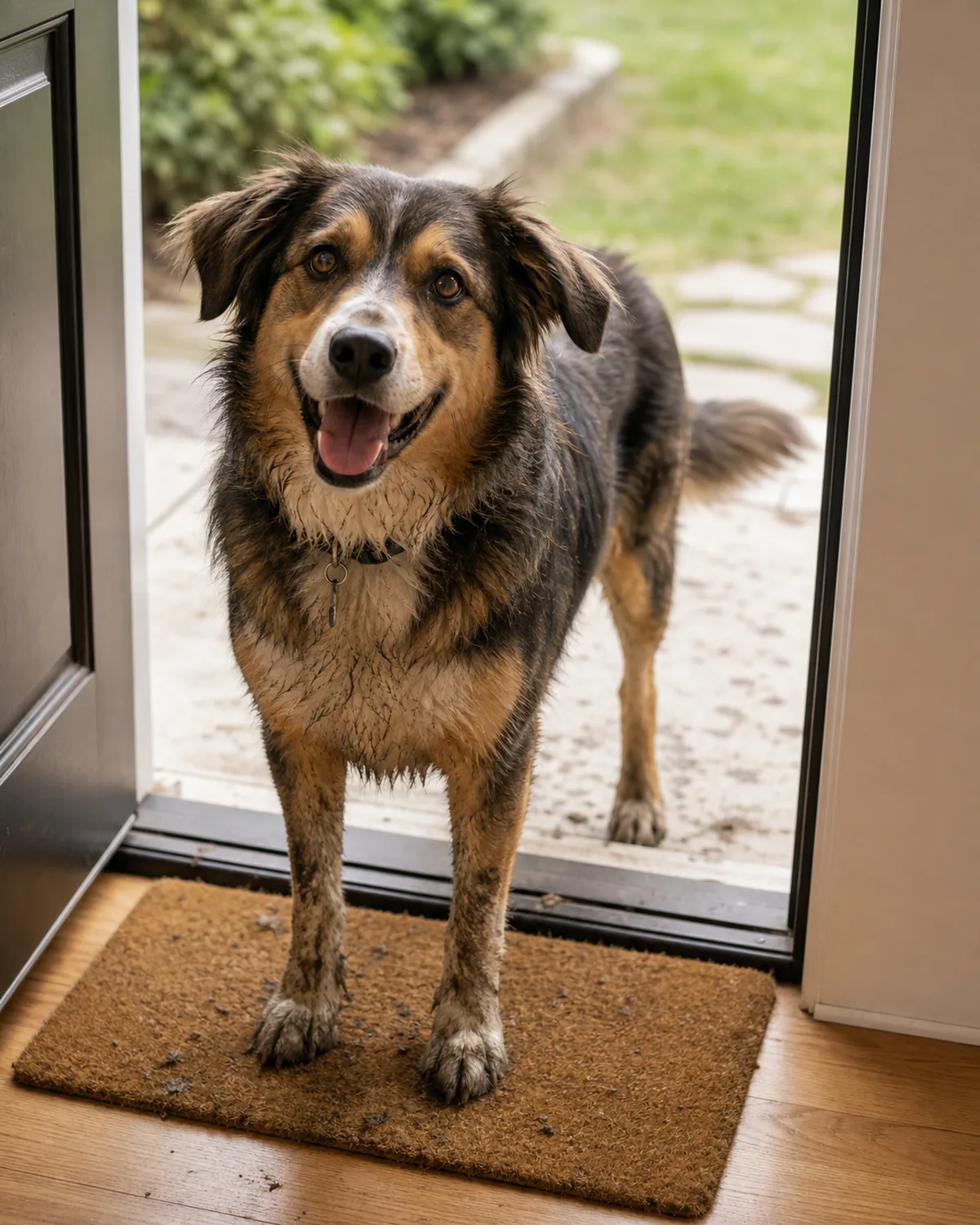
Most healthy dogs need a bath every four to six weeks, or whenever they roll in something or start to smell. Washing more often than the coat needs strips the natural oils that keep skin healthy, which is how you end up with an itchy, flaky dog. Let how dirty they actually get set the pace, not a rigid schedule.
- Bathe most dogs every four to six weeks, or sooner when they’re muddy or smelly.
- Stretch the gap out if your dog has dry skin and stays reasonably clean.
- Ask your vet first if the skin looks red, flaky, or irritated, since that’s a health question.
Gather Your Supplies Before You Start
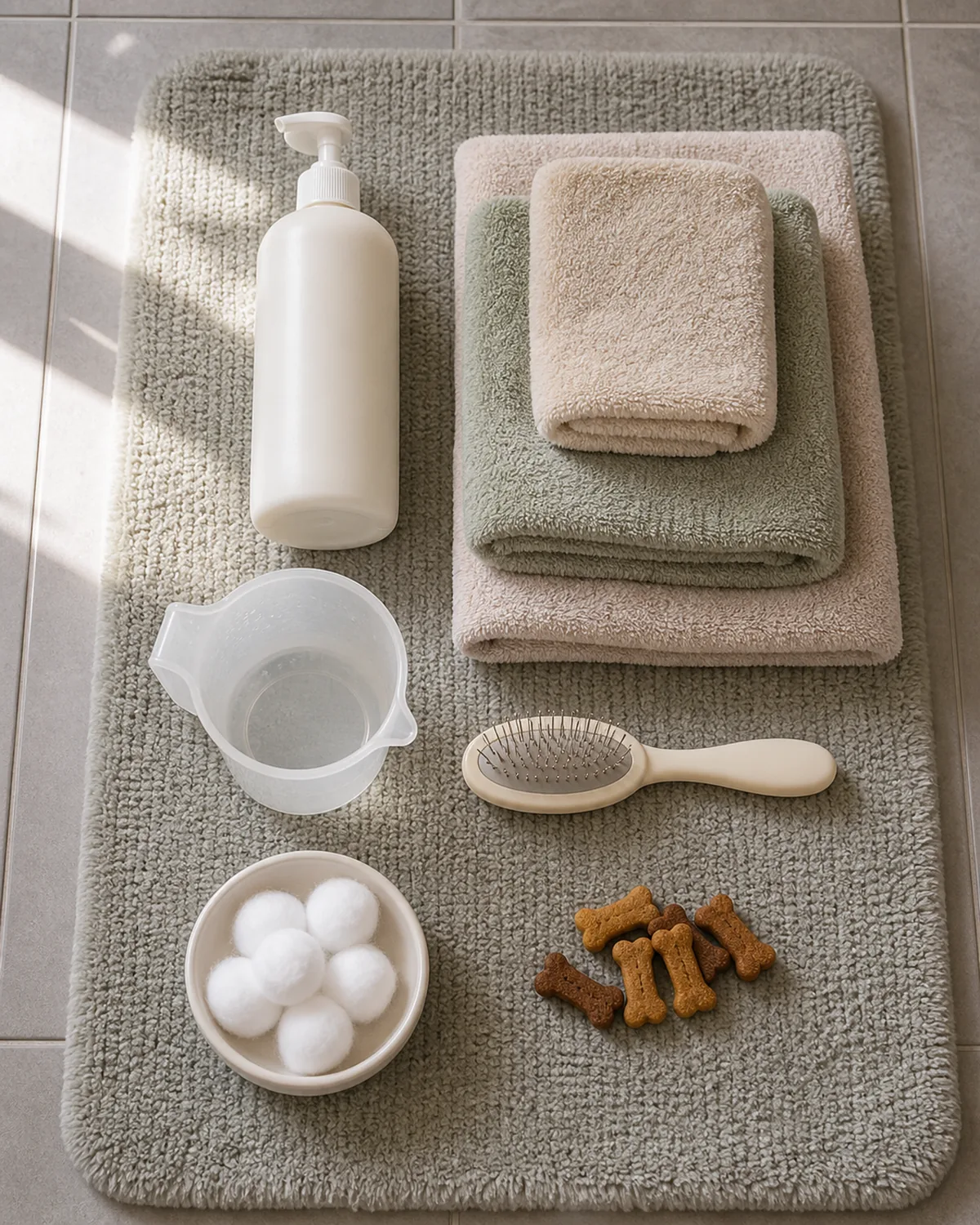
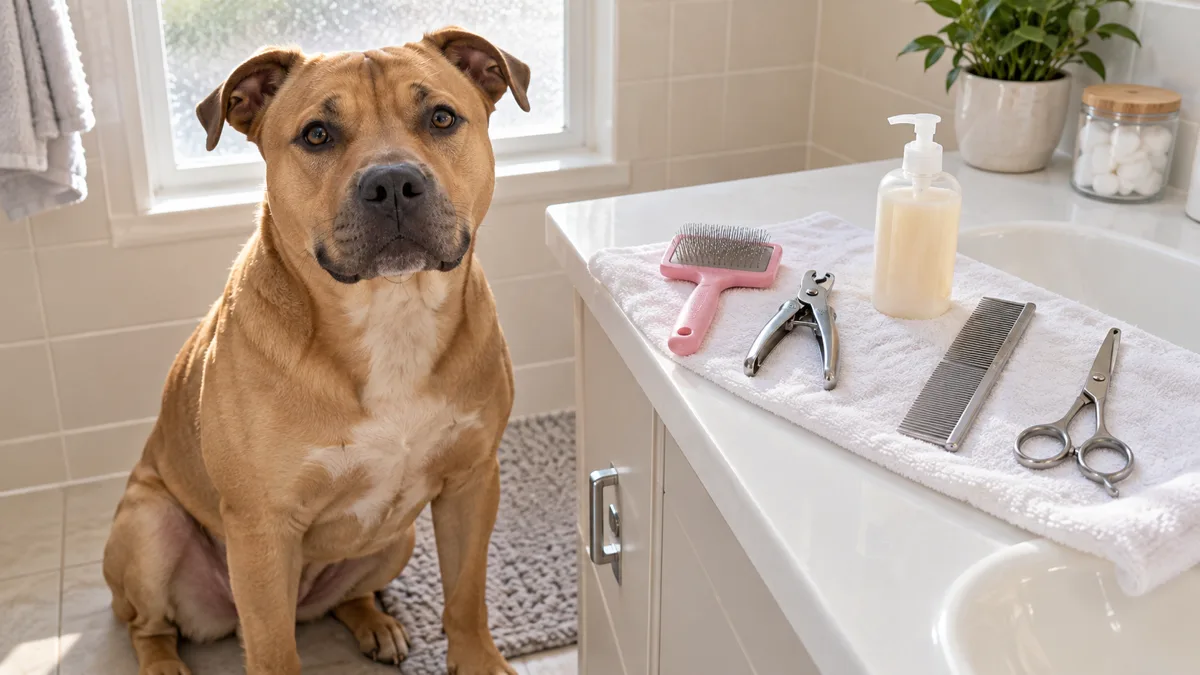
The single biggest cause of a frantic bath is realizing the towel is across the room while a soaking-wet dog makes a break for the door. Set everything within arm’s reach before any water touches your dog, so you never have to leave the tub. A calm bath is almost always a prepared one.
- Lay out dog shampoo, two or three towels, a rinsing cup or sprayer, and a soft brush.
- Keep cotton balls and a few treats nearby for ear protection and rewards.
- Put a non-slip mat in the tub before your dog gets in, not after.
Brush Before You Bathe
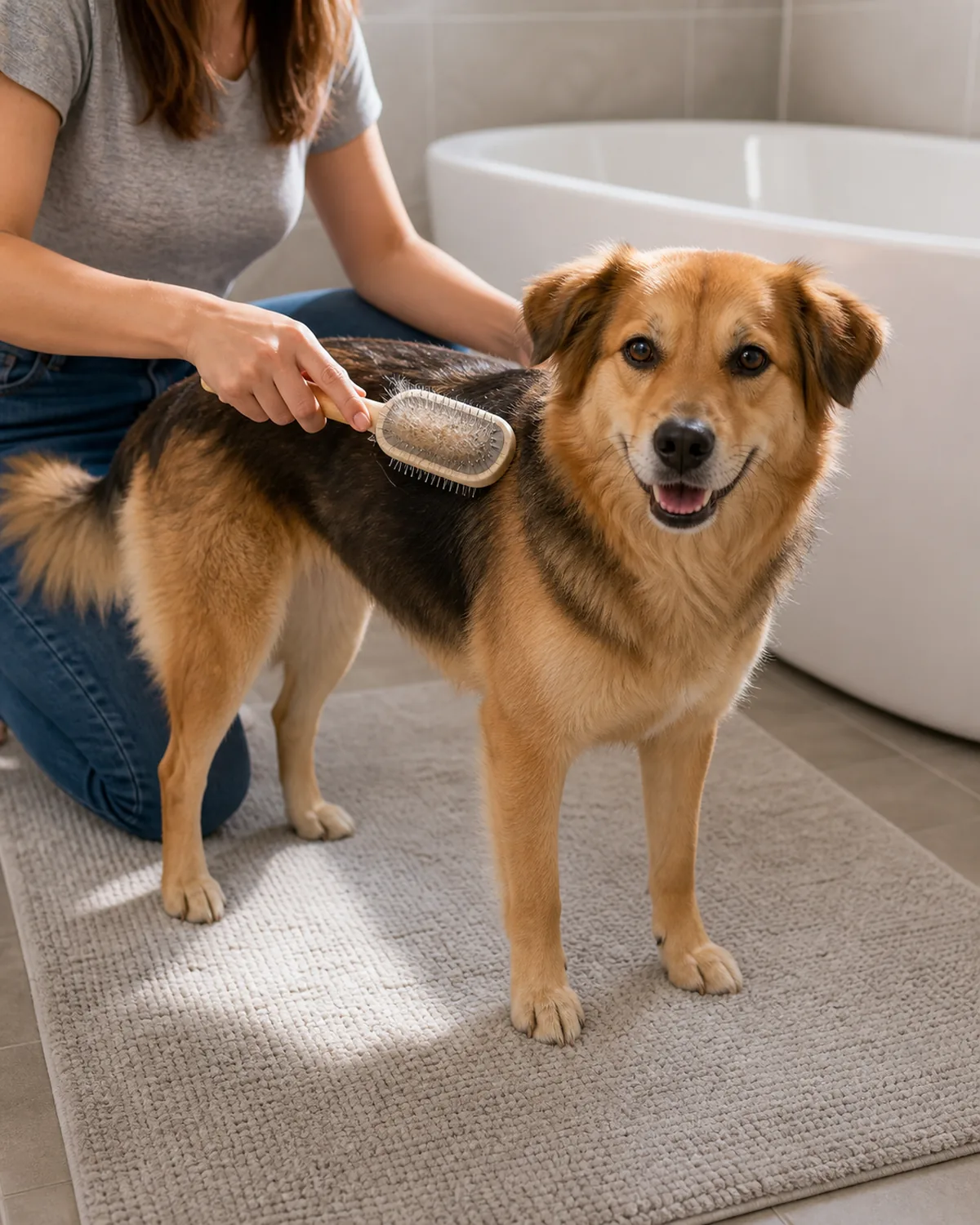
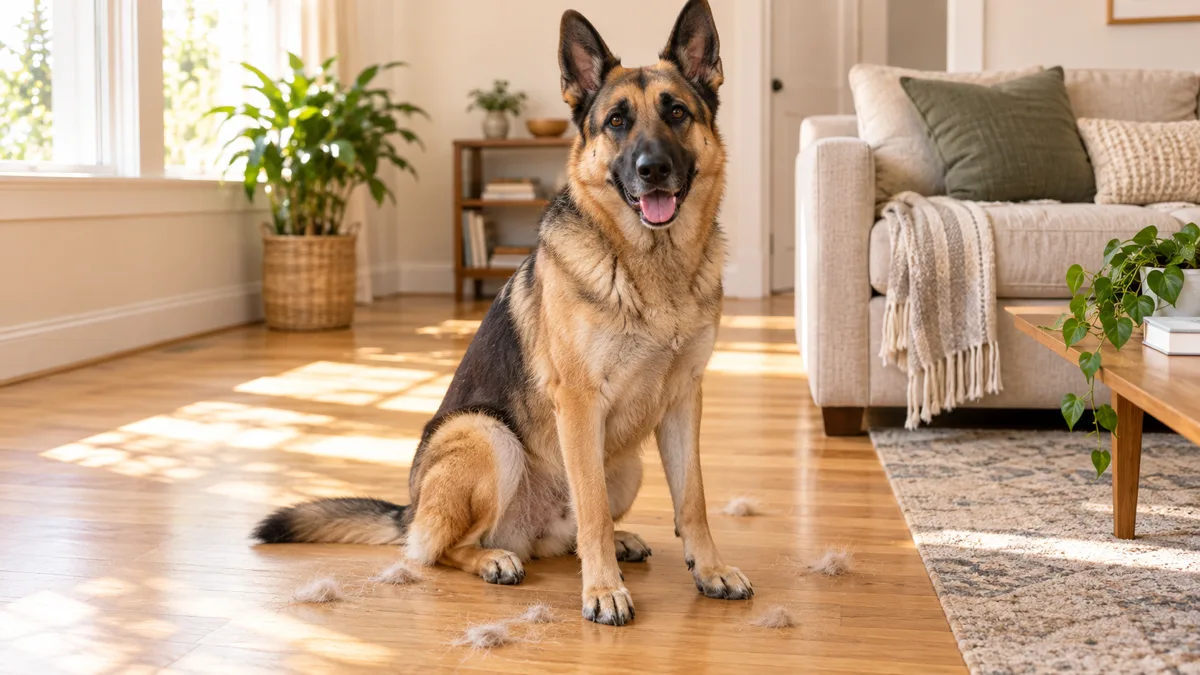
Water turns loose tangles into tight, set mats that are far harder to remove, so the brush always comes before the bath. A quick brush-out also lifts dead hair and lets the shampoo reach the skin instead of sitting on top of a felted coat. It’s the step people skip and then regret.
- Brush the whole coat to clear loose hair and tangles while it’s still dry.
- Work gently through mat-prone spots behind the ears, under the legs, and on the belly.
- If brushing is a fight on its own, sort that out first with our guide on brushing a dog that hates it.
You won’t need every step on every bath. Pick the situation that sounds most like you and your dog, and begin there.
Choose the Right Spot: Tub, Sink, or Outside
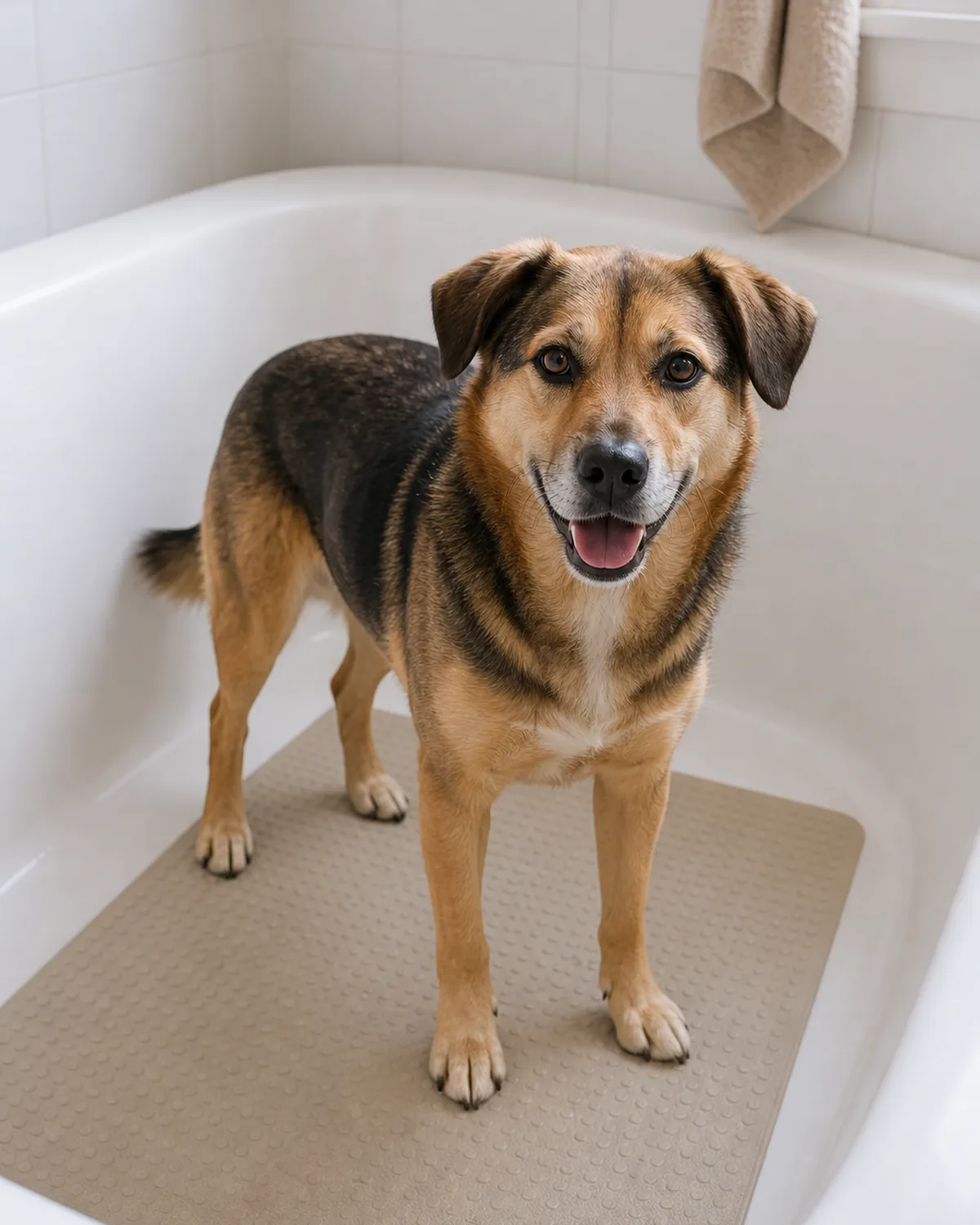
The best spot is the one where your dog can stand securely and you’re not bent double the whole time. Small dogs fit a sink, bigger dogs do better in a tub or a warm-weather wash outside. Whatever you choose, sure footing matters most, because a dog that feels itself slipping will panic.
- Use a sink for small dogs and a tub or outdoor spot for larger ones.
- Lay down a rubber mat or a towel so your dog isn’t scrambling on a slick surface.
- Save outdoor baths for warm days, and skip the cold hose for anything but a quick rinse.
Get the Water Temperature Just Right
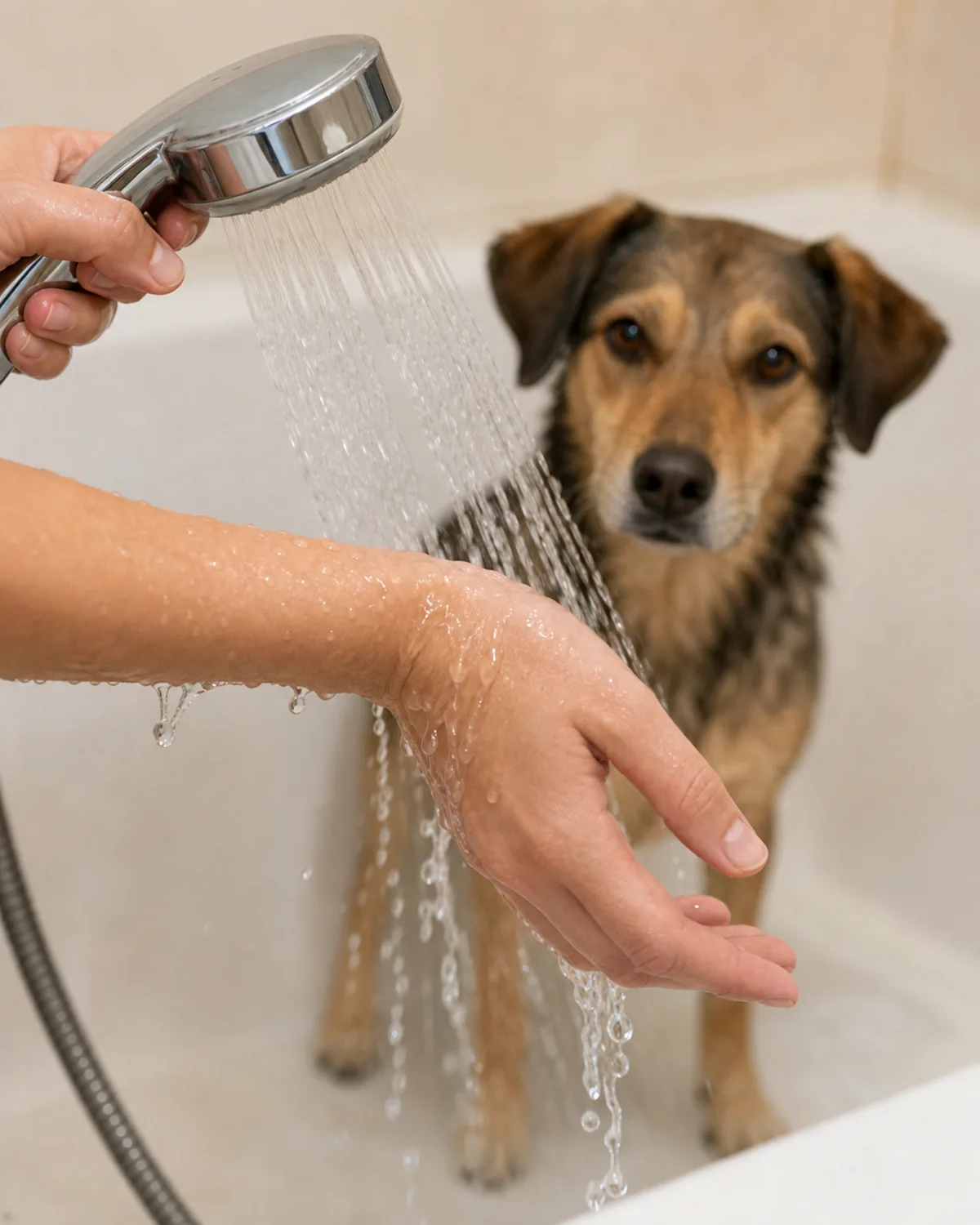
Dogs feel temperature more sharply than we do, and water that seems fine to your hand can read as too hot on their skin. Lukewarm is the target, about what you’d run for a baby. Getting it right before you start means the first spray isn’t an unpleasant shock that sets the wrong tone.
- Run the water to lukewarm and test it on the inside of your wrist.
- Avoid hot water, which dries out skin and can overheat your dog.
- Keep the temperature steady once you begin so there are no sudden cold or hot bursts.
Wet the Coat From the Neck Down
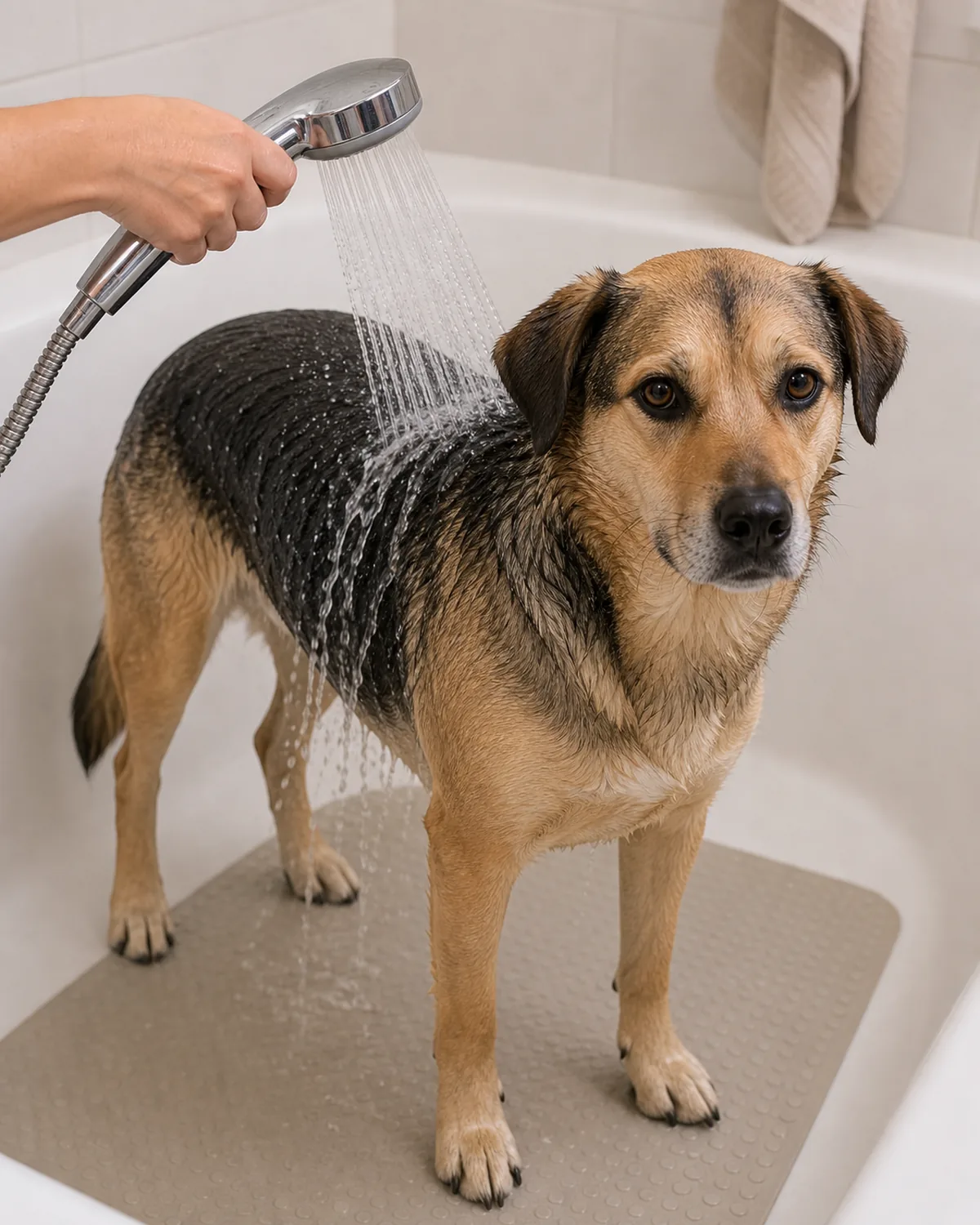
Starting at the head makes most dogs shake and shut down, so begin at the neck and work backward. Take your time soaking the coat all the way down to the skin, especially on thick or double coats where water just beads on the surface at first. The head and face wait until the very end.
- Wet from the neck and shoulders down toward the tail and legs.
- Work the water deep into thick coats until the skin underneath is wet, not just the top.
- Leave the head dry for now; you’ll clean the face gently by hand later.
The step-by-step routine works because of four ideas underneath it. Get these right and bath time gets easy; ignore them and these are exactly the mistakes that make it miserable.
Lather Up With Dog Shampoo (Not Yours)
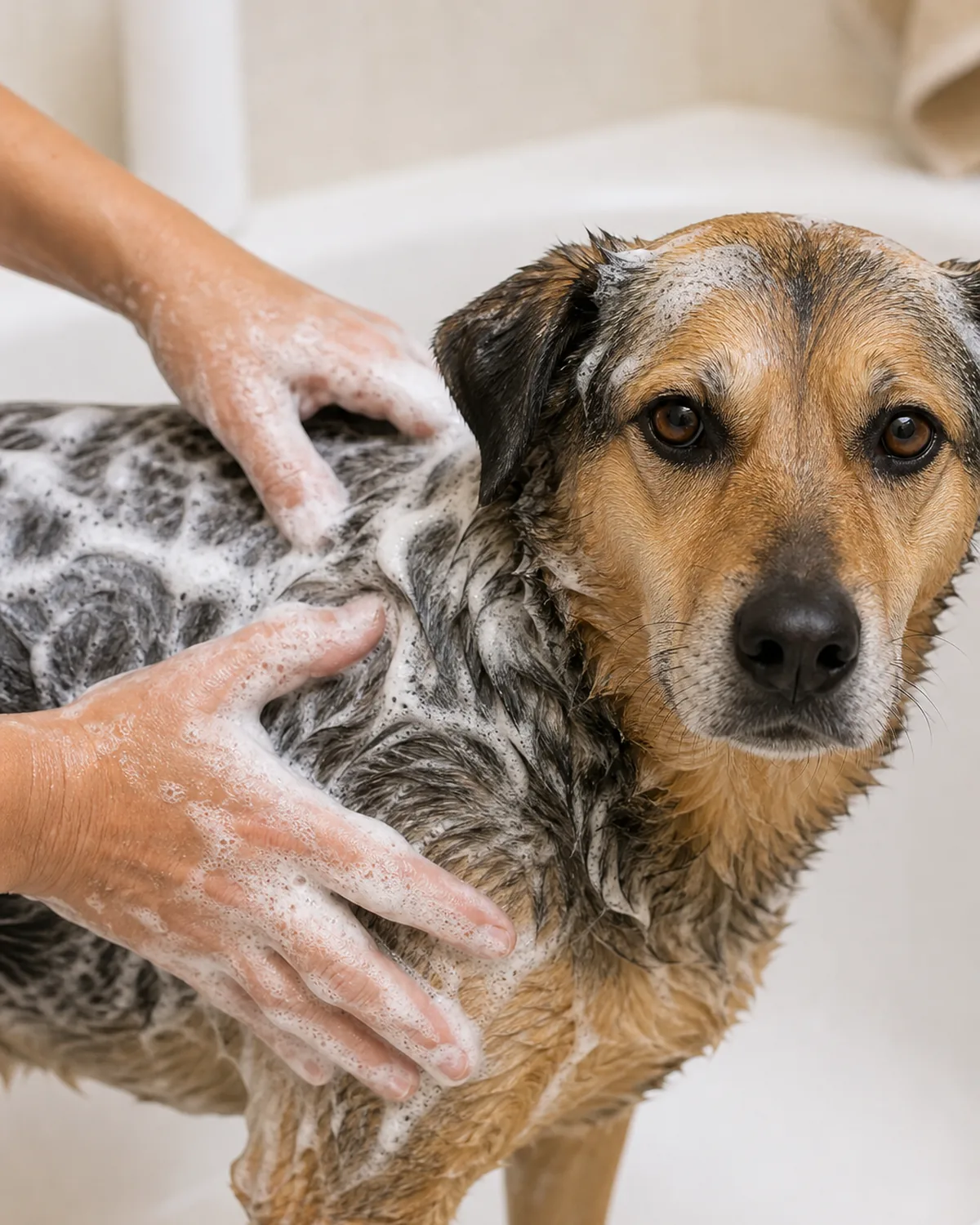
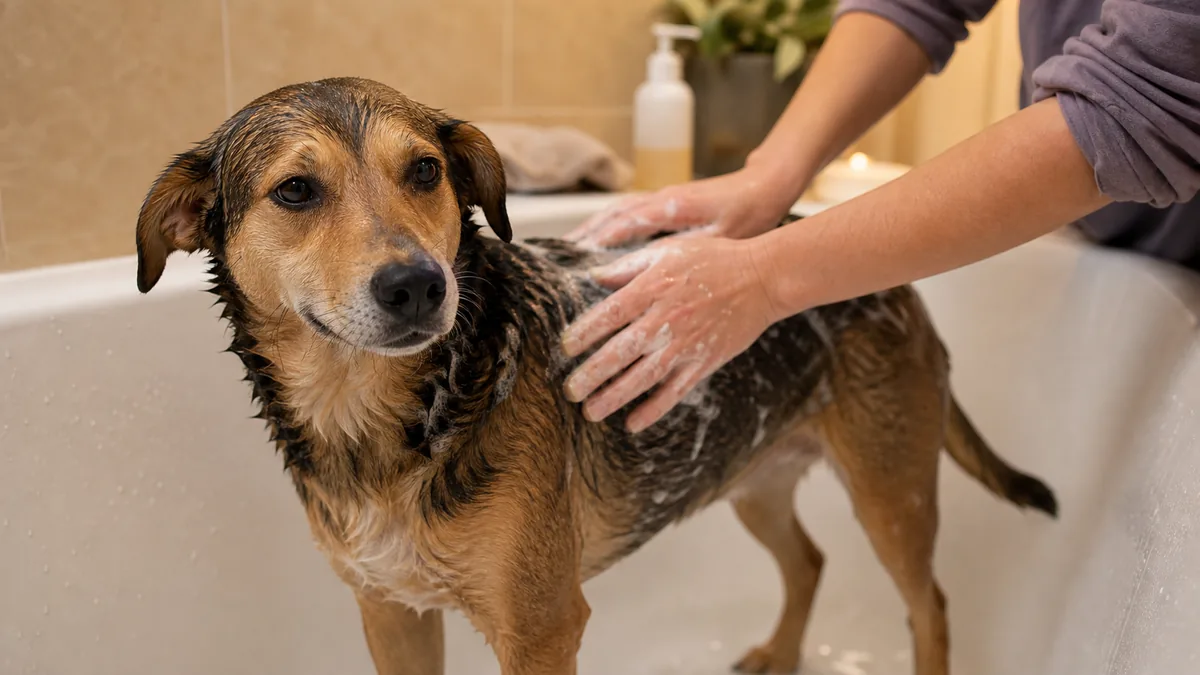
Human shampoo, baby shampoo included, is the wrong pH for a dog’s skin and leaves it dry and irritated over time, so always reach for a dog-specific one. Massage the lather in along the direction the fur grows, working neck to tail. The slow massage does as much for your dog’s nerves as it does for getting them clean.
- Use a dog shampoo, diluting a thick one with a little water so it spreads easily.
- Massage gently from the neck back, including the legs, belly, and under the tail.
- Never use human or baby shampoo, which throws off the skin’s natural balance.
Protect the Ears, Eyes, and Face
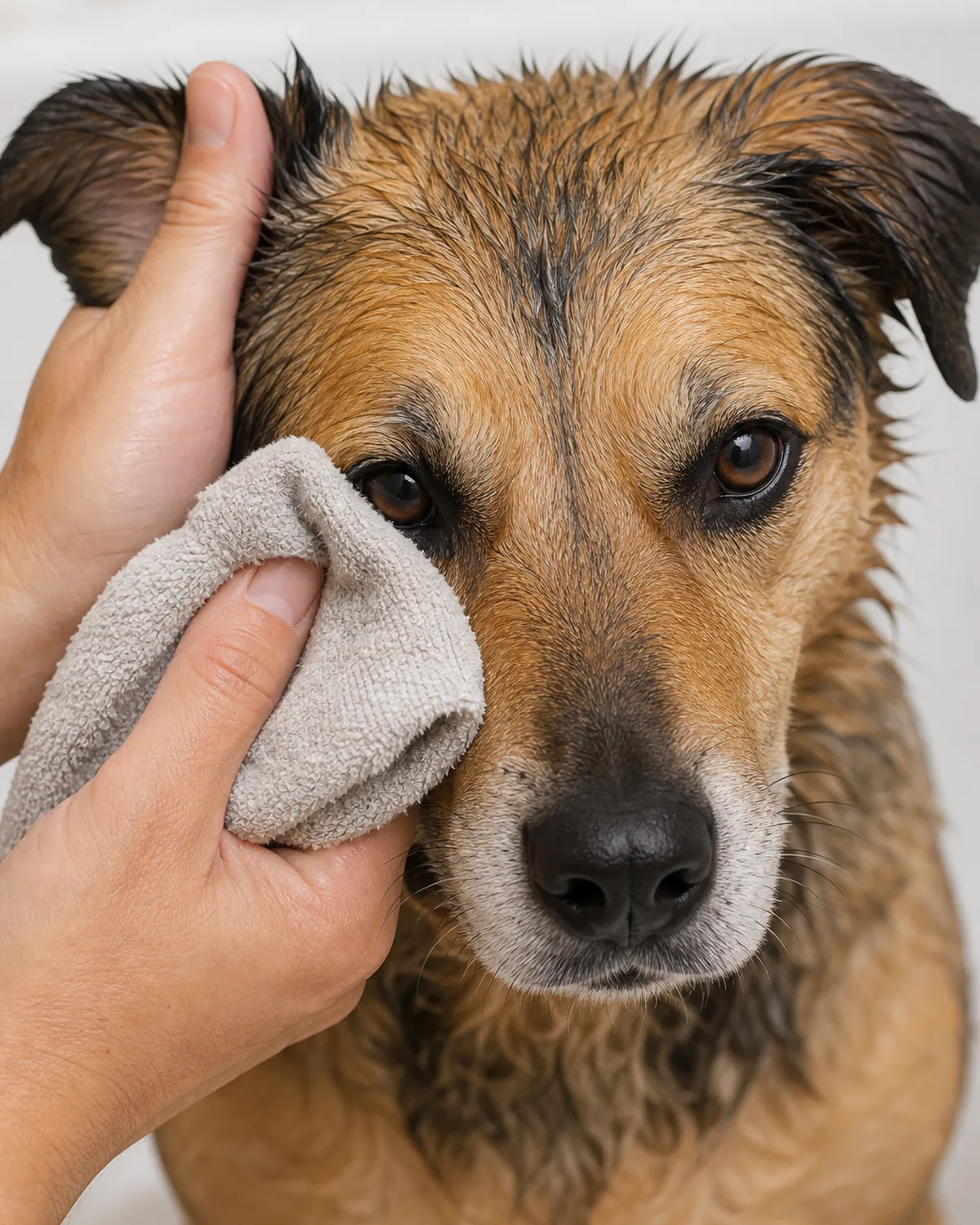
The face is where home baths usually go wrong, since water in the ears can lead to infections and shampoo in the eyes stings. Put the sprayer down for this part and clean everything above the neck by hand. Gentle and barely damp is the rule up here.
- Wipe the face and around the eyes with a damp, well-wrung washcloth and no shampoo.
- Tuck a cotton ball into each ear opening to block water, then remove it afterward.
- Tip the chin up slightly so stray water runs back, away from the eyes and ears.
Rinse Until the Water Runs Clear
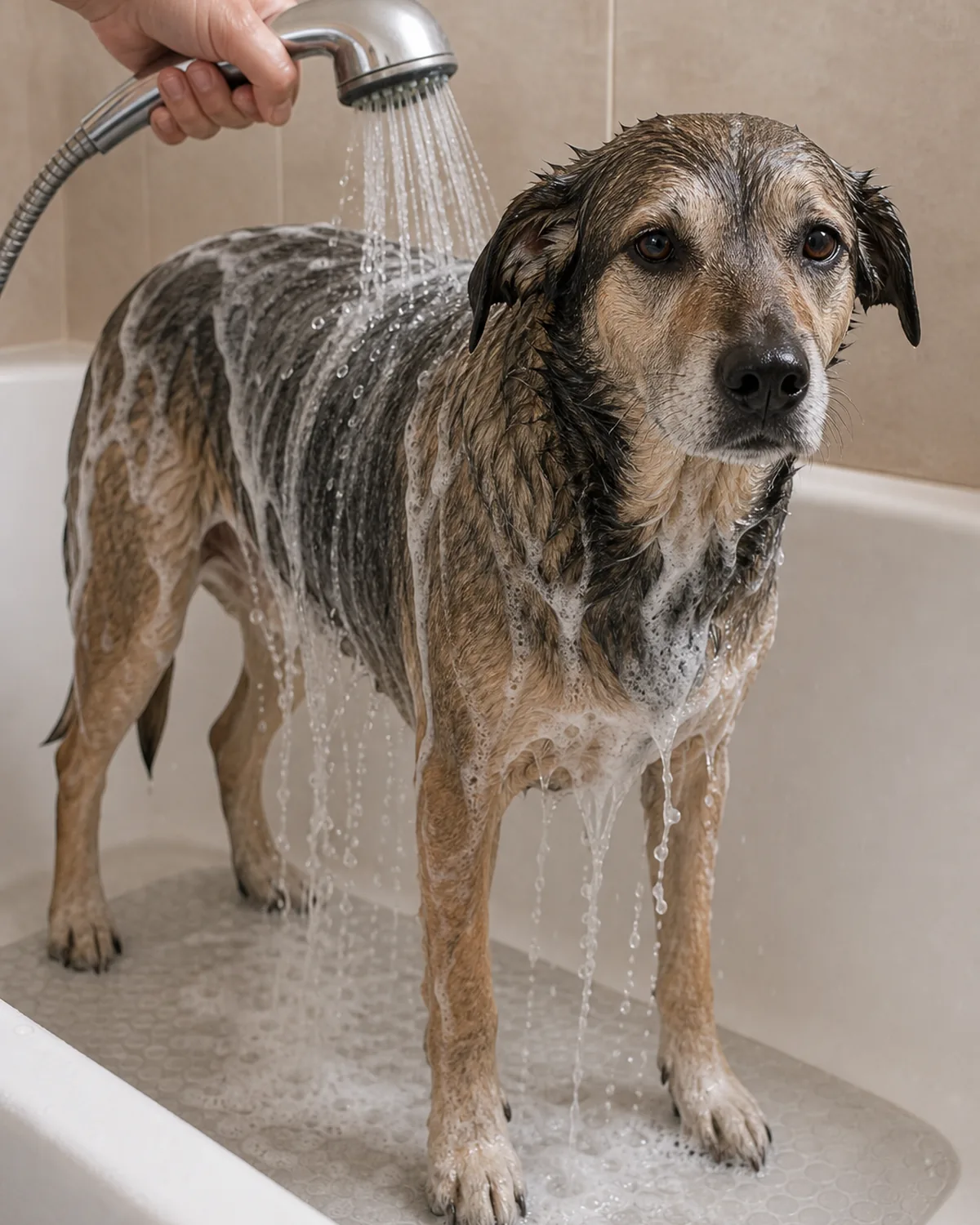
Leftover shampoo is one of the top causes of post-bath itching, and it loves to hide in the exact spots people rush past. Rinse longer than feels necessary, until the water sheeting off runs completely clear and the coat stops feeling slick. Then go back and check the easy-to-miss places one more time.
- Rinse from the neck down, parting thick fur so the water reaches the skin.
- Give extra time to the belly, armpits, groin, and between the toes.
- Keep rinsing until the runoff is clear and the coat squeaks instead of slides.
How to Bathe a Dog at Home: A Stress-Free Routine
- 1How often to bathe a dogEvery four to six weeks or when truly dirty; over-washing strips healthy skin oils.
- 2Gather your supplies firstShampoo, towels, a cup or sprayer, a brush, cotton balls, and treats within reach.
- 3Brush before you batheClear loose hair and tangles while dry; water turns them into tight mats.
- 4Choose the right spotSink, tub, or warm-weather outside, always with a non-slip mat for footing.
- 5Get the water lukewarmTest it on your wrist, baby-bath warm; hot water dries and overheats.
- 6Wet from the neck downSoak the coat to the skin, leaving the head and face for last.
- 7Lather with dog shampooMassage along the fur, neck to tail; never use human or baby shampoo.
- 8Protect ears, eyes, and faceCotton in the ears, a damp cloth on the face, no sprayer above the neck.
- 9Rinse until clearLeftover shampoo causes itching; rinse the belly, armpits, and toes well.
- 10Towel dry, then finishPress, don’t scrub; finish with a low, cool dryer if your dog allows it.
- 11End on a high noteTreats and praise at the finish make the next bath easier.
- 12If your dog is scaredTiny rewarded steps, a walk first, and never force it; call a pro for real fear.
- 13Build an easy routineSame order every time, short and calm, until bath time is no big deal.
pawliqa.com
Towel Dry, Then Finish the Job
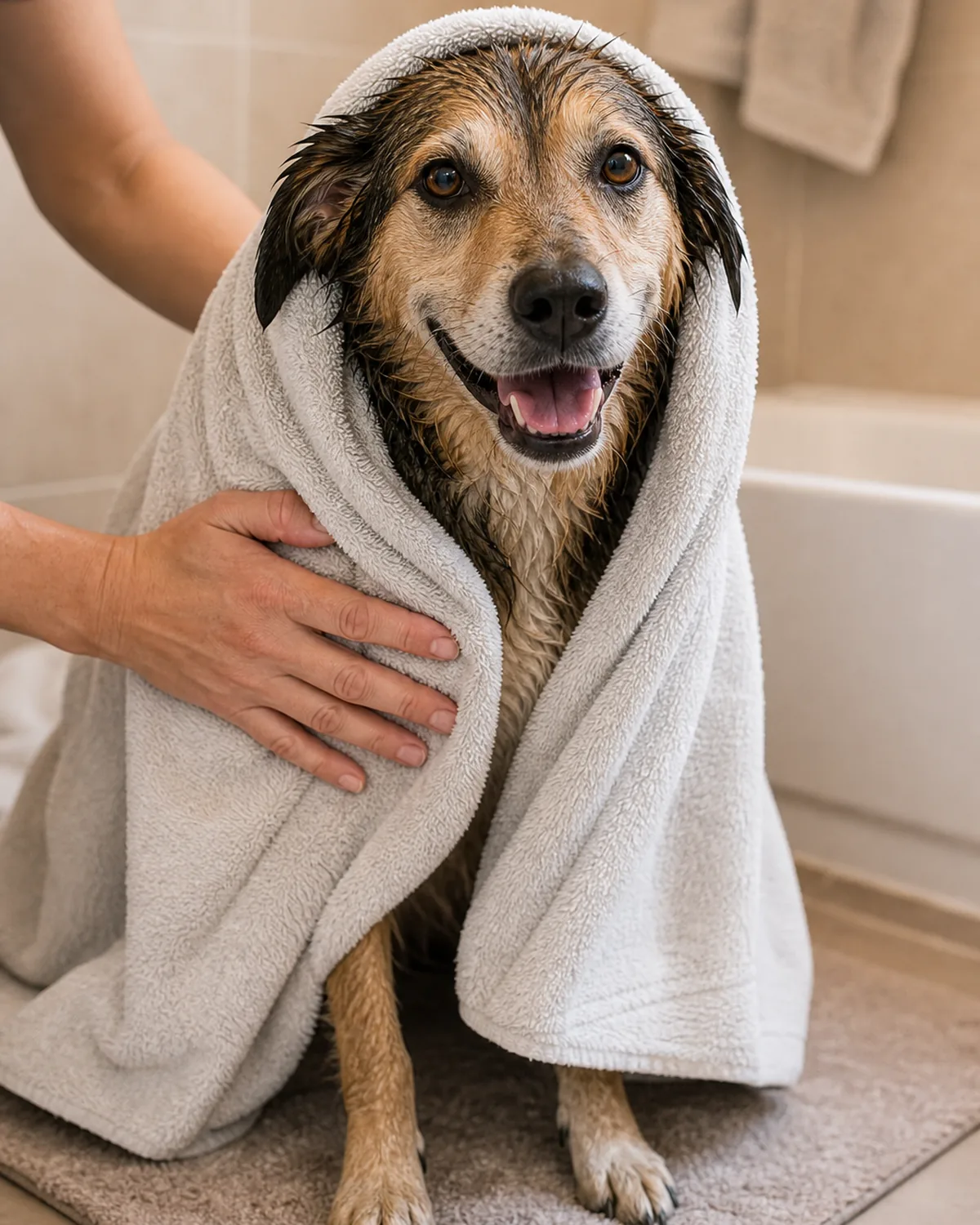
Wet dogs get cold fast and most will try to dry themselves on your couch, so have the towel ready the second you turn off the water. Press and blot the coat rather than scrubbing, which only tangles the fur you just worked to clean. A burst of happy zoomies afterward is completely normal.
- Wrap your dog and press the towel into the coat instead of rubbing hard.
- Switch to a second dry towel once the first is soaked, especially on thick coats.
- If your dog tolerates it, finish with a dryer on its lowest, coolest setting held well back.
End on a High Note With Treats and Praise
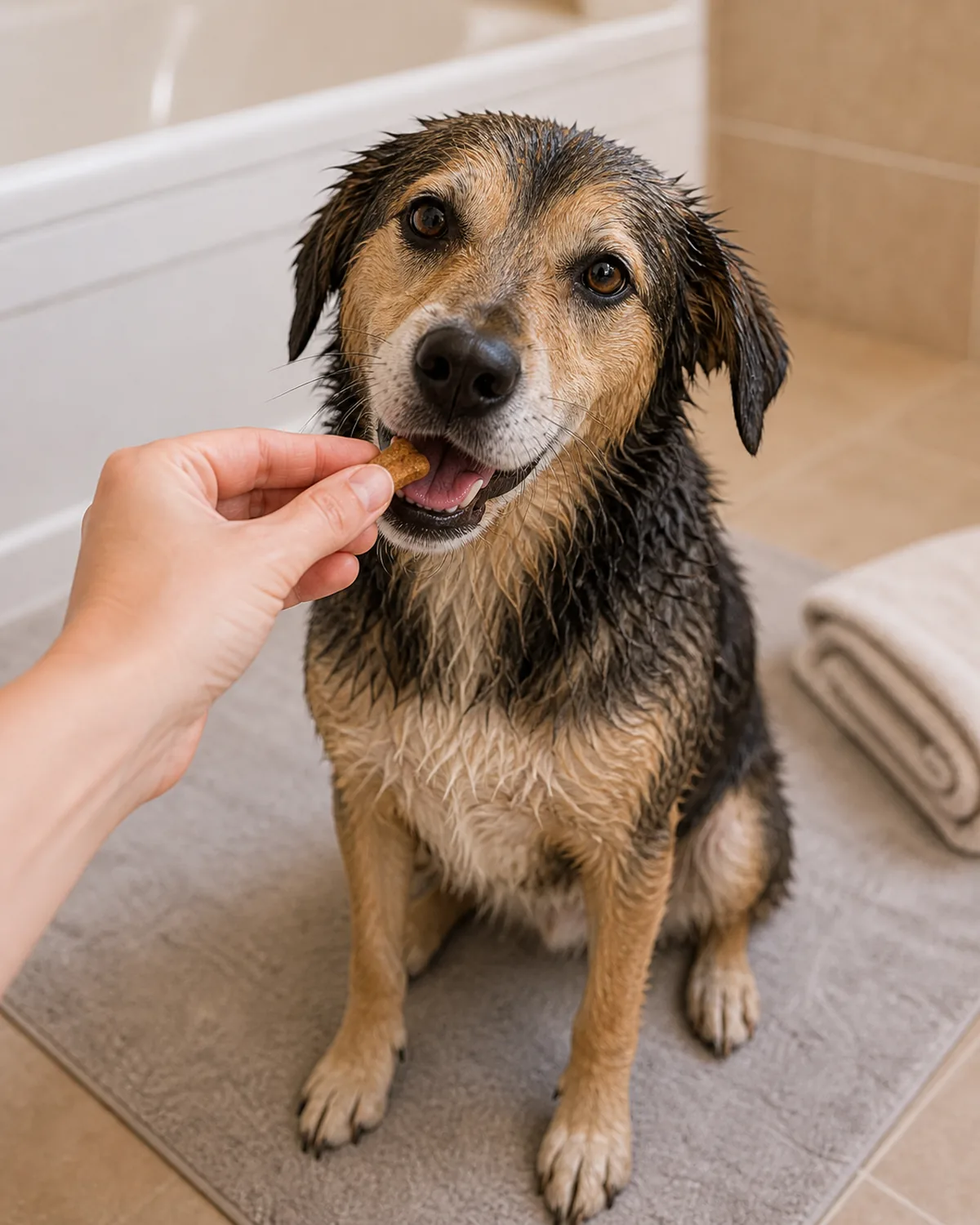
How a bath ends shapes how your dog feels about the next one, so the last thing they remember should be something good. A treat and a warm voice at the finish turn a chore into a routine they can tolerate, even enjoy. The rewarding starts before the end, though, not just after the towel.
- Hand over a favorite treat and lots of praise the moment the bath is finished.
- Drop small treats during the bath too, any time your dog stays calm and settled.
- Keep your own voice light and unhurried, since dogs pick up on your tension instantly.
If Your Dog Is Scared of Bath Time
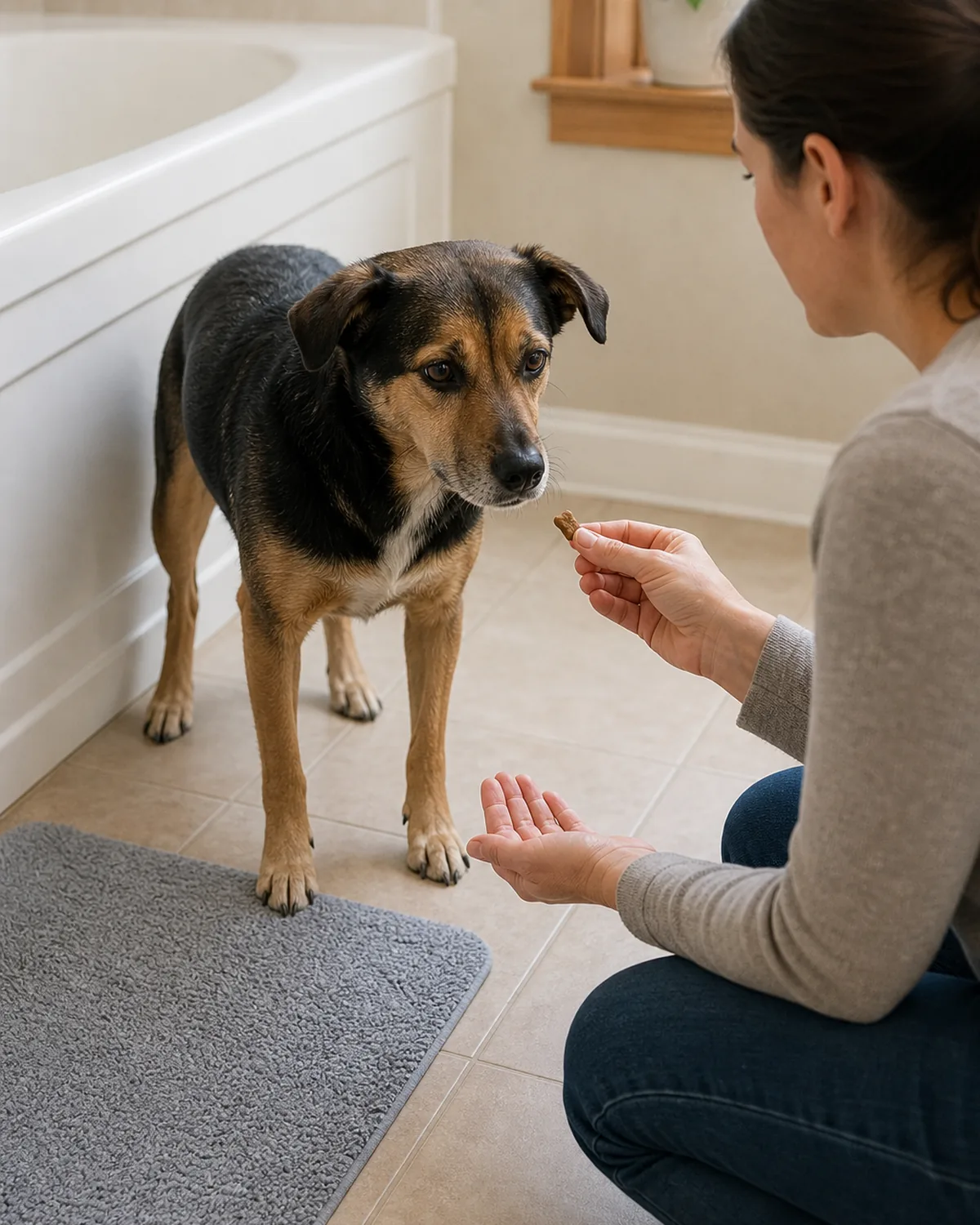
A dog that dreads baths isn’t being stubborn; the tub is genuinely frightening to them, and forcing the issue only hardens the fear. The way through is to break the bath into tiny, rewarded steps across several sessions and let your dog set the speed. Burning off some energy first helps more than people expect.
- Reward your dog for getting near, then into, an empty dry tub before you ever add water.
- Take the edge off first with a good walk or play session so they arrive calmer.
- If the fear is extreme or comes on suddenly, talk to a trainer or your vet instead of pushing through.
Building an Easy Bath-Time Routine
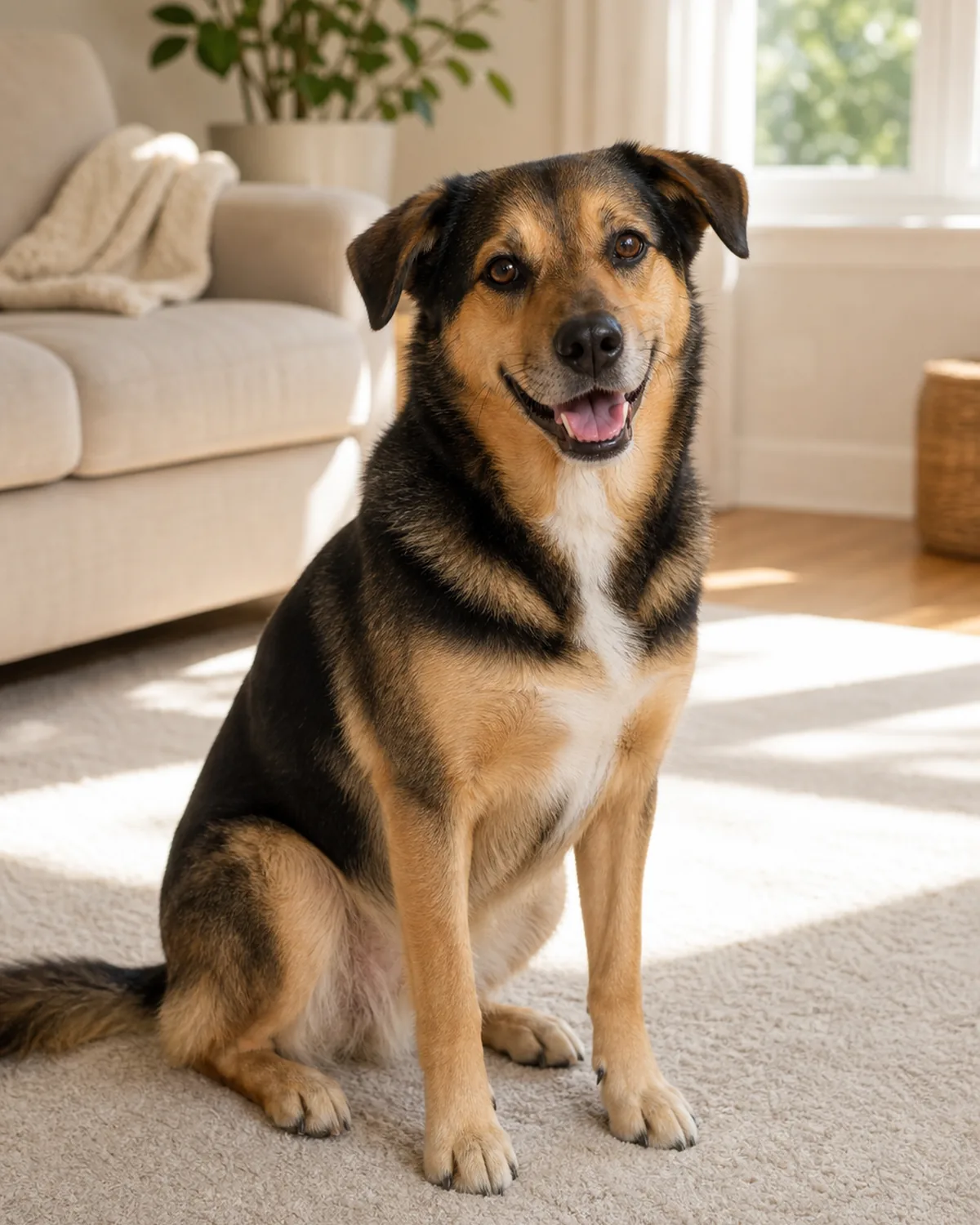
The dogs who take baths in stride are the ones who’ve learned the whole thing is short and predictable. Keep the steps in the same order every time and stay relaxed yourself, and before long the routine more or less runs itself.
Bathing at home also saves money and gives you a standing reason to run your hands over your dog and notice anything new. Do it calmly a few times and you’ll land where every owner wants to be: a clean dog, a mostly-dry floor, and a bath that’s no longer a big deal for either of you.
- Follow the same order every time so your dog always knows what comes next.
- Keep baths short and low-key rather than rare and stressful.
- Use the time to feel for any new lumps or sore spots, and call your vet about anything odd.

Jess Calloway edits Pawliqa, where she shares dog care, grooming, training, and new-owner tips — plus DIY and pet-friendly home ideas — for anyone who wants a happy, well-cared-for dog. As a dog mom to three very different dogs, she writes the honest, tested version of what actually works. Every guide is image-led and reviewed for clarity, usefulness, image accuracy, and Pinterest-to-page alignment before it goes live. Visit the About page.