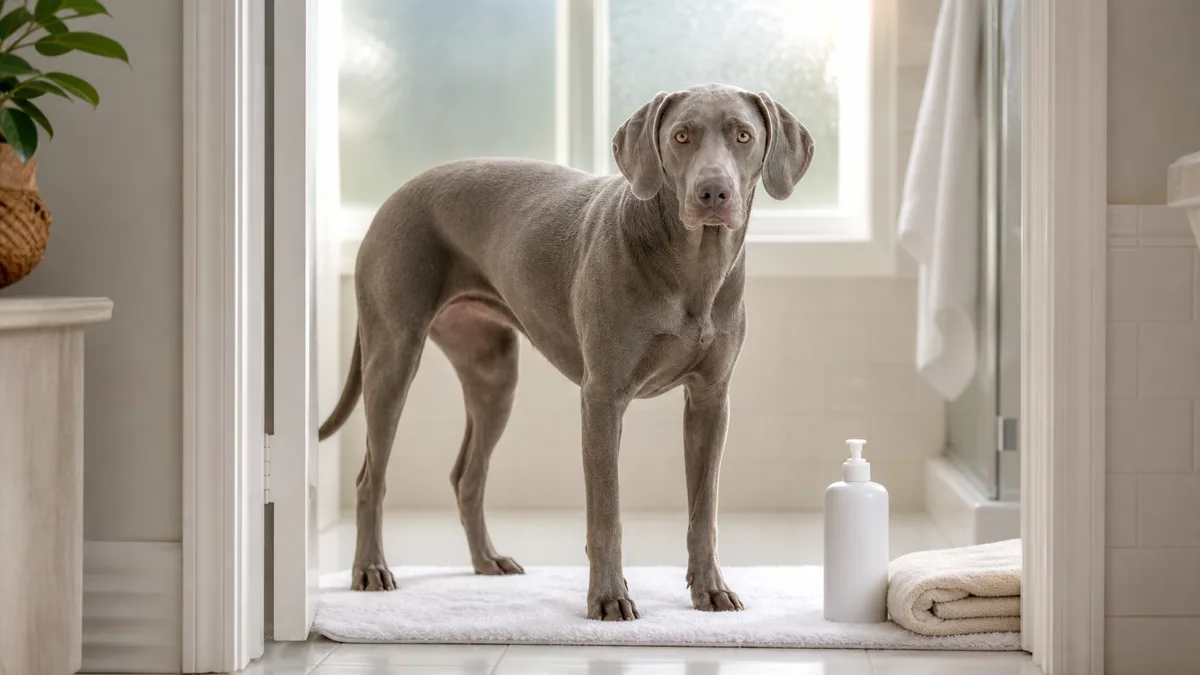
Your dog smells. Not the way it smelled after rolling in something at the park. This is the other kind — the one that lives in its coat, seeps into your couch, and greets you the moment you walk through the door.
Most people respond by washing their dog more often. That helps for about 48 hours. Then the smell comes back, sometimes worse, because over-bathing strips the natural oils and triggers the skin to produce even more.
The fix is not more baths. The fix is understanding where the smell actually comes from and treating each source directly.
Why Your Dog Smells (It Is More Than Needing a Bath)
Dog smell has three sources, and most people only address one of them.
The first is sebaceous oil. Every dog produces sebum, a waxy substance that waterproofs the coat and protects the skin. Some dogs produce more than others. Double-coated types and those with naturally oily skin produce significantly more, and the buildup creates that warm musty baseline smell even right after a bath.
The second source is microorganisms. Your dog's skin hosts colonies of yeast and bacteria that are normal and healthy in the right balance. They feed on sebum and dead skin cells, breaking them down into volatile fatty acids. Those fatty acids are the chemical compounds your nose registers as dog smell.
The third source is external contamination — ear discharge, saliva residue from licking, and whatever your dog found to roll in at the park. These are the most obvious smells and the easiest to fix, but they are rarely the only source.
Most owners spend all their energy on the third one while sources one and two quietly rebuild between baths.
Why Wet Dogs Smell Worse (And How to Dry Them Properly)
The wet dog smell is not dirt. It is chemistry.
Water activates the microorganisms on your dog's skin and accelerates their metabolic process. As moisture evaporates, it carries volatile organic compounds into the air — compounds that were sitting quietly on dry skin but become airborne the moment water sets them loose.
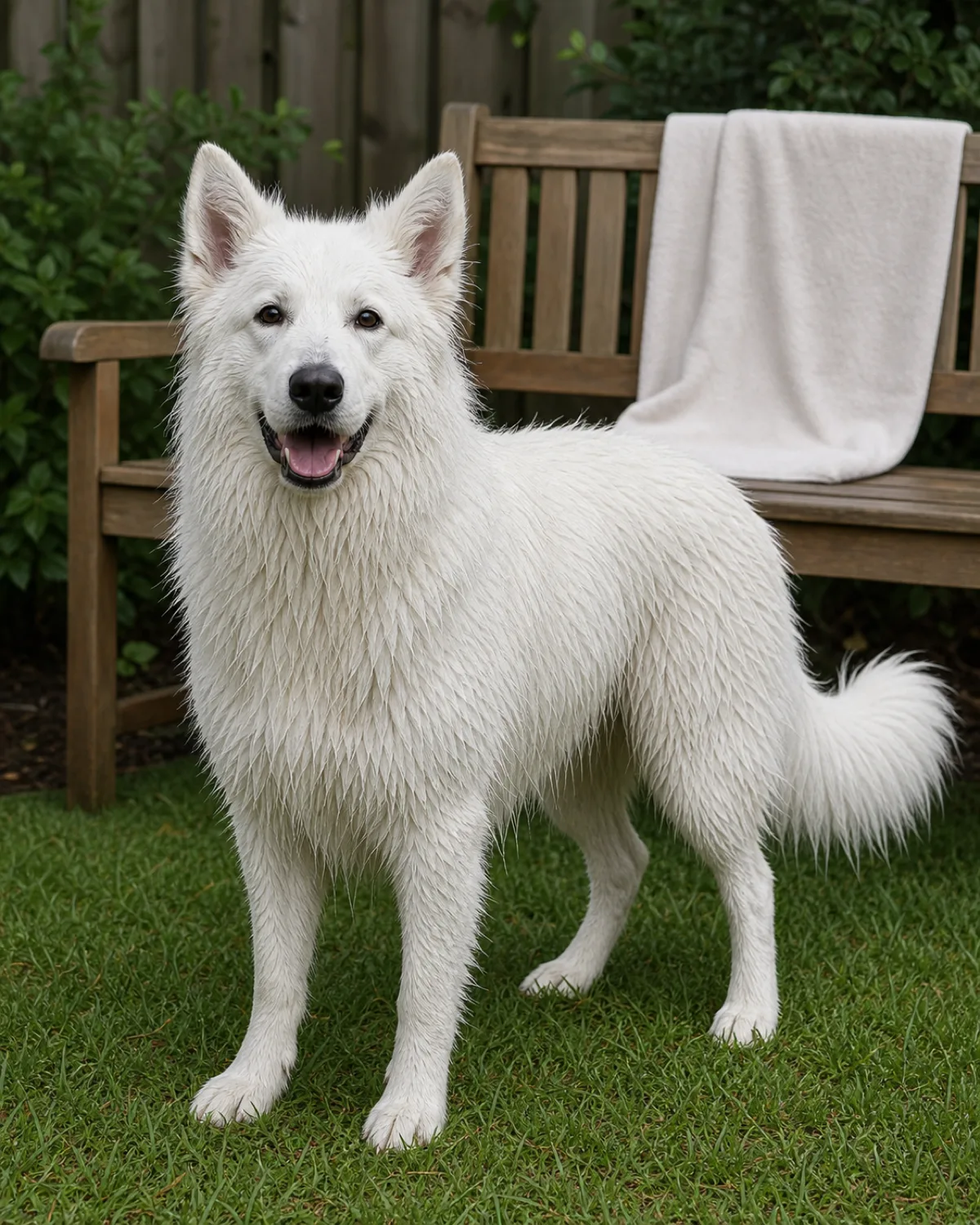
Air drying is the worst option. A dog left to dry naturally stays damp for four to six hours, giving skin microbes an extended warm humid environment. Every hour of dampness compounds the smell.
After a bath or a rainy walk, towel-blot immediately to absorb about 80 percent of the surface moisture. Then use a low-heat dryer and blow until the coat is dry all the way to the skin. Run your fingers through the undercoat to check. If the base layer is still damp, you are not done.
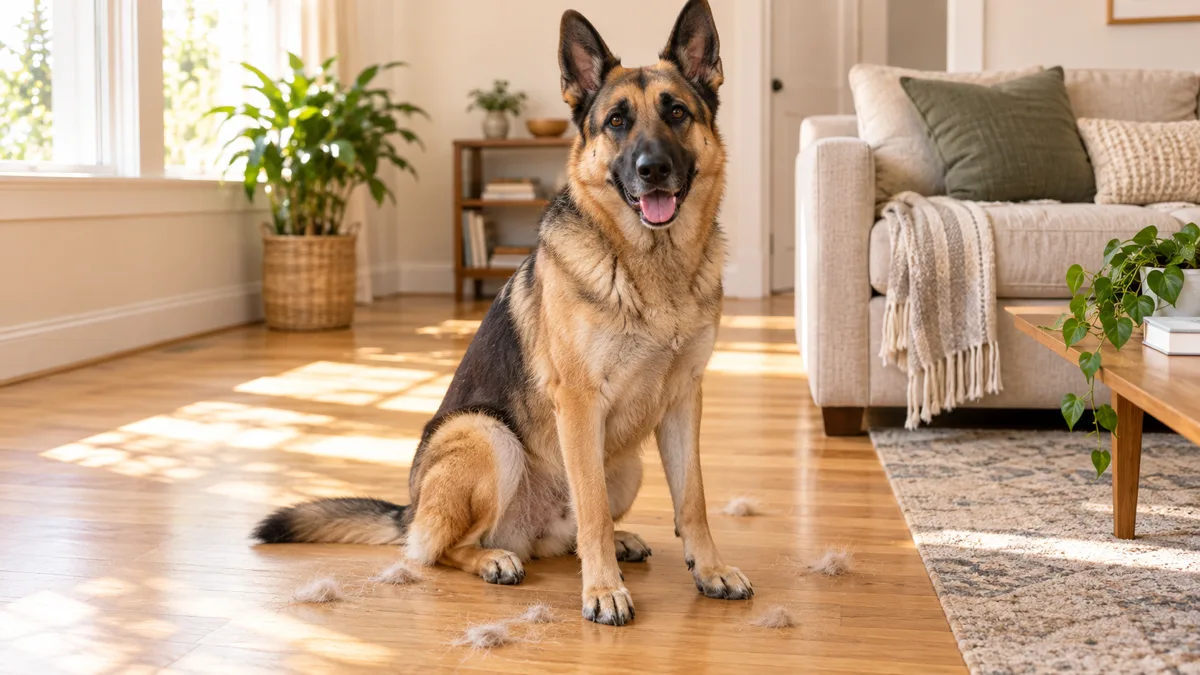
Dogs with thick double coats are the hardest to dry completely. The outer guard hairs shed water fast, but the dense undercoat traps moisture for hours. That trapped dampness is where the worst smell brews.
Jump to a section
How to get rid of dog smell
From understanding why your dog smells to fixing each source and keeping your house fresh.
How to Bathe Your Dog So the Smell Actually Stays Gone
Most people wash their dog at the right frequency but with the wrong technique.
The first common mistake is using human shampoo. Human skin runs around pH 5.5. Dog skin is closer to 7.0. Human shampoo strips the acid mantle, which triggers the sebaceous glands to overproduce oil as a repair response. Two days after a bath with human shampoo, your dog's coat may be oilier and smellier than it was before.
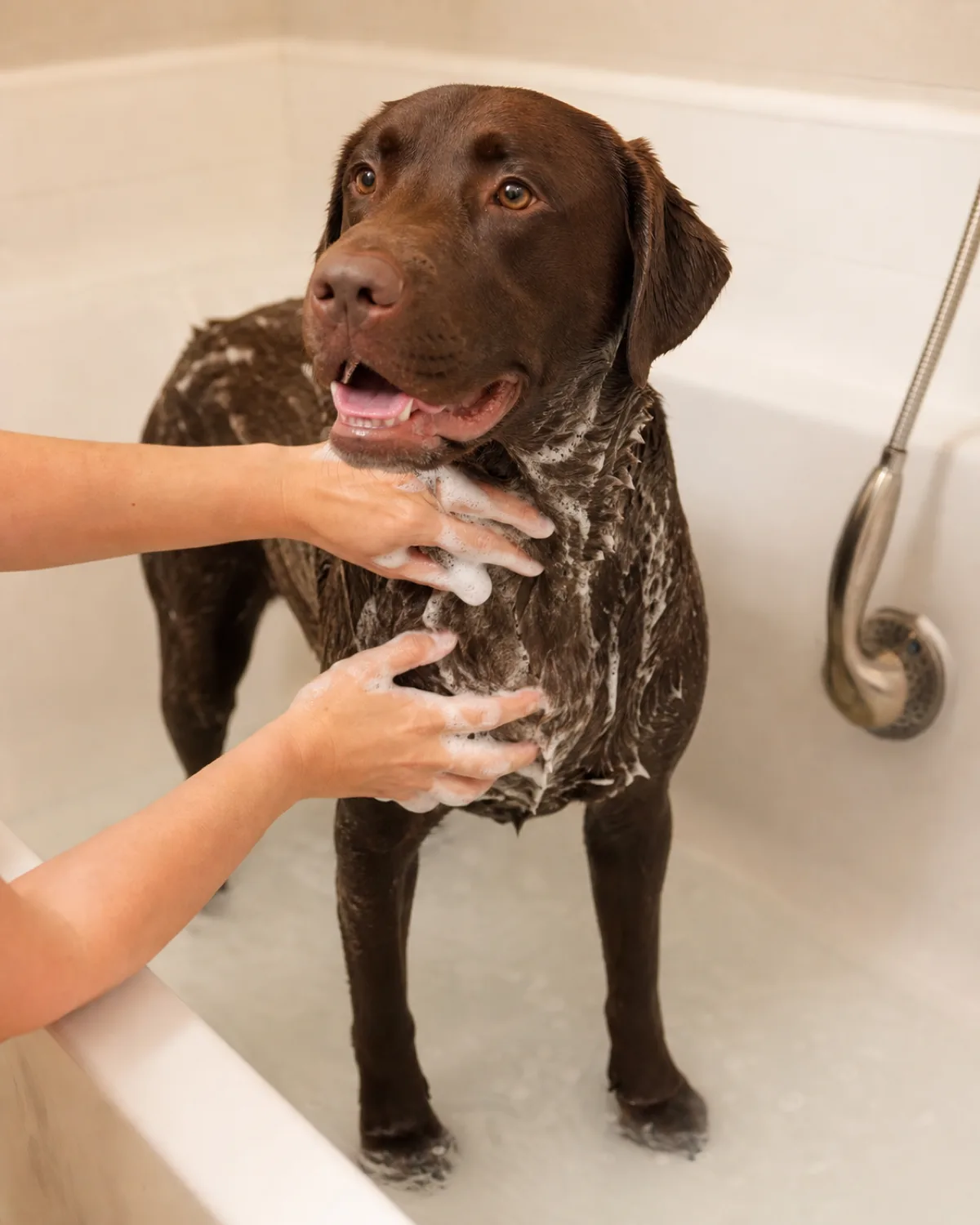
The second mistake is washing the surface without reaching the skin. If you apply shampoo, create a quick lather on the outer coat, and rinse within 30 seconds, the foam never touched the skin where the smell-producing microbes live. Work the lather down through the coat with your fingertips until you can feel the skin, then let it sit for two to three minutes before rinsing.
The third mistake is incomplete rinsing. Residue left on the skin irritates the surface, triggers inflammation, and creates its own sour smell within days.
Bathing frequency for most dogs is every four to six weeks. If you find your dog smelling bad within two weeks, check the ears, the diet, and the teeth before increasing bath frequency. Over-bathing usually makes the underlying problem worse.
What to Do Between Baths
A four-to-six-week bathing interval means you need maintenance between washes. Three tiers, each targeting a different layer of the problem.
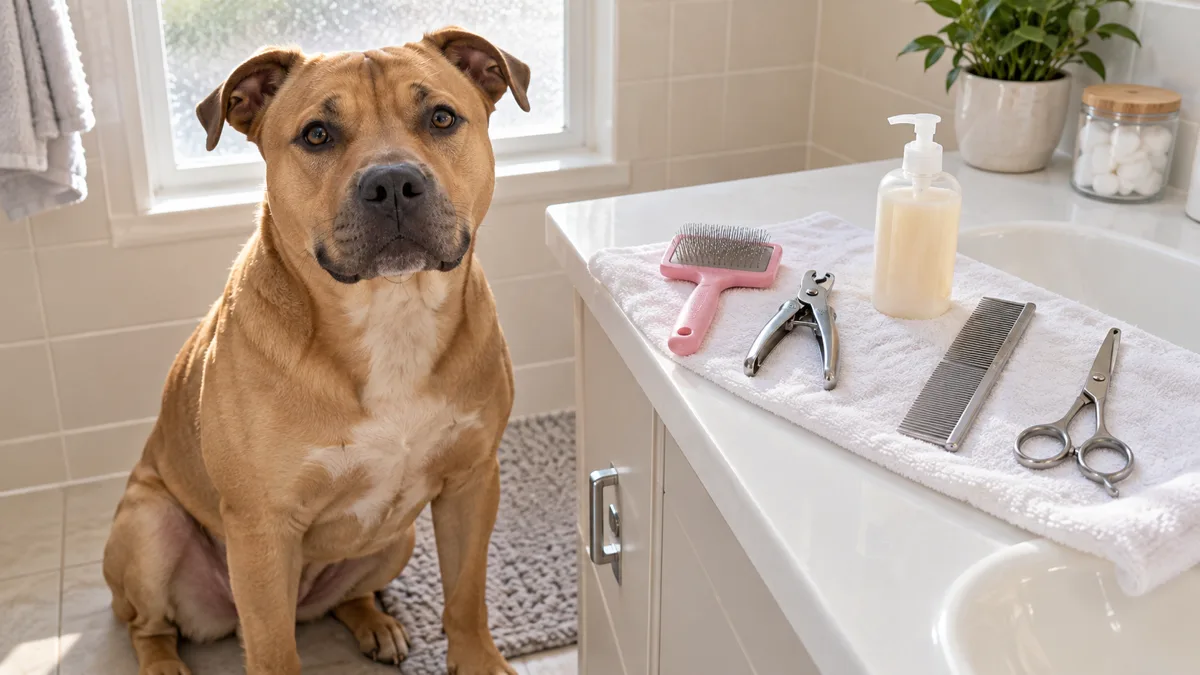
The first tier is regular brushing. Brushing removes dead hair, loose skin cells, and dried sebum before microbes get a chance to break them down. Think of it as taking the trash out every other day instead of waiting for the bin to overflow. Every two to three days works for most dogs. For heavy shedders, daily brushing during coat-blow season makes a noticeable difference.
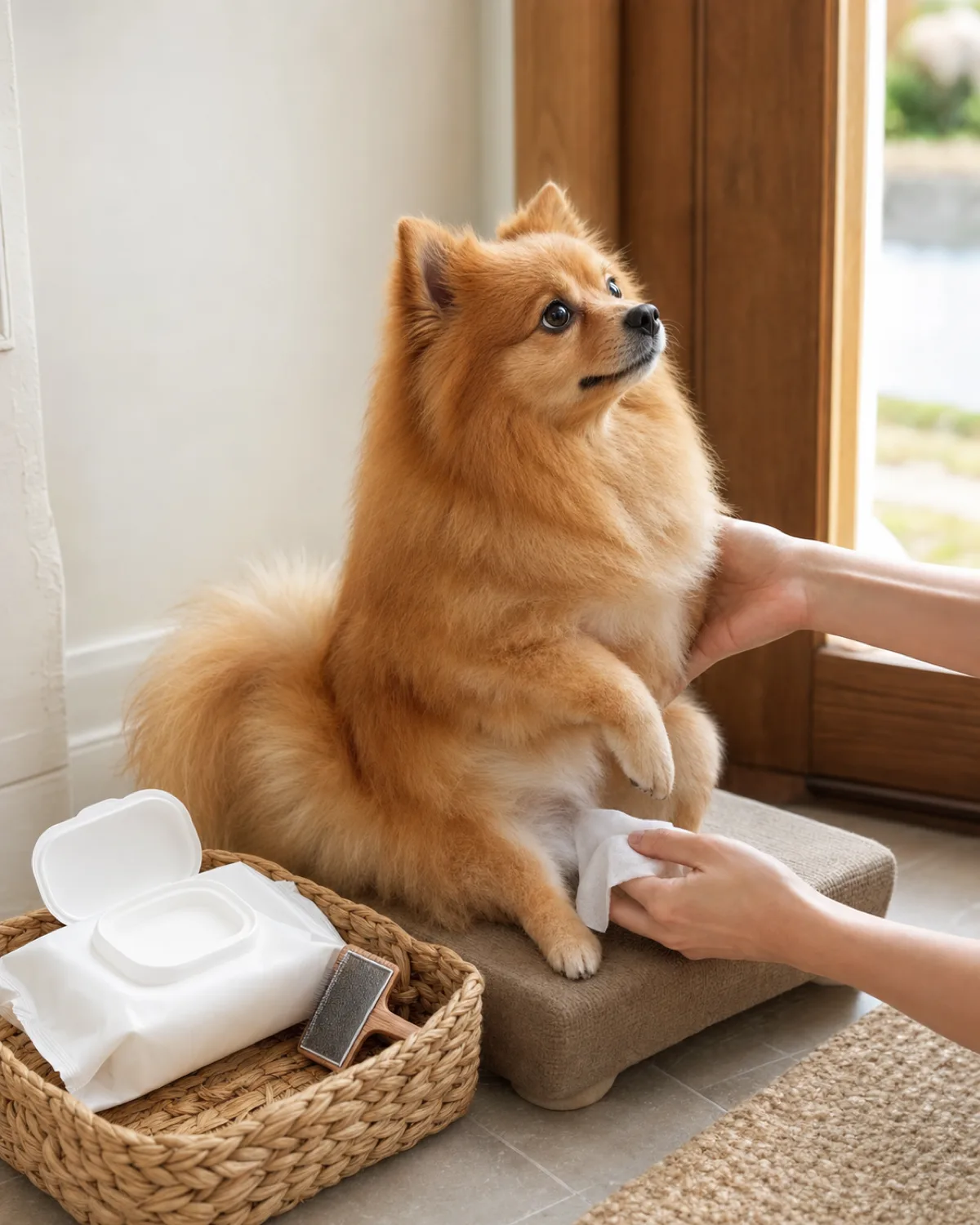
The second tier is pet-safe grooming wipes. After every walk, especially on rainy or muddy days, wipe down the paws, belly, ear flaps, and any skin folds. This removes the fresh layer of external contaminants before it settles into the coat. Keep a pack by the front door so it becomes automatic.
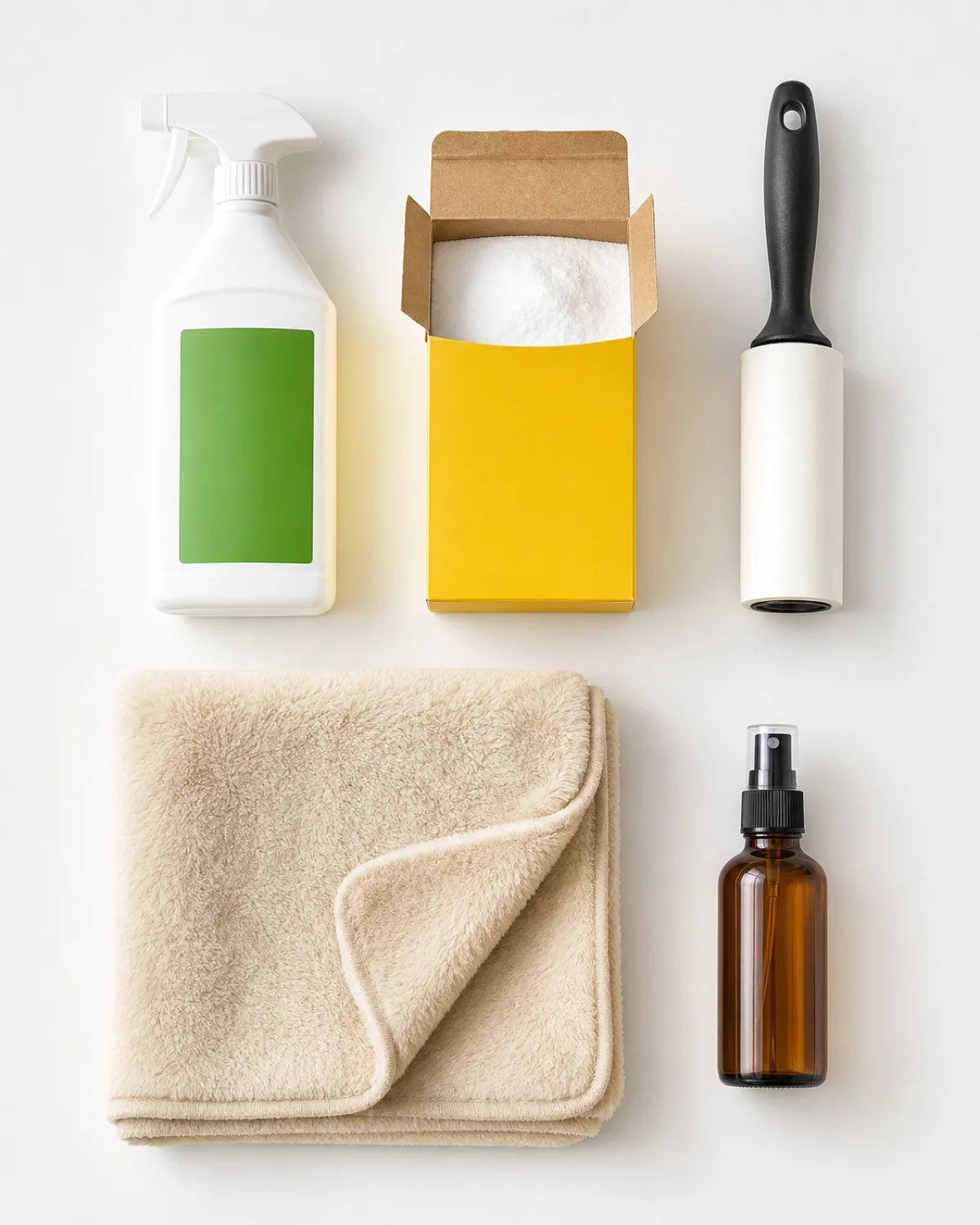
The third tier is dry shampoo or deodorizing spray formulated for dogs. Look for products with a baking soda base, not perfume. Baking soda neutralizes the fatty acids that cause odor. Perfume layers a floral smell on top of a dog smell, and the combination is worse than either one alone. Use this once or twice a week between baths.
When the Smell Is Coming from the Ears
Ears are the most commonly overlooked source of persistent dog smell.
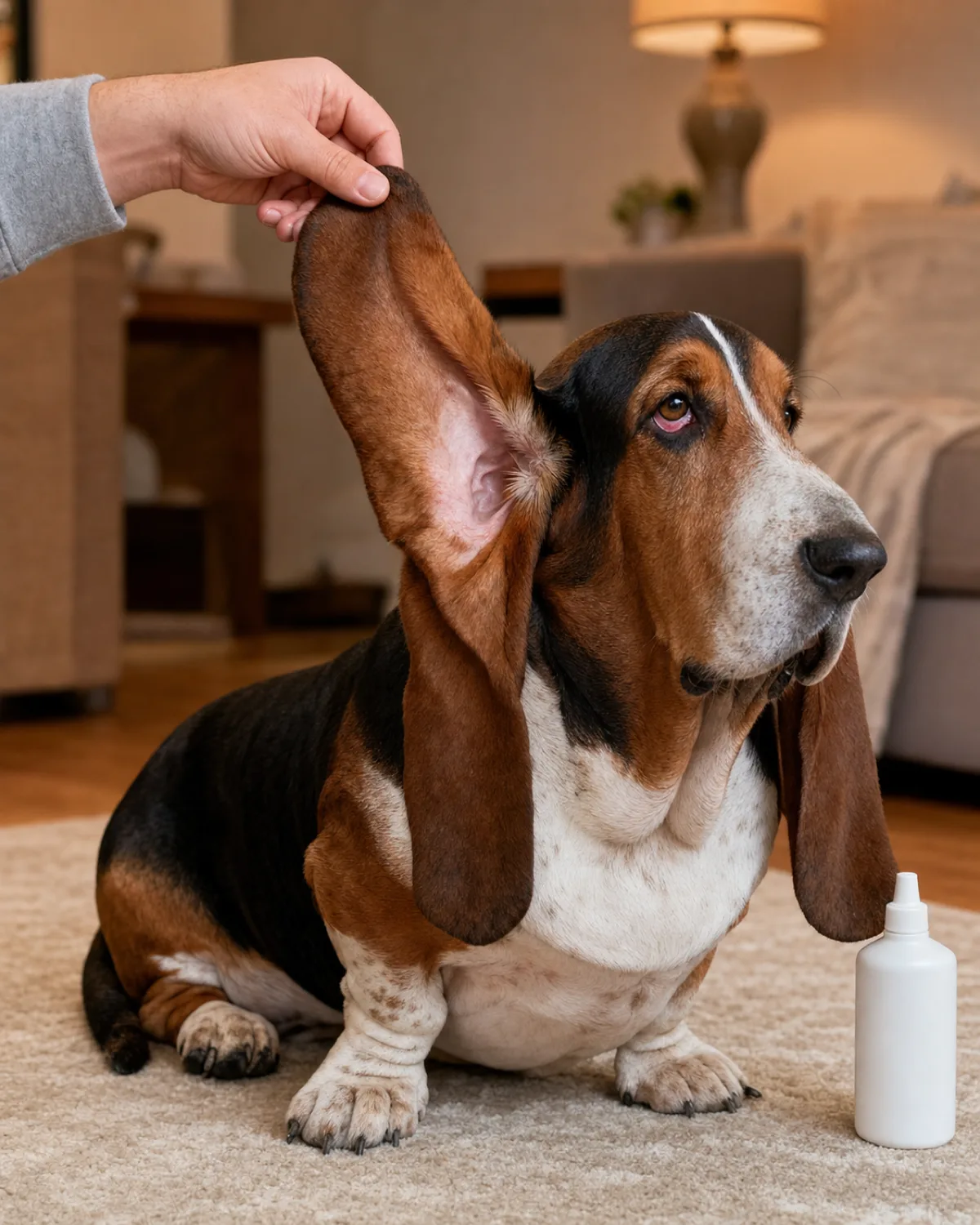
A healthy ear has almost no odor. If you lift your dog's ear flap and smell something sour, yeasty, or like fermented bread dough, that is not normal coat smell drifting upward. That is an early sign of yeast or bacterial overgrowth inside the ear canal.
Dogs with long, heavy, floppy ears are at the highest risk. The ear flap seals the canal, creating a warm dark humid environment where microbes thrive. Dogs with narrow ear canals or those that swim frequently face the same risk from a different angle.
Red flags that mean a vet visit: persistent foul odor that returns within 24 hours of cleaning, frequent head shaking, scratching at the ears hard enough to cause redness, or dark or bloody discharge. These indicate an active infection that needs prescription treatment, not home cleaning.
Start here
Where is the smell strongest?
The answer determines whether you need a whole-body approach or targeted treatment.
ALL OVER
Even, general dog smellSebum and microbe baseline. Focus on bathing technique, drying thoroughly, regular brushing, and between-bath maintenance. Check diet quality if the smell returns within two weeks of a proper bath.
SPECIFIC AREA
Ears, mouth, rear end, or pawsLocalized smell often signals something specific: ear infection, dental disease, anal gland issue, or yeast between the toes. Identify the source, then treat that area directly. Persistent localized odor usually needs a vet.
What to Do About Dog Breath
Bad breath is the smell most owners accept as normal when it almost never is.
A healthy dog's mouth should smell like nothing much. If your dog's breath makes you turn away, something is going wrong, and the cause determines the fix.
The first level is a faint fishy or stale smell. This usually means plaque buildup — a sticky biofilm of bacteria that produces sulfur compounds as it matures.
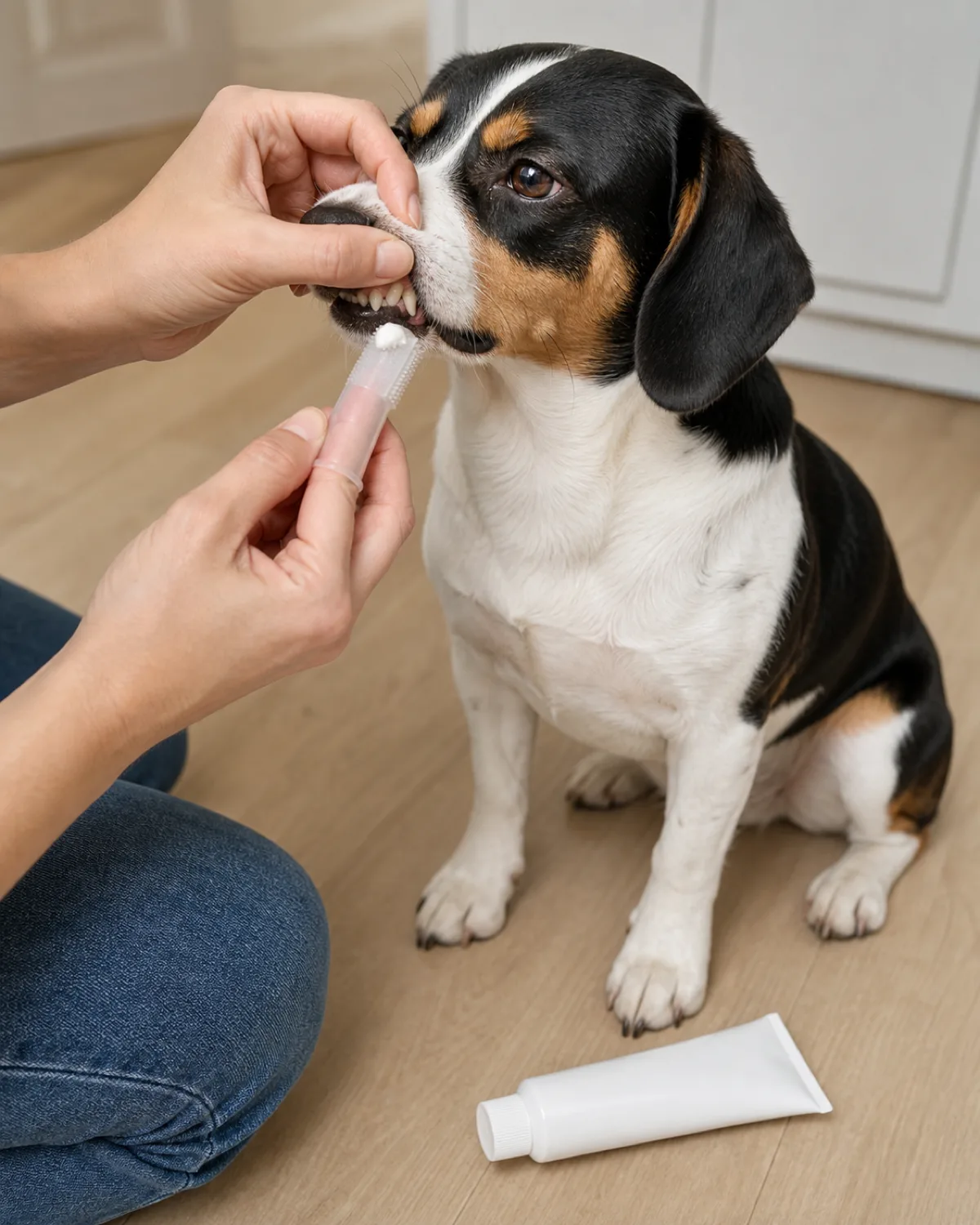
The fix is daily tooth brushing for 30 seconds with a dog-safe enzymatic toothpaste. A detailed walkthrough is in how to brush your dog's teeth at home. Dental chews help but do not replace brushing.
The second level is a persistent strong odor despite regular brushing. This usually means tartar, hardened plaque that has calcified on the tooth surface. Tartar cannot be brushed off at home and requires a professional dental cleaning.
The third level is a sudden change in breath quality: sweet or fruity (possible diabetic ketoacidosis), ammonia or urine-like (possible kidney disease), or metallic (possible internal bleeding or severe infection). These are not dental problems. They require immediate veterinary attention.
Most dogs sit at level one. Thirty seconds a day with a toothbrush fixes it.
How Diet Affects the Way Your Dog Smells
Most owners never connect food to body odor, but the link is direct.
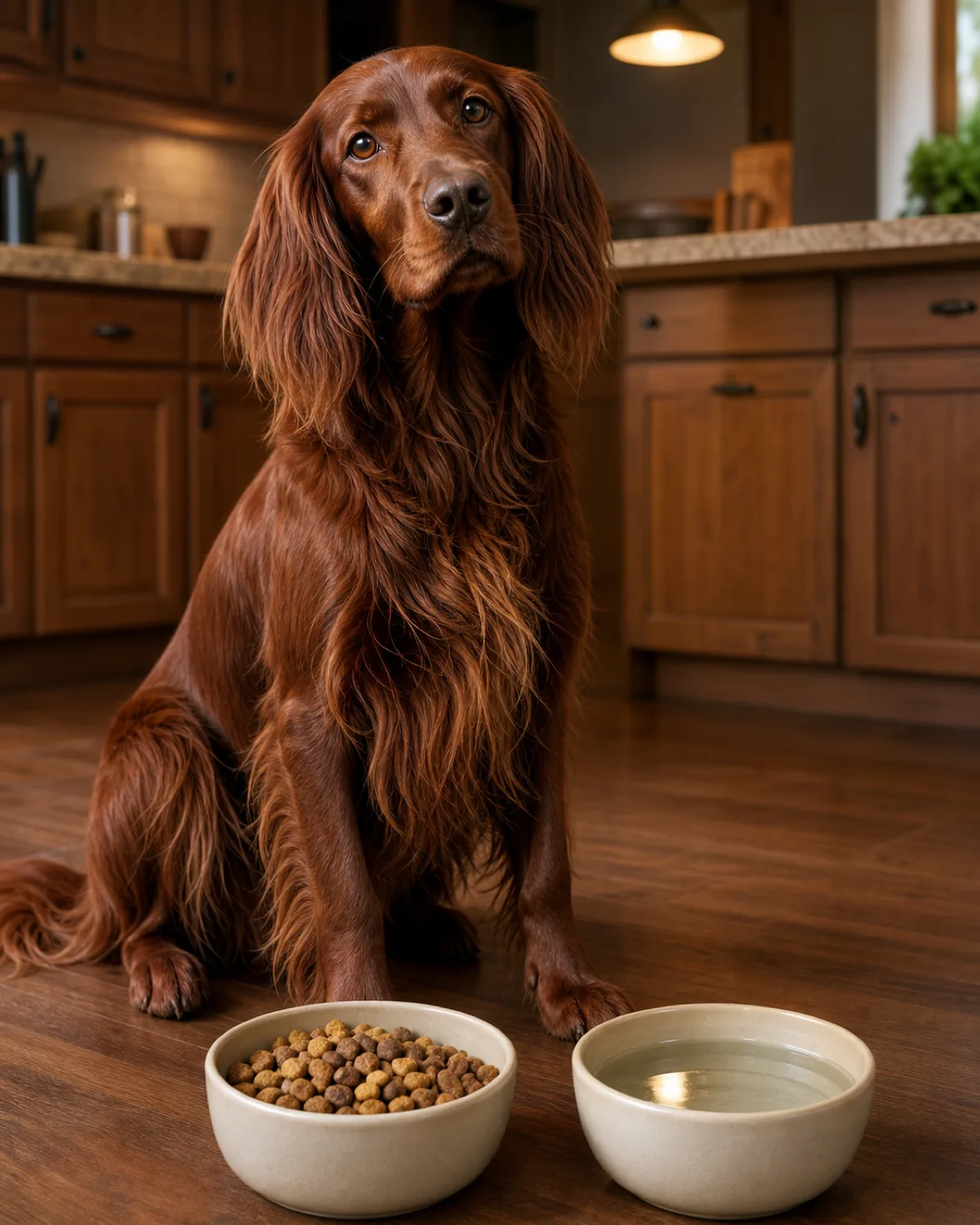
Low-quality food loaded with grain fillers, artificial preservatives, and cheap fat sources forces the body to work harder to process nutrients. One side effect is increased sebum production. Oilier skin means more fuel for the microbes that produce smell.
Food allergies and intolerances create a different pathway. Common triggers include chicken, grain, soy, and dairy. When the immune system reacts to a food protein, it triggers skin inflammation, which disrupts the microbial balance and allows yeast to overgrow. Yeast overgrowth produces a sour, almost beer-like smell that no amount of bathing fixes because the trigger is internal.
Switching to a higher-quality food with a novel protein source and limited ingredients often reduces body odor noticeably. But not immediately. Dog skin has a turnover cycle of about four to six weeks. You will not see the full effect of a dietary change until at least one full skin cycle has passed. For a deeper look at feeding fundamentals, see how to feed a puppy.
The ground rules
Managing dog smell
The habits that keep odor under control and the mistakes that make it worse.
Always
Use pet-specific shampoo (pH 6.5 to 7.5)
Dry to the skin after every bath or rain
Brush every two to three days
Brush teeth daily for at least 30 seconds
Check ears weekly for unusual odor
Wait four to six weeks after a diet change to judge results
Use enzyme cleaners on fabrics, not standard detergent
Investigate sudden new smells immediately
Never
Use human shampoo or conditioner
Use perfume or human deodorant on your dog
Bathe more than once a week unless a vet prescribes medicated baths
Ignore persistent ear, mouth, or rear-end odor
Use air freshener instead of cleaning the source
Express anal glands yourself unless a vet has taught you
Dismiss all body odor as normal without checking
How to Get Dog Smell Out of Your House
Your dog may already smell fine, but your couch does not.
Fabric absorbs dog oil, dander, and saliva over months and holds onto that smell long after the dog has been bathed. If you clean the dog but not the environment, you will keep smelling dog and incorrectly conclude that the bath did not work.
Start with the dog. Confirm the source is handled before cleaning the house, or you will be cleaning around a problem that is still producing odor.
Wash everything removable. Dog bed covers, couch slipcovers, blankets, pillowcases from any bed the dog sleeps on. Use an enzyme-based laundry detergent. Enzyme cleaners break down organic compounds at the molecular level. Standard detergent masks them with fragrance.
For surfaces you cannot remove — carpets, upholstered furniture, car seats — sprinkle baking soda liberally, let it sit for 15 to 20 minutes, then vacuum thoroughly. Baking soda absorbs and neutralizes the fatty acids trapped in the fibers.
For the air, ventilation beats air freshener every time. Open windows create actual air exchange. Air freshener sprays add a chemical fragrance layer on top of the dog smell, creating a third smell that is worse than either of its parents.
Save this
Your Dog Smell Elimination Checklist
1
Identify the SourceAll-over coat smell vs. localized (ears, mouth, rear, paws).
2
Bathe CorrectlyPet shampoo, lather to the skin, rinse completely, dry all the way through.
3
Maintain Between BathsBrush every 2-3 days. Wipe down after walks. Deodorizing spray once a week.
4
Brush Teeth Daily30 seconds with enzymatic toothpaste. Most bad breath stops here.
5
Check Ears WeeklyLift the flap, sniff. Sour or yeasty odor is not normal.
6
Evaluate DietHigh-quality protein, limited fillers. Wait 4-6 weeks after switching to see results.
7
Clean the HouseEnzyme cleaner for fabrics. Baking soda for carpets. Open windows for air.
8
Know the Red FlagsFishy, ammonia, sweet, or rotting smell = vet visit, not another bath.
pawliqa.com
When a Smell Means Something Is Wrong
Everything above addresses normal body odor — the kind that comes from oil, microbes, and everyday life. But some smells are medical signals that no amount of grooming will fix.
A sudden fishy smell combined with scooting or licking the rear end usually means impacted or infected anal glands. This is common and treatable, but it is not something to attempt at home unless a vet has specifically taught you how.
A persistent yeasty or bread-dough smell concentrated in the ears or skin folds — especially between the toes or around the groin — indicates yeast infection. This needs antifungal treatment, not just cleaning.
An ammonia or urine-like smell from the mouth or the body overall can signal kidney dysfunction. The kidneys are no longer filtering waste efficiently, and those products are being excreted through the skin and breath.
A sweet, almost fruity breath odor in a dog that is also drinking and urinating excessively may be diabetic ketoacidosis, a life-threatening emergency.
A rotting or wound-like smell from skin folds, between toes, or around the groin usually indicates a bacterial infection or a hidden wound under thick fur.
None of these wait. If the smell is new, sudden, localized, or accompanied by behavioral changes like lethargy or appetite loss, call the vet.
Jess Calloway
Dog mom to three very different dogs and the editor behind Pawliqa. I write grooming guides, training walkthroughs, and first-year survival plans based on what actually works at home — not what sounds good in theory. I am not a veterinarian. When something in a guide is beyond home care, I will tell you to call yours.
Fifteen dog paw care tips covering pad checks, nail length, moisturizing, hot pavement tests, winter balm, cracked pad first aid, and seasonal routines.