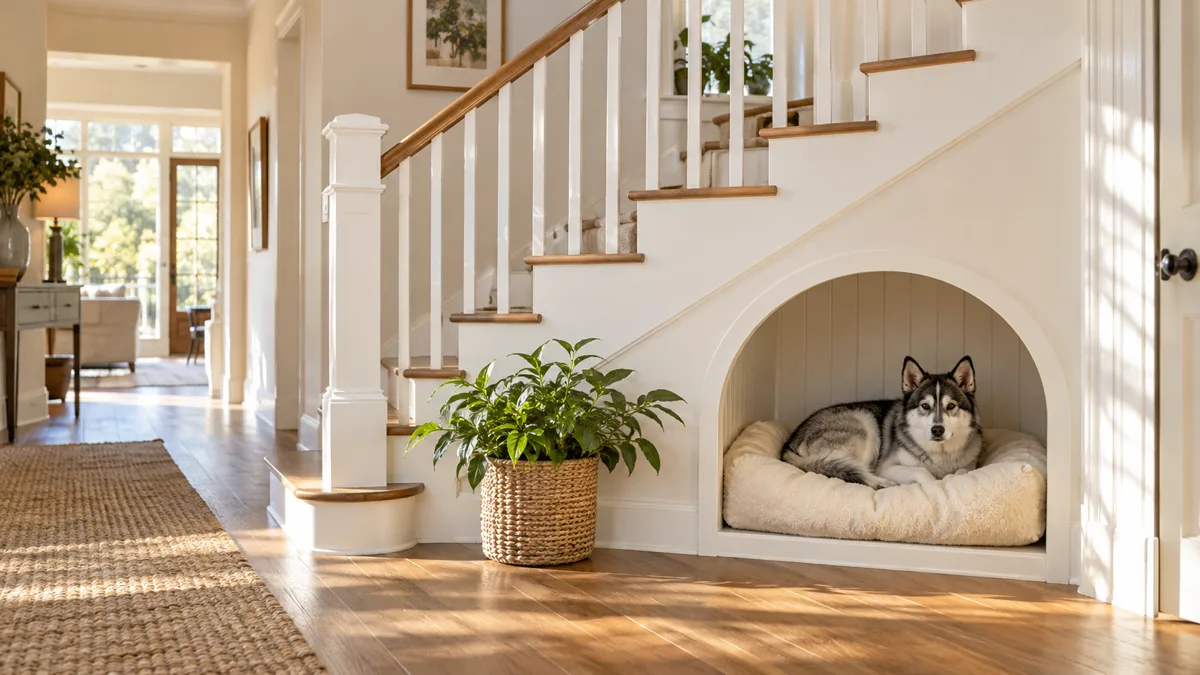
A dog bed is one of those purchases that seems simple until you start shopping. Bolster or flat. Memory foam or mesh. Indoor or outdoor. Every dog sleeps differently, and a bed that works for a sprawling senior will not work for a tiny burrower.
My three dogs use three completely different beds. A bolster nest the oldest curls into, a flat cooling mat the youngest sprawls across in summer, and an elevated cot on the porch for the middle one who overheats if you look at him wrong.
These ten dog bed ideas cover every sleep style, plus how to pick the right size so you stop guessing and start getting it right.
Your dog bed guide
10 cozy setups your pup will love
From bolster nests for curlers to elevated cots for dogs that run hot, these ten dog bed ideas match every sleep style and budget. Jump to the one that fits your dog first.
1. Bolster Beds for Dogs That Love to Curl Up Against Something
Bolster beds have raised edges on three or four sides, and dogs that curl into a ball gravitate toward them immediately. The raised wall gives your dog something to press their back against, which mimics the feeling of sleeping in a den or against a littermate.
The best bolster beds have a removable inner cushion so you can wash the bottom pad separately from the outer walls. Look for walls that hold their shape after compression. Cheap bolster beds flatten within a month, and once the wall collapses the bed loses its entire purpose.
Choose a bolster bed where the inner sleeping area fits your dog in a curled position, not stretched out
Avoid overstuffed walls that push your dog toward the center and leave no room to settle
Look for a machine-washable cover with a hidden zipper along the bottom edge
Small to medium dogs tend to get the most out of bolster beds because they naturally curl when they sleep. Large dogs can use them too, but the bed needs to be big enough that the walls do not force awkward positions.
2. Flat Mat Beds for Sprawlers Who Need Room to Stretch
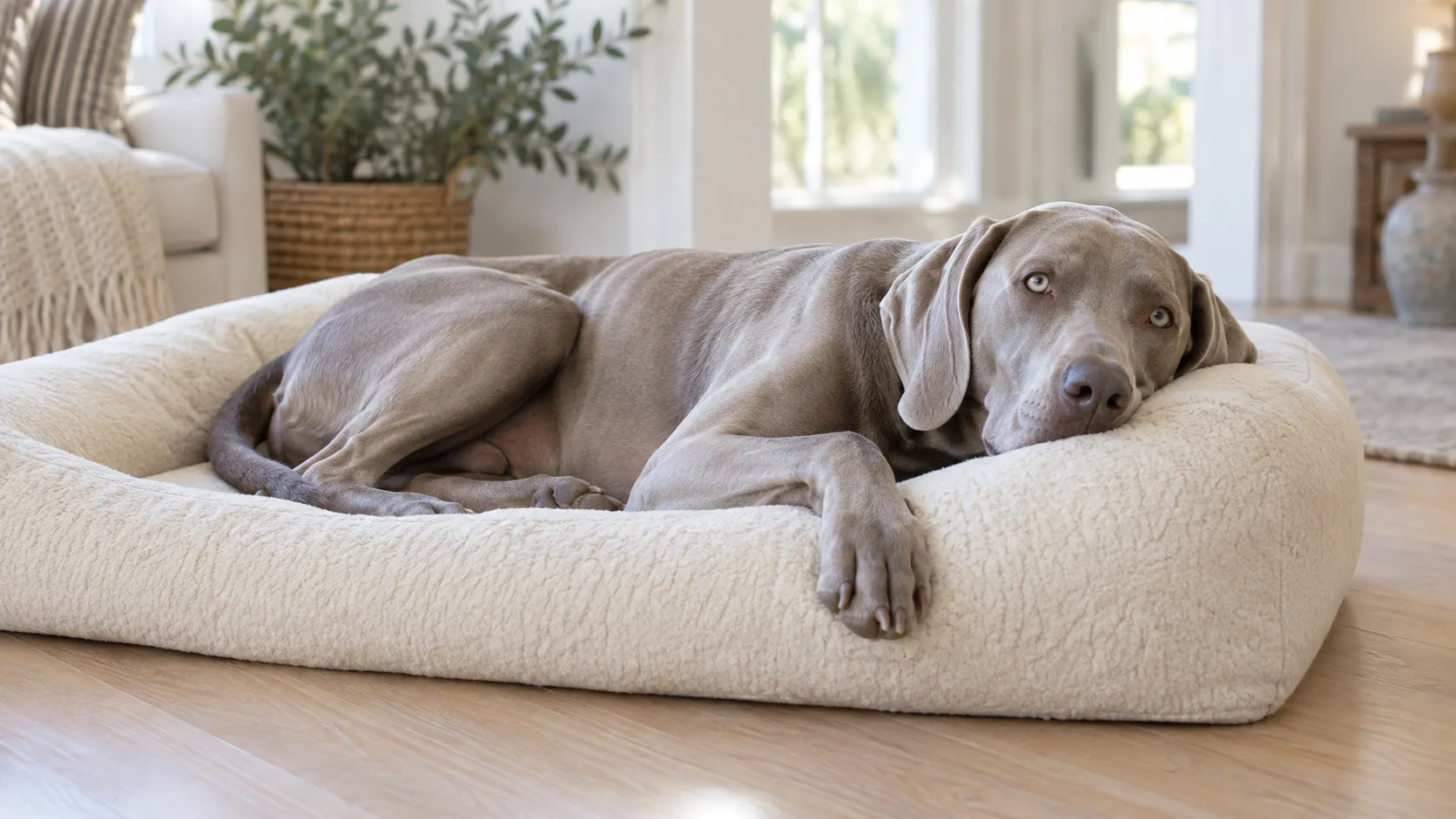
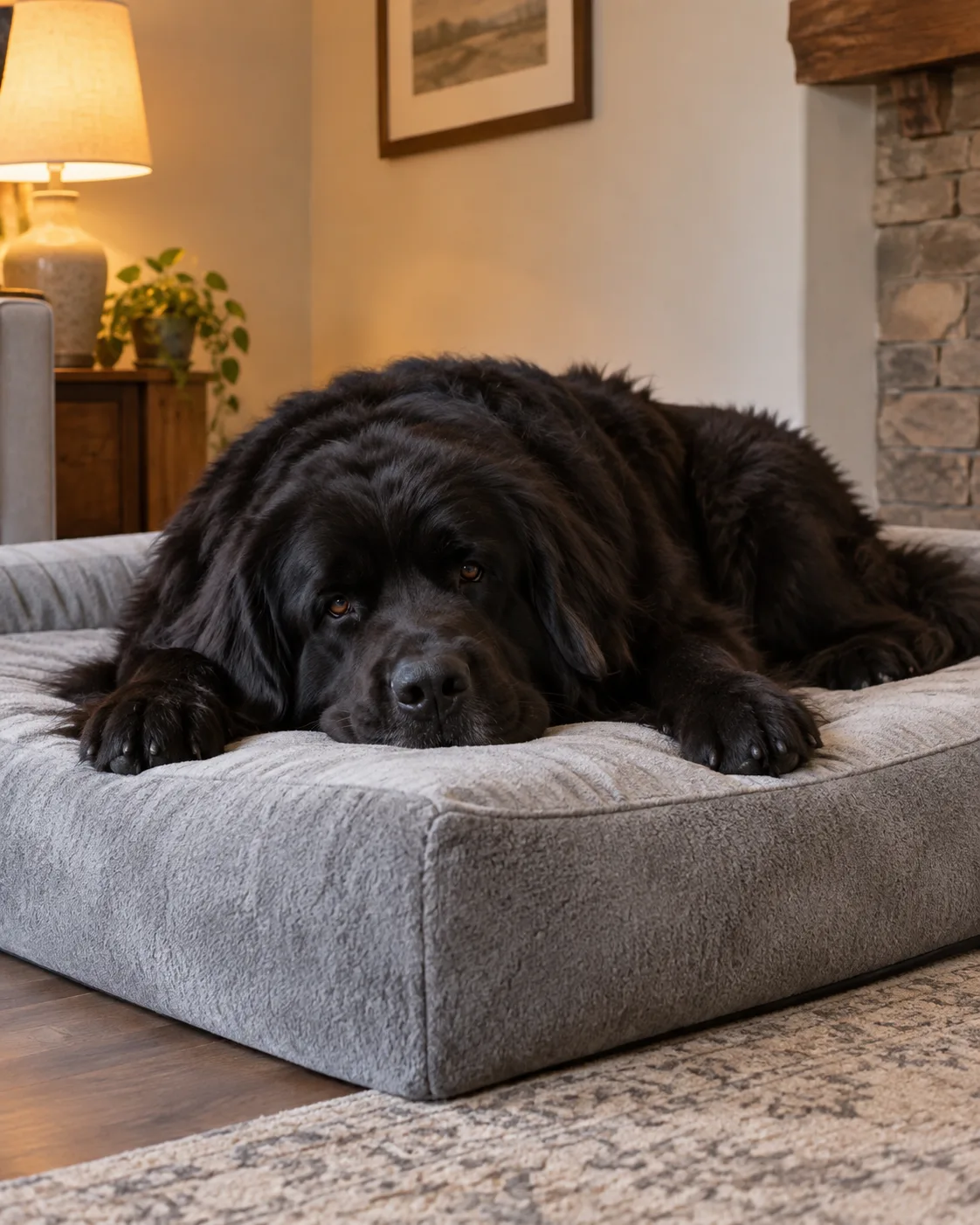
Flat mat beds are the simplest design. No walls, no bolsters, just a padded rectangle on the floor. Dogs that sleep stretched out on their sides with all four legs extended need this kind of open space.
A good flat mat is at least three inches thick with a non-slip bottom. Thinner mats compress to nothing under a heavy dog, and without a grippy base the mat slides across the floor every time your dog jumps off.
Measure your dog from nose to tail while they sleep stretched out, then add six inches in each direction
Pick a mat with a waterproof liner under the removable cover in case of accidents
Stack two mats together for extra cushioning on hard floors
Flat mats also work well as crate liners, travel beds, and backup sleeping spots in rooms where you do not want a bulky bed taking up space.
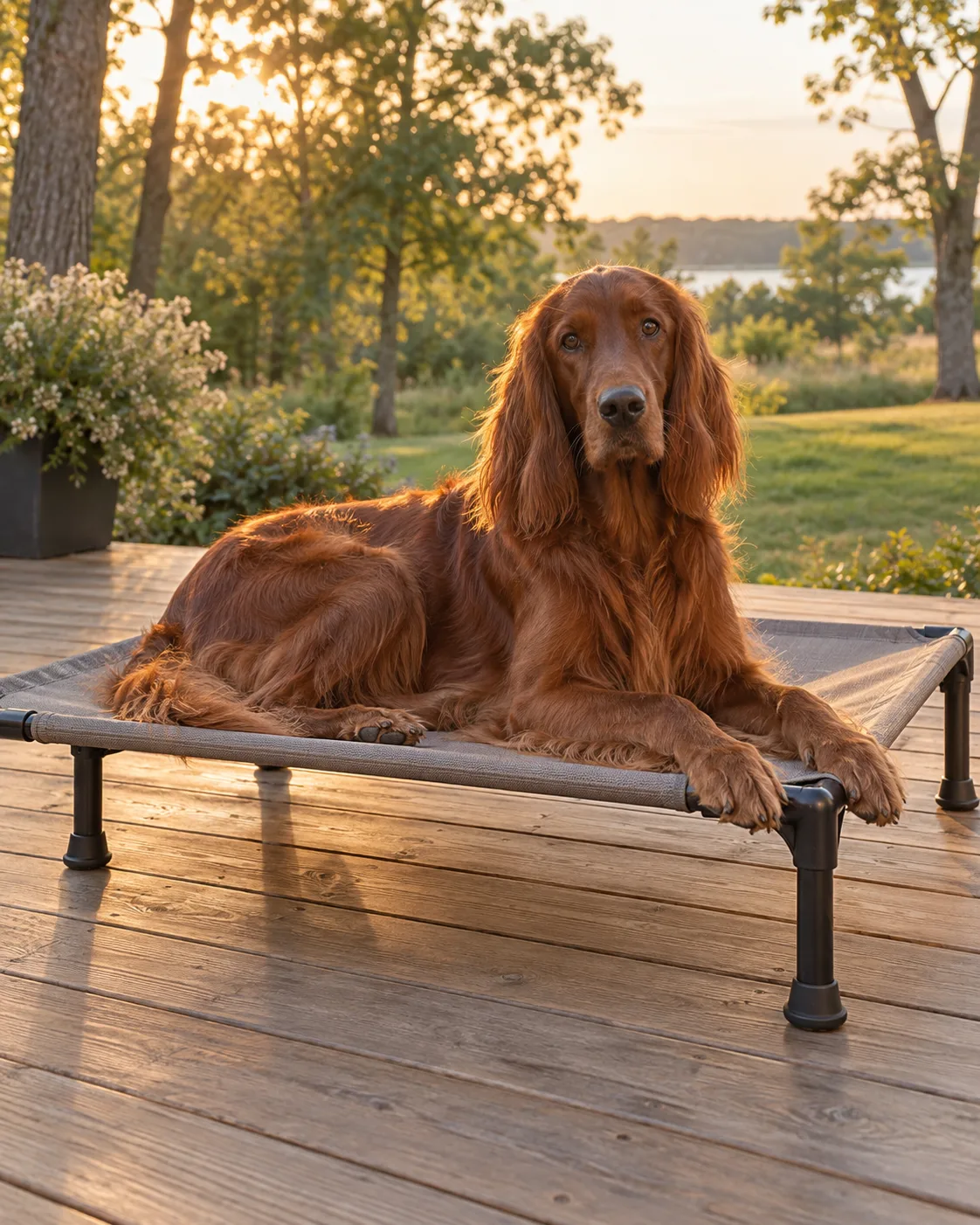
3. Elevated Cot Beds for Hot Weather and Joint Support
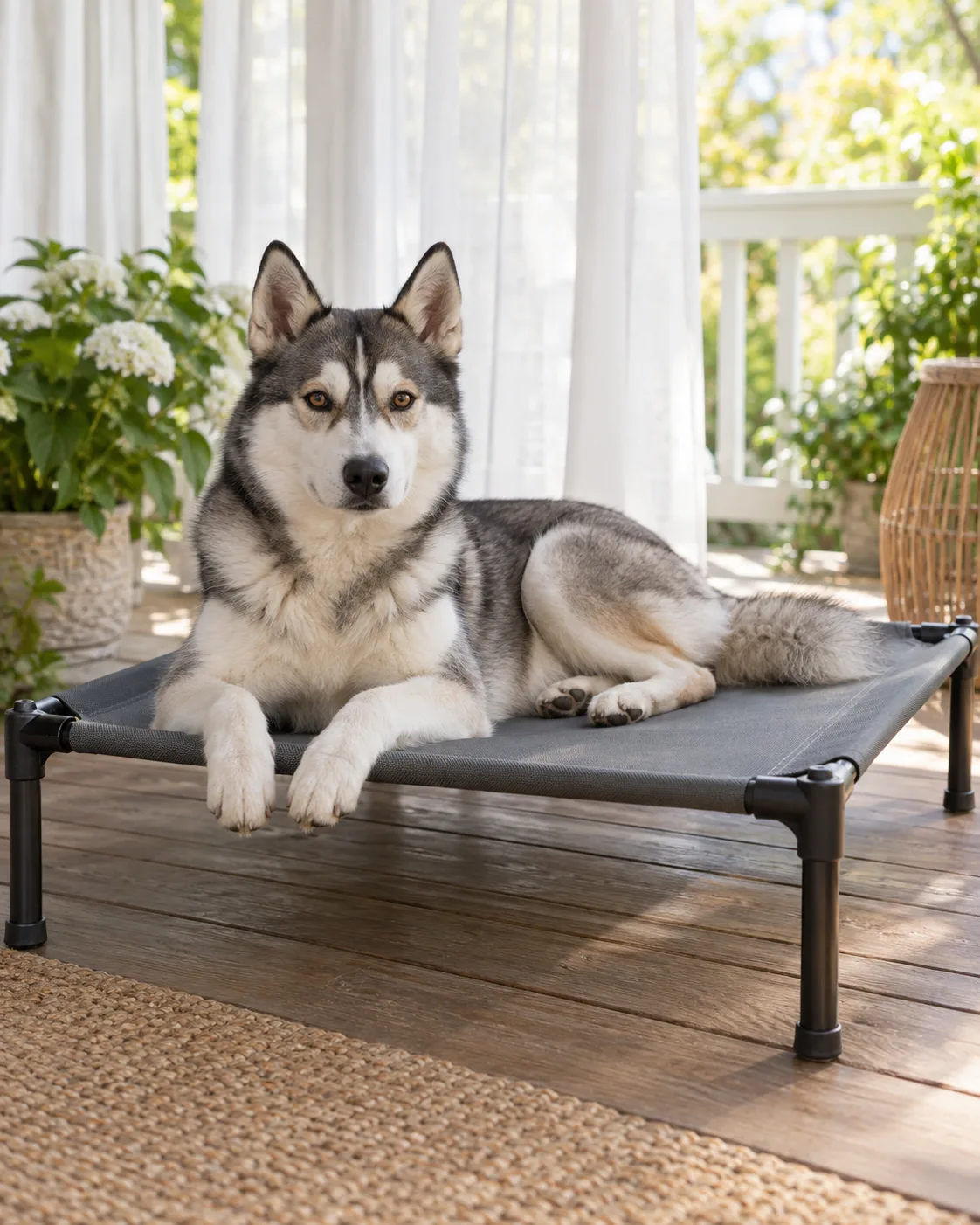
Elevated cot beds sit four to eight inches off the ground on a metal or PVC frame with a taut fabric surface stretched across. Air circulates underneath, which keeps your dog cooler than any bed sitting flat on a warm floor.
The raised height also makes it easier for dogs with joint pain to get in and out. Lying on a raised surface puts less strain on hips and elbows than pushing up from the ground. Older dogs and large breeds benefit from this the most.
Look for powder-coated steel frames instead of PVC if your dog weighs over fifty pounds
Check that the fabric is replaceable because it stretches and sags after heavy use
Place the cot on a flat surface so it does not wobble when your dog shifts weight
Elevated cots are one of the best options for porches, patios, and garages because they keep your dog off hot concrete and away from puddles.
Pick the bed that matches your dog right now
Which Bed Style Fits Your Dog?
Every dog sleeps differently. Start with the pattern below that sounds most like yours.
Your dog is a senior or has joint issuesStart with Idea 4 orthopedic memory foam. It distributes weight and cushions pressure points.
4. Orthopedic Memory Foam Beds for Senior Dogs and Big Breeds
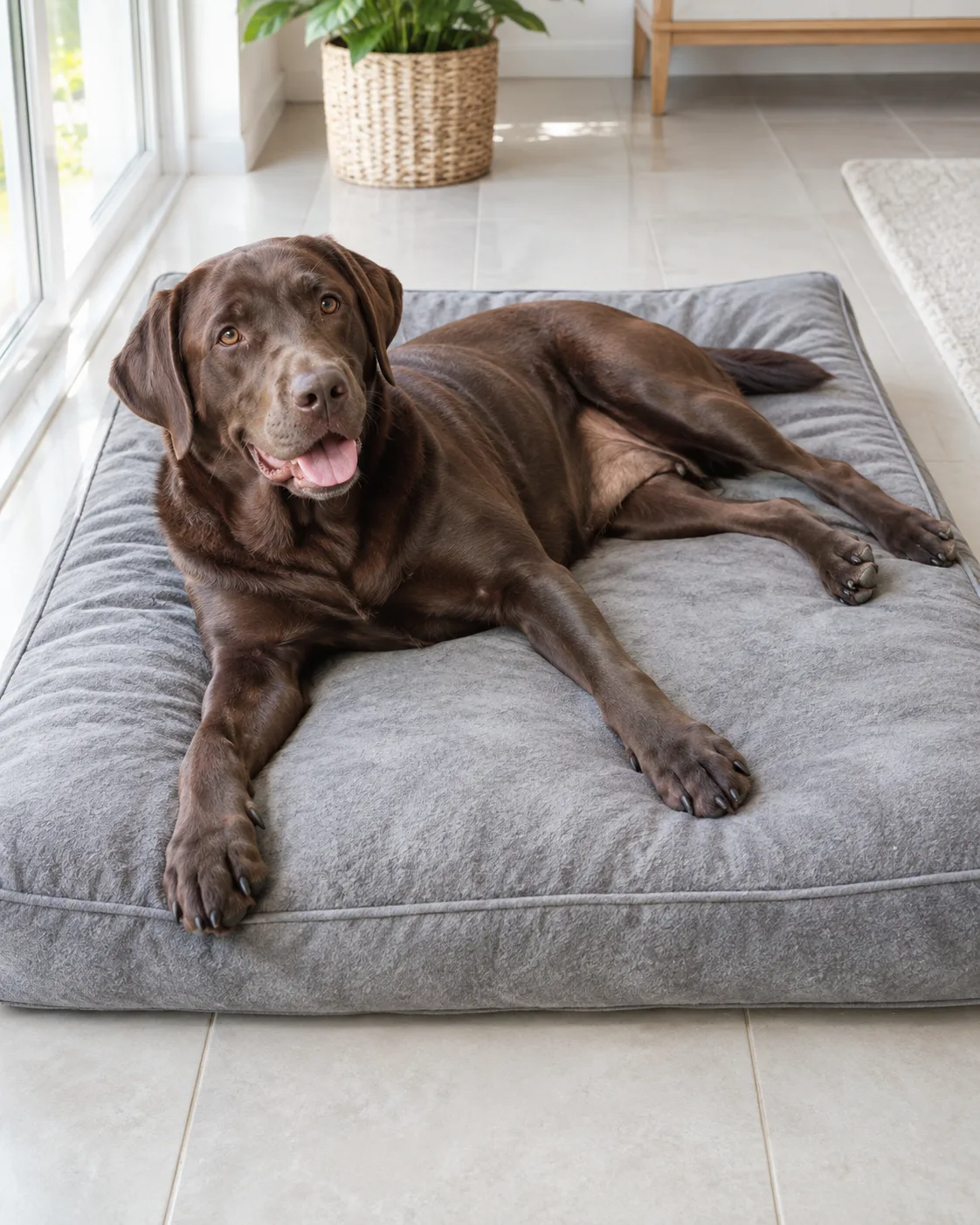
Orthopedic beds use memory foam, egg-crate foam, or a combination of both to distribute your dog's weight evenly and reduce pressure on joints. They are designed for dogs with arthritis, hip dysplasia, or any condition that makes getting comfortable on a flat surface painful.
A good orthopedic bed is at least four inches thick for medium dogs and six inches or more for giant breeds. Thin memory foam compresses under heavy dogs and stops providing support within a few months. The foam density matters more than the brand name.
Press your fist into the foam and hold it for ten seconds. If the impression stays deep, the foam is too soft for a heavy dog
Choose a bed with a waterproof inner liner because memory foam absorbs moisture and develops mold if the cover alone leaks
Replace orthopedic beds every two to three years or sooner if you notice a permanent body impression
These beds are heavier and more expensive than standard beds, but for a dog that struggles to lie down and get up comfortably, the difference is immediate.
5. Donut Nesting Beds for Anxious Dogs That Burrow
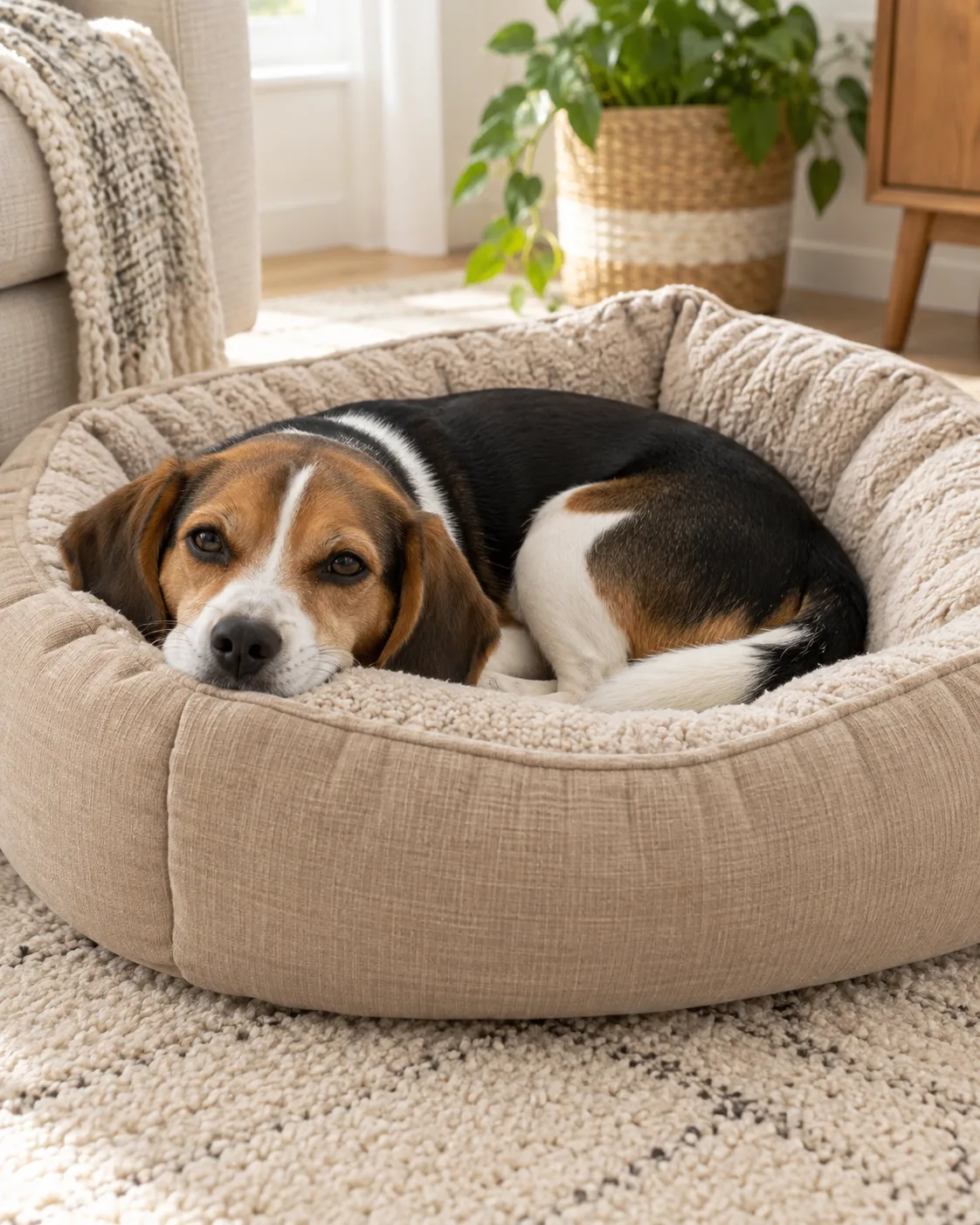
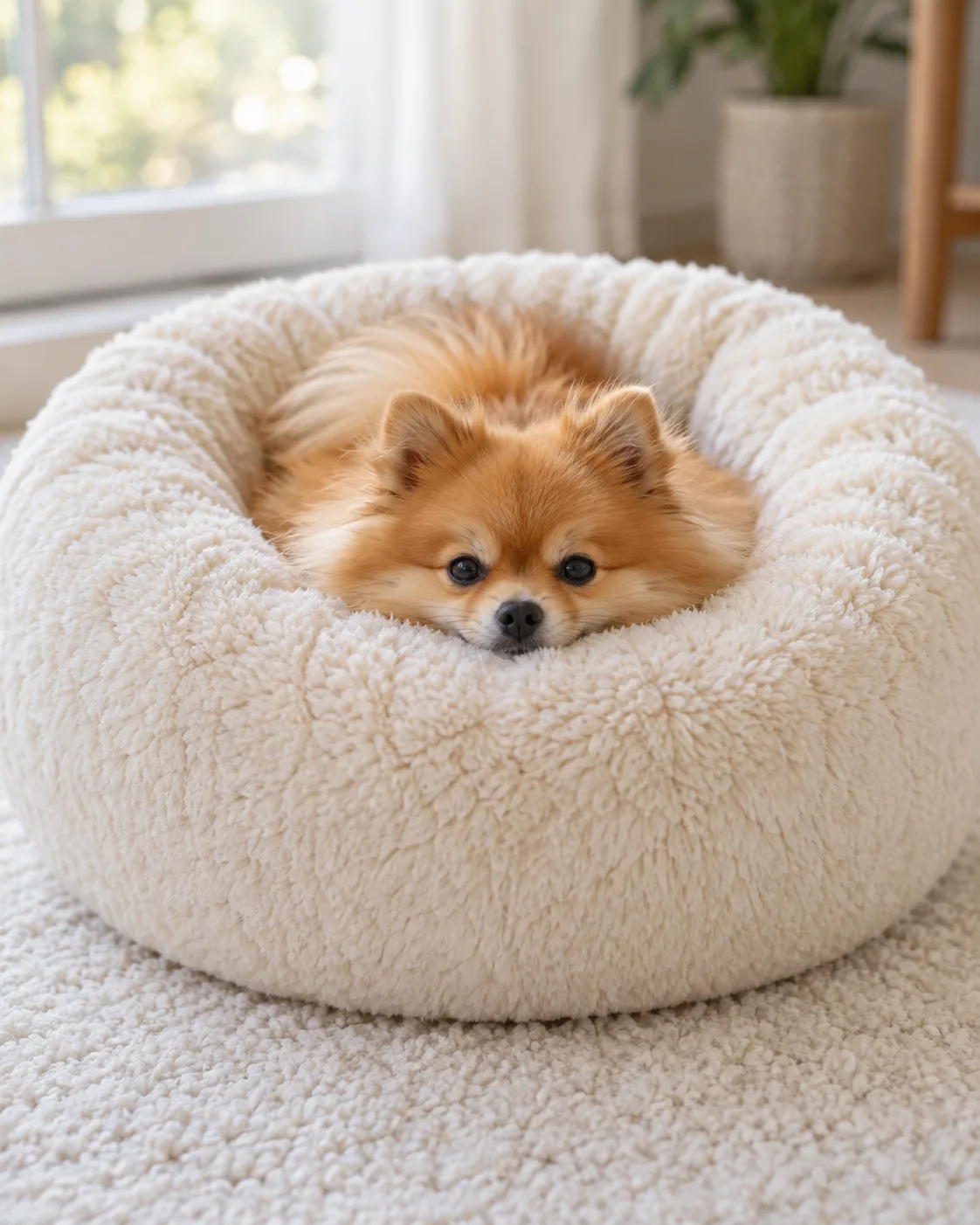
Donut beds are round with raised edges all the way around and a sunken center. Dogs that like to burrow, circle, and nose their way under blankets are drawn to this shape because it wraps around them on every side.
These beds work especially well for anxious dogs. The feeling of being enclosed on all sides mimics the pressure of being held, similar to the concept behind weighted blankets for people. Small dogs and dogs with separation anxiety tend to settle faster in a donut bed than in an open flat mat.
Pick a donut bed with faux-fur or sherpa lining on the inner walls for extra warmth
Make sure the center well is deep enough that your dog actually sinks in rather than sitting on top
Wash on a gentle cycle with cold water to keep the filling from clumping
If your dog also benefits from crate training, a small donut bed placed inside the crate can combine the security of both.
6. Cooling Gel Beds for Dogs That Overheat Fast
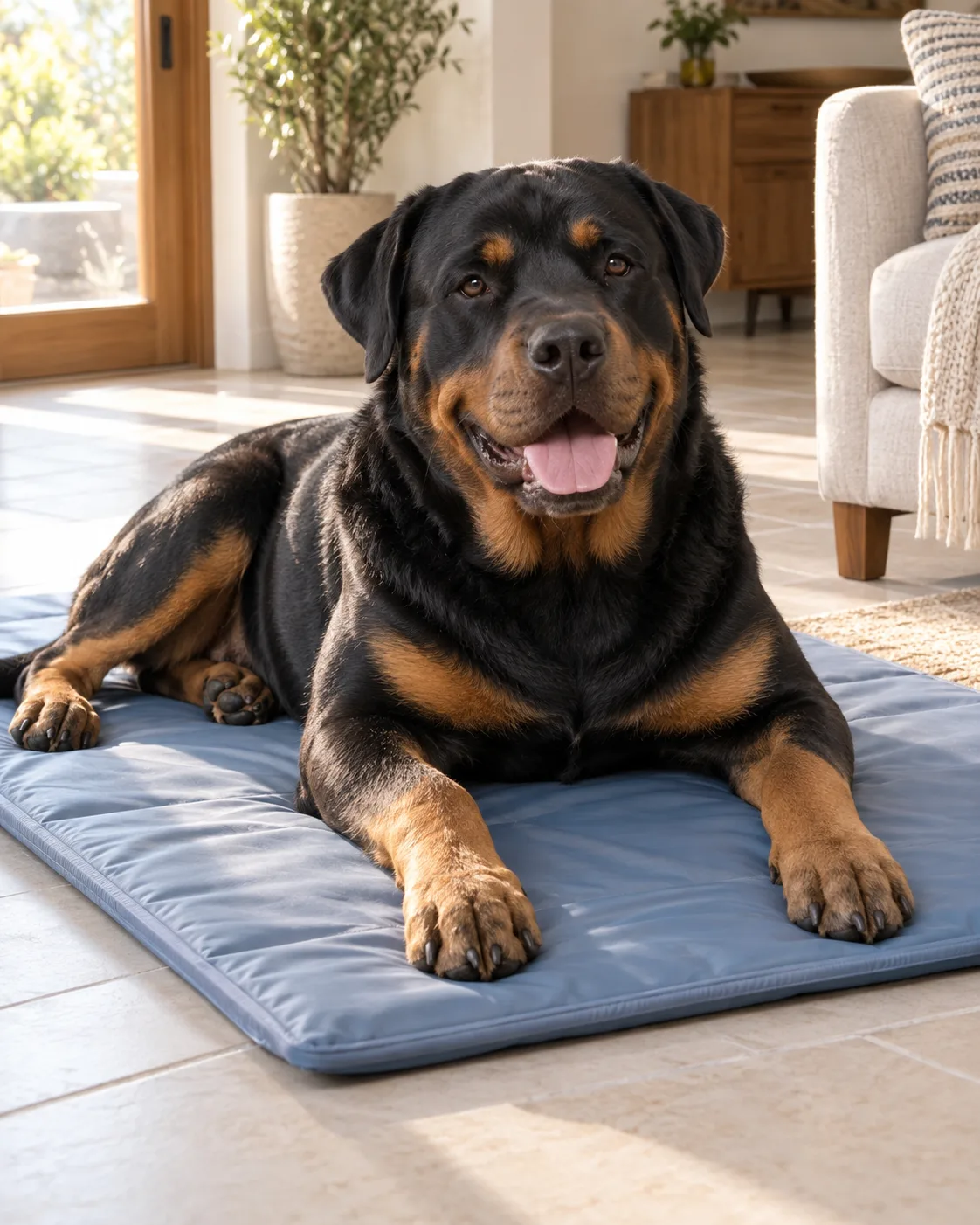
Cooling gel beds contain a pressure-activated gel layer that absorbs and disperses body heat. They feel cool to the touch without refrigeration or electricity, and they recharge by releasing stored heat into the air when the dog gets up.
These beds are most useful for double-coated dogs, senior dogs with poor temperature regulation, and any dog that gravitates toward tile floors in summer. They are not a substitute for air conditioning in extreme heat, but they give your dog a consistently cool resting spot.
Gel pads have a limited cooling window of about twenty to forty minutes of continuous use before they warm up
Place the gel pad on top of a regular bed for extra cushioning instead of directly on a hard floor
Avoid gel beds for chewers because a punctured pad leaks non-toxic but messy gel
For dogs that run hot year-round, combining a cooling pad with an elevated cot bed gives you airflow underneath and contact cooling on top.
7. Cave and Hooded Beds for Dogs That Like to Hide
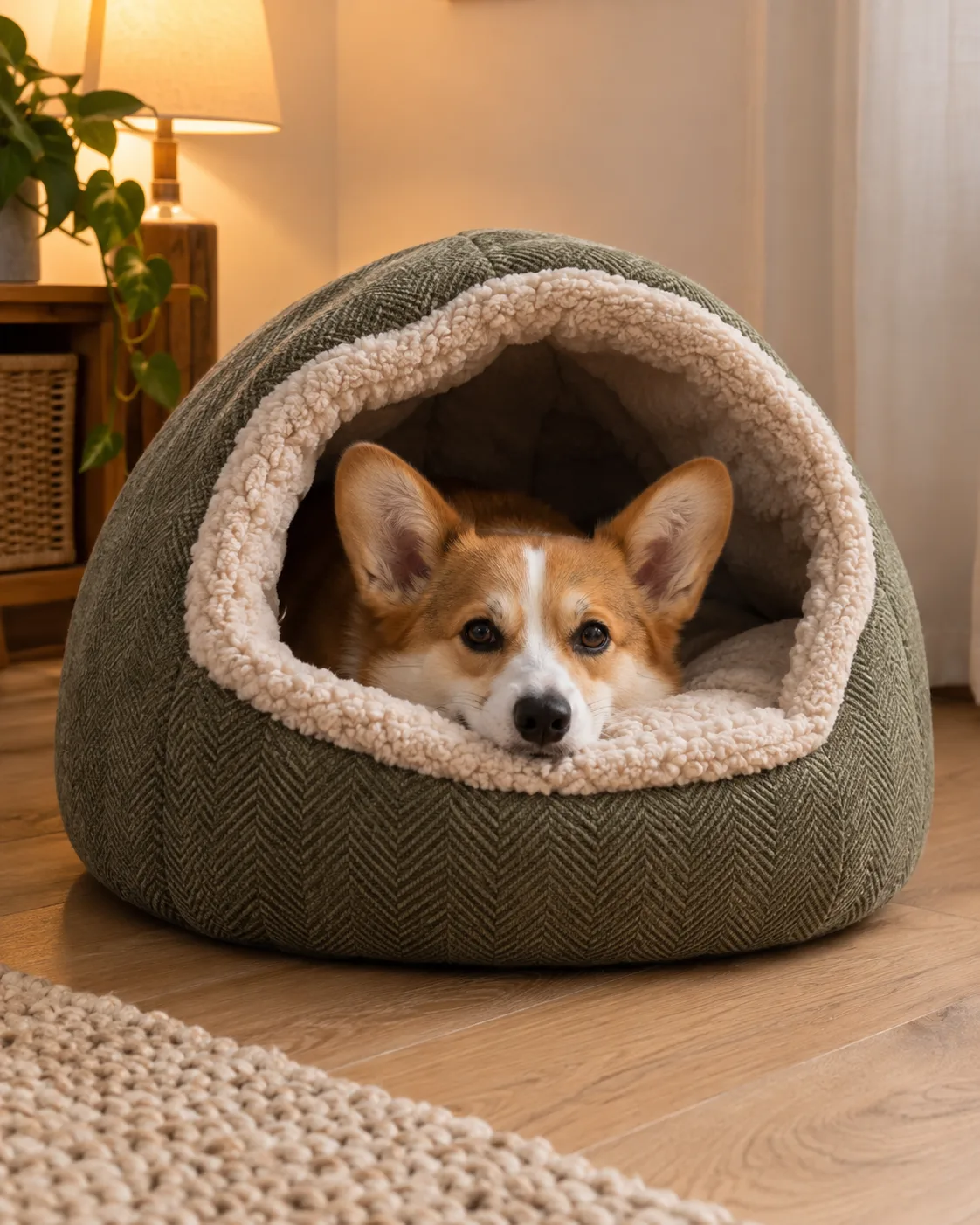
Cave beds have a roof or hood that partially covers the sleeping area, creating a dark enclosed space. Dogs that crawl under blankets, squeeze behind furniture, or sleep in closets are telling you they want a cave.
The hood is usually a soft padded flap that the dog pushes through to enter. Some cave beds are fully enclosed with a small opening, like a pet tent. Either design works as long as the interior has enough room for your dog to turn around and settle without pressing against every wall.
Cave beds trap heat, so they are better for cool climates or air-conditioned rooms
Look for a removable hood so you can convert it to a standard bolster bed in summer
Avoid cave beds for dogs that panic in enclosed spaces or have breathing difficulties
Small breeds and dogs with thin coats love these beds in winter. The enclosed design holds body heat and blocks drafts from tile floors and door gaps.
What separates a good dog bed from a waste of money
4 Rules for Choosing a Dog Bed
Most dog bed returns happen because of three mistakes: wrong size, wrong fill, or wrong location. These four rules prevent all three.
Size by sleep position, not standing heightA dog that curls up needs a smaller bed with walls. A dog that sprawls needs a bed measured from nose to tail while stretched out, plus six inches. Standing height tells you nothing about how much floor space the bed needs.
Check the foam density, not the thicknessA six-inch bed with low-density foam compresses to two inches under a heavy dog within weeks. Press your fist in for ten seconds. If the impression stays, the foam will not last. Higher density costs more but actually holds up.
Waterproof the layer below the coverEvery dog bed cover is removable and washable. But if the foam or fill underneath gets wet from drool, accidents, or a spilled bowl, it develops mold you cannot wash out. A waterproof inner liner is the layer that saves the bed.
Place the bed where your dog already sleepsDogs choose their sleeping spots based on temperature, traffic, and sight lines to the family. Put the bed where your dog already lies down, not where you want it to look nice. A beautiful bed in the wrong room stays empty.
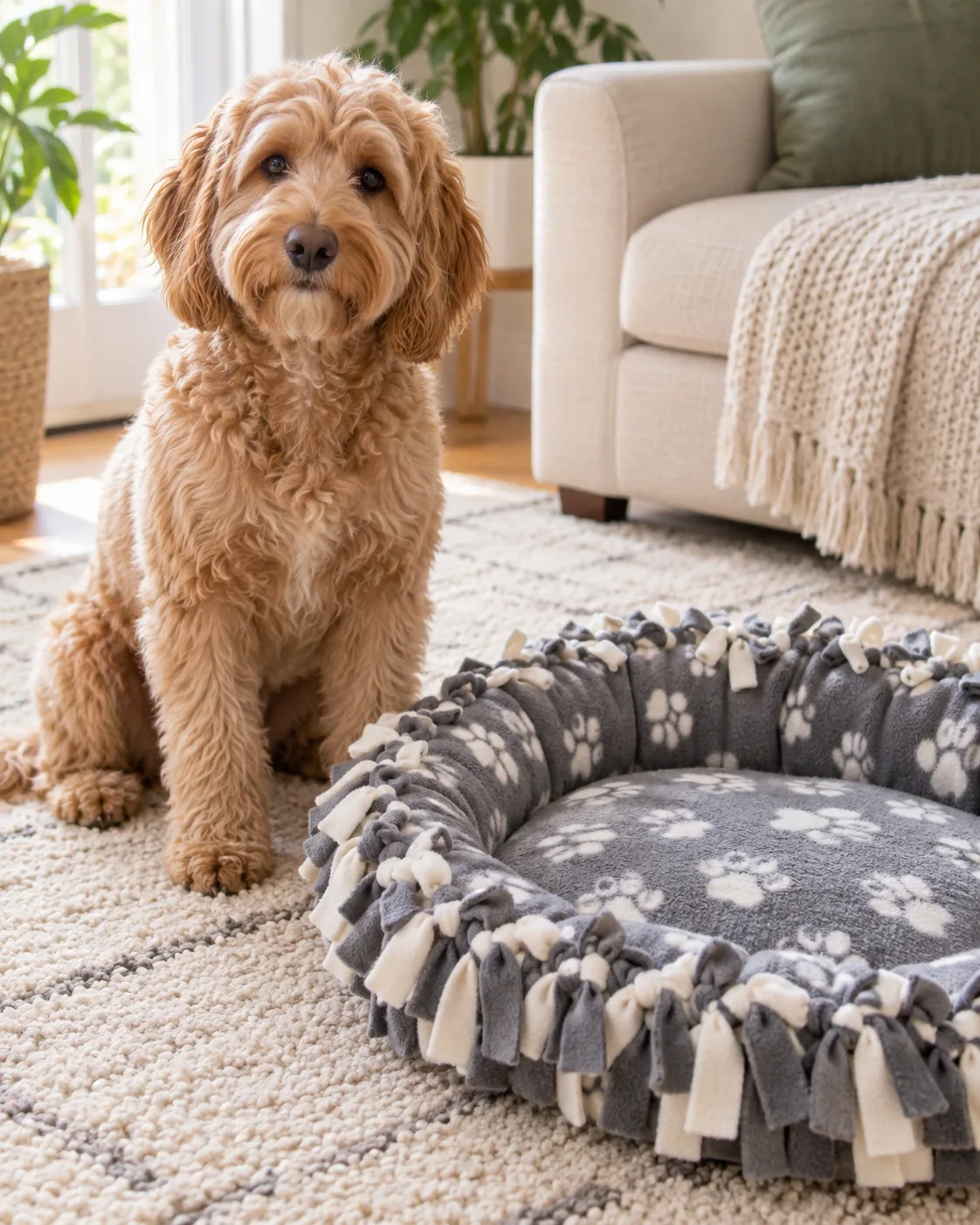
8. DIY No-Sew Fleece Beds You Can Make in an Afternoon
A no-sew fleece bed uses two pieces of fleece fabric and a bag of polyester stuffing. You cut fringe strips around the edges of both pieces, tie the strips together to seal three sides, stuff the filling in, and tie the last side shut. No sewing machine, no special skills, about an hour of work.
This is one of the best DIY dog projects because it costs under ten dollars in materials and produces a bed that is fully washable. When the filling flattens, untie one side and add more. When the fleece wears out, cut a new set and reuse the filling.
Use anti-pill fleece so the surface stays smooth after washing
Cut the fringe strips at least three inches long and one inch wide for a secure knot
Double-knot every strip because dogs that dig before lying down will loosen single knots
You can make these in any size. Two yards of fleece per side makes a bed large enough for a medium dog. Scale up to three yards for a big dog, or cut a half-yard piece for a puppy pad inside a crate.
9. Outdoor-Rated Beds for Porches, Patios, and Camping
Outdoor dog beds use water-resistant fabrics, rust-proof frames, and UV-treated materials that hold up to sun, rain, and dirt. They are built for porches, patios, camping trips, and any situation where a standard indoor bed would get ruined in a week.
Most outdoor beds are elevated cot-style designs because airflow underneath prevents mildew and keeps the sleeping surface above wet ground. The fabric is typically a tight-weave polyester or Textilene mesh that dries within an hour after rain.
Bring outdoor beds inside during storms because even water-resistant beds degrade faster in standing water
Hose the bed down weekly to remove dirt, pollen, and allergens that collect outdoors
Check the frame joints for rust or corrosion every few months, especially near the coast
If you camp with your dog, a packable outdoor cot gives your dog a clean sleeping spot off the ground and folds down small enough to fit in the trunk alongside your gear.
Save this for later
10 Dog Bed Ideas
1Bolster bed for curlersRaised walls let your dog press their back against something solid while sleeping.
2Flat mat for sprawlersOpen pad with no walls. Best for dogs that stretch out flat with legs extended.
3Elevated cot for hot weatherRaised mesh frame with air circulation underneath. Great for joint support too.
4Orthopedic memory foamDistributes weight and cushions joints. Best for seniors and heavy breeds.
5Donut nesting bedRound with raised edges all around. Wraps anxious dogs in a cocoon of padding.
6Cooling gel bedPressure-activated gel absorbs body heat. No electricity needed.
7Cave and hooded bedEnclosed design for dogs that burrow under blankets or hide in dark spots.
8DIY no-sew fleece bedTwo pieces of fleece tied at the edges. Under ten dollars and fully washable.
9Outdoor-rated bedWater-resistant and UV-treated for porches, patios, and camping trips.
10Picking the right sizeMeasure by sleep position and add six inches. Foam density matters more than thickness.
pawliqa.com
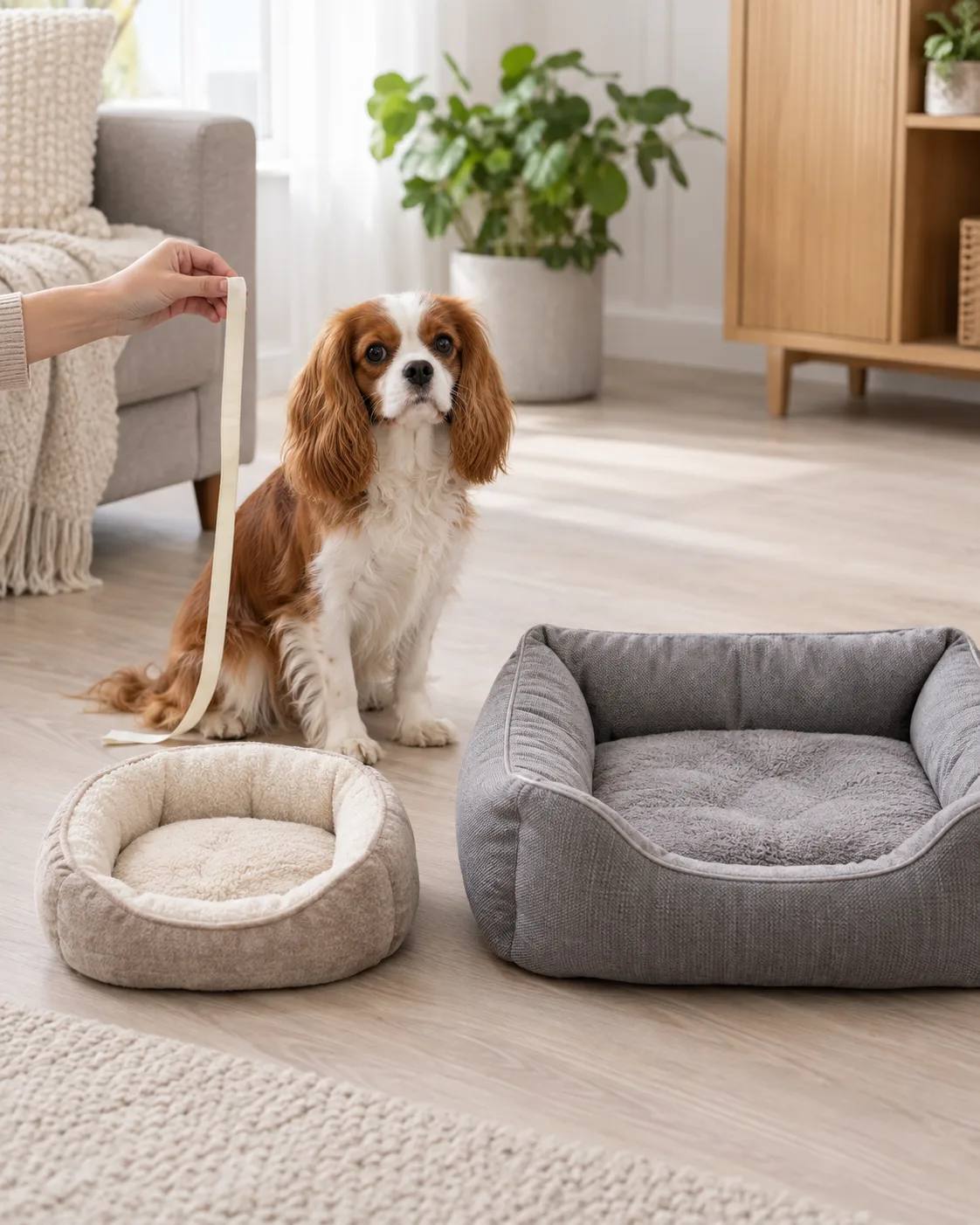
10. How to Pick the Right Size and Shape for Your Dog
The single biggest reason dogs ignore brand new beds is that the bed is the wrong size. Too small and they hang over the edges. Too big and they feel exposed instead of enclosed.
Measure your dog while they sleep in their preferred position. Curlers need a bed where the interior diameter matches their curled circle plus two inches of clearance. Sprawlers need length from nose to extended back paws plus six inches, and width from spine to outstretched front leg plus six inches.
Small dogs under twenty pounds usually fit beds in the twenty to twenty-four inch range
Medium dogs between twenty and fifty pounds need beds in the thirty to thirty-six inch range
Large dogs over fifty pounds need at least a forty-two inch bed, and giant breeds need forty-eight inches or more
Position
Bed Shape
Sizing Rule
Curled ball
Bolster or donut
Curled circle plus two inches
Side sprawl
Flat mat
Nose-to-tail plus six inches
Belly down
Any shape
Shoulder-to-hip plus four inches
Burrower
Cave or hooded
Two inches above shoulder height
If you set up a dedicated dog room, having two beds in different styles lets your dog choose based on temperature and mood.
Written by Jess Calloway
Dog mom to three very different dogs. Every guide on Pawliqa is based on real experience, veterinary guidance, and way too many hours reading ingredient labels. More about Jess
Common questions
FAQ
How often should you replace a dog bed?
Most dog beds last one to three years depending on the quality of the fill and how heavy your dog is. Replace the bed when you see a permanent body impression that does not bounce back, when the cover fabric thins or pills beyond repair, or when the bed develops a smell that washing cannot remove. Orthopedic beds for heavy dogs may need replacing closer to the one-year mark if the foam compresses.
Can you wash a memory foam dog bed?
You can wash the removable cover in a machine, but the memory foam itself should not go in a washing machine. The agitation breaks down the foam structure and the weight of wet foam can damage your machine. Spot-clean the foam with a damp cloth and mild soap, then let it air dry completely before putting the cover back on. A waterproof inner liner prevents most messes from ever reaching the foam.
What size dog bed does my dog need?
Measure your dog while they sleep in their natural position, not while standing. For curlers, measure the diameter of their curled circle and add two inches. For sprawlers, measure nose to tail and add six inches in each direction. When in doubt, size up. A bed that is slightly too big is always better than one that is too small, because dogs adjust to extra space but cannot adjust to cramped edges.
Are elevated beds better for dogs with arthritis?
Elevated beds make it easier for arthritic dogs to get in and out because they do not have to push up from the floor. The raised surface reduces strain on hips, elbows, and wrists. However, an orthopedic memory foam bed provides better pressure relief for joints while the dog is lying down. Some owners use both: an elevated bed during the day for easy access and an orthopedic bed at night for deeper cushioning during long sleep stretches.
How do you stop a dog from chewing their bed?
Bed chewing usually comes from boredom, anxiety, or teething in puppies. Make sure your dog gets enough exercise and mental stimulation before expecting them to rest quietly. Redirect chewing to appropriate toys placed near the bed. For persistent chewers, use a chew-proof bed with ballistic nylon fabric and hidden zippers. If the chewing started suddenly in an adult dog, rule out dental pain or anxiety triggers first.
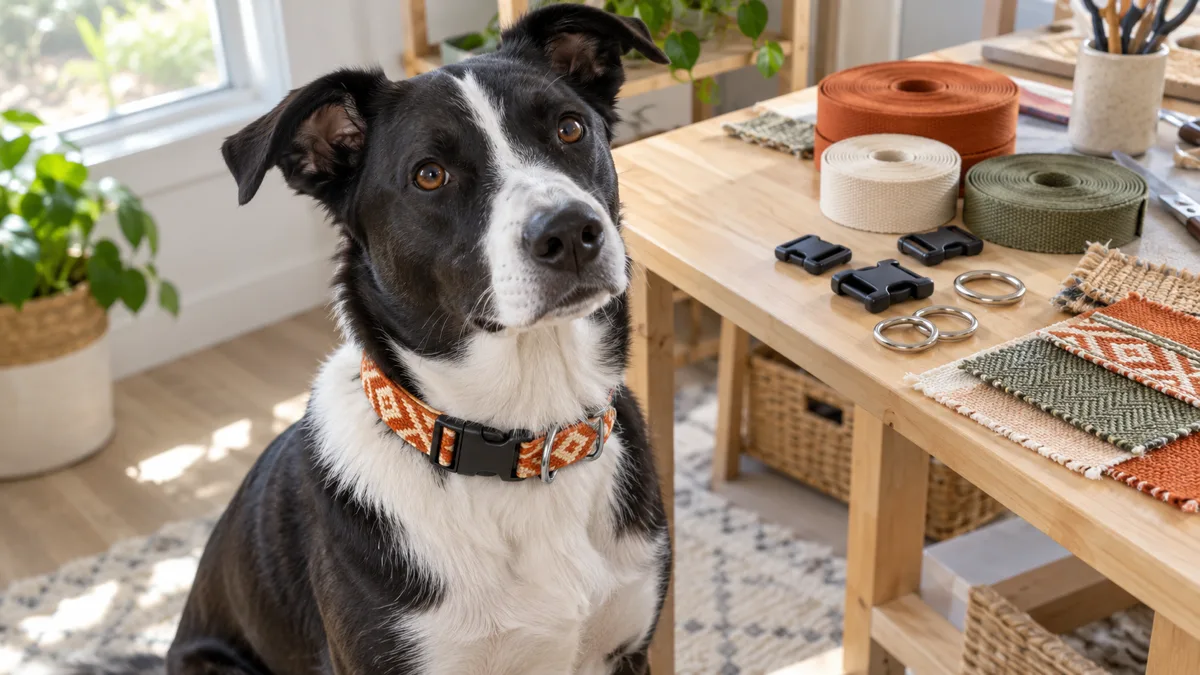
Making a dog collar at home gives you full control over fit, material, and style. This guide walks through picking the right webbing, threading hardware, hand-sewing a box stitch that holds, and running the safety checks that matter before your dog wears it out the door.