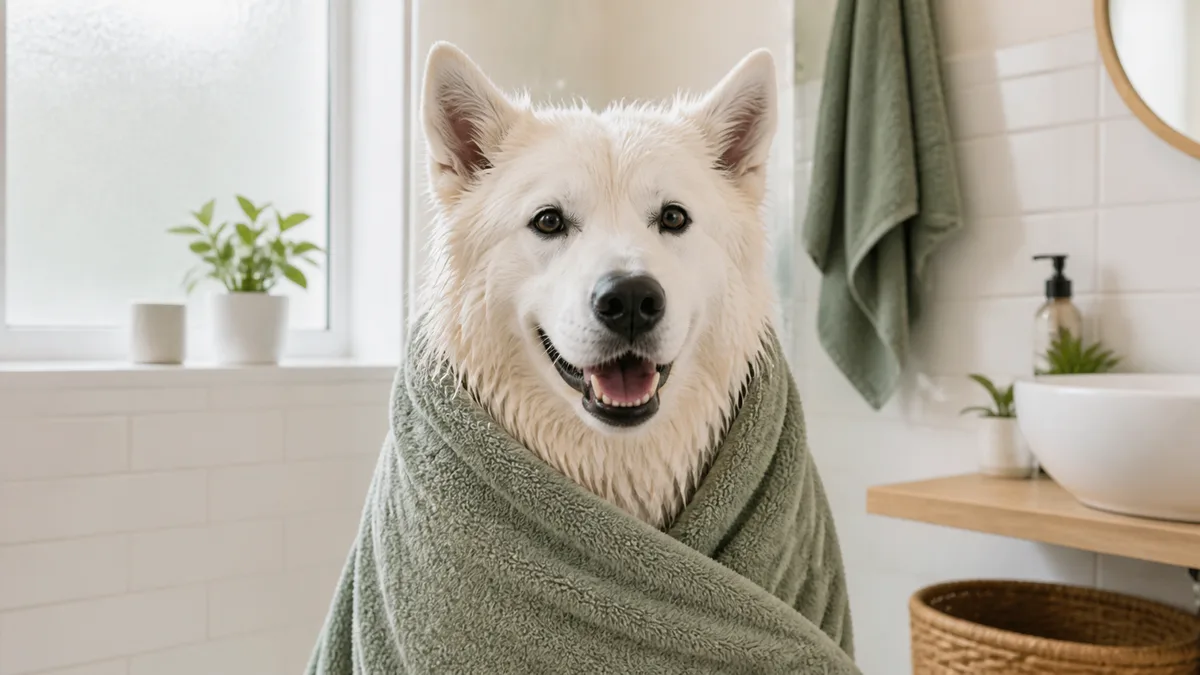
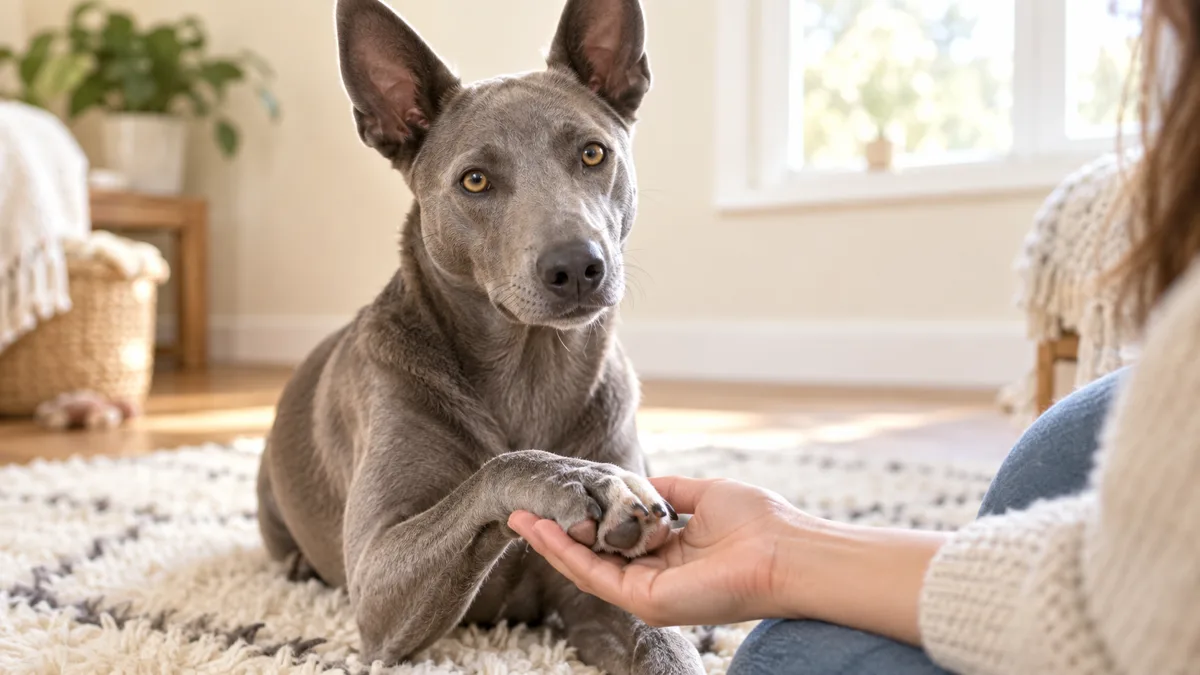
Our middle dog loves baths but hates the aftermath. The moment I lift her out of the tub, she bolts through the house trailing water across three rooms.
The bath itself was fine. The drying was where it fell apart, and that pattern is one I hear from dog owners constantly.
Here are thirteen steps that turn the drying stage into a calm, efficient routine.
Jump to a drying step
13 ways to dry your dog after a bath
From the first squeeze to the final treat, these thirteen steps turn a soggy, chaotic post-bath scramble into a calm, efficient routine. Jump straight to the step you need.
Squeeze Out the Excess Water Before You Reach for a Towel
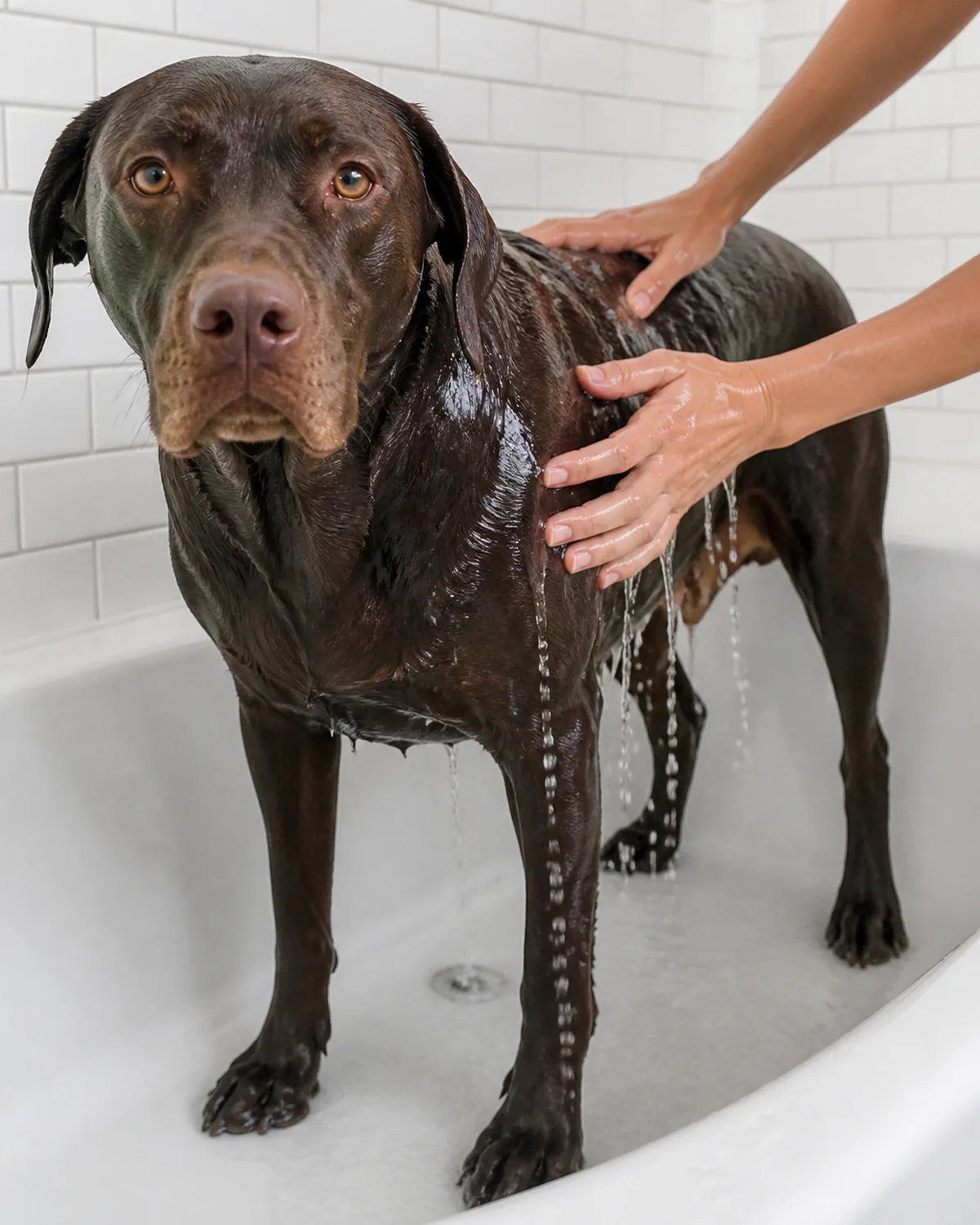
Run both hands from the top of the head all the way down to the tail, pressing gently against the coat and squeezing as you go. Do the legs next, wrapping your hand around each one and sliding downward. This step alone removes more water than most people expect, and it cuts the total towel time nearly in half.
The reason it works so well is gravity. Water pools in the coat and sits there until something pushes it out. A towel absorbs whatever it touches, but it cannot reach the water deeper in the coat the way your hands can. Squeeze first, then towel the remainder.
For dogs with thick or double coats, do two passes. The first pass gets the surface water moving. The second catches what the coat released a few seconds later. You will feel the difference in how heavy the towel gets afterward.
Pick your starting point based on what your dog needs right now
Where should you start?
Not every dog needs the full thirteen steps every time. Pick the scenario below that matches yours and start there.
Let Your Dog Shake — It Removes More Water Than You Think
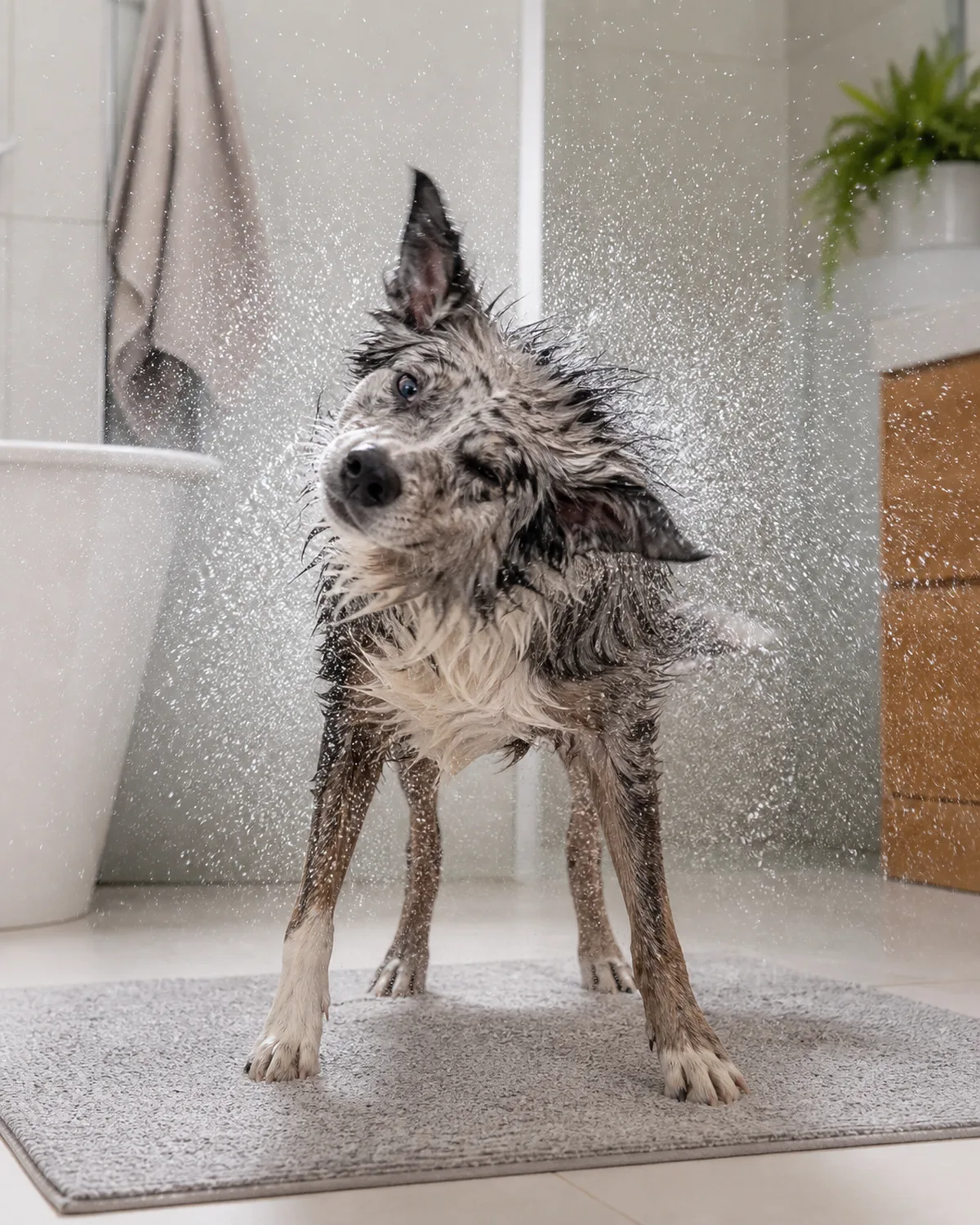
A single full-body shake can fling away roughly seventy percent of the water trapped in your dog's coat. That number sounds high until you watch the spray hit the walls. Instead of grabbing your dog the moment it steps out of the tub, step back and give it room to shake.
The trick is containment. Keep the door closed, drape an old towel over anything you want to protect, and stay out of the blast radius. If your dog does not shake on its own, a gentle puff of air near the ear usually triggers the reflex.
Once the big shake is done, the towel has far less work to do. You go from wrestling a dripping dog to patting down a damp one, which is faster, calmer, and uses fewer towels.
Use a Microfiber Towel Instead of a Regular Bath Towel
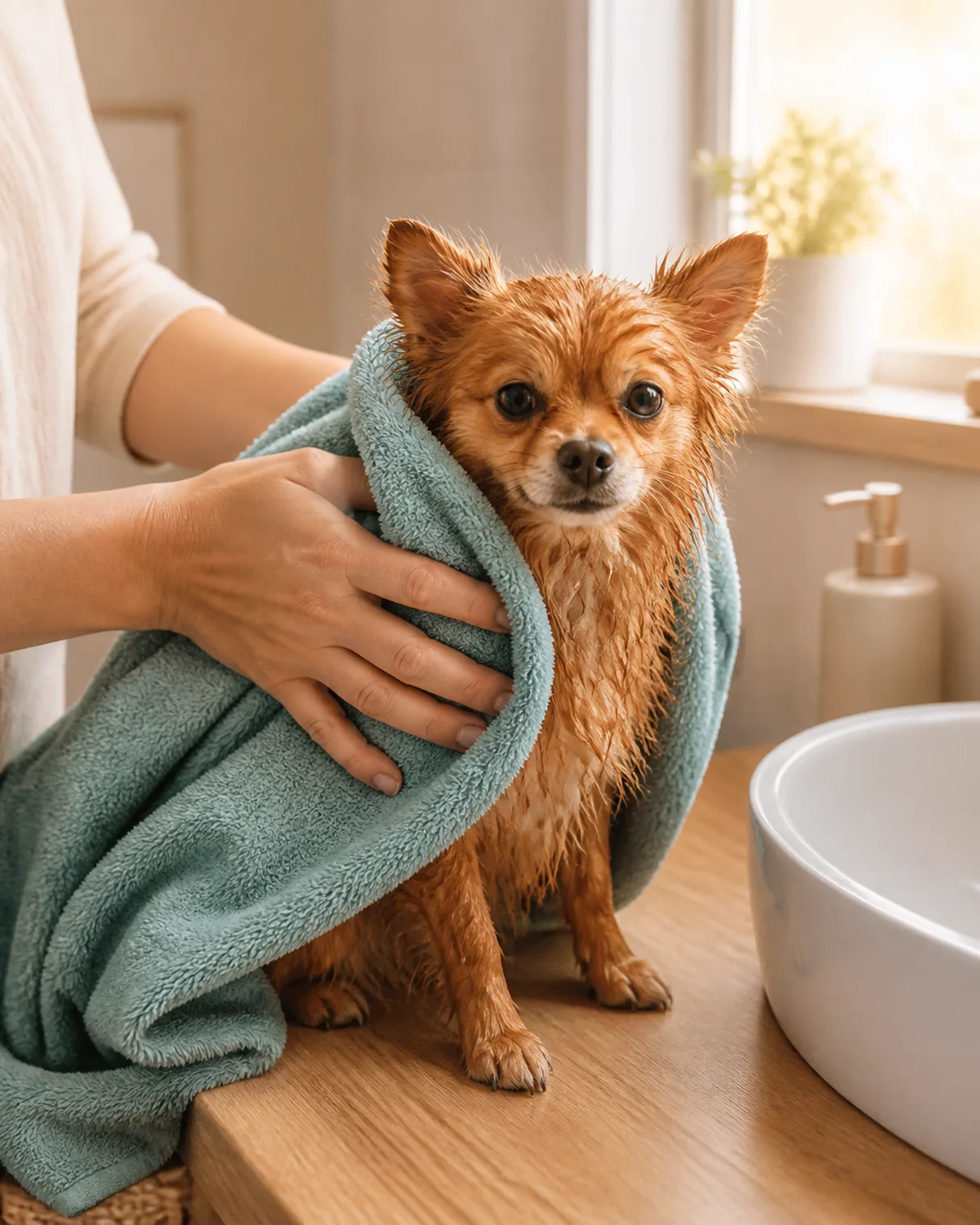
Microfiber absorbs three to four times more water than a standard cotton bath towel, and it releases that water when wrung out so you can keep reusing the same one. One good microfiber towel will often finish the job where two or three cotton towels leave the coat still damp.
The technique matters as much as the material. Press and pat the towel against the coat instead of rubbing back and forth. Rubbing creates friction that tangles longer coats and roughens the hair shaft, turning what should be a smooth post-bath coat into a knotted mess that takes twice as long to brush out.
Wrap the towel around each leg and squeeze gently. Drape it over the back and press down with both hands. Fold it under the belly and lift slightly. Work the towel into every surface rather than swiping it across the top.
Work in Sections from Head to Tail
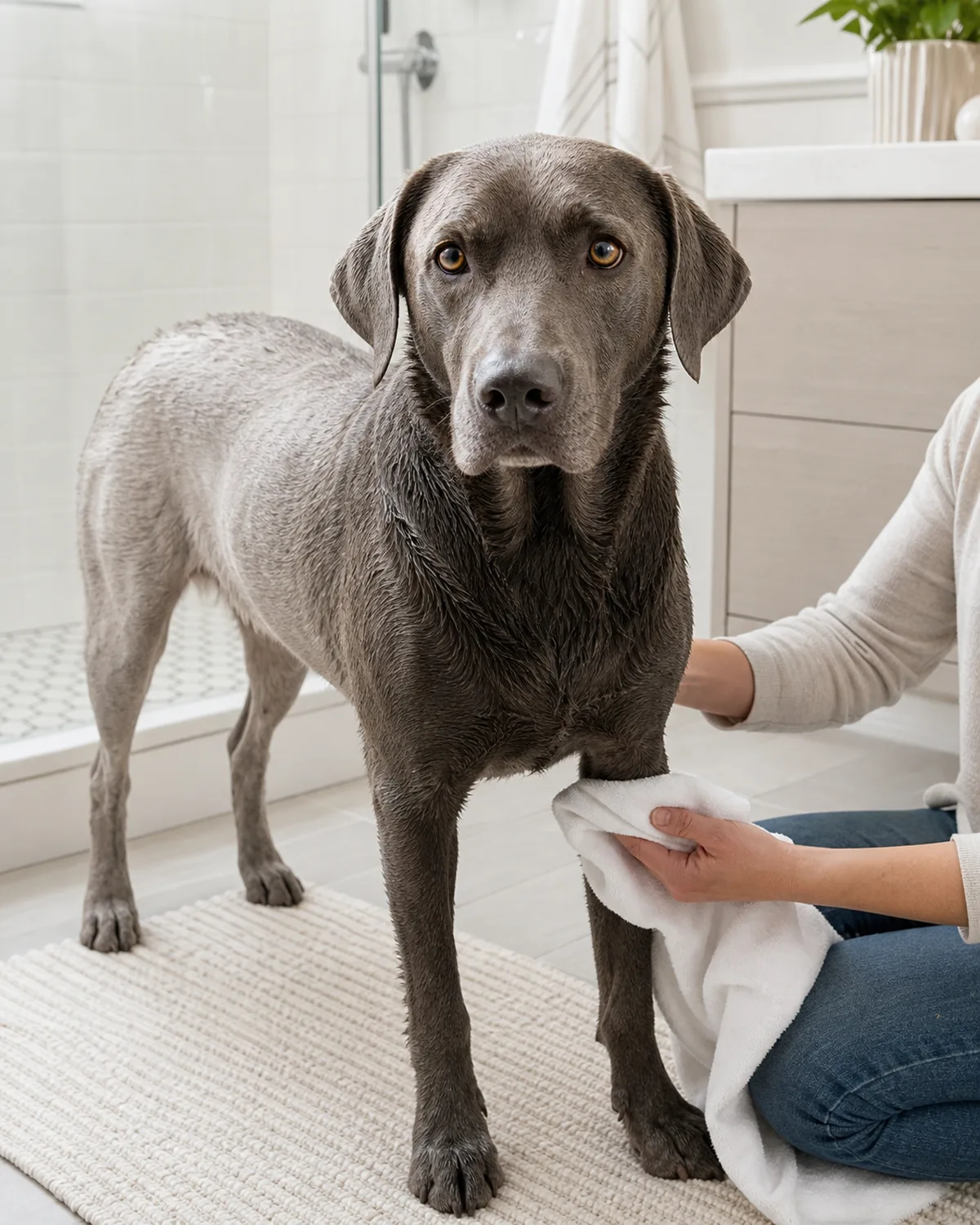
Start with the ears and face — the areas most dogs find most sensitive — while you still have their patience. Move to the back and sides, then the chest and belly, then each leg, and finish with the paws and the base of the tail.
Working from the top downward prevents water from dripping back onto sections you have already dried. It sounds obvious, but most people start wherever their hands land, which means re-drying the same areas two or three times as water migrates from above.
Why the face and ears go first
Wet ears and a damp face are the two things that make dogs shake repeatedly. Dry those first and the rest of the process stays calmer because the dog is not constantly trying to shake water out of its ears.
Dry the Ears Inside and Out to Prevent Infections
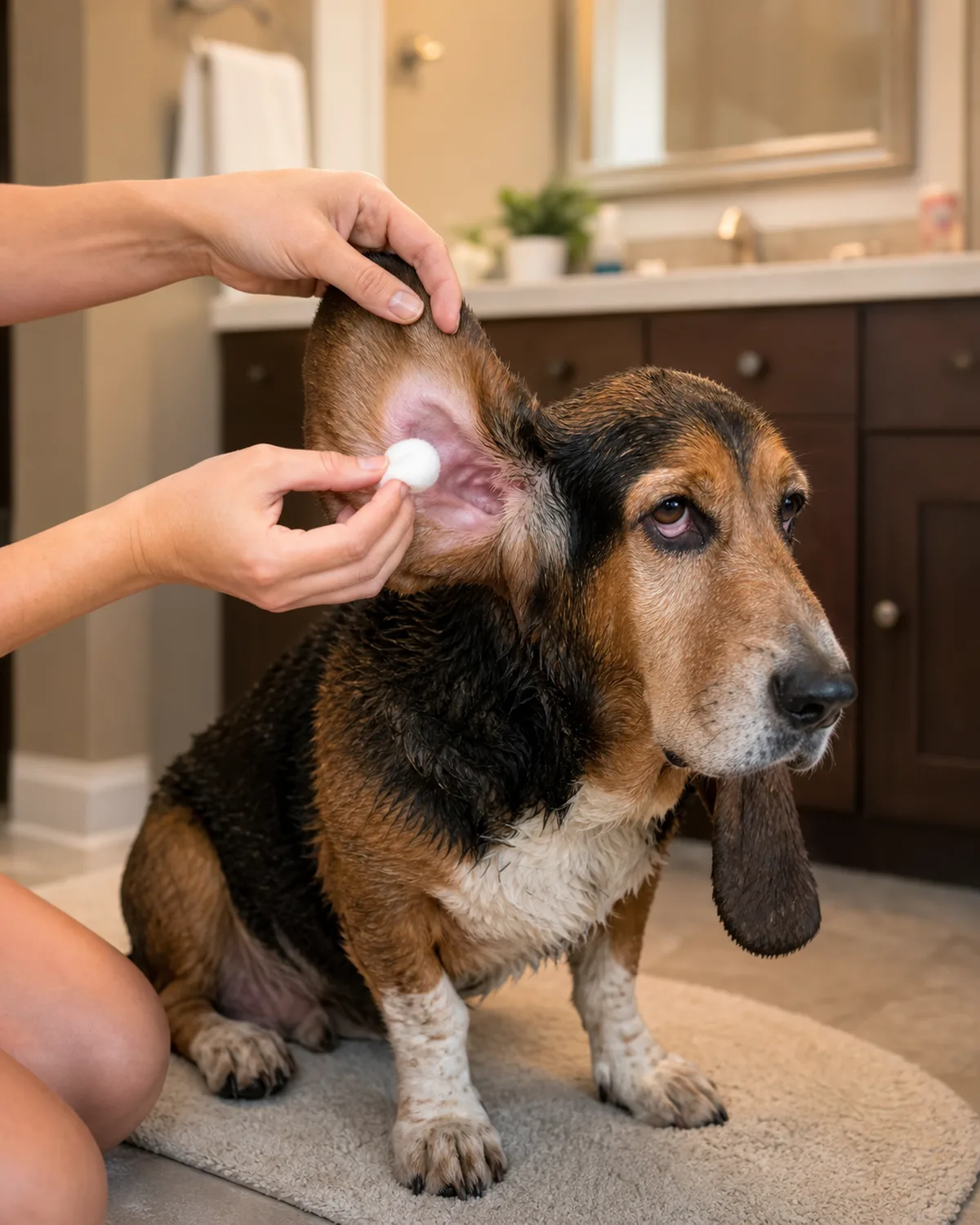
Flip each ear flap upward and gently blot the inside surface with a cotton ball or a soft cloth. For the ear canal opening, press a dry cotton ball lightly against the entrance to wick out residual moisture. Do not push anything into the canal — the goal is to absorb what is sitting at the surface.
Dogs with long, heavy ear flaps are especially vulnerable. Those thick flaps trap warmth and moisture against the ear canal, which is exactly the environment that yeast and bacteria need to multiply. Drying the ears after every bath is one of the easiest ways to prevent recurring ear infections.
If your dog's ears smell sour or look red inside within a day or two of a bath, leftover moisture is almost certainly the cause. Make ear drying a non-negotiable step, even on days when you skip everything else on this list.
A Blow Dryer Works if You Introduce It the Right Way
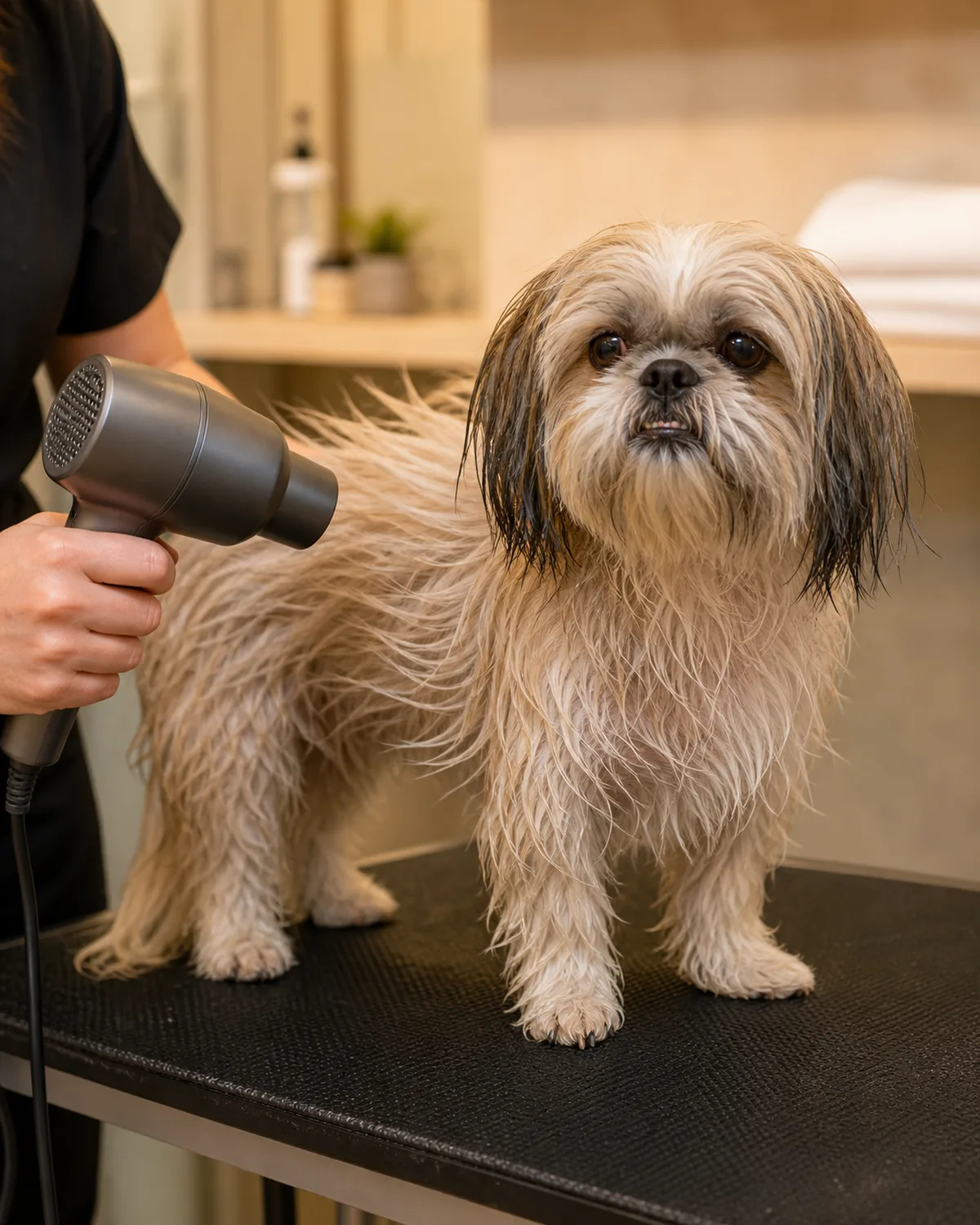
Start by letting your dog sniff the dryer while it is off. Turn it on at the lowest heat and speed setting, held at least twelve inches from the coat, and begin at the shoulder or hip — the least sensitive spots. Keep the nozzle moving so no single area gets too warm.
The rules that protect your dog are straightforward. Never point the dryer directly at the face or inside the ears. Never use the highest heat setting. Never hold it still in one place for more than a few seconds. And if your dog is showing clear stress signals — panting hard, trying to escape, tucking its tail tight — turn the dryer off and switch to towels instead.
A few sessions of calm, low-pressure exposure paired with small treats will teach most dogs to tolerate the warm airflow. Some dogs actually lean into it.
The difference between a dog that tolerates drying and one that dreads it
4 rules for stress-free drying
Drying does not have to be a fight. These four principles keep the process calm and efficient, whether you are toweling off a puppy or blow-drying a double-coated adult.
Pat, never rubRubbing creates friction that tangles the coat and irritates sensitive skin. Press the towel firmly against the coat, lift, reposition, and press again. The water transfers through contact, not motion.
Warm air, not hotA dryer on low heat from twelve inches away dries without risking a burn. If the air feels too warm on the inside of your wrist, it is too warm for your dog's skin. Keep the nozzle moving at all times.
Dry from the inside outSurface-dry coats fool you into thinking the job is done. Part the fur, press your fingers to the skin, and check for residual dampness before you call it finished.
End on a high noteThe last thing your dog remembers is the last thing that happened. Finish with a treat, a short game, or a favorite chew so the entire drying experience ends with something worth looking forward to next time.
Invest in a Pet-Specific High-Velocity Dryer for Thick Coats
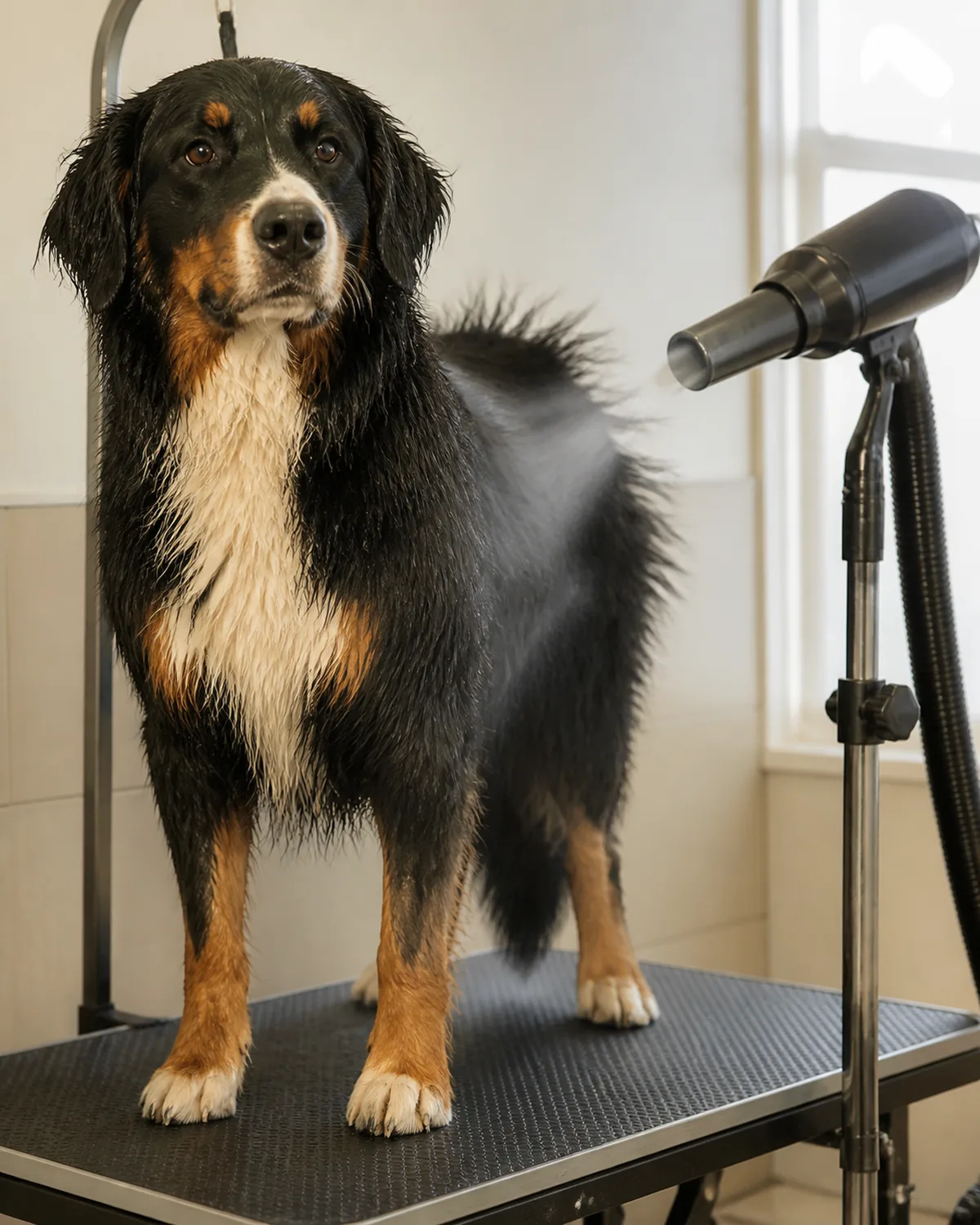
A high-velocity pet dryer pushes room-temperature air at high speed, blasting water out of the coat rather than relying on heat to evaporate it. The difference matters for double-coated and long-haired dogs, where a standard human blow dryer on low heat can take forty-five minutes or longer.
A dedicated pet dryer typically finishes the same job in fifteen minutes or less. It is also safer because it removes the burn risk that comes with sustained hot air on one spot. The powerful airflow separates the coat as it dries, which means fewer tangles and a fluffier finish.
The noise takes some getting used to. Start the dryer across the room, let your dog hear it at a distance, and gradually move closer over several sessions. A treat after each session speeds up the adjustment.
Brush While You Dry to Prevent Tangles
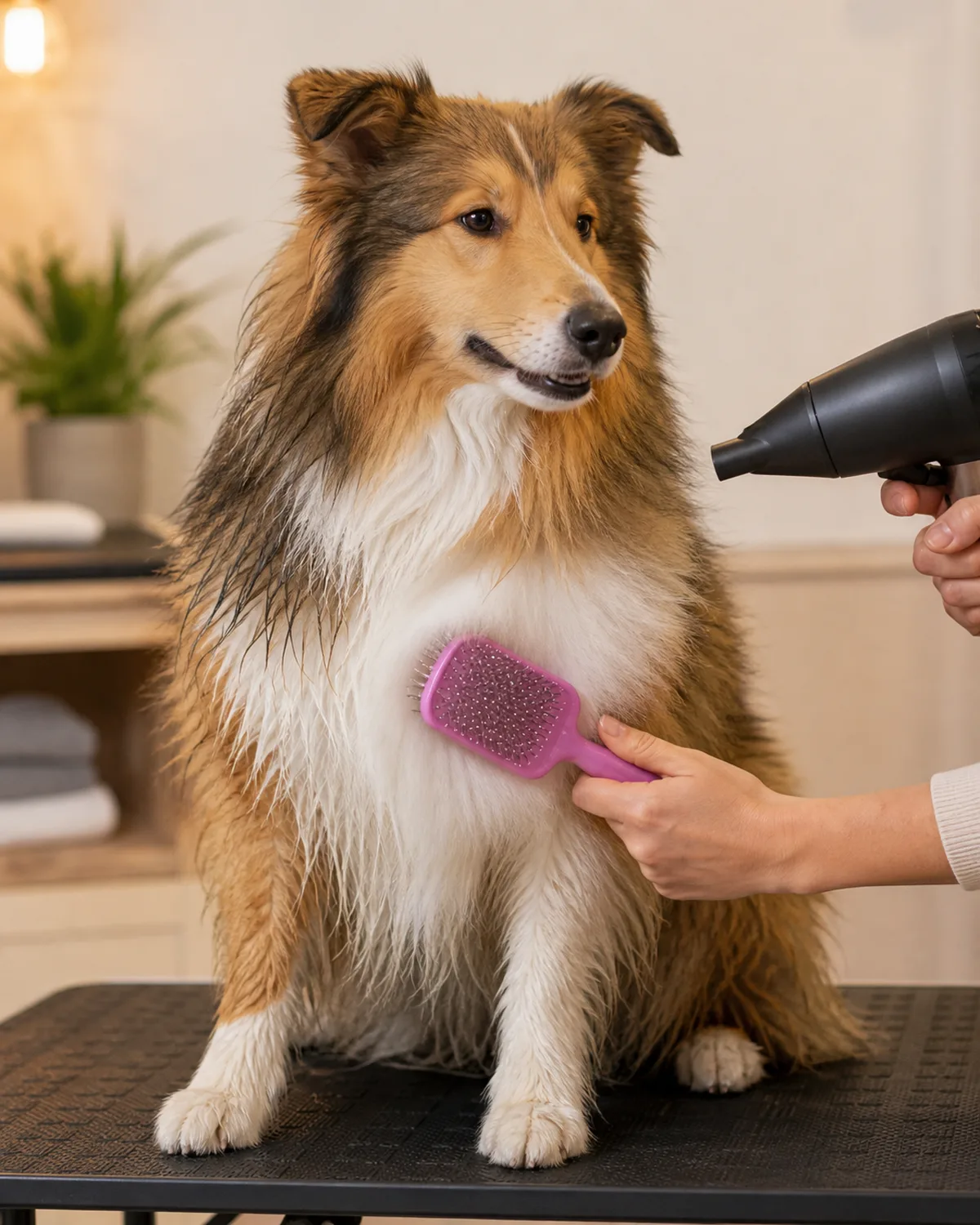
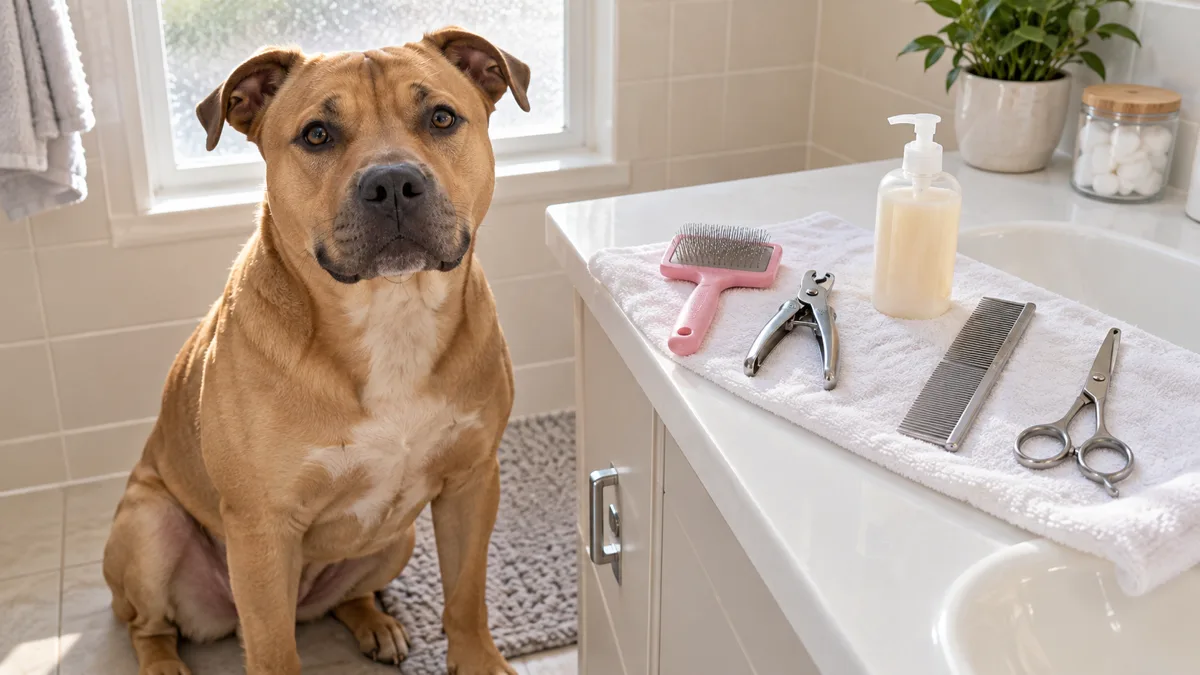
Hold the dryer in one hand and a slicker brush or wide-tooth comb in the other, working through one section of coat at a time. The warm airflow loosens tangles while the brush separates the strands before they can knot up as the coat dries.
This step is where long-haired, wavy, and curly coats are either saved or ruined. A fully dried coat that was not brushed during the process can set into mats that are much harder to remove later.
The dampness is actually your friend here. Wet hair is more pliable and easier to work through than dry hair that has already kinked.
Brush in the direction of hair growth, starting at the tips and working toward the roots. If you hit a snag, hold the hair above the tangle with your free hand so the pull does not reach the skin.
Pay Extra Attention to the Spots That Stay Damp Longest
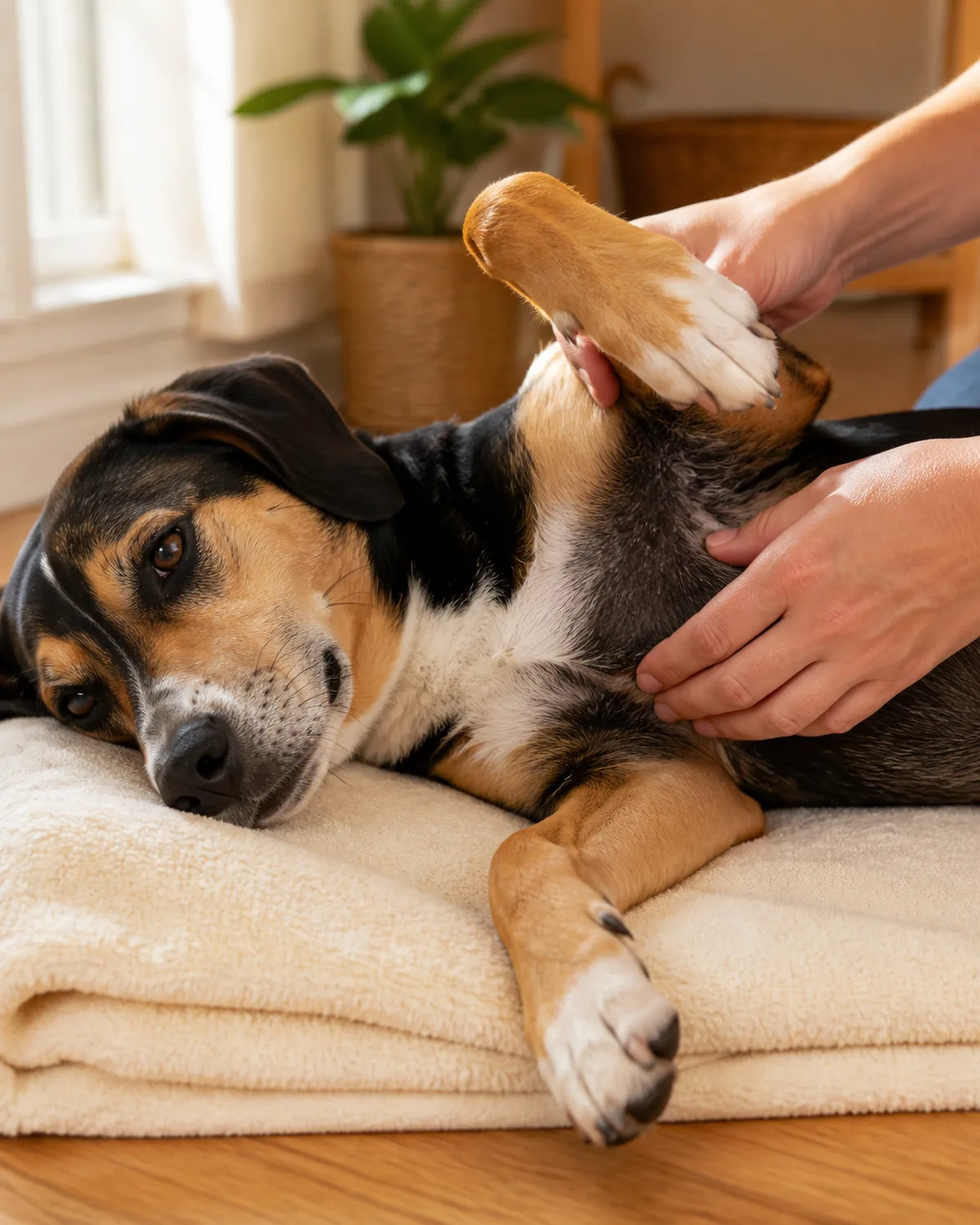
The armpits, the groin area, behind the ears, and the spaces between the paw pads — these four zones hold moisture longest because air barely reaches them. They are warm, hidden, and poorly ventilated, which is the exact combination that yeast and bacteria need to thrive.
Leaving these spots damp after a bath is a direct invitation for skin irritation, hot spots, and that persistent musty smell that makes you wonder whether the bath even helped. The smell is not leftover dirt. It is microbes feeding on the moisture you left behind.
How to check
Lift the front leg and press your fingers into the armpit crease. Spread the toes apart and feel between each pad. Flip the ear flap and touch the fold behind it. If any of these areas feel cool or damp, they need more time with the towel or dryer before you move on.
Short-Coated Dogs Can Air Dry — but Only in the Right Conditions
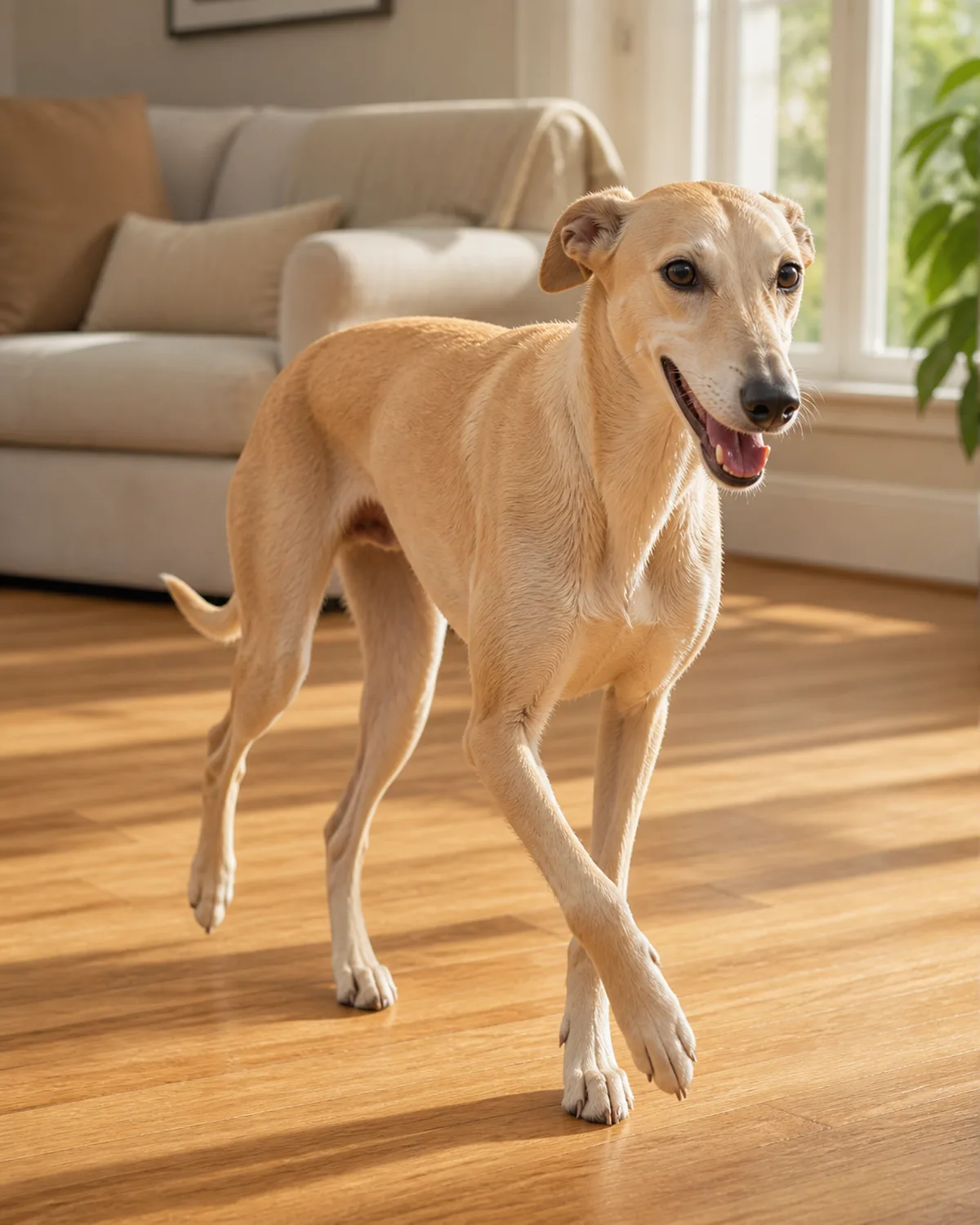
If your dog has a single-layer short coat and the room is warm — above roughly twenty degrees Celsius — towel drying to the point of damp and then letting the dog move freely through the house is a perfectly fine strategy. The coat will dry on its own within twenty to thirty minutes.
This does not work well in cold weather, in air-conditioned rooms, or for puppies and senior dogs who lose body heat faster than healthy adults. A chilled dog with a wet coat will shiver and burn calories trying to stay warm, which is an unnecessary stress after what should be a routine grooming step.
The simplest test: if you would be comfortable sitting in that room wearing a damp t-shirt, your short-coated dog will be fine air drying in it.
Use a Drying Coat for Hands-Free Convenience
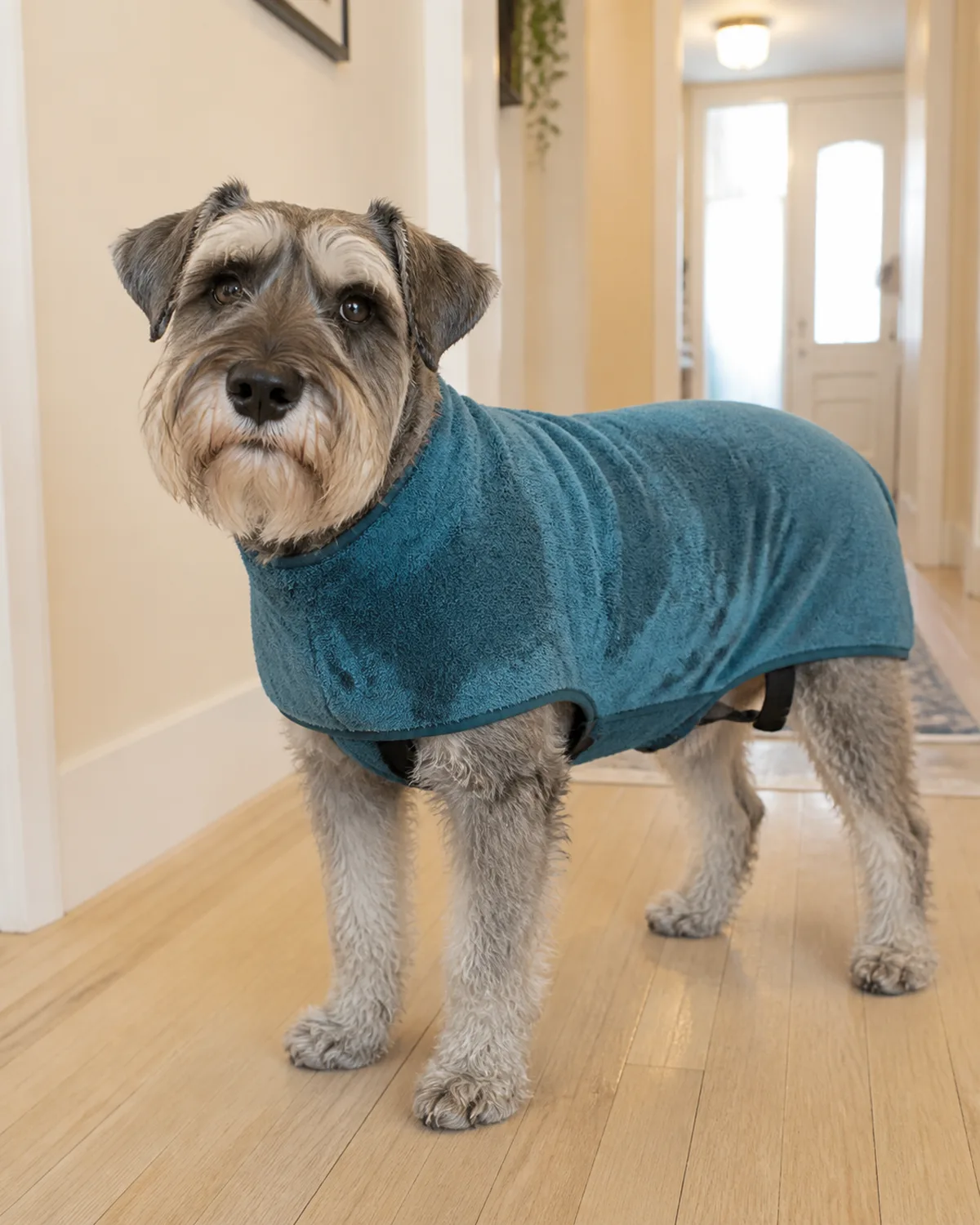
A drying coat is an absorbent wrap that fits over the dog's body like a jacket and pulls moisture from the coat while the dog walks around the house. It is a useful option for dogs that panic at the sound of a blow dryer, or for owners who need both hands free to clean up the bathroom.
Most drying coats absorb enough water to take a double-coated dog from soaking to lightly damp in about fifteen minutes, at which point air drying or a quick pass with a towel can finish the rest. They are machine washable, and a good one lasts for years.
The fit matters. Too loose and the coat slides off; too tight and the dog will try to wriggle out of it. Measure your dog's chest and length before ordering, and introduce the coat the same way you would introduce any new piece of gear — treats, short sessions, no forcing.
Save this for later
13 Steps to Dry Your Dog After a Bath
- 1Squeeze out the excess water firstHands down the coat from head to tail, pressing and squeezing before reaching for any towel.
- 2Let your dog shakeOne full shake removes roughly seventy percent of the water. Step back and let it happen.
- 3Switch to a microfiber towelThree to four times more absorbent than cotton. Pat and press, never rub.
- 4Work in sections from head to tailEars and face first, then back, belly, legs, paws, and tail. Top down prevents re-wetting.
- 5Dry the ears inside and outCotton ball blotting inside each ear flap prevents the trapped moisture that causes infections.
- 6Introduce a blow dryer the right wayLowest heat, twelve inches away, starting at the shoulder. Never aim at the face.
- 7Try a high-velocity pet dryer for thick coatsRoom-temperature air at high speed dries a double coat in fifteen minutes instead of forty-five.
- 8Brush while you drySlicker brush in one hand, dryer in the other. Prevents tangles from setting as the coat dries.
- 9Check the hidden damp spotsArmpits, groin, behind the ears, between the paw pads. These stay damp longest and breed bacteria.
- 10Air dry only in the right conditionsShort coats in warm rooms above twenty degrees. Not for double coats, puppies, or cold weather.
- 11Use a drying coat for hands-free dryingAn absorbent wrap that works while the dog walks around. Good for dryer-phobic dogs.
- 12Confirm the coat is truly dryPart the fur and press fingers to the skin. If it feels cool or damp, the undercoat is still wet.
- 13Make drying the part your dog looks forward toTreats at key transitions and a post-bath ritual turn drying into the best part of bath day.
Know When the Coat Is Truly Dry — Not Just Surface Dry
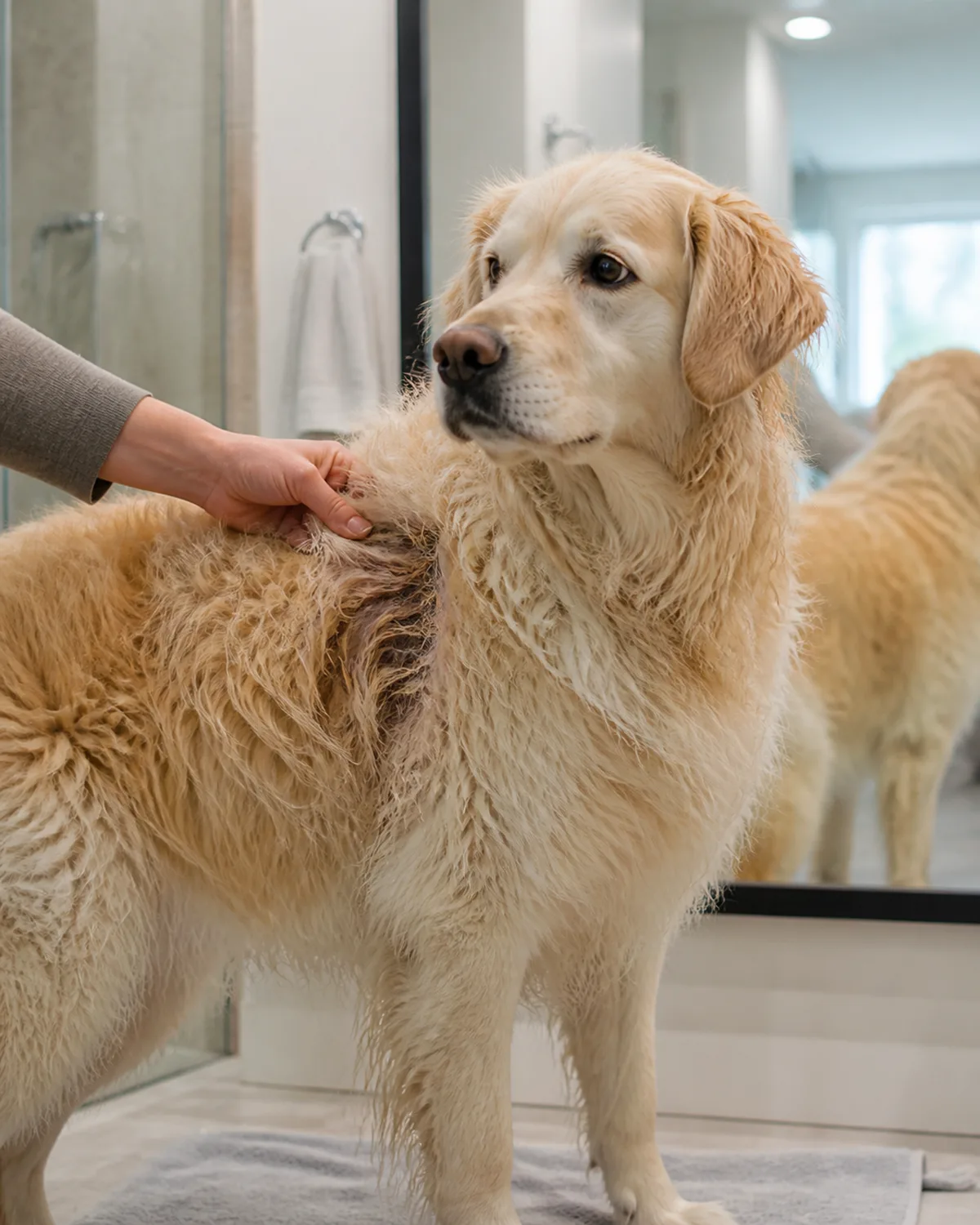
Push your fingers deep into the coat and press them against the skin. If you feel any coolness or dampness at the skin level, the coat is not done yet — even if the outer layer looks and feels fluffy.
Double-coated breeds are especially deceptive here. The guard hairs on the surface dry quickly while the dense undercoat underneath can stay wet for hours. Sending a dog with a damp undercoat to its bed is the single most common cause of that musty wet-dog smell that lingers until the next bath.
The hand test
Part the coat at the shoulder, the hip, and behind each ear. Press the back of your hand flat against the skin for three seconds. If it comes away warm and dry, that zone is finished. If it comes away cool, that zone needs more time. Repeat until every zone passes.
Make Drying the Part Your Dog Actually Looks Forward To
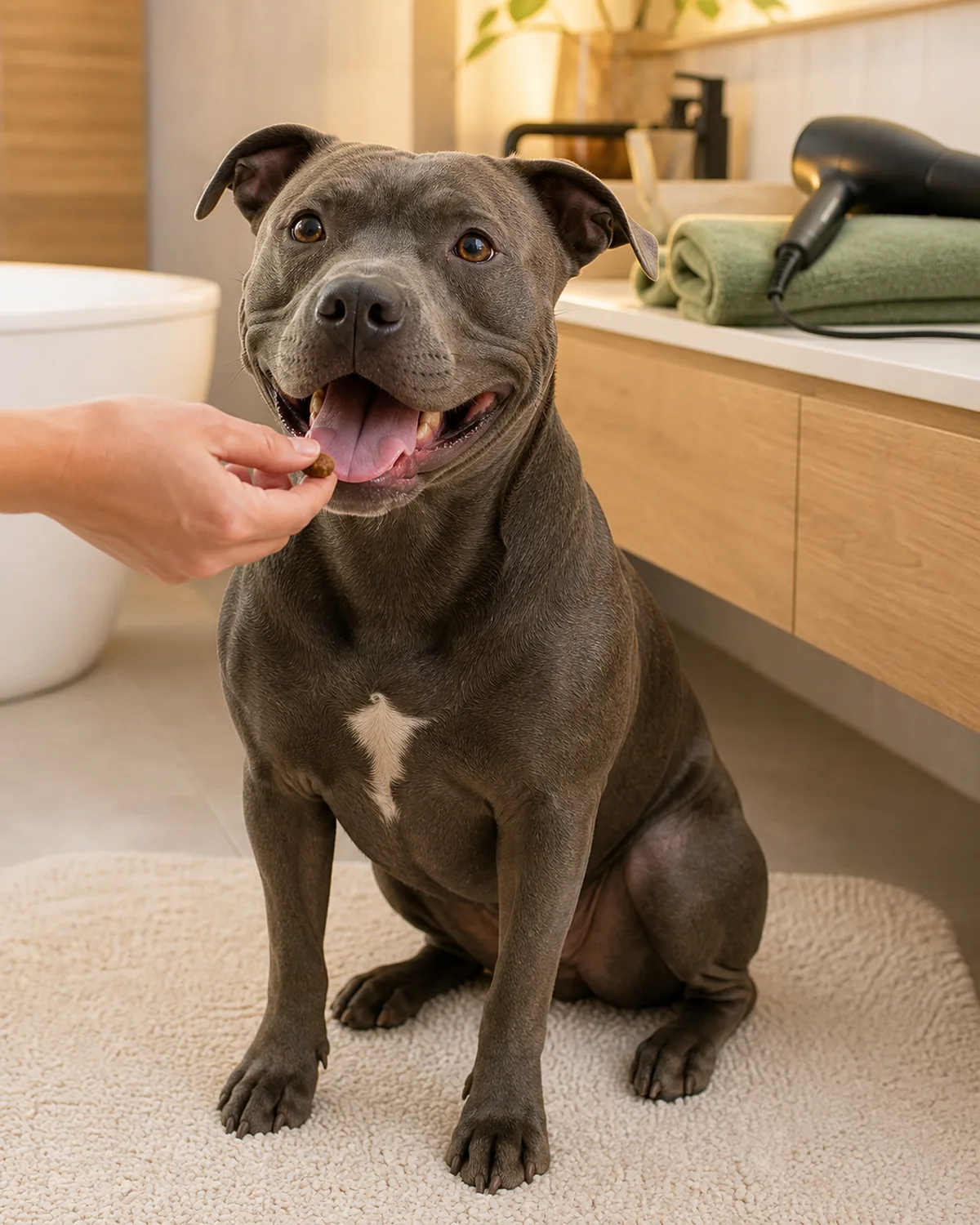
Pair every key transition with a small treat. One treat when the bath ends and the towel comes out. Another when the dryer turns on. A final one when drying is finished and your dog is released.
Over time, layer in a post-bath ritual your dog genuinely enjoys — a short game of tug, a special chew saved only for bath days, or a few minutes of off-leash zoomies in a safe space. The goal is to build an association so strong that your dog stops dreading bath time entirely and starts seeing the drying stage as the part where the rewards begin.
The dogs who stand calmly on the grooming table while the dryer runs are not naturally calmer dogs. They are dogs whose owners made drying worth standing still for.
P
About the author
Jess Calloway
Jess Calloway edits Pawliqa, where she shares dog care, grooming, training, and new-owner tips — plus DIY and pet-friendly home ideas — for anyone who wants a happy, well-cared-for dog. As a dog mom to three very different dogs, she writes the honest, tested version of what actually works. Every guide is image-led and reviewed for clarity, usefulness, image accuracy, and Pinterest-to-page alignment before it goes live. Visit the About page.