I once let a bath sit two days too long between brushings, and by the time I got the comb out, there was a mat behind my dog's ear the size of a walnut. That was a rough twenty minutes for both of us.
Mats aren't just a cosmetic annoyance. Left alone, they pull on the skin, trap moisture, and can hide irritation you'd otherwise miss. Most matting is predictable — same spots, same handful of reasons — which makes it easy to get ahead of.
This is the routine I use now: where mats form, which tool to reach for, how to take one apart without hurting your dog, and when it's gone past the point where you should handle it yourself.
Jump to a section
How to prevent and remove mats in your dog's coat
Where mats actually form, which tool to reach for, and a safe way to take one apart without a fight.
1. Why Mats Form in the First Place
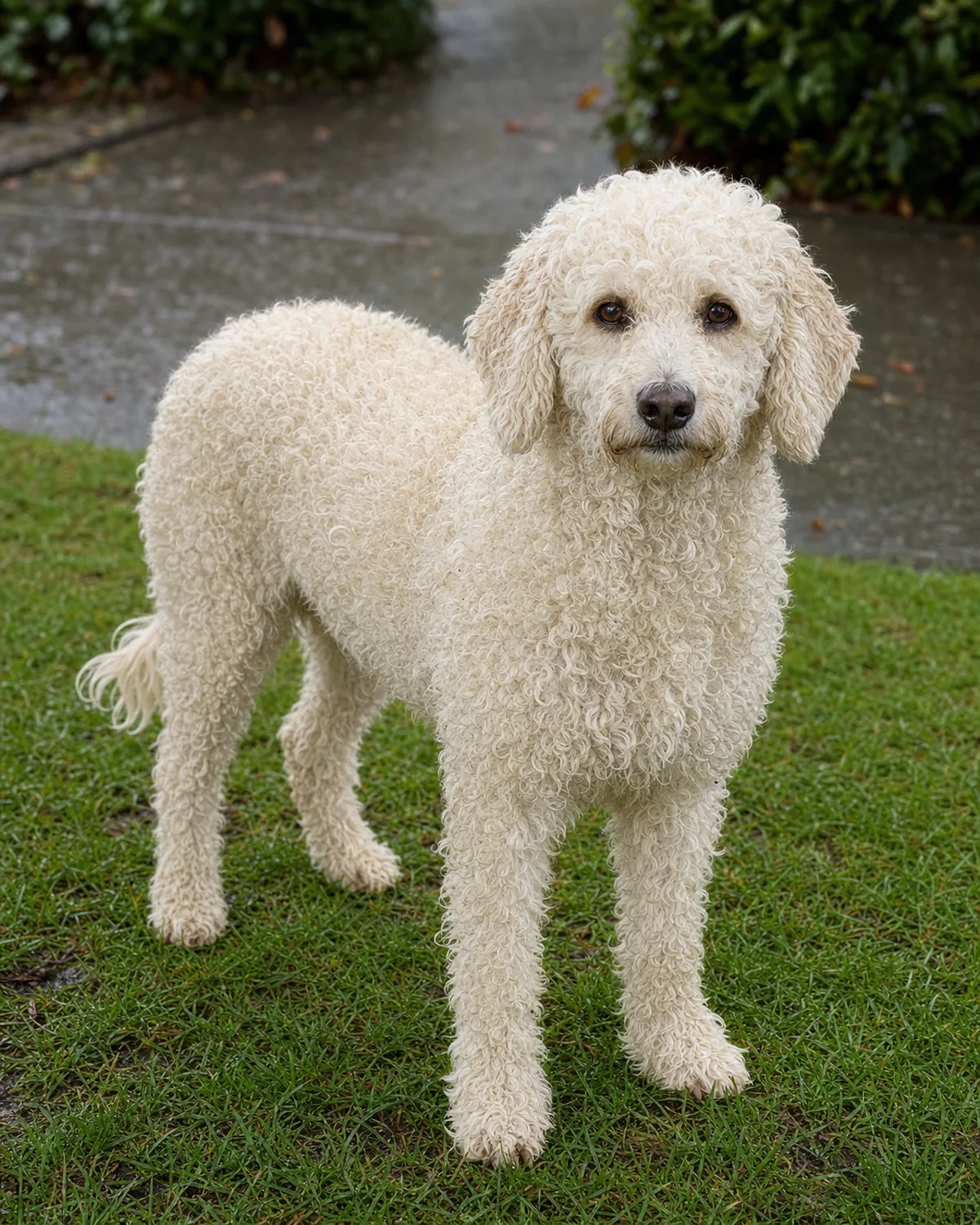
A mat starts as loose, dead undercoat that never got brushed out. Left in place, it tangles with the live fur around it every time your dog moves, rolls, or gets rained on.
Friction speeds this up. Anywhere fur rubs against itself repeatedly — a collar, a harness strap, a joint that bends — is exactly where you'll find the first mats. Moisture makes it worse, since damp fur clings and knots far more easily than dry fur.
None of this means your dog's coat is "bad." It means loose fur needs somewhere to go, and a brush is the only thing that reliably takes it out of the equation.
2. What Counts as a Mat vs. Just a Tangle
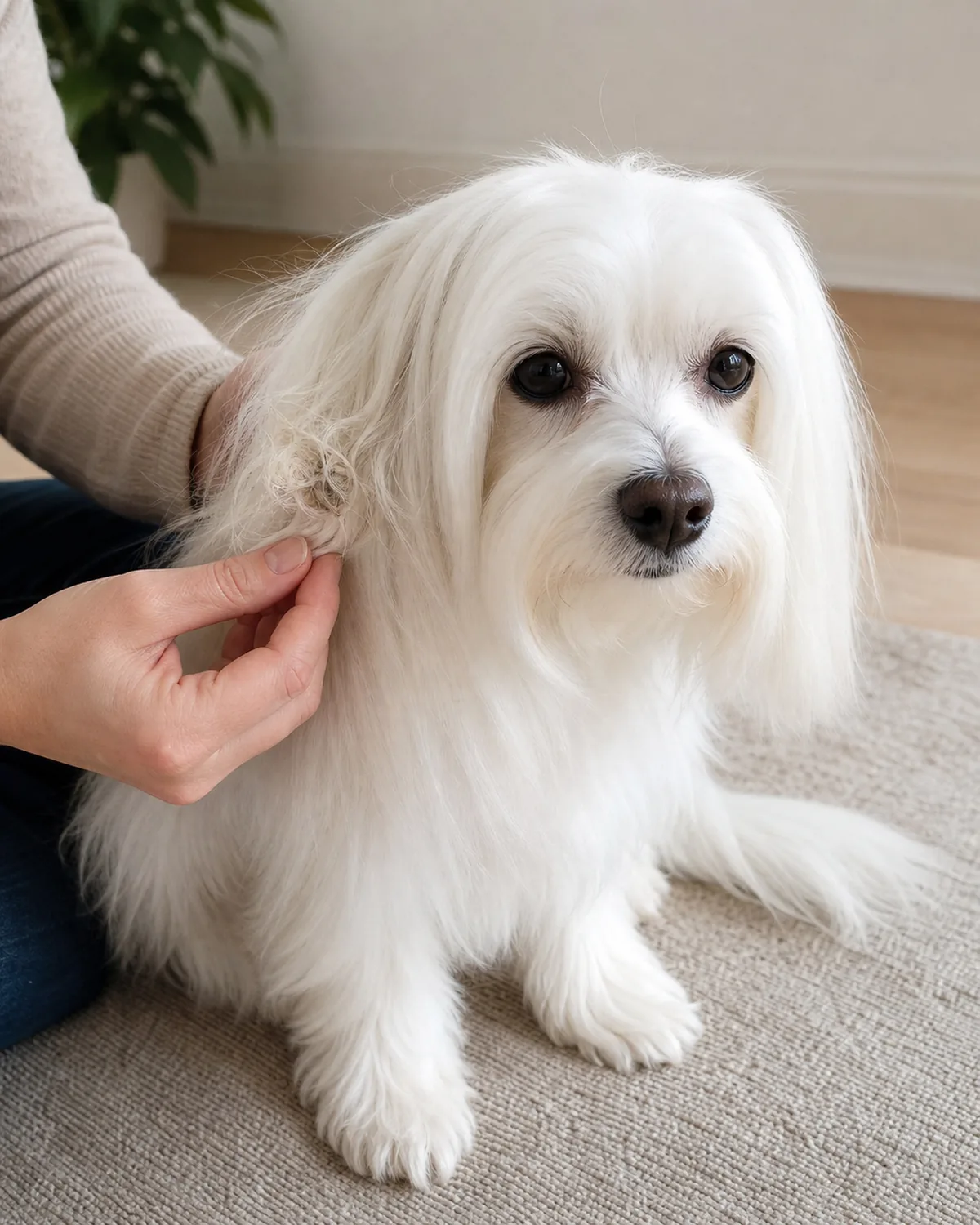
A tangle is fur that's crossed over itself but still separates when you work your fingers through it. It's normal, especially on longer or curlier coats, and a few minutes with a brush usually clears it.
A mat is different. It's dense enough that a comb won't pass through it, and often close enough to the skin that you can feel it as a firm little pad rather than loose fur. Try to pull a true mat apart with just your fingers and it won't budge.
Knowing which one you're looking at matters, because tangles just need routine brushing, while mats need a specific, careful technique — and sometimes a professional groomer instead of you.
Before you reach for a comb
The one thing that decides whether you can fix this at home today
Run your fingers into it first. What you feel tells you which of these four tiers you're actually dealing with.
Surface TangleJust brush it outFingers separate it easily. Regular brushing handles this in a couple of minutes.
Small MatUse the pinch-and-comb techniqueA comb moves through it, slowly. Work it loose in sections with the right tool.
Tight, Skin-Close MatOnly work a small areaThe comb won't pass through and you can feel a firm pad near the skin. Don't force it — stop if it isn't loosening.
Large or InflamedSkip home removal entirelyWide mats, skin that's red or hot underneath, or a dog in real distress. Call a groomer or your vet instead of continuing to pull at it.
When the skin underneath looks irritated, that's a professional's job, not a home project. Forcing a tier C or D mat out yourself usually costs more discomfort for a worse result.
3. The Friction Zones Where Mats Show Up First
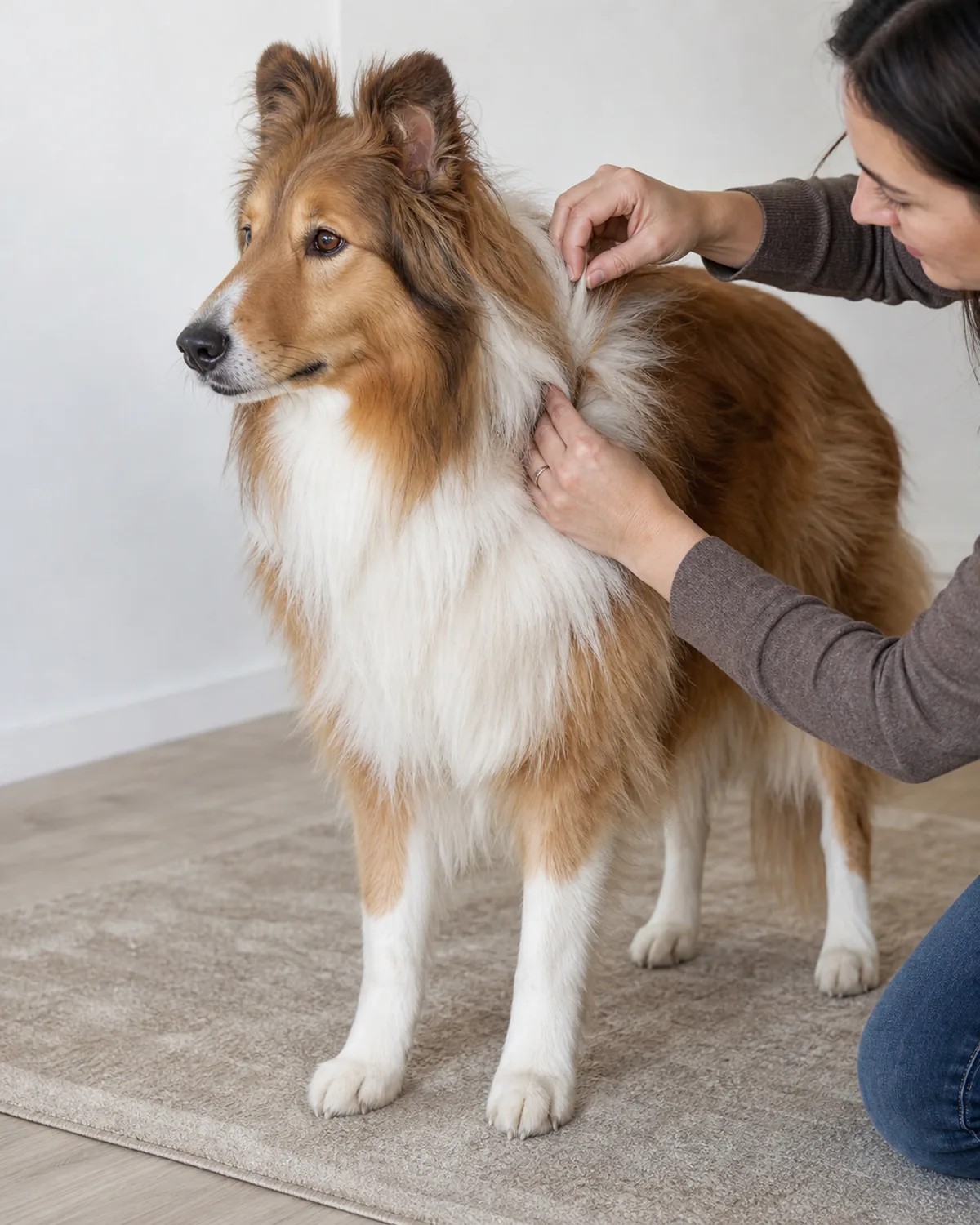
Check behind the ears first. It's the single most common mat location, thanks to constant rubbing from head shakes and scratching. The armpits and the inside of the back legs come next, both high-friction, low-visibility spots owners tend to skip.
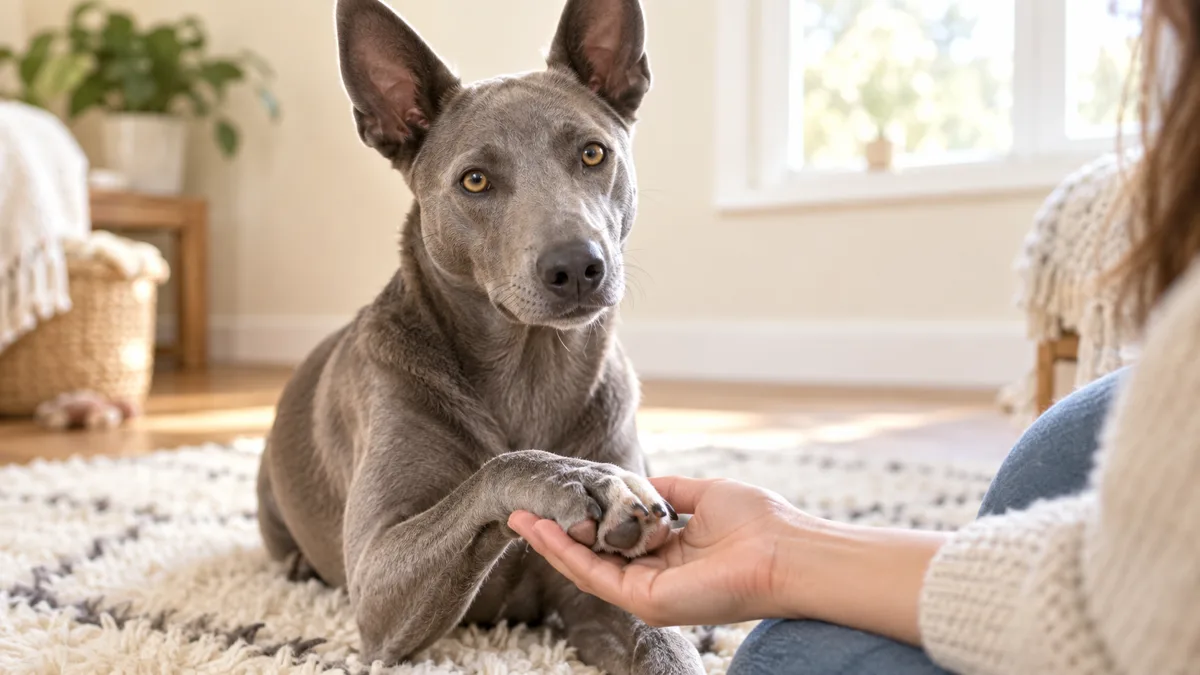
The base of the tail and anywhere a collar or harness sits are also worth a regular look, along with the fur between the toes on dogs with feathered or fluffy feet.
Make a habit of running your hands over these five spots specifically, rather than just brushing the parts of the coat you can see easily. That's where the surprises hide.
4. The Brushing Routine That Prevents Most Mats
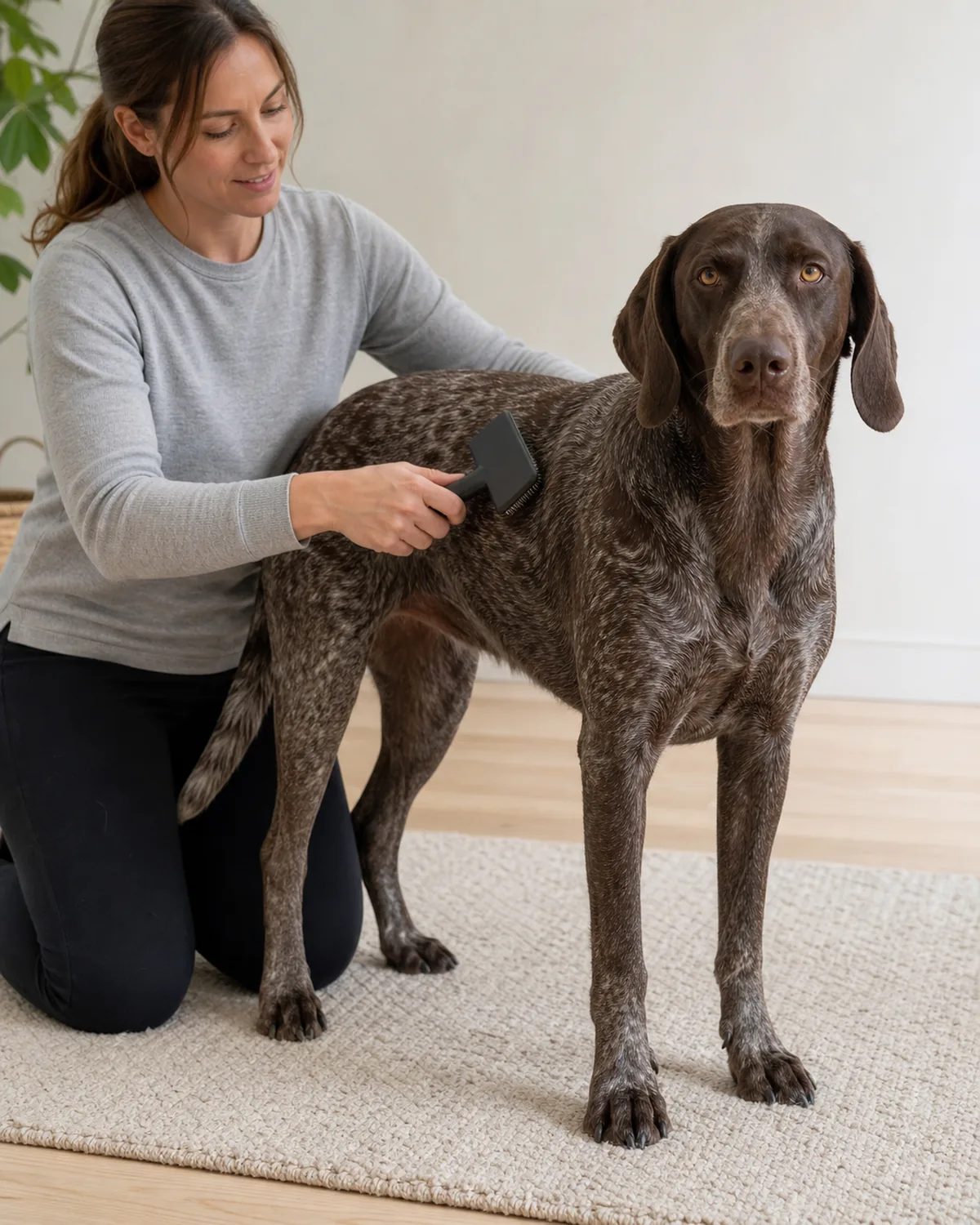
Prevention comes down to brushing often enough that loose fur never has time to tangle. For most medium and long coats, that means a full-body brush two to three times a week; double-coated and curly breeds often need it closer to every other day.
The same desensitization approach that helps a dog who hates being brushed applies here too — short, calm, reward-paired sessions build tolerance faster than one long wrestling match ever will. A dog who's relaxed about brushing gets brushed more consistently, which is the entire point.
Brush to the skin, not just over the top of the coat. A brush that only skims the surface leaves the undercoat — where most mats actually start — completely untouched.
5. Choosing the Right Tool: Slicker Brush vs. Mat Comb vs. Dematting Rake
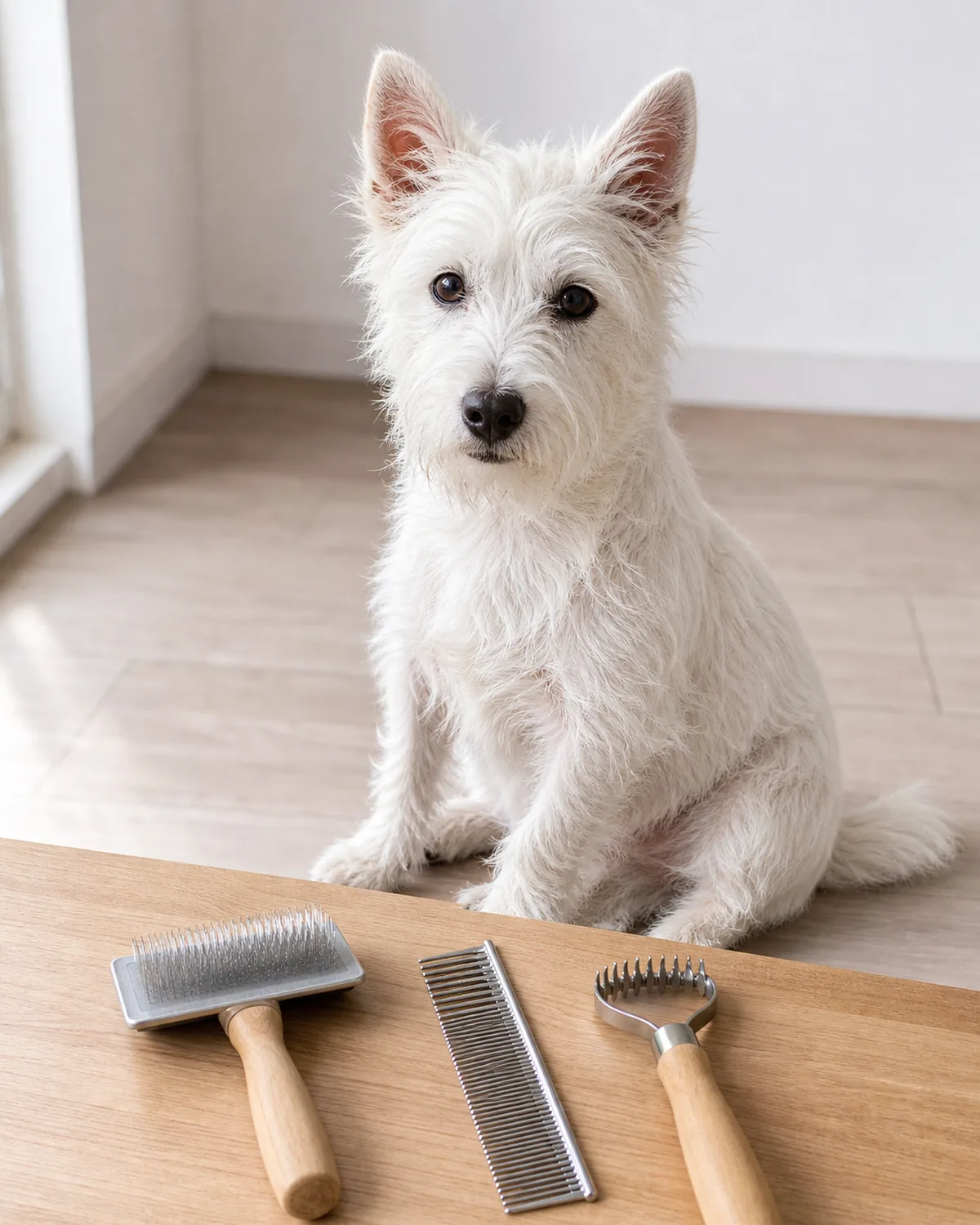
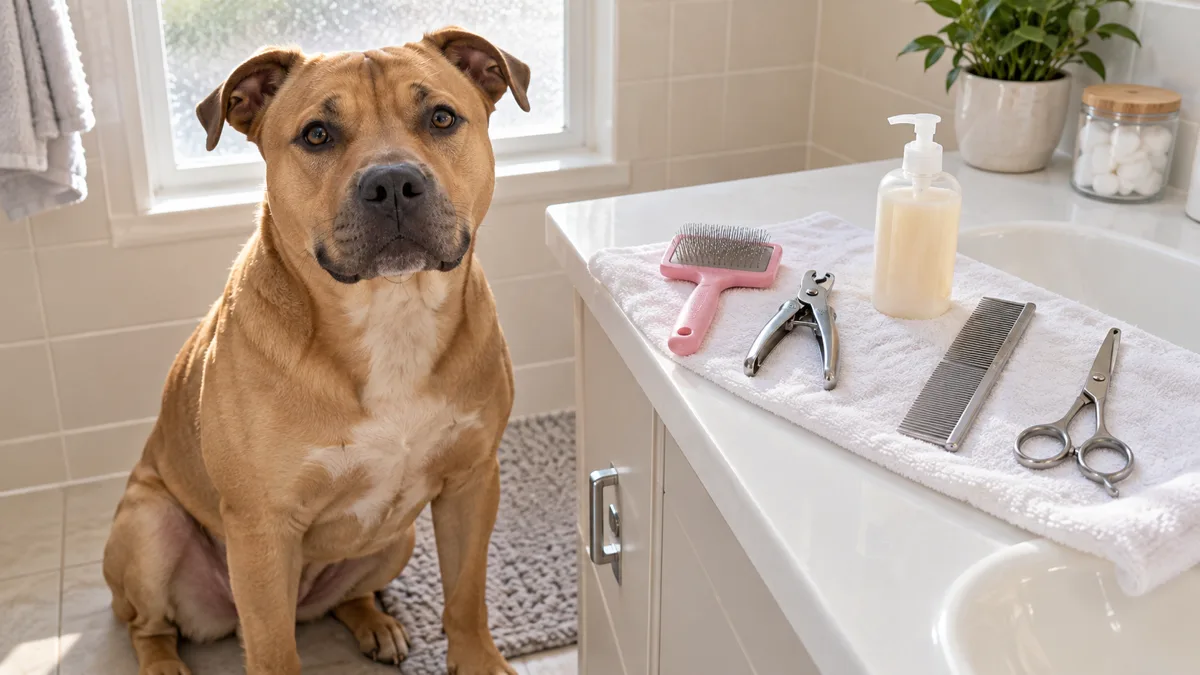
A slicker brush, with its fine wire pins, is your everyday tool for preventing mats before they form. It's not designed to power through an existing mat — pushing it hard against dense, matted fur usually just tugs at the skin underneath.
A mat comb has wider, sturdier teeth spaced to catch the edge of a small-to-medium mat and work it loose in sections. A dematting rake, with its short curved blades, is built for the toughest, most established mats and thicker double coats.
Keep all three on hand if your dog has a coat prone to matting. Reaching for the wrong tool is one of the fastest ways to turn a five-minute fix into a frustrating ordeal.
6. How to Safely Remove a Small Mat
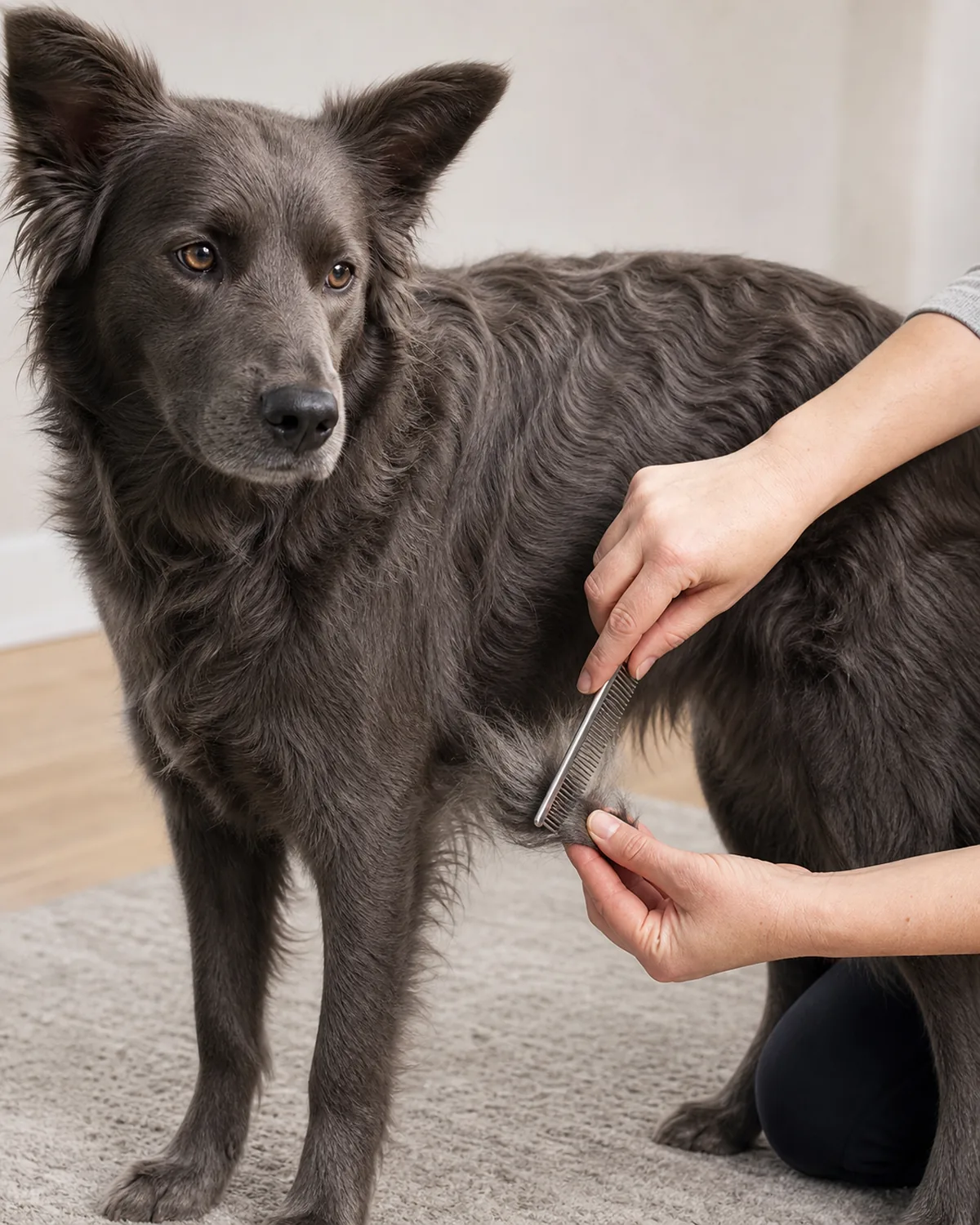
Pinch the base of the mat between two fingers, right where it meets the skin. This protects your dog from feeling every tug and is the single most important part of the technique.
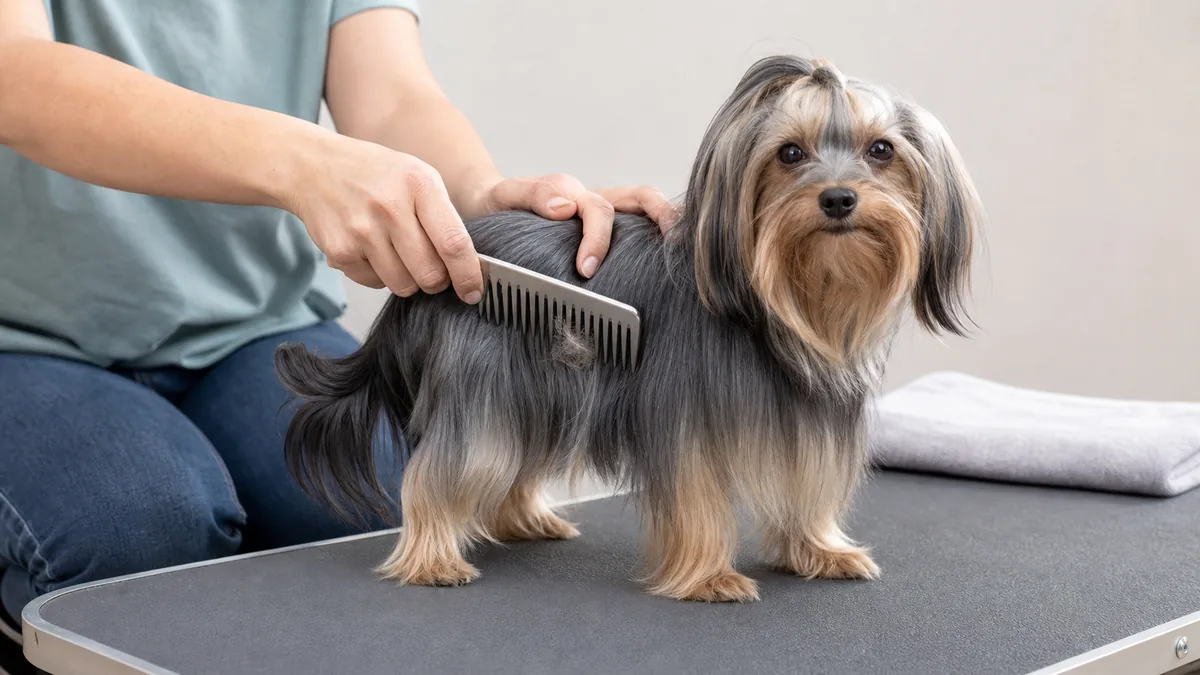
Starting at the very tip of the mat, use a mat comb to work small sections loose, gradually moving toward the base you're holding. Going in from the outside edge, rather than trying to force the comb straight through the middle, keeps the process from turning into a fight.
Stop and switch to a dematting rake, or stop entirely, if the comb isn't making progress after a few passes. Forcing it past that point is where dogs start associating grooming with pain.
The detangling do’s and don’ts
What to do — and skip — while you work on a mat
Most painful detangling sessions trace back to one of these lines.
Always Do
- Comb the coat out fully before a single drop of water touches it.
- Work from the outer edge of a mat in toward the base.
- Pinch the base of the mat, close to the skin, to protect it from tugging.
- Keep each session short and stop while your dog is still relaxed.
- Dry the coat all the way to the skin after every bath.
- Give a double-coated dog at least one full-body brush a week.
- Check the known friction zones first, every time.
Never Don’t
- Never cut into a skin-close mat with scissors near the skin.
- Never wet down a tangle that hasn't been combed out first.
- Never keep pulling once your dog is flinching away from it.
- Never put off a small mat "for next time."
- Never rely on one brush type for every coat area and texture.
- Never skip behind the ears, the armpits, or the tail base.
- Never try to force out a large, skin-close mat yourself instead of calling a groomer.
7. Why Water Turns a Loose Tangle Into a Locked-In Mat
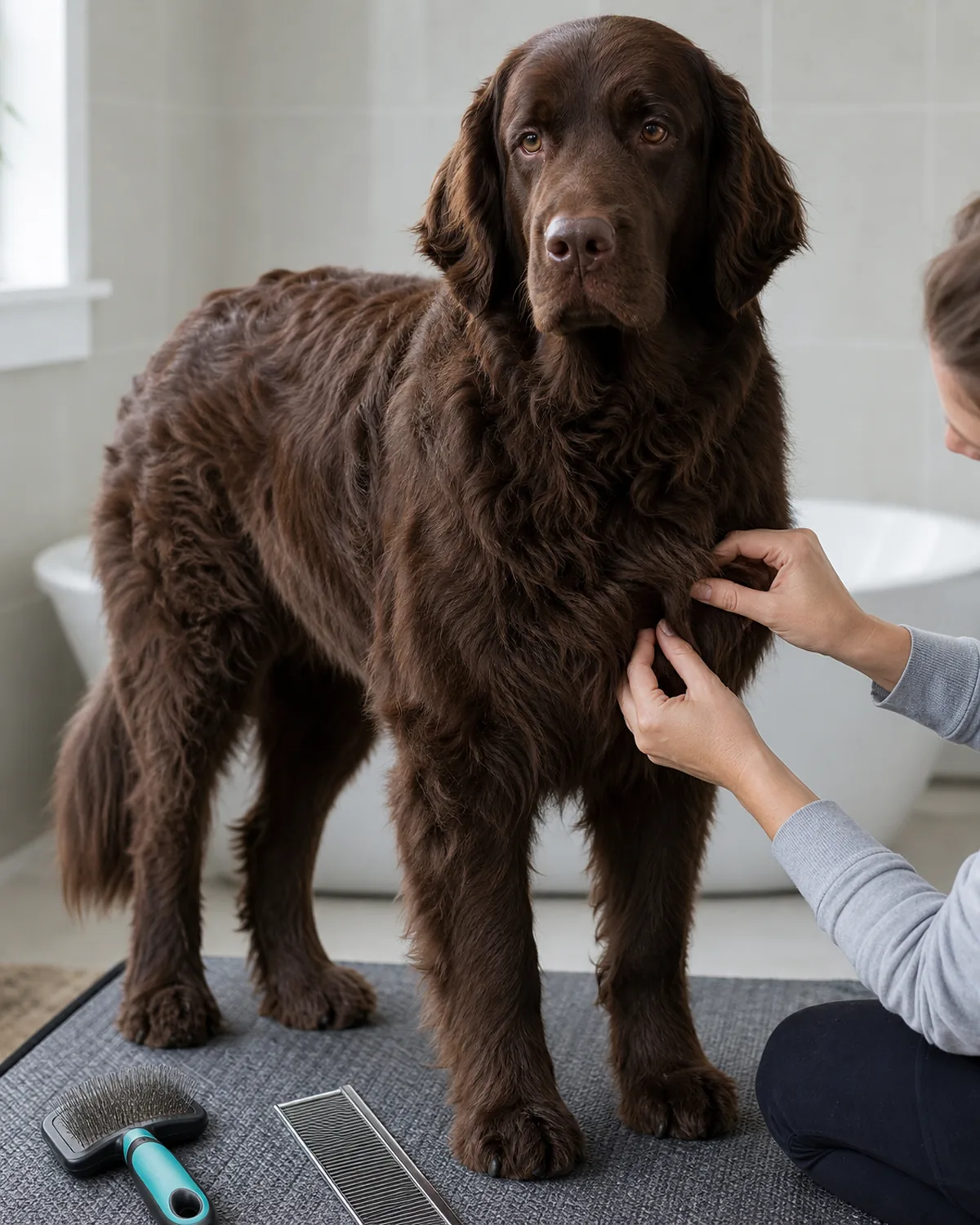
Wet fur strands cling to each other and shrink slightly as they dry, the same way a loose knot in wet rope pulls tight once it stiffens. A tangle that a comb could still separate before a bath can come out cinched down hard enough afterward that the same comb won't touch it.
This is purely a sequencing problem, not a washing-technique one: it's not about how you shampoo or dry, it's about the order you do things in relative to a tangle that's already there. Comb the coat section by section before a single drop of water touches it, not after.
If you discover a tangle partway through a bath, finish rinsing, towel it as dry as you reasonably can, and hold off on combing that spot until it's fully dry again — trying to comb it while still damp just repeats the same tightening problem.
8. When a Mat Is Too Tight to Comb Out
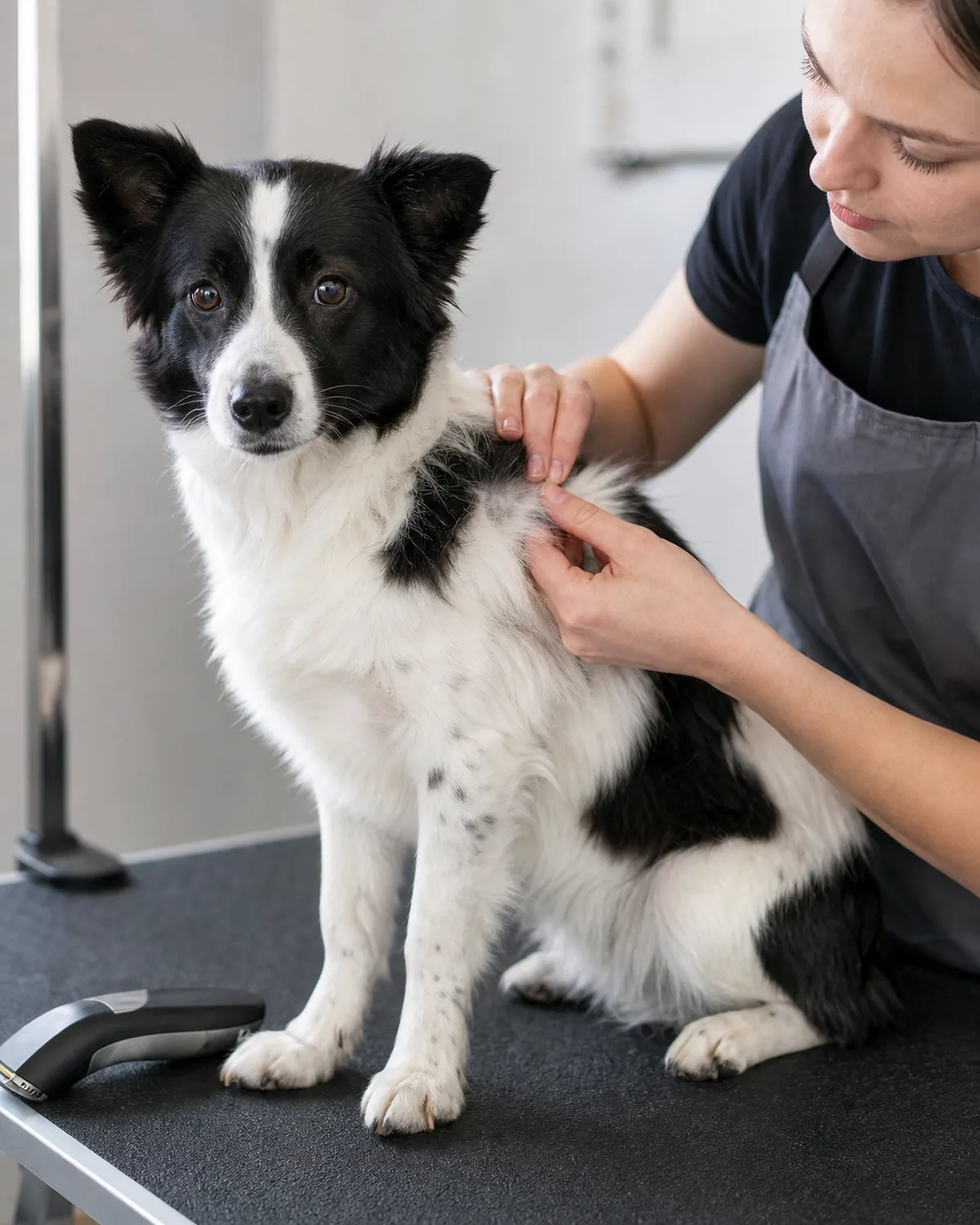
Some mats simply aren't a do-it-yourself job. If a mat is large, sitting flat against the skin, or you can't slide even a finger underneath it, stop trying to comb it out at home.
Check the skin around it for redness or heat while you're at it — not to diagnose anything, but because that's your signal to get a professional groomer or your vet involved rather than keep working at it yourself.
A groomer can shave a stubborn mat out cleanly and safely in a few minutes with the right clippers. Trying to force the same result with a comb usually costs your dog more discomfort for a worse outcome.
9. Coat Types Most Prone to Matting
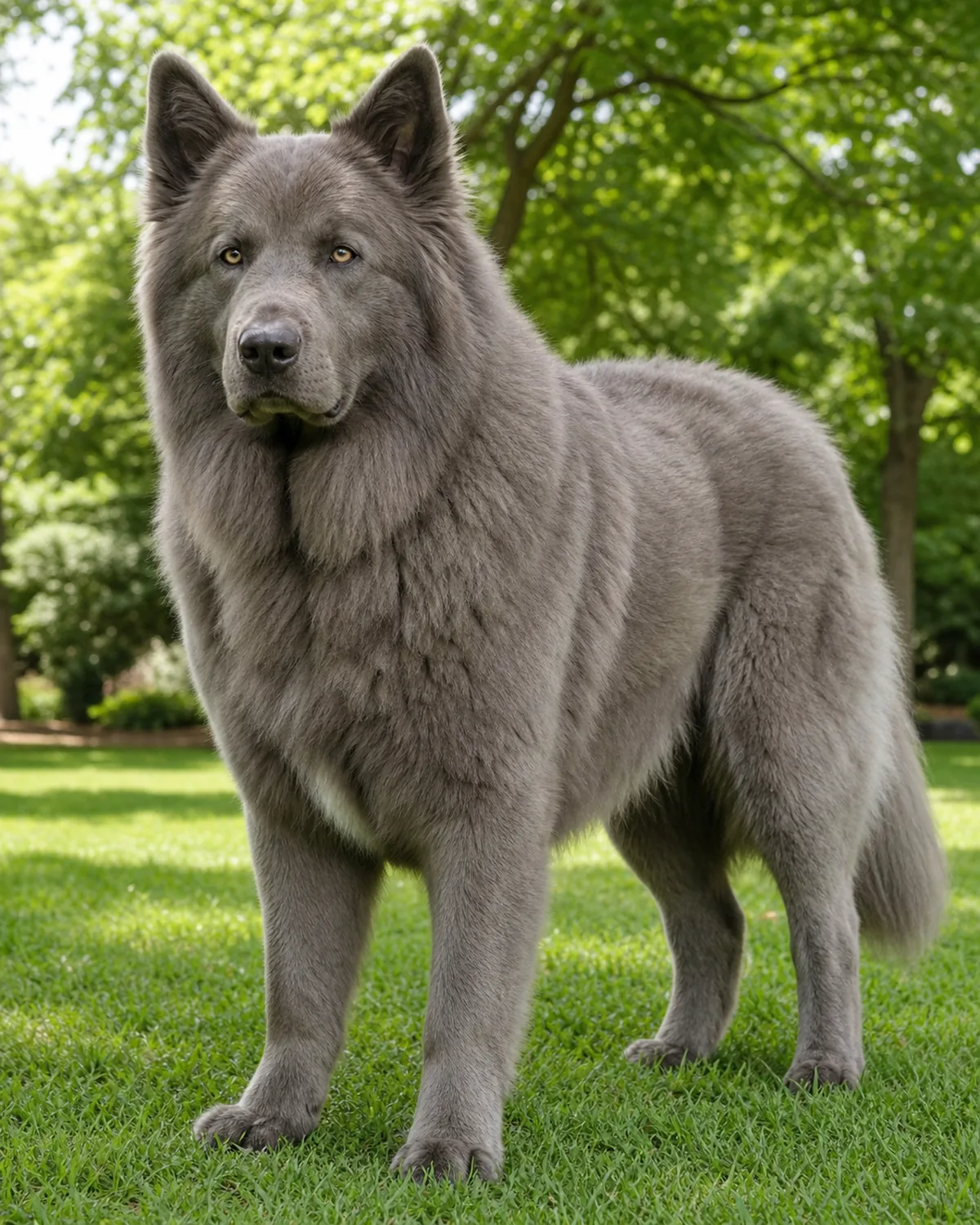
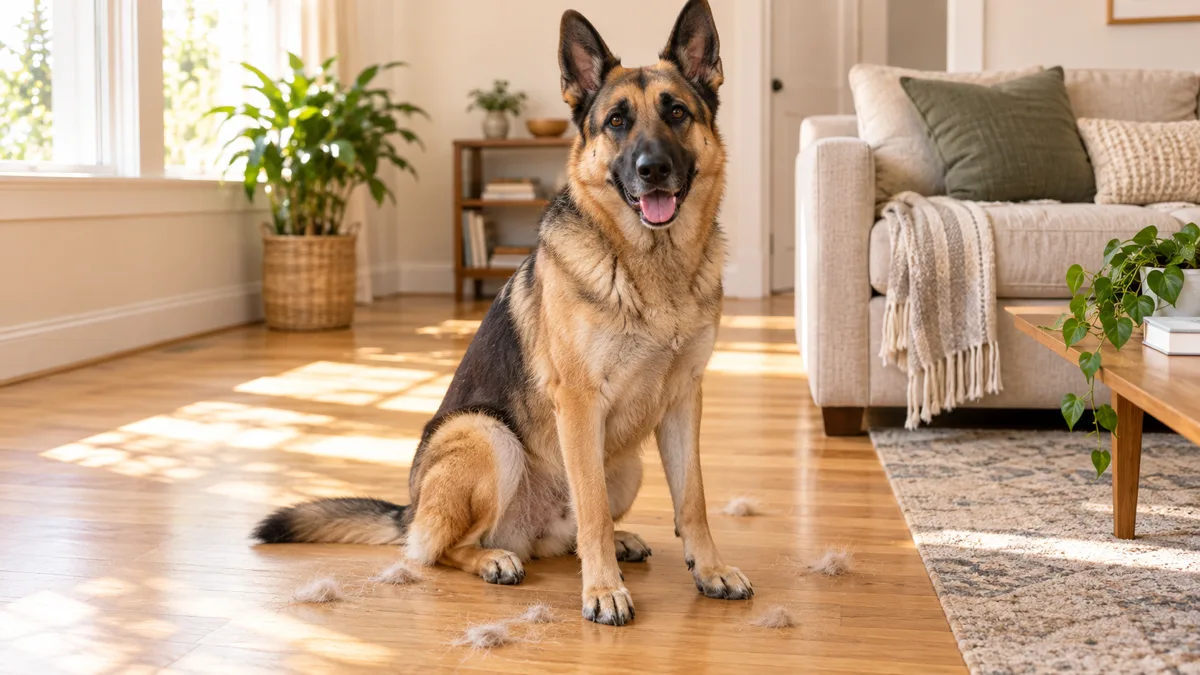
Double-coated breeds mat where the dense undercoat gets trapped under the longer guard hairs, especially during a seasonal blow-out — the same period covered in keeping your dog cool in summer, since a heavily matted double coat also traps heat against the skin.
Curly and wavy coats mat for a different reason: the curl itself encourages fur to wind around neighboring hairs continuously, so even a coat brushed a few days ago can already be knotting again.
If your dog falls into either category, matting isn't a sign you're doing something wrong. It just means the brushing schedule that works for a short, straight coat won't be often enough for yours.
Save this before your next grooming session
Mat Prevention Cheat Card
Keep this handy for a quick pre-brush check.
- Check behind the ears — the single most common mat spot.
- Check the armpits and inside of the back legs.
- Check the base of the tail and the collar or harness line.
- Slicker brush: everyday prevention, before a mat forms.
- Mat comb: small-to-medium mats, worked from the edge in.
- Dematting rake: tough, established mats and thick double coats.
- Before any bath: comb the coat out fully first, every time.
General coat-care guidance, not a substitute for a professional groomer on large or skin-close mats.
10. Common Mistakes That Make Matting Worse
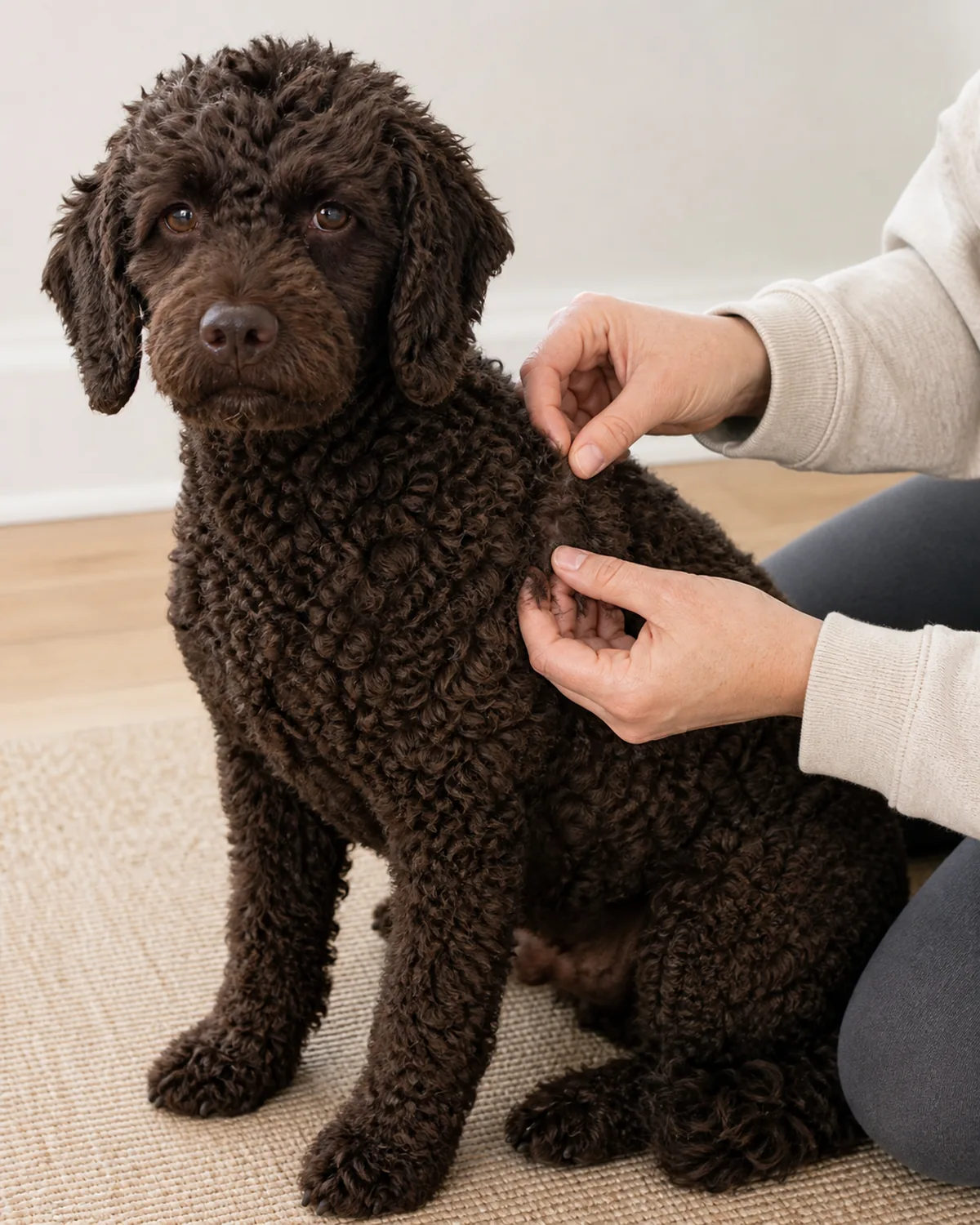
Brushing only the top layer is the biggest one — it leaves the coat looking tidy while the undercoat mats underneath, completely out of sight until it's already dense.
Skipping the high-friction zones because they're harder to reach is another. So is trying to power through a real mat with brute force instead of switching to the pinch-and-comb technique, which usually just hurts your dog without actually freeing the fur.
And putting off a small mat "for next time" almost guarantees it grows. A mat that takes two minutes today can take twenty next week.
11. Troubleshooting: When Your Dog Won't Tolerate Detangling
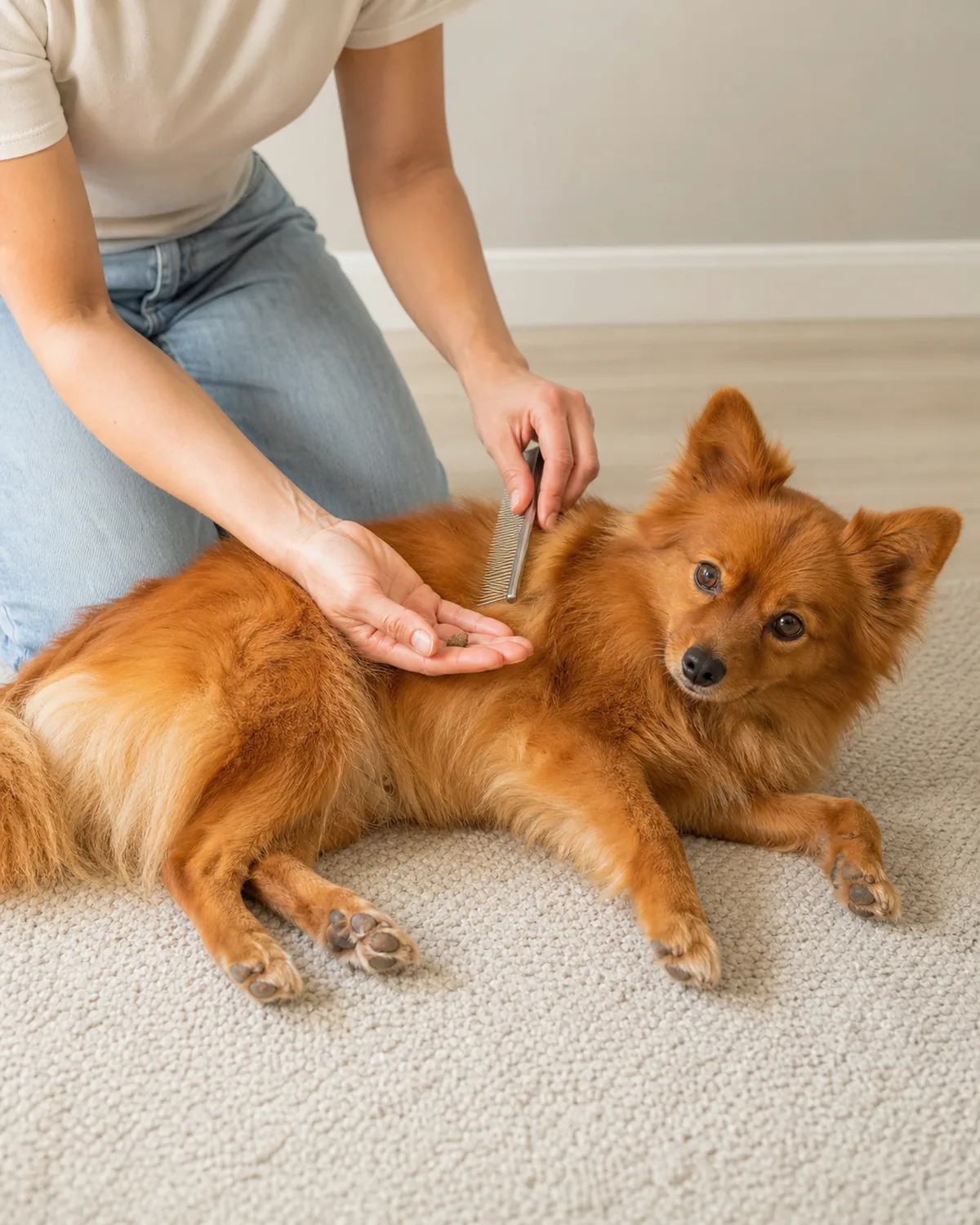
Start with the easiest spot on the body, not the worst mat. Building a positive association with the comb somewhere low-stress makes the harder zones easier later.
Keep sessions genuinely short — a minute or two — and pair the comb with a steady trickle of good treats rather than one big reward at the end. Stopping while your dog is still relaxed, even if the mat isn't fully done, teaches them that grooming ends before it becomes unbearable.
If a mat is causing real distress every time you approach it, that's also a sign it may be tight enough to need a groomer rather than more attempts at home.
12. Caring for the Coat After a Groomer Shave-Down
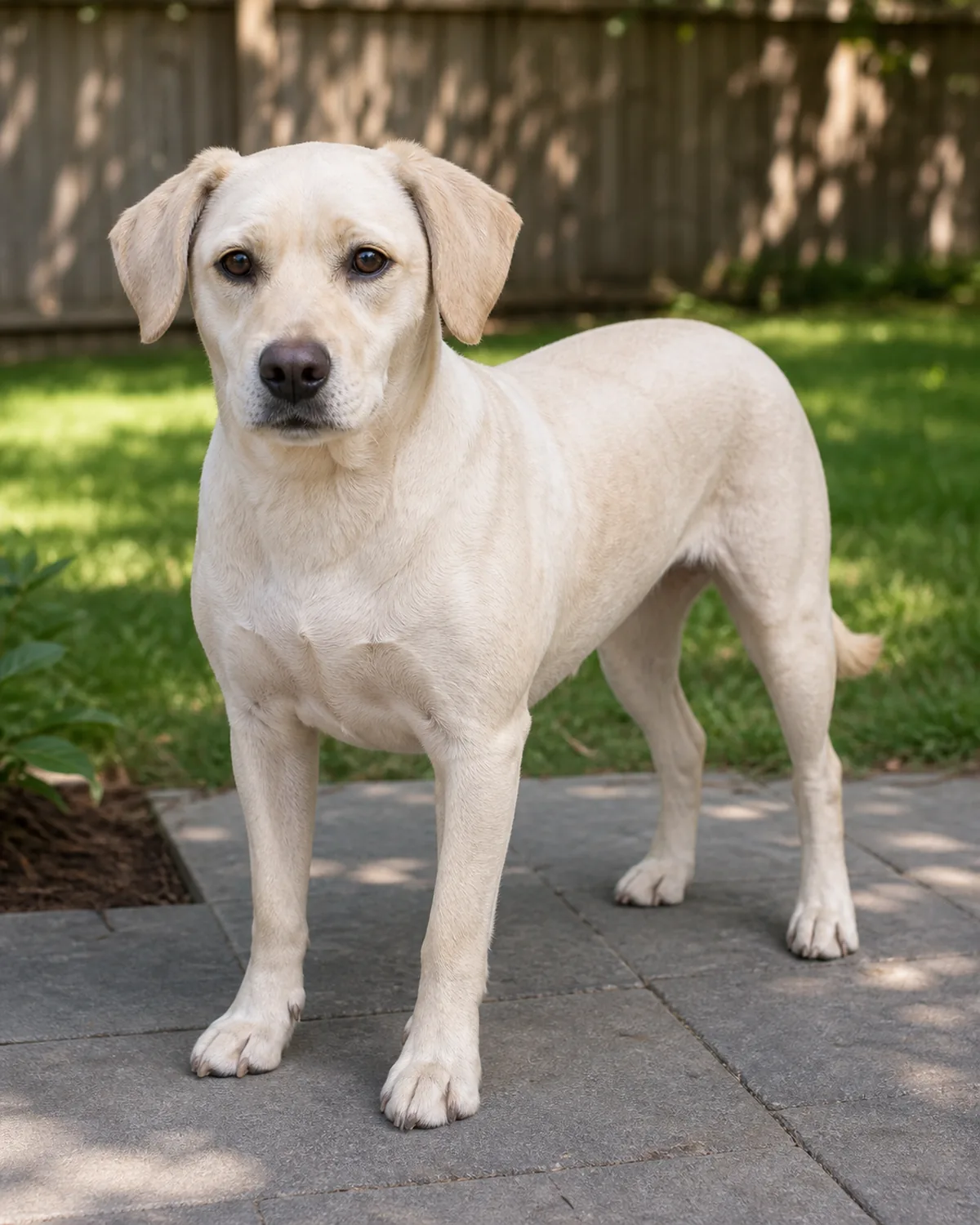
Freshly shaved skin sunburns more easily than skin under a full coat, so keep a recently shaved dog out of direct midday sun for the first couple of weeks, especially on light-colored or thin-coated dogs.
The regrowth phase is also when a light daily brush matters most, even though there's barely any fur to brush yet. Getting ahead of the new coat as it comes in prevents it from developing the same matting pattern all over again.
Expect the texture to look a little different for a few months as the coat grows back in. That's normal and settles out on its own.
13. Building a Weekly Coat-Check Habit
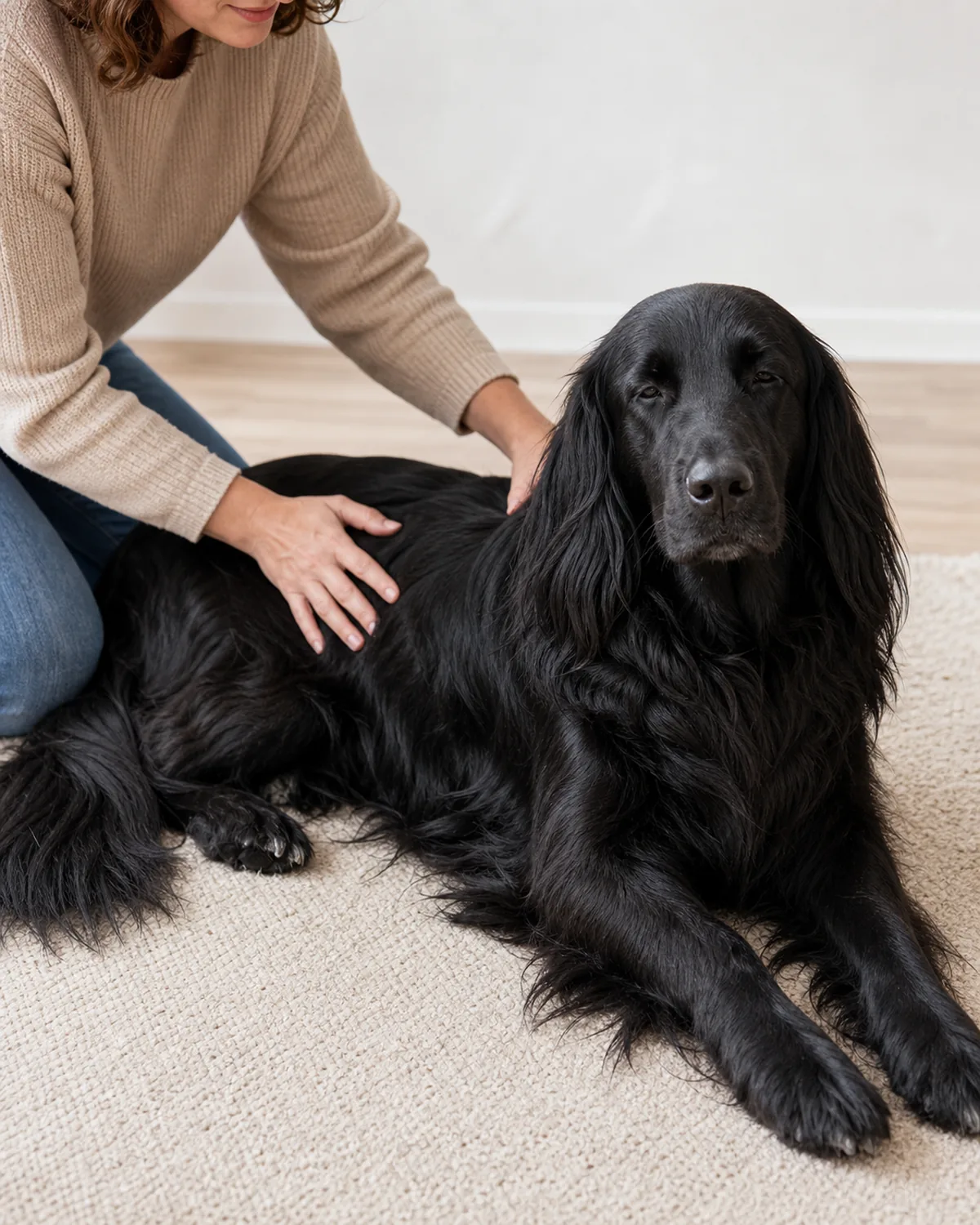
Once a week, run your hands slowly over the five friction zones — behind the ears, armpits, tail base, collar line, and between the toes — even on weeks when you've been brushing regularly.
This catches the mats that started somewhere you weren't already looking, before they've had time to grow past a two-minute fix.
It's a small habit, but it's the difference between a quick comb-through on a Sunday afternoon and an unplanned trip to the groomer because a walnut-sized mat snuck up behind an ear.
About the author
Jess Calloway
Jess is a dog mom of three, including one wavy-coated troublemaker who can turn a missed weekend of brushing into a walnut-sized mat behind one ear. This guide covers why mats form in the first place, the difference between a tangle and a true mat, the friction zones where they show up first, a brushing routine that prevents most of them, choosing between a slicker brush, mat comb, and dematting rake, safely removing a small mat, why bathing over an existing tangle makes it worse, when a mat is too tight to comb out yourself, coat types most prone to matting, common mistakes that make matting worse, what to do when a dog won't tolerate detangling, caring for the coat after a groomer shave-down, and building a weekly coat-check habit. Visit the About page.