I found my first tick on our youngest dog in the worst possible way. She had been scratching behind her ear for two days before I thought to actually look, and by that point the tick was fully embedded and the size of a small grape.
The removal was easy once I had the right tools. But those two wasted days stuck with me. If I had checked her the afternoon she came inside from the yard, I would have caught it before it ever broke the skin.
Here are fifteen tick-check habits that keep every walk from turning into a guessing game.
Jump to a tick-check step
15 places and habits for a complete tick check
From ear flaps to toe webs, these fifteen steps turn a tick check into a two-minute habit you never skip. Jump straight to the spot you want to check first.
A tick does not bite the moment it lands on your dog. Most species spend anywhere from one to thirty-six hours crawling through fur looking for the warmest, thinnest patch of skin before they latch on. That window is your advantage.
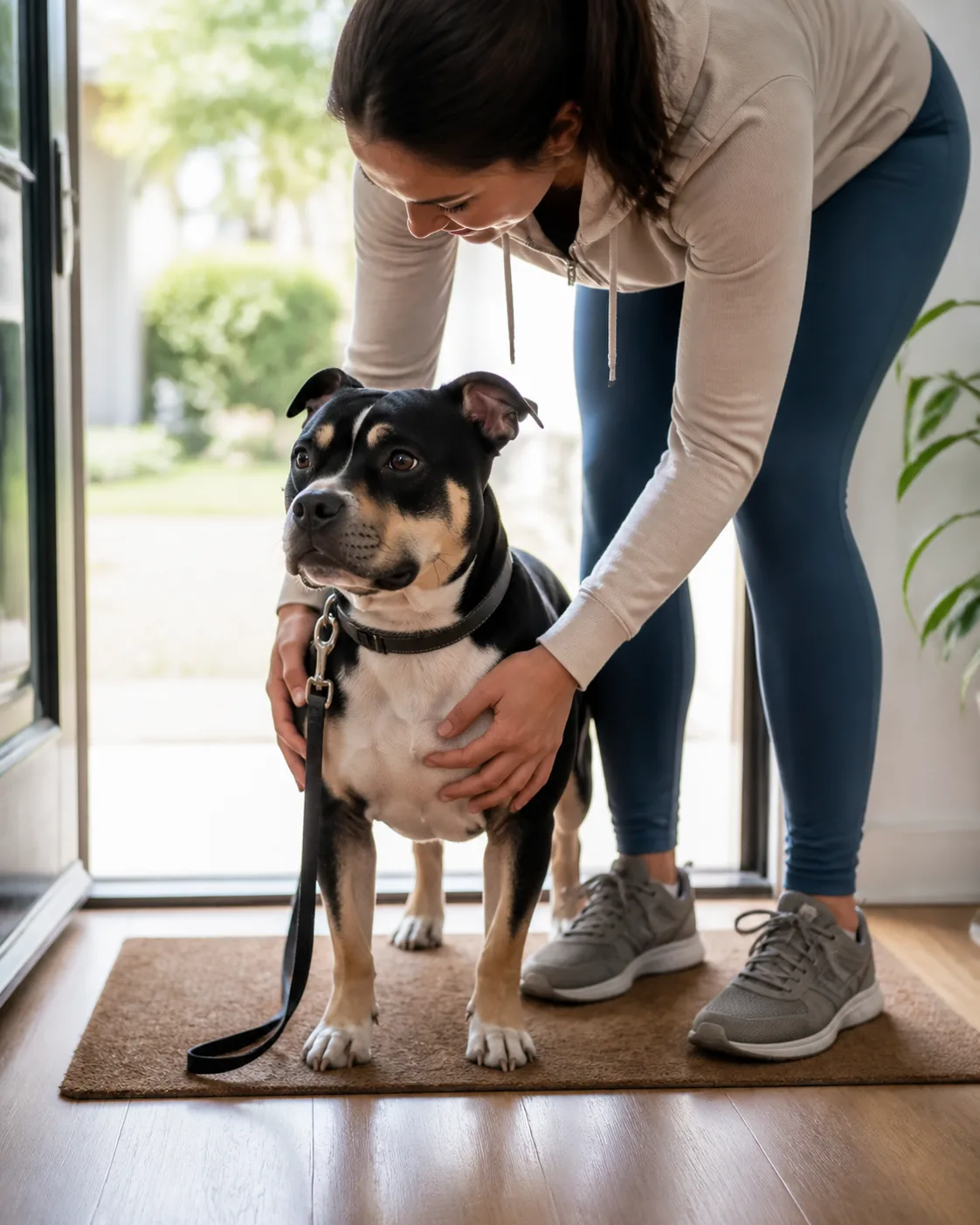
The habit is simple: leash off, hands on. Every time your dog comes inside — from the yard, the park, the trail, even a five-minute potty break in tall grass — you run your hands over the whole body before anything else happens.
Ticks are most active from early spring through late fall, but in warmer climates they never fully disappear.
A dog that walks through brush, tall grass, leaf litter, or wooded trails picks up ticks at a higher rate than one that sticks to pavement.
Even a fenced backyard near a tree line carries risk. Deer, rabbits, and squirrels drop ticks into suburban yards constantly.
The check does not need to take long. A thorough full-body scan becomes a two-minute habit once you know the route.
Pick what matters most to you right now and start there
Where should you start?
You do not need all fifteen steps on day one. Pick the scenario below that fits your situation and start with those ideas.
Run Your Hands Over the Entire Body Before Reaching for Any Tools
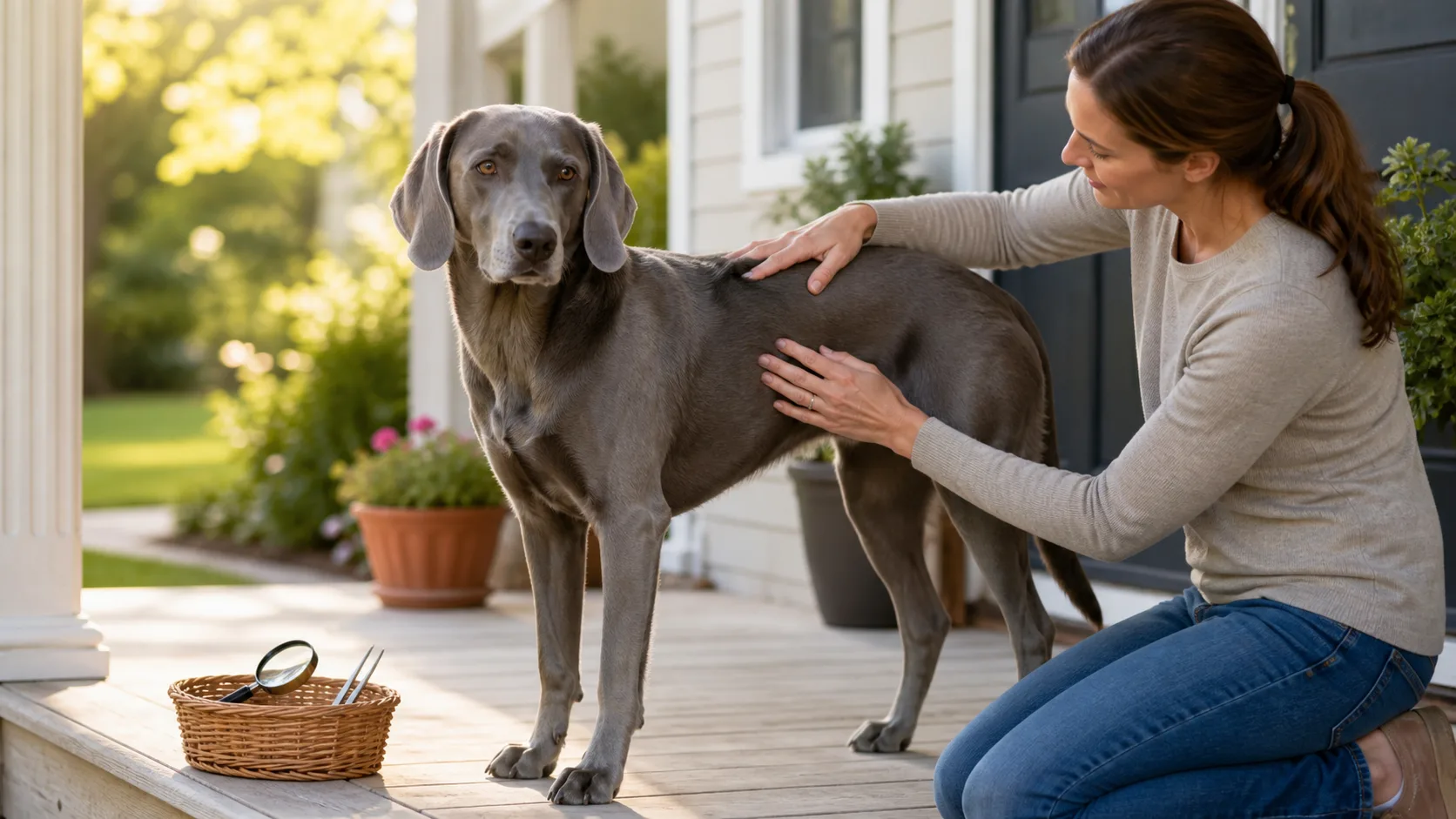
Your fingertips are more sensitive than any comb or brush for the first pass. A tick that has not yet embedded feels like a tiny raised bump — smaller than a pea, slightly firm, and stuck in place rather than sliding through fur the way a piece of debris would.
Start with flat palms pressed lightly against the skin and slide slowly. You are not petting. You are scanning.
Press firmly enough to feel the skin surface through the fur, not just the topcoat.
Short-coated dogs are easiest to hand-check because your fingers reach the skin immediately.
Thick double-coated dogs need a second pass with a fine-toothed comb (covered in idea nine), but the hand scan still catches surface-level ticks first.
On a small dog this takes thirty seconds. On a large thick-coated dog, closer to two minutes. Neither is long enough to skip.
Start at the Head and Work Your Way Back Systematically
Ticks migrate upward toward warmth and carbon dioxide, which means the head, ears, and neck tend to collect them first. Starting at the head is not just logical — it hits the highest-risk areas while your attention is sharpest.
Build a fixed route and never deviate from it:
Head (top of skull, around the eyes, muzzle creases)
Ears (inside and out — next section covers this in detail)
Neck and collar zone
Shoulders and front legs
Chest and underside
Belly and groin
Back legs and inner thighs
Tail and base of tail
Paws and between toes
The same order every time trains your dog to predict what comes next. Dogs that know the routine stand still more willingly because there are no surprises.
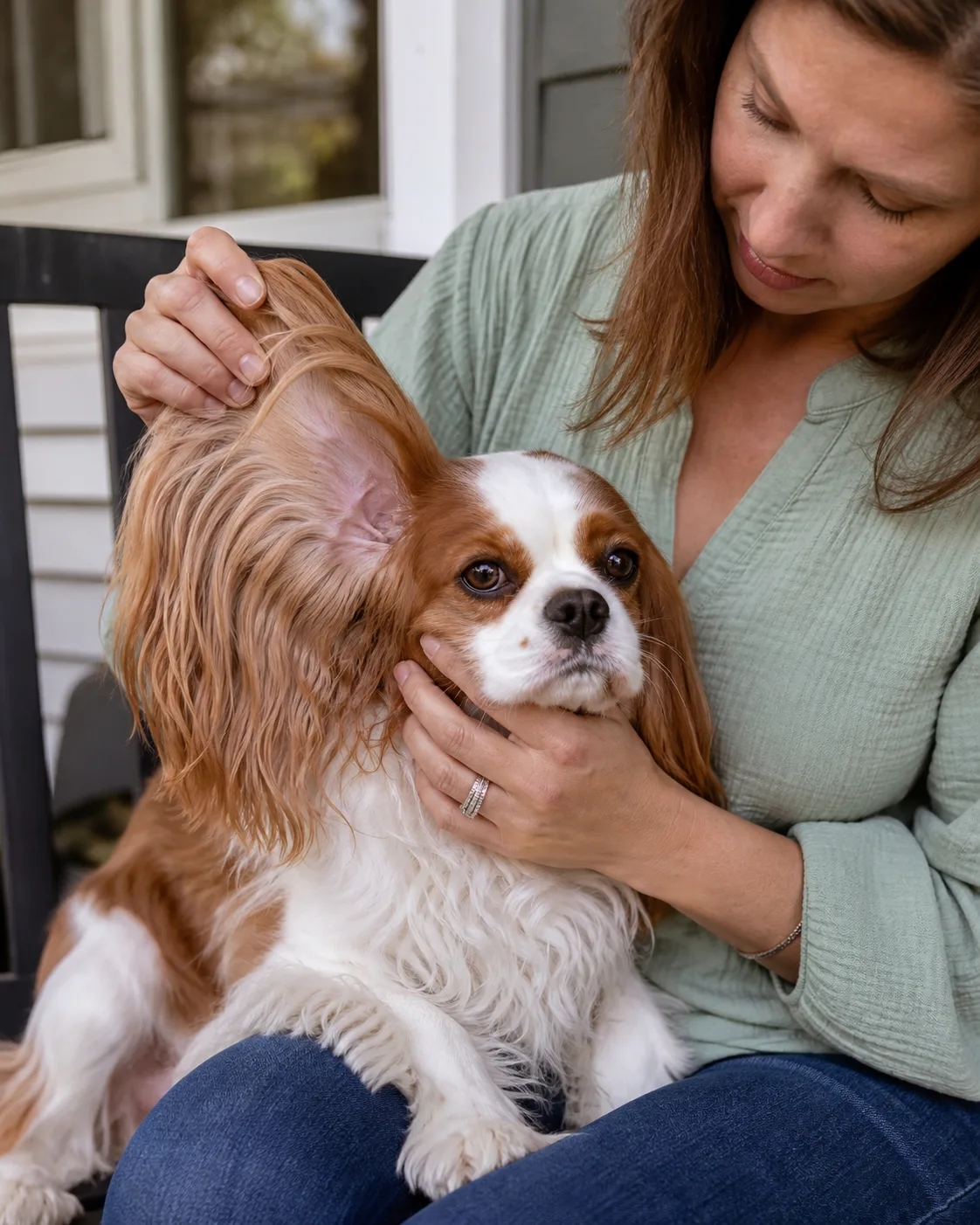
Lift and Fold Each Ear to Check the Inner Flaps
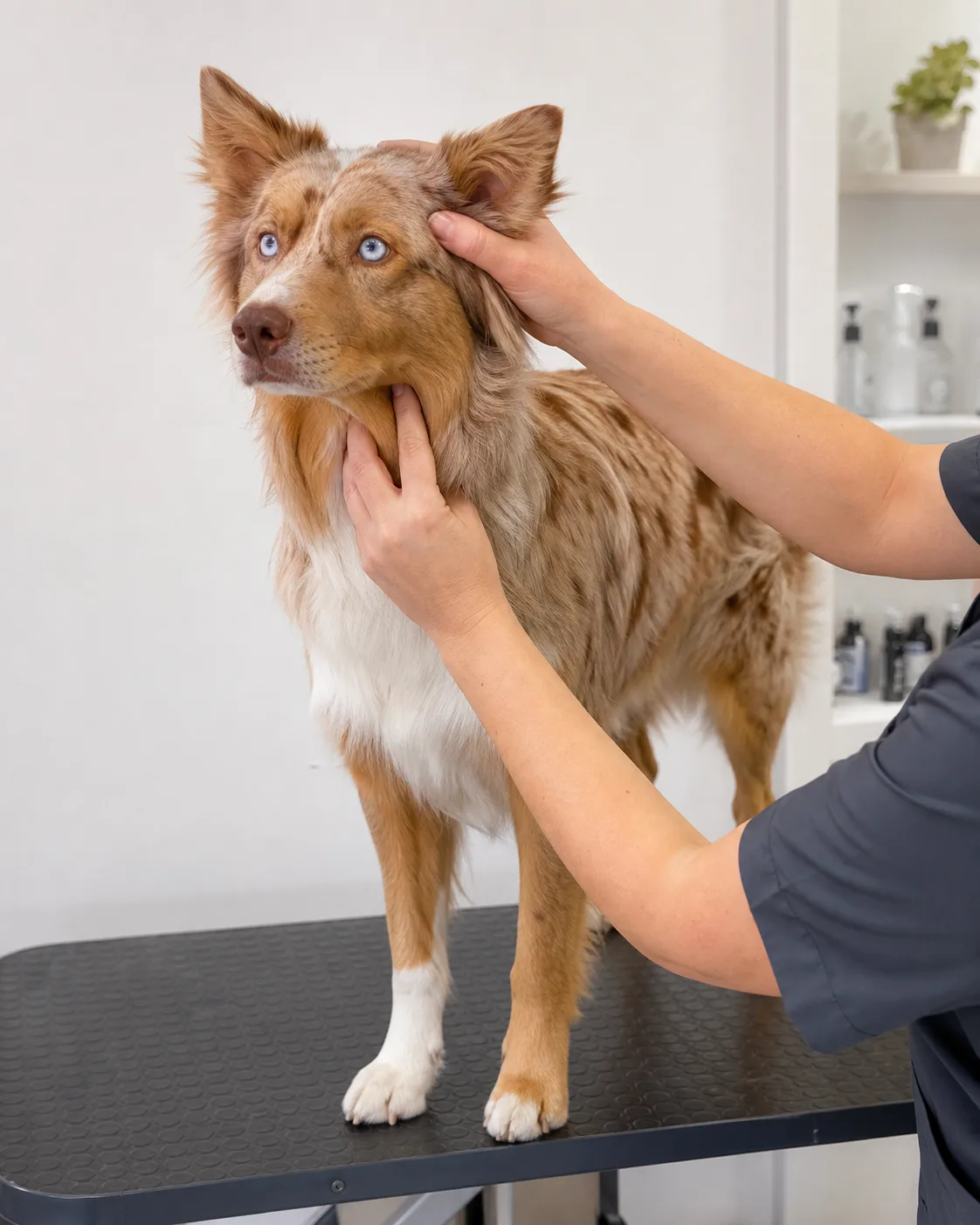
Ears rank as one of the top three tick hiding spots on any dog. The inner ear flap is warm, has thin skin with blood vessels close to the surface, and on dogs with floppy ears the flap creates a sheltered pocket that ticks can crawl into and disappear.
Fold the ear flap outward and look at the entire inner surface. Then check the skin around the ear canal opening. On long-eared breeds, also run your fingers along the underside of the leather where it hangs against the jaw — ticks love that crease.
Floppy-eared breeds face higher risk because the ear flap covers the entrance and traps warmth.
Erect-eared dogs are not immune. Ticks still climb to the ear base and settle in the fold where the ear meets the skull.
A tick inside the ear canal itself requires a vet. If you see one deep inside, do not try to reach it with household tweezers.
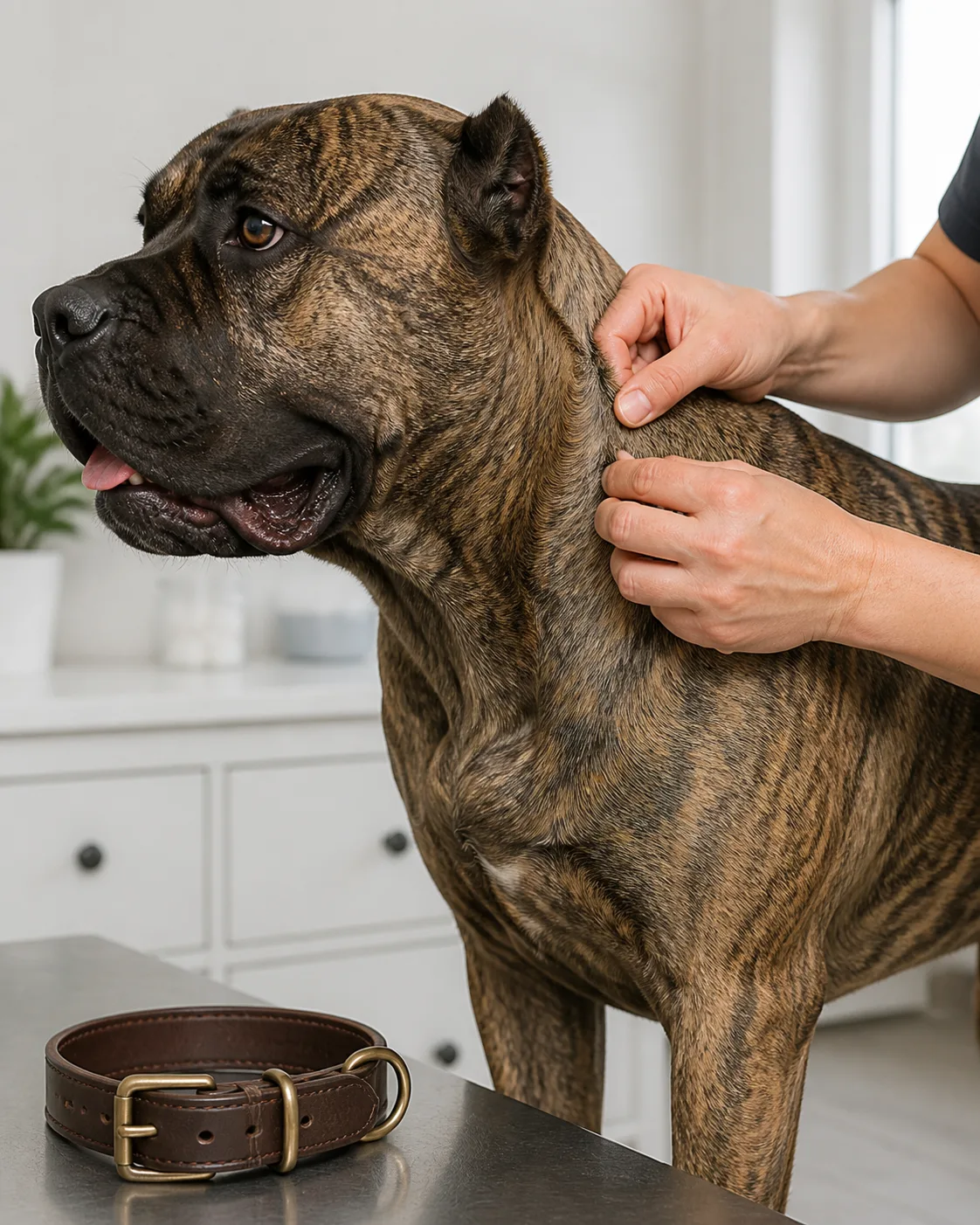
Part the Fur Around the Collar and Neck
The collar zone is the second most common hiding spot, and it is the one most owners skip entirely. Your dog wears a collar all day. That strip of covered skin stays warm, slightly moist, and invisible unless you deliberately look.
Remove the collar before every check. Then use your fingertips to part the fur in a line around the entire neck, exactly where the collar sat. Look at the skin, not just the surface of the fur.
A snug collar creates a microclimate that attracts ticks the same way a waistband attracts them on humans.
Long-haired dogs with thick neck ruffs need extra attention. The dense undercoat behind the ears and below the occiput is a blind spot most hand scans miss.
If your dog wears a harness, check every strap line the same way. Anywhere fabric touches skin is a candidate spot.
Brushing your dog regularly gives you a natural opportunity to examine the neck and collar area at the same time. The daily brushing routine doubles as a tick check when you know what to look for.
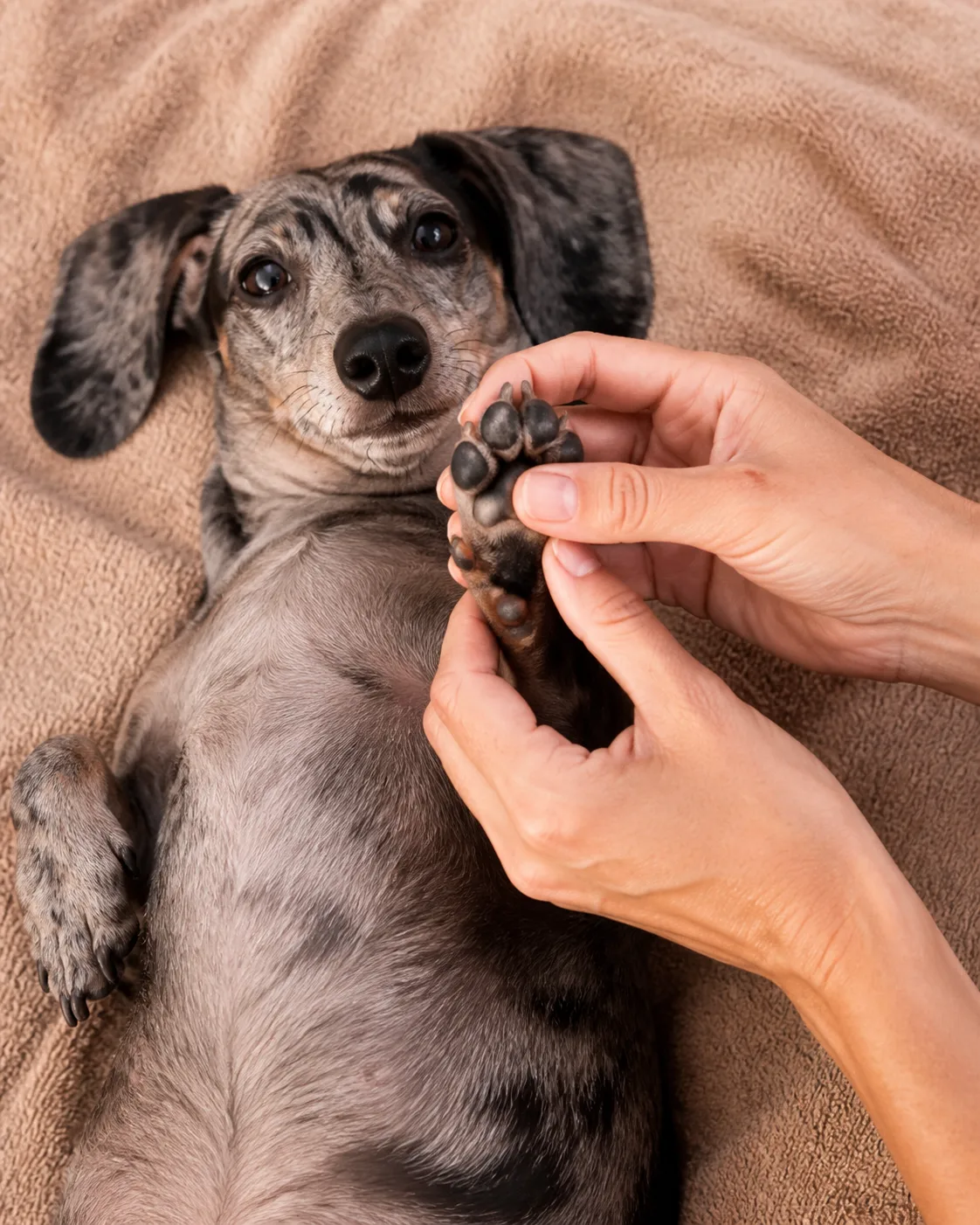
Check Between Every Toe and Around the Paw Pads
Toes are the first point of contact with the ground, and ticks that sit on grass blades latch onto whatever touches them. The webbing between toes is thin-skinned and hard to see without deliberately spreading the digits apart.
Pick up each paw and gently spread the toes. Look at the skin between each pair of toes, and check the edges where the paw pads meet the fur line. Also examine the dewclaws if your dog has them — the small indent beside a dewclaw is a favorite attachment site.
After every walk you should already be cleaning your dog's paws. Add a tick check to that same post-walk step and it costs you zero extra time.
Dogs that walk on trails or through underbrush pick up tiny nymph-stage ticks between their toes more often than anywhere else on the body.
A nymph tick is the size of a poppy seed. You may feel it as a barely-there bump before you ever see it.
Four principles that make every tick check faster and more thorough
The 4 rules of an effective tick check
Speed, consistency, and knowing what you are feeling for. These four rules are what turn a vague once-in-a-while glance into a two-minute habit that catches every tick.
Same order, every single timeHead to tail in the same sequence builds muscle memory. You stop thinking about where to check next and start noticing what feels different. A fixed route means nothing gets skipped.
Hands first, tools secondFingertips catch surface-level ticks faster than any comb. The comb is a second pass for thick coats, not a replacement for the hand scan. Touch the skin, not just the fur.
Check every trip, not just hikesA five-minute backyard potty break in tall grass carries risk. Ticks do not wait for trail days. The habit has to be automatic for every outdoor return, not reserved for adventures.
Remove immediately, document alwaysThe longer a tick feeds, the higher the disease risk. Remove it within minutes of finding it, save it in a sealed bag with the date, and note where on the body it was attached. Your vet will thank you.
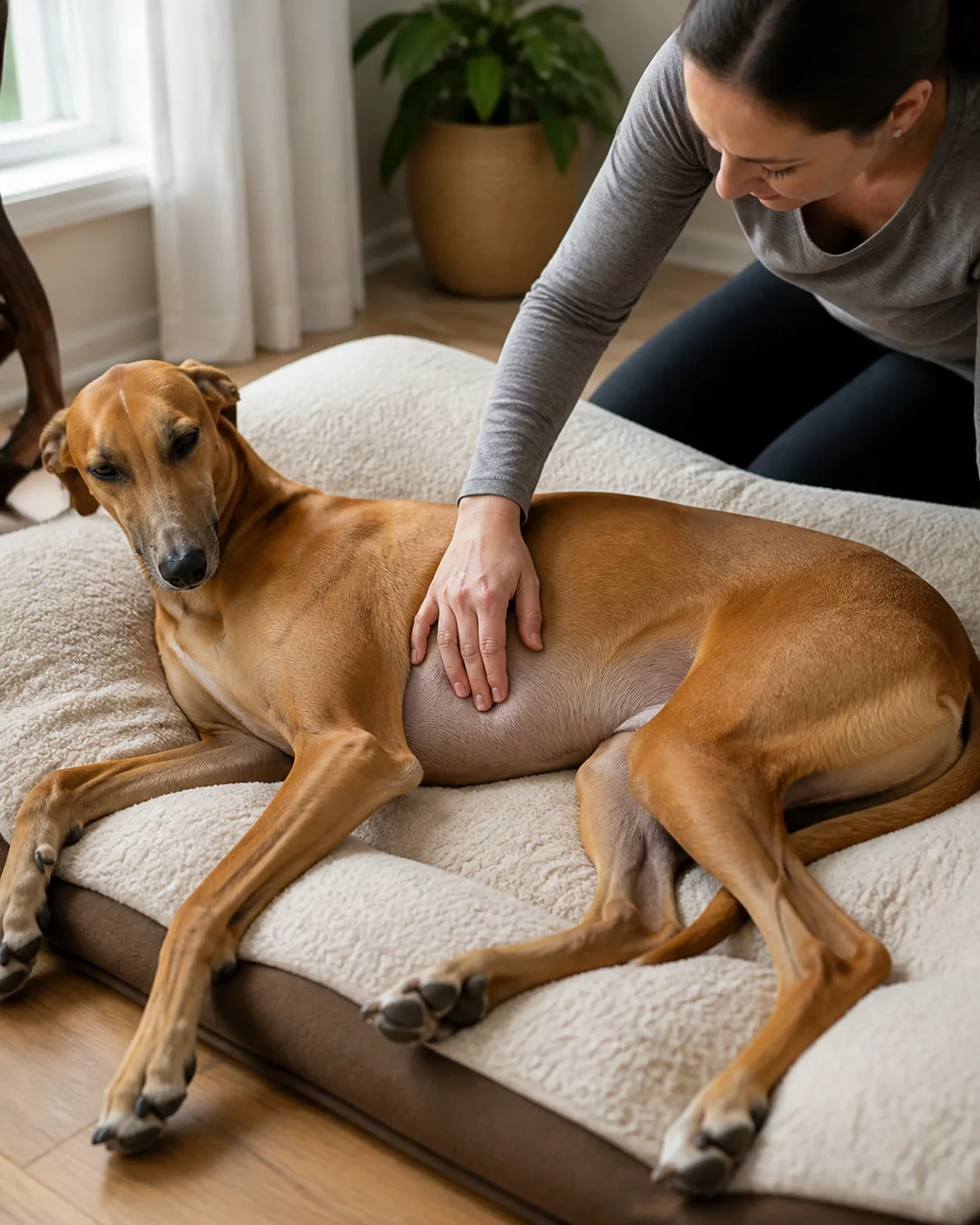
Examine the Belly, Groin, and Inner Thighs
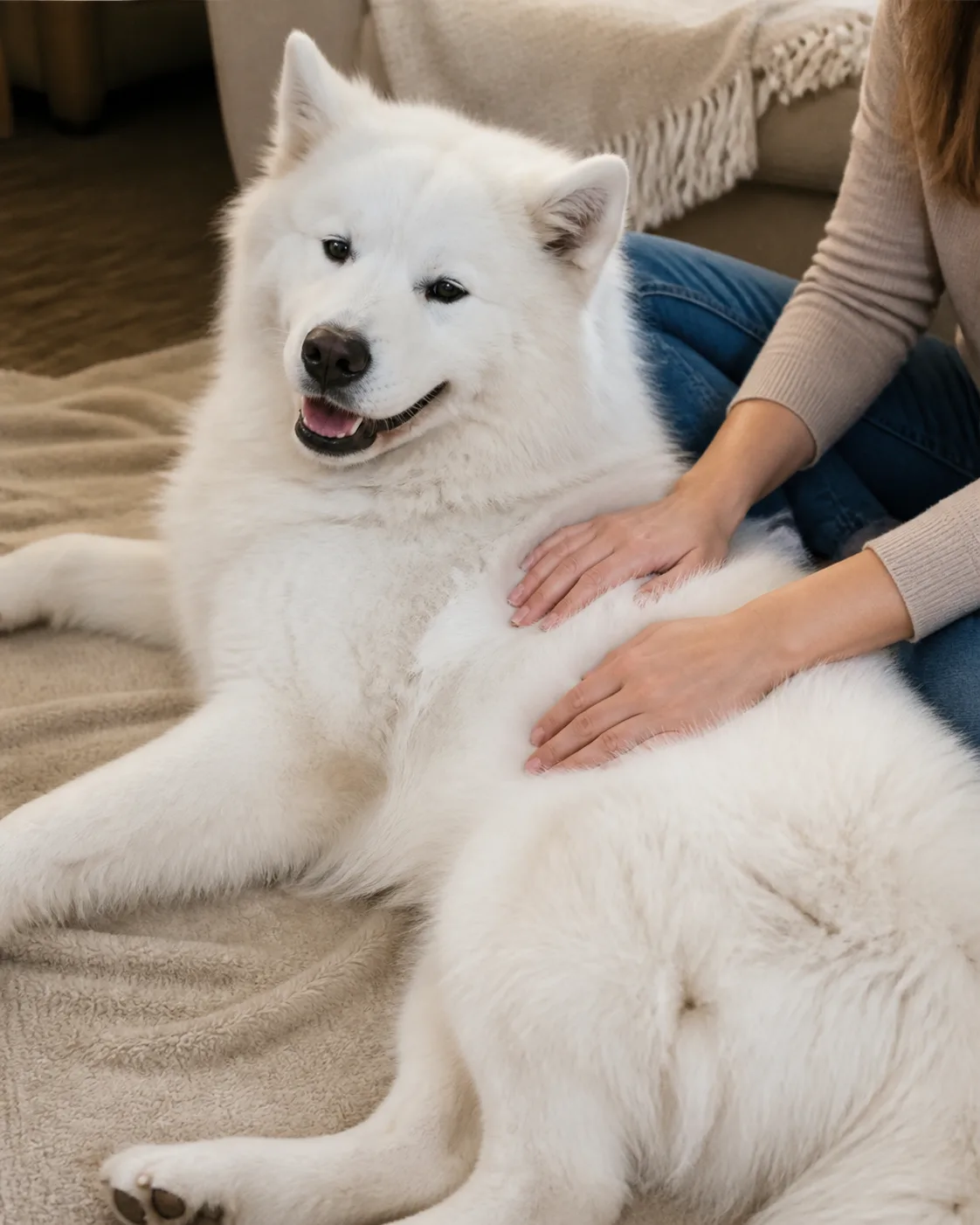
The belly and groin area offers everything a tick wants: thin skin, minimal fur, proximity to large blood vessels, and warmth from the body core. It is also the area most owners rush through or skip because the dog squirms.
Ask your dog to lie on its side or roll onto its back. If your dog will not lie still for this, gently hold it standing and reach underneath with one hand, feeling from the chest plate backward along the midline to the groin.
The inner thigh is especially vulnerable. The skin is nearly hairless on many breeds, and ticks that embed here are nearly invisible until they engorge.
Male dogs: check around the prepuce. Female dogs: check the vulvar folds. These warm sheltered areas are high-priority and commonly overlooked.
Feel for bumps you have not noticed before. A newly attached tick feels like a small firm bead stuck to the skin.
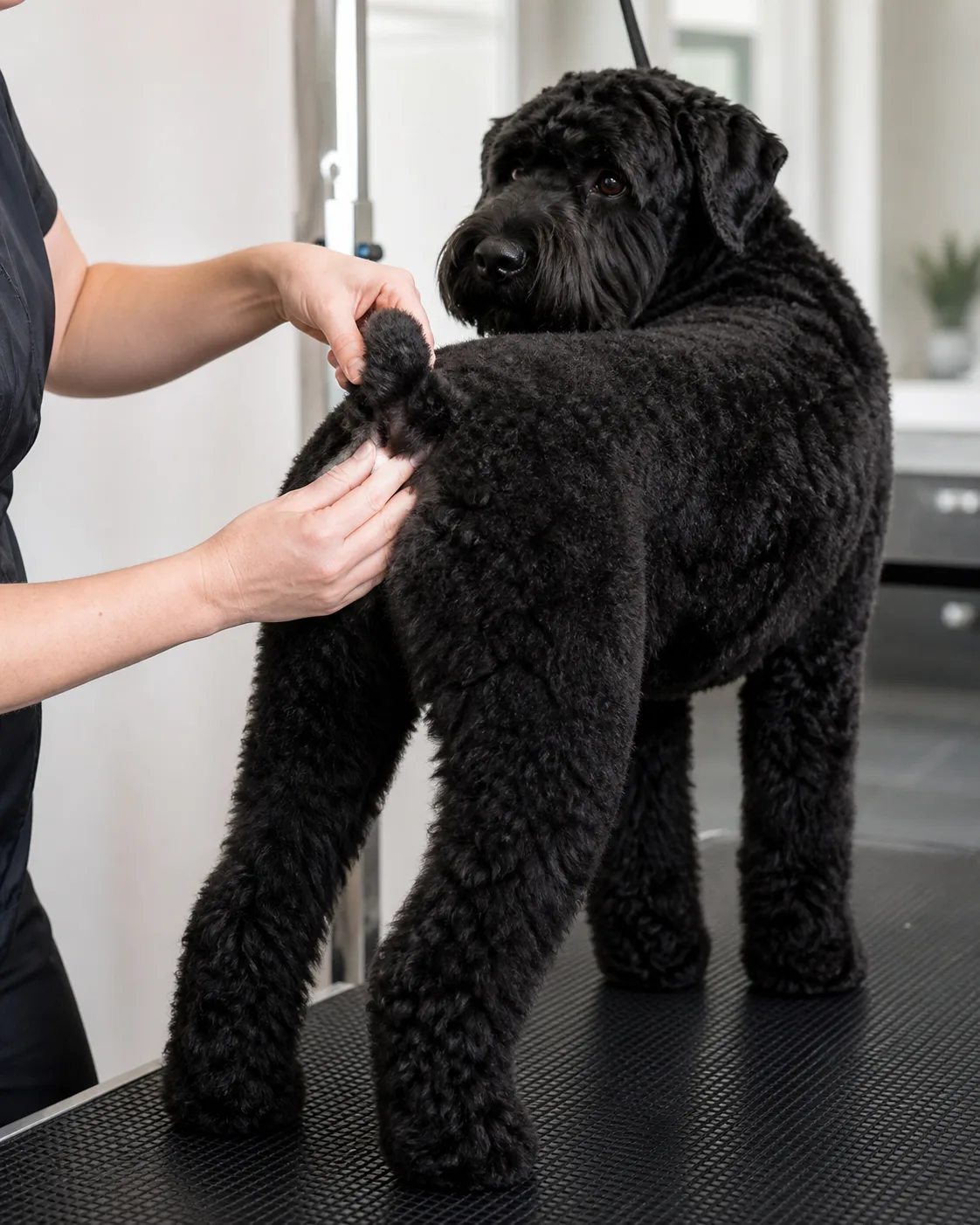
Do Not Skip the Tail Base and Under the Tail
The base of the tail sits in a warm, sheltered crease that rarely sees light or airflow. Ticks that crawl up the hind legs often settle here because it is the nearest hidden spot with accessible skin.
Lift the tail gently and check the skin on the underside from the base to about three inches down the tail. Then check the perianal area — the ring of skin around the anus where fur thins out.
Many owners feel awkward about this step and skip it. Ticks do not share that discomfort. This is a genuine hot spot.
Dogs with docked tails still have a tail nub and base that need checking. The surgery site and surrounding skin fold can trap ticks easily.
Thick-tailed breeds (huskies, collies) need the fur parted at the base because the dense tail plume hides everything.
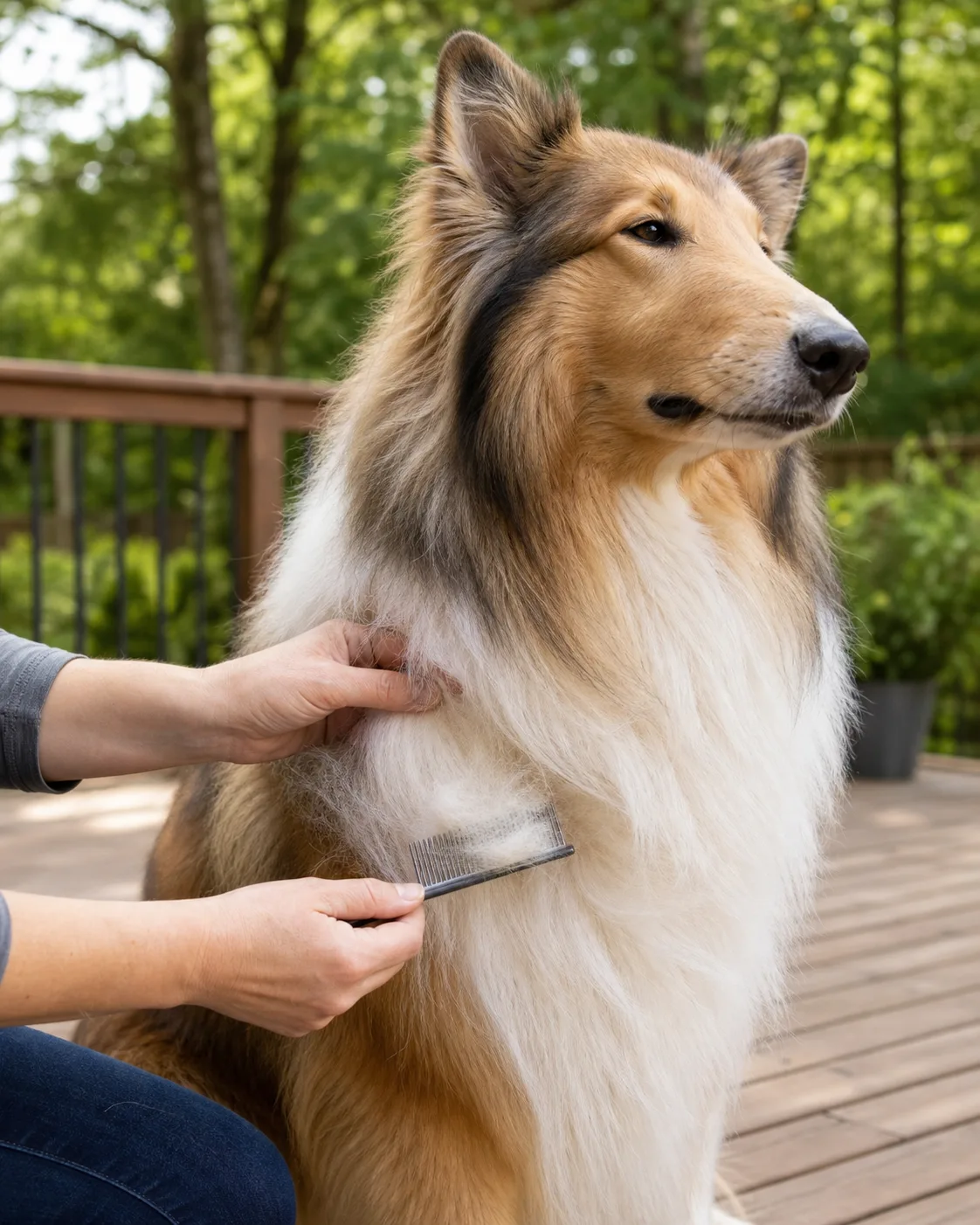
Use a Fine-Toothed Comb on Thick or Double Coats
Hands alone may not be enough for dogs with dense, layered fur. A fine-toothed flea comb acts as a second-pass tool: the teeth sit close enough together to catch anything attached to the skin or moving through the undercoat.
Draw the comb through one small section at a time, pressing the teeth all the way to the skin. After each stroke, examine the comb for anything caught in the teeth.
A flea comb with teeth spaced 0.1 mm apart catches nymph ticks that your fingers would glide right over.
Work in sections: start behind the ears, then the neck ruff, shoulders, sides, and hindquarters.
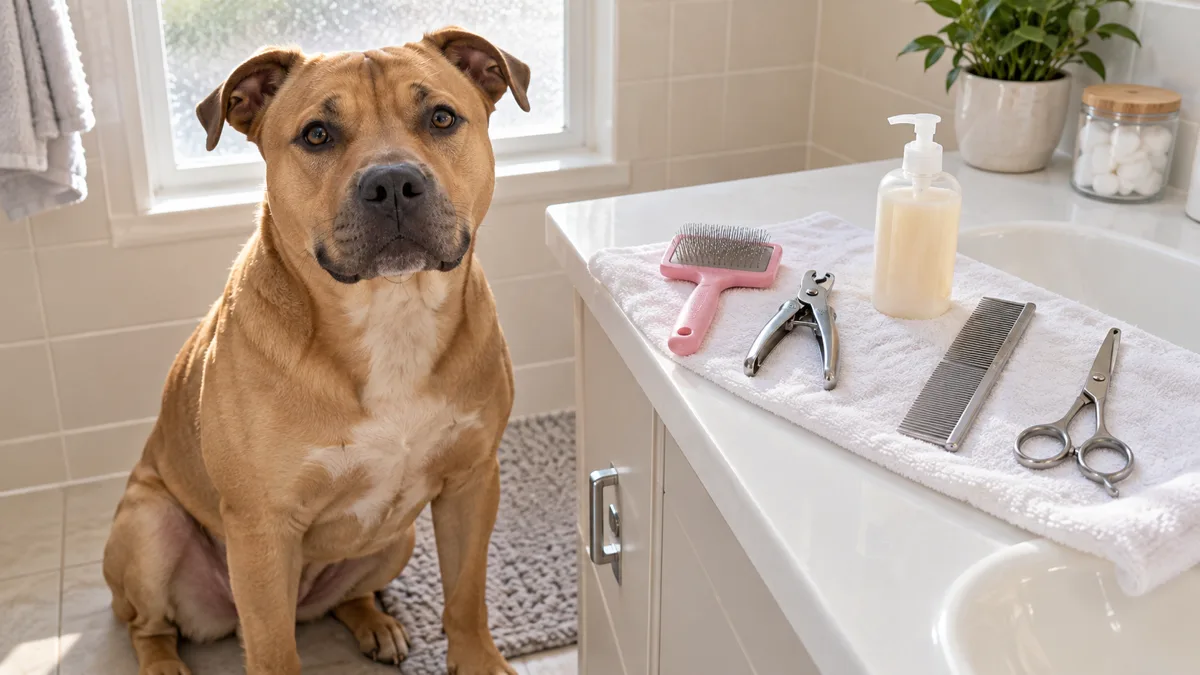
Pair this with your regular brushing routine — a slicker brush for detangling first, then the fine comb for the tick check pass.
This step is non-negotiable for breeds like collies, samoyeds, huskies, and golden retrievers. Their thick undercoat can conceal a dozen ticks that a hand scan would miss entirely.
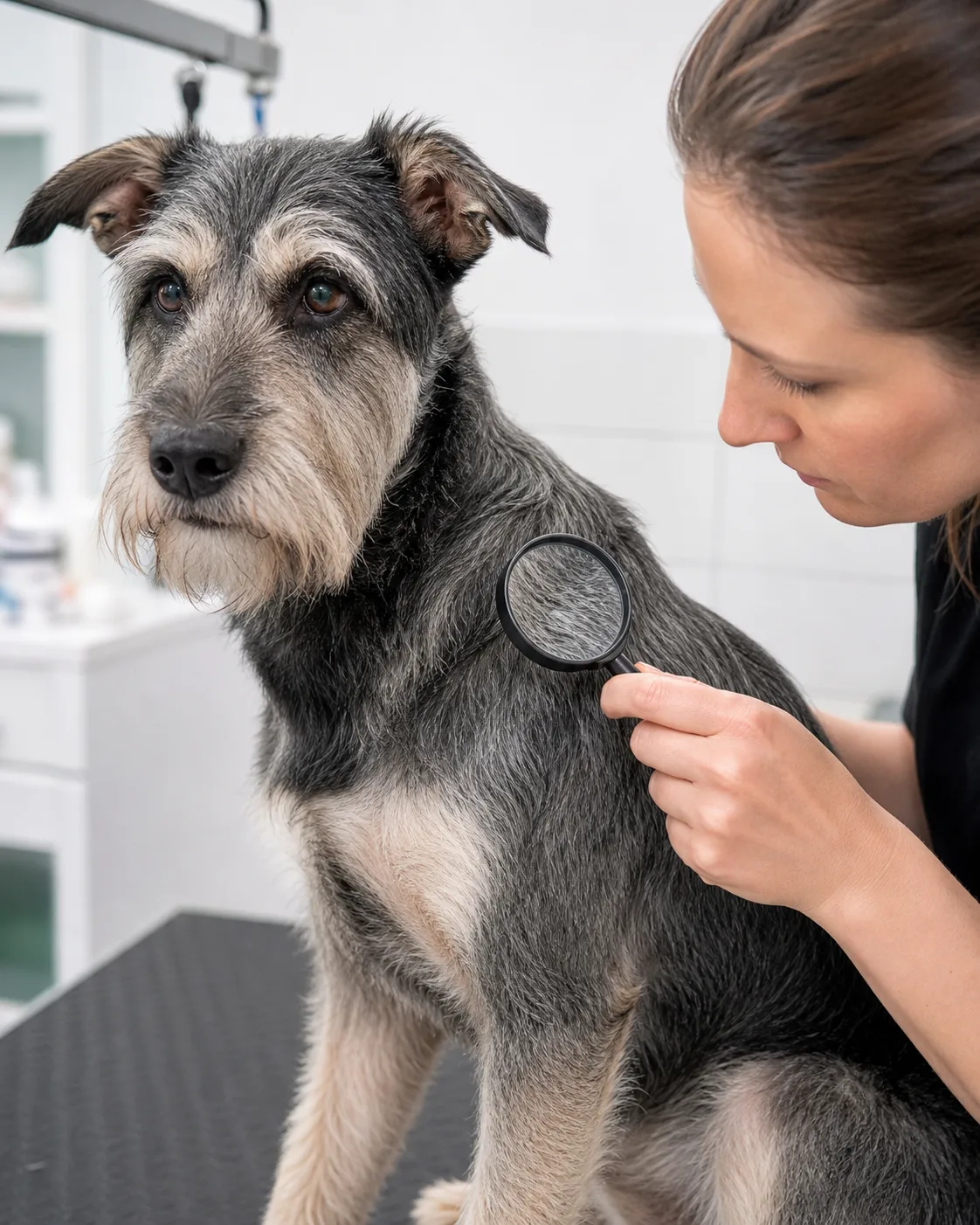
Know the Difference Between a Tick and a Skin Tag
Skin tags are harmless flaps of tissue that grow on many dogs as they age. They feel like small, soft, flesh-colored bumps attached to the skin by a thin stalk. Ticks, by contrast, are firm, round, and flush against the surface with no visible stalk.
The easiest way to tell them apart:
Feature
Tick
Skin tag
Color
Dark brown, grey, reddish
Flesh-toned
Texture
Firm, slightly shiny
Soft, pliable
Attachment
Flat and flush
Hangs from a stalk
Legs
8 legs (magnify to see)
None
Size change
Grows as it feeds
Stays the same
If you are not sure, use a magnifying glass. An engorged tick sometimes looks like a grey or olive-colored blister, but you can usually spot the tiny legs near the attachment point.
Never yank a bump you cannot identify. If you are unsure, take a photo and send it to your vet before attempting removal.
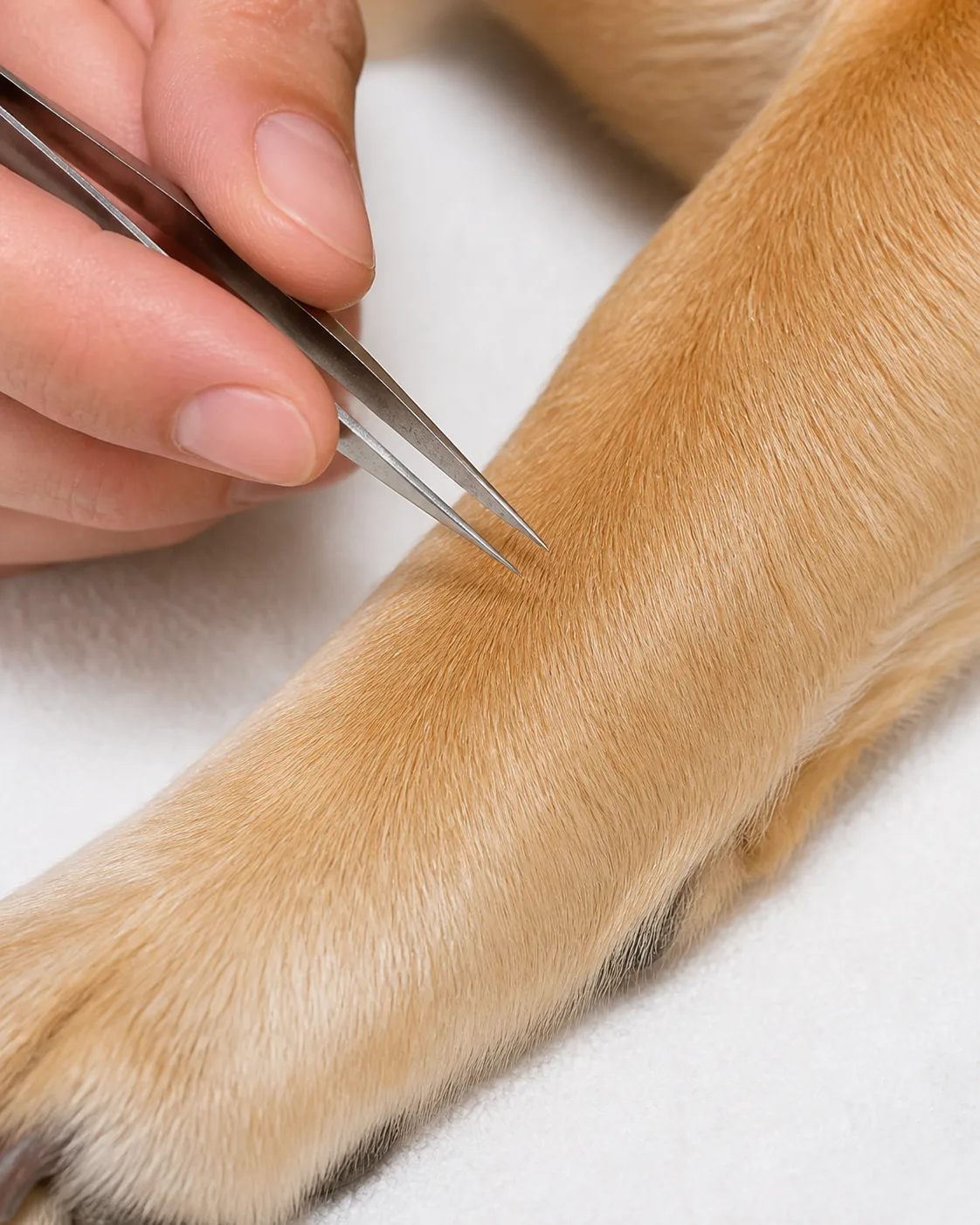
Remove a Tick With Steady Upward Pressure and Fine-Tipped Tweezers
The only tool you need is a pair of fine-tipped tweezers — the kind with pointed, angled tips that can grip a small object precisely. Broad flat-tipped tweezers compress the tick's body and increase the risk of pushing saliva and pathogens back into the wound.
Here is the step-by-step removal process:
Grasp the tick as close to the skin surface as possible, right where its mouthparts enter the skin.
Pull upward with steady, even pressure. Do not twist, jerk, or rotate.
The tick should release cleanly with its head and mouthparts intact.
Clean the bite site with rubbing alcohol or soap and water.
Clean the tweezers with rubbing alcohol.
If a small piece of the mouthpart breaks off and stays in the skin, leave it alone. The body will push it out naturally over a few days, just like a splinter. Digging for it with a needle causes more damage than the fragment itself.
Save this for later
15 Tick-Check Steps Every Dog Owner Needs
1Check after every outdoor tripTicks crawl for up to 36 hours before biting. That window is your advantage.
2Run your hands over the body firstFingertips catch surface bumps faster than any comb on the first pass.
3Start at the head, work backwardHead to tail in the same order every time so you never skip a zone.
4Lift and fold each earWarm inner flaps and the ear canal opening are a top-three hiding spot.
5Part the fur around the collarThe collar strip stays warm and hidden. Remove the collar and part the fur.
6Check between every toeToe webbing is thin-skinned and the first contact point with grass.
7Examine the belly and groinThin skin, minimal fur, and warmth from the body core. Don't rush this.
8Check the tail base and under the tailThe tail base crease rarely sees light. Ticks settle here from the hind legs.
9Use a fine-toothed comb on thick coatsDense undercoat hides nymphs your fingers glide over. Comb section by section.
10Tell a tick from a skin tagSkin tags are soft on a stalk. Ticks are firm and flush. Use a magnifier if unsure.
11Remove with fine-tipped tweezersGrasp at the skin, pull straight up with steady pressure. No twisting.
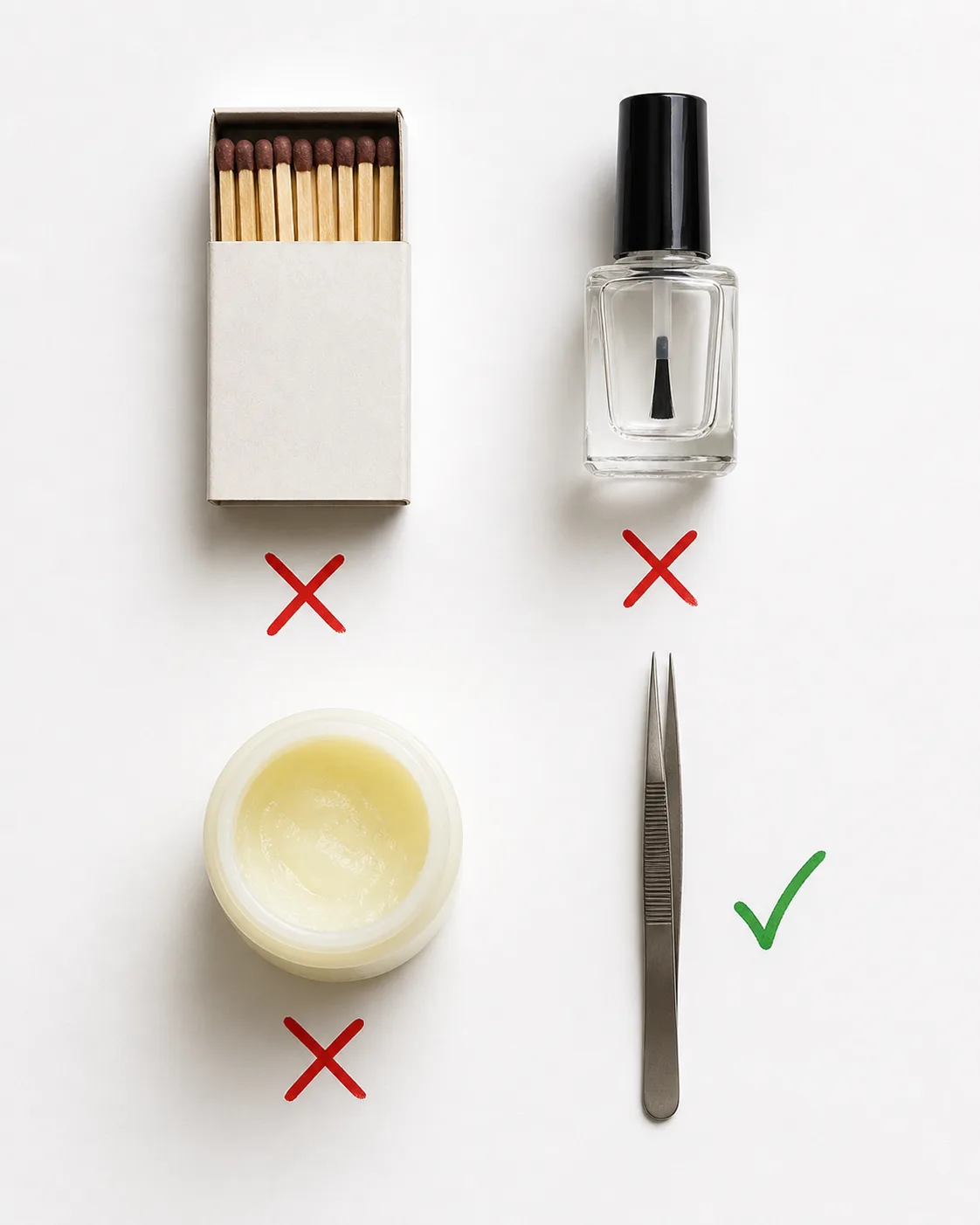
12Never use matches or nail polishHeat and suffocation methods delay removal and risk pushing pathogens deeper.
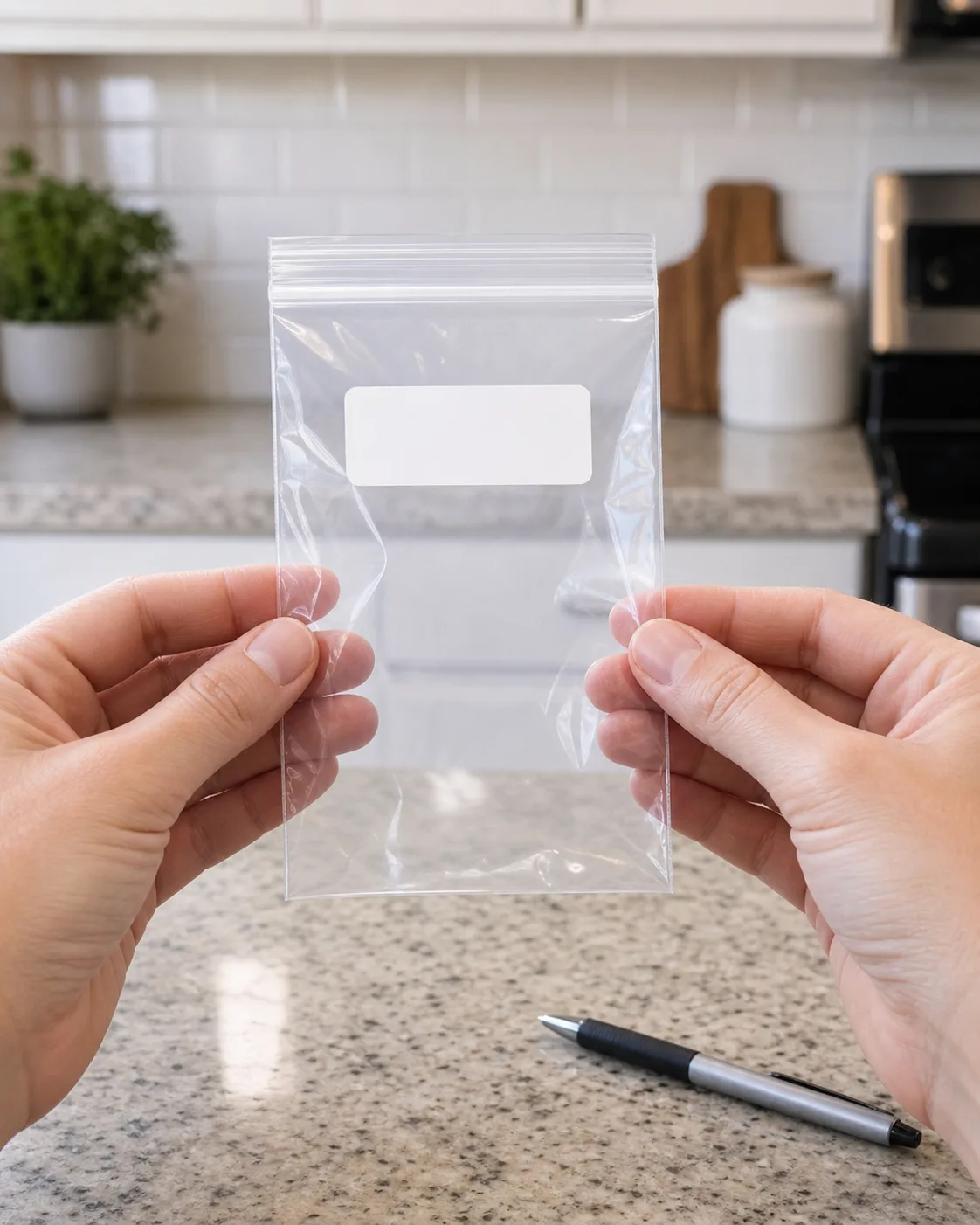
13Save the tick and note the dateA sealed bag with the date lets your vet identify the species if symptoms appear.
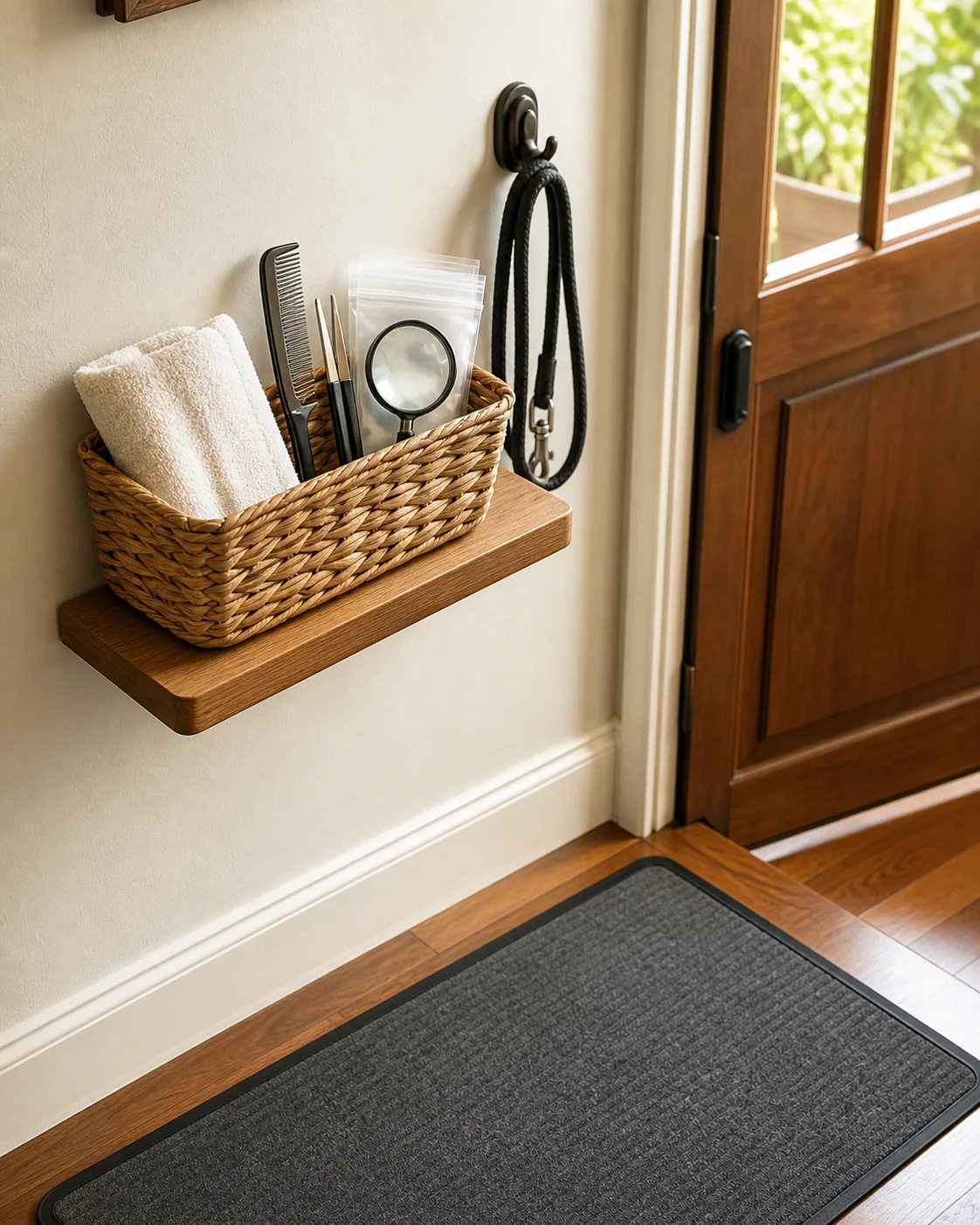
14Set up a tick check stationTweezers, comb, bags, and a pen by the door you use most. Two-minute habit.
15Watch for warning signs after a biteLethargy, limping, fever, or pale gums in the next 2-4 weeks warrant a vet visit.
pawliqa.com
Never Use Matches, Nail Polish, or Petroleum Jelly to Force a Tick Out
These folk remedies persist in dog forums and family tradition, but every veterinary and public health authority advises against them. Here is why each one fails:
Lit match or hot needle: The idea is that heat makes the tick "back out." It does not. Instead, the heat can burn your dog's skin and may cause the tick to regurgitate — pushing potentially infected saliva deeper into the wound.
Nail polish or petroleum jelly: The theory is that suffocating the tick forces it to release. Ticks breathe slowly enough to survive being coated for hours. Meanwhile the tick stays embedded, feeding and potentially transmitting pathogens the entire time.
Essential oils or alcohol dabbed on the tick: Same suffocation theory, same failure. Some oils also irritate the dog's skin around the bite.
The only effective method is mechanical removal with fine-tipped tweezers or a tick removal hook. Pull it out. Everything else delays the one thing that actually works.
Save the Tick and Note the Date After Removal
Once the tick is out, do not flush it or crush it. Place it in a small sealed container — a zip-top bag, a pill bottle, or a small jar — and add a drop of rubbing alcohol to preserve it. Write the date and the location on the dog's body where you found it.
This preserved tick becomes a diagnostic resource if your dog develops symptoms later:
A vet can identify the tick species, which narrows down which diseases it might carry.
Different tick species carry different pathogens. A deer tick (blacklegged tick) carries Lyme disease. A brown dog tick carries ehrlichiosis. An American dog tick carries Rocky Mountain spotted fever. Knowing the species guides the testing.
Symptoms of tick-borne disease can appear anywhere from three days to three weeks after the bite. Having the tick available for identification saves time and guesswork.
Keep the sealed container for at least thirty days. If your dog shows no symptoms in that window, you can discard it.
Set Up a Dedicated Tick Check Station by Your Door
A habit sticks when the environment supports it. If your tick check supplies live in a bathroom drawer and you come in through the back door, the check will not happen consistently.
Set up a small station right where your dog enters the house:
A rubber-backed mat or old towel for the dog to stand on.
A basket or wall-mounted shelf holding fine-tipped tweezers, a fine-toothed comb, a magnifying glass, a few small zip bags, and a pen.
A small jar with rubbing alcohol for tick preservation.
Every walk ends the same way: leash off, dog on the mat, two-minute scan. The station turns the check from an intention into a physical routine tied to a location.
If you have multiple entry points, keep a basic kit (tweezers plus bags) by each door. The main station with the full kit can live by the most-used entrance.
Watch for Post-Bite Warning Signs That Need a Vet Visit
Removing the tick is not the end of the process. Tick-borne diseases can take days to weeks to produce symptoms, and some of the most serious ones start with signs that look like a mild off day.
Watch for these in the two to four weeks after any tick bite:
Loss of appetite or unusual lethargy that lasts more than a day.
Joint stiffness, limping, or reluctance to move — especially shifting from one leg to another.
Fever (warm ears, dry nose, shivering when the room is not cold).
Swollen lymph nodes — feel for lumps under the jaw, in front of the shoulders, and behind the knees.
Pale gums or unexpected bruising on the belly or gums.
Unexplained vomiting or dark-colored urine.
Any one of these warrants a vet visit. Mention the tick bite, the date, and where on the body it was found. If you saved the tick, bring it with you.
Early detection of tick-borne disease dramatically improves treatment outcomes. A blood test can usually confirm or rule out infection within a few days.
P
About the author
Jess Calloway
Jess Calloway edits Pawliqa, where she shares dog care, grooming, training, and new-owner tips — plus DIY and pet-friendly home ideas — for anyone who wants a happy, well-cared-for dog. As a dog mom to three very different dogs, she writes the honest, tested version of what actually works. Every guide is image-led and reviewed for clarity, usefulness, image accuracy, and Pinterest-to-page alignment before it goes live. Visit the About page.
Fifteen dog paw care tips covering pad checks, nail length, moisturizing, hot pavement tests, winter balm, cracked pad first aid, and seasonal routines.